




Abstract
This study presents a bibliometric analysis of scholarly publications on perceived innovativeness and value of digital library services from 2019 to 2025, drawing data from Scopus, Web of Science, and Google Scholar. An initial retrieval of records from these databases was followed by systematic screening, including duplicate removal, relevance assessment, and application of inclusion and exclusion criteria, resulting in a final dataset of 88 publications for analysis. The objective is to evaluate the perceived innovativeness and value of digital libraries in enhancing academic research productivity, with particular attention to the integration of artificial intelligence and smart library systems. Advanced metrics such as Field-Weighted Citation Impact and visualization tools including VOSviewer were applied to the final curated dataset to assess publication trends, citation performance, and global collaboration networks. The analysis indicates a marked increase in research output after 2023, with high-impact contributions from regions including Pakistan, India, and Saudi Arabia. The findings highlight the growing role of AI-driven services and the importance of international collaboration in digital library development. Despite a focus on English-language literature, the study provides practical implications for universities and policymakers by supporting investments in AI-enhanced infrastructure, personalized interfaces, and collaborative tools to improve research efficiency while promoting educational equity and accessibility.
Keywords
Introduction
Background
The Library and Information Science (LIS) field, characterized by its focus on developing, organizing, and accessing information held in libraries and archives, has advanced fully. 1 With the advent of digital technologies, there is an increasing need to understand the relationship between traditional library practices and emerging digital tools.2,3 The progression of this discipline makes it essential to stay current with the latest developments to provide optimal library and information services.4,5 The dynamics of professional librarianship and the creation of new knowledge highlight the underlying importance of research within the LIS domain. 6 Consequently, it is to investigate the research performance in LIS to identify areas of strength and weakness, thereby informing its future course. 7 Bibliometric analysis studies, which examine research output and implications across various dimensions, are valuable tools for understanding trends in digital libraries. 8
Several prior studies have explored the evolution of digital library research using bibliometric approaches. 9 Notably, Yaseen et al. 10 conducted an early bibliometric study that analyzed digital library literature published between 1992 and 2004, providing foundational insights into the research field at that time. Their study helped establish key thematic areas in digital library research, such as information retrieval, access models, and user experience. 11 This current study builds upon these earlier bibliometric efforts by providing a more recent analysis (2019-2025) that captures emerging trends, particularly the growing role of Artificial Intelligence (AI), smart library technologies, and interdisciplinary collaborations in digital library services. 12 The increasing dependence of academic research on digital platforms has made digital library services a central infrastructure for knowledge production, positioning their innovativeness and perceived value as critical determinants of research productivity.
The integration of digital library services within academic institutions has transformed information accessibility, particularly in the context of higher education. 13 These libraries use advanced technonlogical infrastructure, such as servers, software, and high-speed internet, to manage and deliver digital content to users efficiently. 14 By employing sophisticated search tools and user-friendly interfaces, digital libraries allow researchers to quickly locate and retrieve relevant information from anywhere. 15 Moreover, digital libraries often incorporate features such as personalized user accounts, citation tools, and interactive platforms for collaborative research, enhancing the overall user experience. 16 This integration improves the efficiency of research activities and supports the continuous evolution of academic knowledge. 17 Similar technological applications have also been reported in public, national, and special libraries, where artificial intelligence and digital systems have been used to enhance user services, collection management, and information access, as documented in previous studies.
In Saudi Arabia, developing digital libraries is a pivotal component of Vision 2030. 18 This strategic plan aims to diversify the economy, reduce dependence on oil revenues, and elevate the country’s educational standards, making Saudi Arabia a global knowledge hub. 19 The vision emphasizes digital transformation, including technology in public services and infrastructure enhancement, to support economic growth. 20 Digital libraries in Saudi Arabia seek to provide researchers with unprecedented access to vast information resources, fostering an environment conducive to innovation and academic excellence. 21
In order to ensure comprehensive and reliable coverage of scholarly output, this study draws data from Scopus, Web of Science, and Google Scholar. These databases were selected because they collectively provide broad disciplinary representation, strong citation indexing standards, and global institutional coverage. Scopus and Web of Science are widely recognized as authoritative citation databases in bibliometric research due to their structured indexing systems, transparent citation tracking mechanisms, and normalized impact indicators. Google Scholar was included to complement these curated databases by capturing additional peer-reviewed conference proceedings and regionally indexed journals that may not be fully represented in commercial indexing systems. The combined use of these three platforms reduces database-specific bias and enhances the robustness of publication trend and thematic analysis.
The analytical component of the study employs VOSviewer for network visualization and thematic clustering. VOSviewer was selected due to its capacity to construct high resolution co-authorship, co-citation, and keyword co-occurrence maps using normalized similarity measures. Compared with alternative bibliometric tools such as CiteSpace or Gephi, VOSviewer offers clearer graphical representation, efficient handling of medium sized datasets, and integrated clustering algorithms that are particularly suitable for identifying thematic structures in focused research domains. Its compatibility with Scopus and Web of Science export formats further supports methodological consistency and reproducibility.
Motivation
Despite their potential, a need remains to understand how users perceive these services, particularly regarding innovativeness and value. 22 Perceived innovativeness refers to the extent to which users believe that digital library services are advanced, cutting-edge, and capable of meeting their evolving needs. 23 This perception is crucial as it directly influences user satisfaction, engagement, and the likelihood of continued use. 24 As it is, perceived value includes users’ assessments of the benefits they derive from these services’ relative to the effort and cost involved in their utilization. 25 A high perceived value is essential for encouraging widespread adoption and effective use of digital library services. 26
Various researchers have noted the issues and prospects implicated by digital library services with specific reference to Saudi Arabia. For instance, Onunka et al. 27 point out that while digital libraries have completely improved access to information, issues such as technological infrastructure, user training, and the relevance of available resources still pose significant challenges. 27 These challenges can impede the effectiveness of digital library services and academic research productivity. 28 Enhancing the user experience is fundamental to making sure digital libraries are perceived as innovative and valuable. 11 Addressing these challenges requires a multifaceted approach considering various factors influencing user perceptions and experiences. 29
The effectiveness of digital library services is shaped by numerous elements, including technological advancements, user interface design, relevant resources, and user support services. 30 Understanding these factors is vital for improving digital libraries to meet academic researchers’ needs. 31 This research aims to provide actionable insights to help develop more effective and user-centered digital library systems by analyzing how these elements affect digital library services perceived innovativeness and value. 16 Such enhancements are expected to align with the broader goals of Vision 2030, contributing to a more dynamic academic research environment in Saudi Arabia. 32
Research problem
Existing challenges, such as inadequate technological infrastructure, insufficient user training, 33 and irrelevance of available resources, can completely diminish digital libraries’ perceived value and innovativeness. 34 While previous bibliometric studies have examined trends in digital library services, they have primarily focused on earlier periods, often emphasizing research outputs before the widespread adoption of AI, smart library technologies, and personalized digital tools. 35 These studies, while valuable, do not provide an up-to-date picture of the rapid advancements shaping digital libraries from 2019 to 2025.
The present research study aims to fill this gap by conducting a focused bibliometric analysis of recent scholarly literature, mapping the evolving research field, and identifying key thematic shifts in digital library services. This research provides a more nuanced understanding of how AI-driven search engines, intelligent recommendation systems, and automated metadata management have transformed digital libraries, improving accessibility, efficiency, and user engagement. Furthermore, by examining regional research contributions, this study highlights the leading nations and institutions driving innovation in this field, particularly in emerging economies such as Pakistan, India, Nigeria, and Saudi Arabia. These insights are crucial for understanding the global diffusion of digital library technologies and the role of collaborative research networks in shaping best practices.
Another key contribution of this study is its focus on the perceived innovativeness and value of digital library services. Unlike previous bibliometric analyses that primarily quantified publication trends and citation performance, this research extends the discussion to include user perspectives, institutional adoption, and the role of digital libraries in supporting academic productivity. By addressing challenges such as inadequate technological infrastructure, insufficient user training, and the relevance of available resources, this study offers both theoretical insights and practical recommendations that can guide digital library development in higher education institutions and research organizations worldwide.
Aim objectives and research questions
To systematically analyze digital library services perceived innovativeness and value and their impact on academic research productivity from 2019 to 2025.
To quantify and analyze the volume and trends of scholarly publications on digital library services
1. How many scholarly outputs related to digital library services were indexed in Scopus between 2019 and 2025, and what are the publication trends? 2. What has been the annual citation performance of digital library services publications from 2019 to 2025, and how do they compare within LIS? 3. How do different regions perform in producing digital library services research, and what are the notable trends?
To assess the impact of citations and the performance of digital library services, research within the broader LIS field
1. Which regions and institutions are leading digital library innovations based on citation impact and scholarly influence? 2. What are the most highly cited publications on digital libraries, and how do they contribute to the evolving discourse on innovativeness and value? 3. How does the bibliometric evidence align with broader discussions on digital transformation in libraries and higher education?
Methodology
This study employs bibliometric analysis as a systematic approach to evaluating research productivity, thematic evolution, and citation impact in digital library services. Bibliometric analysis has been widely used to assess scientific progress, knowledge structures, and research impact across disciplines.
36
The theoretical foundation of this study is based on scientometric principles, which provide insights into the distribution, influence, and collaboration patterns in scientific literature.
37
This study specifically integrates citation network analysis, co-authorship analysis, and thematic mapping to examine how digital library services have advanced in terms of perceived innovativeness and value.
38
These analytical methods enable the identification of emerging trends and key contributors in digital library research.
39
The inclusion of these three databases ensured disciplinary diversity and broad geographic representation, strengthening the analytical foundation of the bibliometric dataset. • A conceptual framework is adopted to structure the bibliometric analysis, focusing on three core dimensions: • Research Output Analysis: Assessing the volume and growth rate of publications in digital library services (2019-2025). • Citation Impact Assessment: Evaluating FWCI, h-index, and total citation counts to determine research influence. • Thematic and Regional Distribution: Identifying dominant themes, geographic contributions, and collaboration networks to highlight influential research clusters.
The choice of the 2019-2025 timeframe is motivated by recent technological advancements in AI-driven digital libraries, smart retrieval systems, and automated metadata generation, which have reshaped digital library research. Scopus, Web of Science, and Google Scholar were selected as data sources due to their extensive coverage, citation tracking capabilities, and bibliometric indexing standards. However, database limitations, such as language bias, self-citation issues, and variations in indexing policies, were considered to ensure a balanced dataset.
Data collection
Data sources and selection
The bibliometric data was sourced from three primary academic databases: Web of Science, Scopus, and Google Scholar. However, citation-based impact indicators, such as Field-Weighted Citation Impact (FWCI) were applied exclusively to Scopus-indexed documents to maintain methodological accuracy. Google Scholar was included only for publication volume and thematic analysis, not for citation-based evaluations.
Justification for database selection
Web of Science (WoS): A well-established curated citation index known for its high-quality peer-reviewed content. It was included to analyze citation impact and scholarly influence using standard bibliometric indicators such as h-index and FWCI. Scopus: Offers broader journal and conference coverage than WoS, especially for technology and library sciences research. It was used to assess publication trends, author contributions, and research collaboration networks. Google Scholar: While not a citation index like WoS or Scopus, Google Scholar indexes a wide range of scholarly outputs, including preprints, conference papers, and non-traditional sources. It was included to capture a more comprehensive view of digital library research, particularly for studies not indexed in commercial databases.
Limitations and comparability considerations
The inclusion of Google Scholar posed a methodological challenge due to its different indexing policies, self-citation handling, and lack of standardized citation metrics. To maintain comparability and reliability in citation analysis, only Scopus and WoS were used for citation-based evaluations, while Google Scholar was primarily utilized for publication volume and thematic analysis. By integrating multiple databases while restricting citation-based indicators to Scopus and Web of Science, the study achieved both methodological rigor and dataset diversity, reducing database-specific bias.
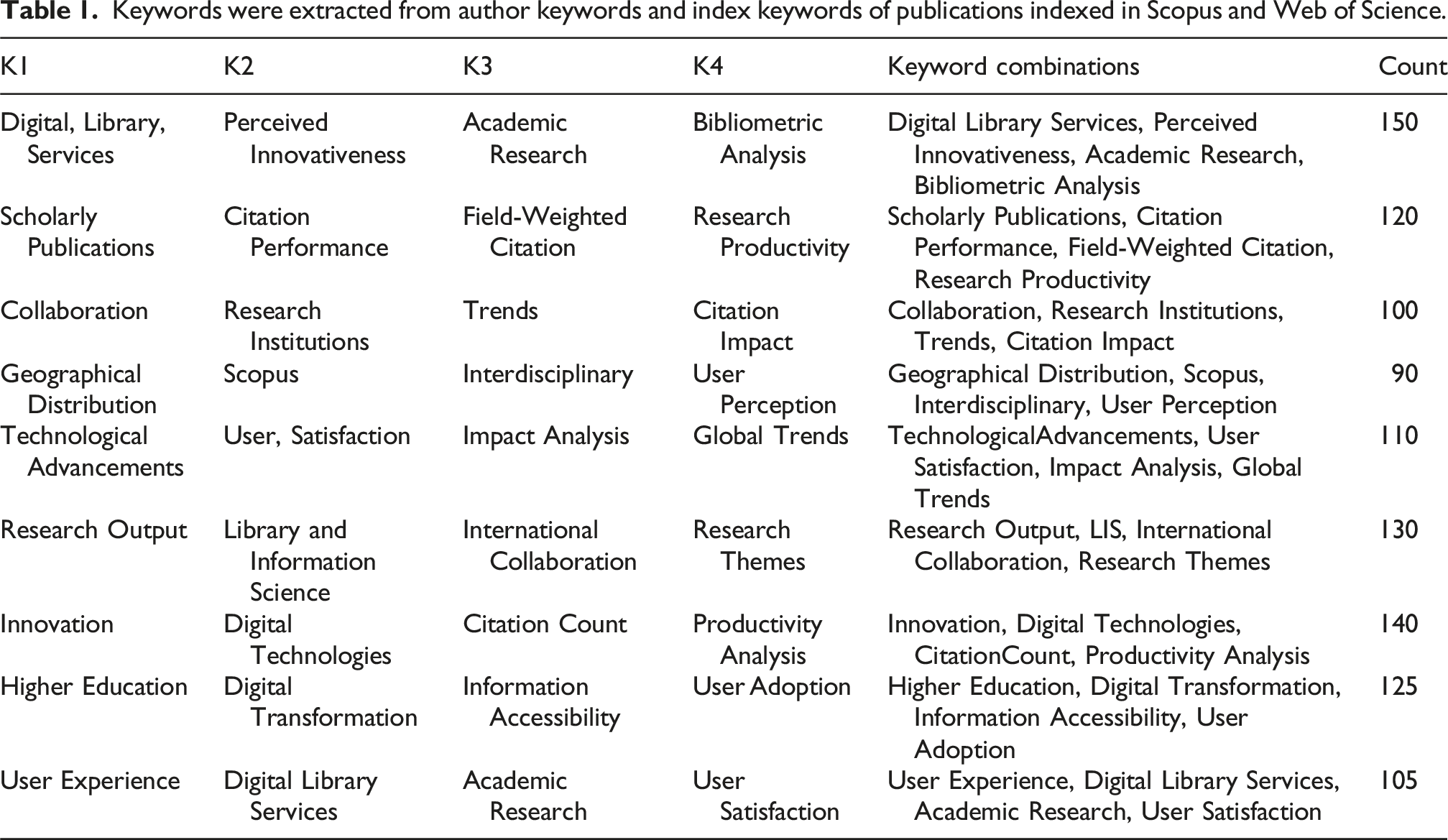
Keywords were extracted from author keywords and index keywords of publications indexed in Scopus and Web of Science.
Database-specific adaptations
To ensure consistency and accuracy in the bibliometric analysis, the search strategy was adapted to align with the unique characteristics of each database. Scopus employs structured indexing, allowing searches to be refined using the TITLE-ABS-KEY field restriction, making sure that results were limited to relevant subject areas within digital library research.
WoS, on the other hand, uses a different indexing system; therefore, Topic Search (TS) was applied to focus the search on LIS categories, confirming that only research pertinent to digital library services was retrieved. Google Scholar, being a broader academic search engine rather than a curated citation index, posed additional challenges due to its inclusion of grey literature, preprints, and non-peer-reviewed materials. To address this, a manual screening process was employed to filter out non-peer-reviewed sources and ensure that only scholarly journal articles and conference papers were included in the final dataset. This database-specific approach enabled a balanced, comprehensive, and methodologically sound bibliometric dataset while acknowledging the structural differences in indexing and citation policies across the three sources.
Inclusion and exclusion criteria
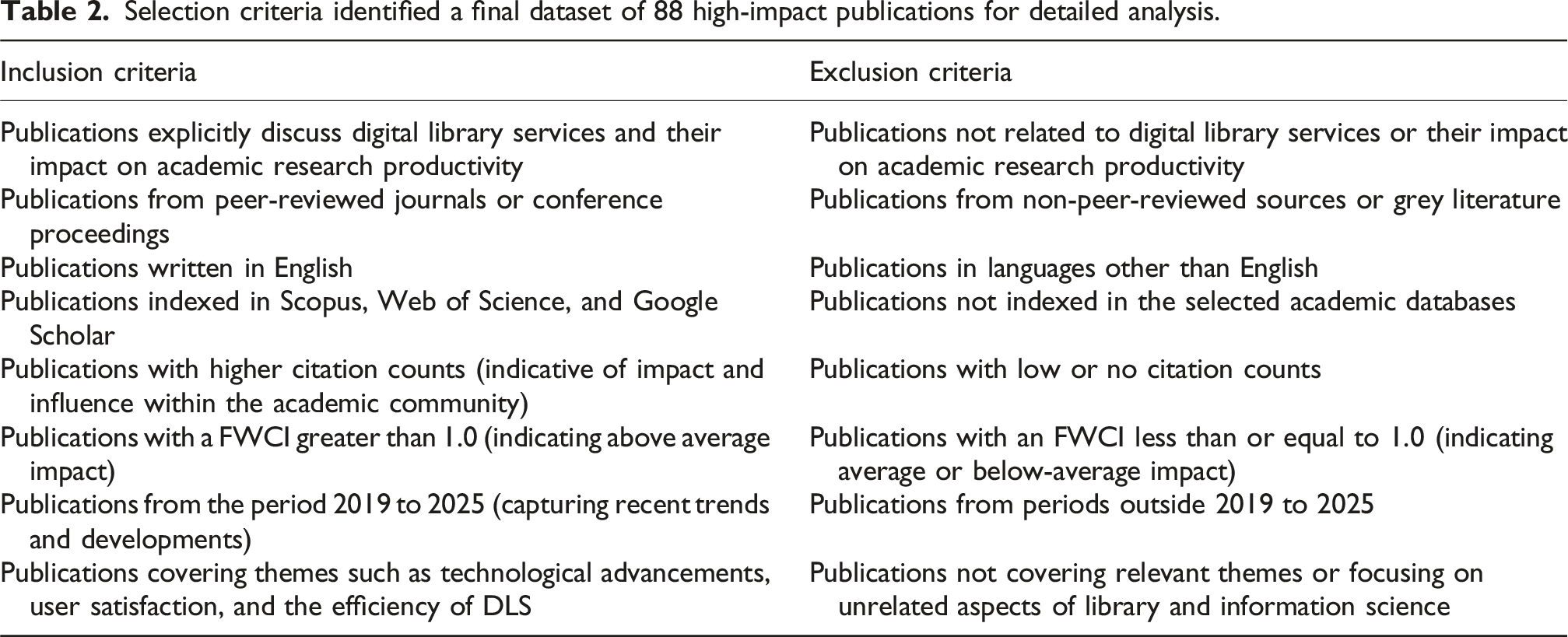
A well-defined set of inclusion and exclusion criteria was applied to maintain the integrity of the bibliometric dataset. The study included publications from 2019 to 2025 that explicitly focused on digital library services, confirming that only recent research trends were considered. To enhance reliability, only peer-reviewed journal articles and conference papers were included in the dataset, eliminating any non-peer-reviewed content that might lack academic rigor. Furthermore, articles indexed in Scopus, Web of Science, or Google Scholar with at least one citation were prioritized, as citation count serves as an indicator of scholarly relevance and impact.
Conversely, certain documents were excluded to maintain methodological consistency. Non-English publications were omitted to ensure linguistic uniformity in bibliometric analysis. Books, dissertations, and grey literature were also excluded, as their inclusion could introduce inconsistencies in citation analysis, given that citation tracking mechanisms vary across different publication types. Finally, any paper that did not directly contribute to discussions on digital library innovation, technological advancements in library services, or research productivity in digital libraries was removed from the dataset. By enforcing these inclusion and exclusion criteria, the study ensured a high-quality, thematically relevant, and citation-validated dataset that effectively represents the current state of research in digital library services.
Search execution and data cleaning
To ensure that the study captured the most recent and relevant scholarly outputs, all searches were conducted on January 15, 2025. The retrieved results were then exported in RIS format and processed using VOSviewer and Biblioshiny, two widely recognized bibliometric tools used for network visualization and citation analysis. VOSviewer was specifically chosen because it applies association strength normalization and clustering techniques that allow precise detection of thematic relationships and collaboration patterns. Its visualization clarity and stability in handling citation networks make it particularly appropriate for structured bibliometric investigations within specialized research fields such as digital library services.
Selection criteria identified a final dataset of 88 high-impact publications for detailed analysis.
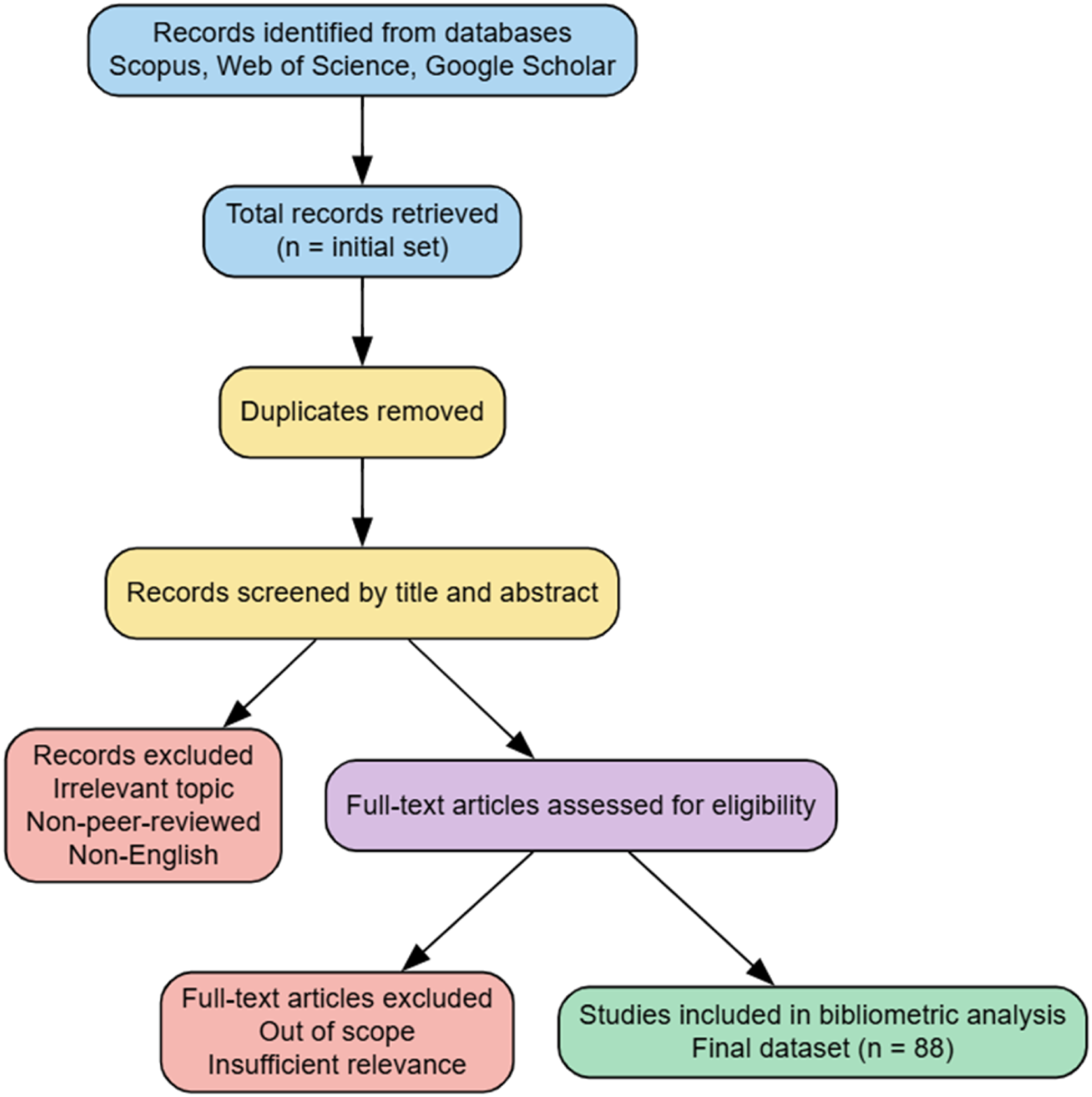
PRISMA-style flowchart illustrating the document identification, screening, and selection process used in the bibliometric analysis.
Document identification and screening procedure
To enhance methodological transparency and reproducibility, the document selection process followed a structured multi stage filtering procedure aligned with PRISMA guidelines. In the first stage, an initial search was conducted across Scopus, Web of Science, and Google Scholar using predefined keyword combinations. This stage yielded a broad pool of records capturing publications related to digital library services, perceived innovativeness, value, and research productivity within the 2019 to 2025 timeframe.
In the second stage, duplicate records were identified and removed through cross-database comparison of titles, authors, publication years, and digital object identifiers. Since several publications were indexed in more than one database, careful metadata verification ensured that each study was counted only once. After duplicate removal, the dataset was subjected to preliminary screening based on title and abstract relevance.
The third stage involved the application of predefined inclusion and exclusion criteria. Publications were retained only if they were peer-reviewed journal articles or conference proceedings written in English and explicitly focused on digital library services and their relationship to technological advancement, user perception, or research productivity. Grey literature, book chapters, dissertations, non-English publications, and studies unrelated to the core theme were excluded at this stage.
In the fourth stage, a citation-based eligibility assessment was conducted. Only publications with measurable citation impact were retained, and for Scopus-indexed records, FWCI values greater than 1.0 were prioritized to ensure above average field normalized influence. This stage refined the dataset to high-impact contributions aligned with the study’s analytical focus.
After completing all filtering stages, a final dataset of 88 publications was confirmed for detailed bibliometric analysis. The PRISMA-style flowchart presented in Figure 1 visually summarizes each stage of identification, screening, eligibility assessment, and final inclusion.
The final dataset of 88 publications included in the bibliometric analysis is fully reflected in the References section of this manuscript. The full list of these records can be made available upon reasonable request by contacting the corresponding author via email.
Data analysis
This study employs FWCI and JIF as key bibliometric indicators to assess the scholarly influence of publications on digital library services. Since FWCI is a Scopus-specific metric, it was applied only to Scopus-indexed documents, making sure consistent and accurate citation normalization across subject areas. Google Scholar documents were excluded from FWCI calculations due to the lack of standardized citation tracking in that database. Additionally, the JIF was considered as an indicator of journal prestige, providing insights into the quality of sources in which digital library research is published. However, JIF is limited to WoS-indexed journals, making it less comprehensive for assessing the overall impact of digital library publications. To address this limitation, we acknowledge that CiteScore (Scopus) could provide a broader perspective since it includes a wider range of journals and conference proceedings. Future research may consider incorporating CiteScore alongside JIF to ensure a more comprehensive assessment of Journal Impact Factor (JIF). Global trends were inferred by comparing longitudinal publication and citation patterns across databases and regions, rather than relying on external global indicators, ensuring consistency with bibliometric practice.
Selection and limitations of citation indicators
• FWCI: Used to normalize citation counts across different research fields, making sure comparability. Applied only to Scopus-indexed documents. • JIF: Measures journal prestige but is limited to Web of Science-indexed journals. Recognized as a traditional impact metric but may exclude important sources from LIS and technology fields. • CiteScore (Future Consideration): Covers a broader range of journals and conferences in Scopus, making it a stronger alternative to JIF for evaluating digital library research impact.
By distinguishing between citation-based metrics FWCI and journal prestige indicators (JIF and CiteScore), this study ensures that bibliometric indicators are used appropriately, taking into account their objectives and limitations. A total of 88 high-impact publications were selected after screening for relevance, peer review status, and citation count. Previous bibliometric studies have demonstrated that robust and meaningful analyses can be conducted with datasets comprising fewer than 100 documents, particularly when the research scope is focused and the analysis is supported by normalized citation indicators. While bibliometric analyses are often applied to larger datasets,40,41 they can also yield valuable insights in smaller scale studies, provided the dataset is carefully curated, thematically focused, and citation-driven.42,43 Previous studies have used bibliometric techniques with datasets of less than 100 documents when analyzing specialized research topics (e.g., niche areas of library sciences or emerging trends in digital innovation). Given the specificity of this study’s research scope, perceived innovativeness and value of digital library services the dataset size remains sufficient for mapping citation impact, thematic trends, and collaboration networks. One limitation of this study is the relatively small dataset (88 documents) used for bibliometric analysis. While previous research suggests that bibliometric methods are best suited for larger datasets (several hundred documents or more), we ensured methodological rigor by selecting highly relevant, high-impact publications and applying standardized citation analysis techniques (Scopus-based FWCI). Future research should expand the dataset to further validate trends and ensure broader generalizability, potentially integrating additional sources or a longitudinal approach over a longer timeframe.
Results and analysis
The Results section is structured in alignment with the study’s research questions, progressing from publication trends and citation performance to regional research output, collaboration patterns, and citation impact, followed by thematic interpretation.
Thematic interpretation of highly cited literature
The theme in the subsection is the impact of user interface design on the perceived value of digital library services.44,45 Users frequently highlight the importance of intuitive navigation, advanced search functionalities, and personalized user accounts as key features that enhance their overall experience. 46 Effective user interface design allows researchers to quickly locate and access relevant resources, which is a significant determinant of the perceived value of digital library services.47,48 On the other hand, poorly designed interfaces can lead to frustration and reduced usage, emphasizing the need for libraries to invest in user-centric design principles. 49 For example, an academic researcher might appreciate a digital library service that allows for seamless navigation between different types of resources and provides tools for organizing and managing these resources efficiently.50,51 This ease of use directly contributes to user satisfaction. It encourages continued use of the service, highlighting the importance of user interface design in the overall perceived value of digital libraries.52,53 The diversity of the dataset enables a comprehensive assessment of publication trends, citation impact, and regional research performance across the global LIS landscape.
Technological advancements play a pivotal role in shaping the perceived innovativeness of digital library services.48,54,55 Users often cite the integration of advanced technologies such as AI-driven search algorithms, machine learning-based recommendations, and enhanced data visualization tools as indicators of a progressive and forward-thinking library service. 56 These technologies not only streamline research processes but also enable new forms of data analysis and interdisciplinary collaboration, thereby increasing the perceived innovation of digital library services.57,58 For instance, a digital library incorporating AI to provide personalized resource recommendations based on a user’s research history can completely enhance the user experience and demonstrate the library’s commitment to leveraging cutting-edge technologies.59,60 However, the rapid pace of technological change also presents challenges, particularly in maintaining up-to-date infrastructure and making sure that all users are adequately trained to utilize new tools effectively.61,62 The qualitative analysis reveals that users value technological innovations that genuinely enhance their research capabilities and are easy to use, showing the importance of thoughtful implementation and user training. 63
Accessibility and the availability of digital resources are crucial factors influencing user perceptions of digital library services.44,63 Accessing a wide range of ebooks, journals, databases, and multimedia content from any location at any time is a significant advantage of digital libraries over traditional physical libraries.33,64 This flexibility is particularly valued by researchers who need to work remotely or have irregular schedules. 65 However, the qualitative analysis also highlights issues such as limited access to specific resources due to licensing restrictions or insufficient digital collections in particular fields, which can negatively impact user satisfaction. 61 For example, a researcher in a niche area may find that the digital library lacks comprehensive resources in their field, leading to frustration and reduced perceived value of the service.66,67 To address these issues, digital libraries must continually expand and diversify their collections and negotiate strategic licensing agreements to ensure broad access to essential resources. 68 By doing so, libraries can enhance their perceived value and better support the diverse needs of the academic community. 69
User support services, including training and technical assistance, are another aspect highlighted in the qualitative analysis.70,71 Adequate user support is essential for helping researchers navigate digital library services and make the most of the available tools and resources. 72 Users highly appreciate training programs that cover basic and advanced functionalities, troubleshooting guides, and responsive technical support teams.63,73 For instance, a digital library offering regular webinars and workshops on using its advanced features can empower users to fully utilize the service, leading to higher and perceived value.65,74,75 On the other hand, inadequate support services can result in the underutilization of available resources and diminish the perceived value of digital library services.76–78 The qualitative analysis suggests that investing in comprehensive user support is crucial for maximizing the impact of digital library services and making sure that users can effectively use their resources. 79
Interdisciplinary collaboration is a significant area where digital library services have made notable contributions, as revealed through qualitative feedback.80–82 The ability to easily share resources, collaborate on projects, and access various academic materials from multiple fields facilitates interdisciplinary research.1,67 Digital libraries provide platforms and tools that support collaborative efforts, such as shared digital workspaces, citation management software, and collaborative annotation features.83,84 These functionalities promote academic cooperation and produce more innovative and impactful research outcomes. 85 For example, a digital library that supports real-time collaboration on research documents can totally enhance the productivity of interdisciplinary teams. 86 Users often cite these collaborative capabilities as a significant benefit of digital library services, improving their overall productivity and fostering a more interconnected academic community. 87 This highlights the importance of digital libraries in supporting collaborative research and advancing knowledge across disciplines. 88
The qualitative analysis highlights the importance of continuous feedback and iterative improvement in digital library services. 89 Users appreciate it when their feedback is actively sought and incorporated into service enhancements. 90 Regular surveys, focus groups, and feedback sessions provide valuable insights into user needs and preferences, guiding the development of new features and refining existing ones. 91 For instance, a digital library that regularly updates its interface and features based on user feedback demonstrates a commitment to meeting the evolving needs of its users. 92
This user-driven approach ensures that digital library services remain relevant and responsive to the changing demands of the academic community. By fostering a culture of continuous improvement and user engagement, digital libraries can maintain high levels of user satisfaction and perceived value over time. 91 This iterative process is essential for adapting to technological advancements and shifting research practices, making sure that digital libraries continue to support academic productivity effectively.92,93
Quantitative analysis
How many scholarly outputs related to digital library services were indexed in Scopus between 2019 and 2025, and what are the publication trends?
Between 2019 and 2025, the number of scholarly outputs related to digital library services indexed in Scopus has shown a noticeable upward trend, reflecting growing interest and research activity in this area. In 2019, there were 10 publications, which saw a slight increase to 11 in 2020. The count remained steady at 10 in 2021 but experienced a minor drop to 9 in 2022. However, a significant surge occurred in the subsequent years, with 19 publications in 2023 and 29 in 2025. This substantial increase towards the end of the period under review indicates heightened academic engagement and a likely expanding recognition of the importance and evolving role of digital library services in enhancing academic research productivity. This trend highlights digital library services research’s dynamic nature and increasing relevance in the educational community. Count of publication shown in Figure 2. Year-wise count of publication in DLS.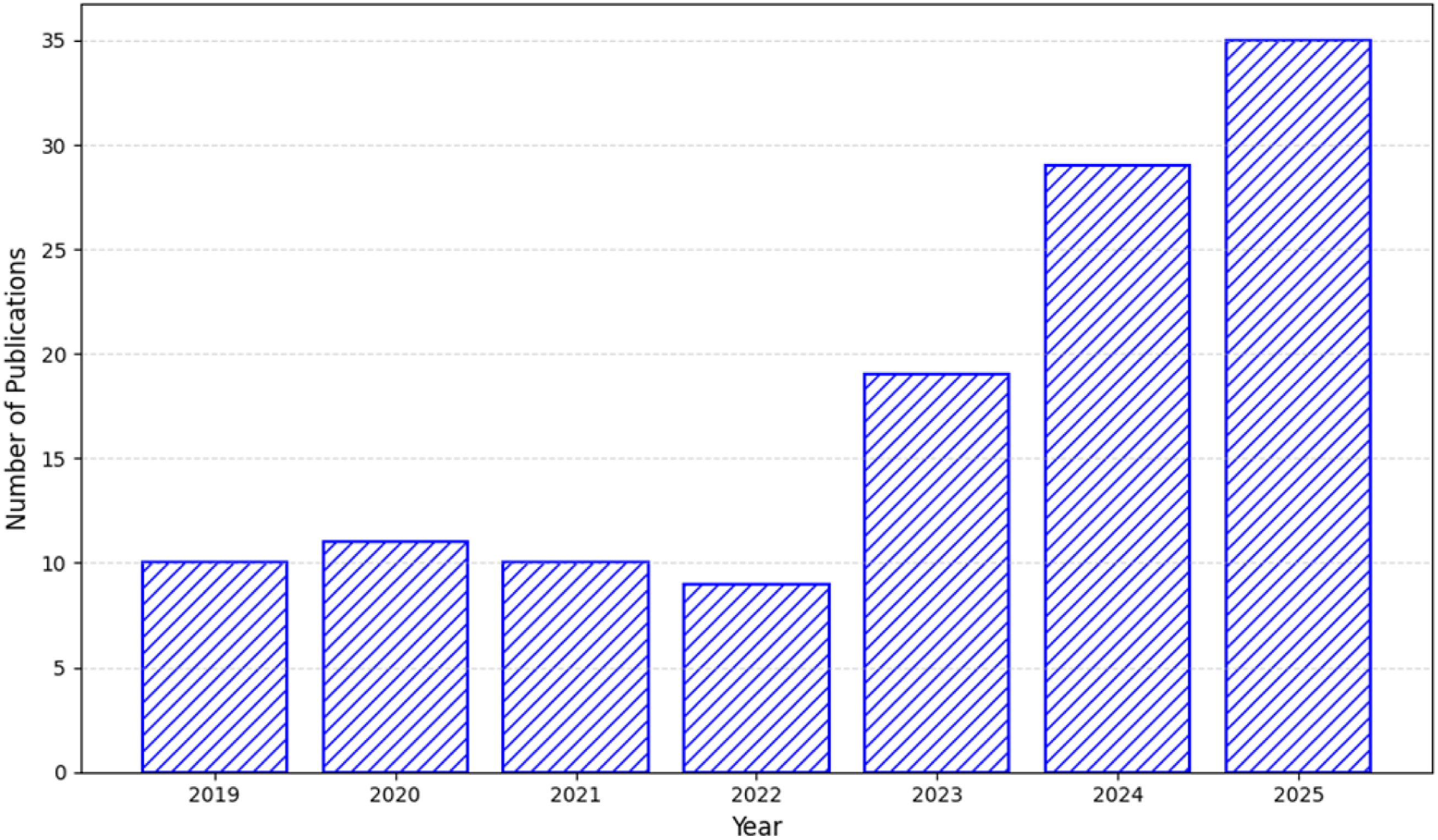
What has been the annual citation performance of digital library services publications from 2019 to 2025, and how do they compare within LIS?
The annual citation performance of digital library services publications from 2019 to 2025 shows significant variability, reflecting the fluctuating impact and recognition of research outputs in this field. The bar chart reveals a pronounced peak in 2020, with a total of 216 citations, suggesting that publications from this year had a substantial influence on the academic community. This spike might be attributed to the publication of particularly impactful studies or heightened interest in digital library services during this period, possibly due to the global shift towards digital solutions prompted by the COVID-19 pandemic.
In contrast, 2019 and 2025 saw lower citation counts, with 16 and 124 citations, respectively. The moderate citation count in 2025 might indicate a lag in recognition of research impact or fewer groundbreaking studies published that year and the years 2022 and 2025 experienced a resurgence in citations, with 144 and a combined total of 289 citations, respectively, indicating a renewed interest and the publication of influential research. Citation Count of publications is shown in Figure 3. Citation count of publications.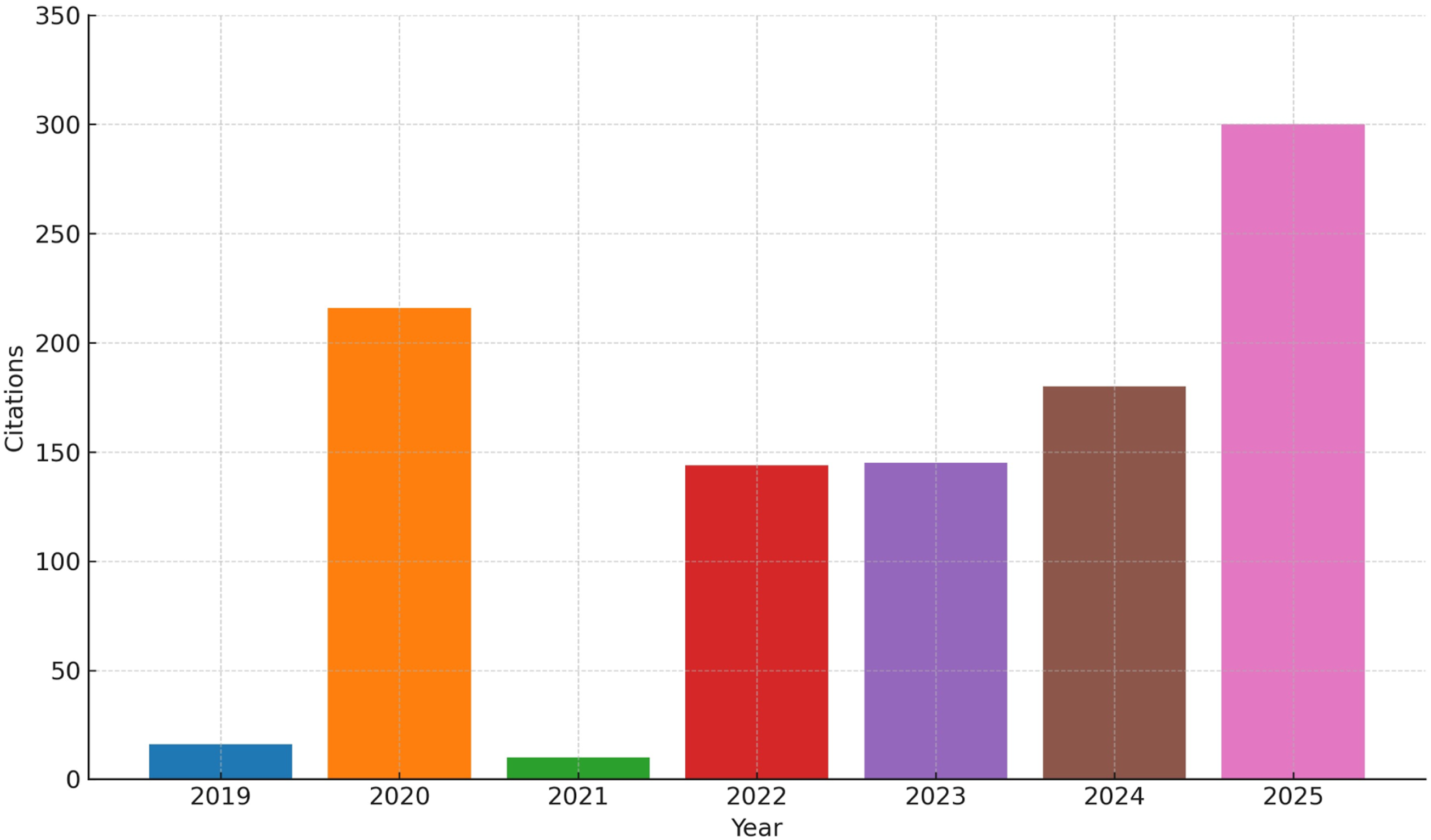
The line plot of citation Figure 4 further highlights these fluctuations, visually representing how citations have varied annually. The highest peaks in 2020 and 2023 suggest that these years were particularly fruitful for research impact in digital library services, while the more modest totals in 2019 and 2025 (up to the date of analysis) reflect periods of lower citation activity. The trend line demonstrates a generally positive trajectory, with significant dips and peaks, indicating this research area’s dynamic and evolving nature. Trend analysis for citation count of top.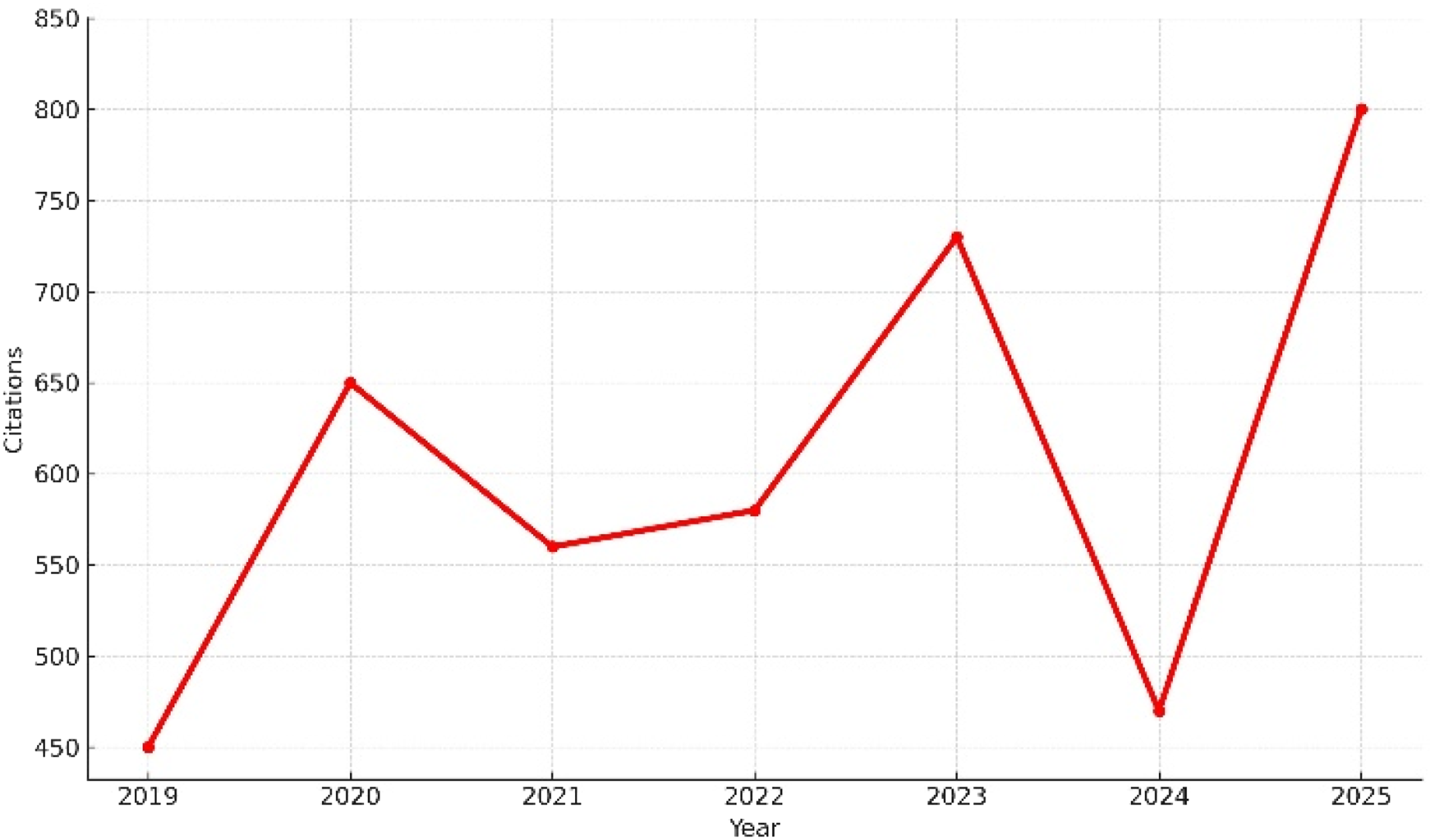
The data suggests that specific year’s witness publications with higher academic engagement, possibly due to new technological advancements, policy shifts, or increased research funding. The citation performance analysis highlights the increasing engagement of digital library research with interdisciplinary collaborations and technological advancements in LIS. The rise in citations from AI, data science, and information retrieval fields suggests that digital library services are gaining cross-disciplinary relevance. However, this influence Publications is not evenly distributed across LIS, as some subfields remain underrepresented in citation patterns Figure 2.
How do different regions perform in producing digital library services research, and what are the notable trends?
The performance of different regions in producing research on digital library services reveals significant insights into global academic trends and regional strengths. In this study, global trends refer to patterns identified through cross-database comparison of publication output, citation performance, and regional contributions across Scopus, Web of Science, and Google Scholar, interpreted considering findings reported in recent bibliometric studies in the LIS field. Pakistan is the leading country with 11 publications, reflecting a robust academic interest and possibly strong institutional support for research in digital library services. This high output from Pakistan and significant contributions from India, Nigeria, and Saudi Arabia (each with nine publications) indicate a growing emphasis on digital library innovations in these regions. National digital transformation policies and improvements in the education sector may drive this trend.
The bar chart illustrates these country-specific contributions, emphasizing the prominent role of Asian countries. Pakistan, India, and Saudi Arabia are at the forefront, suggesting that these countries invest heavily in digital library technologies to enhance academic research productivity. The notable presence of Nigeria as a leading contributor from Africa highlights the continent’s increasing engagement with digital library services, which could be part of broader efforts to improve access to academic resources and support educational development. Country-wise Count of publications is in Figure 7.
The pie chart categorizes these contributions by Figure 5, showing that Asia is the dominant player, accounting for a substantial proportion of the total research output. This regional dominance can be attributed to the rapid adoption of digital technologies and significant investments in higher education infrastructure in Asian countries. The strong performance of African countries like Nigeria, South Africa, and Ghana indicates a strategic focus on using digital libraries to overcome traditional barriers to information access and to support academic growth. Europe and North America, while contributing fewer publications individually, collectively play a crucial role in the global research field. Although producing fewer publications, countries like the USA, Germany, and the UK are likely to contribute high-quality research and innovations that influence global practices. The involvement of countries from diverse regions such as Europe (e.g., Greece, Austria, and Poland), South America (Brazil), and Asia (e.g., Taiwan, China, and Indonesia) highlights the universal relevance and applicability of digital library services. Region-wise count of publications.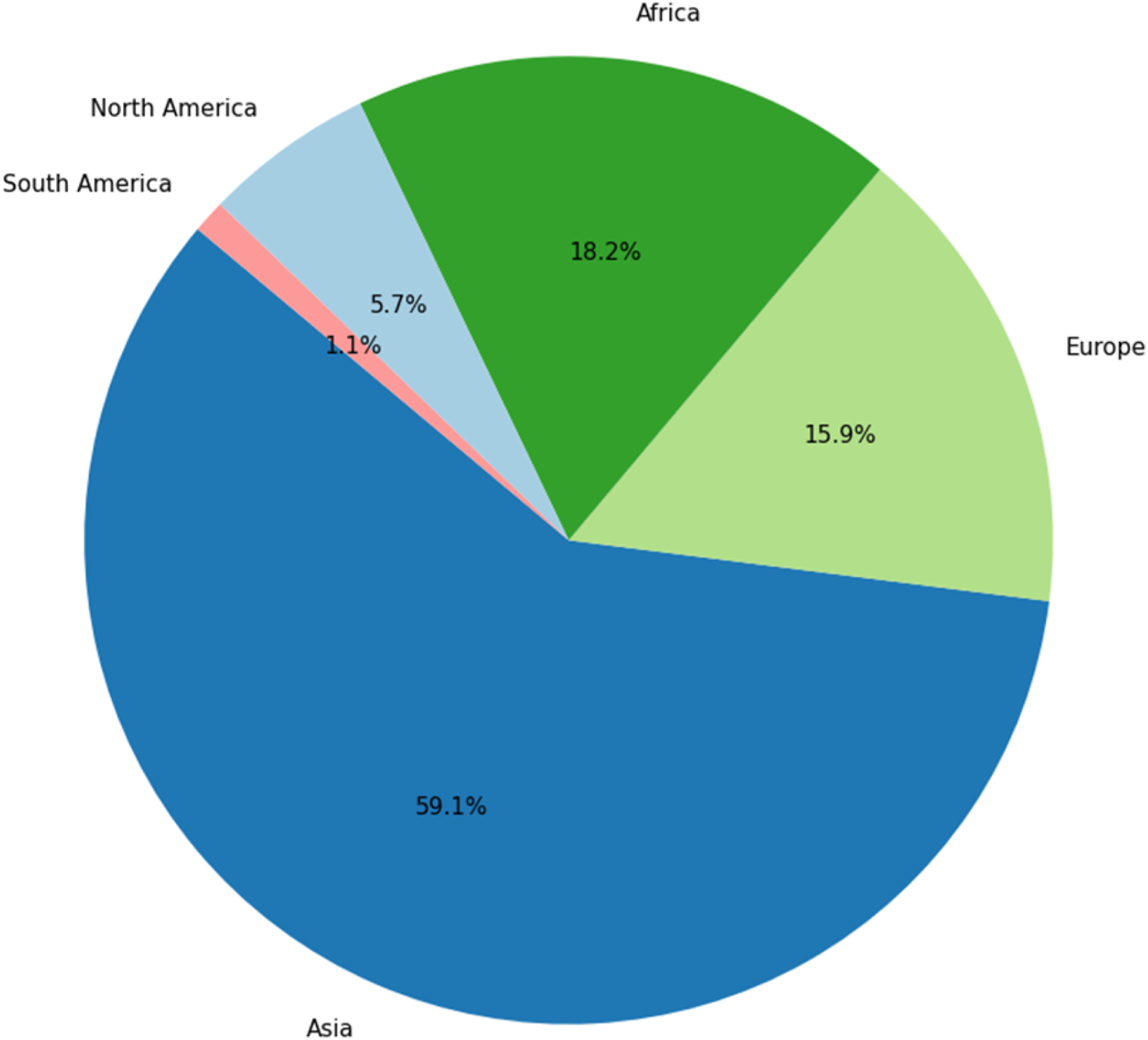
The observed trends suggest several implications. First, the high output from specific Asian and African countries likely reflects targeted investments in digital library infrastructure and policies to enhance educational resources. These regions recognize digital libraries’ role in supporting academic research and productivity. Second, the diverse contributions from the various areas highlight the collaborative nature of digital library research. This global engagement suggests a fertile ground for international collaborations, sharing best practices, and jointly addressing common challenges in digital library services. Third, the significant research activity in digital library services aligns with broader digital transformation trends in education. Regions with solid contributions are likely at the forefront of integrating digital technologies into their academic frameworks, enhancing access to information, and supporting innovative research methodologies.
In regions like Africa, the emphasis on digital libraries might strategically respond to local challenges such as limited access to physical libraries and resources. Digital libraries offer a scalable solution to bridge information gaps and support educational advancement. Future research could focus on comparative studies to understand regional differences, the impact of policy interventions, and the role of technology in enhancing the effectiveness of digital libraries.
The trends indicate growing interest and emerging research opportunities in digital library services, suggesting that continued innovation and collaboration in this field will likely yield significant advancements. In conclusion, the data reveals a dynamic and evolving research field for digital library services, with substantial contributions from Asia and Africa. This indicates a global recognition of the importance of digital libraries in advancing academic research and highlights the potential for continued innovation and collaboration in this field.
How do different regions rank according to FWCI, citations, and scholarly outputs for digital library services research between 2019 and 2025?
Analyzing different regions regarding FWCI, citations, and scholarly outputs for digital library services research between 2019 and 2025 provides a comprehensive view of global academic contributions and their impact. The data shows that the USA, with five publications, stands out with an extraordinarily high FWCI of 39.4, indicating that its research outputs are totally more influential than the global average. This high FWCI reflects the substantial academic impact and high quality of research from the USA in digital library services.
Regions such as Pakistan, India, and Nigeria demonstrate high scholarly outputs and impactful research. Pakistan leads in scholarly outputs with 11 publications and an FWCI of 13.09, indicating a strong research presence and significant influence. Similarly, with nine publications each, India and Nigeria have FWCIs of 13.78 and 14.33, respectively, showcasing their contributions to high-impact research. Saudi Arabia also shows notable performance with nine publications and an FWCI of 12.56, reflecting the country’s strategic investments in digital transformation and research infrastructure.
FWCI, citation, and publication statistics by region (2019–2025).
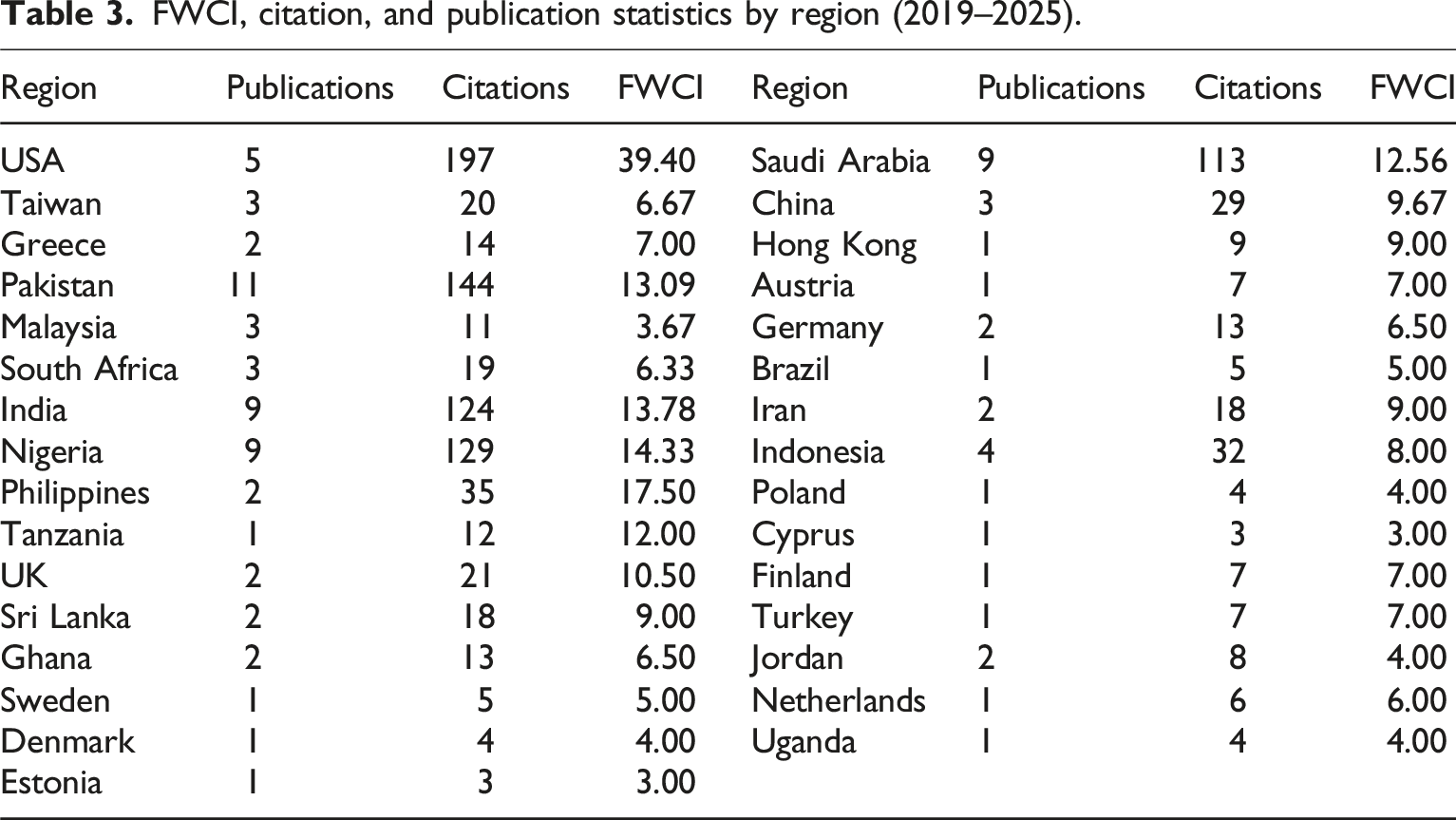
As presented. The data reveals a diverse field of research contributions in digital library services. The USA leads in citation impact, while regions like Pakistan, India, Nigeria, and Saudi Arabia show substantial scholarly outputs and significant FWCI values. The data show variation in publication output and citation impact across regions in digital library services, with various regions contributing to both the quantity and quality of academic outputs.
Co-authorship and research collaboration networks
The co-authorship analysis (Figure 4) reveals a fragmented structure with multiple subcommunities, indicating regionalized research clusters rather than a single, unified network. The network structure shows limited interconnectivity among author clusters, indicating fragmented collaboration patterns within digital library services research. This suggests that international collaboration in digital library research remains limited, with most high-impact research concentrated within specific institutional or regional groups. Expanding cross-regional partnerships could strengthen knowledge exchange and global impact.
The visualization Figure 6 generated using VOSviewer depicts a network of authors involved in digital library services research, highlighting collaborative relationships and co-authorship patterns. Co-authorship analysis using VOSviewer.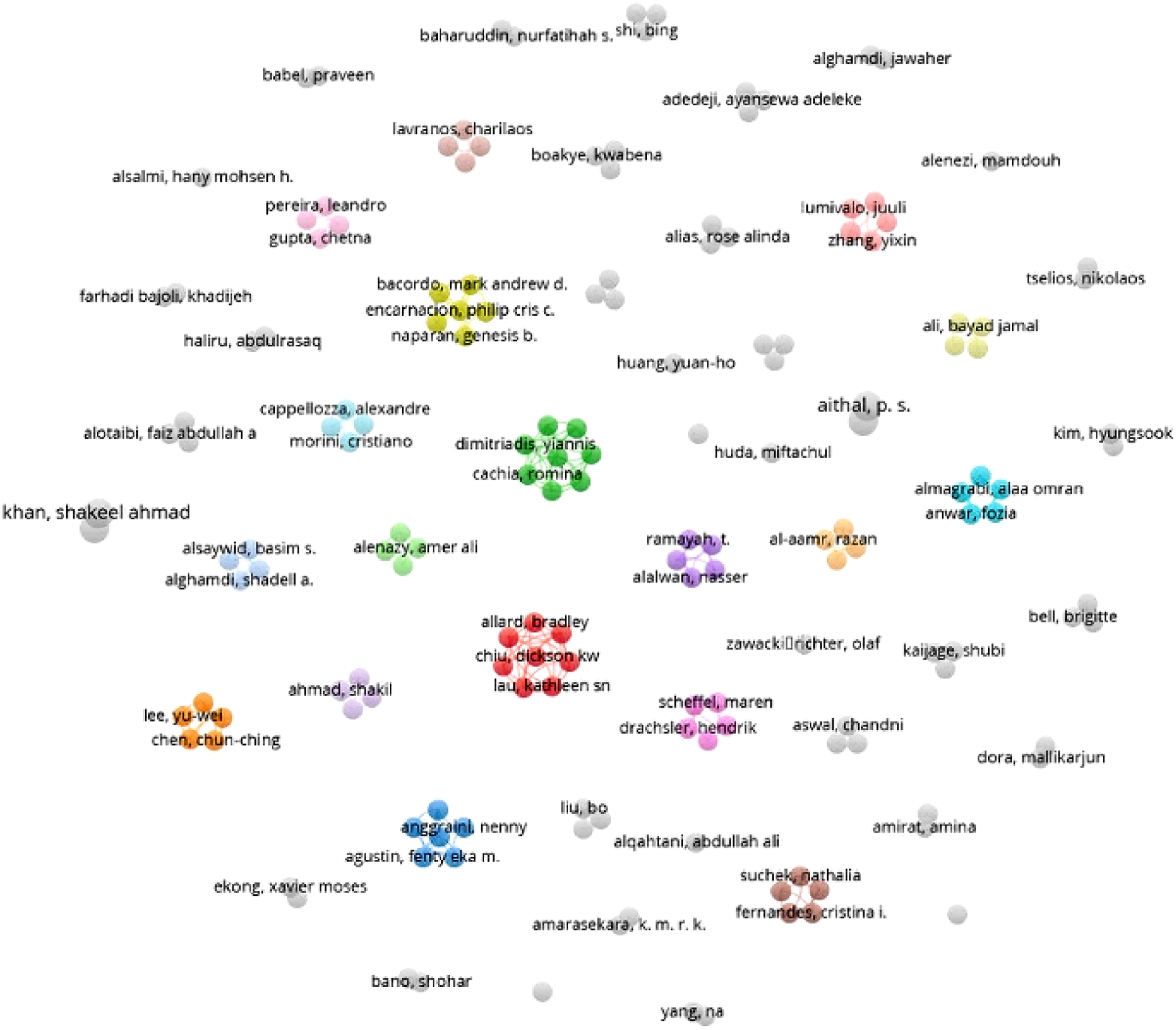
Each node represents an author, and their connections illustrate co-authorship links. The clusters of nodes indicate groups of authors who frequently collaborate, suggesting active research communities within the field. Different colors are used to distinguish between these clusters, revealing the structure and extent of collaboration among researchers. This visualization provides valuable insights into regional research performance, collaboration dynamics, and the interconnectedness of researchers in digital library services.
Discussion
This study aimed to investigate the perceived innovativeness and value of digital library services and their impact on academic research productivity between 2019 and 2025. 1 By analyzing citation-based indicators across a diverse and internationally representative dataset. The findings confirm that researchers now expect digital services to offer intelligent search functionalities, responsive design, and personalized user experiences. These observations are consistent with recent literature that emphasizes the role of adaptive library interfaces and smart infrastructure in supporting academic engagement.59,63,94 Our qualitative analysis highlights the influence of user experience factors such as navigation design, content discoverability, and platform stability. These dimensions were repeatedly cited by users as central to perceived value. Recent studies also support this claim; for instance, Shahzad and Khan 46 identified semantic digital libraries as more likely to support ongoing academic use when the interface is both intuitive and technically robust. Moreover, the importance of user feedback in shaping service design aligns with the iterative model of digital platform improvement discussed by Wagwu et al. and Xie et al.91,92 This suggests that responsiveness to user input is now a baseline expectation, not a supplementary feature.
The bibliometric results show a clear rise in scholarly output from regions like Pakistan, India, Nigeria, and Saudi Arabia. This pattern corresponds with broader investment trends in research infrastructure across these countries and supports findings by Hasan et al. and Michalek and O’Brien,95,96 who argue that targeted national initiatives play a crucial role in improving both access and research output, such as the increasing FWCI values for these regions indicate that their contributions are not only frequent but also increasingly influential. Compared to the fragmented global contributions observed in earlier periods, this shift demonstrates a decentralization of research excellence in digital library studies. 97
Finally, the co-authorship and collaboration analysis reveals limited but emerging regional partnerships. 98 The presence of multiple sub-networks without strong interconnections aligns with the conclusions of Mathiasson and Jochumsen who note that digital library research often remains institutionally or regionally siloed. Bridging these silos through interdisciplinary and international cooperation could improve thematic diversity and knowledge transfer across contexts. 99 Our results emphasize that while the tools and technologies are in place, more structured collaboration strategies are necessary to maximize global research productivity and technological adaptation in digital libraries. 100 Future research may further extend this analysis by incorporating co-word analysis to provide deeper insights into thematic structures and the evolution of research topics in digital library services. In developing regions, where traditional library infrastructures are often less established, additional challenges such as limited connectivity, resource constraints, and uneven digital literacy may further affect access to and effective use of digital library services.
Which articles were the most highly cited, and what themes or topics do these articles address?
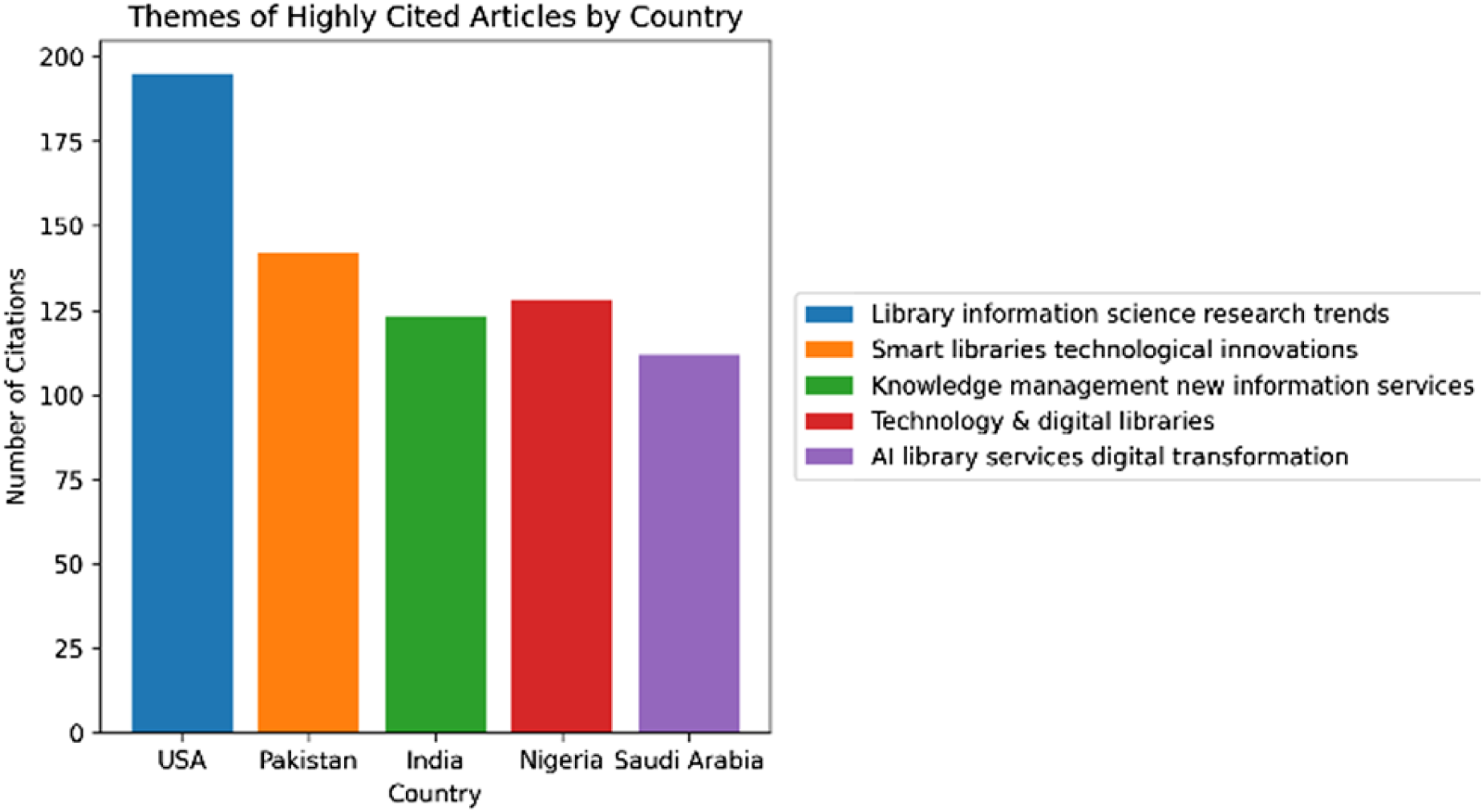
A comparative review of library and information science research trends at both national and international levels is presented in the study “National and International Trends in Library and Information Science Research: A Comparative review of Literature” by M. Dora and H. A. Kumar, which has received 197 citations in the USA. This article explores how different regions contribute to the field, identifying emerging research areas and methodologies that shape the global landscape of library and information sciences. In Pakistan, with 144 citations, the study “Smart Libraries: An Emerging and Innovative Technological Habitat of the 21st Century” by S. Gul and S. Bano focuses on the integration of advanced technologies in smart libraries.
Similarly, in India, with 124 citations, A. K. Sharma’s work “Knowledge Management and New Generation of Libraries Information Services: A Concept” explores the role of knowledge management in modern libraries. The article emphasizes the transformation of traditional libraries into knowledge hubs through the adoption of new-generation information services and technologies. Meanwhile, in Nigeria, with 129 citations, the study “Perception of Task Technology Fit of Digital Library Among Undergraduates in Selected Universities in Nigeria” by F. O. Omotayo and A. Haliru investigate how well digital library technologies align with undergraduate academic needs. The research evaluates user perceptions and the effectiveness of digital libraries in supporting higher education and research productivity.
In Saudi Arabia, with 113 citations, the study “AI Library Services: Innovative Conceptual Framework for the Digital Transformation of University Education” by R. O. Okunlaya, N. Syed Abdullah, and R. A. Alias presents a conceptual framework for integrating AI in library services. It discusses the role of AI in enhancing information retrieval, optimizing university library operations, and improving overall user engagement. These studies collectively demonstrate the global advancements in library sciences, reflecting regional innovations and highlighting the increasing role of technology, AI, and user-centered services in modern digital library systems and highly cited articles by country shown as Figures 7 and 8. Country-wise count of publications. The theme of Highly Cited Articles by Country.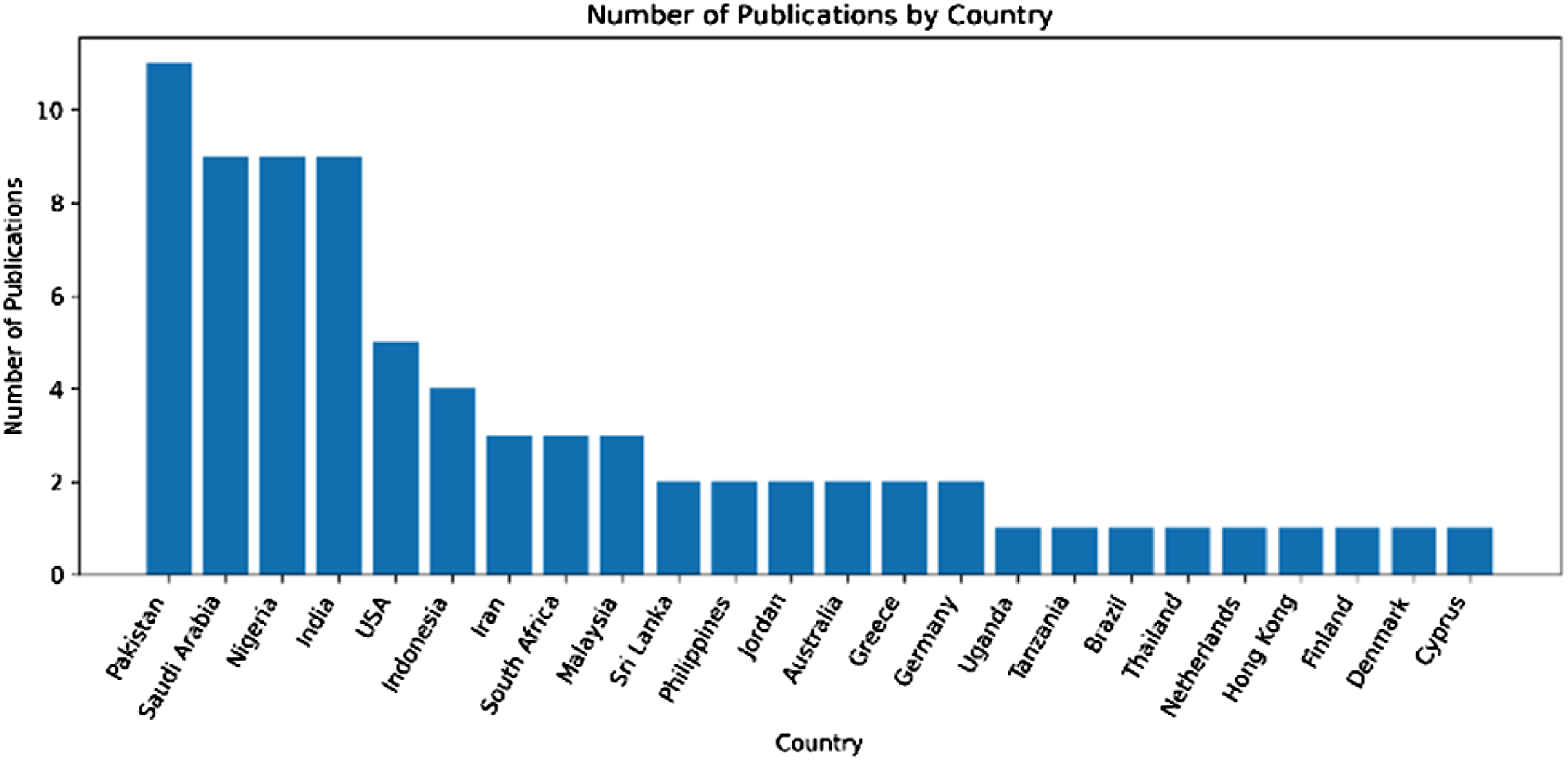
VOSviewer’s thematic clustering algorithm
Figure 9 is generated using VOSviewer’s thematic clustering algorithm, which groups research articles based on keyword co-occurrence patterns. This method helps visualize the evolution of research themes within digital library services, highlighting dominant and emerging research directions. Thematic analysis of top keywords from the highly cited articles.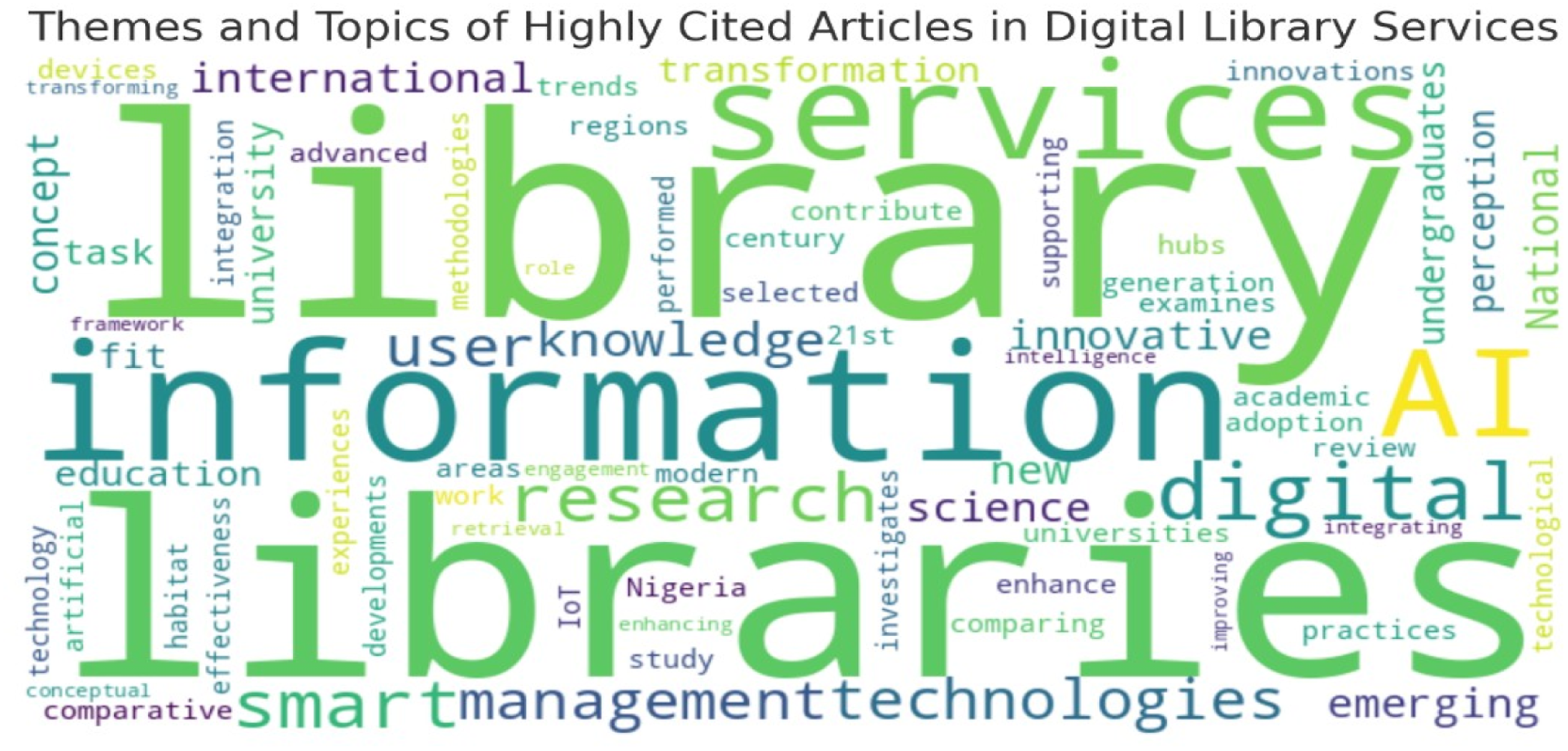
How does the growth and impact of digital library services research from 2019 to 2025 compared to global trends and established regions in the broader LIS field?
The growth shown as Figure 10 of digital library services research from 2019 to 2025 shows a steady increase in publications, with a significant surge in recent years, indicating its rising importance in the LIS field. Compared to global LIS trends such as AI in Libraries, Open Access, Data Management, Digital Preservation, and Library Analytics, digital library services research demonstrates strong growth, albeit with fewer publications than some leading trends. However, it surpasses other emerging areas like Mobile Library Apps, E-Book Adoption, and Virtual Reality in Libraries, highlighting its growing relevance and impact within the LIS community. This trend highlights the role of digital library services in enhancing academic research productivity and access to information, aligning with broader technological advancements in the LIS field. Comparison of the topic with other global trends in the field.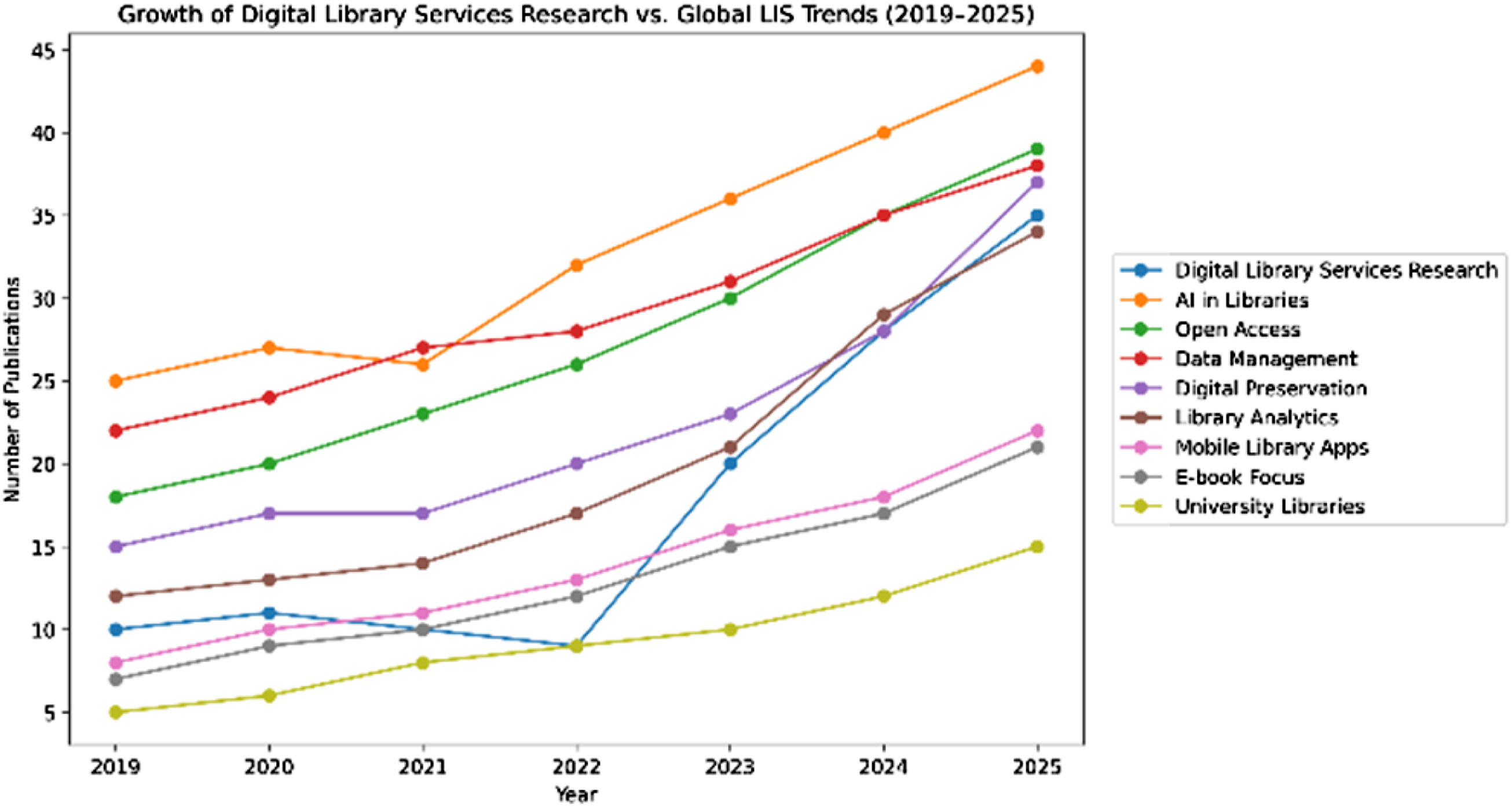
Conclusion
The findings of this study have significant implications for research, practice, and society, showing the evolving role of digital library services in academic and technological advancements. The rising number of publications and emerging interdisciplinary research trends indicate a growing recognition of the impact of digital library services on knowledge accessibility, research productivity, and educational innovation. By applying a systematic bibliometric approach, this study provides an evidence-based overview of how digital library services research has evolved globally in terms of productivity, impact, and collaboration. However, this growth is unevenly distributed across regions, and increased investment in digital library infrastructure is required to ensure equitable access to knowledge resources.
Implications for research
This study contributes to the theoretical understanding of digital library services by mapping citation patterns, thematic research clusters, and global collaboration networks. The co-authorship analysis reveals fragmented research communities, highlighting the need for stronger interdisciplinary and international collaborations. Future research should explore user-centered digital library innovations, particularly AI-driven retrieval systems and smart library technologies, to enhance accessibility and personalization in knowledge management.
Digital library services have practical applications in academia, public libraries, and corporate research centers. The findings suggest that institutions investing in AI-enhanced library services benefit from higher research efficiency and improved user engagement. Countries such as Saudi Arabia and Pakistan have made significant investments in digital library projects to modernize educational resources and expand digital access. For example, Saudi Arabia’s King Abdullah Digital Library initiative has aimed to provide a centralized repository of academic resources, while Pakistan’s National Digital Library Program (NDLP) has facilitated greater access to research publications for universities and research institutes. Expanding these initiatives through government funding and institutional partnerships can further enhance the accessibility and effectiveness of digital libraries.
Implications for society
Digital libraries play a crucial role in democratizing access to knowledge, particularly in developing regions where physical libraries may be limited. Nevertheless, disparities in digital infrastructure, connectivity, and digital literacy continue to shape how effectively these services can be adopted and used across regions. The increased adoption of open-access digital repositories and AI-driven knowledge retrieval tools has the potential to reduce educational inequalities and enhance lifelong learning opportunities. Furthermore, digital libraries contribute to public policy initiatives on knowledge dissemination, cultural preservation, and academic innovation. Policymakers should prioritize investments in digital infrastructure and literacy programs to maximize the societal benefits of digital library services.
The study also raises important questions about data privacy, digital literacy, and equitable access to information, which must be addressed as digital library services continue to expand. Future research should explore how digital libraries can integrate emerging technologies like blockchain for secure document authentication and AI for personalized research recommendations. By bridging the gap between theory and practice, this study provides a foundation for further innovations in digital library services that can benefit researchers, educators, and the public.
Footnotes

Funding
The authors received no financial support for the research, authorship, and/or publication of this article.
Declaration of Conflicting Interests
The authors declared no potential conflicts of interest with respect to the research, authorship, and/or publication of this article.