




Abstract
This study examines how the emerging metaverse is shaping and can further transform the future of Library and Information Science (LIS) research and scholarly publishing in Africa. Using a mixed-methods research design, data were collected from LIS researchers, librarians, scholarly publishers, and research administrators to assess awareness levels, perceived opportunities, infrastructural readiness, and socio-technical challenges associated with metaverse adoption. Findings reveal growing awareness of core immersive technologies such as virtual and augmented reality, while knowledge of advanced applications including blockchain-enabled publishing, AI-driven immersive environments, and digital twins remains limited. Despite uneven awareness, respondents recognize the metaverse’s strong potential to expand access to research outputs, enhance scholarly collaboration, and improve the global visibility of African LIS scholarship. However, adoption is constrained by infrastructural deficits, capacity gaps, policy and governance limitations, and ethical concerns related to data privacy, intellectual property, and inclusivity. The study emphasizes that metaverse integration is fundamentally a socio-technical process rather than a purely technological endeavor. It proposes incremental and hybrid adoption models, capacity-building initiatives, and collaborative governance frameworks to support equitable and sustainable implementation. By foregrounding African epistemic contexts and digital inclusion, the study provides practical insights for LIS stakeholders and policy makers seeking to responsibly harness the metaverse to strengthen research and scholarly publishing ecosystems across Africa.
Keywords
Introduction
The rapid evolution of digital ecosystems has redefined how knowledge is created, shared, accessed, and preserved. Among emerging technologies, the metaverse a persistent, immersive, and interconnected digital space where users interact using avatars and virtual tools stands out as a transformative frontier with the potential to reshape intellectual practices across disciplines. 1 Although most discussions around the metaverse have centered on gaming, entertainment, business, and social interaction, its implications for Library and Information Science (LIS) research and scholarly publishing are profound and necessitate focused attention, particularly within the African context. African LIS systems have historically grappled with limitations in infrastructure, digital literacy, and equitable access to research outputs. 2 Traditional modes of research dissemination print journals, conference proceedings, and institutional repositories face challenges of reach, cost, and scalability. At the same time, the continent experiences rapid growth in mobile internet usage, youth-driven innovation, and government commitments to digital transformation. 3 The convergence of these dynamics creates a fertile ground for forward-looking research on the potential for immersive technologies like the metaverse to expand access to scholarly communication, strengthen research collaborations, and democratize information services.
The increasing integration of Artificial Intelligence (AI) into scholarly communication has further accelerated the transformation of research ecosystems globally. AI-driven technologies are now influencing information retrieval, automated indexing, manuscript screening, peer-review support systems, research analytics, and digital knowledge organization within academic environments. 4 In Library and Information Science (LIS), AI is progressively redefining how information resources are curated, accessed, disseminated, and evaluated. The convergence of AI with immersive technologies such as virtual reality, augmented reality, blockchain, and spatial computing has contributed to the emergence of new digital scholarly environments that extend beyond conventional electronic publishing systems. 5 These developments are reshaping the nature of scholarly interaction, enabling more participatory, intelligent, and interactive forms of knowledge creation and dissemination across disciplinary and geographical boundaries.
In its conceptual core, the metaverse merges virtual reality (VR), augmented reality (AR), blockchain, artificial intelligence (AI), and spatial computing into interactive environments that support real-time engagement. 6 For LIS scholars and practitioners, the metaverse promises to reconceptualize fundamental functions cataloging, user education, reference services, preservation, and publishing. For example, immersive libraries could allow users to navigate virtual stacks, engage with interactive data visualizations, and participate in real-time scholarly dialogues transcending geographical boundaries. This shifts the paradigm from static text to multi-modal knowledge experiences, fundamentally challenging conventional metrics of scholarly output and impact. 7 Moreover, the rise of decentralized publishing platforms underpinned by blockchain within metaverse environments offers new pathways for open access (OA) and transparent peer review. Decentralized identifiers and smart contracts can record copyright, usage metrics, and authorship provenance in secure, tamper-resistant ledgers. 8 For African researchers often marginalized by expensive journal fees and restrictive publishing models such systems may lower barriers to entry, democratizing participation in global knowledge economies. This could redefine scholarly prestige and visibility for African LIS research in ways that challenge existing hierarchies and biases in academic publishing.
Beyond technological novelty, the metaverse is increasingly being positioned as part of the next generation of digital scholarship infrastructure. 5 Universities, research institutions, publishers, and information organizations across the world are exploring immersive virtual environments for academic conferences, collaborative research laboratories, digital exhibitions, scholarly networking, and interactive learning spaces. These emerging ecosystems have the potential to support richer scholarly engagement through simulation-based learning, immersive data visualization, and decentralized publishing mechanisms. For LIS research and scholarly publishing, this evolution signifies a transition from static knowledge dissemination toward dynamic and experiential scholarly communication models capable of fostering greater user engagement and global research visibility.
Within the African context, the implications of these transformations are particularly significant. African scholars and research institutions continue to face challenges associated with limited research funding, restricted access to high-impact scholarly databases, low international visibility of indigenous scholarship, and uneven digital infrastructure. Consequently, there is increasing interest in innovative technological ecosystems capable of bridging knowledge access gaps and enhancing Africa’s participation in global scholarly communication. The metaverse, when strategically integrated with AI-driven information systems and inclusive digital policies, presents opportunities to reimagine scholarly publishing, preserve indigenous knowledge systems, and strengthen transnational research collaboration across the continent. 5 However, achieving these possibilities requires critical examination of contextual realities, infrastructural preparedness, ethical implications, and policy frameworks shaping technology adoption in African LIS environments.
The metaverse also presents opportunities for collaborative research ecosystems. Virtual laboratories, real-time brainstorming hubs, and international symposiums in 3D spaces allow communities of practice to form beyond physical campuses. African scholars in LIS could form transnational research clusters, engaging peers, mentors, and funders in enriched virtual environments that support synchronous and asynchronous collaboration. Such interactions could accelerate innovation while nurturing inclusive scholarly networks. 9 However, the uptake and impact of metaverse technologies are not automatic. Digital infrastructure gaps, high-cost hardware requirements, limited broadband access, and insufficient ICT skills pose significant challenges in many African countries. Scholars raise concerns about ethical dimensions including data privacy, algorithmic bias, and digital exclusion. 10 Thus, understanding how the metaverse could be harnessed to benefit African LIS research and scholarly publishing necessitates comprehensive empirical investigation grounded in contextual realities. In sum, the metaverse presents both a disruptive promise and a set of pressing questions for the future of LIS in Africa. It is no longer sufficient to adopt technologies without interrogating their appropriateness, accessibility, and alignment with African research goals. This study seeks to critically explore and map how the metaverse revolution could influence research practices, knowledge dissemination, and scholarly communication across African LIS communities.
Statement of the problem
Despite increased interest in digital transformation within African education and research sectors, little is known about how emergent metaverse technologies can be strategically leveraged to advance Library and Information Science (LIS) research and scholarly publishing. Current LIS infrastructures in many African countries are still grappling with basic digitization and online access challenges, including inadequate broadband connectivity, limited advanced ICT infrastructure, and low digital literacy among researchers and librarians. 5 Meanwhile, scholarly communication remains constrained by high publishing costs, limited open access uptake, and uneven participation in global research networks. 11 The rapid emergence of immersive technologies such as VR, AR, and decentralized publishing platforms offers new opportunities for interactive research engagement and equitable dissemination of knowledge. Yet, scholarly understanding of how these innovations could be contextualized within African LIS research environments remains underdeveloped.
Existing literature focuses predominantly on metaverse applications in education and entertainment, with insufficient empirical work on its implications for LIS research and scholarly publishing in Africa. 5 There is also a lack of frameworks to guide institutions, policymakers, and researchers in integrating metaverse capabilities into LIS research workflows, digital repositories, and publishing models. Without developing this framework, African LIS communities’ risk being excluded from emerging digital knowledge economies or adopting technologies that inadvertently reproduce existing inequities. This study aims to fill these gaps by systematically exploring the potentials, challenges, and practical strategies for harnessing metaverse technologies in LIS research and scholarly publishing across African contexts.
Objectives of the study
The broad objective of the study was to examine how the metaverse revolution is shaping and can shape the future of Library and Information Science (LIS) research and scholarly publishing in Africa. The specific objectives of the study are to: 1. Identify existing and emerging metaverse technologies relevant to LIS research and scholarly publishing. 2. Assess the opportunities the metaverse presents for expanding access to LIS research outputs and knowledge sharing. 3. Explore practical models for integrating metaverse technologies into LIS research workflows and publishing practices. 4. Analyze the infrastructural, ethical, and policy challenges affecting metaverse adoption in African LIS contexts. 5. Propose strategies for enhancing digital inclusion and capacity building for metaverse utilization among LIS stakeholders in Africa.
Literature review
Conceptualizing the metaverse in the digital knowledge ecosystem
The concept of the metaverse has gained remarkable scholarly and practical attention in recent years, emerging as a convergence of immersive digital technologies that reshape human interaction, knowledge production, and communication practices. Originally conceptualized in speculative fiction, the metaverse has evolved into a technologically grounded phenomenon enabled by advances in virtual reality (VR), 5 augmented reality (AR), 5 artificial intelligence (AI), blockchain, and high-speed internet connectivity.5,12 Contemporary scholars describe the metaverse as a persistent, shared, and interactive virtual environment where users engage through avatars and digital artefacts in real time. 2
The metaverse represents a significant shift from traditional internet architectures toward immersive and spatially interactive environments. Unlike conventional web-based systems that rely largely on two-dimensional interfaces, metaverse environments facilitate multisensory interaction, collaborative engagement, and real-time digital presence. Scholars argue that these developments are redefining digital communication, online learning, virtual economies, and scholarly collaboration. 1 Consequently, the metaverse is increasingly viewed not only as a technological innovation but as a transformative socio-technical ecosystem capable of reshaping how knowledge is produced, disseminated, and experienced.
Artificial intelligence and the transformation of scholarly publishing
Artificial Intelligence has become one of the most influential drivers of transformation in scholarly communication and academic publishing. AI technologies are increasingly integrated into research workflows, including automated indexing, manuscript screening, plagiarism detection, citation analysis, peer-review support systems, and digital knowledge organization. 7 In scholarly publishing, AI-powered systems improve discoverability, enhance metadata generation, support multilingual translation, and facilitate predictive analytics for research impact assessment.
Within Library and Information Science (LIS), AI is reshaping information retrieval, cataloging, digital archiving, and user engagement services. Recent studies indicate that AI-enabled scholarly ecosystems have the potential to democratize access to knowledge while simultaneously introducing concerns regarding algorithmic bias, data governance, transparency, and ethical accountability. 13 African LIS institutions are increasingly exploring AI applications, although adoption remains constrained by infrastructural and policy limitations. 14 The convergence of AI with immersive metaverse technologies further extends the possibilities for intelligent scholarly environments capable of supporting interactive and decentralized knowledge dissemination.
Metaverse technologies and Library and Information Science practice
Digital transformation has long been a central concern within Library and Information Science, particularly as libraries transition from print-based systems to networked and electronic information environments. Traditional digital libraries primarily replicated physical library services through electronic interfaces and institutional repositories. 15 However, metaverse technologies are introducing more immersive and experiential models of information access and scholarly interaction.
Metaverse-enabled libraries facilitate avatar-mediated interactions, immersive virtual reading rooms, interactive archives, and three-dimensional knowledge visualization spaces. 16 These environments allow users to navigate information spatially, engage collaboratively, and participate in real-time scholarly activities irrespective of geographical boundaries. Studies suggest that immersive virtual environments can improve user engagement, learning retention, and collaborative knowledge exchange through multisensory experiences. 17 In African LIS contexts, where physical library infrastructure and access to scholarly resources remain uneven, immersive digital libraries may offer alternative pathways for equitable access to information resources and research participation. However, the practical implementation of such technologies requires institutional readiness, digital competencies, and sustainable infrastructural investment.
Blockchain, decentralized publishing, and emerging scholarly communication models
Scholarly publishing systems have historically been criticized for unequal access, expensive publication processes, and structural barriers affecting researchers from developing countries. 18 African scholars frequently encounter challenges relating to article processing charges, low global visibility, and restricted access to high-impact publishing platforms. 19 Emerging metaverse ecosystems integrated with blockchain technologies are increasingly proposed as alternatives to centralized scholarly publishing models.
Blockchain-enabled publishing platforms provide decentralized systems for peer review, copyright protection, digital ownership verification, and transparent scholarly metrics. 20 Smart contracts and immutable ledgers enable secure documentation of authorship and research dissemination activities, potentially reducing concerns associated with manipulation and restricted access. Furthermore, immersive publishing models support non-traditional scholarly outputs such as virtual exhibitions, immersive simulations, interactive datasets, and three-dimensional research visualization. 21
These developments hold particular relevance for African LIS scholarship because they may lower barriers to participation in global knowledge ecosystems while increasing the visibility of indigenous research outputs. Nevertheless, questions regarding sustainability, governance, interoperability, and equitable access remain central to ongoing scholarly debates.
Metaverse and collaborative research ecosystems
The globalization of research has intensified the importance of digital collaboration in scholarly communication. However, African researchers often experience exclusion from international research networks due to funding limitations, mobility restrictions, and infrastructural disparities. 22 The metaverse presents opportunities for immersive and collaborative research ecosystems capable of overcoming some of these barriers.
Virtual laboratories, immersive conferences, avatar-based scholarly networking, and interactive research communities enable synchronous and asynchronous collaboration beyond physical campuses. Studies suggest that immersive environments foster stronger social presence, collaborative participation, and engagement than conventional video conferencing systems. 23 Such environments may enable African LIS researchers to participate more actively in global scholarly dialogues while reducing travel costs and institutional isolation. Furthermore, metaverse-based scholarly collaboration may support interdisciplinary research, shared digital repositories, collaborative annotation systems, and participatory knowledge production. These capabilities position immersive technologies as potential catalysts for strengthening African research visibility and international scholarly integration.
Infrastructural, ethical, and policy challenges of metaverse adoption
Despite the opportunities associated with immersive technologies, substantial barriers continue to affect metaverse adoption in Africa. Infrastructure remains one of the most critical constraints, particularly due to unstable electricity supply, inadequate broadband connectivity, limited access to advanced computing devices, and high technology costs. 24 These limitations may deepen existing digital inequalities between urban and rural institutions and between developed and developing research environments.
Ethical concerns also feature prominently in metaverse discourse. Immersive platforms generate extensive behavioral and biometric data, raising concerns regarding privacy, surveillance, data ownership, and cybersecurity. 25 Questions relating to intellectual property rights, digital identity, algorithmic bias, and governance frameworks are becoming increasingly significant in scholarly publishing and virtual research environments.
In African contexts, scholars further caution against the marginalization of indigenous knowledge systems within globally dominated digital platforms. 26 Without context-sensitive governance and inclusive policy frameworks, metaverse technologies may inadvertently reproduce epistemic inequalities and technological dependency. Consequently, scholars advocate for ethically grounded and socially inclusive approaches to immersive technology adoption in higher education and research ecosystems.
Digital inclusion, capacity building, and African scholarly visibility
Digital inclusion remains central to discussions surrounding technology adoption in African LIS environments. Effective participation in immersive scholarly ecosystems depends not only on infrastructure but also on digital literacy, institutional support, policy coordination, and human capacity development. Studies indicate that many LIS professionals and researchers in Africa still require advanced training in immersive technologies, AI-driven systems, blockchain applications, and digital scholarship methodologies. 27
Capacity-building initiatives, regional collaboration networks, and public–private partnerships are increasingly recommended as mechanisms for promoting equitable participation in digital knowledge ecosystems. Furthermore, scholars emphasize the need to integrate African languages, indigenous knowledge systems, and culturally relevant content into immersive scholarly platforms to ensure epistemic visibility and digital justice. 28
These discussions align with broader continental priorities such as the African Union Agenda 2063 and Sustainable Development Goals related to education, innovation, infrastructure, and inclusive institutions. Thus, digital inclusion and capacity building are essential prerequisites for ensuring that metaverse technologies contribute meaningfully to sustainable scholarly development in Africa.
Empirical gap in existing literature
Although scholarly interest in the metaverse, AI, and immersive digital scholarship is rapidly expanding, empirical studies focusing specifically on Library and Information Science research and scholarly publishing in Africa remain limited. Existing studies largely emphasize conceptual discussions, educational applications, or technological perspectives without sufficiently examining contextual realities within African research ecosystems.
There is also limited empirical evidence regarding awareness levels, institutional readiness, infrastructural preparedness, ethical governance concerns, and practical integration models for metaverse adoption in African LIS environments. This gap creates uncertainty regarding how immersive technologies can be effectively harnessed to strengthen scholarly communication, digital inclusion, and research visibility across the continent. Therefore, this study contributes to the literature by providing empirical and context-sensitive insights into how the metaverse is shaping and can further shape the future of LIS research and scholarly publishing in Africa.
Theoretical framework
This study is anchored within a socio-theoretical perspective that recognizes technology as both a social and technical construct. Socio-Technical Systems Theory (STS) provides a foundational lens for understanding how the metaverse may influence LIS research and scholarly publishing in Africa. Originally articulated by Trist and Bamforth, 29 STS theory emphasizes that technological systems cannot be effectively implemented without considering the social systems within which they operate. According to this perspective, successful innovation emerges from the alignment of human actors, institutional structures, cultural values, and technological tools.
In the context of African LIS, the metaverse represents more than a technological artifact; it is embedded within social realities such as professional norms, institutional policies, educational practices, and resource constraints. STS theory allows this study to examine how librarians, researchers, publishers, and policymakers interact with immersive technologies, how institutional cultures influence acceptance or resistance, and how power relations shape access to digital infrastructures. This perspective is particularly relevant in Africa, where technological interventions have often failed due to insufficient consideration of local contexts and user needs. 30
Complementing STS is Rogers’ 31 Diffusion of Innovations (DOI) theory, which explains how new ideas and technologies spread within social systems over time. DOI theory identifies essential attributes, relative advantage, compatibility, complexity, trialability, and observability that influence whether an innovation is adopted or rejected. Applied to the metaverse, DOI theory helps illuminate how African LIS professionals perceive immersive technologies in relation to existing research and publishing practices. For instance, if the metaverse is perceived as overly complex or incompatible with institutional priorities, adoption is likely to be slow or superficial.
The integration of STS and DOI provides a robust analytical framework for this study. While STS foregrounds the interaction between social and technical elements, DOI offers insights into adoption dynamics and user perceptions. Together, these theories enable a holistic examination of how the metaverse could reshape LIS research and scholarly publishing in Africa, not as a deterministic force, but as a negotiated innovation shaped by human agency, institutional capacity, and socio-cultural context.
Methodology
This study adopts a sequential exploratory mixed-methods design to examine how the metaverse is shaping and can shape the future of Library and Information Science (LIS) research and scholarly publishing in Africa. The sequential exploratory mixed-methods design was considered appropriate for this study because the phenomenon under investigation the metaverse and its implications for LIS research and scholarly publishing in Africa is still emerging and insufficiently explored within existing African scholarship. The design enabled the study to combine exploratory qualitative insights with quantitative evidence to achieve a holistic understanding of technological awareness, institutional readiness, opportunities, and adoption challenges. The integration of qualitative and quantitative approaches also enhanced methodological triangulation, allowing findings from one phase of the study to complement and validate the other. This approach is particularly valuable in technology adoption studies where socio-technical realities, perceptions, and contextual factors interact dynamically. The design integrates evidence synthesis, empirical data collection, and analytical model development, ensuring alignment with the study’s exploratory and future-oriented objectives. 32
The first phase of the study involves a review of literature and technology review to identify existing and emerging metaverse technologies relevant to LIS research and scholarly publishing. This phase draws on peer-reviewed literature, industry white papers, policy documents, and reports from technology developers to systematically map immersive platforms, decentralized publishing tools, and virtual research environments currently influencing scholarly communication globally and within Africa. This approach is particularly suitable for capturing emerging technologies that may not yet be widely recognized by practitioners, thereby addressing Objective 1 comprehensively.
The second phase employs quantitative and qualitative empirical methods to examine opportunities, challenges, and contextual realities of metaverse adoption in African LIS environments. Quantitative data are collected through an online questionnaire administered to LIS researchers, academic librarians, scholarly publishers, and research administrators across selected African countries. The questionnaire captures levels of awareness, perceived opportunities for access and collaboration, institutional readiness, and infrastructural conditions. This phase directly supports Objective 2 by providing measurable insights into how metaverse technologies may expand access to research outputs and knowledge sharing.
Population and sampling procedures
The target population for the study comprised LIS researchers, academic librarians, scholarly publishers, digital scholarship experts, and research administrators across selected universities and research institutions in Africa. A combination of purposive and stratified sampling techniques was employed to ensure representation across different institutional categories and professional groups. Institutions were selected based on evidence of digital library initiatives, research productivity, and engagement with emerging technologies.
Sampling procedure
The study employed a purposive sampling approach to recruit 250 participants with relevant expertise and experience in LIS research, scholarly communication, digital librarianship, publishing, and information technology due to the exploratory nature of the study and uneven availability of professionals with familiarity in digital scholarship and immersive technologies. Participants were drawn from universities, research institutes, academic libraries, professional associations, and scholarly publishing organizations across selected African countries.
Qualitative interview and documents analysis
For the qualitative phase, semi-structured interviews were conducted with purposively selected 20 participants who possessed relevant expertise or practical experience in digital scholarship, scholarly publishing, ICT integration, and LIS innovation initiatives. These interviews explore experiences, expectations, ethical concerns, infrastructural limitations, and policy gaps influencing metaverse adoption. In parallel, document analysis of national digital policies, institutional strategies, and scholarly publishing guidelines is conducted to contextualize empirical findings within broader governance frameworks. Together, these methods address Objective 4 by enabling a multi-layered analysis of infrastructural, ethical, and policy challenges.
Research instruments
Data for the study were collected using three major instruments: an online questionnaire, a semi-structured interview guide, and a document analysis checklist. The questionnaire consisted of both closed-ended and Likert-scale items designed to capture respondents’ awareness levels, perceptions, institutional readiness, infrastructural conditions, ethical concerns, and capacity-building needs relating to metaverse adoption in LIS environments. The semi-structured interview guide was designed to obtain in-depth qualitative perspectives regarding emerging scholarly communication practices, immersive technology integration, policy challenges, and future prospects for metaverse-enabled research ecosystems in Africa. The document analysis checklist was used to examine institutional digital policies, scholarly publishing frameworks, ICT strategies, and relevant national policy documents relating to digital transformation and research innovation.
Validity and reliability of instruments
To ensure content and face validity, the research instruments were reviewed by experts in Library and Information Science, digital scholarship, and educational technology. Their observations and recommendations were incorporated into the final version of the instruments to improve clarity, relevance, and alignment with the study objectives. A pilot study was conducted among 20 LIS professionals outside the main study sample to assess the reliability and comprehensibility of the questionnaire items. Necessary revisions were made based on feedback obtained during the pilot phase. Reliability of the quantitative instrument was further enhanced through internal consistency checks using Cronbach’s Alpha, which indicated acceptable reliability coefficients of r = 0.91 for the major constructs measured in the study.
The third phase focuses on analytical synthesis and model development. Findings from the literature review, surveys, interviews, and document analysis are integrated using thematic and comparative analysis to develop practical models for integrating metaverse technologies into LIS research workflows and scholarly publishing practices. These models reflect African institutional realities and resource constraints, addressing Objective 3.
Finally, the study employs strategic synthesis to propose evidence-informed strategies for enhancing digital inclusion and capacity building for metaverse utilization among LIS stakeholders in Africa. These strategies are grounded in empirical findings, aligned with regional development agendas, and responsive to identified gaps in skills, infrastructure, and policy, thereby fulfilling Objective 5.
Data collection procedure
Data collection was conducted in phases following the sequential exploratory design of the study. The literature and document review phase preceded empirical data collection and informed the development of the questionnaire and interview protocols. Online questionnaires were distributed electronically through professional LIS networks, institutional mailing lists, and academic platforms to maximize participation across different African institutions. Interviews were conducted virtually using digital communication platforms to accommodate participants from multiple geographical locations. Each interview session was recorded with participants’ consent and later transcribed for thematic analysis. Documentary sources were collected from institutional repositories, policy archives, official government publications, and scholarly communication frameworks relevant to digital innovation and immersive technologies in Africa. Quantitative data are analyzed using descriptive and inferential statistics, while qualitative data are analyzed thematically following Braun and Clarke. 33
Response rate
A total of 250 questionnaires were distributed electronically through professional networks, institutional mailing lists, and relevant online platforms. Of these, 200 completed questionnaires were returned and found usable for analysis, representing a response rate of 80%. For the qualitative phase, a subset of participants possessing substantial experience in digital scholarship and emerging technologies was purposively selected for interviews.
Integration of mixed-methods findings
The study employed methodological triangulation to integrate findings from the quantitative and qualitative phases. Quantitative results provided measurable evidence regarding awareness, opportunities, and infrastructural readiness, while qualitative findings offered contextual explanations and deeper interpretations of participants’ experiences, perceptions, and institutional realities. The integration process enhanced the credibility and comprehensiveness of the findings by allowing convergence, complementarity, and corroboration of evidence across multiple data sources.
Ethical considerations
Ethical principles of informed consent, confidentiality, and voluntary participation guide all stages of the research.
Limitations of the methodology
Although the mixed-methods design enhanced the depth and breadth of the study, certain methodological limitations should be acknowledged. The study relied partly on purposive and convenience sampling techniques, which may limit the generalizability of findings to all LIS institutions across Africa. Additionally, because the metaverse remains an emerging concept in many African research environments, some participants possessed limited familiarity with advanced immersive technologies, which may have influenced response patterns. Despite these limitations, the triangulation of multiple data sources and participant categories strengthened the reliability and contextual relevance of the study’s findings.
Results
Identification of existing and emerging metaverse technologies relevant to LIS research and scholarly publishing
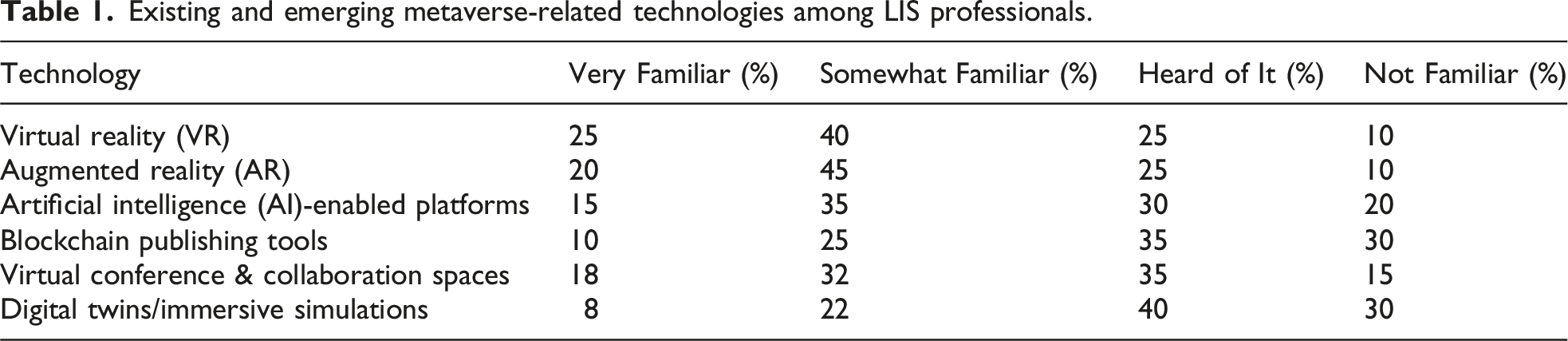
Findings from the quantitative survey indicate that awareness of metaverse-related technologies among LIS researchers and professionals in Africa is uneven but steadily emerging. While only a minority of respondents described themselves as highly familiar with the term “metaverse,” a significantly larger proportion demonstrated familiarity with its underlying component technologies. Virtual reality (VR) and augmented reality (AR) platforms were the most widely recognized, particularly among respondents affiliated with well-resourced universities in Nigeria, South Africa, and Kenya. Artificial intelligence–driven environments, digital twins, immersive virtual classrooms, and blockchain-enabled publishing infrastructures were less familiar but increasingly acknowledged as relevant to future scholarly communication.
Qualitative interviews revealed that many participants conceptualize the metaverse not as a single technology but as an evolving ecosystem of immersive, networked digital environments. Librarians involved in digital scholarship initiatives highlighted the growing relevance of VR-enabled virtual libraries, immersive archival exhibitions, and avatar-based research collaboration spaces. Scholarly publishers and research administrators emphasized blockchain-based peer-review systems, decentralized repositories, and persistent virtual conference platforms as emerging metaverse applications capable of reshaping research dissemination. These findings suggest that although the term “metaverse” remains abstract for many LIS stakeholders, its functional components are already being integrated incrementally into African research and publishing practices.
Existing and emerging metaverse-related technologies among LIS professionals.
Opportunities presented by the metaverse for expanding access and knowledge sharing
Analysis of both data strands demonstrates strong optimism regarding the metaverse’s potential to expand access to LIS research outputs across Africa. Quantitative results show that a majority of respondents believe immersive technologies could significantly reduce geographical and institutional barriers to knowledge access. Respondents from under-resourced institutions particularly emphasized the value of virtual research environments that allow participation in international conferences, workshops, and scholarly networks without the costs associated with physical mobility.
Interview data further illustrate how metaverse-enabled platforms may transform knowledge sharing in African contexts. Participants noted that immersive digital libraries and virtual learning commons could provide equitable access to rare collections, indigenous knowledge repositories, and subscription-based resources through shared virtual infrastructures. Several respondents also highlighted the potential of avatar-mediated scholarly interactions to support multilingual knowledge exchange, collaborative annotation, and participatory knowledge production. Importantly, these opportunities were framed not merely in technological terms but as mechanisms for repositioning African LIS scholarship within global knowledge ecosystems.
Perceived opportunities of the metaverse in LIS research and scholarly publishing.

Practical models for integrating metaverse technologies into LIS research and publishing workflows
The study reveals that integration of metaverse technologies into LIS research and publishing is most feasible when approached through hybrid and incremental models. Survey responses suggest limited institutional readiness for fully immersive scholarly ecosystems; however, there is growing openness to modular adoption strategies. These include embedding VR-enabled data visualization tools into research workflows, hosting persistent virtual research labs, and piloting immersive peer-review or editorial meetings within virtual environments.
Qualitative findings elaborate on these models by emphasizing socio-technical alignment. Librarians described pilot initiatives such as virtual library orientations, immersive research training sessions, and metaverse-based scholarly exhibitions as low-risk entry points. Publishers and editors proposed layered publishing models in which traditional journal articles are complemented by immersive datasets, virtual methodological walkthroughs, or interactive research outputs. These models reflect an adaptive approach that aligns technological innovation with existing scholarly norms, institutional capacities, and funding realities across African universities.
Institutional readiness and infrastructure for metaverse adoption.

Infrastructural, ethical, and policy challenges affecting metaverse adoption
In spite of the identified opportunities, the results underscore substantial structural barriers to metaverse adoption in African LIS contexts. Quantitative data reveal strong correlations between metaverse readiness and factors such as broadband reliability, access to advanced computing devices, and institutional ICT investment. Respondents from rural and public institutions reported significantly lower confidence in their institutions’ ability to support immersive scholarly platforms.
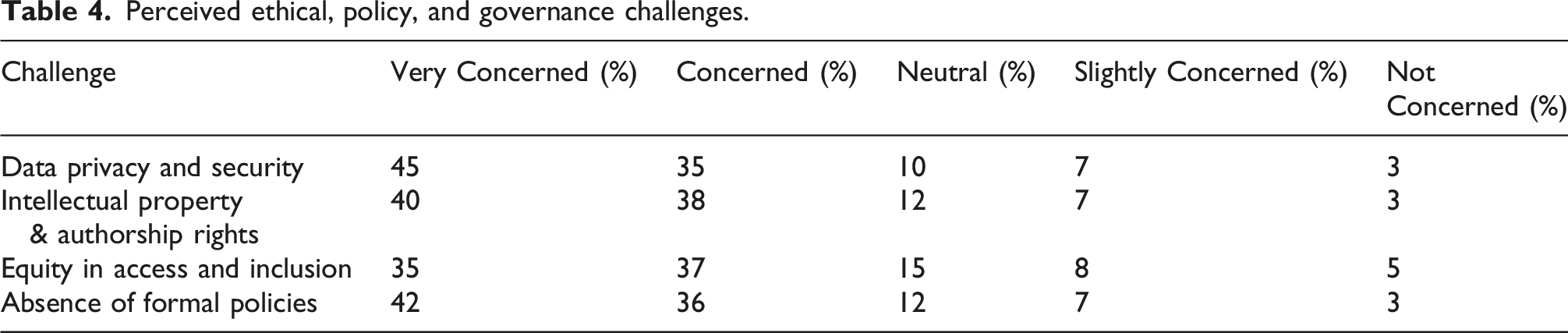
Thematic analysis of interviews highlights ethical and governance concerns as equally significant constraints. Participants expressed apprehension regarding data sovereignty, surveillance risks, intellectual property protection, and the marginalization of indigenous epistemologies within commercially driven virtual platforms. Policy gaps were also evident, with many respondents noting the absence of national or institutional frameworks addressing immersive technologies in research and publishing. These challenges reinforce the importance of contextual governance and ethical stewardship in shaping metaverse adoption, rather than assuming technological neutrality or inevitability.
Perceived ethical, policy, and governance challenges.
Strategies for enhancing digital inclusion and capacity building for metaverse utilization
Findings across both data sets converge on the central role of capacity building and inclusive policy design in enabling effective metaverse utilization. Quantitative results indicate that digital literacy significantly moderates the relationship between technology availability and meaningful scholarly outcomes. Respondents with advanced digital competencies were more likely to perceive metaverse technologies as relevant, usable, and beneficial to their research and publishing activities.
Qualitative insights emphasize that capacity building must extend beyond technical training to include ethical literacy, critical digital scholarship, and institutional leadership development. Participants advocated for regionally coordinated training programs, South–South collaboration networks, and public–private partnerships aimed at developing locally relevant metaverse infrastructures. Importantly, strategies for inclusion were framed around African epistemic visibility, emphasizing the need for platforms that support local languages, indigenous knowledge systems, and open access publishing models. These findings align metaverse adoption with broader goals of digital equity, knowledge justice, and sustainable scholarly development in Africa.
Strategies for digital inclusion and capacity building.
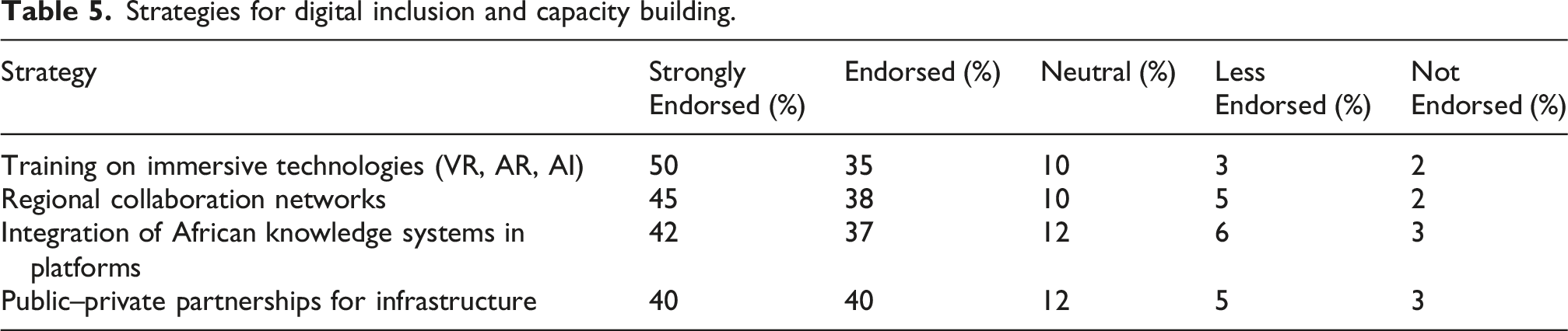
In relation to the objectives of the study, the results demonstrate that the metaverse represents both an opportunity and a challenge for the future of LIS research and scholarly publishing in Africa. Awareness is emerging but uneven, opportunities for access and collaboration are substantial, and integration models are evolving incrementally. However, infrastructural inequalities, governance gaps, and capacity constraints remain critical limiting factors. Addressing these issues through context-sensitive strategies is essential for ensuring that metaverse technologies contribute meaningfully to inclusive, ethical, and sustainable LIS scholarship in Nigeria and Sub-Saharan Africa. Using a sample of 200 participants, the tables collectively reveal the following patterns: 1. Emerging awareness of core metaverse technologies, with VR and AR leading adoption. 2. Strong optimism about opportunities for access, collaboration, and innovative publishing. 3. Infrastructure gaps are a major constraint, particularly in rural or underfunded institutions. 4. Ethical, policy, and governance concerns are highly salient. 5. Capacity building and inclusive strategies are widely endorsed to facilitate adoption.
These quantitative patterns align with qualitative insights, providing robust evidence to inform models, strategies, and policy recommendations for LIS metaverse adoption in Africa.
Discussion of findings
The findings of this study illuminate the multifaceted ways in which the metaverse is shaping and can potentially transform Library and Information Science (LIS) research and scholarly publishing in Africa. By integrating quantitative and qualitative insights, the study provides a nuanced understanding of awareness, adoption opportunities, infrastructural readiness, ethical and governance challenges, and strategies for capacity building and digital inclusion.
The study revealed that awareness of metaverse technologies among African LIS stakeholders is emerging but uneven, with VR and AR being the most familiar tools, while blockchain publishing tools, AI-enabled platforms, and immersive simulations remain less known. This pattern aligns with existing literature on technology diffusion in Africa, which highlights disparities in exposure to emerging technologies due to resource constraints and uneven institutional capacity.34,35 The qualitative insights further clarify that stakeholders often conceptualize the metaverse in terms of its constituent technologies rather than as an integrated ecosystem, suggesting that awareness initiatives should focus on both technological literacy and holistic understanding of immersive environments.
The findings indicate strong optimism regarding the metaverse’s potential to expand access to LIS research outputs and foster knowledge sharing. Approximately 75% of respondents recognized its ability to reduce geographical barriers and support collaborative research, reflecting its capacity to democratize access to information in resource-constrained contexts. These results are consistent with studies that highlight immersive digital environments as transformative tools for inclusive scholarly communication. 36 The qualitative narratives underscore the potential of virtual libraries, immersive conferences, and decentralized repositories to enhance participation in global knowledge networks, particularly for institutions and researchers traditionally marginalized due to infrastructural and financial limitations.
The study identifies incremental and hybrid integration models as the most feasible approach for African LIS institutions. Survey data combined with interview insights suggest that full-scale adoption of immersive platforms may currently be unrealistic due to infrastructure gaps, but modular approaches such as embedding VR-enabled data visualization tools into existing workflows or piloting virtual research labs are viable. This finding aligns with socio-technical systems theory, which posits that technological adoption must consider both technical systems and social arrangements to be sustainable. 13 Furthermore, these models underscore the importance of contextual adaptation, ensuring that innovative technologies are aligned with institutional capacity, resource availability, and user skills.
The findings highlight significant barriers to metaverse adoption. Infrastructural challenges, such as unreliable broadband, limited computing resources, and inadequate digital platforms, were reported across under-resourced institutions. These challenges resonate with prior studies on ICT adoption in Africa, which demonstrate that infrastructural inequality remains a primary impediment to technological innovation. 37 Additionally, respondents emphasized ethical and policy concerns, including data privacy, intellectual property protection, equity in access, and governance gaps. These findings underscore the necessity of establishing robust regulatory frameworks and ethical guidelines to ensure that metaverse adoption does not exacerbate existing inequalities, echoing calls in the literature for context-sensitive, ethically grounded digital innovation. 38
The study identifies capacity building and inclusive policy design as critical enablers for metaverse utilization. Stakeholders strongly endorsed training programs, regional collaboration networks, public–private partnerships, and incorporation of African knowledge systems into immersive platforms. These strategies align with the principles of African epistemic justice and the broader goals of sustainable digital transformation. 28 Furthermore, the moderating role of digital literacy observed in the data suggests that successful metaverse integration will require a combination of technical skills, critical digital scholarship, and leadership engagement. These insights reinforce the notion that technology adoption in LIS cannot occur in isolation but must be accompanied by human capacity development and institutional support.
Implications for LIS research and scholarly publishing in Africa
Collectively, these findings indicate that the metaverse holds considerable potential to reshape LIS research and scholarly publishing Africa. It offers pathways to democratize access, enhance collaboration, and amplify African scholarship within global knowledge ecosystems. However, realizing this potential depends on addressing infrastructural disparities, developing inclusive digital literacy programs, and implementing context-appropriate governance frameworks. These findings resonate with the African Union’s Agenda 2063, which emphasizes knowledge-driven development, digital innovation, and intra-African research collaboration, 39 and align with Sustainable Development Goals 4, 9, and 16, which advocate for inclusive education, innovation infrastructure, and accountable institutions. 40
The study demonstrates that while the metaverse represents a revolutionary opportunity for African LIS research and scholarly publishing, its successful adoption is contingent on integrating technological innovation with socio-technical realities, ethical governance, and capacity-building initiatives. The findings suggest that a phased, hybrid approach that leverages existing institutional capabilities, nurtures digital literacy, and prioritizes equitable access is most likely to produce sustainable and transformative outcomes. By situating African LIS stakeholders at the center of metaverse adoption strategies, the study provides actionable insights for policy makers, librarians, and researchers aiming to harness immersive technologies for scholarly advancement.
Conclusion
This study has demonstrated that the metaverse represents a transformative opportunity for the future of Library and Information Science (LIS) research and scholarly publishing Africa. By integrating mixed-methods evidence from LIS researchers, librarians, scholarly publishers, and research administrators, the study provides a comprehensive understanding of awareness levels, adoption opportunities, infrastructural readiness, ethical considerations, and strategies for digital inclusion in African LIS contexts. The findings indicate that while awareness of core metaverse technologies such as virtual and augmented reality is emerging, familiarity with more complex tools like blockchain-enabled publishing platforms, AI-driven immersive environments, and digital twins remains limited. Regardless of this uneven awareness, LIS stakeholders recognize significant opportunities for enhancing access to research outputs, fostering collaborative knowledge production, and enabling innovative scholarly publishing formats. These opportunities are particularly meaningful in contexts where geographical, institutional, and financial constraints have historically limited participation in global knowledge networks. However, the study also highlights substantial barriers to adoption, including infrastructural deficiencies, limited digital literacy, policy and governance gaps, and ethical concerns surrounding data privacy, intellectual property, and equitable participation. The results underscore that successful metaverse integration is not solely a technological challenge but a socio-technical and governance-driven endeavor, requiring careful alignment with local capacities, institutional priorities, and African epistemic realities.
To overcome these challenges, the study identifies incremental, hybrid adoption models and strategies for capacity building and digital inclusion. These include immersive skills training, regional collaboration networks, culturally and epistemically inclusive platforms, and public–private partnerships to enhance infrastructural readiness. Such measures can ensure that metaverse technologies are harnessed not merely as advanced tools but as agents for equitable knowledge dissemination and scholarly empowerment across Africa. To this end, the metaverse holds the potential to redefine LIS research and scholarly publishing in Africa by expanding access, promoting collaboration, and enhancing visibility of African scholarship. Realizing this potential will require strategic, context-sensitive interventions that integrate technological innovation with human capacity development, ethical governance, and policy alignment. By foregrounding African epistemic visibility and socio-technical realities, this study provides a roadmap for LIS stakeholders, policy makers, and research institutions to navigate the metaverse revolution responsibly and inclusively, ensuring sustainable advancement of knowledge ecosystems across the continent.
Recommendations
Based on the findings of this study, several recommendations are proposed to guide LIS stakeholders, policymakers, and research institutions in Africa to harness the metaverse effectively for research and scholarly publishing.
Given the uneven awareness of metaverse technologies among LIS professionals, it is recommended that universities, professional associations, and research networks organize targeted training programs and workshops focused on immersive technologies such as VR, AR, AI-driven platforms, and blockchain-based publishing tools. These programs should aim not only to enhance technical competencies but also to cultivate understanding of how these technologies can be applied to LIS research, scholarly publishing, and knowledge management. Stakeholders should prioritize continuous professional development to ensure that emerging technologies are integrated thoughtfully and sustainably into workflows.
Institutions should adopt phased and hybrid strategies for integrating metaverse technologies rather than attempting immediate large-scale deployment. This could involve embedding immersive tools into existing research and publishing processes, piloting virtual libraries or conference spaces, and gradually scaling up as infrastructure and expertise improve. Incremental adoption allows institutions to assess feasibility, identify challenges early, and adapt strategies to local contexts, ensuring that technological integration does not outpace institutional capacity.
The study underscores that reliable digital infrastructure is foundational for metaverse adoption. Policymakers, institutional leaders, and funding bodies should invest in high-speed broadband, advanced computing facilities, immersive digital platforms, and supportive IT systems in LIS institutions. Public–private partnerships could be leveraged to reduce the cost of hardware and software deployment, while ensuring that rural and under-resourced institutions are not excluded from participation in virtual research and publishing ecosystems.
Ethical, regulatory, and policy gaps represent critical barriers to sustainable adoption. Institutions and national governments should develop clear policies and frameworks addressing data privacy, intellectual property rights, equitable access, and ethical use of immersive technologies in research and publishing. Policies should also prioritize African epistemic visibility, ensuring that indigenous knowledge systems, local languages, and culturally relevant content are represented in metaverse-enabled scholarly platforms.
To maximize the potential of the metaverse for research collaboration, LIS stakeholders should establish regional and inter-institutional networks that facilitate knowledge exchange, resource sharing, and joint digital projects. Such networks can support mentorship, peer-to-peer learning, and cross-institutional virtual laboratories, ensuring that both early-career and senior researchers can effectively leverage metaverse technologies for collaborative research and publishing.
Finally, institutions should ensure that metaverse adoption is strategically aligned with national and regional development objectives, including the African Union’s Agenda 2063, the Sustainable Development Goals (SDGs 4, 9, and 16), and national digital economy policies such as Nigeria’s National Digital Economy Policy and Strategy (NDEPS). This alignment ensures that technological innovations are embedded within long-term development and knowledge empowerment strategies, enhancing both scholarly productivity and societal impact.
In essence, the study recommends a holistic, multi-level approach to metaverse adoption in African LIS contexts, combining awareness and capacity building, phased technology integration, infrastructural investment, policy and governance development, collaborative networking, and strategic alignment with national and regional development agendas. Implementing these recommendations can enable LIS institutions and professionals to harness the metaverse responsibly and inclusively, advancing research capacity, scholarly visibility, and knowledge equity across the continent. Aligning the narrative and numeric results together, a conceptual framework for metaverse integration in African LIS research is hereby proposed (Figure 1). Proposed Framework for Metaverse integration in African LIS research.
Explanation of the framework
The conceptual framework, titled “Pathways to Metaverse Integration in African LIS Research & Publishing,” presents a comprehensive, visually layered representation of how metaverse technologies can be adopted, leveraged, and governed within the Library and Information Science (LIS) ecosystem in Africa. The framework integrates the study’s objectives, key findings, major challenges, and strategic recommendations, providing a clear roadmap for researchers, librarians, and policymakers to navigate the emerging metaverse revolution in scholarly research and publishing.
At the top layer, the framework depicts the study’s five core objectives in a sequential flow: identifying metaverse technologies, assessing opportunities for access and collaboration, exploring integration models, analyzing infrastructural and ethical challenges, and enhancing digital inclusion and capacity building. Each objective is color-coded and accompanied by intuitive icons, emphasizing the practical orientation of the research and the stepwise approach to metaverse adoption in LIS contexts.
The second layer, labeled “Key Findings,” synthesizes the empirical insights obtained from the study. This includes the emerging awareness of VR, AR, and AI technologies among LIS stakeholders, the recognition of the metaverse’s potential for expanding access and collaborative research, and the identification of infrastructural and policy gaps as critical limiting factors. Ethical considerations and equity concerns are also highlighted, reflecting participants’ emphasis on responsible and context-sensitive technology adoption. This layer demonstrates how empirical evidence directly informs the understanding of opportunities and constraints for metaverse integration in Africa.
Beneath the findings, the “Major Challenges” layer visually consolidates the structural, ethical, and policy-related barriers identified in the study. Poor infrastructure, governance gaps, equity and inclusion issues, and data privacy and intellectual property risks are depicted with clear visual markers, illustrating the socio-technical and institutional realities that may impede adoption. This layer reinforces the principle that technological innovation alone is insufficient; systemic and ethical factors must be addressed to ensure sustainable metaverse deployment.
The bottom layer, “Strategic Recommendations,” presents actionable interventions derived from the study. It emphasizes capacity building and training, incremental and hybrid adoption models, development of ethical policies, and fostering regional collaboration. These strategies are directly linked to overcoming the challenges identified in the preceding layer, illustrating a coherent pathway from problem identification to practical solutions.
More importantly, the framework highlights the alignment of these pathways with broader developmental goals. The visual annotations explicitly link the framework to Sustainable Development Goals (SDG 4: Quality Education, SDG 9: Industry, Innovation and Infrastructure, and SDG 16: Peace, Justice, and Strong Institutions). SDG 4 aligns with the emphasis on digital literacy, equitable access, and capacity building; SDG 9 reflects the development of technological infrastructure and innovation ecosystems; and SDG 16 underscores the importance of governance, ethical oversight, and institutional accountability in immersive scholarly environments. The framework also situates the pathways within the African Union Agenda 2063, particularly its aspiration for a knowledge-driven, technologically empowered Africa with inclusive and globally visible research outputs. By visually integrating these global and continental policy instruments, the framework demonstrates that metaverse adoption in LIS is not only a technological challenge but a strategic developmental imperative.
Summarily, the framework provides a holistic, contextually grounded roadmap for LIS stakeholders in Africa. It demonstrates how objectives, findings, challenges, and recommendations are interconnected, while aligning with global and continental priorities to promote inclusive, ethical, and sustainable adoption of metaverse technologies in research and scholarly publishing.
Limitations of the study
This study is not without limitations. First, the focus on selected African countries limits the generalizability of the findings to the broader African continent and other global regions. Although the countries included were chosen to reflect diverse LIS and scholarly publishing contexts, variations in digital infrastructure, policy environments, and institutional capacity may influence the applicability of the results elsewhere. Second, the sequential exploratory mixed-methods design, while robust, may still be influenced by self-reporting bias in the survey and interview phases, particularly regarding participants perceived familiarity with emerging metaverse technologies. Third, access to some relevant institutional stakeholders and detailed implementation data was constrained, which may have affected the depth of contextual insights. Finally, the rapidly evolving nature of metaverse technologies means that some findings may become outdated as new innovations continue to emerge.
Suggestions for further studies
Future research should consider expanding the geographical scope to include a wider range of African countries and comparative studies across global regions to enhance generalizability. Longitudinal studies are also recommended to track the evolution, adoption, and impact of metaverse technologies in LIS research and scholarly publishing over time. In addition, future studies could adopt purely experimental or case-study approaches to assess the practical implementation of specific metaverse tools, such as VR-based libraries or blockchain-enabled publishing systems, within real institutional settings. Further research may also explore the perspectives of additional stakeholder groups, such as policy makers, ICT developers, and funding agencies, to provide a more comprehensive understanding of ecosystem-level adoption.
Supplemental material
Supplemental material - Metaverse revolution shaping the future of African library and information science research and scholarly publishing
Supplemental material for Metaverse revolution shaping the future of African library and information science research and scholarly publishing by Adeyinka Tella, Shola Temitope Famuyiwa in Information Services and Use.
Footnotes

Funding
The authors received no financial support for the research, authorship, and/or publication of this article.
Declaration of conflicting interests
The authors declared no potential conflicts of interest with respect to the research, authorship, and/or publication of this article.
AI Disclosure Statement
This manuscript was reviewed with the assistance of ChatGPT, an AI Language Model. The tool was used to support grammar correction and structural organization. All intellectual contributions, interpretation, and final decisions were made by the author, who assumes full responsibility for the content of this work.
Supplemental material
Supplemental material for this article is available online.
References
Supplementary Material
Please find the following supplemental material available below.
For Open Access articles published under a Creative Commons License, all supplemental material carries the same license as the article it is associated with.
For non-Open Access articles published, all supplemental material carries a non-exclusive license, and permission requests for re-use of supplemental material or any part of supplemental material shall be sent directly to the copyright owner as specified in the copyright notice associated with the article.
