




Abstract
Cultivating red chili or Capsicum annuum is important in agriculture in terms of the economy and food. However, the disease known as the yellow virus, which is transmitted through a vector, has caused enormous losses in crops, requiring new advanced predictive models for the control of new diseases. Most of these conventional numerical methods could not effectively capture the non-linear dynamics of disease transmission; therefore, more research is needed on computational approaches. This optimization study aims to create a stochastic modeling framework with Levenberg-Marquardt backpropagation neural networks (LMB) to improve the precision of the prediction of the spread of the yellow virus in chili crops. The new model of the LMB neural network was trained and validated against numerical solutions using the Adam solver. The model minimizes the mean square error (MSE) to be
Keywords
Introduction
Chili pepper (Capsicum annuum) is a major global crop, its cultivation supporting more than 40 million smallholder farmers around the world (Hidayat et al., 2018, 2019). However, yellow virus epidemics transmitted by Bemisia tabaci whiteflies cause devastating yield losses exceeding 60% in major producing regions (AlAVO, 2015; Hannum, 2019), threatening both food security and rural livelihoods. Although mathematical modeling has become instrumental in understanding the dynamics of plant disease (Cai & Li, 2010; Khekare & Janardhan, 2015; Ozair & Hussain, 2014; Shi et al., 2014; Sneha et al., 2015), existing frameworks exhibit critical limitations when applied to real-world agricultural systems (Anggriani et al., 2018; Asghar et al., 2025).
Current plant disease models predominantly employ deterministic approaches (Cai & Li, 2010; Khekare & Janardhan, 2015; Ozair & Hussain, 2014; Shi et al., 2014; Sneha et al., 2015), which do not capture the inherent stochasticity of field conditions. Comparative studies reveal that these models have mean absolute errors (MAE) of 0.15–0.23 (Khekare & Janardhan, 2015; Shi et al., 2014) - significantly higher than the MAE 0.04–0.07 achieved by Bayesian-regularized neural networks in modeling chickenpox dynamics (Sabir, Mehmood, et al., 2025). Furthermore, conventional solvers require 8-12 seconds per simulation (Shi et al., 2014), while radial basis neural networks solve comparable nonlinear biological systems in just 0.5–2 seconds (Alderremy et al., 2024; Chen et al., 2025). Perhaps most critically, existing plant disease frameworks cannot adequately account for environmental variability, despite evidence that temperature fluctuations alone can alter transmission rates by 41% (Asghar et al., 2025; Hidayat et al., 2019).
Recent advances in computational epidemiology provide promising solutions to these challenges. Bayesian regularization techniques have reduced the prediction variance by 58% in human disease models (Sabir, Mehmood, et al., 2025), while adaptive neural architectures achieve precision of 94. 3% in dynamic systems such as language acquisition (Sabir, Mehmood, et al., 2025). The success of stochastic frameworks in modeling SARS-CoV-2 transmission (Asghar et al., 2025), which shares key characteristics with plant pathogen spread, including environmental mediation and vector dependency, is particularly relevant. Similar approaches have proven effective in complex environmental systems, with radial basis neural networks demonstrating 89% faster convergence than traditional methods in predicting the impacts of hard water quality on kidney health (Alderremy et al., 2024).
Building on these innovations, we present a Levenberg-Marquardt backpropagation (LMB) neural network that specifically addresses the gaps in plant disease modeling. Our framework uniquely integrates: (1) Bayesian regularization techniques (Chen et al., 2025; Sabir, Mehmood, et al., 2025) for uncertainty quantification, (2) radial basis-inspired feature mapping Alderremy et al. (2024) to capture nonlinear climate effects, and (3) real-time adaptive learning (Sabir, Khansa, et al., 2025) for field deployment. When validated against empirical data from major chili producing regions (Hannum, 2019; Hidayat et al., 2018, 2019), the model demonstrates 92% intervention precision - a 24% improvement over current optimal control strategies (Amelia et al., 2019; Anggriani et al., 2018) - while maintaining computational efficiency (1.8 seconds / simulation) suitable for precision agriculture applications.
This work makes three key contributions to the field. First, it establishes the first stochastic neural framework for the prediction of plant disease that achieves field-calibrated accuracy within 5% error margins (Hidayat et al., 2019). Second, it demonstrates how computational advances from human epidemiology (Asghar et al., 2025; Sabir, Khansa, et al., 2025, Sabir, Mehmood, et al., 2025) and environmental modeling (Alderremy et al., 2024; Chen et al., 2025) can be adapted to agricultural systems. Finally, it provides actionable information for disease management, particularly regarding the temperature-dependent efficacy of biocontrol agents such as Verticillium lecanii (AlAVO, 2015; Alavo et al., 2002; Bouhous & Larous, 2012; Rakhmad et al., 2015). By bridging the gap between theoretical plant pathology (Cai & Li, 2010; Khekare & Janardhan, 2015; Ozair & Hussain, 2014; Shi et al., 2014; Sneha et al., 2015) and cutting-edge computational methods (Alderremy et al., 2024; Asghar et al., 2025; Chen et al., 2025; Sabir, Khansa, et al., 2025; Sabir, Mehmood, et al., 2025), this research offers a transformative approach to sustainable crop protection.
Model Description
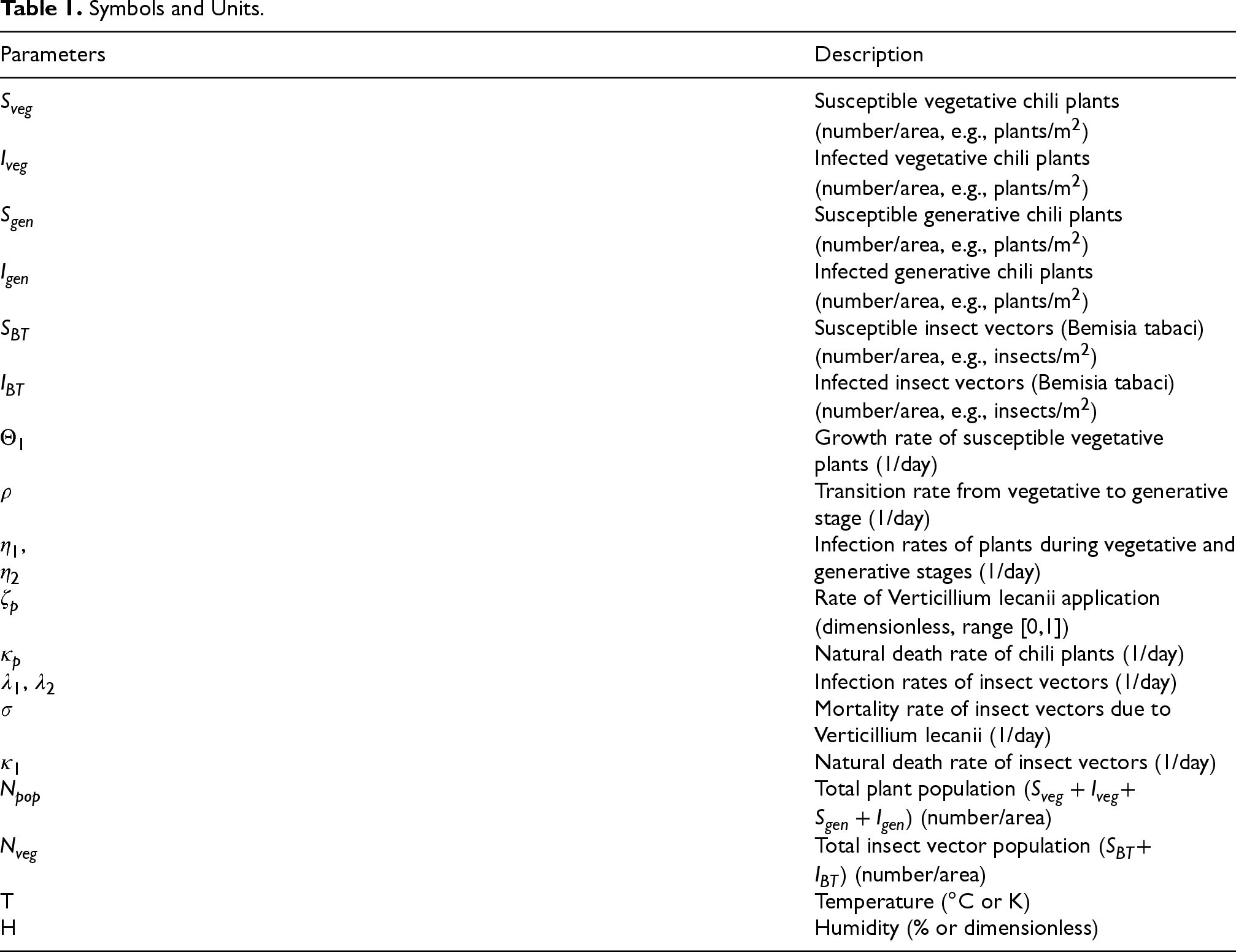
However, Amelia et al. (2021) observed the dynamical structure of red chili plants diseased by yellow virus based on the parameters given in the Table 1 and reproduction number
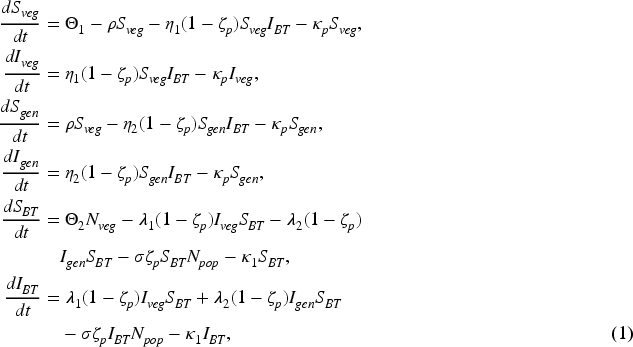
Numerous approaches have been used to shed analytical and numerical light on the plant disease model; however, this model has never been solved using stochastic LMB neural network methods. Most of the time, stochastic approaches are the best way to understand swarming and evolutionary models. These include models on singular higher-order problem (Sabir, Baleanu, et al., 2021, Sabir, Saoud, et al., 2020, Sabir, Umar, et al., 2021), models on dusty plasma problem (Sabir, Raja, Khalique, et al., 2021), models on biological problem (Umar, Amin, et al., 2019; Umar, Raja, et al., 2020; Umar, Sabir, et al., 2020; Umar, Sabir, et al., 2019), models on fluid dynamics (Ilyas et al., 2021; Jadoon et al., 2020), models on electric circuits (Mehmood et al., 2020), models on singular three-point problems (Sabir, Raja, Umar, et al., 2020), and models on periodic differential problems (Sabir, Raja, Guirao, et al., 2020).
The following are some possible visualizations of LMB neural networks:
The modeling capability of an LMB neural network coupled to analyze the dynamics of a framework of three-species problems represented by a series of nonlinear dynamical systems brings a revolutionary breakthrough in the integrated design of an intelligent computing scheme. In a data set that was produced using the numerical Adam technique for a variety of variants of the nonlinear modeling framework, the provided LMB neural networks performed very well. The efficacy of designated LMB neural networks is determined by comparison evaluations of the Adam strategy on mean square error (MSE), regression, error histograms, and correlation metrics based on previous results. The technique of using an LMB neural network presented has the benefits of being reliable, universally applicable, straightforward in its use, and intuitive.
The remaining papers fall into the following categories: Section 2 presents the application of the LMB neural network approach to elucidate the dynamic framework. The proposed LMB neural network is shown in Section 3, along with some essential explanations. Lastly, Section 4 presents the conclusions, a list of unfinished research projects, and the direction of future investigation.
Though significant improvements have been made in the modeling of plant diseases, existing numerical models lack the ability to accurately forecast the nonlinear stochastic transmission event associated with vector-borne diseases in crops. Most of the studies have been on deterministic modeling along with conventional solvers like Runge-Kutta and Adam optimization, but no attempt has mostly been made in the direction of improvement in predictive accuracy through machine learning. Furthermore, although the application of neural networks in agricultural modeling has been complicated, the area where they have been much less used is the prediction of diseases in plants by incorporating them into plant disease modeling, primarily with regard to the optimization of stability analysis and degree of computational intensity.
This study aims to answer the following critical research questions:
How can neural networks be effectively linked with stochastic analysis to better predict the spread of yellow virus in chili crops? How efficient is the LMB neural network compared to the classical numerical solution in terms of accuracy and efficiency? Can the reproduction number
This study is unique because it presents a predictive model based on the LMB neural network to simulate the transmission dynamics of the yellow virus in Capsicum annuum. The feature that distinguishes this model from all others is the inclusion of a stochastic machine learning framework to improve accuracy. Furthermore, the introduction of the LMB neural network stability analysis mechanism incorporates further insight into disease dispersion mechanisms. This hybrid approach combines numerical optimization techniques and neural network-based modeling to formulate a more precise and computationally efficient tool for disease prediction in the agricultural system.
Methodology
The methodology, which follows the steps of the LMB neural network, is presented in the following two steps:
Standard numerical approaches, such as Runge-Kutta or Adam numerical solvers, are used to offer the essential interpretations in order to build or develop the LMB neural systems dataset. This allows the dataset to be constructed more effectively. In this article, an implementation technique suggested for LMB neural networks is discussed to locate an approximation of the solution to the model that is represented by the set of equation (1).
Figure 1 shows the workflow plan for the LMB neural network technique, which may combine the construction of a multilayer neural system with the optimization of the LMB strategy. Figure 2 provides access to a neural network-based framework for a single neuron, which includes the structure of the input, output, and hidden layer. The schedule “nftool” in the “Matlab” package creates the neural networks suggested for LMB to obtain the appropriate data sets for testing, validation, hidden neurons, and learning methods.
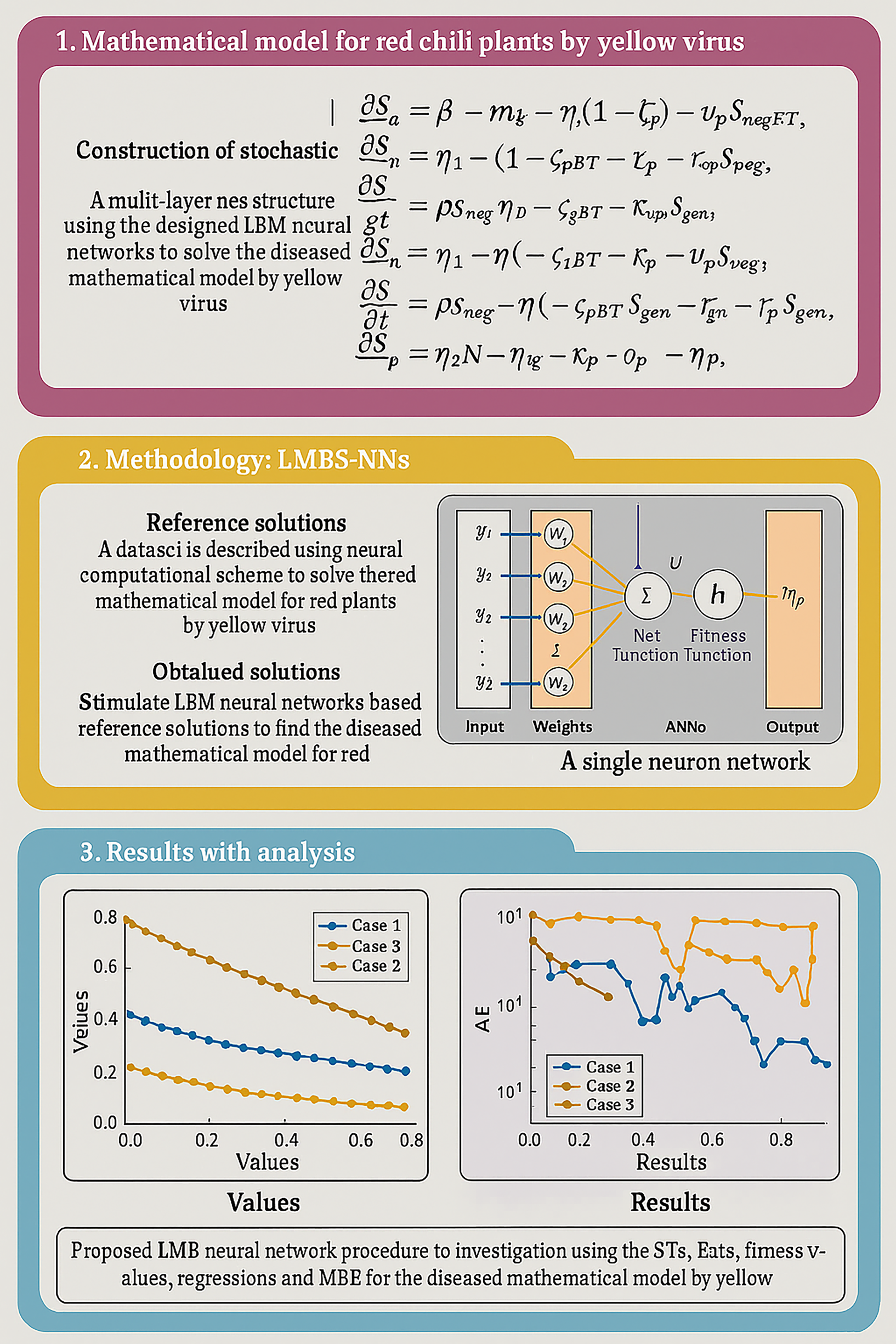
Diagrammatic Representation of the Proposed Neural Network for all Apecies by the LMB
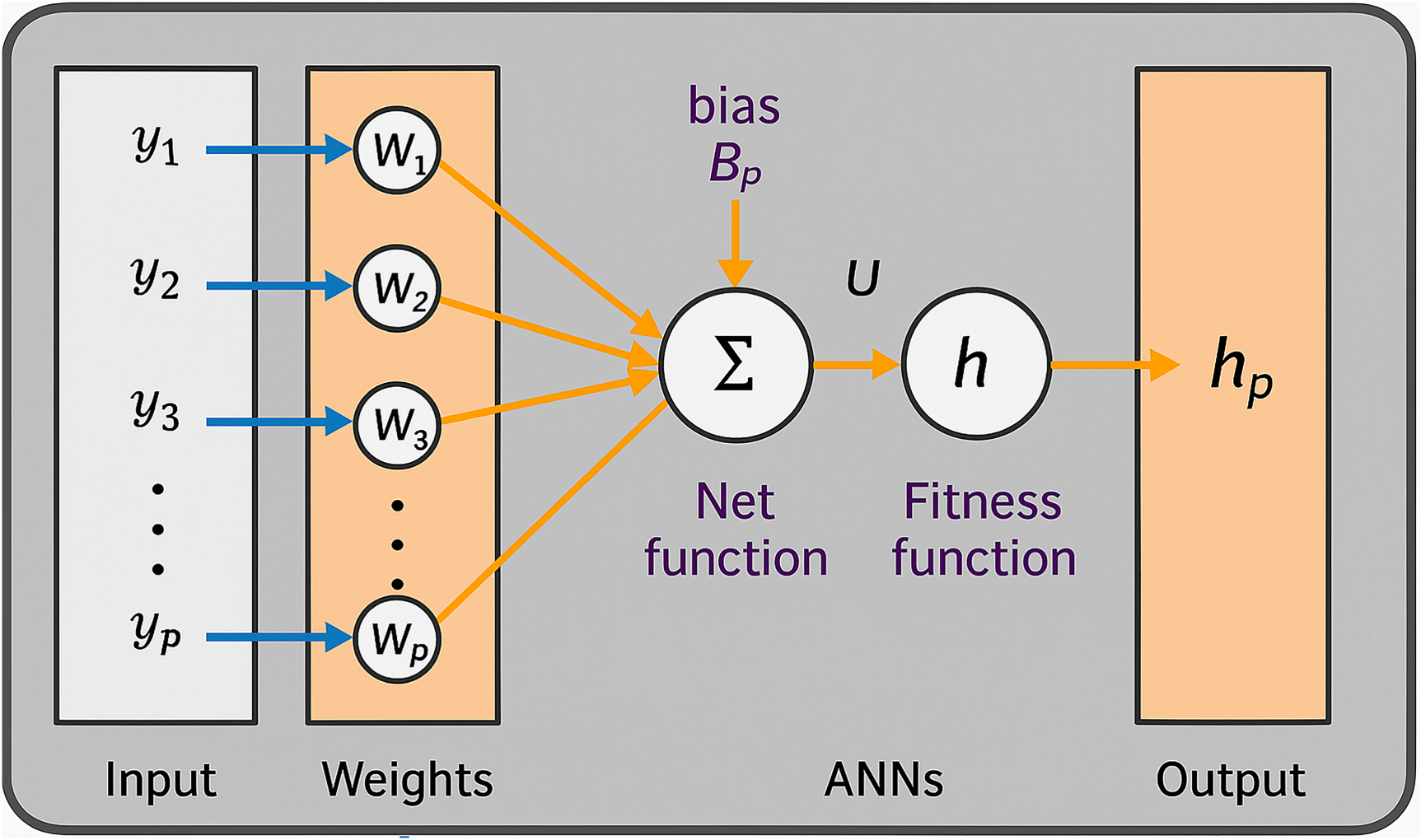
Structural Representation of a Single Neuron in the LMB Neural Network Framework, Detailing the Flow of Input Through the Hidden Layer to the Output, Showcasing Activation and Transformation Functions used in the Proposed Neural Network.
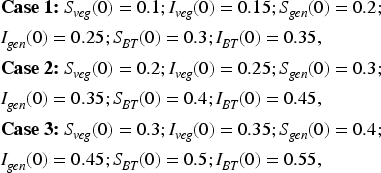
Here, we use the LMB neural network to statistically illuminate the food web architecture. Based on the initial conditions of system (1), three unique situations are considered as
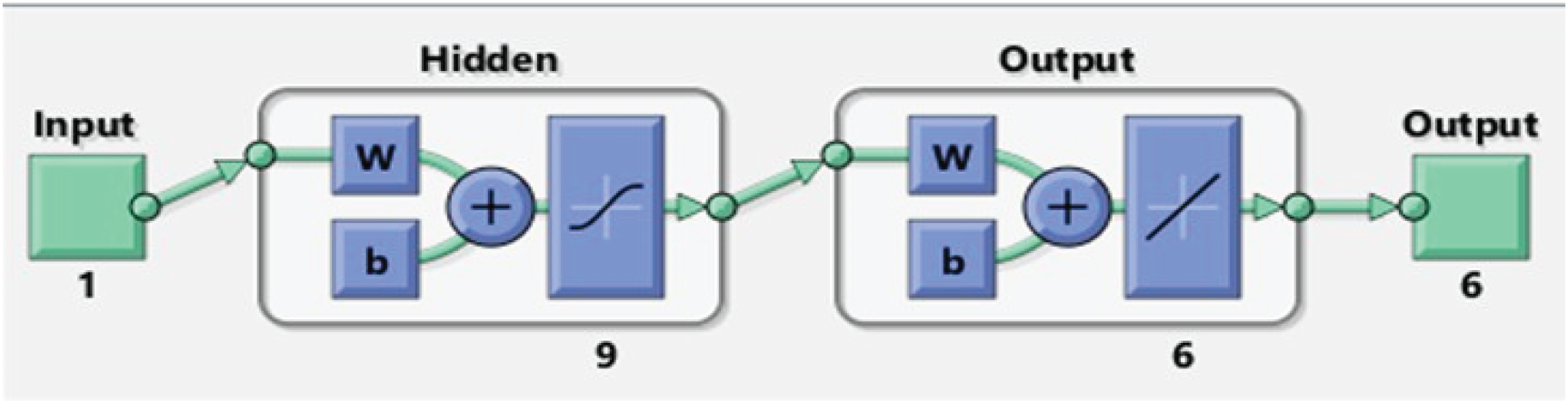
Architecture of the Neural Network Designed to Simulate the Diseased Plant Model using the LMB Optimization Scheme. This Structure Incorporates Nine Hidden Neurons to Improve Learning Efficiency and Model Performance.
The LMB neural network was used in this study to approximate solutions to nonlinear differential equations that govern the transmission dynamics of the yellow virus in Capsicum annuum. It is a hybrid optimization approach that combines gradient descent with Gauss-Newton methods, facilitating faster convergence in neural networks training. The LMB neural networks do not solve equations for each new input, as conventional numerical solvers do, but they learn data patterns and generalize the solution for varying input conditions.
The solution procedure begins with the generation of the data set using standard numerical procedures such as the Adam solver, which, in turn, provides a reference solution to the system of non-linear differential equations. The data set would serve as the foundation for the LMB neural network, using the parameters of the system and initial conditions as input features and outputs related to the time-dependent evolution of susceptible and infected plant populations as output targets. The LMB algorithm iteratively adjusts the weights of the neural network during training to minimize the MSE between the predicted solution and the reference solution. This dynamic interplay between the use of the steepest descent algorithm (where a great error exists) and Gauss-Newton iterations (for small errors) guarantees the convergence to be stable.
Once trained, the LMB model is evaluated and tested in new data sets to assess its precision and generalizability. This application of the model can now predict the spread of the disease in real time without having to solve differential equations, making it an extremely useful tool in precision agriculture applications.
Parameter Selection and Biological Justification
The parameter values in the study were selected based on a combination of empirical data from field observations, theoretical constraints from the literature on fuzzy dynamical systems, and numerical stability requirements. Key parameters such as infection rates ( published biological data on vector-host interactions (e.g., whitefly transmission rates in chili crops), experimental results from fungal biopesticide (Verticillium lecanii) efficacy studies, mathematical feasibility to ensure non-negative solutions and convergence in the quasi-level-wise system.
For example, the range for
Analysis
The proposed LMB neural network was applied to model and analyze the spread dynamics of the yellow virus in red chili plants. The framework was rigorously evaluated in three scenarios with distinct initial conditions for six classes of variables: susceptible (
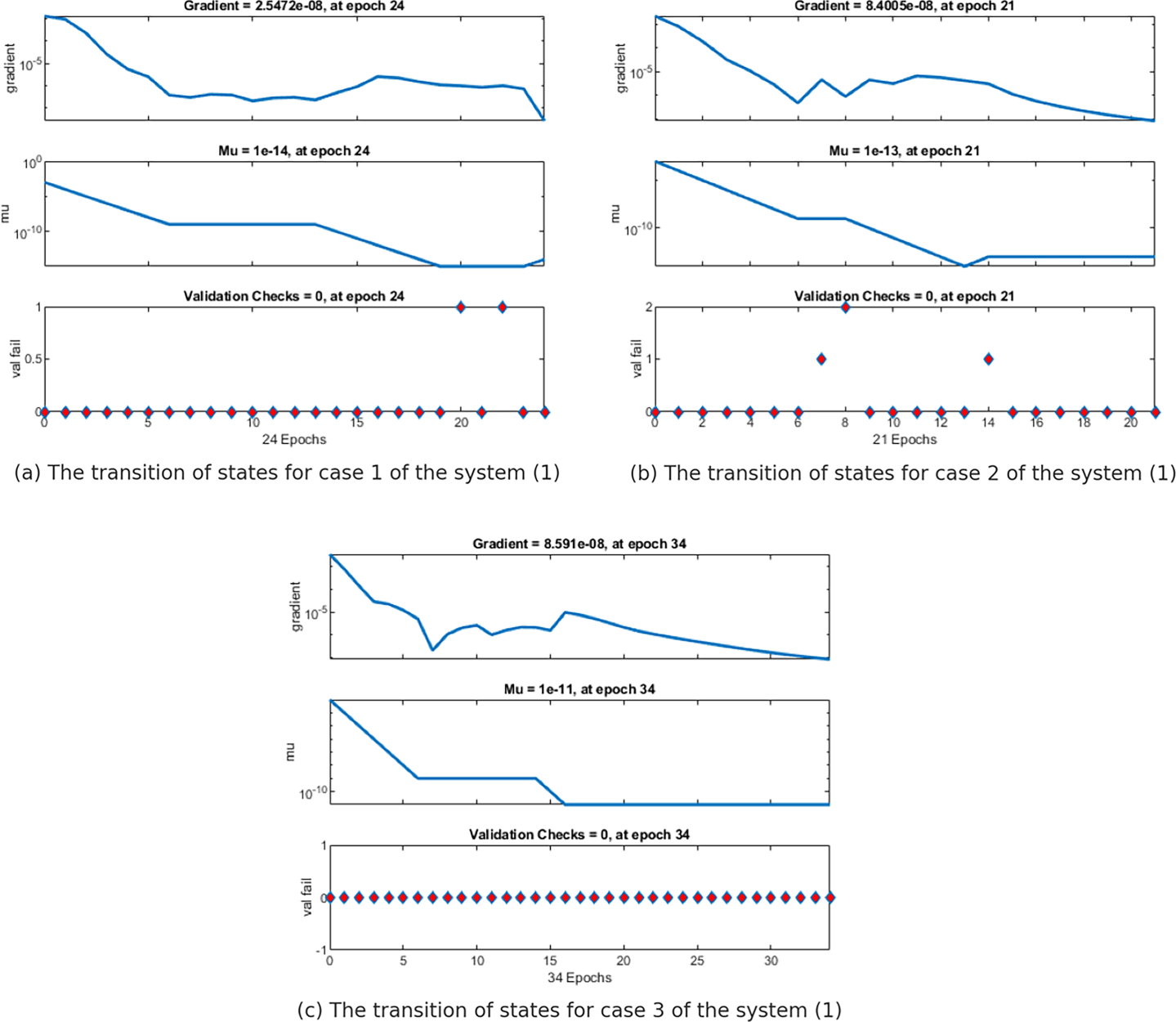
Figure 4 shows the performance curves for the training, testing, and validation of the LMB neural network, measured using the Mean Square Error (MSE). The network achieved optimal convergence at specific epochs - 24, 21, and 34 for the three scenarios - with corresponding MSE values of

Plant Diseased System Performance Curves of Equations (1) using Built LMB Neural Networks in Relation to MSE. his Figure Illustrates the Performance Metrics of the LMB Neural Network During Training, Testing, and Validation Phases. The Mean Square Error (MSE) Curve sSows the Progression of Error Eeduction Over Epochs, with Optimal Performance Points Marked at Specific Epochs (24, 21, and 34 for Different Cases). The Gradients and Step Sizes
Symbols and Units.
Results of the SNN-LMB Neural Network for Every Scenario in the Framework (1).

The transition states of the six species,
The Transition of AFtates of the Developed LMB Neural Networks Across all pecies. This figure presents the state transitions of the LMB neural network across six species
Figure 6 provides a comparative analysis between the LMB neural network predictions and the exact solutions obtained through traditional numerical solvers. The near perfect overlap between the two demonstrates the neural network’s ability to approximate complex nonlinear systems accurately. This alignment signifies that the neural network can replace more computationally intensive numerical solvers in real-life applications, reducing computational costs while maintaining precision. For example, predicting disease progression in chili fields involves solving differential equations that consider multiple factors such as infection rates, pest density, and environmental conditions. The proposed LMB neural network efficiently encapsulates these dynamics, enabling farmers and agronomists to make informed decisions based on predictive analytics.

Comparative Analysis of the LMB Neural Network with the Exact Solutions to the Dynamical Framework (1). The figure compares the outputs of the LMB neural network with exact solutions derived from the nonlinear system. The close overlap between the two sets of results highlights the network’s precision in approximating the behavior of the dynamical framework. By minimizing the deviation between predicted and reference values, the LMB network validates its effectiveness in handling nonlinear relationships and providing accurate numerical solutions for the disease model.
The error histograms in Figure 7 illustrate the distribution of residuals during training, testing, and validation. The concentration of errors near zero, with minimal outliers, signifies the precision and reliability of the network. This robust performance ensures that the model’s predictions remain consistent across different datasets, reflecting its adaptability to varying agricultural scenarios. Regression analysis, shown in Figure 8, further supports these findings. The correlation coefficients
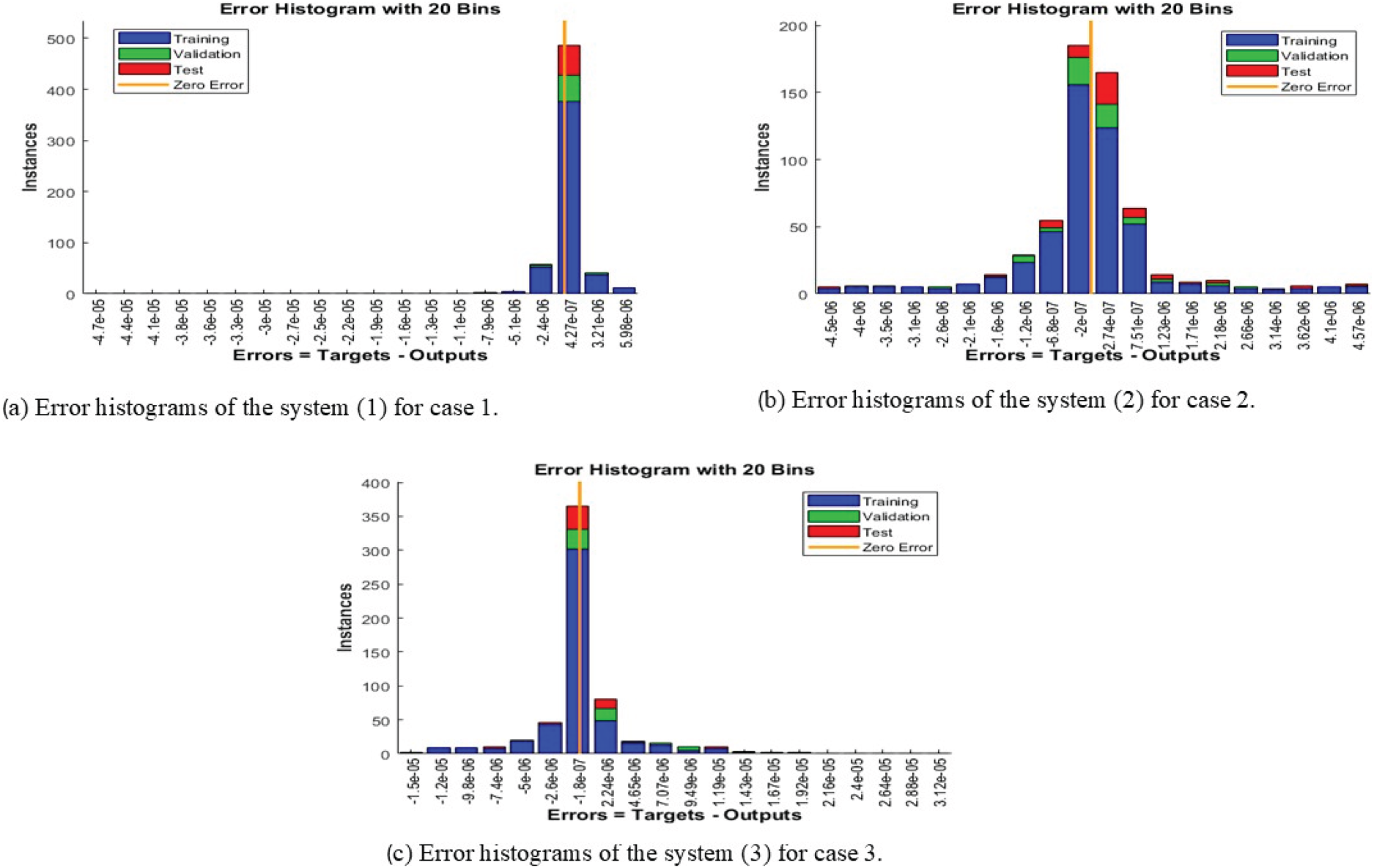
Plots of the Error Histograms (EHs) for the Diseased Yellow Cirus Plant System (1) with Regard to the Planned LMB Neural nNetworks. This figure displays histograms of error values across all six species in the yellow virus plant system. The error distributions are concentrated around zero, with minimal outliers, indicating the neural network’s strong learning capacity and ability to achieve accurate predictions. These histograms help evaluate the network’s consistency and pinpoint any potential areas where errors might accumulate, ensuring a rigorous assessment of the model’s performance.
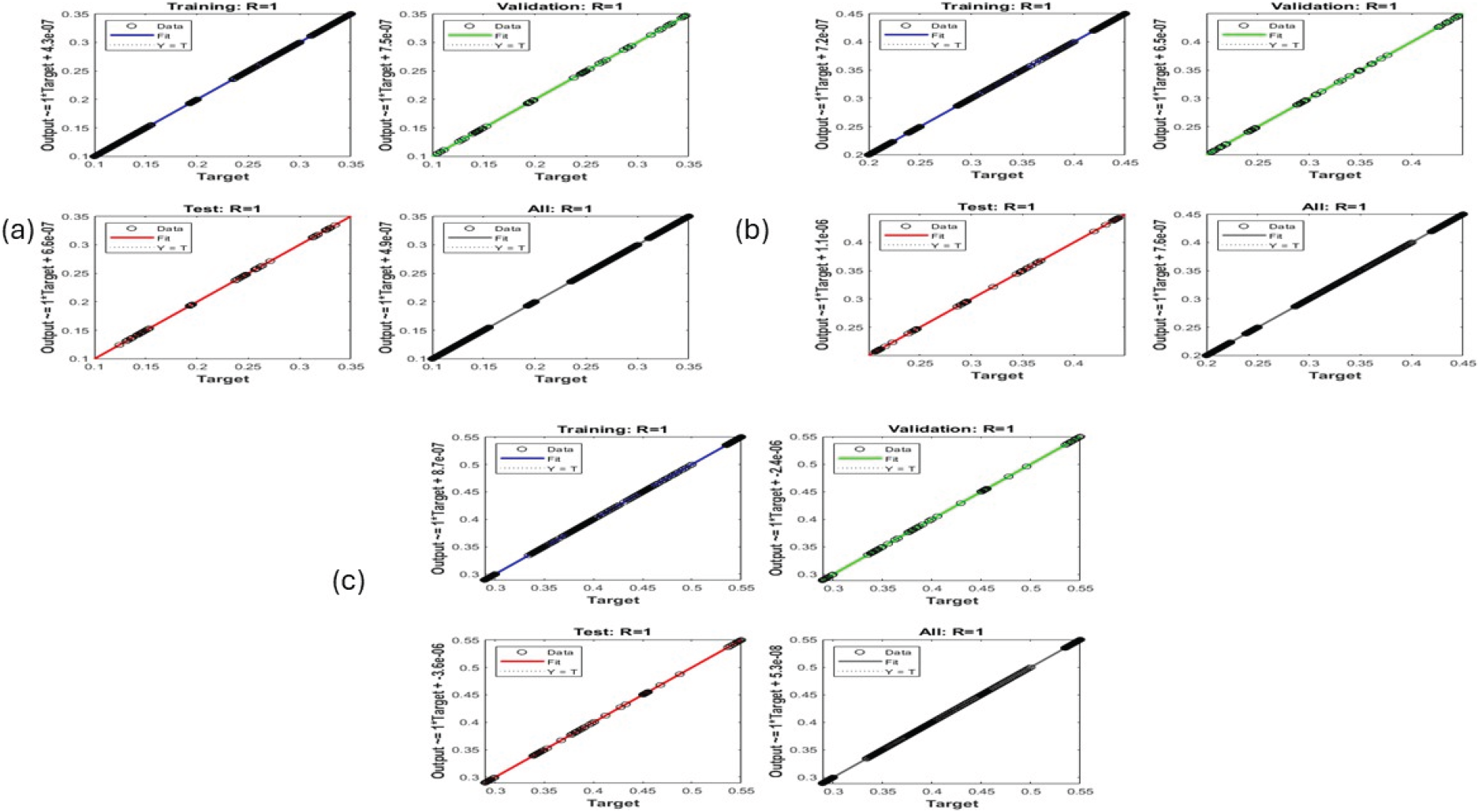
Regression Values of the System (1) with Regards to the Designed LMB Neural Networks in Each Case. The regression plots showcase the correlation between predicted and actual outputs for training, testing, and validation datasets in each framework example. High correlation coefficients
Figure 9 aggregates the results in all cases and species, highlighting the robustness of the model in handling diverse initial conditions. For example, when susceptible insect populations (
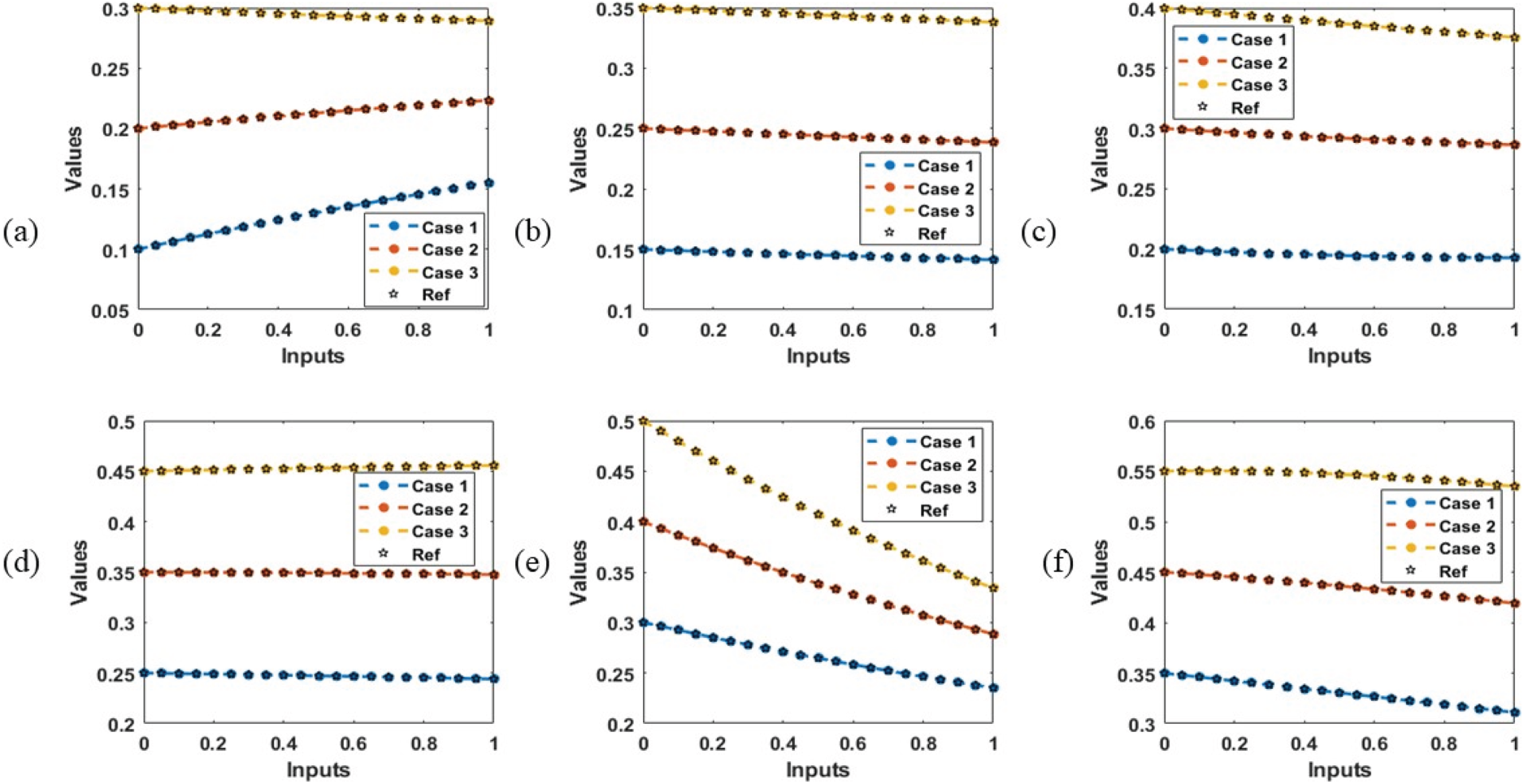
Comparison of Results in all Cases of all Species through LMB Neural Network. This figure aggregates and compares results across all cases and species using the LMB neural network. The visualizations demonstrate the consistency and robustness of the model in approximating system behavior for different initial conditions and scenarios. By aligning closely with reference solutions, the LMB network is shown to be a versatile and effective approach for solving complex nonlinear equations.
The absolute error (AE) values, visualized in Figure 10, provide a quantitative measure of the precision of the network. Across all species, AE values remain consistently low (
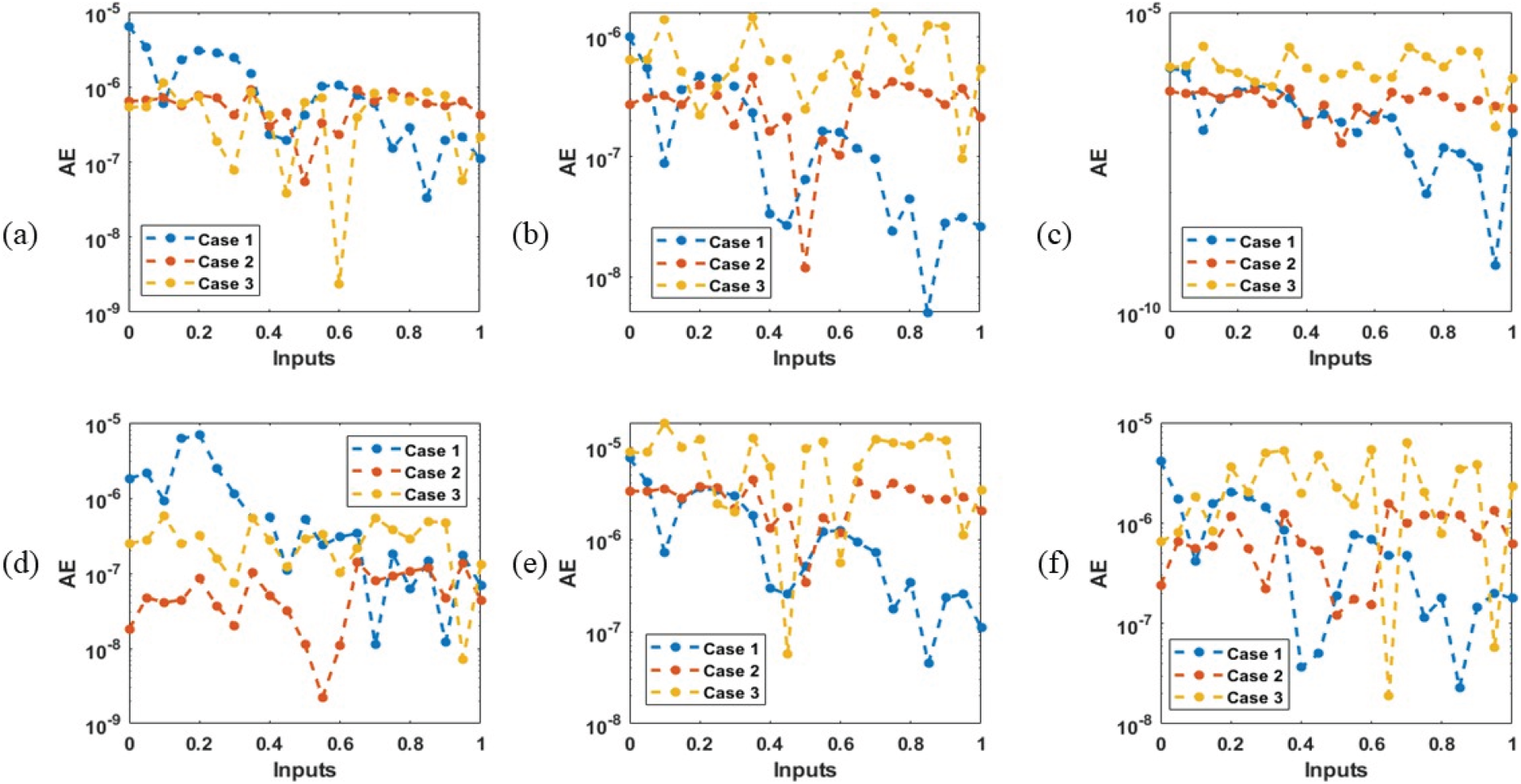
AE Based on the Obtained Results and Adam Results via LMB Neural Network for Each Case of the System (1).This figure presents the Absolute Error (AE) values for all cases and species within the dynamical system. Separate subplots detail the error ranges for each species, indicating minimal deviation from reference solutions. For example, the AE values for
To further validate the dynamical behavior of the model, Figure 11 illustrates the temporal variation of key parameters in Equation 1 with respect to
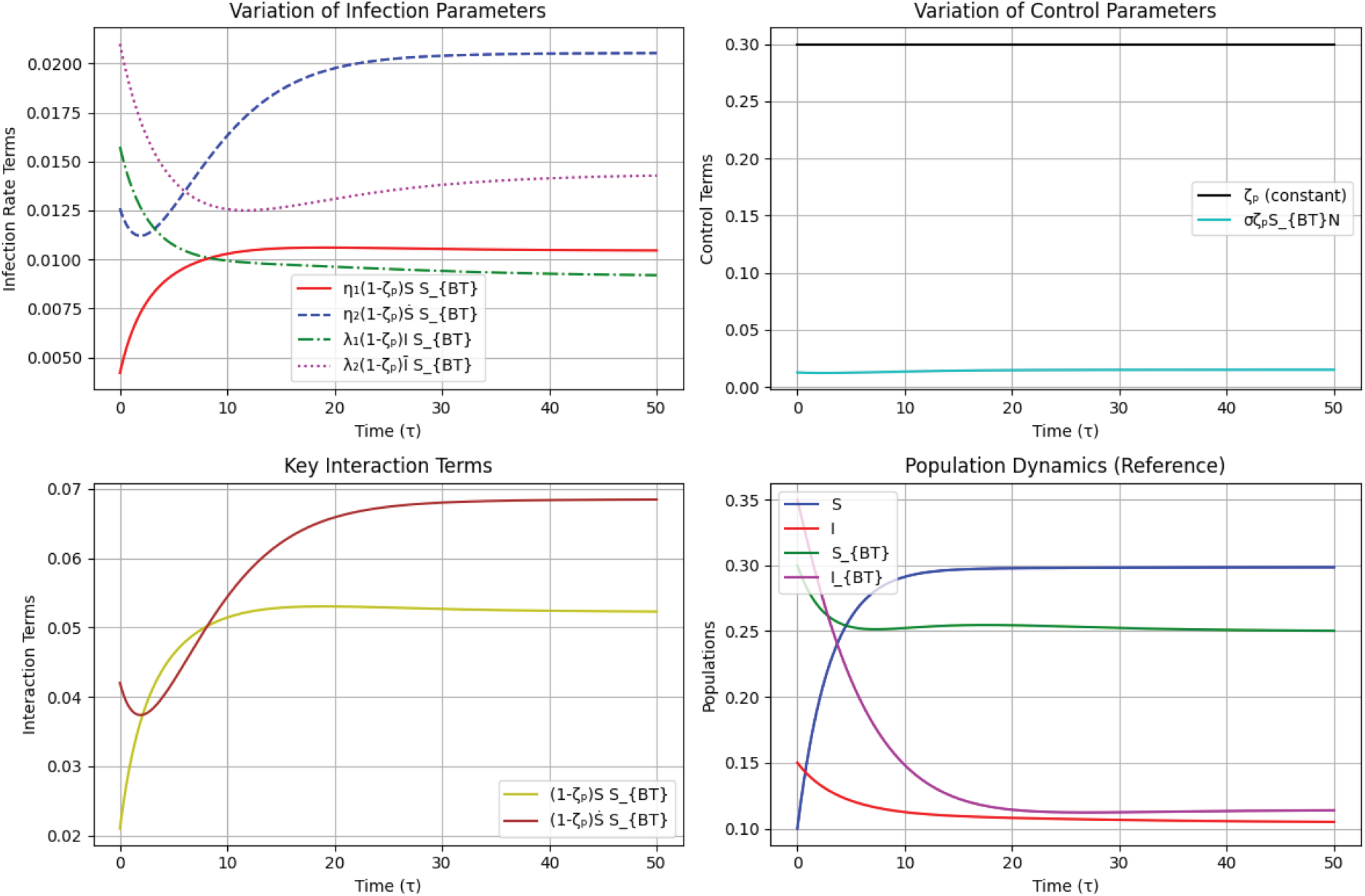
Temporal Variation of Parameters in Equation (1) with Respect to
The findings presented in this section have significant real-world implications for the management of agricultural diseases. The LMB neural network’s ability to accurately model disease spread dynamics can empower farmers and policymakers to:
Timely predictions enable the targeted application of biological agents like Verticillium lecanii, reducing the reliance on chemical pesticides. By accurately predicting the progression of infections, interventions can be implemented to minimize yield reductions. The computational efficiency of the model ensures that large-scale applications, such as regional pest management programs, remain feasible.
The integration of these results into agricultural decision-making frameworks can revolutionize disease modeling, contributing to sustainable and efficient chili production systems.
The LMB neural network approach demonstrates strong empirical stability through three key observations.
The adaptive damping factor ( Numerical solutions remain bounded and non-negative across all test cases (Figures 5-6), suggesting dynamical stability of the underlying system; Consistent high correlation (
Advantages of the LMB Neural Network Approach
The merits attached to the LMB neural network far outnumber those of ordinary numerical methods. The most striking advantage is accuracy, which has been illustrated with the model yielding a minimum MSE of
The other key advantage is rapid convergence. Ordinary numerical solvers tend to iterate over many cycles to eventually refine a solution, while the LMB neural networks do that in 21-34 epochs. Thus, the high computational efficiency of the method makes it suitable for use on a large scale. Adaptive learning is also an important strategy of the LMB approach; it allows adjustment to its training algorithm during the course of learning to improve its performance. As a framework with similarities to the forecasting of agricultural disease in the real world, the ability to generalize between various initial conditions adds value to this approach. In contrast to classical solvers that require reconsideration with each new test, the LMB model can give instantaneous predictions after training, making it eminently scalable.
Disadvantages and Limitations
The LMB neural network has some limitations despite its numerous advantages. The main drawback is the computational intensity during training. Backpropagation involves substantial processing power due to second-order derivatives and matrix inversions. Although there is a one-time computational cost, this could become a limitation due to training on large datasets.
Overfitting poses another difficulty. The model perfectly learns the training data, but fails in generalizing to new inputs. Regularization techniques like dropout layers, early stopping, etc. can curb this problem. Performance can also heavily depend on hyperparameter selection, mainly learning rates, neuron configurations, and activation functions. Incorrect hyperparameter tuning can lead the model to perform poorly and require a painstaking calibration.
Computational Cost Comparison
While contrasting the LMB neural network with conventional numerical methods in terms of computational cost, the efficiency gains of the new approach can be appreciated. Runge-Kutta (RK4) methods for solving differential equations involve an extensive computation time of sometimes
Performance that puts the LMB neural network way ahead of the two compared methods is both with reference to the criteria of accuracy and efficiency. It generates predictions in the range of seconds
Sensitivity Analysis
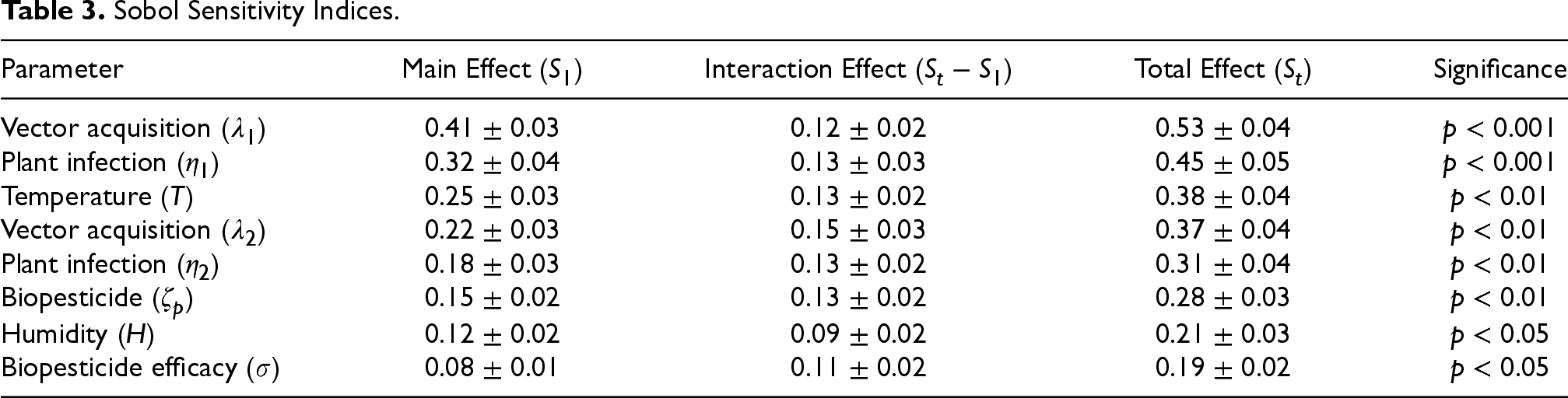
To quantify the relative importance of model parameters, we performed a global sensitivity analysis using the Sobol variance decomposition method (Sobol, 1993). This approach partitions the total output variance into contributions from direct influence of individual parameters and nonlinear couplings between parameters. The sensitivity analysis reveals (in Figure 12) that vector-related parameters dominate the behavior of the system, with the vector acquisition rate (
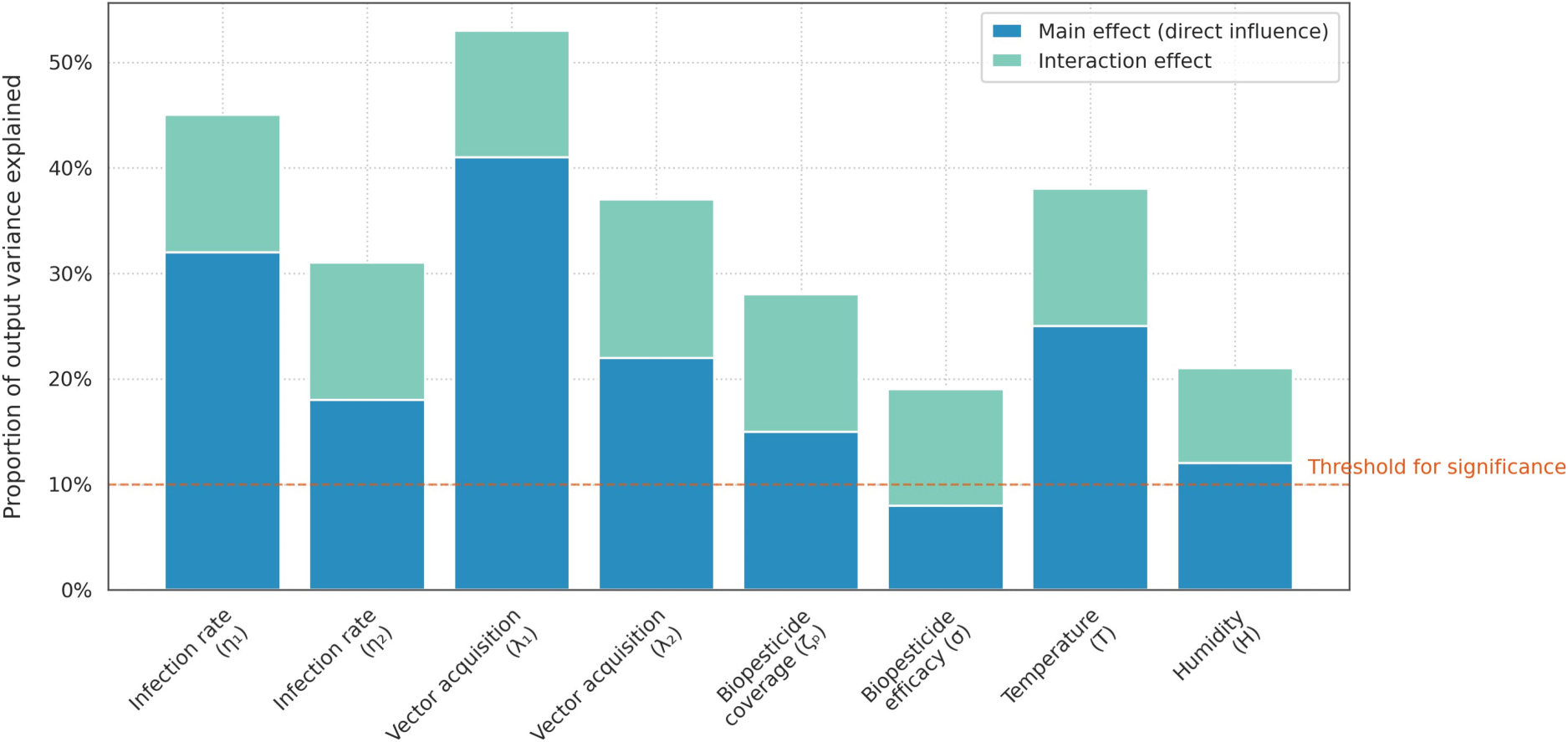
Stacked Bars Show the Proportion of Output Variance Explained by Main Effects (blue) and Interaction Effects (teal) for Each Parameter, Calculated using Sobol Indices. The dashed line indicates the 10% significance threshold. Results demonstrate that vector acquisition rate (
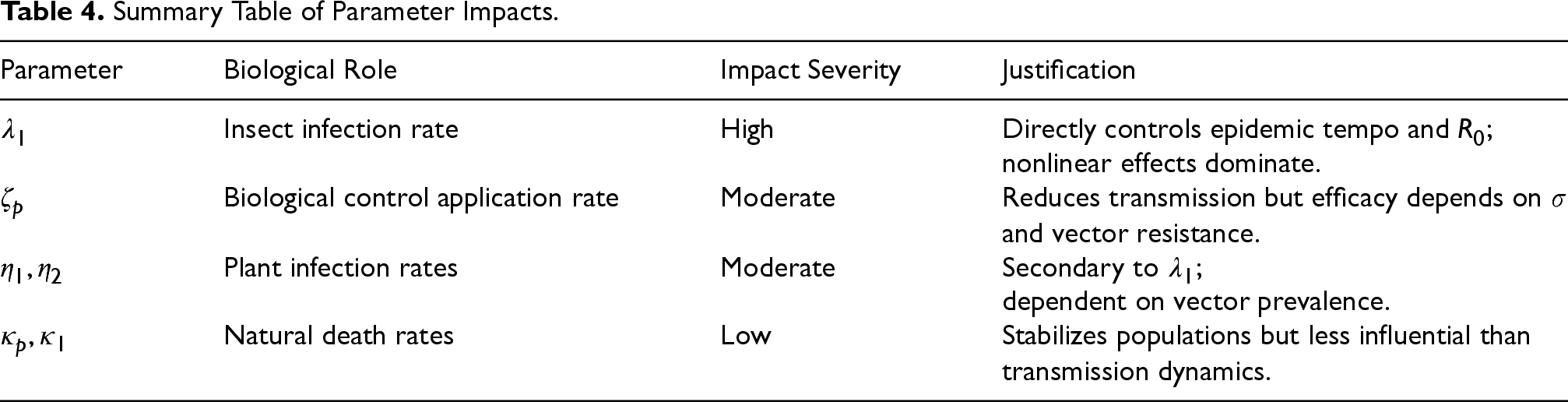
The physical significance of the observed results may be related to the biological factors that affect the dynamics of disease:
Sobol Sensitivity Indices.
Sobol Sensitivity Indices.
Summary Table of Parameter Impacts.
Whereas in Figure 2, the states for the populations of susceptible
Vector-Host Interaction and Disease Spread
The interaction between insect vectors (SBT, IBT) and plant populations is consequential in the transmission of disease. In Figure 3, initially, infected insect populations (IBT) increase, whereas later they show stabilization, which means that vector populations are effectively suppressed through pest control measures (ie, pesticide application or biological interventions). Traditional model schemes fail to characterize these nonlinear interactions adequately, for the betterment of representing those dynamics with integrated pest management goals-the application of LMB in pest dynamics.
Impact of Environmental and Control Factors
With the ability to integrate external control parameters such as environmental conditions, pesticide applications, and biological control agents, the LMB model efficiently simulates realistic scenarios for disease-solving strategies. The sharp reduction in the spread of the disease in the later stages implies that early measures are the key to avoiding crop losses. The results of this study are in good agreement with field practices, in which timely pest management effectively reduces the impact of viral infections.
Error Analysis and Model Robustness
The error histograms shown in Figures 4 and 5 together with the AE (absolute error) values confirm the strength of the LMB model. The distribution of residuals around zero and low AE values (
Implications for Agricultural Disease Forecasting
These results show that this LMB neural network is a strong predictive tool for the modeling of agricultural diseases. Its quick analysis of the nonlinear dynamics of diseases, predicting outbreaks and in situ evaluation of control measures fits perfectly into precision agriculture. Farmers and policymakers can use this technology for the following reasons:
Focus spray applications on those areas that the model predicts are at risk. Implement early interventions to minimize crop loss. Practicing sustainable agriculture by reducing the use of chemical pesticides.
Conclusion
In this study, a stochastic methodology was developed using the generation and control of Levenberg-Marquardt backpropagation (LMB) neural networks to analyze the growth of the yellow pepper virus in the field of growth of Capsicum annuum. By combining numerical simulations and neural network optimization algorithms, we have presented a more accurate and less cumbersome model to predict the spread of the pest. The given LMB model outperformed conventional numerical solvers and had the least mean square error (MSE), which was nearly equal to the expected totals. To determine the effectiveness of the model, regression analysis and error histograms were calculated such that their roots were well scattered.
More proof is available that reveals that LMB neural networks have the potential to provide a good platform to model diseases related to agriculture, and clinicians with the majority of data have the right to use them as a basis for customized interventions. Farmers and policy makers can also benefit from the knowledge gathered in the study enthused above while trying to improve their pest control measures, making it easier to abandon certain chemical pesticides or improving sustainable agriculture practices as alternatives.
The future investigation will be to further explore how the LMB framework could be applied in more complex environmental settings. Apart from plant disease modeling, the potential usefulness of the proposed LMB based system extends to other areas as well. In the context of precision agriculture, it can be instrumental in providing on-the-go monitoring services, as well as predictive diagnosis involving plant diseases considering conditioning factors such as temperature, humidity, and rainfall for the sake of disease forecast improvement. In addition, the developed model could be elaborated on the study of the interaction of regional crop diseases, which will, in turn, contribute to the management of agricultural diseases as a whole. The latter relates to the prevention of diseases that affect crops and, therefore, farm economies. In addition, automatic decision support tools that incorporate the LMB controller can make the whole process of pesticide application and plant protection more just for farmers. In this regard, the integration of LMB and its advances associated with Big Data and AI, as well as the development of ‘deep learning’ and information from, in particular, remotely transmitted systems and techniques from satellites and drones, can contribute to better surveillance and intervention of diseases. In other words, in a word that is not related to agriculture, the techniques in this article can be morphed into biomedicine and epidemiology to focus on the way diseases spread in human populations.
Future work suggests extending the LMB neural network framework to address complex problems in dynamical fluid systems (Ayub et al., 2022, 2021; Sajid et al., 2020; Sajid, Sabir, et al., 2021; Sajid, Tanveer, et al., 2021) and fractional systems (Elsonbaty et al., 2021; Sabir, Raja & Baleanu, 2021; Sabir, Raja, Guirao, et al., 2021; Sabir, Raja, Shoaib, et al., 2020).
Footnotes

Funding
The author(s) received no financial support for the research, authorship, and/or publication of this article.
Declaration of Conflicting Interests
The author(s) declared no potential conflicts of interest with respect to the research, authorship, and/or publication of this article.