



Abstract
Rule-Based Fuzzy Cognitive Maps (RBFCM) extend Fuzzy Cognitive Maps by incorporating fuzzy rule-based reasoning, enabling the modelling of complex qualitative systems with causal feedback. However, the standard reasoning mechanisms of RBFCM, designed for variation-based domains, exhibit poor performance when applied to level-based domains, such as knowledge modelling of learners, due to their reliance on assumptions about fuzzy set construction. This paper proposes enhancements to the RBFCM reasoning mechanism by introducing an Impact Strength (iS) parameter that explicitly represents the strength of influence between concepts and improves the construction of the Influence Output Set (IOS). Furthermore, this paper also introduces a new shifting mechanism and a simplified impact accumulation process, ensuring semantic consistency, preserving fuzziness, and preventing impact saturation. Experiments on a real learner dataset demonstrate that the enhanced RBFCM significantly outperforms the standard RBFCM, achieving an accuracy of 85.29%, a 28% improvement, with a higher F1-score and lower RMSE and standard deviation of error. These results confirm that the proposed enhancements enable RBFCM to model level-based knowledge domains effectively while maintaining interpretability and robustness.
Keywords
Introduction
Rule-Based Fuzzy Cognitive Maps (RBFCM), proposed by Carvalho and Tomé (1999), enhance Fuzzy Cognitive Maps (FCM) in Kosko (1986) to model complex qualitative systems. By utilizing fuzzy IF-THEN rule bases, RBFCM captures causal relationships between concepts (Carvalho & Tomé, 2009). This approach enables representation of non-monotonic causality and incorporates feedback mechanisms, offering a refined framework for dynamic cognitive and causal modelling.
RBFCM has been utilized effectively in various domains, including socio-economic systems (Carvalho & Tomé, 2009), forest fire propagation modelling (Carvalho & Tomé, 2006), fisherman behavior analysis (Wise et al., 2012), and student-centered education systems (Pena-Ayala & Sossa-Azuela, 2013). Recent advancements further demonstrate its relevance, with applications in complex dynamic systems (Carvalho & Gregorio, 2019), human reliability analysis in healthcare (Naskali et al., 2020), aerial vehicle combat systems (Zhong et al., 2021), computer-aided diagnostics (Apostolopoulos et al., 2021), and traffic flow modeling (Amini et al., 2022).
This paper applies RBFCM, a robust framework for modelling the relationship between learning concepts and the ability to handle the dynamic and abstract nature of learners’ knowledge. RBFCM leverages fuzzy rules and reasoning to address vagueness and uncertainty, offering a promising approach to effectively modelling learners’ knowledge level. In this paper, knowledge modelling serves as a representative application of a level-based case.
Standard reasoning mechanisms of RBFCM, Fuzzy Causal Relations (FCR), and Fuzzy Causal Accumulation (FCA), proposed in Carvalho and Tomé (1999), rest on a specific assumption about the relationship between the construction of fuzzy membership functions and their area and position on the Universe of Discourse (UoD) (Carvalho & Tomé, 2000). Applying the same assumption to level-based cases negatively affects the performance of RBFCM. This is because the construction of fuzzy membership functions for level-based cases does not necessarily follow the conditions proposed by Carvalho and Tomé in Carvalho and Tomé (1999).
A preliminary experiment was conducted to evaluate the performance of RBFCM when construction of fuzzy membership functions employs two approaches; i) construction according to the proposed conditions by Carvalho and Tomé, and ii) construction based on the data. The results show that approach 1 achieved only 48.24% accuracy, whereas approach 2 performed better, achieving 57.06% accuracy. This suggests that the construction of fuzzy membership functions used in level-based domains should not be constrained to follow the proposed condition. This compromises the effectiveness of RBFCM. However, performance under approach 2 remains insufficient to establish RBFCM as an effective method for knowledge modelling.
Therefore, this paper proposes to enhance the reasoning mechanism within the RBFCM. These enhancements focus specifically on the interpolation process, constructing the Influence Output Set (IOS). It establishes a more meaningful relationship between the area of IOS fuzzy set and the strength of influence exerted by the causal concepts on the effect concept. This idea is applied by introducing a new relationship parameter, Impact Strength (
The paper is structured as follows: Section 2 reviews the literature on knowledge modelling and RBFCM, while Section 3 explains the application of RBFCM to knowledge modelling. In this section, a preliminary experiment has been conducted. Section 4 outlines the proposed enhancements to RBFCM. Section 5 presents another experiment to evaluate the performance of enhanced RBFCM. Section 6 highlights some discussions about the proposed enhancement, and conclusions are presented in Section 7.
Literature Review
Knowledge Modelling As Level-case System
Knowledge modelling is a process of assessing learners’ current knowledge level, often defined as estimating or predicting learners’ mastery level of learning concepts, competencies, or skills (Abyaa et al., 2019). As a domain-dependent characteristic, knowledge levels are central to constructing learner models in intelligent tutoring systems.
A systematic review (Wang et al., 2025) of studies from 2013 to 2023 identified knowledge levels as a frequently modeled characteristic due to their critical role in adaptive learning systems. Knowledge levels establish a baseline for the understanding of a learner, enabling systems to tailor content effectively, thereby enhancing engagement and learning outcomes (Wang et al., 2025).
The relationships between learning concepts are critical for modelling learner knowledge (Chrysafiadi & Virvou, 2014), where the knowledge level of one concept is influenced by the achieved knowledge of related concepts. Besides, knowledge modelling systems must be able to handle the dynamic and abstract nature of learners’ knowledge, which is often influenced by unobservable and uncertain factors (Chrysafiadi & Virvou, 2014). Fuzzy logic, particularly through applications of the Rule-Based Fuzzy Cognitive Map (RBFCM), provides a robust framework for addressing these challenges. RBFCM has the ability to depict the relationships between learning concepts through its cognitive mapping. Furthermore, RBFCM, with its application of fuzzy rules and fuzzy reasoning, handles vagueness and uncertainty; hence, RBFCM offers a promising approach for effectively representing and reasoning about learners’ knowledge level. Thus, knowledge modelling can serve as a representative application of level-case reasoning within the RBFCM framework.
Rule-based Fuzzy Cognitive Maps
Rule-Based Fuzzy Cognitive Maps (RBFCM) represent an advancement of traditional Fuzzy Cognitive Maps (FCMs) by integrating rule-based structures to model causal relationships. RBFCM are particularly suited for modelling the dynamics of complex real-world qualitative systems (Papageorgiou & Salmeron, 2013), addressing limitations inherent in conventional fuzzy operations through a structured rule-based methodology for defining fuzzy causal relationships. This approach enhances flexibility for capturing the dynamics and interactions characteristic of complex systems (Carvalho, 2011; Carvalho & Tomé, 2001). It consists of fuzzy nodes (concepts) and fuzzy links (relations).
Nodes in RBFCM represent measurable physical quantities or abstract concepts (Carvalho & Tomé, 2009), categorized into two value classes: (i) Levels, indicating absolute values, and (ii) Variations, reflecting changed values. These concepts contain a collection of fuzzy sets characterized by fuzzy membership functions (Carvalho & Tomé, 2000). The membership functions are designed to represent either the possible absolute values using assigned linguistic terms such as low, medium, high, or the possible changed values using linguistic terms such as decrease, maintain, increase (Carvalho & Tomé, 1999).
The relations between the concepts represent various types beyond causality to address the complexity of qualitative systems (Carvalho & Tomé, 2000). These include influence, probabilistic, possibilistic, opposition, similarity, and implication relations (Carvalho & Tomé, 2000).
The reasoning mechanisms within the RBFCM, i) Fuzzy Causal Relation (FCR) and ii) Fuzzy Causal Accumulation (FCA), were proposed by Carvalho and Tomé (1999) as a standard approach for modelling variation-based dynamic relations. They argued that causality inherently involves change, where a change in one concept causes a corresponding change in another. In contrast, level values were considered as influence relations rather than causality (Carvalho & Tomé, 2000). Furthermore, they claimed that causal effects are inherently accumulative only in variation-based relations, asserting that level-based causal effects do not exhibit this accumulative property. This perspective underpins the RBFCM’s focus on variations rather than level values.
However, this perspective can be challenged, as it appears to oversimplify the nature of causality in level-based systems. Level-based causal effects can indeed exhibit accumulative behavior, particularly in domains such as learner knowledge modelling. In such systems, a learner’s knowledge level of a particular learning concept can be influenced by multiple related concepts, and these influences can accumulate to form an integrated and comprehensive knowledge level.
Nonetheless, the reasoning mechanisms of RBFCM (Carvalho & Tomé, 1999) rest on a specific assumption about the relationship between the construction of fuzzy set membership functions for variation, and their areas and positions on the UoD. To ensure consistent and meaningful reasoning, Carvalho and Tomé established key conditions for constructing these fuzzy sets:
At any point At the cross point of two consecutive fuzzy sets on the UoD,
Importantly, Carvalho and Tomé emphasized that fuzzy sets representing greater variations should have a larger area and support compared to those representing smaller variations:
where the fuzzy set A represents a greater variation than fuzzy set B as
However, applying the same conditions to level-based cases raises limitations, especially condition (3), because the membership functions for level values are typically generated from expert knowledge or derived from data, and thus do not necessarily follow the proposed condition (3). For example, the fuzzy sets representing learners’ knowledge levels constructed by Chrysafiadi and Virvou (2014), as shown in Figure 1, clearly violate condition (3), hence showing that fuzzy sets for knowledge level modelling are context-specific and unique.

Membership function of fuzzy sets to represent learner’s knowledge in Chrysafiadi and Virvou (2014).
Since the standard reasoning mechanisms within the RBFCM are related to the construction of membership functions, particularly their areas and positions on the UoD, employing fuzzy sets that violate one of these conditions can compromise the effectiveness of the reasoning process, hence negatively affect the performance of the RBFCM.
The following subsection explains the Fuzzy Causal Relation (FCR) mechanism, highlighting the interpolation process.
This subsection focuses on the interpolation process within the reasoning that operates at the stage where two rules are fired simultaneously, and the computation of the combined impacts. The RBFCM performs an interpolation process to construct a new fuzzy set termed the Causal Output Set (COS) that represents the aggregated variation implied by the consequent fuzzy sets of the fired rules. This process maintains the trapezoidal structure of the membership functions to ensure that the COS fuzzy set is in a fuzzified form, which is crucial for the impact accumulation process later.
The interpolation process is executed after the inference process. Inference process, as depicted in Figure 2, produces Union


Inference process of RBFCM when two rules are fired.
The construction of the COS fuzzy set is based on the idea that the variation fuzzy sets already reflect the strength of causality, which means that fuzzy sets with larger areas and wider supports on the UoD represent larger variations. Therefore, the interpolation does not directly calculate the strength of causality; instead, it relies on the variation fuzzy sets (Zdanowicz & Petrovic, 2017).
The interpolation process ensures that the area of the COS fuzzy set must be equal to the area of the Union,


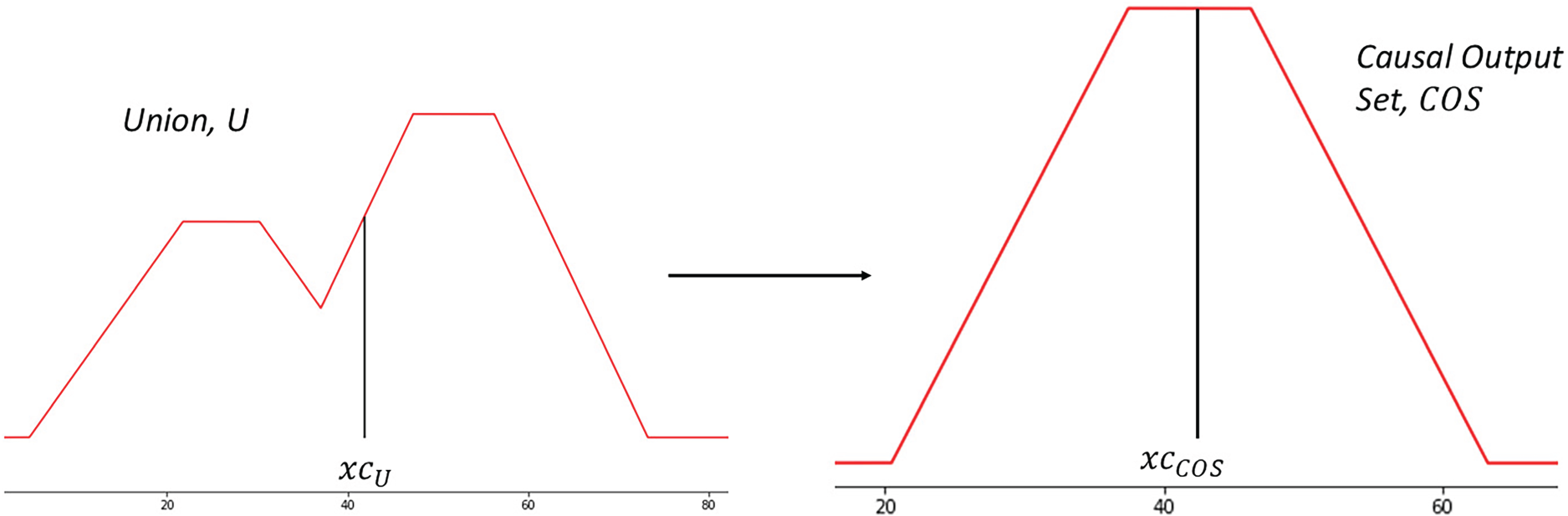
Construction of
Once all characteristics of COS, including support,
While this process was designed explicitly for variation values and effectively produces a fuzzified representation of the combined impact, it is less suitable when applied to level values. Since the construction of level fuzzy membership functions does not follow the proposed condition (3), the standard interpolation process does not explicitly reflect the strength of influence or impact received by the effect node in such cases.
In this regard, an enhancement of the reasoning mechanism is proposed based on the idea that the shape and area of the COS fuzzy set should explicitly represent the strength of influence produced by the causal node on the effect node. Specifically, the proposed enhancement establishes a more direct and interpretable relationship between the area of the COS fuzzy set and the strength of the received impact.
One of the key contributions of RBFCM was the introduction of an accumulation mechanism to fuzzy rule-based systems (Carvalho & Tomé, 1999). RBFCM explicitly models the accumulative nature of causal relations, where the effect node can simultaneously receive and accumulate causal effects from multiple causal nodes. Therefore, Carvalho and Tomé proposed a dedicated mechanism that allows the effect concept to accumulate impacts from all contributing causal concepts.
The output of this process is the Variation Output Set (VOS), which represents the total variation received by the effect node. The accumulation mechanism was designed around the idea that the shape and size of a fuzzy set represent its position and meaning on the UoD. Specifically, Carvalho and Tomé proposed that during the accumulation process, the fuzzy set representing a smaller variation (smaller area and support) should be shifted toward the fuzzy set representing a larger variation (larger area and support).
This process uses a discrete, recursive algorithm that sums the degrees of belief at each point
However, when the construction of fuzzy sets does not follow the proposed condition (3), as discussed in the previous subsection, this can compromise the effectiveness of the accumulation process, hence negatively affect the performance of the RBFCM.
In the standard RBFCM, the size of a fuzzy set reflects the magnitude of variation and its position on the UoD, complementing the centroid. However, the shape of the fuzzy set should not dictate its position but instead indicate the uncertainty it represents (Zdanowicz & Petrovic, 2017).
Additionally, the standard accumulation process in RBFCM can sometimes produce a VOS fuzzy set that extends beyond the maximum or minimum values of the UoD, which requires an additional procedure known as saturation of impacts. The saturation process adjusts the fuzzy set to remain within bounds while attempting to preserve its fuzziness.
To overcome the limitations of the standard accumulation and to better support applications where the construction of fuzzy sets ignores the proposed conditions, this paper uses an enhanced (simplified) accumulation process.
The following section applies RBFCM to learners’ knowledge modelling. A preliminary experiment is conducted to evaluate RBFCM’s performance in modelling level-based cases, specifically exploring how RBFCM performs when the membership functions for level values are constructed using two different approaches.
Knowledge Modelling with Rule-based Fuzzy Cognitive Maps
An important note when applying RBFCM to level-based cases is that several terms originally defined for variation-based cases are adjusted to reflect the nature of level values better. Specifically, the Causal Output Set (COS) is renamed to the Influence Output Set (IOS), since we are dealing with level values of concepts rather than variations - even though the causal relationship remains (Carvalho & Tomé, 2000). Similarly, the Variation Output Set (VOS) is renamed to the Level Output Set (LOS), as the target concept now represents level values instead of variation values.
This section outlines the application of the RBFCM model to predict learners’ knowledge levels. In this context, learners’ final exam performance is measured based on related assessments, including laboratory tests, quizzes, midterm exams, and assignments. Figure 4 presents a simple cognitive map illustrating the causal relationships between these assessments and the final exam.
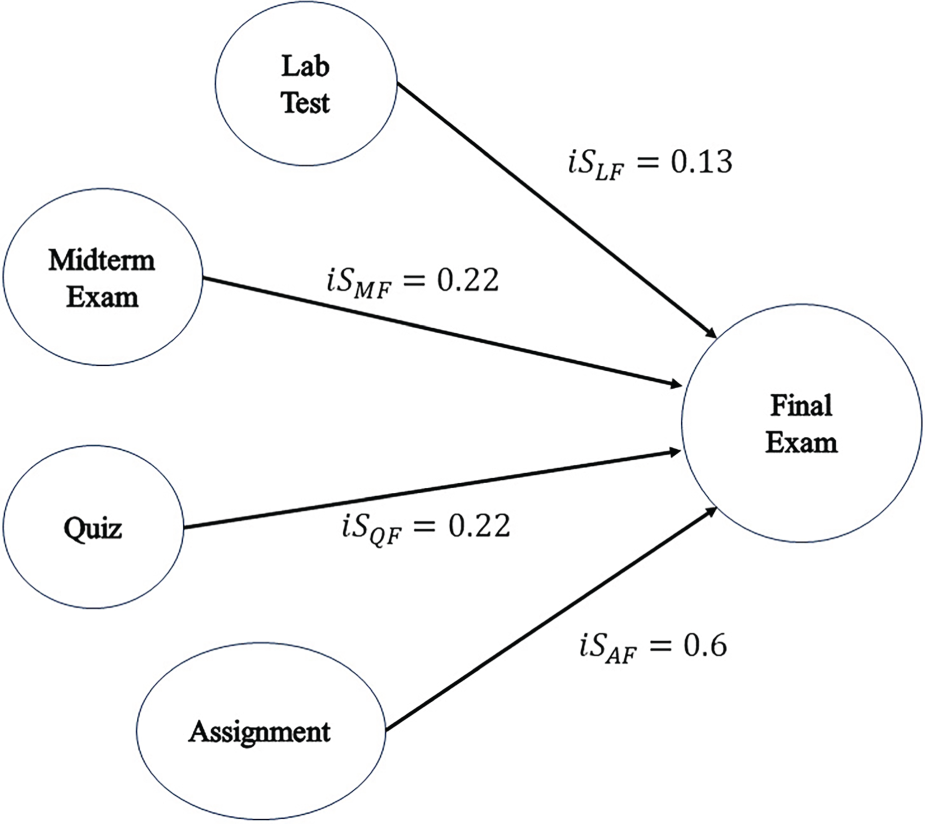
Simple cognitive map of final exam knowledge level.
A cognitive map serves as a visual representation and captures experts’ mental model of how the final exam (target concept) can be influenced by various assessments (causal concepts). The arcs between the concepts depict the causal relationships.
In the following subsections, the configurations of RBFCM to model this scenario are described. First, two different approaches to constructing the fuzzy membership functions are described. Next, the formulation of fuzzy rules underlying the cognitive map is explained. Finally, a preliminary experiment is conducted to compare the performance of RBFCM when two different approaches are used to construct the fuzzy membership functions.
Figure 5 illustrates a trapezoidal membership function for fuzzy set
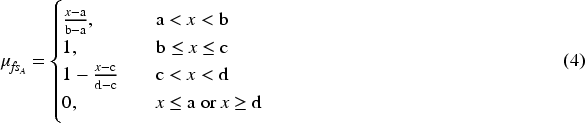
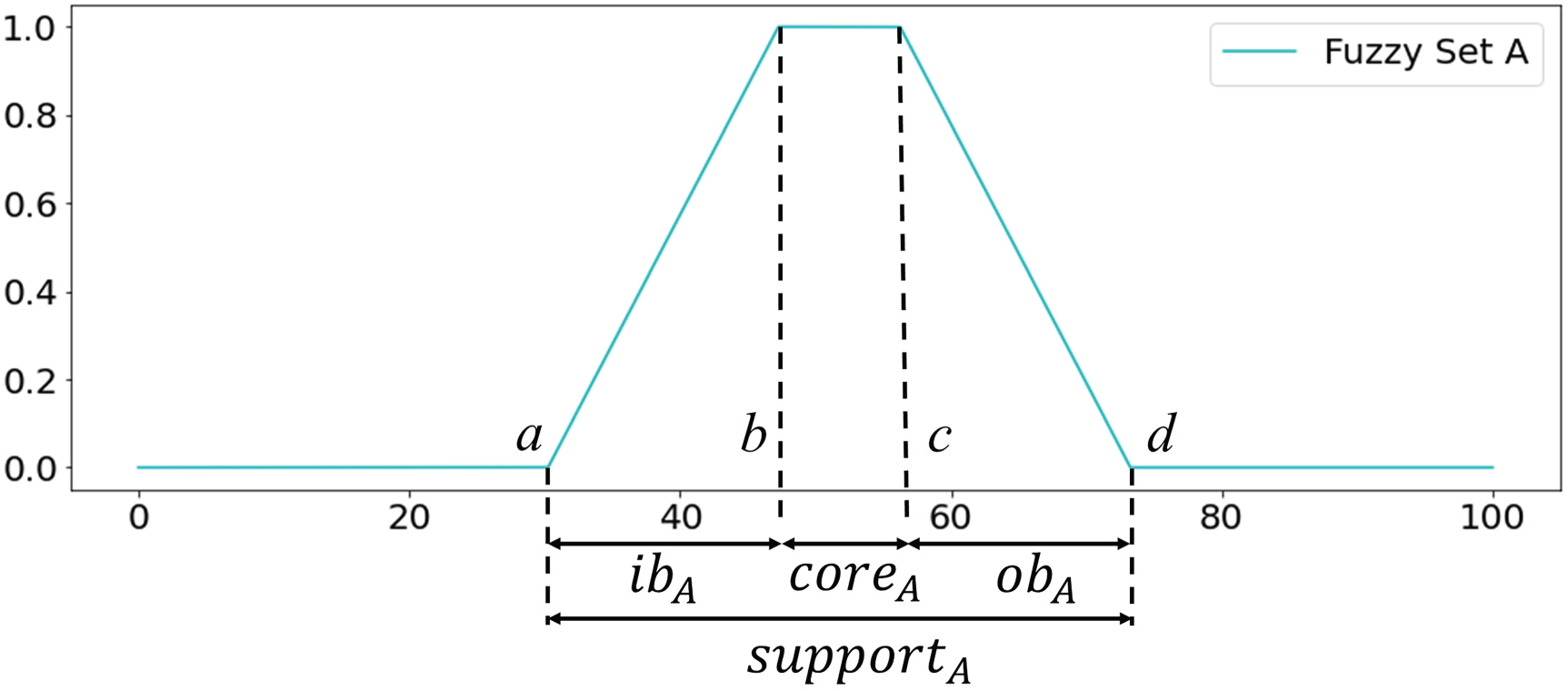
Trapezoidal membership function of fuzzy set A with its main characteristics.
The construction of fuzzy membership functions is a critical step in configuring the RBFCM. In this work, two approaches for constructing the fuzzy sets were applied and examined.
In this first approach, the membership functions are constructed by strictly following the conditions proposed in Carvalho and Tomé (1999), explained in section 2.2.
Consequently, every node in the RBFCM applies the same set of membership functions, as illustrated in Figure 6. While this simplifies the construction of the model and maintains consistency with the standard RBFCM assumptions, it may fail to accurately reflect the actual distribution and semantics of level-based concepts, such as learners’ knowledge levels, in this case.
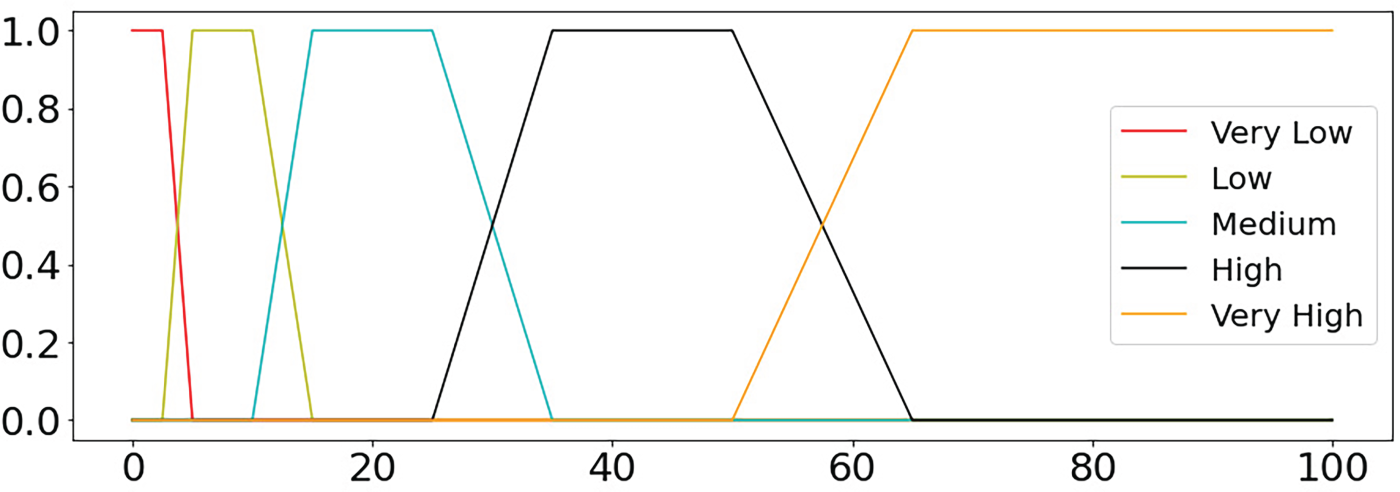
Fuzzy membership functions of knowledge level constructed with Approach 1.
For the second approach, the membership functions are defined without enforcing the proposed condition, especially condition (3). Moreover, the membership functions are allowed to vary across concepts, reflecting the fact that each concept may have distinct value levels and distributions.
Traditionally, these membership functions are defined by subject matter experts. This approach is beneficial whenever the data is not always readily available. Unfortunately, this practice introduces several challenges, including increased reliance on expert judgment, time-intensive knowledge elicitation, and the risk of subjectivity or bias in defining the fuzzy sets.
To mitigate these issues, the fuzzy membership function can be constructed empirically from the data itself, using statistical measures such as the mean and standard deviation of the observed values. Historical learner data were first collected and cleaned by removing outliers, then the mean (
Figures 7 to 11 illustrate the fuzzy membership functions of the concepts, including Lab Test, Quiz, Midterm Exam, Assignment, and Final Exam, respectively.
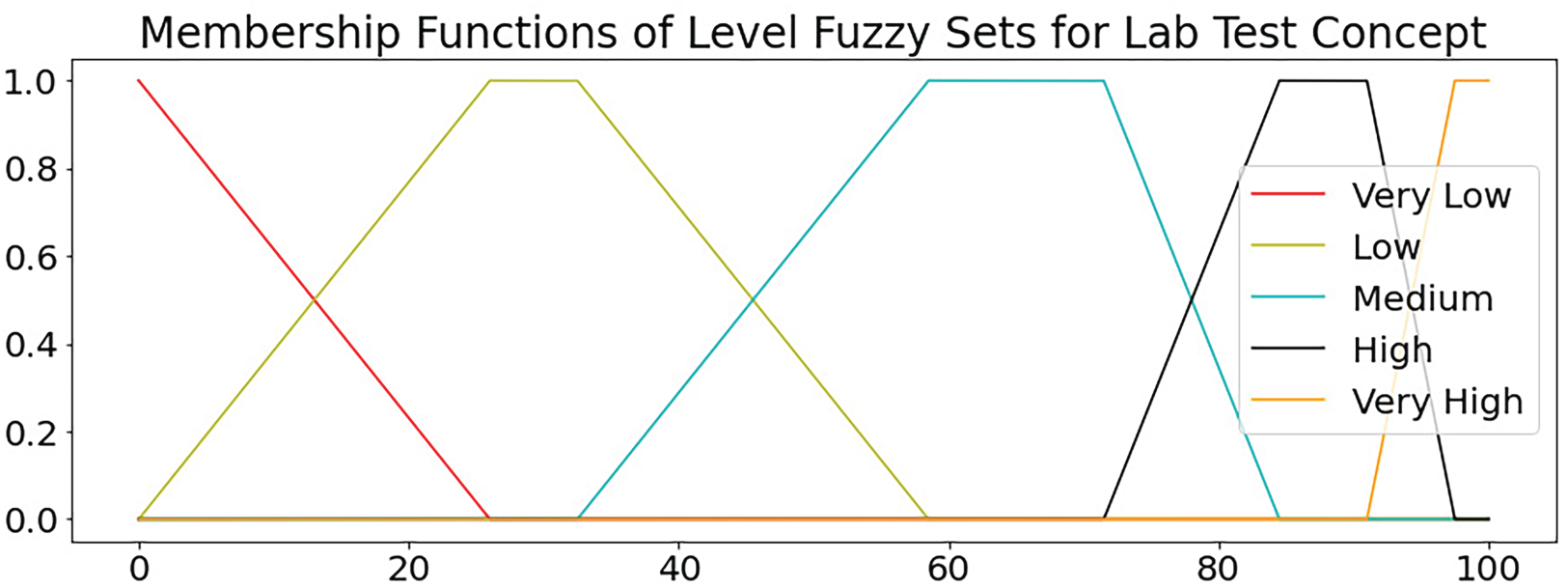
Fuzzy membership functions for Lab Test concept.
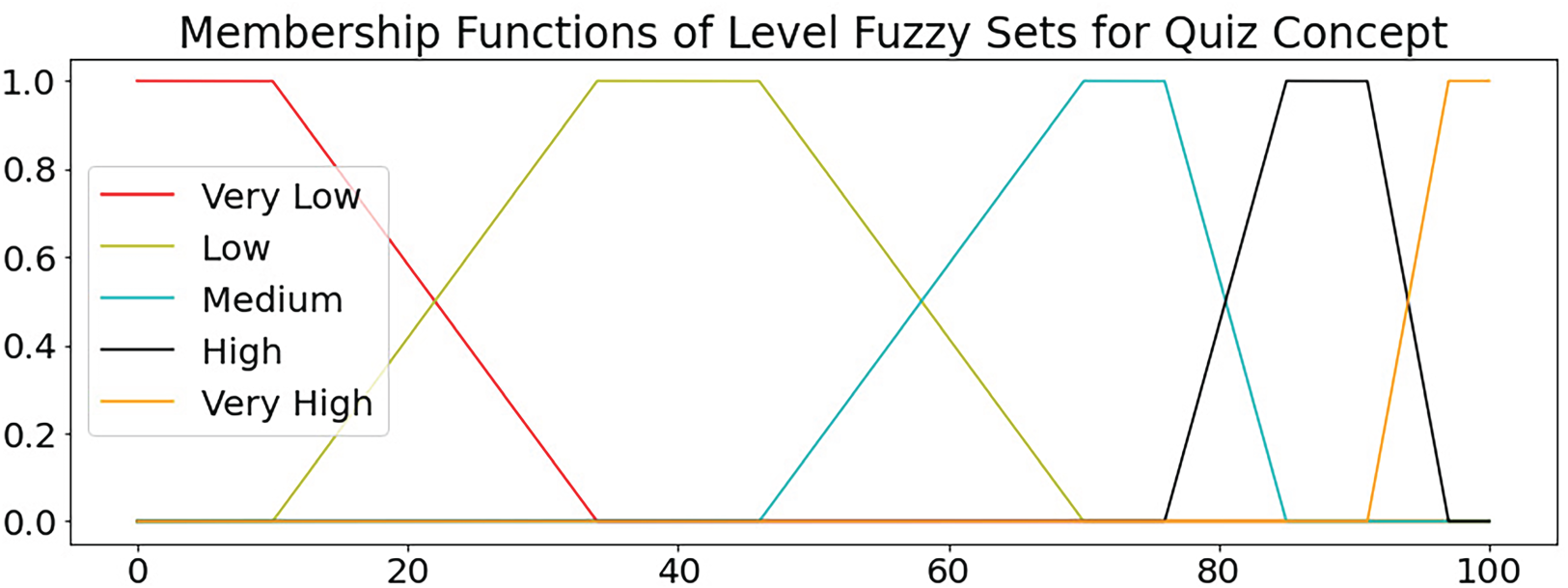
Fuzzy membership functions for Quiz concept.
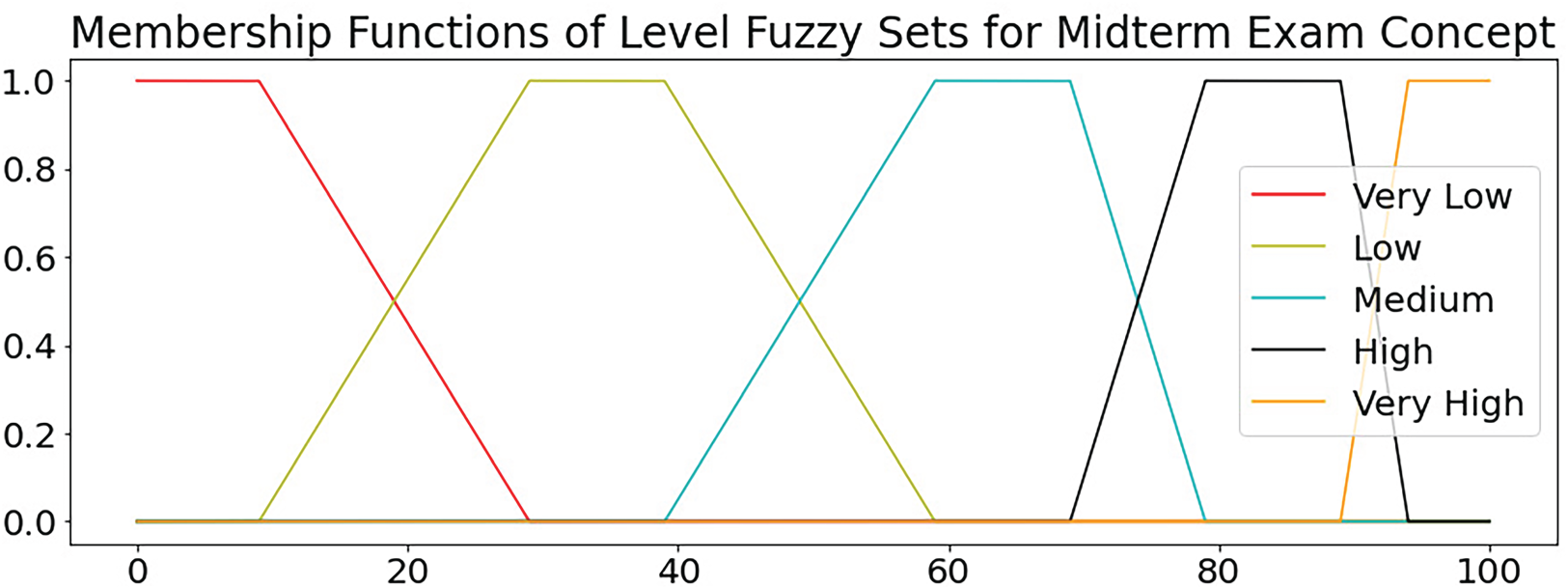
Fuzzy membership functions for Midterm Exam concept.

Fuzzy membership functions for Assignment concept.
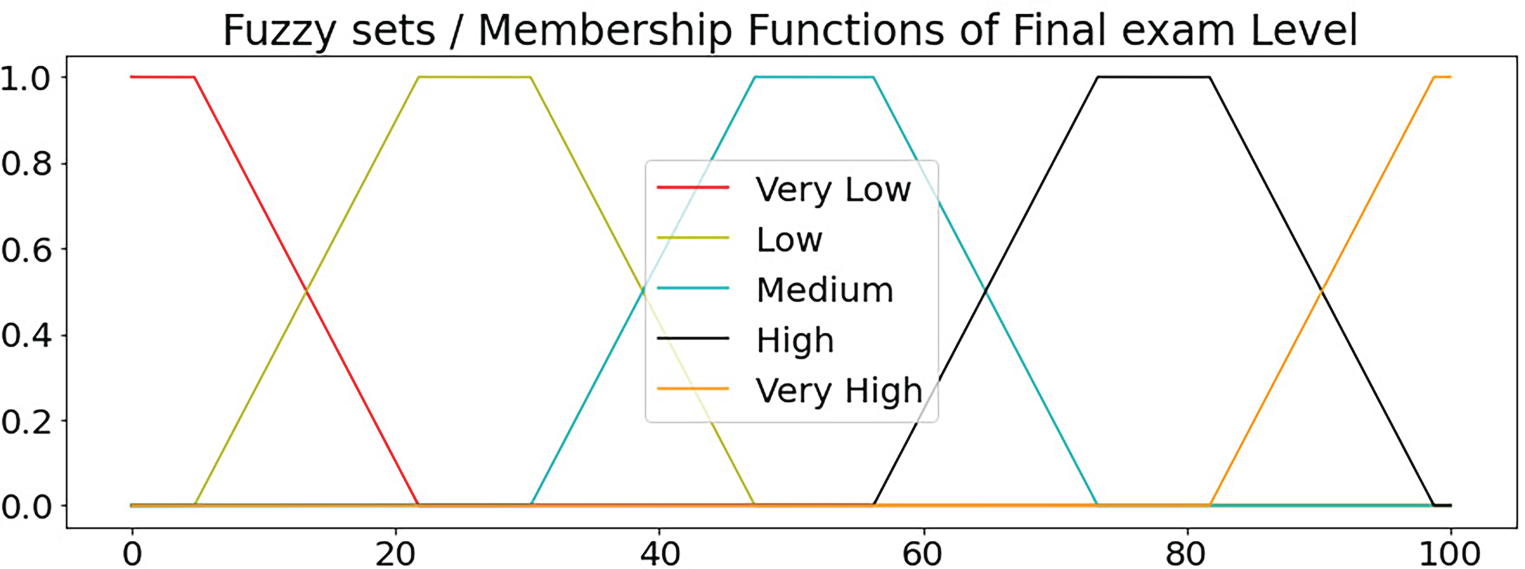
Fuzzy membership functions for Final Exam concept.
Fuzzy IF-THEN rules are defined by the subject matter experts, who provide the foundational knowledge for formulating these rules.
A fuzzy rule is a conditional statement expressed as an IF-THEN clause. For instance: IF the knowledge level in the Midterm Exam is
The number of fuzzy sets constructed determines the number of rules for a given relation. In this case, each concept is represented by five fuzzy sets corresponding to five fuzzy variables: Very Low, Low, Medium, High, and Very High. Consequently, a single relation between a causal node and an effect node generates five rules per set. The antecedent components of these rules can be constructed as follows:
IF knowledge level of IF knowledge level of IF knowledge level of IF knowledge level of IF knowledge level of
A preliminary experiment is conducted to evaluate the RBFCM’s performance for this case study. The objective was to examine the performance of RBFCM and compare it when membership functions are constructed using the two approaches described in sections 3.1.1 and 3.1.2. Hence, the reasoning process of RBFCM was executed twice.
The performance of the RBFCM was evaluated by measuring its accuracy in predicting learners’ performance levels in the final exam. The level outputs from the RBFCM were compared with the actual level to calculate accuracy with Eq. (5);

The dataset used in this experiment, comprising 170 undergraduate student records, was obtained from one of the local public universities. The data, collected from the Basic Programming Course, included marks for quizzes (10%), lab tests (20%), midterm exams (20%), assignments (20%), and final exams (30%). To ensure standardization, the original marks were normalized to a 100% scale, aligning with the range required for fuzzy membership functions construction.
The performance of RBFCM in both approaches was observed and compared to assess the effect of different approaches to constructing the fuzzy membership functions. This comparison provides insights into the limitations of applying variation-based assumptions to level-based domains and motivates the enhancement of RBFCM’s reasoning mechanism.
The results, summarized in Table 1, indicate that the RBFCM exhibited low predictive performance (48.24%) when the fuzzy membership functions were constructed with Approach 1. In contrast, when the fuzzy set membership functions were constructed without following the proposed conditions, and instead tailored to the data using statistical measures (Approach 2), the RBFCM achieved a bit higher accuracy (57.06%).
Preliminary Experiment Result.

Preliminary Experiment Result.
These findings suggest that, for level-based domains, the fuzzy membership functions should be unique to each concept, and applying the proposed conditions limits the flexibility needed to represent their semantics accurately. This compromises the effectiveness of RBFCM when applied to level-based domains such as learner knowledge modelling.
However, the observed improvement in performance under Approach 2 remains insufficient to establish RBFCM as an effective and reliable method in this context. This might be due to the RBFCM reasoning mechanisms being tightly associated with the assumption that specific relationships exist between the fuzzy sets’ shapes, areas, and positions on the UoD, as proposed by Carvalho and Tomé. Since the fuzzy sets constructed under Approach 2 violate these assumptions, the reasoning mechanisms operate poorly, which leads to low performance.
This highlights a fundamental limitation: the RBFCM’s reasoning mechanisms are not inherently compatible with the more flexible, data-driven construction of fuzzy sets required for level-based modelling. Therefore, to expand the applicability of RBFCM to level-based systems and improve its performance, this study proposes to enhance RBFCM’s reasoning mechanisms.
The enhancements aim to preserve the explainability of RBFCM while increasing its flexibility and predictive performance when applied to level-based domains. Additionally, this will open the possibility for RBFCM to be more robust to expert subjectivity and can be applied across diverse applications. The method of enhancements is explained in the next section.
In this section, the methodology developed to enhance the reasoning process of the RBFCM is presented, addressing the limitations identified in the preliminary experiment. Figure 12 depicts the general architecture of the RBFCM model integrating the proposed enhancements.
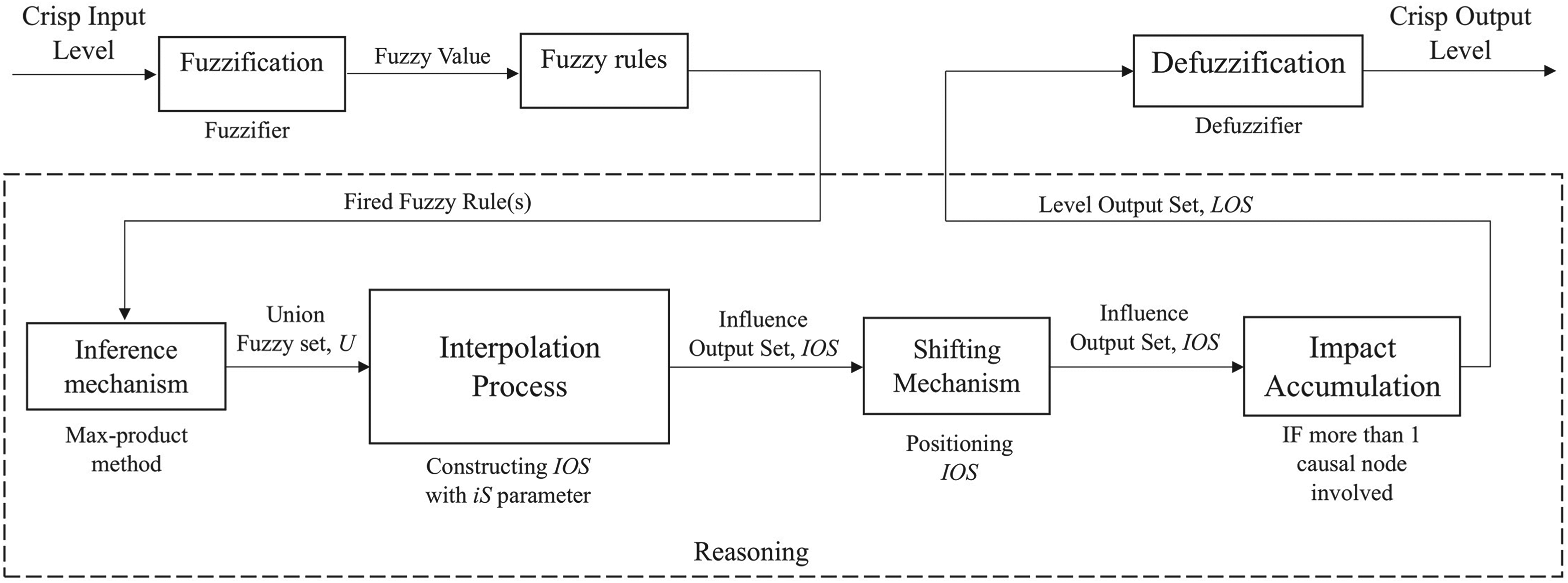
General Architecture of RBFCM with Enhanced Reasoning Mechanisms.
As demonstrated earlier, the standard reasoning mechanisms of RBFCM are insufficient for level-based cases, because such cases construct fuzzy membership functions differently, without enforcing the condition (3) proposed by Carvalho and Tomé (1999). To make RBFCM compatible with the flexible, data-driven construction of level-based fuzzy sets, enhancements to its reasoning mechanisms are proposed, removing this dependency and improving its applicability to level-based domains. These enhancements focus specifically on the interpolation process - constructing the Influence Output Set (IOS) fuzzy set.
The enhanced reasoning mechanism applies the standard interpretation of fuzzy set semantics, where the size of a membership function reflects the uncertainty associated with the concept it represents. This uncertainty can be quantified using the degree of fuzziness metric. Moreover, it establishes a more meaningful relationship between the area of the IOS fuzzy set and the strength of causality or influence exerted by the causal node on the effect node, while preserving the inherent fuzziness and uncertainty of the IOS. The underlying idea is that the shape and area of the IOS should explicitly represent the strength of impact received by the effect node.
To operationalize this idea, a weight parameter is introduced for each relation within the RBFCM. This weight represents the strength of the corresponding influence relation. This new relationship parameter is termed the Impact Strength (
The
Since the
The impact strength of 
Meanwhile, definition of
The
Impact Strength, iS, Values of Every Relation.

Application of
To illustrate this application and show the enhanced reasoning mechanism, consider the relationship between two nodes (Assignment and Final Exam) as presented in Figure 4. The fuzzy sets modelling the levels of these concepts are depicted in Figures 10 and 11, respectively. Furthermore, let the
Assume for an input
Then, to construct the IOS fuzzy set, a standard mechanism calculates the core and inner base of the IOS fuzzy set using the distance between the defuzzified centroids of the consequent fuzzy sets and the centroid of the Union fuzzy set. These core and inner base values are then used to derive the remaining characteristics of the IOS, such as support and outer base.
However, the final characteristics of the IOS fuzzy set are then adjusted by incorporating the 




Finally, after the IOS characteristics have been fully determined, it is essential to position the IOS on the UoD correctly. To achieve this, a new shifting mechanism is introduced, which is explained in detail in the following subsection.
The correct positioning of the IOS fuzzy set on the UoD is a critical step in the reasoning process of RBFCM, as it ensures that the IOS accurately reflects the impact of the causal node on the effect node in terms of both magnitude and semantics.
A new shifting mechanism is proposed that aligns the IOS more intuitively with the fuzzy sets resulting from the inference process. Specifically, the proposed mechanism ensures that the minimum point
In contrast to the standard mechanism, which focuses on aligning the centroid of the COS with the centroid of the Union fuzzy set, this approach utilizes the minimum point
The shifting value, 
The final position of the IOS fuzzy set on the UoD is computed by calculating each of its defining points (



This new shifting mechanism thus ensures that the IOS remains semantically consistent with the inference results, while explicitly incorporating the boundaries of the fuzzy sets involved in the reasoning process.
The accumulation process occurs when two or more causal nodes influence an effect node. For instance, consider a scenario where the Final exam is influenced not only by the Assignment (
The standard RBFCM method accumulates impacts based on the relationship between linguistic variation and the shape of its fuzzy set. In this study, a simplified and more direct approach for impact accumulation was used. The LOS fuzzy set is derived using the standard fuzzy summation operation in Eq. (17):

As the result, the four points defining LOS fuzzy set are calculated using Eq. (18):
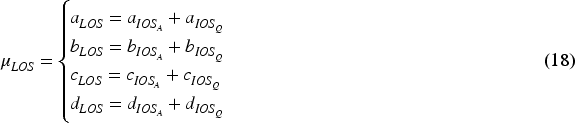
Hence, characteristics of LOS are calculated as follows:




This summation ensures that the uncertainty in the LOS fuzzy set accurately represents the combined uncertainty levels of all IOS fuzzy sets involved in the aggregation process.
Subsequently, the LOS fuzzy set undergoes defuzzification to determine the final output, which can be calculated using the Centroid Method (Lee, 1990). This process identifies the centroid of the LOS fuzzy set, denoted as
In this section, an experiment is presented that extends the preliminary study described in Section 3.3 by rerunning it on the RBFCM equipped with the proposed enhanced reasoning mechanism.
The objective of this experiment is to compare the performance of RBFCM when utilizing two different reasoning mechanisms; i) Method 1: RBFCM with the standard reasoning mechanism proposed by Carvalho and Tomé, and ii) Method 2: RBFCM with the proposed enhanced reasoning mechanism introduced in the previous section.
This experiment uses the same fuzzy membership functions constructed in Section 3.1.2, along with the same set of fuzzy rules defined in Section 3.2. Furthermore, the same dataset used in the preliminary experiment is also employed here to ensure a fair comparison between the two approaches.
The performance of RBFCM under both methods is evaluated and compared to assess the impact of the enhanced reasoning mechanism on its effectiveness in modelling level-based knowledge.
Experimental Results
In addition to accuracy, the performances of RBFCM are assessed using several other evaluation metrics such as; i) F1-score, as defined by Eq. (23), ii) Standard Deviation of Errors, 


Table 3 demonstrates that the enhanced RBFCM achieves an accuracy of 85.29%, which is a 28.23% improvement over the standard RBFCM’s 57.06%. Additionally, the Table 4 highlights the Standard Deviation and Errors for each approach, with the enhanced RBFCM achieving a significantly lower standard deviation of errors of 11.89 compared to 22.37 for the standard RBFCM. Furthermore, enhanced RBFCM has also achieved a higher F1-score (83.57) compared to the standard RBFCM (51.38). For the RMSE, enhanced RBFCM achieved 10.78, while 21.73 for the standard RBFCM.
Output Performance of The Experiment.

Summary of Accuracy, F1-score, Standard Deviation of Error and RMSE Performed by RBFCM Approaches.

The findings demonstrate that the enhanced RBFCM approach effectively measures and predicts learners’ knowledge levels. While the standard RBFCM performs well for Variations-based cases, it is less suitable for Levels-based cases, achieving only 57.06% accuracy. The inclusion of the enhanced reasoning mechanism and application of the
The interpolation process is crucial in RBFCM, as it constructs a new form of fuzzy set known as the Influence Output Set (IOS), which represents the aggregated level implied by the consequent fuzzy set of the fired rules. This process will ensure that the IOS fuzzy set maintains the trapezoidal structure of the membership functions.
Since the construction of fuzzy membership functions in level-based cases does not fulfill one of the proposed conditions, the standard interpolation process affects the final form of the IOS fuzzy set, hence compromising the effectiveness of the reasoning process. This negatively affects the performance of RBFCM.
The enhancement of the interpolation process based on the
Preservation of IOS Fuzzy Set Fuzziness
The degree of fuzziness is a metric used to quantify the uncertainty inherent in a fuzzy set (Zhang, 1998). It represents the distinction between a fuzzy set and its complement. For a trapezoidal membership function (fuzzy set A), the degree of fuzziness can be determined using Eq. (26):


The characteristics of a trapezoidal fuzzy set, including the lengths of the
The IOS fuzzy set is constructed based on the
Consider the construction of the IOS fuzzy set. Its characteristics are as follows:
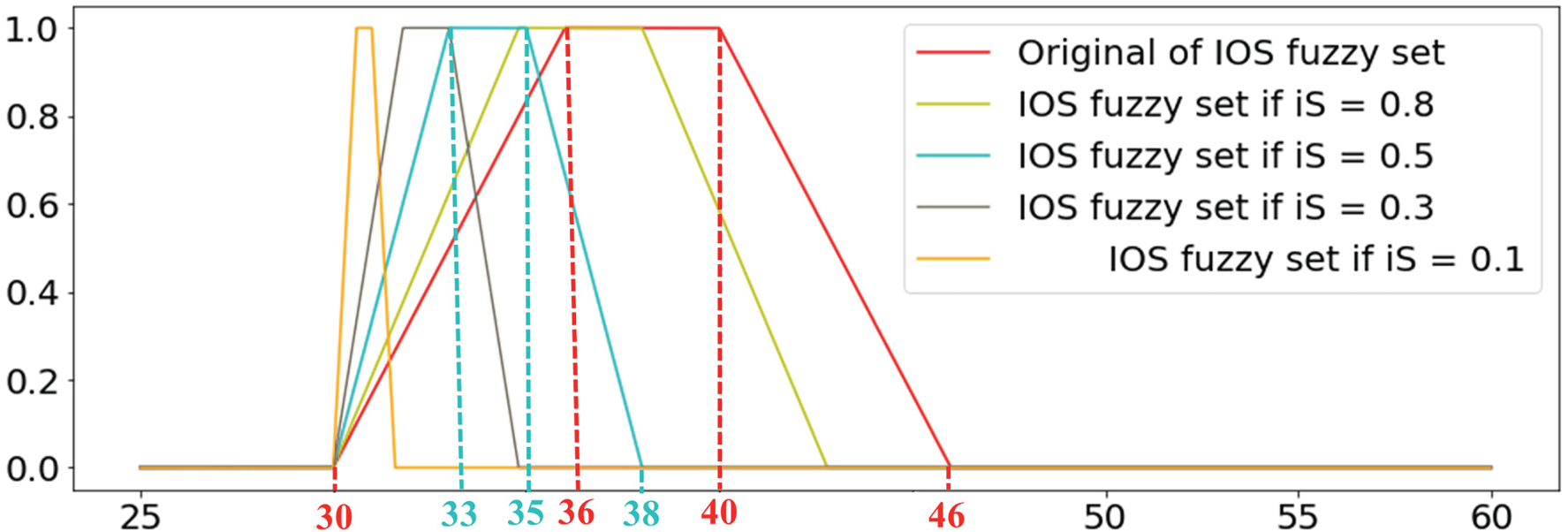
Outputs of the IOS fuzzy set according to different values of parameter
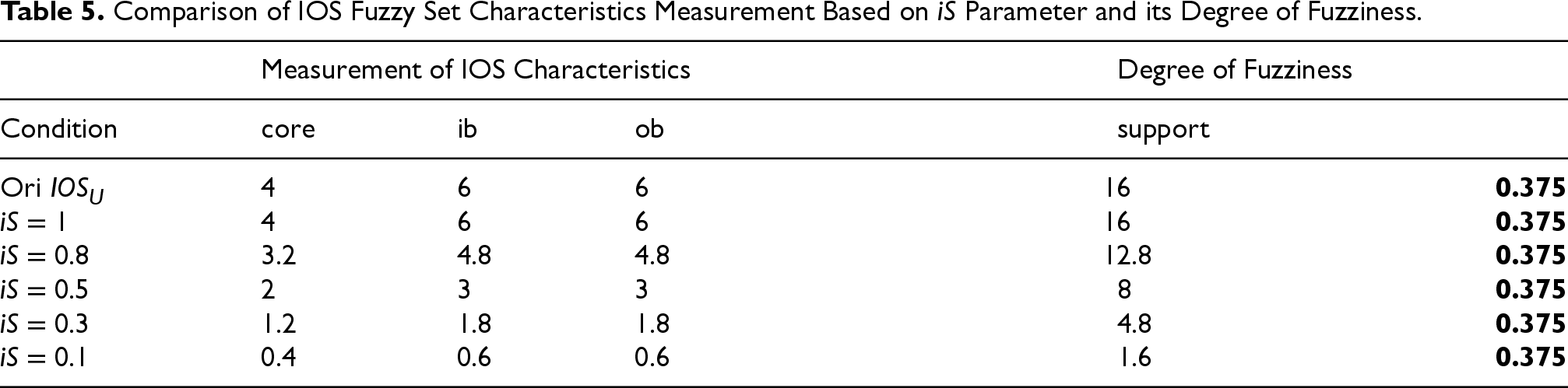
Table 5 presents measurements of IOS characteristics in relation to impact strength and fuzziness. The degree of fuzziness remains constant at 0.375, even as the IOS characteristics decrease with lower impact strength. This shows that size alone does not determine fuzziness; a smaller fuzzy set can have a higher degree of fuzziness. In the enhanced approach, the area of the trapezoidal IOS fuzzy set represents the strength of the impact that a causal concept exerts on an effect concept. Importantly, using the
Comparison of IOS Fuzzy Set Characteristics Measurement Based on
Saturation of impacts is applied after the accumulation process generates the LOS fuzzy set, particularly when the LOS exceeds the upper limit of the UoD, denoted X. In this study, the maximum UoD value (
If the LOS fuzzy set extends beyond these limits, a saturation process is applied to ensure it remains within the UoD boundaries. This involves reshaping and reducing the size of the fuzzy set.
The saturation method calculates the distance between the centroid of the LOS fuzzy set (
Enhanced reasoning mechanism, which involves reshaping and resizing the IOS fuzzy set based on the
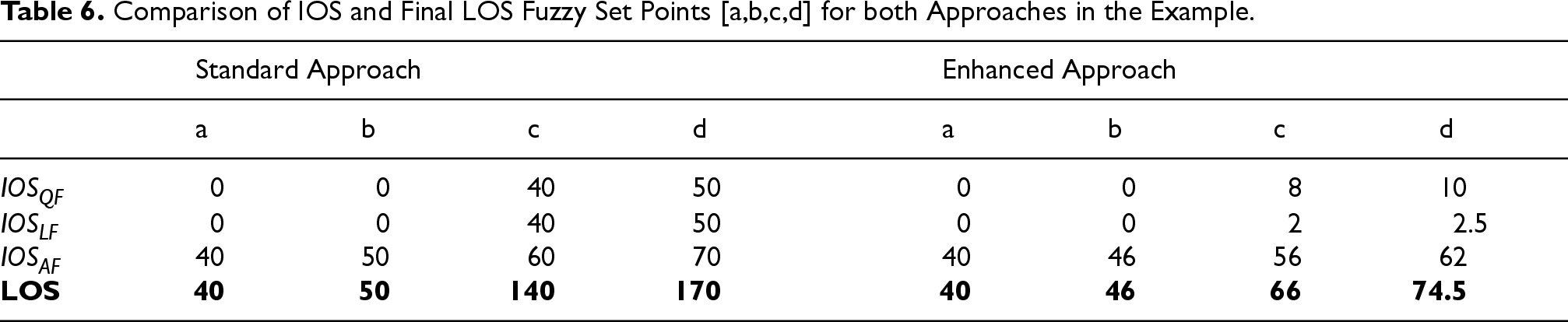
To illustrate the differences in LOS outputs between the standard mechanism and the enhanced mechanism, consider the following example. Three causal concepts influence an effect concept: (1) Quiz (Q) impacts Final exam (F) with an impact strength of
A learner achieving 75% knowledge in the Quiz, 77% in the Lab test, and 87% in the Assignment produces the IOS fuzzy sets for each causal chapter influencing the Final exam, as shown in Figure 14(a), using the standard RBFCM reasoning. The resulting LOS fuzzy set is depicted in Figure 14(b). Alternatively, Figure 15(a) illustrates the IOS fuzzy sets generated using the enhanced reasoning, with the corresponding LOS fuzzy set shown in Figure 15(b). Detailed information and characteristics of the IOS and LOS fuzzy sets are summarized in Table 6.

Production of LOS fuzzy set in (b) from IOS fuzzy sets of causal concepts in (a) with standard reasoning mechanism.
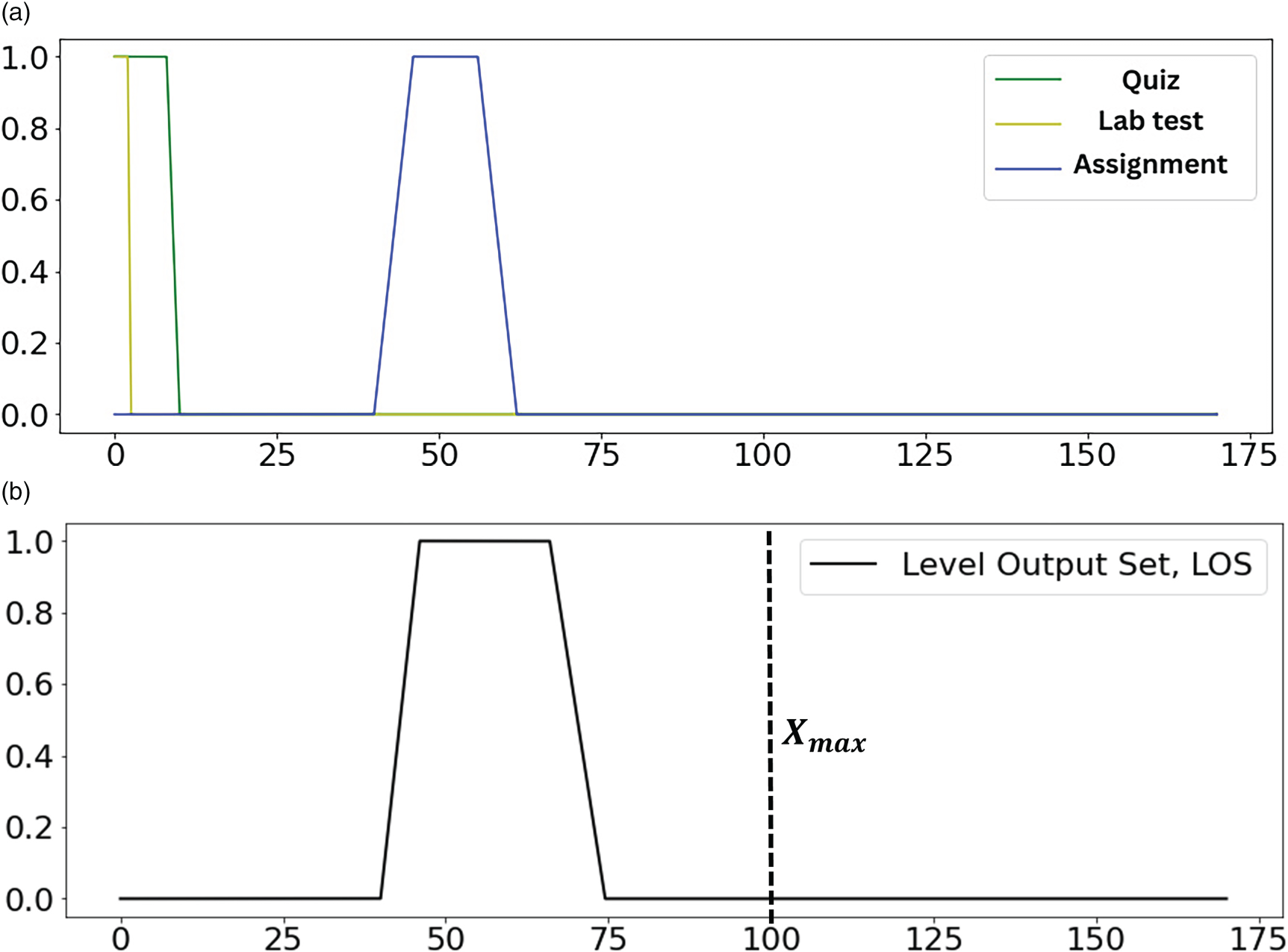
Production of LOS fuzzy set in (b) from IOS impact fuzzy sets of causal concepts in (a) with enhanced reasoning mechanism.
Comparison of IOS and Final LOS Fuzzy Set Points [a,b,c,d] for both Approaches in the Example.
The enhanced reasoning mechanism reduces computational complexity by eliminating the need for the impact saturation process. This process, which solely rescales the LOS fuzzy set to remain within the UoD, does not affect the final output. The centroid derived from the defuzzification process remains unchanged.
This study addressed the limitations of the standard RBFCM reasoning mechanism when applied to level-based knowledge modelling, where the assumptions on fuzzy membership function construction are not applicable. By introducing the Impact Strength (iS) parameter, the enhanced reasoning mechanism establishes a direct and interpretable relationship between the IOS fuzzy set and the strength of influence, while preserving the inherent fuzziness of the model. The new shifting mechanism ensures semantic alignment of the IOS within the UoD, and the simplified accumulation process eliminates the need for impact saturation while maintaining the centroid position. Experimental results clearly show that the enhanced RBFCM achieves superior predictive performance, with significant improvements in accuracy, F1-score, RMSE, and error variance compared to the standard RBFCM. These enhancements make RBFCM more flexible, robust to expert subjectivity, and more applicable to a wide range of level-based domains.
It is important to note that the cognitive map that represents the case study is a simplified acyclic representation that focuses on a single target concept. It does not capture the recursive interactions and feedback loops. These have been acknowledged as the limitations of the current work. As for future research, the enhanced RBFCM will be applied to more complex, feedback-driven cases.
Funding
The authors disclosed receipt of the following financial support for the research, authorship, and/or publication of this article: This work was funded by the Malaysian Ministry of Higher Education, Fundamental Research Grant Scheme, FRGS/1/2020/ICT02/UNIMAS/02/1.
Conflict of Interest
The author(s) declared no potential conflicts of interest with respect to the research, authorship, and/or publication of this article.