



Abstract
Alzheimer's disease (AD), responsible for 60–80% of dementia cases characterized by irreversible brain damage and cognitive decline, predominantly affects individuals in their early 60s. With the increasing global prevalence of AD, there is a growing need for reliable detection systems using brain imaging. However, existing methods are primarily offline or static dataset-based, which limits the ability to adapt to changes in new data. Additionally, for fuzzy systems, predefined parameterized membership functions are ineffective in addressing changing patterns in streaming data. To address this, we propose a tree-based self-organizing fuzzy (TSOF) streaming data classification method for AD detection, which operates in two stages: offline, using a fixed dataset, and online, using streaming data. In the offline stage, a tree-based ranking process is employed to generate data-clouds and AnYa-type fuzzy rules from static data. This data-cloud has the ability to adopt changes in streaming data and offers a more objective representation of the data. In the online phase, the system updates its AnYa-type fuzzy rules and data-clouds to accommodate the dynamic nature of streaming data. A data preprocessing framework is introduced, incorporating segmentation, data augmentation, feature extraction, and concatenation. The proposed method is evaluated on the MPRAGE structural MRI dataset from the Alzheimer's Disease Neuroimaging Initiative (ADNI), which demonstrates superior performance on classification accuracy and training time compared to other state-of-the-art techniques. The proposed TSOF is available at https://github.com/Sajaldeb25/TSOF.
Keywords
Introduction
Alzheimer's disease is an underlying cause in between 60% and 70% of people with dementia, one of the most widespread forms. It is regarded as a collection of evidence with a chronic or progressive way, where there is a degradation in cognitive abilities that affects the capacity to comprehend concepts or thoughts above what may be anticipated with typical aging (WHO, n.d.; Zaina et al., 2022). It also characterized by the accumulation of abnormal protein deposits in the brain, including beta-amyloid plaques and tau tangles, which lead to the progressive degeneration of brain cells and subsequent cognitive decline (Madnani, 2023). It has an impact on reasoning, focus, memory, logical thinking, mathematical aptitude, difficulty with language, interpretation, and judgment. Cognitive function is frequently accompanied by maintaining emotions, social interactions, conduct, and commitment (WHO, n.d.; Zaina et al., 2022). Dementia currently affects about 50 million individuals globally who are 60 or older, and it is predicted that this figure will rise to 82 million by 2030 as well as 150 million within 2050 (Rosenberg et al., 2020; Zaina et al., 2022). The health of individuals along with the economies of their society and families will be impacted by this huge growth in occurrences. The effects can be societal, mental, or physical. Additionally, there is a financial burden in the form of direct medical and societal costs, which were assessed as 1 trillion dollars in 2019 and predicted value to double in 2030 (Adlimoghaddam et al., 2018; Senthilkumar et al., 2022; Zaina et al., 2022). This makes early detection of Alzheimer's disease essential for many reasons, including the ability to improve overall outcomes for those who have the disease and slow down its progression. It also gives people and their families a chance to make plans for their treatment, finances, and legal affairs (Rafii & Aisen, 2023).
Neuronal damage and degeneration in many parts of the brain relate to Alzheimer's disease processes. The hippocampus, which oversees cognitive performance, is where this process begins before progressively spreading to the rest of the brain (Scherger, 2018). A physician may ask a person to complete a few clinical assessments, such as the Mini-Mental State Exam (MMSE), Mini-Cog Test, and laboratory assessments, including thyroid condition and Vitamin B-12 deficiency, to diagnose an individual with Alzheimer's disease after considering characteristics like age, education level, and biological sex into account (Alzheimer's Association (ASC, n.d.). Because of the noteworthy spatial detail, outstanding contrast, and easy usage, Structural MRI (sMRI) has been applied in research related to AD. The anatomical and functional abnormalities in the hippocampus have also been studied using structural MRI (Altaf et al., 2017; Vemuri et al., 2012). Furthermore, utilizing sMRI data, it is simple to spot a substantial decrease in the hippocampus and cerebral cortex as well as a marked increase in the size of the ventricles (Altaf et al., 2018).
The creation of an algorithm that can distinguish between individuals with brain disorders and improved survival is essential for physicians, rather than just following available overgrowing data manually (Altaf et al., 2018; Hazarika et al., 2021). The pharmaceutical industry is currently making increasing contributions to the classification and detection of AD, and early results are encouraging (Altaf et al., 2018) while the existing classification methods are offline based. Iterative or offline methods, which often require numerous runs over the same dataset, seem to be no longer sufficient for effectively processing data as the volume of data grows (Škrjanc et al., 2019). Considering the real situation and the increasing number of patients, a streaming Alzheimer's disease classification method is needed. For processing or analyzing streaming data, the evolving system is a powerful learning process with the strong capability to cope with dynamic environments, which have higher computational efficiency than any machine learning models (Gu et al., 2021). The growing demands for creating classifiers for the purpose of analyzing data streams have led to the development of evolving fuzzy classifiers as an effective strategy (Lughofer, 2022a). These evolving fuzzy classifiers are a widely studied subject for streaming data due to their ability to self-evolve their structure from stream data (Lughofer, 2022a; Škrjanc et al., 2019), effectively address uncertain data that can challenge deep learning models (Ala et al., 2024; Garcia et al., 2019; Gu et al., 2023; Leite et al., 2019), and provide a high level of interpretability and understandability by creating and representing the rule base (Ala et al., 2024; Gu et al., 2023), in contrast to the often opaque nature of deep learning models (Lughofer & Pratama, 2023).
To be implemented in clinical settings, the proposed TSOF must accomplish the previously described goals. Specifically, the suggested approach must consider the dynamic and ever-changing streaming data related to Alzheimer's disease and be able to update gradually and adjust to the changing stream. Since the device carries limited storage and processing ability, computational efficiency—that is, memory and time efficiency—is another crucial aspect in deciding whether the system can be deployed online, in addition to high identification accuracy.
In a real situation, training “from scratch” is unnecessary where a certain amount of data can be found in static form and the remaining data can be received in streams. Offline learning from the available static data is possible, and extracted knowledge can be applied to streaming data in the online learning process (Gu & Angelov, 2018). Furthermore, an evolving or online classifier can defy previous assumptions while changing its rules and structure dynamically (Debnath et al., 2023). Thus, this paper proposes two stages (offline and online) for classifying streaming Alzheimer's disease data, namely a tree-based self-organizing fuzzy classifier (TSOF). The offline tree-based structure identifies potential data-clouds from static datasets, and the online non-parametric granularity-based structure employs extracted knowledge of the offline stage and continuously learns from newly incoming data samples. In the online stage, only the essential data is stored in memory, and all the trained training samples are discarded. The data cloud concept is adopted for its non-parametric characteristics, which give it advantages over predefined, parametric, and unadoptable membership functions-based fuzzy systems (Debnath et al., 2023). It offers a transparent and interpretable structure for reasoning based on the distances between data-cloud centers and newly arrived data while continuously adopt changes from evolving data streams without predefined shapes (Angelov & Gu, 2017; Gu et al., 2021, 2023). Additionally, they enable efficient, real-time processing of large-scale, non-stationary data, addressing key challenges in evolving systems (Gu et al., 2023). The primary offerings of this proposed research are the following: The proposed classification system uses an effective tree-based data-cloud center selection procedure to facilitate AD identification. A framework for sMRI data segmentation and augmentation to enhance the streaming dataset, feature extraction using LBP and NABP, feature concatenation and finally disease classification using a streaming data classifier is introduced in this work. The non-parametric data-cloud concept is employed, which offers superior data representation and can adapt to changes in streaming data because it excludes fixed forms or a specific radius. The findings of the proposed classifier are assessed with those of the advanced classifier for both multiclass and binary class classification regarding training time and classification accuracy.
The next sections of this paper are arranged in the following order: the literature review explores the earlier investigations in Section 2. The tree-based self-organizing fuzzy classification approach is explained in Section 3. Section 4 shows the experimental findings. In the end, it concludes with Section 5 as its last section.
Literature Review
Fuzzy systems for classifying Alzheimer's disease and non-fuzzy classification techniques, which do not use fuzzy principles for classification and all machine learning approaches, are the two main categories of recent studies on the detection and classification of Alzheimer's disease; and both types of classifiers will be discussed in this section.
Non-Fuzzy System-Based Approach
The automatic identification of AD, which includes many imaging modalities like structural MRI (sMRI) (Basaia et al., 2019; Roy & Chandra, 2022; Zeng et al., 2018), operational MRI (fMRI), diffusion tensor imaging (DTI), and Positron Emission Tomography (PET) scans (Feng et al., 2019), has become the subject of several published papers in the previous studies. These articles’ main goal was to use neuro-images to automatically recognize AD by retrieving several useful features that can set patients apart from those who have earlier mild cognitive damage, delayed mild cognitive damage from Alzheimer's disease, as well as unaffected normal individuals. Recently, several AD detection algorithms have been created that concentrate on volumetric data to identify the disease (Roy & Chandra, 2022). In (Roy & Chandra, 2022), the volumetric information of MRI segmented data in percentage and majority voter classifiers is used for final decision-making.
Sharma et al. 2021 have proposed a fuzzy activation function-based Deep Neural Network (DNN) classifier where a non-iterative feed-forward network is used. Further, this work is improved with fuzzy hyperplane-based DNN (Sharma et al., 2022), where both methods extracted features using transfer learning and sMRI data of ADNI dataset.
A Convolutional Neural Networks (CNN) model constructed using a single descriptive MRI was created by Basaia et al. (Basaia et al., 2019) and could identify intermediate cases of cognitive impairment that might eventually advance to the severe stage. In total, 229 frames from the Milan dataset and 1,409 3D T1 weighted data collected using ADNI-1, ADNI-2, and ADNI-Go were employed in this study. Chiyu et al. employed 397 MRI and PET neuroimaging datasets from ADNI, 3D-CNN, and Fully Stacked Bidirectional Long Short-Term Memory (FSBi-LSTM) to diagnose Alzheimer's disease (Feng et al., 2019). By integrating 1 object of each feature at every iteration to the associated position, the FSBi-LSTM is primarily used to retrieve high spectral and syntactic information. The softmax activation function uses the extracted features to classify the disease stage after being fed into it. Back-propagation-based CNN model is also introduced in (Lombardi et al., 2017) for the binary classification of ADNI dataset. Data preprocessing and parallel separable convolutional filters helps to obtain better accuracy than traditional CNN methods. Additionally, ResNet-50 CNN classifier (Fouad et al., 2023), hybrid models combining CNNs with Long Short-Term Memory (LSTM) algorithms (Balaji et al., 2023), Pipelined LeNet (PLN) architecture (Prasath & Sumathi, 2024), and 3D CNN classifier (De Santi et al., 2023) has enhanced AD detection. Further, beyond CNNs, explainable artificial intelligence models (Lombardi et al., 2017) and ensemble learning-based techniques (Shukla et al., 2024; Zeng et al., 2018) provide deeper insights and significant contributions to the AD diagnosis (Arbane et al., 2022).
Fuzzy System-Based Approach
Among limited Fuzzy system-based AD classification approach's, a fuzzy logic-based AD categorization method is introduced in (Amezquita-Sanchez et al., 2021), where Electroencephalography (EEG) signals are incorporated into AD patient detection. Using discrete wavelet change, it was possible to uncover obscure trends or features. Next, by applying Differential Entropy Index (DEI) to each separated signal or neurophysiological band derived from discrete wavelet transform (DWT), it was feasible to identify trends or characteristics that could distinguish between all three categories of MCI, AD, and health control. Further, a 2-input and one output fuzzy system is used to classify data into three classes. Moreover, an offline training stage of the data-cloud-based streaming data classification method SOF (self-organizing fuzzy) is used for Alzheimer's disease classification against Mild dementia and unaffected (Stirling et al., 2021). It is limited to classifying only three classes. In addition, for the effectiveness of the fuzzy systems, it is now used in health care (Faisal et al., 2023; Kar & Dutta Majumder, 2019) and green city administration for handling uncertainties (Ala et al., 2024) and providing decisions (Saha et al., 2022).
Another approach to working with uncertainty is probability hesitation fuzzy systems (PHFS), successfully applied in many decision-making approaches (Su et al., 2024). However, it has several limitations as it always relies on parameterized membership functions and a predefined rule base, which makes them unadaptable to changing environments or new data; as a result, in many applications where the underlying relationships are dynamic and evolving, PHFS cannot be applied (Jain et al., 2010). Further, defining fuzzy rules and membership functions requires the involvement of domain experts, which can be time-consuming and may introduce biases. While talking about multiple membership function values of PHFS can provide a more nuanced representation of uncertainty, it can also lead to increased computational complexity, difficulty in optimization, and unacceptability in streaming data analysis (Daradkeh & Tvoroshenko, 2020).
Table 1 gives an overview of AD detection systems published recently, including information on strategy, whether it used an online approach, and whether they were self-organized.
Summary of Alzheimer's Disease Detection Systems from Recent Studies.
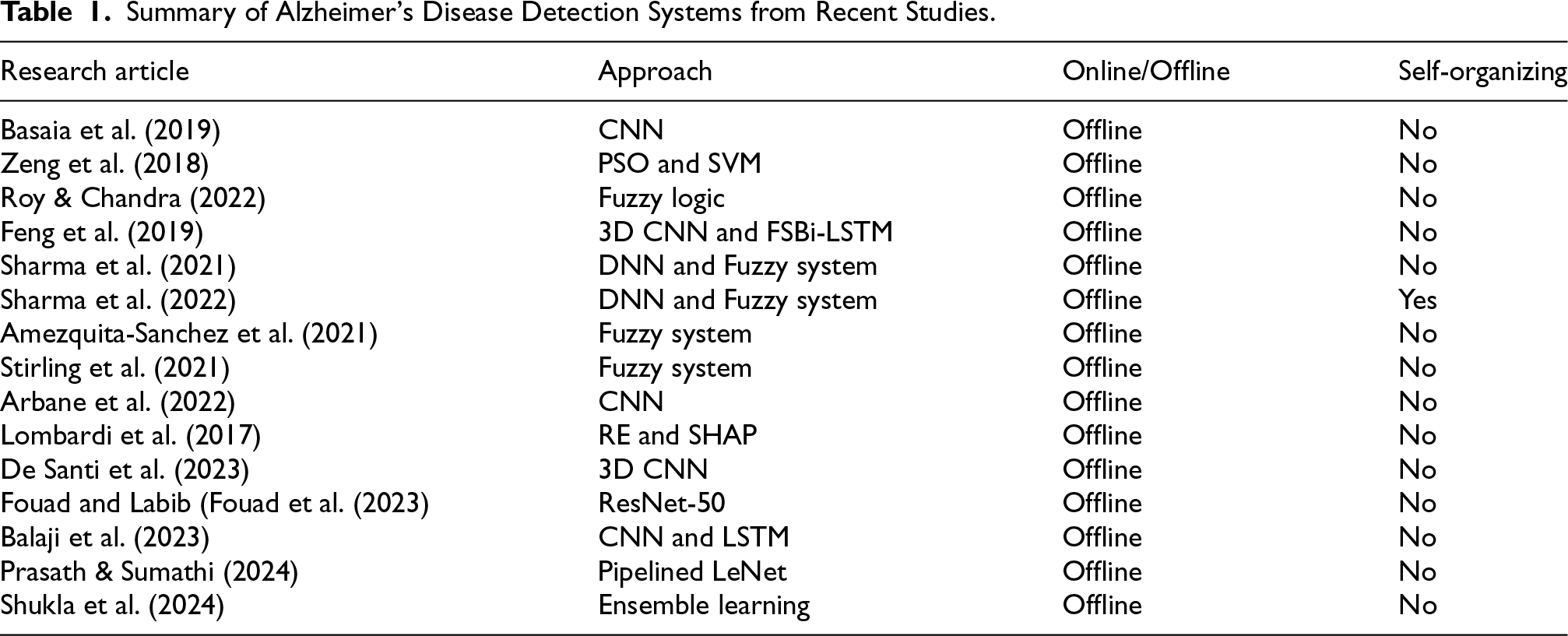
Summary of Alzheimer's Disease Detection Systems from Recent Studies.
To have a deeper understanding of the motivation behind this proposed AD classifier, consider the responses to the following two questions. 1) why is the existing AD classifier not appropriate and unsuitable? 2) why do we need this newly proposed fuzzy-system-based streaming AD data classifier?
All the discussed deep learning and machine learning methods (non-fuzzy approach) have obtained arresting classification accuracy, but back-propagation is used for parameter adjustment and network setup. Thus, machine learning methods (e.g., SVM and random forest regression) have serious drawbacks. The back-propagation technique will also delay the training period (Khosa et al., 2023; Sharma et al., 2021). However, the back-propagation technique, which really is time-consuming and has drawbacks like poor convergence, over-fitting, and local minima, is the fundamental problem with the deep learning methodology (Sharma et al., 2021). Failure to find a optimal maxima may result from back-propagation. Additionally, we must manually select settings for a lot of parameter values, including regularization coefficient, epochs, momentum, learning rate and batch size. In the case of the existing fuzzy-system-based approach, they processed on a static dataset (offline classifiers), a static fuzzy rule base, or a static fuzzy classification structure to classify AD data. In addition, it is not able to adapt to the dynamic changes in the dataset and none can fetch AD data as streaming data (which can be a challenge in the future). However, the fixed structure or rule base is quite unsuitable for dealing with huge amounts of data or streaming data.
Considering the real situation and the increasing number of patients, an AD data classifier needs to be able to update its structure incrementally and adapt to the evolving stream. For processing or analyzing streaming data, the fuzzy evolving system is a powerful learning process with the strong capability to cope with dynamic environments, which have higher computational efficiency (memory and time) than any machine learning models (Gu et al., 2021; Lughofer, 2022a, 2022b; Lughofer, 2013). This evolving fuzzy classifier has the ability to self-evolve its structure from streaming data (Škrjanc et al., 2019; Lughofer, 2022a), effectively address uncertain data that can challenge deep learning models (Ala et al., 2024; Garcia et al., 2019; Gu et al., 2023; Leite et al., 2019), and provide a high level of interpretability and understandability by creating and representing the rule base (Ala et al., 2024), in contrast to the often opaque nature of deep learning models (Gu et al., 2023). Moreover, a streaming fuzzy system-based AD data classifier can be a supportive tool for medical professionals in detecting Alzheimer's disease.
Tree-Based Self-Organizing Fuzzy Classifier (TSOF)
Based on the discussion in Section 2, the proposed classifier seeks to accomplish high classification accuracy, low memory usage, and low computational cost for AD detection on streaming data. Unlike previous approaches, this method does not require many parameter settings or a prior rule base. The suggested system builds a fuzzy rule base using just a little offline dataset and can evaluate newly arrived data samples as streaming data. Moreover, the structure can be modified and changed in response to how the streaming data behaves.
The proposed methodology of tree-based self-organizing fuzzy classifier consists of two-stage offline and online training stages. Here, we are adopting the offline training architecture of the proposed methodology from the buffer-based adaptive fuzzy classifier (BAFC) (Debnath et al., 2023) and the online training architecture from the self-organizing fuzzy classifier (SOF) (Gu & Angelov, 2018). These classifiers inherent theories and mathematical justifications, including their responsivity to meta-parameters, memory effectiveness, dimensionality efficiency, and convergence analysis, have been examined in their work. The adoption of offline training architecture from BAFC (Debnath et al., 2023) is mainly driven by its claim that integrating a ranking system based on the prims tree (Prim, 1957) and offline cloud merging significantly enhances the quality of the data-cloud. For the classification of Alzheimer's disease, BAFC or SOF classifier hasn't yet been suggested in previous studies. These classifiers were chosen for this application for the factors explained below. It has been established that fuzzy logic is a good fit for reproducing the human expertise that may be expressed through linguistic features (Lughofer, 2022a). Following the training of the BAFC and SOF classifier, a collection of rules that can be understood by humans is developed. For establishing transparency and reliability in all types of applications, explainable intelligent procedures and rule bases are preferred, which may become problematic from undesirable control actions that may be carried out by other intelligent models (Debnath et al., 2023). A highly effective model with excellent classification accuracy is the BAFC and SOF classifier (Debnath et al., 2023; Gu & Angelov, 2018). Compared to other models currently in use, it needs fewer processing resources. Additionally, a SOF or BAFC classifier does not need specialized optimized hardware for the calculation, such as GPU cores. Both models are also relatively lightweight. Most of the classification models that are now in use make significant use of assumptions from past data as well as user-specified experimenting factors like network size and learning rate. BAFC and SOF, in comparison, are nonparametric and do not need any assumption about the previous data and knowledge of the relevant problem's parameters (Debnath et al., 2023; Gu & Angelov, 2018). Prim's algorithm-based ranking technique and offline overlapping data-cloud merging procedure attract to adopt offline procedure from BAFC.
The proposed classifier entails four steps, namely data preprocessing (segmentation and augmentation); feature extraction employing Local Binary Pattern (LBP) and Noise Adaptive Binary Pattern (NABP) and further feature concatenation; offline and online training of TSOF, and finally, Alzheimer's disease classification using tree-based self-organizing fuzzy classifier. The overall data preprocessing model is displayed in Figure 1. Further, the overall architecture of TSOF is depicted in Figure 2. From a huge number of instances, significant data are identified through tree-based structure and further used in preparing data-clouds and fuzzy rule bases. Additionally, the local decision-maker works to identify similarity between the data-clouds and test instances per class, and the global decision-maker identifies the best similarity results among all the classes during the validation phase. The following subsections have described all these steps.
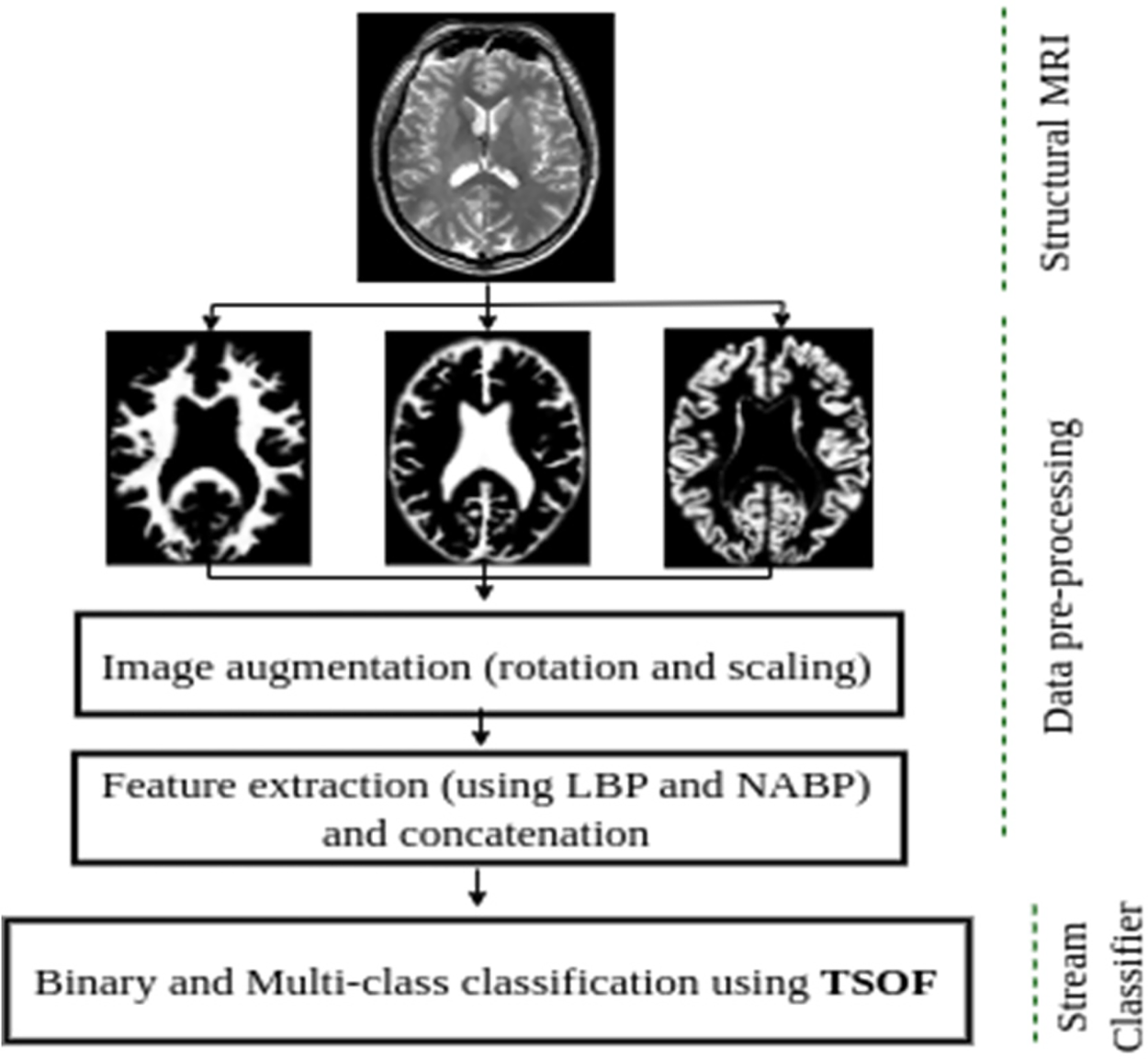
Data Preprocessing Model Using Segmentation, Augmentation, Feature Extraction and Feature Concatenation.

Architecture of Streaming Data Classifier, Tree-Based Self-Organizing Fuzzy Classifier (TSOF).
In order to effectively analyze and understand data, segmentation, augmentation, feature extraction, and data preprocessing play crucial roles. Data preprocessing encompasses all the steps including segmentation, augmentation and feature extraction. It ensures the quality and consistency of data, leading to a well-trained and robust model. For the proposed classifier, the overall data preprocessing model is presented in Figure 1, which consists of all the preprocessing steps including segmentation, augmentation, feature extraction. Here, the sMRI dataset consists of T1-weighted samples that were used to generate the subject's axial views. Figure 3 presents a thorough summary of the segmented MRI. The MPRAGE MRI used for training as well as evaluation was first preprocessed using different steps (grad-warp, B1 non-uniformity, and N3 bias field correction) (ADNI, n.d.).

Segmented (Cerebrospinal Fluid, Gray Matter, and White Matter) MRI Data from Structural MRI Sample. (a) CSF, (b) GM, (c) WM.
In this study, we used SPM-12 (SPM, n.d.) and MATLAB-R2020a to segment the training and validation sMRI dataset into Gray Matter (GM), White Matter (WM), and Cerebrospinal fluid (CSF) in accordance with a standard procedure of (Zaina et al., 2022), as segmentation is crucial and it divides an image or data into meaningful parts, allowing for targeted analysis and processing (Ghosh et al., 2019). To enhance and extend our database, we applied different rotation angles and image scaling. Firstly applied 11 image rotation angles (−5 to +5 degrees) and then resized them as, i) 330 × 250 (original size), ii) 333 × 250, iii) 336 × 250, iv) 327 × 250, v) 324 × 250, vi) 330 × 247, vii) 330 × 244, viii) 330 × 253, ix) 300 × 256, x) 333 × 253, xi) 336 × 256, xii) 327 × 247, and xiii) 324 × 244. It increases the overall dataset 132 times, which enhances the performance of our proposed streaming Alzheimer detection algorithm. This data augmentation increases the diversity and quantity of the training data, gives the opportunity to a system to generalize and handle variability in real-world scenarios (Yang et al., 2022). The extraction of features came after this segmentation and data augmentation phase.
The LBP is employed to describe colours, forms, motions, and edges, which is a well-established method for texture classification (Singh et al., 2022). It works by thresholding the neighbourhood of each pixel and encoding local spatial patterns. This makes it particularly effective in detecting fine-grained structural differences in images. LBP has shown strong performance in computational medical image analysis, especially in applications involving disease detection through texture-based features (Gautam & Raman, 2020; Tan et al., 2019). In MRI data, where the differentiation of tissue textures is critical, such as between Gray Matter (GM), White Matter (WM), and Cerebrospinal Fluid (CSF), LBP helps capture these subtle differences reliably. Moreover, its simplicity, low computational cost, and robustness to lighting variations, blur, and compression artefacts make it well-suited for medical applications (Gautam & Raman, 2020; Tan et al., 2019).
To evaluate the value of the center cell with its neighbors, the primary idea behind LBP is to break up the graphic into sections or parts. If the neighbor's actual value was higher than the value of the center cell, it receives a value of 1, otherwise, it receives a value of 0. The neighbors’ binary digit value is then translated to decimal, and the histogram is calculated using the frequencies at which each number occurs. The feature vector for the input frame is then produced by normalizing the histograms of all the cells (Cai et al., 2020). An overview of the LBP computation is shown in Figure 4. In this study, Employing the Mahotas package (Bishop, 1995) and a radius of 4, we calculated the simple binary pattern transformation with a total of 16 adjacent neighbors.

LBP Calculation Process with Radius 1, (a) Original Texture, (b) Coded Texture, and (c) Binary and Decimal Codded Value.
As LBP can become sensitive to noise for clinical imaging, to address this limitation, we employed the Noise Adaptive Binary Pattern (NABP). It is designed to dynamically adjust to noise variations in the imaging data, which allows more stable and accurate texture extraction (Rahman et al., 2015). This is particularly relevant in medical imaging, where signal noise, acquisition artifacts, or scanners can degrade image quality. NABP has demonstrated its applicability across various modalities, including MRI, CT, and PET, and has been applied successfully to segmentation, classification, and biomarker detection tasks (Karanwal, 2021; Tan et al., 2019). It enhanced anatomical detail recovery and reduced the influence of noisy images, which improved the classification performance. Unlike LBP, it does square root the value of the central pixel and compares it with the difference of the central pixel and the neighboring pixel values. If the difference value is greater or equal to the square rooted value, then it receives value 1 otherwise value 0. The neighbors’ binary digit value is then translated to decimal, and the histogram is calculated using the frequencies at which each number occurs. An overview of the NABP computation is shown in Figure 5.

NABP Calculation Process with Radius 1, (a) Original Texture, (b) Coded Texture, and (c) Binary and Decimal Codded Value.
The extracted feature values from both feature extraction algorithms are concatenated and applied to the classification algorithm for the training and validation-process.
A comparative evaluation between LBP and NABP in terms of classification accuracy is presented in Table 5 (Section 4.3.1). This comparison highlights the performance gain achieved by NABP across all classification scenarios, demonstrating its superior discriminative ability and robustness to the noisy image.
The primary reason for adopting the offline training architecture from BAFC is the assertion that integrating a ranking system based on the prims tree and offline cloud merging significantly enhances the quality of the data-cloud. In the offline phase of BAFC, potential data-clouds are constructed independently for each class of data. To determine the focal points of these data-clouds, AnYa type fuzzy rules are generated using Equation 1. Importantly, the data-clouds found in every class operate independently of one another and have no bearing on one another.
Firstly, the density of each unique data (ui) per class from the static dataset is calculated using multimodal density (
Employing Prim's algorithm (Adlimoghaddam et al., 2018), a tree-based ranking system is applied to all distinctive data of class ‘c’ following the computation of multimodal density. The root node of the tree represents the highest density (

Tree Generated from 12 Class Late Mild Cognitive Impairment (LMCI) Data from ADNI Dataset.
Condition-1:


According to condition-1, a data (represented as a node in the tree (nodei)) will satisfy the condition if its multimodal density is greater than its associated nodes. The discovered distinctive data points are designated as a data-cloud focal point or center (dccc) for the cth class by employing the depth-first search (DFS) (accompanied by condition-1) on the generated tree (as Figure 6). Now, all of the collected data-points are used to create data-clouds (data-cloud centers grubs its nearest data-points to form proper data-cloud), and these are then created by employing the popular Voronoi tessellation (Boots et al., 1999) in the following way:

To create an efficient data-cloud, the focal-point always takes advantage of its adjacent data points. The mean distance (Adi) among a focal-point and its nearby data points is as follows:

When two focal-point are smaller or equivalent to
Condition-2:

If any data enters a data-cloud, its properties must be updated. As a result, the following adjustments will be made to the ith data-cloud's meta-parameters if it satisfies condition-2:


The variable

Nearest Data-Clouds Merging, (a) Nearest Data-Clouds (b) Data Cloud After Merging.
The offline training phase sets up the AnYa type fuzzy rules as follows after completing all of these procedures for each class:



Algorithm 1 describes the procedures for training on static datasets.

Throughout online training, the stream data classifier continually updates its rule set and arrange based on the data that streams (xk, kth instance of streaming data), instance by instance. Just like in the offline learning stage, every class's fuzzy rules are amended separately throughout the online training stage. Equation 8 (Gu & Angelov, 2018) is utilized to compute the density (Dk) of the data that streams (xk) during the online training phase.

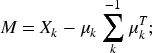


Now, if any newly arrived data (xk) satisfies condition-3 [22], the streaming data (xk) will be considered as a potential data-cloud center.
Condition-3:



Further, the distance between xk and all data-cloud centers will be compared with the average radius of the local influential area based on granularity level (
Condition-4:




In this context,
If xk satisfies condition-4, it will be considered as potential data-cloud center. In addition, if condition-3 and 4 are not satisfied then xk will be assigned to nearest data-cloud and it will update its meta-parameters. However, Figure 8 demonstrates how a data-cloud grabs newly arriving streaming data. Furthermore, the classifier updates its fuzzy rule base as Equation 7. After all these processes, the classifier fetches the subsequent streaming data or moves into the classification stage.

Streaming Data (x) are Assigned to a Nearest Data-Cloud When Condition 3 or 4 is not Satisfied.
Algorithm 2 describes the procedures for training the proposed TSOF on streaming data.

The Tree-based Self-Organizing Fuzzy Classifier (TSOF) introduces significant advancements in the realm of data classification, particularly for streaming data. By integrating principles from the AnYa-type fuzzy rule base (Equation 7) and self-organizing data-clouds (creates and updates in both offline (Section 3.2) and online training phase (Section 3.3)), TSOF offers a dynamic and adaptive approach that efficiently handles continuous data streams. The tree-based structure of TSOF enables efficient data management by ranking data points (Figure 6) and forming data-clouds (Equations 2 and 5), while the self-organizing mechanism ensures the model remains relevant and accurate by continuously adjusting its structure (Equation 9) in response to new data. The merging of overlapping data-clouds (Equation 5 and Figure 7) further enhances the algorithm's efficiency by reducing the creation of redundant fuzzy rules, making it a robust solution for streaming data classification.
Compared to existing classification techniques, the TSOF algorithm stands out for its adaptability, efficiency, and ability to handle uncertainty. Unlike traditional offline methods that require multiple iterations over static datasets, TSOF updates its structure in online (Section 3.3), making it highly responsive to changes in data distribution. Its tree-based organization and non-parametric nature allow for efficient processing of large volumes of streaming data, addressing the scalability and computational challenges faced by many current techniques. Moreover, TSOF's flexible approach to handling uncertain and imprecise data provides a nuanced solution for streaming data classification, making it a novel and valuable contribution to the field.
Time and Space complexity analysis of TSOF
Every distinct data sample from the static dataset is essential to the algorithm's time complexity, as illustrated by the training process on a static dataset (Algorithm 1, Section 3.2). The technique, which generates data-clouds from the static dataset, has a time complexity of O(c × n), where c is the number of classes and n is the number of distinctively recognized data items. Offline data-cloud merging takes O(n), while the tree structure-based ranking method takes at most O(n + (n−1)). However, the time complexity of the Online training process (Algorithm 2, Section 3.3) is O(n) as it just checks the nearest data-cloud in a streaming way, where n is the number of data-clouds.
The space demands for the suggested TSOF are mainly for data-cloud storage. TSOF requires O(n × d) memory if the n number of data-cloud has a d dimensional data-cloud center (dcc).
Disease Classification and Result Analysis
The proposed TSOF classifier's final step involves using two stage-based fuzzy stream data classifiers to ascertain the phase of Alzheimer's disease. The Cognitive Normal (CN), Early Mild Cognitive Impairment (EMCI), Late Mild Cognitive Impairment (LMCI), and Alzheimer's disease (AD) are the four phases used in this study's multiclass classification. Additionally, to identify among the various phases of the preprocessed MRI data, we performed a binary class classification.
Classification
This subsection describes the TSOF classifier's process for categorizing disease. Throughout this classification phase, each AnYa type fuzzy rule will have a firing power that is determined by the local consequences, which is denoted by x. This firing power will be determined for a particular test instance, which is denoted by 
The 
The Alzheimer's Disease Neuroimaging Initiative (ADNI), which appears to offer neuroscientists subjects of various types of data like MRI, PET images, genetic characteristics, cognitive assessments, medical information, CSF, and venous biochemical markers which may help to assess dementia and its progression with time, provided the dataset employed in this study. For this research, several 311 preprocessed T1 weighted sMRI scans from a 3 Tesla Philips Healthcare System with a spin angle of 9 (degree), a diameter of 1.2 mm, and an array size of (256, 256, 170) were collected. Grad-warp, B1 non-uniformity, and N3 are the most data pre-processing procedures that were applied to it (ADNI, n.d.). Further, this dataset is enhanced by data augmentation (segmentation, rotation, and scaling) to help the streaming Alzheimer's disease detection algorithm, which is now 41,052 instances. After data augmentation, the total image size is 41,052 × 330 × 250.
Our target population for this research consisted of elderly individuals including both genders, male and female, aged 75 to 95. The dataset employed in this research included 106 patients describing Cognitive Normal (CN), 83 Early Mild Cognitive Impairment (EMCI), 65 Late Mild Cognitive Impairment (LMCI), and 57 for Alzheimer's disease (AD). Gray Matter (GM), White Matter (WM), and cerebrospinal fluid (CSF) were separated from all of these structural MRI images employing the SPM-12 App (SPM, n.d.) and MATLAB-R2020a (MATLAB, n.d.). To obtain characteristics and perform the classification in accordance, an axial image of the center object, object number 28, was selected from the region [57.7]–[85.6]. After that, the complete dataset, consisting of 311 instances, is divided into three subsets: offline training, online training, and testing. Specifically, 10% (31 instances) is used as a static offline training set, 70% (218 instances) as streaming data for online training, and the remaining 20% (62 instances) as the test set. The subjects selected for this study—both before and after data augmentation—are summarized in Table 2. To prevent data leakage between training and testing phases, each subset has been as augmented independently. All evaluation metrics, including accuracy, training time, and others, are averaged over 10 different random splits of the dataset.
Actual Image and Augmented Image Data Categories into Male and Female.
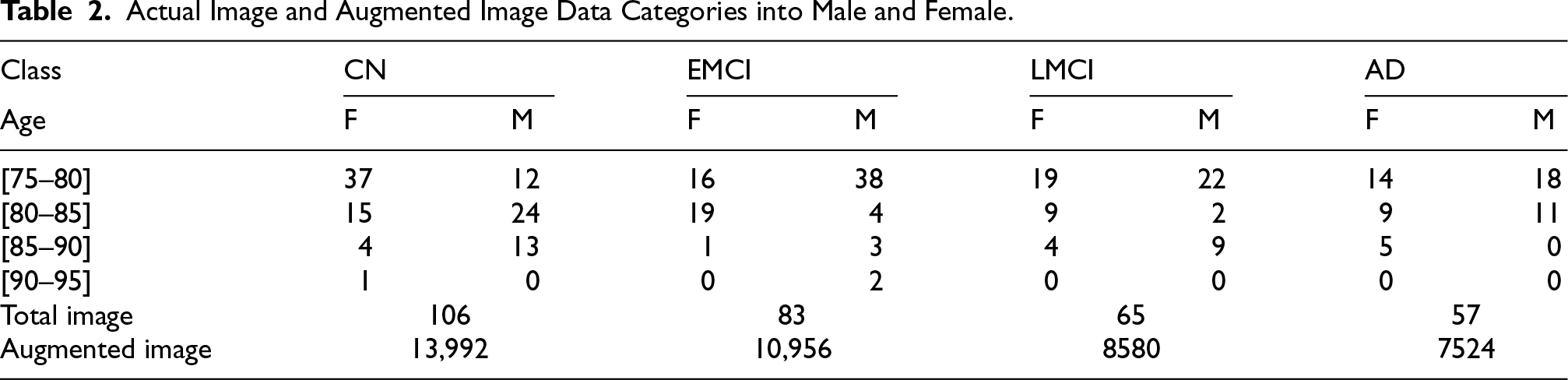
Actual Image and Augmented Image Data Categories into Male and Female.
Result Analysis
We performed both multiclass classification and binary class classification using the proposed Tree-based self-organizing fuzzy classifier and subsequently evaluated it with the cutting-edge fuzzy stream data classifiers as BAFC (Debnath et al., 2023), HP (Gu & Ding, 2019), SOF (Gu & Angelov, 2018), TEDAClass (Kangin et al., 2016), ALMMo-0 (Angelov & Gu, 2017) and eClass (Angelov & Zhou, 2008). Furthermore, the obtained outcomes are evaluated with some cutting-edge offline deep learning classifiers. We also analyzed sensitivity with respect to granularity and discussed the speed of the proposed approach comparing with the other models.
Utilizing segmented and augmented GM, WM, and CSF, we carried out the experiment for multiclass classification and duly presented the findings. Table 3 demonstrates that WM achieved the best accuracy results, achieving 79.69%, whereas CSF scored less accurately, achieving 69.39%, and GM scored less accurately, obtaining 66.10%.
Employing Enhanced Image Data from the ADNI Dataset, Multiclass and Binary Class Identification are Performed.
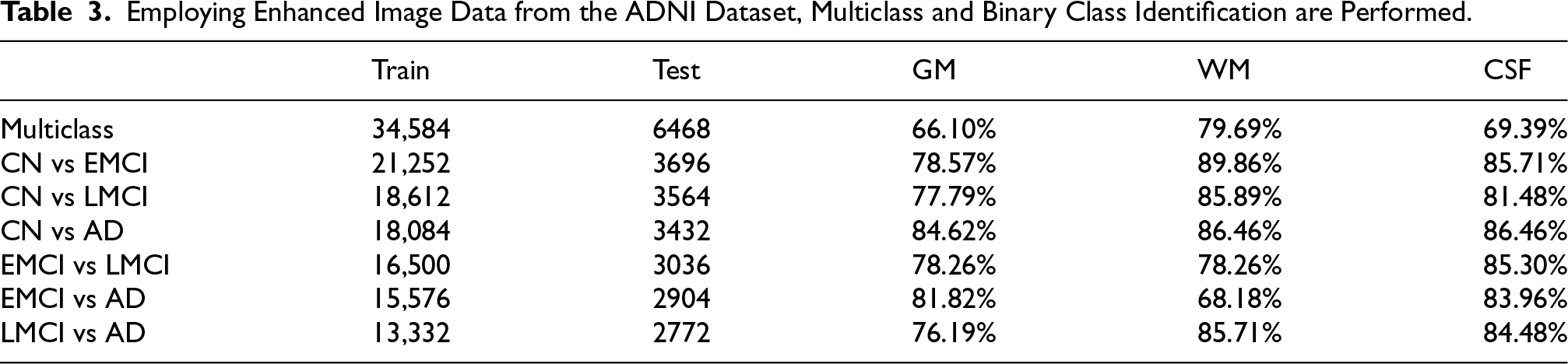
Employing Enhanced Image Data from the ADNI Dataset, Multiclass and Binary Class Identification are Performed.
A binary-class identification has been achieved by utilizing the proposed TSOF stream data classifier. The research, which has been conducted using segmented GM, WM, and CSF, produced outcomes throughout CN and EMCI, LMCI and AD, EMCI and LMCI, and LMCI and AD.
Applying binary-class classification, Table 3 presents a concise overview of the results, showing that the WM outperforms the CSF with prediction accuracy of 79.69% and 89.86% in identifying CN from EMCI and CN from AD, correspondingly. In contrast, CSF outperforms WM in terms of accuracy in identifying between EMCI vs LMCI, EMCI vs AD, and LMCI vs AD, with the accuracy obtained as 85.30%, 83.96%, and 84.48%, respectively. The accuracy results for WM and CSF in differentiating CN vs AD were the same. In comparison to outcomes reported using WM and CSF, the segmented GM results were often less accurate. However, the augmented dataset (by enhancing the streaming dataset) and tree-based data-clouds (by identifying the superior data-cloud centers, Figure 6) played a key role in obtaining this accuracy. These findings hold promise for early Alzheimer's diagnosis using stream data, halting the disease's progression and the resulting social, economic, and health losses.
Like the granularity in SOF, the proposed approach allows the classifier to strike a balance between performance and computational efficiency. In accordance with the principles of SOF, when the granularity is set at a higher level, the classifier demonstrates exceptional ability in capturing intricate details. However, this also entails an increased risk of overfitting. On the other hand, selecting a reduced degree of granularity yields a coarsely learned classifier that offers superior computational efficiency and reduced memory requirements.
Figure 9 demonstrates that selecting a higher level of granularity generally results in increased accuracy of the TSOF classifier during classification. However, this also leads to the identification of additional data-clouds by the classifier, which can negatively impact computational and storage effectiveness. The proposed approach consistently produced identical results when applied to 10 randomly generated training datasets. This demonstrates that the TSOF classifier is not affected by variations in the sequence of instances during both offline and online training across different degrees of detail.
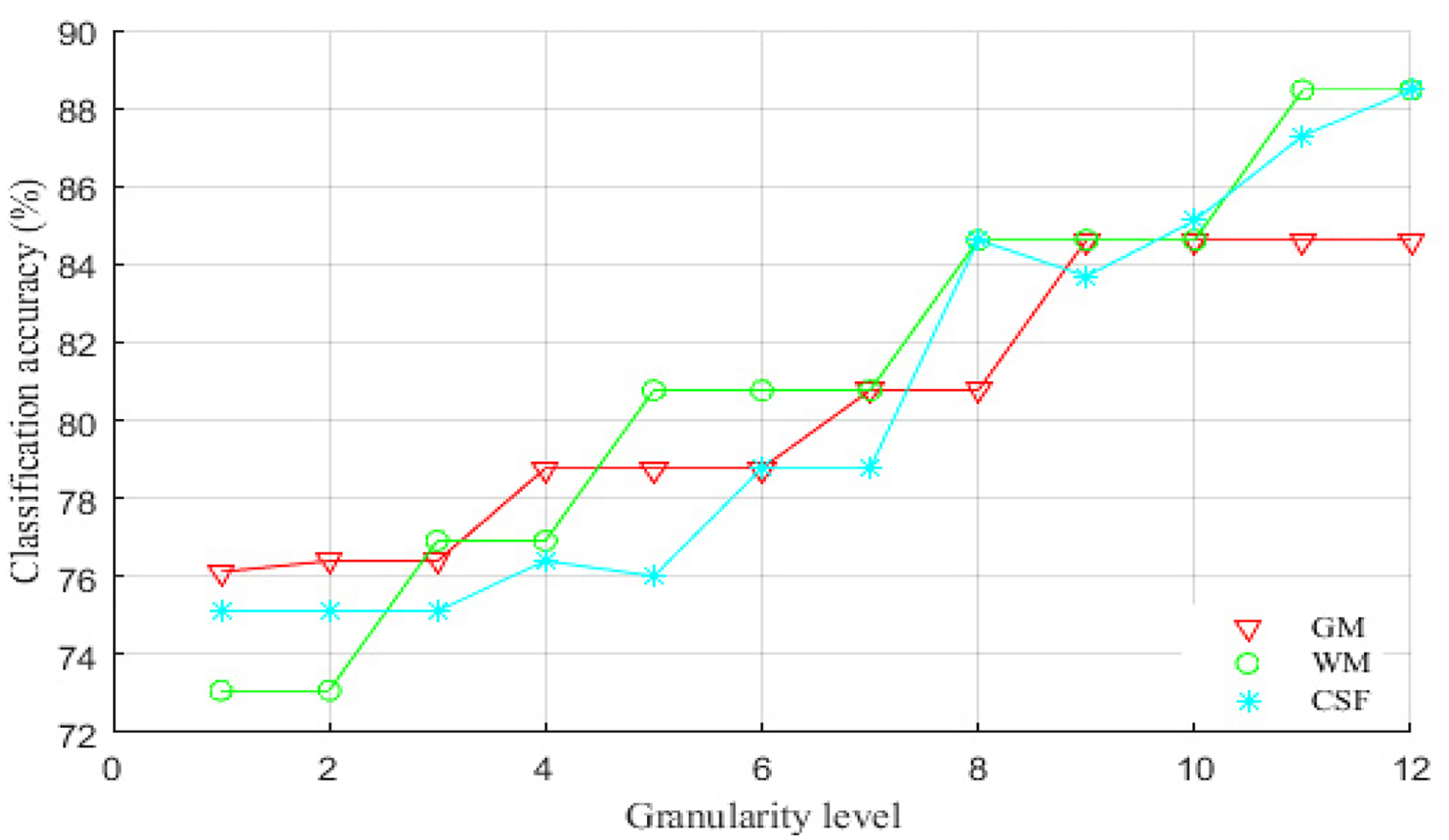
Impact of Granularity on the Accuracy of Classification While Distinguishing Cognitive Normal and Alzheimer's Disease for GM, WM, and CSF Segmented ADNI Data.
Table 4 demonstrates that our proposed TSOF outperforms the results obtained by BAFC (Debnath et al., 2023), HP (Gu & Ding, 2019), SOF (Gu & Angelov, 2018), TEDAClass (Kangin et al., 2016), ALMMo-0 (Angelov & Gu, 2017), and eClass (Angelov & Zhou, 2008) when comparing our proposed approach for binary class classification to those obtained results from cutting-edge stream data classifiers. We consider the three-segmented data with the highest accuracy. For a fair comparison, we used the best-performing settings for each compared state-of-the-art model as reported in their original papers. A cosine dissimilarity with the degree of granularity, G = 12, was employed for SOF, a decay value of 500 was chosen for BAFC, and a six-layer with mode-A was chosen for HP when comparing TSOF with these cutting-edge classifiers. After 10 runs on a randomized dataset for the offline learning, online learning, and testing or verification phases, all tabulated results were received.
Comparison Between our Proposed TSOF and Other Stream Data Classifiers in Accuracy Using Segmented Image (Best Accuracy among Three Types) Data and ADNI Dataset.

Comparison Between Feature Extractors Performance in Accuracy Using Segmented Image (WM) Data.

TSOF can identify among CN vs. EMCI, CN vs. AD, EMCI vs. LMCI, and EMCI vs. AD with excellent results. However, the stream data classifier based on a hierarchical prototype claimed greater accuracy than our own classification result while classifying CN from LMCI with a difference of only 3.70 percent. TSOF, HP, and SOF classifiers all yield the same accuracy when categorizing LMCI vs. AD. Regarding EMCI vs. LMCI, BAFC achieves the second-highest classification accuracy (83.2%), and it achieves higher accuracy for other combinations than TEDAClass, ALMMo-0, and eClass.
Among all the classifiers tested in this study, eClass seemed to have the lowest accuracy. Moreover, underlined accuracy in Table 4 represents the second-best classification accuracy. To achieve this exceptional outcome, the contribution of offline tree-based data-cloud center ranking, data augmentation for enhancing streaming data sets, feature extractors, and online computing using granularity levels are more or less equal. The offline tree-based structure and huge augmented dataset facilitate the way to identify effective data-cloud centers. The simple feature extractors LBP and NABP provide texture discrimination capabilities, whereas NABP provides noise adaptive, more discriminative features (depicted in Figure 10). Further, the online training section extends or shrinks effectively the data-clouds and the fuzzy rule-base to cope with the streaming dataset.

Image Data After Feature Extraction, (a) Segmented Image WM, (b) Using LBP, and (c) Using NABP.
Table 5 presents a comparative analysis of the two feature extraction methods used within the proposed TSOF framework: LBP and NABP. Across all classification tasks—from CN vs. EMCI to LMCI vs. AD—NABP consistently outperforms LBP in terms of accuracy. These results clearly demonstrate the superior discriminative capability of NABP, particularly in capturing texture patterns under noisy conditions. The enhanced feature quality provided by NABP (Figure 10) significantly contributes to the overall performance gains observed in TSOF.
Here, we conducted tests on 20 percent of the augmented data, yielding 8,184 test cases in total. 2,105 Cognitive Normal (CN), 1,447 Early Mild Cognitive Impairment (EMCI), 3,318 Late Mild Cognitive Impairment (LMCI), and 1,316 Alzheimer's Disease (AD) instances make up the test data used to create the accuracy matrix and confusion matrix. Figures 11–13 illustrate the confusion matrices for CN vs. AD, CN vs. LMCI, and CN vs. EMCI, respectively, out of all the possible combinations for binary classification. For CN vs. AD, 2,956 cases among 3,421 data, 4,630 cases for CN vs. LMCI among 5,423 data, and 2,992 instances for CN vs. EMCI among 3,552 data were effectively recognized by TSOF in these categories. These results indicate that the TSOF we have proposed is quite effective and efficient in categorizing impairments associated with Alzheimer's disease. Its exceptional performance highlights its potential as a valuable instrument for clinical disease categorization.

Confusion Matrix (Cognitive Normal vs Alzheimer's Disease).

Confusion Matrix (Cognitive Normal vs Late Mild Cognitive Impairment).
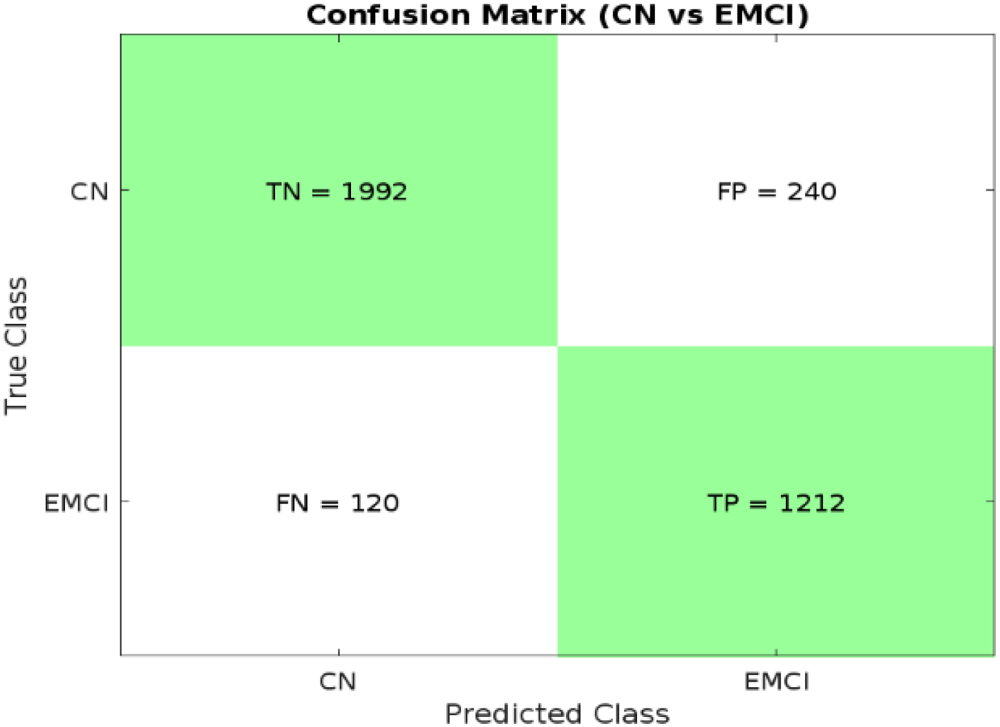
Confusion Matrix (Cognitive Normal vs Early Mild Cognitive Impairment).
In Table 6, the classification accuracy obtained by the binary classification is examined with that of cutting-edge offline neural networks and SVM techniques. During the experiment, 80% of the ADNI dataset is used for training CNN (Basaia et al., 2019), SDPSO-SVM (Zeng et al., 2018), and 3D-CNN (De Santi et al., 2023), and the remaining 20% is used for validation. By receiving classification accuracy of 89.86%, 85.30%, and 84.48%, respectively, TSOF can identify among CN vs. EMCI, EMCI vs. LMCI, and LMCI vs. AD. Furthermore, CNN (Basaia et al., 2019) exhibited better accuracy than the proposed TSOF, obtaining 87.1%, 99.2%, and 85.9% accuracy when differentiating between CN vs. LMCI, CN vs. AD, and EMCI vs. AD because of its offline structure. In addition, both SDPSO-SVM (Zeng et al., 2018) and 3D-CNN (De Santi et al., 2023) obtain poor results regarding classification accuracy. Though the SDPSO-SVM (Zeng et al., 2018) and 3D-CNN with FSBi-LSTM (Feng et al., 2019) obtains comparable classification accuracy (SDPSO-SVM Zeng et al. (2018) obtains 85.71% for CN vs LMCI and 3D-CNN with FSBi-LSTM Feng et al. (2019) obtains 94.82% for CN vs AD), recently established other two classifier (3D-CNN De Santi et al. (2023) and RE with SHAP Lombardi et al., 2017) gets poor results for their unoptimized models’ structures.
Our Developed TSOF Classifier has Been Compared to Other Offline Classifiers in Terms of Accuracy Employing Preprocessed Dataset.
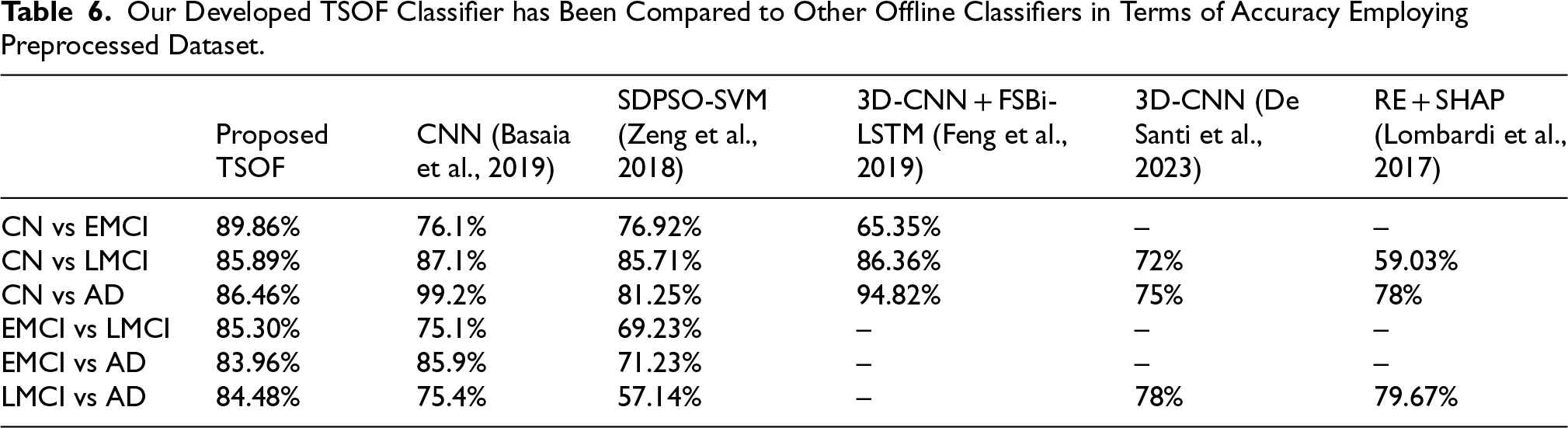
In the case of CNN techniques, there are often a significant number of hyper-parameters that have no obvious physical meaning. Their learning abilities depend on careful parameter adjustment, yet their underlying learning and inference systems are barely interpretable or comprehensible by individuals. They often need static or offline data, have opaque inner parameters that are difficult to grasp, include ad hoc decision-making about the inner structure, and have no established assurance of convergence. Additionally, one may observe from the study that the TSOF classifier can train on the dataset in less than 10.62 s (0.003 s per data), which is significantly faster than deep learning-based methodologies, which need several minutes or hours with multiple GPUs depending on epochs, batch size, and other hyper-parameters. Moreover, the TSOF classifier can fetch both offline and streaming data, adopt changes in streaming data, provide a human interpretable fuzzy rule base, and is computationally effective.
The offline and online learning sessions were used to calculate the overall training time for the proposed TSOF, BAFC (Debnath et al., 2023), and SOF (Gu & Angelov, 2018). Figure 14 shows the total training time for WM segmented data of the ADNI dataset. It examines the duration of training time of three data-cloud-based and one prototype-based stream data classifier. As shown in the figure, the training times of BAFC were considerably higher than other classifiers for its offline and online data-cloud merging and its buffer-based nature. Moreover, ALMMo-0 demonstrated superior performance to the other classifiers regarding the overall training time due to its straightforward classification structure. However, it obtains low accuracy for classifying the Alzheimer's disease data. For the prototype-based classification strategy, the total training time of HP is better than SOF, TSOF, and BAFC. TSOF takes lots of time for training because of merging data-clouds in offline (Figure 7), and its tree-based structures (Figure 6) prepare very efficient data-clouds. Furthermore, it achieves better classification accuracy than other cutting-edge classifiers.

Total Amount of Training Time of WM Segmented Data for various Amount of Data.
The effectiveness of our proposed TSOF method in classification is presented in Table 7, which compares its performance against several established procedures, including CNN (Basaia et al., 2019), 3D-CNN + FSBi-LSTM (Feng et al., 2019), 3D-CNN (De Santi et al., 2023), RE + SHAP (Lombardi et al., 2017), BAFC (Debnath et al., 2023), and HP (Gu & Ding, 2019) using four key metrics: precision, recall, F1-score, and specificity. The TSOF achieved 78.3% precision, 85.3% recall, 81.6% F1-score and 87.08% specificity, showing its ability to detect instances correctly. Further, the F1-score (81.6%) of TSOF reflects its well-balanced performance, surpassing that of BAFC (Debnath et al., 2023) and HP (Gu & Ding, 2019) (75.61% and 76.66%, respectively), which were among the best-performing existing methods. Moreover, TSOF achieved the highest specificity (87.08%) among all models, indicating better identification of negative cases—crucial for reducing false alarms in clinical diagnosis.
Performance Comparison on Precision, Recall, F1-Score, and Specificity.

A Part of the AnYa Type Fuzzy-Rule Generated from the Training Stages.
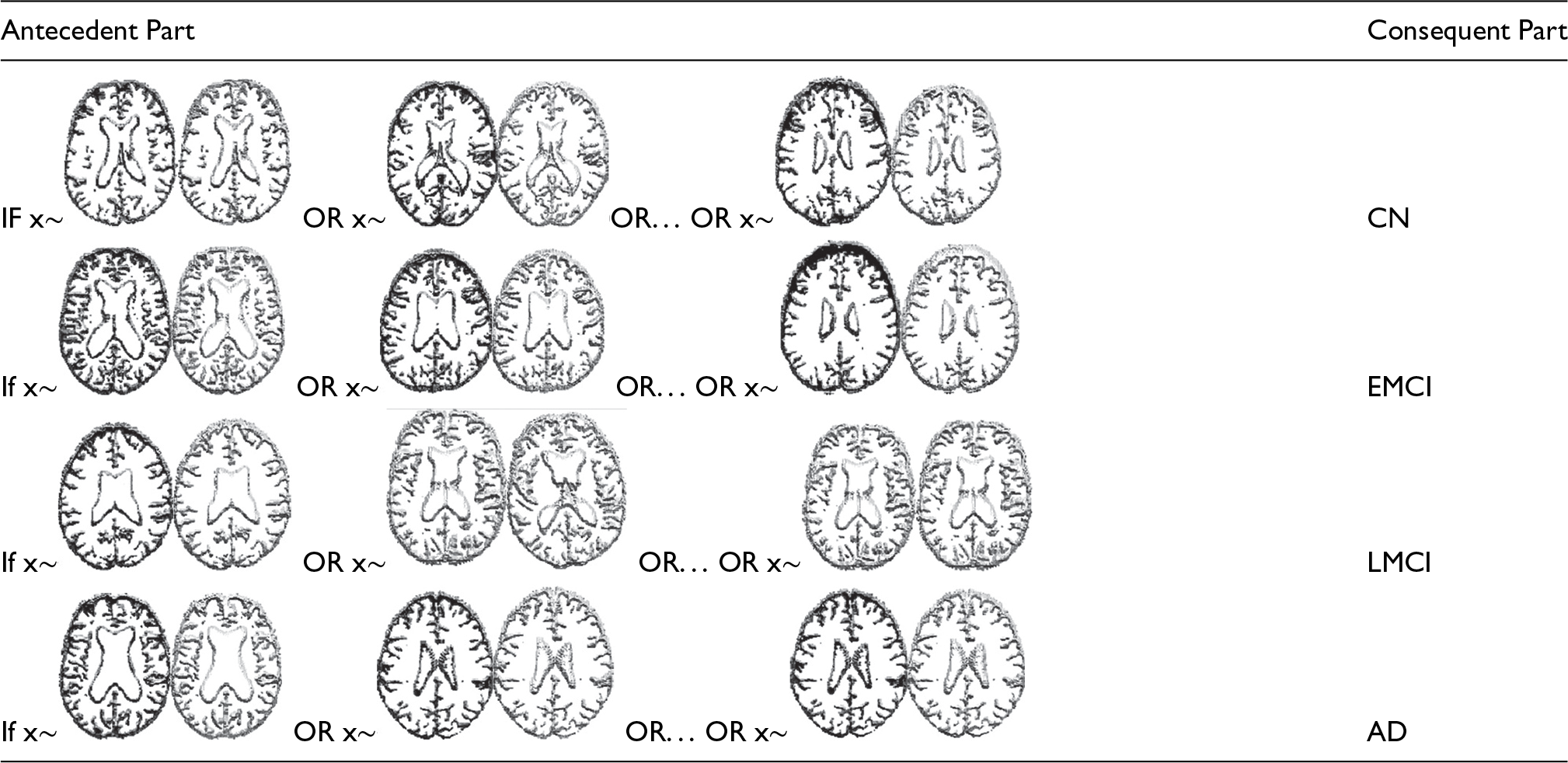
A part of the AnYa-type fuzzy rule base, which is created and updated in both offline and online training phase (Section 3.2 and 3.3), is presented in Table 8 to provide greater comprehension of it. Every pair of images (one is generated from LBP, and another is generated using NABP feature extraction method) in the fuzzy rule's antecedent section corresponds to a data-cloud center (dcc) (obtained by Equations 2, 3, 9, and 10). These data-cloud centers are essential to the construction of fuzzy rules because they serve as representative points that effectively describe the relationships within the data and capture the fundamental characteristics of the flow of streaming data within the input space. These AnYa-type fuzzy rules can be interpreted as diagnostic patterns. For example, if a new patient's textures closely match the data-cloud centers shown in the antecedent part of a rule (similar to Table 8). In that case, the system will associate to decide about the corresponding disease label (e.g., EMCI or AD), which offers transparent decision support.
To statistically validate TSOF's superior performance, we conducted comprehensive statistical testing on 10 independent runs of each classifier for multiclass classification. One-way ANOVA revealed highly significant differences between methods (F = 667.25, p < 0.001), which indicates that our classifier's performance is significantly different from others.
In addition, paired t-tests were performed between TSOF and each baseline model. Table 9 presents the detailed statistical comparison between TSOF and baseline methods. All pairwise comparisons show highly effective performance (p < 0.001) with exceptionally large effect sizes (Cohen's d > 10), confirming that TSOF's superior performance is both statistically and practically significant.
Paired t-Test Results Comparing Proposed TSOF with Others.
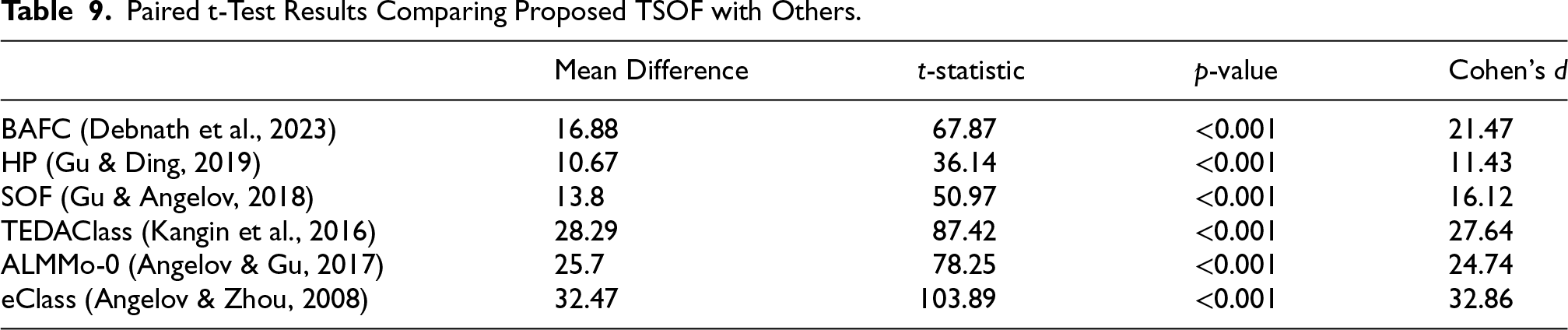
Paired t-Test Results Comparing Proposed TSOF with Others.
While the proposed TSOF demonstrates superior performance compared to other existing approaches, it is still limited by certain constraints. As with the traditional SOF, the model's performance is closely tied to the granularity setting. While higher granularity allows the classifier to capture intricate data patterns, it also increases the risk of overfitting, especially when the data is highly complex or noisy. Conversely, reducing the granularity improves computational efficiency and lowers memory usage, but at the cost of producing a less detailed model. This trade-off between granularity and computational demand is an inherent limitation (Gu & Angelov, 2018) that must be carefully managed based on the specific application. Furthermore, while the tree-based structure and augmented dataset improve accuracy, they also introduce a level of complexity (Section 3.4).
Despite its limitations, the TSOF classifier exhibits several key strengths that contribute to its performance. First and foremost, the integration of an augmented dataset, achieved by enhancing the dataset, and the offline tree-based data-cloud centers has significantly bolstered the model's accuracy (Tables 4, 5, and 6). These tree-based structures help to identify superior data-cloud centers, while the augmented dataset facilitates more robust learning (Sections 3.2 and 3.3). Moreover, the inclusion of simple yet effective feature extractors like LBP and NABP enhances texture discrimination, with NABP proving particularly useful due to its noise-adaptive and more discriminative features (Sections 3.1.1 and 3.1.2). The combination of the elements (offline ranking, data augmentation, and feature extraction) provides a balanced, powerful approach. Additionally, the online training mechanism of TSOF, which dynamically adjusts the size of data-clouds and the fuzzy rule-base (Conditions 3, 4, and Figure 8), allows the classifier to efficiently adapt to changing streaming data, ensuring its ongoing relevance and effectiveness in healthcare applications.
Conclusion
In this research, we have developed a tree-based self-organizing fuzzy streaming data classifier for identifying Alzheimer's disease. The ADNI dataset is segmented into Gray Matter, White Matter, and CSF, then augmented to enhance the data. For feature extraction and concatenation, we utilize local binary patterns and noise-adaptive binary patterns to capture various characteristics from the segmented sMRI data. These extracted features are employed in both offline and online training of the proposed TSOF algorithm. The accuracy of disease categorization is greatly improved by the TSOF's tree-based structure, which helps to discover efficient data-clouds. Moreover, the proposed TSOF has been compared with streaming data classifiers and offline data classification methods for both binary and multiclass disease classification. The obtained results are reported, where TSOF outperformed the state-of-the-art classification methods. Despite the slow performance of TSOF compared to other streaming data classification methods, this method performs better in improving classification results. Therefore, the TSOF can be employed to detect streaming data of Alzheimer's disease efficiently and can also lessen medical professional's cognitive burden, freeing them to concentrate more on patient care rather than data analysis.
The future direction of this research may involve multimodal neuroimaging data from alternative paradigms, such as fMRI or PET scans. Given the increasing accessibility of neuroimaging, one potential future work can be to improve classification accuracy by using image fusion techniques that combine multiple medical images, such as MRI and PET scans. Additionally, incorporating advanced image processing models such as attention-based convolutional networks or transformers could further enhance the results.
Footnotes
Acknowledgments
The research was completed with the support of the Qatar National Library.

Funding
The authors disclosed receipt of the following financial support for the research, authorship, and/or publication of this article: This work was supported by the Qatar National Library.
Declaration of Conflicting Interests
The authors declared no potential conflicts of interest with respect to the research, authorship, and/or publication of this article.