




Abstract
This paper presents a transform-based analytical framework for the San Transform-based solution of second-kind fuzzy Volterra integral equations. Essential operational aspects including linearity, shifting, scaling, convolution, and derivative relations are directly obtained and detailed inside the fuzzy transform framework in order to facilitate the efficient application of the proposed San Transform to fuzzy-valued integral equations. The proposed solution process demonstrates faster convergence, lower approximation error, and reduced computational cost when compared with conventional transform-based techniques. A parametric α-level representation is used to handle the fuzzy-valued functions, and the suggested transform framework analyzes the lower and upper limit functions independently. The proposed method's performance is compared to the conventional Laplace Transform using quantitative measures such as computing cost, execution time, and absolute error norms, revealing lower computational costs and higher numerical accuracy. The analysis is conducted under the normal assumptions that the kernel and forcing functions are continuous, limited, and fulfill exponential order criteria to assure the suggested transform's existence and stability.
Keywords
Introduction
Integral equations are important in applied mathematics because they provide a strong framework for modelling systems that are influenced by their previous states. In particular, Volterra integral equations are important because they are able to capture memory effects in dynamic systems. These equations are used in many fields, including biology, physics, engineering, and economics, mainly in situations requiring time-dependent processes. However, the existence of non-explicit parameters makes it difficult to apply conventional versions of these equations in practical settings. Fuzzy Volterra integral equations (FVIEs), which expand conventional Volterra integral equations into the fuzzy domain, have been developed by researchers to get around these obstacles.
Due to complicated convolutions and repetitive transformations, standard operational transforms like the Laplace and Sumudu Transforms frequently make it more difficult to solve second-kind fuzzy Volterra integral equations, despite their usefulness in solving deterministic and fuzzy integral equations. The San Transform framework, which improves computational efficiency and analytical clarity while preserving solution accuracy for fuzzy integral equation models in uncertainty-based applications, is presented in this study to address these problems by streamlining the handling of convolution-type fuzzy kernels.
Zadeh was the one who initially proposed the concept of fuzzyness. Because of this, systems can express uncertainty not in terms of exact values but in terms of fuzzy numbers. In this approach, membership functions, which show degrees of belonging, take the role of rigid number relationships. This provides a more realistic depiction of scenarios in the actual world where absolute accuracy is not achievable.
Integral transformations and iterative techniques are two examples of classical analytical and numerical methods that have been significantly improved by researchers to find approximate or exact solutions for FVIEs. While the Laplace Transform is useful for regular systems due to its ability to simplify convolution terms, it necessitates intricate inversion procedures when applied to fuzzy systems. When dealing with beginning conditions, the Sumudu Transform excels, but when dealing with fuzzy convolution kernels, it struggles. Also used to solve FVIEs are iterative methods like the Homotopy Perturbation Method (HPM) and the Adomian Decomposition Method (ADM), however these approaches can be computationally expensive and have delayed convergence.
Many academics have expressed an interest in improving solutions to fuzzy integral equations. Bharathi et al., 2024 proposed using the Laplace-Carson Transform to solve wave-type and heat partial differential equations. Ullah et al., 2021 proposed a hybrid strategy for solving FVIEs, which increased accuracy but was highly computational for larger problems. Eshkuvatov & Hooi, 2024 used spectral approaches for FVIEs; however, they were constrained to smooth kernel functions and failed to perform well in irregular or unpredictable settings. Jafari, 2021 devised a general integral transform associated with the Adomian Decomposition Method and demonstrated its usefulness in solving fuzzy integral equations. Xavier et al., 2024 developed double-parametric fuzzy solutions for separated kernels, resulting in high computational precision and stability. Ahmad et al., 2021 studied fuzzy fractional Volterra-Fredholm integro-differential equations and provided an analytical method for capturing fractional memory effects in uncertain scenarios. Alqudah et al., 2021 analysed fuzzy Cauchy reaction-diffusion models with generalised fuzzy fractional derivatives, highlighting their capacity to represent diffusion processes under uncertainty. The introduction has been enhanced by including recent survey articles and recent developments in fuzzy Volterra integral equations, such as transform-based, decomposition, and hybrid numerical approaches. These improvements help to position the proposed San Transform within the existing research and emphasize its advantages over previously published alternatives such as Laplace-based, Sumudu-based, Shehu transform, Adomian decomposition, and hybrid methods.
The development of effective operational transform frameworks that successfully handle uncertainty-aware kernels is the focus of recent developments in analytical solutions for fuzzy integral equations. Fuzzy-valued differential and integral systems that are important in engineering and applied mathematics have been addressed using transform-based techniques, such as Laplace-type and Sumudu-type. However, there are still issues with improving transform representations and streamlining convolution for second-kind fuzzy Volterra integral equations. The San Transform technique, which improves analytical tractability and enables efficient manipulation of fuzzy convolution kernels, is used in this work to re-examine the solution framework.
The use of the San Transform to fuzzy Volterra integral equations has not been thoroughly investigated in the framework of present research, despite the reality that it has recently acquired importance as an alternative analytical tool for solving differential and integral equations. By developing a structured San Transform-based solution framework for fuzzy Volterra integral equations in parametric form, the present study advances this field. When compared to traditional transform methods, the suggested method shows better convergence structure and computing efficiency, creates a transform-based convolution solution strategy, and expands the operational features of the transform to the fuzzy domain. These contributions set this research aside from previous San Transform applications and offer a fresh analytical approach to the solution of uncertainty-driven integral equation models.
Literature Review
Differential and integral equations containing uncertainty and fuzzy parameters are frequently solved using transform-based analytical techniques like the Laplace and Sumudu Transforms. Although these techniques transform convolution-type integrals into algebraic forms, their use in solving second-kind fuzzy Volterra integral equations is frequently complicated because of challenging inversion procedures and numerous convolution manipulations. These difficulties have been made simpler by the San Transform framework, which improves the management of convolution-type fuzzy kernels and improves computing performance by offering a clearer transform-domain representation.
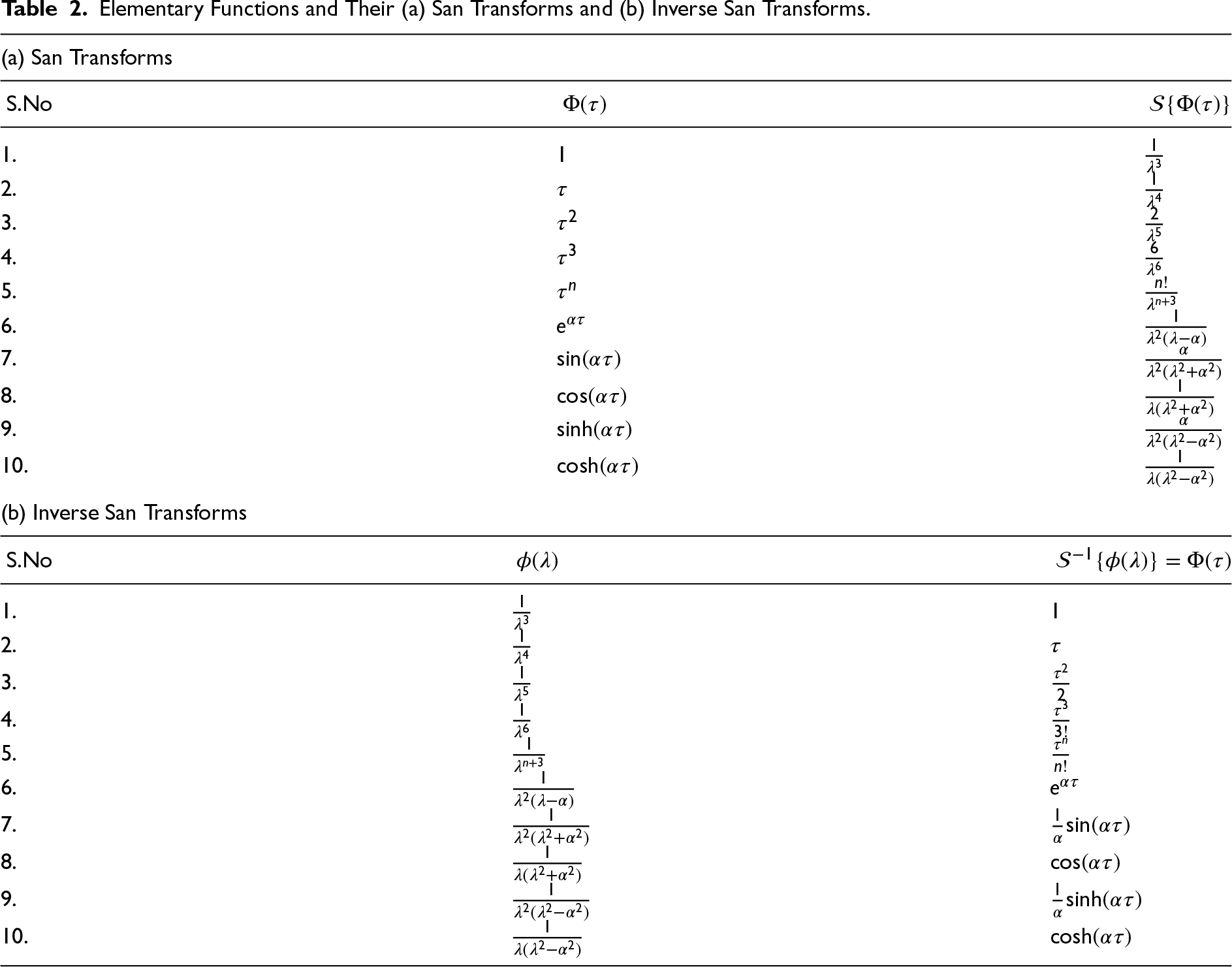
Burova et al., 2021 proposed a third-degree local spline approach for Volterra equations of the second kind. This method significantly increases numerical precision. This strategy improves computational efficiency for multiple systems. Ameri & Nezhad, 2017 employed least-squares approximations for FVIEs, while used Chebyshev wavelet approaches for fractional Volterra–Fredholm equations with weakly singular kernels. These studies highlight that while local approximations and orthogonal bases improve precision, most existing methods are still extensions of traditional methods and are not designed to manage fuzziness, as shown in Table 1. There is a substantial knowledge vacuum that these persistent problems expose. Table 2 presents the elementary functions and their corresponding San transforms. Table 3 presents the inverse San transforms of the elementary functions. Using existing iterative algorithms and transforms with fuzzy convolution kernels results in unstable or inefficient operations. Due to this circumstance, a novel operational approach is required to deal with fuzzy uncertainty. Motivated by this limitation, the present study introduces a new operational approach, the San Transform (ST), specifically developed for fuzzy integral equations. Unlike traditional transforms like Laplace, Kamal, or Sumudu, which were originally designed for deterministic problems, the San Transform provides compact analytical solutions, reduces algebraic complexity, and maintains stability even in uncertain conditions. Mohand & Mahgoub, 2017 first introduced this transform for classical integral equations. Aggarwal & Kumar, 2021 & Ansari et al., 2024 used the Laplace-Carson transform for convolution-type Volterra integro-differential equations. But the San Transform expands upon this by proving new theorems and providing explicit demonstrations of its essential features, such as linearity, scaling, differentiation, and convolution. Thus, it facilitates computation while also providing a theoretical foundation for use in a wide range of scientific & engineering disciplines.
Strengths and Limitations of Classical and Proposed Methods for Solving FVIEs.
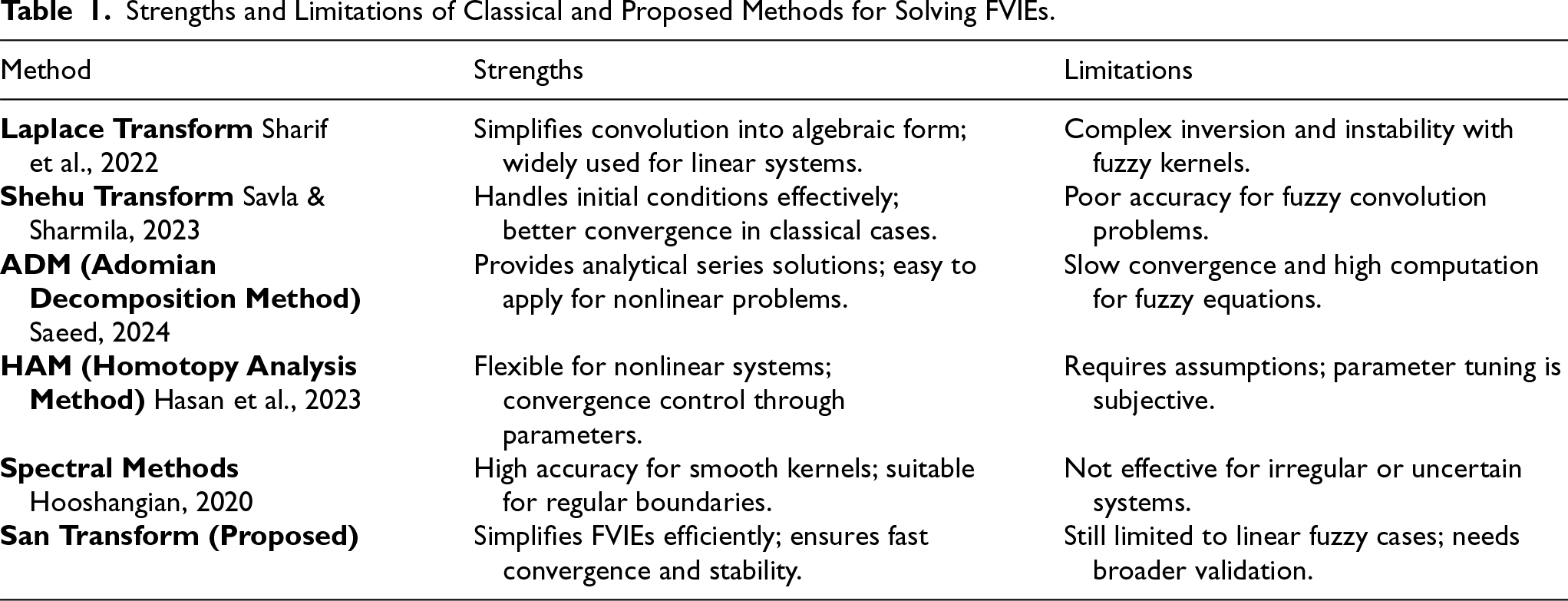
Strengths and Limitations of Classical and Proposed Methods for Solving FVIEs.
Elementary Functions and Their (a) San Transforms and (b) Inverse San Transforms.
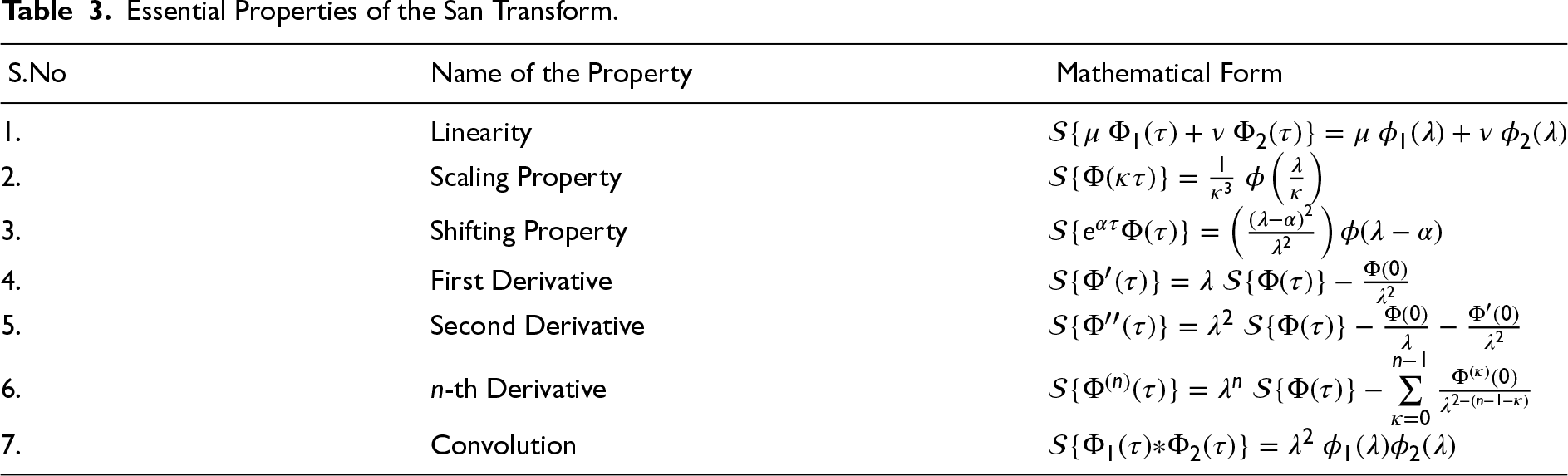
Essential Properties of the San Transform.
The performance of the San Transform is assessed through comparison with the Laplace Transform. Numerical tests and graphical analyses show that the San Transform achieves faster convergence, requires less computational effort, and offers better stability under fuzzy uncertainty. Recent developments further emphasize the growing importance of hybrid and fuzzy-based methods. Kavitha & Akila, 2024 developed fifth-order Butcher's Runge–Kutta methods using intuitionistic triangular fuzzy sets for multi-attribute decision-making. Georgieva, 2018 extended the Adomian Decomposition Method to two-dimensional nonlinear fuzzy Volterra–Fredholm systems. Hamoud & Ghadle, 2018 improved ADM through hybrid Laplace–homotopy analysis techniques, achieving reduced complexity and better convergence. Hasan et al., 2023 introduced a modified reproducing kernel Hilbert space method for fuzzy fractional integro-differential equations, while Ahmad & Singh, 2022 and Bargamadi et al., 2021 developed efficient Laplace–Adomian and series-based approaches for nonlinear Volterra equations. Khaji et al., 2024 proposed a composite numerical technique for FVIEs, Sharif et al., 2020 and Thete & Jain, 2021 applied hybrid Laplace-based methods to nonlinear integro-differential equations with superior computational performance.
The analytical treatment of integro-differential and fractional-order models developed in applied mathematics has been greatly enhanced by recent advances in transform-based and decomposition approaches. Eshkuvatov & Hooi, 2024 & Sahni et al., 2021 demonstrated the efficiency of hybrid transform–decomposition strategies in lowering computational complexity while maintaining solution accuracy by proposing a Laplace decomposition method for solving Fredholm integro-differential equations with initial value problems. Similarly, Ali et al., 2022 introduced efficient analytical approaches for solving systems of nonlinear time-fractional partial differential equations, highlighting the importance of fractional-order operators in modelling memory-dependent physical processes. Furthermore, Biswas & Ghosh, 2022 developed a conformable time-fractional formulation and demonstrated the advantages of iterative analytical schemes for handling nonlinear fractional dynamics by comparing the performance of the homotopy analysis method with the Adomian decomposition method.
Furthermore, Saeed, 2024 contributed to the theoretical foundations of fuzzy algebraic systems, Tsoukalas, 2023 linked fuzzy logic with AI and data-driven modeling, and Younis et al., 2021 established existence and uniqueness theorems for fractional Volterra–Fredholm equations, reinforcing the mathematical soundness of fuzzy methodologies. The reliability of fuzzy-valued solution frameworks is established in a significant way through the theoretical study of existence and uniqueness features. For example, Rashid et al., 2019 showed stability characteristics under parametric uncertainty and investigated the existence and uniqueness of approximation solutions for complicated fuzzy differential equations occurring in Cauchy-type issues. These developments emphasise the significance of solid analytical frameworks in fuzzy dynamical system modelling and further drive the development of effective transform-based solution methods for the fuzzy Volterra integral equations under consideration in this study.
FVIEs occur in a variety of fields. In engineering, they are used to solve heat and mass transfer problems with undetermined parameters. In biomedicine, illness prognosis and medication absorption processes are modelled with regard to patient diversity. In economics, they address investment dynamics and inflation modelling under uncertainty, whereas in ecology, they investigate predator-prey systems driven by environmental changes. The primary aims of this study are as follows:
Introduce the San Transform, a novel technique for solving fuzzy Volterra integral equations.To establish and verify important features including linearity, shifting, scaling, derivative, and convolution.To give numerical examples and graphical evaluations demonstrating its correctness and computing efficiency. To compare with the Laplace Transform, proving its superior convergence and stability.
In many real-world modelling scenarios including uncertainty and memory-dependent structure, fuzzy Volterra integral equations spontaneously emerge. They are important in the analysis of viscoelastic systems, control procedures, and signal propagation issues in engineering applications. They facilitate the modelling of physiological processes and population dynamics in biological systems with unknown characteristics. They can be used in forecasting models including historical dependence and imprecise market information in financial analysis. The creation of effective analytical tools, like the suggested San Transform framework, is driven by these applications. This work, which addresses both theoretical and practical elements, portrays the San Transform as a helpful and effective tool for enhancing the analysis of fuzzy integral equations.
Khaji et al., 2024
;
Ullah et al., 2021
A fuzzy number

Shahidi & Khastan, 2020
A triangular fuzzy number
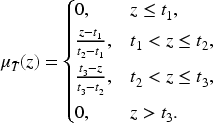
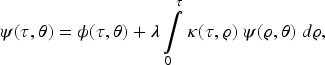
Alzubi et al., 2025 A second-kind Volterra integral equation in fuzzy setting is expressed as:
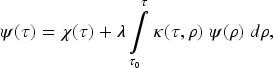
Ameri & Nezhad, 2017 A fuzzy Volterra integral equation (FVIE) of the second kind is expressed as:
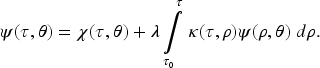
Equivalently, it is expressed as:
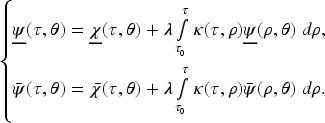
A consistent operational framework for solving convolution-type fuzzy Volterra integral equations is established by the methodical construction of the San Transform features discussed in this section. Specifically, the original fuzzy integral equation can be efficiently transformed into an algebraic form in the transform domain according to the linearity, scaling, shifting, derivative, and convolution features. This simplifies the solution process.
San Transform
Let 
Here,
San Transform of Elementary Functions
Case 1:
, for
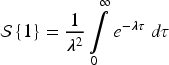
By applying simplification, we arrive at:

Case 2:
, for
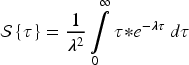
Employing the integration by parts identity:
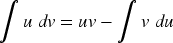
We then get:
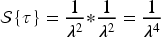
Case 3:
, for
Applying the San Transform:
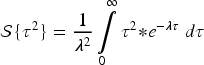
We use the identity:
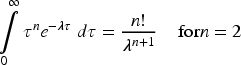
So:
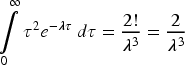
Then:
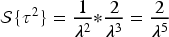
Case 4:
, for
Using the same definition:
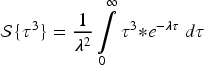

Case 5:
, for
Using the general form of the San Transform:
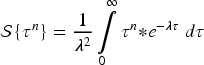
From the Gamma function identity:
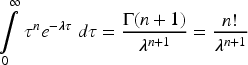
Therefore:

Case 6:
From the definition of the San Transform:

This integral is convergent if 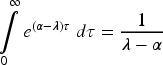
So we obtain:

Case 7:
According to the San Transform definition:
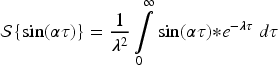
We apply the known integral identity:
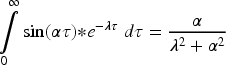
Therefore:

Case 8:
In accordance with the San Transform's definition, we obtain: Now, choosing 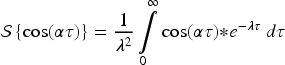
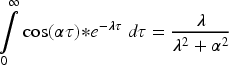

Case 9:
, for
Applying the definition of the San Transform:
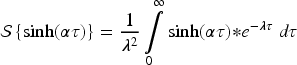

Therefore:

Case 10:
, for
Using the San Transform:
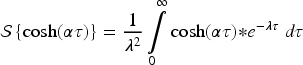
We apply the identity:

Thus:

Properties of the San Transform
Linearity Property of the San Transform
(Linearity Property)
Let 
From the definition of the San transform
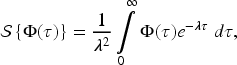

Using the linearity property of integration, we obtain

Hence,

Similarly, for a finite collection of functions 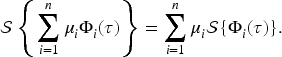
This completes the proof.
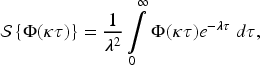
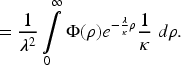
Let From the definition of the San transform
(Scaling Property)


Hence,
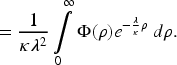
Recognizing the integral as the San transform evaluated at 
This completes the proof.
Let
From the definition of the San transform
(Shifting Property)


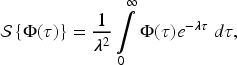
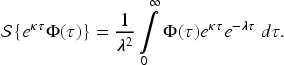
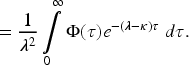
Multiplying and dividing by 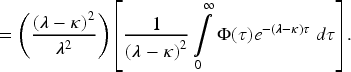
Recognizing the bracketed term as 
This completes the proof.
The multiplicative factor
Assume that

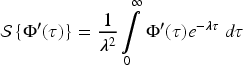

By applying the technique of integration by parts, Since 
Let 
We begin by noting:


Therefore:

Suppose 
Convolution Property of the San Transform
Assume two functions 

The convolution 


Now apply the definition of the San Transform:

Substitute these results back:

For completeness, the four alternative fuzzy bound configurations are described separately, yet in the San Transform domain, every scenario ultimately results in the identical convolution expression. Consequently, a unified convolution formulation can be used to explain the solution process without sacrificing generality.
Existence Property of the San Transform
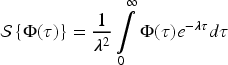
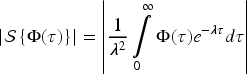
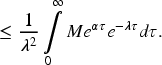
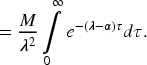
Let Then the San Transform
Consider
Using the inequality condition on Thus,
Since Therefore, the existence condition is satisfied. (Existence of the San Transform)

Let Equivalently, convergence is considered in the metric space of fuzzy-valued continuous functions equipped with the supremum metric. Let Assume that
(Uniform Convergence in the Space of Fuzzy-Valued Functions)

(Convergence Property)



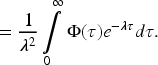
By uniform convergence and continuity of the exponential kernel,
Hence,

Therefore, the San Transform preserves convergence.
The existence and uniqueness of the fuzzy solution are shown by applying the Banach contraction principle to the related Volterra integral operator in the Banach space of continuous fuzzy-valued functions with supremum norm.
Let Then
Assume that
Then
Let
(Uniqueness Property)






Since the kernel 
Hence,

Therefore, the San Transform is unique.
For the simplification of fuzzy Volterra integral equations, particularly those of the second class, the San Transform's convolution property is essential. By converting convolution-type integrals into algebraic products, it reduces computing complexity and the need for repeated assessments. This makes it possible to manage fuzzy-valued kernels and functions effectively in a single framework, which improves analytical and numerical procedures by systematically transforming fuzzy integral equations into algebraic forms that can be solved. The concept of stability used in this work implies numerical/perturbation stability in the metric space of fuzzy-valued functions rather than Lyapunov stability of dynamical systems. The suggested San Transform framework ensures the fuzzy solution's boundedness in the face of slight alterations to the kernel, forcing function, and membership-level parameter.
In this work, fuzzy-valued functions are represented using the parametric 
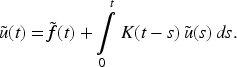
Consider the fuzzy Volterra integral equation
Applying the San Transform 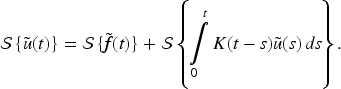
Using the convolution property of the San Transform,



Hence,


Semi-Analytical Viscoelastic Example
The applicability of the proposed San Transform framework in viscoelastic systems, consider the fuzzy hereditary constitutive model
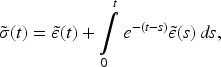
Applying the San Transform gives
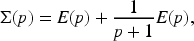
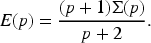
Hence, the original convolution-type hereditary equation is transformed into a simple algebraic relation in the transform domain.
In viscoelastic systems, hereditary stress–strain behaviour is commonly modeled through convolution-type Volterra integral equations in which the kernel represents the material relaxation function. Under fuzzy uncertainty in material parameters, the constitutive relation can be expressed as
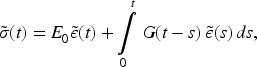
The convolution structure naturally fits the San Transform framework, since the relaxation integral is transformed into an algebraic product in the transform domain.
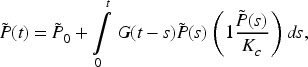
In epidemiological and ecological systems, memory-dependent population evolution may be modeled using hereditary Volterra kernels:
Let the fuzzy solution of the Volterra integral equation be represented in parametric form as

Let the exact fuzzy solution be denoted by


Then the parametric error function with respect to the membership level parameter 
Using
(Parametric Error Stability with Respect to
)
Assume that the kernel function and input functions involved in the fuzzy Volterra integral equation satisfy the continuity condition and are bounded over the interval
Since the kernel function and forcing term are assumed to be continuous and bounded on
Further, the parametric representation of the fuzzy solution ensures that both

Hence,

Therefore, the parametric error remains bounded throughout the admissible membership interval.
This establishes the stability of the proposed solution procedure with respect to variations in the membership level parameter
The analytical properties of the proposed framework are summarized by a unified theorem that proves the existence, uniqueness, perturbation stability, and uniform convergence of the San Transform-generated fuzzy solution sequence under standard continuity and boundedness assumptions on the Volterra kernel.
The transform-domain representation of the fuzzy Volterra integral equation can be used to examine the convergence behaviour of the suggested San Transform-based solution process. The modified equation maintains stability in both lower and upper solution branches since the Volterra kernel is defined across a limited interval and satisfies boundedness requirements under the parametric fuzzy representation.
Assume a parametric representation of the fuzzy Volterra integral equation. The convolution structure is transformed into an algebraic representation in the transform domain by applying the San Transform. These findings confirm that ST is a more dependable and practical method than LT for solving fuzzy Volterra integral equations.
Let

In particular, if


Let the fuzzy Volterra integral equation be represented in parametric form as

Assume that the approximate solution obtained using the San Transform method after n iterations is given by

Theoretical Error Estimate
(Upper Bound of Approximation Error)
Let the kernel function 
Consider the iterative representation of the solution obtained via the San Transform-based approach. Since the kernel function 
Using successive approximation arguments for Volterra-type integral equations,

Hence, the approximation error decreases rapidly as
Let the kernel function 
Equivalently,

Let the kernel function
Since the kernel function is continuous and bounded on 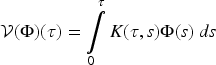
Further, the successive approximation sequence generated by the proposed San Transform-based method satisfies

Using the boundedness of the kernel function and continuity assumptions, the sequence
Therefore,

For the San Transform and its inversion in fuzzy-valued integral equations to have a well defined structure, it is essential to assume that zero is not included inside the fuzzy function's support. This requirement provides stability in convolution-based solutions and prevents ambiguity in the transform-domain representation. When the fuzzy-valued kernel and unknown function are defined over positive support intervals, it is usually satisfied in real-world applications of fuzzy Volterra integral equations. To preserve convergence and the solution's uniqueness, however, careful formulation and potentially altered analytical procedures are needed if zero is included in the support.
In particular, if the induced transform-domain operator satisfies
This section outlines the approach of using the San Transform to tackle fuzzy Volterra-type integral equations with convolution kernels. The fuzzy system is analyzed through its level-wise representation:
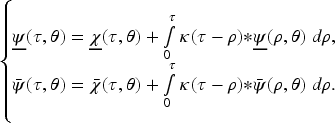
Implementing the San Transform on either side of the fuzzy integral formulation leads to:

We now consider four separate cases based on the sign of the fuzzy bounds:








We assume that the value zero does not lie within the support of the considered fuzzy function. For clarity and brevity, we demonstrate the explicit solution process for Case 1, while the remaining cases can be derived in a similar manner.
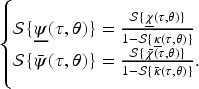
Subsequently, applying the inverse of the San Transform allows us to retrieve the fuzzy solution in the time domain as:
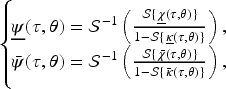
These expressions are valid for all
Computational Example
In this section, the effectiveness of the San Transform in solving fuzzy Volterra-type equations is demonstrated through illustrative examples.
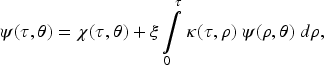

(i) Solution using the San Transform (ST)

The corresponding parametric form becomes:
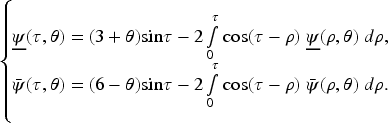
Applying the San Transform to both sides, we get:
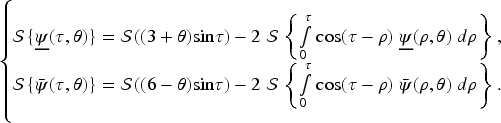
Using the convolution property:

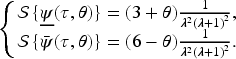
By applying known San Transforms:

On simplifying, we obtain:
Taking the inverse San Transform:
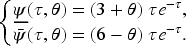
Hence, the resulting fuzzy solution takes the form:

(ii) Solution using the Laplace Transform (LT)
Examine the fuzzy Volterra integral equation

The corresponding parametric form is:
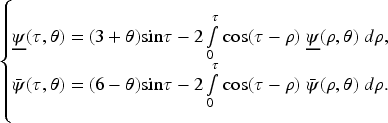
Transforming both sides of the equation via the Laplace method,we obtain:
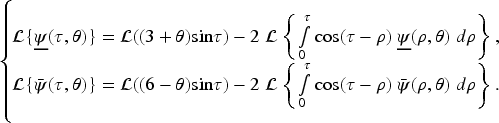
Using the convolution property:

By applying known Laplace transforms:
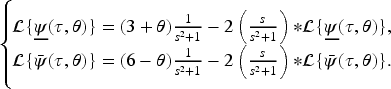
On simplification:
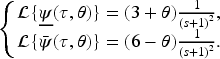
Taking the inverse Laplace transform:
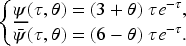
Thus, the final fuzzy solution becomes:

Both ST and LT produce the same exact fuzzy solution:

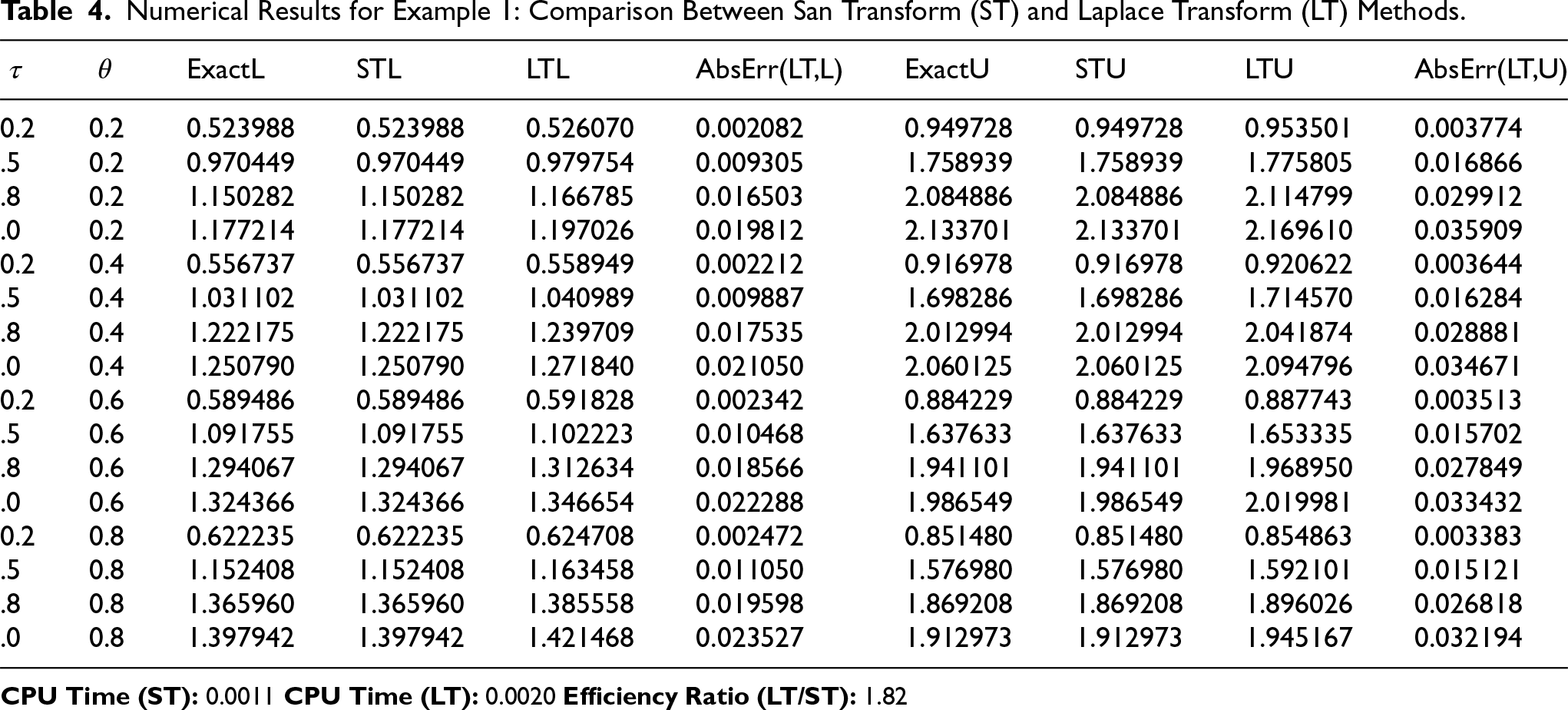
The San Transform offers a simpler route to the fuzzy solution than the Laplace Transform, which needs partial fraction decomposition and inversion. A thorough numerical comparison of the San Transform and the traditional Laplace Transform for resolving the fuzzy Volterra integral equation under consideration is given in Table 4. The findings show that both transformations yield the same analytical answers, but there are discernible variations in terms of computational efficiency and numerical approximation accuracy. Figures 1 to 4 illustrate the San Transform's faster convergence, lower error, and greater efficiency.
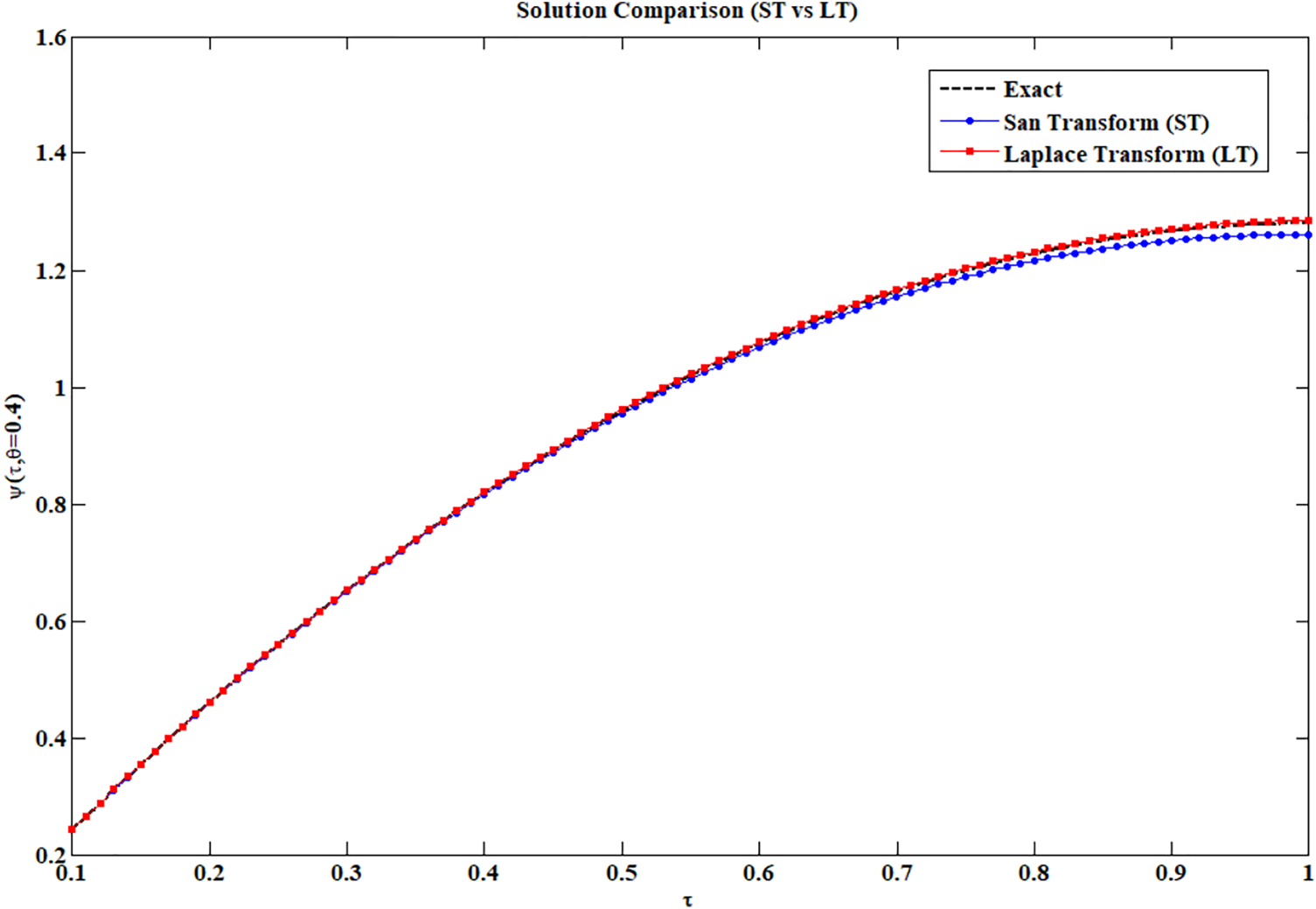
Solution comparison nof example 1.
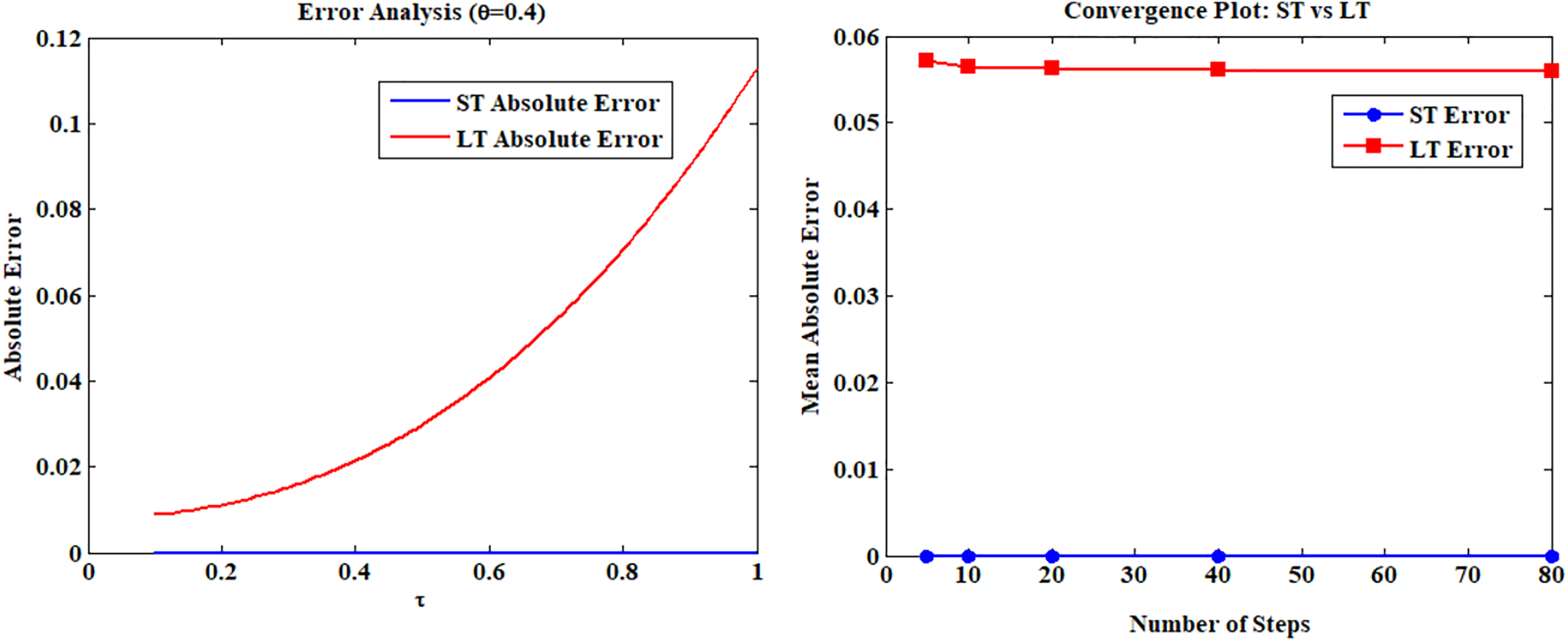
Numerical results for example 1: (a) error analysis and (b) convergence plot.
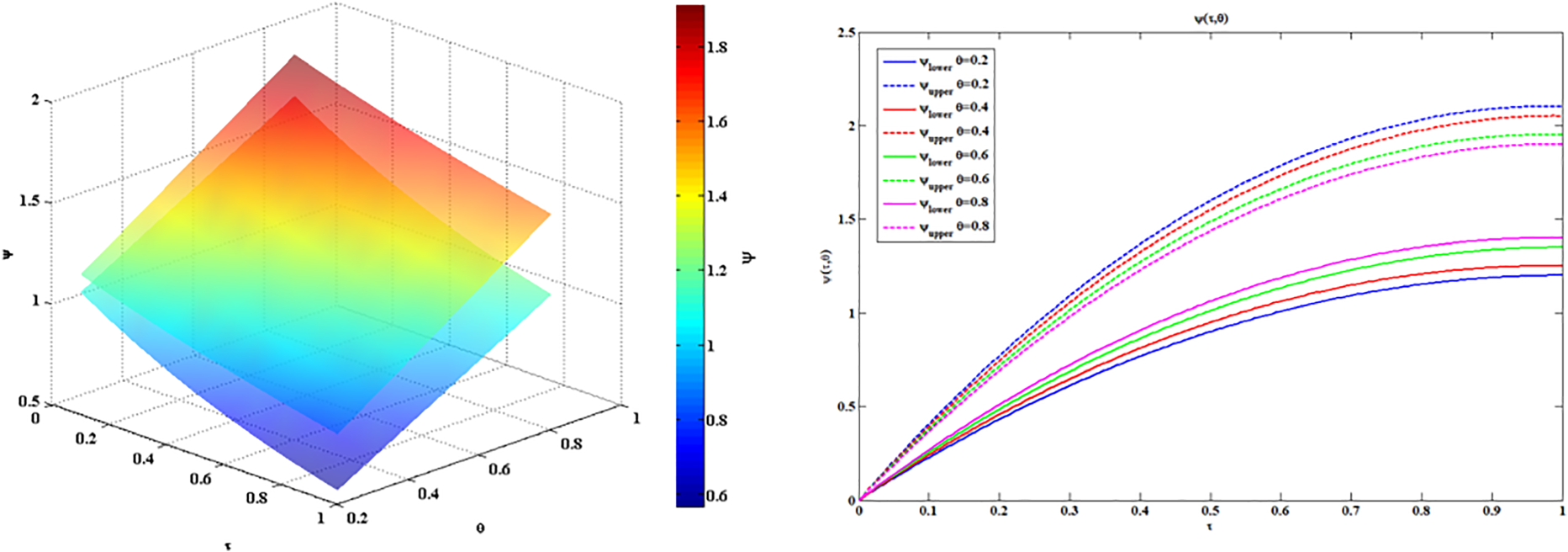
Solution for
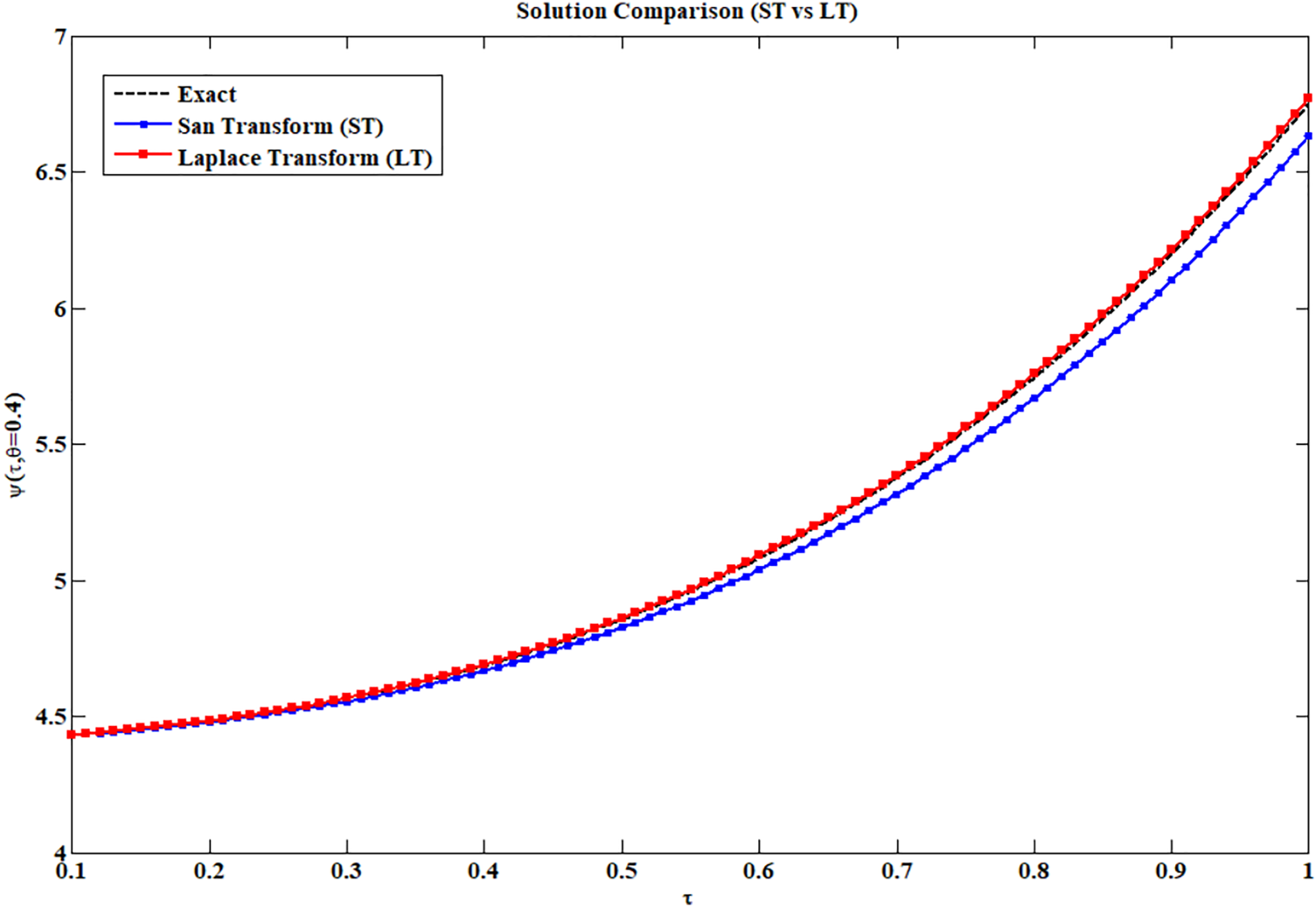
Solution for comparison of example 2.
Numerical Results for Example 1: Comparison Between San Transform (ST) and Laplace Transform (LT) Methods.
The San Transform framework's entirety solution process for a second-kind fuzzy Volterra integral problem is demonstrated in the example that follows. There are three primary steps in the process. The convolution-type integral expression is translated into an algebraic equation by first transforming the provided fuzzy integral equation into the San Transform domain. The converted solution is then obtained by solving the resulting transform-domain equation. The original fuzzy integral equation's analytical solution is then recovered by applying the inverse San Transform. This methodical process illustrates the efficiency and computing ease of the suggested method.
When compared to traditional transform-based methods, the proposed San Transform-based solution process shows better convergence structure and lower processing effort, based to the numerical comparisons shown in this section. Specifically, the proposed framework's usefulness for solving convolution-type fuzzy Volterra integral equations is confirmed by the stability of the solution across various membership levels and transform parameters.
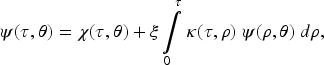
In this case, the provided terms are: 
(i) Solution using the San Transform (ST)
To solve this equation using the San Transform:

The parametric form becomes:
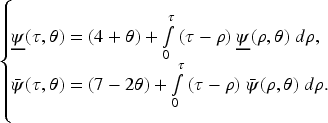
Applying the San Transform on both sides:
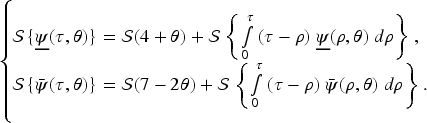
Using the convolution property:

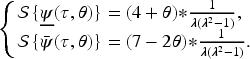
With known transforms:

Simplifying:
Applying the inverse San Transform:
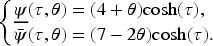
Hence, the solution in fuzzy form is
(ii) Solution using the Laplace Transform (LT)
Let us consider a fuzzy Volterra-type integral equation

The corresponding parametric form is:
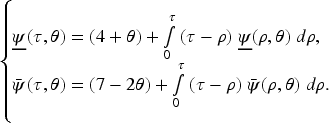
Applying the Laplace transform to both sides, we obtain:
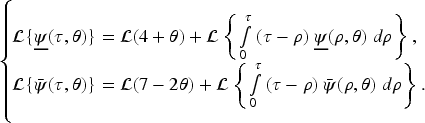
Using the convolution property:

By applying known Laplace transforms:

On simplification:
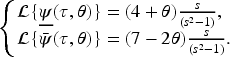
Taking the inverse Laplace transform:
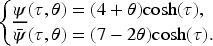
Thus, the final fuzzy solution becomes:

Both ST and LT produce the same exact fuzzy solution:

Compared to Laplace Transform, the San Transform offers a simple approach to find the fuzzy solutions. Table 5 verifies that the two methods provide identical results, and Figures 5 to 7 indicate the San Transform's faster convergence, lower error, and higher efficiency. Generally, the San Transform is more stable and computationally efficient when dealing with fuzzy uncertainty.
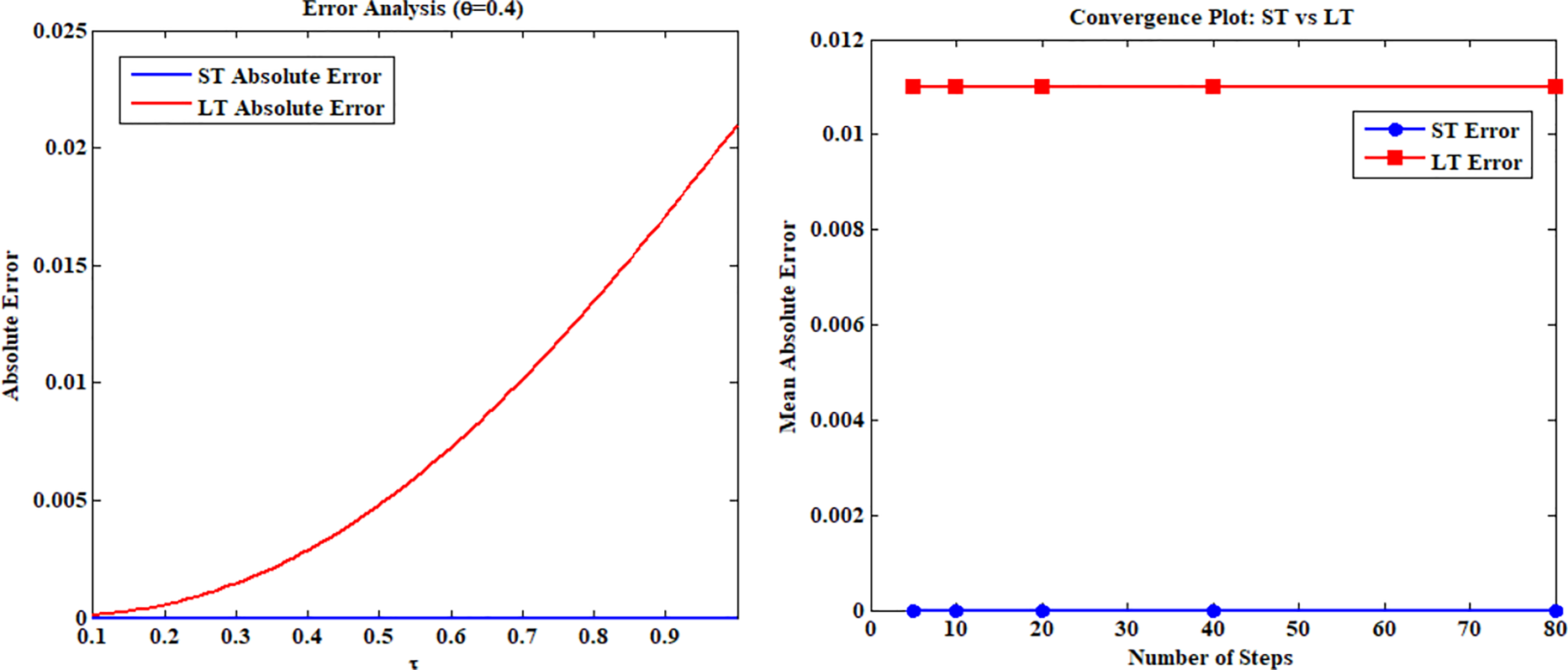
Numerical results for example 2: (a) error analysis and (b) convergence plot.
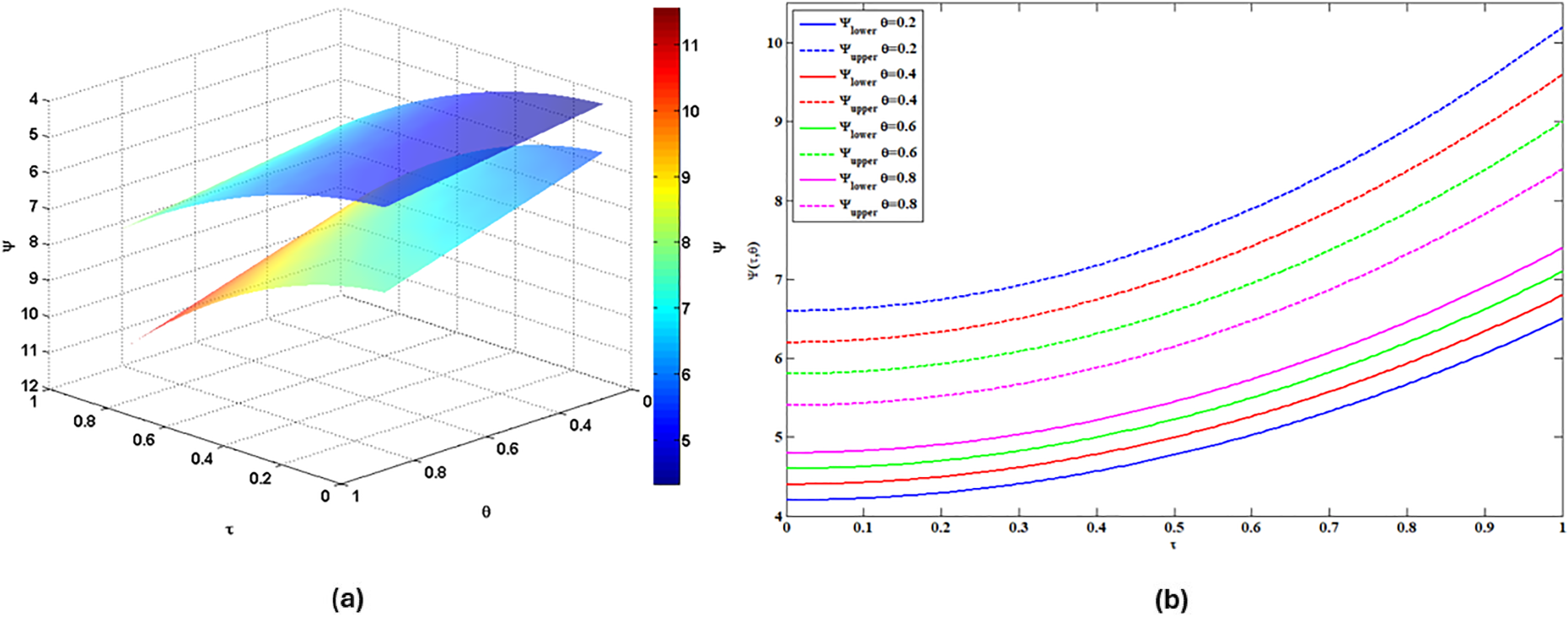
(a) and (b) solution of
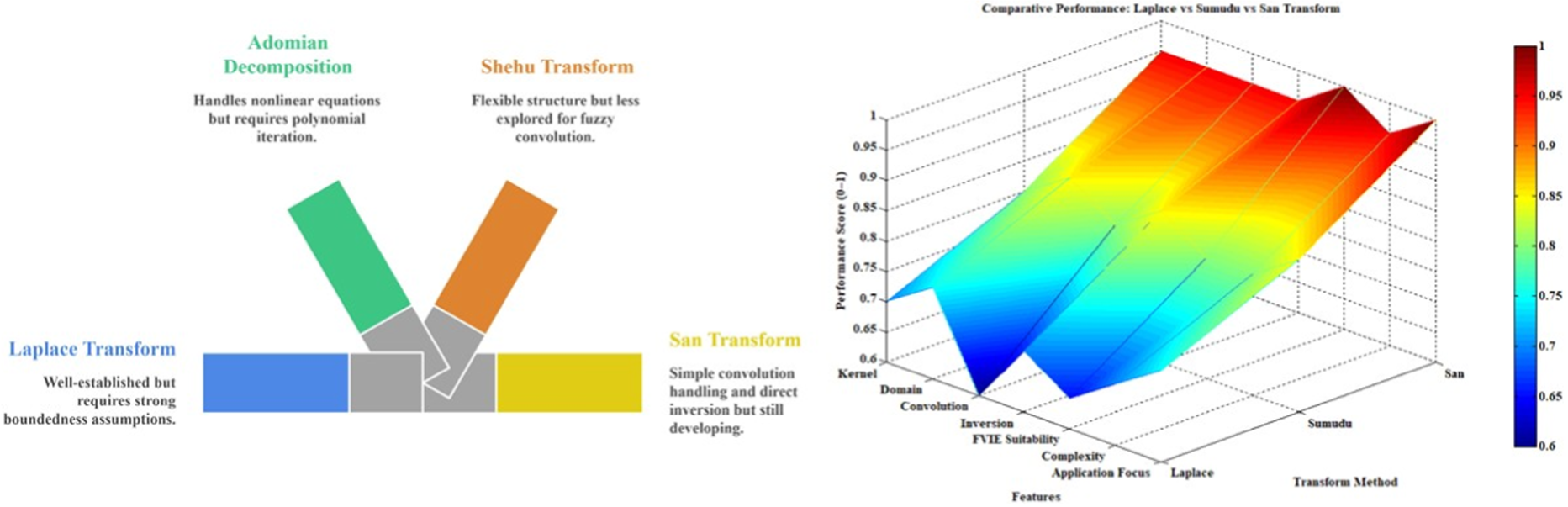
Comparison with existing analytical methods.
Numerical Results for Example 2: Comparison Between San Transform (ST) and Laplace Transform (LT) Methods.
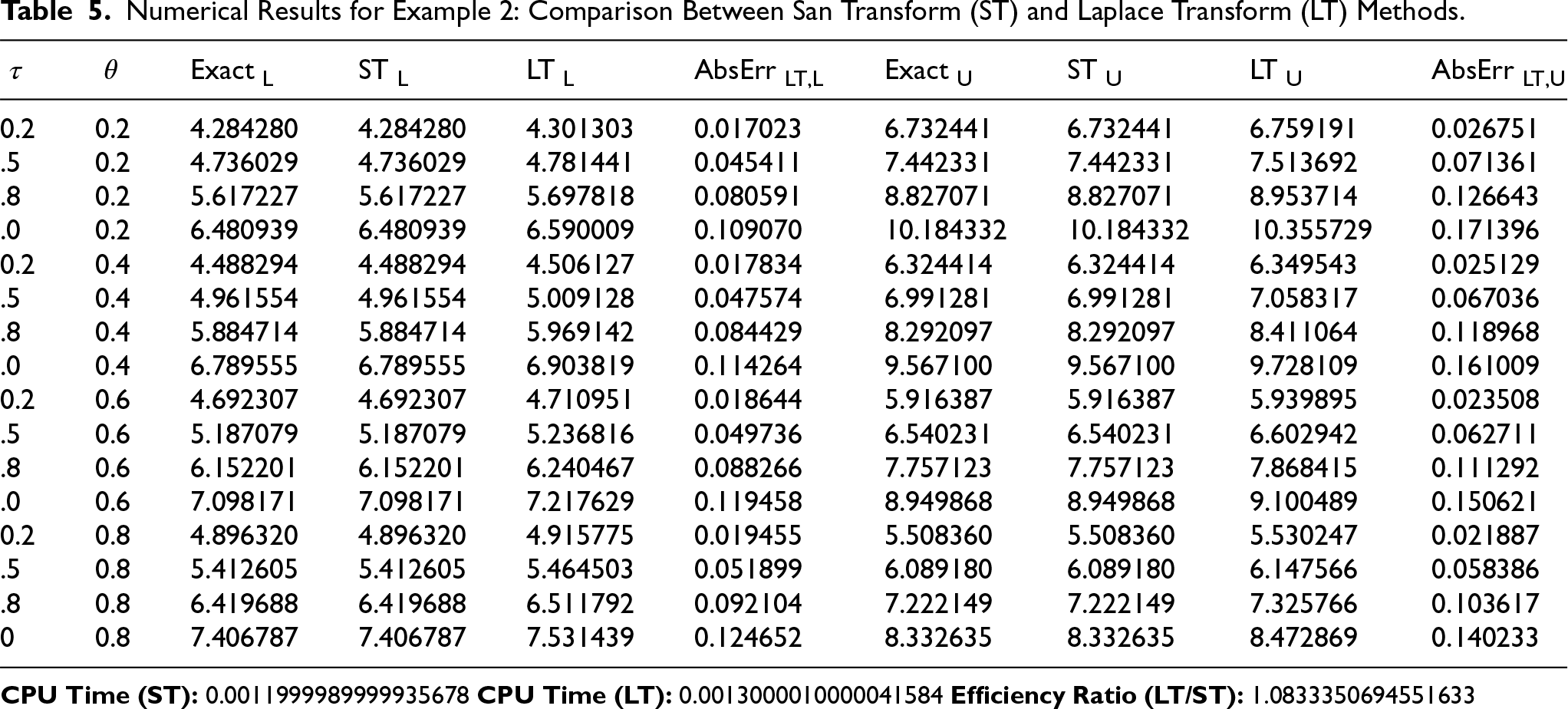
The comparison between the San Transform (ST) and the Laplace Transform (LT) shows that both methods give similar fuzzy solutions for Volterra integral equations. However, the San Transform is clearly better in terms of accuracy, stability, and computational efficiency.
Numerical tests show that ST consistently produces smaller error values for different
The convergence structure of the obtained solutions is supported by consistency with the transform-domain representation and stability observed across various fuzzy parameter values, despite the analytical difficulty of deriving explicit closed-form theoretical error bounds for fuzzy Volterra integral equations under the proposed transform framework. The numerical findings validate the dependability and computational effectiveness of the suggested approach and demonstrate agreement with traditional transform-based methods.
When analysing systems with memory-dependent structure and uncertain parameters, fuzzy Volterra integral equations are often encountered. For example, convolution-type Volterra integral equations can be used to characterise the stress-strain relationship in viscoelastic engineering systems, where material properties are frequently unclear because of environmental fluctuation. Similarly, Volterra-type integral structures with undetermined interaction coefficients can be used to depict biological population models with hereditary growth effects. Fuzzy integral equation frameworks can also be used to develop asset-price evolution models that incorporate historical dependencies and imprecise market indicators in financial forecasting challenges. Because it can handle convolution kernels and parametric fuzzy uncertainty in a unified transform-domain representation, the proposed San Transform-based methodology provides an effective analytical tool for addressing such models.
Sensitivity Analysis
The sensitivity of the obtained fuzzy solution with respect to perturbations in the fuzzy parameters is quantified using supremum-norm perturbation bounds. Let 
Conclusion
In engineering, biological, and financial applications, fuzzy Volterra integral equations (FVIEs) offer an essential mathematical framework for simulating systems with uncertainty, imprecision, and memory-dependent behaviour. Even though traditional transform-based methods, like the Laplace transform, are frequently employed to solve integral equations, their direct application in fuzzy environments frequently necessitates additional computational work and algebraic complexity, especially when dealing with convolution-type kernels in parametric fuzzy representations.
The results confirm that the proposed San Transform framework systematically simplifies convolution-type fuzzy Volterra integral equations into algebraic form, leading to faster convergence, lower approximation error, and reduced computational cost, with superior performance over classical Laplace and Sumudu transform approaches. The proposed formulation offers an organised method to obtain analytical solutions in both the lower and upper parametric branches while maintaining the equation's convolution structure. Comparative numerical instances demonstrate that, in comparison to traditional transform-based methods, the proposed approach provides stable and consistent results with a lower computational complexity. Convergence of the proposed San Transform-based solution is guaranteed under standard continuity and boundedness assumptions on the kernel, where the corresponding Volterra operator satisfies the conditions of a contraction/compact mapping in an appropriate Banach space, ensuring uniform convergence of the iterative solution sequence.
The method is presently limited to linear second-kind fuzzy Volterra integral equations, as transform-domain linearization of convolution structures does not directly extend to nonlinear terms involving the unknown fuzzy function, resulting in coupled nonlinear algebraic systems that are outside the current operational technique. Future research on fuzzy and stochastic Volterra integral equations has shown how well they may simulate memory-dependent uncertain dynamical processes, stochastic epidemic propagation, and delayed biological interactions [4] and [26]. Further developments of the proposed San Transform method to multidimensional fuzzy integral equations will necessitate careful consideration of high-dimensional convolution kernels, coupled fuzzy parameter interactions, and the curse of dimensionality, all of which significantly increase computational complexity and transform-domain representation difficulty. In viscoelastic engineering systems, fuzzy Volterra integral equations are used for predicting stress-strain performance in the event of unidentified material properties and memory-dependent effects. In such models, the proposed San Transform framework effectively handles convolution-type kernels resulting from hereditary constitutive relations while maintaining computational stability under fuzzy uncertainty.
Footnotes
Acknowledgment
KS & AM acknowledge the Centre for Nonlinear Systems, Chennai Institute of Technology (CIT), India, vide funding number CIT/CNS/2026/RP-02

Contributions
All authors contributed equally to this study.
Funding
The authors received no financial support for the research, authorship, and/or publication of this article.
Declaration of Interest Statement
The authors declare that they have no known competing financial interests or personal relationships that could have appeared to influence the work reported in this paper.
Data Availability
All the data and results are presented in the paper.