




Abstract
INTRODUCTION
Melkersson-Rosenthal syndrome, with its etiology remaining unclear, is a rare neuromucocutaneous granulomatous disorder characterized by a distinctive triad: recurrent peripheral facial paralysis (PFP) (10%), painless non-pitting orofacial edema (80–100%), and a fissured tongue (30–40%). The classical triad, with all three features occurring simultaneously, is infrequent (8–25%), while monosymptomatic or oligosymptomatic presentations are more common. Two or more symptoms indicate the diagnosis. MRS primarily affects females in the 2nd–3rd decades. Rare in children, as of 2020, only 30 pediatric cases have been identified globally, most frequent between the ages of 7 and 12, with the youngest diagnosed case at 22 months. Treatment involves mainly corticosteroids. For recurrent and resistant cases, immunosuppressants, for unresponsive cases, surgical interventions such as facial nerve decompression or cheiloplasty are used. While symptoms may initially regress, they can later become permanent.1-3
Different acupuncture methods may effectively shorten the course of PFP and reduce sequelae frequency when applied early. 4 Studies in the pediatric age group are limited.5,6 Despite only two publications referencing acupuncture in MRS treatment, none specifically address its use in pediatrics.7,8 This case report aims to contribute to existing knowledge by presenting a pediatric patient diagnosed with MRS who received acupuncture treatment at Samsun Education and Research Hospital, Traditional and Complementary Medicine Practice Center, Türkiye.
CASE PRESENTATION
A previously healthy 10-year-old girl presented with left PFP and left-sided orofacial edema. Her medical history revealed two episodes of PFP occurring 45 days apart. The first episode, associated with cystitis and upper respiratory tract infection, involved right PFP, resolving completely within a week with oral CS over 15 days. During the second episode, left PFP persisted despite 1 month of oral CS. After being evaluated in the Pediatric Neurology and Pediatric Genetics departments, the patient was referred to the Traditional and Complementary Medicine Practice Center.
A comprehensive anamnesis and detailed physical examination were conducted, revealing no family history of PFP or MRS, except for a first-degree consanguinity between the parents. Vital signs were stable; aside from left PFP and orofacial edema, no other pathological findings were observed. Facial asymmetry and functional impairment were observed, including the inability to fully close her left eye, eyelash ptosis, a downward-right shift during mouth motion, and incomplete elevation of the left eyebrow, classified as Grade-IV PFP according to the House-Brackmann grading system (HBGS). 9 Otologic examination, audiometric tests, blood biochemistry values, complete blood count, serologic tests, and vitamin B12 levels were all normal. Cranial magnetic resonance imaging and computed tomography angiography were normal.
The patient was prescribed manual acupuncture with Western medical acupuncture style. After obtaining informed written consent from the patient and her family, a total of nine sessions of body acupuncture were administered 3 times a week over 3 weeks. The sessions were performed by the same medical doctor (an anesthetist and licensed acupuncturist with more than 10 years of experience). Acupuncture points; Ex-HN3, Ex-HN5, GV20, GV24, GB14, ST1, ST4, ST7, BL2, LI20, SI18, and CV24 were selected and applied to the left half of the face. Bilateral application of LI4 was also performed. In some sessions, GV24, ST1, and CV24 were used alternately to ensure the total did not exceed 13 acupoints. To strengthen treatment efficacy, we limited the number of needles and aimed to use the minimum necessary points. Sessions 1, 2, and 4 included Ex-HN3, Ex-HN5, GV20, GV24, GB14, ST4, ST7, BL2, LI20, SI18, and bilateral LI4. In session 3, ST1 replaced GV24 due to eyelid twitching. In session 5, CV24 was added due to local tenderness. In sessions 6–9, CV24 was used instead of GV24. All of the needles were pricked in a perpendicular position until a sensation of deqi was felt. Each session lasted 20 min, utilizing sterile disposable 0.20 × 13 mm steel needles (Shenlong/Wujiang/China). The needles were inserted manually; no stimulation was given. The patient continued physical therapy exercises at home. No other treatment was applied. When referred for acupuncture, the CS treatment had been completed.
At each acupuncture session, HBGS was assessed, and progress in facial movements was recorded (Figs. 1–3). After nine sessions, PFP improved from Grade-IV to Grade-I. The patient was followed up for 1 year. No complications observed.
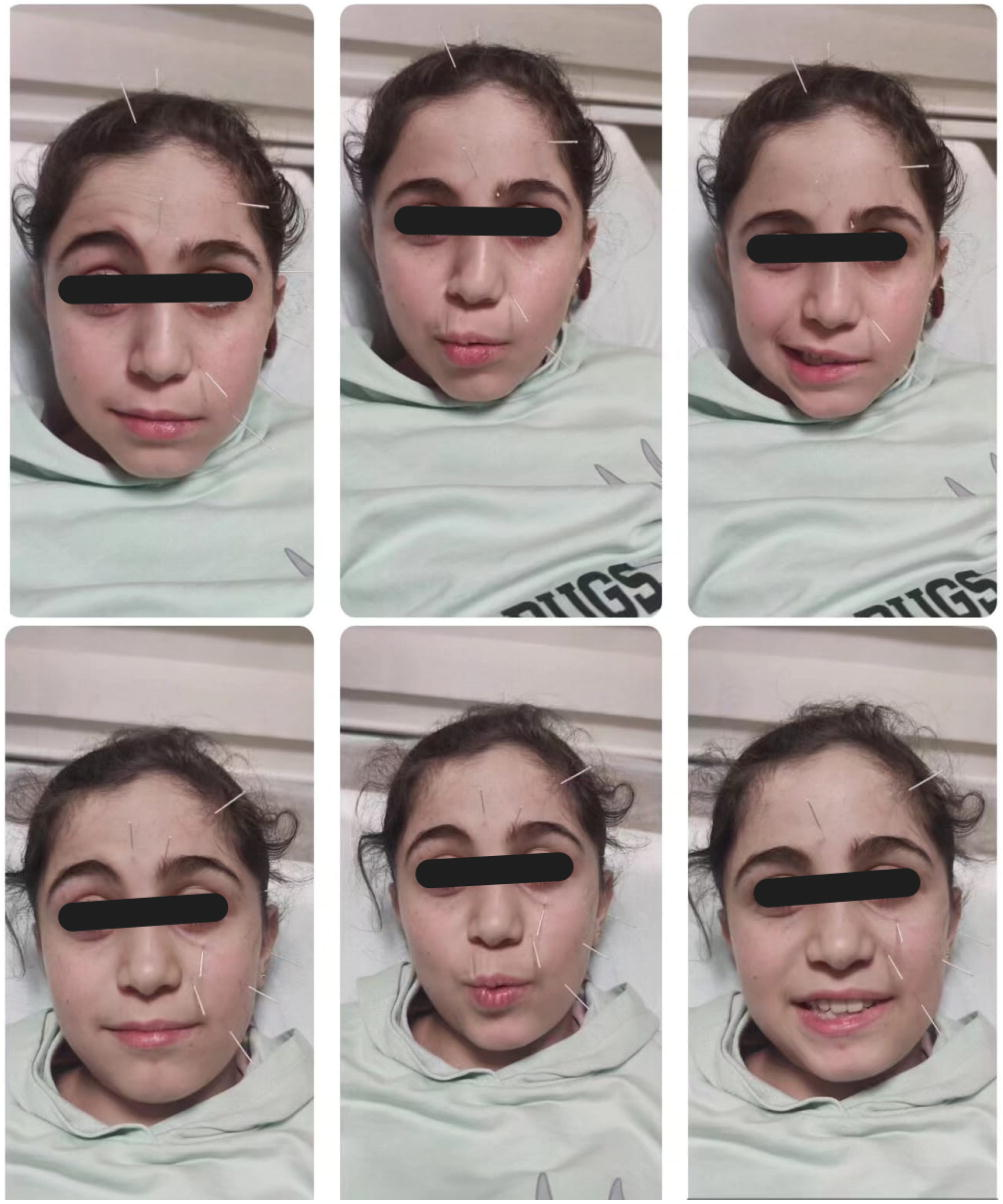
Facial paralysis findings of the case during the first (row above) and third (row below) acupuncture sessions showing the progression of House Brackmann Grades from 4 to 3.
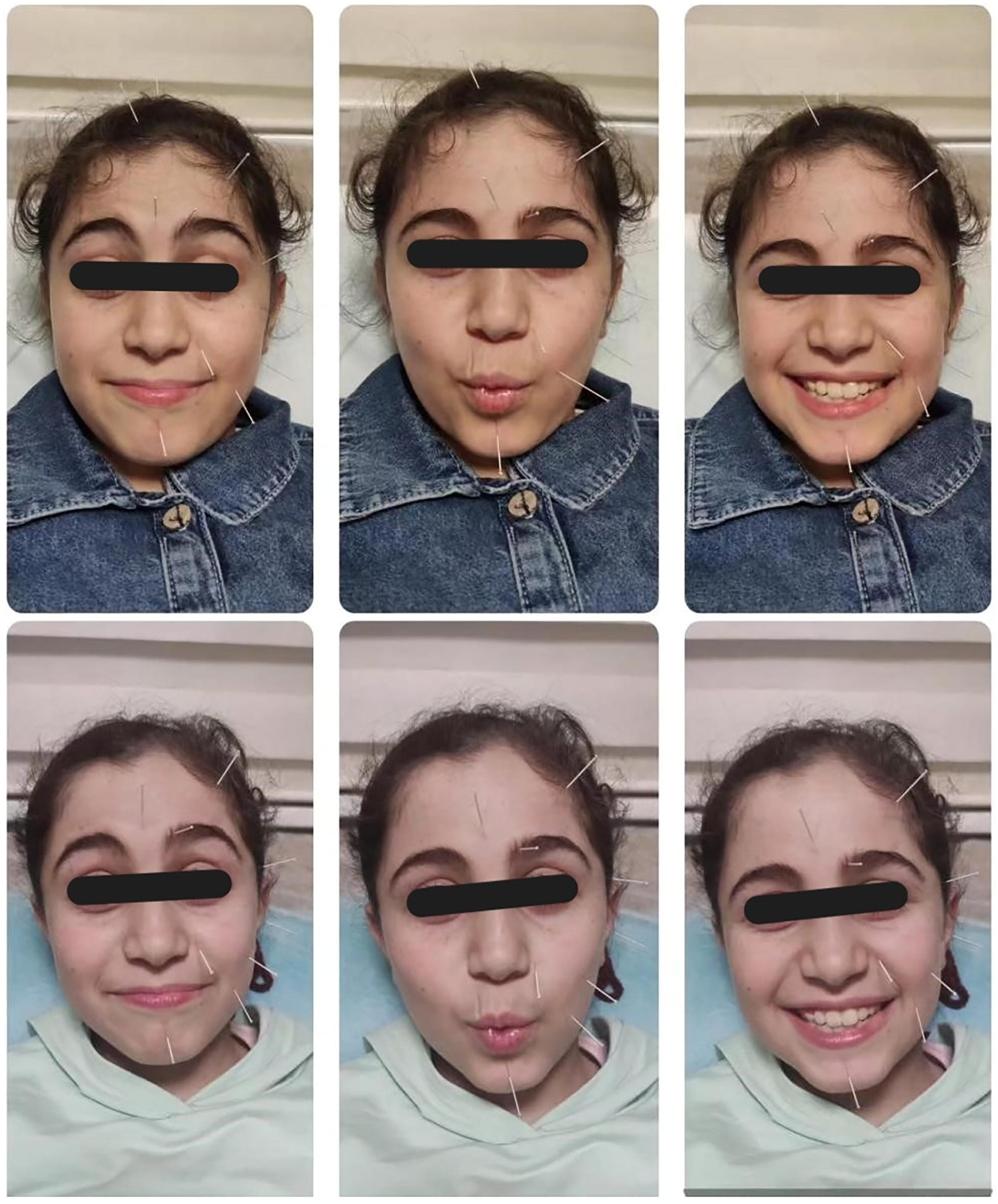
Facial paralysis findings of the case during the 5th (row above) and 7th (row below) acupuncture sessions showing the progression of House Brackmann Grades from 2 to 1.
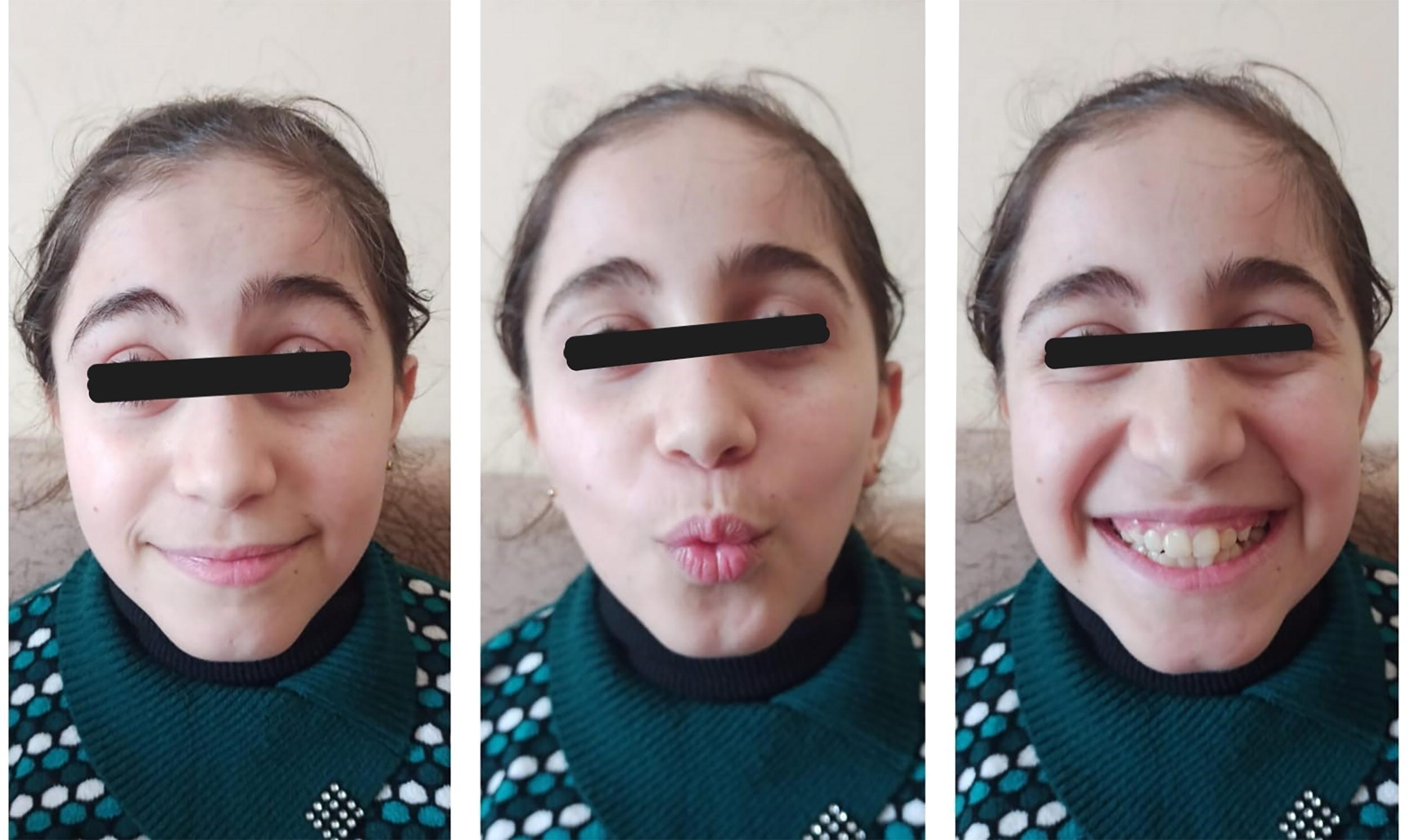
Evident improvement of facial paralysis in the case after the 9th (last) session.
From the patient’s perspective “As the sessions progressed, the swelling on my face decreased, I started to use my tongue more comfortably, I could close my left eye. I can laugh like I used to. I’m so happy.”
DISCUSSION
The presented case is compatible with the literature in terms of age and gender. Recent reviews report 30 pediatric patients. A review showed that only 67 out of the 116 cases (57.8%) where the first symptom occurred before the age of 18 were able to be diagnosed with MRS in the pediatric age group. Therefore, this diagnosis is probably more common in children but underdiagnosed due to lack of widespread awareness. 10
There are no definitive radiological and histopathologic methods for diagnosis. The diagnosis is based on the clinical triad, fully observed in 8–25% of patients. It is more common to be monosymptomatic or oligosymptomatic. In monosymptomatic cases, granulomatous cheilitis should be confirmed by biopsy, although a normal biopsy does not rule out the diagnosis.1-3 PFP is the second most common symptom and lasts longer than Bell’s ones, have worse prognosis, as this kind of palsy can lead to fibrosis of the neural tissue.11,12 After ruling out the other recurrent PFP causes, recurrent PFP and orofacial edema in the present case are consistent with MRS. After detailed information, the family declined the biopsy procedure.
Orofacial edema is typically unilateral. As the frequency of attacks increases, the frequency of fibrosis, soft tissue hyperplasia, and orofacial edema also increases. Fissured tongue is rarer in patients with orofacial edema and recurrent PFP.1-3 It occurs in approximately 30% of pediatric and 50–70% of adult cases. 10 Our case had orofacial edema and recurrent PFP, without fissured tongue. Since recurrent PFP involved the right half of the face in the first attack and the left half of the face in the second attack, it was thought that orofacial edema was not severe.
The etiology of MRS is unclear. Upper respiratory tract infections may trigger recurrence. 3 The presence of urinary and respiratory system infections before the 1st episode in our case suggests that an infectious cause may be effective in the disease.
Steroids, anti-inflammatory drugs, antibiotics, and immunosuppressives may be used in treatment. Although CS are known to prevent edema and tissue damage, some studies have reported them to be partially or not beneficial at all. None of the treatment modalities guarantee complete remission or prevent recurrences.2,13 In the present case, 1 mg/kg oral methylprednisolone was used at the 1st attack, and the complaints completely resolved in 1 week. At the 2nd attack, no change was observed despite 1 month of 1 mg/kg oral methylprednisolone and physical therapy. While complete recovery is more likely in pediatric cases, assessing the prognosis of PFP can be challenging in children. Recovery lasting longer than 3 weeks is considered an indicator of poor prognosis. HBGS Grade-III and IV are associated with moderate permanent functional impairment.14B15 -17 In our case, despite 4 weeks of CS treatment, the persistence of PFP, along with Grade-IV and the second attack, suggested that the damage might be permanent. Before surgical options, the case underwent acupuncture treatment, which is highly effective and safe in PFP. 5
Corticosteroids can have adverse effects on brain development or the metabolic system, and long-term use can lead to osteoporosis and adrenal insufficiency. The use of glucocorticoids or antiviral drugs is somewhat limited until the age of 18. Integrative therapies such as acupuncture may be considered as an option in these patients. There is no age restriction for acupuncture, and many studies have shown that early applications can shorten the course of PFP and reduce complications.4,5 Recent studies showed that acupuncture has a certain effect in the treatment of autoimmune and neurological diseases and can also stabilize mood. 4 This effect is very important both to reduce the triggers in the occurrence of PFP and in the treatment process. In addition, its analgesic and anti-inflammatory effects make acupuncture a unique treatment option worth trying before invasive procedures. The absence of any side effects is a great advantage, especially for pediatric patients. 18
Modern medicine believes that acupuncture can stimulate the facial nerve on the affected side, enhance muscle fiber contraction, accelerate local lymphatic and blood circulation in facial nerve inflammation, improve the metabolic status of damaged facial nerves and muscles, promote edema absorption, and thus facilitate the recovery of facial nerve function. 19 The acupuncture protocol created to provide these effects in the presented case is based on literature review, acupuncture textbooks, and atlases (Table 1).9,20,21
The Rationale of Acupoints Used
In the literature, there are reports of adult MRS cases where acupuncture combined with vitamins and CS has been partially successful, as well as successful outcomes with laser acupuncture.7,8 However, there are no reported cases of pediatric MRS treated with acupuncture alone. We believe that our case could lead to more extensive studies as the first successful acupuncture treatment in pediatric MRS.
There are some limitations of this study. Electromyography could not be performed due to patient refusal. Due to the single-case nature of the study, we could not recommend acupuncture as a definitive and valid treatment option.
CONCLUSIONS
Acupuncture presents itself as a viable treatment option for consideration in both pediatric and adult patients diagnosed with MRS, given its broad spectrum of effects and minimal risk of side effects. The case presented herein may serve to stimulate further research.
Footnotes
ACKNOWLEDGMENTS
The authors thank Traditional and Complementary Medicine Practice Center Responsible Physician Onur Öztürk, Assoc. Prof. Dr., for his contribution to the scientific studies.
AUTHORS’ CONTRIBUTIONS
Study conception and design: A.E.Ş., Ü.A.; data collection: A.E.Ş., Ü.A.; analysis and interpretation of results: A.E.Ş., Ü.A.; draft article preparation: A.E.Ş.; acupuncture practitioner: A.E.Ş.
AUTHOR DISCLOSURE STATEMENT
No competing financial interests exist.
FUNDING INFORMATION
This research received no specific grant.