




Abstract
Objective:
To present the management strategies for a self-inflicted lip injury in a child with cerebral palsy (CP).
Case Report:
A 10-year-old child with CP due to neonatal hypoxia, cognitive impairment, and lack of verbal communication exhibited self-inflicted lip trauma, impairing oral feeding and necessitating a nasogastric tube (NGT). The treatment plan included caregiver support, health education, antimicrobial photodynamic therapy (aPDT), low-level laser therapy (LLLT), auriculotherapy, and preventive dental care. One week after the first PDT session, combined with auriculotherapy, lesion improvement and reduced self-harming behavior were observed. The habit ceased entirely after six auriculotherapy sessions. Complete healing was achieved following three aPDT and two LLLT sessions. Nutritional improvement enabled NGT removal. No further interventions were needed.
Conclusion:
Auriculotherapy and aPDT proved effective in managing self-inflicted oral trauma in this case, suggesting a viable therapeutic approach to improve the quality of life in similar patients.
INTRODUCTION
Cerebral palsy (CP) is a group of nonprogressive brain 1 and nervous system disorders characterized by motor impairments that may also affect vision, communication, and cognition, depending on severity. 2 Its prevalence in developed countries is estimated at about two per 1000 live births, 3 with risk factors including placental abnormalities, congenital malformations, low birth weight, asphyxia, infections, and neonatal complications.3–5
Self-inflicted oral injuries are a potential complication of CP and other neurological dysfunctions, often exacerbated by environmental and social factors.6–8 Recurrent lesions can lead to pain, inflammation, and nutritional deficiencies, causing distress to caregivers.6,8 Preventive and therapeutic strategies include psychological support, pharmacological management, intraoral devices, and, in severe cases, surgery.7,9 In dentistry, management has ranged from soft mouthguards and customized intraoral appliances to botulinum toxin injections and oral surgery.10–14
Low-level laser therapy (LLLT) has shown beneficial biostimulatory effects15,16 on tissue repair and can be combined with photosensitizers in antimicrobial photodynamic therapy (aPDT).17–19 Complementary approaches, such as auriculotherapy, a practice rooted in traditional Chinese medicine, stimulate auricular acupoints using seeds, crystals, or needles in a minimally invasive way.20–23 Evidence suggests auriculotherapy may enhance pain24–26 and inflammation control and modulate cortisol levels via autonomic and hypothalamic-pituitary-adrenal pathways. 27
CASE REPORT
This case report was submitted to the Research Ethics Committee for scientific dissemination (protocol number 6.787.790) and complies with the Declaration of Helsinki. The informed consent form was read and signed by the patient’s guardian before any intervention was performed. The case was prepared in accordance with the CARE guidelines. 28
A 10-year-old girl diagnosed with CP was referred to the Center for Training Specialized Human Resources in Dental Care for Patients with Disabilities, Ribeirão Preto Dental School, University of São Paulo (CAOPE-FORP/USP).
At the initial visit, the patient presented with an extensive ulcerated lesion on the lower lip resulting from self-injurious behavior (compulsive biting) (Fig. 1A–B). On physical examination, diplegia, hypertonia, and involuntary contraction of the masticatory muscles were observed, resulting in impaired chewing and swallowing. The compulsive biting movements were repeated at a high frequency.
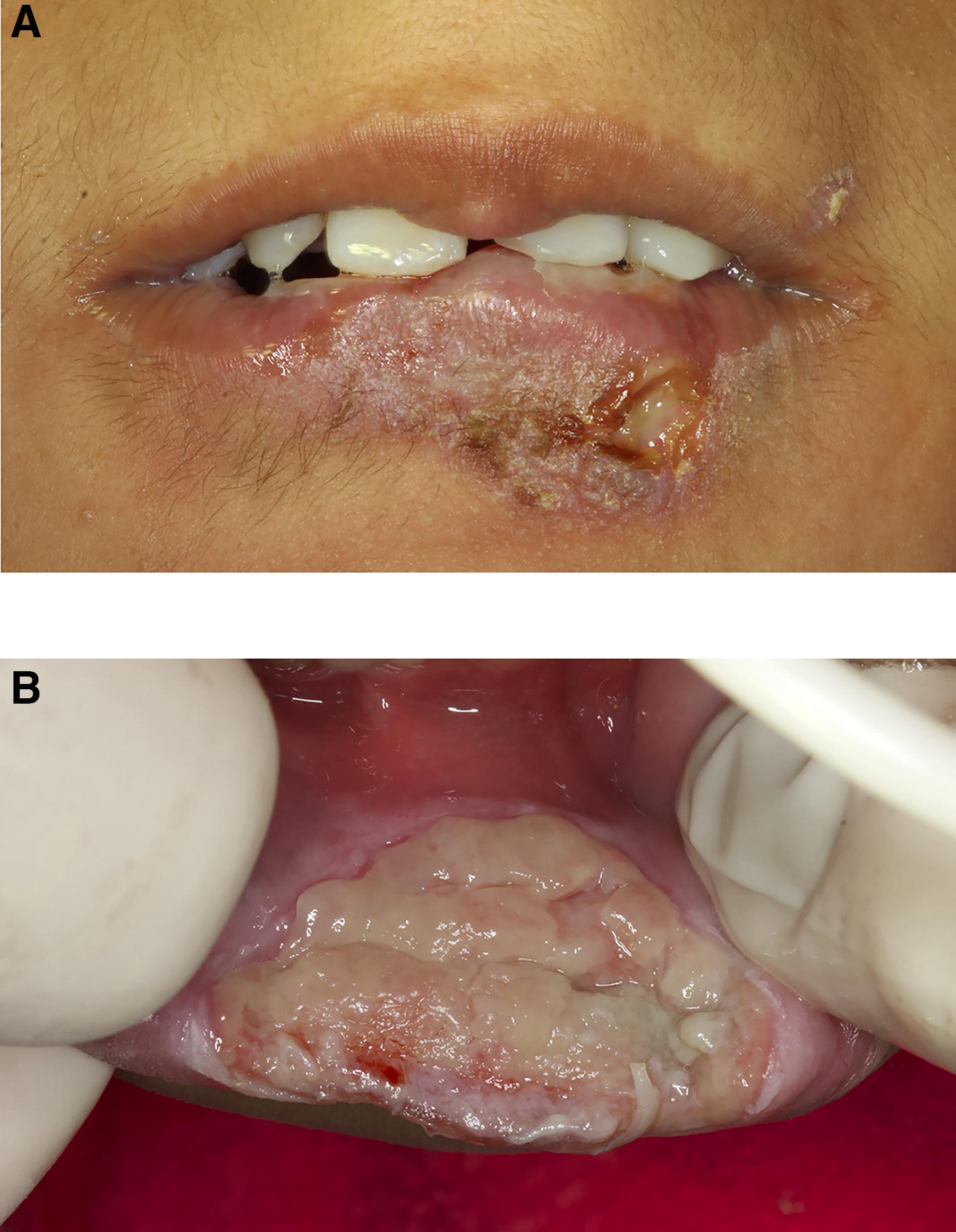
Large ulcer on the lower lip with tissue loss. External
According to the mother’s report at the initial consultation, the patient experienced hypoxia in the perinatal period and was subsequently diagnosed with CP at birth. The patient exhibited cognitive impairment and lacked verbal communication. In addition, the mother reported that, for the past 3 months, the patient had been exhibiting self-injurious behaviors, which impacted her ability to eat and led to weight loss. Consequently, a nasogastric tube was required and recommended by the medical team.
During the dental care session, oral hygiene instructions were provided, and dental prophylaxis was performed using a Robinson brush with prophylactic paste and topical fluoride application. No signs of poor oral hygiene or carious lesions were observed; however, the patient demonstrated significant limitations in mouth opening, which hindered intervention.
Intervention
The proposed treatment plan included caregiver support and guidance, aPDT for the lip lesion, auriculotherapy, and weekly follow-up to monitor the lesion’s healing process.
The aPDT protocol involved the application of 0.01% methylene blue (Chimiolux®, DMC Import and Export of Dental Products, São Carlos, SP, Brazil), allowing it to act for 5 min, 29 followed by the application of red laser: 35–71 J/cm2 (5 J/cm2), 660 nm, for 20 s at three points in the ulcerated area on the lower lip 30 (Fig. 2A–C). A total of three sessions of aPDT were performed, in addition to two sessions of LLLT for photobiostimulation, with a weekly interval between applications, applied by Aluísio Eustáquio de Freitas Miranda Filho, DDS, PhD (A.E.F.M.F).
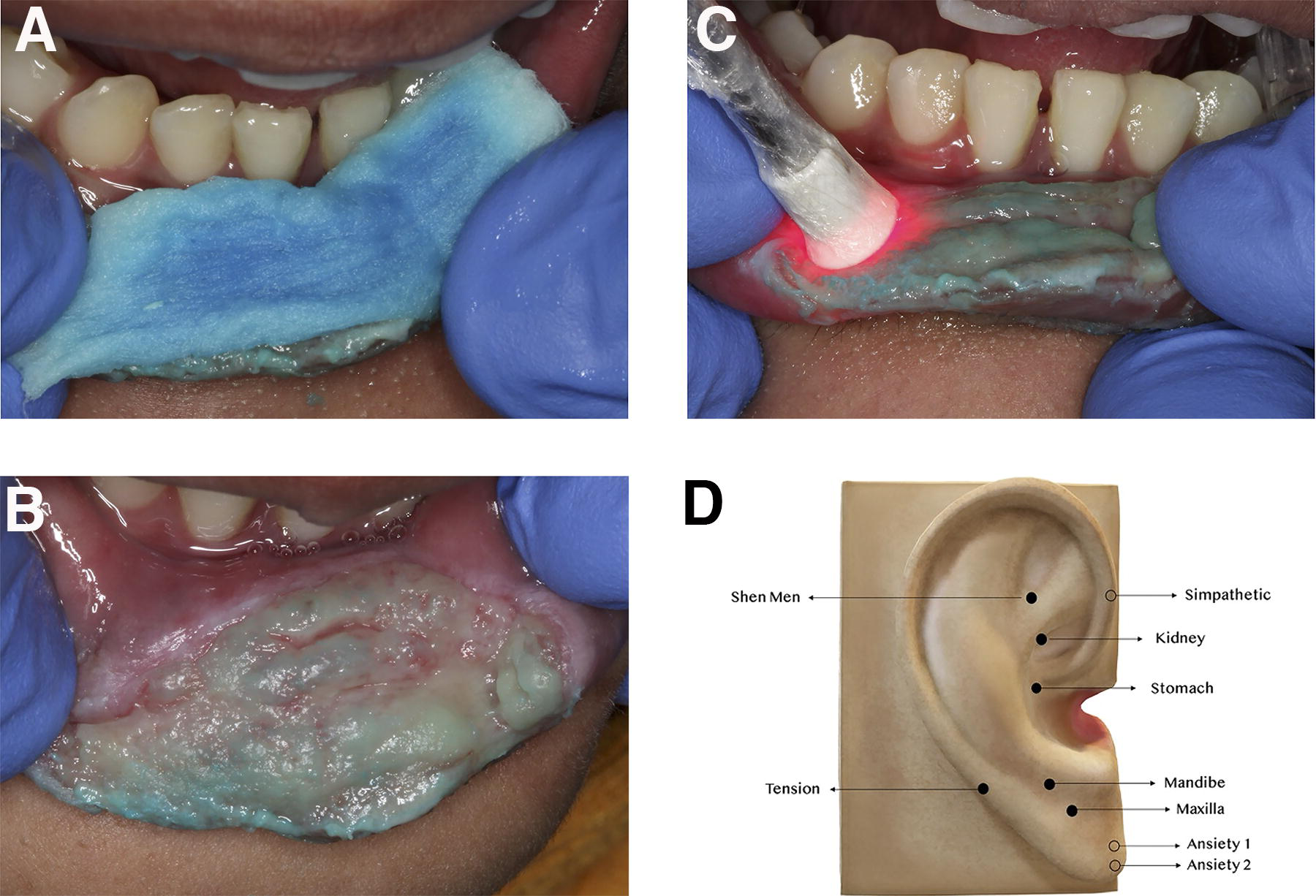
Application of antimicrobial photodynamic therapy (aPDT)
In conjunction with aPDT, auriculotherapy sessions were conducted to manage anxiety and reduce stimulation. In auriculotherapy, crystal beads were used to stimulate specific auricular points through auricular acupressure. Following thorough cleansing of the auricular pavilion with 70% alcohol, 1.5 mm diameter crystal beads were carefully placed unilaterally on selected points using clinical tweezers. These polished crystal beads (Dux Acupuncture, Porto Alegre-RS, Brazil), considered neutral, were adhered to the surface of the ear to exert mechanical action on the targeted acupoint. The beads were replaced weekly, alternating between the right and left ear, starting with the right.22,31 The sessions were applied by M.C.B., a dentist with formal training in acupuncture. The practitioner completed a 3808-hour specialization program in acupuncture, accredited by the Federal Council of Dentistry (Brazil), and has 30 years of clinical experience in the field.
Auricular points were selected based on Traditional Chinese Medicine principles. Points such as Shen Men, tension, and anxiety 01 and 02 possess calming properties, while the kidney point plays an essential role in vital energy regulation (Fig. 2D). The stomach point is crucial for maintaining physiological nutrition and contributing to emotional and intellectual balance. The central nervous system point regulates sympathetic and parasympathetic functions, promoting overall body balance. Lastly, the maxilla and mandible points are used to address symptoms related to the oral cavity musculature.22,24,31 Due to the patient’s motor limitations and dependence on a wheelchair, she did not attempt to remove the auricular seeds, and the therapeutic devices remained in place for the intended duration.
One week after the initial session, a significant improvement in the lesion was observed, with notable tissue repair (Fig. 3). The initial treatment plan also included fabricating a bite deprogramming device, as described by Letieri et al. (2021). 10 During the first session, the patient’s limited mouth opening was identified as a potential challenge for impression taking. However, by the second session, the mother reported a reduction in the patient’s stress level, as well as a decrease in self-injurious behavior. In addition, a macro-photographic assessment revealed an improvement in the lesion’s tissue repair. Consequently, the bite deprogramming device approach was postponed until the aPDT and auriculotherapy sessions were completed.
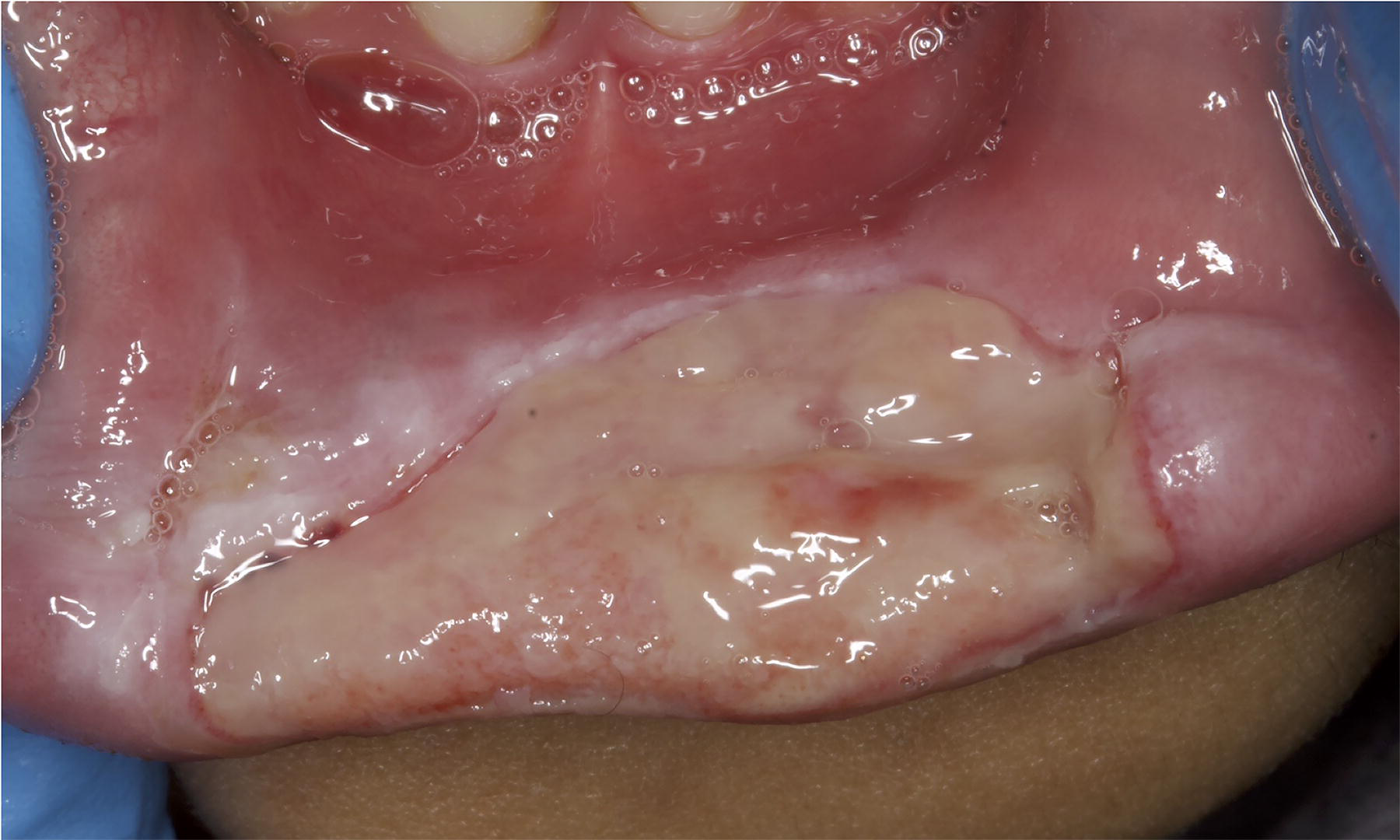
Lesion appearance at 1 week post-intervention.
Over the course of the treatment, a total of six sessions of auriculotherapy, performed once a week for 6 consecutive weeks, and three sessions of aPDT, also performed once a week during the same 6-week period of auriculotherapy, were carried out. In addition, two sessions of LLLT with a dosage of 35–71 J/cm2 (5 J/cm2), 660 nm, for 20 seconds were applied once a week for 2 consecutive weeks to the affected area of the lower lip to promote photobiostimulation; the sessions were applied by A.E.F.M.F. Following the initial six sessions, early tissue repair was observed (Fig. 4A), and after 3 months, complete tissue repair was achieved (Fig. 4B).
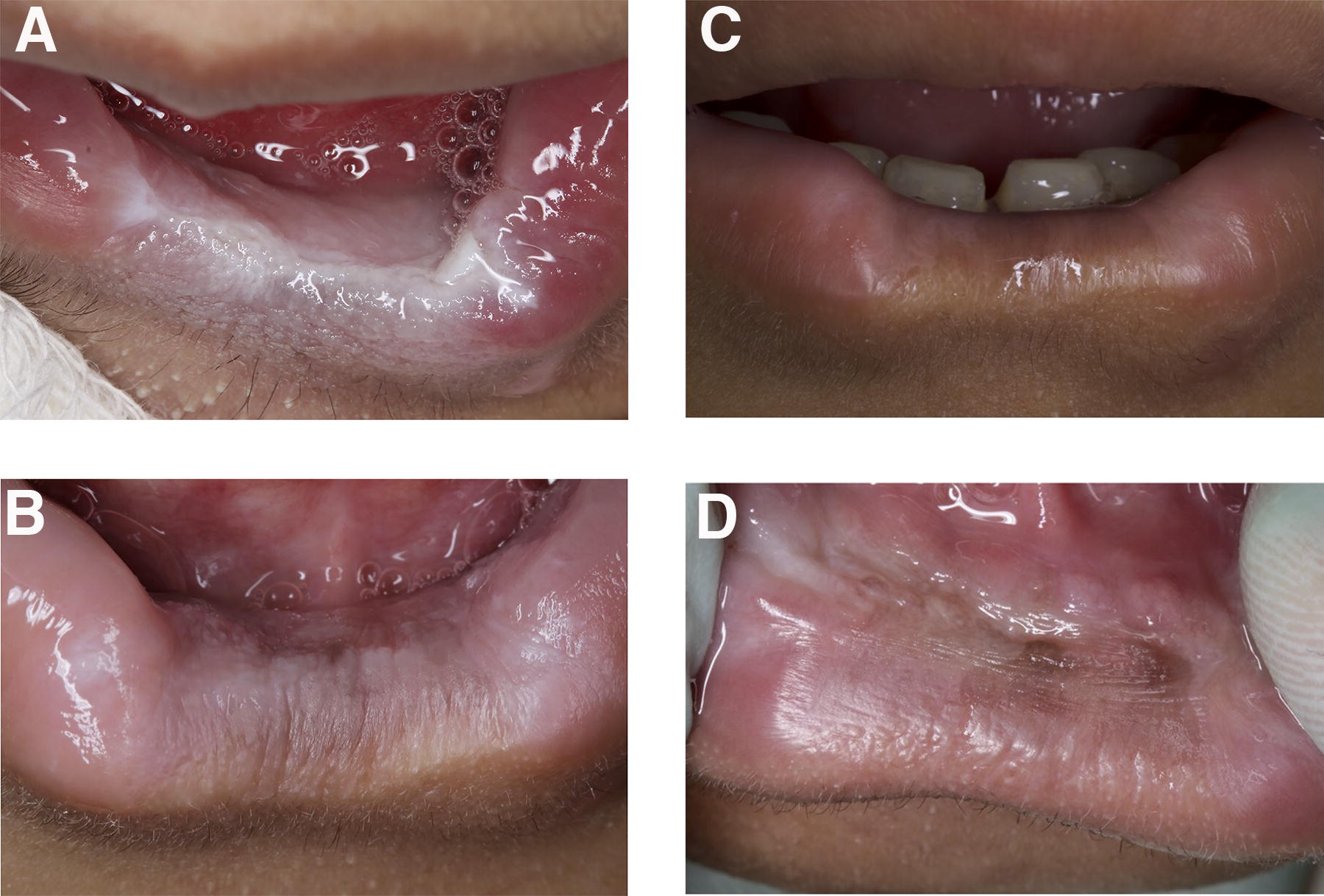
Lesion appearance after the initial six sessions, showing early tissue repair
Outcome
After 12 months of posttreatment follow-up, a remarkable improvement in the patient’s condition was observed, characterized by satisfactory tissue repair and absence of new self-injury episodes (Fig. 4C and D). A significant improvement in the patient’s nutritional status was noted following the return to oral feeding and removal of the nasogastric tube. The patient will continue with a preventive dental treatment protocol at the university’s clinical center every 6 months.
DISCUSSION
The diagnosis of self-injurious behavior is a crucial phase in defining an effective treatment plan and must be conducted with diligence. It is essential to recognize that self-inflicted injuries may represent an attempt at communication, a response to environmental changes, or even a means of seeking attention.7,32 A deep understanding of these underlying causes is vital for guiding targeted therapeutic interventions and effective supportive approaches.
During the initial history-taking, characteristics specific to this clinical case, such as the presence of spasticity, absence of records of other self-injurious behaviors, and the caregiver’s ability to identify anxiety manifestations in the child, suggest that the self-injurious behavior observed did not appear to be a deliberate or completely intentional act.
Studies in the literature indicate that one of the approaches to treat the condition discussed in this case report may involve the fabrication and installation of fixed intraoral devices aimed at deprogramming the bite pattern.7,9,33–36 However, in this case, that approach was not necessary. In addition, based on a previous study from our service, 37 auriculotherapy sessions were planned to help manage the physical and emotional symptoms associated with self-injurious behavior. In parallel, aPDT and LLLT were employed to stimulate the repair of affected tissues, proving to be sufficient strategies for the patient’s treatment. Remission of the self-injurious behavior and lesion repair were achieved with six sessions of auriculotherapy, three sessions of aPDT, and two sessions of LLLT.
aPDT, a localized and noninvasive procedure that functions through photophysical mechanisms, 38 has been studied for over a century.38,39 When a photosensitizer binds to the target cell, it absorbs energy from light radiation at a specific resonant wavelength, resulting in an excited state. 29 The photosensitizer then releases energy, contributing to the formation of reactive oxygen species (ROS). 40 The oxidative stress induced by ROS affects various cellular structures, inducing cellular toxicity and death.41,42
Among photosensitizers commonly used in dentistry, studies have demonstrated that methylene blue, as used in this case, shows maximum absorption when exposed to a 660 nm wavelength.43,44 In this case, aPDT was selected as the initial therapeutic strategy due to its potential to decontaminate the affected area and reduce the risk of inflammation associated with local microbial proliferation.
In addition, auriculotherapy involves the stimulation of auricular points, which can trigger a variety of physiological responses, including neurological reflexes, neurotransmitter release, cytokine activity, immune system modulation, and inflammatory processes.20,22,23,45
Studies indicate that auricular stimulation may exert anxiolytic effects by modulating the cranial nerve, which influences brain areas involved in stress responses, such as the limbic system, locus coeruleus, and hypothalamus. 46 Recognizing that dental professionals may encounter cases of self-inflicted oral injuries in clinical practice, it is essential to be aware of the different resources available for managing these conditions, especially with an understanding of the behavior involved.7,32,34
In cases involving self-inflicted injuries, an interprofessional approach is crucial, involving professionals from diverse fields, such as psychology, occupational therapy, medicine, and dentistry. 7 In this particular case, resolution of the self-injurious behavior was achieved before psychological assessment. Each case should be evaluated individually to ensure the best care and understanding of the patient, highlighting the importance of a comprehensive care.
FINAL CONSIDERATIONS
Auriculotherapy played a fundamental role in improving self-injurious behavior, while aPDT improved the repair of damaged tissue. These approaches have proven to be promising and effective treatments in the reported case, representing a potential approach to improving the quality of life for individuals facing similar challenges. In addition, a significant improvement in the patient’s nutritional parameters highlights the efficacy of the noninvasive treatment approach adopted.
AUTHORS’ CONTRIBUTIONS
A.E.d.F.M.-F.: Contributed to conception, clinical care, data acquisition and interpretation, and drafted and critically revised the article. C.P.T.M.: Contributed to conception, clinical care, data acquisition, and critically revised the article. L.D.V.: Contributed to data acquisition, interpretation, and critically revised the article. R.A.B.S.: Contributed to conception, design, and critically revised the article. L.A.B.d.S.: Contributed to conception, interpretation, and critically revised the article. M.C.B.: Contributed to conception, clinical care, data interpretation, and critically revised the article. All authors gave their final approval and agreed to be accountable for all aspects of the work.
Footnotes
ACKNOWLEDGMENT
The authors would like to thank the Coordenação de Aperfeiçoamento de Pessoal de Nível Superior/Higher Education Personnel Improvement Coordination for the scholarships granted (#001).
AUTHOR DISCLOSURE STATEMENT
The authors deny any conflicts of interest related to this study.
FUNDING INFORMATION
No funding was received for this article.
ETHICS STATEMENT
This case report was approved by the Research Ethics Committee (CEP) of the University of São Paulo (USP), in accordance with the ethical principles established for research involving human subjects. The study protocol received approval under the reference number (6.787.790), ensuring compliance with national and international ethical guidelines.