



Abstract
Background
Ficus sycomorus has been explored for its bioactivities against various microbial agents. However, most published literature on Ficus sycomorus stem bark has not been able to go beyond crude extraction and characterizations. This study addresses this gap by fractionating and characterizing the crude extract and comparing the activities of the crude extract and the fraction.
Objective
This study investigated the phytochemical composition, chemical profiling, and antimicrobial potential of Ficus sycomorus stem bark extract and its fractions.
Methods
The stem bark of Ficus sycomorus was collected, dried, pulverized, Soxhlet extracted using methanol, fractionated using column and thin layer chromatography, and tested against MDR Shigella sp. GC-MS was conducted on the crude extract and a fraction.
Results
Qualitative phytochemical screening and GC-MS analysis revealed arrays of bioactive compounds, including alkaloids, flavonoids, tannins, various fatty acids (such as lauric, stearic, and tridecanoic acids), azole and pyridine derivatives, organosilicon compounds, and polycyclic aromatic hydrocarbons. Anthraquinones not detectable in the crude extract were present in the bioactive fraction. Nine major compounds, including amiphenazole, dodecanoic acid (ethyl ester), pyridine 3,5-diethoxy-1-oxide, octadecanoic acid, tridecanoic acid, oleoyl-L-α-lysophosphatidic acid, benzo[h]quinoline 2,4-dimethyl, and ethyl[(4-methyl-6-oxo-1,6-dihydro-2-pyrimidinyl) sulfanyl] acetate in the crude extract and five (5) compounds, including dodecanoic acid (lauric acid) ethyl ester, exadecenoic acid (ethyl palmitate), organosilicon (trimethyl[4-(2-methyl-4-oxo-2-pentyl) phenoxy] silane), and naphthalene derivatives in the active fraction, were identified using GC-MS. Their antimicrobial activity against multidrug-resistant (MDR) Shigella species was tested. The pooled fractions (F1-F4) exhibited superior activities with lower MIC and MBC (25/50, 25/100, 50/100, 50/100 mg/mL) values compared to the crude extract (50/200 mg/mL).
Conclusion
Despite such limitations as quantitation of phytochemicals, limited data and reliance on GC-MS, these findings underscore the promise of Ficus sycomorus, especially its fraction as a potential candidate for novel antimicrobial development against Shigellosis and add to arsenal of phytocompounds for alternative therapeutics.
Introduction
Plants have long been regarded as invaluable gifts from nature to humanity, with diverse cultures worldwide harnessing their potential through traditional knowledge passed down orally across generations, leading to the development of ethnomedicine. 1 Ethnobotany has gained recognition as a powerful approach for discovering novel therapeutic agents. 2
Extensive studies have documented the antimicrobial properties of various plant-derived materials; however, the urgent need for new agents persists due to the rapid emergence of antimicrobial resistance driven by widespread broad-spectrum antibiotic use. 3 More than 40% of all currently prescribed drugs are derived from chemicals that have been initially identified in plants. 4 As a consequent, utilization of herbal components containing bioactive properties has become increasingly important in developing alternative antibacterial treatments for gastrointestinal and other bacterial infections. 5
Fig (At-Tin) is an ancient rare plant nominated in the Quran; its religious and scientific validation underscores its valuable natural healing properties for various ailments related to digestion, inflammation and chronic diseases.
6
Ficus sycomorus L
Recent advances using Next Generation Sequencing (NGS) determined the complete plastome sequence of ten Ficus species clarifying their phylogeny and taxonomy relatedness to Ficus and Morus genera and the split of the Ficus genus into three subgenera (Ficus, Sycomorus and Urostigma). 11 After reviewing ethnopharmacology, chemistry, and potential clinical applications of extracts and active ingredients from the ten (10) most prevalent Ficus species, 12 recommended an essential of comprehensive double-blind, placebo-controlled clinical trials to validate the efficacy and safety of Ficus-based therapies in larger patient populations.
Traditional preparation methods such as decoction remain popular due to their effectiveness in extracting water-soluble and heat-stable phytochemicals. 13 Other extraction technique commonly reported include maceration, 14 Soxhlet,15,16 and sonication.4,13,15,17
Fractionation (particularly bioassay-guided fractionation) is a gold standard in natural products 18 instrumental in isolating active compounds from complex plant components, facilitating fixated chemical and biological evaluation. 13 Chromatographic techniques enable precise qualitative and quantitative making it the best candidate for organic analysis. 19
Chromatography and spectrometry (GC-MS/LC-MS) are widely employed for chemical profiling of phytochemicals, and DNA fingerprinting is particularly beneficial for plant genotyping and quality control of medicinal crops. 17
Ficus sycomorus L.leaf extracts have exhibited antimicrobial activity against bacterial pathogens like Escherichia coli. 5 Similarly, fractions from F. sycomorus other Ficus species such as F. fistula, F. thonningii have demostrated therapeutic potential.4,20
While antimicrobial and antifungal activities have been reported for Ficus sycomorus stem bark extracts,21,22 there remain research gaps into the antishigellosis activities of its fractions. 8 This study aims to investigate bioassay-guided fractionation, GC-MS phytochemical profiling, and anti-shigellosis activity of fractions derived from Ficus sycomorus stem bark extract.
Materials and Methods
Sample Collection, Identification, Preparation
Fresh stem bark of Ficus sycomorus was collected from a garden in Abubakar Tafawa Balewa University (ATBU), Bauchi (Yelwa Campus) (coordinates: 10°16'52''N, 9°47'31''E; elevation: 612.03 m). The specimen was authenticated and deposited in the ATBU Department of Biological Sciences Herbarium with an assigned voucher number (ATBUDBSH 2518). The collected bark was shade-dried in a clean, well-ventilated environment and regularly fanned to prevent dust accumulation. After drying, the material was pulverized using a clean wooden mortar and pestle, sieved to obtain fine powder not more 250 µm
Extraction of Plant Materials
Five hundred (500) grams of the dried powdered bark was placed inside a Soxhlet extractor thimble, secured with glass wool on the side arm as described by. 23 The Methanol solvent was then added successively 10 times the volume of F. sycomorus stem bark. The extraction was conducted until the solvent became colorless, indicating exhaustive extraction. The methanol extracts were concentrated to dryness using a rotary evaporator under reduced pressure at 40 °C. The dry extracts were stored in airtight containers at 4 °C until further use.
Thin Layer Chromatography (TLC)
Column Chromatography Fractionation of F. Sycomorus Crude Extract
Using methods adapted from8,15,16 with minor modifications where necessary. A 12 g of F. sycomorus crude extract was subjected to silica gel (60 G) column chromatography using a glass column (3.5 × 50 cm) as the stationary phase, while varying solvent (hexane, ethyl acetate and methanol) combinations of increasing polarity were used as the mobile phase. Using the wet packing method, the lower part of the column was stocked with glass wool with the aid of a glass rod, and the column was held up in a vertically upright position on a retort stand. The slurry was prepared by mixing 170 g of silica gel with 350 ml of hexane, and this was carefully poured down into the column with the tap of the column left open to permit free flow of solvent into a conical flask placed on the base of the retort stand. The setup was assessed to be appropriate when the solvent drained freely without eroding either the silica gel or glass wool into the tap. At the end of the packing process, the tap was locked and the packed column was allowed 24 h to stabilize, after which the clear solvent on top of the silica gel was allowed to drain down to the silica gel meniscus.
The sample was prepared in a ceramic mortar by adsorbing 12.0 g of the crude extract to 22.0 g of powder silica gel (60 G) in methanol and dried on a regulated hot plate. Continuous stirring of the adsorbed sample to dryness was done with a spatula while guarding against thermal degradation. The resultant dry sample was allowed to cool and then gently layered on top of the column. A layer of sterile cotton wool was used to cover the sample to avoid direct contact with eluent. The tap was then opened to allow the eluent to flow at a controlled rate of 40 drops per minute. Elution of the extract was done with solvent systems of gradually increasing polarity following gradient ratios (hexane: ethyl acetate: methanol): 100:0:0 to 0:0:100, ending with water. A measured volume (4 ml) of each solvent mixture was collected with 10 ml syringe and sprayed uniformly by the sides of the glass into the column each time. This was done to prevent the solvent droplets from falling directly and disturbing the topmost layer of the column. The eluted fractions were collected in aliquots of 20 ml aliquots.
Analytical Thin Layer Chromatography (TLC) and Pooling of Fractions
Fractions were analyzed by TLC on silica gel plates using hexane: ethyl acetate (7:3) as the mobile phase. Samples were spotted approximately 1 cm from the origin, dried under ambient air, and developed in a saturated chromatographic tank. Plates were visualized under UV light at 254 nm and 365 nm, sprayed with vanillin reagent, and heated at 110 °C for spot visualization. Fractions with similar retention factor (Rf) values value calculated based on the formula described by 25 were pooled and subjected to further TLC verification. Pooled fractions were concentrated under reduced pressure at 40 °C, and their masses recorded using a sensitive balance 24 LI-COR was also used in viewing faint plates (Figures 1 and 2).

Preparatory TLC plates observed under LI-COR.
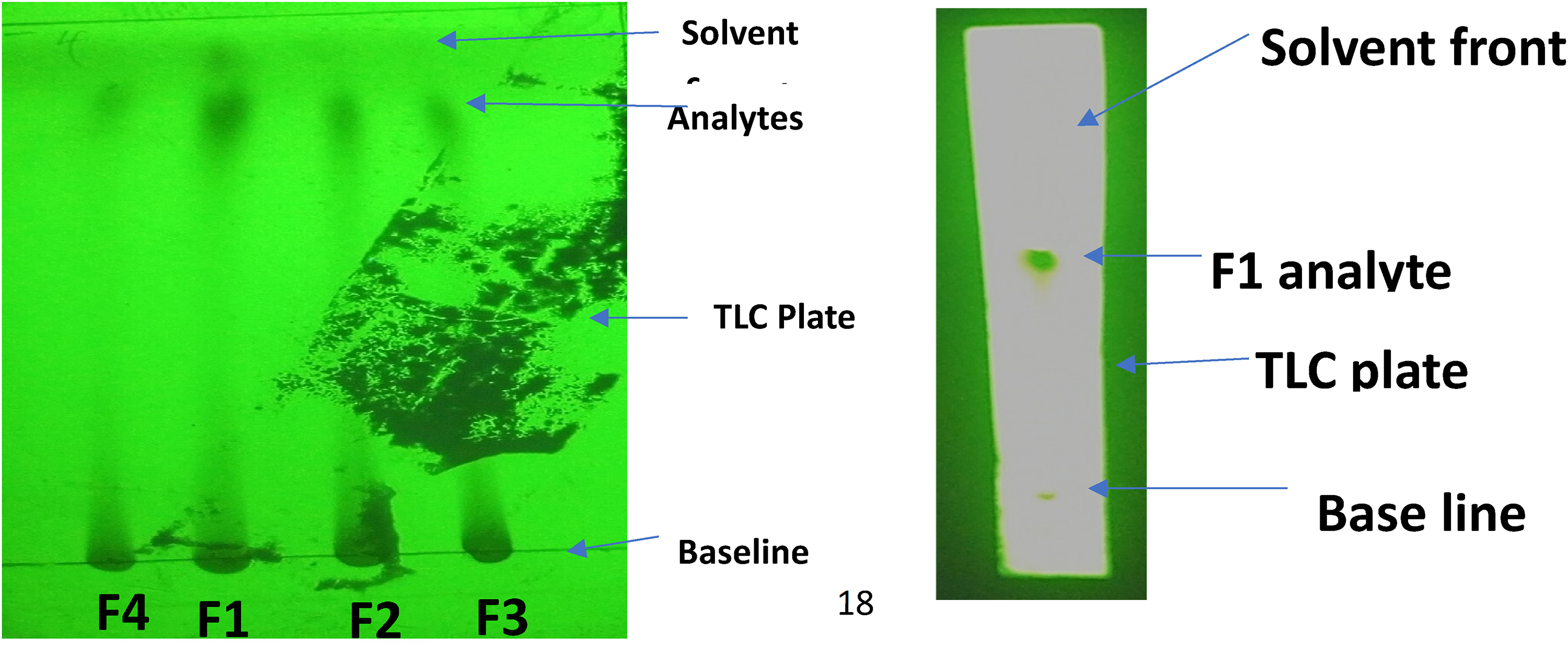
Thin Layer Chromatography Plates for the isolated fractions.

Gas chromatography-Mass Spectroscopy Chromatogram of both Crude (a) and the Selected Fraction 1 (b) of F. sycomorus Stem Bark Extract.
Percentage Yield of Extract
The percentage yield of ethanolic extract and other fractions of F. sycomorus stem bark was obtained after drying in the water bath for 48 h at 40 °C and was calculated as Yield of extract (%) = (Weight of extract) ÷ (Weight of dry plant before extraction) × 100. 25
Preliminary Phytochemical Screening
Standard qualitative tests were conducted to detect major secondary metabolites7,14,26:
Identification of Components Using GC-MS
GC-MS analysis of the crude and selected fraction was performed using Agilent GC-MSD (7890B-5977A) at the Research Laboratory in the Department of Chemistry, Yobe State University, Damaturu following published protocol. 22
Bacterial Isolates
The MDR Shigella flexnery with molecular information reported in our previously published paper 27 using standard antibiotics and interpreted using CLSI guidelines, 2023. 28
Preparation of Bacterial, Crude Extract and the Fraction for Pathogenic Assay
On a sterile molten nutrient agar plate, the multidrug-resistant, blaSHV- and sul2-positive Shigella flexneri clinical isolate (YS-001) reported in our previously published article27,29 was grown overnight to obtain a fresh culture. The fresh culture was taken using a sterile swab stick and added into normal saline.
A stock solution of the crude extract and pooled fractions (F1-F5) was prepared by dissolving 2 g of extract in 2 mL of DMSO for a 1000 mg/mL solution. Working solutions of the extract and pooled extracts were prepared at varying concentrations ranging from 200, 100, 50, and 25 mg/mL using DMSO as the solvent of dissolution. Antimicrobial discs were prepared using Whatman filter paper and autoclaved at 160 °C for 15 min. The sterile discs were impregnated with various prepared concentrations of the extracts in triplicates by the use of micropipettes 8 while DMSO was used as negative control.
Determination of Antibacterial Activity
The antibacterial activity was assessed using the Mueller-Hinton agar disk diffusion method. The agar plates were inoculated with 0.5 McFarland standard inoculum of Shigella by the pour plate method and allowed to dry for about 5 min. Disks were placed evenly and pressed gently onto agar using sterile forceps, then incubated inverted at 37 °C for 24 h. Zones of inhibition were measured in millimeters using a Vernier caliper. Assays were run in triplicate, and results expressed as Mean ± SEM. 8
Determination of Minimum Inhibitory Concentration (MIC) and Minimum Bactericidal Concentration (MBC)
MIC was determined by broth dilution with extract concentrations of 200, 100, 50, and 25 mg/mL inoculated with Shigella and incubated at 37 °C for 24 h. Ciprofloxacin and solvent controls were included. The lowest concentration without turbidity was recorded as MIC. 30 MBC was determined by sub-culturing clear tubes onto fresh agar and incubating at 37 °C for 24 h; the lowest concentration showing no growth was recorded as MBC. 30
Statistical Analysis
Results were presented in tables of “Mean ± SEM” (Mean plus/minus Standard Error of the Mean). One-way ANOVA with Dunnett's post-hoc test was also tested for the bioactivities using SPSS 31. 8
Results
Extraction and Pooled Fraction Yield
From 500 g of pulverized Ficus sycomorus stem bark, a crude methanol extract yield of 76% was obtained (Table 1). Twenty-seven chromatographic fractions obtained were combined into five pooled fractions (F1 to F5) based on their relative retention factor (Rf) values (Table 2) yielding 30%, 6%, 15%, 20%, and 7.5%, respectively, pure plate of F1. Visually, the crude extract and fraction F1 shared a dark gummy brown color and texture. Fractions F2, F3, and F4 were lighter brown with waxy, sticky, and gummy characteristics, while fraction F5 appeared oily and light yellow.
Physicochemical Properties of Crude Extract and Pooled Column Fractions of Ficus sycomorus Stem Bark Extract.

Rf Values of the Pooled Fractions of the Methanolic Crude Extracts from F. sycomorus.

Antibacterial activity of the crude methanol stem-bark extract and pooled column fractions of F. sycomorus L. against Shigella sp. (zone of inhibition in mm).
The Shigella sp. showed resistance to the following antibiotics (CXM, CAZ, AMX, AMP, S, TET, CLN) and are therefore classified as Multidrug resistant (MDR). Bioactivity assays of Ficus sycomorus extracts demonstrated significant antimicrobial potential, warranting continued investigation of the plant's therapeutic properties. Both crude and fractionated extracts inhibited Shigella species with zones of inhibition ranging from 16.67 ± 0.67 mm to a maximum of 30.67 ± 0.33 mm. Fractionated extracts generally demonstrated enhanced antimicrobial
Anti-Shigellosis Pattern of the Crude Extract and the Pooled Fractions Against Shigella sp.

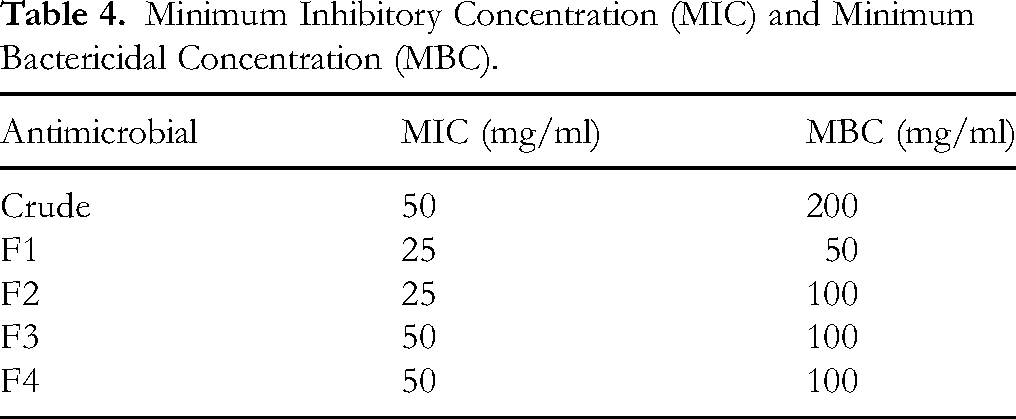
Minimum Inhibitory Concentration (MIC) and Minimum Bactericidal Concentration (MBC).
Phytochemical Analysis of the Crude Extract and the Selected Fraction
The crude extract showed the presence of alkaloids, cardiac glycosides, saponins, flavonoids, tannins, steroids, and carbohydrates (Table 5).
Phytochemical Components of the Crude Extract and the Selected Fraction.

Keys: + = Present, − = Absent.
Gas Chromatography – Mass Spectroscopy (GC-MS) of Ficus Sycomorus Stem Bark Crude Extract
The GC-MS analysis of the methanol crude extract of Ficus sycomorus stem bark suggest possible match to nine major compounds, including amiphenazole, dodecanoic acid (ethyl ester), pyridine 3,5-diethoxy-1-oxide, octadecanoic acid, tridecanoic acid, oleoyl-L-α-lysophosphatidic acid, benzo[h]quinoline 2,4-dimethyl, and ethyl[(4-methyl-6-oxo-1,6-dihydro-2-pyrimidinyl) sulfanyl] acetate (Table 6a, Figure 3a). These findings suggest that other saturated and unsaturated fatty acids, including lauric, stearic, and tridecanoic acids, are present.
(a) Bioactive Compounds in F. sycomorus Stem Bark Crude Extract. (b) Bioactive Compounds in F. sycomorus Stem Bark Fraction 1.

Keys: MF – Molecular Formula, MW – Molecular Weight, RT – Retention time, PH – Peak Height, PA – Peak Area, AU – Arbitrary Unit.
Gas Chromatography – Mass Spectroscopy (GC-MS) of a Pooled Column Fraction of Ficus Sycomorus Stem Bark Extract
The GC-MS analysis of the bioassay guided selected pooled fraction from Ficus sycomorus stem bark identified key bioactive compounds including dodecanoic acid (lauric acid) ethyl ester, hexadecanoic acid (ethyl palmitate), organosilicon (trimethyl[4-(2-methyl-4-oxo-2-pentyl) phenoxy] silane), and naphthalene derivatives (Table 6, Figure 3).
Discussion
These findings are consistent with previous reports 13 who pooled seven fractions and8,15 who reported four pooled fractions each. Comparable yields have been reported 8 reported 23.21% using less polar solvent (ethanol), and 20 reported 13.50% yield from a stem bark of Ficus thoningii with varied fractions yield (17.5% and 8.2% and no significant amount for their various fractions). Leaf extracts generally demonstrated lower yields, approximately 25%, with color variations ranging from army green to dark greenish and brown hues, as documented by, 5 army green crude extract (17.83%); and dark greenish, and brown varieties of fractions of 7.08%, 7.5%, 1.25%, and 9.2% have been reported. 9 Higher yields observed 13 with aqueous extracts compared to ethanolic ones also highlight the influence of solvent choice.
The observed differences in extraction and fraction yields across studies likely reflect variations in extraction methodologies, solvent polarity, plant parts used, and fractionation procedures. Noteworthy, only fraction F5 in this study exhibited a yield comparable to fraction D in 15 showed an equal yield in percentage to fraction 5 in this study. The disparity in yield might have resulted from the difference in extraction methods, choices of extracting medium, differences in the plant parts and the fractionation medium disparity. These results emphasize the critical role of optimizing extraction and fractionation parameters tailored to the specific botanical source to maximize yield and target bioactive compounds.
The crude extract showed a moderate activity compared to prior studies report by 22 against Shigella species and 8 against E. coli. The effect was slightly greater than the 10–21 mm inhibition zones reported for Ficus sycomorus leaf extracts and fractions 15 against Shigella species and fell within ranges reported 32 against dermatophyte.
These findings make parallel with recent studies highlighting the antimicrobial efficacy of F. sycomorus. 8 reported antimicrobial activities of ethanolic stem bark extract and its fractions against Escherichia coli, Salmonella typhi, Staphylococcus aureus, and Klebsiella pneumoniae at concentrations between 50–100 mg/mL. Similarly, 1 found an MIC of 1.875 mg/mL for F. sycomorus stem bark extract against Staphylococcus aureus. Other studies observed antimicrobial activity of ethanolic leaf extracts primarily against Escherichia coli at 200 mg/mL. 5 MIC and MBC values for F. sycomorus extracts on E. coli were reported as 100 mg/mL and 200 mg/mL, respectively.
MIC/MBC values for F1 were notably lower than those reported.8,9 These aligned results, coupled with the observed activity against Shigella species, offer confidence to the traditional use of Ficus sycomorus in the treatment of infectious diseases. 33 However, 34 documented lower inhibition zones at 100 mg/mL against Shigella dysenteriae and Staphylococcus aureus using aqueous and ethanolic extracts. The MIC and MBC values of the Ficus sycomorus fractions in this study were generally lower than those reported in previous studies, indicating stronger antimicrobial potency. Specifically, fraction F1 exhibited an MIC/MBC of 25/50 mg/mL, which is notably more active compared to similar extracts in cited literature with higher inhibitory concentrations. Based on the current bioactivity data, fraction F1 was selected as the most active and subjected to further chemical characterization.
This is consistent with reports by,8,9,14,22,25,32,35 with the exception of anthraquinones. 25
In contrast, the selected fraction reserved alkaloids, saponins, flavonoids, and tannins but deficient in carbohydrates, cardiac glycosides, and steroids, corroborating observations by7,9 on variation in secondary metabolite distribution between crude extracts and fractions. Interestingly, anthraquinones were detected in the fraction despite their absence in the crude extract, could potentially be due to their low concentration and complexity within the crude matrices. This finding aligns with, 33 who reported the presence of anthraquinones specifically in the stem bark but not in Ficus leaves.
Fatty acids, including lauric, palmitic and stearic contents, have been reported in ethanolic leaf and fruit extracts of Ficus sycomorus. 31 Azole derivatives, such as amiphenazole, which are mostly synthetic compounds possibly present in Ficus sycomorus stem bark extract is an alkaloids and nitrogen-containing compounds, which may share some structural relationship with azoles. 36
Fatty acids such as lauric acid (dodecanoic acid), stearic acid (octadecanoic acid), and tridecanoic acid are common plant constituents, known for their antimicrobial properties and roles in nanoparticle synthesis through their hydrophilic-hydrophobic interactions, 37 pyridine.32,37 The detection of amiphenazole, an azole derivative, is notable given its nitrogen-containing heterocyclic structure and potential antimicrobial capabilities, consistent with known activities of azole families targeting cytochrome P450 enzymes.38–40
Pyridine derivatives, identified in this study is a nucleus compound renowned for their antibacterial and antiviral activity through sinterference with bacterial DNA replication and protein synthesis especially when surrounded by heterocyclic compounds like pyrazole, imidazole, thiazole, pyrimidine, and benzimidazole, and linked by either carbonyl, amide, thioamide, or other heteroatoms. 41 The presence of benzo[h]quinoline derivatives and ethyl-substituted pyrimidinyl sulfanyl acetates adds to the pharmacological relevance, as these compounds are associated with antibacterial, antioxidant, and wound-healing properties.40,42 Oleoyl-L-α-lysophosphatidic acid, though typically associated with animal systems, it was detected and may indicate trace lipid-like components or environmental contaminations. Its biological effects, including roles in wound healing and neuroprotection, prompt interest in further exploring plant-derived lysophosphatidic acid analogs.37,43,44
These compounds are recognized for their in enhancing antimicrobial efficacy particularly against multidrug-resistant bacteria. 12 Silane compounds have been reported in Ficus sycomorus leaf subfraction, 15 dodecane and hexane in F. semicordata, 38 and other medicinal plants.45,46
These are lauric acid, ethyl palmitate, organosilicon, and naphthalene derivatives that provide a sustainable platform for inherent bioactivity to overcome resistance mechanisms. Organosilicon compounds and naphthalene derivatives aid the exhibition of antimicrobial activity through interactions with bacterial cell walls.47–49
Conclusion
This study comprehensively investigated the qualitative phytochemical composition, GC-MS chemical profiling, and antimicrobial activity of Ficus sycomorus stem bark extract and its fractions. Qualitative screening and GC-MS analysis revealed a diverse array of bioactive compounds, including alkaloids, flavonoids, tannins, various fatty acids (such as lauric, stearic, and tridecanoic acids), azole and pyridine derivatives, organosilicon compounds, and polycyclic aromatic hydrocarbons. These phytocompounds with the presence of dodececanoic and hexadecenoic with ability to serve as the purposes of membrane permeabilization and reactive oxygen species signaled their crucial roles in the enhanced bioactivity observed in the fractionated extracts against Shigella species, the pooled fraction F1 exhibiting the widest zone of inhibition, supported by lower MIC and MBC values suggest promising applications in combating multidrug-resistant pathogens. The F1 zones of inhibition (30.67 ± 0.33 mm) compared to the crude inhibition cones (19.33 ± 0.60 mm) at 200 mg/mL. GC-MS library matches of dodecanoic acid ethyl ester (lauric,) and hexadecanoic acid palmitate could have played their roles as membrane permeabilization and reactive oxygen species induction respectively. Although, certain compounds found in the fraction suspects possible contamination or polycyclic aromatic hydrocarbons (PAHs) from incomplete Phyto-remediation due to the closeness of the plant to dump site, this is a call for more detailed studies into accurate quantification, in-vivo activities and cytotoxicity. Overall, these findings validate the traditional medicinal use of Ficus sycomorus for infectious diseases and underscore its promise of its fraction as a source of antimicrobial agents, its traditional medicinal applications and possible bioactivities while calling environmental awareness on the possibilities of bioaccumulations in the plants.
Footnotes
Acknowledgements
The authors are grateful to Mal. Idris BMG of Department of Chemistry, Yobe State University and Mal. Yunusa of Microbiology Laboratory, Bauchi State Specialist Hospital for their technical support.

Ethical Approval
Ethical approval for collection of clinical specimen/isolate was approved by ‘Bauchi State Heath Research Committee’.
Statement of Informed Consent
Human subject has not been reported in this article and informed consent is therefore not applicable.
Funding
This research was funded by Tertiary Education Trust Fund (TetFund) as part of Academic Staff Training and Development PhD Scholarship in Yobe State University, Damaturu.
Declaration of Conflicting Interests
The authors declared no potential conflicts of interest with respect to the research, authorship, and/or publication of this article.
Statement of Human and Animal Rights
No human or animal has been used in this research.