




Abstract
Traditional Chinese Medicine (TCM), as a long-standing therapeutic approach, holds unique advantages and potential in the treatment of allergic rhinitis (AR). Recent studies have highlighted its role in modulating the p38 mitogen-activated protein kinase (p38 MAPK)/nuclear factor kappa B (NF-kappaB) signaling pathway in AR treatment. The multi-component, multi-target, and multi-pathway mechanisms of TCM have garnered significant attention in the medical community for their capacity to treat complex diseases like AR. This review aims to explore the current status and challenges of TCM monomers in regulating the specific p38 MAPK/NF-kappaB signaling pathway in AR treatment, further elucidate the crucial role of this pathway in AR progression, and provide new insights into the modern scientific interpretation of TCM. Literature was retrieved from PubMed and Web of Science databases using keywords such as “TCM,” “allergic rhinitis,” “TCM monomers,” and “p38 MAPK/NF-kappaB signaling pathway,” and the reviewed articles span from 2010 to 2025. Existing studies indicate that TCM monomers may significantly treat and prevent allergic rhinitis by modulating the p38 MAPK/NF-kappaB signaling pathway involved in AR development. These compounds mainly exert their effects by inhibiting p38 MAPK phosphorylation, suppressing IκBα degradation, and blocking NF-kappaB p65 nuclear translocation, thereby reducing the expression of inflammatory cytokines and allergic mediators, including IL-4, IL-5, IL-6, IL-13, TNF-α, IgE, and MCP-1.This pathway influences T cell differentiation, further driving AR progression and contributing to the anti-allergic effects of TCM. Overall, TCM plays a vital role in AR treatment and prevention by regulating the p38 MAPK/NF-kappaB signaling pathway, offering a promising therapeutic approach that bridges traditional practice and modern scientific understanding and may provide more effective treatment options for AR patients.
Keywords
1. Introduction
Allergic rhinitis (AR) is an IgE-mediated type I hypersensitivity disorder, characterized by symptoms such as watery nasal discharge, nasal itching, nasal congestion, sneezing, and ocular pruritus. 1 In recent years, the prevalence of AR has been increasing not only in the Asia-Pacific region but also globally, making it one of the most common diseases in otolaryngology. 2 Patients with AR often suffer from recurrent episodes and difficulty in achieving a complete cure, which severely impacts their quality of life and may even lead to psychological issues such as depression. 3 Currently, the pharmacological treatment of AR mainly includes oral antihistamines, anti-leukotriene agents, mast cell stabilizers, topical corticosteroids, decongestants, and anticholinergic drugs. 4 However, long-term use of these medications may result in drug tolerance and adverse side effects.
In addition to their traditional use, increasing attention has been paid to the bioactive metabolites and natural compounds derived from TCM, which may contribute substantially to immune modulation and anti-allergic effects. Recent reviews have highlighted that multiple classes of natural products, including flavonoids, polyphenols, terpenoids, alkaloids, and plant extracts, can regulate interleukin-mediated pathways and allergic immune responses, thereby providing a broader pharmacological background for understanding their therapeutic potential in allergic diseases. These findings suggest that the anti-allergic effects of TCM are not limited to general anti-inflammatory activity, but are also closely associated with the immunomodulatory properties of specific bioactive compounds.5,6 Unlike conventional drugs that usually act on a single target, TCM and its bioactive compounds may regulate multiple pathological processes involved in AR, including inflammatory responses, immune imbalance, and oxidative stress. In particular, a growing number of studies have shown that natural compounds derived from TCM exhibit anti-allergic and anti-inflammatory activities by modulating key intracellular signaling pathways associated with mast cell activation and cytokine release. 5 These findings suggest that the therapeutic potential of TCM in AR is not only based on traditional clinical practice, but is also increasingly supported by modern pharmacological evidence.
Among the major bioactive compounds derived from TCM, several classes have been reported to be particularly relevant to allergic and inflammatory diseases, including alkaloids, terpenoids, phenolic compounds, and flavonoid-related ketone compounds. These compounds have shown potential to suppress the release of inflammatory mediators, regulate immune-cell activation, and attenuate allergic responses by acting on intracellular molecular targets. 5 Therefore, discussing these representative bioactive compounds as part of the background helps clarify why TCM has become an important research focus in AR and provides a necessary basis for understanding their mechanistic roles in subsequent sections.
The p38 mitogen-activated protein kinase (p38 MAPK)/nuclear factor kappa-B (NF-kappaB) signaling pathway is a key regulator of the synthesis and release of inflammatory mediators from mast cells and is an important molecular mechanism underlying the development and progression of AR. Studies have shown that TCM can exert therapeutic effects on AR by modulating the p38 MAPK/NF-kappaB signaling pathway.5,7 However, to date, no systematic review has been conducted on the literature regarding the targeting of the p38 MAPK/NF-kappaB signaling pathway by individual TCM compounds for the treatment of AR. In this review, the term “TCM monomers” refers to isolated or structurally defined bioactive compounds derived from traditional Chinese medicines, rather than crude herbal extracts or standardized formula preparations. Therefore, this review summarizes the recent progress in the molecular mechanisms of AR regulation via the p38 MAPK/NF-kappaB signaling pathway and the therapeutic interventions using TCM to target this pathway for AR treatment. The aim is to provide a reference for the basic research, clinical application, and new drug development of TCM in the treatment of AR.
2. Molecular Mechanism of AR Pathogenesis
When an atopic individual is first exposed to an allergen, dendritic cell(DC) in the nasal mucosa capture and process the allergen. DCs are key sentinels of the immune system, capable of efficiently capturing and processing foreign antigens. They break down these antigens into small fragments and present them on their cell surface via major histocompatibility complex (MHC) molecules.
8
Subsequently, DCs transport the processed allergen to the draining lymph nodes. Within the lymph nodes, the allergen is further processed and presented to naïve CD4+ T cells. Under the influence of cytokines, these naïve CD4+T cells differentiate into allergen-specific Th2 cells.
9
The differentiation of Th2 cells is a critical step in allergic reactions, as they secrete a variety of cytokines, such as interleukin-4 (IL-4), IL-5, and IL-13. These cytokines further induce the activation of B cells, which differentiate into plasma cells under their influence and ultimately produce specific IgE antibodies. IgE antibodies are the core components of allergic reactions, as they bind to the high-affinity IgE receptor (FcεRI) on the surface of effector cells, such as mast cells and basophils, leading to a sensitized state.
10
This binding enables effector cells to respond rapidly upon re-exposure to the allergen. Meanwhile, the formation of memory allergen-specific Th2 cells and B cells prepares the immune system for subsequent allergic reactions (Figure 1).11,12 Pattern of pathogenesis of allergic rhinitis. DC:dendritic cell; B:B cell; IL:Interleukin; ILC2:Type 2 innate lymphocytes; IgE:Immunoglobulin E; TH2:Type 2 helper T lymphocyte; TfH:Follicular helper T lymphocyte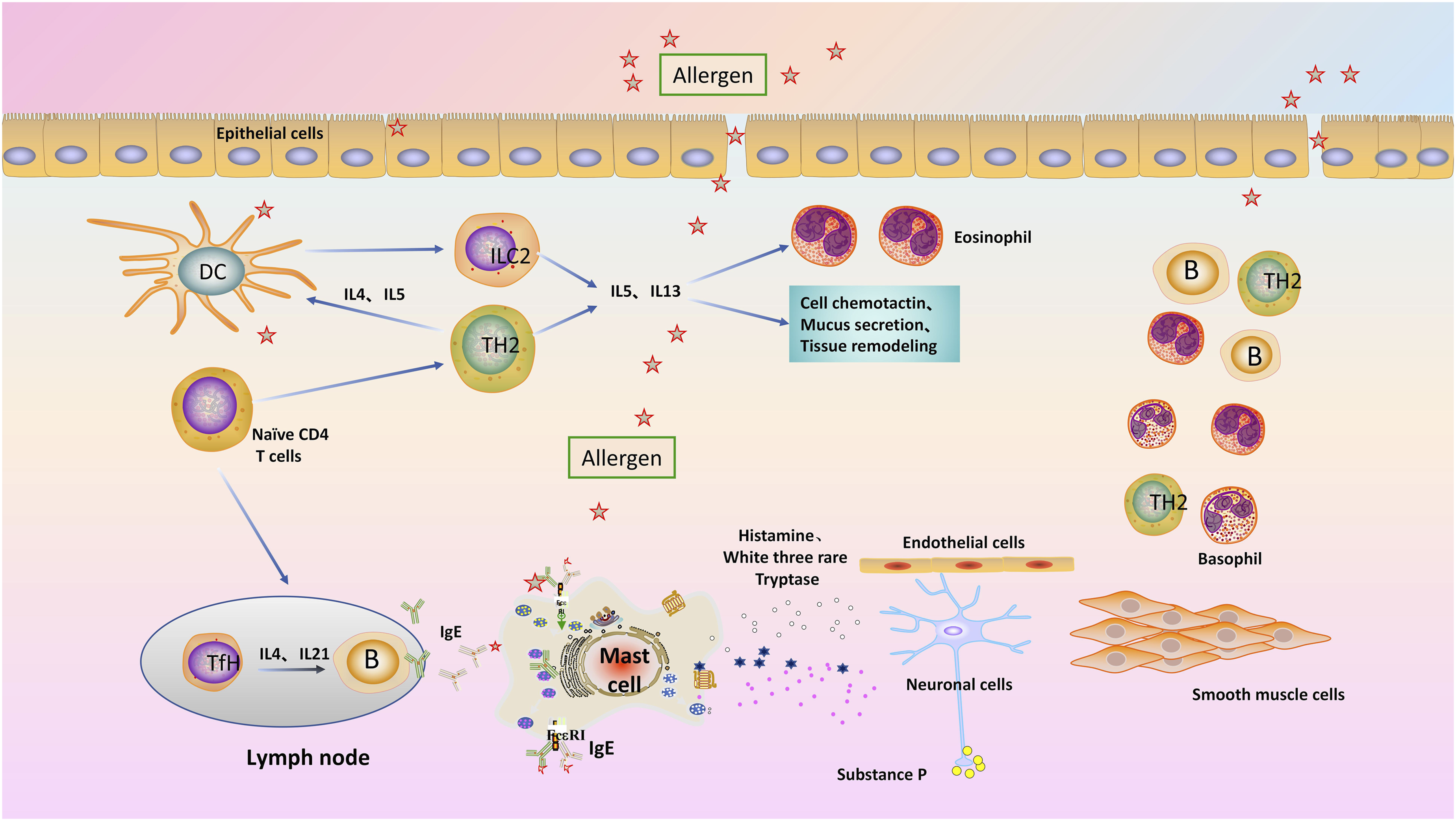
When an atopic individual is re-exposed to an allergen, the allergen binds to the specific IgE antibodies on the surface of mast cells, leading to cross-linking of IgE with the high-affinity IgE receptor (FcεRI). This cross-linking is the trigger for mast cell activation and degranulation. Mast cells are the primary effector cells in allergic reactions, and upon activation mediated by IgE antibodies, they rapidly undergo degranulation, releasing pre-stored mediators (such as histamine and tryptase) and newly synthesized mediators (such as leukotrienes and prostaglandin D2) (Figure 1). 12 Histamine is one of the earliest mediators released in an allergic reaction. It causes vasodilation and increased permeability of the nasal mucosa, leading to nasal mucosal congestion and edema, this increased vascular permeability facilitates fluid exudation in the nasal mucosa, resulting in increased mucus secretion within the nasal cavity, thereby causing nasal congestion and rhinorrhea, tryptase can activate other inflammatory cells, further amplifying the inflammatory response, leukotrienes and prostaglandin D2 induce smooth muscle contraction, leading to impaired nasal airflow and worsened nasal congestion. 13 These inflammatory mediators also interact with nasal sensory nerves, the vascular system, and glands, triggering the typical symptoms of AR, including nasal itching, sneezing, rhinorrhea, and nasal congestion, activation of nasal sensory nerves induces the sneeze reflex, an attempt to expel the allergen from the nasal cavity.14,15 Increased vascular permeability leads to nasal mucosal edema and increased secretions, while activation of the glands further enhances mucus production, exacerbating nasal congestion.
3. Composition and Function of p38 MAPK/NF-kappaB Signaling Pathway
The p38 MAPK is an important member of the mitogen-activated protein kinase family (MAPK) and comprises four isoforms: p38α (MAPK14), p38β (MAPK11), p38γ (MAPK12), and p38δ (MAPK13). 16 This pathway can be activated by a variety of extracellular signals, including cytokines, inflammatory mediators, and ultraviolet irradiation. The activation process involves a three-tier phosphorylation cascade of the Thr-Gly-Tyr (TGY) dual phosphorylation motif. Extracellular signals first activate MAP3K, which in turn activates MAP2K, ultimately leading to the dual phosphorylation of p38 MAPK. 17 Phosphorylated p38 MAPK can then activate downstream transcription factors, such as NF-kappaB. The duration of p38 MAPK phosphorylation is crucial for the regulation of cell survival. Sustained phosphorylation is generally associated with the induction of apoptosis, while transient phosphorylation is related to cell survival under growth factor stimulation. The duration of phosphorylation is strictly regulated by phosphatases, including protein phosphatase 1, protein phosphatase 2A, and MAPK phosphatases. These phosphatases can be activated by phosphorylated p38 MAPK, forming a negative feedback loop to tightly control the activity of p38 MAPK.16,18
The NF-kappaB family consists of five related transcription factors: p50, p52, p65 (RelA), RelB, and RelC, these transcription factors share an N-terminal DNA-binding/dimerization domain, which allows them to form both homodimers and heterodimers. 19 As a key signaling node, NF-kappaB regulates the expression of a wide range of genes involved in cell inflammation, immune responses, cell growth, and development. In the resting state, NF-kappaB dimers are sequestered in the cytoplasm by binding to inhibitory IkappaB proteins, upon cellular stimulation, IkappaB proteins are phosphorylated by the IkappaB kinase (IKK) complex, which consists of two catalytic subunits, IKKα and IKKβ, and a regulatory subunit, IKKγ, the phosphorylated IkappaB proteins are subsequently ubiquitinated and degraded by the proteasome, leading to the release and nuclear translocation of NF-kappaB dimers. 19 The NF-kappaB pathway includes both canonical and non-canonical pathways, which differ in their mechanisms of activation, the canonical NF-kappaB pathway is activated by a variety of stimuli and mediates transient transcriptional activity, regulating the expression of numerous pro-inflammatory genes and serving as a key mediator in inflammatory responses, in contrast, activation of the non-canonical NF-kappaB pathway depends on a few members of the TNF receptor superfamily and has specific biological functions, particularly in the multi-level differentiation of immune cells, since activation of this pathway involves protein synthesis, the kinetics of non-canonical NF-kappaB activation are slow and sustained, consistent with its biological functions in the development of immune cells and lymphoid organs, immune homeostasis, and immune responses. 20
During the development and progression of AR, the activation of the p38 MAPK and NF-kappaB signaling pathways is a critical event. Upon exposure to external stimuli, p38 MAPK is phosphorylated, followed by the degradation of IkappaB proteins in the cytoplasm, subsequently, NF-kappaB dimers translocate to the nucleus and initiate the transcription of pro-inflammatory genes, this process leads to the robust expression of inflammatory mediators, triggering a cascade of immune responses in the body and eventually progressing to AR (Figure 2).21-23 Inhibition of p38 MAPK and NF-kappaB activation can reduce the secretion of allergic mediators and alleviate the symptoms of AR, therefore, the p38 MAPK/NF-kappaB signaling pathway plays a significant role in the pathogenesis of AR and represents a potential therapeutic target. Representative extracellular stimuli and receptor classes involved in activation of the p38 MAPK/NF-kappaB signaling pathway. Cytokines mainly act through cytokine receptors, TNF-α signals through members of the TNF receptor family, and growth factors activate growth factor receptors on the cell membrane. In addition, ultraviolet irradiation and oxidative stress represent stress-related stimuli that can initiate upstream signaling events. These signals activate MAP3K and MAP2K, leading to phosphorylation of p38 MAPK, activation of the IKK complex, degradation of IkappaBα, and nuclear translocation of NF-kappaB subunits (p65/p50), thereby regulating downstream gene transcription
4. Molecular Mechanism of p38 MAPK/NF-kappaB Signaling Pathway Involved in AR
4.1. Inflammation
Inflammation is one of the key factors in the development and progression of AR. Activation of p38 MAPK promotes the release of cytokines and inflammatory mediators and plays an important role in immune regulation. 24 Studies have shown that p38 MAPK can regulate the overexpression of IL-24, leading to excessive nasal mucus secretion in AR patients. 25 In addition, p38 MAPK contributes to the production of inflammatory mediators in mast cells by upregulating the expression of NF-kappaB. Activated NF-kappaB further activates T cells, enhances B cell survival, and thereby triggers inflammatory responses and the activation of immune cells.20,26,27 It also induces IgE synthesis, mediating the occurrence of AR.28,29 During the progression of AR, the inflammatory response is accompanied by an increase in eosinophil numbers and upregulation of cytokine levels, the p38 MAPK/NF-kappaB signaling pathway is involved throughout the inflammatory process of AR, and persistent inflammation of the nasal mucosa is a key factor in the chronicity of AR.30-32 Therefore, intervening in the p38 MAPK/NF-kappaB signaling pathway to ameliorate the inflammatory response can effectively alleviate the clinical symptoms of AR and reduce nasal mucosal damage, providing an important therapeutic target for the treatment of AR.
4.2. T Cell Imbalance
The pathogenesis of AR is closely related to the imbalance of T helper (Th) 1/Th2 cells. 12 Th1 cells secrete IL-2 and IFN-γ, with IFN-γ acting as a counter-regulatory factor against IL-4-mediated IgE synthesis and thus serving as a protective factor in AR, in contrast, Th2 cells secrete IL-4, which stimulates B cells to synthesize IgE, this promotes the binding of allergens to mast cell receptors, triggering degranulation and the release of inflammatory mediators, thereby exacerbating the inflammatory response in AR. 15 Studies have shown that the p38 MAPK/NF-kappaB signaling pathway is closely associated with the overproduction of Th2-type cytokines (such as IL-4, IL-5, and IL-10), leading to T cell imbalance and subsequently affecting the recruitment of eosinophils and the secretion of inflammatory mediators.33,34 With further research, the imbalance of Th17/Treg cells has also been confirmed to be related to the activation of p38 MAPK and its downstream transcription factors NF-kappaB and Nrf2. 35 This indicates that the pathogenesis of AR has expanded from Th1/Th2 imbalance to include Th17/Treg imbalance, and both of these T cell imbalances are closely related to the activation of the p38 MAPK/NF-kappaB signaling pathway.
4.3. Oxidative Stress and Antioxidant Effects
Oxidative stress is a significant factor in the pathogenesis of allergic respiratory diseases, including AR and asthma. 36 The epidemiology and immunopathology of AR are similar to those of asthma, with oxidative stress and its byproduct, reactive oxygen species (ROS), playing a crucial role in inflammatory responses. 37 ROS can activate the MAPKs and NF-kappaB signaling pathways, inducing the expression of cyclooxygenase-2 (COX-2), excessive ROS can damage the respiratory epithelial cell layer, increase mucus secretion, and lead to an influx of inflammatory cells, thereby disrupting the nasal mucosal barrier function, triggering inflammatory reactions, and exacerbating symptoms of rhinitis.38,39 Studies have shown that inhibiting the phosphorylation of p38 MAPK can reduce the nuclear translocation of NF-kappaB, thereby alleviating oxidative stress damage and inflammatory responses.40,41 The activation of NF-kappaB is closely related to elevated levels of inducible nitric oxide synthase (iNOS), transforming growth factor-β1 (TGF-β1), and tumor necrosis factor-α (TNF-α). 42 Activation of iNOS leads to increased production of nitric oxide (NO) in the body, which further exacerbates oxidative stress, the concentration of NO is positively correlated with the severity of AR symptoms and has been applied in the clinical diagnosis and treatment of AR. 43 As a key factor in the pathogenesis and symptom exacerbation of AR, oxidative stress is closely related to the p38 MAPK/NF-kappaB signaling pathway. Therefore, antioxidant effects may represent an important therapeutic strategy in AR, particularly through regulating oxidative damage and inflammation associated with the p38 MAPK/NF-kappaB signaling pathway.
4.4. Apoptosis
Apoptosis is a process of programmed cell death that is finely regulated by pro-apoptotic factors and anti-apoptotic signals. 44 The caspase family plays a crucial role in apoptosis, pyroptosis, necroptosis, and inflammatory responses, the activation of caspases is a central event in apoptosis, where they cleave key intracellular substrates through a cascade reaction, leading to the orderly disassembly of cellular structures and functions. 45 The p38 MAPK/NF-kappaB signaling pathway is a vital regulatory pathway for inflammatory responses, upon abnormal expression of cytokines or reactive oxygen species (ROS), this pathway is activated, it mediates cell phosphorylation and inhibits autophagy, thereby promoting the expression of inflammatory mediators such as IL-1β, IL-6, and TNF-α, as well as the apoptotic gene Caspase-1, the overexpression of these inflammatory mediators and apoptotic genes not only exacerbates the inflammatory response but may also interfere with the normal process of apoptosis. 46 In AR, activation of the p38 MAPK/NF-kappaB signaling pathway is one of the key pathological events. Activation of this pathway leads to the release of a large number of inflammatory cytokines, p38 MAPK is involved in the regulation of apoptosis and cell differentiation, while NF-kappaB plays an important role in signal transduction and the defense against apoptosis, abnormal expression of inflammatory cytokines not only intensifies inflammatory damage but may also interfere with the normal progression of apoptosis by affecting the activity of the caspase family, thereby exerting a dual role in the pathogenesis of AR. 47
In summary, the pathogenesis of AR is complex and involves multiple factors, including autoimmunity, dysbiosis of the microbiota, and environmental exposures. The p38 MAPK/NF-kappaB pathway, as a key inflammatory signaling pathway, contributes to the development and progression of AR through multiple mechanisms, including inflammation, T cell imbalance, oxidative stress, and apoptosis.In recent years, with the development of TCM research, there has been an increasing amount of research on the effect of TCM on AR, and it has been found that many monomers of TCM can affect the occurrence and development of AR by regulating the p38 MAPK/NF-kappaB pathway.
5. TCM Monomers Intervene in the p38 MAPK/NF-kappaB Signaling Pathway
Study on the Intervention of TCM Monomers in Allergic Rhinitis by Regulating the p38 MAPK/NF-Kappa B Signaling Pathway
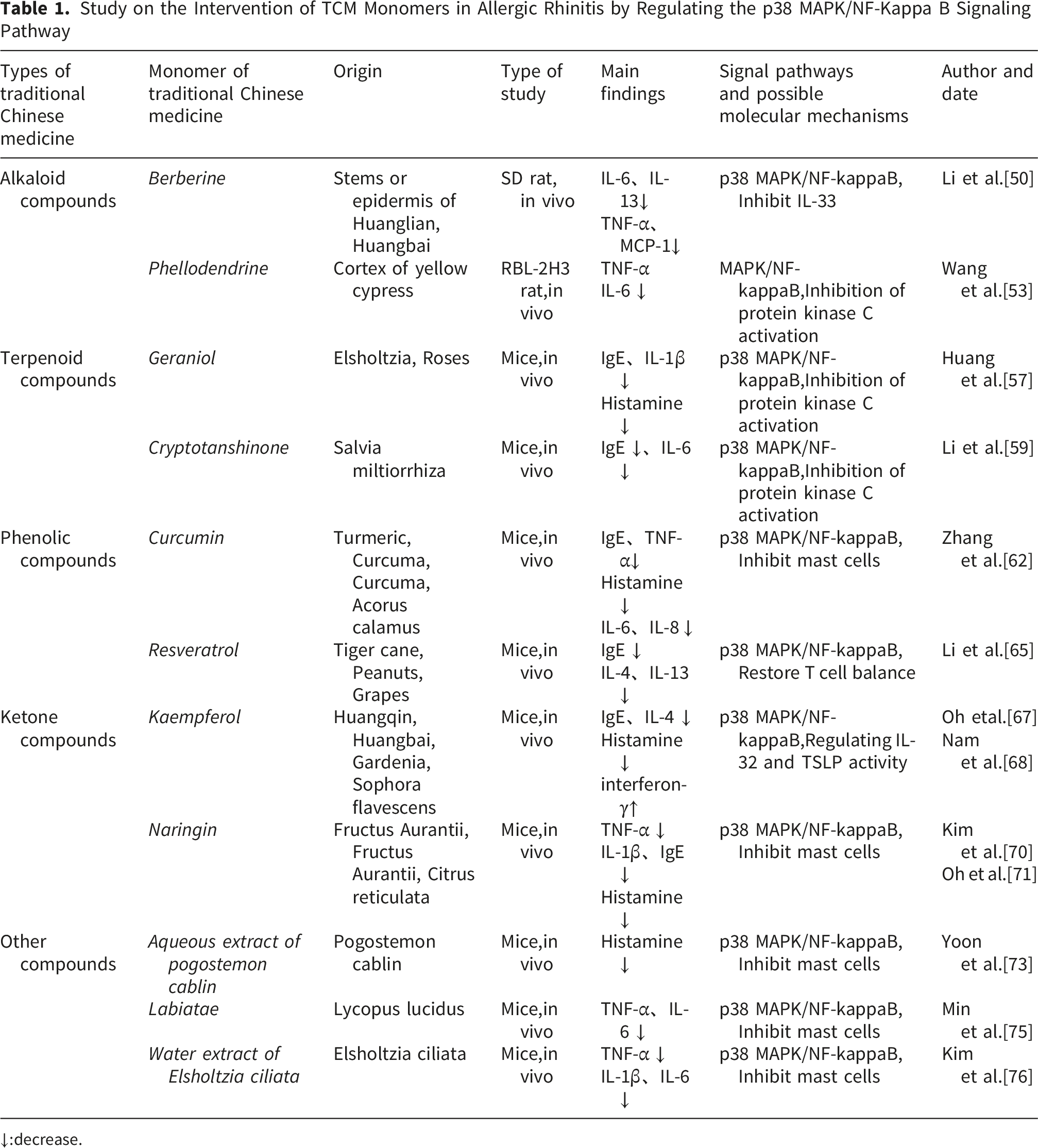
↓:decrease.
These TCM monomers are capable of modulating inflammatory responses, correcting T cell imbalance, alleviating oxidative stress damage, and regulating apoptosis, thereby providing new strategies and insights for the treatment of AR.
5.1. Alkaloid Compounds
Berberine is a natural isoquinoline alkaloid widely found in the roots, stems, or bark of traditional Chinese medicinal herbs such as coptis chinensis and phellodendron amurense, and it exhibits multiple pharmacological activities, including antioxidant, anti-inflammatory, anti-allergic, and anticancer effects. 48 Its anti-inflammatory properties are closely related to the NF-kappaB and p38 MAPK signaling pathways and have been widely applied in the treatment of various respiratory diseases, such as chronic obstructive pulmonary disease (COPD), asthma, pulmonary fibrosis, and lung cancer. 49 Studies have shown that berberine can inhibit inflammatory responses by targeting the p38 MAPK/NF-kappaB signaling pathway, Li et al observed in both in vitro and in vivo experiments that berberine can specifically block the phosphorylation of p38 MAPK, significantly inhibit the degradation of IkappaBα and the nuclear translocation of the NF-kappaB subunit p65, thereby reducing the production of cytokines such as IL-6, TNF-α, IL-13, and monocyte chemoattractant protein-1 (MCP-1) in nasal mucosal epithelial cells stimulated by IL-33. 50 IL-33 is a key cytokine that promotes eosinophil infiltration, induces Th2 immune responses, and activates mast cells, all of which are closely related to the development and progression of AR. 51 Therefore, berberine provides a novel therapeutic strategy for AR by intervening in the p38 MAPK/NF-kappaB signaling pathway and inhibiting IL-33-mediated inflammatory responses.
Phellodendrine is an isoquinoline alkaloid extracted from the bark of phellodendron amurense and is one of the major active components of phellodendron, and it exhibits significant anti-inflammatory, antioxidant, and antimicrobial activities and has shown potential applications in the treatment of various diseases, including ulcerative colitis, sepsis, and bacterial vaginosis. 52 Wang et al investigated the effects of phellodendrine on allergic reactions through in vivo and in vitro comparative experiments, the study found that phellodendrine can alter the conformation of MRGPRB3/MRGPRX2 proteins, inhibit the activation of phospholipase C (PLC), reduce the release of calcium ions from the endoplasmic reticulum, and inhibit the activation of protein kinase C (PKC), these actions further block the downstream signaling pathways of p38 MAPK and NF-kappaB, thereby exerting effects similar to those of western antihistamines and effectively inhibiting allergic reactions, however, this study was only conducted in a mouse model of allergic skin inflammation, and the effects of phellodendrine on allergic airway inflammatory diseases such as AR have not been fully explored. 53 Given that the pathogenesis of AR is closely related to allergic reactions and that the p38 MAPK and NF-kappaB signaling pathways play key roles in the inflammatory response of AR, phellodendrine may have the potential to serve as a novel anti-AR drug. Therefore, further research on the therapeutic effects of phellodendrine in AR treatment holds significant scientific and clinical value.
5.2. Terpenoid Compounds
Geraniol is a natural acyclic monoterpene compound extracted from aromatic medicinal herbs such as elsholtzia ciliata and rose, and it exhibits multiple biological activities, including antifungal, anticancer, antioxidant, and antidepressant effects. 54 Its mechanisms of action in modulating oxidative stress and inhibiting inflammatory responses primarily involve the activation of the Nrf2/HO-1 signaling pathway or the inhibition of COX-2, thereby intervening in the development of AR.54,55 Studies have shown that geraniol exhibits significant anti-inflammatory effects in mast cells stimulated by PMACI (phorbol myristate acetate and calcium ionophore), significantly reducing the expression of pro-inflammatory cytokines such as TNF-α, IL-1β, and IL-6, additionally, geraniol can alleviate allergic rhinitis symptoms in ovalbumin (OVA)-sensitized AR mice, decreasing serum levels of histamine, OVA-specific IgE, and IL-1β, with increasing doses of geraniol, the phosphorylation of p38 MAPK in mast cells gradually decreases, and the expression levels of the NF-kappaB subunit p65 also correspondingly decline. 56 In summary, geraniol can exert therapeutic effects on AR by modulating the p38 MAPK/NF-kappaB signaling pathway, its mechanism is closely related to the regulation of oxidative stress and the inhibition of inflammatory responses. This finding provides a theoretical basis for geraniol as a potential therapeutic agent for AR and warrants further in-depth research.
Cryptotanshinone is a lipophilic diterpenoid anthraquinone compound extracted from the dried roots and rhizomes of salvia miltiorrhiza bunge (family Lamiaceae), and it exhibits multiple pharmacological activities, including anti-inflammatory, anticancer, antimicrobial, neuroprotective, and cardioprotective effects. 57 In an in vivo and in vitro comparative study using an ovalbumin (OVA)-induced asthma BALB/c mouse model, cryptotanshinone was found to significantly reduce airway hyperresponsiveness (AHR) in asthmatic mice, decrease inflammatory cell infiltration around the bronchioles and airways, modulate cytokine production, lower serum levels of total IgE and OVA-specific IgE, and inhibit the activation of NF-kappaB and the phosphorylation of p38 MAPK, these results indicate that cryptotanshinone can alleviate allergic airway inflammation by modulating the phosphorylation of p38 MAPK and the activation of NF-kappaB. 58 In recent years, numerous epidemiological, pathophysiological, and clinical studies have shown a high correlation between AR and asthma, with similarities in their pathogenesis, inflammatory cell infiltration, and cytokine expression. 59 Therefore, given the close relationship between asthma and AR as united airway inflammatory diseases, as well as their shared features of type 2 immune responses, IgE-mediated sensitization, and inflammatory signaling, the beneficial effects of cryptotanshinone observed in asthma suggest that it may also have potential therapeutic value in AR. In particular, because the p38 MAPK/NF-kappaB signaling pathway is involved in the inflammatory progression of both diseases, the inhibitory effects of cryptotanshinone on this pathway provide a mechanistic rationale for its possible application in AR. However, direct evidence in AR is still limited, and further studies using AR models and clinical investigations are needed to verify its therapeutic potential.
5.3. Phenolic Compounds
Curcumin is a natural phenolic compound extracted from the rhizomes of curcuma longa, curcuma zedoaria, curcuma aromatica (all belonging to the Zingiberaceae family), or acorus tatarinowii (from the Acoraceae family), and it possesses multiple biological activities, including anti-inflammatory, antimicrobial, antioxidant, and anticancer effects, its mechanisms of action in modulating immune responses and inhibiting inflammation primarily involve the intervention of cellular signaling pathways. 60 Studies have shown that curcumin can inhibit the phosphorylation of ERK, p38 MAPK, and JNK in mast cells induced by phorbol 12-myristate 13-acetate (PMA), while also reducing the phosphorylation of IkappaBα in the cytoplasm and the nuclear translocation of the NF-kappaB subunit p65, this process, by modulating the p38 MAPK/NF-kappaB signaling pathway, suppresses the release of inflammatory mediators, thereby intervening in the development of AR. 61 The study by Zhang et al further confirmed the aforementioned effects of curcumin, in their experiments, AR mice treated with curcumin exhibited significant improvement in nasal symptoms, a substantial reduction in eosinophil infiltration, and marked decreases in serum levels of histamine, IgE, and TNF-α, these findings indicate that curcumin can modulate mast cell-mediated immune responses in AR by inhibiting the p38 MAPK/NF-kappaB signaling pathway, providing a novel potential therapeutic strategy for the treatment of AR. 61
Resveratrol is a natural polyphenolic compound widely found in plants such as polygonum cuspidatum, peanuts, and grapes, and it exhibits multiple biological activities, including antioxidant, antimicrobial, cardioprotective, and anticancer effects, its mechanisms of action in modulating immune responses and inhibiting inflammation primarily involve the intervention of cellular signaling pathways. 62 Studies have shown that resveratrol can significantly reduce the production of inflammatory cytokines such as IL-6, IL-13, TNF-α, and MCP-1, and inhibit IgE-mediated immune responses induced by IL-33 in RBL-2H3 cells, this process is closely related to the inhibition of p38 MAPK phosphorylation and NF-kappaB-mediated transcription. 63 By blocking these signaling pathways, resveratrol can effectively alleviate inflammatory responses and inhibit the occurrence of allergic reactions.Subsequent studies further validated the therapeutic effects of resveratrol on AR, high doses of resveratrol significantly reversed the elevated levels of the Th2 cell-specific transcription factor GATA3 and Th2-type cytokines IL-4 and IL-13 in ovalbumin-sensitized AR mice, this regulatory effect inhibits B cells from producing specific IgE against the antigen ovalbumin, thereby significantly improving symptoms in AR mice. 64 These findings indicate that resveratrol alleviates inflammatory responses and corrects T cell imbalance by intervening in the p38 MAPK/NF-kappaB signaling pathway, providing a novel potential therapeutic strategy for the treatment of AR.
5.4. Ketone Compounds
Kaempferol is a natural flavonoid compound widely found in traditional Chinese medicinal herbs such as scutellaria baicalensis, phellodendron amurense, gardenia jasminoides, and sophora flavescens, as well as in various vegetables and fruits, studies have shown that kaempferol possesses multiple biological activities, including antioxidant, anti-inflammatory, and anticancer effects, demonstrating broad therapeutic potential. 65 Research has found that kaempferol exhibits significant anti-allergic effects on eosinophil-derived inflammatory responses, among inflammatory mediators, IL-32 promotes the production of pro-inflammatory cytokines by activating the p38 MAPK, NF-kappaB, and Caspase-1 signaling pathways. 66 Kaempferol can inhibit IL-32-induced differentiation of monocytes into macrophage-like cells and significantly reduce the production and mRNA expression of pro-inflammatory cytokines, including thymic stromal lymphopoietin (TSLP), IL-1β, IL-8, and TNF-α, this process indicates that the anti-inflammatory effects of kaempferol may be mediated by inhibiting inflammatory responses and subsequently regulating apoptosis, a mechanism closely related to the suppression of the p38 MAPK/NF-kappaB signaling pathway. 67 In summary, kaempferol exerts its anti-inflammatory and anti-allergic effects by modulating the p38 MAPK/NF-kappaB signaling pathway and inhibiting the production of inflammatory mediators and cell differentiation, this finding provides a theoretical basis for kaempferol as a potential anti-inflammatory and anti-allergic drug and warrants further investigation into its therapeutic potential in the treatment of related diseases.
Naringin is a natural flavonoid compound widely found in traditional Chinese medicinal herbs such as aurantium immaturum, aurantium pericarpium, and citrus reticulata, and it exhibits multiple biological activities, including anti-inflammatory, antioxidant, anti-tumor, and anti-fibrotic effects, its mechanisms of action in modulating immune responses and alleviating inflammation primarily involve the inhibition of cellular signaling pathways. 68 In an acrolein-induced mouse lung injury model, naringin significantly reduced the expression levels of p38, JNK, IKKα/β, IkappaB, p65, and markers of oxidative damage. These results indicate that the anti-inflammatory and antioxidant effects of naringin are mediated through the inhibition of the p38 MAPK/NF-kappaB signaling pathway. Suppression of this pathway reduces the release of inflammatory mediators and alleviates oxidative stress damage, thereby exerting a protective effect. 69 Ohha et al further investigated the potential therapeutic application of naringin in AR. In an ovalbumin-sensitized AR rat model, treatment with a combination of naringin and bamboo salt significantly decreased nasal rub scores, serum histamine and IgE levels, as well as the levels of inflammatory cytokines IL-4 and IL-5 and inflammatory cell counts. These findings suggest that naringin can alleviate AR-related inflammatory and oxidative damage by inhibiting the p38 MAPK/NF-kappaB signaling pathway. In summary, naringin significantly reduces inflammation and oxidative damage by inhibiting the p38 MAPK/NF-kappaB signaling pathway, demonstrating its potential as an immunomodulatory agent in the treatment of AR. 70 This discovery provides a theoretical basis for the development of naringin as a novel anti-inflammatory and immunomodulatory drug, warranting further investigation into its clinical application potential.
5.5. Other Compounds
Pogostemon cablin is one of the representative traditional Chinese medicines with aromatic and dampness-transforming properties, it is known for its effects of aromatic dampness transformation, stomach invigoration, turbidity resolution, summerheat dissipation, and exterior-releasing. Modern pharmacological studies have shown that pogostemon cablin has broad medicinal value in antibacterial activity, gastrointestinal regulation, anti-inflammation, analgesia, anti-allergy, and immune regulation. 71 Animal experiments have demonstrated that the aqueous extract of pogostemon cablin (AEPC) can reduce calcium influx in a dose-dependent manner, thereby inhibiting histamine release from mast cells, moreover, AEPC significantly attenuates the phosphorylation of p38 MAPK and blocks the degradation of IkappaBα, reducing NF-kappaB activation induced by phorbol myristate acetate and calcium ionophore (PMACI), this process indicates that AEPC exerts its anti-allergic effects by inhibiting the p38 MAPK/NF-kappaB signaling pathway. 72
Labiatae (LAE) is known for its properties of promoting blood circulation to regulate menstruation, removing blood stasis to reduce swelling, and promoting diuresis to alleviate edema. Studies have found that the extract of LAE can reduce the secretion of TNF-α and IL-6 in human mast cells stimulated by phorbol ester and calcium ionophore. LAE specifically blocks the activation of p38 MAPK by reducing the degradation of IkappaBα and the nuclear translocation of NF-kappaB, thereby inhibiting the release of inflammatory mediators. 73 This mechanism indicates that LAE exerts anti-inflammatory and anti-allergic effects by modulating the p38 MAPK/NF-kappaB signaling pathway.
Elsholtzia ciliata is known for its effects of inducing sweating to relieve summerheat, promoting diuresis to eliminate dampness, warming the stomach, and harmonizing the middle burner. Modern studies have identified various active components in elsholtzia ciliata, including essential oils, flavonoids, and coumarins, which exhibit pharmacological activities such as antimicrobial, anti-inflammatory, antipyretic, analgesic, antispasmodic, and immune-enhancing effects. 74 The water extract of elsholtzia ciliata (WEEC) has been shown to possess anti-allergic properties, Kim et al evaluated its effects on systemic and local allergic reactions as well as histamine release from mast cells and found that WEEC specifically inhibited the activation of p38 MAPK in mast cells stimulated by PMACI, and it also inhibited the phosphorylation of the NF-kappaB transcriptional activity subunit p65 in a manner dependent on MSK1. 75 These results indicate that WEEC exerts its anti-allergic effects by inhibiting the p38 MAPK/NF-kappaB signaling pathway.
In summary, aqueous extract of AEPC, LAE, and WEEC all significantly inhibit mast cell-mediated allergic reactions by suppressing the p38 MAPK/NF-kappaB signaling pathway, demonstrating therapeutic effects similar to those of antihistamines. AR, as a typical allergic inflammatory disease closely related to mast cells, involves the activation of mast cells and the release of inflammatory mediators in its pathogenesis. Therefore, it can be inferred that AEPC, LAE, and WEEC have potential therapeutic applications for AR. Future research can further explore the mechanisms of action and clinical application prospects of these herbal extracts in the treatment of AR, providing a theoretical basis for the development of novel anti-AR drugs.
TCM monomers have the potential to regulate the p38 MAPK/NF-kappaB signaling pathway in AR therapy, and have the advantages of multi-target and multi pathway approaches.Future research can conduct more high-quality clinical trials to verify the efficacy and safety of TCM monomers, as well as explore the synergistic effects of traditional Chinese medicine formulas.
6. Conclusion
Allergic rhinitis is a chronic inflammatory disease with complex pathogenesis involving inflammation, immune imbalance, oxidative stress, and apoptosis. Current evidence indicates that TCM monomers may exert therapeutic effects on AR by targeting the p38 MAPK/NF-kappaB signaling pathway, mainly through inhibiting p38 MAPK phosphorylation, reducing IκBα degradation, and suppressing NF-kappaB p65 nuclear translocation. Through these mechanisms, TCM-derived compounds can downregulate inflammatory cytokines and allergic mediators, alleviate oxidative stress, improve T-cell imbalance, and thereby reduce allergic inflammation and nasal mucosal injury. These findings suggest that TCM monomers may provide a promising multi-target therapeutic strategy for AR and offer useful mechanistic support for the modernization and further development of TCM-based interventions.
However, the current evidence still has important limitations. Most available studies are based on in vitro experiments and animal models, while high-quality clinical evidence remains insufficient. In addition, differences in study design, experimental models, compound selection, and outcome indicators make it difficult to directly compare results across studies. Another important limitation is that some compounds may regulate multiple signaling pathways simultaneously, which makes it challenging to determine the specific contribution of the p38 MAPK/NF-kappaB pathway. Furthermore, issues related to bioavailability, safety, dosage standardization, and clinical applicability have not yet been adequately resolved.
7. Future Perspective
Future studies should therefore focus on several aspects. First, more rigorous mechanistic studies are needed to identify the direct molecular targets of representative TCM monomers within the p38 MAPK/NF-kappaB pathway. Second, comparative studies should be conducted to clarify the relative advantages and pathway specificities of different classes of compounds. Third, pharmacokinetic characteristics, safety profiles, and formulation strategies should be further optimized to improve translational potential. Finally, multicenter, large-sample, and well-designed clinical studies are needed to verify the efficacy and safety of these compounds in AR treatment. Such efforts will help clarify the clinical value of TCM monomers and support the development of safer and more effective therapeutic options for allergic rhinitis.
Footnotes

Funding
The authors received no financial support for the research, authorship, and/or publication of this article.
Declaration of Conflicting Interests
The authors declared no potential conflicts of interest with respect to the research, authorship, and/or publication of this article.
Figures Statement
All figures were created by the authors using Microsoft PowerPoint. The authors confirm that all figures are original and were prepared by the authors.
Declaration of AI-Assisted Technologies in the Writing Process
During the preparation of this manuscript, the authors used ChatGPT for language polishing and grammatical improvement. The authors reviewed and edited the content as needed and take full responsibility for the content of the published article.