




Abstract
Lack of accessibility and affordability to safe and affordable drinking water remains a major challenge in fulfilling sustainable development goals. Community-based water management emerged as a policy response to address the issues. However, the impact of producing community-based water supply institutions on the community is hardly noticed in this context. This paper tries to fill the gap through the relational understanding between the provision of safe water and communities’ socioeconomic upliftment, which remains the main reason behind the establishment of the potable water facility in Porapara village located in West Midnapur district of the state of West Bengal, India. The study findings revealed that community participation through the process of empowerment results in good governance of the potable water project and the socioeconomic well-being of the community in Porapara village. This kind of intervention study may help policymakers in evaluating the societal impact to achieve socioeconomic well-being.
Introduction
The provision of safe and adequate drinking water is taken as an enduring strategy to achieve Sustainable Development Goal (SDG) which not only targets on improving access and efficiency of safe and good quality drinking water but also addresses “universal access” by removing inequalities (UNICEF 2015). Rural regions of developing and underdeveloped countries face extreme water scarcity where eight out of 10 people lack of access to safe drinking water supply, which puts constraints on resource development and productivity. In these regions, improved access to adequate quantities of drinking water supply is taken as an effective strategy to lower the risk of contracting waterborne infections (Alhassan and Kwakwa 2014; Zhang 2012). Past literature already proved that community participation is one of the criteria for successful natural resource management (Ananga et al. 2020; Murphy-Mills et al. 2019; Waithaka, Kisovi, and Obando 2016). However, the impact of community-based water management on society is not much examined.
Community-based water management is defined as the management of water resources by, of, and for the people where common people come together to resolve their local concerns on a daily basis. It emphasizes decentralized and multi-actor ways to enable optimal and effective public service delivery, which involves connections or collaborations across governmental and non-governmental (for-profit and non-profit) actors, as well as service recipients (Mugumya 2013). The transformation in the power structure and natural resource governance under decentralized mechanisms encourage and empower local people and their participation in the identification of problems including in the formulation and implementation of solutions. In the rural water supply sector, community-based governance is seen as a long-term approach for putting widespread participatory development into practice (Whaley and Cleaver 2017). This way, delegation results in the transfer of accountability and expenses to the most vulnerable people (Kesby 2005). Community-based initiatives, as per this logic, yield better long-lasting outcomes since stakeholders believe with policies they advocate, approve, or execute (Thomas and Koontz 2011). For this reason, in the water sector, the participatory paradigm has been mainstreamed into a succession of international policy pronouncements that make up the global water consensus (Cleaver and Toner 2006; Franks et al. 2004). Community participation in water resource management promotes progressive social change by empowering women and poor people and ensuring greater effectiveness toward service provision (Cleaver and Toner 2006). Thus, community participation helps to create good governance on one hand, and, on the other hand, better water supply aids in the achievement of a number of societal development objectives (UNMDP 2005).
Considering the importance and significance of concepts like successful water governance, improved water management, more capacity, and stronger poor community empowerment, it is necessary to understand its impact on the community. There is a lack of studies from the perspective of the impact of community-based water management on communities both in the social and economic contexts. This paper attempts to understand the relationship between communities’ managed potable water supply and society’s development from peoples’ perspective through decentralized mechanisms. The following elements make up the paper’s configuration: an introduction, followed by understanding involvement, community-based water management, and effect analysis. The third section discusses the research locations and data collection procedures. In the fourth section, the findings are discussed. The final section includes concluding observations on the relevance of this study on participatory planning strategies in the rural water sector.
Theoretical Underpinnings
The term “participation” has been widely used and considered in various ways through its meaning, concepts, and so on. In the context of development plans and programs, participation can be defined in the context of development plans and programs as the procedure by which participants affect and engage in decision making in the design, implementation, supervision, and evaluation of programs and projects (Kaosa-ard et al. 1998). It is a method of empowering individuals and communities via the acquisition of skills, information, and experience, resulting in increased self-reliance and self-management (Karl 2000).
During the 1990s, developing countries adopted “demand-driven” approach in rural water supply programs. It constitutes components in project planning like, (1) involve households in the choice of both technology and institutional and governance arrangements, (2) give women a larger role in decision making than has historically been the norm and (3) require households to pay all of the operation and maintenance costs of providing water services and at least some of the capital costs. (Whittington et al. 2009)
As a result, water policy reform went through a pronounced change from centralized planning to community-centered approaches under decentralization and popular Community-based Natural Resource Management (CBNRM) (Ferguson and Mulwafu 2004). Accordingly, various international and national organizations promoted local participation to maintain sustainable livelihoods, ensure decentralized governance, and to tackle poverty (Department for International Development 2002; World Bank 2003). However, it may be mentioned that the community’s participation and empowerment, inclusive activities, depend on stakeholders’ attitudes, interests, and power toward intervention (Singto, Fleskens, and Vos 2018) which ultimately increase acceptability, utilization, and better management of community-based infrastructure (Ambuehl et al. 2022). Therefore, understanding stakeholders’ interests in the planning process, before designing interventions and decision-making processes, through a bottom-up approach from the very initial stage may confirm the possibilities of better governance of natural resources (Furlong et al. 2016; Reed 2008; Roncoli et al. 2016). Understanding participants’ requirements and desires regarding the good and bad implications of water infrastructure, as well as identifying stakeholders’ possible conflicts and responding to their aspirations, is critical as a project initiator of new water resource development projects (Bourne and Walker 2005; Singto et al. 2018). Considering this, Fleskens and Stringer (2014) identified the necessities for a multi-stakeholder assessment of consequences in making a decision on land monitoring and policy reactions to: (1) identify and predict the repercussions of negative issues; (2) evaluate and suggest intervention implications; and (3) create and investigate intervention reactions.
Pieces of literature have already been published which addresses the relevance of community-based water management in sustaining the supply, increasing accessibility, achieving equity, and so on (Braimah, Amponsah, and Asibey 2016; Liddle, Mager, and Nel 2016). Global water partnership shows that Community-based Organizations (CBOs) are covering two critical service gaps that public and commercial water and sanitation providers may be unable to meet properly. First, both governmental and non-governmental water organizations have limited opportunities for constructive participation of local populations, particularly during the post-construction stages of water projects. Second, such organizations have limited ability (financial, technical, etc.) to the point where a large number of locations, particularly distant villages, are out of reach. Cochran and Ray (2009) through their paper tried to conceptualize equity in the context of a community-based rainwater-harvesting program. The result revealed inequity is produced in the name of equitable participation of the community in the form of cash or labor in the projects and inequitable sharing of benefits from the same projects. According to the researchers, power relation, prestige, village unity, and dharm act as driving factors behind the production of inequity. It is believed that the community who is more closely engaged with the management of the resource base should be included in the process of participation of resource governance. This helps in the long term sustaining resource base even in the face of external shock. According to Figueiredo and Perkins (2013), it is critical for women to be included in the governance structure to achieve long-term sustainability of water resources under climate change. Sakisaka et al. (2015) argued that shifting of water sources from surface to groundwater resulted in the reduction of distance, water collection time, and increased water consumption. Whittington et al. (2009) based on randomized controlled experiment to understand functioning of the system prior and afterward the treatment intervention. Here system performance is measured through the questions such as (1) percentage of villages have private connections only/ public taps only/ private connections and public taps/ one project hand pump; (2) the functioning system of the water infrastructure; (3) average days under repair; (4) community participation in the meeting, proceedings; and (5) cost recovery mechanisms (median expenditure, tariff capacity, and repair types). Moreover, to understand factors associated with the system working, and factors influencing homeowner satisfaction regarding Operation and Maintenance repair facilities, the paper used multivariate models. Multivariate regression approaches were used by Marks and Davis (2012) to estimate sense of ownership toward the freshwater infrastructure as a factor of household engagement in design and installation, as well as system and service features, and household social and economic variables. To better understand the sustainability issues in the Water, Sanitation, and Hygiene (WASH) sector, Kativhu et al. (2022) used a chi-squared test to see if there were any substantial connections among borehole upkeep and the expected series of breakdowns published by survey participants annually. A correlation is also demonstrated between the age of the water infrastructure and the time it takes to complete a 20-liter container. Thomas and Koontz (2011) figured out that the full explanatory network of community-based management practices, through the inputs sustaining decision-making mechanisms to control outputs including environmental effects, must be examined closely to determine how community-based management has a favorable or destructive consequence. Madrigal, Alpízar, and Schlüter (2011) provide an excellent overview of how a demand-driven approach can lead to improved fiscal viability, improved infrastructure status, and increased user pleasure with a downward accountability mechanism, effective regulations for tariff gathering and infrastructure repair, and the capabilities of water committee members. Along with this, a lot of research work took place under community-based water management to study whether it works effectively under the extreme climatic events such as drought (Daluwatte and Sivakumar 2022; Schnegg and Bollig 2016); what is the role of external support in adaptation to water scarcity (Murtinho et al. 2013); the role of influential factors for community participation to achieve sustainability in community-managed potable water supply systems (Guta et al. 2022); also the influential factors that lead sustainability of water projects in the long term (Koehler, Thomson, and Hope 2015; Osumanu, Zumayelleh, and Kosoe 2022).
Therefore, in brief, it may be stated (also from Table 1) that engagement of various stakeholder groups in the decision procedure aids in the identification of key issues, strengthening legitimation, response to necessitate, the negotiation of interests, the incorporation of local knowledge, the encouragement of social learning, and the establishment of a social license for government schemes ( W. M.Adams and Hulme 2021; Brunner et al. 2008; Smith 2009). Its appeal stems from policies and laws such as constructing institutions including such associations, committees, and cooperatives through society empowerment; formulating regionally approved operational regulations on resource use and user behavior, which include sanctions (frequently embedded in constitutional provisions), and a resource management framework mutually decided upon by relevant stakeholders; decentralization to local organizations of appropriate lawful resource privileges, along with judgment powers and economic incentives (E. A.Adams and Zulu 2015; Agrawal 2001; Moraes and Perkins 2007).
Summary of the Literature on Impact of Community-based Water Management.

Source. Produced by the authors.
Impact assessment studies basically judge the significance or lasting impacts of improved water facilities on a community. This particular study takes the view that the perception of the community regarding the impacts are important for the design of future potable water projects and to further understand the reasoning behind this change. In this paper, two important research questions are addressed: (1) how this initiative may address a common problem, that is, accessibility of good quality drinking water on a daily basis, and (2) how this community initiative may bring a positive change in societal well-being. Thus, the purpose of this paper is to understand the social impact of demand-driven community-managed water supply at the micro-level, that is, at village level.
Project Site Selection and Data Collection
Study Area
Porapara, a revenue village (Mauza) consisting of approximately 294 households, is located about 18 km away from Kharagpur Municipal area (sub-divisional headquarter) in West Medinipur district of West Bengal (Figure 1). The Porapara village has a population of 1,233 of which 655 are males while 578 are females as per Population Census 2011. This entire revenue village is divided into four different clusters mostly based on caste structure. Out of four hamlets, two of them are principal ones. These two main hamlets together consist of 137 households and mostly belong to the other backward classes (OBC) where the potable water project intervention (drinking water purification and community distribution system) has taken place (Figure 2).
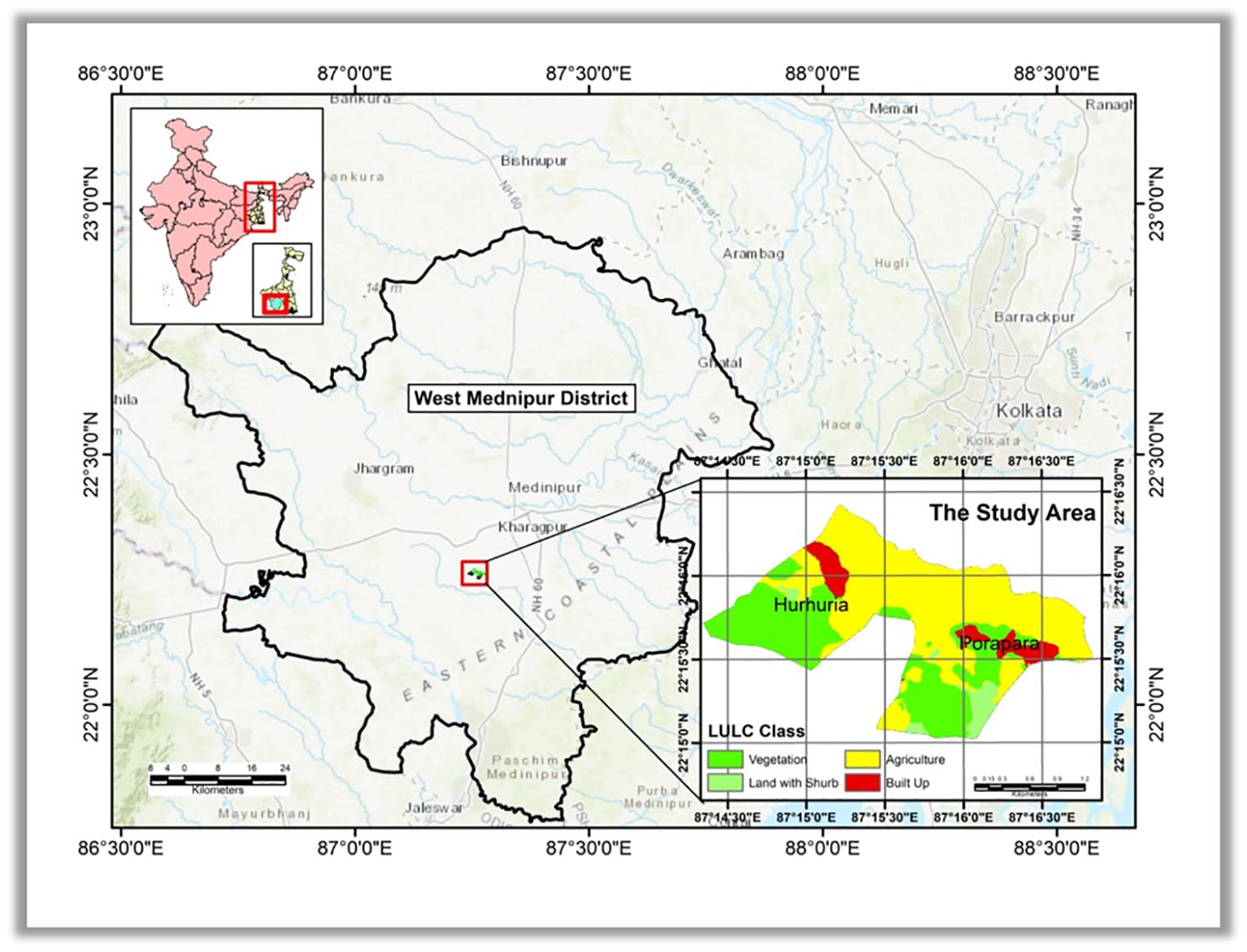
Map of the study area.
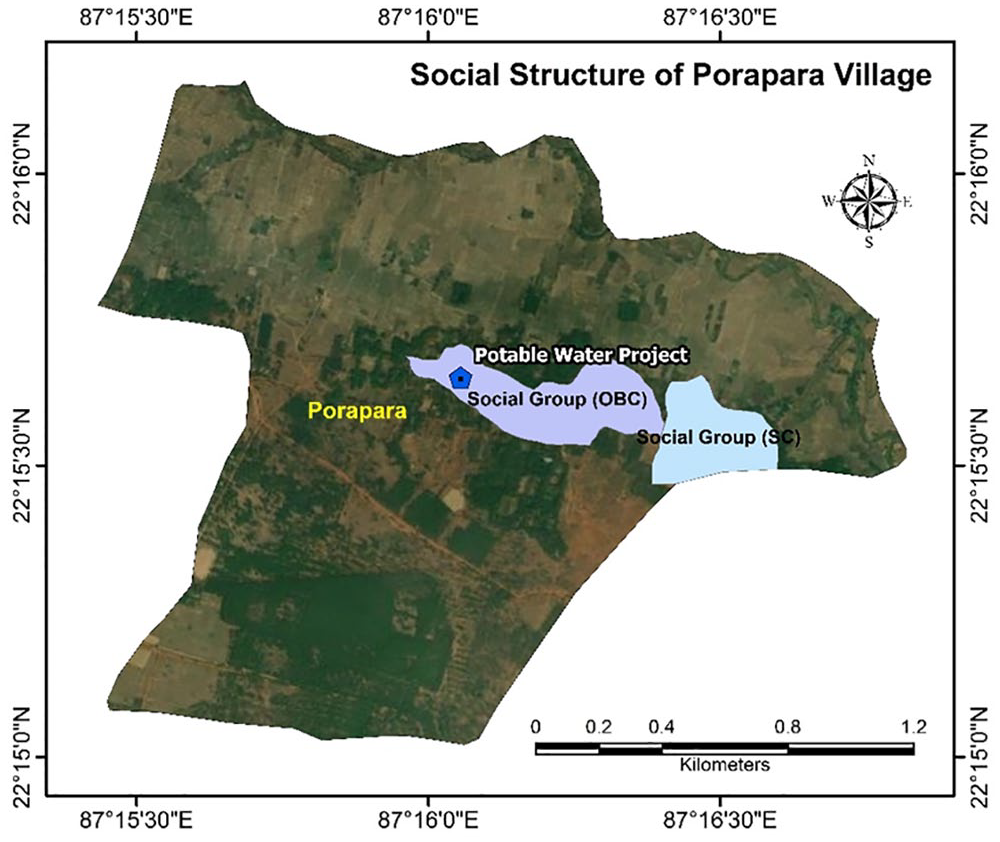
Social structure of the study area.
The reasons behind selection of this hamlet for this project intervention are as follows: First, field observation reported that the households in the first hamlet were mainly dependent on personal wells located in their backyard and community tubewell for their drinking water requirement. It was also noticed that among these targeted households, around 20 families were taking water from their own wells and 100 households from community tubewell. This scenario revealed that this village is lacking of facility of purified drinking water from the treated source.
Second, poor socioeconomic groups community dominated in the project village. Most of the household of the project intervening area belong to OBC. Occupationally, the villagers are daily wage earners and associated with agriculture and other wage laboring jobs in the surrounding area of Kharagpur. Their monthly income ranges from Rs. 3,000 to Rs. 30,000.
Last, the survey results revealed that the households suffered from health issues because of consumption of unsafe drinking water. In addition, the community health center and hospitals are located far from (distance more than 11 km) the village, which put extreme drudgery for the community to get better health care facility (as shown in the Figure 3).
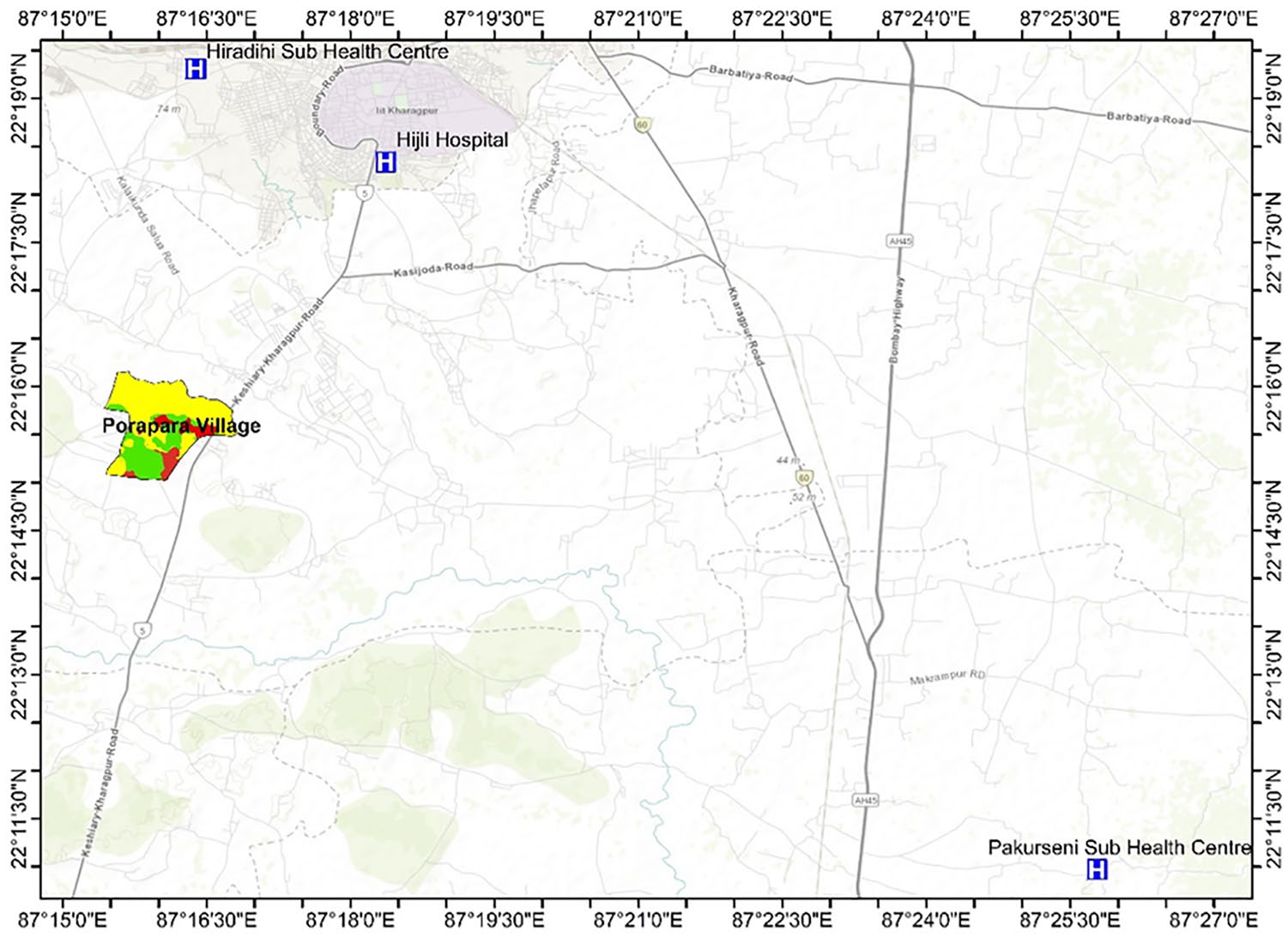
Location of hospital and health centers nearby study area.
Before the researcher’s intervention, it was evident from the field observation that the households in the first hamlet were mainly dependent on personal wells located in their backyard and community tubewell for their drinking water requirement. It was noticed that among these targeted households, around 20 families were taking water from their own wells and 100 households from community tubewell.
The drinking water intervention basically takes place through convincing the villagers regarding the necessity of a water filtration unit and to increase their participation as the success of this intervention basically depended on the active participation of the community. After a series of group discussions (more than 15), they agreed to donate land, where the purification unit was going to be established. It fulfills the primary criteria that villagers themselves should come forward to donate land, containing thick aquifer for the installation of the water purification unit. It also ensures community participation and aids in the development of sense of ownership of villagers about the project. Following the handover of the land, the digging of bore well with the installation of a submersible motor of 1 HP was made at the project site which marked the initiation of this stage. Consequently, a room of 250 square feet was constructed for the setup of the water purification unit including the installation of different types of filters and other equipment according to the raw water quality. Before the installation of filters, water quality was checked at the designated laboratory, which helped to decide filter types and their capacity. After the installation of this purification unit, village committees were formulated and rules and guidelines were defined. In January 2018, the project was ultimately handed over to the community for utilization and management.
The Way Information Were Explored
The study’s sampling frame is based on the Porapara Village community, where people have been actively involved in the operation and maintenance of the potable water system for the last three years. The pilot survey carried out in this study area revealed the fact that the principal supplies of drinking water for the examined homes were unimproved resources such as ponds and open dug wells. The current study tries to incorporate the perception of the community regarding challenges and benefits in drinking water supply. Data collection occurred during the period of 2018–2019. Data were collected from households who basically use the water system. To analyze the impact of the water project, Participatory Rural Appraisal (PRA) and interview were conducted to collect public opinions.
The PRA is the most appropriate method for translating the objective because it supports establishing and improving communication channels and implementing plans with the help of several tools and techniques like focused group discussion, participatory mapping, timeline mapping, personal interview, and transect walk. According to the definitions, PRA is a set of principles and methods that encourage people of a village to effectively engage in raising and analyzing their knowledge of their living conditions to develop the best feasible action plan. As a consequence, incorporating rural people’s expertise and perspectives improves development project and program planning and management. This action plan and planning approaches act as a guide to solve societal problems (Zaheer et al. 2022). Moreover, the literatures reveled that it is also a useful approach for empowering the community which helps them to solve their own problem through participation in planning, decision-making process, and management of the program in the post-construction phase (Abhinav Reddy et al. 2022; Triatmanto and Natsir 2019).
For the fulfillment of the objective of study, among PRA methods, transect walk and resource mapping are used to understand village resource base, and timeline mapping is used to identify the intervention in drinking water supply. Face-to-face interview and focus group discussion with 15–14 members at different time scale also took place which cover aspects like affordability of the price of drinking water, quantity of water, changes in water quality, health improvement, reducing health care expenses, increasing number of working days for adults and school-going days for children from the period they started consumption of potable drinking water from the purification unit in their preferred language, that is, Bengali. For this purpose, almost all the households (137 households) were taken into consideration for the interview. To understand community perception regarding water quality improvement and the project’s overall benefit, Likert scale is used. Interviewees were requested how much they agreed with each opinion. The five-item response scale recorded answers regarding water quality improvement ranging from “most significant,” “significant,” “average,” “least significant,” and “insignificant.” Similarly, for the project’s overall benefit the 5-point response scale ranges from “highly beneficial,” “beneficial,” “neutral,” “non beneficial,” and “least beneficial.” The collected data were analyzed using quantitative software (Image 1).
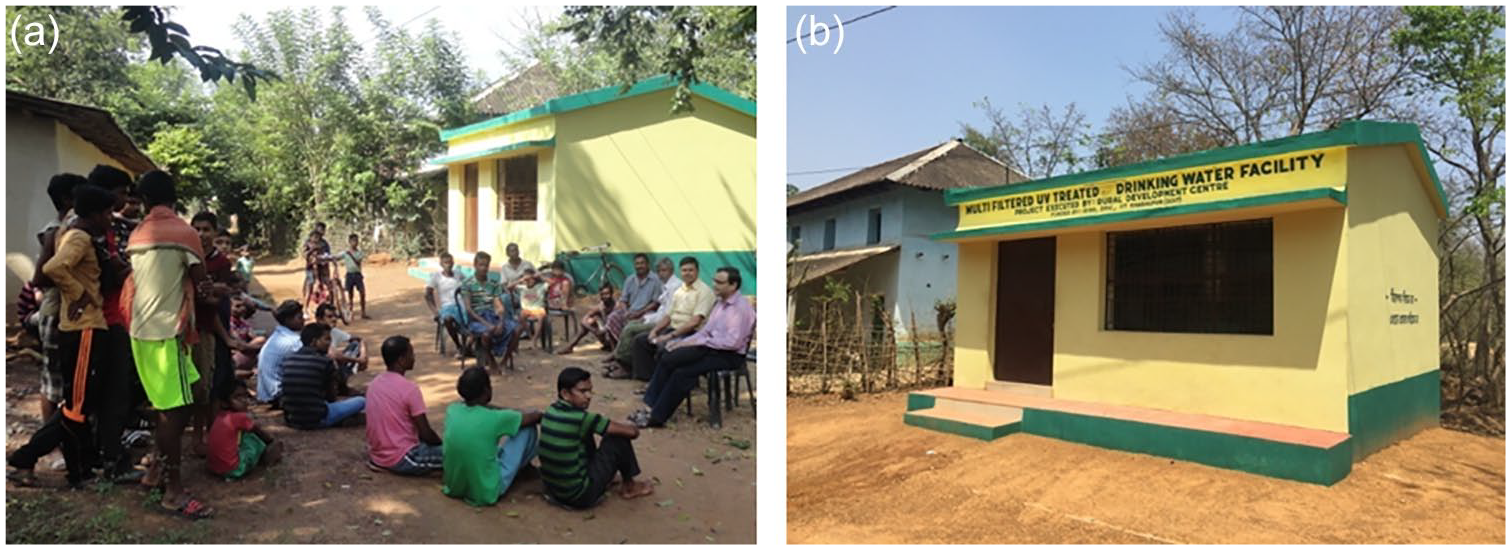
(a) Group meeting with the villagers and (b) the water purification unit.
Results and Discussions
The Porapara water purification unit provides potable water at a nominal cost, that is, one rupee per household per day for fifteen liters of drinking water, and households are given the responsibility for the operation and maintenance. The overall findings (Figure 4 and Figure 5) are discussed under the subsection—the first section discusses about the development of cost-sharing behavior, the second section tries to capture the community’s response toward changes in water quality. The third section summarizes the outcome of health care expenses and the number of working days after the intervention. The fourth and fifth sections, respectively, conceptualize the impact of intervention on overall benefit from the project and number of school-going days for children. Finally, the last two sections, the sixth and seventh sections, present willingness to pay behavior and participation, coherence in management in the potable water sector.
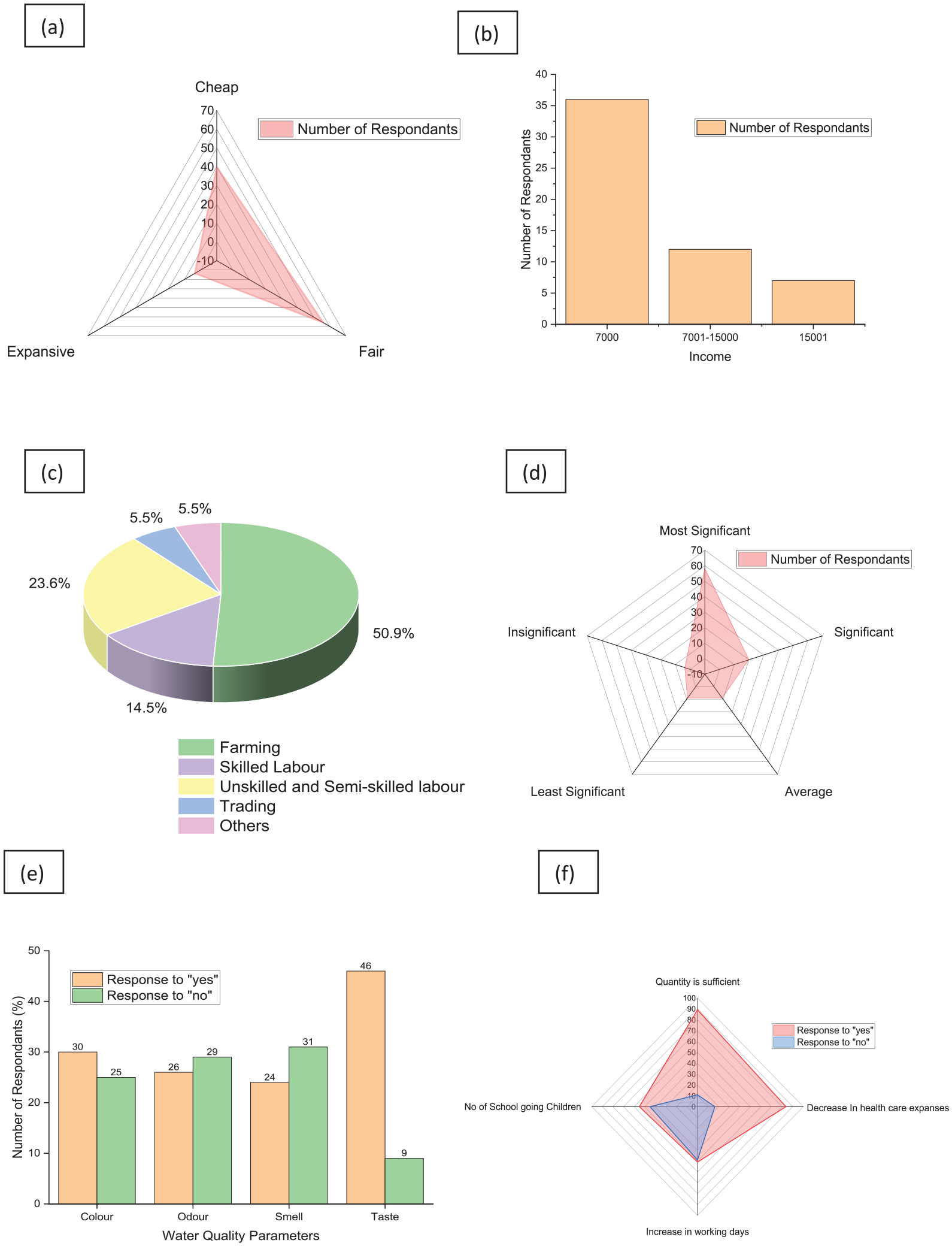
Schematic presentation of socioeconomic features and drinking water related issues of the concerned village community: (a) cost of purified water; (b) income of the community; (c) occupational structure; (d) change in water quality; (e) change in water quality parameters; (f) sufficiency of water quantity, decrease in health care expenses, increase in working days and school-going days for children (No. of households = 100%).
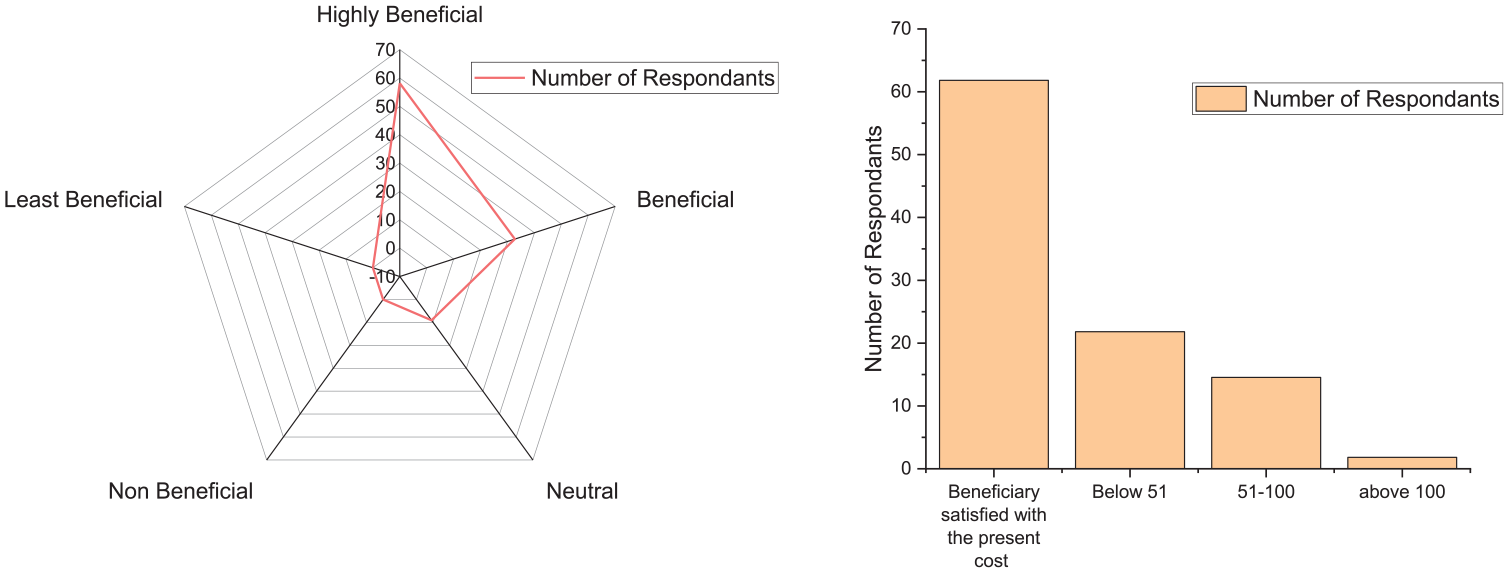
(a) Overall benefits of the Project; (b) willingness to pay by beneficiaries.
Development of Cost-sharing Behavior
After installing the water purification unit, households in the study area which showed interest in collecting water from this unit were provided with Radio Frequency Identification (RFID) cards. At the payment cost of just one rupee, the household is able to get 15 liters of potable water daily. The RFID card retained by the individual household gets recharged on the first or second day of each calendar month with a mastercard. It is revealed from the surveyed result that in terms of cost (which is affordable to all community members) and the quantity of purified water, around 97 and 89 percent of the households, respectively, agreed and were satisfied with the price they were paying for the amount of water. The reason behind satisfaction of price may be the community’s socioeconomic background. They are basically engaged in farming or unskilled or semiskilled labor whose monthly income ranges from Rs. 3,000 to Rs. 30,000. Besides, the minimal cost of paying has a significant impact on the formation of cost-sharing behavior. This result is in line with the findings of Teodoro (2018) who believed that appropriate depiction of affordability is crucial since utility management aims to assist low-income consumers while simultaneously producing the revenue needed to sustain and promote public health and conservation. Raising or putting more charges for drinking water service delivery than the average income may have substantial impact on water provision, accessibility, and also affordability of water which are closely associated with hygiene, health, well-being, socioeconomic upliftment, gender and social equity, education opportunities in developing and least developed countries, and thus create the situation of water poverty, consumption of unsafe water, and financial hardship by households (Harris 2012; Mahmood and Sharma 2009). To avoid such situations, water pricing policy should consider policies on tariff structure and social income assistance. Low water costing for the required quantity of water for drinking, preparing food, home cleanup, and sanitation is a goal of tariff structure policy. Income support and payment assistance policies, on the other hand, offer a different way to promote social fairness, justice, and cost-effective water pricing. Therefore, setting affordable water prices is the key to a healthy society.
Willingness to Pay
The analysis figured out the fact that 61 percent respondents are happy with the amount right now they are paying, that is, one rupee per day per household for 15 liters of water. We have found that the remaining 39 percent respondents they are ready to pay more than the amount they are currently paying, if it is required. Economic valuations of water resources may play an important role in measuring human well-being. Valuation helps to understand the scarcity nature of natural resources (i.e., drinking water). The study found that the population of adults in a family, the duration it takes to bring water, and the portion willing to pay for a suggested development in water system provider, as well as education, profession, family size, perception water quality, as well as water service durability, all influence household-level willingness to pay for enhanced water supply delivery (Bamimore, Farayola, and Amao 2015; Odwori 2020). The study outcome is also consistent with the findings of Polyzou et al. (2011) who considered social capital and drinking water quality improvement as a significant explanatory parameter of willingness to pay. This also contributes vital data for determining project commercial feasibility, determining affordable tariffs (user fees), analyzing policy options, determining economic health, and developing socially equitable incentives (Lema and Beyene 2012). From the facts derived through household survey, it can be stated that adequate quantity of drinking water at minimal price, significant improvement in water quality, decrease in medical cost, and increase in productivity drive the willingness to pay behavior and attitude among the respondents. This in turn improves the maintenance of drinking water service through fast cost recovery, which means financial resources are sufficient to cover all operation and maintenance costs. Thus sustain the service delivery by minimizing breakdown phase.
Water Quality
Everyone from the concerned village cluster agreed regarding significant changes in water quality after purification. Alongside the collection of overall opinion about changes in water quality, this study also collected the perception of local people regarding changes in different parameters of drinking water quality. Of the four primary parameters (like, taste, color, odor, and smell) that define water quality, most of the households agreed with a change in taste and color (i.e., 84 and 55 percent, respectively), but at the same time, they were less concerned about the changes regarding smell and odor. Here in this project, raw water passes through a sand filter, carbon filter, and two 5-micron filters. Finally, ultraviolet (UV) treatment is used to treat raw water and to produce a better quality of drinking water. UV treatment is a low-cost method of disinfecting drinking water (Choi and Choi 2010), and also includes pathogen killing capabilities, which bodes well for satisfying today’s drinking water regulative standards (Vaezi et al. 2007). Because of the presence of strong germicidal (inactivating) ability, it is a disinfection that kills viruses and bacteria in water, and it is also efficient against protozoans like Giardia lamblia cysts and Cryptosporidium oocysts (Oram, n.d.). Purified water results in significant positive impacts on health. The paper “Experimental Study on Health Effects of Long-term Drinking Purified Water” (Shu et al. 2007) stated that in terms of genotoxicity, drinking purified water was found to be safer than tap water, filtered water, and boiled tap water in a series of experiments conducted by their team since 1998.
Health Care Expenses and the Number of Working Days
From the survey, it is revealed that about 84 percent of the families have accepted the reduction in their health care expenses, whereas in terms of an increase in working days, 51 percent of the families agreed. It is because of the fact that before the intervention, most of the family used unprotected and unsafe water sources for drinking purposes which basically leads to more health care expenses and decrease of working days. After the drinking water intervention, multi-filtered UV-treated water helps in removing heavy metals, chemicals, and microbes and harness raw water from the concerned borewell, keeping the existing natural minerals intact as per WHO guidelines. Consumption of good quality drinking water is the key to sound health. This in turn helps to reduce health care expenditure and increase the number of working days. Reddy, Kullappa, and Rao (2008) in their paper explored that those residing below the poverty line (BPL) suffer significant expenses as a consequence of poor water quality in terms of turbulence and microbial contaminants, as well as lost working days. Our research also supports that expenditures are higher among BPL families and especially among women in the setting of medical expenses, losing of working days and expenditure on improved water. Therefore, maintenance of good health depends on factors like improved water quality, adequate water quantity, accessibility, reliability, cost of the water and above all ease of management (Hunter, MacDonald, and Carter 2010). Otherwise, poor health conditions adversely impact the income level of the household and indirectly impact on the health of women and children who fetch water from distances (Bosch et al. 2001).
Increase in Number of School-going Days for Children
Around 45 percent of respondents believed that accessibility and affordability to improved drinking water supply increase the number of school-going days for children. While around 47 percent of respondents did not reply about the impact of improved water supply on the increased number of school-going days. Our research also supports the kind of research findings that have been done by Lau et al. (2012) in Africa. According to them, waterborne diseases are the main reason for 75 percent of all school absences. School-based WASH intervention plays a prominent role in reduction of diarrhea incidence and days of illness (Freeman et al. 2014). Santiago Ortiz-Correa, Filho, and Dinar (2016) in their paper underline the positive impact of the role of accessibility on schooling. This paper demonstrates how inequality in access force students to invest more time in gathering, carrying, and maintaining water storage than it is spent attending school or doing assignments. This paper provides similar instances of reduction of health care expenditures, and increasing productive time through improved accessibility to drinking water by the households, which in turn also help in avoiding the expenses of a household person’s early demise. Hasan and Gerber (2017) in their paper argued that costly piped water delivery interventions are unable to produce favorable repercussions on water quality and child health, and statistically positive impacts in improved water access, time, and distance reducing have been shown to be practically insufficient in effect size.
Participation, Coherence in Management
After the installation of the water purification plant, the main work was to form committees for the smooth functioning of the project. For this purpose, three committees were setup by the appropriators with the help of the initiator. Among these three committees, the first one was the management committee, basically a kind of “water user group” informal in nature that included one member from each household who was part of this project. Once every month, this committee discusses the overall performance of the project. The second committee was an operational committee that mainly consisted of three young villagers. Members belonging to this operational committee were primarily responsible for the daily operation and maintenance of the unit. For performing these operations, informal training was given to these members, thereby giving them a central role in the operational management of the project. Finally, the third committee consisted of a three-member finance committee. The main function of this committee is to collect money from each household, who have been using drinking water from this unit at the beginning of the month. After collection, they deposit the money in the joint savings bank account opened in the name of these three finance committee members. The amount was used to pay for electricity bills and any other maintenance cost associated with this unit. Moreover, to regulate maintenance costs, everyone agreed to run the unit for just two hours a day in the morning. Apart from these important rules, the registered beneficiaries also agreed not to provide water from this unit for any other large-scale community affairs like marriage ceremonies, and also not to produce for any commercial purpose. At the same time, no household from the concerned community will take any unfair benefit out of this project unit. Thus, smooth functioning of the project is achieved through fast recovery of the system and thereby minimizing the number of the breakdown phase in the study area. The report “Support to Community-managed Rural Water Supply by the Water and Sanitation Management Organization in Kutch District, Gujarat” (Chary Vedala, Uddaraju, and Jasthi 2015) took into account the assistance of water organizations as well as society involvement in the fixation as well as acquisition of water tariffs, such as tariff record keeping, water distribution providers (everyday, frequency, length of time, etc.), controlling the use of various local sources, organizing system function, conducting out slight renovations (either by a villager or by an extraneous paid service), and chlorination at the village and household level, and water quality testing, thus guaranteeing adequate infrastructure usage, cleanliness near sources, and serve an important function in community water supply management. Addis Beyene (2012) also takes into account distances and involvement of women in the decision-making process as key in decreasing the failure rate of newly installed water supply systems. Satisfactory subsidies, enough resources and capabilities, suitable procedures for water system operational activities and upkeep, impactful inter interactions, technical assistance, beneficial supervising, assessment, and feedback mechanisms are all important factors in the prosperity of community-managed water delivery services in developing nations, according to Rondinelli (1991).
Overall Benefit from the Project
Regarding the project’s overall benefit, all the respondents consider it the most significant project in sustaining their livelihoods. The reason behind it is that before installing a water purification unit, the people had to depend on untreated and pollutant water from wells and community tubewell. They were forced to take the impure water, and during the summer season, when the water bodies mostly dried up. Even for better access to drinking water, the women community used to travel long distances. All of these result in extreme drudgery for women, increase health care expenses, and thereby losing working days. Occupationally, the villagers are mostly daily wage earners and are associated with agriculture and other wage laboring jobs in the surrounding area of Kharagpur. Therefore, reducing working days means lessening of earnings. This water purification supply system improves the water quality and reduces physical labor and time for fetching the purified water from this community water facility. This outcome supports the evidence given by Prokopy (2009) who argued that active participation in new water scheme provides multitude benefits to the households and these benefits depends on the certain attributes like presence of large homogeneous groups, greater social cohesion, low economic disparity, low opportunity costs, and potential benefits. Consequently, family could gain satisfaction and water benefits through their financial investment allocation and participation at meetings. Aside from increased water quality (drinkability, transparency, and viscosity) and services (consistency and reaction to objections), the poor benefit from affordability since it reduces their anxiety of political and social upheavals (Zaki and Amin 2009).
One of the major limitation of this project is to keep common villagers motivated in terms of voluntary participation to run, manage, and protect the potable water purification unit for a long period of time.
Conclusion
The overall aim of the study is to access the impact of provision of safe water under community-managed water supply system on the socioeconomic upliftment from different perspectives. Therefore, it tried to address the above-mentioned research questions mentioned in the introduction section, that is, (1) how this initiative may address a common problem, that is, accessibility of good quality drinking water on a daily basis, and (2) how this community initiative may bring a positive change in societal well-being. It is seen that rural communities in Porapara village were increasingly centered to find a suitable solution to the drinking water crisis. Active community participation, from the stage of initiation to the transferring of full responsibility of the project, holds an important place. Even in the post-construction phase, in terms of management, cost recovery in this project has led to a positive outcome toward sustaining the project in the long term.
From the result of second research question perspective, it is also reveal that this community-based water supply project significantly impacts the lives and livelihoods of Porapara village. Community’s response toward the “most significant” changes in water quality (around 60 percent of respondents), “affordable price” (97 percent of the respondents), and “adequate quantity” (89 percent of the households) drives positive impact on societal well-being. This effect can be seen through health improvement, increased number of working days, time savings, and so on. In terms of accessibility to improve water, affordability, sufficient quantity, and improved water quality, this project takes priority among the community. Moreover, the community’s mindset to increase the payment for this water project also highlights their encouragement to maintain this project and handle it for the long run.
The social change (in terms of well-being) is already evident from the outcomes, which incorporate good governance, improved water supply, and thereby societal development. From the findings, it is conceptualized that the active community participation lead to better decision-making approach, better decision-making approach contribute to better management, and better management lead to increased accessibility and affordability, which ultimate lead to the community well-being (Figure 6). Our findings are also beneficial for policymakers, in addition to improving academic knowledge. For example, governmental and non-governmental organizations (NGOs) focusing on water provision and associated socioeconomic well-being of the community in our study area can shift their efforts to the active participation of the community, demand of them and their perception in socioeconomic upliftment in the post-installation phase. We propose that, based on our findings and site inspections, policymakers should look forward to community preferences, their basic demand, choices of appropriate tariff system on the basis of their affordability, capacity building at different levels through resource mobilization and empowerment of local users under community-managed drinking water systems.
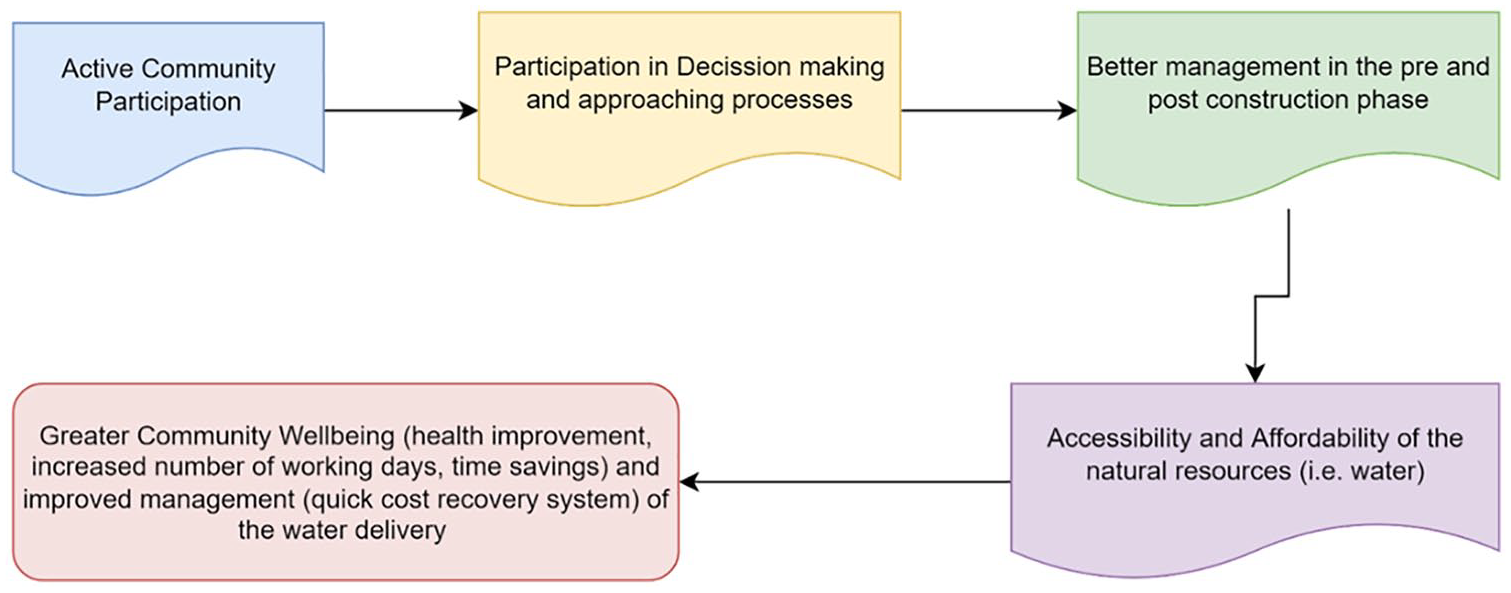
Flowchart of well-being of the community.
Footnotes
Acknowledgements
This study was supported by the Indian Institute of Technology Kharagpur. We also thank villagers for their active participation and cooperation.
Declaration of Conflicting Interests
The author(s) declared no potential conflicts of interest with respect to the research, authorship, and/or publication of this article.
Funding
The author(s) received no financial support for the research, authorship, and/or publication of this article.
Ethics Approval
This is based on original research work based on empirical study and demonstrated research project in the village. Written consent was taken from all the participants.
Consent to Participate
All the participants are involved and give cooperation in this study.

Availability of Data and Material
Data will be provided on reasonable request to the corresponding author.