




Abstract
Alternatives to animal models, including computational-based approaches, are now prioritized by regulatory and funding agencies in biomedical research. Despite this shift in policy, computer models in tissue engineering and regenerative medicine remain underutilized and have not been fully integrated into research and development pipelines. This study aims to identify current and emerging computational techniques in regenerative biomaterials through comprehensive bibliometric analysis and to examine future directions in the evolving field of tissue engineering. Using the Web of Science database, a total of 678 studies with a primarily computational component between January 1, 2014, and March 31, 2025, were included in the analysis. Studies were grouped by computational method (e.g., computational fluid dynamics [CFD], molecular dynamics [MD], agent-based modeling) and by tissue type (e.g., bone, cartilage). Our analysis found that CFD/finite element modeling (FEM) was the most common computational method used for biomaterial research. Based on co-citation and co-keyword network analyses, CFD/FEM was primarily applied to study and optimize material properties like viscoelasticity, porosity, and microstructure. Parameter estimation and sensitivity analysis were a key application across all computational methods. Timeline and thematic analyses identified that modeling of stem cell biomaterials is an emerging topic, including research to emulate cell behavior, scaffold mechanics, and their complex interactions. Hybrid models, especially combining CFD/FEM with MD, are likely to become more prevalent to integrate multimodel data. Since 2023, data-driven models including machine learning and artificial intelligence have emerged as surrogate models for complex mechanistic simulations. However, concerns about data scarcity and the interpretability of these models must still be addressed to meet regulatory standards. Integrating data-driven and mechanistic models creates a synergistic solution that overcomes the limitations of either method alone. Informed by insights from this bibliometric review, researchers can confidently apply computational techniques for innovative biomaterial solutions in tissue engineering and regenerative medicine.
Impact Statement
Computational modeling is at the forefront of design and development in tissue engineering and regenerative medicine. This review uses bibliometric analysis to synthesize the research landscape of computational modeling for regenerative biomaterials over the last decade. We identified established and emerging computational techniques, such as computational fluid dynamics and mathematical models, for the optimization of scaffolds, cell dynamics, and manufacturing methods. Owing to the growing complexity of biomaterial engineering, partly driven by high-throughput data, future computational pipelines will likely rely on hybrid models that integrate mechanistic modeling with machine learning and artificial intelligence.
Keywords
Introduction
Investment in biomaterials for regenerative medicine has increased substantially, with the global market valued at $9.9 billion USD in 2019 and projected to grow 14.2% annually through 2027.1,2 This growth reflects significant expansions in tissue engineering and regenerative medicine (TERM), ranging from personalized implants and vascular grafts to natural repair polymers, bioadhesives, and smart materials.3–8 Unfortunately, the research and development (R&D) process for TERM products remains a significant bottleneck. Current estimates indicate that approximately 17 years are required for therapeutics to advance from the early research stages to widespread clinical application. 9 For instance, despite over 50,000 published studies on scaffolds between 1987 and 2023,10,11 only 13% of associated trials reached Phase 2–4 (Safety & Efficacy, Pivotal, and Post-Market Surveillance trials) of the U.S. Food and Drug Administration (FDA) regulatory approval pathway.6,10,12
A primary R&D challenge for regenerative biomaterials lies in tailoring material composition and properties to specific applications and tissue requirements. Customizing a biomaterial demands careful optimization of interdependent factors including scaffold architecture (e.g., pore size, fiber diameter, crosslinker density), biological components (e.g., cells, growth factors, proteins, RNA, antibodies, peptides), physical and mechanical characteristics (e.g., stiffness, geometry, stability).13–18 Given the near-unlimited possibility in biomaterial design and the ensuing manufacturing costs, a complete reliance on in vitro or in vivo testing for biomaterial development is no longer practical and sustainable. 19 Disparities between animal models and humans create additional unresolved obstacles to clinical translation. In response, regulatory agencies are emphasizing alternative models such as advanced cell culture (organoids) and computer simulations in approval pipelines, as now mandated by the FDA Modernization Act 2.0/3.0 and outlined in the 2025 FDA roadmap to phase out animal testing for monoclonal antibodies and therapeutic drugs.20–22
High-fidelity computational models are increasingly used to complement conventional cell culture and animal models in biomaterial development and evaluation. 23 Computer-aided design (CAD), for instance, has already been well-established in supplementing existing biomaterial manufacturing methods, such as scaffold design prior to 3D bioprinting. 24 Beyond manufacturing, computational models can also tackle complex design challenges, particularly in critical size defect (CSD) repair. Biomaterials for CSD require optimization of numerous design parameters related to oxygen and nutrient flow that become especially important at larger scales. Initial cells’ seeding density and pattern, seeded cell types, oxygen supply, and growth factors within the biomaterial all play significant roles in the final healing outcome of CSD. 25 Partial differential equations and agent-based models (ABMs) have successfully identified how these factors affect the healing of critical-size bone defects.26,27
Selecting a suitable modeling technique depends on the biological scale of interest because each technique offers unique strengths and constraints in the context of biomaterial science (Fig. 1). At the molecular and subcellular scale, simulation techniques such as molecular dynamics (MD) and Monte Carlo are often employed for applications like drug activity analysis and protein function studies, including interactions between small molecules and biomaterial surfaces.33,34 MD simulations utilize fundamental equations of motion to predict the structure and kinetics of molecules. Molecular simulations are often computationally demanding, mostly simulating processes occurring in the order of nanoseconds to microseconds. At the tissue scale, cellular automata (CA) and ABMs simulate cell-environment interactions and their collective outcomes in tissue morphology. 35 CA operates through discretization in time and space and follows rules based on physical principles (e.g., diffusion of cytokines and growth factors) and biological processes (e.g., migration, proliferation, and death of cells), simulating anywhere from seconds to weeks at a time. Owing to their stochastic nature, CA and ABM can naturally capture the biological variation typically observed in humans, particularly in inflammation and repair mechanisms.36–40 However, additional model complexity, such as larger rule/parameter sets, can substantially increase computational expense.
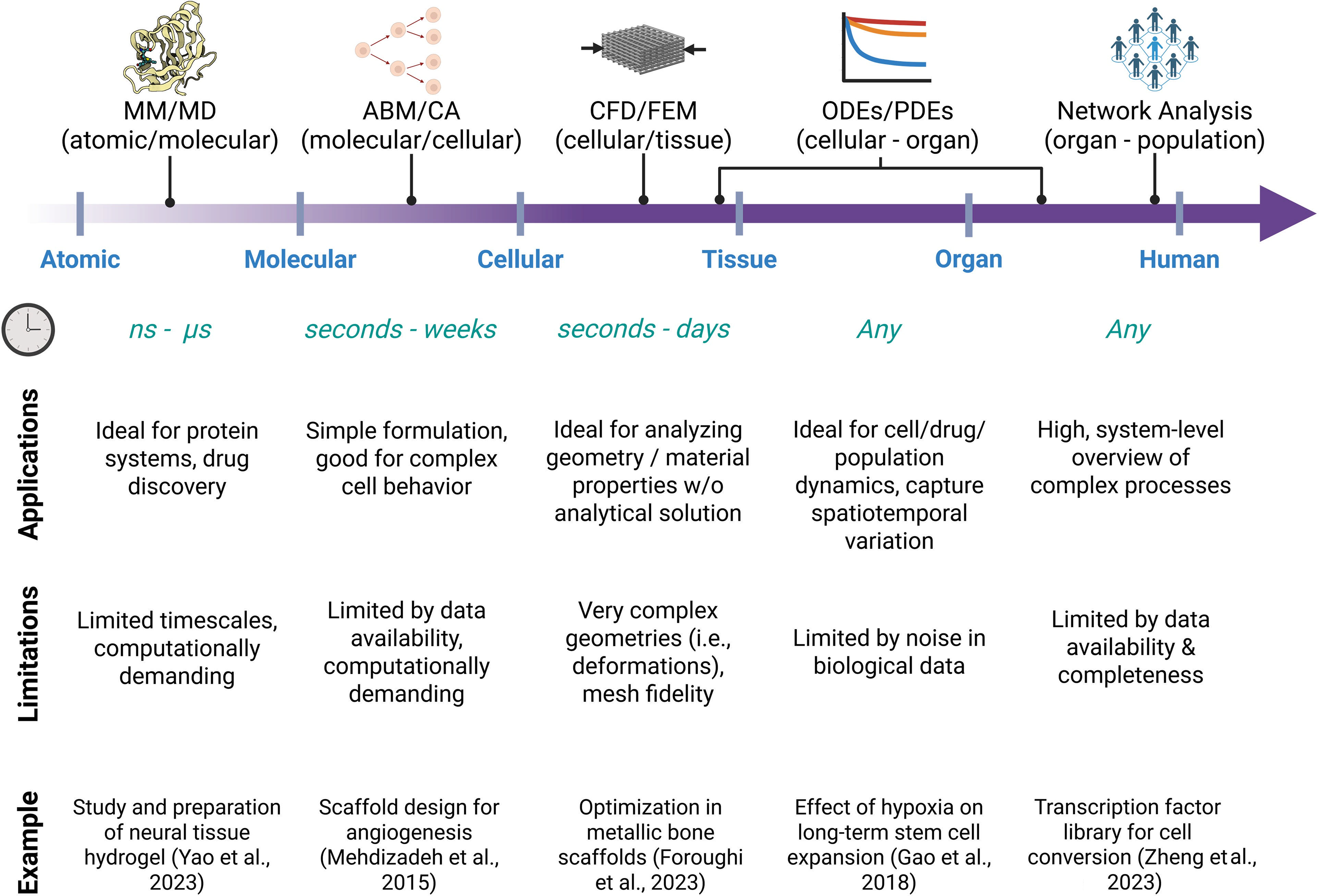
Overview of applications, limitations, and examples for some common types of biological modeling. MM/MD, molecular modeling/molecular dynamics; ABM/CA, agent-based modeling/cellular automata; CFD/FEM, computational fluid dynamics/finite element method; ODEs/PDEs, ordinary differential equations/partial differential equations. Examples from the literature can be found in reference.28–32 Created using BioRender.
Continuum-based approaches, such as ordinary differential equations (ODEs), can also predict cell population dynamics or drug/cytokine kinetics in biomaterials or in the body.41–43 Similarly, finite element models (FEM) can simulate physical phenomena such as tissue or biomaterial swelling and fracture.44,45 Computational fluid dynamics (CFD) uses FE and finite volume methods to simulate fluid flow (e.g., blood) and quantify the resulting mechanical forces on cells within a biomaterial.46,47 CFD/FEM are established in tissue engineering and often have well-defined and known inputs. These continuum approaches can operate on a wide range of spatiotemporal scales but can also be limited by physical complexity (CFD/FEM, e.g., large deformations in soft materials) or by noisy biological data (ODEs).
With the growth of artificial intelligence (AI), computational studies incorporating machine learning (ML) are gaining attention in TERM. ML applications range from biomaterial design to biological characterization. For example, big data-driven models predict hydrogel formation and optimal copolymer enzyme activity.48,49 ML methods refine bioprinting and fabrication parameters.50,51 Deep learning analyzes image-based data to predict cell phenotype, patterns, and fate.52–54 Generative adversarial networks (GANs) design scaffold architectures.55,56 While bioinformatics and omics approaches enhanced by ML techniques such as variational autoencoders for spatial transcriptomics 57 and classification models for proteomics-based diagnostics 58 constitute a major computational domain in TERM, they primarily provide molecular characterization of regeneration and disease processes. This review focuses specifically on mechanistic and continuum models that simulate biomaterial behavior and cell-material interactions. These simulation models predict system behavior and biomaterial performance, distinguishing them from bioinformatics approaches that generate molecular signatures and outcome measures. However, the integration of ML with mechanistic modeling represents an emerging frontier, demonstrating the convergence of these previously distinct computational domains. 59
Computational technologies are advancing in biomedical applications. However, their integration into TERM research has yet to be fully realized. With the current policy shifts in federal regulation and funding agencies, TERM researchers are anticipated to adopt digital technologies more extensively in the near future. Previous related literature reviews have focused on a specific type of modeling (e.g., CFD/FEM, ML) or specific aspects of biomaterial application (e.g., biofabrication).23,60–62 The primary goal of this review is to analyze research trends in computational approaches, including continuum, mechanistic, and data-driven models for regenerative biomaterials, and identify emerging opportunities and prospects for advancing research in this TERM niche. A comprehensive bibliometric analysis was employed to identify key research hotspots and themes that guide computational tool selection in TERM applications. Whereas systematic reviews and meta-analyses are useful in evaluating individual study quality and statistically combining findings across studies, respectively, a bibliometric approach provides comprehensive data on research output and impact while allowing efficient examination of extensive literature.63,64 In this study, we sought to answer the three major research questions below. In the last decade, what computational methods have been used to model regenerative biomaterials? What are the common biomaterial and tissue-focused objectives for each type of computational method? What are the fundamental versus emerging research trends in the use of computational science to study regenerative biomaterials?
Methods
Data collection
This review protocol was registered on the Open Science Framework (DOI 10.17605/OSF.IO/HMKA3). All articles used in this review were sourced from Web of Science (WoS) due to its global prominence as a platform for scientific citation searching and to ensure standardized retrieval of bibliometric metadata (e.g., keywords) across all articles and all screening steps. WoS contains millions of bibliographic records and citation connections across a variety of countries, time periods, and knowledge domains. 65 The search term “(hydrogel OR scaffold OR ‘cell therapy’ OR ‘stem cell’) AND ((computational OR mathematical OR ‘in silico’ OR theoretical OR numerical) AND (simulation OR model*)) AND (biomaterial OR ‘tissue engineering’ OR ‘regenerative medicine’)” was applied to “All fields” of the database. The resulting list of documents was screened independently by two researchers to reduce bias. Any discrepancies between the independent screenings were reviewed and rescreened collaboratively. Primary screening was performed on WoS based on the following criteria: all documents must have been published between January 1, 2014, and March 31, 2025; all documents must be published in English; and the document type must be an original article. This excludes review papers, books, proceeding papers, etc. Secondary screening was then performed on Endnote 21 (Clarivate) on the following criterion: all documents must have their primary focus be a computational or mathematical model for regenerative biomaterials. This screening was performed by first reviewing the title and abstract of each document and then, if necessary, the full text. In addition, documents not adhering to the criteria of primary screening that were not excluded by WoS, and those that could not be retrieved via institutional access, were manually excluded. The search was finalized on November 14th, 2025, incorporating updated terms to capture a wider range of computational studies (e.g., “in silico,” “numerical”). This process yielded a total of 678 articles after secondary screening (Supplementary Fig. S1).
Studies were also sorted into categories by computational and/or mathematical methods: ABM/CA, CFD/FEM, equation-based, hybrid, molecular modeling (MM)/MD, ML, network, and other. This initial categorical search was conducted using the search function on the full list of studies in the WoS database. Then, articles that were not sorted using the search function were screened and sorted manually. Articles in the “other” category were determined during this screening step and include studies that develop unique computational pipelines or algorithms that do not fall into any of the named categories above (e.g., CAD modeling from image detection). Some studies fell under multiple categories, e.g., articles that compared two types of methods, or articles that used mathematical modeling to set up a CA or FEM experiment, from the search step. Instead, the “hybrid” category search found articles that contained hybrid models as explicitly defined by the authors. As such, some articles were counted in more than one subcategory but were only counted once (i.e., by unique DOI) in the full list of studies to avoid overlapping. Here, we defined “hybrid” as studies using more than one distinct computational or mathematical method as part of one framework. “Multiscale” referred to hybrid models that specifically simulated the same system at different biological scales. For deeper insight into the tissue-specific use of computational models, articles were further categorized into major tissue types, namely, bone, cardiac/arterial, cartilage, connective tissue, lung, muscle, neural, and skin, using simple search terms in Endnote 21.
Bibliometric analysis
Publication, citation, and journal metrics
The “citation report” tool on WoS was used to extract data regarding the number of publications and citations of the screened documents per year, as well as the number of documents categorized into each computational method both in total and per year. Graphs were generated in GraphPad Prism version 10.0.0. The “analyze results” option on WoS was used to produce a tree map of the top 15 journals with the most publications. The tree map was annotated with the Journal Impact Factor (JIF) and 5-year JIF by Clarivate and CiteScore by Scopus. The pyBibX package in Python was used to generate word clouds using articles’ abstracts. Word clouds and other forms of keyword-based analysis can reveal areas of focus in a body of literature.
Co-occurrence networks and clustering
Co-citation networks (a form of co-occurrence network) can elucidate the underlying organization in a body of literature by mapping and connecting pairs of articles that are cited by a third article. 66 Clustering further simplifies this analysis by grouping instances (in this case, documents) that correspond to an underlying theme of research based on the density of nodes’ links to each other vs. to other clusters.
The plain text file containing the full record and cited references of the 678 documents was exported from Web of Science as a plain text file and imported into CiteSpace, a globally utilized network analysis and visualization software [version 6.3.R3 (64-bit) Advanced]. 67 Network analysis facilitates the visualization and interpretation of patterns in a scientific domain. Co-occurrence networks (i.e., the mapping of instances that occur together) can be generated from authors, countries, documents, words, and citations. 68 Default parameters were used for all settings (Supplementary Table S1). CiteSpace was used to generate article co-citation networks, which link documents that are both cited by a third, shared document, by setting the Node Types parameter to “Reference.” 66 The size of the node indicates its prominence, which, in the case of articles, is measured by citation count. Closely related nodes form clusters that indicate the presence of subtopics within the main topic. A timeline was then generated of the clusters to map the emergence of trending topics. In the co-citation timeline view, nodes are additionally marked with purple tree rings to denote high betweenness centrality (node that connects two or more large groups of other nodes) and red tree rings to denote burstiness (an abrupt change in frequency of citations). The thickness of the tree ring around a given node correlates to the number of citations in each time slice received by the corresponding document, and the color indicates the time slice (year). 67
CiteSpace was used to generate clustered co-keyword networks (Node Types parameter set to “Keyword”), which operate with keywords as nodes and link co-occurring keywords. All cluster names are extracted from document keywords. As cluster labels are automatically generated, they may include both generic terms (e.g., “mathematical modeling”) that could apply across several modeling types or TERM domains, as well as specific terms (e.g., “angiogenesis”) that apply to a smaller area of work. CiteSpace network clusters are numbered by their size (i.e., the largest cluster is #0). CiteSpace displays the largest connected component of the network analysis; that is, the largest group of clusters that is interconnected. As such, some cluster numbers may not be displayed in CiteSpace clustering figures irrespective of their size (legend labels in gray) or would be missing in the clustering metrics summary (Supplementary Information). 69 Cluster ID, Size, Silhouette, and Average Year metrics are provided for clustering plots in this study. Silhouette scores describe the homogeneity of the cluster (i.e., commonality between items within the cluster). Average Year refers to the average publication year of the cited articles in that cluster.
VOSViewer was used to create a keyword co-occurrence matrix. 70 A.bib file containing the full record of 678 articles was imported, and a small number of synonyms were added to reduce repeat keyphrases (e.g., “finite-element” merged into “finite element”). The default/recommended clustering parameters were used. The resulting network file was loaded into RStudio, and the ggplot library was used to visualize the matrix as a heatmap.
UpSet plot
Many papers use a combination of computational models in their methodologies. An UpSet plot was produced to better visualize the intersection between various models. To analyze methodological overlaps, the model categories were first sorted into non-intersection groups (e.g., “CFD/FEM only”) or intersection groups (e.g., “Equations & MM/MD”) using ChiPlot. We note that articles that fit into an intersection group, such as “Equations & MM/MD,” are not necessarily sorted as a “Hybrid” model. A given article can use two different computational methods without necessarily incorporating them together into a hybrid model or describing it as such. The resulting data were visualized using the UpsetR ShinyApp, focusing on the top 12 intersections for readability and interpretability. 71
Thematic map analysis
The open-source R package bibliometrix and its associated web app, biblioshiny, were utilized to create a thematic map and evolution of the body of literature in this review.
72
This visualization provides a more easily interpretable and accessible visualization combining both performance analysis (evaluation of researchers’ and institutions’ scientific activity) and science mapping (analysis of the underlying structure and dynamics in a field of research).
73
The thematic map was generated using author keyword metadata to form a clustered co-keyword network. The clusters, or themes, are then placed along a bivariate map according to their cluster density and centrality, resulting in 4 quadrants:
motor themes that have high density and centrality, reflecting important and well-developed topics, niche themes that have low centrality but high density, reflecting specialized areas of the field, emerging or declining themes that have low density and centrality, and basic themes that have high centrality but low density, reflecting general and fundamental topics.74,75
The map was generated using the walktrap clustering algorithm without any stopwords or synonyms. 76 Two hundred fifty terms were included in the analysis. The minimum frequency of words included in a cluster was set to 5, and the number of labels for each cluster was set to 2. The thematic evolution plot, which illustrates thematic maps for distinct time periods and the evolution of clusters, was generated using the same parameters as above. The timeline was divided into 3 periods, including 2014–2017, 2018–2022, and 2023–2025.
Results
RQ1: Overall research trends in computational methods for regenerative biomaterials
Within the last decade, the number of publications using computational techniques as a primary method of study in regenerative biomaterials has gradually increased, and citations of these publications have increased notably, especially between 2014 and 2020 and 2022 onwards with a plateau from 2020 to 2021 (Fig. 2). The citation plateau from 2020 to 2021 likely coincides with COVID-19 pandemic disruptions to research productivity across scientific disciplines. Postpandemic research recovery and the release of the FDA Modernization Act may contribute to the subsequent surge of publication outputs from 2022 onwards. The trends in the number of publications vs. times cited reflect the increasing significance of computational science across biological contexts. Computational research is more frequently accessed and cited, both for model development and as a supplement to experimental research in biomaterials and biomedical engineering (Fig. 2A).
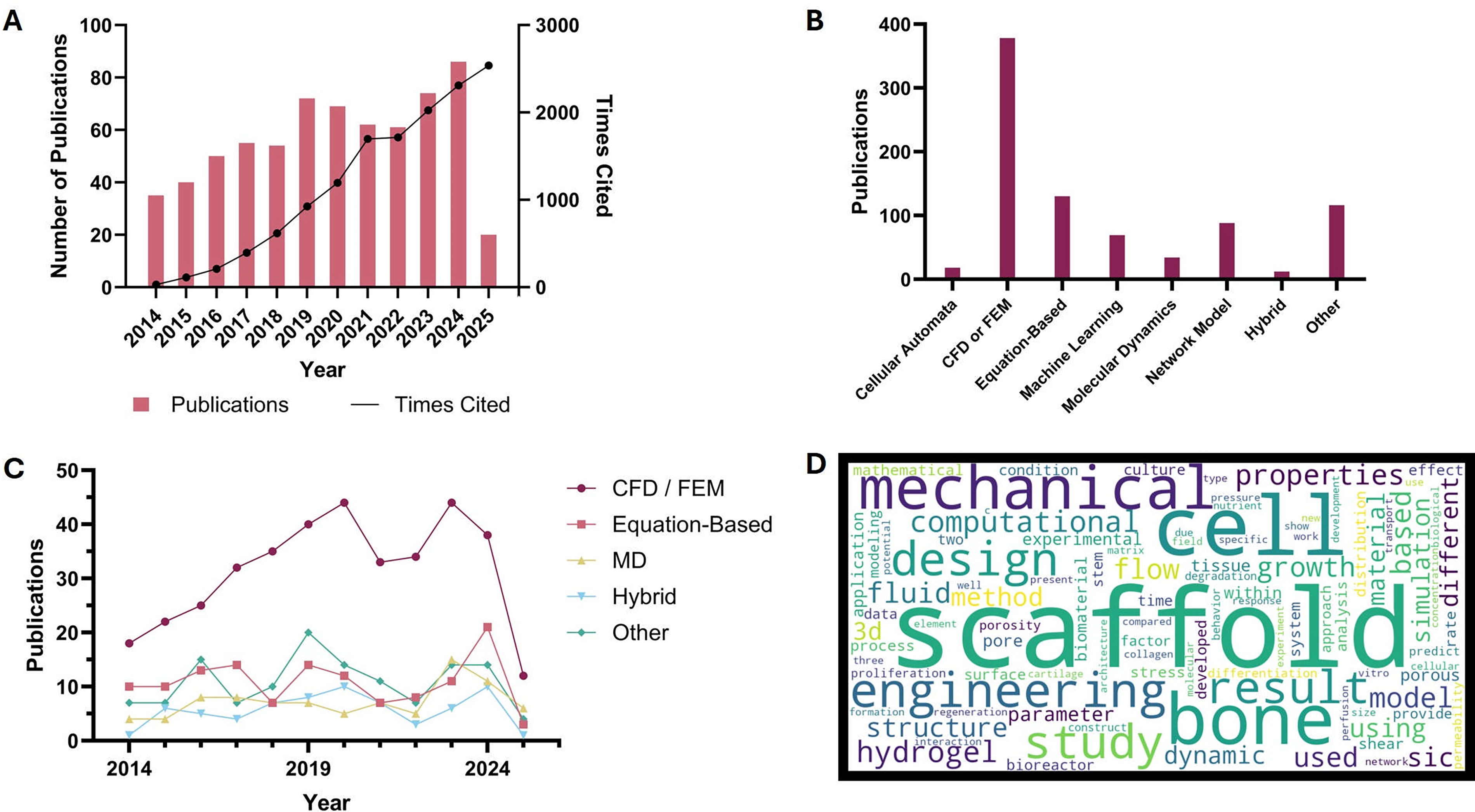
Overview of general trends in the last decade of computational research on regenerative biomaterials.
CFD/FEM are the most common techniques used in regenerative biomaterial research (n = 378; 55.8% of the database). Within this category, 266 articles (70.4%) used CFD/FEM exclusively, while 112 articles integrated CFD/FEM with other methods. Namely, 31 studies employed formally defined hybrid approaches, 9 specifically combined CFD/FEM with MD for multiscale modeling, and 72 integrated CFD/FEM with various computational methods, with a slight increase in usage over the last decade (Fig. 2C). The use of MD models (n = 88) has also increased over time, likely due to rapid advancements in computing power and algorithms and therefore in the complexity of biological systems that can be modeled using this technique. 33 Other categories include CA (n = 18), equation-based models (n = 130), ML (n = 34), network models (n = 12), hybrid models (n = 69), and others (n = 116), including mathematical or computational algorithms that did not necessarily fit into any of the above categories. A word cloud generated from article abstracts demonstrates the various applications of computational methods to regenerative biomaterials (Fig. 2D). “Scaffold” and “cell” are the two most frequently occurring terms. This finding reflects the need to optimize both the physical environment (i.e., scaffold) of regenerative biomaterials and the inclusion of cells (such as stem cells) as a method of enhancing biomaterial therapeutics. 14
Tree map visualization using WoS reveals that the highest number of articles in a single journal were published in biomaterial-focused journals, namely Biomechanics and Modeling in Mechanobiology (n = 28), followed by Acta Biomaterialia (n = 20) and Frontiers in Bioengineering and Biotechnology (n = 17) (Fig. 3). Interestingly, fewer articles were published in other computational biology-focused journals such as Computers in Biology and Medicine (n = 8) and Computer Methods in Biomechanics and Biomedical Engineering (n = 12), even for articles whose study was primarily computational. With a mix of bioengineering (e.g., Acta Biomaterialia) and computational biology (e.g., Biomechanics and Modeling in Mechanobiology) journals, these trends may reflect a gradual shift toward more seamlessly integrating computational methods into traditional experimental research. The prominence of Biomechanics and Modeling in Mechanobiology alongside established biomaterials journals such as Acta Biomaterialia indicates that computational TERM research has begun to disseminate across specialized computational and broader bioengineering publication venues. This distribution pattern further suggests a growing acceptance of computational approaches in the research community of experimental biomaterials.
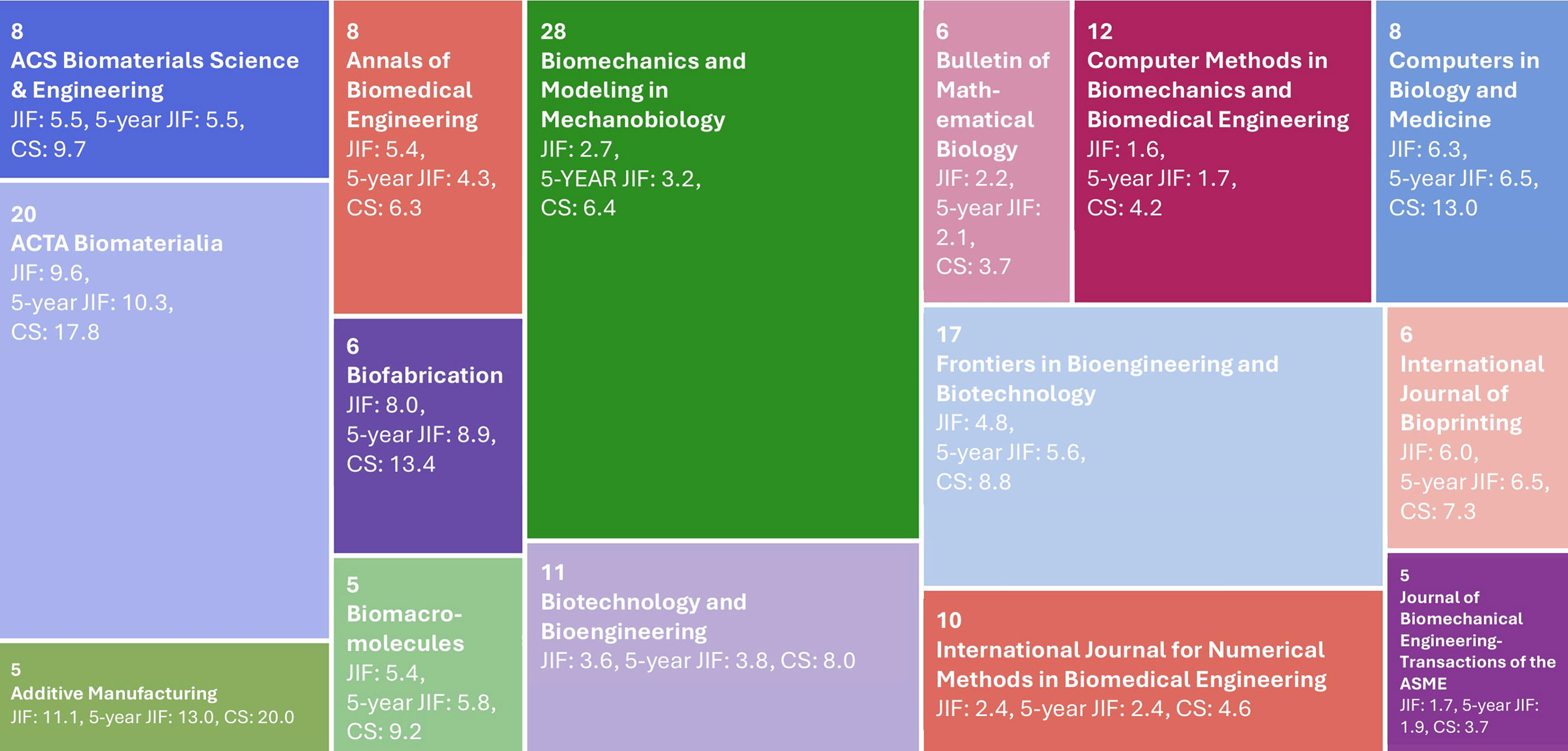
Prominent journals in this body of literature are represented as a tree map. Journal Impact Factor (JIF) is a journal-level metric calculated by dividing the total number of citations in the current year to items published in the previous two years by the number of citable items in the previous two years. The 5-Year JIF is calculated similarly but instead uses the previous five years of articles. CiteScore (CS) is a journal metric using data from SCOPUS that is calculated like the JIF but uses a 3-year range and includes all items (reviews, articles, conference proceedings, editorials, etc.). Visualization is generated using Web of Science.
Co-occurrence analysis
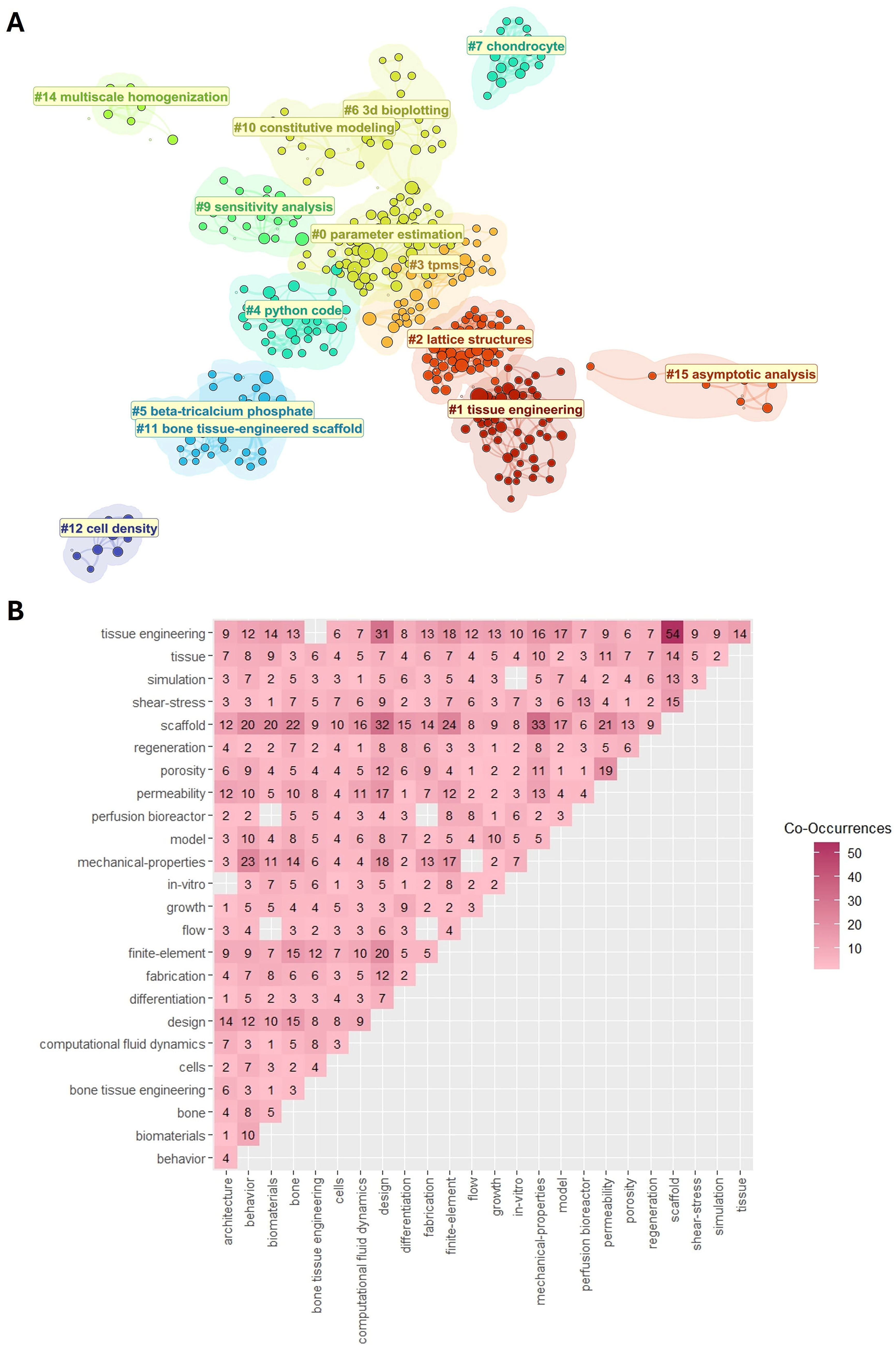
Co-citation network analysis in CiteSpace found nine clusters from the screened articles (Fig. 4A). A modularity score of Q = 0.7862 and a high mean silhouette score of S = 0.9059 indicate relatively well-defined and homogeneous clusters. 69 Well-defined clusters reflect research topics distinct from each other but could also reflect a lack of connectedness between areas of research (for example, model development niches that only pertain to certain methods or tissue types). Keyword co-occurrence (Fig. 4B) similarly pinpoints areas of focus for computational work. Beyond expected links such as “scaffold” with “mechanical properties,” the notable co-occurrence of “shear stress” and “perfusion bioreactor” highlights that shear stress on cells is a critical parameter for biomaterial optimization, for which CFD/FEM is well-suited. 77
RQ2: Network clustering analysis reveals distinctive areas in biomaterial research across computational methods and tissue types
CFD/FEM category
Among computational methods, the highest number of articles is in the CFD/FEM category. Clustering of the co-keyword network for the CFD/FEM group has a modularity score of Q = 0.4051 and mean silhouette score of S = 0.7339, indicating very interlinked but fairly homogeneous clusters (Fig. 5).
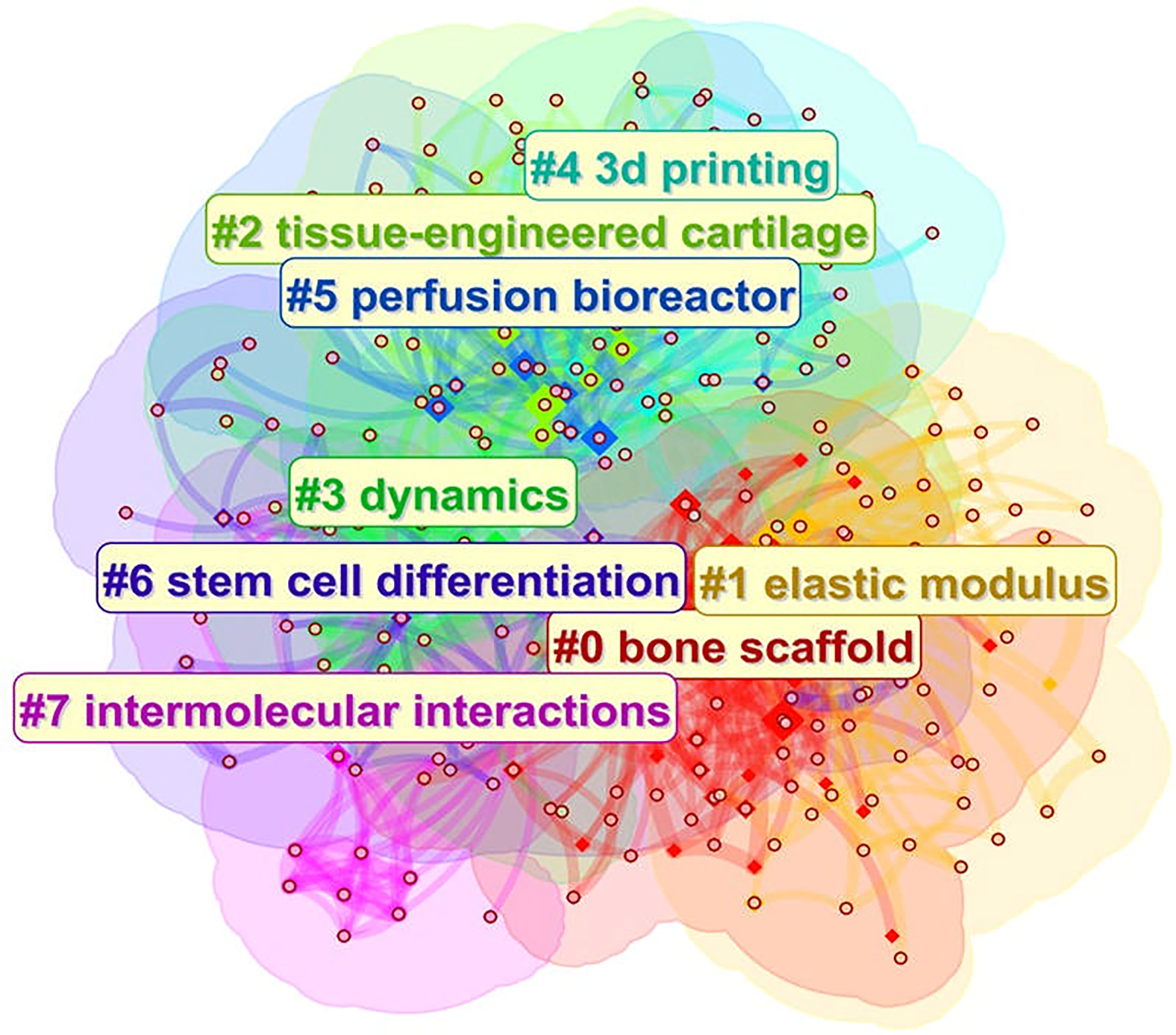
Clustered co-keyword network of CFD/FEM category articles. Cluster metrics are provided in Supplementary Table S3. Generated using CiteSpace.
Several keywords in the co-keyword network point to areas of focus within the large body of work on CFD/FEM for regenerative biomaterials. Examples are cluster #0, bone scaffold, and cluster #4, 3D printing. Cluster #6 (stem cell differentiation) and cluster #7 (intermolecular interactions) reflect more specific uses of CFD/FEM to model complex interactions between biomaterials, fluid, and biological factors to support tissue growth.
Other categories
Co-keyword networks were also generated and analyzed for four other categories of computational models: equation-based, hybrid, MM/MD, and others (Fig. 6). The CA, ML, and network model categories had too few articles for CiteSpace to generate a robust co-citation network. Clustering of equation-based models (Fig. 6A) identifies “osteoarthritis” (#4) and “bone tissue engineering” (#6) as some tissue-specific targets that might often be targeted with these models or other types of models that use equation-based models as a foundation.
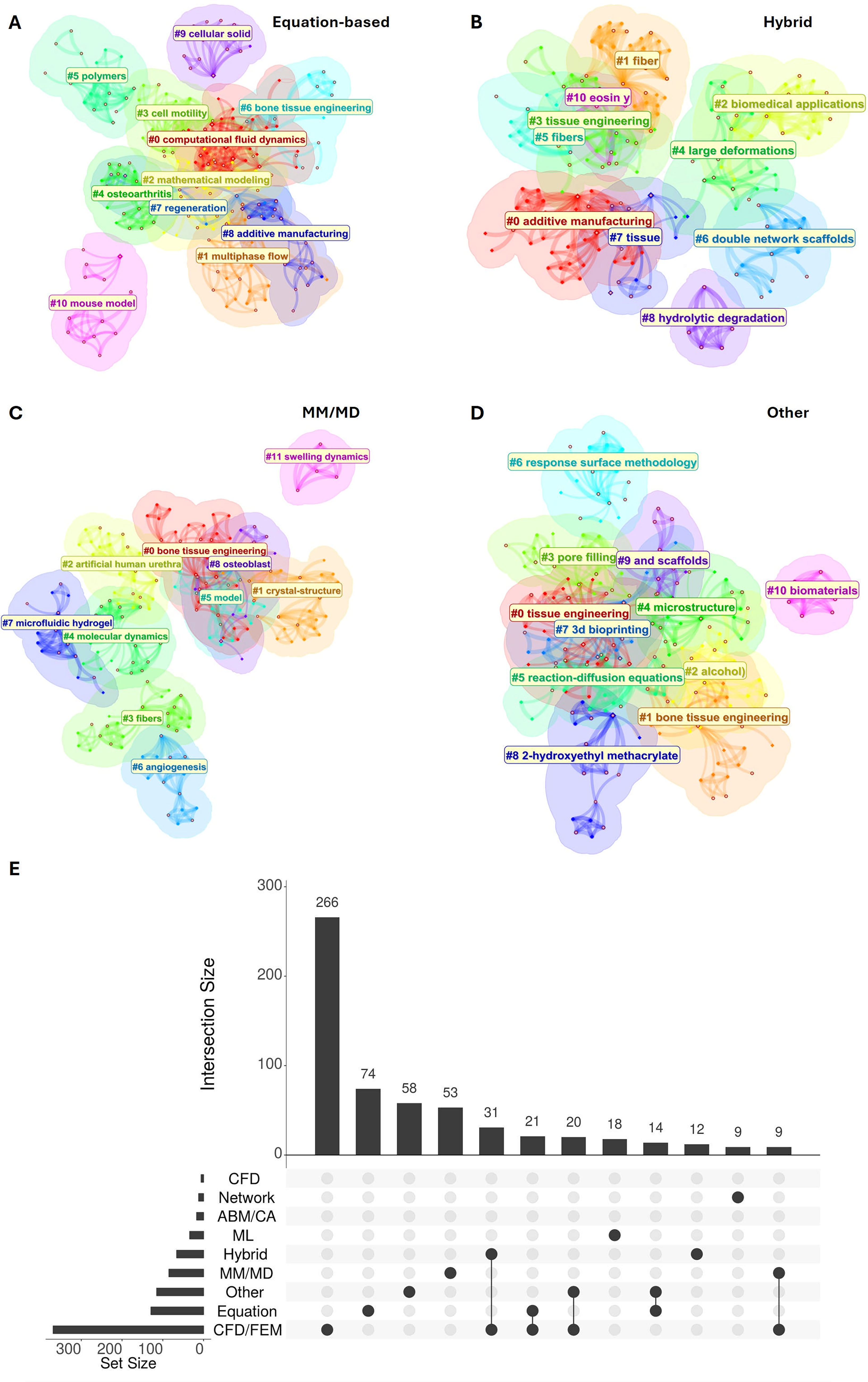
Themes (clustered co-keyword networks, A–D) and interactions (UpSet plot, E) for other categories within the screened articles.
The clustered co-keyword network for the hybrid model category (Fig. 6B) identifies several interesting key phrases, namely “large deformations” (#4) and “fibers” (#5), suggesting areas where hybrid or multiscale modeling may be advantageous compared with only one type of modeling. Within the MD category (Fig. 6C), clustering identifies both general terms [e.g., “fibers” (#3), “microfluidic hydrogel” (#7)] and tissue-specific terms [e.g., “angiogenesis” (#6)]. An UpSet plot (Fig. 6E) expands on the use of hybrid models by identifying common combinations of computational methods in this research area, even if the framework was not originally described as “hybrid” by the authors. Most articles in the CFD/FEM category, for example, used only this modeling type (n = 266), but some used CFD/FEM as part of hybrid approaches (n = 31) or, less frequently, specifically with MD models (n = 9). CFD/FEM approaches are also used in conjunction with other types of algorithms or models (n = 20), such as image-based 3D design pipelines, as are equation-based models (n = 14).
Categorization by tissue type
The tissue type categories with 10 or more articles are bone (n = 228), cartilage (n = 48), cardiac/arterial (n = 23), and neural (n = 17). Co-keyword analysis of articles within the bone and cartilage category (Fig. 7A,B) points out areas of focus for computational modeling. Clustering for the bone group marks a significant cluster as “triply periodic minimal surface” (#0), whereas the cartilage group has a notable cluster describing 3D bioprinting (#2), indicating which methods of design or manufacturing might be of interest to optimize for different tissues. Key parameters for optimization are also revealed in both groups, such as “wall shear stress” (#3) and “microstructure” (#8) in the bone group and “fibers” (#1) in the cartilage group. Clustering for the cartilage group additionally reveals biomaterial type-specific labels, such as “multiphase scaffold” (#4), “polycaprolactone” (#5), and “electrically conductive hydrogels” (#6), potentially identifying the specific and unique needs of cartilage biomaterials.
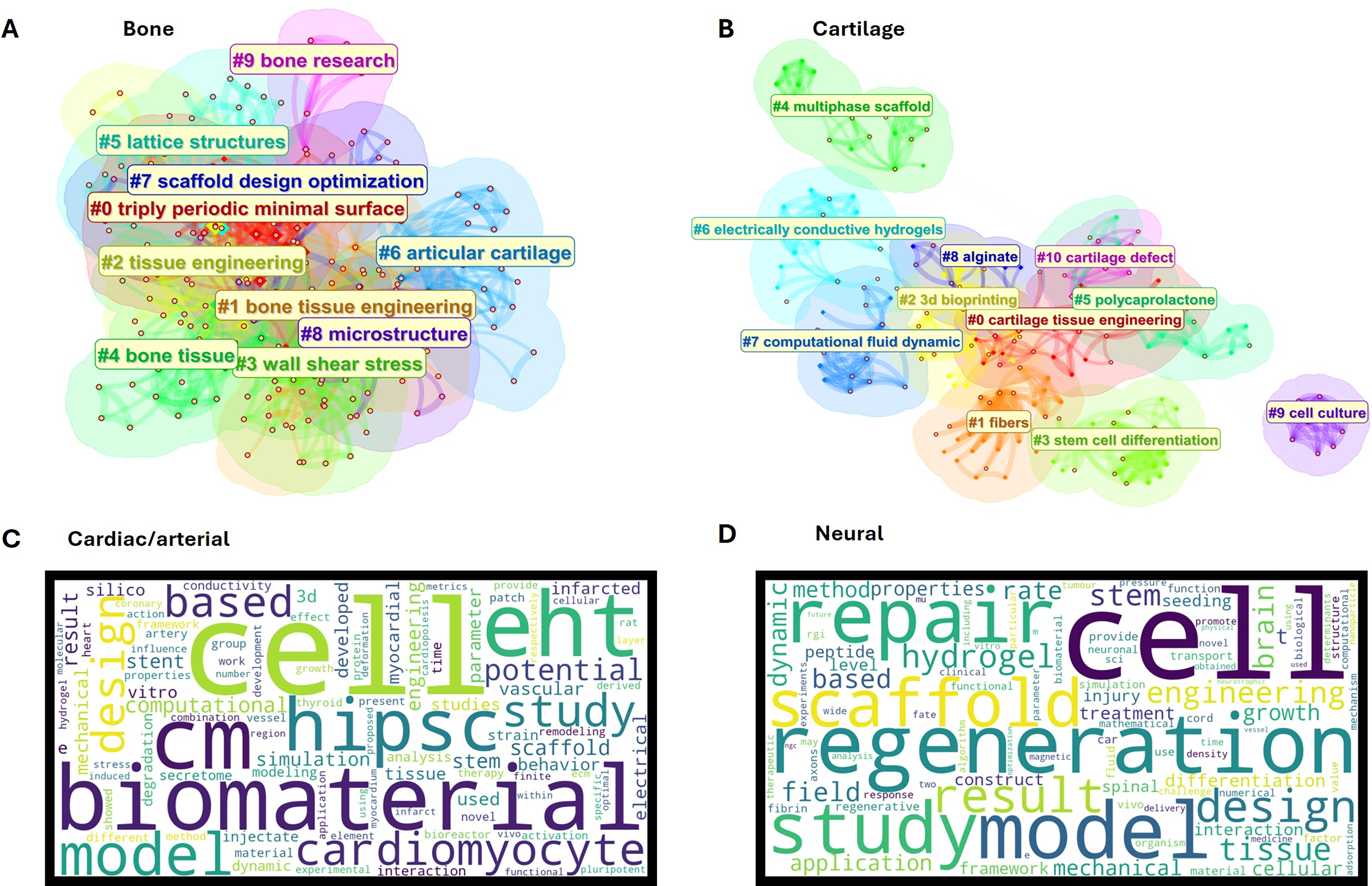
Clustered co-keyword networks for two of the more significant tissue type categories within the screened articles:
RQ3: Timeline analysis illuminates fundamental and emerging trends in the field
Timeline-based tools in CiteSpace and bibliometrix (R) reveal the temporal evolution of computational research in biomaterial literature (Figs. 8 and 9). The key phrase “perfusion bioreactor” spans the whole study period (2014–2025), with significant bursts of computational research on perfusion bioreactors between 2014 and 2018 (Fig. 8). The “parameter estimation” cluster (#2), which is more recent and shows several instances of citation burstiness and connection with other nodes, reflects the growing need to optimize existing computational techniques (Fig. 4A and Supplementary Fig. S2). Keyword citation burstiness identifies “permeability” and “porosity” as more recent and fast-growing topics and, alongside co-citation cluster “sensitivity analysis” (#9), supports previous findings of an interest in parameter tuning (Figs. 4A and 8).
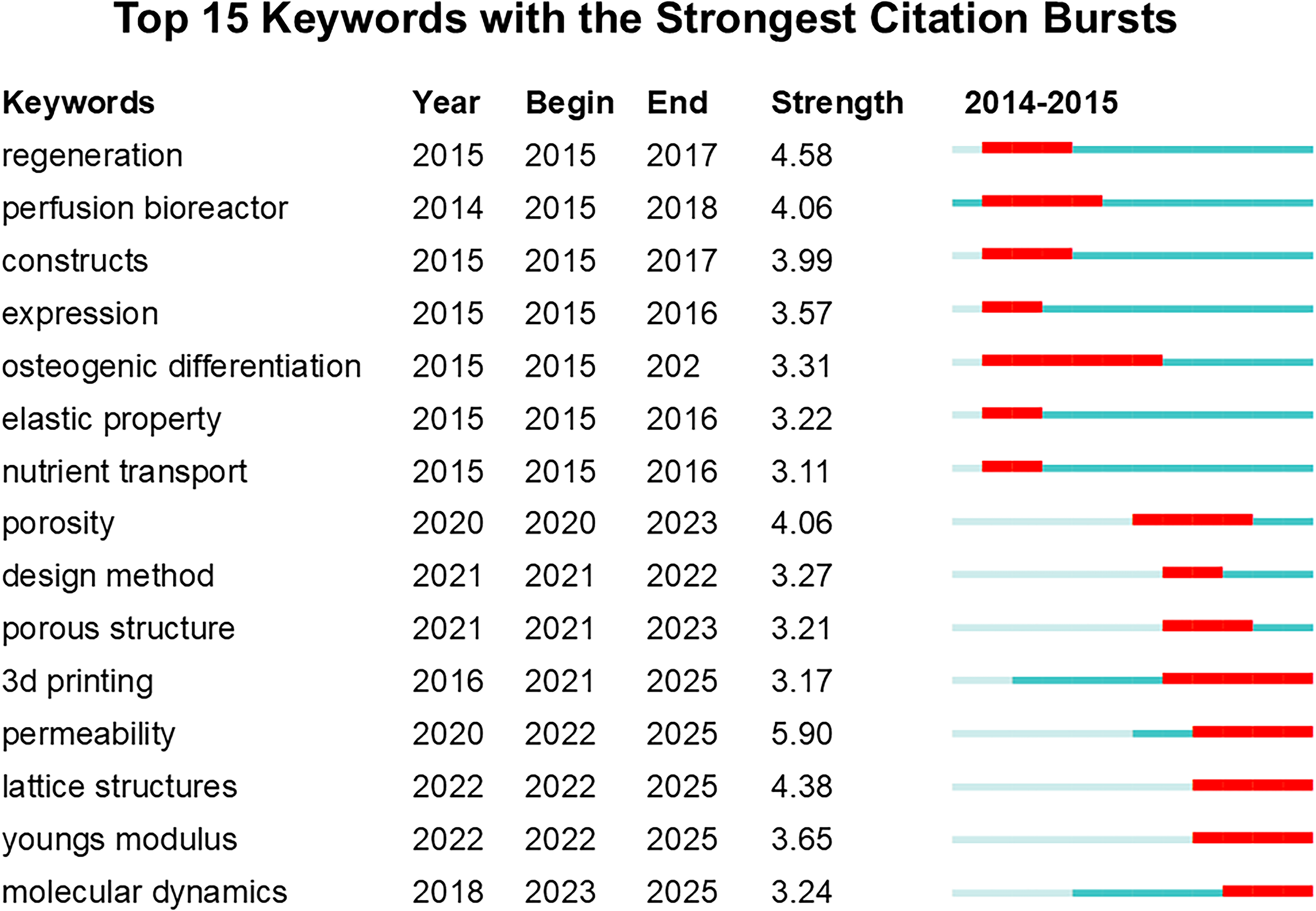
Top 15 keyword burst analysis of relevant articles. The beginning of the darker blue lines represents the initial instances of each key word/phrase that is specified in the “Year” column. The red segments represent periods of time where that key word/phrase was associated with a surge of citations (i.e., burstiness), indicated by the “Begin” and “End” columns. Generated using CiteSpace.
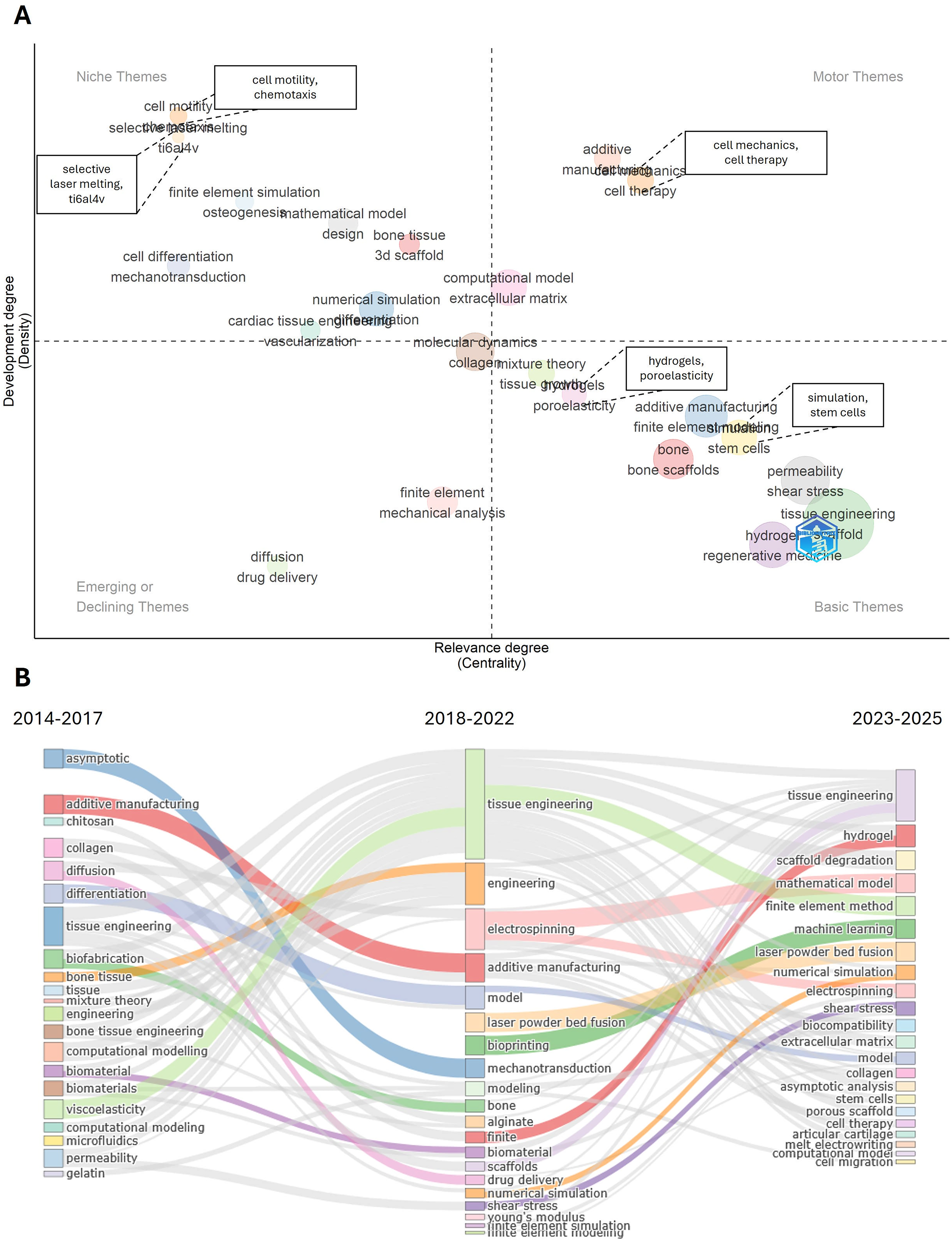
Thematic analysis of relevant articles.
A co-word analysis was conducted to generate a thematic map identifying main themes and research trends in the use of computational models in regenerative medicine (Fig. 9A). Motor themes (high density & centrality, Q1), i.e., well-developed topics in the field, include clusters of keywords such as “cell mechanics” & “cell therapy” and “AM.” However, there is a lack of clusters with very high density and centrality (e.g., top right) in this quadrant. The widespread use of computational models in regenerative medicine overall is relatively new, and research in bioactive materials continues to advance rapidly in various areas (e.g., scaffolds, manufacturing techniques, stem cells, etc.), leading to a lack of very well-developed models for any one biomaterial application. The term “viscoelasticity” appears in the first time period of the thematic evolution with a strong link to the general “tissue engineering” cluster in the second period, reflecting early studies on the importance of substrate stiffness and related properties on tissue repair (Fig. 9B). 78
Niche themes (high density & low centrality, Q2), i.e., specialized areas of the field, have a much higher density and number of clusters than motor themes. This quadrant includes clusters of keywords such as “cell motility” & “chemotaxis” and “cell differentiation” & “mechanotransduction.”
In the emerging or declining themes (low density & centrality, Q3), two clusters warrant attention. The largest cluster combines the “diffusion” and “drug delivery” keywords, representing transport phenomena in drug-eluting biomaterials. A second notable cluster links “molecular dynamics” with “collagen,” “mesenchymal stem cells,” “chitosan,” and “gelatin” (Supplementary Table S4), indicating convergence of molecular simulation with stem cell biology. In recent years, MD techniques have rapidly improved with the development of enhanced sampling techniques and are increasingly used for substrate optimization, especially in the context of drug and growth/differentiation factor delivery.79,80 Stem cell medicine and the inclusion of stem cells in biomaterial scaffolds are also a quickly emerging and advancing area of research. “Stem cells” also appear as a new cluster label in the last period (2023–2025) of the thematic evolution, indicating its importance in modern biomaterial science (Fig. 9B). In addition, “machine learning” as a cluster first appears in the thematic map of the last period of the thematic evolution, marking it as another emerging area (Fig. 9B, Supplementary Fig. S2). “Molecular dynamics” and “finite element analysis” clusters located together in this quadrant also suggest the emergence of this pairing as a hybrid modeling technique, as also identified by the UpSet plot (Fig. 6E).
Basic themes (low density & high centrality, Q4), i.e., general and fundamental topics in this area of research, contain clusters including keywords such as “tissue engineering” & “scaffold” (#1), “permeability” & “shear stress” (#2), and “hydrogel” & “regenerative medicine” (#3). CFD/FEM-related keywords are found throughout the basic themes’ clusters (Supplementary Table S4). Cluster #2 has a high frequency of parameter-related terms, including “porosity.” Cluster #3 notably includes terms such as “degradation,” “mass transport,” and “adhesion,” pointing to important considerations specific to hydrogel biomaterials.
Discussion
Of the 678 publications reviewed, CFD/FEM techniques were the most employed computational methods. The annual number of publications using CFD/FEM increased steadily from 2014 and peaked in 2020 (Fig. 2). CFD/FEM models were primarily used for characterizing and optimizing biomaterial scaffold physical properties, as shown by co-keyword clusters (#1 “elastic modulus,” #7 “intermolecular interactions,” #0 “bone scaffold”; Fig. 5) and thematic mapping of “finite element modeling” with associated terms “mechanical behavior” and “elastic modulus” (Fig. 9A, Supplementary Table S4). The dominance of CFD/FEM in biomaterial research may reflect their benefits in (1) standardized inputs (geometry, material models, boundary conditions) versus unknown biological rules required for other model types such as ABM, (2) direct experimental validation against well-established mechanical testing, (3) mature commercial software (e.g., ANSYS) that reduces implementation barriers, and (4) historical development for bone tissue applications where mechanical properties predominate.81–85 The advantages of CFD/FEM would enhance regulatory credibility given reproducible verification protocols. 61
Among tissue types, studies on bone tissue dominated the computational regenerative biomaterial landscape, accounting for 33.6% of the analysis. Bone defects and bone-related diseases represent major contributors to chronic conditions in people over the age of 50, and research in bone biomaterials is advancing due to the need to overcome the limitations of conventional treatments such as grafts and biologically inert implants. 86 This observation is also corroborated by the earlier importance of CFD/FEM methods, which were first developed for bone tissue applications in TERM. 60 As a field, soft-tissue biomechanics evolved later, dependent on important theoretical (e.g., nonlinear continuum mechanics and mixture theory) and then experimental (e.g., atomic force microscopy) advancements. 87 Co-keyword clustering (Fig. 7) identified key design methods (#0 “triply periodic minimal surface”) and optimization targets (#8 “microstructure”) for bone applications. Regenerative medicine research has evolved to use computational optimization approaches for material design and evaluation. For instance, terms like “bioprinting” and “electrospinning” appear in the second thematic evolution period and link to “machine learning” and “mathematical model” later (Fig. 9B). Thematic analysis further revealed structure-related terms (“microarchitecture,” “porous flow,” “microstructure”) clustered with CFD/FEM and mixture theory methods in bone studies (Supplementary Table S4).
Across diverse tissue and disease applications, biomaterials, their properties, and their manufacturing are highly customizable. Key parameters in 3D bioprinting, such as print pressure, temperature, and needle diameter, result in thousands of experimental combinations that can now be efficiently analyzed using ML or CFD tools.88,89 Interest in novel cell therapies and their inclusion into biomaterials creates an additional layer of complexity in biomaterial design. However, CFD and ABM models can now investigate the effects of flow, stress, nutrition, biomaterial structure, and more on seeded cells within a matter of minutes or hours.90–92 Advancements in manufacturing technologies and materials science continuously create new possibilities in biomaterial structure and design.93–95 Our bibliometric analysis identified parameter estimation and sensitivity analysis as key emerging topics, highlighting a niche within TERM where computational approaches can be applied effectively. Future TERM research is expected to progressively rely on the integration of experimental and computational approaches to handle large volumes of intermodal data and to accelerate novel biomaterials toward the clinic.
The computational modeling of stem cell-based systems was identified as an emerging research area based on thematic and co-keyword analyses (Figs. 6, and 9). Stem cell-based biomaterial systems exhibit complex behaviors driven by mechanical, genetic, and chemical factors. To effectively optimize these systems, hybrid models are required to incorporate mechanical effects on stem cell fate, biomaterial properties, remodeling, and cellular processes such as growth, migration, and apoptosis. Multiscale and hybrid modeling approaches have been developed, including in materials chemistry (atomistic to coarse-grained scales) and bone mechanobiology (organ-to-cell-level FEM) to provide insights in controlling stem cell differentiation within biomaterials.96,97 For example, FE models can simulate scaffold or tissue remodeling, network models can monitor genetic pathways and cellular signaling, and mechanistic models such as ABM can simulate behavior at the cellular level.98,99 The open-source software PhysiBoSS also supports hybrid modeling by combining ABM (PhysiCell) and Boolean modeling (MaBoSS) platforms to simulate multicellular systems.100–102 Advancing multiscale approaches and optimization algorithms in the modeling pipeline itself will improve simulating complex host-material interactions.
Mechanistic models like ABM and CA are well-suited for simulating complex cell-based biomaterial microenvironments by capturing biological stochasticity and predicting aggregated outcomes that are empirically challenging to investigate. 103 However, formulating the underlying rules governing cell behavior remains difficult when experimental data are limited or unclear. Our bibliometric analysis identified growing methodological needs through keywords like “parameter estimation” and “sensitivity analysis.” Mechanistic models require substantial data for development, calibration, and validation. The numerous input parameters inherent to ABM, either with known or unknown values, also impose significant computational costs.59,103–105 Data-driven ML and AI techniques can potentially improve the performance of mechanistic models like ABM/CA and CFD/FEM. For example, supervised learning methods including k-nearest neighbors, Random Forest, artificial neural networks, and logistic regression have been used for agent-rule building.106,107 Reinforcement learning methods train agents to make optimal decisions through reward maximization, providing another approach for defining agent behaviors in ABM simulations.108,109 ML methods can also serve as surrogate models that approximate complex simulations with greater computational efficiency. This approach enables faster execution of high-fidelity, physiologically realistic ABM and CFD calculations, e.g., up to an 8-fold decrease in CFD solver computation time.110–112
Even more recently, generative methods have improved on the shortcomings of deep learning models in speeding up model evaluation.113,114 GANs, a framework using two competing neural networks to generate novel, authentic data, show promise in mitigating existing limitations of computational models. For example, a denoising diffusion probabilistic model was used to predict configurations of a Cellular-Potts ABM 22,000 timesteps ahead of an initial reference configuration, speeding up evaluation by 22× compared with native code. 115 Compared with a convolutional neural network for the same ABM, the generative model was able to predict 220× farther ahead in the simulation. 116 These data-driven models, combining experimental data with one or more computational models and ML methods, are likely to continue to be an area of research focus as the field evolves toward precision medicine and patient-oriented TERM (Fig. 10). 117 For instance, digital health twins, as virtual replicas of biological systems, are ideally capable of integrating and processing multimodal, near-real-time clinical data and can utilize computational modeling across many biological scales to provide treatment direction, accelerate drug discovery, and more.113,118,119 However, realizing these capabilities at scale faces substantial obstacles.
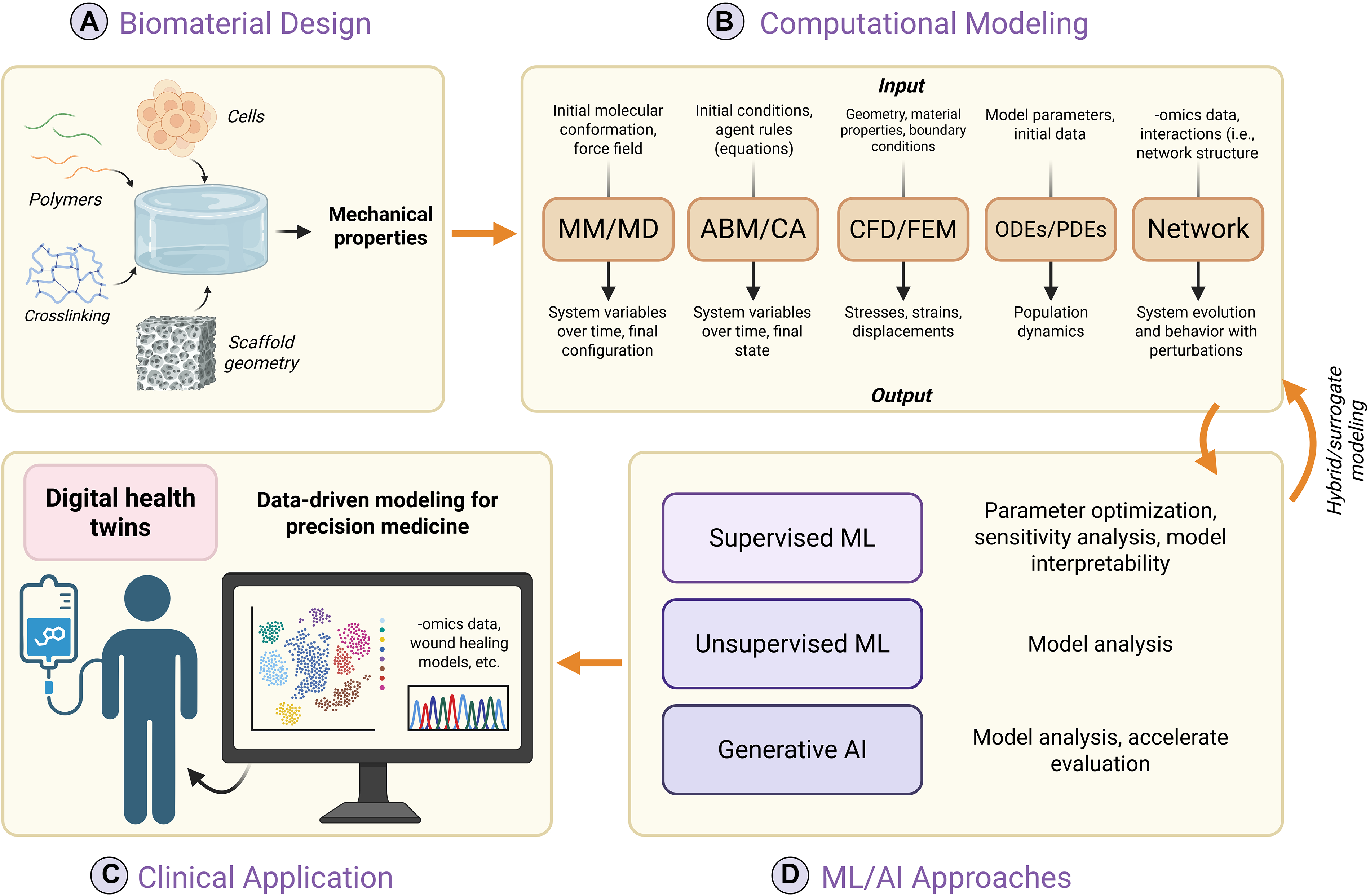
Overview of computational development of regenerative biomaterials toward digital health twins.
While individual computational methods are well established in TERM, complex approaches such as combining mechanistic models with AI/ML techniques and multiomics data face several challenges. Data heterogeneity across imaging modalities and the lack of standardized repositories complicate integration efforts.62,120,121 For example, stem cell data vary in tissue origin, isolation methods, and donor characteristics, making model development difficult. 122 Clinical data on long-term viability of stem cell therapies are also scarce. 123 Beyond these data limitations, ML and AI techniques present their own barriers, as these models require labeled experimental data for training and function as a “black box” with unclear internal mechanisms.103,124 Explainable AI methods partially address interpretability concerns through feature importance analysis, surrogate models, and backpropagation techniques.124–126 Nevertheless, clinical application of ML and AI in TERM requires rigorous validation of data requirements and interpretability to meet regulatory standards.
Cancer research illustrates both these challenges and potential solutions. Deep learning and other ML models are increasingly used for diagnosis, prognosis, and treatment as oncology data expand.127,128 However, full in silico adoption in cancer health care is hindered by complex data storage, privacy concerns, limited trust among patients and clinicians, and insufficient model validation. 129 To address these barriers, new frameworks such as the Oncology Data Model are being developed to support clinical integration. 130
TERM would benefit from similar standardization efforts. Data standards already exist for medical imaging, such as the Digital Imaging and Communications in Medicine protocol. 130 Comparable initiatives have begun in TERM, including protocols for cell population measurements and dataset annotation requirements for public repositories. 131 Considering the diverse in vivo, in vitro, and in silico data in TERM, establishing robust data standards is essential to facilitate clinical translation of biomaterials. Achieving this goal may require a systems-thinking approach where synergy between cell/molecular biology, materials engineering, and computational science drives progress. 132
Following the enactment of FDA Modernization Act 2.0/3.0, agencies have developed new guidance for computational modeling in medical devices.21,133 Our analysis showed that computational publication rates in TERM increased by 30% in the two-year period 2023–2024 (n = 160) compared with 2021–2022 (n = 123) (Fig. 2A). Notably, “machine learning” emerged as a distinct thematic cluster specifically in the 2023–2025 period (Fig. 9B), and the citation burst for “molecular dynamics” began in 2023 (Fig. 8). These temporal alignments suggest that regulatory changes might have catalyzed computational adoption in TERM. In silico data are now accepted for identifying use conditions for implants, justifying device parameters, and supporting safety assessments. 134 The ASME V&V 40 standard provides a framework for model verification, validation, and uncertainty quantification to ensure computational evidence remains credible for regulatory submissions.133,135
In this study, the bibliometric analysis used the WoS database for ease-of-use, large reach, and to ensure the metadata homogeneity required for robust network analysis and clustering. While multidatabase searches are standard for systematic reviews, merging citation data from disparate sources (e.g., Scopus, PubMed) often results in metadata compatibility that compromises the integrity of bibliometric analysis. WoS was selected for its extensive coverage of engineering journals (including IEEE) and high overlap with other databases in this field (e.g., Scopus). English-language publications alone were included in this search, potentially excluding computational biology research published in other languages. The screening process also excluded primarily empirical studies (in vitro or in vivo) containing minor computational components, e.g., a small CFD-based analysis or optimization. 136 While this approach allowed us to focus the analysis on computationally driven research, including these studies might provide broader thematic coverage of biomaterial types and manufacturing methods.
Although our search focused on mechanistic and continuum models, four computational studies demonstrated emerging convergence with omics approaches.137–140 An ML algorithm integrated multiomics data to predict cell phenotype after gene perturbations, with an inference accuracy of 0.66–0.91 across diverse gene networks and data sources. 138 Transcriptomics data were incorporated into mathematical (linear regression) models to optimize biomaterial composition for a stem cell niche in tendon regeneration. 140 This gel, being optimized in extracellular matrix (ECM) composition and preloading conditions in silico, demonstrated superior wound healing in a rat model in vivo. Omics-informed computational frameworks present an exciting area to bridge molecular characterization and biomaterial design in the ecosystem of digital health twins (Fig. 10).
Lastly, this study employed a bibliometric analysis to map research trends across large datasets. Publication frequencies should be interpreted as indicators of research activity rather than model quality or clinical readiness. Of note, bibliometrics does not allow assessments of model reliability or experimental validation. Such quality assessment was not feasible at this scale (678 articles), particularly given that reporting standards such as ASME V&V 40 are not yet widely adopted in computational TERM research. Future systematic reviews focusing on specific subtopics (e.g., bone scaffolds) could be more practical for evaluating the quality of computational methods in TERM.
Conclusion
This bibliometric study reveals critical patterns shaping computational TERM research. While CFD/FEM methods dominate the TERM landscape, their isolated application highlights substantial opportunities for hybrid integration. The temporal analysis demonstrated clear regulatory influence, with ML emerging as a distinct cluster following legislative updates, which also catalyzed a surge in publication volume. The rising adoption of hybrid models combining CFD/FEM with MD alongside a growing emphasis on parameter estimation indicates that the field has evolved from isolated computational tools toward integrated frameworks. Advancing successfully toward digital health twins will require standardized validation protocols, comprehensive biomaterial databases, and frameworks that unite omics data with mechanistic models.
Data Availability
The RIS file with the list of the 678 manuscripts, as well as bibliometrix and pybibx scripts used to generate some of the figures, are available at the GitHub repo: https://github.com/VUA-Lab-McGill/comp-methods-bibliometric-review.
Authors’ Contributions
M.M.: Conceptualization, methodology, investigation, writing—original draft, writing—review and editing, and visualization; A.D.: Conceptualization, investigation, writing—original draft, writing—review and editing, and visualization; A.C.: Validation and writing—review and editing; J.L.: Validation and writing—review and editing; N.Y.K.L.-J.: Conceptualization, validation, resources, writing—review and editing, supervision, project administration, and funding acquisition.
Footnotes
Acknowledgment
The authors acknowledge the support of Martin Morris at McGill Library in helping to formulate the initial search for this review.
Disclosure Statement
The authors declare no conflicts of interest associated with this study.
Funding Information
This study was supported by the National Sciences and Engineering Research Council of Canada (ALLRP 548623-19, RGPIN-2024-04235), Canada Research Chair research stipend (N.L.J., J.L.), and Fonds de recherche du Québec Doctoral Training Scholarship (M.M.). The content presented is solely the responsibility of the authors and does not necessarily represent the official views of the above funding agencies.
Supplemental Material
References
Supplementary Material
Please find the following supplemental material available below.
For Open Access articles published under a Creative Commons License, all supplemental material carries the same license as the article it is associated with.
For non-Open Access articles published, all supplemental material carries a non-exclusive license, and permission requests for re-use of supplemental material or any part of supplemental material shall be sent directly to the copyright owner as specified in the copyright notice associated with the article.
