



Abstract
Objectives:
To explore cancer patients’ recommendations for nature engagement based on their subjective nature experiences and observations in the cancer setting. The rationale was to gain practical insight for delineating relevant and translatable nature-based care and design opportunities in oncology contexts.
Background:
Innovative cancer care services are needed to respond to growing demand and shifting healthcare needs. Engagement with nature has shown multiple health benefits and presents a promising opportunity for application in healthcare to improve outcomes.
Method:
Qualitative research design using content analysis was used. Eligible adults with any cancer diagnosis participated in semistructured and audio-recorded interviews. Transcribed textual data included responses to two open-ended questions querying about participants’ recommendations related to nature-based opportunities in the cancer setting. Deductive analysis used three predetermined categories: “recommendation: features,” “recommendation: functions,” and “cautions.”
Results:
Twenty patients with cancer (nine female) participated. Broad recommendations incorporated (1) using nature for vital sensory stimulation and engagement, (2) using nature for personal space and freedom to enable private and social exploration, (3) using views to nature for distraction and comfort, and (4) accessing nature for physical activity and movement. Three critical factors were determined for avoiding adverse experiences: determining appropriate expenditure and resourcing, selection of appropriate nature-based design materials, and exercising caution around demanding nature engagement and harsh weather conditions.
Conclusions:
Cancer patients’ recommendations reveal the importance of engaging with nature in their experiences of health and recovery. The findings can inform planning appropriate and safe integration of beneficial nature engagement in cancer settings and support services.
Background
Cancer will soon impact one in three people either personally or through a relative or friend (New Zealand Ministry of Health, 2014; Stewart & Wild, 2014). The accelerated incidence and related cost require timely and effective healthcare response. Innovative strategies are needed to relieve the burden associated with cancer treatment and to support those affected by cancer. Strategies should be patient-centered and focus on establishing and developing patients’ own capacity to manage disease and maintain health and well-being (Antonovsky, 1996).
The movement to integrate nature engagement opportunities into existing healthcare settings and services is gaining attention today. Recent interest in nature’s impact on human health and well-being (Hartig, Mitchell, De Vries, & Frumkin, 2014) has generated investigations across numerous research fields spanning healthcare, environment and behavior, and design (Devlin & Arneill, 2003; Haluza, Schonbauer, & Cervinka, 2014; Ulrich et al., 2008). Despite cursory understanding about the mechanisms at play, preliminary evidence from cancer populations shows various biopsychosocial benefits from contact with nature in oncology contexts. For example, Blair and colleagues (2013) evaluated a 1-year gardening intervention for adult and children cancer survivors (N = 10) showing improvements in strength, agility, and endurance in 90% of participants. Furthermore, 40% of participants showed an increase in weekly physical activity, and more than half of the participants increased their fruit and vegetable consumption (Blair et al., 2013). Research conducted by Cimprich and Ronis (2003) evaluated the efficacy of a nature-based intervention that aimed to restore attention in women with newly diagnosed breast cancer. Following weekly 120-min exposure to natural environments, the intervention group (n = 83) showed greater capacity to direct attention before and after surgery as compared to the nonintervention group (n = 74). A qualitative study with 12 advanced cancer patients investigated how the hospital environment affects patient mood and quality of life during hospital stay (Rowlands & Noble, 2008). Patients reported to value contact with the outside world in particular with nature. Participants mentioned benefiting from time spent in the hospital garden, and more unwell patients who could not go outdoors reported benefiting from viewing artwork showing scenes of nature and from window views to the outside. Provision of such opportunities to visually and physically access nature in the care environment could broaden the scope of affordable supportive care strategies for cancer patients and their families and present design possibilities to improve the oncology environment.
Healthcare environment design is known to require significant capital expense, and responsible investment policy is needed to provide optimal health outcomes and benefits related to setting design. Evidence indicates that well-designed noncancer healthcare settings render hospitals safer and more healing for patients (Ulrich et al., 2008) and can increase consumer satisfaction (Whitehouse et al., 2001). A recent purpose built cancer research, treatment, care, and education facility in Australia costing AUD 1 billion (State Government of Victoria, 2015) was designed to include three indoor garden rooms and seven landscaped outdoor spaces accounting for 2.3% of its total floor space. It was assumed that these nature-based areas would support patients, families, and staff. Further research is needed to explore how patients value and make use of nature opportunities in the care setting. Such evidence can ensure that this potentially compelling aspect of patients’ healthcare experiences is appropriately attended to when planning and designing oncology settings and services.
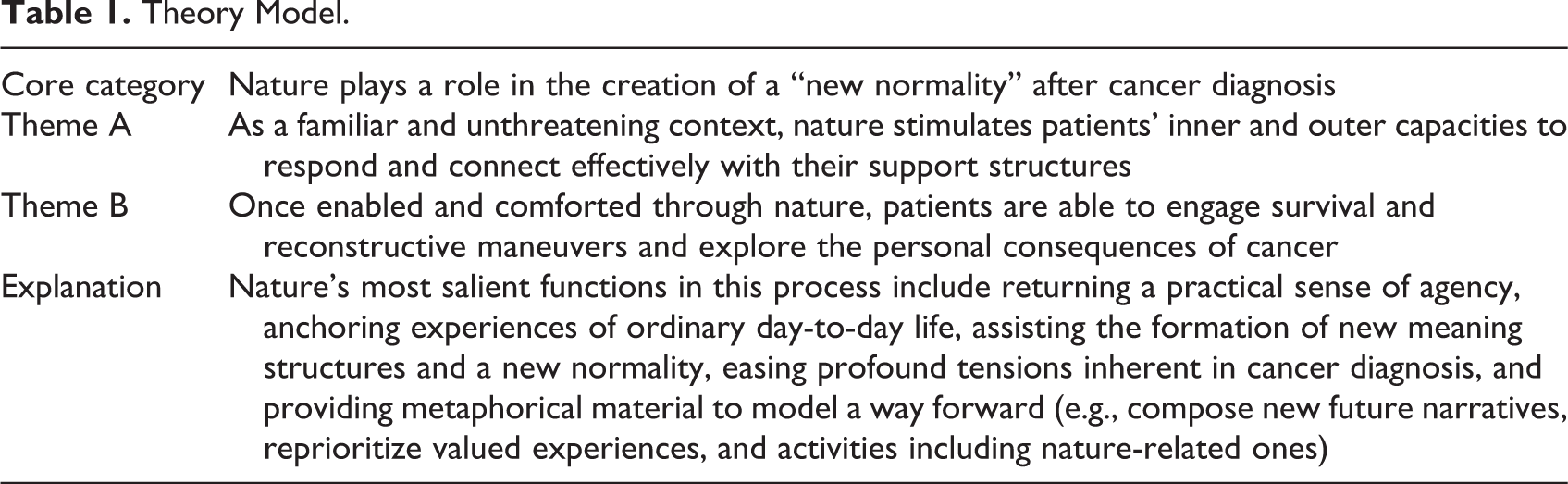
The present study forms part of a broader two-study research project, which investigated patients’ perspectives on nature’s role in their experiences of health and recovery. Study 1, reported elsewhere, used grounded theory informed methods (Corbin & Strauss, 2008) to examine the relevance of nature-based experiences when living with cancer. Findings generated a theory model (see Table 1) explaining the ways in which cancer patients engage with nature (Blaschke, O’Callaghan, Schofield, & Salander, 2017). Study 2, presented here, aimed to examine cancer patients’ recommendations and cautionary advice for beneficial nature-based experiences. The rationale was to generate translatable knowledge for nature-based enhancements of the care setting.
Theory Model.
Following working definition of “nature” was drafted for this study, which borrows from two existing lines of human-nature reearch (Kaplan & Kaplan, 2011; Maller, Townsend, Pryor, Brown, & St Leger, 2006):
The phenomena of the physical world collectively, including various forms of vegetation and habitats, natural and humanly designed landscapes, natural cycles, processes and weather, wildlife and domestic animals, and other features and products of the earth including man-made creations, which creatively organize and depict these nature features.
Method
A qualitative design was used to incorporate deductive content analysis (Elo & Kyngäs, 2008) and inductive analysis of unanticipated data.
Sampling and Data Collection
Sampling proceeded from convenience to purposive sampling with the intent to obtain rich data (maximum variation) from a diverse sample of male and female in- and outpatients with mixed diagnoses who were either in treatment or who had completed treatment at the time of recruitment. Purposive sampling responded to the ongoing analysis with the aim of finding data considered potentially missing in already collected data. For example, as descriptions of positive nature experiences and recommendations were accumulating, the interviewer (S.B.) sought participants with contrasting views. After examining 18 interviews, data were considered repetitive. Two further interviews were conducted, which confirmed that data were saturated. Semistructured interviews were conducted either face-to-face (n = 9) or over the telephone (n = 11). Audio recordings were transcribed verbatim. Open-ended questions sought in-depth description about patients’ processes and experiences related to nature engagement. Section 1 of the interview schedule was designed to invite a broad exploration of patients’ understanding and use of nature. First, participants were asked to freely describe their own definition of nature followed by questions about their use of nature before and after diagnosis. Subsequent questions asked about specific nature experiences at the time of receiving a cancer diagnosis and about how patients engage with nature during hospital visits and when receiving cancer treatment. The present article reports on Section 2 of the interview schedule, which constituted two questions: (1) participants’ nature-based recommendations for other cancer patients and (2) their recommendations and cautionary advice for nature-based opportunities in the oncology setting. The Consolidated Criteria for Reporting Qualitative Research guidelines (Tong, Sainsbury, & Craig, 2007) were followed. The interviewer was trained to verbally summarize and verify participants’ reports at the end of each interview, which substituted member checking to reduce participant burden.
Participants and Ethics Approval
Recruitment took place from February 2015 to June 2015. Cancer patients were approached in an Australian tertiary cancer hospital’s outpatient clinics and inpatient wards. Eligibility criteria included 18 years of age or older with any cancer diagnosis, sufficient English-language skills, and sufficiently well to complete the interview. Participation was entirely voluntary, and informed signed consent was obtained from those wishing to participate. Ethics for this study was gained from the institution’s Human Research Ethics Committee.
Data Analysis
The deductive content analysis followed Elo and Kyngäs’s (2008) recommended procedure for developing a “categorization matrix” (constrained or unconstrained) before extracting relevant data from a larger data set. In this approach, data are mined for content that corresponds with predefined categories in order to retrieve data of interest and build descriptive breadth. In accordance with the study’s aim to extract data from two specific questions only, it was deemed appropriate to use predefined categories in order to delineate data of interest. An “unconstrained” matrix was chosen because it allows for descriptive expansion based on the data retrieved, which means categories can be further built as data are analyzed. This embedded analysis procedure introduces principles of inductive coding (Corbin & Strauss, 2008) and captures, responsively, unexpected additional content arising from the data.
Figure 1 illustrates the overall research project and explains the nature of the two studies’ respective findings and their points of convergence within a closed loop analysis framework. The research project’s first analytic step (inductive) used data management software ATLAS.ti (Version 1.0.16 2013) for Macintosh (Atlas.ti) to support initial line-by-line coding of the entire data set. In this first step, five category findings emerged from text sections. In Step 2, these categories were condensed into three “major categories” describing participants’ nature-based recommendations. Deductive analysis then proceeded by identifying and sorting relevant text sections into each of the three predefined major categories. In Step 3, the extracted data were reread and additional categories were formulated inductively, which captured unanticipated detail arising from participants’ accounts. Lastly, the material was synthesized into four broad recommendations and three critical points of cautionary advice for nature engagement in oncology contexts. Interrater discussion took place throughout the coding and categorization phase when the two analysts (S.B. and C.O.) discussed the interpretations until cogent conceptualization was reached and agreed upon. The final step imported all categorized data into Microsoft Excel Version 2010 in order to reassemble and refine the categorical organization of the findings and achieve a more serviceable integration based on matured understanding of the material.
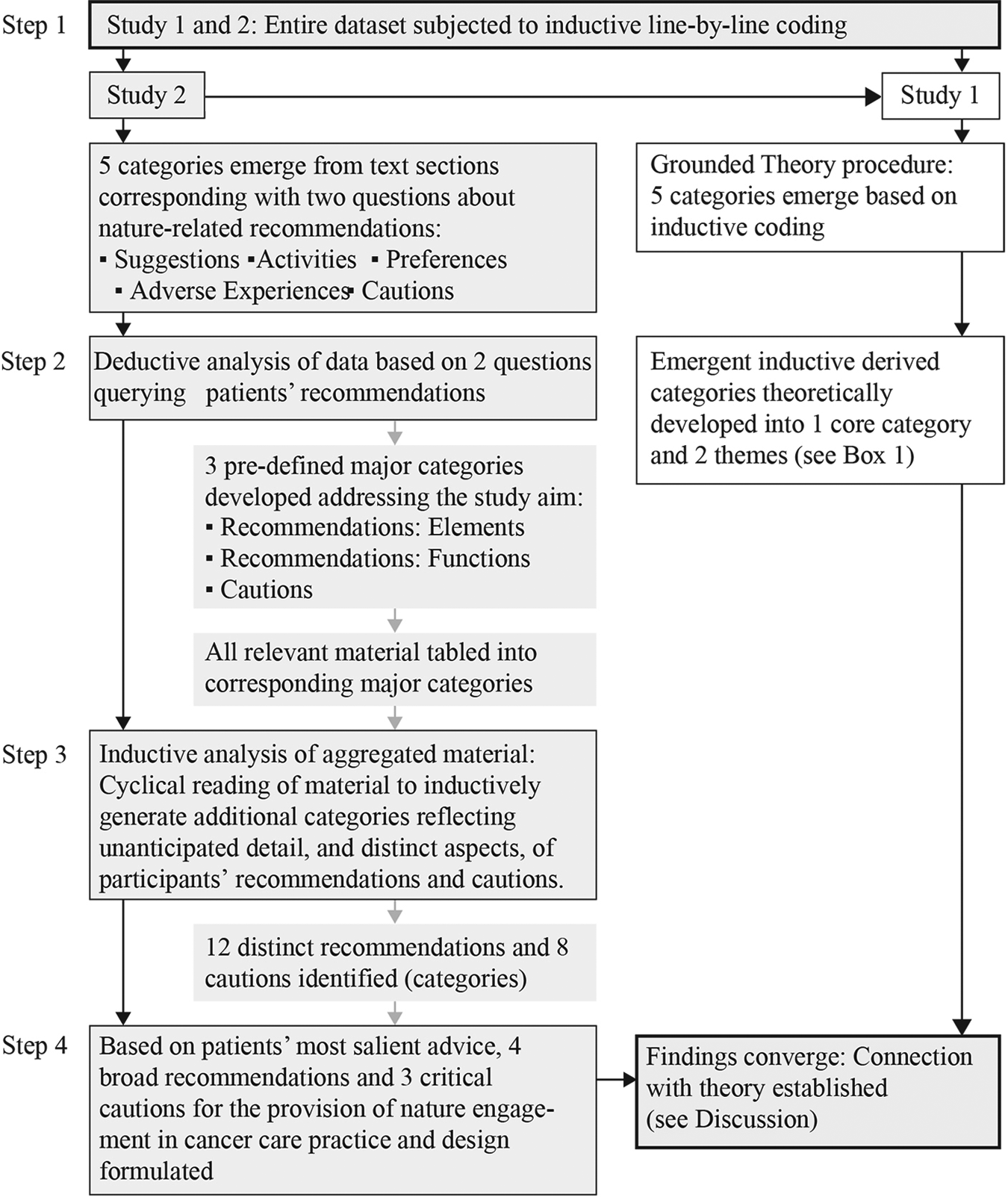
Analytic framework and nature of findings which emerged in the overall research project.
Results
Participants
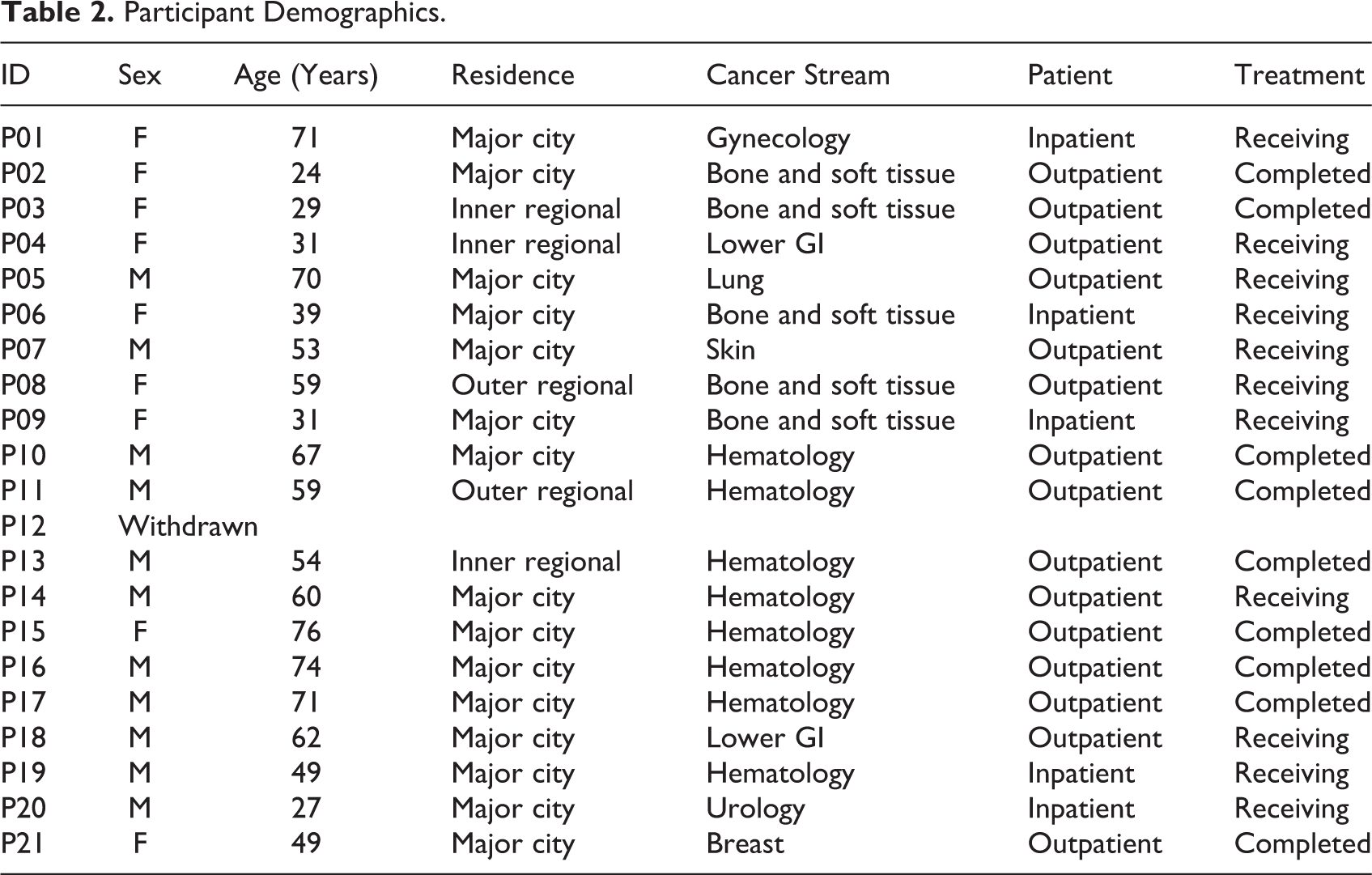
Table 2 presents demographic information of a heterogeneous sample of 20 cancer patient participants (9 female). All were Australian born except two who were born in Sri Lanka. Eleven were currently undergoing treatment, 5 were inpatients, 15 were outpatients, 8 underwent face-to-face interviews, and 12 underwent phone interviews (mean duration = 54 min).
Participant Demographics.
Recommendations
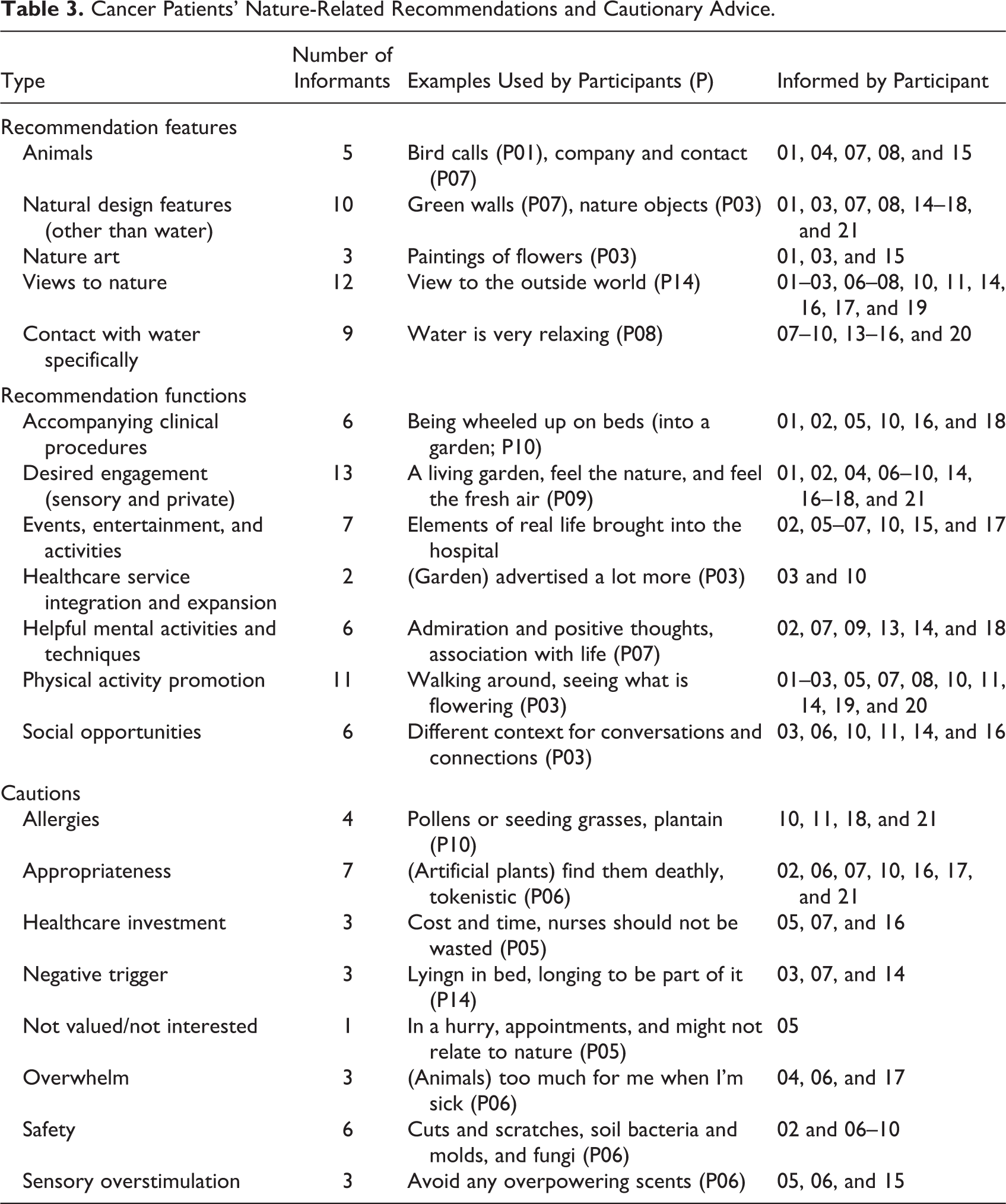
Twelve distinct aspects of advice for nature engagement emerged relating to a range of nature features and functions which patients identified as helpful. Participants described beneficial interchanges when engaging with nature features in the cancer setting including animals, natural design features (other than water), nature art, views to nature, and contact with water specifically. Patients explained that nature takes on several helpful functions when dealing with cancer diagnosis and treatment including accompanying clinical procedures; providing desired levels of engagement (sensory and private), events, entertainment and activities, and healthcare service integration and expansion; and promoting physical activity, helpful mental activities and techniques for distraction, and social opportunities. Three of these distinct subcategories were considered particularly important by more than half of the participants (n = 20), namely, views to nature (n = 12), desired levels of engagement (sensory and private; n = 11), and promoting physical activity (n = 11).
Participants’ central perceptions included experiencing nature as contrasting with the clinical environment and providing raw material for various forms of engagement including physical activity, sensory stimulation, social interaction, and private (inner) explorations. Specifically, in the context of somatic engagement and social opportunities, it was noted that nature promotes patients to self-determine desired levels of interaction and privacy, thereby increasing a sense of personal control and autonomy. Participants’ detailed descriptions showed that nature affords patients distraction from unpleasant clinical conditions and helps mitigate avoidable suffering in the cancer setting. These elucidatory precepts provide a basis for the formulation of broader recommendations pertinent to care practice and design. Four recommendations centralize the expansive range of possibilities for, and purposes of, nature engagement in oncology contexts: Nature can be used in the oncology setting to create sensory stimulating environments, features, and activities, which offer desired levels of engagement for vitalizing patients. Access to nature affords patients in deprived environmental conditions, personal space, and freedom for social and private inner exploration.
Views to nature create critical distraction from unpleasant conditions and provide needed comfort; they connect patients with a more familiar reality beyond (and outside) the setting they are confined to. Accessible nature environments and safe nature-based activities offer varied and compatible forms of physical activity and movement.
Cautionary Advice
Participants identified eight aspects related to nature engagement in the cancer setting, which they considered with caution in order to avoid any adverse experiences. These included allergies, appropriateness, healthcare investment, negative trigger, not valued/not interested, overwhelm, safety, and sensory overstimulation. At least a third of the participant sample considered two factors important, namely, appropriateness and safety. Concerns about appropriateness were raised by seven participants and mainly focused on financial spending and suitable design materials. Some patients regarded artificial nature as a suitable and safe design opportunity, while others found its fake qualities entirely inappropriate. Six participants voiced their concerns about safety. Allergic reactions, toxic plant material, and contact with bacteria were among central concerns; however, some patients downscaled the perceived threat when considering their contact with nature in the care setting being no greater risk than their usual everyday exposure to nature. In summary, participants offered following cautionary advice to avoid adverse nature engagement in cancer settings: Appropriate healthcare expenditure and resourcing need to recognize staff time investment and allocation of healthcare space for nature environments, features, and activities. Avoid undesirable and demanding design materials that can potentially cause strong dislike, overstimulation, or overwhelm. Safety is of paramount concern when engaging with nature in the cancer setting; attention must be given to aspects such as allergy inducing and toxic materials, slippery or otherwise challenging surfaces, and exposure to harsh weather conditions.
Table 3 summarizes cancer patients’ salient advice for nature-related engagement. A substantial amount of synthesized raw data is made available to substantiate the main findings and to allow swift access to patients’ key messages and can be found in the Online Supplementary Material.
Cancer Patients’ Nature-Related Recommendations and Cautionary Advice.
Discussion
In regard to nature and its integration into oncology contexts, participants described complex interactions of environments, features, and activities that constitute their day-to-day realities and their lived cancer experiences. Interestingly, patients’ nature recommendations strongly resemble common human needs, which appear inadequately attended to when the healthcare environment is perceived unsafe or impoverished. These ordinary concerns cannot be disregarded; they arise with utmost importance to the patient as they frame their inner reality and the outer environment in which care is given and received. The present findings can be formalized by connecting to the theory of infant and childhood development (Baker et al., 2016; Salander, 2012), which provides insight into the intrapsychic underpinnings of the ways cancer patients engage with nature (Blaschke, et al., 2017). To this end, Winnicott (2005) writes about the importance of environmental provision in the caring of children, which parallels Nightingale’s (1992) critical consideration of adequate environmental provision in the nursing care and management of patients. Winnicott (2005) explains that the “environmental function” includes “handling, holding, and object-presenting” by the caregiver who provides the conditions and raw material for the infant’s construction of a “potential space” in which the child is enabled to creatively play and develop. From this place of safety and enrichment, the child can begin to live creatively. Plausibly, comparable experiences may occur for adults when experiencing nature. If caring for the patient includes the responsibility to bring the patient into contact with environments, elements, and activities that move the patient forward into a more integrated and healthful future, then safe exposure to and engagement with nature may widen the scope of such recovery experiences. The proposed patient-identified nature recommendations and cautionary advice emerged as an interweaving of patient needs and their own innovative responses to them. Their accounts demonstrate that optimal cancer care can benefit from environmental factors, which communicate safety, controllability, and vital sensory nurturance and allow less threatening entry and passage through the healthcare system. These opportunities are described as tangible instances, which affirm and enhance a sense of momentary aliveness in the face of despondency.
The findings further suggest a correspondence between benefit and risk. The intensity of engagement and, in particular, patients’ individual relationship with certain forms of nature engagement were associated with the degree to which benefit or risk was conceptualized. For example, participants in this study repeatedly requested nature opportunities already known to benefit cancer patients such as sensory stimulating environments (Andritsch et al., 2013; Pascal, 2010), physical activities (Blair et al., 2013; Ray & Verhoef, 2013; Sherman, Varni, Ulrich, & Malcarne, 2005; Spees, Joseph, Darragh, Lyons, & Wolf, 2015), and creative outlets (Spees et al., 2015; Unruh, Smith, & Scammell, 2000), while, at the same time, warning that such engagement can cause overstimulation and even physically overwhelm when approached too intensively. Similarly, patients reported using nature for positive distraction and relief from negative states such as boredom, strain, and anxiety. Simultaneously, they considered these nature encounters to potentially trigger negative experiences.
Future research is needed to determine the best solutions for translating patients’ nature recommendations into practice and to evaluate the impacts. Cancer patients’ overall care priorities cannot be inferred by the study’s findings nor can their accounts be considered exhaustive or complete. They merely reflect, and contribute to, the common record of cancer experiences, which offer insight into patient needs and suggest innovative responses in relation to integrating nature into the oncology environment. A quantitative survey could potentially follow-up on this study’s findings to check their applicability across different cancer care sites and a greater sample of cancer patients (e.g., rural vs. urban patients).
Practical Implications
Patients consistently emphasized their highly individualized interchanges with healthcare environments and submitted compelling reason for responsive design that allows for scaling levels of engagement and, importantly, disengagement according to patients’ momentary and shifting needs. Based on these findings, following practical examples were given by participants. Natural materials such as natural timber and wall colors, fish tanks, and nature objects can be added to existing design to “relieve the stark atmosphere (P18).” Purposefully arranging indoor seating and inpatient beds as to utilize available window views can encourage patients and staff to make greater use of these opportunities (P14, P16, and P18). Where appropriate, and with caution, indoor planting can be added with potted plants and green walls (P07, P08, P18, and P21). In areas where live plants are not permissible, high-quality artificial plants can be installed at low cost and with minimal maintenance requirements (P15). Patients recommended collaboration with volunteer services to provide contact with therapy animals and opportunities for assisted walks outside the hospital building and accompanied visits to hospital gardens and courtyards (P02, P07, P10, and P17).
Digital devices with interactive nature displays and sounds including virtual reality headsets can be offered during clinical procedures to distract patients and assist with anxiety (P02, P05). Furthermore, patients reported using technology to listen to nature sounds to ameliorate sleep disturbances (P09, P13). An advantage of such technology-based nature experiences is the ability to appropriately scale visual, sound, and tactile intensities.
Clear signage and staff education about the availability and location of hospital indoor and outdoor nature areas can increase utilization of these spaces and offer an opportunity to promote physical activity and social interaction during hospital visits (P02, P03, P07, P11, and P14).
Conclusion
This study addresses an important and timely aspect of healthcare design: It identifies key patient-reported recommendations and cautionary advice to guide the provision of beneficial and safe nature engagement opportunities in oncology practice and design. It shows that appropriate and responsive integration of nature into the care setting can support patients’ efforts to secure a basic and unburdened place to operate from when subjected to, and becoming dependent on, the healthcare environment. From a practical perspective, our results allow access to synthesized and practically useful findings about this specific aspect of cancer experiences that may enrich patients’ daily lives and be taken up by stakeholders in charge of future cancer care design and innovation.
Implications for Practice
Cancer patients report benefiting from various forms of nature engagement in the care setting including window views, nature art, hospital outdoor spaces, artificial plant installations, and technology-based nature experiences. Critical health and safety factors include attention to appropriate design materials such as nonslip surfaces, shelter from harsh weather conditions, avoiding exposure to soil bacteria for patients at high risk of infection, sensory overstimulation, and allergy inducing materials. Patients emphasize their highly individual interactions with nature and recommend opportunities that allow for varying levels of nature engagement, which are responsive to their shifting needs. Healthcare designers aiming to improve existing design and patient experience may consider artificial plant materials as a suitable design alternative where live nature materials are clinically unsafe. Our findings may inspire cancer patients themselves to seek and benefit from opportunities to engage with nature in home and clinical environments.
Supplemental Material
Supplementary_Material - Cancer Patients’ Recommendations for Nature-Based Design and Engagement in Oncology Contexts: Qualitative Research
Supplementary_Material for Cancer Patients’ Recommendations for Nature-Based Design and Engagement in Oncology Contexts: Qualitative Research by Sarah Blaschke, Clare C. O’Callaghan, and Penelope Schofield in HERD: Health Environments Research & Design Journal
Footnotes
Authors’ Note
This study was approved by the institution’s Human Research Ethics Committee.
Declaration of Conflicting Interests
The authors declare no potential conflicts of interest with respect to the research, authorship, and/or publication of this article.
Funding
The authors disclosed receipt of the following financial support for the research, authorship, and/or publication of this article: The first author was supported by an Australian Government Research Training Program Scholarship throughout the study period.
Supplemental Material
Supplementary material for this article is available online.
References
Supplementary Material
Please find the following supplemental material available below.
For Open Access articles published under a Creative Commons License, all supplemental material carries the same license as the article it is associated with.
For non-Open Access articles published, all supplemental material carries a non-exclusive license, and permission requests for re-use of supplemental material or any part of supplemental material shall be sent directly to the copyright owner as specified in the copyright notice associated with the article.
