



Abstract
Objectives:
This study utilizes systems theory to understand how changes to physical design structures impact communication processes and patient and staff design-related outcomes.
Background:
Many scholars and researchers have noted the importance of communication and teamwork for patient care quality. Few studies have examined changes to nursing station design within a systems theory framework.
Method:
This study employed a multimethod, before-and-after, quasi-experimental research design. Nurses completed surveys in centralized units and later in decentralized units (N = 26pre, N = 51post). Patients completed surveys (N = 62pre) in centralized units and later in decentralized units (N = 49post). Surveys included quantitative measures and qualitative open-ended responses.
Results:
Patients preferred the decentralized units because of larger single-occupancy rooms, greater privacy/confidentiality, and overall satisfaction with design. Nurses had a more complex response. Nurses approved the patient rooms, unit environment, and noise levels in decentralized units. However, they reported reduced access to support spaces, lower levels of team/mentoring communication, and less satisfaction with design than in centralized units. Qualitative findings supported these results. Nurses were more positive about centralized units and patients were more positive toward decentralized units.
Conclusion:
The results of this study suggest a need to understand how system components operate in concert. A major contribution of this study is the inclusion of patient satisfaction with design, an important yet overlooked fact in patient satisfaction. Healthcare design researchers and practitioners may consider how changing system interdependencies can lead to unexpected changes to communication processes and system outcomes in complex systems.
Keywords
The design of the built environment is a critical factor for promoting collaborative communication in healthcare settings (Gharaveis, Hamilton, & Pati, 2017). Communication processes have been recognized by the Institute of Medicine (IOM, 2011) and the Joint Commission (2010) as crucial to patient care quality. Research has shown effective communication in healthcare organizations is an important factor in care processes and outcomes (Becker, 2007; IOM, 2001; Joint Commission, 2010). Significantly, a 10 year study of adverse patient events by the Joint Commission (2015) found that approximately 67% of root causes were related to ineffective communication. As more evidence-based design research and practices are undertaken (Cama, 2009; Ulrich, Berry, Quan, & Parish, 2010), there is increasing attention on how the physical environment shapes communication and patient care processes.
The classic structure–process–outcome model (Donabedian, 1966) is a unique way to understand how communication and patient care processes are influenced by the physical layout of hospital unit. In this model, structure refers to the context in which patient care is delivered and involves organizational, clinical, building design, resources, equipment, and technology components. Process describes patient care procedures such as diagnoses, treatment, communication, and teamwork processes. And lastly, outcomes refer to the effect of structures and processes and are typically concerned with patient morbidity/mortality and also include patient and staff satisfaction. Ulrich, Berry, Quan, and Parish’s (2010) conceptual framework of evidence-based design shares fundamental principles with the structure–process–outcome model. This study applies systems theory to identify specific structures, processes, and outcomes in centralized and decentralized nursing units to better understand the relationship between healthcare design, patient care-related communication processes, and outcomes for patients and healthcare professionals (Brewer, Verran, & Stichler, 2008).
The built environment has historically been theorized as a structure component that influences the processes and outcomes of healthcare delivery (Brewer et al., 2008; Donabedian, 1966). Nurse stations are an important structural component because they are physical locations where nurses communicate with nurses, physicians, patient families, other medical/hospital staff, students, administrators, and other parties, document patient care plans, chart, and coordinate care responsibilities, thus impacting patient care processes (Gurascio-Howard & Malloch, 2007; Hendrich, Chow, Skierczynski, & Lu, 2008; Pati, Harvey, Redden, Summers, & Pati, 2015; Zborowsky, Bunker-Hellmich, Morelli, & O’Neill, 2010). Consequently, much attention has been given to the configuration of nursing station layouts and a variety of models have emerged, such as centralized and decentralized, that seek to improve patient care processes and staff satisfaction.
The goal of this study is to apply a systems theory framework to understand how changes in built environment structures impact communication processes and patient/staff design-related outcomes. To achieve this, a multimethod, before-and-after, quasi-experimental research design was utilized to quantify how centralized and decentralized nurse station design impacted patient and nurse perceptions of physical layout, communication processes, and satisfaction with design. The research was conducted within a hospital system in one department that moved from a centralized nursing layout to a decentralized design.
Nursing Unit Structures
The design of nursing units offers an innovative approach to understanding the complexity of healthcare systems. A hospital contains a number of subsystems, such as trauma, intensive care, pharmacy, social work, and more, all of which engage and interact with nurses at the nursing station. Some specific structure factors that have been identified as impacting nursing experiences include visual access to patients, cleanliness, noise, and proximity to storage, supplies, and medications (Ulrich et al., 2010). Unit structures affect communication, for example, noise levels affect ability to communicate with others and privacy and confidentiality (Ulrich et al., 2008). Considering nursing station designs as system structures provides a perspective embedded in theory, wherein structure determines what possible opportunities for action (affordances) exist within a system context (Maier, Fadel, & Battisto, 2009).
The means by which physical structures influence behaviors can be illustrated through examining centralized and decentralized nurse station designs. Centralized nurse units typically include space for face-to-face communication, informal mentoring, charting, and break areas. The disadvantages of this model include time spent searching for others, being further away from patients, and higher noise levels (Hendrich et al., 2008; Pati et al., 2015). On the other hand, studies have shown centralized units lead to enhanced communication among nursing staff and other providers in the care team including nursing staff, families, physicians, hospital staff, and others (Pati et al., 2015; Zborowsky et al., 2010). Nurses working in units with centralized stations report greater levels of formal and informal teamwork and support than nurses in decentralized stations (Gurascio-Howard & Malloch, 2007). As such, centralized units, as system structures, are more likely to provide affordances (opportunities) for teamwork and mentoring.
In contrast, nurses in decentralized units have been found to spend more time with patients, report quicker responses to patient calls, and spend less time walking than those in centralized stations (Gurascio-Howard & Malloch, 2007; Hendrich et al., 2008). Other research has found that nurses working in the decentralized model have less opportunity for face-to-face communication, teamwork, and formal and informal mentoring (Hua, Becker, Wurmser, Bliss-Holtz, & Hedges, 2012; Real, Bardach, & Bardach, 2017; Zborowsky et al., 2010). These multifaceted findings suggest that the broader system surrounding nursing units should be examined through theory-based research.
Lastly, an additional structure factor impacting communication flow within nursing units is the layout and design of patient rooms. The move to single-bed patient rooms has been widely adopted due to evidence that demonstrates reduced hospital-acquired infection rates, increased sleep quality, reduced stress levels, greater privacy, and increased satisfaction among patients and family (Ulrich et al., 2008). To further understand the impact of the built environment on patients and their families, it is crucial to understand how patients perceive the built environment in which they are being treated. However, patients may not feel qualified to judge the clinical quality of care; instead, they may assess their care based on perceptions of what they can evaluate (Kenagy, Berwick, & Shore, 1999; Weingart et al., 2006). These perceptions include the degree to which their room and environment meet their needs for comfort, privacy, staff assistance, and quality of communication with family and providers.
Communication Processes in Nursing Units
There are a variety of communication processes in hospital units including communication among staff, interactions between patients and staff, privacy and confidentiality, mentoring, and team communication. Research by the IOM (2011) found communication, collaboration, and teamwork to be important elements of healthcare delivery for nurses and other professionals. Nurse communication is not only work related but includes important relational, mentoring, teaching, and learning interactions (Andrew, Tolson, & Ferguson, 2008; IOM, 2011). These formal and informal interactions provide opportunities for on-the-spot mentoring and learning that are invaluable to professional development and patient care (Becker, 2007). Relational communication that occurs in informal settings leads to better connections and improved trust among nurses and can, in turn, lead to improved patient outcomes (Burgoon & Hale, 1987; Finch, 2006).
Informal and private interactions among nurses allow them to draw upon the experience and knowledge that exists within their team, floor, and department. Communication processes among nurses are communities of practice, where knowledge and attitudes are shared across informal networks and teams who share common interests or professional disciplines (Andrew et al., 2008; Becker, 2007). These issues are particularly important in light of nursing station research. While communication patterns in nursing units vary depending on patient population, acuity levels, and type of unit, the nurse station has traditionally been a focal point for much interaction, learning, and support (Bayramzadeh & Alkazemi, 2014; Zborowsky et al., 2010). Nurse stations have been key physical locations for interaction because they have traditionally been located so staff are positioned to see many rooms at a glance, who is coming on the unit, where rounding teams are, and when food or medicine are being delivered, all from one location (Gurascio-Howard & Malloch, 2007). Nursing stations are normally equipped with computers and chairs so the nurses can cluster together, talk about their assignments, families, and current topics, all the while maintaining visibility on the unit (Zborowsky et al., 2010). In centralized units, especially, nursing staff know what is going on with each other’s patients because they discuss their patients and specifics of their care as well as ask peers to assist them with providing care when needed (Hua et al., 2012).
Nursing and Patient Outcome Factors
Nurse satisfaction has been found to be directly related to retention and patient care quality (Aiken et al., 2012). Studies show nurse satisfaction is linked to teamwork and effective communication (Hua et al., 2012). Nurse satisfaction with the physical environment is significant as nurses need to address patient care settings characterized by unpredictability, missing information, and changing processes, and irregular access to resources (Ebright, Patterson, Chalko, & Render, 2003; Gurascio-Howard & Malloch, 2007; Hua et al., 2012). These findings are important as nurse satisfaction with design and the resulting impact on patients are significant outcome factors in healthcare delivery.
Patient satisfaction with design should be included as an important element of overall patient satisfaction in hospital care. Prior research by Ulrich et al. (2008) and MacAllister, Zimring, and Ryherd (2016) linked physical layout for patients and families to patient experience and satisfaction. MacAllister et al. (2016) note patient perceptions of care are currently assessed by collecting perceptions of interactions with providers as well as the care environment. This is important as patient satisfaction is included in current reimbursement formulas for hospitals and continues to be a significant outcome measure in healthcare (Centers for Medicare & Medicaid Services, 2017).
Study Purpose
Understanding nurse and patient perceptions of the nurse station built environment is highly relevant as hospitals are increasingly implementing designs that put nurses closer to patients (Pati et al., 2015; Stichler, 2016; Zborowsky et al., 2010). Using a structure–process–outcome framework (see Figure 1), this study has three research objectives:
To apply a systems theory conceptual framework to identify specific physical structures, communication processes, and design-related outcomes in centralized and decentralized nursing units. To evaluate the impact of nursing unit design on patient and nurse perceptions of structures, processes, and outcomes. To develop insights into how systems theory can facilitate current and future research in communication and healthcare design.
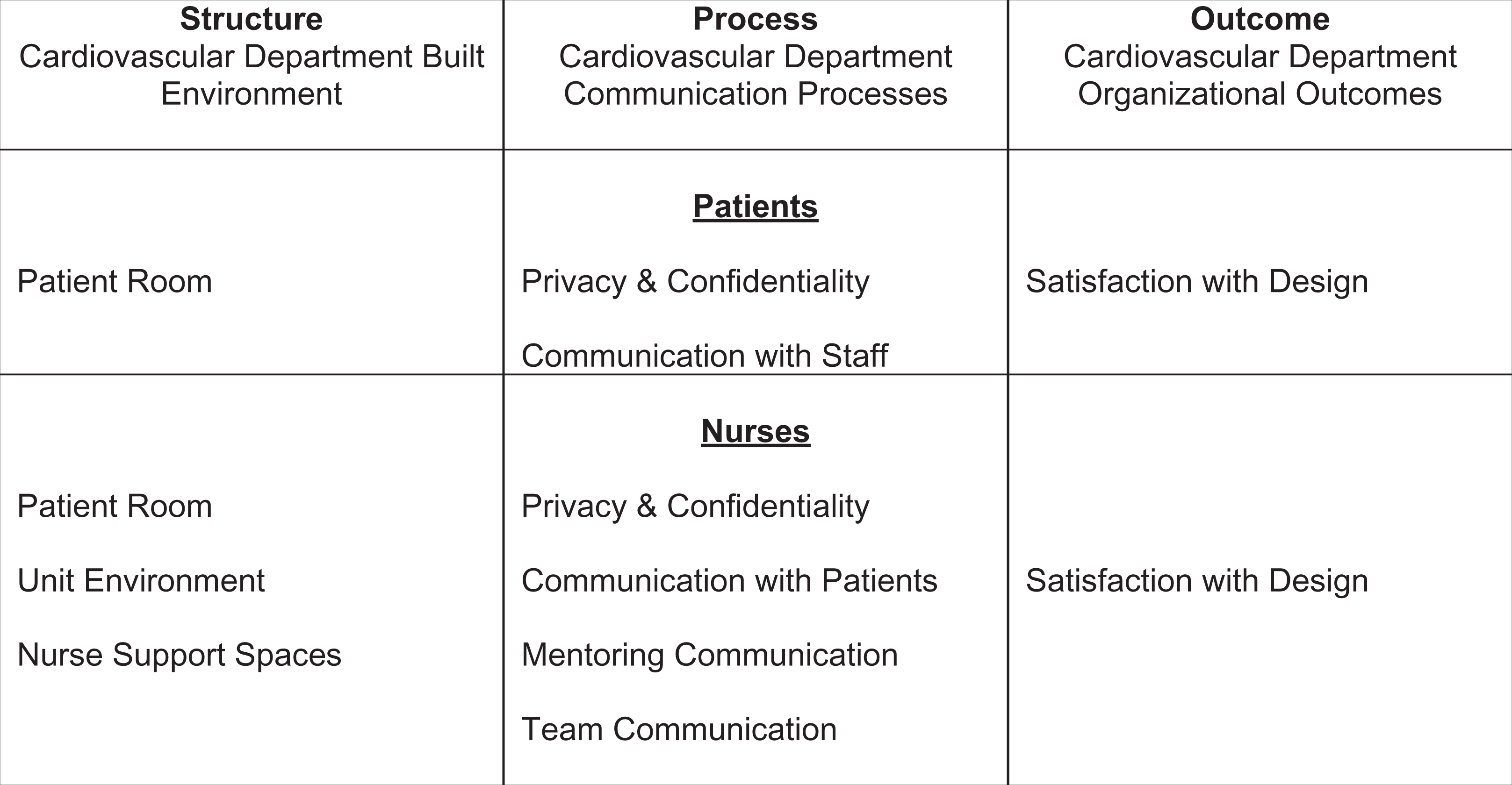
Conceptual framework for study.
Study Context
This study was conducted in a cardiovascular unit within an academic medical system that moved from centralized nursing units to decentralized nursing units in a new hospital. Before the move, the department was located in four separate centralized nurse station units. Progressive and acute care patients were located in three units on one floor (36 beds), where the hallways intersected in the middle. Patient rooms in these units were single or double occupancy and were located on both sides of the hallways. There were multiple configurations of centralized nurse stations. In two units, the stations were housed within converted patient rooms within the unit. In a third, it was located among other patient rooms in the hallway (see Figure 2). The fourth area, the intensive care unit (ICU), was housed on a different floor, contained 16 single-occupancy glass-walled patient rooms in a semicircle with centralized nurse stations facing the rooms (see Figure 3). In all four units, nursing support spaces, storage areas, and workstations were centralized.

Acute care unit with centralized nurse station.

Intensive care unit (right side) with centralized nurse stations.
In the new hospital, the decentralized units were housed together on one floor across two connected towers. The layout was the same for the ICU and acute/progressive units. The number of acute/progressive were reduced from 36 to 32, while the number of beds and size of the ICU doubled from 16 to 32 beds (see Table 1 for unit demographics). Nurse stations were located in recessed alcoves in the hallway outside of patient rooms (see Figure 4) in both ICU and acute/progressive units. Each station had a computer for charting and a small window to see into that patient room and was designed to be used by the nurse assigned to that room. Patient rooms in decentralized units were single occupancy with ample space for visitors. Supply, medication, utility rooms, and other nurse support spaces were located in the central core of the unit.
Unit Demographics.

Note. A/P = acute/progressive; EMR = electronic medical record; ICU = intensive care unit; RN = registered nurse; NCT = nurse certified technician; NA = not available.
aFull-time employees.
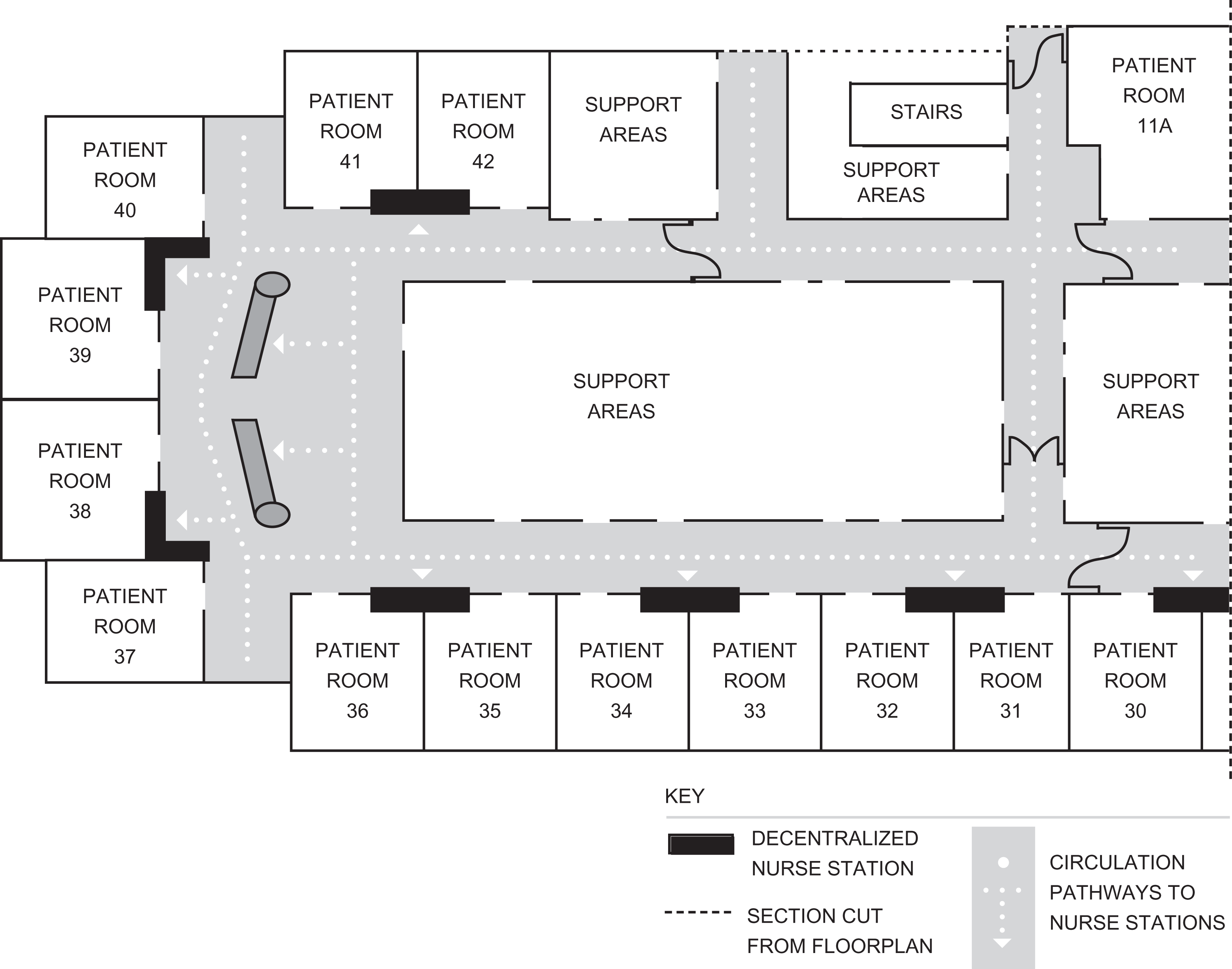
New intensive care unit with decentralized nurse stations. Acute/progressive units had the same design.
Method
This study employed a multimethod, before-and-after, quasi-experimental research design. Quantitative and qualitative data were collected from patients and nurses in centralized nursing units approximately 3 months before moving to decentralized nursing units. Nine months after the move, identical measures were collected from patients and nurses from the same department in decentralized nursing units.
Protection of Human Subjects
This study was approved by the institutional review board. Approval was given for data collection from patients and staff. Data were confidential and no patient identifiers were collected. The research team from healthcare, communication, design, and statistics were sensitive to the needs of the individual patients and staff who participated in this study and did not disclose any private information from any method of data collection.
Sample and Procedures
Nursing
Nurses completed surveys in the centralized units and later in decentralized units (N = 26pre, N = 51post). Nurses were recruited to participate in person and via e-mails from the research team or their individual managers. Nurse demographic data indicate that 91% were female, 61% ranged in age between 22 and 34, 83% had at least a bachelor’s degree or higher, 40% had between 1 and 5 years of experience, and another 26% had more than 10 years in nursing.
Patients
Paper surveys were either provided to or read to progressive/acute care patients in their rooms by RNs unrelated to this study who were responsible for coordinating admissions, discharges, and transfers. There were 62 surveys (N = 62pre) completed in centralized units and 49 surveys in decentralized units (N = 49post). Due to the sensitive nature of collecting data from patients, no identifying or demographic data were collected.
Variables and Instrument
Independent variable
The independent variable for this study was the physical design of the nursing station. The primary difference between the two sets of units (before and after) involved the centralized/decentralized nurse stations (see Table 1 for unit demographics).
Dependent variables
All measures for this study were adapted from Ulrich et al.’s (2010) conceptual framework of evidence-based design. Cronbach’s alpha (α), a measure of scale reliability, is reported for each multi-item scale. The measures are presented according to the conceptual framework guiding this study.
Structure measures
Nurse perceptions of structure were broader and emphasized the unit as well as the patient room and were measured with five variables. Nurse support spaces was gauged with 3 items, including “The location of the medication rooms is convenient and easily accessible” (α = .76pre, α = .81post). Nursing perceptions of unit environment was assessed with 3 items related to temperature, daylight, and cleanliness, including “The temperature in the unit is comfortable” (α = .79pre, α = .57post). Lighting was assessed with one question, “The lighting levels in the unit are adequate.” Noise was measured with a single item, “The noise level in the unit is distracting.” Nursing perceptions of the patient room were measured with 3 items including “The patient room provides adequate space for families/visitors” (α = .79pre, α = .57post). Patient perceptions of structure were focused on the patient room because this is the primary experience that patients have in hospitals. It was assessed with one variable, the patient room, which was measured using 3 items, including “The furniture in the room meets my needs” (α = .78pre, α = .66post).
Process measures
Nurse process measures were focused on communication. Nurse–patient communication was assessed using three questions, including “It is easy for me to take the time to explain information to my patients” (α = .83pre, α = .84post). Team communication was evaluated using 3 items, including “The design of the unit contributes to good interdisciplinary communication” (α = .88pre, α = .88post). Mentoring communication was measured with 3 items (e.g., “I am able to ask questions or get advice from other staff when I need it in this unit”; α = .91pre, α = .83post). Privacy and confidentiality was gauged using 3 items such as “places exist that allow me to talk confidentially with other staff members” (α = .92pre, α = .83post).
Patient processes were focused on communication processes and getting staff help. Patient communication with staff was assessed by 3 items, including “It was easy to communicate with staff when I needed to” (α = .88pre, α = .84post). Privacy and confidentiality was measured by two questions that were reverse scored, including “I feel like other people could hear my private information” (α = .90pre, α = .88post). Staff help was assessed with a single-item measure, “It was easy to get staff help when I needed it.”
Outcome measures
Nursing satisfaction with design centered on the unit and was assessed with three questions (e.g., “Overall, I am satisfied with the design of the unit,” α = .79pre, α = .93post). Patient satisfaction with design focused on the patient room and was gauged with one question, “Overall, I was satisfied with the design of the room.”
Qualitative data
Nursing staff provided open-ended answers in response to the request to comment on “what things you think are working well” and “what things you think need to be improved” at the end of the survey. Patients were asked to “describe both good and bad” in open-ended comments at the end of the survey.
Data Analysis
Quantitative analysis
Analysis of variance (ANOVA) was employed to compare the effect of nurse station design on group means for structure, process, and outcome measures in centralized and decentralized units. Data were analyzed using SPSS (Version 24; IBM, Armonk, NY).
Qualitative analysis
Qualitative data were analyzed using a conceptual framework developed from healthcare design, communication, and systems theory research (Real et al., 2017; Ulrich et al., 2010). This framework guided the analysis of the structure, process, and outcome factors. The authors reviewed the data independently and evaluated the framework, specific categories, and achieved final agreement through discussion.
Results
Table 2 presents the ANOVA tests of difference with means, standard deviations, F statistics, and degrees of freedom for each test for patients and nurses in centralized and decentralized units. A summary of these results are presented below using a structure–process–outcome format.
Patient and Nurse Differences Using ANOVA.
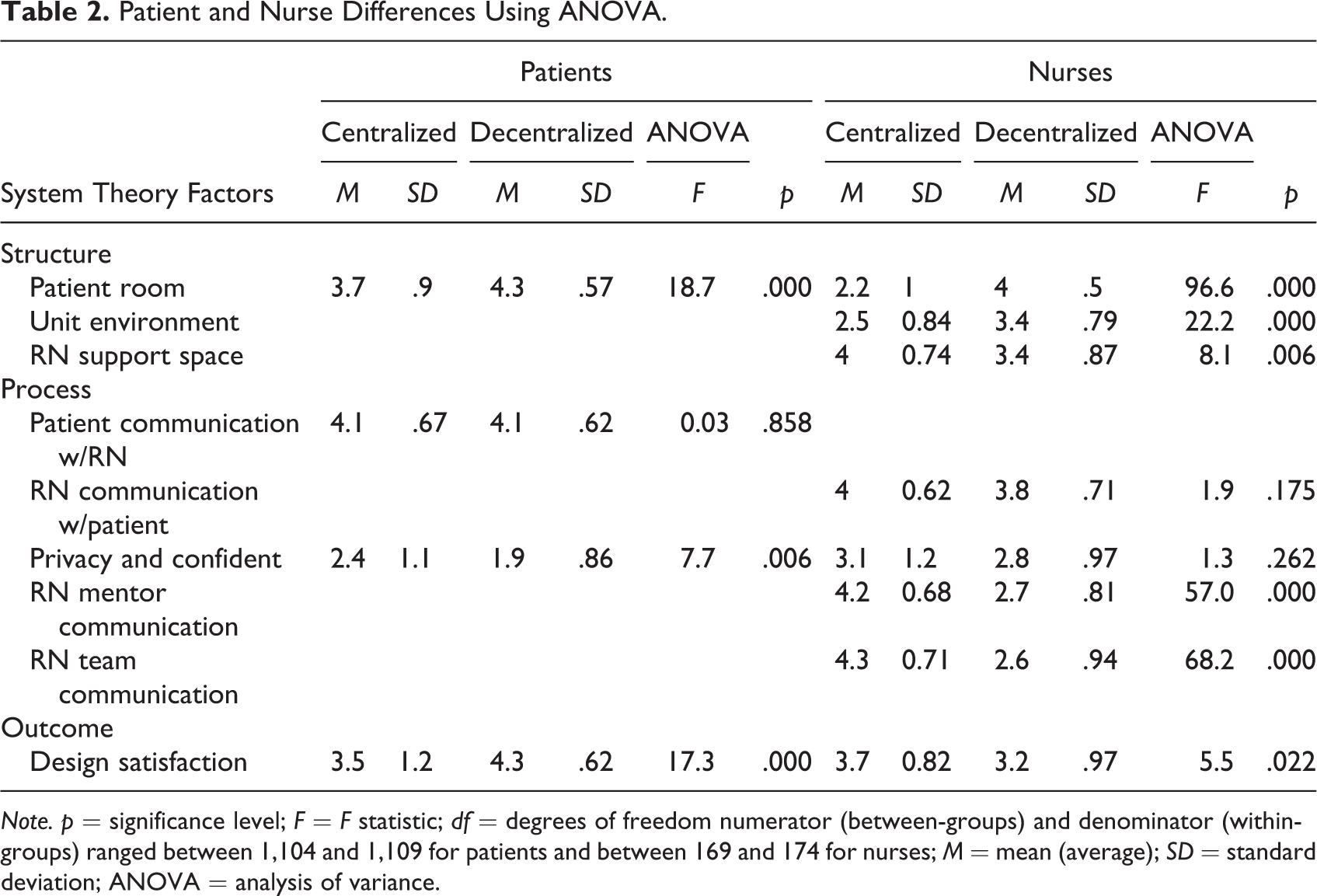
Note. p = significance level; F = F statistic; df = degrees of freedom numerator (between-groups) and denominator (within-groups) ranged between 1,104 and 1,109 for patients and between 169 and 174 for nurses; M = mean (average); SD = standard deviation; ANOVA = analysis of variance.
Nursing Structures
There were statistically significant differences in nurse perceptions of unit environment, patient rooms, noise, and nurse support spaces between centralized and decentralized units. Nurses in decentralized units reported more positive perceptions than nurses in centralized units toward unit environments, patient rooms, and noise levels. They perceived the decentralized units to be cleaner, quieter, and as having larger patient rooms. Conversely, nurse support space levels were significantly lower in the decentralized units. Nurses in decentralized units perceived that locations of supply, medication, and soiled utility rooms were not as favorable as in centralized units. There were no significant differences for lighting levels between units. These results indicate that nurses found unit temperature, cleanliness, natural daylight, noise, patient room size, furnishings, and equipment to be better in decentralized units. On the other hand, nurses perceived that location of support spaces to be better in centralized units.
Patient Structure
Results show a statistically significant difference in patients’ perceptions of patient room between centralized and decentralized units. Patients in decentralized units reported higher levels of agreement that their patient room met their needs, was quiet, and reduced their stress than patients in centralized units.
Nursing Processes
There were no differences for communication with patients nor for privacy and confidentiality among staff for nurses between units. There were significant differences for mentoring communication and team communication, each of which were significantly lower in decentralized units. These results indicate that although nurses encountered similar communication with patients across units, they experienced lower levels of mentoring and teamwork in decentralized units.
Patient Processes
There was a significant difference for privacy and confidentiality. Privacy was significantly higher for patients in decentralized units. There were no differences for patient communication with staff or getting staff help between unit types.
Nursing Outcome
There was a significant difference in nurse satisfaction with design. Nurses in decentralized units reported lower levels of satisfaction with design than nurses in centralized units.
Patient Outcome
There was a significant difference for patient satisfaction with design. Patients in decentralized units reported more satisfaction with design than patients in centralized units.
Qualitative Findings
Table 3 presents domains, themes, and representative quotations from nurses in centralized and decentralized units. Nurses in centralized units offered 35 open-ended responses, with 68% focused on structure; 40% of all statements were positive. Nurses in decentralized units provided 101 open-ended responses; 71% of these concerned structure and 32% of their statements were positive in nature. Notably, there were more than twice as many negative responses (68) than positive (33) from nurses in decentralized units. One nurse stated, “I feel nothing can be changed at this point, considering the problems I have are related to the physical layout.” However, a new nurse noted that having not worked in centralized units may have provided her with a different perspective, “I am a new employee and did not work in the old unit. This unit seems very nice and it’s better than anywhere I’ve worked before.”
Nurse Qualitative Structure, Process, Outcomes, and Representative Quotations.
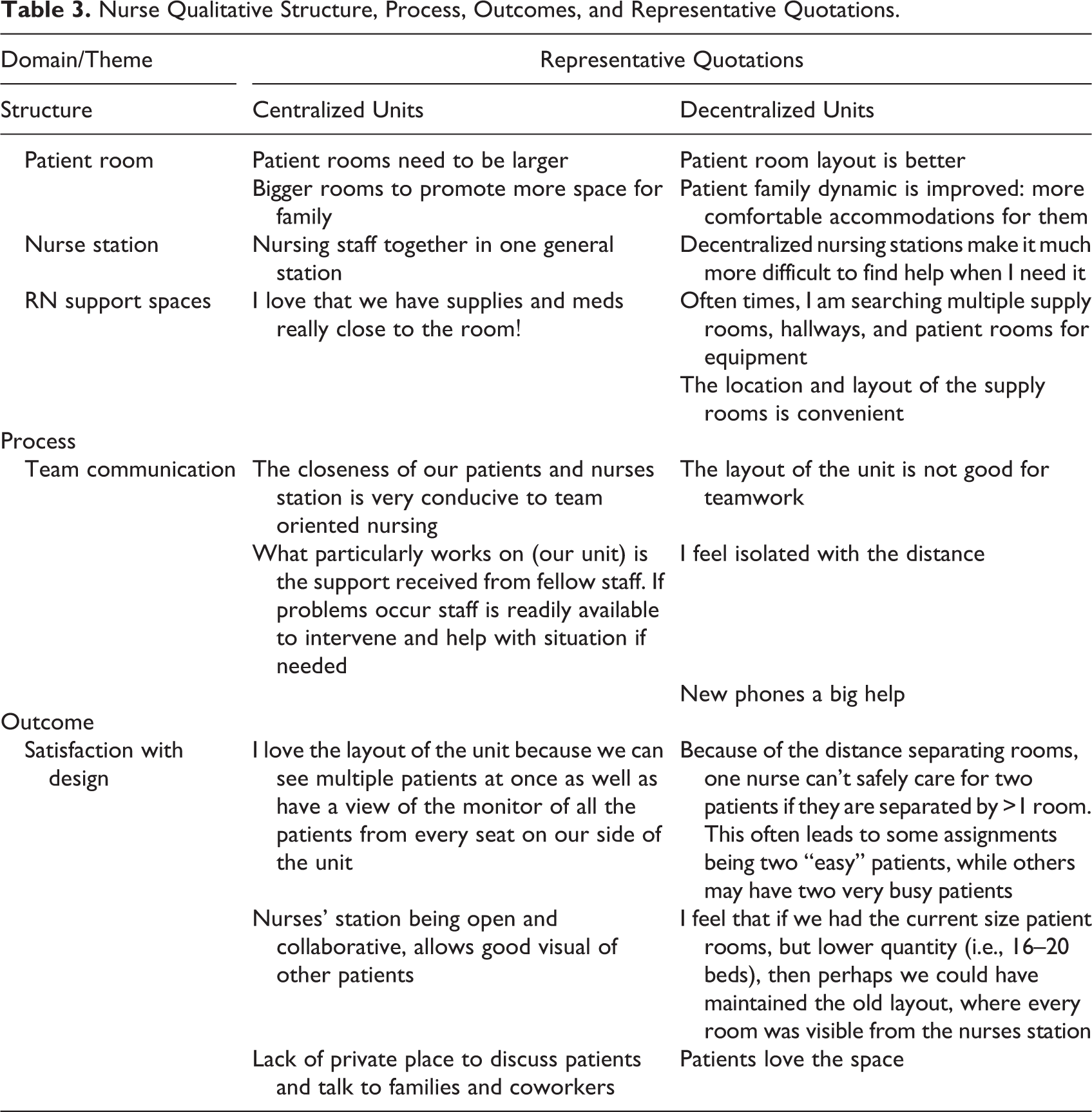
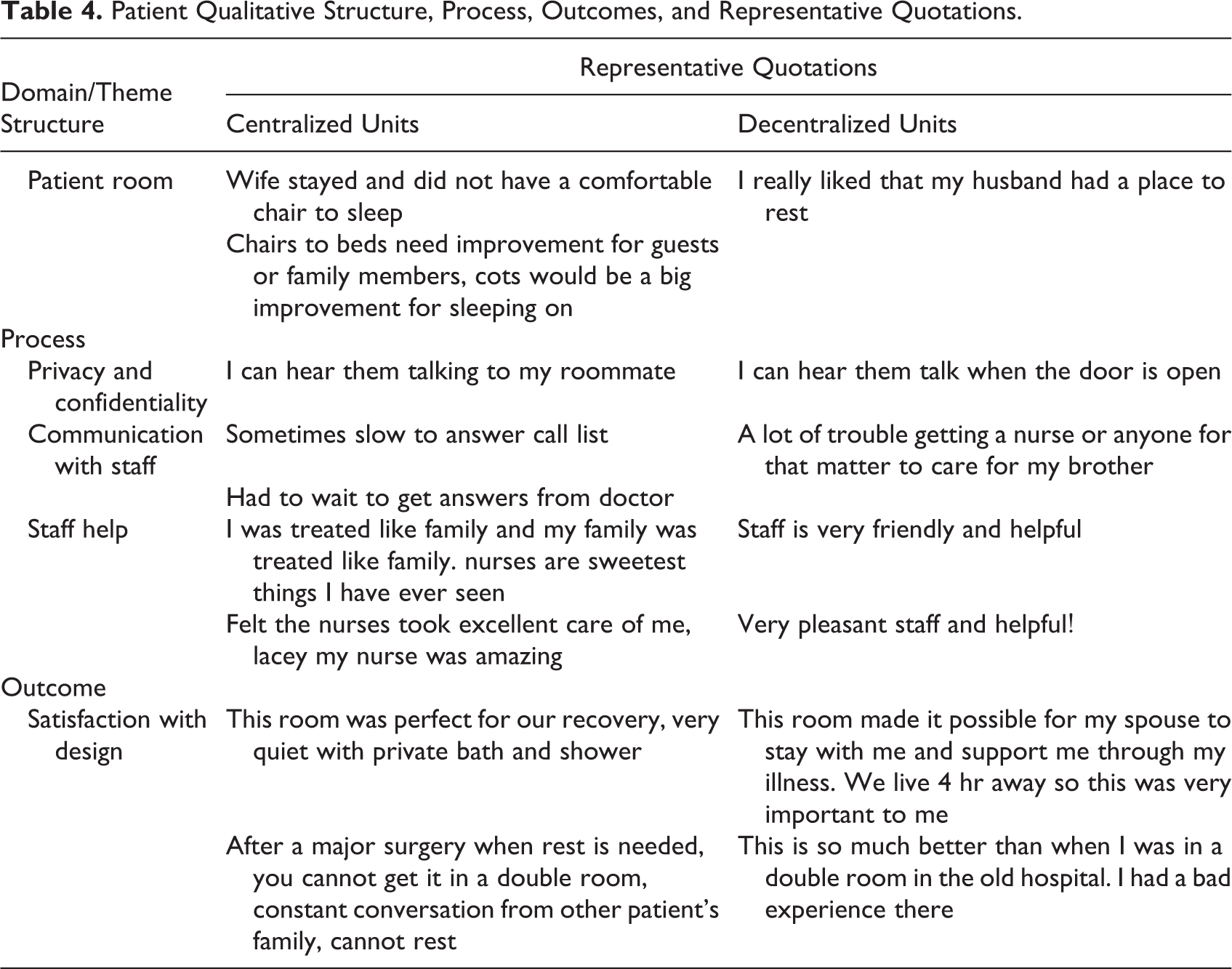
Table 4 presents domains, themes, and representative quotations from patients in centralized and decentralized units. Patients in centralized units offered 33 open-ended responses, 67% of which addressed structure. Only 18% of centralized unit patients’ statements were positive in nature. Many comments were brief and to the point concerning structure, “room too small,” “rooms are tight,” and “difficult to get into the bathroom.” Patients in decentralized units provided 10 open-ended responses; 40% of these addressed structure, and 70% of the statements were positive. Patients liked the design, “This room made it possible for my spouse to stay with me and support me through my illness,” and the helpful staff, saying “Great doctors and staff!” Overall, these qualitative insights from nurses and patients substantiate the quantitative results of this study.
Patient Qualitative Structure, Process, Outcomes, and Representative Quotations.
Discussion
This evaluation used a communication lens to examine the impact of nursing unit design on nurse and patient perceptions of communication processes and satisfaction with design in centralized and decentralized nursing units. Findings from this study show that patients preferred the decentralized units because of larger single-occupancy rooms, greater privacy and confidentiality, and overall satisfaction with design. Nurses had a more complex response to the move to decentralized units for a number of reasons. Nurses approved the patient rooms, unit environment, and noise levels in decentralized units. However, they reported reduced access to support spaces, lower levels of team/mentoring communication, and less satisfaction with design than in centralized units.
The mixed results for nurses suggest a number of implications for understanding the impact of nursing unit design on nurse perceptions of structures, processes, and outcomes. It was clear that nurses liked the new design in many ways. They perceived the decentralized units to be cleaner, quieter, and to have larger patient rooms. These structural factors have implications for patient communication. For example, noise levels affect ability to communicate and privacy and confidentiality. Large private rooms enable nurses to talk with families and patients in private and offer opportunities for relationship building, empathy, and increased patient satisfaction.
However, nurse team communication, mentoring communication, and importantly, satisfaction with design were significantly lower in decentralized units. We know from research that centralized units are structures that offer affordances (Maier et al., 2009) for teamwork and mentoring. Working with others regularly and engaging in mentoring other nurses are important elements of nursing communities of practice, where customs and processes are shared across informal networks of other nurses, other healthcare professionals, ancillary staff, administrators, families, and patients (Andrew et al., 2008; Real et al., 2017). Nurses learn through interaction and participation as they acquire the requisite knowledge and skills to become a proficient member of the nursing community (Becker, 2007). In response to the contrasting findings of this and other studies, an alternative “hybrid” design solution, which includes a centralized collaboration space for interdisciplinary caregivers and several touchdown areas adjacent to patient rooms, is becoming more prevalent in large-scale hospital units. Moreover, research by Hamilton, Swoboda, Lee, and Anderson (2018) suggests that larger unit size and long corridors have reduced visibility and communication among nurses in decentralized units. This study highlights the need to understand the impact of physical structures on nursing communication and teamwork.
The patient results provide evidence and support for patients’ preference for larger private rooms. Private room designs were identified as helpful in patient qualitative findings, where patients described better sleep, more room for family, and increased privacy. Patient privacy is important to patient satisfaction and a recent systematic review by Doyle and colleagues suggests that patient satisfaction should be considered an important element of quality of care. The review found clear evidence connecting it to communication and clinical effectiveness (Doyle, Lennox, & Bell, 2013). Patients may not feel capable of assessing their clinical care but can base their experience on the quality of their room, their privacy, how their family is treated, and communication with providers (Kenagey et al., 1999; Weingart et al., 2006). In this study, the furniture in the patient rooms in decentralized units included overnight beds for family to comfortably stay in the room. Family can provide support, reduce patient stress, communicate with staff, and increase patient satisfaction when they are present (Ulrich et al., 2010).
Applying a systems theory conceptual framework to assess perceptions of physical structures, communication processes, and design-related outcomes provides a theoretical perspective enabling design professionals to evaluate how “systems afford behaviors via their structure” (Maier et al., 2009, p. 398). Physical proximity to patients, a crucial aim of decentralized designs, can lead to increased time and interactions with patients (Fay, Carll-White, Schadler, Isaacs, & Real, 2017). Why then would nurse–patient communication remain unchanged from centralized to decentralized units? This finding came from both patients and nurses independently. One clue may be found in the location of nurse support spaces. Although nurses worked at decentralized nurse stations, nurse support areas, particularly medication and supply rooms, remained centralized, located in the central core of the units. These locations had an effect on teamwork and communication as finding another nurse for medication sign-outs requires additional time and planning (Pati et al., 2015; Real et al., 2017). The need for system components to operate in tandem is rooted in system theory. Designers can note how changing system interdependencies can lead to unexpected changes in other system elements. These multiple, complex factors may explain why system design does not always match system outcomes.
Limitations of this study are found in small sample sizes, which can reduce our confidence in making generalizable conclusions for studies that examine these areas. Due to the small sample, results were not reported separately for the ICU unit and three progressive/acute care units. Given the degree to which nurses are surveyed and the vulnerable nature of patient populations, these samples provide useful information. This study was conducted within a single department in one hospital system. To the extent that other hospital departments (e.g., medical/surgical, neurology, and behavioral health) and layouts are comparable, we may expect to find similar results. Results of this study are likely not generalizable to ambulatory and outpatient care designs, where nursing staff do not have a dedicated nurse station within each unit similar to hospital settings. Readers may be advised to carefully consider similarities and differences in patient and nurse samples and layouts in nurse station research when making decisions that inform future designs.
Conclusions
The findings of this study demonstrate the importance of understanding healthcare design changes within a systems theory framework. Results from the data demonstrate that decentralized units offer the opportunity to increase patient satisfaction. A major contribution of this study is the inclusion of patient satisfaction with design, an important yet overlooked fact in patient satisfaction. However, nurse communication and patient care processes will need to be further addressed. Understanding patient and nurse perceptions of nurse station design is highly relevant as hospitals are increasingly implementing designs that put nurses closer to patients. Systems theory provides an explanatory framework for recognizing relationships among spatial layout, communication processes, and important outcomes.
Future research could examine how nurses find ways to interact with nurses and others. Do they find other physical spaces to go to talk? Future research should examine the locations of these spaces, how nurses are using them, and how they impact patient care. As new structures are implemented, new processes may emerge that call for alignment with existing system components. Future research could examine how nurses compensate for the lack of direct peer mentoring. Are there design or operational initiatives that can address this important issue? Qualitative studies are needed that provide deeper insights into considerations for how the interior environment can support team and mentoring communication while keeping nurses close to the patients. As new designs are being developed and implemented to meet the needs of patients, providers, and other participants, more attention must be focused on how nurse station design can improve the quality of communication among all stakeholders.
Implications for Practice
It is important to gather multiple viewpoints during pre–postoccupancy evaluation of nursing units. Patients and nurses can have different experiences that are important to understand. Using systems theory provides an explanatory framework for recognizing relationships among spatial layout, communication processes, and desired outcomes. Qualitative studies are needed that provide deeper insights for how the interior environment can support team and mentoring communication while keeping nurses close to the patients.
Supplemental Material
Supplemental Material, Using_Systems_Theory_to_Examine_Patient_and_Nurse_Structures,_Processes,_and_Outcomes_in_Centralized_and_Decentralized_Units - Using Systems Theory to Examine Patient and Nurse Structures, Processes, and Outcomes in Centralized and Decentralized Units
Supplemental Material, Using_Systems_Theory_to_Examine_Patient_and_Nurse_Structures,_Processes,_and_Outcomes_in_Centralized_and_Decentralized_Units for Using Systems Theory to Examine Patient and Nurse Structures, Processes, and Outcomes in Centralized and Decentralized Units by Kevin Real, Lindsey Fay, Kathy Isaacs, Allison Carll-White, and Aric Schadler in HERD: Health Environments Research & Design Journal
Footnotes
Declaration of Conflicting Interests
The authors declared no potential conflicts of interest with respect to the research, authorship, and/or publication of this article.
Funding
The authors received no financial support for the research, authorship, and/or publication of this article.

References
Supplementary Material
Please find the following supplemental material available below.
For Open Access articles published under a Creative Commons License, all supplemental material carries the same license as the article it is associated with.
For non-Open Access articles published, all supplemental material carries a non-exclusive license, and permission requests for re-use of supplemental material or any part of supplemental material shall be sent directly to the copyright owner as specified in the copyright notice associated with the article.
