



Abstract
Objectives:
Lighting is one of the environmental factors which can improve patient sleep in healthcare environments. Due to the high degree of variation in study designs and results on this topic, the implications have been difficult to interpret. This review consolidates studies on the impact of bright light exposure on sleep to identify lighting conditions that can be applied and researched in future healthcare environments.
Methods:
We searched for peer-reviewed articles on the impact of light on sleep or sleep-related outcomes in healthcare settings. We provided detailed analysis of the direct links between light and sleep, and a more cursory analysis of links between light and sleep-related factors, from 34 articles which met our inclusion criteria.
Results:
The current state of the literature includes evidence on how various durations and intensities of morning, midday, and evening bright light exposure, as well as whole-day light exposure interventions can improve specific aspects of sleep. Lighting interventions differed in all attributes (illuminance levels, exposure time, exposure duration, and spectral qualities) but showed promising results in improving patients’ sleep.
Conclusions:
Short-term bright light exposure in the morning, up to 2 hr of moderate (3,000–10,000 lux) morning exposures, up to 4 hr of moderate evening exposure, and whole-day exposures to lower illuminance levels (<3,000 lux) can improve patient sleep outcomes. Based on new findings on the mechanism through which light impacts sleep, future studies should be more specific about the spectral qualities of light sources.
Impaired sleep is associated with negative health outcomes (Joshi, 2008; Sloane et al., 2007). The consequences of poor sleep are particularly problematic for people with compromised health such as patients in hospitals and long-term care facilities. Many environmental factors, such as light, noise, air quality, and room temperature, as well as the layout of the room, can affect patient sleep (DuBose & Hadi, 2016). Light is the most powerful of the exogenous cues influencing the regulation of the endogenous pacemakers and entrainment of human circadian rhythms (Hood, Bruck, & Kennedy, 2004; Sloane et al., 2007). Recently discovered cells in the retina activate the circadian system in response to short-wavelength light distinct from the action of the visual system. The timing and duration of light exposure also significantly affect entrainment of the circadian rhythm (Hanford & Figueiro, 2013). We systematically reviewed the existing literature to understand how the use of light (from natural or artificial sources) can improve patient sleep in healthcare settings. The main focus of the article is on research that explores the impact of light on sleep, but we also discuss research on the effectiveness of light in regulating rest–activity, circadian rhythm, and hormonal changes.
Aims
The purpose of this study is to consolidate and evaluate the research studies on the effectiveness of lighting interventions on sleep and sleep-related physiological aspects (e.g., circadian or rest–activity rhythm) of patients in healthcare settings. A strong body of literature has highlighted secretion of hormones such as melatonin and serotonin as markers of circadian rhythmicity and sleep (Mishima et al., 1994; Mishima, Okawa, Shimizu, & Hishikawa, 2001; Okawa et al., 1991; Ursin, 2002). Therefore, the current review also sought studies that evaluated the effect of light interventions on these secondary outcomes of interest (circadian or rest–activity rhythm, melatonin, or serotonin) as indicators of potential impact on sleep. This literature review seeks to determine whether sufficient evidence exists to specify hospital lighting conditions to significantly improve patients’ sleep. It also aims to identify gaps in the literature in order to provide clear directions for the future light and sleep studies in healthcare.
Method
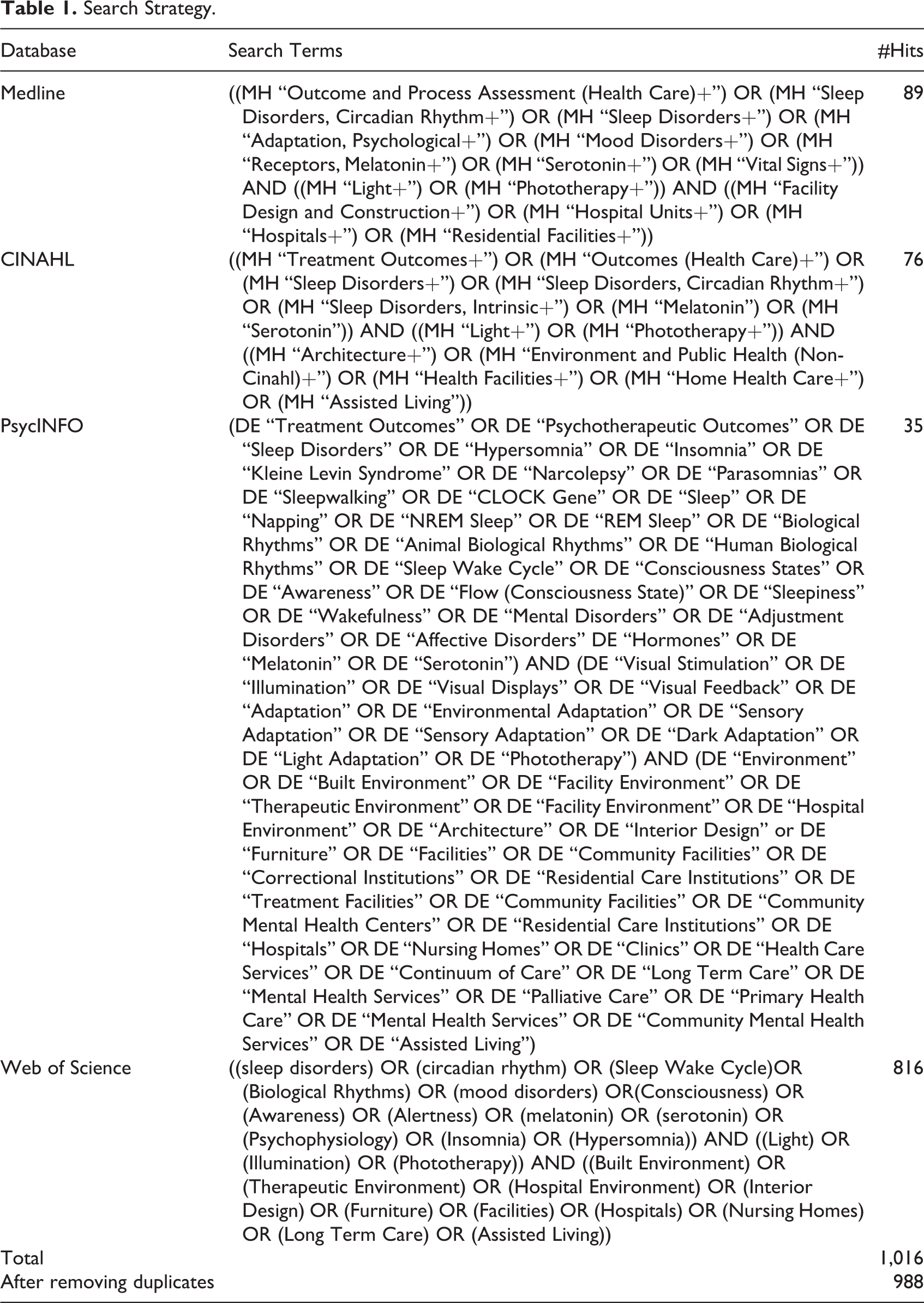
We searched Medline, CINAHL, PsycINFO, and the Web of Science for references in peer-reviewed journals published between January 1990 and April 2016 that pertained to light, illumination, or phototherapy targeting healthcare patient populations with the aim of improving sleep or related physiological factors (mechanisms or processes which affect human sleep). The search applied combinations of search terms relevant to outcomes of interest (Table 1). The following study designs were included throughout the search process: randomized controlled, quasi-randomized controlled, controlled before-and-after, historically controlled, cohort studies, and case-control studies. Since this study does not involve human subjects, institutional review board approval was not needed.
Search Strategy.
Search Outcome
The search strategy produced 988 articles (Table 1) that were pared down to 78 after applying the inclusion and exclusion criteria to the titles and abstracts. The second screening of the 78 full texts led to the removal of 50 additional articles. Thus, 962 articles were excluded for lacking a focus on relevant study population, outcomes of interest, study designs, or not written in English. An additional eight articles identified from review articles were added to the final set (Figure 1) of 34; three articles in the final set report on the same study with minor changes in study population and outcomes (Fetveit & Bjorvatn, 2004, 2005; Fetveit, Skjerve, & Bjorvatn, 2003). From the final 34 articles, the following data were extracted and inserted into a table including setting, population, mean age, sample size, lighting intervention or exposure, intervention characteristics, outcome measure, and finding (Table 2).

Flow chart of the study selection process.
Summary of Findings.

Results
Organization of Heterogeneous Findings
Studies included in our review investigated the impact of light on a variety of patient sleep measures including sleep quality, total sleep time (TST), nocturnal sleep time, diurnal sleep time, nocturnal wake time, awakenings, daytime wake time, sleep efficiency, sleep onset time, sleep disturbances, and daytime sleepiness. In a less detailed manner, we also reviewed and reported studies that investigated the impact of light on sleep-related factors including rest–activity measures, circadian rhythmicity, and sleep hormones such as melatonin and serotonin.
The timing of lighting interventions applied in these studies fall into several categories such as morning, midday, evening, whole day, and tailored dynamic lighting systems. They also vary immensely in duration of exposure, length of the lighting intervention study, illuminance, and spectral qualities. The mechanism for delivering the lighting interventions includes natural light exposure, light box, florescent lamps, LED luminaires, and light visors. Additionally, there is great variability in the level of detail provided on spectral quality and light source. To deal with the heterogeneity of these studies, we organized the findings by sleep outcomes and within this category further grouped the studies by type of lighting intervention. A summary of findings and details of the interventions is presented in Table 2.
Lighting is a great nonpharmacological option for improving sleep in healthcare populations, so we were interested to determining the potential impact even if we could not be definitive about the specific conditions and effects. That being the case, we used the following language conventions when summarizing the findings. When there are multiple studies with some having significant findings and others not finding a significant impact, we use the term “can” to express that there is some evidence that light has that impact. If none of the studies have significant findings, either positive or negative, we describe the relationship as “may” impact the outcome. In the few cases where all the research agrees, we state the impact directly.
Impact of Light on Sleep
Impact of light on sleep quality
Sleep quality is usually measured through self-reported questionnaires such as Pittsburgh Sleep Quality Index (PSQI), Richards–Campbell Sleep Questionnaire, General Sleep Disturbance Scale (GSDS), and Sleep Timing and Sleep Quality Sleep Questionnaire. Although all of these measurement methods evaluate the quality of sleep on a numerical measure, with higher scores indicating worse sleep, the questions and scales of the studies vary. The current review identified that 30 min of full-spectrum morning bright light (10,000 lux) exposure, and tailored lighting systems (66–324 lux, white 9,325 K CCT) can improve the quality of patient sleep measured by self-reported questionnaires.
Morning bright light exposure can improve sleep quality
Various types of morning bright light therapies can improve the quality of patients’ sleep. Twenty-four older adults in a nursing home were exposed to 30 min of 10,000 lux full-spectrum light every morning for a month. The mean PSQI global sleep quality measure decreased from 12.87 (out of a maximum of 21) at the beginning of the intervention to 3.95 after therapy and was still markedly lower than baseline (4.87) at the 1-month follow-up (p < .001; Akyar & Akdemir, 2013). Another study with 30 min of 8,000 lux blue-green light (wavelengths 470–525 nm) reported improved sleep quality measured by GSDS, but this was not significant (Lee, Aycock, & Moloney, 2013).
Tailored dynamic whole-day light systems (06:00–18:00) can improve sleep quality
A study of 14 patients with Alzheimer’s disease (AD) and related dementia showed significant improvement in sleep quality using a tailored lighting system delivering moderate light levels from a high correlated color-temperature white light source (9,325 K) for 4 weeks. The lighting system was turned on at the residents’ waking time (between 06:00 and 08:00) and switched off at 18:00. The mean light level at baseline was 66 lux at the cornea, compared to 324 lux during the intervention. The mean global PSQI score was significantly reduced during the intervention compared to baseline (8.7–4.1, p = .01; Figueiro et al., 2014). Another study did not find significant improvement on any of the sleep quality measures (De Rui et al., 2015).
Impact of light on TST
TST is the cumulative time in sleep episodes occurring day or night (total sleep episodes less the wake time). A 2 hr of full-spectrum 3,000–5,000 lux of morning light exposure, constant whole-day (06:00–17:00) bright light exposure of 1,000 lux, and a tailored dynamic whole-day (06:00–22:00) lighting system (324 lux mean light level and CCT of 9,325 K) can increase TST by 30, 10, and 29 min, respectively.
Morning bright light therapy can increase TST
The effect of morning bright light exposure (3,000–5,000 lux, 09:00–11:00, for 4 weeks) on the sleep of 14 elderly patients with dementia and sleep disorders at a psychiatric hospital was compared to 10 control elderly patients from the general ward of the same hospital. TST of the elderly patients with dementia was significantly shorter than that of the control group (7.1 vs. 8.2 hr) at baseline and increased significantly to 7.6 hr during the intervention (Mishima et al., 1994). Other studies of morning bright light therapy with shorter durations of light exposure did not find significant improvements in TST (Dowling et al., 2008; Lee et al., 2013).
Evening bright light therapy, as a part of multicomponent intervention, may increase TST
In the only study on evening light exposure, bright light therapy (2,000–3,000 lux) was delivered through ceiling lights from 18:00 to 22:00 as part of a multicomponent sleep hygiene program to improve sleep in delirious older adults of a geriatric monitoring unit (GMU). Data from nurse-collected logs showed significant improvements in TST at discharge compared to baseline (7.7 vs. 7.1 hr, p < .01; Chong, Tan, Tay, Wong, & Ancoli-Israel, 2013); it is not clear whether the effect was from evening bright light therapy or results of other interventions in the sleep hygiene program. A multicomponent study including darkening light levels at nights did not observe significant improvements in TST (LaReau, Benson, Watcharotone, & Manguba, 2008).
Tailored dynamic whole-day light systems (06:00–18:00) can increase TST
Mean TST was significantly longer compared to baseline (460 vs. 431 min, p = .03) after 4 weeks of a tailored lighting system (324 lux mean light level and CCT of 9325 K), from first thing in the morning (06:00–08:00 to 18:00; Figueiro et al., 2014). A shorter study of a full-day dynamic lighting system (maximum 500 lux in gaze direction from 06:00 to 20:30) did not show significant improvements in TST for severely ill cirrhosis patients (De Rui et al., 2015).
Whole-day bright light (1,000 lux from 06:00 to 21:00) increases TST
In a controlled trial, dementia patients in 12 assisted care facilities were randomly assigned to one of two light conditions (whole-day exposure to an average 1,000 lux bright light or to an average 300 lux dim light between 09:00 and 18:00), and participants were assigned a daily intake of either melatonin or placebo for 15 months. Bright light significantly increased sleep duration by 10 min (2%) per year (p = .04; Riemersma-van Der Lek et al., 2008). Melatonin-only treatment also significantly increased TST (27 min or 6%, p = .004), but the combined treatment (light and melatonin) did not show significant improvements.
Impact of light on nocturnal sleep time
Another sleep variable of interest is the duration of sleep during the night. A 2 hr of full-spectrum 3,000–5,000 lux and 1 hr of 10,000 lux morning bright light exposure can increase nocturnal sleep time by 1 and 1.7 hr, respectively.
Morning bright light therapy can improve nighttime sleep time
A before-and-after study on the effect of 2-hr full-spectrum morning bright light exposure (3,000–5,000 lux, 09:00–11:00, for 4 weeks) on the sleep of elderly patients with dementia showed a significant increase in mean nocturnal sleep time after light therapy compared to baseline (6.7 vs. 5.7 hr; Mishima et al., 1994). Another randomized controlled trial on demented patients in a chronic care facility found that 1-hr morning exposure of 10,000 lux light for 4 weeks significantly increased nocturnal sleep time (6.4–8.1 hr) compared to the dim light control group (illuminance levels unspecified; Lyketsos, Veiel, Baker, & Steele, 1999). However, other studies did not find any significant increase in nocturnal sleep time from morning light exposure (Dowling, Hubbard et al., 2005; Dowling, Mastick, Hubbard, Luxenberg, & Burr, 2005).
Impact of light on diurnal sleep time
Daytime sleep has a different structure than nighttime sleep and is not as restorative (Evans & French, 1995). A 2-hr light exposure of 3,000–5,000 lux and 1-hr morning exposure of >2,500 lux, in conjunction with an evening dose of melatonin, have significantly decreased the diurnal sleep duration by 18 and 66 min, respectively.
Morning bright light therapy can reduce diurnal sleep time
In the aforementioned Mishima et al. (1994) study, 2-hr bright light exposure of 3,000–5,000 lux for 4 weeks showed a significant decrease in daytime sleep of demented patients compared to baseline (1 vs. 1.3 hr; Mishima et al., 1994). Another randomized controlled trial showed that 1-hr daily morning bright light exposure (09:30–10:30, >2,500 lux in gaze direction for 10 weeks) plus an evening dose of melatonin, significantly decreased patients’ daytime sleep (249 min vs. 315 baseline) compared to the control group (150–200 lux), significantly improving the ratio of day/night sleep from 0.7 at baseline to 0.53 posttreatment (Dowling et al., 2008). However, the lighting intervention was combined with evening intake of melatonin, so it is not possible to attribute the result entirely to the lighting intervention.
Evening bright light therapy may reduce diurnal sleep time
Elderly residents of eight community homes completed a quasi-randomized controlled trial, which included evening bright light exposure (17:00–20:00) for up to 2 hr of approximately 1,467 lux full-spectrum bright light, in addition to other sleep hygiene strategies. After the intervention was implemented, residents were less frequently observed sleeping during the day (from 22.1% of observations at baseline to 13.8% during the intervention; p < .001; Ouslander et al., 2006). As a multicomponent intervention, it is not certain that the decrease in diurnal sleep was due to the evening bright light therapy.
Impact of light on nocturnal awakenings
About 2 hr of morning bright light exposure of 6,000–8,000 lux can reduce total nocturnal wake time, early morning awakenings, and wake after sleep onset time. Nearly 4 hr of midday bright light exposure of 2,500 lux can reduce awake times. About 4 hr of evening bright light exposure of 2,000–3,000 lux, as a part of a multicomponent program, may also reduce the number of awakenings. Whole-day exposure to an average 1,000 lux bright light combined with melatonin treatment may decrease the duration of awakenings.
Morning bright light exposure can reduce the duration of early morning and nighttime awakenings
About 2 hr of morning bright light exposure (6,000–8,000 lux, between 08:00 and 11:00, for 2 weeks) was significantly associated with reduced early morning awakening time (0:16 pretreatment to 0:01 during treatment), reduced total nocturnal wake time (3:24 hr pretreatment to 1:40 hr during treatment), and wake after sleep onset time (1:49 pretreatment to 1:23 treatment) of demented patients in nursing homes (Fetveit & Bjorvatn, 2004, 2005; Fetveit et al., 2003). Other studies on morning bright light exposures with shorter duration did not show significant changes in number of nighttime awakenings (Dowling, Hubbard et al., 2005; Dowling, Mastick et al., 2005).
Midday light exposure can reduce the number of nocturnal awakenings
In a cohort study, 4 hr of midday bright light exposure (2,500 lux; from 10:00 to 12:00 and 14:00 to 16:00 for 4 weeks) significantly decreased mean nocturnal awake times in the elderly residents with insomnia compared to baseline (5.57 vs. 7.96 times) measured by actigraphy (Mishima et al., 2001). Other studies with afternoon light exposure did not show significant changes in nighttime wake times (Dowling et al., 2005).
Evening bright light exposure may reduce the number of nocturnal awakenings
Nearly 4 hr of evening bright light exposure (2,000–3,000 lux; from 18:00 to 22:00), as a part of a multicomponent program during the full length of patient stay, was significantly associated with fewer number of observed nocturnal awakenings (0.6 vs. 0.7; p < .05) in 228 delirious older adults (Chong et al., 2013).
Limiting light exposure during nighttime can reduce awakenings
In a study of nursing home residents, the number of changes in light levels (greater than 10 lux change) at night was significantly associated with awakenings (Schnelle, Alessi, Al-Samarrai, Fricker, & Ouslander, 1999). Other multicomponent sleep protocols with light interventions did not show significant changes in awakenings (LaReau et al., 2008).
Whole-day light exposure (morning to evening) may reduce the duration of nocturnal awakenings
In the Riemersma-van Der Lek et al. (2008) study mentioned earlier, whole-day exposure to an average 1,000 lux bright light from 09:00 to 18:00 for the full length of stay, combined with melatonin treatment, reduced the average duration of individual brief nocturnal awakenings by 0.53 min per year or a relative 12% (0.85–0.21; p = .01; Riemersma-van Der Lek et al., 2008).
Impact of light on daytime wake times
Morning bright light exposure can increase daytime wake time
Morning bright light exposure (4,000 lux; 1–2 hr; between 09:30 and 11:30; for the full length of stay) was applied to six elderly demented residents of two nursing homes. Wake in daytime increased significantly in three subjects; however, due to the small sample size of the study and inconsistent results, the findings may not be generalizable (Koyama, Matsubara, & Nakano, 1999). Another study on the impact of morning light exposure on daytime wake times did not find any significant results (Dowling, Hubbard et al., 2005).
Impact of light on sleep efficiency
Sleep efficiency is the ratio of total nocturnal sleep time to the total amount of time spent in bed. About 2 hr of morning bright light exposure (6,000–8,000 lux), a tailored lighting system with bluish-white light (324 lux; morning to evening), and long-term whole-day bright light treatment (1,000 lux, morning to evening), when combined with melatonin intake, can improve sleep efficiency by 12.7, 4, and 3.46%.
Morning bright light exposure improves sleep efficiency
Morning bright light exposure has been shown to be very effective in improving sleep efficiency. About 2 hr of morning bright light exposure (6,000–8,000 lux between 08:00 and 11:00 for 2 weeks) improved the sleep efficiency of demented patients in nursing homes. Sleep efficiency remained significantly higher for more than 4 weeks posttreatment (85.6% immediately following treatment vs. 72.9% baseline, p = .006; 77.5% 4 weeks after treatment vs. 72.9% baseline, p = .049; Fetveit & Bjorvatn, 2004, 2005; Fetveit et al., 2003). In the Koyama, Matsubara, and Nakano (1999) study of the effects of morning bright light exposure (1–2 hr of 4,000 lux light) on six demented patients, the percentage of sleep during lights-out (sleep efficiency) significantly increased in half of the already small sample minimizing the significance of the results (Koyama et al., 1999).
Evening light exposure may improve sleep efficiency
A sample of three AD residents and three non-AD residents with sleep complaints were exposed to 30 lux of blue or red light at the cornea for 2 weeks between 16:30 and 18:30. Non-AD subjects were found asleep during the night more often after exposure to blue light versus red light (89.5% of the time vs. 67% of the time). A similar but insignificant trend was observed with the AD patients (Figueiro, 2008). This study suggested the effectiveness of narrowband blue light in improving sleep, but the study sample was very small.
Tailored whole-day light systems (morning to evening) improves total sleep efficiency
In the Figueiro et al. (2014) study, a tailored lighting system delivering moderate levels of bluish-white light (324 lux; between 06:00–08:00 and 18:00) was associated with better sleep efficiency scores during intervention versus baseline (84% vs. 80%, p = .03). Long-term (average of 15 months) whole-day bright light treatment (1,000 lux, 09:00–18:00), combined with melatonin intake, significantly increased sleep efficiency of elderly residents of an assisted care facility by 3.46% (p = .01) compared to the dim light control (300 lux; Riemersma-van Der Lek et al., 2008).
Impact of light on sleep onset latency
Sleep onset latency is the time that it takes to transition from full wakefulness to sleep; bright morning light has been shown to improve latency.
Morning bright light exposure improves sleep latency
Morning bright light exposure can shift sleep onset time earlier and reduce sleep onset latency. In Fetveit’s study of 11 demented nursing home patients, 2 hr of morning bright light exposure (6,000–8,000 lux between 08:00 and 11:00 for 2 weeks) was associated with a significant reduction in sleep onset latency (01:17 pretreatment to 00:17 treatment; Fetveit & Bjorvatn, 2005; Fetveit et al., 2003). Another study found that sleep onset latency remained significantly reduced 12 weeks posttreatment (Fetveit & Bjorvatn, 2004). In the Koyama et al. study of morning bright light exposure (1–2 hr of 4,000 lux light) with six demented patients, sleep onset advanced to earlier in the evening in three of six subjects (Koyama et al., 1999).
Impact of light on sleep disturbances
The current review identified that 2 hr of evening light exposure of 1,500–2,000 lux may reduce clinical rating of sleep disturbances.
Morning bright light exposure does not reduce sleep disturbances
A recent study examining the impact of morning bright light therapy (30 min of 10,000 lux, 09:30–10:00, 3 times per week for 4 weeks) on sleep disruptions of 32 elderly long-term care residents found no significant difference between mean scores of sleep disruptions between the intervention and control group (Wu, Sung, Lee, & Smith, 2015).
Evening bright light exposure reduces sleep disturbances
Evening bright light therapy has been shown to improve the rest–activity rhythm of inpatients with Alzheimer’s and disturbed sleep. In this before-and-after study, 10 patients were exposed to 2 hr of evening (19:00–21:00) bright light (1,500–2,000 lux) for a week. The mean score of sleep–wakefulness disturbances of all patients, as rated by nurses, decreased from 6.2 at baseline to 3.0 during the treatment and 2.3 posttreatment (p < .05; Satlin, Volicer, Ross, Herz, & Campbell, 1992).
Impact of light on daytime sleepiness
Morning bright light exposure can reduce daytime sleepiness
Ten elderly patients with sleep disturbances were studied before-and-after exposure to approximately 8,000 lux bright light for 1 hr during their lunch time (11:30–12:30) over 3 weeks. About 3 weeks before and after the intervention, subjects had their lunch under approximately 1,000 lux light. During the intervention, nurse-rated afternoon drowsiness decreased significantly (from 1.5 baseline to 1.3 after exposure on a 0–4 scale; p = .01; Kobayashi et al., 2001). Other lighting solutions did not improve self-reported daytime sleepiness measures (De Rui et al., 2015; Royer et al., 2012).
Impact of Light on Sleep-Related Physiological Markers
We summarize here the lighting interventions that demonstrate significant impacts on sleep-related physiological factors such as rest–activity measures, circadian rhythmicity, and sleep hormones in association with light (see Table 2 for details). The rest–activity rhythm and circadian measures explained here are nighttime activity level, mean activity level during the 10 most active hours (M10), mean activity level (mesor), resonance between light–dark and rest–activity patterns across 24 hr (phasor magnitude), time of the peak activity (acrophase), difference between activity peaks and troughs (amplitude), number and duration of sleep bouts, fragmentation of rest–activity rhythm (intra-daily variability [IV]), stability of the rest–activity rhythm (inter-daily stability [IS]), the rest–activity rhythm α parameter (relative width of peak and trough), and rhythmicity of the circadian rhythm. Hormonal changes related to sleep are also reported.
Morning light exposure
About 2 hr of morning bright light therapy of 6,000–8,000 lux significantly reduced the mean value of nighttime activity and mean value of mesor in dementia patients (Fetveit & Bjorvatn, 2005; Fetveit et al., 2003). Another 2-hr morning bright light intervention on dementia patients using 5,000–8,000 lux also showed significant reduction in nighttime activity counts per day, as well as a reduction of the ratio of nighttime activity to total activity for patients with vascular dementia (Mishima, Hishikawa, & Okawa, 1998). Morning light exposure of shorter duration (1 hr of >2,500 lux), combined with melatonin intake, also significantly increased M10 in Alzheimer’s patients and the amplitude of the rest–activity rhythm. In addition, nonparametric measure of amplitude significantly improved for the light and melatonin. Rest–activity rhythm, indicated by an improvement in the goodness of fit (R2) of the data to a traditional cosinor model, also improved significantly (Dowling et al., 2008). Another study with 2-hr bright light exposure on demented patients (2,500 lux) showed that increased exposure to morning bright light was significantly associated with an increased mean activity level and a delayed acrophase (Ancoli-Israel, Martin, Kripke, Marler, & Klauber, 2002). On the contrary, acrophase was significantly advanced by 45 min of morning bright exposure of 5,000–8,000 lux in demented patients (Skjerve et al., 2004). It was also significantly advanced by morning bright light exposure (1–2 hr of 2,500 lux) in another group of demented patients (Sloane et al., 2007).
Evening light exposure
Evening exposure to bright light (2,500 lux) for 1–2 hr produced a significant delay in acrophase for patients with dementia (Sloane et al., 2007). It also significantly increased amplitude of the rhythm, decreased the mean score of IV, and decreased the mean percent of nocturnal activity in Alzheimer’s patients where they were exposed to 1,500–2,000 lux for 2 hr (Satlin et al., 1992). In another study on Alzheimer’s patients, 2 hr of 2,500 lux evening light exposure improved circadian rhythmicity (Ancoli-Israel et al., 2003). Longer duration of evening light exposure (4 hr of 2,000–3,000 lux) significantly increased length of the first sleep bout and number of sleep bouts at discharge in patients with delirium (Chong et al., 2013).
Midday light exposure
Exposure to 4 hr of bright light (2,500 lux) in two sessions (morning and afternoon) significantly increased mean value of melatonin parameters AMP (the difference between peak and low values) and ACUn (in elderly residents with insomnia (Mishima et al., 2001).
Whole-day light exposure
Long-term daily treatment with morning to evening bright light (1,000 lux), combined with melatonin intake, significantly improved nocturnal restlessness in elderly residents (Riemersma-van Der Lek et al., 2008). Another multicomponent intervention exposed participants to >20,000 lux of direct sunlight for at least 30 min between the hours of 09:00 and 17:00, shifted the timing of the mesor significantly earlier and changed the α parameter of the rest–activity rhythm in elderly residents (Martin, Marler, Harker, Josephson, & Alessi, 2007). Exposure to a tailored lighting system which delivered moderate light levels (324 lux) and was illuminated between waking time and evening changed the phasor magnitude significantly in Alzheimer’s patients (Figueiro et al., 2014). Another study with whole-day bright light exposure (1,136 lux) on Alzheimer’s patients also showed significantly lowered IV and increased IS (Van Someren, Kessler, Mirmiran, & Swaab, 1997).
Various Light Exposure Conditions Associated With Significant Sleep Outcomes
Out of 34 studies reviewed for this article, 14 studies investigated the impact of light on sleep outcomes, 10 studies on sleep-related outcomes, and 10 studies on both sleep and sleep-related outcomes. Among 24 studies on sleep outcomes, 16 studies were associated with statistically significant results. For 20 studies on sleep-related outcomes, 13 studies showed statistically significant results. Figure 2 illustrates an overview of illuminance (lux) and the time/duration of exposure of the lighting interventions of 15 studies that showed significant results in sleep outcomes; one study was excluded (Schnelle et al., 1999) because it did not specify illuminance and timing/duration of light. Figure 4 illustrates the lighting interventions of the 16 studies that showed significant results in sleep and sleep-related outcomes. In studies comparing outcomes between lighting intervention and control groups, we considered the impact of lighting intervention significant if the outcomes were significantly different between the intervention and control groups.
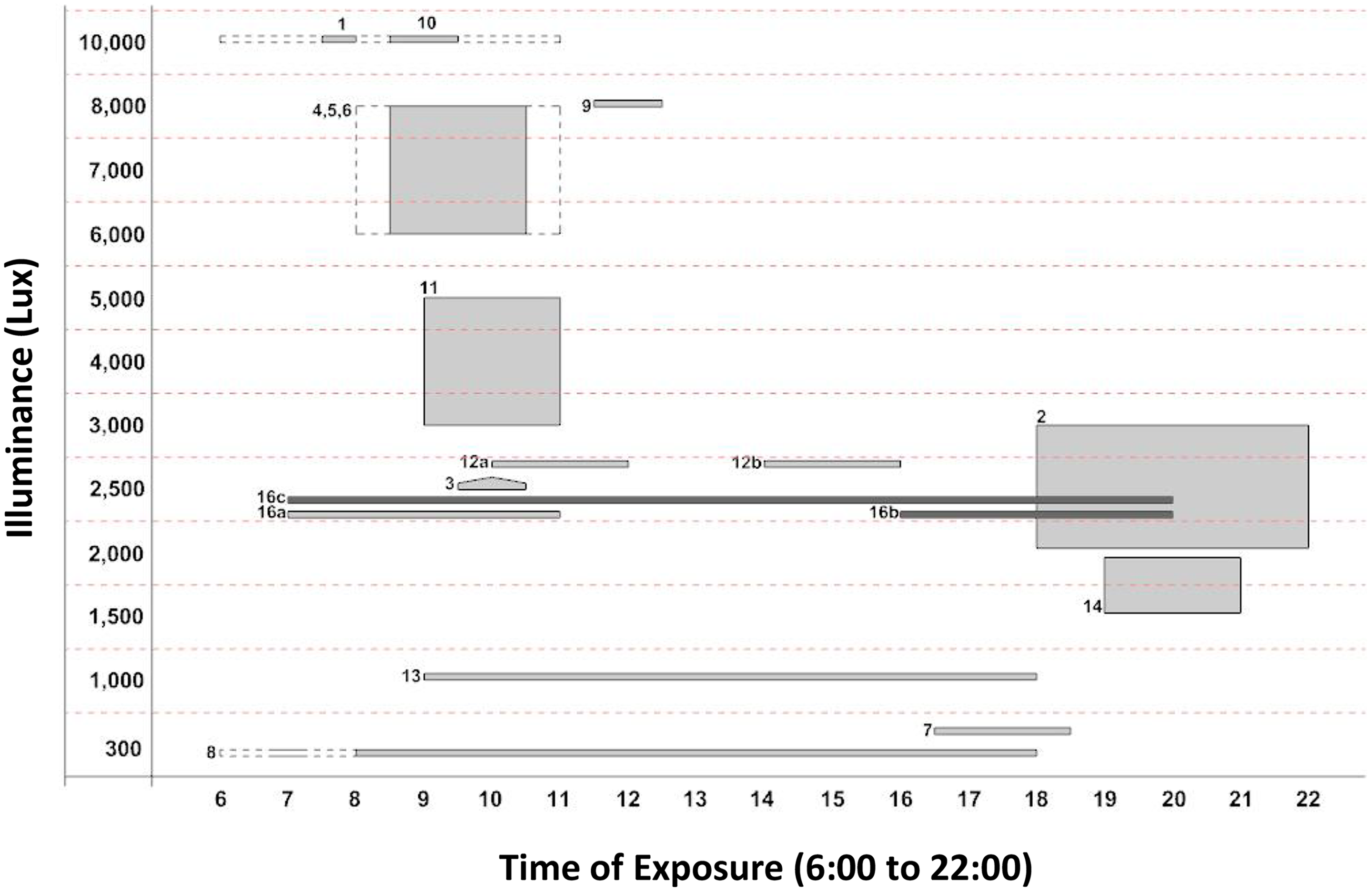
Light interventions with significant sleep improvements. In this figure, the lighting interventions are shown with two parameters: illuminance and time of the exposure. The width of each rectangle shows the time of the day when subjects were exposed to light and the height shows the illuminance levels. If the timing of light exposure was not reported clearly (ex, 2 hours of 6,000-8,00 lux between 08:00 and 11:00 for study 4,5,6), the dashed rectangle shows the bounds of exposure time. If the illuminance level was reported as more then specific lux values (ex, more that 250 for study 3), then it is shown in the diagram as a pointed rectangle.
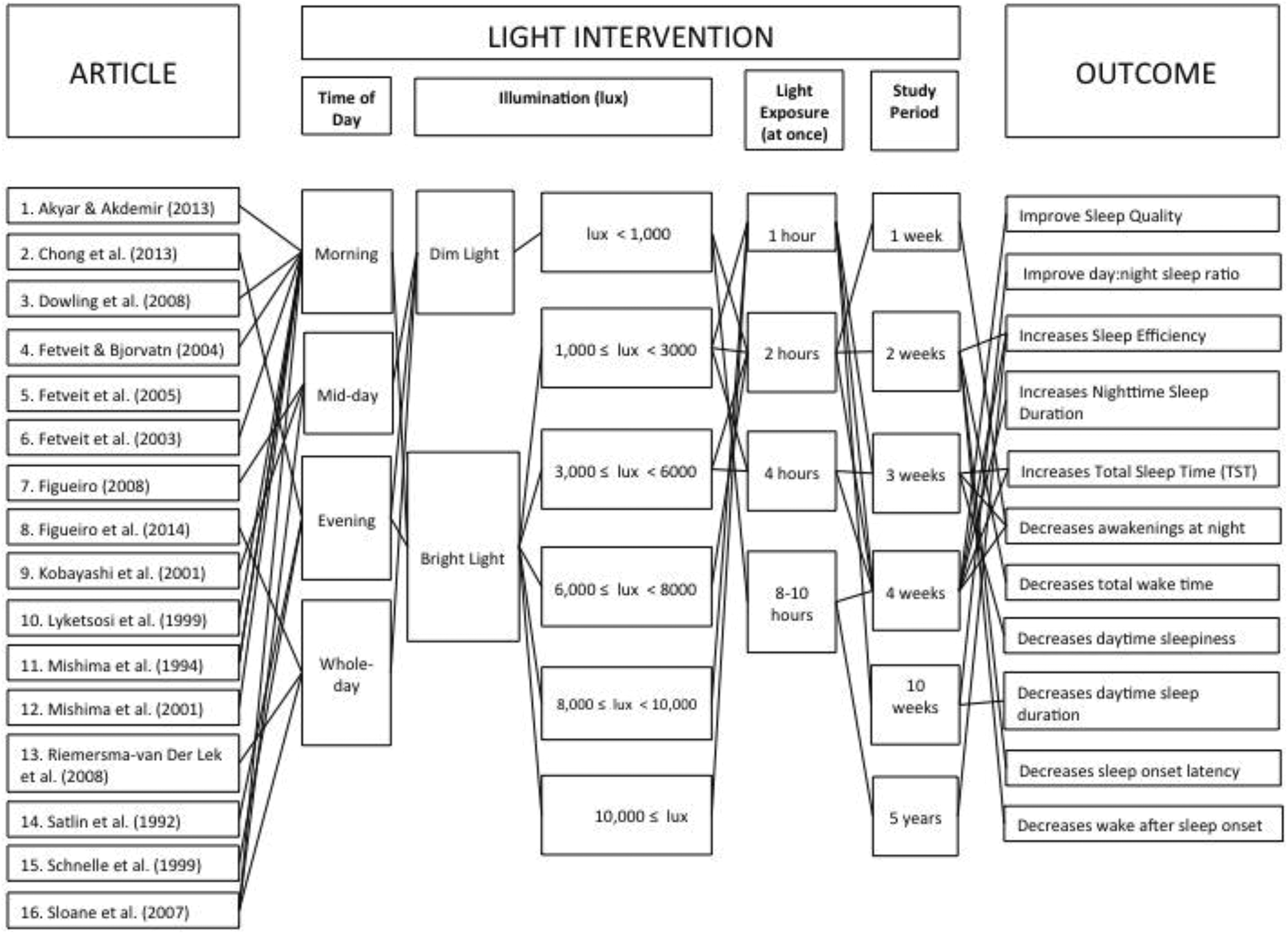
Associations between certain characteristics of light interventions and significant sleep improvements.
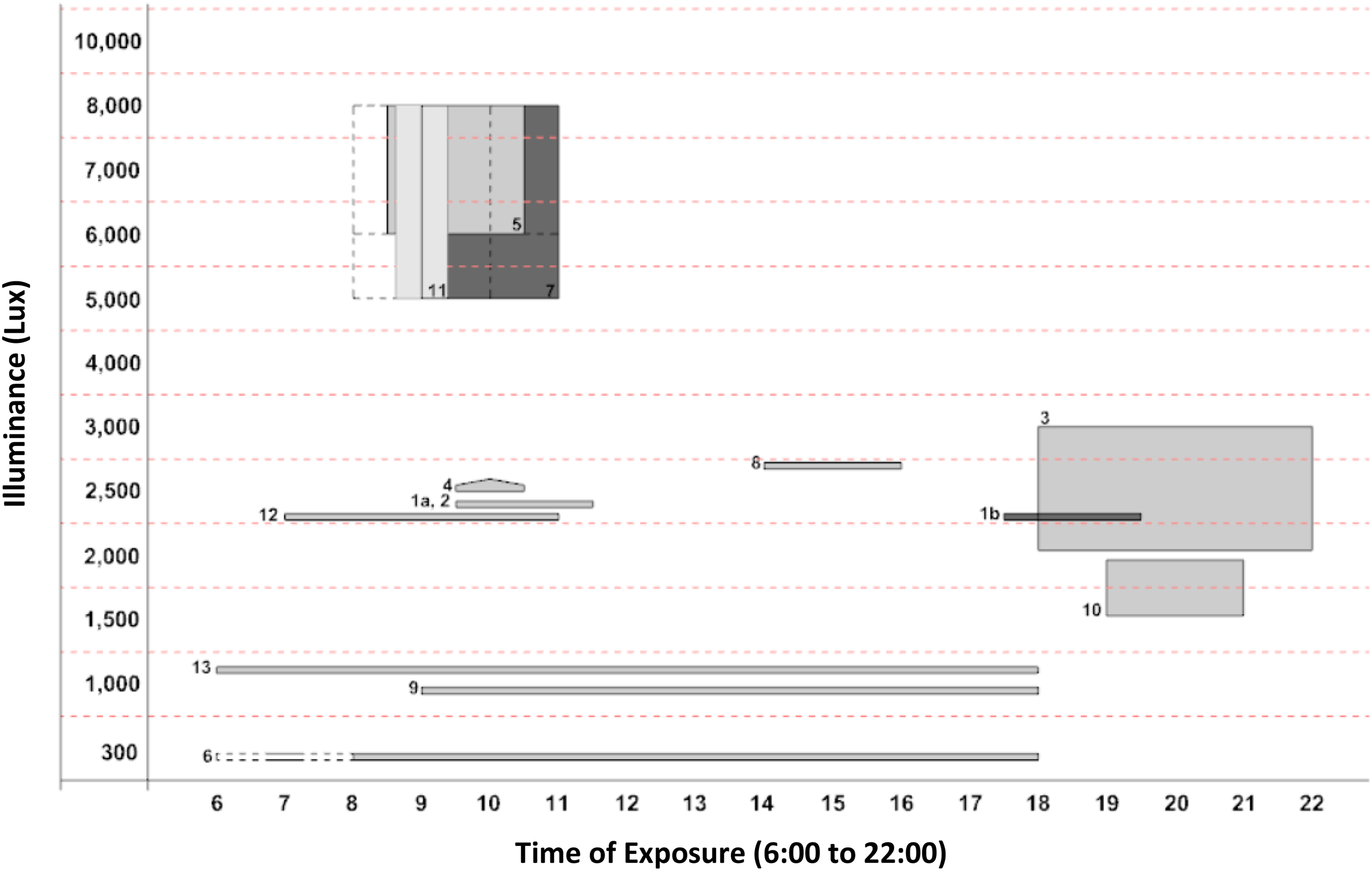
Light interventions with significant sleep-related outcome improvements.
Studies using higher illuminance levels had an impact despite shorter light exposure durations in comparison with the studies using lower illuminance levels. Light conditions (1, 10 in Figure 2) with high illuminance levels (≥10,000 lux) were effective even with short-term exposure (30–60 min); light conditions (4, 5, 6, 9, 11) with moderate illuminance levels (3,000–10,000 lux) were effective with relatively longer exposure (1–2 hr). Lighting conditions (2, 3, 7, 8, 12, 13, 14, 16) with lower illuminance levels (≤3,000 lux) tended to have even longer exposure (1–4 hr or whole day). For those with significant results in sleep measures, as shown in Figure 2, the timing of light exposure also varied. Our analysis shows that, out of those significant 16 studies on sleep measures, patients were exposed to light in the morning in nine studies (1, 3, 4, 5, 6, 9, 10, 11, 16a), afternoon (16:00–20:00) in one study (7), both morning and afternoon in one study (12), evening in three studies (2, 14, 16b), and whole day in three studies (8, 13, 16c). The same relationship between duration of light exposure and illuminance levels can be observed for lighting interventions that improved sleep-related outcomes (Figure 3); however, no studies found significant improvements on sleep-related outcomes by short-term exposures to higher levels of illuminance (≥10,000 lux).
Illuminance and spectral qualities are important attributes of lighting environments, which not only determine the visual experience of patients but also impact circadian rhythmicity and therefore patients’ sleep, yet most of the articles did not provide detailed information about the lighting intervention’s spectral qualities. Out of all studies evaluated, only 1 reported the spectral power distribution of the lighting (Figueiro et al., 2014); 2 reported peak wavelength of the lighting (Lee et al., 2013; Royer et al., 2012); 4 reported color temperature; 10 articles reported minimal information such as full spectrum, white, or cool white; and the remaining 18 articles provided no information at all about the quality of the lighting. Future studies in lighting need to clearly identify and present the spectral quality of the light used.
Discussion
Based on results of the literature review, light interventions in healthcare settings can improve subjective measures of sleep quality, increase TST by 10–36 min, increase nocturnal sleep time by 1–1.7 hr, decrease the duration of daytime sleep by 18–66 min, decrease the number and duration of awakenings, increase sleep efficiency by 3.46–12.7%, reduce sleep onset latency by 1 hr, decrease sleep disturbances by 3.2 times, and decrease afternoon sleepiness. These myriad improvements in patient sleep outcomes by lighting interventions emphasize the importance of lighting systems in healthcare environments, yet the inconsistency of findings points to the need for further investigation of these systems.
A combination of different aspects of lighting such as timing of exposure (morning, midday, evening), duration of exposure (30 min to whole day), illuminance (324 to higher than 10,000 lux), and spectral qualities determined effectiveness of lighting interventions in the reviewed studies. Short-term exposure (30–60 min) of high illuminance levels (≥10,000 lux), relatively long-term exposure (1–2 hr) of medium illuminance levels (3,000–10,000 lux), and long-term exposure (1–4 hr or whole day) to lower illuminance (≤3,000 lux), all can improve measures of patient sleep.
The evidence surrounding the impact of light on sleep-related factors is unequivocally positive, pointing to the high potential for effectively impacting the outcome of patient sleep. Although our literature review confirmed the effectiveness of light for improving patients’ sleep outcomes, the lack of consistent measurements and outcomes in the reviewed studies makes it difficult to compare and evaluate the relative effectiveness of lighting on sleep and sleep-related outcomes. While the heterogeneity regarding characteristics of subjects, settings, and care conditions associated with each effective light condition and the diversity of sleep variables, measurement methods, and tools does not allow us to make specific recommendations about the best possible lighting options, the finding of our literature review enables us to present a set of effective lighting conditions that can be implemented in developing alternative lighting systems and be tested through rigorous studies.
The majority of the studies in our sample are focused on elderly patients; only one article looked at nonelderly patients (Lee et al., 2013). Many of these studies (19 out of 34) have been done on sample groups of elderly patients who suffer from dementia. Aging itself is associated with sleep disturbances, and neurodegenerative diseases such as Alzheimer’s intensify sleep problems making it difficult to generalize the findings to other populations, such as healthier young patients in a hospital inpatient unit. More studies are needed to test the impact of lighting exposure in a hospital environment on improving sleep of younger adults as well as cognitively intact older adults.
The mechanism for delivering the lighting interventions in the studies in this review includes natural light exposure, light box, florescent lamps, LED luminaires, and light visors. Twelve studies delivered light through light boxes located in the middle of the rooms. Light boxes are more prevalent in lighting intervention studies, compared with more permanent architectural light fixtures such as wall or ceiling-mounted light sources. Future lighting studies should consider using lighting apparatus which are more typical of healthcare settings, such as ceiling-mounted lighting rather than light boxes to better allow for translation of the study findings to real-world lighting solutions.
Another common aspect of studies included in this literature review was the long intervention period from 1 week to 5 years. No studies evaluated lighting interventions for shorter than a week, which is a more typical length of stay for patients in inpatient units. Acute care patients have shorter lengths of stay but are critically ill and have more sleep deprivation and sleep disruption compared to patients on a general ward (BaHammam, 2006; Chan et al., 2012). Even if patients spend only three nights in a unit, the daily exposure of light could possibly impact their nighttime sleep. Future research should investigate the potential to improve patient sleep in acute care settings through lighting interventions.
Advances in understanding light and lighting technology have expanded our ability to both produce a great variety of lighting solutions and measure various aspects of that lighting. To be most helpful to the science of light and sleep, future studies should document the qualities of the lighting that are most important for influencing the sleep–wake rhythms, such as the spectral qualities and level of light that hits the cornea, as opposed to merely the ambient overall lighting levels. By discovering the right combination of lighting factors that are most effective at supporting good patient sleep conditions we can translate these findings into clear recommendations for designing healthcare environments. Designers need to evaluate different design parameters in terms of creating desired lighting levels. Building orientation determines the timing and duration of exposure to natural light in interior spaces. Glazing options such as window to wall ratio as well as internal and external shading options affect the quality of light penetrating into the space. Distance and angle of patient beds in relation to the exterior façade and windows also change the amount of light received at patient eye level. A combination of natural and artificial light solution should be considered in order to provide the desired light levels.
Implications for Practice
Lighting in patient rooms needs to be designed with consideration of nonvisual responses to light, especially the impact that light has on patient sleep. Designers need to consider the spectrum as well as intensity of lighting over the patient bed. Controls need to allow for changes during the day so that a period of brighter light is possible for part of the day and lower light levels are possible in the evening hours.
Footnotes
Declaration of Conflicting Interests
The authors declared no potential conflicts of interest with respect to the research, authorship, and/or publication of this article.
Funding
The authors disclosed receipt of the following financial support for the research, authorship, and/or publication of this article: This study was funded in part by grants from Philips Lighting and Hill-Rom. It was conducted at SimTigrate Design lab, an interdisciplinary research lab dedicated to creating better healthcare experiences.