




Abstract

The rigor required to remain relevant in healthcare design is understated. At the center of care, human beings are caring for human beings. As obvious as this may seem, the dimension of human suffering and vulnerability and how the environment effects giving and receiving care, may not be as concrete as the sciences of medicine and architecture suggest. The social sciences introduced in Care and Design: Bodies, Buildings, Cities present a compelling case that fills this void. As a nurse in constant pursuit of elevating clinical design literacy, what qualifies a book, the time to read it, and a recommendation for others to do the same – is its portrayal of the often-invisible dimension of the human condition as an integral part of design. Care and Design: Bodies, Buildings, Cities addresses this domain of design as healing environments, social architecture, the sensory city, caringscapes, and the ethos of belonging by the multiple author perspectives. This is represented as if introducing a new-found language capturing the complexities of planning and design across an ever-changing care and service landscape. A book whose title begins with “Care” indeed suggests relevance.
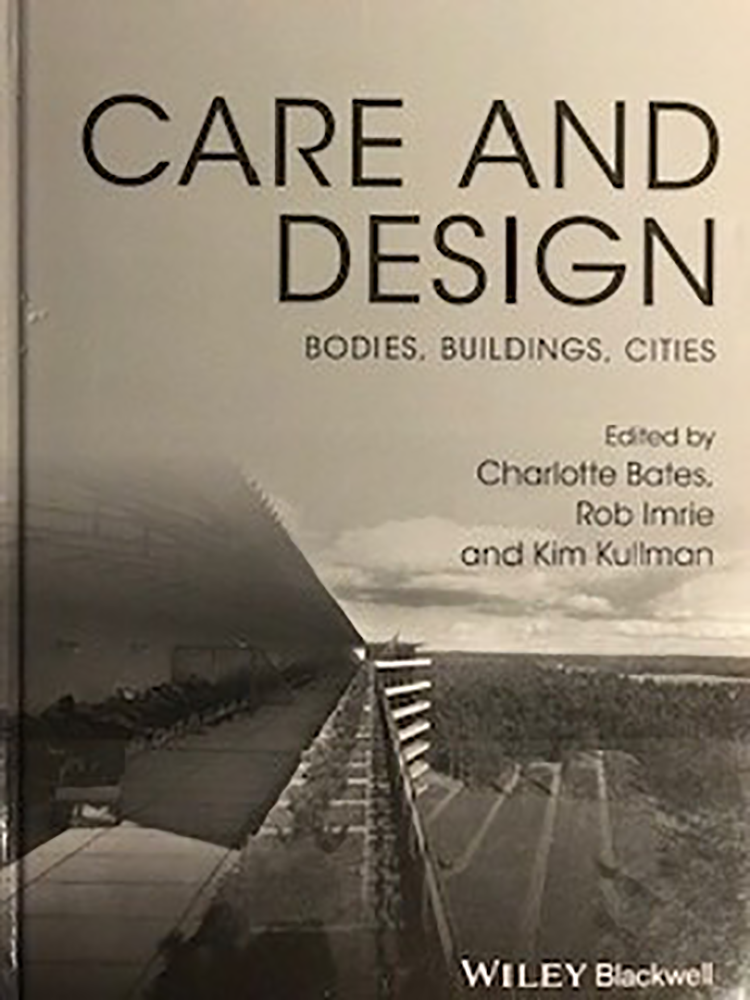
By its cover, in this instance – gray tones, block and bolded font and a muted image of the Paimio Sanitorium in southern Finland, it is less than inspiring. The contrast suppresses the truism of sun terraces, the patients in beds aligning them and the fields of green with nature lost in the wash of the grayscale cover. It was not until reading the Table of Contents, the reminder of the English idiom held true “not to judge a book by its cover.”
Architecture and design, like many other disciplines, recognizes the value of an interdisciplinary approach and collaboration as antecedents to optimizing outcomes. While nurses, human factors and performance improvement specialists, engineers and focus groups may be commonplace to inform design teams today, this has not always been true. Believing that diversity drives differentiation, the cast of authors and their respective credentials suggest that this book is a bolus of not only new knowledge and insight, but uncharacteristic acumen as well. Contributing authors represent “Care and Design…” with experience of a different kind – social anthropology, cultural geography and philosophy, humanities, environmental psychology, as well as gerontology. Other characteristics that introduce the reader to the diverse persuasions are their background trajectory – professors, researchers, and scholars in their own rite. Where they reside and have been educated is also of interest – England, Finland, Canada, and New Zealand. Dimensions of design often overlooked (and underwritten), elevate the reader’s awareness to autism, sites of trauma, and “bodily diversity” (13) – all being met with a sensibility as rich as the backgrounds from which they are written.
Alvar Aalto’s Paimio Sanatorium is curated as an archetype of design for human frailty. This building holds a hidden language of architecture that expresses welcome, empathy, integrity and authority – being as essential today as it was nearly a century ago. The authors translate such symbolic settings and the science and psychology of design so aptly, it is certain to stimulate new-found awareness. The result? An elevated consciousness of the confluence of often unrecognized choreographies of caring. This text extols the therapeutic qualities of architecture and the acts of caregiving as “homecoming (145), synthetic design (146), urban curating (179), the art of rift-design (224), and unleashing the wheelchair’s possibilities (204).”
The fifteen contributors of the twelve chapters each with their own point of view, convey a combination of rich narrative, scientific, historic and applicable concepts. Together, the authors remain consistent with care as the core constant. This has been uniquely expressed to the extent that they have given voice to care and design as ubiquitous, such that care is everywhere. Recognizing the codependence of place and the people who occupy it, refreshing to some, though perhaps not to all – is the candor by which practices that shape design are questioned. Further, authors challenge contemporary practice. Is the design more or less human? Are the marginalized and the minorities equal beneficiaries of design? Exposing the inequality and partiality of design for compromised or socially limited inhabitants suggest that ethics of architecture is at play in this text. Raising the “relative lack of writings about design and care” (xiii), the book explores how care and design can at the intersection, enable inclusive design. Boldly, this book challenges assumptions and introduces dimensions of design for all who seek to expand their knowledge and those who are open to learning through the lens of the social sciences.
In search of caring language easily translatable to other disciplines, Juhani Pallasmaa, Finnish Architect, composed characteristics and conditions for caring as if it were penned by a poet in Chapter 8, Empathy, Design and Care – Intention, Knowledge and Intuition: The Example of Alvar Aalto. He speaks of Architecture as a medical instrument and, design as care. “Today, architecture is threatened by two opposite forces: functionalisation and aestheticisation. The first turns buildings into structures of mere utility and economic profit, the second into mere seductive and manipulatory aesthetics” (152). Presenting the challenge to every reader “I dare say that the designer’s sense of life and the essences of things is more important than any technical knowledge” (153). Pallasmaa’s described “mental essence of architecture” (139), architecture as a medical instrument (142) and the power of beauty (145)” can only be captured by reading his work.
The Afterword, summarizing the book’s salient points, reminds us of the precarious skill in the design for others, the codependency of space and society, and…” designing with care and caring with design” (236). In an industry seeking innovation and invention, between the covers of this book are many provocations to advance current thought and a compelling critique for an industry that can be better for it.