



Abstract
Objectives:
To investigate the differences and relationships between different outdoor spaces of hospitals on the physiological electroencephalography (EEG) feedback (PEEGF) of staff.
Background:
Relieving the pressure of hospital staff is essential, and several studies have revealed that even short-term exposure to outdoor space has a decompression effect. Yet, the focus is scarcely centered on the differences and influential relationships between the PEEGF from different outdoor spaces where the staff spend time, particularly in large-scale hospitals in China.
Methods:
EEG measurement equipment was utilized to obtain the value of β wave (vβw) that represents the stress and anxiety of staff in three different outdoor spaces: open, traffic, and rest. On the basis of EEG data, correlation analysis was conducted in accordance with the proportion of space elements.
Results:
The proportion of natural elements, such as landscape (r = −.800** p=.005) and waterscape (r = −.782* p=.013), were negatively correlated with the vβw produced by staff, while the proportion of hard paving was positive (r = .817** p=.004) with more vβw produced by staff. In other words, the percentage of landscape and waterscape can reduce stress, while hard paving has the opposite effect. Further, there was a difference in the amount of vβw generated between nurses and administrators in the open space at the entrance of the main building (p = .043).
Conclusions:
The present study revealed the influence of different outdoor space elements of the hospital on the physiological feedback of staff, demonstrated the practical necessity of evidence-based design, and proposed relevant optimization suggestions.
Stress of Hospital Staff
Hospital staff carry the responsibility of caring for patients in a stressful work environment, and mistakes and errors may cause serious consequences such as prolonged suffering, disability, or even death (Bullock et al., 2013). This not only leads to significant differences in stressors among different medical specialties (Tanner et al., 2015) but also leads to the differences in the prevalence of high work-related burnout among different staff groups (Chou et al., 2014). The mental stress of hospital staff has been heightened in response to the once-in-a-century health crisis of COVID-19, the effects of which will be felt for decades to come. Staff members are under significant psychological pressure and may even develop mental health problems (Kang et al., 2020). As a critical part of pandemic solutions and emergency preparations (Hercules et al., 2020), hospitals could help staff members relieve their emotions and protect and develop their health premised on treating illnesses and saving people. This would be in line with the practices of Hippocrates, the father of medicine, who stated that the function of protecting and developing health must be more important than the function of restoring health (van der Eijk, 2002).
Methods to Relieve Hospital Staff Stress
Effective hospital design is crucial for long-term hospital staff with regard to indoor space. In relevant research, beneficial explorations have been conducted into the optimal design of the nurse station (Xuan et al., 2019), ward layout (de Matos et al., 2019), and so on. However, the exposure to outdoor space still accommodates greater benefits compared with indoor space (Hartig & Marcus, 2006) because people have an innate need to establish a biophilic connection with nature in the outdoor environment (Wilson, 1984). Research of hospital outdoor space has predominantly taken the landscape as the object. By illustration, an observation was made that the landscape could offer positive benefits for nurses who have experienced long-term work pressure (Naderi & Shin, 2008).
Significance
The main purpose of this study is to focus on the differences and influential relationships between the physiological electroencephalography (EEG) feedback (PEEGF) from different outdoor spaces where the staff only have little exposure. However, in the outdoor space, a large number of studies have primarily centered on the landscape. This is relatively inadequate for the staff because they have little time to experience the landscape when under heavy work pressure (Davis, 2011). Here, the landscape is only regarded as a passage that is seldom experienced (Faris et al., 2012; Sherman et al., 2005). In this context, determining how to make staff feel relaxed even if they only have little exposure to outdoor space has become an urgent research topic. Several studies have shown that short-term exposure to small-scale outdoor natural space can achieve a recovery effect (Tyrväinen et al., 2014) because even mini-exposures to nature, such as walking through, may help users feel satisfied (R. Kaplan, 2001).
Hence, understanding the differences and relationships of different types of outdoor spaces on the PEEGF of staff would help determine targeted optimization measures for the staff group. Because the environment will become an inducement, causing simultaneous physical and psychological changes, Schachter was of the belief that the environment, PEEGF, and psychological evaluation are an organic whole, in that they influence and coordinate with each other (Schachter & Singer, 1962).
Browning outlined 14 design patterns for improving health in the built environment predicated on the three systems of cognition, psychology, and physiology and proposed that the change of design would simultaneously trigger a plurality of biological reactions. Additionally, Browning also indicated that the use of new technologies such as headband EEG would help to provide practice information for hospital managers and designers (Browning et al., 2014).
Despite the above, there is still a lack of research on the evaluation of hospital outdoor space by using PEEGF from the perspective of the present research topic. Besides, there is also a lack of research to the hospital staff of China’s third-level Tier 1 general hospital (T1GH). Differing from the western medical system, T1GH is the highest level of hospital in China and is also a regional medical center.
As the hierarchical diagnosis and treatment system remains incomplete, residents often directly choose T1GH, which has become normal with the concentrated advantageous medical resources and the number of outpatient and emergency treatments for millions of people each year.
Among the background of medical technology developments, many Chinese hospitals have expanded and undergone renovations. Through the realistic embodiment of the indeterminate architecture concept, in addition to the decentralized layout of buildings, the probability of staff being exposed to the outdoors is indirectly increased (Xu & Zhao, 2015). This could be applied to Chinese T1GH staff to aid in their relaxation time. Therefore, it has practical significance to investigate the differences and relationships between different outdoor spaces of hospitals in China on the PEEGF of staff. In general, the present research is innovative in the selection of method and object. The use of objective and real EEG measurement, combined with space elements, is not only an organic combination of physiology and space but also an interdisciplinary supplement to the existing research.
Study Aim and Hypothesis
The present research was founded on the theory of Schachter, and the aim thereof was to study the differences and relationships between the PEEGF of staff regarding different outdoor spaces in the Chinese hospital. To achieve this goal, Ulrich’s stress recovery theory and Kaplan’s attention recovery theory were combined in the present research to propose specific hypotheses. Kaplan believed that observing the outdoor environment and other activities that do not consume energy would have a repair effect on activities that require energy such as work (S. Kaplan, 1995). Meanwhile, Ulrich suggested that exposure to the outdoor environment could alleviate the physiological, psychological, and behavioral injuries caused by stressors (Ulrich et al., 1991), while the natural environment outside the hospital could reduce stress and achieve positive results (Marcus & Sachs, 2014).
The specific hypotheses of the present study are as follows: There are differences in the PEEGF of the subjects in different outdoor spaces of the hospital. In different outdoor spaces of the hospital, the reasons for the differences of subjects’ PEEGF are related to the space elements. There are differences in the PEEGF among subjects with different attributes in the outdoor space of the hospital.
Method
In the present study, the method of PEEGF measurement was adopted and combined with several statistics analysis methods via Statistical Product and Service Solutions (SPSS), such as one-way analysis of variance (ANOVA), paired sample t test, Bonferroni correction, and Spearman’s correlation coefficient analysis. First, an EEG experiment was performed to obtain the subjects’ PEEGF data on the sample pictures before quantitative analysis was conducted. Second, on the basis of the PEEGF data, correlation analysis was executed by combining the main space elements in the sample pictures and the attributes of the subjects. Finally, according to the understanding of the differences and relationships of the physiological effects of different spaces on the subjects, a reference for the optimal design of the hospital outdoor space was provided.
The reason for the selection of EEG in the present study was because of its representativeness of source behavior (Hosseini & Naghibi-Sistani, 2011). Currently, the typical research paradigm is predicated on brain-wave measurements and parsed using other variables, for instance, combining emotion recognition to explore the differences in human emotions in different urban environments (Aspinall et al., 2015), supporting the positive effects of urban landscapes on the elderly (Neale et al., 2017), combining questionnaires to argue the positive effects of natural environments as against urban environments, and the mechanisms of the brain (Chen et al., 2020).
Division of Hospital Outdoor Space and Sample Pictures
The behavioral activities in hospital outdoor space could be broadly summarized as waiting, commuting, and resting, and so on (Ahn, 2014). By referring to the definition in the Chinese architectural design industry tool book, these three behaviors could be mapped into the need for three main spaces (a) open space, (b)traffic space, and (c) rest space (Lu et al., 2017). In the present study, Hospital A was selected as the object for sample image collection. Hospital A was built in 2008 with a total construction area of 281,700 square meters (336,910 square yards) and 2,200 beds.
To control variables and eliminate unfavorable factors, sample images in the present study were screened as follows. First, through several preliminary field studies and behavioral observations, three types of outdoor spaces that were most frequently visited or traversed by staff in Hospital A were identified. These include (a) the open spaces at the entrances and exits of outpatient departments, inpatient departments, and emergency departments (Picture 1 [P1], P4, and P7); (b) the main traffic spaces at the entrance of the hospital, parking lots, and canteens (P2, P5, and P8); (c) the rest spaces between the east and west inpatient buildings, which were frequently traversed by staffs (P3, P6, and P9; Table 1). Second, all pictures were taken on May 18, 2020 (sunny, 26 °C [78.8 °C]) between 08:30 a.m. and 10:00 a.m., with a view height of 1.6 m (5.25 ft), 90° view angle, and attempts were made to avoid crowds as much as possible when taking pictures. Finally, as single-group experiments are relatively time-consuming, an excessive amount of sample pictures may induce fatigue in the subject and lead to abnormal data. Thus, the nine most representative sample pictures were screened for subsequent use in the present study.
Locations of Sample Pictures in Hospital A.
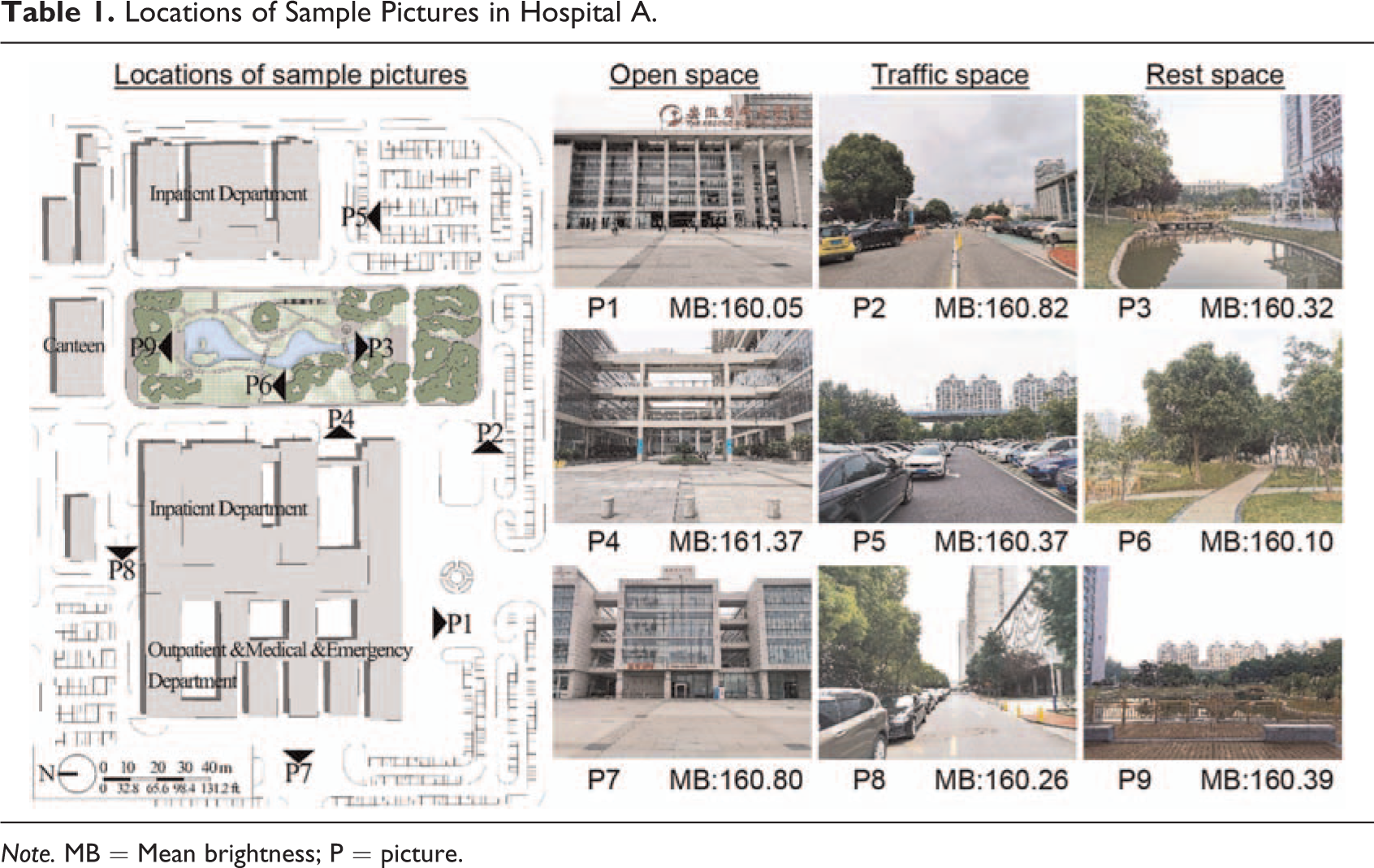
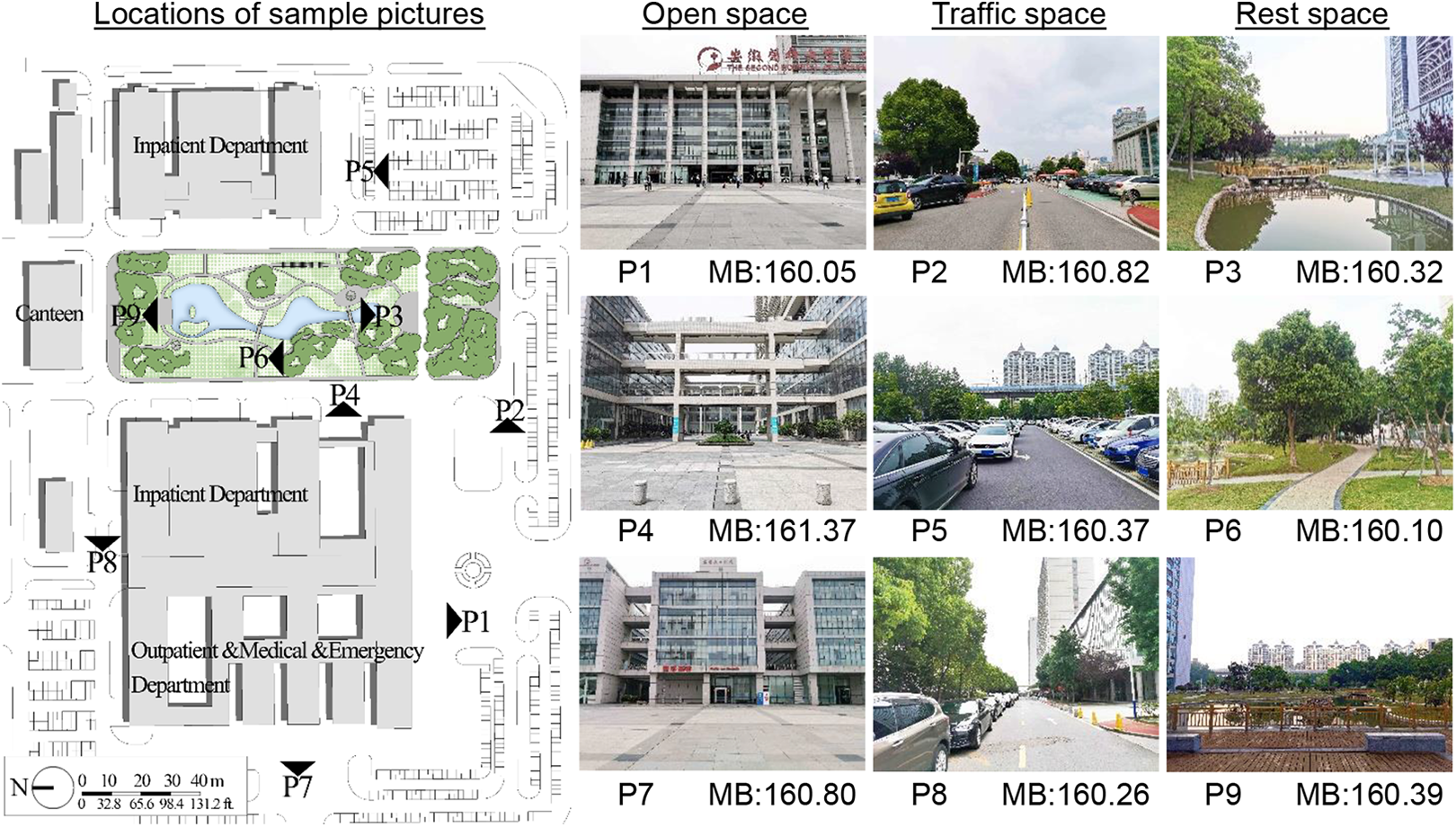
Note. MB = Mean brightness; P = picture.
Participants
To avoid possible data distortion due to the inherent views of the staff of Hospital A, the experiment was chosen to be conducted in Hospital B, which is also a T1GH similar to Hospital A, and was approved by the hospital ethics committee. Before the experiment, the subjects were fully informed of the purpose and process of the experiment, and oral consent from all of the subjects was obtained. The formal experiment was conducted between May 27, 2020, and June 15, 2020. A total of 45 subjects were recruited, which was because the single-group experiment was time-consuming and to reduce the interference to the normal work of the hospital. The subjects were required to have normal eyesight and hearing and not ingested alcohol or drugs within 24 hr before the experiment. Excluding seven groups that were interrupted by outside interference or recalled to participate in emergency medical treatment, 38 groups of valid data were ultimately obtained (Table 2).
Attributes and Proportion of Subjects.

Study Design and Procedures
The experimental procedure was optimized premised on relevant research experience in combination with the characteristics of the present research (Li & Munemoto, 2010; Sun & Li, 2020), and the overall duration of the experiment was about 40 min/person. The first module of the experiment was the EEG experiment, where a 27-in. display screen was employed to display the video to the subjects. The first 60 s of the video was the relaxation phase, displaying three pictures of natural scenery. This was followed by the formal experiment part, where nine pictures of three kinds of outdoor spaces in Hospital A appeared alternately. Each picture was displayed for 20 s, and there was a 10-s rest interval with eyes closed between every two pictures. After the EEG experiment, each of the participants was invited to describe their feelings and causes.
To ensure the reliability and effectiveness of the formal experiment, the researcher conducted a preexperiment on May 12 and 20, 2020, involving a hospital executive, a chief physician of thoracic surgery, an attending physician of neurology disease, and two administrators to optimize the process of the EEG experiment (Figures 1 and 2).
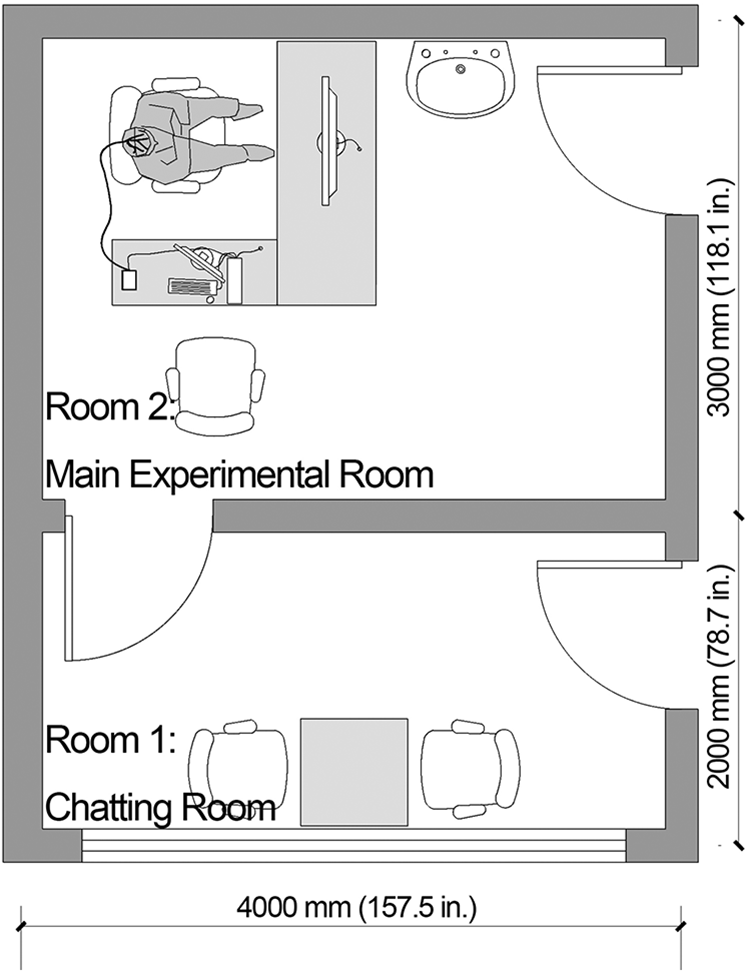
The experimental site layout.
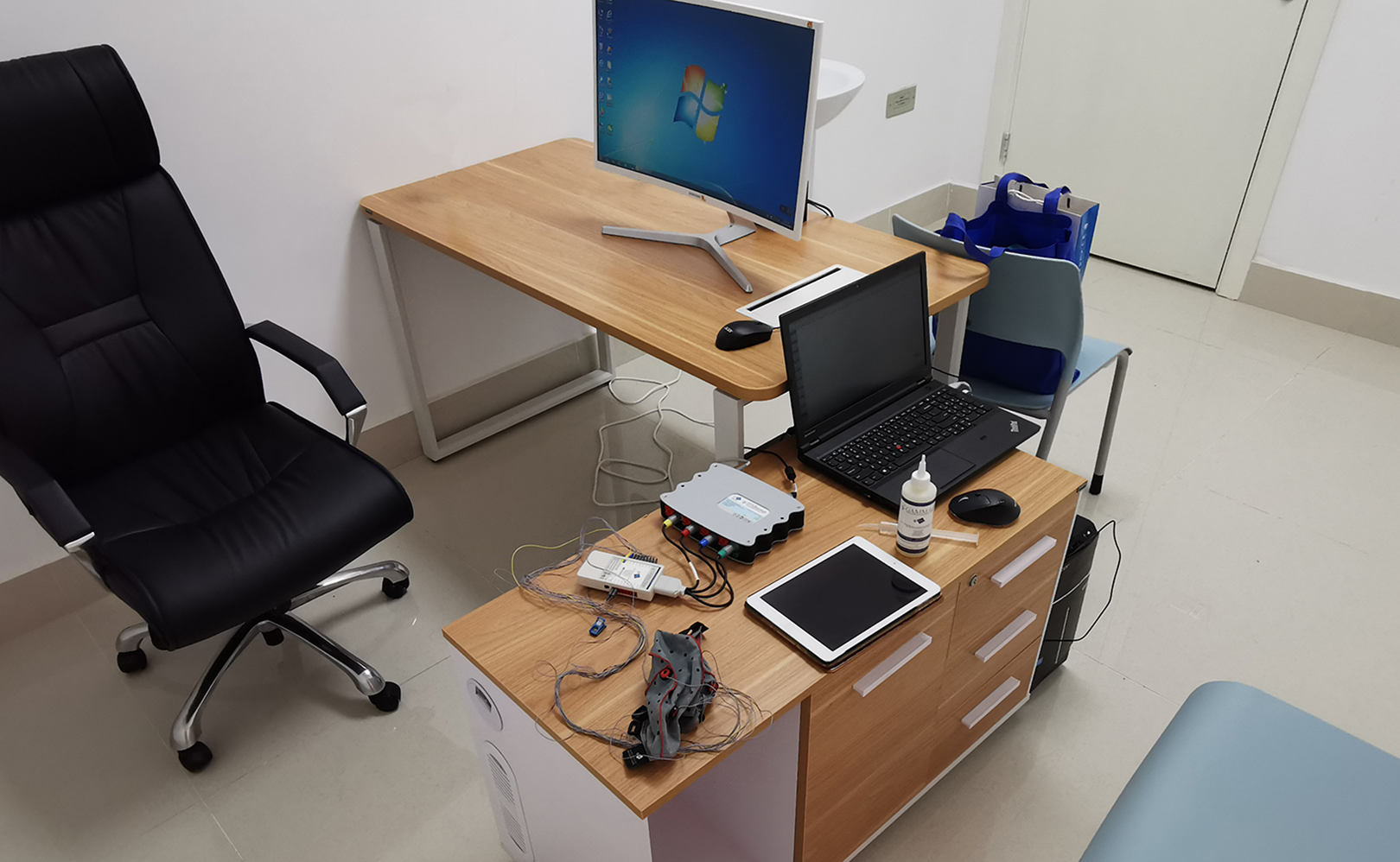
Reality image of experimental site.
EEG
In the present study, the g.USBamp (g.tec medical engineering, Austria, 2021) device was adopted to acquire the subjects’ EEG signals, which is primarily used in research fields other than the diagnosis and treatment of diseases. g.USBamp is also a sophisticated biosignal acquisition system and has been utilized as a standard instrument in experiments to test the reliability of other devices.
The β brain waves were chosen as the subject of this study because the subjects of this experiment were hospital staff who work and live in the hospital and have a certain amount of mental stress and anxiety. The β wave related to stress and anxiety was chosen as the measurement index, as previous studies have shown that β wave can usually be observed in the waking state and are involved in conscious thought processes. Further, high-frequency β wave causes anxiety, high arousal, and stress and includes midrange β wave known as “β two” waves and high β wave known as “β three” waves. β two waves are associated with increased energy, anxiety, and performance, while β three waves are associated with severe stress, anxiety, paranoia, high energy, and high arousal (Abhang et al., 2016).
In addition, β wave may be a useful measure of appropriate cognitive and emotional processes and can be subdivided into low-frequency (13–21 Hz) and high-frequency (21–30 Hz; Ray & Cole, 1985). In some cases, high-frequency β waves are regular (Kropotov, 2016) and dominant during inactive, alert mental states (Mavros et al., 2012). High-frequency β waves are associated with stress and anxiety (Diaz et al., 2019), and for adults, high-frequency β waves (21–30 Hz) are also associated with excessive stress, anxiety, and overthinking (Spitzer & Haegens, 2017). Moreover, enhanced β wave can be observed in the frontal and central regions of the brain during anxious thinking (Malik & Amin, 2017), which means that β wave can be considered to be associated with subjective anxiety (Pavlenko et al., 2009). In the field of clinical research, studies have been conducted to reduce anxiety levels in patients with diagnosed angina or myocardial infarction by using β brain-wave training relaxation techniques (Michael et al., 2005).
Since the subjects in this study were hospital staff under work stress, β waves were chosen as the measurement value, representing the subjects’ feelings of stress and anxiety. There have been precedents in the architecture discipline that are favorable to β wave for evaluating the effects of brain work and the acoustic environment on EEG (Nishifuji et al., 2010), for evaluating the effects of railroad and road noise on people (Hashimoto et al., 2003), and for evaluating the physiological and psychological effects of potted plants and paintings in offices (Sato, 1994). In summary, this experiment has some practical value in selecting β wave as a measurement index.
First, 10 electrodes were utilized in this study, and the electrode points configured on the electrode caps were Fp1, Fp2, F3, F4, T3, T4, P3, P4, O1, and O2 (Figure 3). Second, fast Fourier transform was adopted, which converts the periodically varying quantitative values into the energy of a specific band power by operating the data of sampling points of magnitude 2 N . Third, the EEG image file of each subject was saved as an excel file through translation software, with vertical columns of 10, in ascending order from left to right by device channel, and horizontal columns of the measured wave amplitude at every 1/256 s at the electrode site. Fourth, data were excluded in the first and last 2 s, and 4,096 data acquisition points were transformed during 16 s in the middle so as to avoid the opening and closing of eyes affecting the data and also meets the requirements of selecting 2 N data points in Fourier transform.

Electrodes setting.
At last, in order to ensure the reliability of research, the Max–Min normalization method was adopted so as to conduct linear transformation of the original value of β wave (vβw) data and maintain the connection between the original data. The transformation formula is f(X) = (X − Min)/(Max − Min), and the following analyses in this article were predicated on normalized values. Additionally, the normalization method has been used in related research to process EEG data (Sun & Li, 2020).
Results
EEG Comparison Between Three Types of Spaces
Table 3 presents the mean and standard deviation of the vβw produced by the 38 subjects while viewing each of the three pictures of open, traffic, and rest space. The gray blocks in the table are the minimum vβw in the three categories of space among the same subjects. As can be observed in the table, 22 subjects (57.89%) had the lowest vβw when viewing the three pictures of the rest space, demonstrating that over half of the subjects produced less vβw in the open space than in the other two types of spaces. This implies that the resting space was more positive for the subjects than the other two types of space (Table 3).
The Mean and Standard Deviation of the vβw of Each Subject (38 of 45) in the Three Types of Spaces.
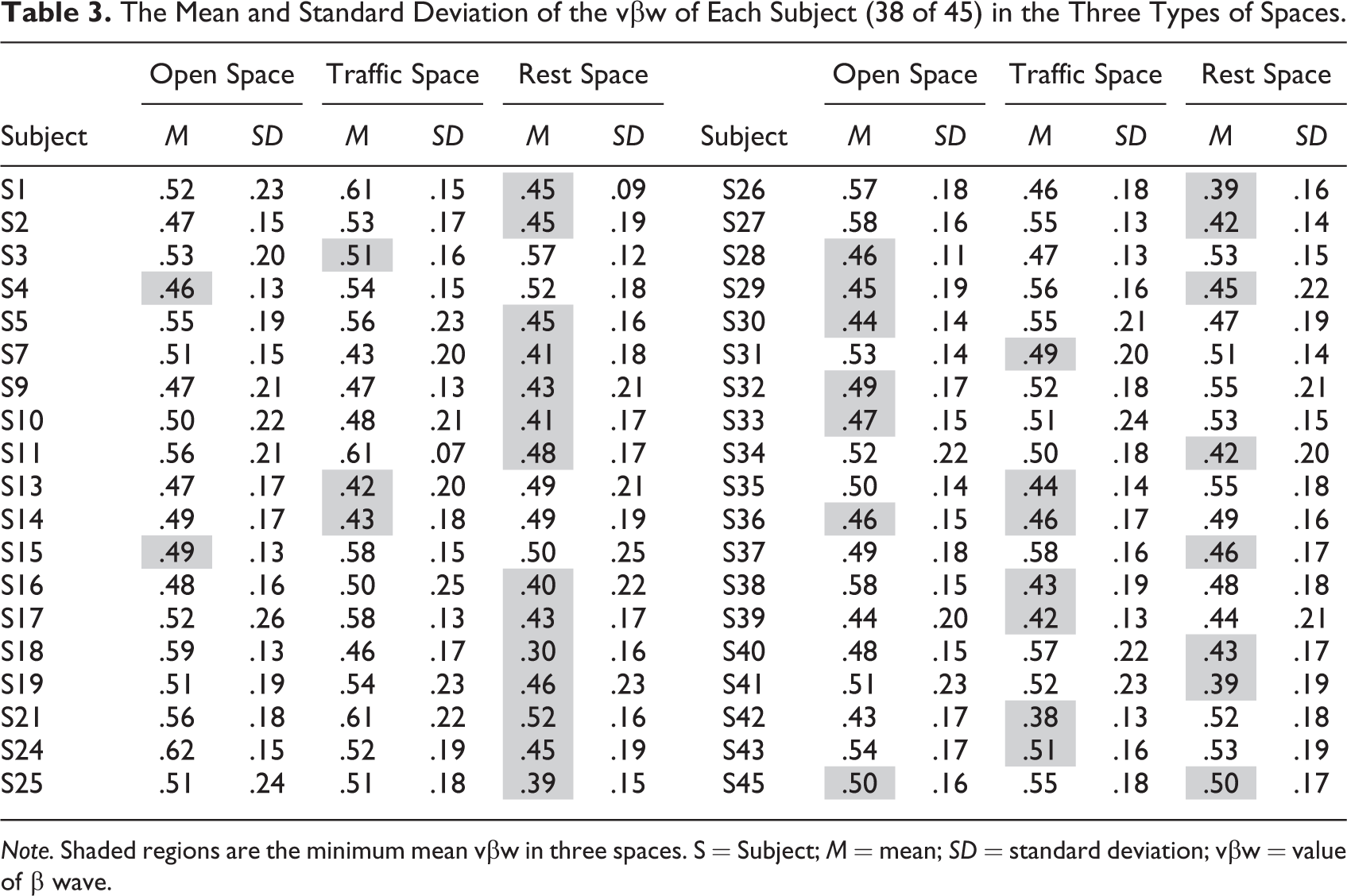
Note. Shaded regions are the minimum mean vβw in three spaces. S = Subject; M = mean; SD = standard deviation; vβw = value of β wave.
After finding the difference between the rest space and the other two types of space, a paired sample t test was conducted on the vβw of 38 subjects in the three types of space. Statistically significant differences were indicated between rest space and open space (p = .003), and between rest space and traffic space (p = .002), but not between open space and traffic space (Table 4). Meanwhile, the specific differences in the subjects’ vβw in the three types of spaces could also be reflected by the quartile graph of all subjects (Figure 4). Here, an observation can be made that the vβw produced by the subjects in the rest space was lower than that in the open space and traffic space. This also illustrates that the rest space was more positive for the subject than the other two types of space.

Quartile map of subjects’ value of β wave in three types of spaces.
Paired Sample t Test of Subjects’ vβw in the Three Types of Spaces.

Note. vβw = Value of β wave.
The Relationship Between Subjects’ Attributes and EEG Differences
The correlation between the attributes of the subjects and vβw was explored under the preconditions that the research data satisfied continuous numerical variable, obeyed the normal distribution, and satisfied the homogeneity of variance test. The subjects’ attributes, namely age, occupation, and gender were analyzed by one-way ANOVA with 38 subjects’ vβw in nine photos. The results demonstrated that only in Picture 1 were there significant differences (p = .046) between these three groups in relation to the occupational attribute, while there were no such findings regarding the other attributes of the subjects. After this finding, the Bonferroni correction for multiple comparisons demonstrated that the nurse and administrator groups had a significant difference in vβw in Picture 1 (p = .043). By comparing the mean and standard deviation of vβw between these two groups, an observation could be made that the nurse group had less vβw in Picture 1 compared with the administrator group (Tables 5 and 6).
The Difference Between Occupational Attribute of Subjects’ vβw in Picture 1.

Note. vβw = Value of β wave.
The Bonferroni Correction for Multiple Comparisons for the Difference of vβw Between Three Groups in Picture 1.

Note. vβw = Value of β wave.
a The mean difference is significant at the .05 level.
The Relationship Between vβw and Space Elements
In accordance with the findings on the subjects’ vβw, to further understand the correlation between PEEGF and the proportion of space elements, the main space components (building facade, sky, hard paving, landscape, and waterscape) were outlined by drawing software, while the proportion of the number of pixels to the total number of pixels in the picture and the RGB mean value of the picture were also calculated (Table 7).
The Proportions of the Elements and RGB Mean Values in Nine Sample Pictures.
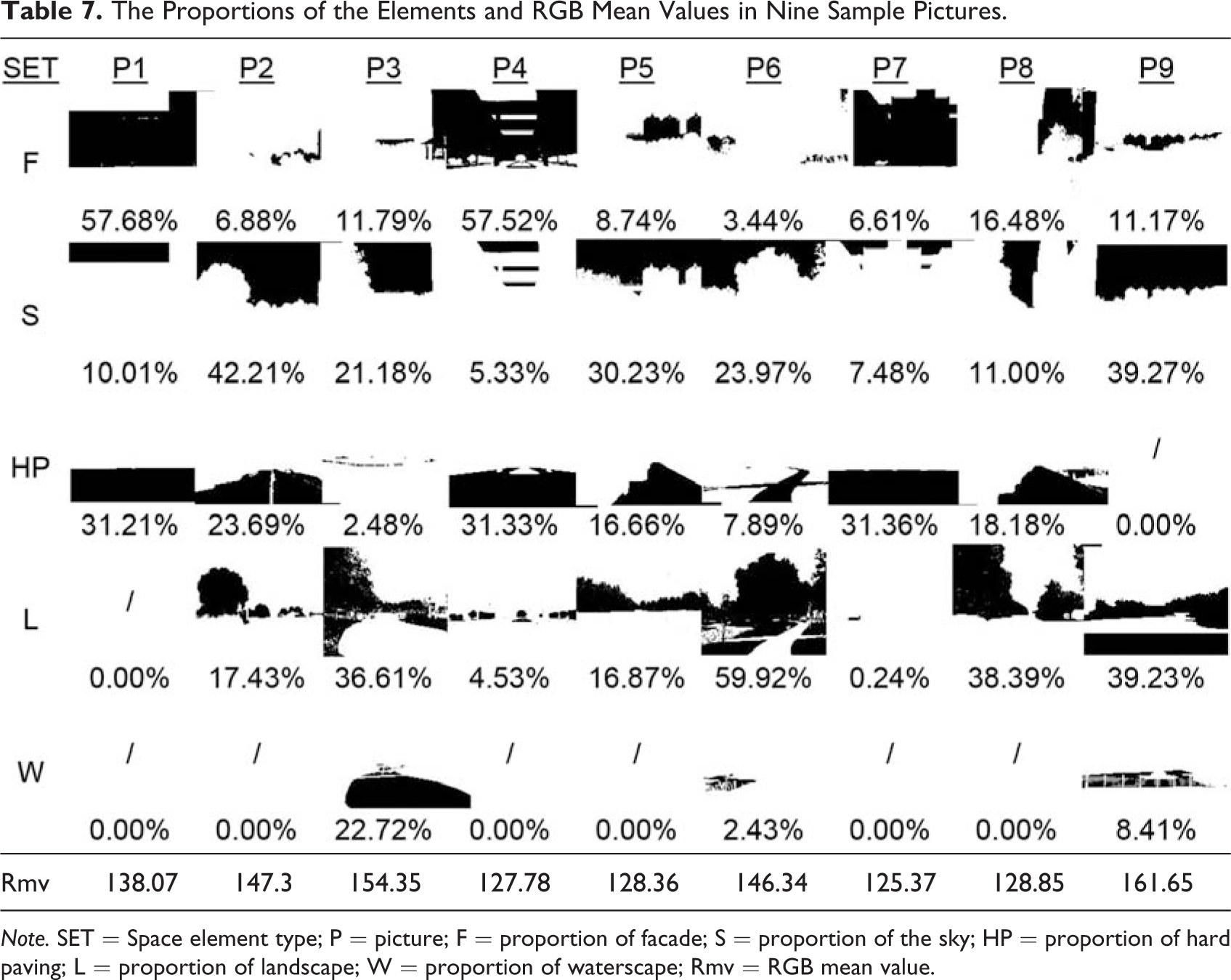
Note. SET = Space element type; P = picture; F = proportion of facade; S = proportion of the sky; HP = proportion of hard paving; L = proportion of landscape; W = proportion of waterscape; Rmv = RGB mean value.
Moreover, as the space elements were not present in all of the pictures, several groups of data would not follow the normal distribution. Thus, Spearman’s rank correlation was employed in the present study to analyze the correlation between the proportion of each element in the nine pictures and the vβw. The correlation analysis revealed that the subjects’ vβw was substantially positively correlated with the proportion of area occupied by hard pavement in the picture (r = .817** p=.004), negatively correlated with the proportion of area occupied by landscape and waterscape in the picture (r = −.800** p=.005, r = −.782* p=.013), and not correlated with the RGB mean value of the picture (Table 8).
Correlation Coefficient Between vβw and Space Elements.

Notes. vβw = Value of β wave.
a Correlation is significant at the .01 level (2-tailed).
b Correlation is significant at the .05 level (2-tailed).
Discussion
The Influence of Space Elements on Staff’s PEEGF
The positive effects of natural elements
The present study revealed that landscape and waterscape, which represent the natural element of the hospital outdoor space, were negatively correlated with the vβw of staff. This illustrates that these two elements were crucial indicators that affect the staff’s PEEGF of hospital outdoor space. To be specific, a greater proportion of landscape and waterscape in the hospital’s outdoor space is conducive to inhibit the generation of vβw of staff from the perspective of PEEGF; that is, space is more conducive for staff to feel relaxed. Additionally, the present study also corroborates related research, namely, the exposure to the outdoor natural environment has a decompression effect on medical staff (Nejati et al., 2016). For these reasons, setting up landscape and waterscape near the workplace, and adding natural space in the built environment, could have a positive effect for hospital staff in particular (Barton & Pretty, 2010). With regard to color elements, there was no apparent correlation with the physiological feedback of staff, which is consistent with the prior research findings that the subjects’ short-term PEEGF to the scene does not strictly depend on the color information (Codispoti et al., 2012).
The present study demonstrated that in order to improve staff’s PEEGF and achieve positive effects when hospital staff members are exposed to the outdoor space for a short time, optimizing the space elements in the outdoor space and its surrounding visual range is necessary. As an example, the visual area of landscape and waterscape should be appropriately increased. Thus, predicated on meeting the requirements of outdoor commuting, various landscape and waterscape could be designed based on the valence and arousal dimensions (Nanda et al., 2012), and the combination of landscape and waterscape should be employed to provide the outdoor space with high accessibility. Further, natural elements should be integrated, such as trees, lawns, green plants, flowers, and water features, to design a landscape path with distinctive features. In this way, premised on connecting the hospital outdoor space, a visual connection with staff can be established, in addition to an attractive path for them to pass through, because a space with visual contact with nature can grab one’s attention and make people calm and a presence of waterscape can also make people feel captivating (Browning et al., 2014).
The negative effects of artificial hard elements
The present study reveals that the proportion of hard paving in the hospital outdoor space was positively correlated with the vβw of staff. This implies that the proportion of this artificial hard element, hard paving, was a critical index affecting the PEEGF of staff. An observation could be made that the higher the proportion of hard paving in the hospital outdoor space, the less conducive to suppressing the vβw of staff from the perspective of PEEGF. In other words, the space is not conducive to the relaxation of staff.
At the same time, a previous finding was that the proportion of road and building in the outdoor space of the residential area was negatively correlated with the generation of α wave value (Li & Munemoto, 2010), which represented the subjects’ sense of pleasure, and was also similar to the findings of the present study. Several studies have found that the urban environment mainly composed of artificial hard elements would induce stress and anxiety in people (Pykett et al., 2020), and artificial hard elements could not provide enough cognitive recovery resources.
In accordance with the findings of the present study of the negative impact of hard paving, two measures could be considered to enhance the PEEGF of hospital staff in outdoor space, that is, to weaken the visual proportion of artificial hard element, and to improve the visual quality of existing hard paving. As an illustration, the Antelope Valley Medical Offices, California, reduced the heat island effect of the hard paved area and also weakened the visual presence of hard paving through the greening of the facade and providing a pond in the courtyard according to the Center for Health Design (2017a). Here, patients were provided with the visual pleasure of being close to nature. Another illustration is the Adelante Healthcare Mesa, Arizona, where the hard pavement was beautified through the installation of artwork on the outdoor floor, facade, and surrounding of the hospital according to the Center for Health Design (2017b). Here, patients were also encouraged to actively participate in exercise, and staff members were provided with cognitive recovery resources. The type and style of architecture contribute to the recovery of perception (Korpela, 2013) because related research has proved that viewing green facade has physiological relaxing effects such as higher α wave activity and positive mood (Elsadek et al., 2019).
Difference of PEEGF among different staff groups
The present study demonstrates that there are significant differences (p=0.043) in PEEGF between the nurse group and the administrator group in Picture 1 showing the open space at the entrance of the main building of the hospital. In combination with the results analyzed by one-way ANOVA and Bonferroni correction above, an observation could be made that the different gender, ages, and other attributes of the subjects would not cause significant differences in the data; thus, the difference between these two groups could be attributed to other reasons.
Notably, during the conversation with the subjects after the experiment, several administrators mentioned that when they saw the picture of the main entrance of the main building of the hospital, they felt that they were about to enter the working state and would look at the facilities in the hospital from a working perspective. Yet, several nurses stated that they would still feel relaxed when they just arrived at the hospital and would gradually enter into an intense working state upon arriving at their department. However, it should be noted that these views cannot exclude the differences in feelings caused by different purposes and time, for example, the traffic photos could be associated with going into work and beginning the day, or they could be associated with being done with work for the day.
Although these views could not directly indicate the reason why there were significant differences in the PEEGF between nurses and administrators in the open space at the entrance of the main building of the hospital, a possible way to interpret the present study is provided that may be of interest. To be specific, the difference in working place and scope caused by the different responsibilities of these two groups may lead to the difference in physiological feedback. Research has illustrated that the working place of the nurse is relatively fixed, being mainly in the nurse station, ward, and pharmacy (Xuan et al., 2018). Conversely, owing to the requirements of the hospital inspection system, administrators of departments such as the general affairs department and the medical administration department in Chinese hospitals need to go to the clinical front line to coordinate and solve problems on the spot (Xiao, 2015). Hence, their working places and scope are relatively wide and would involve many corners of the hospital.
In the present research, findings were made that nurses and administrators have differences in the PEEGF of some scene pictures, and further research could be considered in the follow-up research to discuss the reasons for the differences as well as form targeted design opinions to meet the needs of various staff groups.
Practical Importance of Evidence-Based Design (EBD)
After combining the space elements with the PEEGF, an intuitive observation could be made that there is an interactive relationship between several space elements (waterscape, landscape, and hard paving) in the outdoor space of the hospital and the physiological evaluation of the staff (Figure 5). New evidence is also provided predicated on the perspective of hospital staff in the medical environment to demonstrate Schachter’s theory. In other words, the outdoor space of the hospital would become an inducement, causing physiological changes in staff.

Relationship between space elements and physiological electroencephalography feedback.
According to the results of the present study, in the optimization of the outdoor space of the hospital, the adjustment of the design may bring about spatial changes, which in turn would have a potential impact on the physiology of staff. To carefully and reasonably coordinate the relationships therebetween, and to improve the physiological evaluation of hospital staff in outdoor space, the decision-making process emphasized by EBD should be followed in the actual design project of the hospital. To ensure the best medical environment, the following process is necessary: determining the best evidence such as research evidence, clinical and design experience, and opinions of staff based on a full investigation, and then communicating with the hospital owners constructively so as to guide the design decisions premised on careful, accurate, and wise application of integrated information.
Notably, the interaction relationship is shown in Figure 5, which was obtained under ideal experimental conditions. Here, the relationship between EEG feedback and the real scene space is not fully reflected since there are many variables in the real scene. EEG feedback is the result of a variety of sensory stimuli and complex spatial elements, and the outdoor space of the hospital is not limited to the three types of spaces selected for the study. Thus, the main contributions of this study are determining the differences and relationships between different outdoor spaces in the hospital and the PEEGF of staff and providing a paradigm reference for follow-up research on the relationship between other variables and EEG feedback.
Limitations and Future Study
As the highest level of hospital classification in China, only T1GH was selected as the research object in the present study, meaning that no attention was given to other types of hospitals. There are certain differences in the outdoor space of hospitals with different sizes and attributes, which could be expanded in future research. To discuss the variability between the images, the virtual modeling method could be used to adjust the proportion of green and hard space in the same perspective so as to explore the influence of different proportions on the EEG feedback of staff. At the same time, the results of this study were obtained in an ideal laboratory environment, involving “images” rather than actual experiences in outdoor spaces. Future studies can be conducted on the basis of screening the types of real outdoor sensory stimuli and constructing a network of each element’s influence.
Moreover, due to the restriction of hospital management during the pandemic of COVID-19, the study failed to explore the patients and their families. The hope is that future research could expand the sample coverage and consider the comparative study with staff. Finally, in this study, one of Schachter’s relationships was selected as the research object, that is, the relationship between the environment and PEEGF. In future research, the Semantic Differential Questionnaire could be further utilized to obtain the psychological data for analysis in conjunction with physiological EEG data.
Conclusions
Hospital staff members were taken as the object in the present study, and an understanding was formulated of the differences and relationships of different outdoor spaces in the hospital on the PEEGF of staff members. The present study employed EEG measurement equipment that could obtain the real physiological feedback information of subjects and combined this with data analysis. Here, T1GH was chosen for study, which lacks research coverage but is the mainstay of the Chinese medical system.
A finding of the present study was that there was a correlation between the natural element and the positive PEEGF of the staff in the outdoor space of the hospital as well as a correlation between the artificial element and the adverse PEEGF of the staff. From these findings, targeted optimization suggestions were proposed. The present study is not only an innovation in the selection of method and object but also a practical verification of the relevant classical theories and research results in the hospital outdoor space. Further, the present research also explains the necessity of EBD and provides enlightenment for the implementation thereof in the follow-up design of T1GH in China.
Implications for Practice
The rest space with natural elements such as landscape and waterscape should be arranged around the open space, traffic space, and rest space that staff may be exposed to and consider setting up some shortcuts to attract staff to pass by and stimulate their pathfinding behavior.
Improve the proportion of greening in the outdoor visual environment of staff, and form a certain visual masking effect, to avoid the adverse effects of roads and squares that contain hard pavement and other artificial elements on staff.
Appropriately increase the visible area of the waterscape in the outdoor commuting environment of staff to improve the contact probability and time between staff and waterscape.
Renovate the existing hard paving in the outdoor space of the hospital, such as enhance the richness, beauty, and visual pleasure of the hard paving and change the monotony of the existing hard paving, to improve the physiological feedback of staff.
Consider the differences in psychological feelings and activity rules of staff on the outdoor space caused by differences in job responsibilities and working locations and combine the actual requirements to propose targeted design solutions to each group of staffs.
Supplemental Material
Supplemental Material, sj-pdf-1-her-10.1177_19375867211030701 - Influence of Hospital Outdoor Space on Physiological Electroencephalography (EEG) Feedback of Staff
Supplemental Material, sj-pdf-1-her-10.1177_19375867211030701 for Influence of Hospital Outdoor Space on Physiological Electroencephalography (EEG) Feedback of Staff by Weiyi Cui, Zao Li, Xiaodong Xuan, Chao Lu, Qiqiang Tang, Shaobo Zhou and Qingtao Li in HERD: Health Environments Research & Design Journal
Supplemental Material
Supplemental Material, sj-pdf-2-her-10.1177_19375867211030701 - Influence of Hospital Outdoor Space on Physiological Electroencephalography (EEG) Feedback of Staff
Supplemental Material, sj-pdf-2-her-10.1177_19375867211030701 for Influence of Hospital Outdoor Space on Physiological Electroencephalography (EEG) Feedback of Staff by Weiyi Cui, Zao Li, Xiaodong Xuan, Chao Lu, Qiqiang Tang, Shaobo Zhou and Qingtao Li in HERD: Health Environments Research & Design Journal
Supplemental Material
Supplemental Material, sj-pdf-3-her-10.1177_19375867211030701 - Influence of Hospital Outdoor Space on Physiological Electroencephalography (EEG) Feedback of Staff
Supplemental Material, sj-pdf-3-her-10.1177_19375867211030701 for Influence of Hospital Outdoor Space on Physiological Electroencephalography (EEG) Feedback of Staff by Weiyi Cui, Zao Li, Xiaodong Xuan, Chao Lu, Qiqiang Tang, Shaobo Zhou and Qingtao Li in HERD: Health Environments Research & Design Journal
Footnotes
Declaration of Conflicting Interests
The author(s) declared no potential conflicts of interest with respect to the research, authorship, and/or publication of this article.
Funding
The author(s) disclosed receipt of the following financial support for the research, authorship, and/or publication of this article: This work was supported by the grants from the MOE (Ministry of Education of the People’s Republic of China) Project of Humanities and Social Sciences (No. 17YJAZH047 and 20YJC760119) and “the Fundamental Research Funds for the Central Universities” (No. A2021KCPY0038).

Supplemental Material
The supplemental material for this article is available online.
References
Supplementary Material
Please find the following supplemental material available below.
For Open Access articles published under a Creative Commons License, all supplemental material carries the same license as the article it is associated with.
For non-Open Access articles published, all supplemental material carries a non-exclusive license, and permission requests for re-use of supplemental material or any part of supplemental material shall be sent directly to the copyright owner as specified in the copyright notice associated with the article.
