



Abstract
Background:
Worldwide, children are increasingly being diagnosed with autism spectrum disorder (ASD). The case of South Korea is not exceptional. One of the core symptoms of children with ASD is sensory reactivity issues, such as an unusual interest in the sensory aspects of the environment. One promising development in sensory enrichment for individuals with ASD is a multisensory environment (MSE).
Objectives:
This study investigated the influence of MSE on the target behaviors of children with ASD with different sensory characteristics in the case of South Korea.
Methods:
A multiple treatment design {A-B-C-D (B + C) phases} was implemented to observe the six target behaviors of three children with ASD. The sensory environmental intervention focusing on visual and auditory stimuli was manipulated as a stimulating MSE or a relaxing MSE depending on the sensory profile of each participant. The analysis was undertaken using visual inspection with data patterns and graph slopes, which is a customary method of analyzing the single-subject design data. In addition, the means and standard deviations of the two target behaviors of each participant were analyzed together.
Results:
The findings reveal that MSE interventions positively affected the target behaviors of children with ASD with diverse sensory characteristics. The stimulating MSE created by the integration of visual and auditory stimuli was the most effective intervention for the participants with hypo-visual and hypo-auditory sensitivities in this study.
Conclusions:
The MSE could be meaningful as a nonpharmaceutical therapy that could influence the daily behaviors of children with ASD.
Keywords
Worldwide, children are increasingly being diagnosed with autism spectrum disorder (ASD), which is recognized as a developmental disability. The latest data state that about one in 54 children are diagnosed with ASD in the United States (Centers for Disease Control and Prevention, 2020). In the case of South Korea, Kim et al. (2011) reported prevalence of one in 38 children.
A characteristic of ASD emphasized recently in the DSM-5 is sensory reactivity, such as unusual interest in sensory aspects of the environment (American Psychiatric Association, 2013). Ayres (2005) disputed that ASD was a disorder of the senses rather than social communication in which each of the senses operates in isolation. Bogdashina (2016) also argued that sensory-perceptual abnormality is a core feature of ASD. These suggestions were supported by another study finding that sensory-processing aberrances were significantly connected with social interaction deficits in children with ASD (Kojovic et al., 2019).
In Ornitz’s (1989) study, most preschool children who were autistic exhibited both hypo- and hyper-sensitivity to sensory stimuli, although most had a predominance of one type of response over the other. Those who are hypo-sensitive (referring to underresponsive) often seek out excess sensory stimuli, whereas those who are hyper-sensitive do the opposite (Ayres, 2005; Bogdashina, 2016). According to recent studies, over 96% of children with ASD show hypo- and hyper-sensitivity in sensory modalities (Crane et al., 2009; Marco et al., 2011). As with the wide spectrum of communication and social interaction deficits, sensory behavioral differences also range from gentle to extreme and can continue throughout adulthood (Marco et al., 2011). Repetitive behaviors, such as intense staring, flapping the hands in front of the eyes, flicking the ears, rubbing, grinding the teeth, and banging the head, are examples of sensory-seeking activities (Ornitz, 1989).
More specifically, studies have frequently investigated visual issues in ASD over the years, but the experiments have concentrated more on cognitive abilities than lower level perceptual processes. Nevertheless, Leekam et al. (2007) concluded that participants with ASD exhibited atypical visual behaviors that could be interpreted as seeking additional visual stimuli, such as twisting the fingers/hands and objects in front of the eyes, or to avoid visual input, such as covering the eyes in bright light. In the auditory category, delayed neural responses of children with ASD, in contrast to those of typically developing children, have been reported (Brandwein et al., 2015). A biologist, Schmid (2019) theorized that the sensory-seeking behaviors of children with ASD, as reported by a parent questionnaire, could be an attempt to compensate for hypo-sensitivity to auditory stimuli. Unusual sensory perceptions of the environment and sensory experiences can result in high levels of anxiety, explaining why secondary developmental problems have become a commonly accepted characteristic of ASD (Ayres, 2005; Delacato, 1974).
One promising development in sensory enrichment for people with special needs is multisensory environment (MSE) therapy. MSE, called the “Snoezelen,” is a specially created space using multisensory equipment to stimulate the senses (Fowler, 2008). MSE offers a therapeutic intervention designed to promote a variety of sensory experiences for people with cognitive and emotional difficulties, including children with ASD (Pagliano, 2016). With the increasing use of MSE, several studies have reported on the efficacy of MSE in influencing reductions in negative behaviors, such as sensory modulation or stereotypical behavior, for people with developmental and intellectual disabilities, including ASD (Fava & Strauss, 2010; Kaplan et al., 2006; Thompson, 2011). However, the efficacy of MSE therapy for the behavior of individuals with ASD is still inconclusive and limited. According to Collier and Jakob (2017), who have been doing MSE research for the elderly in care homes, MSEs have been used in an ad hoc and inconsistent manner due to inappropriate design and unplanned layouts.
Although the MSE concept has been widely adopted in Europe since the 1980s, it is relatively new to South Korea. The first place that introduced an MSE facility in South Korea was the Seoul Community Rehabilitation Center in 1997 (Rhie, 2005). Since then, additional MSEs have been installed in a variety of settings, including schools, community centers, hospitals, hospices, living facilities for people with special needs, and health research institutes in Korea and worldwide. Several studies have suggested that the MSE should be capable of supporting both stimulating/maximizing and relaxing/soothing sensory effects with the use of a variety of sensory equipment (Fowler, 2008; Pagliano, 2016). A major difficulty with this approach, however, is that increasingly broad sensory diversity in children with ASD is being reported (Cheung & Siu, 2009).
In this regard, conducting a field study with participant observation of the behaviors of children with ASD in the MSE could be a significant route to understanding the relationship between environmental sensory-design elements and the issues faced by most children with ASD. The purpose of this study was to investigate the effects of a sensory-based MSE room on target behaviors of children with ASD with diverse sensory characteristics in the case of South Korea.
Method
This empirical research included two stages of data collection. First, face-to-face surveys were conducted to meet the requirements for participation in the main study for the second stage. Secondly, a single-subject design was conducted with three eligible participants, all of whom had ASD. This research received ethical approvals from both the University of Florida Institutional Review Board-01 (Approval #IRB201703420) and the Korean National Institute for Bioethics Policy (KoNIBP) designated by the Ministry of Health and Welfare (Approval #P01-201807-22-001). All participants provided informed consent.
Study Setting
This study took place at the Children’s Developmental Center at a university in South Korea. The center is dedicated to children with diverse developmental disorders under the age of 13 years. The center consists of an MSE room, a multipurpose room, and several other activity rooms. The single-subject research design was conducted in the MSE room, which is 5,700 mm (18.70 ft.) × 7,350 mm (24.11 ft.) with a 2,410 mm (7.91 ft.) ceiling. This room has a variety of multisensory equipment, including visual, auditory, tactile, olfactory, vestibular, and proprioception items.
Research Stage 1: Face-to-Face Surveys
Participants
Participants in the face-to-face surveys were the mothers of the children with ASD and the two occupational therapists assigned to the children. The primary participants of this study were the three children with ASD for the next stage. However, given that ASD is a developmental disorder that causes social communication challenges, the mothers and therapists played an important function by being participants for this first stage.
Data Collection
Voluntary child–parent dyads who had already registered at the center were invited to participate in two face-to-face surveys: a short sensory profile (SSP) and a sensory characteristic background. The surveys were distributed directly to the parents of potential children. The SSP is a standardized parent-report screening questionnaire that evaluates parents’ perceptions of the sensory responsiveness of their child’s sensory processing challenges. The SSP has 38 items using a 5-point Likert scale (Dunn, 1999). Total sensory-processing scores (maximum 190) of the seven sensory sections of the SSP consist of typical performance (155–190), the probable difference (142–154), and definite difference (38–141). Internal reliability for the SSP has been calculated as greater than .95 for a sample of children with and without disabilities using Cronbach’s alpha and subscale reliability ranged from .70 to .90. Internal validity correlations were from .25 to .76 (p < .01; McIntosh et al., 1999).
Sensory characteristic background (Kranowitz, 2005) was used to check the children’s sensory characteristics based on the parents’ view using plain language, such as hypo- and hyper-sensitivity, for the five sensory categories: (1) visual sensitivity, (2) auditory sensitivity, (3) tactile sensitivity, (4) olfactory/gustatory sensitivity, and (5) movement (proprioception + vestibular) sensitivity. Kranowitz’s original checklist contains >200 items indicating all possible examples of sensory-response behaviors of people with multiple disabilities. The researchers selected only 30 items for this study. Potential participants were identified as hypo-, hyper-, or “mixed” sensitive for each visual and auditory sensitivity. Test–retest reliability and validity of the original checklist has yet to be disseminated.
With an SSP score <141 of 190 and a completed sensory characteristic background, three children with ASD were identified as the primary participants for the next research stage. Afterward, the checklist for target behavior (Fowler, 2008) was used to operationally define the target behaviors of each child with both his/her mother and the therapist assigned to the child.
Research Stage 2: Single-Subject Design
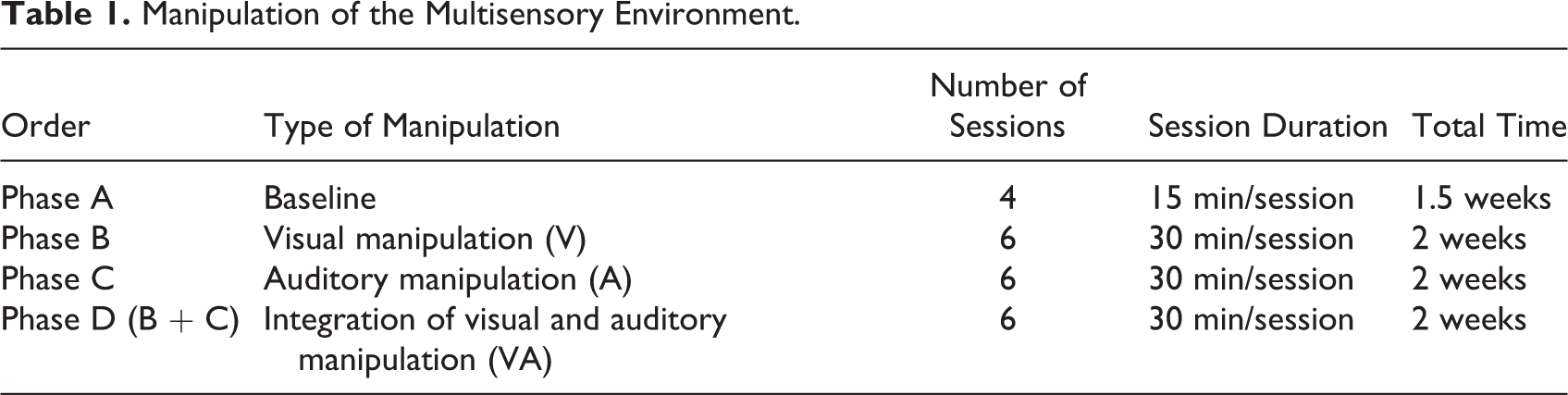
For the main stage of the study, a multiple treatment design {A-B-C-D (B + C)} was used as shown in Table 1. In a multiple treatment design, the characteristics of the intervention change over time and each change means a new phase of intervention. The data across phases can suggest a relationship between the independent and dependent variables.
Manipulation of the Multisensory Environment.
Participants
Participants of the multiple treatment design were two boys and one girl aged 3 to 12 years. All had a medical diagnosis of ASD. For confidentiality, the participants were given pseudonyms: Noah, Jeff, and Hanna. Table 2 lists the participants’ gender, age, height, and results of the SSP and sensory characteristic background.
Profiles of the Participants With Autism Spectrum Disorder.
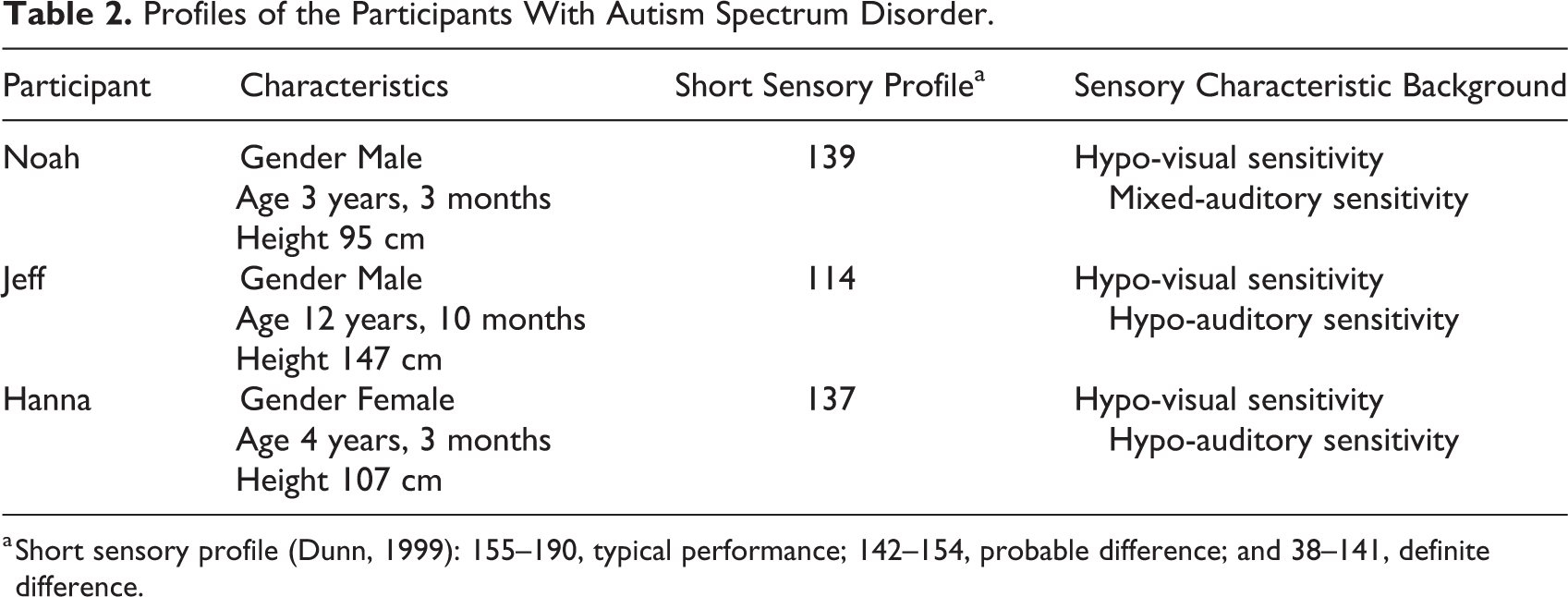
a Short sensory profile (Dunn, 1999): 155–190, typical performance; 142–154, probable difference; and 38–141, definite difference.
Noah is a boy who was aged 3 years, 3 months at the time of the study. On the SSP, he scored 139 of 190, indicating that he had sensory processing difficulties. His sensory characteristic background results showed that he had hypo-visual sensitivity and mixed patterns of hypo- and hyper-auditory sensitivity. Jeff is a boy who was 12 years, 10 months at the time of the study. His SSP score was 114, putting him in the category of definite difference in sensory processing. He had both hypo-visual and hypo-auditory sensitivity. Hanna is a girl who was 4 years, 3 months at the time of the study. Her SSP test score was 137, indicating that she had sensory processing difficulties. She also had both hypo-visual and hypo-auditory sensitivity.
MSE Interventions as Independent Variables
As the independent variables, MSE interventions focusing on two sensory stimuli (visual and auditory) were manipulated in the multiple treatment design. Considering each participant’s sensory profile, the MSE could include a visually stimulating environment for a participant with hypo-visual sensitivity, a visually relaxing environment for a participant with hyper-visual sensitivity, a visually mixed environment for a participant with mixed-visual sensitivity. In the same vein, the interventions could include an auditorily stimulating environment for a participant with hypo-auditory sensitivity, an auditorily relaxing environment for a participant with hyper-auditory sensitivity, and an auditorily mixed environment for a participant with mixed-auditory sensitivity. The floor plan and the pictures of study setting are given in Figure 1.

Multisensory environment setting.
For the MSE interventions, first, 20 items of visual- and auditory-sensory equipment were selected: an LED spotlight/color wheels, mirror ball/projector screen, bubble columns, interactive switch box, sound and music creation wall, musical squares, hanging bar brass chimes, aroma fan and light reward, vibroacoustic water bed, small bean bag, big bean bag, fiber optics, infinity 3D wall panel/switch, mirrored line-lite panel, experience paintings, sound and light panel, leaf chair, plasma ball, percussion instrument set, and vacuum audio wireless speaker. Although these 20 items were selected for the MSE interventions, many of them functioned simultaneously as more than one sensory stimulus.
The 20 items were then incorporated into the MSE room to create a stimulating or relaxing environment. Possible approaches to creating both stimulating and relaxing MSEs using specific visual- and auditory-sensory equipment are depicted in Figure 2. For example, the LED spotlight/color wheel (Item 1) was used for either the stimulating or relaxing wheel option, depending on the sensory profile of each participant. In the same vein, the mirror ball/projector screen (Item 2) was operated for either the revolving or stationary movement mode. In the case of the sound system with the vacuum audio wireless speaker (Item 20), high-frequency sounds, high-speed β waves, and faster music were used for the stimulating MSE, whereas low-frequency sounds, low-speed α waves, and slower music were manipulated for the relaxing MSE.
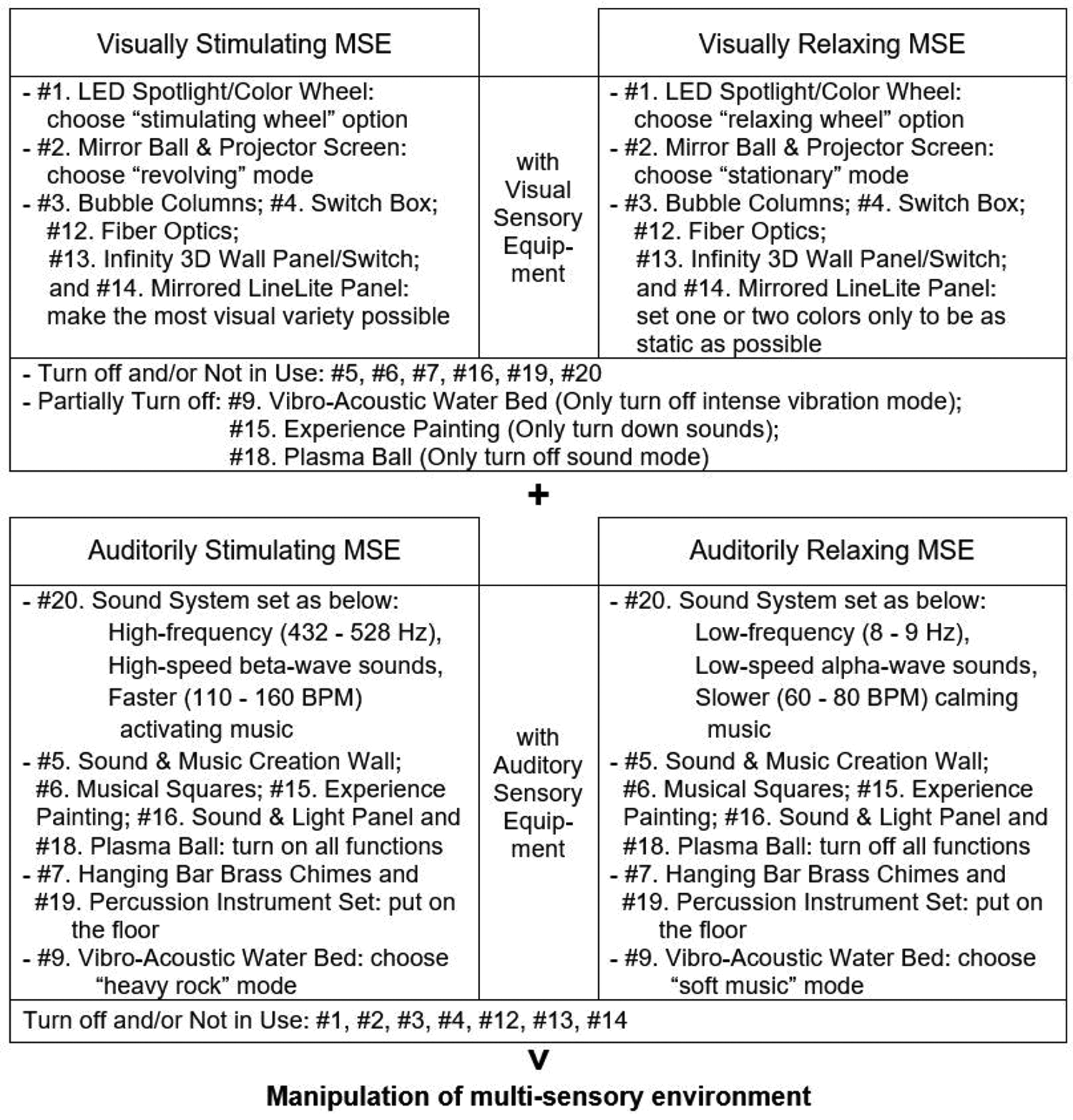
Stimulating multisensory environment (MSE) versus relaxing MSE.
Instruments and Measures
Two target behaviors among the children’s daily behavior were selected for observation. An observation form was used to document behavioral changes. For each participant, the duration of the first target behavior and the frequency of the second target behavior were measured. The duration of the recording was used to calculate the average time of display for the number of times that a participant demonstrated the behavior, whereas the frequency of the recording was a simple count of how many times the recognized behavior occurred during the designated period (Kazdin, 2021). Fifteen-second intervals for scoring were used to record the target behaviors on the observation form.
Data Collection
Each participant engaged in each assigned MSE intervention three times per week during the 6 consecutive weeks after 1.5 weeks of baseline measurement. All baseline and MSE intervention sessions were observed and video-recorded for accurate analysis of behavioral changes and checking interobserver agreement. During baseline (A phase), participants were taken to the multipurpose room at the center. This is right next to the MSE room, so its size is similar to the MSE about 19 × 24 ft. (5.70 × 7.35 m). The difference was that the MSE room had accessible windows, but all these were covered with blinds and shades, while the multipurpose room took advantage of windows. In addition, the MSE room was a highly controlled setting with a variety of sensory equipment, while the multipurpose room was like an ordinary children’s room common in everyday life, with ordinary lighting and no special music.
For the B, C, and D phases, the participants received MSE intervention within the MSE room, with only one child with one therapist for each MSE session. During baseline, the participants were not provided any redirection for their behaviors, because these were a product of unintentional, natural, and daily typical activities. During the MSE interventions, each participant received individualized interventions tailored according to their particular sensory characteristics and defined target behaviors.
Results:
Characteristics of Target Behaviors
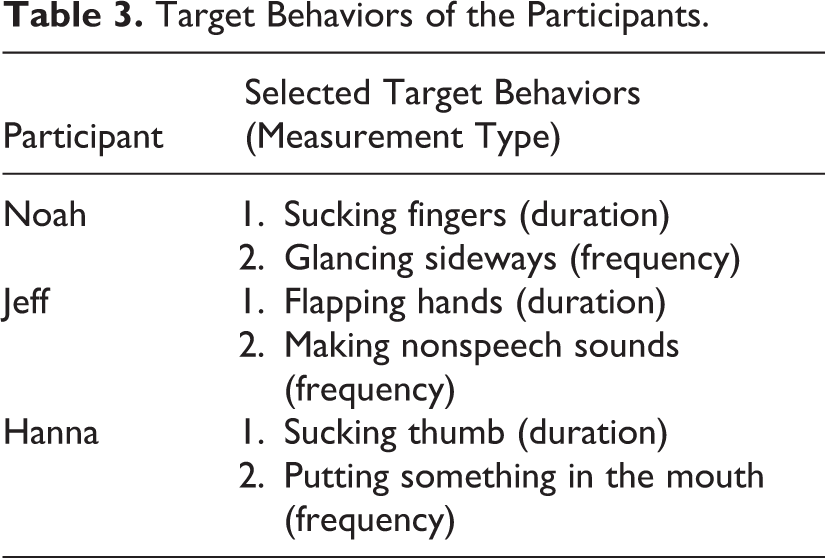
Table 3 shows each participant’s two target behaviors. Noah’s targeted behaviors were “sucking fingers” and “glancing sideways.” Sucking fingers was defined as sucking his index, middle, ring, or little finger randomly or sucking all four fingers simultaneously. Glancing sideways meant he looked at some objects to one side by moving his eyes only without moving his head much. For Jeff, “flapping hands” and “making nonspeech sounds” were selected. Flapping hands was defined as flapping or shaking his whole hand back and forth repeatedly. Making nonspeech sounds meant that he uttered irrelevant repetitive verbalizations, although he could speak his language. For Hanna, “sucking thumb” and “putting something in the mouth” were selected. Sucking the thumb was defined as when she repeated it for over three seconds. Putting something in the mouth meant that she often explored most objects by excessive mouthing, chewing, or licking.
Target Behaviors of the Participants.
Interobserver agreement for the first target behavior was 93.41% for Noah, 92.81% for Jeff, and 93.02% for Hanna, for overall agreement of 93.08%. Interobserver agreement for the second target behavior was 94.33% for Noah, 95.89% for Jeff, and 95.02% for Hanna, for overall agreement of 95.08%.
Influence of the MSE on Target Behaviors
Means and standard deviations of the two target behaviors for each participant are shown in Table 4.
Means and Standard Deviations of the Two Target Behaviors of Each Participant.
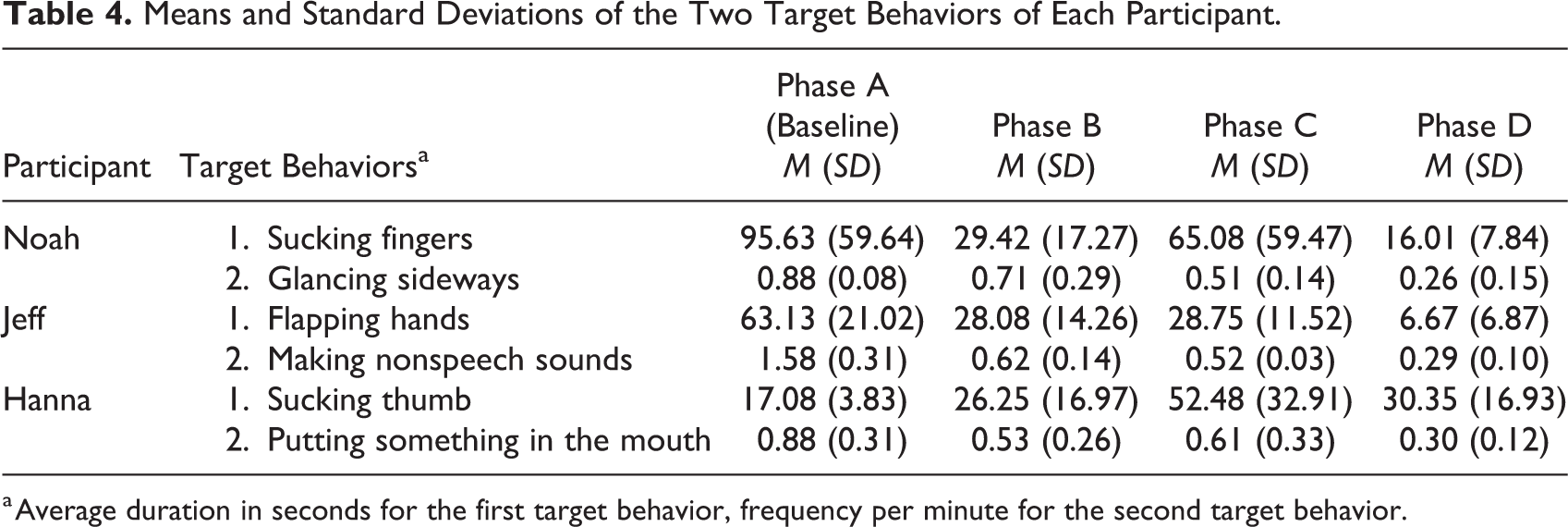
a Average duration in seconds for the first target behavior, frequency per minute for the second target behavior.
Noah
Noah had hypo-visual and mixed-auditory sensitivity, so his visual intervention (Phase B) was manipulated to be visually stimulating (V1–V6), whereas his auditory intervention (Phase C) was manipulated to be both auditorily relaxing (A1–A3) and stimulating (A4–A6; the numbers indicate the session number). Lastly, his visual and auditory integrated intervention (Phase D) was manipulated to be visually and auditorily stimulating (VA1–VA6), because the outcomes of his target behaviors in the auditorily stimulating MSE were better than those in the auditorily relaxing MSE. Only the sixth session in Phase D (VA6) was not finished, because he fell asleep shortly after the session started.
The average duration of Noah’s first target behavior of sucking fingers was 95.63 seconds (SD = 59.64) during the baseline presented in Table 4 and Figure 3. However, he showed a decrease of 29.42 s (SD = 17.27) during the first intervention, 65.08 s (SD = 59.47) during the second intervention, and 16.01 s (SD = 7.84) during the last intervention. Visual inspection of the average–duration graph for sucking fingers (Figure 3) indicated decelerating trends during the intervention phases, except for the front half of the second auditorily focused intervention, which was the auditorily relaxing MSE. The average duration of sucking his fingers during the interventions was reduced relative to baseline, indicating an overall reduction. Therefore, the integration of a visually and auditorily stimulating MSE and a visually stimulating MSE were more effective interventions than an auditorily relaxing and stimulating MSE against Noah’s first target behavior—sucking fingers.
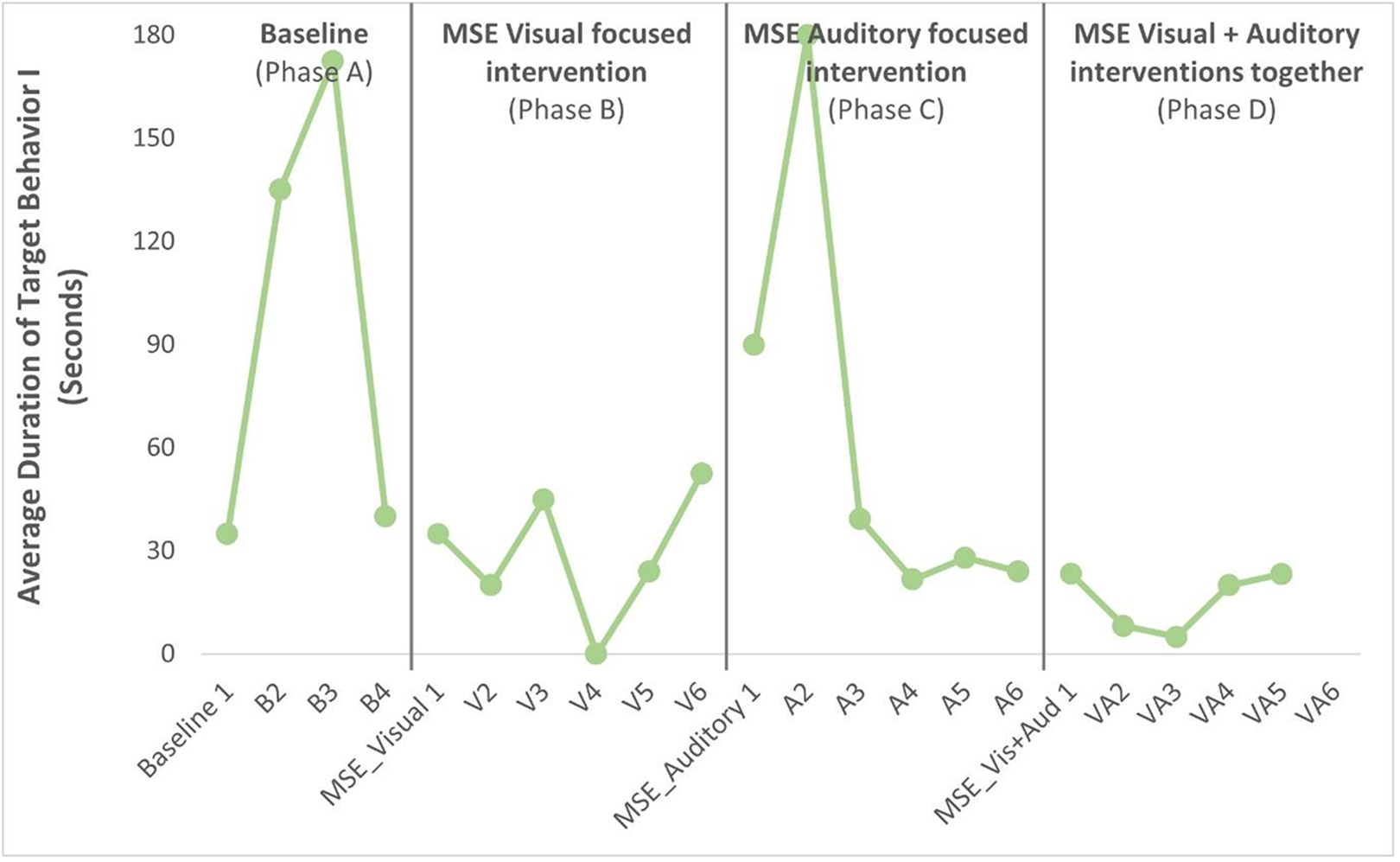
Results of Noah’s first target behavior: sucking fingers.
The mean frequency per minute of Noah’s second target behavior of glancing sideways was 0.88 times/minute (SD = 0.08) during the baseline presented in Table 4 and Figure 4. However, he demonstrated a decrease of 0.71 times (SD = 0.29) during the first intervention, 0.51 times (SD = 0.14) during the second intervention, and 0.26 times (SD = 0.15) during the last intervention. On visual analysis, the results of Noah’s glancing sideways revealed an overall deceleration in frequency during the intervention phases relative to baseline (Figure 4). His glancing sideways became stable in terms of frequency during the last integration of the visual and auditory intervention (Phase D) compared to the cyclic and variable trends during the visually focused intervention. Given the gradual decrease in Noah’s sideways glances, an agreement could not be reached on the specific intervention that was the most effective, because the behavior occurred across all three types of intervention. This may also have been due to natural developmental life changes. However, the integration of a visually and auditorily stimulating MSE seemed more effective against Noah’s second target behavior of glancing sideways.
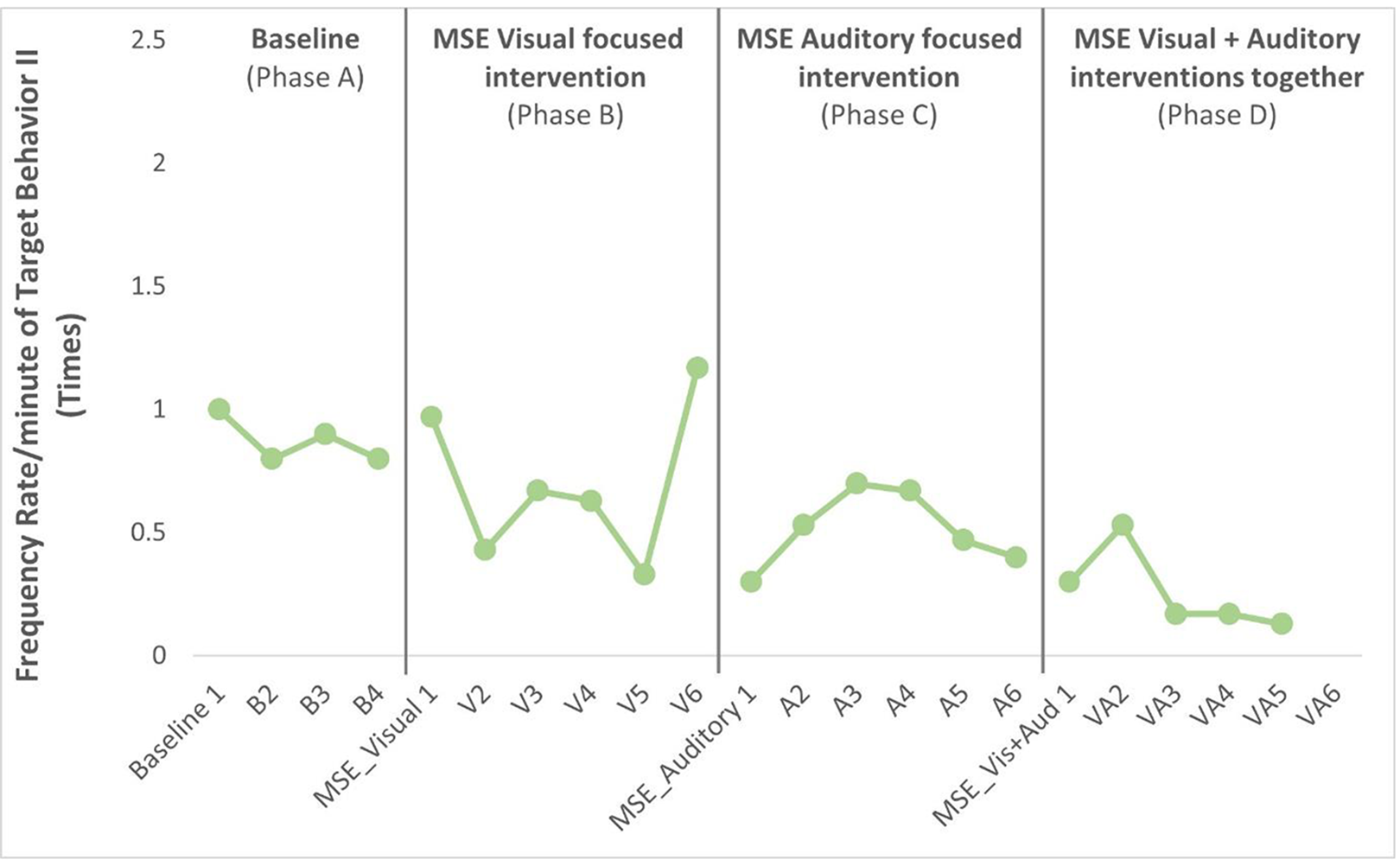
Results of Noah’s second target behavior: glancing sideways.
Jeff
Jeff was hypo-sensitive to light and sound. For both visual and auditory intervention, he received stimulating intervention based on his visual and auditory characteristics. In addition, his integrated intervention was manipulated to be a visually and auditorily stimulating.
The average duration of Jeff’s first target behavior of hand-flapping was 63.13 s (SD = 21.02) during the baseline (Table 4 and Figure 5). However, Jeff exhibited a decrease of 28.08 s (SD = 14.26) during the first intervention, 28.75 s (SD = 11.52) during the second intervention, and 6.67 s (SD = 6.87) during the last integrated intervention. Visual inspection of the graph of his hand-flapping indicated improving trends overall, although there were ups and downs during Phases C and D (Figure 5). The average duration was reduced over all three intervention phases compared to baseline, indicating a gradual reduction in Jeff’s self-stimulating behavior. After the auditory intervention (Phase C), however, his hand-flapping became similar to the level of the last baseline session (Phase A), while the level was zero after the first visual manipulation (V6, Phase B). Fortunately, his hand-flapping reduced very significantly and diminished to zero again three times during the last integrated intervention. Therefore, the integration of a visually and auditorily stimulating MSE was the most effective intervention against Jeff’s first target behavior of flapping hands.
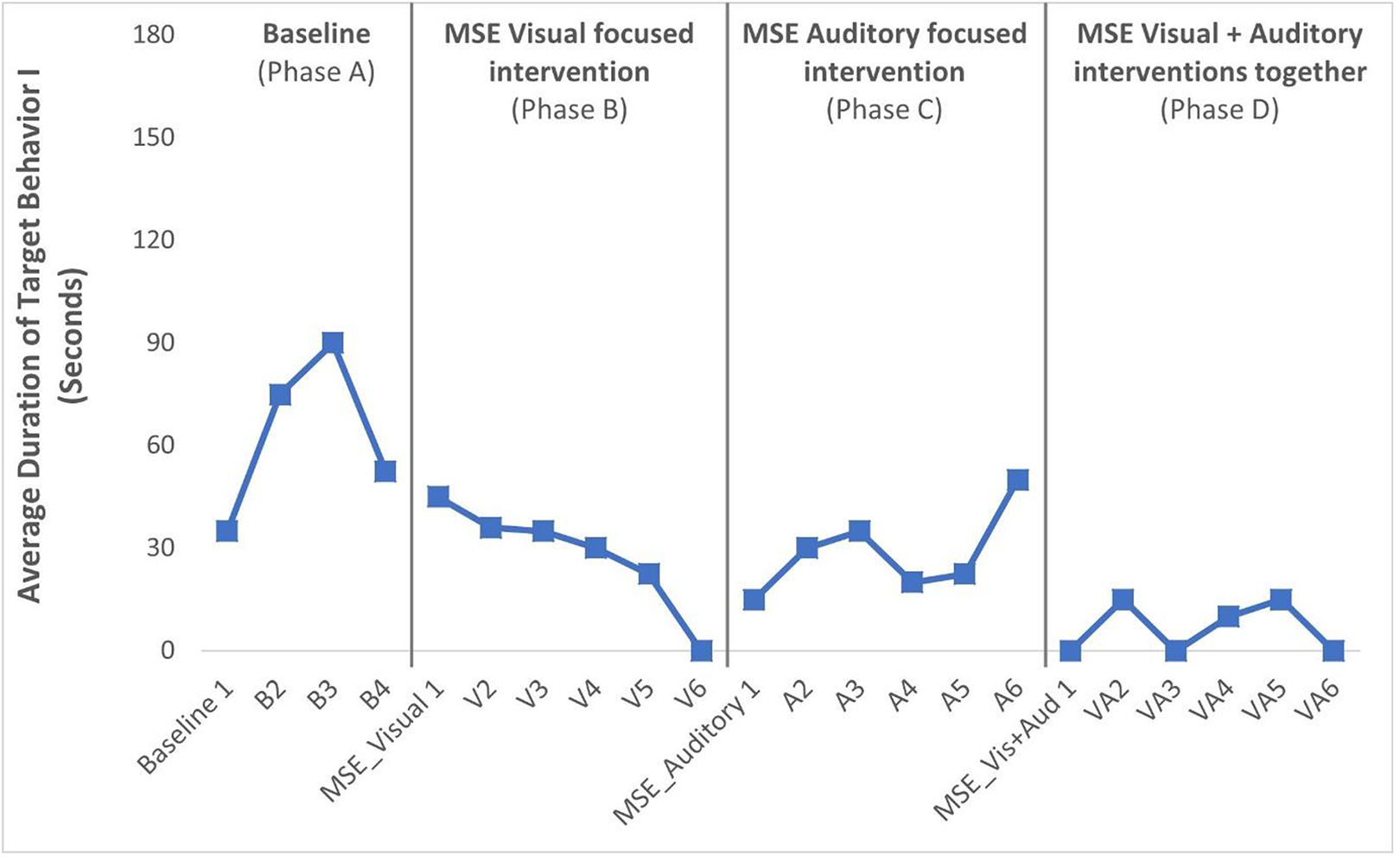
Results of Jeff’s first target behavior: flapping hands.
The mean frequency of Jeff’s second target behavior of making nonspeech sounds was 1.58 times per minute (SD = 0.31) during baseline (Table 4 and Figure 6). However, he exhibited a decrease of 0.62 times (SD = 0.14) during the first intervention, 0.52 times (SD = 0.03) during the second intervention, and 0.29 times (SD = 0.10) during the last integrated intervention. The results of Jeff’s second target behavior revealed clear deceleration and a flat trend in frequency of making nonspeech sounds during all intervention phases compared to an accelerating and cyclic trend during baseline (Figure 6). Visual inspection of this graph showed that the three interventions produced immediate and considerable changes in Jeff’s level of daily nonspeech sounds from baseline. The three MSE interventions were all effective, making it difficult to pick the best; however, the integration of a visually and auditorily stimulating MSE was the most effective against Jeff’s second target behavior—making nonspeech sounds.

Results of Jeff’s second target behavior: making nonspeech sounds.
Hanna
Hanna had hypo-visual and hypo-auditory sensitivity, so her visual intervention was manipulated to be visually stimulating, and the auditory intervention to be auditorily stimulating. The last integrated intervention was manipulated to be visually and auditorily stimulating. However, Hanna’s sixth auditory session (A6) was discontinued, because she fell asleep during the session.
The average duration of Hanna’s first target behavior of sucking her thumb was 17.08 seconds (SD = 3.83) during baseline (Table 4 and Figure 7). However, she exhibited an increase of 26.25 s (SD = 16.97) during the first intervention, 52.48 s (SD = 32.91) during the second intervention, and 30.35 s (SD = 16.93) during the last intervention. Visual analysis of the average–duration graph of her first target behavior (Figure 7) indicated that there was no opportunity to determine whether the MSE intervention was able to reduce her thumb-sucking, because of the extremely low level during baseline.
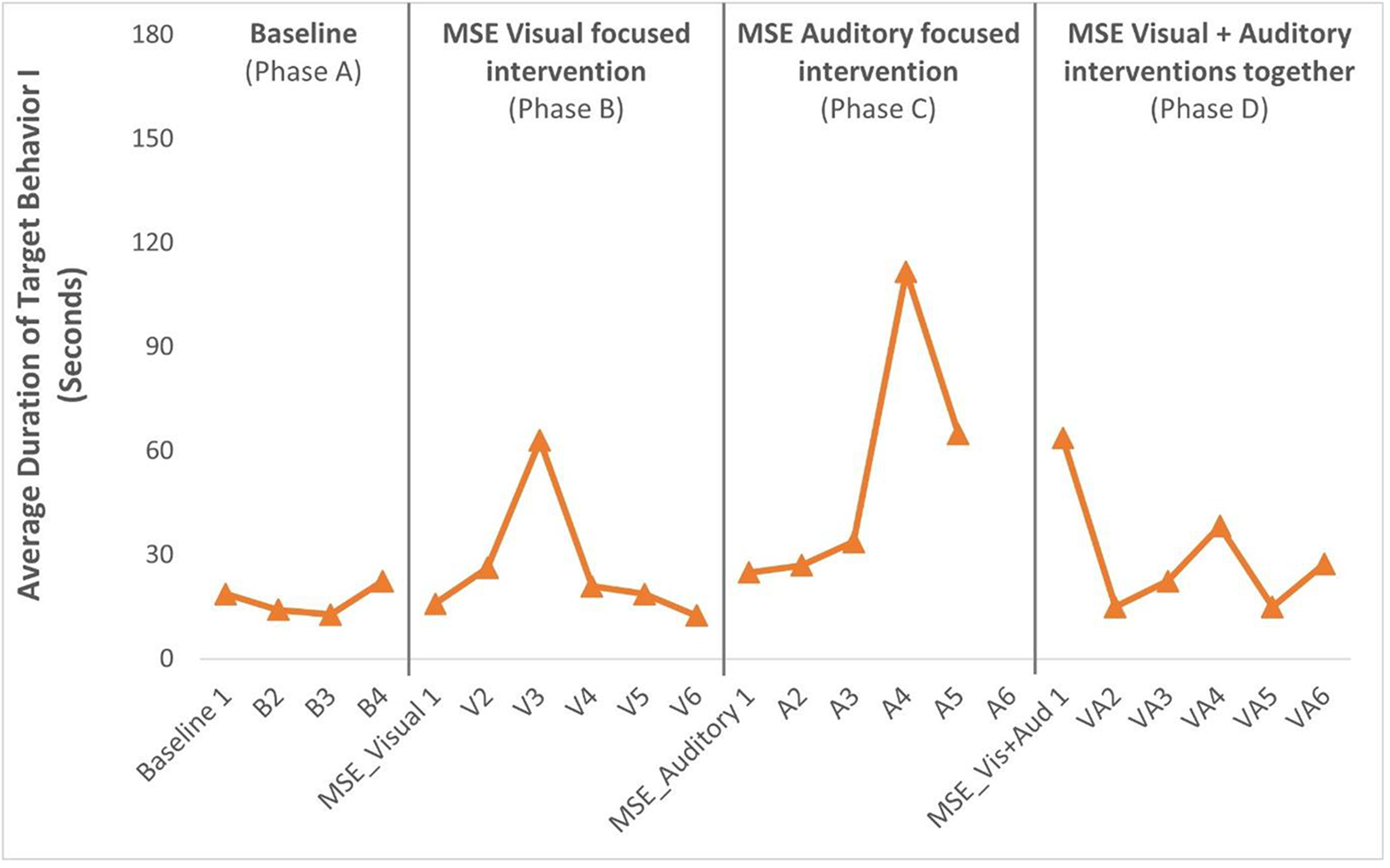
Results of Hanna’s first target behavior: thumb-sucking.
The mean frequency of Hanna’s second target behavior of putting something in her mouth was 0.88 times per minute (SD = 0.31) during baseline illustrated in Table 4 and Figure 8. However, she demonstrated a decrease of 0.53 times (SD = 0.26) during the first intervention, 0.61 times (SD = 0.33) during the second intervention, and 0.30 times (SD = 0.12) during the last intervention. On visual inspection of Figure 8, the results of Hanna’s second target behavior indicated improving trends overall after the start of the interventions. Putting any object in her mouth became relatively stable during the last integrated intervention compared to the cyclic and variable trends during the other interventions. Moreover, the mean frequency during the last integrated intervention was the lowest among the three interventions. Therefore, the integration of a visually and auditorily stimulating MSE was the most effective intervention against Hanna’s second target behavior of putting something in her mouth.
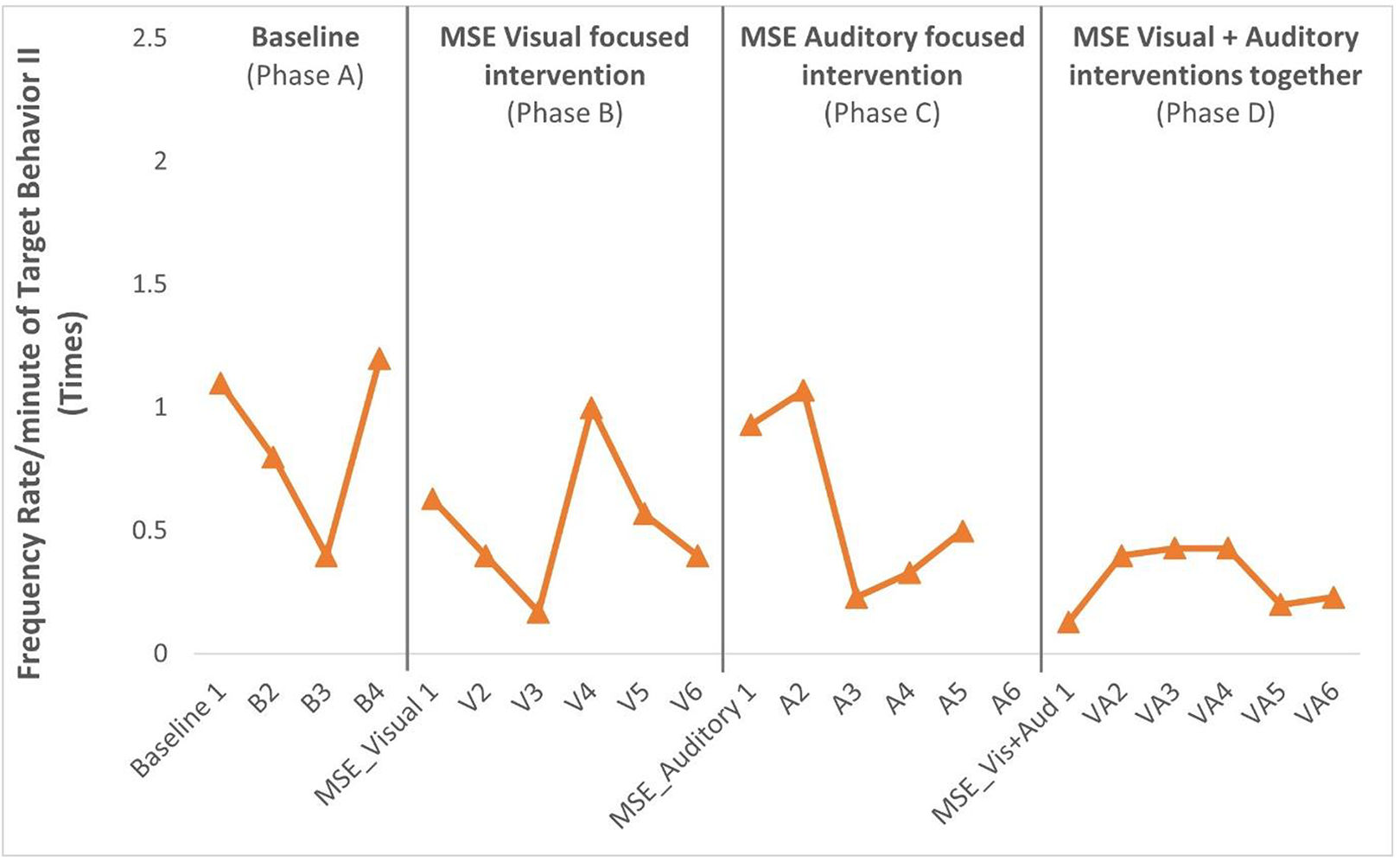
Results of Hanna’s second target behavior: putting something in the mouth.
Discussion
The purpose of this study was to investigate the effects of a sensory-based MSE room on the target behaviors of children with ASD. The data indicated that the MSE may affect the negative daily behaviors of the participants. More specifically, the visually stimulating MSE positively influenced the target behaviors of children with hypo-visual sensitivity in this study. The auditorily stimulating MSE also seemed to have a relationship with the target behaviors of children with hypo- and mixed-auditory sensitivity. Overall, the positive changes in the target behaviors of children with ASD were in order as follows: an integration of visually and auditorily stimulating MSE (Phase D) > a visually stimulating MSE (Phase B) > an auditorily stimulating MSE (Phase C) > a baseline (Phase A). Although there were differences between the methods of this current study and those of other studies, reflected in the individualized MSE room according to the individual sensory characteristics of the children with ASD, the fact that reductions in daily negative behaviors were demonstrated with the MSE intervention is in line with other studies (Fava & Strauss, 2010; Kaplan et al., 2006; Thompson, 2011).
The first participant, Noah, was the only child to experience the auditorily relaxing MSE, because he had a mixed pattern of hypo- and hyper-auditory sensitivity. The sensory characteristics of the participants indicated that hypo-sensitive children were more dominant than hyper-sensitive children, which aligns with other studies (Ausderau et al., 2014; Greenspan & Wieder, 1997; Ornitz, 1989). After Noah had moved in the right direction in the visually stimulating MSE, the auditorily relaxing intervention tended to return him to baseline status (Figure 3). This mirrored the observation day for the beginning of Noah’s auditory intervention. Although the new auditory session had started, he constantly asked his occupational therapist to turn on the bubble columns again, rather than the auditory activities. Because of these tantrum behaviors, Noah tended to suck on his fingers longer during the first and second auditory sessions. However, the duration of Noah’s finger-sucking decreased again during the auditorily stimulating MSE and during the next integration of a visually and auditorily stimulating MSE. The results suggest that, then, if visual stimulations are provided to Noah, the duration of sucking his fingers could be reduced.
For the second participant, Jeff, the results of his nonspeech sounds exhibited an ideal reducing trend (Figure 6). The relationship seemed apparent across the interventions, as the MSE sessions appeared effective in reducing the target behavior. This was probably because Jeff was the oldest and had better cognitive development than the other participants. His cognitive ability enabled him to experience diverse sensations of the MSE room as a medium, thus maximizing its effects. During the MSE sessions, no abrupt incident occurred with Jeff, while the other two young children urinated or defecated in their pants or fell asleep suddenly. This finding aligns with a study by Novakovic et al. (2019), which supported that those with ASD who attended repeated sessions in an MSE achieved more self-regulation and sensory-modulation behaviors.
In the case of the last participant, Hanna, her first target behavior, which failed to reduce unlike the other five results in this study, requires discussion. One possibility emerged regarding why sucking her thumb occurred at such low rates during baseline (Figure 7). There was a bolster swing in the multipurpose room where baselines were measures were taken, and Hanna preferred this to the more static leaf chair in the MSE room to meet her vestibular sensory threshold. Therefore, she may not have had a chance to suck her thumb while using the bolster swing, and hence the natural occurrence of sucking her thumb was not observed during baseline. The other possibility for this result may have been because of the indiscriminate selection of her target behaviors. Although this multiple treatment design employed visual and auditory stimuli, neither of Hanna’s target behaviors was chosen to relate to visual or auditory stimulating behaviors, unlike the other participants. As usual, Hanna enjoyed more vestibular and oral sensory inputs than visual or auditory activities. However, the sensory manipulation was more focused on the visually and auditorily stimulating MSE, which may have affected her. Therefore, the therapeutic efficacy of the MSE room could not be determined for Hanna’s first target behavior—thumb-sucking.
Ausderau et al. (2014) reported that hyporesponsiveness, sensory interests, repetitions, and seeking behavior were found more in children with ASD, whereas hyperresponsiveness and enhanced perception were more dominant sensory patterns for children with Asperger’s disorder and higher IQ. In this study, participants with hypo-visual, hypo-auditory, and mixed-auditory sensitivity sought additional visual and auditory stimulation and continually exhibited aimless manipulation of objects in pursuit of visual stimulation, which is supported by several hypotheses (Brandwein et al., 2015; Leekam et al., 2007). Considering this, the present study shows a positive relationship between the stimulating MSE design and the behaviors in children with sensory-seeking behaviors and ASD.
Limitations
The limitations of this study include the data-collection method. There are close families of the basic reversal design that take into consideration the evaluation of more than one treatment. In a multiple treatment reversal design, a baseline phase is followed by separate phases in which different treatments are introduced (Kazdin, 2021). However, there was no reversal to baseline between each treatment phase in this study, because the researchers felt that this would have made the experiments very lengthy and impractical. Without the reversal phases, the multiple treatment design lacked the rigor of a true experiment and was more a quasi-experimental design. However, it required less time, and there was no participant attrition as a consequence. When outcome behavior is not reversible because it is associated with learning or when there are certain situations where the outcome is not expected to return to baseline and related to ethical concerns, no reversal is required (Kazdin, 2021).
In addition, this study was limited to participants with an ASD diagnosis aged 3–12 years. They had ASD-specific impairments, including sensory issues. Therefore, our results should not be generalized to individuals without ASD, adolescents, those without sensory difficulties, or those with Asperger’s syndrome.
The study setting may also affect the generalization of the findings. This study took place in a highly specialized, controlled MSE room with diverse sensory elements. The MSE room was in a daycare center. The size of MSE was about 19 × 24 ft. and the setting excluded the balcony. Moreover, the full-time occupational therapists, who regularly assist in strategies for children with special needs, including the MSE sessions of this study, are not typical individuals in other settings. Exclusively one-to-one MSE interventions were applied in this study. Therefore, our findings should not be generalized to settings with diverse personnel resources, less or more sensory equipment, or within different types of facilities.
Conclusion
The present study on the effects of the MSE on the behaviors of children with ASD can act as a starting point for further research. In the face of a lack of empirical research into MSE design, sensory-based behaviors along with other ASD symptoms were discussed as a meaningful design element. The SSP and sensory characteristic background surveys could be considered for potential MSE users in advance. As such, individualized sensory environmental interventions could be applied based on individual sensory characteristics. In consideration of sensory processing, making meaning of the world is still a frustrating challenge for children afflicted with ASD. When being mindful that MSEs are predicated on the importance of customized sensory environmental therapy, MSEs could be meaningful as a nonpharmaceutical ASD therapeutic environment and best practice, which could positively influence the daily behaviors of children with ASD.
Implications for Practice
In ASD society, the sensory challenges need to be discussed as a more meaningful issue along with other ASD symptoms. To provide individually tailored environmental intervention and maximize the MSE effects, it would be more advantageous to identify individual sensory characteristics of autistic sufferers first before the MSE intervention.
The stimulating MSE design would work better for individuals with low sensory thresholds and relatively severe ASD. The hypo-sensitivity, sensory interests, and seeking behaviors are more related to children with ASD, whereas hyper-sensitivity was more dominant for children with Asperger syndrome and high-functioning ASD.
Empirical inquiry in MSE is lacking compared with literature review papers. While the MSE concept, called “Snoezelen” earlier, originated in the field of learning disabilities for children, the studies of MSE for children with ASD have been running in low gear than the application of MSE for the dementia population. With the prevalence of ASD continuing to rise, it is time for practitioners to share their experiences and researchers to systematically explore this field. MSEs are definitely underused despite the apparent advantages.
As one of the built-environment, the MSE was demonstrated as a sensory therapeutic environment beyond a simple playroom for children with ASD. The MSE is not just the sum of sensory equipment by vendors, where needs to be planned as the integration of sensory design elements by interior architects with ASD specialists.
Footnotes
Acknowledgment
We thank the children, their mothers, and their occupational therapists who participated in this project.
Declaration of Conflicting Interests
The author(s) declared no potential conflicts of interest with respect to the research, authorship, and/or publication of this article.
Funding
The author(s) disclosed receipt of the following financial support for the research, authorship, and/or publication of this article: This study was conducted by research funds from Gwangju University in 2021.
