



Abstract
Objectives:
The study aimed to comparatively evaluate three types of preoperative care environment in terms of patient experience outcomes including patient preoperative anxiety, perceived environmental qualities, and noise level.
Background:
Preoperative anxiety is a major healthcare problem causing delays, complications, dissatisfaction, and rising healthcare costs. The design of preoperative spaces may play an important role in reducing preoperative anxiety and improving outcomes.
Methods:
Anonymous questionnaire surveys were conducted with 228 patients in the three types of preoperative bays that varied in terms of bay size and the amount of hard-wall partitions between bays to compare patient self-reported anxiety and perceived environmental qualities. Sound level measurements were conducted throughout the three preoperative care units.
Results:
Female patients in the preoperative unit with largest bays and full hard-wall partitions between bays reported significantly lower levels of subjective anxiety (p’s = .002, <.001) and higher levels of perceived environmental qualities on privacy, cleanliness, noise, and pleasantness (p’s from <.001 to .017) than patients in the units with smaller bays and no or partial hard-wall partitions. Similar but less clear pattern was found among male patients. The lowest average noise levels were recorded in the unit with largest bays and full hard-wall partitions between bays (2.3–6.1 decibels lower than the other units).
Conclusions:
The design of preoperative care environment may contribute to the better management of preoperative anxiety. Further efforts in research and design are needed to maximize the benefits in clinical, experiential, and financial outcomes.
Keywords
Introduction
Background
Surgery patients often experience preoperative anxiety—a sense of nervousness, tension, and fear before the surgery—probably due to the uncertainty about surgical outcomes, anticipated pain and discomfort, loss of control and independence, unfamiliar environment, and separation from family and friends (Padmanabhan et al., 2005; Wang et al., 2022). Preoperative anxiety is a major problem in healthcare. It may lead to increases in medication use, postoperative pain and complications like nausea and vomiting, delays in recovery, and ultimately result in high healthcare costs and low patient satisfaction (Robleda et al., 2014). The pain, complications, and delays associated with preoperative anxiety are especially problematic for ambulatory surgeries that have time constraints for staff to prepare a patient for discharge quickly after the surgery on the same day (Padmanabhan et al., 2005). In addition, patient satisfaction is critically important for healthcare organizations to compete with others in attracting elective surgery patients when more and more surgical procedures are being performed in ambulatory and short-stay settings (Farber, 2010).
Many efforts have been made to improve the management of preoperative anxiety. Nonpharmacological interventions are preferred in the practice because of the side effects (e.g., drowsiness, breathing difficulties, long recovery) associated with pharmacological measures including sedation and anti-anxiety medications (Wang et al., 2022). Research has examined the effectiveness of nonpharmacological interventions including music, distraction, information provision, aromatherapy, warming, hypnosis, massage, cognitive-behavioral therapy, and guided imagery relaxation therapy (Wagner et al., 2006; Wang et al., 2022). Recent studies indicated that listening to music or natural sounds (e.g., bird, rain) helped reduce state anxiety in preoperative patients in quite spaces as well as with noises generated by healthcare activities (Ertuğ et al., 2017; Kipnis et al., 2016; Ni et al., 2012; Padmanabhan et al., 2005). Reductions in preoperative anxiety were observed in pediatric patients who actively engaged in distractions by playing interactive video games or passively by watching cartoon movies or television programs on handheld devices (e.g., smartphones, tablets), video glasses, or computers (Chow et al., 2016; Kerimoglu et al., 2013; Kim et al., 2015; Lee et al., 2012, Li et al., 2021).
The Role of the Physical Environment
There is a growing body of empirical research indicating the important role of the physical environment in improving healthcare outcomes (e.g., infection prevention, stress reduction, patient satisfaction, work efficiency) in various settings (Ulrich et al., 2004, 2008). Recently, much research has focused on surgical suite design. For example, the operating room (OR) layout may impact traffic patterns, workflow disruptions, and air contamination (e.g., Bayramzadeh et al., 2018; Joseph et al., 2022; Neyens et al., 2018; Stauning et al., 2018). Noise in ORs has been found to negatively affect surgical team communication, performance, and postoperative outcomes (e.g., Engelmann et al., 2014; Keller et al., 2016). The design of perioperative spaces could contribute to positive patient experience of day surgeries (e.g., Annemans et al., 2016). All the studies indirectly suggested that the physical environment could influence patient preoperative anxiety even though research on this topic is generally lacking.
The design of the preoperative care environment may potentially play an important role in addressing the problem of preoperative anxiety. First, spatial design may impact preoperative anxiety through the mediation of the audio, visual, and other components of privacy. Previous studies in healthcare settings showed that patients cared in larger rooms with hard-wall partitions perceived higher levels of privacy than patients in open bays separated by soft curtains (Barlas et al., 2001; Olsen et al., 2008). Even though there has been minimal research directly examining the connection between privacy and anxiety in healthcare settings, research conducted in simulated retail settings showed that the invasion on visual privacy and personal space would lead to customer anxiety and dissatisfaction with services (Esmark Jones et al., 2020). Second, the preoperative environment may incorporate audiovisual distractions (e.g., music, artworks, videos, indoor plants) and daylight that have been found to reduce anxiety and stress in a variety of healthcare settings (Beukeboom et al., 2012; Pouyesh et al., 2018; Quan et al., 2016; Ulrich et al., 2004, 2008). Third, preoperative anxiety may be alleviated by reducing environmental stressors such as noise. In one recent study, the cold and noisy environment as well as the lack of privacy were identified by patients as contributors to anxiety experienced during the preoperative preparation period (Dziadzko et al., 2022). Environmental measures including sound-blocking walls and doors, sound-absorbing finishing materials (e.g., ceiling tiles), and controlling noise sources (e.g., alarms) have been effective in reducing noise levels (Ulrich et al., 2004, 2008). Additionally, the provision of spaces for family presence in the preoperative preparation areas could strengthen the emotional support to patients. According to research, the presence and support of parents and significant others may help reduce preoperative anxiety of pediatric and adult patients (Kim et al., 2015; Koivula et al., 2002). A combination of the above environmental design elements (e.g., positive distractions, physical separations to enhance privacy and reduce noise, large spaces to accommodate family presence) may contribute to the efficient management of preoperative anxiety and help improve patient experience and the quality of care of ambulatory surgeries.
Figure 1 is a conceptual framework based on relevant research discussed above that illustrates how preoperative environment design may reduce preoperative anxiety through the improvements of postoccupancy environmental qualities. Here, the environmental qualities (e.g., privacy, noise) serve as intermediate variables: Environmental design may directly impact the environmental qualities presented after occupancy, which subsequently affect the level of preoperative anxiety. However, no research so far has directly examined the relationship between the preoperative physical environments and the anxiety of surgery patients cared in such spaces.

A conceptual framework of the physical environment’s impacts on preoperative anxiety. Note. The lists of design decisions and environmental qualities are based on previous research. The lists are not exhaustive. * indicates inclusion in the study.
Purpose of the Study
The study aimed to start filling the knowledge gap by comparing three types of preoperative bay design in terms of their effects on patient experience outcomes including patient preoperative anxiety, perceived environmental qualities, and noise level. The three types of design differed in terms of the size of preoperative bays, the amount of hard-wall partitions between bays, and the amount of natural light: (A) small bays with no hard-wall partitions and no daylight; (B) medium bays with partial hard-wall partitions between bays and limited daylight; and (C) large bays with full hard-wall partitions but no daylight. As discussed earlier, larger bay size and more partitions may help reduce preoperative anxiety and improve satisfaction by contributing to privacy, social support, and noise reduction.
Hypotheses
It was hypothesized that (1) patient’s level of preoperative anxiety would be the lowest in the type C environment, followed by type B, and the highest in type A; (2) patient perception of the physical environment qualities would be the most favorable in the type C environment, followed by type B, and the least favorable in type A; (3) the measured noise levels would be the lowest in the type C environment, followed by type B, and the highest in type A.
Methods
Settings
This is a natural quasi-experimental study that compared three types of preoperative bays located at three surgical suites in a 68-bed suburban community hospital in the Midwest of the United States. Two of the surgical suites were designed and constructed in 1960's and 2000's, respectively, in the old facility and were replaced by the surgical suite in the new replacement hospital that was put in service in 2019. As shown in Figure 2, the new preoperative bays (type C) were the biggest among the three types with full-length wall partitions between the bays, followed by type B (smaller, 60% wall partitions) and type A (the smallest, no wall partition). Additionally, there were high windows on the patient headwalls in type B bays which were shaded for the majority of time to provide filtered daylight but no view of outside for patients lying on stretchers or beds. The differences between the three types of preoperative bays “naturally occurred” as the results of design decisions of design teams unrelated to the study without the control or manipulation of the investigator. According to previous research and the conceptual framework discussed earlier, the differences in these environmental aspects could impact patient experiences (e.g., privacy, noise, anxiety, satisfaction). Minimal differences existed in other environmental aspects including finish materials (e.g., ceiling tiles, vinyl flooring), furniture, equipment, and positive distractions (e.g., artworks). The vast majority of surgery patients in this hospital were discharged on the same day of surgery or after a short inpatient room stay (e.g., overnight stay). A typical patient journey included arriving at the registration and waiting areas, walking to the preoperative area where the patient changed to hospital gown and got prepared for the surgery, being wheeled on stretcher or bed to the OR, being transported to the recovery area after surgery, and getting dressed then discharged (day surgery) or moved to an inpatient room (overnight stay). There were minimal differences in terms of patient flow between the three surgical suites.
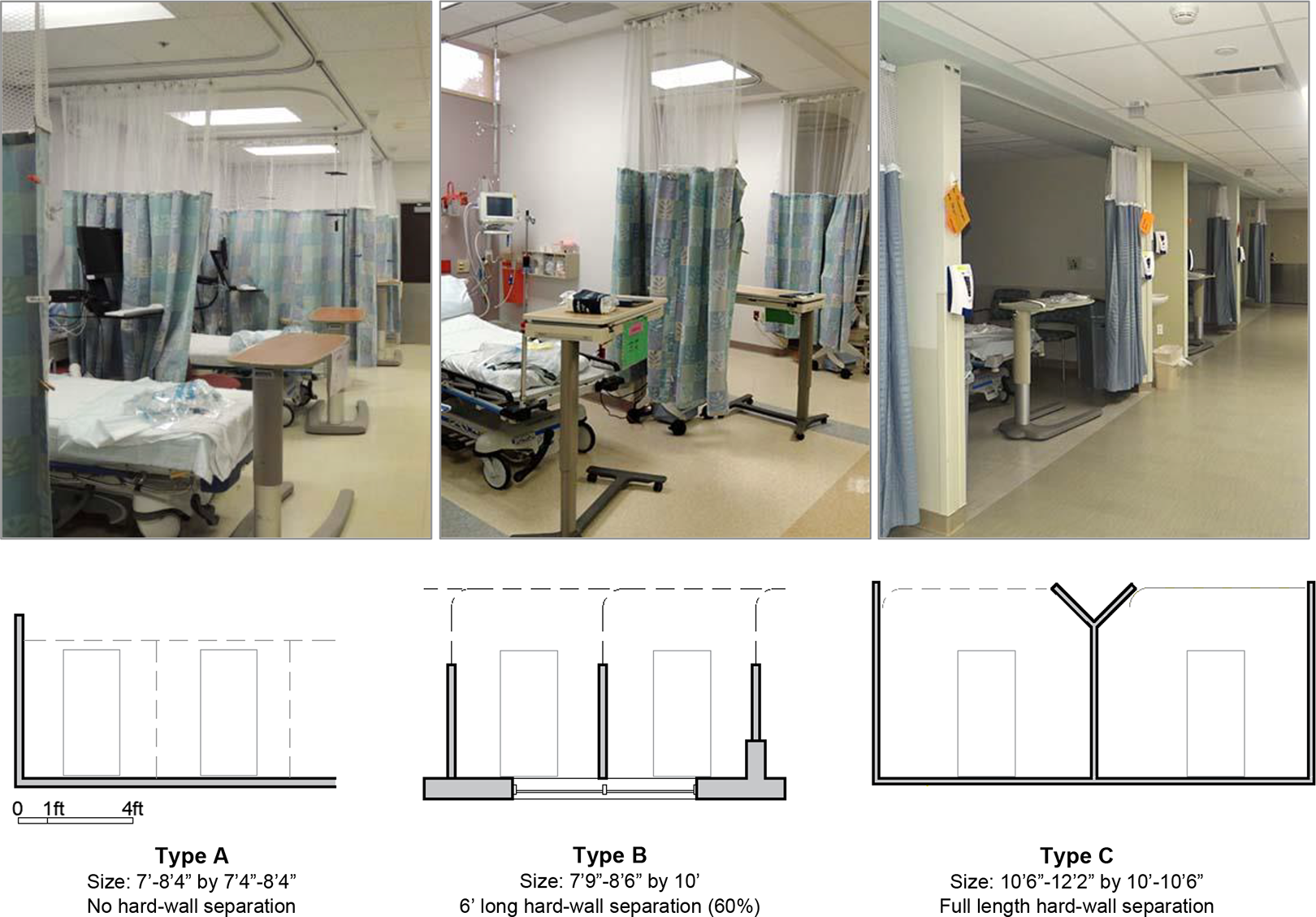
The three types of preoperative bay design.
Participants
The study targeted at all adult (18 years or older) English-speaking ambulatory surgery patients who were being prepared for surgeries in the preoperative areas of the surgical suites at the hospital (as described previously) during the data collection periods (February–April 2018, June–July 2021). Patients who could not understand English or had a condition that prevented the completion of the questionnaire (e.g., mental or vision conditions) were excluded. To minimize the impact on hospital operations, patients who were immediately transported to the ORs without waiting in the preoperative areas after preparation were also excluded from the study. There was no inclusion or exclusion criterion based on demographics including age, gender, race, ethnicity, education level, and income level.
Study Instruments
The patient self-reported preoperative anxiety and perception of the physical environment were measured by using a 1.5-page anonymous patient questionnaire. The first part of the questionnaire included a total of 20 close-ended items to measure the state anxiety level. The items were relevant measures (e.g., tension, nervousness, worry) from the Sate-Trait Anxiety Inventory for Adults (STAI, Spielberger, 1983). Each item was measured on a 4-point Likert-type scale (1 = not at all, 2 = somewhat, 3 = moderately so, and 4 = very much so). The total score was calculated as the summation of the 20 items and could range from 20 to 80, with higher scores indicating greater anxiety levels. STAI has been considered as the gold standard of measuring preoperative anxiety and widely used in previous relevant research in medical fields because of its well-demonstrated validity and reliability (Cronbach’s alpha = .896; see Kayikcioglu et al., 2017; Khalili et al., 2019; Spielberger, 1983). The second section of the questionnaire included four items focusing on patient’s perception on the privacy, cleanliness, acoustics, and pleasantness qualities of the physical environment (rated on a scale from 1 = strongly disagree to 5 = strongly disagree). The items were adapted from an existing instrument developed and validated in previous research in both inpatient and outpatient settings (Berry & Parrish, 2008; Quan et al., 2016). The third section included questions to collect demographic information, including age, gender, and so on, for statistical purposes. The length of the questionnaire was minimized to prevent possible interference with clinical operations and to increase the response rate.
The sound level measurement instrument was an Amprobe SM-20-A Sound Level Meter (Hill & LaVela, 2015). The meter was set with an A frequency weighting (range 30–130 dBA) and slow response time (1 s). Before use, it was calibrated by using an SM-CAL1 Sound Meter Calibrator.
Data Collection
Ethical approval was obtained from the Institutional Review Board of the healthcare organization to which the study facility belonged before data collection. Patients’ anonymous responses to the questionnaire were kept strictly confidential.
The questionnaire was administered by a same researcher in the old hospital (preoperative environment types A and B) in February–April 2018 and again in the new hospital (type C) in June–July 2021 (over 18 months after building occupancy). During data collection, the researcher approached a preoperative patient when the attending nurse completed the preoperative preparation tasks (e.g., changing in the preoperative bay), and the patient was waiting to be transported to the OR by OR nurses. This was often when the patient’s family member(s) were called to the preoperative area to accompany the patient (typically 20–40 min after the patient arrived at the preoperative bay). The researcher first verbally introduced the survey and showed the information sheet to the patient. Then, if the patient agreed to participate, the patient was instructed to use paper and pen to complete the survey or complete it on a tablet (online survey using Qualtrics). It typically took about 5–10 min to complete the survey. As an incentive, each respondent was offered the options of receiving a $10 gift card or providing an email address or a cell phone number at the end of the survey to enter a drawing of $100 gift cards.
The noise levels at selected preoperative and recovery bays and nurse stations (10 locations: four patient bays and the centralized nurse station in each of the two old preoperative/recovery units) were measured in May 2018. Noise levels were measured again in the new preoperative and recovery areas (10 locations: eight patient bays and two nurse stations) in July 2021 by using the same method and equipment. The locations of the selected patient bays were evenly distributed throughout the whole area so that the measurements represent the average noise levels experienced by patients during a typical working day. In each selected patient bay, the sound meter was mounted on a headwall outlet, or a tabletop tripod placed on the top of the bedside cabinet with a 3-feet distance from the sound meter to the location of patient head. At nurse stations, the sound meter was placed at the center of the nurse workstation tabletop. According to the daily schedule of the surgery suites, the sound levels (A weighting, 1-min intervals) were recorded continuously from 5 a.m. to 5 p.m. on a working day at each location. Working days with low patient census were excluded from recording. The sound meter was checked (e.g., replacing battery) and moved to a different location after 5 p.m. every day.
Data Analysis
Patient questionnaire data were coded and entered into electronic files using the spreadsheet software program Microsoft Excel. A patient’s score of preoperative anxiety was calculated by adding all scores of the 20 items with certain items reversed so that higher scores indicated higher anxiety. Missing values were found on 1–7 items in 6.14% of respondents and were replaced by the means of nonmissing items of preoperative anxiety. Mean imputation was the most appropriate method addressing missingness according to recent research (Siddiqui, 2015). The sound level measurement data were first downloaded to a laptop computer and transferred to Excel files. Then, the sound level for a 10-min interval was calculated by averaging measurements during the interval. Therefore, the continuous recording for a 12-hr period in a day resulted in a total of 72 data points at each location. The average noise level in each unit for a 10-min interval was calculated by averaging all measurements in the unit in the interval. The average sound levels from 3 a.m. to 5 a.m. were also recorded and calculated as baseline noise levels.
Then, the numerical data were transferred into the statistical analytic software programs R and SPSS. Descriptive statistics were calculated, and the nature of data was elicited by data plots. Depending on the nature of the data, appropriate statistical analyses (e.g., analysis of covariance) were conducted to detect the differences between the three environmental conditions and to test the hypotheses. Variables such as age, gender, and education level were taken into account and controlled for in the analysis. Alpha was set at .05.
Results
Patient Characteristics
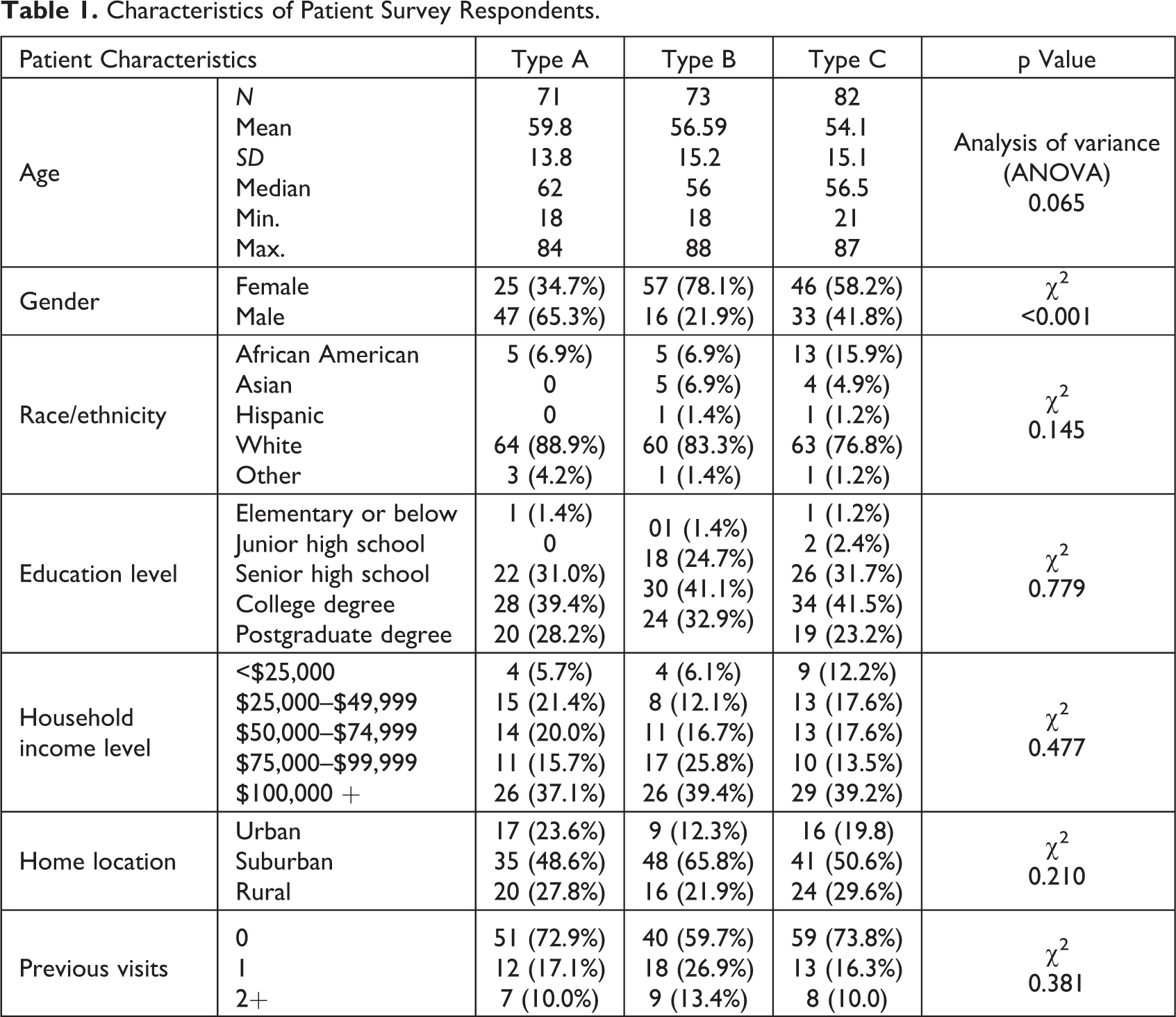
A total of 228 patients (72 in type A, 74 in type B, and 82 in type C environments) agreed to participate in the survey and 33 refused (response rate 87.4%). The majority of (92.5%) respondents completed the survey by using paper and pen. Non-Hispanic Caucasian adults who resided in suburban areas and visited the hospital for the first time constituted the majority of the sample. The average age was 56.70 years. There were more females (57.14%) than males (42.86%). Over two thirds (68.58%) of the patients had a college or postgraduate degree. More than half (56.67%) of the patients had a household income of at least $75,000.
As shown in Table 1, there was no significant difference between the three groups in terms of demographics except for the composition of gender. In previous studies, gender has been consistently identified as an impacting factor with females typically having higher levels of preoperative anxiety (Eberhart et al., 2020). To control the probable effects of gender differences, subsequent analyses were conducted separately for the female and male patients to compare the three types of physical environment.
Characteristics of Patient Survey Respondents.
Preoperative Anxiety
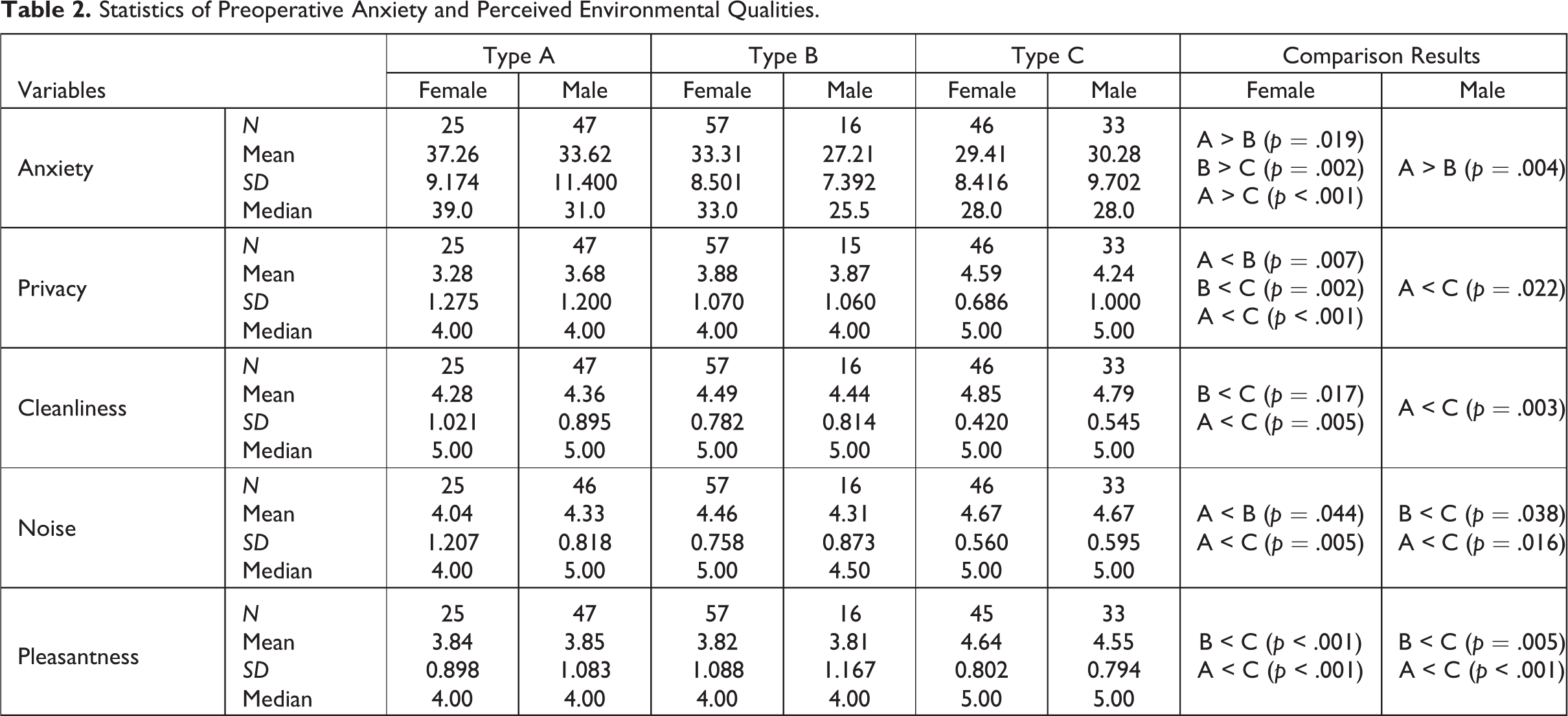
There was a clear pattern in self-reported preoperative anxiety among female patients (see Figure 3). As hypothesized, the anxiety level was the highest in type A (average 37.26), followed by type B (average 33.31), and the lowest in type C (average 29.41); the differences between the groups were statistically significant (p’s = .019, 0.002, <.001; see Table 2). The trend was less clear for male patients, with higher anxiety levels reported in type A (average 33.62) than type B (average 27.21, p = .004) but there was no significant difference between types B and C (average 30.28) and between types A and C (p = .071). Demographic variables, such as age and education level, were controlled for in the above comparisons.

Self-reported preoperative anxiety in three types of preoperative bays.
Statistics of Preoperative Anxiety and Perceived Environmental Qualities.
Perceived Environment Qualities
As expected, the type C preoperative environment in the new hospital was most favorably perceived by the patients in terms of privacy, cleanliness, acoustics, and pleasantness, followed by type B, and type A which was rated the lowest (see Figure 4). However, some differences between the types, especially those between types A and B, were not statistically significant (see Table 2). Clearer patterns were reported by female patients than male patients. According to female patients, the environmental quality of privacy was the highest in the type C bays (average 4.59), followed by type B (average 3.88), and the lowest in type A (average 3.28) with significant differences between types (p’s = .007, .002, <.001). For male patients, the only significant difference in terms of privacy was between type C and type A (p = .022). Regarding cleanliness and pleasantness, it appeared that the new type C environment was perceived significantly better than the two old types (p’s ranging from less than .001 to .017), between which no significant difference was found. In terms of acoustics, type A was rated significantly lower than types B and C by females (p = .005, .044); and type C was rated significantly higher than the other two types by males (p = .016, .038).
For exploratory purpose, the Pearson correlation coefficient between the self-reported anxiety and each of the four perceived environmental qualities was calculated. The coefficients ranged from −.265 to −.324 and were statistically significant (p < .001).
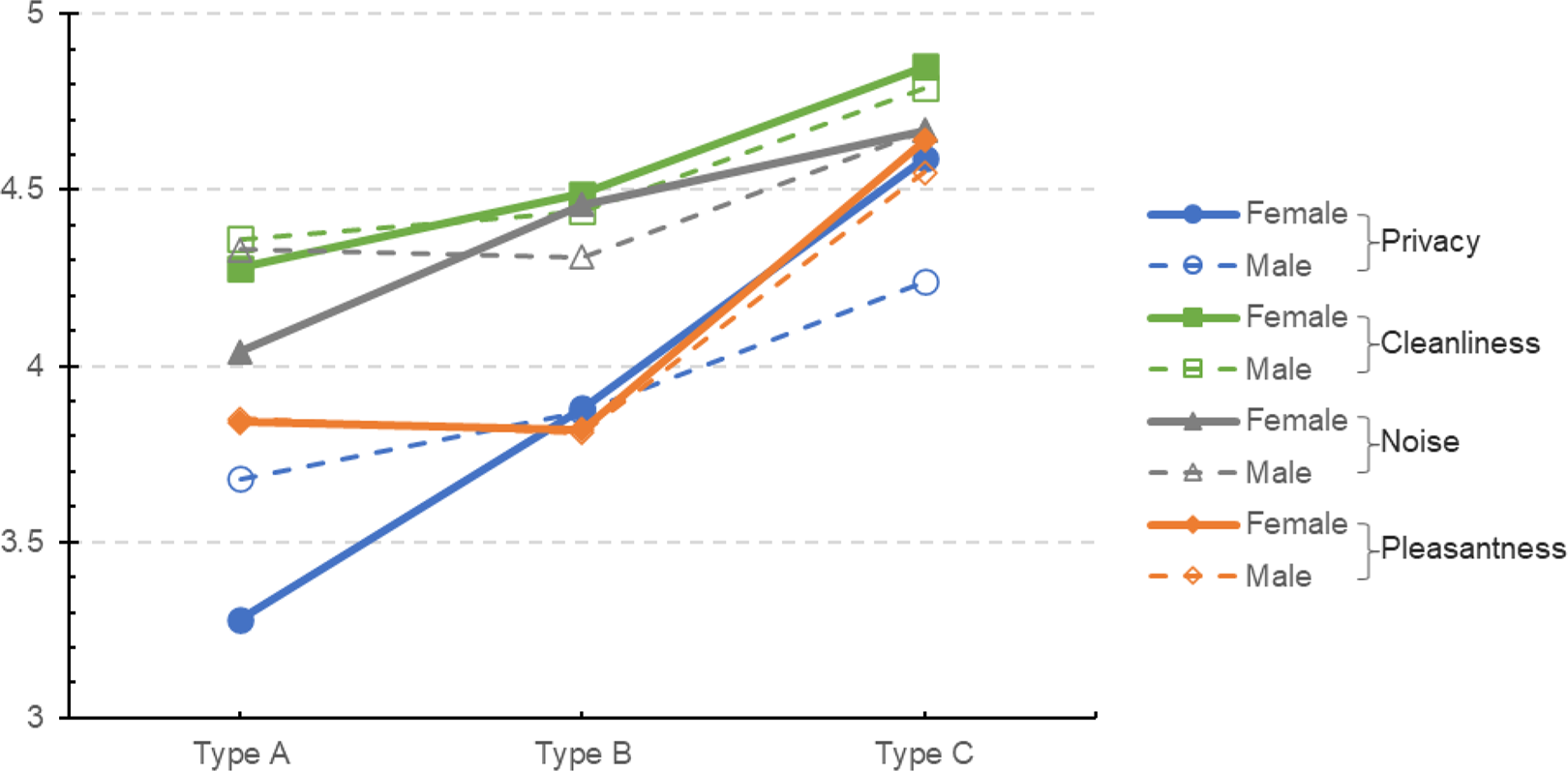
Perceived environmental qualities.
Noise Level Measurements
Starting at 5 o’clock in the morning of a working day, the average noise levels in the preoperative/recovery units gradually increased together with the rising level of activities (e.g., patient and staff traffics, talking), reached the highest levels around 11 a.m., and then gradually declined after 2 p.m. (see Figure 5). Consistent with the hypothesis, the average noise level from 5 a.m. to 5 p.m. differed significantly between the three units; it was 57.5dBA in the type A, 53.7dBA in the type B, and 51.4 dBA in the type C unit (p < .001). The average baseline sound level from 3 a.m. to 5 a.m. was 53.5 dBA in the type A, 44.1 dBA in the type B, and 37.0 dBA in the type C unit (p < .001). The highest noise level was 59.3 dBA, 57.9 dBA, and 56.7 dBA, respectively, in the three units.
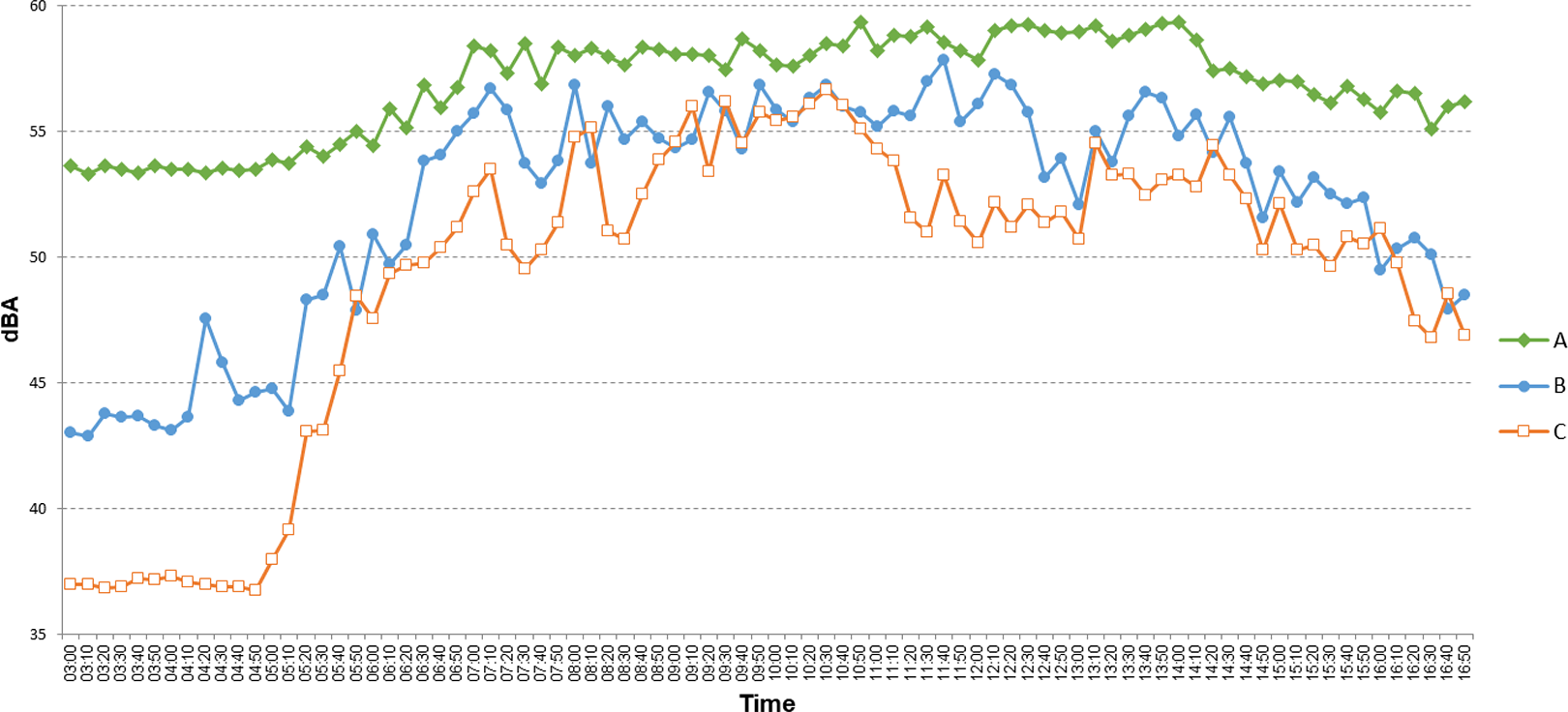
Average noise levels recorded in the three units. Note. Each dot represents the average noise level in the unit in a 10-min interval. Each interval is indicated by the beginning time point.
Discussions
Significance of the Findings
This is the first study that demonstrated the significant contribution of the physical environment to the nonpharmacological management of preoperative anxiety. As hypothesized, patients in larger preoperative bays with more hard-wall partitions between the bays reported significantly lower levels of anxiety and higher levels of environmental qualities in terms of privacy, cleanliness, noise, and attractiveness. Beyond bay size and the amount of hard-wall partitions between bays, other factors like positive distractions and patient control of environmental may also be examples of the environmental strategies of reducing preoperative anxiety. Eventually, the environmental strategies would lead to improvements in ambulatory surgery patient experience (e.g., higher satisfaction, fewer complications) and work efficiency (e.g., fewer delays, lower costs). However, the role of the physical environment has been largely ignored in research and practices (e.g., Wagner et al., 2006; Wang et al., 2022) and therefore should be recognized through further cost-effective analysis and utilized through interdisciplinary collaboration. The designers of the preoperative spaces should consider the probable impacts on clinical, experiential, and financial outcomes to inform design decision making.
Mechanism and Variation in Patient Response to Environmental Measures
As illustrated in the conceptual framework in Figure 1, the effects of the environmental measures on preoperative anxiety were likely mediated through the postoccupancy physical environment qualities. For example, design decisions around bay size and hard-wall partitions between bays may have impacted the actual and perceived noise levels, which, together with other intermediate variables such as privacy, in turn influenced the preoperative anxiety of patients. Further, it is important to consider patient perception of the environmental qualities, which could reflect the interplay between the objective environmental stimuli and personal factors such as personality, previous experience, expectations, and so on. Different patients may have different perceptions of a same environmental change. This is supported by the finding in this study that significant differences were identified between environmental conditions in the objective measurements of noise (i.e., sound level meter measurements) but not in the subjective perception of the noise level in some patients. This may also help explain the slightly different patterns between the female and male groups in terms of their self-reported anxiety and perceptions of different types of environmental design in the study. It appeared that females might be more sensitive to certain environmental elements such as those related to privacy. The gender differences in this study were similar to the findings of previous medical research on preoperative anxiety that consistently reported gender differences with females typically experiencing higher levels of anxiety than males (e.g., Eberhart et al., 2020). Therefore, it would be critical to evaluate design strategies by understanding the perceptions of and the impacts on particular patient groups before implementation.
Limitations of the Study
There were several limitations of the study. First, multiple environmental factors changed between the three types of perioperative environment examined in this study. Due to the nature of natural quasi-experiment in real working settings, it was not possible to isolate the effects of individual factors (e.g., bay size, the amount of hard-wall partitions). Rather, each type of environment represented a unique combination of multiple impacting factors shown in Figure 1 as a bundle. Environmental factors are often studied in bundles in health design research (Ulrich et al., 2008). This study confirmed the important role of the physical environment and shed light on the impacting factors, but the cost-effectiveness of individual factors should be further evaluated. Without cost-effectiveness analyses on individual factors, one useful strategy might be utilizing all relevant design factors allowed by the budget to maximize the benefits. Second, the three types of preoperative environment were designed by teams unrelated to the study. On one hand, this helped minimize the biases due to the conflict of interest associated with having researchers affiliated with a design team to conduct design evaluation. On the other hand, the differences between the three types of preoperative environment were not designed in a way to facilitate the comparisons between the types. Ideally, certain factors should be held constant while changing other factors to enable clean comparison. In the study, filtered daylight was available only in the type B bays. As a part of the environmental bundle in type B, it might have influenced the results even though its impact seemed to be very limited – not strong enough to alter the direction of improvements in the outcome from A to B to C. The difference between types A and C should be attributed to the combination of the bay size and amount of hard-wall partitions between bays since no natural light existed in these two types. Third, compared with controlled simulation studies, research conducted in real working surgery suites would be limited in the abilities to control confounding variables like staff behaviors and to randomly assign patients to environmental conditions due to the need of minimizing interference with clinical operations. However, research around preoperative anxiety has been most frequently conducted in real settings on real patients because it is difficult to simulate the experience of preoperative anxiety. Findings from research in real settings should also be more generalizable to applications in practice. In the contrary, results from simulation studies may not be directly applicable on real-world problems. Fourth, the questionnaire used to measure patient perception of environmental qualities was validated previously in similar inpatient and outpatient settings but not specifically in outpatient surgical settings. There might be some biases in measurement even though the potential biases may not significantly affect the findings around the differences between the three environmental conditions because the measurements should be biased in the same direction in the three groups. Lastly, the study included convenience samples of patients who visited the surgery suites during the data collection period. The participating patients were relatively affluent and well-educated. Cautions should be taken to apply the findings to other populations that differ significantly in demographics.
Future Research
Future research should focus on the following directions to build a strong knowledge base around reducing preoperative anxiety through environmental design: examining additional environmental factors that may have an impact on preoperative anxiety, such as positive distractions (e.g., artworks, view of nature) and the provision of patient individualized environmental control (e.g., temperature control); evaluating the contribution of individual factors such as bay size, hard-wall partitions, positive distractions to preoperative anxiety reduction, and evaluating the costs associated with their implementation; and conducting studies on a variety of patient populations to identify the most effective environmental strategies for a particular population.
Conclusion
This is the first study empirically examined the effects of preoperative environment design on preoperative anxiety and shed light on the mechanism underlying the relationship by creating a conceptual framework and measuring intermediate variables. For the first time, it demonstrated the important role of the physical environment in the effective management of preoperative anxiety—a hot topic that attracts much attention in healthcare research and practice. Based on the study findings, it is recommended that the preoperative care environment should be designed to improve the management of patient preoperative anxiety through incorporating large patient bay size, hard-wall partitions between bays, and other strategies (e.g., natural light, positive distractions) to create a private, quiet, clean (i.e., decluttered), and healing environment for patients, families, and clinical staff. Evidence-based design decisions should rely on a thorough understanding of the needs of particular patient groups and the evaluation of probable impacts on the clinical, experiential, and financial outcomes. Certain design considerations (e.g., hard-wall partitions for privacy and noise reduction) should be emphasized for patient groups who are more sensitive to privacy breaches and noises (e.g., females). In future, healthcare designers and researchers should pay much attention to designing for the reduction of preoperative anxiety as it is one of the top priority issues around ambulatory surgery care quality.
Implications for Practice
Create design innovations that utilize a combination of environmental factors allowed by the construction budget to maximize the benefits in reducing preoperative anxiety and improving patient experience. More specifically, use design strategies that cost-effectively improve multiple environment qualities around privacy, acoustics, cleanliness, and pleasantness. Examples include: solid sound-blocking partitions up to the deck around each patient bay to ensure privacy and block noise transmission; large bay size to accommodate all care activities in a private manner (e.g., changing clothes, nerve blocks) and family presence for social support; and music and white noise to help ensure audio privacy and reduce noise.
Consider a combination of various environment measures to maximize the benefits of reducing preoperative anxiety: large preoperative bay size, physical separations between bays and between the bay and corridor, sound-absorbing and sound-blocking measures, daylight and other positive distractions, and patient control of the environment (e.g., remote control of temperature, lighting).
Customize environmental design for particular user groups by understanding their characteristics and perceptions and evaluating the impacts on clinical, experiential, and financial outcomes. For example, privacy is especially important for female patients therefore should be enhanced through hard-wall partitions and other design strategies when the majority of patient population are females.
Footnotes
Acknowledgments
The author would like to thank patients who participated in the study as well as healthcare administrators and staff members who supported the study.
Declaration of Conflicting Interests
The author declared no potential conflicts of interest with respect to the research, authorship, and/or publication of this article.
Funding
The author disclosed receipt of the following financial support for the research, authorship, and/or publication of this article: This research was supported by the BJC HealthCare Design Fund at the Center for Health Research & Design, Sam Fox School of Design and Visual Arts, Washington University in St. Louis.
