



Abstract
To present a systematic literature review on predesign evaluation (PDE), postoccupancy evaluation (POE), and evidence-based design (EBD); to delimit the concepts and relationships of these terms and place them in the building life cycle framework to guide their application and indicate a common understanding and possible gaps. The preferred reporting items for systematic reviews and meta-analyses protocol was used. Inclusion criteria cover texts that present a concept, method, procedure, or tool and use the example in healthcare services or other environments. The reports were excluded if there was no evidence of a relationship between the terms, if cited rhetorically, duplicated, or if an instrument was not related to at least one other term. The identification used Scopus and Web of Science and considered reports until December 2021 (search period). When extracting the evidence, formal quality criteria were observed and sentences and other elements were collected as evidence and tabulated to segment topics of interest. The searches identified 799 reports with 494 duplicates. In the selection, 53 records were selected from 305 obtained in 14 searches. The classification extracted concepts, relationships, and frameworks. Results indicate a consistent understanding of POE and EBD and a diffuse understanding of PDE. A summary of the three concepts including two frameworks is proposed. Situations are contextualized where these frameworks are used in specific areas of research. One of these frameworks provides a basis for classifying building assessment methods, procedures, and tools but does not detail the classification criteria. Thus, more detailed adjustments should be considered in specific studies.
Keywords
In recent years, there has been an increasing number of studies investigating the demand for higher quality and a more predictable evidence-based design (EBD) design process. Discussions on predesign evaluation (PDE), postoccupancy evaluation (POE), and EBD often intertwine, influence, and overlap each other. There is little published data on PDE (Cranz et al., 2021; Elf et al., 2019; Ornstein et al., 2009), and despite more advanced discussions (Brambilla & Capolongo, 2019; Brambilla et al., 2019; Coleman et al., 2018; Connellan et al., 2013; Davoodi et al., 2021; Elf et al., 2019; Joseph et al., 2014; Paraskevopoulou & Kamperi, 2018; Phiri & Chen, 2014b; Vischer, 2009), it is still difficult to establish an adequate and clear relationship between POE and EBD.
The systematic literature review (SLR) aims to define the concepts of EBD, POE, and PDE and their relationships with each other. It also aims to situate these concepts about the building life cycle (BLC; Bueno et al., 2018), thus guiding the application of these concepts by professionals and researchers and pointing out a common understanding and possible gaps. We not only analyzed health facility reports but also reports that present a general approach. Rather than a historical description, this study characterizes and correlates concepts, methods, and applications. To do this, we used a detailed protocol to extract information and the references’ citations, used as evidence on which the discussion is based. When we use some precedence or evolution that refers to a time line, we do so because it contributes to the understanding of the relationships. Thus, these time line indicators are not a historical study of the evolution of concepts that occur over time.
Research Method
An SLR is a structured method that identifies, selects, and assesses the literature. The aim is to reduce the occurrence of selection and measurement bias, make the conditions and limitations of the research that is carried out explicit, verifiable, and reproducible, thus defining the state-of-the-art and knowledge gaps of a given topic (Gough et al., 2012; Pati & Lorusso, 2018).
Conducting an SLR entails three main conducting stages of the research. The three stages are: (1) identify existing research according to explicit identification criteria (Table 1); (2) assess and classify all identified studies (Tables 2 and 3), map, extract, and arrange relevant information for the review that were identified in the studies selected during classification (Table 4, Database Selection, Database Extraction); and (3) summarize the findings in a summary of the research results (Octaviano et al., 2016; Pati & Lorusso, 2018).
Systematic Literature Review Proposal Form.
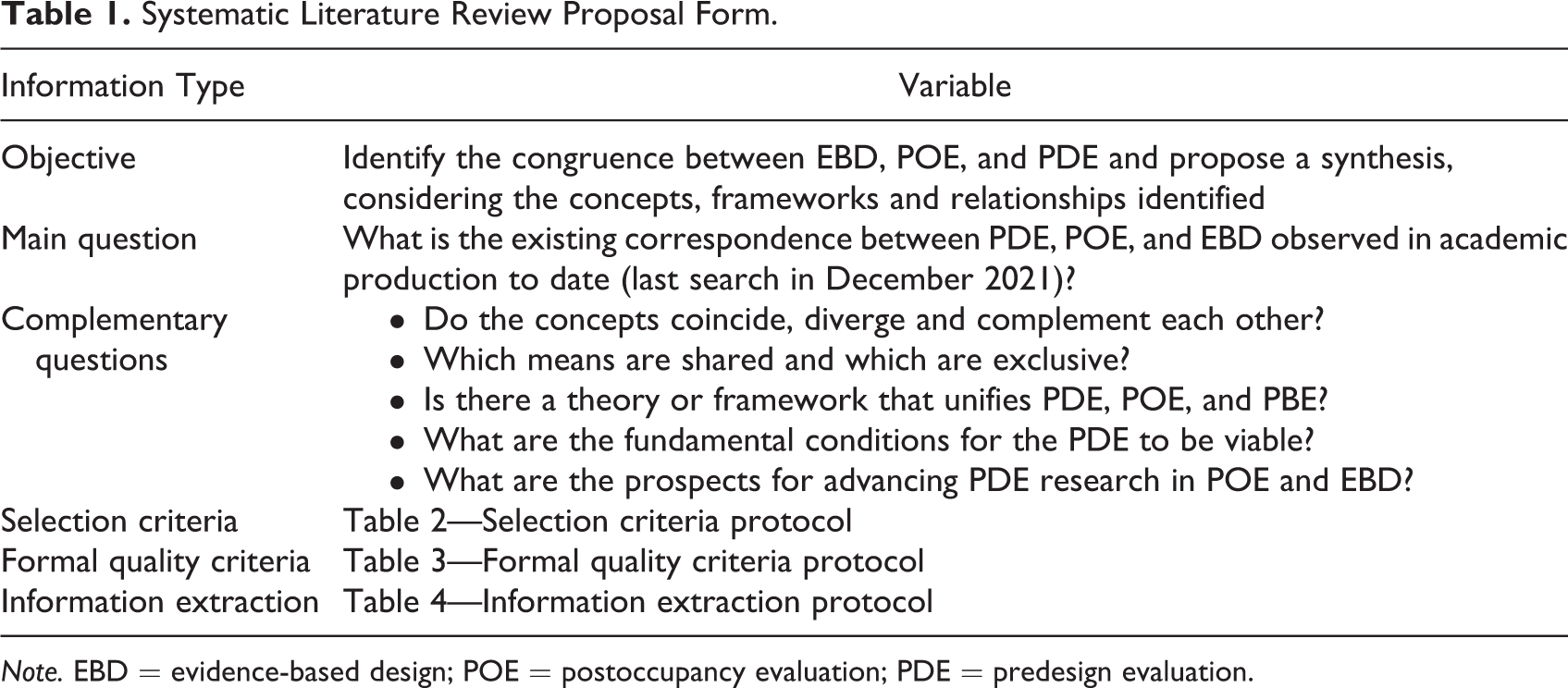
Note. EBD = evidence-based design; POE = postoccupancy evaluation; PDE = predesign evaluation.
Selection Criteria Protocol.
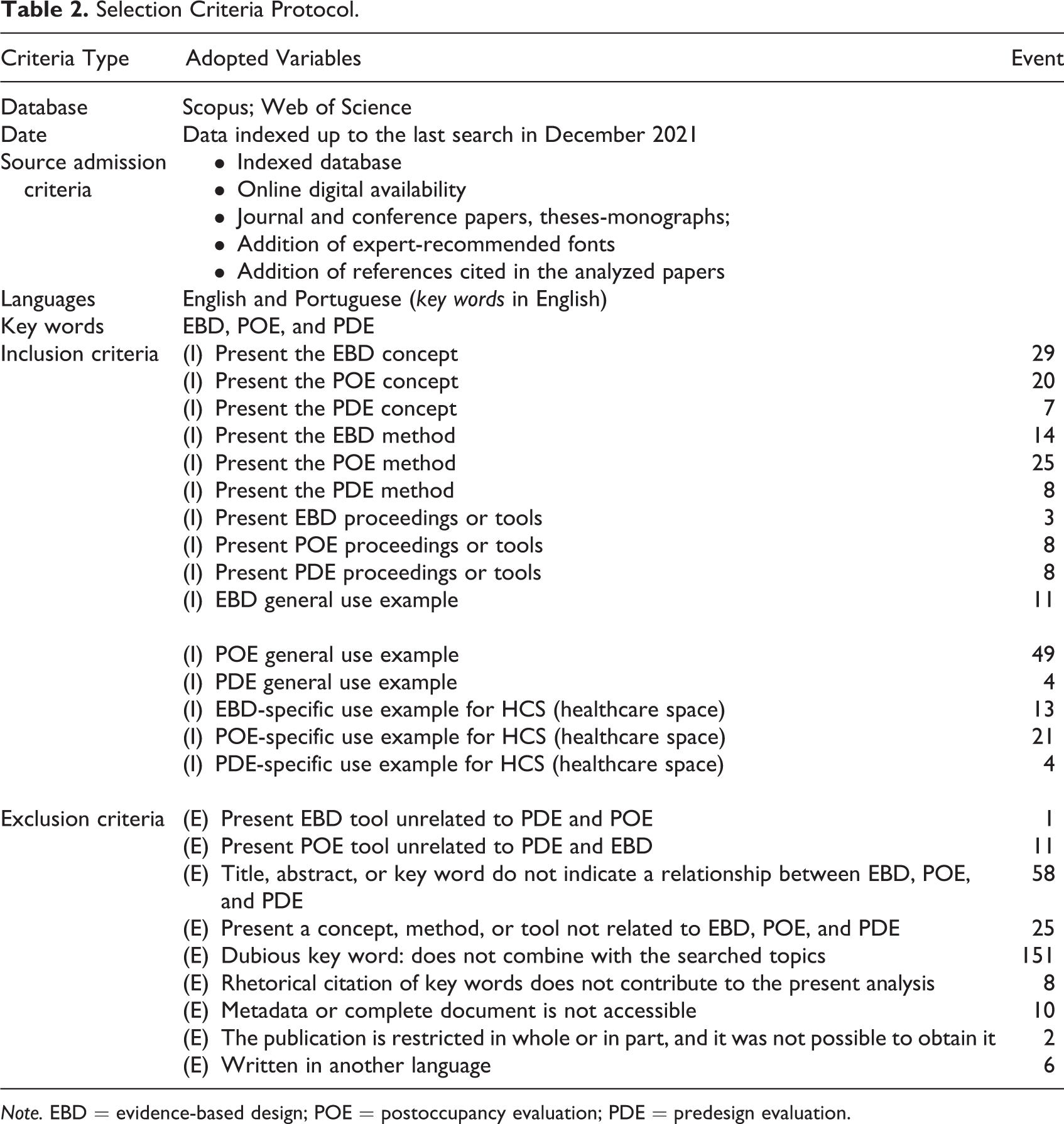
Note. EBD = evidence-based design; POE = postoccupancy evaluation; PDE = predesign evaluation.
Formal Quality Criteria Protocol.

Information Extraction Protocol.

Note. EBD = evidence-based design; POE = postoccupancy evaluation; PDE = predesign evaluation.
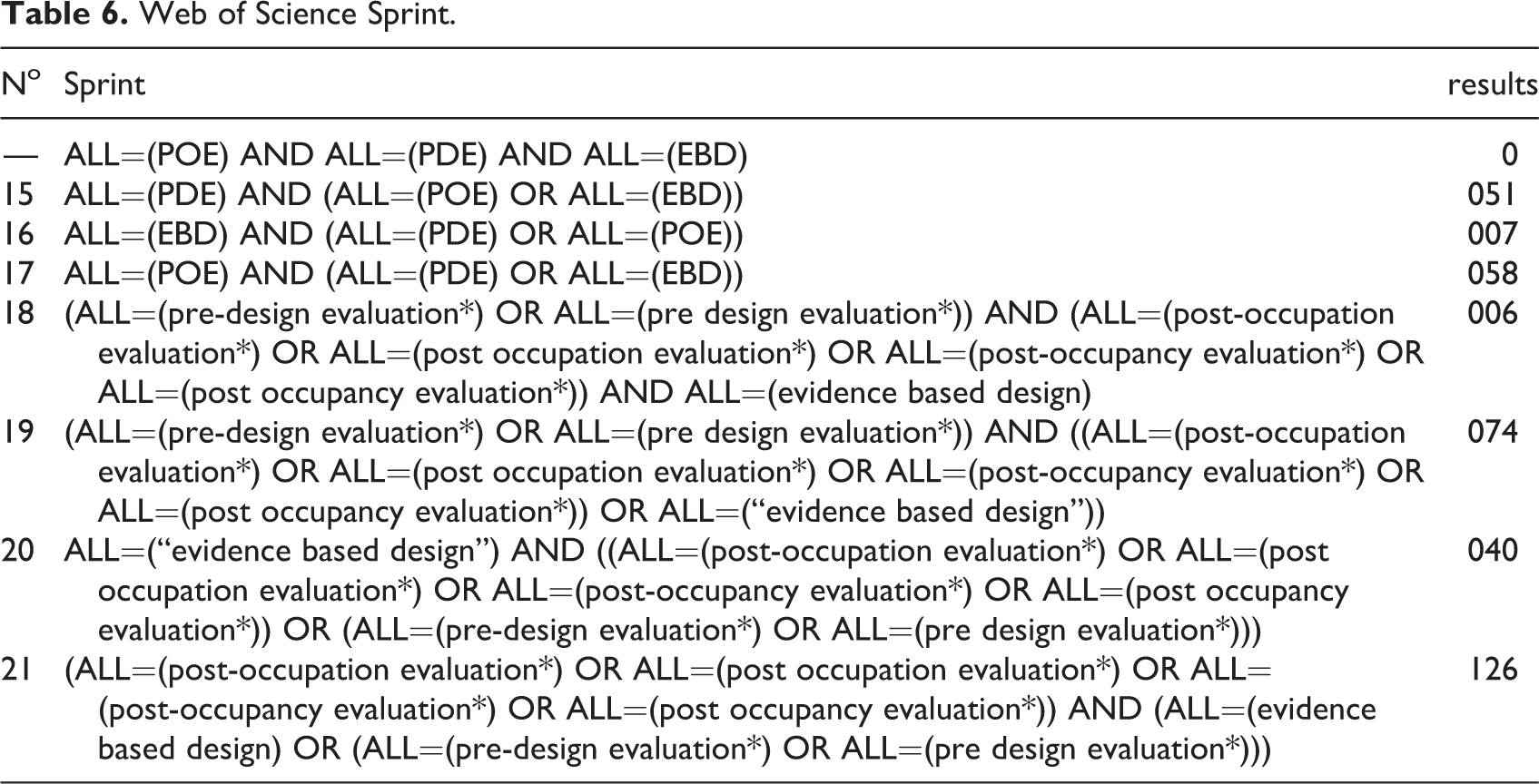
In this SLR, we used the Preferred Reporting Items for Systematic Reviews and Meta-Analyses flow diagram (Figure 1) to address the new systematic reviews, which include database searches and registers from other sources (Page et al., 2021). The strings used are listed in Tables 5 and 6. To select the reports, we stored the data in the State of the Art through Systematic Review (StArt) tool (Fabbri et al., 2016) and a reviewer analyzed it. The StArt has automated duplicate detection.
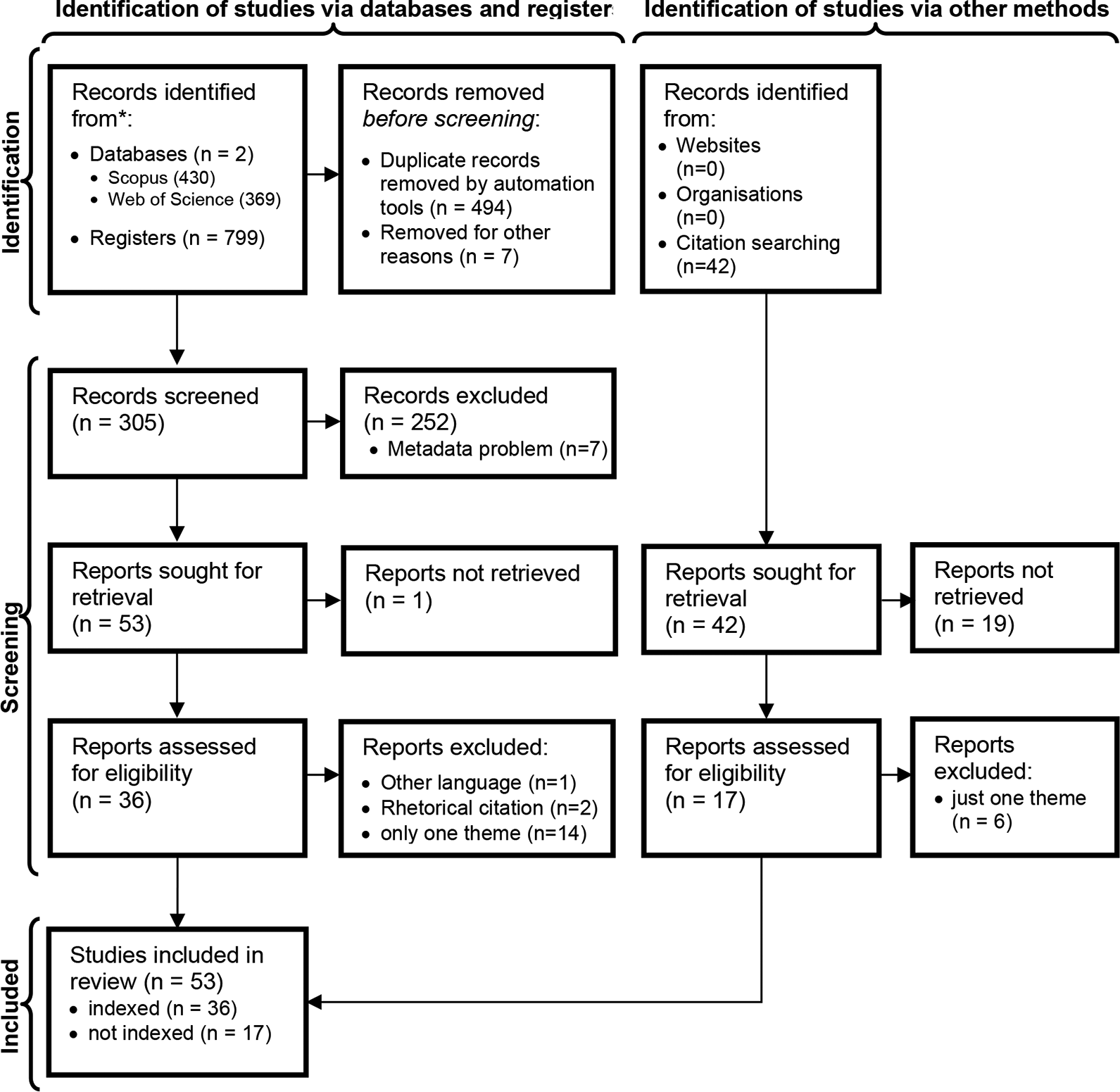
Items numbers reported in the flow diagram for new systematic reviews, including database searches, registers, and other sources.
Scopus Sprint.

Web of Science Sprint.
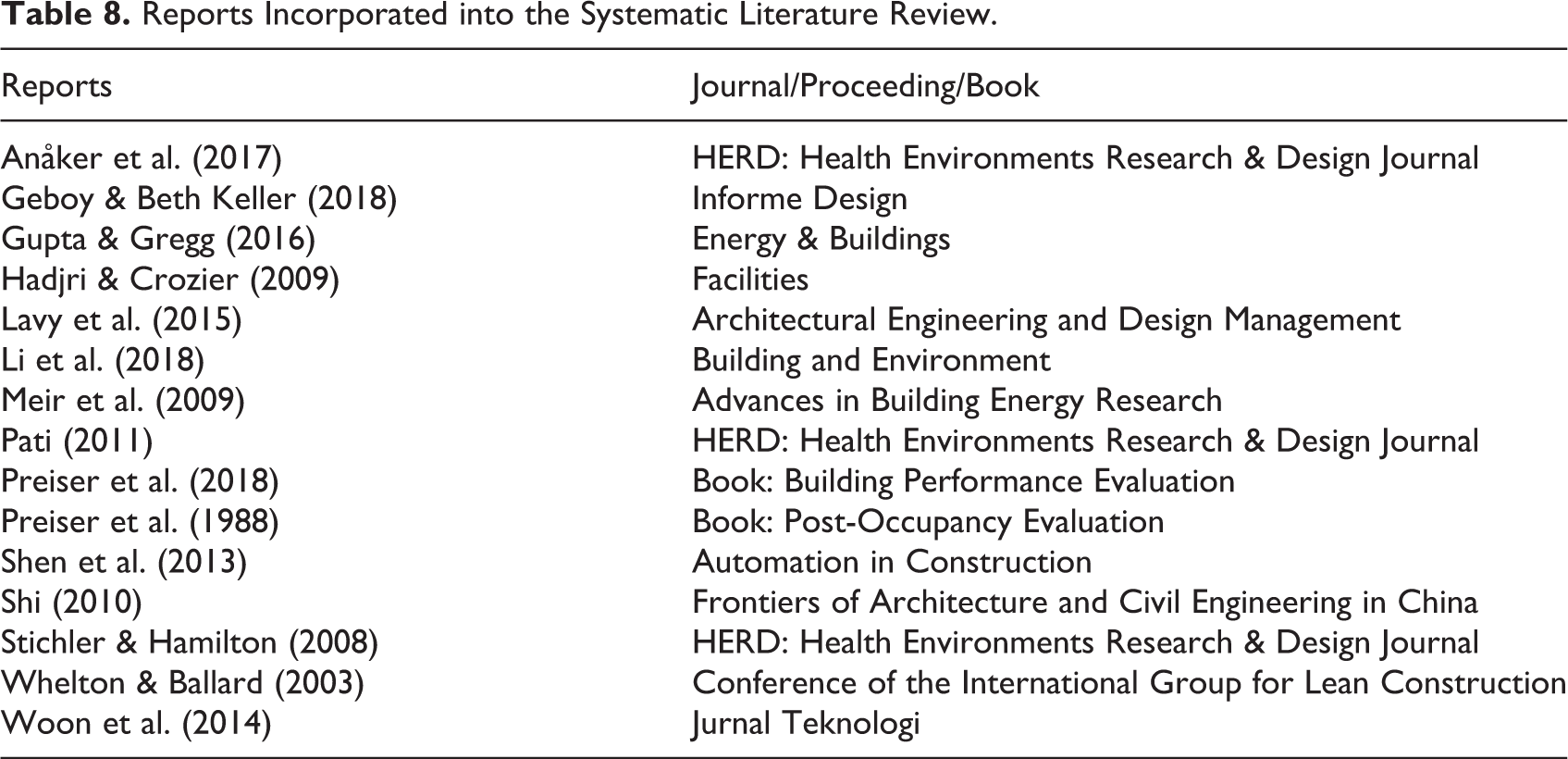
We searched indexed databases (Scopus, Web of Science) between September and November 2021 to identify reports that were classified according to the inclusion criteria shown in Table 7. The other reports indicated in Table 8 were included in the SLR because they were cited by the classified references and presented a contribution to the discussion. We identified these additional references during the information extraction stage. We performed data extraction from reports using the protocol in Table 4. To reduce the risk of interpretation bias, the selection and extraction protocols predominantly comprised questions with “yes/no” answers, associated with a field for indicating the evidence that justifies the answer.
Reports Accepted by the Inclusion Criteria.

Reports Incorporated into the Systematic Literature Review.
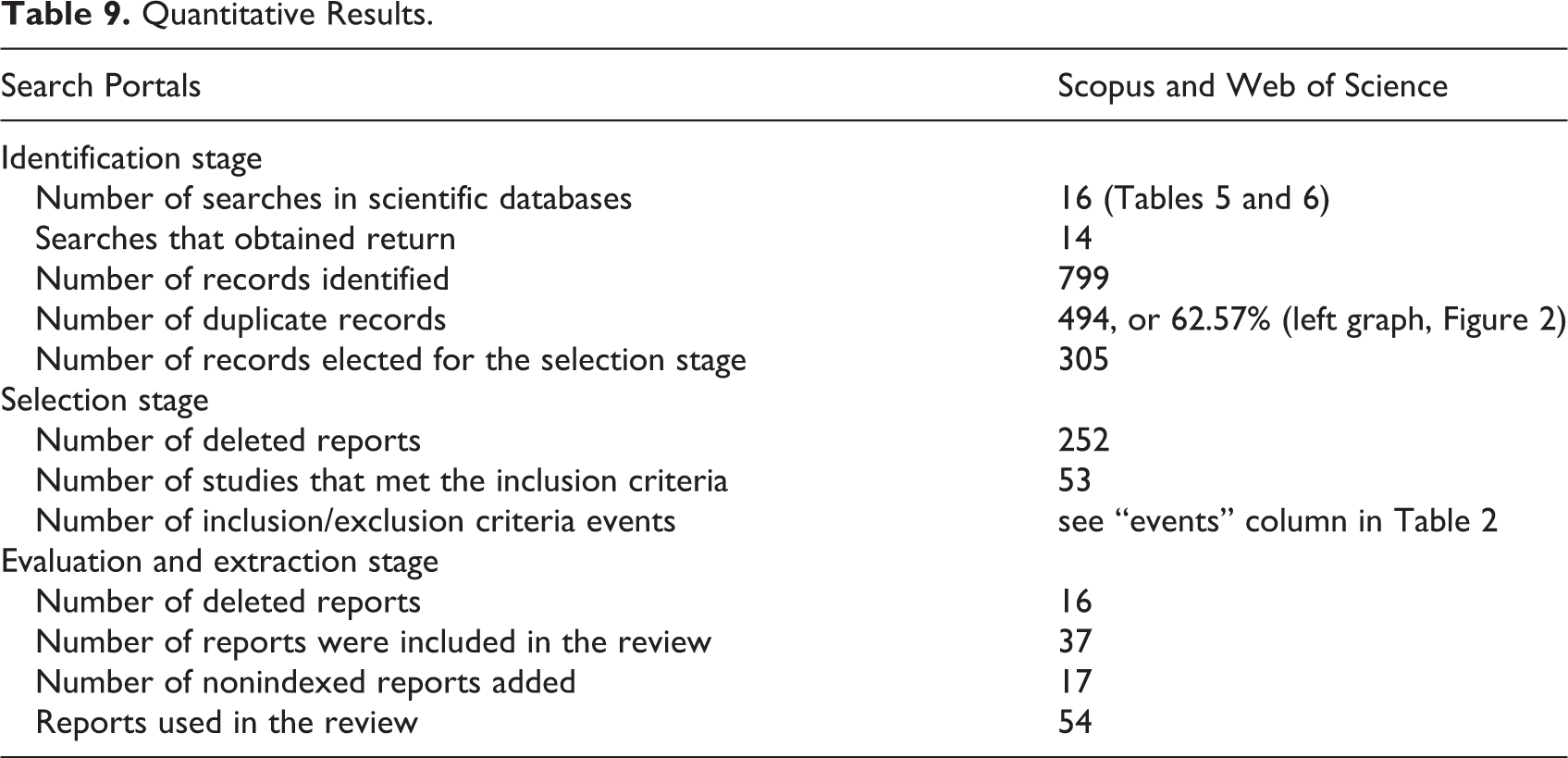
Summary of Quantitative Results
Records identification: We identified search results on the Scopus (Table 5) and Web of Science databases (Table 6). We compiled the results of the searches in Table 9 and the left graph in Figure 2. We evaluated the selected reports by reading the title, abstract, and key words according to the explicit criteria in the selection protocol. We evaluated formal quality variables (Table 3); we did not consider other variables, such as the participants’ profile, locality, and funding sources.
Quantitative Results.
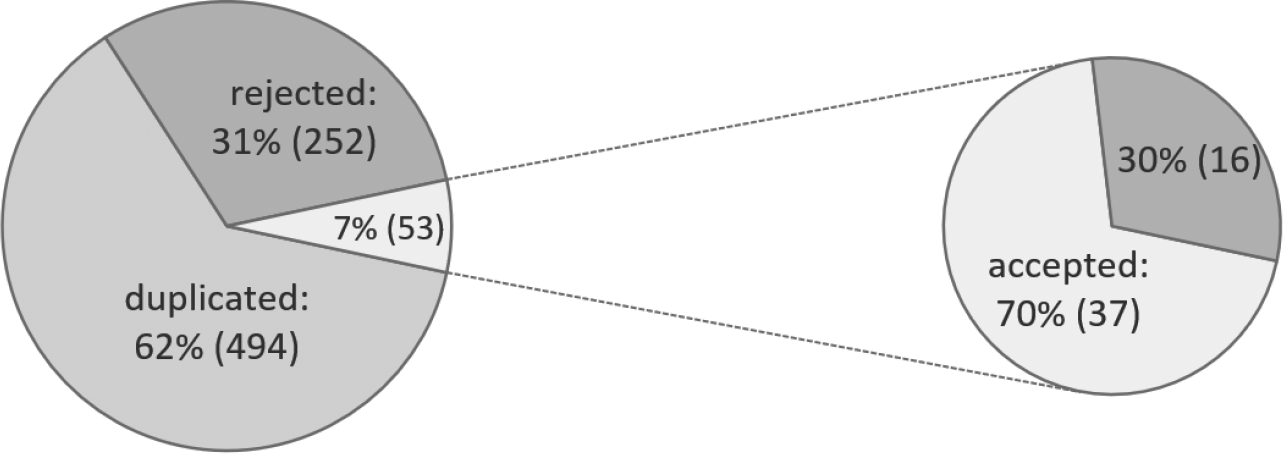
Identification and selection of reports.
Selection criteria event analysis: We analyzed the inclusion–exclusion results and observed a significant number of occurrences (151 cases) of key word dubiousness (“events” column in Table 2). This number of occurrences is greater than the second and third most common exclusion criteria sum (83 cases). This high number of inconsistencies in identifying records through misused key words is consistent with the problem presented by Battisto et al. (2023) of not having a comprehensive taxonomy with a set of terms suitable for indexing. Among the occurrences that met the inclusion criteria, reports related to POE and EBD predominated.
Extraction criteria event analysis (Table 7; right graph, Figure 2): The reports accepted for extraction had to address at least two of the three SLR review themes. The studies were classified as “main topics” when they conceptualized, structured, or prioritized one of the topics in the discussion, or as “complementary topics” when the topic was not clearly conceptualized or was used to complement the discussion argument (Table 10). While extracting information from the reports, we found that 12 of them define EBD, 14 define POE, and five PDE. We observed the predominance of reports in which EBD is the main theme and uses POE as a secondary argument. Studies either point out that POE is a predecessor of EBD (Davoodi et al., 2017) or that it is a means for EBD to obtain qualitative evidence (Cranz et al., 2021; Yang & Guangsi, 2020). Most studies that define POE address health environments (Table 12). They usually present citations in which the concepts, objectives, and limits are well-defined. It is also common to observe the mention of the term “POE” without conceptualizing it. We interpret this as an indication that the understanding of the term is widespread and consolidated (Table 11). Unlike POE and EBD, which present clear concepts, PDE concepts are still unclear. In some cases, the study does not mention PDE but addresses a PDE, that is, an evaluation that takes place in the early stages or immediately previous to a design process. For example, Davoodi et al. (2017) and Shin et al. (2017) present preoccupancy evaluation (PrOE) proposals whose description points to evaluations carried out during the design process.
Relationship Between Included Reports and the Three Main Research Topics.
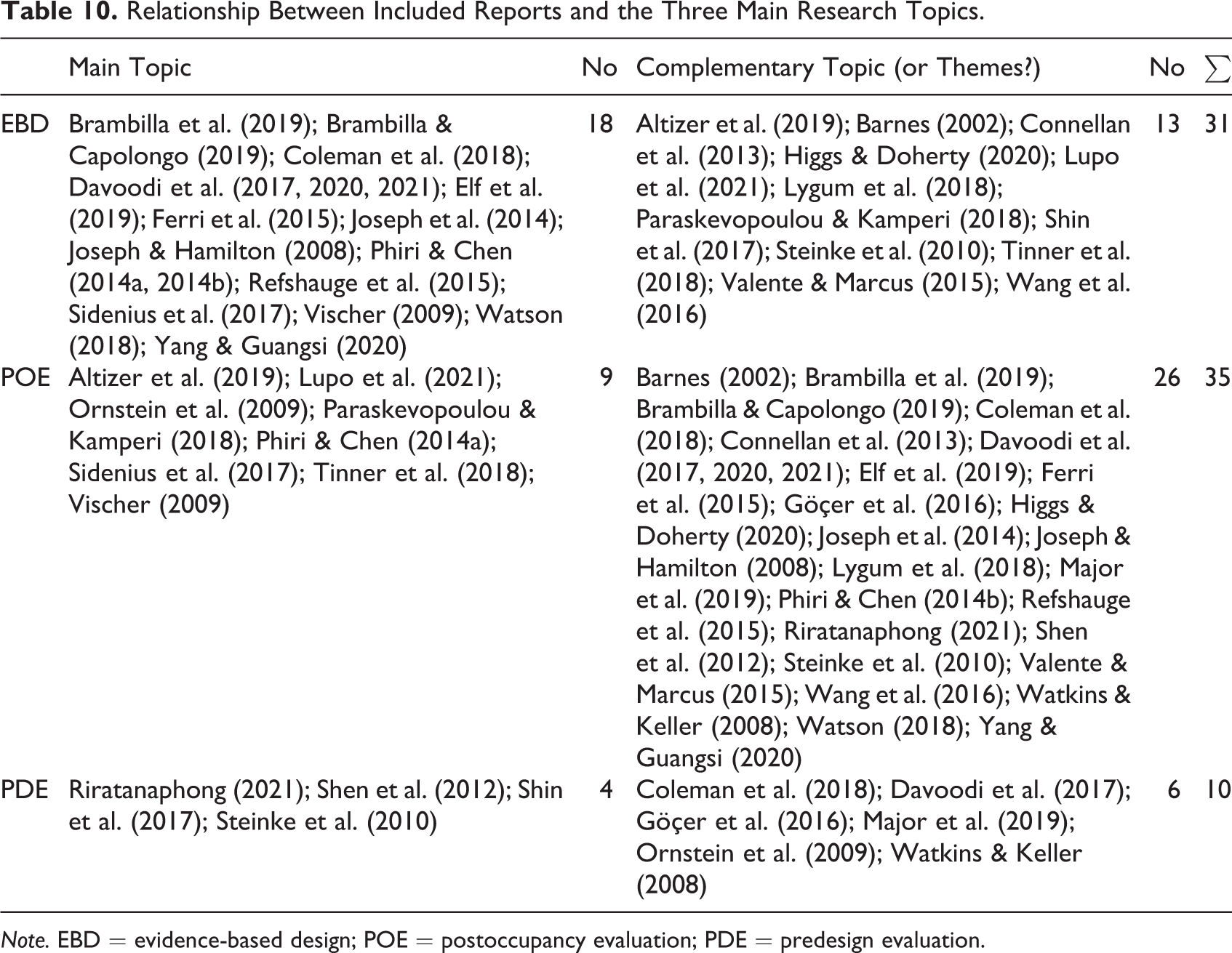
Note. EBD = evidence-based design; POE = postoccupancy evaluation; PDE = predesign evaluation.
List and Quantitative Concept, Structure, and Correlation Reports.
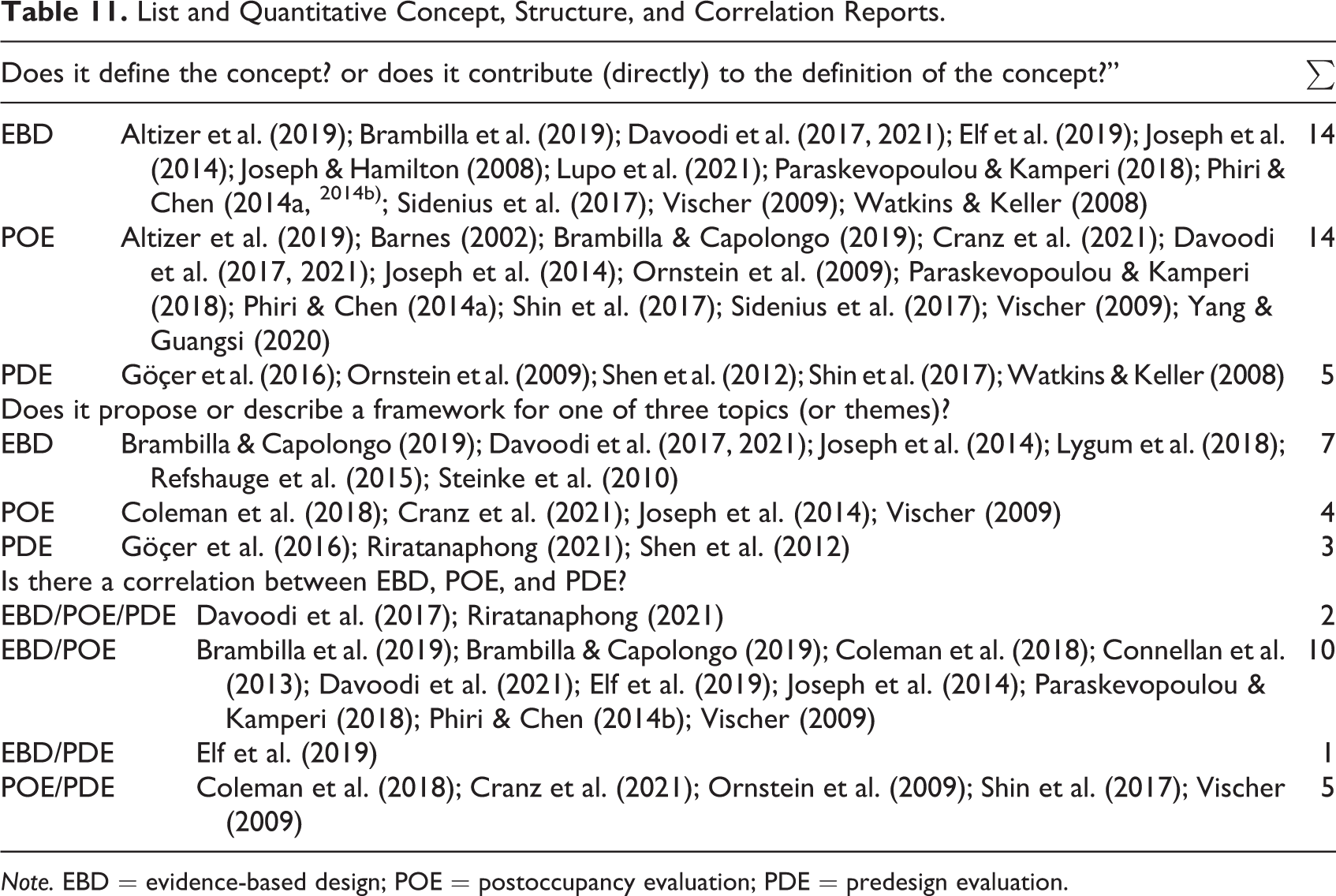
Note. EBD = evidence-based design; POE = postoccupancy evaluation; PDE = predesign evaluation.
Context of Reports.

Note. EBD = evidence-based design; POE = postoccupancy evaluation; PDE = predesign evaluation.
We also observed the EBD framework’s predominance. This information can be understood in two ways: (1) there is still a considerable movement to define EBD practice and (2) there is a need to integrate existing methods into EBD to obtain evidence, enable the use of existing data, and establish a relationship of causality between assessment and design result. The relationships between the themes are often implied, predominantly indications of explicit relationships between EBD and POE.
Most studies address health buildings (17 cases) and six presented a generalist approach or a nonspecific approach for a determined use type (Table 12). Among these studies, Davoodi et al. (2017) reported on EBD and performance-based design (PBD), also understood as an evolution of the POE. Coleman et al. (2018) proposed a conceptual framework that we understand to encompass POE and PDE (although it refers to POE and PrOE, its description points to assessments carried out before and during the initial phases of the design), as a means of articulating performance prediction and performance measurement. This connection between prediction and measurement is according to research that aims to overcome the gap between design practice and EBD (Watkins & Keller, 2008). Thus, Watkins and Keller (2008) suggested implementing “Superior Projects With Comprehensive Programming.” It is a guideline for the EBD process organization, which, according to them, can clarify the relationships between “several design features, operations, and organization goals” (Watkins & Keller, 2008).
Results and Discussion
The EBD, POE, and PDE concepts present strong correlations, observed in three findings: (1) the demand and the PDE values stem from the POE debate on the implications of the occupancy assessment in health building projects (Ornstein et al. 2009; Steinke et al., 2010), (2) POE cases often subsidize and exemplify the application of the EBD proving evidence of the user’s perception of the environment (Brambilla et al., 2019; Cranz et al., 2021; Phiri & Chen, 2014a; Yang & Guangsi, 2020), and (3) the EBD provides legitimacy, framework, and direction for POE and PDE in future developments of architectural, construction, and facility practices in general (Joseph et al., 2014).
Understanding POE and Its Outgrowths and Implications
Some authors, such as Altizer et al. (2019) and Davoodi et al. (2021), cited Preiser et al. (1988) to define POE as an evaluation process, carried out systematically and rigorously, in buildings constructed and occupied for some time—preferably, occupied for at least 6 months (Cranz et al., 2021). Ornstein et al. (2009) pointed out that this process is a set of appropriate, comprehensive, and objective methods and techniques applied to the building in use, which include local and remote observation, such as walkthroughs, interviews with stakeholders, focus groups, and so on (Altizer et al., 2019; Barnes, 2002; Cranz et al., 2021; Ornstein et al., 2009).
Specifically, the main focus of the POE is to evaluate the social performance of a building, because it promotes a systematic assessment of an environment in use to verify the perception and the satisfaction level of the people who use it (Cranz et al., 2021; Phiri & Chen, 2014a; Shin et al., 2017). This includes, but is not limited to, functional requirements for thermal and light comfort, humidity and ventilation, air quality, usability, flexibility, maintainability, and so on (Ornstein et al., 2009; Yang & Guangsi, 2020).
Broadly speaking, POE introduces two purposes. The first is to present a rigorous and continuous evaluation of a social and behavioral perspective of a building’s performance. Therefore, explicit human needs with current building performances can be compared (Brambilla & Capolongo, 2019; Connellan et al., 2013; Cranz et al., 2021; Preiser et al., 1988; Woon et al., 2014). The second purpose is to verify in this process if the principles and guidelines that the design intends to follow were achieved and if they were adequate. Thus, POE can evaluate the rationality of design strategies from a behavioral and social psychology perspective (Altizer et al., 2019; Yang & Guangsi, 2020). By doing so, POE not only provides feedback for improvement in the analyzed building but also promotes continuous improvement in future designs, by allowing learning from previous experiences and applying the learning when designing new projects (Altizer et al., 2019; Davoodi et al., 2017; Preiser et al., 1988; Vischer, 2009).
During its development, which originated in the late 1960s, POE was used for various purposes, adopted not only by architecture and construction firms but different sector organizations interested in assessing designs (Altizer et al., 2019; Yang & Guangsi, 2020). Consequently, it has already been applied to many different purposes and typologies, mainly health facilities. The studies addressed different types of buildings and they discussed strategies to make buildings more sustainable (Brambilla & Capolongo, 2019; Woon et al., 2014), the burnout problem (Lupo et al., 2021), maintenance programming (Ornstein et al., 2009), and continuous improvement (Marmot et al., 2005; Vischer, 2009).
Joseph et al. (2014) linked alternative terms used to designate POE, such as facility performance evaluation, facility assessment, building audits, environmental design audits, practitioner-focused facility evaluation, as well as facility evaluation (Watkins & Keller, 2008), landscape performance series (Yang & Guangsi, 2020), and building performance evaluation (BPE; Gupta & Gregg, 2016; Preiser et al., 2018; Steinke et al., 2010; Yang & Guangsi, 2020).
In general, new nomenclatures answer questions about previous POE understanding. Some alternatives are proposed to overcome time and study aim limitations. Watkins and Keller (2008) preferred to use facility evaluation because they understood that POE implies evaluation after occupants have moved into a building, while new demands suggest systematic research before and after building occupancy.
Depending on when the building is evaluated, different observation characteristics should be considered, and specific methods should be adopted to obtain the evidence. PrOE is conceptualized to evaluate the results in the design before introducing space (Shin et al., 2017). However, as with POE, the PrOE application has limitations in user-oriented assessment, as it is based on existing similar buildings where the client differs from the real user (Shen et al., 2013; Shin et al., 2017; Whelton & Ballard, 2003).
Paraskevopoulou and Kamperi (2018) understood that preoccupancy research is a premeasure, while postoccupancy research is a postmeasure of the individual and unique object. During the 1980s, there was an increased demand to measure and extrapolate findings to compare and generalize assessment results. In Brazil, POE research maintained the same terminology, adding new attributions so that research could be identified as a POE study (Ornstein et al., 2009). On other research fronts, original POE approaches evolved into more performance-oriented research with the BPE (Brambilla & Capolongo, 2019; Li et al., 2018; Meir et al., 2009). One critique of the POE methods was (and, in part, still is) that the focus has been on user experience and perception rather than on predetermined performance criteria evidence (Elf et al., 2019; Vischer, 2009), which makes effective assimilation difficult in other research, design, and building procurement processes (Hadjri & Crozier, 2009; Joseph et al., 2014). In the earlier 2010s, Joseph et al. (2014) and Taylor (2011) mentioned that POE was an underused way (12.5%) to collect evidence about design strategies for a project.
Based on the findings, we understand that part of the criticisms leveled at the POE related to its contribution limits stems from the late application time. That is, the direct contribution to the evaluated design occurs too late when the building has already been constructed and occupied. Thus, learning is useful for applications in future designs, which reduces the interest of those responsible for the current enterprise to invest in POE. We also observed that the criticism of the difficulty of measuring and transposing the experience to other processes motivated the beginning of developing the PDE and impacted the discussion about the conditions to recognize the results of the POE as data sources for the EBD. As already noted, “PrOE” meets the demand for quick assessments, before occupation. However, as studies on PrOE were developed, they noted the demand to overcome the limitations of the conventional design evaluation, anticipating the evaluation before starting the construction, that is, during the design development (Shin et al., 2017). Part of the PrOE literature addresses simulation models for user activity evaluation and circulation, security, access control, burglary prevention, air quality, energy saving, space usage, and so on (Coleman et al., 2018; Göçer et al., 2016; Shin et al., 2017). These simulations aim to predict and evaluate the building performance or organization before freeing up resources and time to execute the project, reducing the risks of design problems usually identified only after occupancy (Shen et al., 2012), and address studies that deal with an assessment before and during the beginning of the project development, throughout the project briefing and programming.
According to Ornstein et al. (2009), PDE corresponds to an analysis of the design programming and the early architectural design, which is applied by experts in design performance evaluation. Unlike the EBD and POE bibliographies, the reports retrieved from PDE do not link a clear definition nor present enough information for a comparative discussion. Apparently, it is an open debate in the field of research. This perception is reinforced by the PrOE reports that actually deal with PDE initiatives. Emphatic recommendations prevail for changes to occur in the project life cycle to include means of assessment in the predesign phase (Ornstein, & Andrade, 2012).
The difficulty of evaluating design occurs even in contexts where the integration of the EBD to the BLC is more developed, as in the initiatives of contractual regulation by the United Kingdom National Health Service (NHS Estates & Department of Health, 2004). The literature highlights the persistence of the research/practice gap (Moslehian et al, 2021), and the design problems occurrence linked to private finance initiative in public–private partnerships (Hignett, & Lu, 2009; Symons, 2021). These occurrences are contractual issues but are also related to methodological difficulties in design evaluation.
The simulations tend to operate with greater imprecision or error possibilities when compared to POE or even PrOE results because there is a gap between the predicted performance and the real performance (Coleman et al., 2018). Conversely, even considering such limitations, PDE focuses on the just-in-time support of the design decision-making considering performance projections, while POE and PrOE occur late and require a great deal of time and cost to obtain limited results in the evaluated environment improvement because they start after completing the construction (Shin et al., 2017). Applying POE and PrOE results in design assumes that data based on similar existing buildings can be used as a basis for designing a new project. However, it must be considered that the original client may differ from the current user (Shen et al., 2013; Shin et al., 2017), which, added to the difficulty of mapping who the ‘real clients’ are, reduces the validity of some findings, especially in client-oriented assessments (Shin et al., 2017).
Another relevant aspect is that an instrument can be classified into PDE but can also be used for other evaluation types, such as POE or PrOE. This occurs because, depending on the time of evaluation, a design evaluation can be a retrospective diagnosis or predictive assessment (Shin et al., 2017). That is why some instruments developed for retrospective design diagnosis in PrOE can be used for predictive evaluation in PDE (Pereira et al., 2023). This depends on confirmation in studies designed to confirm the reliability of the simulation.
Discussing comprehensive programming, Watkins and Keller (2008) provide three topics that PDEs can address to resolve the theoretical differences between design practitioners and researchers: First, the explanation for “why a design solution does or does not work” applies to the actual design; second, comprehensive programming can balance normative with positive theory in project teams where designers and researchers work together; and, third, if data from multiple building projects or case studies are combined into one database, the researcher can make inferences beyond the parameters of one project. The third topic is particularly important to integrate PDE with EBD and increase the consistency of simulations with the ratification of multiple cases.
EBD—Project-Oriented Research and Evaluation Perspective
The term and the notion of using evidence-based research to support design decisions have been transposed from evidence-based medicine (Phiri & Chen, 2014a; Vischer, 2009). This practice in the medical field aims to reduce uncertainty and the decision-making burden that medical professionals experience (Vischer, 2009).
The concern to support and share responsibility for decisions appears in the definition proposed by Hamilton (Stichler & Hamilton, 2008, p. 3), whose quote is reproduced by several authors: “Evidence-based design is a process for the conscientious, explicit, and judicious use of current best evidence from research and practice in making critical decisions, together with an informed client, about the design of each individual and unique project” (Davoodi et al., 2017; Lupo et al., 2021; Paraskevopoulou & Kamperi, 2018).
Furthermore, some EBD definitions emphasize that this “current best” corresponds to robust evidence or data from already built environments and credible collected user experiences, arising from an analysis based on recognized methods and rigorous studies, to influence both the design process and design results concerning the effects of the physical environment on well-being and their critical interpretation (Davoodi et al., 2021; Elf et al., 2019; Phiri & Chen, 2014a; Stichler & Hamilton, 2008; Vischer, 2009).
The EBD approach requires understanding what evidence is in this case. Synthetically, evidence is a cause-and-effect relationship between design and outcomes affecting users (Watkins & Keller, 2008). Different from the traditional practice based on anecdotal evidence, normative, and best practice alone, the EBD process focuses on the robust collection of evidence and validation through a rigorous process (Joseph et al., 2014; Phiri & Chen, 2014b). Patience (Vischer, 2009) considered that evidence can be strong when it is based on independently verified data, and that weaker evidence is also admissible, that is, when this evidence is based on weaker data and the informed opinion of authorities on the subject (experts), demonstrated based on available data (Vischer, 2009). The second case of evidence (weaker) responds to a conditional relationship in some EBD definitions, in which they emphasize that it is a process based on the best available research evidence (Watkins & Keller, 2008) to achieve the best outcomes possible (Altizer et al., 2019).
While based on research results, EBD is less of a product and more of a process, and most importantly, although it involves a research process to investigate the best available evidence, EBD is still a design process (Davoodi et al., 2017; Joseph & Hamilton, 2008); that is, a social and creative process. Thus, it is not recommended to assume that the best available evidence is a fixed and static guideline to support design decisions (Davoodi et al., 2017; Stichler & Hamilton, 2008).
EBD can be understood as a part of the design process or a parallel process. Objectively, EBD involves using research to make design decisions and then evaluating the impacts of those decisions (Joseph et al., 2014). As a method, EBD cannot replace current design methods, but rather, it is understood as a complement to these methods (Davoodi et al., 2017). In this condition, design professionals analyze the evidence, interpret it in the unique context of the project, and propose hypothesis-based design interventions to obtain the expected results. They then measure the impact of the proposed project and report the findings to contribute to the evidence base (Joseph & Hamilton, 2008).
An informed client offers support to EBD strategies and contribution to making decisions based on the best information available, obtained from research and project evaluations. Usually, research on EBD involves improving results, efficiency, and effectiveness services; it increases patient, family, and staff environment perception and satisfaction; implementation of the best current practices and provides flexibility to adapt to the future (Phiri & Chen, 2014a). Information sharing helps meaningful and effective collaboration between the designer, client, and users (Davoodi et al., 2017) and puts patients, staff, and organizational outcomes at the center of all design decisions throughout the design process (Joseph et al., 2014).
The social and strategic dimension contributes to EBD considered the most widespread theory or approach available to describe and promote quality improvement in the design process, especially in health architecture, and it is recognized as a promising basis for future developments in architecture in general (Anåker et al., 2017; Brambilla et al., 2019). Unlike PBD, the EBD does not rely heavily on numbers and engineering quantities (Davoodi et al., 2017; Shi, 2010), as it combines qualitative and quantitative assessments, increasing flexibility to define methods (Davoodi et al., 2017; Lavy et al., 2015; Pati, 2011). This feature is suitable for practice-based environmental design research, which presents the dual purpose of creating knowledge and solving a specific design problem (Geboy & Beth Keller, 2018; Watkins & Keller, 2008).
A Framework Analysis
The framework proposals identified in the analyzed reports relating to EBD, POE, and PDE can be categorized into types: (1) conceptual framework processes in general (Brambilla et al., 2019; Joseph & Hamilton, 2008), (2) frameworks that related a POE or PDE to EBD (Davoodi et al., 2017; Steinke et al., 2010), and (3) frameworks based on a specific discipline or application (Lygum et al., 2018; Refshauge et al., 2015; Sidenius et al., 2017). This categorization is similar to that proposed by Davoudi et al. (2017).
A widespread framework of EBD relates the logical sequence of EBD steps in a cyclic process. This structure is cited in reports such as Joseph et al. (2014), Davoodi et al. (2017), and Davoodi et al (2020). Davoodi et al. (2020) present a theoretical model of EBD-SIM (EBD simulate) implementation and integrate it into this EBD framework. The application of the framework in this study shows evidence of its validity for structuring design-oriented research while revealing an inconsistency: The framework directly relates the EBD stages to the BLC, which encompasses the predesign, design, construction, occupancy, and facility management stages. However, the workflow indicated in the study characterizes it as a POE. That is, the presented EBD cycle is not equivalent to the BLC stages, but only one, referring to the occupancy. Other studies also successfully performed the complete EBD cycle and occurred at a specific stage of the BLC (Joseph et al., 2014; Shin et al., 2017). Some cases involve a multiphase approach, covering programming and design, construction, POE, and others (Battisto & Franqui, 2013). This approach can be understood as an advantage, but this is not a condition for conceiving an EBD. Thus, based on the findings, we argue that it is not convenient to directly relate the EBD steps and BLC stages. Moreover, as a result, we question if it is feasible to carry out a complete EBD cycle at different BLC stages.
Davoodi et al (2020) developed their study during the POE to correlate a building performance simulation based on current visual comfort metrics and real human perception obtained with instantaneous and annual visual comfort perception questionnaires.
The authors pointed out the importance of performing POEs to collect real data, thus improving the adjustment of the metrics adopted in the simulation they developed in EBD-SIM. However, after achieving a high correlation between the simulation and perceived visual comfort, the simulation can be used for designs in which the result obtained from the simulation shows such realistic indicators that a decision will meet the desired expectations. In this case, “finding relevant sources of evidence” corresponds to the input of information from the simulation that can occur for different purposes. For example, Shin et al. (2017) proposed a program that indicated which burglary-vulnerable spots there were in the target space by predicting burglars’ behavior. It is a project assessment that involves behavior and does not depend on construction and occupancy to be put into practice. Other types of simulation aim to verify the quality of user and resource flow, equipment use, airflow, lighting, internal temperature, and so on.
Coleman et al. (2018) addressed the necessary development of performance evaluation systems that consider ways to predict and measure building performance. The authors suggest a four-quadrant scheme delimited by a horizontal axis that characterizes the performance evaluation types and a vertical axis that indicates the focus type of evaluation. The horizontal axis locates methods for evaluating an object in time (predicted performance ← evaluated object → measured performance), while the vertical axis relates the evaluation to the environment and occupants, that is, the social and psychological dimension of the environment (environmental systems ← relationship → human systems; Coleman et al., 2018).
In the SRL findings, some PrOE reports indicate working with forecast gaps and expectation gaps. This occurs because PrOE meets assessment demands made before the environment occupation. Considering this reference topic, PrOE methods, which were initially designed to evaluate operations, evolve into design evaluations, when the learning opportunities can contribute to the current case (Shin et al., 2017). However, if we maintain this benchmark, the forecast gap will widen and will change the concerns, reliability, and purpose of the application in EBD.
Thus, if considering that the “evaluated object” is a new environment, the “predicted performance” of a PDE is defined by the POE recommendations of similar cases, and the measured performance needs to be simulated. Redefining that the reference point changes from “actual occupation” to “projected occupation,” clarifies the limits of action of each assessment instrument and guides the definition of what strong evidence is by using the most suitable one in the different BLC stages.
Synthesis of the Frameworks and Examples
Based on the presented SLR, we suggest an alternative framework (Figure 3), consisting of programming, design, and evaluation cycles for innovation. The initially cited EBD cycle steps were listed in the right column, just as a description of EBD steps. The middle column presents a conceptual EBD cycle. The left column distinguishes available resources and the EBD process, showing evidence of existing conditions and the research/design process.
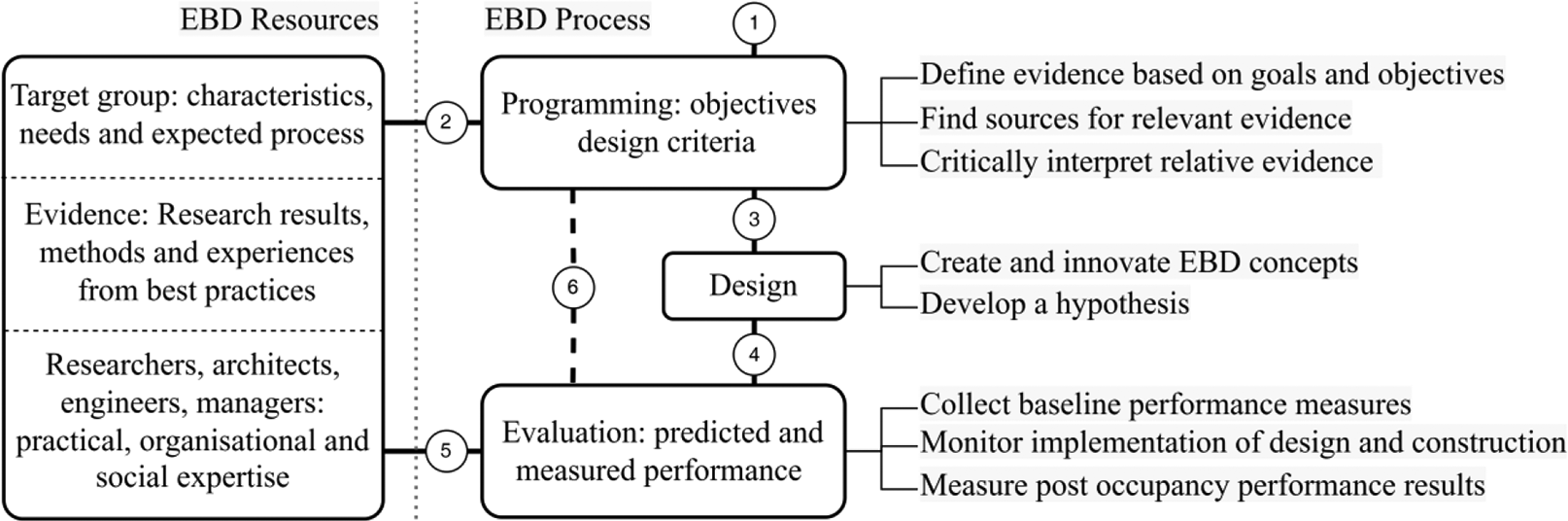
Proposal of evidence-based design steps cycle.
This framework can be used in “objects” of different BLC contexts and times, as illustrated by three examples that demonstrate the adequacy of use in identified studies:
Example 1: (1) An organization that wants to know if the available space and layout are suitable for the new occupancy conditions, (2) this organization that seeks reports, specialists, methods, and criteria available to start the (3) projection of possible scenarios and (4) tests them; finally, (5) that publishes the findings and deposits the data in a database, and (6), depending on the result, requests a new EBD schedule (this time to start the project or another measure; based on Riratanaphong, 2021).
Example 2: (1) A design team wants to decide and justify to the clients what the best spatial arrangement for movement and use is, or what the best building envelope composition is to prevent burglary, (2) the team researches what the appropriate performance simulation criteria are to evaluate what they want to verify (3) they design possible spatial arranges or facade composition based on existing reports about similar cases and necessary characteristics to simulate and (4) test the alternative solutions; finally, (5) depending on the result, they publish the findings and deposit data in a database, and (6), define the baseline performance measures to request a new EBD programming (based on Major et al., 2019; Shin et al., 2017).
Example 3: (1) A research and healthcare POE team wants to understand the impact of healing gardens on patients in a specific healthcare facility, (2) the team members search available reports of similar evaluation methods and criteria, as well as design, recommendations already evaluated in real use conditions; then (3) they define a hypothesis and adjust the selected perception capture instruments to this specific condition, and (4) test the hypothesis with the collaboration of patients, defining comparative guidelines circumscribed for the case; finally, the findings need (5) to be published and the data deposited in a database, and, (6) depending on the outcome, the responsible organization recommends staring a new preproject evaluation EBD schedule (based on Lygum et al., 2018; Paraskevopoulou & Kamperi, 2018; Valente & Marcus, 2015).
Note that POE is necessarily linked to the BLC occupancy stage, and therefore, that POE is not part of EBD but contributes to it with a database and much more: The intersection between EBD and POE procedures for the collection and analysis of evidence depends on the adequacy of the POE instruments, as well as instruments borrowed from other disciplines to the conditions of evidence admitted by the EBD.
The proposed framework eliminates the overlap between the EBD and BLC processes. Instead, an auxiliary framework is presented to retrieve the relationship between methods and application times and the characteristic of the data involved (Figure 4).
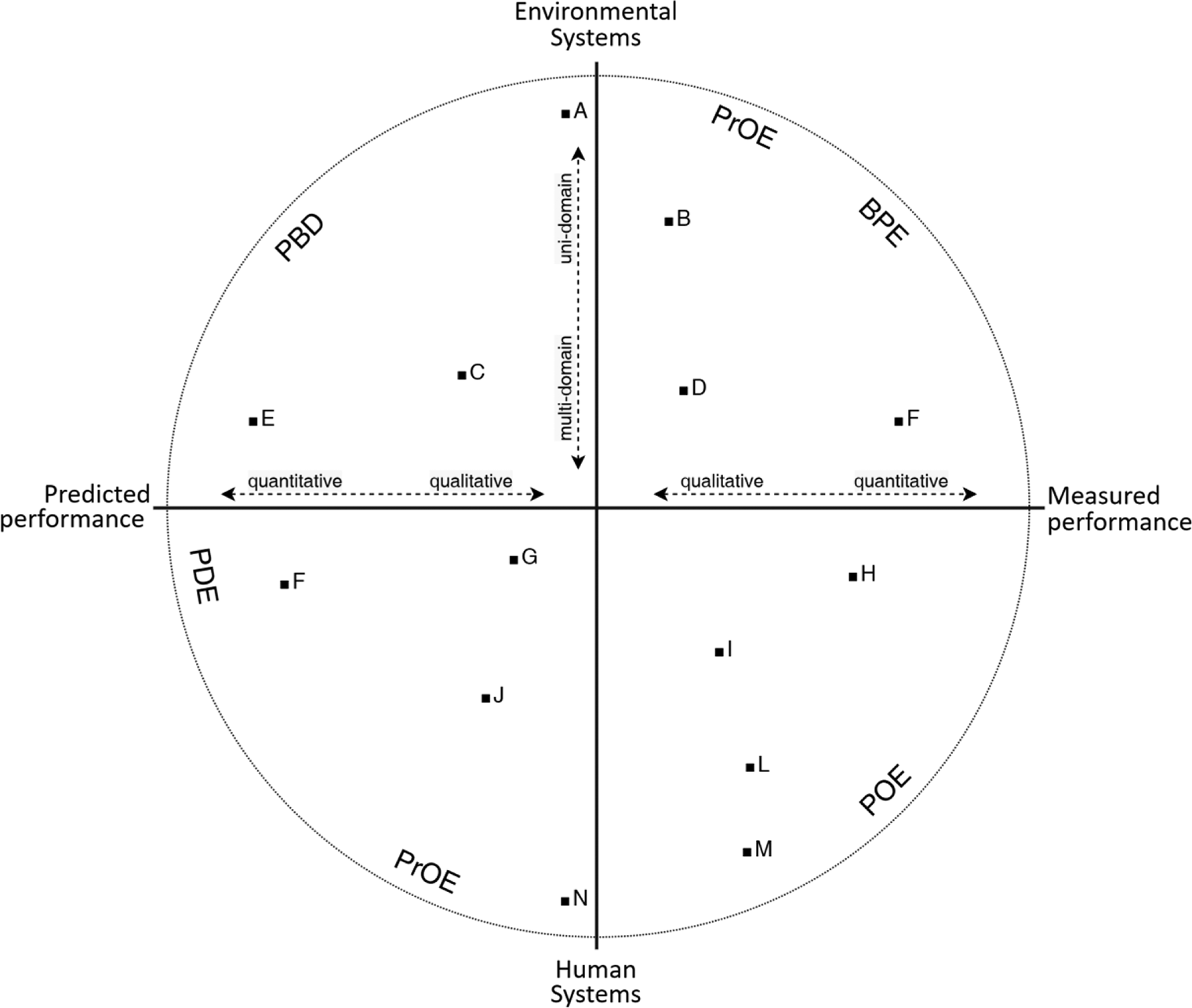
Evidence-based design method mapping. BPE = building performance evaluation; PBD = performance-based design; PDE = predesign evaluation; POE = postoccupancy evaluation; PrOE = preoccupancy evaluation. Interpreting “EBD method mapping” framework: Dots indicate generic instruments. Each point is located on the chart according to its properties. Thus, “dot N” is an instrument oriented to the predominantly human system (one-domain), more qualitative, and is a predicted performance. For example, in an opinion interview without a consolidated occupation. The “dot I” indicates the user’s perception interviews’ of the occupied environment (multidomain) is qualitative and is a measured performance. For example, the degree of thermal comfort according to users. It is qualitative, and it is a measured performance. N.B. = In a future deployment, a weight will be assigned to the properties, enabling us to measure the location of each evaluation procedure and instrument in the framework.
We change Coleman’s approach, redefining the horizontal quadrant, in which the more proximity of the central vertex indicates methods of greater proximity to the object experience. Moreover, in the opposite direction, greater proximity to the limit of the circle indicates methods that depend more on the accuracy of the means of prediction and measurement and, therefore, require more attention in the instrumentation and quantification of quality metrics. Vertically, the location of a method indicates a gradation between a focus on human systems (in a narrow sense, psychological and sociocultural) and on environmental systems (in a narrow sense, material and physical). In this case, greater proximity to the central vertex means that the method includes more domains of the environmental relationship, for example, thermal comfort involves physical characteristics and user perception.
Conclusion
This study examined 54 reports to conduct analyses of the concept and relationship between EBD, POE, and PDE. As a result of these definitions, we present two synthesis frameworks aimed to establish a theoretical and practical congruence between EBD, POE, and PDE. In addition, we resorted to a complementary bibliography for the method and discussion. The resulting organization offers a conceptual framework to assess and integrate processes and tools in a built environment assessment cycle.
We identified that POE offers knowledge about the usability of the environment and, in many cases, addresses the evaluation of the performance of the building. It is important to provide feedback for facilities and project management; however, POE does not present instruments to effectively intervene in these activities, which leads to a gap between the diagnosis with recommendations and a change in the management of facilities and projects. The PDE aims to assess usability aspects of the environment before and during the design process, so as to influence design decisions by predicting impacts on the construction and use of the building. It is a response to the POE gap. The possibility of evaluating and altering the design of development or even of supporting the decision to start it adds strategic and organizational relevance to the PDE. The EBD lays the foundations for developing environment designs based on strong evidence obtained through reliable research. Thus, POE and PDE can be important sources of evidence for EBD.
Finally, understanding the relationships between these concepts has allowed them to be integrated into a common knowledge structure, synthesized in two frameworks. One of them presents an EBD structure aligned with the different demands at different stages of the BLC. The second framework proposes to organize assessment instruments in relation to forecast and measurement conditions, and in another sense, observing the relationship between human systems and environmental systems.
The distinction between human and environmental systems is important to show which methods that consider the voice of customers are used or not. Identifying customers and prioritizing their interests is a political and methodological issue. During the decision-making process, agents use technical and economic arguments related to the environment to justify a client’s interests to the detriment of others. Framing methods according to their valuation properties can discipline the use of valuation data and balance the different interests of different clients.
At a high level, we understand that part of the problem of adopting the PDE, POE, EBD, and similar academic efforts in professional practices is partially due to the difficulty of organizing knowledge and adapting the procedures developed in the research and service contracting models for the application of the methods in the BLC. The development of these frameworks follows this direction, as it offers a way of organizing the methods of evaluating the built environment that considers and distinguishes variables linked to the focus and time it was executed. It can also classify and report procedures, instruments, and data according to suggested properties. The integrated conceptual framework consolidation is the first step toward the development of catalogs and data repositories and assessment tools that meet the demands of different assessment contexts.
Originality and Impacts on Research
The discussion organizes the concepts, establishing a consistent relationship between them. It proposes two conceptual frameworks to guide the organization of purposes, methods, and instruments as a framework for decision support.
Limitations
The research has the following limitations: The search, selection, and extracting of the evidence carried out for the review were not carried out by two independent reviewers, but rather by one researcher, supervised by a specialist in the subject. Thus, an attempt was made to create and apply more objective and descriptive selection criteria, but this may have led to the exclusion of relevant contributions. This review presents a general explanation of the concept, methods, tools, and practices. More detailed considerations and adjustments should be addressed in studies with specific approaches to the items dealt with in the review. Addressing these topics was challenging because it connected different study fields. POE, PDE, and EBD involve concepts, processes, tools, and other multidisciplinary aspects that evaluate architectural design, construction, facility management, maintainability, sustainability, usability, and environmental psychology aspect.
Consequently, some aspects of the results still need to be developed in future research. For example, Figure 4 illustrates generic points, instead of the methods found, because calibrating this mapping requires refining the metrics to evaluate the methods not yet detailed. We understand that this is a task for future work.
Future Development
We identified two immediate developments for the research: (1) An evolution of the EBD framework (Figure 3) can be obtained by substituting the descriptions of the EBD stages in the right column for a column of expected results that relate to each stage of the process shown in the central column, thus establishing a link between resources, process, and results. We did not identify sufficient evidence for this in this research. (2) The EBD method mapping (Figure 4) is simply a conceptual framework. Metrics need to be determined to properly locate the methods in the quadrants.
Implications for Practice
From an SLR, we developed an organization of EBD, POE, and PDE concepts and structures. The result discussion demonstrates an inconsistency presented in the EBD frameworks that relates a stage of the EBD cycle to the POE or another specific type of evaluation carried out at a specific moment in the BLC. The proposed conceptual organization helps to understand the different ways of elaborating and implementing environmental assessments in design.
Based on framework analysis, this article selects and adapts an EBD conceptual framework consistent with the SLR findings. It shows application examples that demonstrate that the proposed EBD conceptual framework provides a comprehensive base for implementing EBD at different environment evaluation stages using examples. Professionals involved in any phase of the building’s life cycle can adapt this framework to develop their evaluation design.
Additionally, it proposes an EBD methods framework to organize and locate a research method used in POE, PDE, or other evaluation approaches, based on the type of evidence it produces and the time of application in relation to construction. The EBD methods framework is an initial, schematic construct to initiate a discussion and guide the mapping of assessment methods based on the type of evidence it produces.
Footnotes
Author Contributions
A1 and A2 planned the investigation. A1 conducted the literature search and the instruments collection and drafted the manuscript. A2 supervised the whole process, reviewed the collected instruments, and critically reviewed the content of the manuscript. Both approved the final submitted version.
Declaration of Conflicting Interests
The author(s) declared no potential conflicts of interest with respect to the research, authorship, and/or publication of this article.
Funding
The author(s) disclosed receipt of the following financial support for the research and/or authorship of this article: This work was supported by the São Paulo State Research Foundation—FAPESP (grant numbers 2020/15909-8) and the National Council for Scientific and Technological Development—CNPq (grant number 304131/2020-2).
