




Abstract
Using data collected from 620 health care and senior services customer-contact employees and their employer, we investigated the chain of relationships between work–family balance, job anxiety, turnover intentions, and voluntary turnover. Results showed that work–family balance was related to job anxiety, turnover intentions, and actual, subsequent voluntary turnover. The relationship between work–family balance and turnover intentions was fully mediated by job anxiety. The findings indicate that work–family balance affects organizationally relevant employee psychological outcomes (i.e., job anxiety and turnover intentions) and is a predictor of voluntary turnover. The study further highlights three stages at which hospitality and health care managers and supervisors may intervene to reduce the likelihood of voluntary turnover, namely, to help employees maintain their work and family balance, to correct imbalances, and to restructure or otherwise change work duties if an employee intends to leave.
Research has highlighted the potential organizational benefits of family-friendly policies and practices to hospitality and health care firms (e.g., Hinkin and Tracey 2010). Laudable though that approach might be, we see little clarity regarding whether and how employee work–family balance affects employee behaviors that are connected with the bottom line. Consequently, we seek to close the gap between work–family research and corporate practice (referred to as an “implementation gap,” see Kossek, Baltes, and Mathews 2011, 352) by conducting research that links work–family issues with employee behaviors (notably, voluntary turnover) that are known to directly affect the performance of hospitality and health care firms (cf. Hinkin and Tracey 2010).
Our study contributes to the work–family literature by addressing the need for work–family research to measure actual employee behaviors (cf. Casper et al. 2007). More critically, this study remedies a potential confusion in studies that have included an actual turnover measure that did not distinguish between voluntary and involuntary turnover (e.g., Clausen and Borg 2010; Moen, Kelly, and Hill 2011). Instead, here we examine only voluntary turnover. This approach demonstrates the impact of work–family balance on an employee behavior that can be mitigated to enhance corporate performance. One other aspect of prior studies is that the relationship between work–family balance and various employee outcomes has typically been examined in isolation. Instead, we provide a more comprehensive model by examining the chain of relationships between health care and senior services customer-contact employee work–family balance, job anxiety, turnover intentions, and voluntary turnover. Of practical import, our study highlights three stages at which hospitality and health care firm managers and supervisors could intervene to reduce the likelihood of voluntary turnover.
Synopsis of Work–Family Research
Role theory (Cooke and Rousseau 1984) and boundary and border theories (Clark 2000; Desrochers and Sargent 2004) suggest that individuals often engage in multiple interdependent roles, notably those relating to work and family. Work–family conflict arises when individuals lack sufficient resources to devote to both domains. Such conflict is viewed as bidirectional, in that work-to-family conflict occurs when aspects of the work domain interfere with the family domain, and family-to-work conflict occurs when aspects of the family domain interfere with the work domain (Shaffer et al. 2001). However, work–family enrichment or positive spillover occurs when individuals are able to integrate the two roles in such a way that aspects of one domain serve to enrich the other domain (Greenhaus and Powell 2006). Work–family enrichment is also viewed as bidirectional.
According to border theory, work–family balance is defined as “satisfaction and good functioning at work and at home, with a minimum of role conflict” (Clark 2000, 751). Borders exist between the work and family domains and when these borders are permeable and flexible, individuals can integrate the two domains to achieve balance. So, for example, an employee who experiences flexible boundaries may be able to take care of family needs while at work and vice versa, thus facilitating work–family balance (Desrochers and Sargent 2004). In contrast, an employee who is confronted with an inflexible and impermeable boundary between work and family may be unable to take personal calls at work, for instance, and thus not be able to address family needs while in the work domain, which could lead to perceived imbalance. In many cases, the firm’s managers and supervisors serve as “border keepers” and also influence the ability of employees to achieve work–family balance. Empirical studies have identified family-friendly policies and practices as antecedents of work–family balance (e.g., Anderson, Coffey, and Byerly 2002; Batt and Valcour 2001; Premeaux, Adkins, and Mossholder 2007).
Although work–family theory is well developed in terms of explaining how employers can influence their employees’ work–family balance, the prevailing gap between work–family research and actual practice (see Kossek, Baltes, and Mathews 2011) suggests that further research is needed that illuminates how this balance (or lack thereof) relates back to organizationally relevant employee outcomes. In other words, if work–family researchers assert that hospitality and health care firm managers and supervisors should care about their employees’ work–family balance, then research should test conceptual and empirical models relating to desired outcomes.
Work–family research indicates that work–family balance affects employee psychological outcomes such as job anxiety (cf. Kinnunen and Mauno 1998) and turnover intentions (cf. Shaffer et al. 2001), but we have seen little study of whether such psychological outcomes lead to employee behaviors, such as voluntary turnover, that are related to a firm’s bottom line. This study attempts to close that gap.
Conceptual Model and Hypotheses Development
Work–Family Balance and Job Anxiety
The theory suggesting that individuals experience work–family conflict when they lack sufficient resources to contribute to both domains is the scarcity approach to role theory (Cooke and Rousseau 1984). Work–family conflict also involves border theory, as we discussed above (Clark 2000). In this vein, Grzywacz and Bass (2003) examined relationships between the work–family interface and employees’ mental health (i.e., anxiety disorders, problem drinking, and depression). Thus, congruent with work–family theory and empirical research on general mental health (e.g., Grzywacz and Bass 2003), we posit that there is a negative relationship between work–family balance and job-related anxiety.
Hypothesis 1: Work–family balance is negatively related to job anxiety.
Work–Family Balance and Employee Turnover
In line with role theory (Cooke and Rousseau 1984) and boundary and border theories (Clark 2000), individuals who are unable to meet the demands of both work and family roles may choose to make sacrifices from one or both domains to regain balance and minimize strain. One way to accomplish this is to withdraw, or intend to withdraw, from the work role to focus more of their resources on the family role. Withdrawal of this kind can diminish a firm’s bottom line, particularly if it involves voluntary turnover (cf. Hinkin and Tracey 2010). Jones (2005) found that the cost of turnover for each nurse at a hospital ranged from $62,100 to $67,100, and Waldman et al. (2004) found that the annual cost of turnover represented 3.4 to 5.8 percent of a medical center’s annual operating budget. Given this expense, we investigated the link between work–family balance and voluntary turnover, which may enable us to demonstrate that a hospitality or health care firm will benefit from enhanced work–family balance among employees.
Although some studies have indicated that both work-to-family conflict and family-to-work conflict are positively associated with turnover intentions (cf. Shaffer et al. 2001), the results reported in other studies point to work-to-family conflict as being the conflict associated with turnover intentions (cf. Post et al. 2009). Furthermore, Moen, Kelly, and Hill (2011) found a positive association between negative home-to-work spillover and turnover intentions, but not positive home-to-work spillover, negative work-to-home spillover, or positive work-to-home spillover.
Given that work–family imbalance may lead to greater employee strain, anxiety, and turnover intentions (cf. Chen and Kao 2011; Suteeraroj and Ussahawanitchakit 2008), it may also be expected to be a positive predictor of voluntary turnover. Stating this in terms of having the desired balance, we posit that work–family balance is negatively related to (1) turnover intentions and (2) voluntary turnover.
Hypothesis 2a: Work–family balance is negatively related to turnover intentions.
Hypothesis 2b: Work–family balance is negatively related to voluntary turnover.
The Mediating Role of Job Anxiety
Empirical research indicates a positive relationship between job anxiety and turnover intentions (e.g., Batlis 1980). In line with work–family theory, when an employee experiences high levels of strain and job stress due to work–family imbalance (cf. Chen and Kao 2011), he or she may also experience high levels of job anxiety (cf. Kinnunen and Mauno 1998), which in turn may have a positive effect on his or her turnover intentions (Batlis 1980; Suteeraroj and Ussahawanitchakit 2008). What is not clear is whether job anxiety and turnover intentions will prompt employees to actually quit their jobs. Thus, congruent with work–family theory and building on extant empirical work–family research, we posit that job anxiety mediates the relationships between (1) work–family balance and turnover intentions and (2) work–family balance and voluntary turnover.
Hypothesis 3a: Job anxiety mediates the relationship between work–family balance and turnover intentions.
Hypothesis 3b: Job anxiety mediates the relationship between work–family balance and voluntary turnover.
Employee Turnover Intentions and Voluntary Turnover
The theory of planned behavior proposes that behavioral intentions are the best predictors of actual behavior (Ajzen 1991). Correspondingly, van Breukelen, van der Vlist, and Steensma (2004) presented empirical evidence, which demonstrated that turnover intentions are a key predictor of actual voluntary turnover. They also found that turnover intentions mediated the relationships between (1) job satisfaction and voluntary turnover and (2) affective commitment and voluntary turnover (see also Allen, Shore, and Griffeth 2003). The Moen, Kelly, and Hill (2011) study that we cited above sheds light here because it was through turnover intentions that negative work-to-home spillover and job satisfaction predicted actual turnover. Consistent with these studies, we propose that turnover intentions are a key predictor of voluntary turnover and that the effects of work–family balance and job anxiety on actual voluntary turnover may be observed indirectly via their effects on turnover intentions.
Hypothesis 4: Turnover intentions are a positive predictor of voluntary turnover and explain variance in voluntary turnover beyond the variance explained by work–family balance and job anxiety.
Method
Sample and Procedures
Data were collected in two phases. In Time 1, we surveyed 934 target respondents who had been employed by a single nonprofit health care and senior services company for at least six months. This company owned or operated sixteen rehabilitation and nursing facilities in Massachusetts, Ohio, and Pennsylvania, and one life-care retirement community in Massachusetts. Six months later, in Time 2, we obtained turnover (or retention) information for the respondents from the company’s human resources department.
For the Time 1 survey, a contact person from each facility provided each potential respondent with a survey, a return envelope, and a letter from the executive vice president explaining the study, encouraging participation, and promising anonymity. 1 Targeted respondents were certified nursing assistants (CNAs), licensed professional nurses (LPNs), and registered nurses (RNs).
A total of 652 employees responded to the survey, a 70-percent response rate. A binary logistic regression comparison of the 652 respondents and the 282 nonrespondents based on job title, tenure, and weekly commitment (scheduled hours of work per week) showed that respondents and nonrespondents were significantly different only on length of tenure. On average, study respondents had approximately one more year of tenure with the company (6.02 years) than nonrespondents (5.07 years).
We subsequently excluded thirty-two of these respondents, two of them because they failed to complete the survey and thirty because their employment was terminated by the company between Time 1 and Time 2. The final sample consisted of 620 health care and senior services customer-contact employees: 90 percent were female; their average age was 42.23 years; they had an average of one (0.96) dependent child; 65 percent were CNAs, 25 percent were LPNs, and 10 percent were RNs; their average tenure with the company was 6.11 years; and their average weekly commitment was 34.19 hours.
Measures
Similar to Bedeian, Kemery, and Pizzolatto (1991), we used voluntary turnover (retention) information obtained from the company’s human resources department at Time 2 to create this study’s dichotomous voluntary turnover variable, which was a dummy variable—that is, equal to 1 for the 49 respondents who had voluntarily left the company and equal to 0 for the 571 who continued on staff.
Using the data obtained from the survey, we developed work–family balance, job anxiety, and turnover intentions measures, based on responses to seven work–family balance (WFB1–WFB7), four job anxiety (JA1–JA4), and five turnover intentions (TI1–TI5) survey items (see Exhibit 1). Responses options for these items ranged from 1 (strongly disagree) to 5 (strongly agree).
The Seven Work–Family Balance, Four Job Anxiety, and Five Turnover Intentions Survey Items
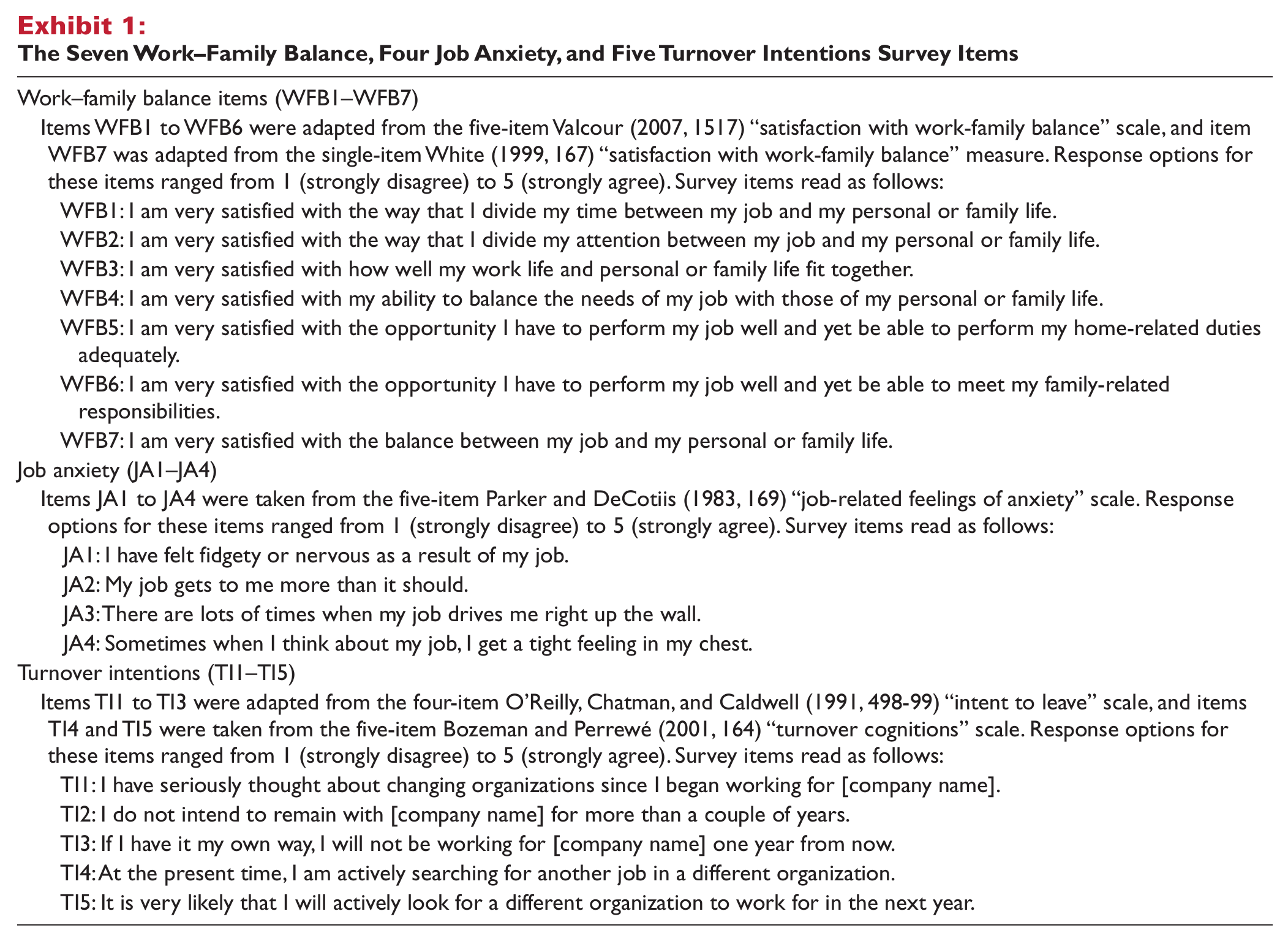
We measured work–family balance with five items adapted from the five-item Valcour (2007, 1517) “satisfaction with work-family balance” scale and one item taken from the White (1999, 167) single-item “satisfaction with work-family balance” measure. We measured job anxiety with four items taken from the five-item Parker and DeCotiis (1983, 169) “job-related feelings of anxiety” scale. We measured turnover intentions with three items adapted from the four-item O’Reilly, Chatman, and Caldwell (1991, 498-99) “intent to leave” scale and two items taken from the five-item Bozeman and Perrewé (2001, 164) “turnover cognitions” scale. The Cronbach’s alpha coefficients were as follows: for the six-item work–family balance scale, .95; the four-item job anxiety scale, .84; and five-item turnover intentions scale, .92.
Because research highlights the potential influence of gender, age, education, dependent children, job level, tenure, and weekly commitment on work–family balance, job anxiety, turnover intentions, and voluntary turnover (e.g., Moen, Kelly, and Hill 2011; Parker and DeCotiis 1983; Spencer and Steers 1980; Valcour 2007; van Breukelen, van der Vlist, and Steensma 2004), we created variables for each. We developed control variables for gender (a dummy variable), age (in years), education, and number of dependent children. Moreover, data provided by the company’s human resource department were used to create job category (CNA and LPN dummy variables), tenure (in years), and weekly commitment (in hours) control variables.
Finally, task performance was assessed with Williams and Anderson’s (1991) seven-item task performance scale; responses options for these items ranged from 1 (strongly disagree) to 5 (strongly agree). As we outline in the following section, to alleviate concerns regarding common method variance, we included this employee (self-reported, Time 1) task performance control variable (seven items; α = .91) in all of the regression models used to test the hypotheses (see Siemsen, Roth, and Oliveira 2010). 2
Common Method Variance and Psychometric Properties Assessments
Because this study’s measures of task performance, work–family balance, job anxiety, and turnover intentions were derived from self-reported data obtained at Time 1 via a single survey, we needed to address concerns regarding common method variance. We first conducted Harman’s single-factor test (see Podsakoff and Organ 1986), in which we subjected the survey items to a principal components factor analysis. Four factors with an eigenvalue greater than one emerged from this analysis, but no general method factor was apparent. Hence, these results do not indicate that common method variance is a problem in this present study.
As an additional test, we conducted confirmatory factor analysis using Amos 19 (IBM SPSS Amos 19 2011) to further examine the factor structure of the four measures (the factor structure of the present study’s task performance, work–family balance, job anxiety, and turnover intentions measures). As reported in Exhibit 2, the confirmatory factor analysis of the posited four latent variables model (which specified that the twenty-three items loaded exclusively onto the four focal variables) demonstrated a good fit with the data (N = 620):
Confirmatory Factor Analyses Results (via Amos 19) for the Posited Four Latent Variable and Alternative Latent Variable Models (N = 620)
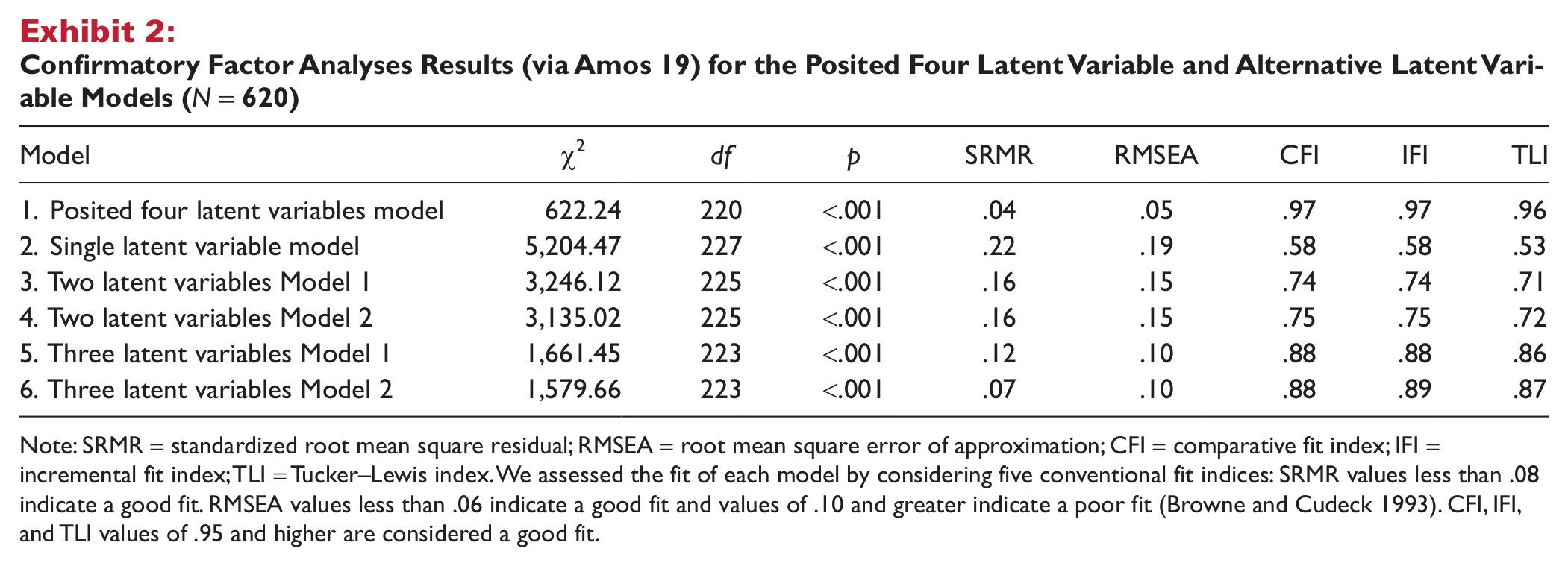
Note: SRMR = standardized root mean square residual; RMSEA = root mean square error of approximation; CFI = comparative fit index; IFI = incremental fit index; TLI = Tucker–Lewis index. We assessed the fit of each model by considering five conventional fit indices: SRMR values less than .08 indicate a good fit. RMSEA values less than .06 indicate a good fit and values of .10 and greater indicate a poor fit (Browne and Cudeck 1993). CFI, IFI, and TLI values of .95 and higher are considered a good fit.
As another means of allaying concerns with the accuracy of post hoc corrective tests and techniques (Richardson, Simmering, and Sturman 2009), we first point out that individual employee attitudes (i.e., satisfaction with work–family balance), psychological states (i.e., job anxiety), and behavioral intentions (i.e., turnover intentions) are derived from the same source, namely, self-reported data. Second, controlling for other variables likely to be similarly affected by the same source, self-reported biases (i.e., self-reported task performance) will help diminish the potential effect of these biases in subsequent multivariate regression analyses (see Siemsen, Roth, and Oliveira 2010). 4
Therefore, even if some of the variance shared by these measures is attributable to a common method variance, the ordinary least squares (OLS) regression models for employee turnover intentions, for example, include multiple variables that would be similarly affected by common method variance such as self-reported employee task performance (Time 1), work–family balance, and job anxiety; the quantity of variables in the analyses should be sufficient to counter parameter inflation through common method variance and would largely mitigate any effects attributable to a common method factor (Siemsen, Roth, and Oliveira 2010). Thus, although we acknowledge the concerns associated with common method variance in survey research, we are confident that this study’s results are not attributable to common method variance.
Analyses
OLS and binary logistic regression analyses were used to test the hypotheses. All regression analyses were conducted in a stepwise fashion, with all control variables first entered into the regression model and the variables of interest entered in subsequent steps. Moreover, Sobel (1982) tests were used to provide more definite tests of the mediation hypotheses (see Wood et al. 2008). In addition, consistent with previous empirical research examining the predictors of voluntary turnover (e.g., Allen, Shore, and Griffeth 2003), we used Amos 19 (IBM SPSS Amos 19 2011), a structural equation modeling (SEM) software tool, to further investigate the linkages among work–family balance, job anxiety, turnover intentions, and voluntary turnover.
Results
Some noteworthy correlations are as follows: work–family balance was positively correlated (p < .01) with task performance and negatively correlated (p < .01) with job anxiety, turnover intentions, and voluntary turnover; task performance was negatively correlated (p < .05) and job anxiety was positively correlated (p < .01) with turnover intentions; and turnover intentions were positively correlated (p < .01) with voluntary turnover (see Exhibit 3 for means, standard deviations, and bivariate correlations).
Means, Standard Deviations, and Bivariate Correlations (N = 620)
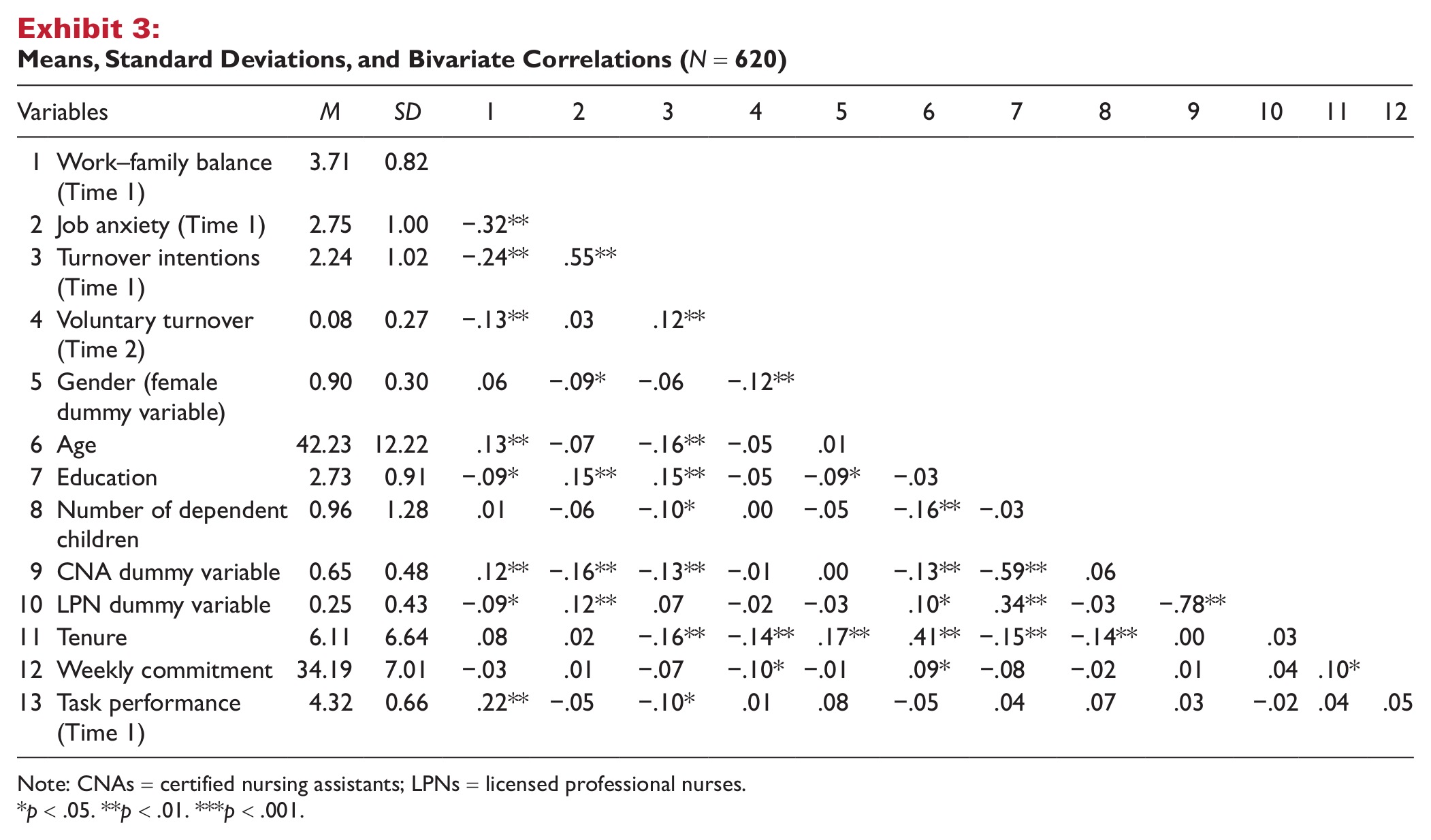
Note: CNAs = certified nursing assistants; LPNs = licensed professional nurses.
p < .05. **p < .01. ***p < .001.
Exhibit 4 presents the OLS regression results for employee job anxiety. In Model 2, work–family balance was negatively related to job anxiety (B = −.37, p < .001). Thus, Hypothesis 1 was supported.
OLS Regression Results for Employee Job Anxiety (N = 620)

Note: OLS = ordinary least squares; CNAs = certified nursing assistants; LPNs = licensed professional nurses. This exhibit reports unstandardized beta coefficients (standard errors are in parentheses), the ΔR2 (change in R2) for Model 2 is in comparison with the R2 in Model 1.
p < .10. *p < .05. **p < .01. ***p < .001.
Exhibit 5 presents the OLS regression results for employee turnover intentions. In Model 2, work–family balance was negatively related to turnover intentions (B = −.23, p < .001). Thus, Hypothesis 2a was supported. In Model 3, the relationship between work–family balance and turnover intentions was not significant (B = −.04, ns), whereas job anxiety was positively related to turnover intentions (B = .53, p < .001). The Sobel (1982) test statistic for the hypothesized (Hypothesis 3a) work–family balance → job anxiety → turnover intentions relationship was significant (Zsobel = −6.46, p < .001). Thus, in support of Hypothesis 3a, the above Sobel test result (see Wood et al. 2008) and the OLS regression results presented in Exhibit 4 (Model 2) and Exhibit 5 (Models 2 and 3; see Baron and Kenny 1986) indicate that job anxiety mediates the relationship between work–family balance and turnover intentions.
OLS Regression Results for Employee Turnover Intentions (N = 620)
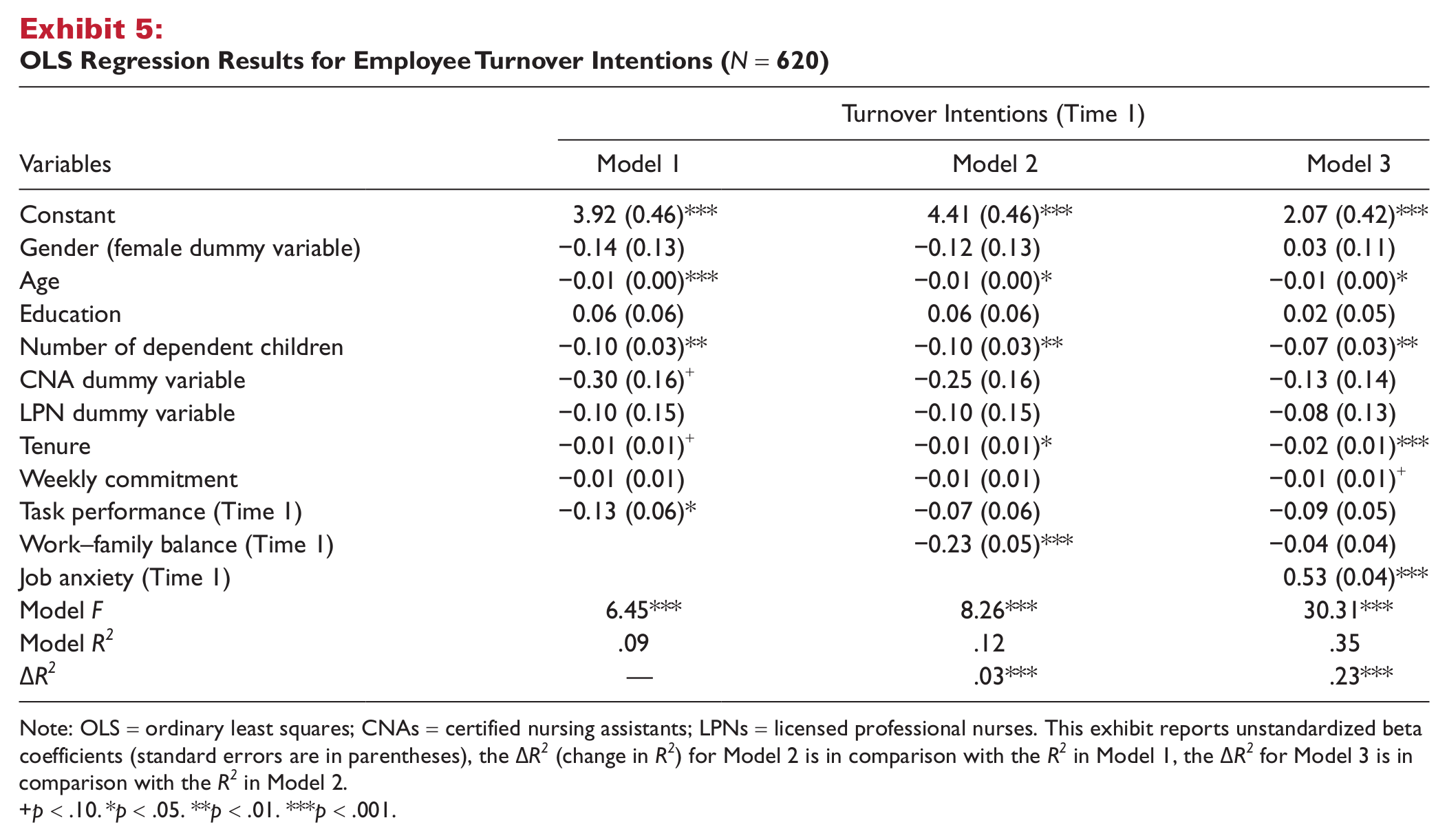
Note: OLS = ordinary least squares; CNAs = certified nursing assistants; LPNs = licensed professional nurses. This exhibit reports unstandardized beta coefficients (standard errors are in parentheses), the ΔR2 (change in R2) for Model 2 is in comparison with the R2 in Model 1, the ΔR2 for Model 3 is in comparison with the R2 in Model 2.
p < .10. *p < .05. **p < .01. ***p < .001.
Exhibit 6 presents the binary logistic regression results predicting voluntary turnover. In Model 2, work–family balance was negatively related to voluntary turnover (B = −.52, p < .01). Thus, Hypothesis 2b was supported. In Model 3, work–family balance was negatively related to voluntary turnover (B = −.54, p < .01), whereas job anxiety and voluntary turnover were not related (B = −.05, ns). Hence, Hypothesis 3b was not supported, as job anxiety and voluntary turnover were not related (see Exhibit 6, Models 3 and 4), and thus job anxiety did not mediate the relationship between work–family balance and voluntary turnover (see Baron and Kenny 1986). In Model 4, work–family balance was negatively related to voluntary turnover (B = −.52, p < .01); job anxiety was not related to voluntary turnover (B = −.27, ns); and turnover intentions were positively related to voluntary turnover (B = .41, p < .05). Thus, Hypothesis 4 was supported, as turnover intentions were a positive predictor of voluntary turnover, and turnover intentions explained variance in voluntary turnover beyond the variance explained by work–family balance and job anxiety (see Exhibit 6, Models 3 and 4).
Binary Logistic Regression Results Predicting Employee Voluntary Turnover (N = 620)
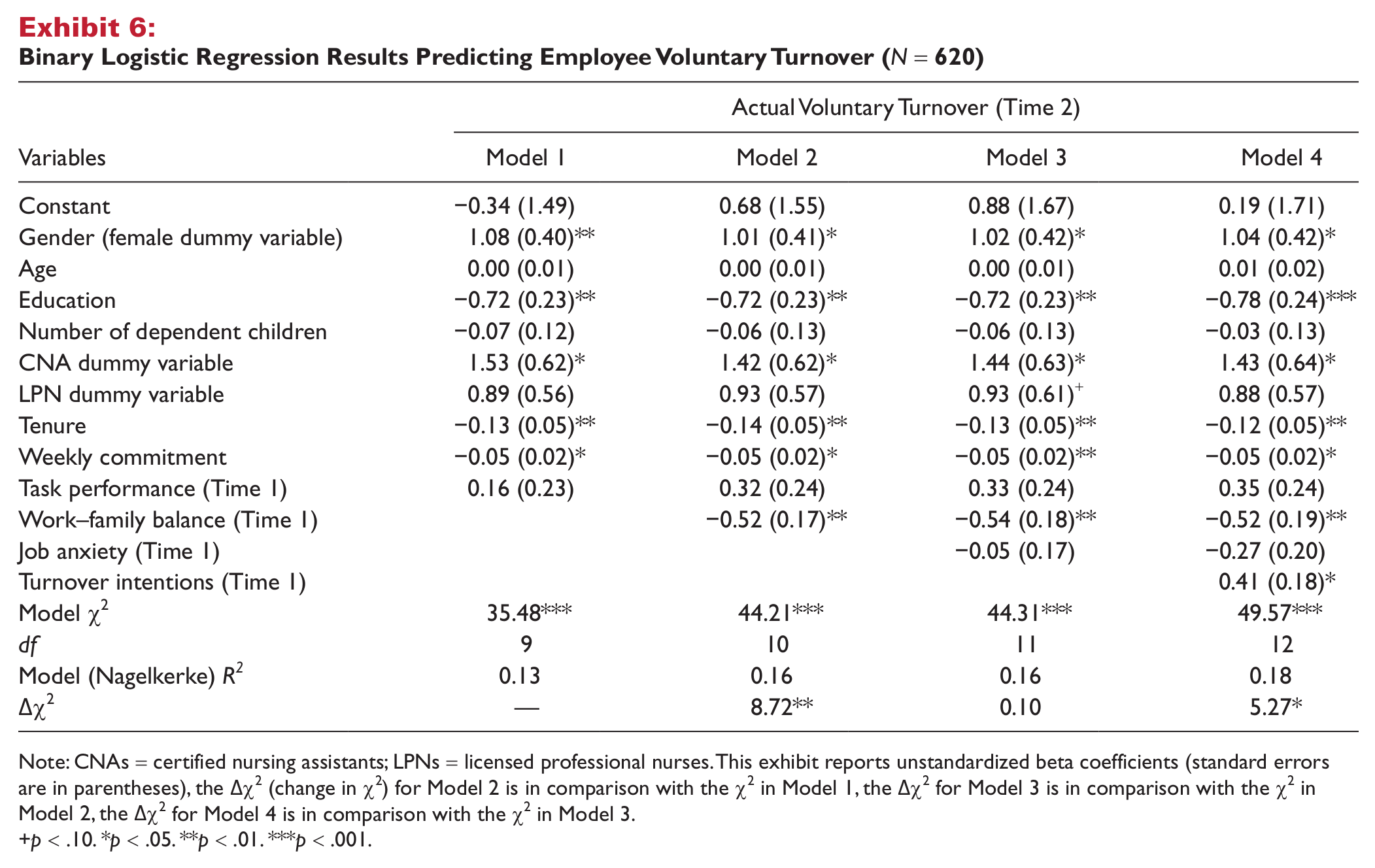
Note: CNAs = certified nursing assistants; LPNs = licensed professional nurses. This exhibit reports unstandardized beta coefficients (standard errors are in parentheses), the Δχ2 (change in χ2) for Model 2 is in comparison with the χ2 in Model 1, the Δχ2 for Model 3 is in comparison with the χ2 in Model 2, the Δχ2 for Model 4 is in comparison with the χ2 in Model 3.
p < .10. *p < .05. **p < .01. ***p < .001.
Finally, the work–family balance–turnover model depicted in Exhibit 7 demonstrated a good fit with the data (N = 620):
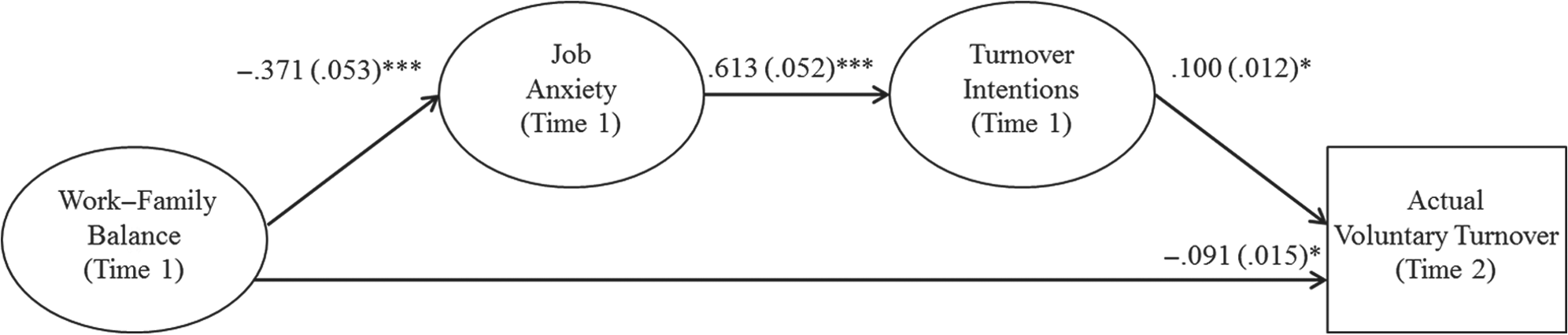
Work–Family Balance–Turnover Model
Discussion
This study extends existing work–family research by examining the chain of relationships that connect work–family balance, job anxiety, turnover intentions, and voluntary turnover. Our results indicate that work–family balance was negatively related to job anxiety, providing empirical support for the scarcity approach to role theory enunciated by Cooke and Rousseau (1984), who suggested that employees who lacked sufficient resources to maintain balance between work and family were more likely to experience negative psychological symptoms. Consistent with the hypotheses, work–family balance was also negatively related to turnover intentions, suggesting that those who were unable to achieve balance between the work and family domains were more likely to consider leaving their jobs in hopes of regaining that balance.
Our study also sought to remedy the gap in existing research regarding the posited connection between work–family balance and voluntary turnover. We found that employees who experience work–family imbalance not only consider leaving their jobs but actually do so. Therefore, we suggest that hospitality and health care firm managers and supervisors should be concerned with and provide support for their employees’ work–family balance to control some of the expense resulting from voluntary turnover.
Given that work–family balance was negatively related to job anxiety, we expected that job anxiety would, in turn, lead to higher turnover intentions, and indeed we found that job anxiety mediated the relationship between work–family balance and turnover intentions. This means that employees who had trouble balancing their work and family lives were more likely to experience job anxiety and, in turn, were more likely to consider quitting their jobs. Thus, our findings indicate that employees who experienced an imbalance between work and family were more likely to experience job anxiety, consider quitting their jobs, and actually do so. Because work–family balance is a predictor of eventual voluntary turnover, it makes sense that firms will benefit from enhancing employees’ work–family balance.
The theoretical implications of this study are also important. Work–family theory should be extended to explicitly account not only for employee psychological outcomes (i.e., employee attitudes, psychological states, and behavioral intentions) but also employee behaviors that more directly affect the bottom line of firms. To date, extant theory has largely focused on the individual employee’s perspective of the work–family interface (e.g., border theory; Clark 2000). As a step toward closing the prevailing gap between research and actual practice, conceptual work–family research should move toward including an organizational view of how the work–family interface affects employee behaviors (in this case, voluntary turnover). While this study did not extend to the firm’s outcome variables, voluntary turnover can clearly have a negative impact on customer service quality, customer satisfaction, and firm financial performance. Meanwhile, empirical work–family research should continue to examine and test comprehensive models that include employee psychological outcomes and behaviors deemed relevant to hospitality and health care firms and their employees.
Limitations and Implications for Future Research
As with any study, this study’s findings need to be interpreted in light of its limitations. First, this study’s sample comprises only health care and senior services customer-contact employees. Thus, we encourage future research to constructively replicate the methodology in different settings or industries to assess the external validity of our findings.
Second, although we tested for common method issues, we must note that the work–family balance, job anxiety, and turnover intentions measures used in this study were derived from self-reported data obtained concurrently. Consequently, we encourage future research studies to temporally separate these measures (see Casper et al. 2007).
On a related note, given the fact that work–family balance and job anxiety were measured at the same time, we note that the relationship between work–family balance and job anxiety could be the reverse of that tested here. That is, it is possible that an employee could start experiencing job anxiety, which subsequently leads him or her to feel unsatisfied with the balance between work and family. Future research could examine this possibility by using a longitudinal design in which work–family balance and job anxiety are separated temporally and changes in these variables are measured across several time periods.
Third, our model may have omitted significant variables in this study’s regression results, and additional mediators (e.g., job satisfaction or affective commitment) may have also influenced voluntary turnover. With regard to those two particular variables, we point to empirical studies that have investigated the antecedents of voluntary turnover (e.g., Allen, Shore, and Griffeth 2003; van Breukelen, van der Vlist, and Steensma 2004) that indicate that job satisfaction and affective commitment are not themselves significant predictors of voluntary turnover (while turnover intentions are). Nevertheless, we encourage future studies to control for the potential influence of job satisfaction and affective commitment, as well as other, yet unidentified variables.
Fourth, in this study, we interpreted low ratings on the work–family balance measure as indicating higher levels of work–family conflict and lower levels of work–family enrichment, in line with Clark’s (2000) border theory. However, other theories might apply. Thus, given the various work–family interface constructs and measures (e.g., work–family conflict, see Anderson, Coffey, and Byerly 2002 and Post et al. 2009; enrichment, see Greenhaus and Powell 2006; and balance, see Clark 2000 and Valcour 2007), we encourage future research to extend our findings by empirically examining the effects of work–family balance, as well as other aspects of the work–family interface, such as work–family conflict and enrichment, job anxiety, turnover intentions, and voluntary turnover. In addition, although prior research has highlighted the negative influence of voluntary turnover on hospitality and health care firm performance, we encourage future studies to also include measures of employee behaviors that have been shown to affect hospitality and health care firm performance such as subsequent task performance, citizenship behaviors, and prosocial service behaviors as rated by supervisors, customers, or peers.
Practical Implications
Although further research is needed to determine whether this study’s findings can be generalized to other settings or industries, the findings have important implications for firms in general and for health care firms in particular. We found that an employee who experiences work–family imbalance is more likely to experience job anxiety, consider quitting his or her job, and then actually do so. Hence, by examining a comprehensive model that comprises work–family balance, employee psychological outcomes (i.e., job anxiety and turnover intentions), and actual, subsequent voluntary turnover, this study highlights three stages at which hospitality and health care managers and supervisors could intervene to reduce the likelihood of voluntary turnover.
Based on our findings, we see the first intervention stage as involving the prevention of work–family imbalance by adopting family-friendly practices like flexible work schedules or supporting dependent care that help employees balance work and family responsibilities (cf. Premeaux, Adkins, and Mossholder 2007). Furthermore, hospitality and health care firm managers and supervisors can assist their employees in achieving work–family balance by creating a work culture that allows employees to make use of family-friendly practices without being stigmatized (cf. Thompson, Beauvais, and Lyness 1999). For employees who are experiencing job anxiety from work–family imbalance, the next intervention stage involves reducing job anxiety through manager or supervisor support or by implementing wellness programs. If neither of these occurs and employees intend to quit their jobs, the third stage could involve interventions such as job redesign or employee transfers to positions that would allow employees to reduce their anxiety and regain their work–family balance (cf. Hinkin and Tracey 2010).
In sum, our findings strongly support the assertion that work–family imbalance influences voluntary turnover. Although this study was not designed to assess the impact of work–family balance on firm outcome variables, empirical research has demonstrated the negative effect of turnover on customer service quality (Hausknecht, Trevor, and Howard 2009), customer satisfaction (Morrow and McElroy 2007), and organizational financial performance (Shaw, Gupta, and Delery 2005). Hence, this study represents a step toward closing the gap between work–family research and actual practice (see Kossek, Baltes, and Mathews 2011) by demonstrating why hospitality and health care firm managers and supervisors should be concerned about employees’ work–family balance. We believe our findings indicate that hospitality and health care firm managers and supervisors should consider ways to support their employees’ efforts to maintain work–family balance, not only for the employees’ benefit but also for the health of the firm itself.
Footnotes
Acknowledgements
The authors thank Rosemary Batt, Yaping Gong, Beth Livingston, and Michael Sturman for their insightful suggestions and reviews of an earlier version of this manuscript.
Authors’ Note
Chelsea Vanderpool and Sean A. Way contributed equally to this research and are joint first authors.
Declaration of Conflicting Interests
The author(s) declared no potential conflicts of interest with respect to the research, authorship, and/or publication of this article.
Funding
The author(s) disclosed receipt of the following financial support for the research, authorship, and/or publication of this article: This research was funded by a grant awarded to Sean A. Way by The Center for Hospitality Research, School of Hotel Administration, Cornell University.
Notes
Bios
References
Supplementary Material
Please find the following supplemental material available below.
For Open Access articles published under a Creative Commons License, all supplemental material carries the same license as the article it is associated with.
For non-Open Access articles published, all supplemental material carries a non-exclusive license, and permission requests for re-use of supplemental material or any part of supplemental material shall be sent directly to the copyright owner as specified in the copyright notice associated with the article.
