



Abstract
Built on the consumer socialization theory and generational cohort theory, this research examines the consumption phenomena of the sharing economy among young travelers. Specifically, the current study investigates Millennial and Generation Z travelers’ consumption intention for peer-to-peer accommodations—one of the most popular sharing economy business models. This study explores how consumption values impact young travelers’ choice of peer-to-peer accommodation and whether any similarities or differences exist across the two generational cohorts. The research findings suggest that, while utilitarian and hedonic values influence both young generations’ intention to use peer-to-peer accommodation, sustainability and social interaction values, as well as perceived social media exposure, play more important roles for Generation Z (vs. Millennials). Furthermore, young people’s needs for self-enhancement extends significant impacts on their value evaluations of the peer-to-peer accommodations, particularly for Millennials. These generational differences help industry practitioners better serve and market to the two market segments.
Keywords
Introduction
As a crucial part of the sharing economy, peer-to-peer (P2P) accommodations (e.g., Airbnb, Couchsurfing) are particularly popular among younger generations of travelers. According to the Airbnb report released in 2016, Millennials (i.e., the demographic group born between the 1980s and the middle 1990s) account for around 60% of all guests who have Airbnb experience (Airbnb, 2016). At the same time, Millennials’ succeeding demographic cohort, Generation Z (i.e., the demographic group born between the 1990s and early 2010s), is emerging as a major demographic segment with huge potential buying power for the global tourism industry. Jointly, Millennials and Generation Z travelers are estimated to make up a 370 million travelers’ market and are forecasted to contribute to over 400 billion dollars of the global travel economy by 2020 (WYSE Travel Confederation, 2018).
Both known as digital nomads, the two younger generations, Millennials and Generation Z, share many generational characteristics different from those of their older demographic counterparts (Gardiner et al., 2013; Garikapati et al., 2016; LaTour et al., 2020). Cultivated by the dramatic developments in technology and innovation, Millennials, and Generation Z are generally considered more tech-savvy and tech-connected than the older generations, such as Baby Boomers (born from 1946 to 1964) and Generation X (born from 1965 to 1976) (Pitta et al., 2012). Grown up in the Information Age, both Millennials and Generation Z are constantly connected with the internet across almost every aspect of their daily life, and travel is no exception (Oblinger, 2003). For both generations, the internet has become an integral part of their whole travel experience, from the pre-trip traveling planning to the post-trip sharing traveling experience on social media. Empowered by technology, these two generations are more active than their older counterparts when traveling and have already become the major consumption force in the tourism industry (Amaro et al., 2016).
Although Millennials and Generation Z share many similarities, differences still exist in their perspectives, attitudes, preferences, and consumption patterns in terms of travel. First, compared with Millennials, Generation Z tends to value the entire travel as an integral experience rather than specific destinations oriented, and uniqueness plays a critical role in Generation Z’s travel decisions (Whitmore, 2019). In addition, having grown up with increasing awareness of global warming and the importance of sustainability, Generation Z is considered more socially and environmentally responsible than Millennials when it comes to travel purchases (Deloitte, 2019, 2020; Gresham, 2020). According to a market survey conducted by a consulting firm specializing in young customer experiences, around 56% of Generation Z participants prefer green or eco-friendly accommodations during travel—a percentage much higher than any other generation cohorts (TELUS International, 2019). In terms of social media engagement, both Millennials and Generation Z utilize social media a lot, but the two generations have different preferred platforms to search for travel information and share travel experiences (Deloitte, 2019; Hotel Tech Report, 2021). From the perspective of age and life cycle, the two generations are at different stages of life. Most Millennials have graduated from college, and the oldest ones may have worked for almost two decades. The majority of Generation Z are still in school without financial independence, though they significantly influence their parents’ decisions on family vacations (Hotel Tech Report, 2021).
Given the emergence of Millennials and Generation Z in travel and their differences, industry practitioners need to update their marketing strategies to better serve these two generation cohorts. Considering the potential generational differences, practitioners may target the two generation cohorts with customized marketing offerings that consider their different preferences and requirements (Deloitte, 2020; Skift, 2019). Yet, the majority of practices to date tend to lump the members of Millennials and Generation Z together, which results in undermining the generational differences between the two cohorts and failing to attract consumers of either generation. On top of the industry research and anecdotal evidence (e.g., Deloitte, 2020; Skift, 2019), academic insights are lagging in revealing the Millennials versus Generation Z differences in preferences, values, and motivations in terms of travel and hospitality consumption. Such insights are particularly valuable for the respective industry practitioners, as they provide direct guidance on how to accommodate the intergenerational shift in marketing practices, shedding light on the sustainable growth of the global travel economy.
Against such a backdrop of research, the current study aims to explore the factors driving Millennials versus Generation Z travelers’ choice of peer-to-peer accommodations in travel. Peer-to-peer brands are expected to drive much of the sharing economy’s future growth, with experts projecting a market size for the overall sharing economy of $335 billion by 2025 (Yaraghi & Ravi, 2017). In-depth market understanding and particularly a solid grasp of the market’s future trends as shaped by the evolving demographic environment are pivotal to sustaining business success. With the interest to examine the intergenerational differences in travel preferences, this research attempts to investigate whether any variances may exist between the two generations regarding driving factors to choose peer-to-peer accommodations and their consequent consumption intention. Subsequently, we review the relevant literature, leading to the proposed research questions, which guide our empirical examination.
Theoretical Backgrounds and Research Questions
Generational Cohort Comparison in Consumer Socialization Process: Millennials Versus Generation Z
The current research utilizes the theoretical frameworks of consumer socialization theory (Ward, 1974) and cohort theory (Ryder, 1965) to discuss the possible variances between the two young generations regarding their peer-to-peer accommodation value perception and consumption. The consumer socialization theory proposes that people learn from various socialization agents or influence sources to form their norms, attitudes, motivations, and behaviors in terms of consumption activities (Jackson et al., 2011; Ward, 1974). Consumer socialization is a process by which people learn to become consumers by participating in consumption activities (Ward, 1974). In the socialization process, consumers of different generational cohorts may have various formative experiences (Gardiner et al., 2014). While consumers of the same generational cohort share similar life experiences during their formative period, the values and priorities of one generational cohort will be very different from those of other cohorts (Jackson et al., 2011). Therefore, we expect to witness generational variances in peer-to-peer accommodation value perceptions and consumption patterns among young consumers at different socialization stages.
Prior literature provides evidence that generational variances exist in consumption and travel behaviors (e.g., Gardiner et al., 2014; Gardiner & Kwek, 2017; Noble et al., 2009; Ong & du Cros, 2012). For example, research reveals that Australian Baby Boomers, Generation X, and Generation Y show significant differences between the cohorts’ travel decision-making as each generational cohort’s formative experiences strongly influence their travel value perceptions and intention to travel (Gardiner et al., 2014). According to the generation cohort theory, members of each generation share some unique experiences during a particular period of history when people of that generation transit from adolescents dependent on parents toward becoming independent adults (Erikson, 1963, 1982; Gardiner & Kwek, 2017). These shared experiences shape each generational cohort’s views, beliefs, and attitudes that may be distinctly different from other generations (Rogler, 2002). The major social changes during the formative years can also shape each generation’s consumption values and preferences (Gardiner et al., 2014).
Previous generational cohort comparisons are usually conducted between generations who have had distinct formative experiences in their adolescent stages (e.g., Baby Boomers vs. Generation X vs. Generation Y). However, the two current young generations of Millennials and Generation Z share many more similarities than any other older generations in their formative experiences and consumer socialization processes, particularly in terms of digital technology and social media—the two key factors directly related to the popularity of peer-to-peer accommodation (Dellaert, 2019). On the other hand, these two groups of young people also have significant differences in terms of life stages: Millennials have gone through what Generation Z is currently experiencing and facing and, hence, inter-generational variances in consumption patterns may possibly exist (Ward, 1974). For instance, young people in general are eager to establish and enhance their self-esteem, and hence, self-enhancement plays an important role in their self-realization and socialization process (Leary, 2007); however, both individual and generational differences may exist in terms of people’s need for self-enhancement and its consequent impacts on consumption perceptions and behaviors. In addition, although both generations grow up with the prevalence of social media and young people are motivated by their need for self-enhancement to demonstrate a positive self-image through social media (Hepper et al., 2011; Noble et al., 2009), social media may play a less important role in Millennials’ lives and consumption decisions as they grow older and have more social, work, and family responsibilities compared with Generation Z, who practically live online on a daily basis.
Thus, this research aims to explore answers to the following research questions: first, whether young people’s needs for self-enhancement in their socialization process affect their perceived value and consumption intention of peer-to-peer accommodation consumption; second, what values drive young people to choose peer-to-peer accommodation; and third, whether there are any variances between the two young generations (Millennials vs. Generation Z) in terms of peer-to-peer accommodation consumption.
Peer-to-Peer Accommodation and Need for Self-enhancement
Sharing economy, also known as collaborative consumption, is “a scalable socio-economic system that employs technology-enabled platforms to provide users with temporary access to tangible and intangible resources that may be crowdsourced” (Eckhardt et al., 2019, p. 7). Among the multiple business models associated with the sharing economy, peer-to-peer accommodation is the most representative one in the accommodation sector of the hospitality and tourism industries (Gansky, 2010; Sundararajan, 2013; Wang & Nicolau, 2017). For example, Airbnb is one of the pioneer companies that uses this business model, utilizing the digital marketplaces and online platforms to connect hosts (i.e., people with idle accommodation assets, either empty rooms or entire properties) with guests who need temporary accommodations (Wang & Nicolau, 2017). The popularity of peer-to-peer accommodation rental among consumers is due to its wide range of prices, various types of property, and diversified unique experiences that conventional hotel accommodations cannot offer (Guttentag, 2015; Tussyadiah & Pesonen, 2016; Wang & Nicolau, 2017). The exponential growth of the peer-to-peer model is also attributed to its matchmaking mechanism facilitated by technologies (Perren & Kozinets, 2018); digital technologies have exceptional capabilities of matching hosts and guests to efficiently meet guests’ idiosyncratic needs (Chen & Wang, 2019) and create new value propositions appealing to consumers (Guttentag et al., 2018).
Compared with traditional accommodations (e.g., hotels) that usually emphasize conventional attributes such as consistency, cleanliness, and security, peer-to-peer accommodations offer unique values, attracting certain customer groups (Guttentag et al., 2018). Disruptive innovation facilitates peer-to-peer accommodations to offer relatively economical prices, provide homelike benefits, foster authentic local experiences and social interactions, and meet consumers’ sustainability needs (Guttentag, 2015, 2016; Tussyadiah, 2015; White et al., 2019). Peer-to-peer accommodations offer an alternative option with enhanced values and unique experiences, and these unique values may attract certain customer groups who appreciate such differentiation and seek alternative choices different from the regular hotels (Guttentag et al., 2018). Previous research indicates that people who aim to enhance their social image would prefer consumption choices with symbolic meaning or unique attributes (e.g., cool brand hotels) (Chen et al., 2021). Hence, young people with a high need for self-enhancement in their socialization process may increasingly appreciate the unique attributes and values offered by such a differential choice of peer-to-peer accommodations.
Self-enhancement is the basic human need to feel good about self (Baumeister, 1998). The need for self-enhancement refers to people’s desire to bolster or improve their self-concept and achieve a positive self-image and enhanced self-esteem (Chu et al., 2019; De Angelis et al., 2012). The need for self-enhancement promotes people to manage their self-representations by engaging in activities that help to create desirable impressions and receive favorable recognition from others (Berger & Schwartz, 2011; Chu et al., 2019). Applying to young people’s consumption patterns, such a self-realization motivation may shape their value perceptions and evaluations of peer-to-peer accommodation: the higher the level of need for self-enhancement, the greater the perceived value of this alternative choice’s (peer-to-peer accommodation) unique and symbolic attributes. In addition, compared with regular hotels, the unique consumption choice as peer-to-peer accommodation provides enhanced social media exposure opportunities for self-promotion (Apaolaza et al., 2021). Therefore, when young people are motivated by their need for self-enhancement, they would value the perceived exposure opportunity to demonstrate a desirable self-image as independent travelers and smart consumers (Hepper et al., 2011; Noble et al., 2009) on social media. Furthermore, young people’s need for self-enhancement may directly prompt their intention to use peer-to-peer accommodation for enhanced self-esteem (Chu et al., 2019; De Angelis et al., 2012). Following this reasoning line, we propose the first research question as follows:
Previous literature identifies a number of unique attributes that motivate consumers to choose peer-to-peer accommodations, which can be categorized into utilitarian value, hedonic value, sustainability value, social interaction value, and enhanced social media exposure opportunity.
Utilitarian value
Utilitarian value refers to the overall judgment of functional benefits and sacrifices (Overby & Lee, 2006), incorporating assessments of convenience, service offerings, time savings, and monetary savings (Chiu et al., 2014; Jarvenpaa & Todd, 1997; Teo, 2001; Zeithaml, 1988). In the peer-to-peer accommodation context, value for money and home benefits are the two most important utilitarian attributes differentiating peer-to-peer accommodations from traditional hotels, which highlights part of the unique value propositions created by the peer-to-peer accommodation business model (Guttentag et al., 2018).
Value for money is the cognitive tradeoff between perceived benefits from service offerings and monetary costs for using the services (Venkatesh et al., 2012). Research shows that monetary value is a main factor motivating consumers to choose peer-to-peer accommodations (Mao & Lyu, 2017; Tussyadiah & Pesonen, 2016). For young travelers whose average personal income level is not very high, such an economic appeal is a significant factor driving their use of peer-to-peer accommodations (So et al., 2018; Tussyadiah & Pesonen, 2016).
Home benefit is another significant functional attribute motivating consumers’ use of peer-to-peer accommodation due to its enhanced utilitarian values (Guttentag, 2015; So et al., 2018). Peer-to-peer accommodations provide guests access to many household amenities that traditional hotels may not offer, such as a full kitchen, a washing/drying machine, a large space, and a homelike feel (Guttentag, 2015; Johnson & Neuhofer, 2017). The household amenities not only provide convenience, efficiency, and comfort just like at home, but also help to save money (Dellaert, 2019; Zhu et al., 2019): guests can cook their meals in the kitchen instead of eating out or do their laundry at the property without an extra charge. All of these home benefits are appealing to young travelers who may have a limited budget but want to get the most out of their travel experiences.
Hedonic value
Hedonic value is about the overall assessment of experiential benefits (Overby & Lee, 2006), reflecting fun and out-of-routine experiences (Kim, 2002; Mathwick et al., 2001). Although previous peer-to-peer accommodation literature suggests many hedonic value-related attributes, So et al.’s (2018) mixed-method study outlines two major hedonic motivators: enjoyment and authenticity.
Enjoyment is the pleasure or fun deriving from experiences (Tussyadiah & Pesonen, 2016). Research indicates that enjoyment is an important hedonic motivation forming consumers’ positive attitudes toward and usage intentions for products, services, and innovations (Ha & Stoel, 2009; Venkatesh et al., 2012). So et al. (2018) find that enjoyment is the most significant motivation driving consumers’ preferences and behavioral intentions toward peer-to-peer accommodations.
Another essential experience that consumers seek from peer-to-peer accommodation is authenticity (So et al., 2018). It refers to the real, unique, and authentic local experience that peer-to-peer accommodations may offer. Prior research suggests that authentic experience is an important motivator driving consumers’ peer-to-peer accommodation usage (Poon & Huang, 2017). The related construct of novelty often overlaps with authenticity in the peer-to-peer accommodation context. In So et al.’s (2018) study, these two constructs merged, capturing the notion of a unique and non-standard experience, unlike the uniform nature of traditional hotel rooms. The current research follows So et al.’s (2018) study using their construct of authenticity for analysis.
Substantial research evidence shows that experiential purchases such as travel make people happier than material purchases once their basic needs have been met (Gilovich & Gallo, 2020). The marketing survey conducted by WYSE Travel Confederation (a global non-profit organization representing youth, student, and educational travel) indicates that Millennial and Generation Z travelers have a strong preference for experiential purchases and they seek experiences of fun, uniqueness, novelty, and authenticity. Such hedonically oriented expectations of young travelers may extend to their accommodation choices when traveling.
Sustainability value
The emergence of the sharing economy is to shift consumers sustainably from owning something to accessing the existing products and services (White et al., 2019). In the peer-to-peer accommodation context, the literature suggests that sustainability is an important factor motivating consumers to choose it over the hotel room (Tussyadiah, 2015). The concept of peer-to-peer accommodation reflects people’s increasing environmental concern (Gansky, 2010): people believe that collaborative consumption can provide sustainability values through efficiently utilizing available resources, reducing raw material consumption, and decreasing negative commercial impacts on the natural environment (Botsman & Rogers, 2010; Walsh, 2011). Consumers who have a green consumption preference are likely to choose peer-to-peer accommodations due to their sustainability concerns (Tussyadiah, 2015). Research also finds that young people tend to engage in pro-environmental behaviors (Semenza et al., 2008; White et al., 2019), and 73% of millennials worldwide report their willingness to pay extra for sustainable consumption (Nielson Global Survey, 2015). Social influence impacts consumers’ sustainable behaviors through social desirability (White et al., 2019). Young people may be affected by social influence and select sustainable options to make a positive social impression on others (Green & Peloza, 2014). Extending to the current context, young consumers might take this positive sustainability effect into their consideration of peer-to-peer accommodation, particularly for the younger people craving for social approval through consumption choices (Noble et al., 2009).
Social interaction value
Many sharing economy activities are motivated in part by consumers’ desire for social and interpersonal connections (Costello & Reczek, 2020; Sundararajan, 2019) and communications with like-minded people (Chiu et al., 2014). Such social interaction considerations are reflected in the peer-to-peer accommodation option (Camilleri & Neuhofer, 2017; So et al., 2018). For example, Couchsurfing’s original form is to enhance the connection between visiting guests and the local Couchsurfing community (Sundararajan, 2019). Couchsurfing guests can interact with the host and local people and get insiders’ tips on local information (Poon & Huang, 2017). On the other hand, many peer-to-peer accommodation hosts enjoy sharing their personal space with others, their desire to connect with new people, and socialize with their guests (Sundararajan, 2019). In addition to the direct interaction, sometimes guests can also feel a connection with their hosts through indirect interaction such as small gifts (e.g., a bottle of wine, snack, or information notebook) prepared by hosts for their guests (Sundararajan, 2019). The peer-to-peer accommodation option offers a social connection and personal interaction between guests and hosts, which distinguishes the peer-to-peer accommodation experience from staying at a faceless and standardized hotel room (Chark, 2019; Sundararajan, 2019). All of these social interaction values may strongly attract young people who are eager to connect with others, the outside world and society, and to establish their social networks.
However, the social interaction value in the peer-to-peer accommodation experience might become less important due to the recent years of COVID-19 pandemic. The pandemic has dramatically affected and changed almost all aspects of the hospitality and tourism industries, which has also had a deviation impact on academic research (So et al., 2022; Tracey, 2022). Given the pandemic challenges (e.g., health-threatening concerns when sharing space with strangers) and the consequent protection and prevention practices implemented by the industry (e.g., social distancing, masks, and contactless protocols), people have been either forced or volunteered to reduce social interactions (Hwang et al., 2022; Zheng et al., 2021), which could make the social interaction value much less relevant in the current environment.
Social media exposure
Socialization is the process by which people learn to participate in the social environment (Ward, 1974). Socialization theory, in particular consumer socialization theory, is the fundamental theoretical framework applied by previous research to study young consumers’ behaviors and how their consumption patterns are shaped (Noble et al., 2009). Specifically, consumer socialization refers to “the processes by which young people acquire skills, knowledge, and attitudes relevant to their function as consumers in the marketplace from others through communication” (Ward, 1974, p. 2). In Noble et al.’s study conducted in 2009, when many Millennials were still in college, they propose that socialization drives college-aged Millennials’ consumption behaviors through the lens of “finding yourself.” “Finding yourself” theme indicates that young people learn to become mature and independent as both an individual and a consumer (Noble et al., 2009). In the process of “finding yourself” and forming their consumption behavioral pattern, young people strive to enhance their positive self-image to protect, maintain, and improve their self-esteem (Leary, 2007). Prior literature indicates that Millennials are more likely to express their self-concept by having conspicuous consumption than older generations (Schiffman et al., 2008; T. C. Zhang et al., 2017). In addition, young people are enthusiastic about posting fun experiences and interesting things about their travels on social media because the socially interactive features meet their need for self-enhancement (Chu et al., 2019). In their consumption, socialization, and self-realization processes, young people seek others’ attention and approval through obtaining “likes” on their social media posts (Bowen, 2015; Veiga et al., 2017). Therefore, they may want to make consumption choices that make them look smart and good in front of others.
Applying consumer socialization theory to the current context, peer-to-peer accommodation properties and experiences not only offer unique values (i.e., utilitarian, hedonic, sustainability, and social interaction values) to make young travelers look smart and special, but also provide “Instagramable” materials (e.g., unique properties and fun experiences) for young people to brag about on their social media (Guttentag et al., 2018; Shin et al., 2020). Hence, the possible social media exposure opportunities brought by the peer-to-peer consumption experience may also play a part in prompting young people to choose such a smart, unique choice as peer-to-peer accommodation. In sum, the four service attribute values of peer-to-peer accommodation and the enhanced social media exposure opportunity brought by the peer-to-peer accommodation experience may have significant effects on young people’s consumption intentions. Accordingly, the second research question is proposed:
However, significant generational variance may still exist as the two groups of young people are at different psychosocial development stages (Erikson, 1959). Although the need for self-enhancement is a personal trait and individual variances (high vs. low) always exist regardless of generations, one generation may show more heterogeneity than the other due to the development of identity throughout the various stages of adulthood (Marcia, 2002). According to Erikson’s (1959) matrix of psychosocial issues and age periods, the typical pattern of development in which particular issues match particular ages. For example, identity issue is very sensitive to the biopsychosocial force of age in early adulthood (Whitbourne et al., 2009). Therefore, it is postulated that Generation Z may have a similar level of need for self-enhancement as they are at the early stage of coming-of-age to identify and develop their own identity, while Millennials who are near to middle adulthood (Erikson, 1959), have a relatively stable identity and social role, and their individual differences in need for self-enhancement become more salient than the younger Generation Z. Putting together, the need for self-enhancement generally influences young travelers’ value propositions of peer-to-peer accommodation, while the generational difference could moderate such relations and make them more salient in one generation than the other. In addition, as Millennials and Generation Z are at different socialization stages, the moderating role of generational cohort (Millennials vs. Generation Z) may also reflect in the relations between the various driving factors and the subsequent consumption intention. Altogether, the following research question regarding the moderation role of the general cohort is proposed:
Figure 1 displays the conceptual model incorporating the three proposed research questions.

Conceptual Model.
Methods
Survey Questionnaire and Measures
A survey-based study was conducted to test the proposed model and answer the research questions. Following previous literature and the proposed model, a survey questionnaire was designed to investigate young people’s opinions of peer-to-peer accommodation such as the popular Airbnb. Utilitarian value was operationalized as two dimensions of value: value for money and home benefits and hedonic value as enjoyment and authenticity. In sum, two latent constructs (utilitarian value and hedonic value) and seven observed constructs (value for money, home benefits, enjoyment, authenticity, sustainability value, social interaction value, and social media exposure) were addressed as shown in the conceptual model. Furthermore, questions measuring participants’ need for self-enhancement and their intention to use peer-to-peer accommodation were also asked. The appendix provides all the major measurement scales used in this study. All measures used a 7-point Likert-type scale (1=strongly disagree to 7=strongly agree). In addition, general demographic questions were asked, including age, gender, ethnicity, education level, and previous peer-to-peer accommodation experience. To ensure response quality, we randomly asked two attention check questions to assess participants’ attentiveness, for instance, “please select disagree/agree for this question.” Inattentive participants who answered any of the attention-check questions incorrectly were automatically filtered out from further participation.
Participants and Demographic Profiles
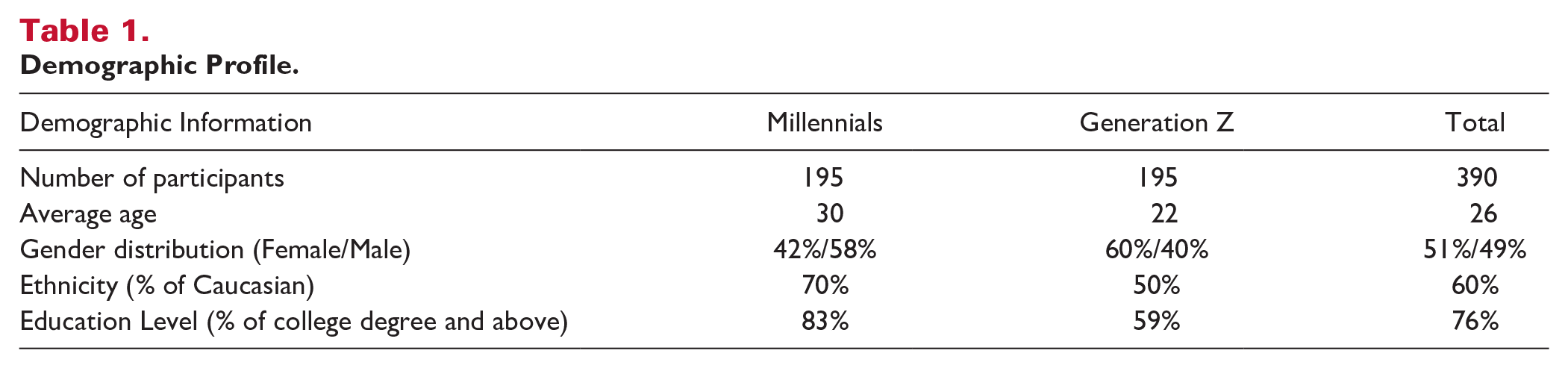
A total of 584 participants were recruited from January to August 2019 in the United States. Due to the varying age distribution features across different data collection channels, the majority of Millennial participants (aged 25 to 40) were recruited from the online marketing survey panel of Amazon Mechanical Turk (MTurk), and participants of Generation Z (aged 18 to 24) were mainly recruited at several major public universities in the United States. To qualify for the study, participants must belong to either Millennials or Generation Z (aged 18 to 40), and they must have previous peer-to-peer accommodation experience, such as staying at Airbnb properties. After removing the incomplete and unqualified (i.e., not in the age range or not passing the attention check questions) respondents, a total of 390 United States-based participants were included as the final sample for the data analysis, including 195 Millennials and 195 Generation Z participants. Table 1 provides the demographic information of each generation group (Millennials vs. Generation Z).
Demographic Profile.
Results
The data analysis procedure is as follows: First, exploratory factor analysis (EFA) and confirmatory factor analysis (CFA) were conducted to verify the reliability and validity of the survey measures. Then, multigroup structural equation modeling (SEM) was conducted to examine the proposed model and answer the research questions.
Confirmatory Factory Analysis (CFA) Results
To verify the reliability and validity of the survey measures adapted from previous literature, CFA was conducted after the initial EFA results confirmed that all the measurement items were grouped into nine distinct variables with high factor loading rates above .600 (Hinkin, 1998; Mody et al., 2020).
As shown in Table 2 CFA results, all the statistical results were within acceptable levels and indicated that the measures were reliable and valid. The degree of internal consistency for each construct was acceptable, with Cronbach’s alpha ranging from .877 to .930 (Nunnally, 1978). The composite reliabilities (CR) estimates ranged from .797 to .866, within the acceptable level (Fornell & Larcker, 1981; Nunnally & Bernstein, 1994). All the average variance extracted (AVE) estimates were greater than .500 threshold as recommended (Fornell & Larcker, 1981). Table 3 provides the means (M), standard deviations (SD), variance inflation factors (VIF), and pairwise correlations between constructs. The VIFs ranged between 1.336 and 2.503, substantially lower than the suggested cutoff line of 10, confirming no multicollinearity issue (Kim & Tang, 2020). All square roots of AVEs along the diagonal were larger than each correlation coefficient between the constructs, ensuring the discriminant validity of the measurement model (Fornell & Larcker, 1981). Thus, the measurement model was suitable for further analyses.
CFA Results of Key Constructs.

Note. χ2/df=1.767 (p < .001); CFI = .966; TLI = .960; RMSEA = .044; SRMR = .037. AVE = average variance extracted
Descriptive Statistics and Correlation Matrix (N = 390).

Note. 1 = value for money; 2 = home benefits; 3 = enjoyment; 4 = authenticity; 5 = sustainability value; 6 = social interaction value; 7 = need for self-enhancement; 8 = social media exposure; 9 = intention to use P2P accommodation; M = mean; SD = standard deviation; VIF = variance inflation factor; square root of AVE in bold for each construct along the diagonal.
To further validate the soundness of the current measurement model, we also conducted alternative CFA nested models to compare with the current measurement model. In the nested model, a single-order (rather than second-order) factor structure was adopted for the constructs of utilitarian value and hedonic value. The model comparison results showed that the current model had a significantly better model fit compared to the alternative nested models: χ2 difference =979.881, df=29, p<.001 (Hair, 2009). Furthermore, the current model had better performances on all the key model fitness indices (Lai, 2015; Ye et al., 2020). The comparison results validated the current measurement model that includes both first- and second-order factors.
Multigroup Structural Equation Modeling (SEM) Results: Millennials Versus Generation Z
Multigroup SEM was conducted to examine the validity of the conceptual model, explore answers to the proposed research questions, and examine variances across the two generational cohorts. The data were divided into two cohort groups based on the participant’s age: Millennials (aged 25 to 40) versus Generation Z (aged 18 to 24) for analysis.
Alternative model
In addition to the current proposed model (Model A), we proposed an alternative, parsimonious model without the direct relation between young people’s need for self-enhancement and their consumption intention of peer-to-peer accommodation (Model B) for the consideration that people’s personal traits may help to shape their value perceptions and extend indirect influence, but direct relation may not be salient due to the complex decision-making process far beyond the effect of one personal trait factor (Zhang et al., 2021).
We first tested Model A, including the direct relation between need for self-enhancement and consumption intention. Table 4 provides the model fit, results of the relations tested in Model A, and significance of pairwise comparisons between the two generation groups (Millennials vs. Generation Z). The alternative model (Model B) results are presented as Table 5 without the direct relation between participants’ need for self-enhancement and their intention to use P2P accommodation. For all the relations common to both models, the results of Model B replicated those of Model A. However, Model B showed a significantly better fit than Model A (χ2 difference=23.476, df=2, p<.001) by using a chi-square comparison test (Hair et al., 2009). From the theoretical perspective, the parsimonious Model B was also stronger in explaining the outcome constructs than Model A. Therefore, we followed the alternative Model B for the concluding result analysis.
Multigroup SEM Results: Model A.

Significant at p < .001; **Significant at p < .005; *Significant at p < .05.
Multigroup SEM Results: Alternative Model B.

Significant at p < .001; **Significant at p < .01; *Significant at p < .05.
To further verify the proposed generation cohort effects, the intraclass correlation coefficient (ICC) of the focal values (value for money, home benefits, enjoyment, authenticity, sustainability value, social interaction value, and social media exposure) was tested for each of the two generational groups as well as for the entire combined sample, respectively. The ICC results indicated good reliability across the three sample sets. The respective average measure ICC results were: ICCMillennials=.929 with a 95% confidence interval from .912 to .943, F(194,1164)=14.050, p=.000,; ICCGenerationZ=.724 with a 95% confidence interval from .661 to .779, F(194,1164)=3.624, p=.000,; ICCCombined=.841 with a 95% confidence interval from .816 to .864, F(389,2334)=6.285, p=.000. The results showed an interesting pattern of ICCMillennials> ICCCombined>ICCGenerationZ, suggesting that Millennials had a much higher in-group similarity as a developed cohort than the younger Generation Z cohort and the entire combined sample, but Generation Z as a developing cohort had fewer in-group agreements across the focal values compared to both Millennials and the entire sample.
Answering the proposed research questions, the current results demonstrated the variances between the two young generational cohorts. Specifically, the need for self-enhancement was more salient among Millennials and showed positive impacts on all the related value propositions but extended limited influences to Generation Z (RQ1). And the pairwise comparison results confirmed the significant differences regarding the effects of self-enhancement among the two generations (RQ3). On the other hand, while all the five value proposition factors had significant positive influences on Generation Z’s intention to use peer-to-peer accommodation, including utilitarian, hedonic, sustainability, and social interaction values, as well as the enhanced social media exposure opportunity; only utilitarian and hedonic values positively affected Millennials’ choice of peer-to-peer accommodation (RQ2). However, the pairwise comparison results did not show significant differences between the two generations in terms of their consumption intentions (RQ3).
General Discussion
Built on the theoretical frameworks of the consumer socialization process and generational cohort comparison, the current research provides insights into the driving factors of the two young generations’ (i.e., Millennials vs. Generation Z) intention to choose the popular sharing economy business model, in particular, the peer-to-peer accommodations. Consistent with the theoretical arguments, the study finds similarities between the two groups: in general, peer-to-peer accommodation’s unique values strongly influence young people’s intention to choose such an alternative consumption, particularly, the utilitarian and hedonic values show the strongest impact across generations. On the other hand, differences exist between the two age groups and indicate the moderating role of generational cohort in the current context: the personal trait in young people’s consumption socialization process, namely, the need for self-enhancement, plays a more significant role in shaping the value perceptions for Millennials than for Generation Z.
Theoretical Implications
Expanding the extant peer-to-peer accommodation literature, this research provides insights regarding the boundary conditions of consumers’ choice of this emerging lodging option. Findings from the current research provide an answer to reconcile the mixed findings in the existing literature about what drives consumers’ choice of peer-to-peer accommodation (Guttentag et al., 2018; Shin et al., 2020; So et al., 2018:): different motivations can have distinct impacts on various customer cohort groups when considering peer-to-peer accommodation. To that end, our research also extends prior consumer segmentation research in the peer-to-peer accommodation literature (Guttentag et al., 2018). Drawing on consumer socialization theory and generational cohort theory, our research provides a more straightforward and feasible segmentation approach, that is, reaching diverse consumer motivational groups via generation/age-based market decomposition.
Our work also contributes to the consumer socialization literature and generational cohort research with empirical insights collected from the hospitality consumption context. Consumer socialization theory highlights the power of learning processes and the relevant external settings in shaping consumers’ norms, attitudes, motivations, and behaviors in terms of consumption activities (Jackson et al., 2011; Ward, 1974). Broadly, this theory explains the generational differences in consumption culture, given that the shared life experiences during adolescence and early adulthood significantly vary by generations and hence result in diverse consumption patterns across generations (Gardiner et al., 2014; Jackson et al., 2011; Ward, 1974). In line with such theoretical perspectives, our work joins prior literature in highlighting the important commonalities and differences across the two young generations: Millennial and Generation Z. On the one hand, our research shows that both younger generations embrace the sharing economy as it facilitates their self-realization as digital nomads, smart consumers, and social media natives (Newport, 2020). As the sharing economy affords “Instagramable” experiences for young consumers to share and establish a positive self-image on social media, it presents a unique lens for us to speculate on younger consumers’ socialization processes conditioned by the contemporary digital technology and information system (Wang et al., 2012). Such a digitally charged socialization process is characterized by a mutual process of young consumers actively sharing and simultaneously being shared with physical, informational, experiential, and self-imagery assets in the burgeoning era of the sharing economy (Guttentag et al., 2018; Kim et al., 2018). This grand wave of technology-prompted social changes has significantly affected how the younger generations think, consume and share: their decision-making process and adoption of communication channels are increasingly shaped by the consideration of shareability (Muratore, 2008; Newport, 2020). Acknowledging the theoretical prominence of shareability as facilitated by the macro-environmental power of technology development will benefit future research in enhancing our understanding of evolving consumer values in the sharing economy.
Moreover, the current findings also indicate generational differences between the two cohorts, which can benefit other contexts for a better understanding of consumer socialization and consumption decision-making processes. Age has been found as a significant factor leading to differences in customer attitude, usage intention, satisfaction, and value perception (Kuppelwieser & Klaus, 2020; Nysveen et al., 2005). Compared with older generations, college-age Generation Z is still in the learning process of forming their consumption patterns and their consumption-related values are still evolving, which is reflected in their lower group inter-rater agreement indices than Millennials. At the early stage of consumer socialization, young people stress the notion of conspicuous consumption as a means of self-enhancement and tend to learn expressive elements of consumption from their peers and popular media (Bales et al., 1953; Noble et al., 2009; Ward, 1974). Generation Z embraces many concepts popular among young people and in the media (e.g., smart consumers; innovative, authentic, and fun person; caring about social responsibility). They strive to demonstrate their self-concept and positive self-image through socially interactive channels such as social media. And there is more group homogeneity than individual variance among this younger age group in terms of their need for self-enhancement at the early stage in the consumption socialization process. As moving up on the social and economic ladder along with age, Millennials have come to the late stage of the consumer socialization process. They are relatively more certain of what they really need, want, and desire. Social media exposure plays a less important role in consumption selection as they have passed the early stage of establishing self-perception (Tian et al., 2001) by seeking social approval and others’ appreciation (Gardiner et al., 2014). Furthermore, the individual’s need for self-enhancement becomes increasingly salient among Millennials in shaping their value perceptions and evaluations, although this self-realization motivation does not have a direct impact on their specific consumption intention.
Practical Implications
This research helps industry practitioners better understand the current young consumers who are still in the process of shaping their consumption patterns but have already emerged as a strong segment with great buying power in the market. Today’s young people, who have started to travel from an early age, highly value hedonistic and authentic experiences in addition to the practical, utilitarian considerations. Thus, to target young guests, peer-to-peer accommodation practitioners may emphasize accommodations in local cool neighborhoods where young people can discover the hidden local gems away from popular tourist spots. The marketing communication messages sent to young consumers may highlight keywords such as fun, exciting, adventure, unique, novelty, authenticity, and local flavor, as these are the taglines young people favor and seek for self-promotion.
Furthermore, the inter-generational comparisons conducted in this study provide practitioners a clear and easy identification of the target market based on a simple demographic criterion—age. The study results show that the early-twenties Generation Z consumers are driven by all the major values provided by peer-to-peer accommodations: utilitarian, hedonic, sustainability, and social interaction values. Targeting this younger segment, Couchsurfing positions its hospitality service as “free” and promotes its marketing slogan as “stay with locals and meet travelers—share authentic travel experiences.” On the other hand, the late-twenties to late-thirties Millennials focus more on the utilitarian and hedonic attributes when choosing peer-to-peer accommodations. Airbnb has recently launched a new service called “Airbnb Luxe” that is positioned and priced as luxury home-rental experiences. Airbnb Luxe focuses on providing enhanced accommodations and authentic experiences cooperating with local partnerships, which is a radical departure from most current sharing platforms’ positioning on price, convenience, or sustainability (Eckhardt et al., 2019). This luxe experiential positioning may better serve the Millennial segment as they have more disposable income and spend more than other generations for a smart choice and a desirable experience (Alam et al., 2020), and show a strong preference for hedonic values.
Generation Z has been emerging as a market segment with great potential buying power for tourism, and they have distinct characteristics different from all other generations. Generation Z is still in the process of developing their consumption preferences, and therefore it is worthwhile for hospitality and tourism companies to start investing in them now to establish their brand loyalty. The current findings indicate that social media plays an important role in Generation Z’s consumption decisions. Social media provides a convenient, socially interactive platform for self-expression and self-presentation, which helps to establish a positive self-image to achieve self-enhancement. Driven by social media exposure opportunities, the more special and different the experiences are, the more young travelers may desire; as these “Instagramable” destinations and experiences are Generation Z’s social media currency, bringing them social power (Mehraliyev et al., 2020). Therefore, service experience design that Generation Z can relate to and brag about on their social media will help to develop this market segment’s loyalty from an early stage, which benefits not only the immediate but also the long-term customer-company relationship building.
The current research findings can also be applied to the traditional hotel industry, in addition to the emerging peer-to-peer market. Compared with older generations, Millennials and Generation Z prefer non-cookie-cutter lifestyle brands when choosing hotels (Chen et al., 2021; Mathews, 2019). Hotel chains can leverage their newly developed lifestyle brands or cool brands (e.g., Hilton’s Canopy and Hyatt’s Centric) to create authentic and personalized experiences to meet young consumers’ preferences in hotel selection. Hotel companies can also leverage their exterior and interior designs to offer Instagramable settings and scenes for young people taking and sharing pictures of themselves at hotels on social media. This approach can not only satisfy young guests already staying at the hotel but also attract potential young consumers, as many young people select hotels based on the information and photos posted on social media and online reviews (Hertzfeld, 2019; Little, 2020). Such a social media marketing strategy is particularly important to reach out to Generation Z consumers, whose many consumption decisions come from social media inspiration and online peer reviews.
Limitations and Future Research
The current research has several limitations to acknowledge. First of all, the respondents are from only one country—the United States, and thus, future research should consider the cross-cultural implications of the current findings. Second, this study does not necessarily separate the generational versus life stage drivers to explore the underlying differences across the two generational cohorts. Future research can employ longitudinal tracking to understand whether it is a generational cultural shift or the life stage differences that are causing the variances in travel preferences. Finally, the current research only focuses on one industry context—peer-to-peer sharing accommodation, while future studies can expand into other sectors within the hospitality industry to further our understanding of the two generations.
Footnotes
Appendix
Declaration of Conflicting Interests
The author(s) declared no potential conflicts of interest with respect to the research, authorship, or publication of this article.
Funding
The author(s) received no financial support for the research, authorship, or publication of this article.
