




Abstract
The subjugation of Gullah Islanders has transitioned from enslavement to environmental racism, now compounded with yet another force of displacement: climate change. This research aimed to understand the impact of climate change on the Gullah of Hilton Head Island (HHI), South Carolina, emphasizing the need for bespoke reparations to address longstanding inequities and injustices. This case study utilized participatory methods, namely semi-structured interviews with Gullah community leaders, to illustrate the lived experiences of Native Islanders. A thematic analysis of interview transcripts identified concerns regarding restricted access to sweetgrass for traditional basket sewers, climate change impacts, inadequate post-disaster support, and a failure to supply appropriate reparations and dismantle systemic racism. Environmental and climate justice are employed as theoretical frameworks to explore the compounding consequences of climate change and inequitable development. Collaborative efforts with the Gullah community were found to be essential to achieving procedural justice in addressing inequity. “Just” outcomes are those that both embed Gullah culture and promote antiracism within climate policy. Proposed interventions include policies addressing land dispossession, nature-based adaptation measures, preservation of historic Gullah neighborhoods, equitable distribution of aid, and capacity building for disaster response. Through implementing these measures, HHI can harness the potential of climate adaptation and mitigation strategies to deliver reparations and preserve Gullah culture on the island.
INTRODUCTION
“De wata bring we and de wata gwine tek we bak.”—Gullah Geechee proverb 1
Hilton Head Island (HHI) is disappearing into the sea. 2 The island, best known for its sprawling golf courses and resort “plantations,” 3 is the native land of the Gullah, descendants of the enslaved West Africans who worked on those plantations. Gullah culture is intrinsically linked to its ancestral land, which the Native Islanders have struggled to retain amid historic and ongoing bids of displacement, primarily by developers. Now, the looming threat of climate change has only added to the external forces displacing the Gullah from their home. Yet its impacts on the Gullah community are not widely studied in academia, which has justifiably focused on cultural preservation and land rights. 4
This research establishes climate change as a complementary cause of ancestral land loss, compounding the injustices of uneven development and environmental racism. 5 Through semi-structured interviews with Native Islanders, this article reveals how intersecting drivers of land dispossession exacerbate the environmental and climate injustices disproportionately experienced by the Gullah community on HHI. Furthermore, this article presents the reparations proposed by the Islanders to illustrate how their local knowledge and experiences can enrich climate justice scholarship.
BACKGROUND
Gullah culture is characterized by spiritual and ancestral ties to place (Fig. 1). The Gullah have resided on the relatively isolated Sea Islands for 500 years, but the arrival of developers in the latter half of the 20th century displaced many Gullah families and threatens the survival of their culture. 70% of the island’s area is now “secured within gated communities” 6 called “plantations,” 7 and the Gullah have lost access to all but a fraction of their cultural sites.
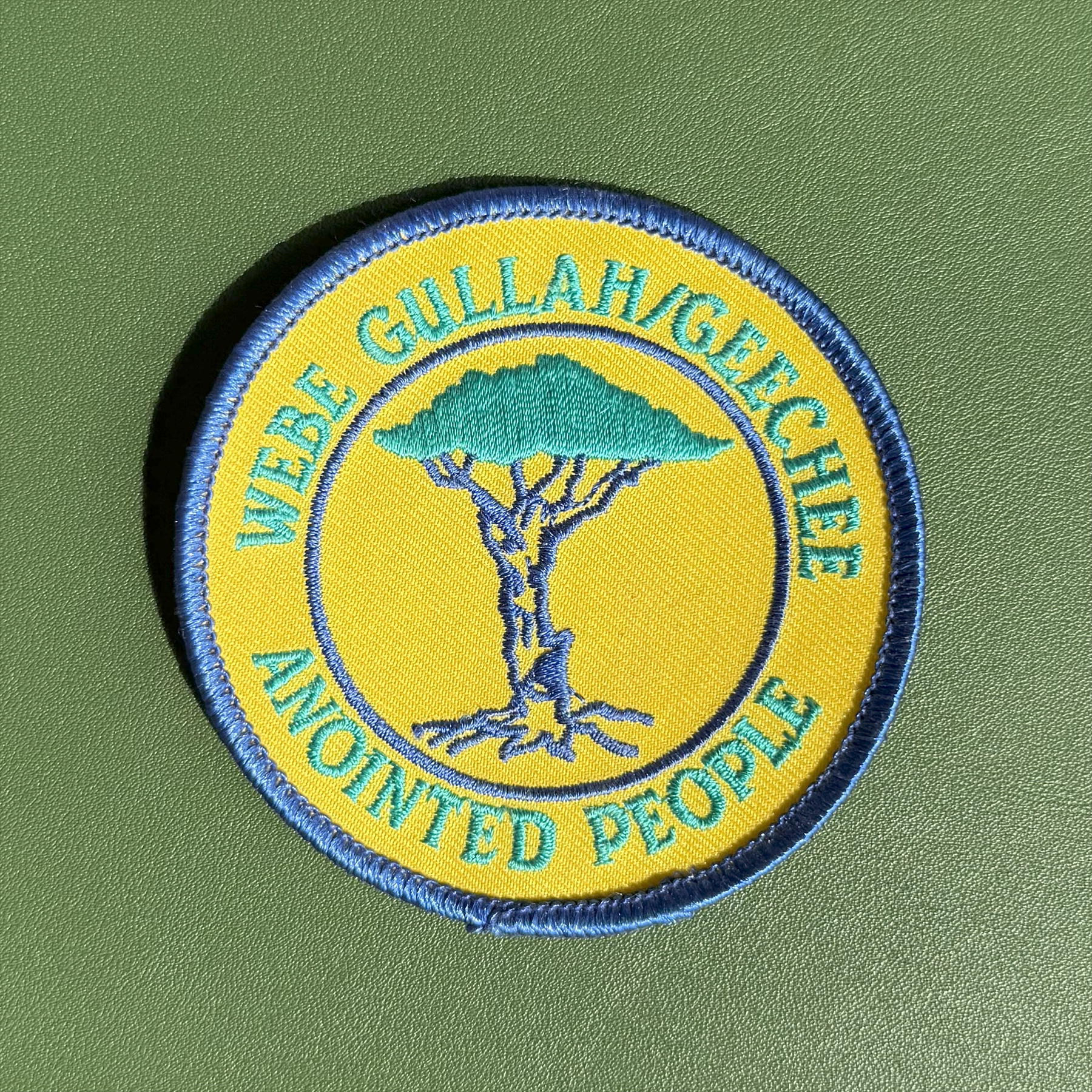
The Gullah Geechee Nation flag symbol badge. As described by Queen Quet: “Gullah Geechees are inextricably tied to the land. And if you see our tree on our Gullah Geechee Nation flag, you know that it’s human bodies intertwined, but they are rooted in the land.”a aGullah Geechee Nation, Stop Mascotification and Economic Exploitation in the Gullah/Geechee Nation. Organize For. (2020). https://campaigns.organizefor.org/petitions/stop-mascotification-and-economic-exploitation-in-the-gullah-geechee-nation (Last accessed on June 19, 2024).
This tremendous loss of land to development is illustrative of a phenomenon known as “destructionment.” The Chieftess of the Gullah Geechee Nation, Queen Quet, coined the term to describe how “destructionaires” brought environmental degradation and displacement of the island’s native population in a “genocidal attack of removal” under the guise of sustainable development. 8 Although Queen Quet attributed this phenomenon to HHI specifically, 9 the concept will resonate with those who have observed environmental racism in the form of green gentrification 10 and the disproportionate development of white spaces. 11
HHI claims to be “America’s first eco-planned community,” 12 founded on the sustainability standards of pioneer developer Charles Fraser; the first dictum of Fraser’s Seven Basic Principles of Development: “Do not impose development on the environment.” 13 This intention was never realized, as evidenced by the development that has displaced HHI’s Native Islanders. HHI does, however, abide by Fraser’s final rule, “Think always of enhancing the quality of life for those who would be residents of the Island,” 14 by centering consideration around newcomers’ and tourists’ benefit—not the Native Islanders, nor the island itself.
Gullah traditions tied to the natural environment, such as sweetgrass basket sewing, have consequently been forced to adapt in the face of a deteriorating environment and a changing climate. 15 Sweetgrass basket sewing is a matter of particular interest in this study because access to the material has been made more difficult due to urbanization and land privatization, a concern noted by both the participants and the USDA. 16 The craft has pivoted from functional to artistic with the rise of tourism. 17 Many sewers now sell their baskets to generate income to sustain their cultural traditions. 18 This practice has therefore come to represent the means of survival of the Gullah culture itself (Fig. 2 and 3).
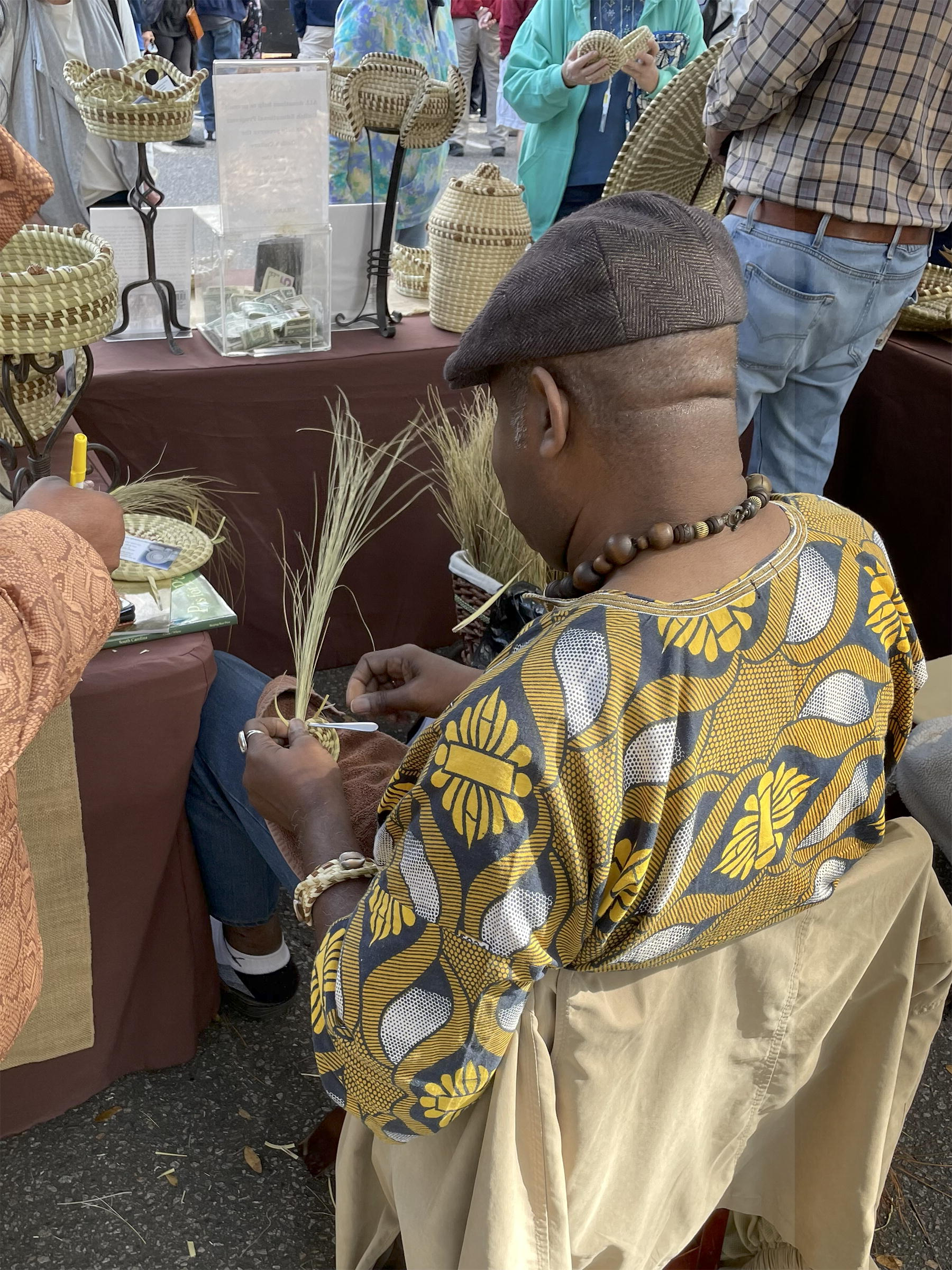
Sweetgrass basket sewing at the island’s Gullah Festival, 2022.

Sweetgrass basket, sewn by Michael Smalls and Dino Badger.
Research methodology
This research examines the challenges faced by the Gullah community of HHI through the lens of climate justice, an extension of environmental justice focused on the disproportionate impacts of climate change on vulnerable populations. This section details the participatory case study approach, centered on Gullah perspectives.
Theoretical framework
This research draws from the scholarly discourse on environmental justice and the link between social justice and environmentalism. 19 As a subset of environmental justice, climate justice forms the theoretical lens by which this research views the intersection of social injustice and the impacts of climate change on the Gullah people. Climate change is “the largest environmental justice issue of all time” (Fig. 4) 20 and, as a distinct but related concept, climate justice has come to be understood as a recognition of the long-term unequal impacts of climate change on vulnerable communities. 21
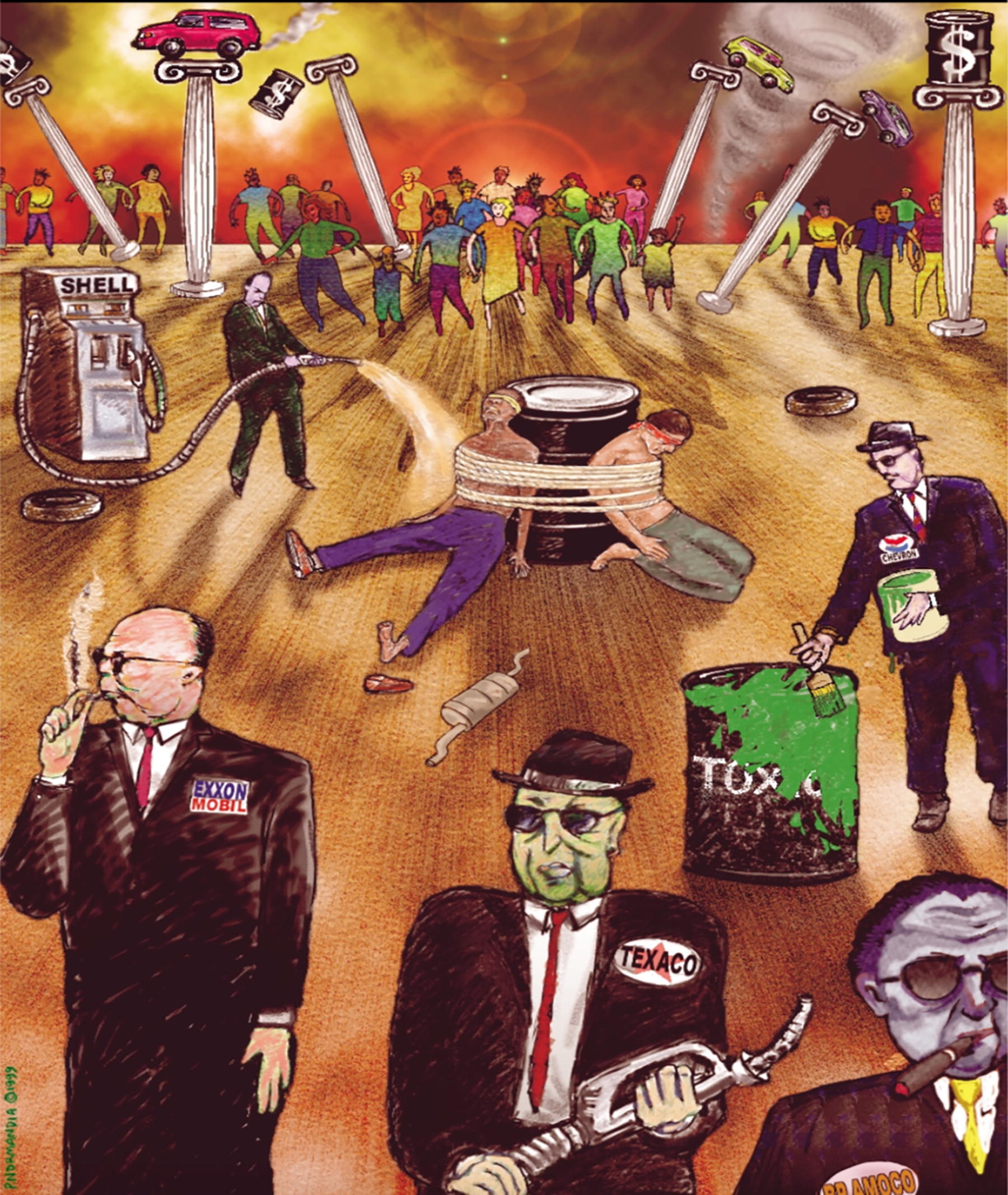
Depiction of oil company CEOs in “Greenhouse Gangsters and Climate Justice.”a Cover art by Paul Normandia. aKenny Bruno, Joshua Karliner, and China Brotsky. “Greenhouse Gangsters vs. Climate Justice.” CorpWatch (1999).
The origin and redress of climate impacts are matters of both local and global justice. 22 At the international level, climate justice confronts nations’ unequal contributions to climate change and their respective mitigation responsibilities. 23 While the United States has disproportionately higher emissions compared to most nations, it is not a monolith; significant disparities in individual emissions exist within countries, reflecting broader issues of economic inequality, class, gender, and race. 24
In the context of this case study, climate justice is most effectively applied at the local level, where procedural justice takes precedence. Like environmental justice, climate justice aims to prevent vulnerable communities from bearing disproportionate environmental harm by emphasizing procedural justice through inclusive and transparent participatory processes. 25 Unlike “resilience,” a notion often invoked to describe a return to stability in the wake of environmental disruptions, climate justice challenges the systemic inequities that resilience frameworks implicitly reinforce. 26 Narratives of resilience tend to uphold capitalist systems that perpetuate social violence through hierarchy, dispossession, and exclusion from decision-making processes. 27 In contrast, climate justice addresses the structural injustices rooted in racial capitalism which exploit and marginalize groups like the Gullah. 28 Therefore, climate justice offers a transformative approach to dismantling inequities and advancing procedural justice.
Climate justice also operates across different temporal scales. Since carbon dioxide can remain in the atmosphere for up to 300 years, emissions become a matter of intergenerational justice. 29 While much focus is placed on urgent actions to protect future generations, the lingering impacts of past injustices also warrant consideration. To address persisting inequities, climate action must be viewed within the context of historical injustices, such as the legacy of slavery. 30
Case study structure
A qualitative case study was chosen as the most effective means of applying an interpretivist approach centered around the perspectives of the participants to advance procedural justice through the amplification of Gullah voices. This was facilitated by close cooperation with the chosen locality, organizations, experts, and participants. A participatory approach was utilized, which engaged community members with the research through the sharing of knowledge and resources. Interviews were the primary method of data collection, complemented by photography.
Interviews
The Gullah maintain a long-held oral tradition independent of their literacy and often prefer verbal communication. 31 Therefore, out of respect, interviews were conducted in person. With consent, interviews were recorded and transcribed by the researcher. To support the preservation of the Gullah language, participants are quoted directly, without English-based corrections. 32 Interviews were semi-structured, and participation was limited to Gullah residents of HHI. Participants’ names have been removed to protect their identities. Transcripts were thematically evaluated to identify participants’ most significant concerns. Modal keywords were assigned themes around development, climate change, or reparations.
Research ethics
It is essential that researchers demonstrate awareness of Gullah history and past injustices to the Gullah community in order to conduct this type of social research. 33 White researchers who stole personal belongings, stories, and songs left behind a ‘legacy of secrecy’ which has become “part of the thread that weaves together the lives of the Gullah.” 34 This legacy has justifiably sewn distrust towards researchers among many Gullah folk who fear further exploitation. To build trust with the Gullah community, I engaged in community activities and volunteering. Rather than viewing Gullah people as “voiceless specimen(s) to be viewed through a magnifying glass,” 35 I involved participants and the community in the research process, whose concerns informed the scope of this study; my aim is to serve as a conduit for amplifying their voices.
Findings
This section presents key themes emerging from participant interviews, revealing how climate change, development, and systemic inequities intersect to the detriment of the Gullah on HHI. The discussions focus on several critical areas: the role of sweetgrass in cultural and coastal preservation, the intensifying challenges posed by hurricanes and flooding, and the inequitable support provided by federal agencies. Participants’ testimonies underscore the urgent need for restorative justice measures, including reparations addressing historic and ongoing injustices exacerbated by climate change, alongside systemic change to secure land rights, enhance adaptive capacity, and increase Gullah participation in decision-making processes.
Sweetgrass and erosion
Sweetgrass (Muhlenbergia filipes) grows on the southern US coast and is often used to make traditional Gullah baskets. 36 The baskets were originally sewn for utility but are now primarily decorative, thus pivoting the craft from a survival tool to a vehicle of cultural heritage. 37 Many sweetgrass basket sewers promise to “continue their craft as long as there is material available,” 38 in the interest of preserving Gullah culture. Though once abundant on HHI, sweetgrass is becoming increasingly difficult to find. Residential development of plantation homes has not only damaged sweetgrass habitats, 39 but also privatized land and limited access to sites where sweetgrass still grows. 40 This enclosure is a continuation of colonial dispossession in which access to native land and natural resources is restricted, 41 inhibiting the Gullah people’s ability to sustain their cultural practices and deepening their vulnerability to climate change.
If sweetgrass becomes endangered, it will not only jeopardize the continuation of an indispensable cultural tradition, but the island itself and the Gullah who reside here. Sweetgrass is the first line of defense against tidal flooding, helping to stabilize the coastline and shielding the area from the impacts of sea level rise (Fig. 5). 42 Without its protective barrier, HHI’s beaches will erode, leading to increased flooding and loss of land, 43 further exacerbated by sea level rise. 44 This not only endangers the livelihoods of the Gullah craftspeople who rely on sweetgrass but also their homes and the island’s ecological balance.
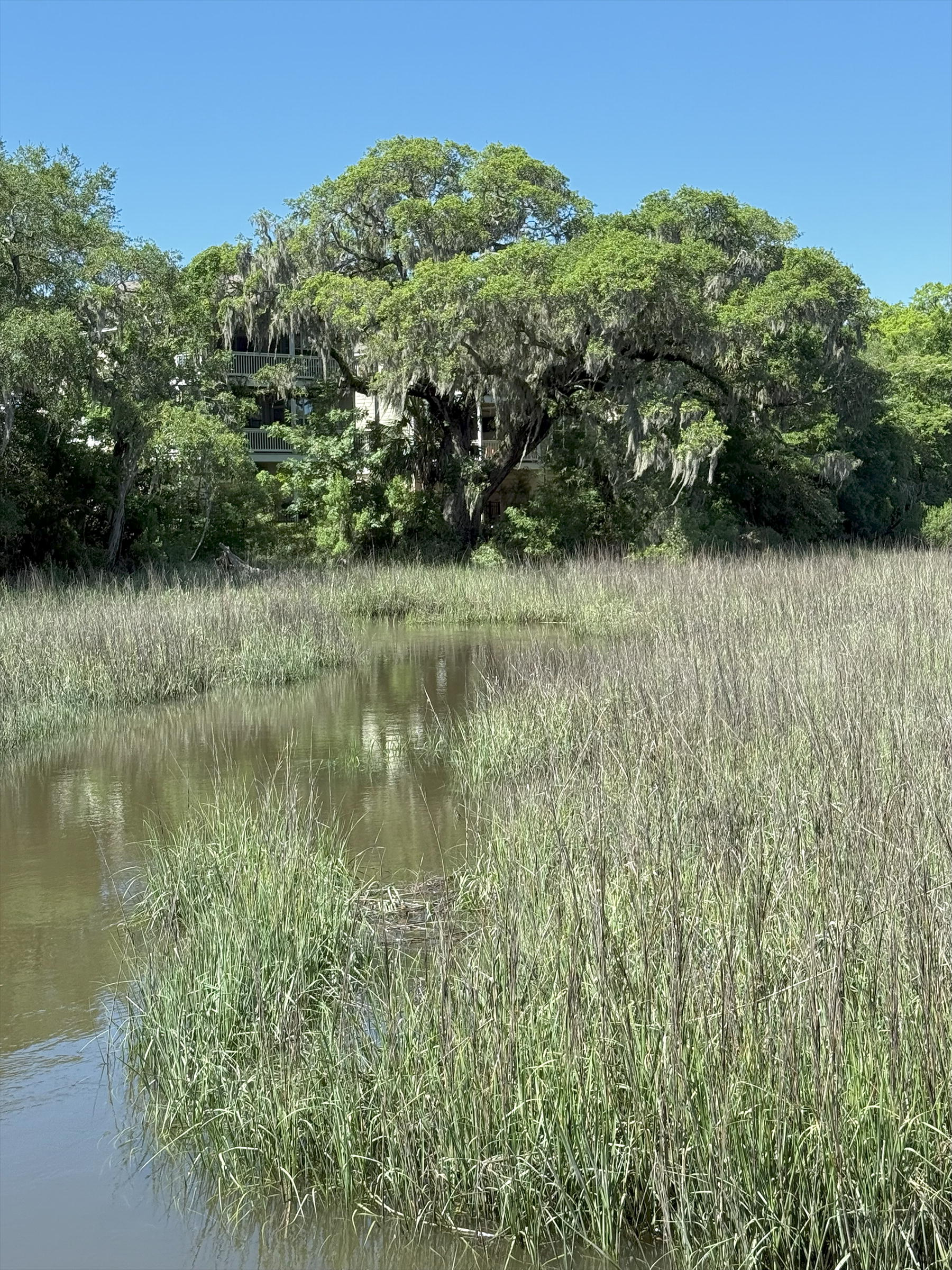
Saltmarsh at Honey Horn, HHI, 2025.
Michael Smalls and Dino Badger, seventh-generation basket sewers, work to ensure the continuation of Gullah cultural traditions through teaching basket sewing classes at the Coastal Discovery Museum (Fig. 6). 45 Their endeavor reinforces Campbell’s notion of education as cultural preservation. 46 While Participant H fundamentally supports this philosophy, she raises concerns about appropriation of the craft:
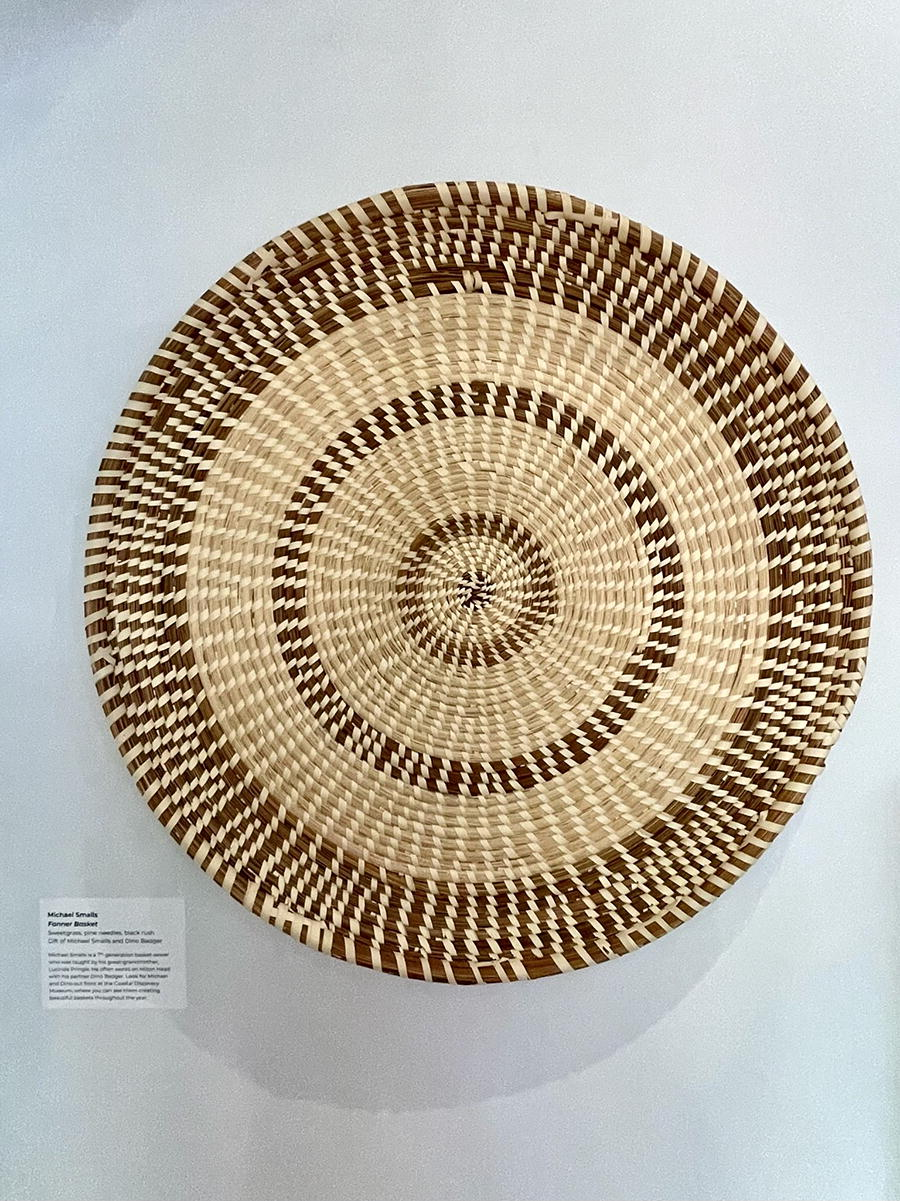
Fanner basket sewn by Michael Smalls, Coastal Discovery Museum, HHI, 2022.
How do you balance preserving Gullah baskets, as an example, and the value the beauty, the creativity, and the skill? How do you preserve that and also anticipate that there are predators out there who want to steal your intellectual or cultural property and make money? (Participant H)
Ultimately, Participant H believes that anyone, regardless of race, should learn the practice of sweetgrass basket sewing if it is a conduit for learning about Gullah culture. Sharing the importance of this tradition will be essential to preventing the erosion of cultural heritage while drawing attention to the erosion of HHI.
Sea level rise. Though sea level rise was not a dominant topic among participants, it is already present on the island. 47 Over the past 78 years, HHI has experienced 9 inches of sea level rise, 48 with 1-in-100-year extreme sea level events “projected to occur at least annually in more than half of all tide gauge locations by 2100 under all considered scenarios (high confidence).” 49 Hauer et al. add that the US Coastal Floodplain zone will experience increased risk of flooding, storm surge, saltwater intrusion, and soil salinization. 50
Sea level rise is often viewed in terms of property loss, with coastal erosion being one of its most noticeable effects. 51 For the Gullah community, however, this loss transcends property value or acreage, representing a profound erosion of cultural identity and traditions that are inextricably tied to the land. As a property owner on Skull Creek, Participant B is witnessing sea level rise firsthand, observing that “land that I own now today that was 0.33 acres on the waterfront, the acreage has diminished considerably. The land has washed away.” This is not solely a loss of property but a diminution of the Gullah people’s connection to their ancestral land. 52 Sea level rise thus exemplifies environmental racism, not only in its disproportionate impacts but also in its racialized production of unequal value under systems of racial capitalism and settler colonial conceptions of property ownership. 53
The risks posed by sea level rise are further exacerbated by changing rainfall patterns, as observed by Participant B. 54 This convergence of climatic shifts and rising seas amplifies the frequency and severity of flooding, leaving coastal regions more vulnerable. 55 For the Gullah community, these increased flood risks jeopardize the preservation of their land and culture, as well as their safety.
Hurricanes and flooding
HHI has historically been insulated from hurricanes, but changing weather patterns have resulted in the occurrence of unprecedented storms. 56 Hurricanes and flooding were thus the most identifiable climate change impacts, with all participants mentioning the fallout, particularly of Hurricane Matthew, a Category 5 hurricane that tore through HHI in 2016 (Fig. 7). 57 It was among the most devastating hurricanes the East Coast had experienced in decades, with wind gusts reaching 160 mph. 58
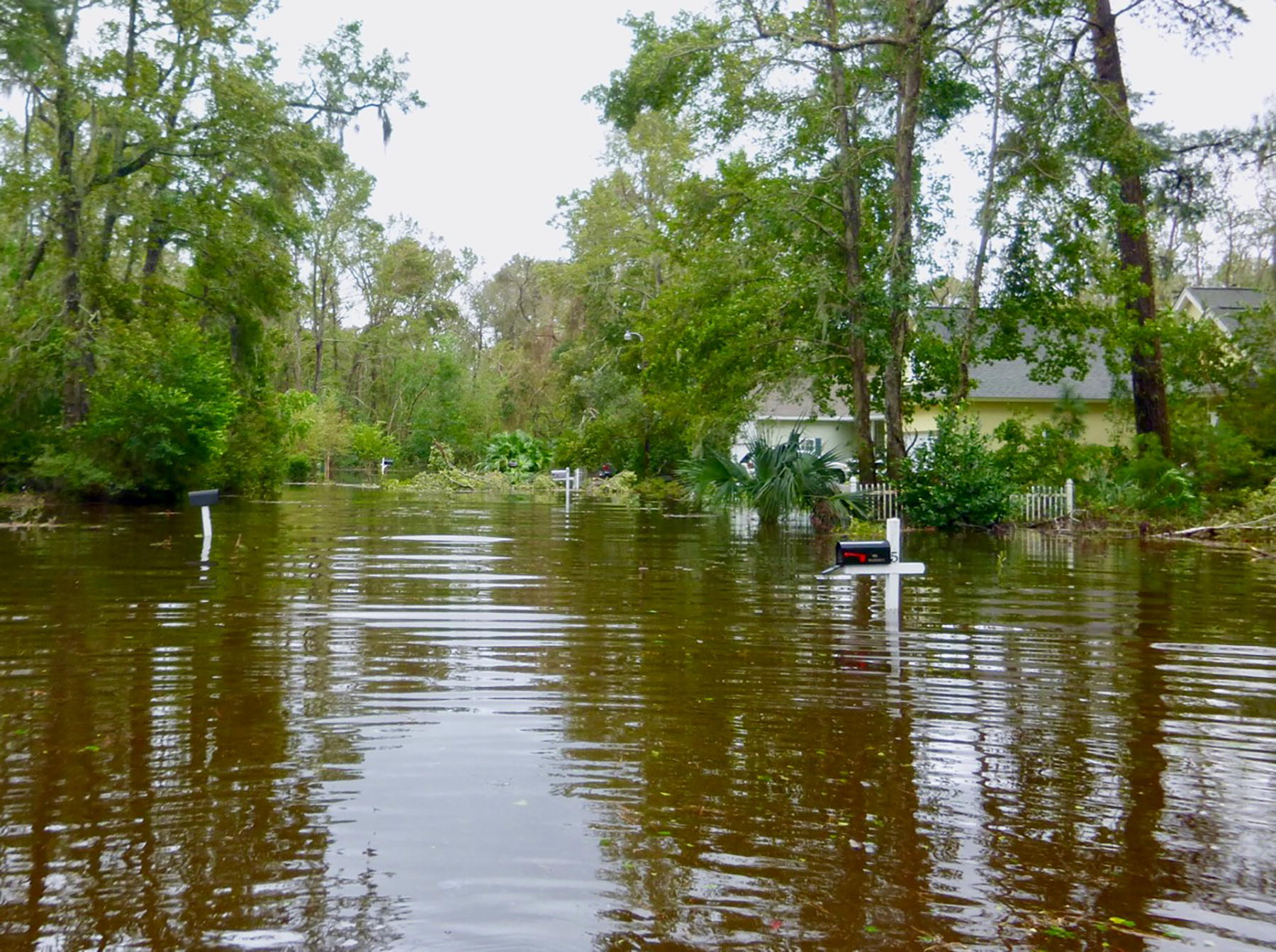
Flooding in Ward 1, the area with the highest proportion of Gullah residents, following Hurricane Matthew.a aBrian Kühens, www.kuhens.com (2016). www.kuhens.com (Last accessed on June 20, 2025).
Shorn of 120,000 trees, the island’s landscape has changed drastically. 59 Participants S and H both recall the response by members of the Historic Gullah Neighborhood, Stoney:
Gullah people don’t leave. Sometimes they don’t have the money to leave, and sometimes they don’t have someplace to go. Sometimes, it’s Granny says, “I’m not going,” so then the family doesn’t go because Granny’s staying and they are staying to protect Granny. So, I know people who were wading through water waist-deep after Matthew … people were literally canoeing to different houses. And people stayed. And that’s the biggest fear that I have for the Gullah community. Because if we have another storm like that, getting people to go is paramount. (Participant S)
In response to the growing threat posed by hurricanes on HHI, Participant H brought together community leaders, academics, and Native Islanders to encourage evacuation, adaptation measures, and policy change to support vulnerable communities. However, she does not feel that the urgency she felt was recognized, resulting in maladaptive disaster response:
During Matthew, there were Native Islanders who did not leave because they couldn’t. There was flooding on Native Islander property. And if I’m not mistaken, there was property here where people were knee-deep or waist-deep in water because of the flooding that happened during Matthew. (Participant H)
These experiences underscore the lack of resources and support available to the Gullah community, rendering them disproportionately vulnerable to climate impacts and forcing them to face the dangers of extreme weather without adequate assistance or, in some cases, any means of escape.
FEMA. The Federal Emergency Management Agency (FEMA) is responsible for providing aid to the victims of natural disasters, but following Hurricanes Katrina and Rita, 20,000 heirs’ federal assistance applications were rejected due to the absence of official deeds. 60 Gullah landowners without deeds were excluded from consideration until 2018, but many remain worried they will be denied assistance regardless of policy change. 61 This concern is validated by the needs of vulnerable groups remaining unmet, even when recovery funds are distributed: “FEMA gave a stat that federal assistance in minority communities has like a 2% effective rate, like that’s crazy” (Participant A). A 2020 report by FEMA’s National Advisory Council accused the agency of biased aid distribution, asserting that FEMA recovery programs “provide an additional boost to wealthy homeowners and others with less need, while lower-income individuals and others sink further into poverty after disasters.” 62 Participant H also attests to the discriminatory nature of FEMA’s distribution of aid across the Gullah Geechee Corridor. The presence of such inequities in disaster recovery produces avoidable negative outcomes for vulnerable groups, such as financial hardship, displacement, and physical danger. 63 FEMA’s inequitable distribution of aid to the Gullah, the principal vulnerable population of HHI, exemplifies structural environmental racism and climate injustice by placing the burden of climate impacts on marginalized communities, thereby deepening inequalities in the wake of climate-induced disasters.
Reparations
All participants believe reparations are necessary to secure justice for the Gullah. But none believe financial compensation to be a sufficient equity measure, despite it being the most popular form of reparations in the US. 64 To use Participant A’s response as a representative example,
This country was built on the backs of free labor … that’s a whole ‘nother conversation when you talk about financial repair, right? I’m not sure that even the mighty United States is ready to write that check. … some of the systems that are in place currently that in a lot of cases, could still resemble bondage … have been put in place along the way that have helped keep people down. So, to me, repairing that is a hell of a lot more important than writing everybody a check for whatever it is, right. … You really want to position the system so that it is truly equitable. And we’re still not quite there yet. (Participant A)
All participants advocate for education. Participant S additionally recommends land tax abatement, social services for vulnerable communities, and dismantling systemic racism. Participants A and B assert that the Town of HHI should invest in areas of lower density—namely Gullah neighborhoods—rather than focusing on the more profitable, densely populated areas of the island. Participant B believes restoring land rights to be an essential reparative measure but remains uncertain that HHI, let alone the US, will deliver.
Participant B further expressed that the Gullah are underrepresented in decision-making, saying, “You have to almost knock the door down to be a part of it.” Such procedural injustice excludes the Gullah from shaping policies on issues that directly affect their communities. Other participants commend the extraordinary efforts of Gullah leaders, like the late Senator Pinckney’s championing of the Uniform Partition of Heirs Property Act, 65 but believe that there is much left to be done to abolish racism—environmental or otherwise—and achieve climate justice.
DISCUSSION
The following discussion draws from climate justice theory to inform a path towards equitable adaptation and mitigation. Grounded in the concepts of restorative, procedural, and distributive justice, this section explores how reparations could address the compounded impacts of development and climate change on Gullah cultural heritage and environmental stability.
Justice. Restorative justice aims to amend past and present transgressions. 66 In the context of the Gullah, restorative justice could take the form of reparations, specifically to address the consequences of injustices exacerbated by climate change. All reparations should be informed by the needs of the Gullah community as a means of advancing procedural justice, thus giving the Gullah an equal say in what reparations are needed. Based on the participants’ feedback, financial restitution is warranted to compensate the Gullah for the detrimental impact of residential development on their cultural heritage through the destruction of sweetgrass ecosystems, which has also increased the Native Islanders’ vulnerability to climate change. There is also the material deficit resulting from the inequitable assistance provided to the Gullah by FEMA. From a distributive justice perspective, the Gullah are not only disproportionately burdened by climate change due to the overdevelopment of plantations and resorts at the expense of the Gullah, but there is an uneven distribution of benefits from development in Gullah communities.
However, financial restitution alone is insufficient; the sociopolitical environment that has enabled centuries of Gullah land dispossession is the source of the community’s historical and continued marginalization and the reason why they now face a vulnerability to climate change. In recognition of both the past and present transgressions, reparations should be accompanied by systemic changes to the governance of HHI, especially regarding land rights, to inform future strategies for addressing climate change so the Gullah are not disproportionately affected.
Adaptation and mitigation. Climate change will intensify existing social inequities unless appropriate climate adaptation and mitigation strategies are employed. 67 These areas are thus becoming widely recognized as vehicles for advancing adaptive capacities equitably to facilitate inclusive participation and just distribution of resources. 68 Therefore, the topics of climate change adaptation and mitigation deserve consideration in discussions regarding reparations.
Collaboration between the Town of HHI and Native Islanders could reduce inequity through co-development of environmental policies addressing land dispossession, protection of historic Gullah neighborhoods and heirs’ properties from sea level rise and flooding, distribution of aid, social services, nourishment of beaches and marshes, and capacity building for future disasters. Though not a comprehensive list, these issues must be addressed to achieve environmental and climate justice for the Gullah of HHI.
CONCLUSIONS
After centuries of subjugation and land loss, the Gullah now face double dispossession. 69 In addition to environmental racism, the Gullah community must also contend with intersecting drivers of displacement: development and the climate crisis. This research illuminates the climate injustices faced by the Gullah residents of HHI, highlighting the compounding consequences of anthropogenic climate change and inequitable development, which disproportionately affect Native Islanders.
By examining these intersecting issues, this study illustrates how historical and contemporary injustices shape the vulnerabilities of marginalized groups, emphasizing the ethical imperative for inclusive, justice-oriented climate action. Using a participatory case study methodology, this research amplifies Gullah voices, drawing on local knowledge and experience to promote procedural justice and inform the distribution of reparations based on the community’s needs. The findings emphasize the need to address inequities perpetuated by environmentally racist practices through application of climate justice principles in policymaking. Policies are most equitable when they engage meaningful participatory processes that involve members of the Gullah community. This study highlights the importance of centering the experiences and needs of marginalized communities in justice interventions. Participants’ recommendations for reparations and policy change further underscore the need for meaningful action to ensure a just, sustainable future for the Gullah of HHI.
Footnotes
ACKNOWLEDGMENTS
This project would not have come to fruition without the trust, generosity, and encouragement of the following folks: Thomas C. Barnwell Jr., Luana Graves Sellars, Gloria Graves Holmes, Alex Brown, Sennan Mattar, Donna and Brian Kuhens, Beverley Jennings, Jenn McEwan, Albert George, Meldon Hollis, Monique Touchstone, and Stanislav Stefanov. Thank you all, sincerely.
AUTHORS’ CONTRIBUTIONS
The author confirms sole responsibility for the following: conceptualization, data curation, formal analysis, funding acquisition, investigation, methodology, project administration, resources, software, supervision, validation, visualization, writing—original draft, review and editing.
AUTHOR DISCLOSURE STATEMENT
No competing financial interests exist.
FUNDING INFORMATION
The project was self-funded by the author.