




Abstract
The climate crisis is an existential threat that has disparate adverse health impacts on low-income and communities of color. Effective solutions require innovative tools to promote interdisciplinary training for future health leaders, yet these topics are often omitted from traditional medical school curricula. The New York State Children’s Environmental Health Centers (NYSCHECK), a network of seven medical centers, community partners, and stakeholders, is the first statewide model to address this critical need. Since 2021, we have offered a free, virtual summer program for high school, college, medical/graduate, and postgraduate students. This innovative teaching tool, the NYSCHECK Summer Academy (NSA), is a novel collaborative training program that prioritizes student-led environmental health (EH) and climate justice advocacy. We provide learners at multiple stages of training with tools to better understand the impact of climate change (CC) on community health and strategies to advocate for change. Over the past 4 years, with feedback from students and partners, we refined the NSA curriculum to incorporate principles of public health and EJ that promote effective strategies and solutions for addressing climate-related health threats such as asthma, extreme heat, and insect-borne disease. Following completion of our program, trainees report a significantly greater sense of empowerment and self-efficacy and increased knowledge of key EH and EJ principles. This training program is a replicable tool that can be adapted for diverse audiences to develop foundational skills and advocacy tools necessary to tackle EH and CC impacts on EJ communities statewide and beyond.
THE TIME IS NOW
Environmental exposures surpass communicable diseases in contributing to the worldwide disease burden, 1 disproportionately affecting children, pregnant people, people of color, and the impoverished.2,3,4 These same populations are most vulnerable to the climate change (CC) crisis, aptly named the “greatest global health threat facing the world in the 21st century.” 5 Today’s children suffer from increasing rates of low birthweight,6,7 allergies 8 and asthma, 9 and other health challenges, including poor social-emotional health, 10 with the highest rates in environmental justice (EJ) communities.2,11 EJ communities are plagued by a greater number of pollution sources and limited access to green spaces and clean water, 12 air, 13 and soil. 14 Despite these realities, EH, EJ, and CC curricula are lacking for medical trainees,15,16,17,18 highlighting an imperative need for programming to equip current and future health professionals with tools to combat CC, adverse environmental exposures, and environmental injustices and to advocate for policy-level solutions. 19 Innovative educational programs for future health leaders that address these challenges can play a critical role in the creation of healthier communities. Together with community partners, the NYSCHECK network addresses environmental and climate injustices through statewide health professional education and outreach. We realized; however, that our investment in educating current health professionals would fall short without the development of sustainable educational tools and programs for our youngest of learners, those at the very beginning the career as health professionals. Thus, we sought to create a pipeline of professionals who work to create a safer environment for children, today and in generations to come.
The NYSCHECK Summer Academy (NSA) is one such program that we have implemented toward this goal, by training future health leaders in foundational principles of EH, EJ, CC, and advocacy. NSA is a collaborative, virtual program that enrolls trainees from high school, college, medical, graduate school, and beyond, providing them with the tools to advocate for evidence-based practices and policies that protect vulnerable communities from harmful environmental and CC exposures. NYSCHECK Summer Academy faculty, as educators for trainees and peer professionals, teach the management of specific and local climate-related health problems and provide tools to address the root causes of environmental injustice, including those that stem from our own health care system through the generation of significant polluting greenhouse gas emissions20,21 and environmental waste. 22 From a medical and public health (PH) education viewpoint, we need to think broadly, deeply, and most importantly, differently about what trainees require to navigate the increasingly complex web of climate-related infectious diseases, acute illnesses, and weather catastrophes. We argue that broad-based solutions and action-oriented advocacy can best be cultivated with a new generation of health professionals who have learned to serve as PH advocates.
NEW YORK STATE CHILDREN’S ENVIRONMENTAL HEALTH CENTERS SUMMER ACADEMY: PURPOSE AND RATIONALE
The NYSCHECK network is a collaborative of educators, clinicians, scientists, PH professionals, and community partners who work together to deliver excellence in children’s environmental health (CEH) clinical care and PH infrastructure across New York State (NYS). 23 Each of the seven NYSCHECK centers (Long Island, New York City, Hudson Valley, Capitol Region, Central NY, Finger Lakes, and Western NY) collaborates with community-based organizations and government agency partners at the local, regional, and state levels. NYSCHECK first received dedicated 5-year funding from the New York State Department of Health in 2017 and has since provided 313,925 services for families, educated over 48,300 health care, and trained over 2800 future leaders.
The NSA launched in 2021 as a multisite, multilevel training program. The purpose of NSA is to bring health professionals and trainees together in an innovative joint mission of education and advocacy to tackle CC and EJ problems. The NSA program consists of two components; a curated core curriculum coupled with hands-on, student-led advocacy projects (Fig. 1). The advocacy projects are developed by students, with a primary objective of addressing EH and CC health impacts experienced by children and other vulnerable groups. This approach promotes team-based problem solving and self-directed learning 24 among diverse, multileveled learners.
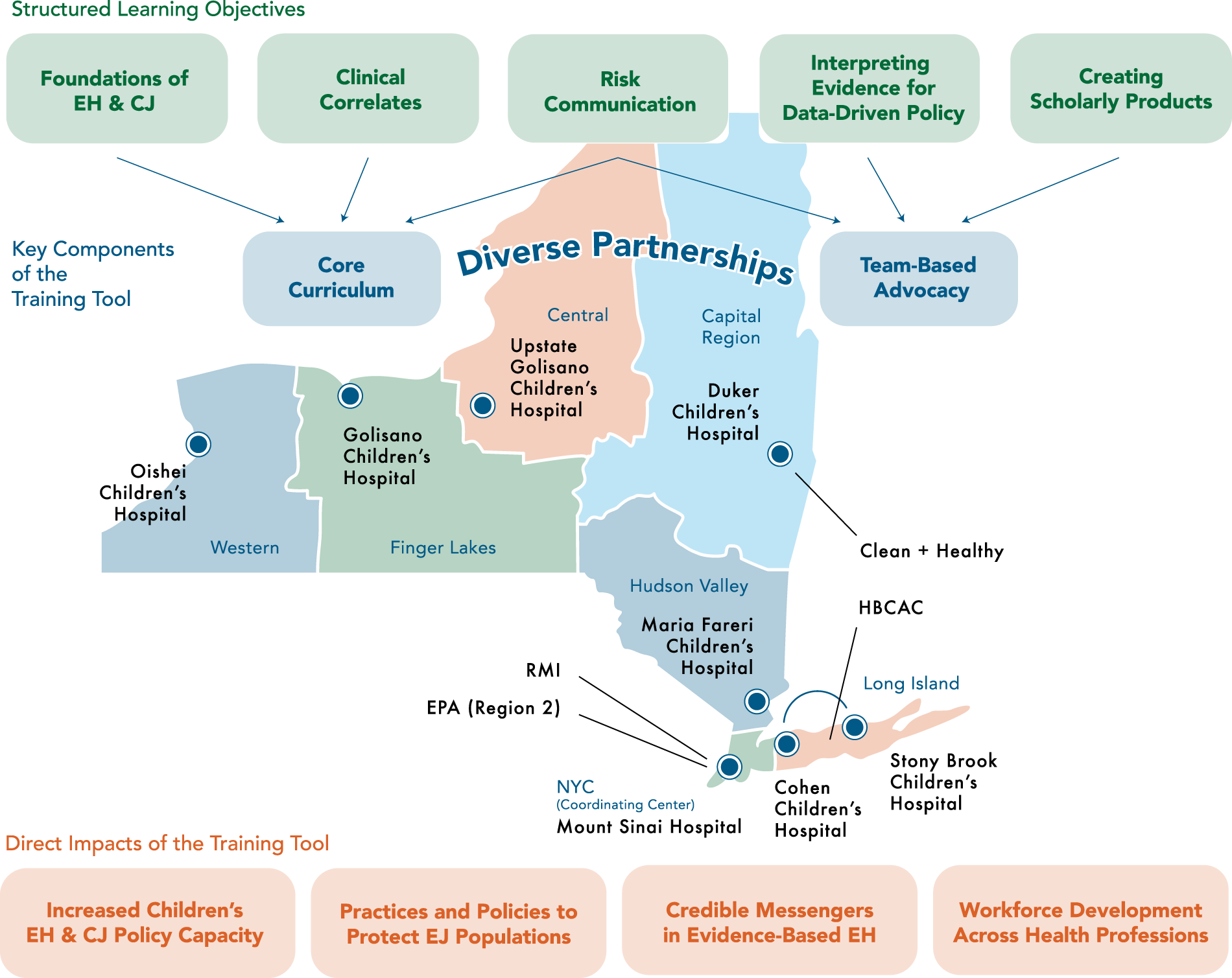
Conceptual Schematic of the NYSCHECK Summer Academy. Structured learning objectives were key drivers of program creation. The core curriculum and applied, practical, team-based advocacy were complementary components that formed the foundation of the program through cross talk between diverse academic-community partnerships. Broad, direct impacts of the training tool to date are described above. Blue dots indicate locations of NYSCHECK academic centers; orange dots indicate community and agency partners who contributed to the Summer Academy. HBCAC: Huntington Breast Cancer Action Coalition; RMI: Rocky Mountain Institute; USEPA: United State Environmental Protection Agency; NY: New York; LI: Long Island; EH: Environmental Health; CJ: Climate Justice.
Our faculty reviewed a multitude of educational pedagogies in the development of the NSA. We adopted a virtual, flipped classroom model 25 in which students undergo self-guided instruction in CEH and PH principles and engage in dynamic instructor-led discussion and applied learning. In a flipped classroom model, the learner arrives to the classroom setting already having independently completed didactic work, such as viewing prerecorded content or suggested articles on a certain topic. The “classroom” then becomes a place of prepared learners who can engage in topic matters with baseline familiarity of intended learning materials.
We strategically chose self-directed learning principles to match the flipped-classroom model and promote independent learning. This approach places the locus and motivation for acquisition of knowledge on the trainee. Trainees meet regularly with a mentor who guides complex and critical thinking of baseline content. Trainees also learn through near-peer discussions, which enhance their ability to apply creative solutions to complex issues surrounding CC and EJ. Finally, a hallmark of training in PH is to embark on applied, practical experiences. This educational strategy allows learners to take their classroom expertise into the real world. The advocacy arm of our program connects the core curriculum content with real-world application of strategies and solutions for the climate crisis.
The NSA is a direct response to an identified need to increase the capacity of future health professionals to respond to EH concerns26,27,28 and advocate for evidence-based strategies that improve the health of vulnerable communities. Our network structure allowed us to build upon our pre-existing professional collaborations among seven academic centers and community partners to energize trainee learning and simultaneously capitalize on the varying educational and environmental expertise of the professionals at our CEH centers.
METHODS
Curriculum development
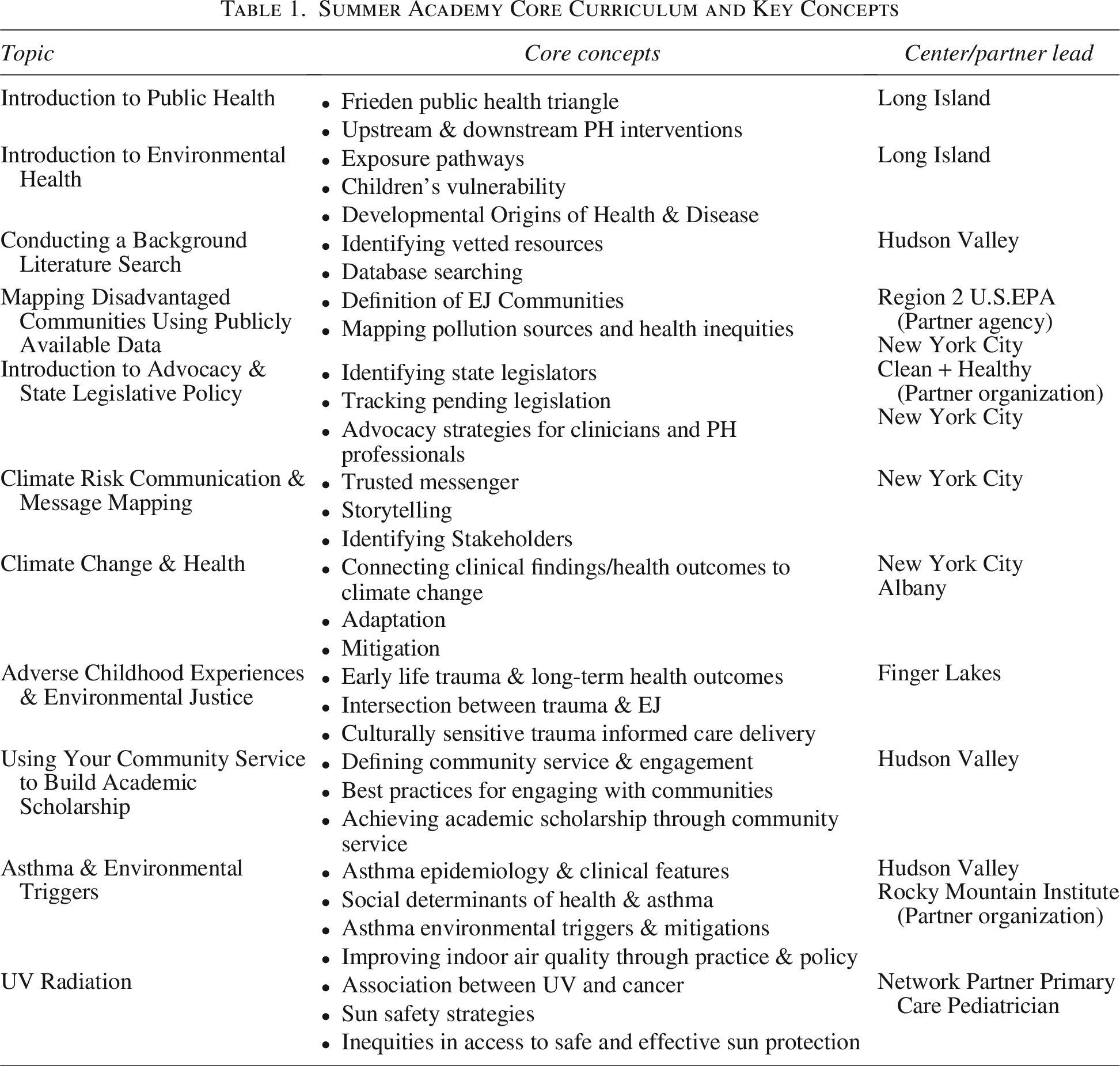
The NSA 8-week core-content curriculum was developed by NYSCHECK faculty at four sites (Long Island, NYC, Hudson Valley, and Finger Lakes) together with Long Island-based community partner Huntington Breast Cancer Action Coalition (HBCAC), who have decades of experience engaging youth in EH advocacy. Core content and advocacy themes were co-developed and reviewed by community and agency partners from HBCAC, Clean + Healthy, Rocky Mountain Institute, and the Region 2 US Environmental Protection Agency. Eight distinct didactic modules were developed through an iterative, collaborative process that included feedback from alumni, faculty, and partners. (Table 1). Content was designed to provide students with core concepts needed for the creation of advocacy tools that address current environmental and CC threats to health in NYS. Two notable additions to the curriculum expanded in year 4 were (1) deepening student exposure to existing EH/EJ data tools such as EPA’s EJ Screener to better characterize vulnerable communities and (2) expanding content on EH advocacy strategies, including advocacy project presentations by students directly targeted and delivered to state elected officials.
Summer Academy Core Curriculum and Key Concepts
Program design
We identified core content experts among NYSCHECK faculty and community partners. Core content sessions were held via live Zoom meetings once per week, recorded, and posted to the classroom platform (Google 29 in Years 1 and 2, Canvas 30 in Years 3 and 4) for asynchronous viewing if needed. Before each session, students were assigned readings or videos related to core content topic areas along with brief assignments designed to stimulate engaged discussion during virtual sessions. Most sessions included breakout groups where students engaged in small group exercises that provided training in core skills such as risk communication and message mapping, 31 analysis of clinical cases, using publicly available EJ mapping tools, and tracking of pending EH legislation. Students also met in mentored small groups a minimum of two times per week to engage in collaborative advocacy projects under the mentorship of NYSCHECK EH Scholars. EH Scholars are current postgraduate fellows who are completing a 2-year fellowship with the NYSCHECK network and who are themselves working on their own independent EH projects with faculty mentors. Completed projects were presented to the NYSCHECK network during a Final Showcase, which included invitations to policymakers across NYS and was hosted virtually.
Recruitment and enrollment
Students were recruited through outreach to each of the 7 NYSCHECK centers and community partners and advertisement via the NYSCHECK website and social media beginning in January of each year. Students who had completed at least their sophomore year in high school who were residing in or attending school in NYS were eligible to apply. All protocols were approved by the New York Medical College Institutional Review Board.
Team-based advocacy projects
Students were assigned to small groups of approximately 10 students each with one NYSCHECK EH Scholar who served as a mentor. Focus areas varied from year to year to reflect student interests and NYS priority issues. Project outputs were also student-driven and included infographics, comic books, social media campaigns, short videos, guidance for clinicians, and educational presentations to state legislators (Fig. 2).
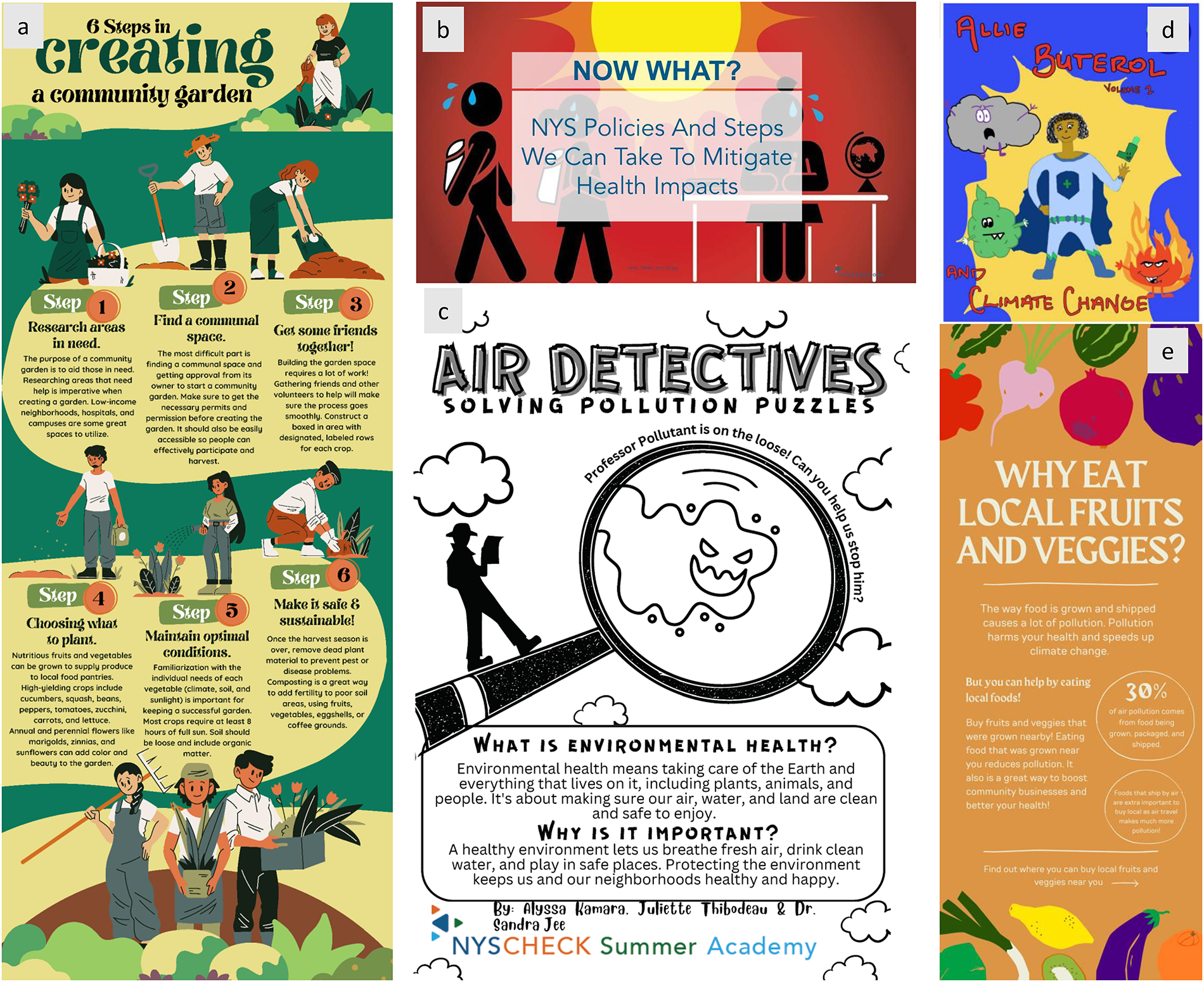
Examples of advocacy projects created by NYSCHECK Summer Academy students since program inception. Complete list of projects available at https://nyscheck.org/nyscheck-summer-academy/ (a) Guide to creating community gardens as a climate change mitigation strategy (b) Educational presentation delivered to NYS legislators about region-specific health impacts of extreme heat on vulnerable communities. (c) Creative waiting room games for clinical settings to engage families and youth in understanding air pollution and health. (d) Original comic book characters and stories to educate children with asthma about environmental asthma triggers and management. (e) Grocery shopping guides to educate consumers about climate impacts of food transportation.
Program evaluation
Using anonymous pre- and post-surveys, we asked students to rate their knowledge of core EH topics and capacity for advocacy on a Likert scale from Strongly Disagree to Strongly Agree. In years 3 and 4 we measured psychological empowerment and self-efficacy by adapting portions of a scale from Ozer et al. 32 Students were asked to rate the following on a scale of 0–4 where 0 is strongly disagree and 4 is strongly agree: (1) I feel like I have a pretty good understanding of the important issues that confront my community; (2) I have the ability to participate effectively in community activities and decision-making; and (3) There are plenty of ways for me to have a say in what my community does. Pre- and post-responses were compared using the Wilcoxon Signed Rank Sum Test. To elicit additional unbiased feedback, we conducted focus groups facilitated by community partners not directly involved in content delivery. We evaluated focus group data using qualitative inductive analyses: independent coding of themes was performed by two independent coders, with a third reviewer to resolve any discrepancies in key themes.
RESULTS
A total of 145 students participated in the NSA across four summers (35–40 students per year). The majority of participants identified as female (81%) and White (53%). Students were of diverse educational backgrounds, with 32% of participants in high school, 28% in medical school, and 20% in college (Table 2).
Descriptive Characteristics of Summer Academy Trainees (2021–2024); n = 145
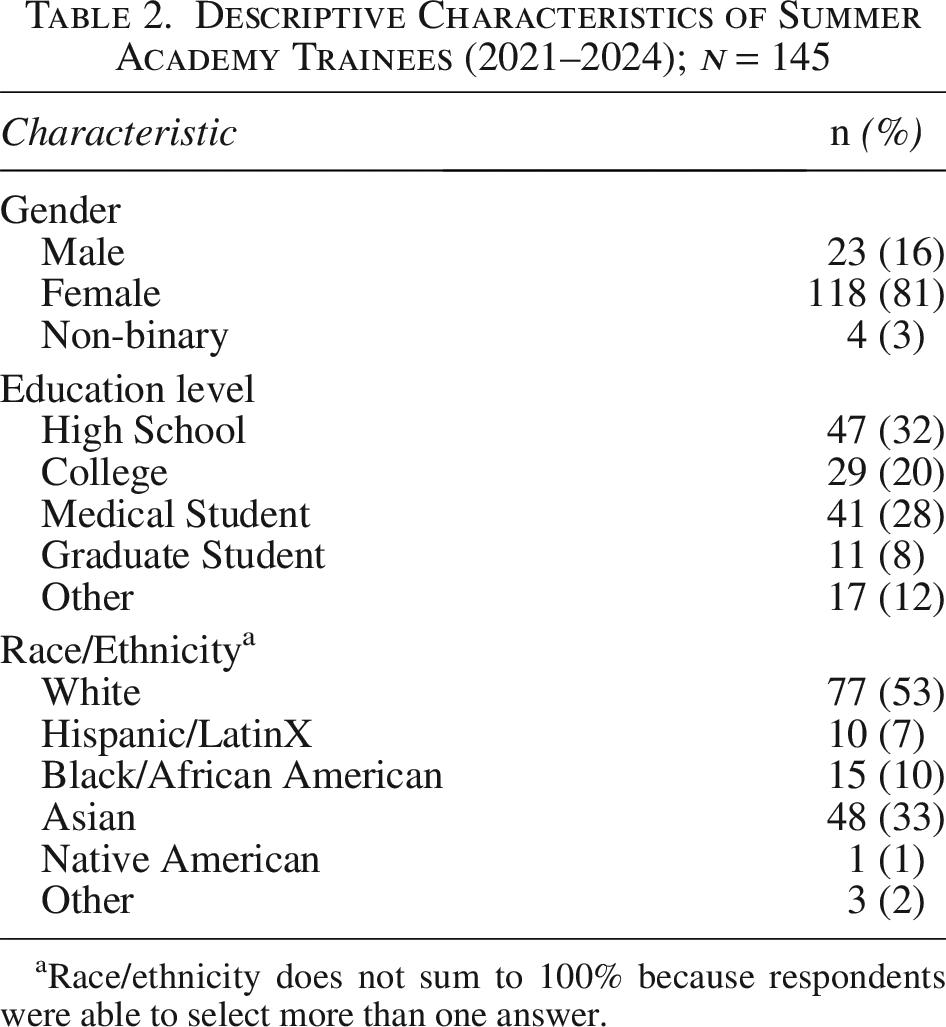
Race/ethnicity does not sum to 100% because respondents were able to select more than one answer.
The range of creativity catalyzed by mixing a wide range of learners was reflected in student-led, virtual advocacy projects presented to academic faculty, PH professionals, community partners, and legislative staff from across the state. Topics addressed across the 4 years reflected key issues faced by New Yorkers, such as safer COVID-19 disinfecting practices, health impacts of per- and poly-fluoroalkylated substance chemicals, and a wide range of CC and health topics. Examples of advocacy products include interactive video games, consumer handouts for reducing pesticide exposure in fruits and vegetables, social media campaigns related to CC, infographics to communicate EJ concerns, and educational materials for legislators. Examples are highlighted in Figure 2 and available online at https://nyscheck.org/nyscheck-summer-academy/.
We used anonymous, pre-post surveys with Likert scale and open-ended responses as well as facilitated focus groups to evaluate student perception of increased knowledge and capacity related to core curriculum content and to inform program improvement. A total of 88 of 145 students (61%) completed both pre- and post-surveys. Responses demonstrate significant increases in perceived knowledge in all core topic areas following program completion (Fig. 3). Overall program satisfaction was high; 87% of students rated the program “very good” or “excellent,” while 88% stated that they would recommend the program to a friend.
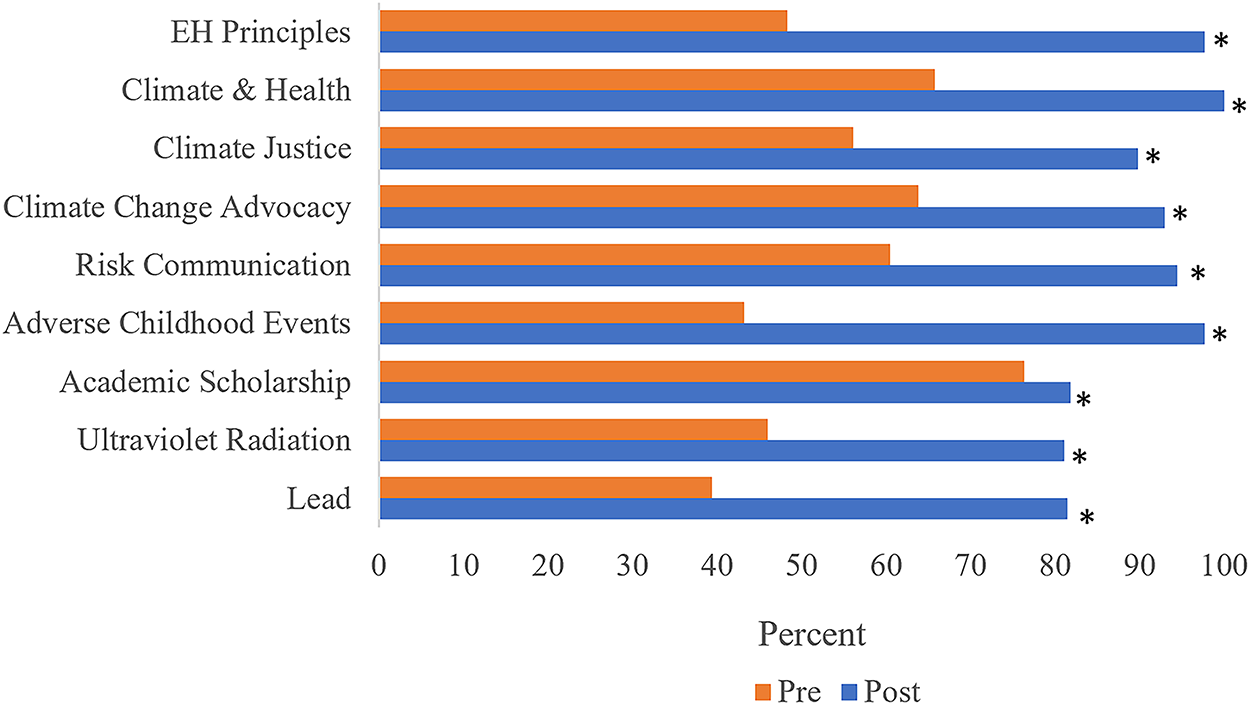
Assessment of core curriculum knowledge and capacity before and after program completion. Graph showing percentage of participants (n = 88a) that responded “Agree” or “Strongly Agree” when asked whether they felt knowledgeable about core topics before (pre, orange bars) and after (post, blue bars) the program. *p < 0.001, Wilcoxon Signed Rank Sum Test. aBecause content varied, not all topics were assessed in each year: Lead, Years 1–3, n = 66; Climate Change Advocacy Years 2–4, n = 58; Climate & Health and Risk Communication, Years 3&4, n = 38.
Students’ team-based advocacy projects allowed for critical analysis and application of foundational PH and EH principles (see examples in Fig. 2 and at the website above) and contributed to a significant increase in self-reported confidence in engaging in advocacy related to CC and health and in contributing to academic scholarship related to EH (Fig. 3, p < 0.001 for both). In years 3 and 4 (n = 37 students who answered both pre- and post-surveys) we included additional questions to measure empowerment and self-efficacy and found significant improvement in how students rated their ability to understand issues confronting their community (p < 0.001), ability to participate effectively in community activities and decision-making (p = 0.027) and to have a say in what their community does (p < 0.001) (Fig. 4).
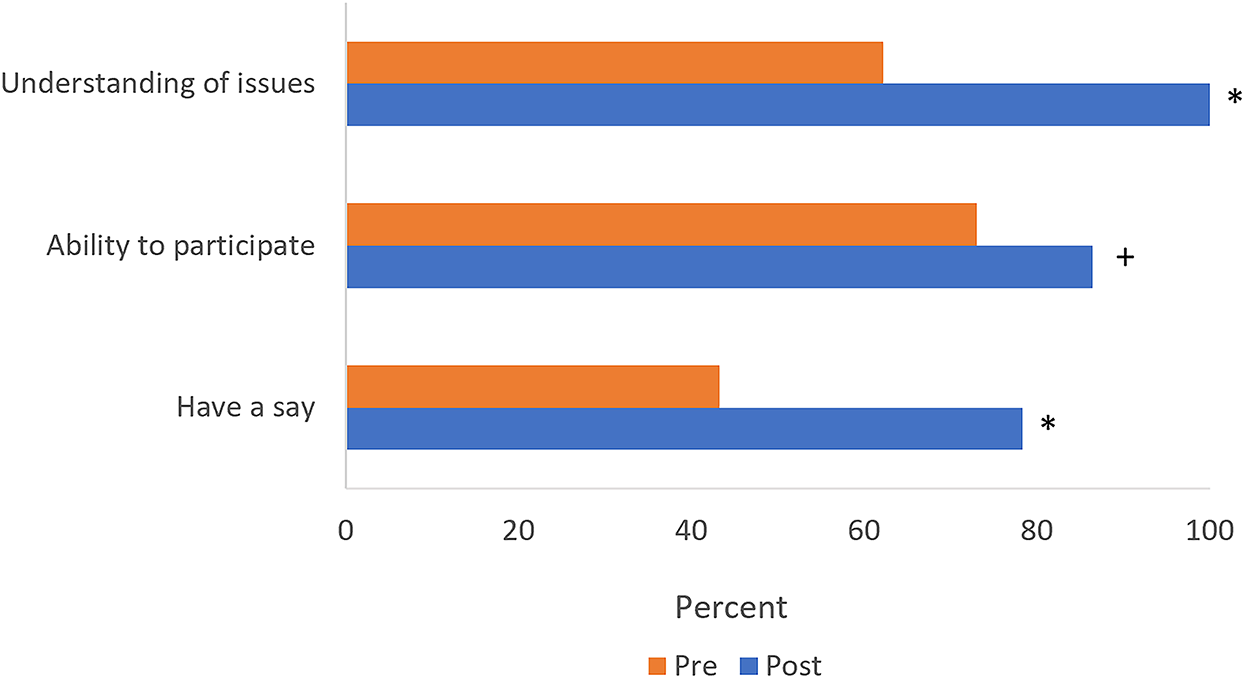
Assessment of participant psychological empowerment and self-efficacy before and after program completion. Percentage of students (n = 38, years 3 and 4 only) who responded 3 or 4 on a scale of 0–4 (where 4 is strongly agree) before (pre, orange) and after (post, blue) completing the program. *p < 0.001, +p < 0.05, Wilcoxon Signed Rank Sum Test.
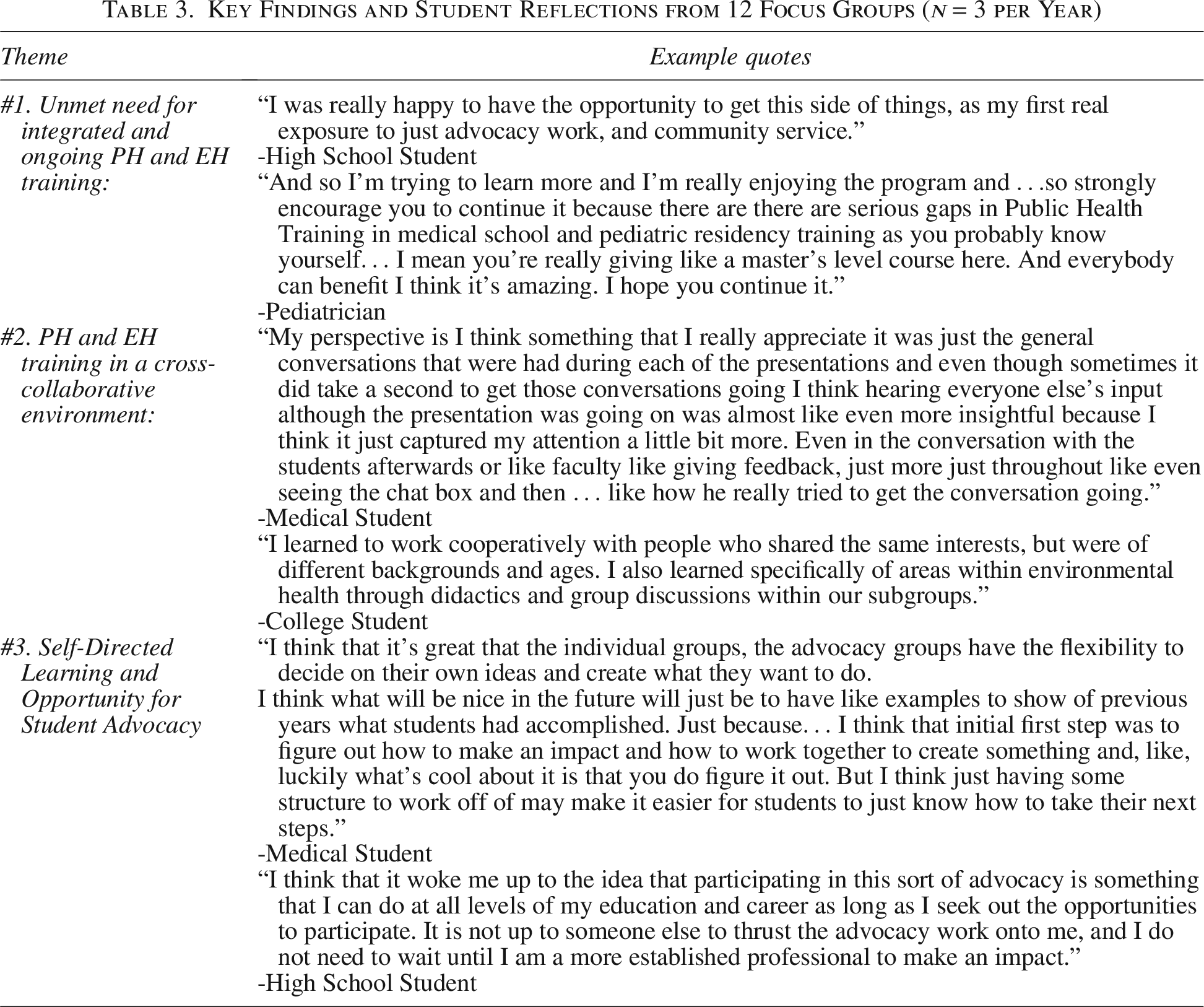
Several themes were identified from facilitated focus groups (n = 12 groups, 3 groups per year) and are highlighted in Table 3. Collaboration between high school, college, medical, and graduate students with differing strengths and expertise (e.g., social media presence, graphic design skills, medical training) was identified as a benefit of the program. Key findings corroborated the importance of: (1) PH and EH training, (2) training in a cross-collaborative environment, and (3) self-directed learning opportunities for student advocacy. Participants reported that knowledge of foundational principles of PH helped them innovate in creating effective preventive approaches to EH problems. Areas identified for program improvement included: the need to establish rules about responsibilities and accountability in a virtual space; uneven student engagement and collaboration; and the need for more accessible and interactive virtual communication platforms. These evaluation methods have allowed us to reassess and refine our program annually to meet student and trainee needs.
Key Findings and Student Reflections from 12 Focus Groups (n = 3 per Year)
DISCUSSION
Impact of the NSA
The delivery of the NYSCHECK Summer Academy is consistent with the spirit of collaboration across our unique statewide network of Children’s Environmental Health Centers. The NSA is one mechanism through which we are accomplishing our goal of increasing the capacity of health professionals to address the myriad EH and CC health problems in our communities. We believe that community partnerships help us move out of our academic silos and into settings where we can ensure that children and families can grow and thrive. Our multistep approach to the climate crisis begins with sounding the alarm while simultaneously equipping learners with strategies for effective risk communication and advocacy. By educating the next generation of pediatric and PH professionals through interdisciplinary collaboration, we in turn ensure that our communities and patients are empowered with the tools they need to protect themselves from harmful environmental exposures.
As EH educators, a valuable lesson learned from the organic mixing of students across geographic sites and training levels was that robust discussion and creativity are fostered through interactive small-group learning. An unexpected result of the virtual format was that participants felt comfortable voicing opinions and sharing their strengths. For example, following a core-content session about message mapping,32 we tasked learners with creating clear, impactful CC and health messaging for a target audience of their choice. In their small group advocacy projects, they were able to apply what they learned using creative modes of communication, some or which our network had not previously considered, such as Instagram posts, creative videos, and interactive video stories. These modalities were relevant and accessible to our young trainees and brought a new level of engagement to NYSCHECK. As a result, faculty members and community partners learned new ways to reach young trainees and recognized the importance of igniting their spark of learning early and often.
Limitations
There are limitations inherent to a virtual learning experience. In-person learning is more likely to foster open discussion and collaboration. However, the “flipped classroom” model coupled with facilitated discussion breakout group exercises promoted discussion among multi-level learners that may not occur in more traditional classroom settings. Our evaluation data suggest that trainees benefited from those small group interactions. In addition, many students’ experiences were enhanced by in-person mentored work with community partners or at NYSCHECK sites, outside of their NSA participation. We found that students who were anchored in community partner organizations were most successfully able to integrate and apply core concepts and remain fully engaged even in the virtual setting. An additional limitation is the use of anonymous self-reports to evaluate knowledge and capacity, which may reflect a bias toward sharing a positive rather than a negative experience. Because we made feedback focus groups optional and surveys optional and anonymous, we cannot confirm that our pre/post mixed-methods analysis was completely representative of the entire cohort of trainees. Lastly, efforts can be made to increase the racial, ethnic, and geographical diversity of trainees. We are taking steps to expand our reach to a more diverse population, including rural areas and Tribal Nations, through broader outreach via partner organizations and identification of funds to support stipends for participants.
BUILDING THE PIPELINE TO GENERATE SOLUTIONS TO THE CLIMATE CRISIS
The NYSCHECK Summer Academy exemplifies the magic that can happen when we bring together faculty, fellows, residents, and community and agency partners with high school, college, and medical students to allow creativity to catalyze around a joint commitment to CEH. Trainees enrolled in NSA aspire to productive careers in PH, EH, and medicine, and wish to gain hands-on skills to address the complex problems that impact health today not only through the care of individual patients but by advocating for safer policies for communities. The goal of the NSA is to provide participants with the tools to continue to flourish in the CEH space to innovate creative solutions needed to address CC and EJ. As health professionals, we have a duty to address CC by promoting sustainability in our workplaces, [0] [0] educating our patients, and advocating for safer practices and policies to protect the health of the communities we serve. NSA is a robust educational tool that can be adapted and implemented by community partners or academic institutions that are committed to providing future leaders with the tools to address environmental injustices and the health impacts of the climate crisis. We are optimistic that the hope and creativity of the next generation will create a pipeline of new health professionals who can deliver real-world solutions to CC and environmental injustices. The NSA is an effective and replicable model that harnesses interdisciplinary expertise and community partner collaborations to empower trainees and communities to effectively address existing and newly emerging EJ concerns.
Footnotes
ACKNOWLEDGMENTS
The authors are grateful to the following individuals for giving their time and expertise to the NYSCHECK Summer Academy program through curriculum delivery, trainee mentorship, and materials review: Deborah Nagin, Michael Ejiogu, Lauren Zajac, Perry Sheffield, Sarah Ventre, Travis Hobart, Sophie Balk, Bobbi Wilding, Lance Caldwell, Nina Prescott, Emma Chang, Laurie Thibodeau, Olivia Malvasi, Kelly Galloway, Rebekah Prasad, Vaidehi Jokhakar, Mackenzie Steen, Meredith Marden, Aliyyah Hamid, Maroska Ishak, and Maya Wedner.
AUTHOR DISCLOSURE STATEMENT
No competing financial interests exist.
FUNDING INFORMATION
This work was supported by the New York State Department of Health (New York State Children’s Environmental Health Centers).
AUTHORS’ CONTRIBUTION
S.J.: conceptualization, methodology, validation, developing data and data curation, writing—original draft, writing—review and editing article, visualization, project administration. A.B.: conceptualization, methodology, validation, developing data and data curation, writing—review and editing article, visualization, project administration; developing data and figures. G.C.: project administration, conceptualization. M.P.G.: project administration, writing—review and editing article. C.B.: writing—review and editing article. M.G: project administration-community outreach activities. K.M.: project administration-community outreach activities. J.C.: project administration, developing data and figures, development of virtual classroom platform and cataloging of materials. S.F.E.: conceptualization, methodology, validation, developing data and data curation, writing—original draft, writing—review and editing article, visualization, project administration.