



Abstract
Women of Color (WOC) have long faced systemic exclusion and remain underrepresented across organizational contexts, particularly in STEM, higher education, and executive leadership. These inequities often manifest as invisibility, marginalization, and limited access to advancement opportunities. Support interventions, such as mentoring, training, coaching, and leadership development have been proposed to address these challenges, although their effectiveness requires critical examination. This literature review analyzes 23 full-text studies from 2015 to 2024 across six journals (HRDQ, HRDR, HRDI, ADHR, NHA, and EJTD) using Bierema and Callahan’s Critical Human Resource Development (CHRD) framework, which emphasizes “Relating,” “Learning,” “Changing,” and “Organizing.” Our findings reveal growing interest in CHRD-informed practices but also highlight conceptual ambiguity regarding how CHRD differs from traditional HRD approaches. The analysis further shows uneven emphasis across the CHRD dimensions, with relational and learning-based interventions receiving greater attention than structural and transformational approaches. In response, we propose refinements to the CHRD framework that foreground relational support as a foundational condition for development and emphasize the need for stronger accountability mechanisms to ensure equity initiatives translate into practice. We conclude by recommending greater conceptual clarity, longitudinal empirical research, and cross-context collaboration to strengthen the evidence base for CHRD interventions supporting the advancement and well-being of WOC.
Introduction
Women of Color (WOC) refers to women who have historically faced multiple, intersecting forms of marginalization based on their social identities (Sims, 2022). Researchers define WOC as African American (Black), Hispanic, Latina, Indigenous, Asian, and immigrant women (Santamaría et al., 2022; Sims, 2022; Sims & Carter, 2022). Women of Color have historically been rendered invisible and silenced in leadership spaces, remain significantly underrepresented in executive roles (Sims, 2022; Sims & Carter, 2019) and STEM fields (Alfred et al., 2019), and continue to be constrained by persistent stereotypical portrayals (Byrd, 2009). Additionally, they continue to be underrepresented in higher education (Edwards & Thompson, 2016; Turner et al., 2011; Wilson, 1989), and their voices are silenced in different organizational contexts (Byrd & Stanley, 2009; Stanley, 2009).
Although this reality about the inequities experienced by WOC is not contested, what is less clear is how to address this reality through HRD interventions. Extant research has explored different interventions ranging from training, mentoring, and coaching to leadership development to support WOC better; however, Giscombe and Mattis (2002) found that “there is also a great disparity between the apparent breadth of stated policies and ratings of their effectiveness by women of color” (p. 106). Furthermore, critical analyses reveal that many mentoring models reinforce deficit perspectives by focusing on “teaching WOC coping strategies that mimic dominant behaviors” rather than challenging systemic inequities (Nkrumah & Scott, 2022, p. 11). This suggests that the extent to which these interventions have reduced inequities or have contributed toward further perpetuating the inequities is yet to be critically analyzed. We deem Bierema and Callahan’s Critical Human Resource Development (CHRD) framework to be an appropriate model for this much-needed analysis.
Bierema and Callahan (2014) emphasize the need for a shift from a performative and masculine-oriented framework toward a more humanistic, equitable, and inclusive approach to understanding the experiences of WOC. They suggest adopting a Critical Human Resource Development (CHRD) framework to address inequitable practices and social systems such as sexism, racism, and capitalism that are common in HRD. In this framework, the authors proposed including categories of “Relating,” which examines relationships, power dynamics, and stakeholder interactions; “Learning,” which refers to promoting critical, communal, and culturally diverse approaches to workplace learning; “Changing,” which includes facilitating systemic transformation that benefits all stakeholders; and “Organizing,” which entails creating networks of relationships that challenge power asymmetries.
Each dimension is analyzed through four guiding interrogatives: context (where), stakeholders (whom), method (how), and process (what; Bierema & Callahan, 2014). These serve as the areas of engagement in HRD practice and as a way to reframe the work of HRD “as being in a state of becoming” (Bierema & Callahan, 2014, p. 436). Many studies in the field of HRD (e.g., Lanier et al., 2022; Sim, Bierema et al., 2025; Trusty et al., 2023) are utilizing the CHRD model to address the challenges posed by patriarchal and cultural barriers in the workplace, as well as implement effective HRD interventions for WOC. Indeed, research demonstrates that although societal stereotypes about WOC persist, organizational and team-level conditions can moderate their impact (Ely et al., 2012). Scholars further emphasize that “embedding diversity training into a broader organizational diversity, equity, and inclusion strategy is critical to addressing organizational inequalities” (Onyeador et al., 2024, p. 406), which aligns with the systemic approach of the CHRD framework. However, we lack a cohesive understanding of how these studies have advanced our understanding of ways we can best support WOC, representing a significant gap in the literature that this study addresses.
Significance
This Literature Review (LR) aims to identify the gaps in our understanding of how HRD interventions impact inequities faced by WOC in organizational contexts, utilizing Bierema and Callahan’s CHRD framework as an analytical lens. Byrd (2023) stated that “Although human resource development (HRD) can be traced to roots in human relations, HRD research has not advanced studies that explain how a breakdown in relationships caused by contentious and/or oppressive social problems (racism, sexism, ableism, heterosexism, etc.) can hinder performance goals” (p. 71). Through systematic analysis of extant literature, we can interpret the best strategies for supporting WOC across organizational contexts and their professional experiences. This LR serves as a critical resource for HRD practitioners and researchers. It offers a comprehensive examination of the challenges confronting WOC in contemporary organizational settings, strengths, and shortcomings in HRD interventions geared toward addressing those challenges. This review will also highlight practical solutions for creating more inclusive HRD practices and research focused on the experiences of WOC. Additionally, the findings can inform evidence-based strategies to better support and advance WOC across different organizational levels.
Purpose and Research Questions
To further examine effective HRD interventions for WOC, we propose conducting a critical literature review to generate more discussion about practical solutions for the issues faced by these women in organizational contexts. The main research questions guiding this study are:
What does prior literature report about effective HRD interventions for WOC that pertain to the “Relating” aspect of the CHRD framework?
What does prior literature report about effective HRD interventions for WOC that pertain to the “Learning” aspect of the CHRD framework?
What does prior literature report about effective HRD interventions for WOC that pertain to the “Changing” aspect of the CHRD framework?
What does prior literature report about effective HRD interventions for WOC that pertain to the “Organizing” aspect of the CHRD framework?
Research Methods
To rigorously synthesize the previous literature, we adopted a systematic literature review (SLR) by examining conceptual and empirical articles published in peer-reviewed academic journals: Human Resource Development Quarterly (HRDQ), Human Resource Development Review (HRDR), Human Resource Development International (HRDI), Advances in Developing in Human Resources (ADHR), New Horizons in Adult Education, Human Resource Development (NHA), and European Journal of Training and Development (EJTD) from 2015 up to 2024, spanning the decade after Bierema and Callahan proposed the CHRD framework in 2014. The goal was to include journals sponsored by the Academy of Human Resource Development (AHRD), NHA, and EJTD, as they serve as key references that bridge theory and practice in the HRD field.
We searched directly within each journal’s database using the following search terms applied to the full text of articles: women of color, women of color leader, mentoring for women of color, leader development of women of color, coaching for women of color, and HRD intervention for women of color. No quotation marks were used in the search strings to ensure comprehensive retrieval of relevant articles. We opted for these keywords based on a review of the literature, which demonstrates that WOC face significant barriers in accessing leadership positions and development opportunities (Alfred et al., 2019; Carter & Sisco, 2022; Sims, 2022). Additionally, mentoring and coaching represent a crucial HRD intervention, particularly in addressing the leadership development challenges faced by marginalized groups (Manongsong & Ghosh, 2023). Furthermore, leadership development has been identified as a critical area where women of color experience inequalities and where targeted interventions can have a significant impact (Lanier et al., 2022).
The initial search across all seven journals identified a total of n = 29 articles. Since we searched directly within each journal’s platform rather than through a multi-database search engine, no duplicates were identified. All 29 articles underwent full-text review for eligibility. We excluded n = 6 articles for the following reasons: (1) the study population was predominantly not women of color, or the racial/ethnic composition was not clearly identified as WOC (n = 4); (2) the demographic population did not focus specifically on women of color (n = 1); and (3) HRD interventions specifically targeting women of color were not present (n = 1). This resulted in n = 23 full-text studies assessed as eligible and included in the final analysis. We began searching, screening, reviewing articles, and interpreting findings following the conceptual structure outlined by Torraco (2016) and adhering to systematic review best practices, as “the PRISMA 2020 statement provides updated reporting guidance for systematic reviews that reflects advances in methods to identify, select, appraise, and synthesise studies” (Page et al., 2021, p. 1). Figure 1 (PRISMA Eligibility Diagram) summarizes the search results from selected databases.
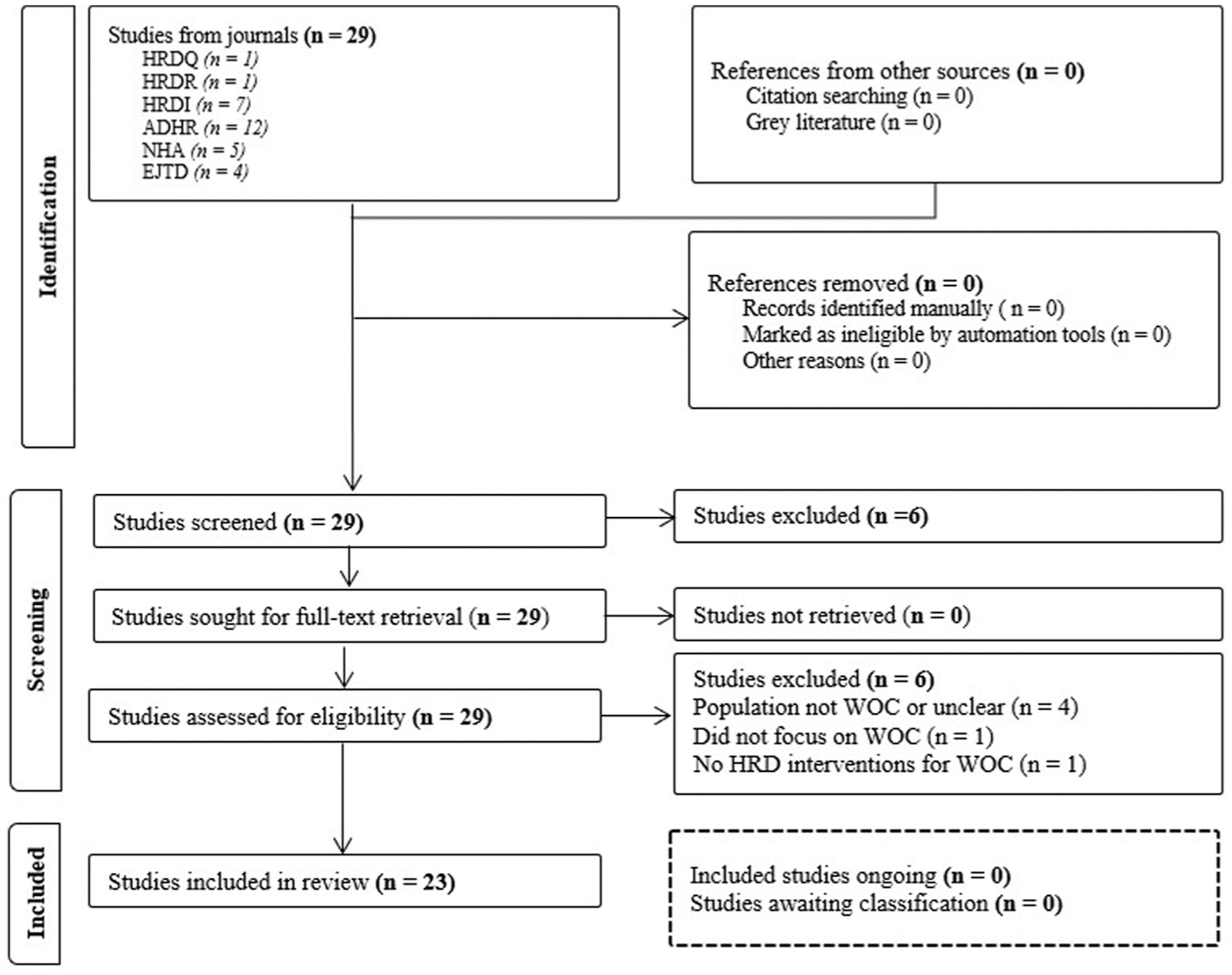
Prisma of eligibility criteria.
The findings will be structured into two sections. The first section analyzes studies involving WOC published between 2015 and 2024. Each article was evaluated based on four key aspects: (a) the date of publication, (b) the scholarly journal in which it appeared, (c) the methodological characteristics employed, and (d) the frequency of key terms used. In the second part of this section, we will examine how prior literature has explored effective HRD interventions for WOC through the lens of Critical HRD. We will focus on the “Relating,” “Learning,” “Changing,” and “Organizing” components of the CHRD framework to address the main research questions guiding this study.
Findings From Decade-Spanning Analysis of WOC Literature
This section presents the findings from our temporal analysis, which examined the frequency of publications over the study period to identify changes in scholarly attention to issues affecting WOC.
Articles Published by Year
As shown in Figure 2, publications related to WOC increased significantly after 2020, reaching the highest number in 2022 (n = 9) and maintaining strong representation in 2023 (n = 5). This increase followed the public murders of Breonna Taylor (March 2020), George Floyd (May 2020), and the #BlackLives protest of 2020 (Byrd & Scott, 2024; Leider & Dobbs, 2022).
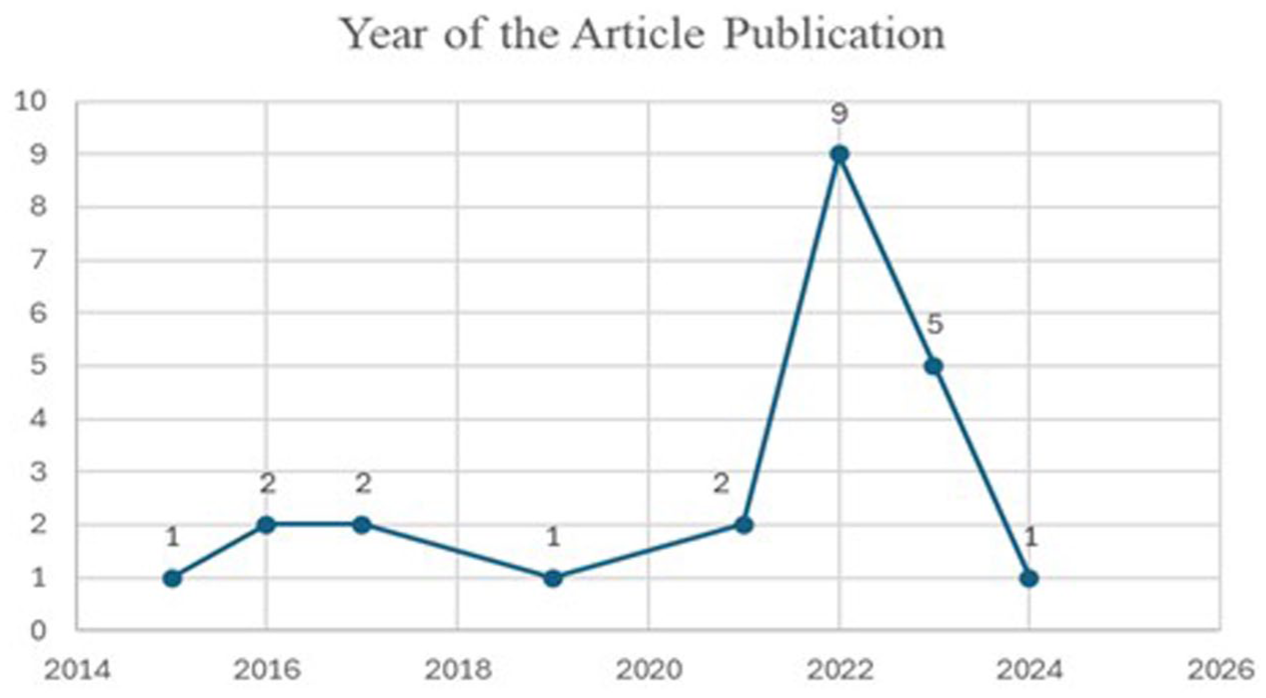
Articles published by year.
We are not surprised by the increased number of articles produced in this particular time frame. As mentioned by Bohonos and Sisco (2021), the year 2020 catalyzed significant organizational responses to racial injustice, and these comprehensive organizational responses help explain the subsequent increase in academic publications on workplace diversity, equity, and inclusion initiatives in 2022 to 2023.
Articles Published Across Academic Journals
The distribution across the six journals showed that the ADHR emerged as the leading journal, with 11 publications representing 48% of the sampled publications on these particular issues. HRDI followed it with four publications. NHA and EJTD had moderate expressions, with three publications each. Both HRDQ and HRDR had minimal representation, with one publication each. Figure 3 shows the articles published across the academic journals.
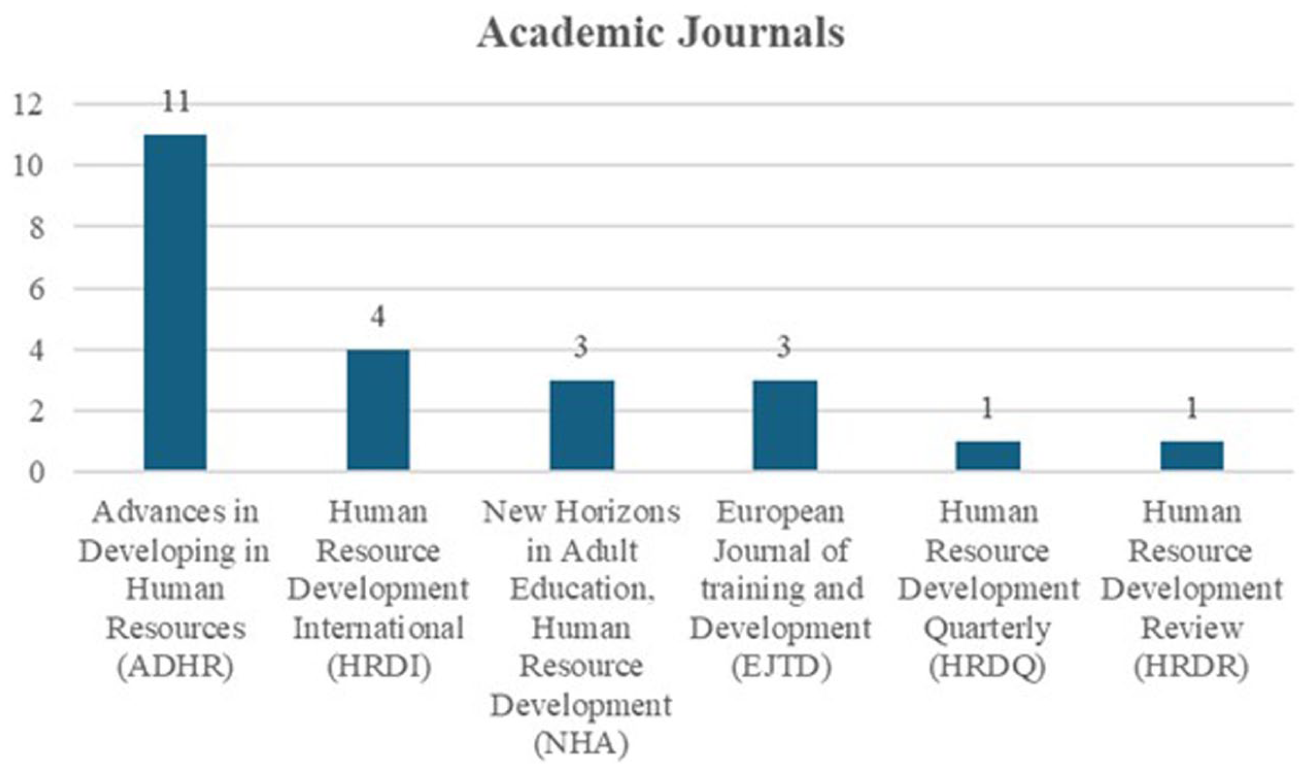
Articles published across academic journals.
Following Sims’ (2022) methodology, we systematically reviewed publications and categorized articles by their academic journal and publication details. This classification approach clearly identifies scholarly trends and thematic patterns in the literature (Table 1).
Search Results of AHRD-Sponsored and Related Journals, 2015 to 2024.
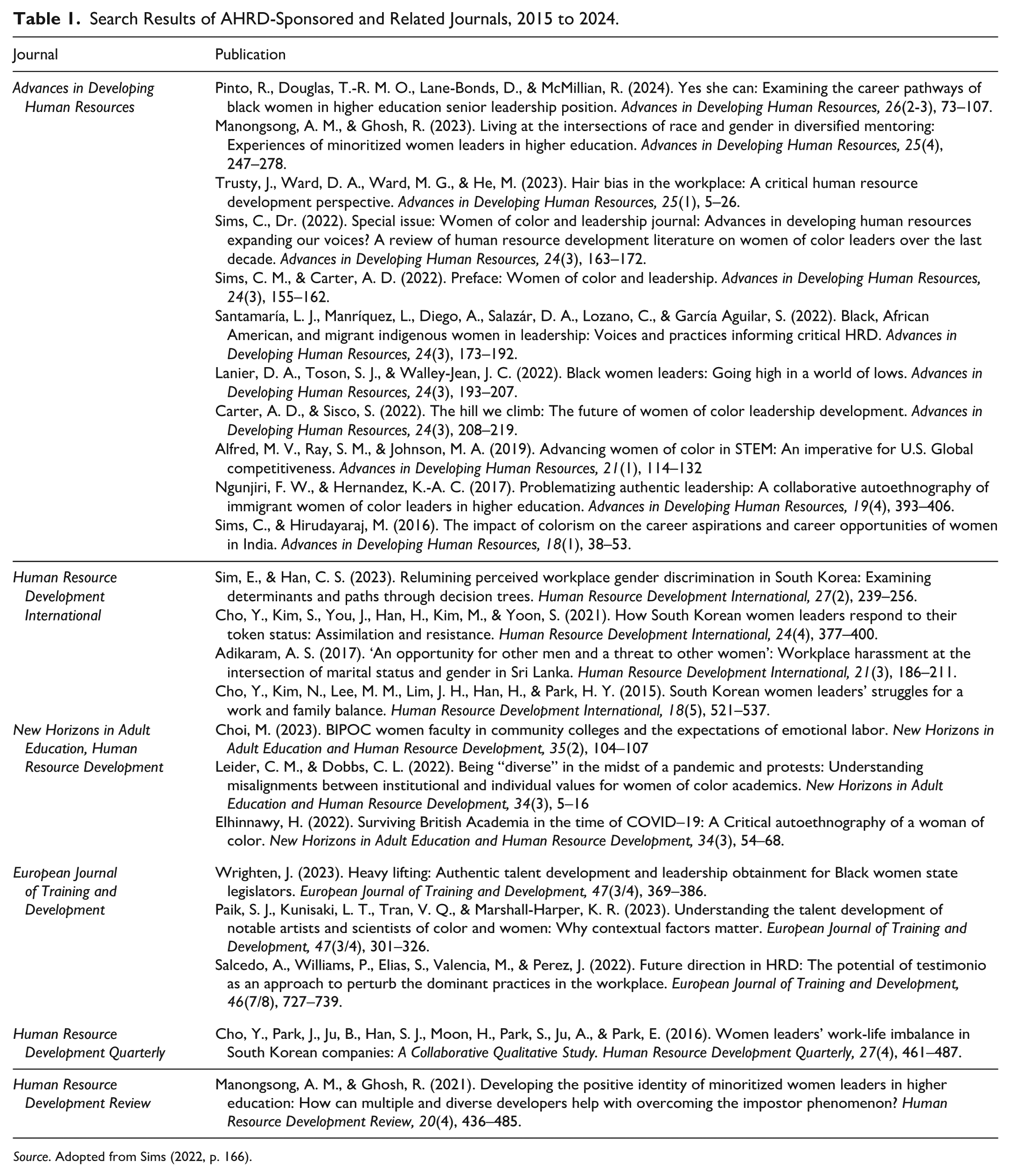
Source. Adopted from Sims (2022, p. 166).
Methodological Characteristics of the Included Journal Article
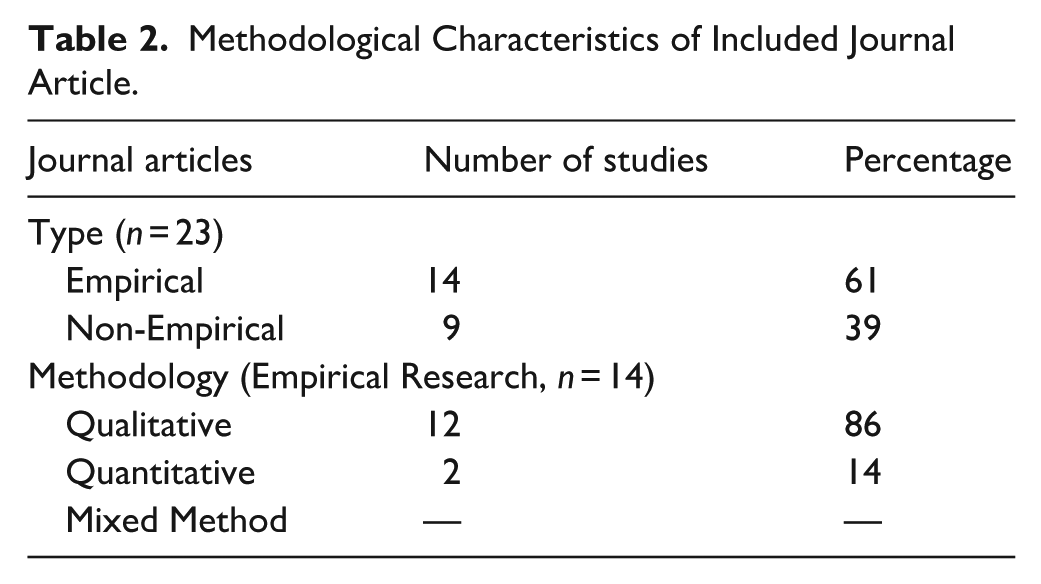
The methodological analysis of the included studies (n = 23) revealed the characteristics of the included journal articles. Of the 23 studies, 61% (n = 14) utilized empirical methods and 39% (n = 9) were non-empirical. There was a strong preference for qualitative methodologies among the empirical research studies, with 91% (n = 21) of studies utilizing qualitative approaches. In contrast, quantitative methods were applied in only 9% (n = 2) of the studies. It is worth noting that no studies in the sample employed mixed methods, suggesting a potential methodological gap in the field for this research topic (Table 2).
Methodological Characteristics of Included Journal Article.
The Frequency of Key Terms Used
We developed a word cloud using NVivo. This visualization provides a compelling snapshot of key themes. The most prominent terms include “development,” “leadership,” “women,” “Black,” “work,” and “gender.” It highlights various interconnected concepts, such as professional growth (career, mentoring, and experience), identity (race, gender, diversity, and culture), education (higher education, faculty, and students), and social dynamics (relationships, community, and support).
Additionally, specific demographic terms like “African,” “Korean,” “female,” and “male” were incorporated. Including terms like “intersectionality” further emphasizes the interconnected nature of these words, reflecting how various aspects of identity and experience intersect. Overall, this visualization illustrates the complex dynamics of WOC in modern workplace environments. Figure 4 presents the visualization of the frequency of the key terms used in the literature review.
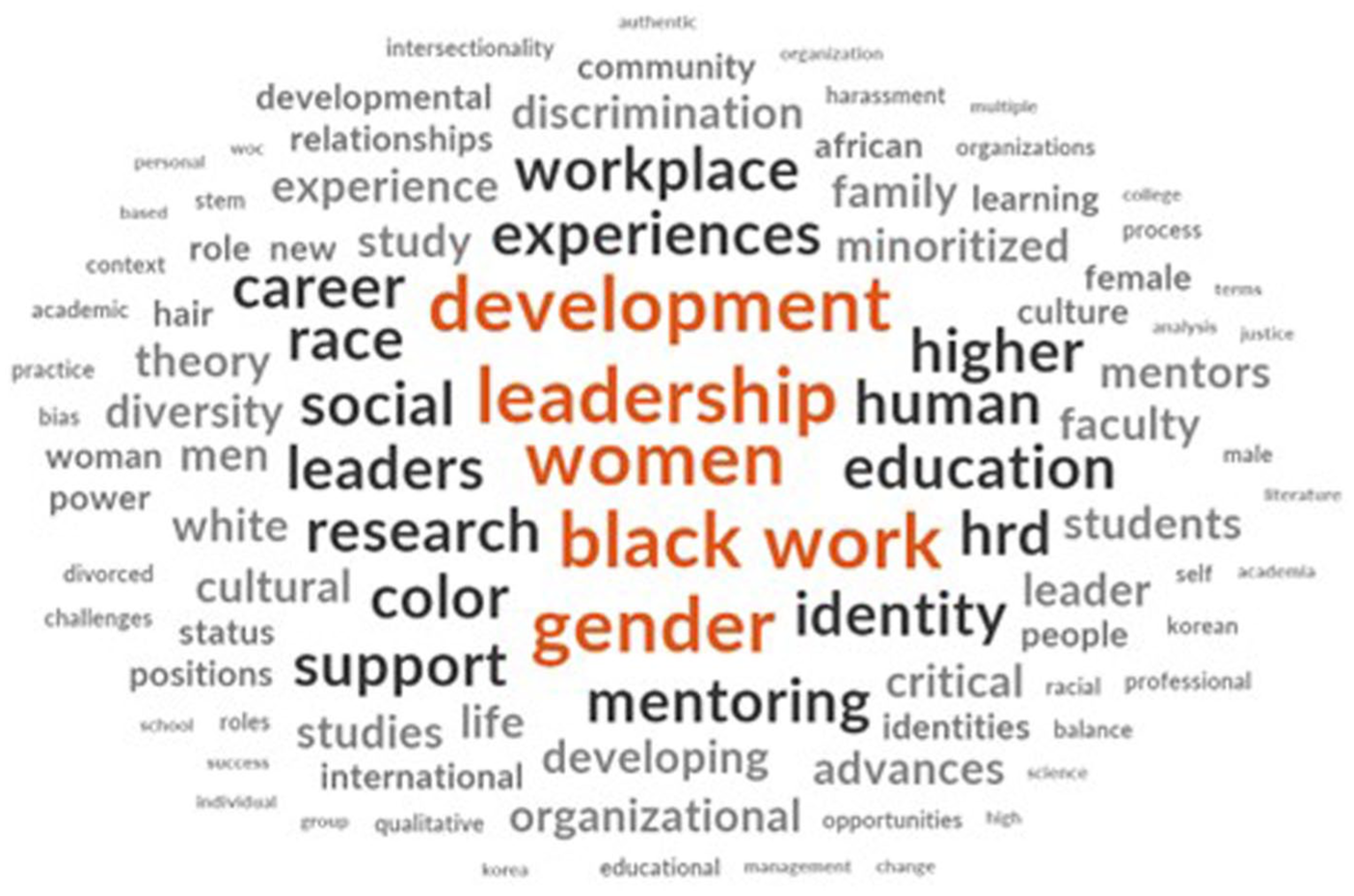
The frequency of key terms used.
Findings Using CHRD as Analytic Lens
This section presents the findings of the systematic literature review, organized according to the four dimensions of the CHRD framework, through an analysis of the review by CHRD Dimensions.
Analysis of Review Through CHRD Dimensions
We will examine how the CHRD framework has been utilized (or not) in the literature addressing development interventions for WOC, focusing on four key CHRD framework elements: (a) Relating, (b) Learning, (c) Changing, and (d) Organizing, to investigate the study’s primary research questions.
Relating
Relating represents the first component of Bierema and Callahan’s (2014) CHRD framework. According to this component, people are central to human resource development, and HRD is grounded in relationships between people. Relationships are crucial for learning, change, and organizational development. Effective HRD, through relating, can address various critical issues, including stakeholder-shareholder dynamics, human capital theory critiques, workplace conflict, diversity (race, gender, class, and LGBT status), and emotions at work, creating relationships between people that are nurtured and developed in a positive direction. It challenges HRD professionals to reflect on who they serve.
In this integrated literature review, we analyzed the four CHRD actions associated with “relating” to explore the first research question: (a) context helping us to recognize power imbalances in relationships or structures that influence how learning, changing, and organizing occur, as well as the impact of cultural diversity; (b) stakeholders reminding us to take a holistic approach in including organization, community, and environment into account and distinguishing between stakeholders and shareholders; (c) method challenging us to be more participative and collaborative; and (d) process valuing humanism and human-centered approaches, recognizing and addressing resistance and uncivil behavior, questioning traditional human capital/resource perspectives and acknowledging emotional dimensions in organizational contexts.
Context
Our analysis clearly illustrates the emphasis on the “context” within organizations. Cho et al. (2021) noted that Confucian values and male-dominated organizational cultures significantly impact women leaders in Korean workplaces. Carter and Sisco (2022) highlighted how institutional systems lead to systemic inequalities, a lack of sponsorships, and restricted access to professional networks. Additionally, Lanier et al. (2022) emphasized that social hierarchies contribute to the marginalization of individuals, as such intersections often serve as the basis for oppression, microaggressions, and a more serious workload compared to their white counterparts.
Several HRD interventions discussed in the literature address the “context.” Adikaram (2017) suggested that understanding the causes of vulnerabilities in certain groups would enable HRD personnel to monitor hidden forms of stigmatization, marginalization, and harassment more effectively. Alfred et al. (2019) recommended implementing a code of conduct and establishing formal education programs focused on acceptable behavior. Carter and Sisco (2022) advocated for Diversity, Equity, and Inclusion (DEI) policies to improve leadership access and reform performance management evaluations. Multiple studies by Cho and colleagues suggested different interventions guided by attention to context: culture change initiatives (Cho et al., 2015), family-friendly workplace policies (Cho et al., 2016), and increasing women’s representation in leadership roles alongside continued cultural transformation (Cho et al., 2021).
Lanier et al. (2022) stressed the importance of developing culturally inclusive leadership programs. Manongsong and Ghosh (2023) focused on training culturally competent mentors. Santamaría et al. (2022) adopted a critical HRD approach that challenges traditional paradigms. Sim and Han (2024) proposed measures for preventing sexual harassment. Finally, Sims and Hirudayaraj (2016) called for a critical dialogue concerning power and privilege.
Stakeholders
Paik et al. (2023) noted that stakeholders (parents, family, teachers, mentors, peers, and others) have an important role in the talent development of eminent women and individuals of color by providing essential opportunities, resources, and support that help activate potential into mastery. Specifically, these stakeholders foster psychosocial skills, provide financial and material resources, create immersive and social opportunities, and help individuals navigate institutional and social barriers related to race, gender, and socioeconomic status. Consequently, interventions targeting these stakeholders are crucial to ensure they can effectively provide the developmental support, domain-specific guidance, and access to networks that WOC need to advance through each stage of talent development. However, few authors discuss interventions for different stakeholder groups (e.g., leaders, peers, mentors) relevant to WOC. Alfred et al. (2019) cited an intervention described by Wilson (2014) that emphasized aligning organizations’ values and goals with those of various stakeholders as vital to changing demographic representation.
Sim and Han (2024) suggested that researchers and HR professionals should prioritize CEO leadership training at the forefront, reinforcing an intervention proposed by Bierema (2017). Additionally, Carter and Sisco (2022) argued that “organizations should advocate to achieve leadership parity reflective of society as a whole” (p. 212). They highlighted that organizational leaders must act as social advocates for WOC to promote social change. Another intervention discussed in the literature is the development of leadership diversity intelligence. This approach focuses on cultivating leadership skills, addressing diversity issues, ensuring equitable treatment, and motivating diverse employees (Hughes, 2018, cited in Trusty et al., 2023).
Methods
Unlike “contexts” and “stakeholders,” the “methods” component represents the variety in intervention designs and the extent to which the designs foster collaboration. Adikaram (2017) noted the role that HRD professionals can play in promoting a supportive environment, as when HRD professionals facilitate the effective planning and execution of these initiatives, they can encourage empathy and create a more participative and cooperative environment. Building on this foundation, Alfred et al. (2019) advocate for cultural sensitivity training to help employees and leaders better understand and respect diverse perspectives and experiences for change at the organizational level. Trusty et al. (2023) specifically highlight unconscious bias training as a tool to address bias and discrimination that affect workplace relationships and decision-making, fostering greater inclusion across the organization. Carter and Sisco (2022) recommend leadership coaching programs that combine social justice, diversity, and inclusion with coaching principles as a targeted method to develop effective, inclusive leaders who can navigate diverse workplace dynamics. These training and development interventions create a more equitable and respectful organizational culture.
Process
The “process” aspect speaks to how people work together and interact in an organization. It is about guaranteeing that everyone is treated well and can work together effectively. In this sense, our analysis observed that the studies reviewed proposed interventions to support HRD practitioners in creating ways for people to work together respectfully. Alfred et al. (2019) emphasized the need for the organization to develop ERGs (Employee Resource Groups) as a viable solution for creating opportunities for WOC to build valuable connections such as networks, resources, and most importantly, shared norms of engagement. Additionally, the authors discussed how these groups enhanced social capital, supporting employee career success and contributing to overall organizational development. Cho et al. (2016) found that mentoring, though considered important, was significantly lacking for Korean women as there were not as many senior women leaders to serve as mentors and married women in senior positions did not have time to mentor due to family obligations. Some women did find informal mentors, but those interactions were limited as opportunities for socialization with male mentors or supervisors were often out of limits for women, as those interactions happened over smoking between men. Along similar lines, Manongsong and Ghosh (2021) suggested that future researchers examine power dynamics in developmental relationships.
Learning
The second dimension of the CHRD framework proposed by Bierema and Callahan (2014) is “learning,” which challenges the mechanistic notion of workplace learning prevalent in the traditional Western philosophies of education by centering the communal, relational, holistic perspective that is lifelong and informal. In doing so, this dimension elevates the purpose of workplace learning beyond correcting deficiencies to creating organizations that are sustainable, healthy, socially responsible, and inclusive for a culturally diverse workforce. Most importantly, learning as conceptualized in the CHRD framework is inherently critical as it makes space for questioning the dominant narrative and assumptions to foster critical reflection and action, enables those holding different perspectives to engage in conversations, and attempts to balance the power dynamics in organizations through benefiting all stakeholders. Bierema and Callahan (2014) conceptualize “learning” to be identified using four components: (a) context: acknowledges asymmetric power relations, locates learning in relation to change, and values cultural diversity; (b) stakeholders: foregrounds learners’ needs and goals, takes organization, community, and environment into account; (c) method: honors the adult learner and experience and; (d) process: fosters critical thinking, promotes critical action, and seeks health (Bierema & Callahan, 2014, p. 438).
Context
According to our review, the extant literature is explicit in calling attention to the skewed power dynamics that marginalized groups such as women or WOC face in regard to workplace learning interventions. For instance, Adikaram (2017) recommends developing training programs to help employees and managers identify and handle harassment, especially toward divorced women. In doing so, the author draws attention to how those who do not have disadvantaged identities or who have power due to leadership positions can be proactive in promoting cultural diversity through learning to identify the ways in which those with marginalized identities can be targeted and harassed. Along similar lines, in reconceptualizing mentoring as a learning intervention, Alfred et al. (2019) recommend that access to mentoring needs to be better supported for WOC in male-dominated STEM work contexts where they lack power. Similarly, Carter and Sisco (2022) point out how WOC can feel deterred from taking risks due to the power they lack and the discrimination they face at work, and hence need to be supported to take risks and fail in experimenting with new leadership practices learned in coaching so that they can feel empowered. Following the CHRD framework, Lanier et al. (2022) suggest using a multifaceted, multi-layer learning approach (i.e., exploration of various intersectionalities such as gender, nationality, ethnicity, social class, context-specific factors, etc.) to surface a deeper understanding of the causes of suppression faced by these WOC that might hinder their learning at work. Furthermore, Manongsong and Ghosh (2021) discuss the nuances of different types of relational support, highlighting the need for each of these different types of developers to advance and practice sensitivity and cultural competency (e.g., active listening, self-disclosure, holistic approach, etc.) and awareness of the power dynamics to better support WOC leaders’ learning at work.
Stakeholders
Several articles included in our review emphasize the need to center the learning needs of marginalized groups, such as WOC, for workplace learning interventions. For example, Alfred et al. (2019) discuss how the needs of the learners (i.e., women of color) should be prioritized by making mentoring more personally meaningful as such relevant mentoring support can enable WOC to process and resist experiences of discrimination instead of instrumental task focused mentoring that “does not account for the different needs, individual experiences, vulnerabilities, frustration, and struggles these women face in academia.” (Alfred et al, 2019, p. 123). The authors explain that this is only possible if the mentors center their women of color mentees’ experiences and practice critical thinking alongside their mentees to counter the gender-normative culture of STEM work contexts. Similarly, Carter and Sisco (2022) call for reframing the relational mechanisms of learning through a lens of social justice, diversity, and inclusion so that the mentors, coaches, and buddies are better equipped to center the aspiring WOC leaders’ learning needs that are unique and different from their white and male counterparts. Further, Pinto et al. (2024) critiques traditional workplace practices in which Black women experience continuous marginalization and a lack of opportunities for career growth. The authors discuss how new ways of learning and reflections are important to understand systemic and structural inequalities and suggest alternative frameworks of support that respect WOC’s unique contributions and lived experiences.
Method
Few of the articles we reviewed suggest concrete methods for honoring the agency and experience of WOC as adult learners; for instance, Cho et al. (2016) noted that women leaders undertook self-directed learning (reading books, etc.), participated in coaching, and engaged in project-based learning (learning by doing) to develop leadership skills. The authors emphasized that these efforts reflect women’s agency in seeking out the relational and experiential learning they need for leadership development, which should be supported by organizations that may not always prioritize such communal forms of learning. Specifically, the authors recommended mentoring programs for strengthening skills, making connections to broaden work experience, and offering valuable coaching, all of which could contribute to women’s leadership development. On a similar note, Alfred et al (2019) highlight the importance of community-based and relational learning through mentoring and networking because WOC often learn and grow through networks that provide bonding (cultural reinforcement) and bridging (access to external opportunities) capital. Also, through interviewing minoritized women leaders, Manongsong and Ghosh (2023) found that if the mentors and mentees showed commitment to learning from one another’s differences in lived experiences, mutual learning and growth happened spontaneously without the minoritized women leaders feeling pressured to reciprocate their dissimilar mentors’ learning about cultural nuances. Further, Ngunjiri and Hernandez (2017) used collaborative autoethnography to engage in reflective learning as WOC. They noted that their lived experiences, such as navigating the presumption of incompetence and grappling with microaggressions, became vital sources of critical learning that extended beyond traditional HRD paradigms to involve critical reflections on personal and professional identity in racial and cultural marginalization contexts. Also, Santamaría et al (2022) critiqued the traditional way of knowing and learning as insufficient and proposed the feminist Indigenous Mixteco migrant epistemology (FIMME) model, which can help in understanding Mixteco women’s unique ways of understanding, sharing, learning, leading, and disseminating knowledge as highly complex and dynamic.
Process
Some of the articles we reviewed explicitly discuss processes of learning that drew from critical perspectives to benefit WOC. For instance, Cho et al. (2015) recommended mentoring programs to facilitate learning for Korean women, specifically through role modeling. However, they caution that although mentoring can be an excellent way to build these women’s social capital, there is a risk of such programs perpetuating the gendered culture of the organization unless the women mentors and mentees are supported to challenge the second-generation gender bias that is prevalent in organizational contexts (Ely et al., 2012). Building on this notion, Cho et al. (2021) note that South Korean women leaders in token positions face challenges in developing skills and adapting to masculine norms, often learning through assimilation or resistance. From a Critical HRD perspective, the authors called upon HRD professionals to support their efforts to learn through resistance, so that such learning can contribute toward challenging the organization to change its cultures that prefer dominant masculine norms of leadership. Also, Manongsong and Ghosh (2023) highlight the need for mentors to be culturally competent so that they can use race and feminist-conscious approaches in mentoring to tailor their support to one or both of the marginalized identities (i.e., gender and/or racial identities) of minoritized women leaders. Furthermore, Salcedo et al. (2022) suggest testimonio as a pedagogical tool that can highlight the skewed power dynamics in the workplace context experienced by minoritized individuals, including WOC. This can allow WOC to share their stories from their own perspectives with minimal filtering, such that it can help in “conveying colonized voices in ways that marginalized people not only control their own narratives, but they are also the constructors and producers of knowledge” (p. 729).
Changing
The third dimension of the CHRD framework proposed by Bierema and Callahan (2014) is “changing” the traditional workplace critical issues, including asymmetric power dynamics, masculine rational practices of performativity, commodification of employees, biased loyalty and power relations toward shareholders over stakeholders, and a lack of diversity and resulting suffocation of marginalized less powerful groups. The concept of “change” aims to optimize social impact, organizational advancements, and human interest (Bierema & Callahan, 2014). Change is intertwined with learning. Change can happen when organizational members learn together; therefore, the outcome of learning is conceptualized as “change.” Change can happen at individual, group, and/or system levels by implementing effective HRD interventions. However, change may not result in the desired outcome unless all affected stakeholders input their honest ideas and experiences. This is necessary to surface the ground realities that require a change in order to envision a healthy egalitarian environment where everyone in the organization is committed to achieving the strategic direction of the organization. Bierema and Callahan (2014) hypothesize that authentic learning is the foundation of change. Thus, they align the CHRD framework with Lewin’s change theory, which consists of unfreezing (learning that guides the need for change), moving (making required changes), and refreezing (solidifying the change) to permanently correct the pressing issues at multiple levels or stages, such as systems, organization, team, and individual. This process is linked to the CHRD framework to ensure sustainable change (Bierema & Callahan, 2014, p. 439).
To help organizational members fulfill the planned change, Bierema and Callahan (2014, p. 439) suggest context, stakeholders, method, and process as essential actions associated with the desired change. The (a) context: acknowledges asymmetrical power relations, accounts for market forces, and locates change about learning; (b) stakeholders: understand change implications for changers, take organization, community, and environment into account, and seeks organizational health; (c) method: applies critical strategies, incorporate participative and collaborative process; and (d) process: embraces values of humanism and respects change stages (Bierema & Callahan, 2014, p. 439). In this integrated literature review, we analyzed these four CHRD actions associated with “change” to explore the third research question.
Context
Out of the 23 research articles reviewed, three explored cultural ideologies that affected women’s work-life balance and unequal work divisions in the Korean workplace (Cho et al., 2015; Cho et al., 2016; Cho et al., 2021). One study conducted in India (Sims & Hirudayaraj, 2016) acknowledged asymmetric power relations at work and the oppression and inequalities experienced by women due to male-dominated socio-cultural environments. Adikaram (2018) explored issues related to divorced women at work in Sri Lanka. In the Sri Lankan context, the intersectionality of gender (being a woman) and widow status made women vulnerable to sexual harassment and mistreatment at work. These five international research studies highlighted the oppression and inequalities experienced by women, mainly due to larger social-ideological factors impacting the workplace. Even though these studies acknowledged workplace change as critical to finding a solution, they did not specify change interventions as per the CHRD framework. The remaining research studies we reviewed were conducted in the US, focusing on WOC in academic leadership positions. These authors illustrated how the intersectionality of gender, race, and ethnicity of minority WOC generated asymmetric power dynamics, which led to scarce opportunities for career growth (Alfred et al, 2019; Carter & Sisco, 2022; Manongsong & Ghosh, 2021, 2023). Further, these authors highlighted how oppression, gender discrimination, marginalization (Elhinnawy, 2022; Lanier et al, 2022; Sim & Han, 2024), microaggression (Ngunjiri & Hernandez, 2017), high workload, lack of recognition, and lack of access to power networks (Santamaría, et al., 2022; Sims & Hirudayaraj, 2016) due to white dominant traditional workplace context hindered WOCs’ opportunities for career growth (Sims & Hirudayaraj, 2016). Thus, as indicated by these studies, WOCs experience disadvantages stemming from bias related to the intersectionality of their identities, but these disadvantages might not always be obvious in all contexts. The lived realities of WOC must be acknowledged, and new HRD interventions should be initiated to change those contexts for the better and help WOC to develop their stamina to overcome disadvantages (Lanier et al., 2022).
Stakeholders
The articles reviewed focused on exploring the issues and oppressions of marginalized WOC, thus centering them as the primary stakeholders. For example, Elhinnawy (2022) called for involving WOC to challenge cultural norms and transform academia and policies. He emphasized how institutions need to be held accountable to listen to the WOCs and create policies that break down the heteronormativity, coloniality, and white supremacy that are entrenched in the academic structures. Even though all the authors of the studies we reviewed suggested change at individual, organizational, and community levels, they did not specify other stakeholders, such as HRD professionals, nor did they specifically refer to the CHRD framework to explain how the stakeholders should be centered in the effort of bringing about change to better support WOC.
Method
Based on Bierema and Callahan’s (2014) CHRD framework, we analyzed how our reviewed articles recommended applying critical strategies and incorporating participative and collaborative processes in HRD interventions for affecting change to better support WOC. Most articles suggested individual-level support and attention to surface WOC’s unique problems and marginalizations. For example, Lanier et al (2022) suggested a humanistic approach to surface the hidden suffocations of WOC and design innovative HRD interventions and organizational change to make use of various innate talents of WOC. The aim of initiating the change was to establish the credibility of the affected WOC. Some others proposed changes focused on establishing work-life balance policies and creating opportunities for minorities. Cho et al. (2021) suggested encouraging affected women to resist alongside balancing conformity as a way of combating oppression. Leider and Dobbs (2022) suggested “cultural reproduction,” where individuals are made to learn institutional values so that they continue following those values even though there might be a disconnect between individual and institutional values. Also, these authors called out how organizations could resist changing their values through “cultural reproduction,” where individuals are made to learn dominant institutional values.
Process
The “process” dimension emphasizes the change process as involving unfreezing to understand the needed change and actions to adopt and refreeze. This process needs to embrace the values of humanism and respect change stages (Bierema & Callahan, 2014, p. 439). To make these needed changes, the authors of our reviewed articles suggested multi-level systemic changes through various HRD interventions. For example, Manongsong and Ghosh (2023) argued against the traditional mentoring compositions that still preserve power imbalance and the dominance of authoritative white males in the larger society. As a result, WOCs often miss out on transformative leadership development opportunities, thus perpetuating continuous underrepresentation. The authors proposed that the mentors and mentees need to have a common understanding of the unique contexts and sociocultural backgrounds of WOC leaders. Sims (2022) suggested developing new leadership models at organizational and societal levels to affirm the multiple perspectives of the factors that affect WOC. Other authors suggested system-level structural changes and paradigm changes but did not explain them in-depth (Carter & Sisco, 2022). In sum, even though each piece of research contributed by offering a variety of ideas and suggestions for HRD practitioners, the application of the CHRD framework is still at the nascent stage when it comes to systemic change processes. We need evidence-based practices to convince HRD practitioners to implement these changes.
Organizing
Bierema and Callahan (2014) conceptualize “organizing” as networks of relationships and explain that “organizing” needs to be identified using four components: (a). context: acknowledges asymmetric power relations, conceptualizes organizing as a network of relations, and locates organizing in relation to change; (b). stakeholders: takes organization, community, and environment into account, distinguishes stakeholders from shareholders); (c). method: highlights storytelling and sensemaking and applies critical strategies; and (d). process: elevates corporate social responsibility and sustainability, problematizes strategic HRD, and privileges critical organization development (Bierema and Callahan, 2014, p. 440).
Context
Several articles proposed mentoring relationships and networking to address inequalities and support WOC in different organizational contexts. For example, these authors noted that there was limited understanding of the issues facing WOC due to a lack of appropriate mentoring relationships and consequent social exclusion (Adikaram, 2017). Manongsong and Ghosh (2021, 2023) and Alfred et al. (2019) critiqued inequitable ways of how mentoring is typically organized (e.g., “Old boys networks”) that did not attend to the needs of WOC. Carter and Sisco (2022) emphasized mentoring and sponsorship, innovative leadership development, policy reforms, organization culture change, cultural competency training, platforms and networks for WOC to share experiences, and foster mutual support as critical areas that needed attention. To combat asymmetric power relations, Manongsong and Ghosh (2021, 2023) suggested introducing innovative co-mentoring networks that could help WOC build mutual relationships, engage in critical reflections, and identify solutions to overcome difficulties stemming from a lack of power in organizational contexts.
Stakeholders
All the authors refer to the WOC as the primary affected stakeholders. We could not specifically identify other stakeholders or shareholders based on the literature. The focus of this analysis was the WOCs, who, as the key stakeholders, faced marginalization, oppression, and invisibility at their workplaces despite holding leadership positions in a white- dominant workplace. Changing organizational culture to create more visibility has been discussed as a remedial measure (Ngunjiri & Hernandez, 2017; Santamaría et al., 2022). Additionally, Manongsong and Ghosh (2021, 2023) proposed support by mentors from both similar and different socio-cultural backgrounds with careful attention toward understanding the underlying realities facing WOCs.
Method
The reviewed research articles did not specify methods such as storytelling and sense-making or applying critical strategies. Five articles mentioned using CHRD to replace traditional HRD (Alfred et al., 2019; Manongsong & Ghosh, 2023; Ngunjiri & Hernandez, 2017; Santamaría et al., 2022; Sim & Han, 2024). However, there were no specific CHRD methods explained other than recommendations for critical strategies such as equity-focused mentoring programs, employee resource groups (ERGs), and culturally sensitive training programs.
Process
As per Bierema and Callahan (2014), the process of critical organizational development and change must include strategic HRD activities such as CSR, sustainability, and critical organizational development. Among the studies we reviewed, authors acknowledged that there should be organizational change at structural and/or system levels, which could be classified as critical organizational development. For instance, Carter and Sisco (2022) emphasized critical reflection, a tenet of critical HRD, to foster awareness of systemic inequities and suggested incorporating equity-driven policy reforms and transparent recruitment and accountability mechanisms that could help to practice distributive justice and emphasize fairness in resource allocation and opportunities. Pinto et al. (2024) suggested HRD initiatives to alter the existing system of marginalization and oppression through policy reforms and new ways of mentoring and relationship-building. Ngunjiri and Hernandez (2017) highlighted the need for universities to engage in intentional diversity and inclusion through a series of institutional changes, a cultural audit as an informational framework, and enhanced diversity and inclusion (D&I) training and workshops. However, no article discussed elevating CRS or building sustainability for CHRD practices.
By analyzing the literature, we conclude that more research is needed to understand what constitutes CHRD in practice and how to differentiate CHRD from traditional HRD practices. Secondly, there is a knowledge gap in evidence-based practices and examples to use in the change process for CHRD. Thirdly, researchers built their research on existing literature on CHRD, yet there is a dearth of discussion on exemplary CHRD practices in different organizational contexts across the globe. Without adequate evidence from various contexts illustrating which CHRD practices can be considered exemplary and why, it may still be difficult for HRD practitioners to understand how to implement effective CHRD practices to support WOC.
Discussion
Our review revealed considerable ambiguity in how Critical Human Resource Development (CHRD
Our analysis also reveals uneven attention across the CHRD dimensions. The learning and relating dimensions are most robustly represented, with studies highlighting practices such as testimonio, culturally relevant leadership programs, and developmental networks that center identity, voice, and relational support. In contrast, the changing and organizing dimensions remain less concretely developed. Although scholars advocate transforming power structures (Santamaría et al., 2022), there is limited process-oriented research on how such change can occur without triggering diversity resistance (Trusty et al., 2023). Similarly, organizing often focuses on policy recommendations such as pay equity or anti-discrimination. However, the accountability mechanisms required to ensure these policies influence everyday managerial practice remain underexamined. The review also reveals overlaps and tensions among the CHRD dimensions. In particular, there is significant overlap between learning and changing. For example, gender consciousness training (Sim & Han, 2024) may be categorized as a learning intervention, yet its intended outcome is a cultural shift in leadership practice, which aligns with the changing dimension. This suggests that within a CHRD context, learning often functions as the driver of structural and cultural change; the boundaries between categories are therefore permeable rather than being rigidly distinct. A related tension emerges between organizing and relating. Formal structures such as Employee Resource Groups (ERGs) are often created to facilitate relational support, yet when they are heavily formalized or tightly managed, they may lose the grassroots authenticity necessary for women of color to experience genuine psychological safety (Alfred et al., 2019). Together, these overlaps and tensions highlight the dynamic and sometimes contested nature of translating CHRD principles into practice.
Building on these insights, our analysis suggests that the CHRD framework may benefit from an additional dimension focused on accountability or justice. Organizing addresses structures and policies, but does not sufficiently emphasize the enforcement of equity in practice. Research on hair bias and colorism (Sims & Hirudayaraj, 2016; Trusty et al., 2023) demonstrates that even well-intended policies can be undermined by subjective managerial norms. A justice or accountability dimension would therefore bridge the gap between organizational intent (organizing) and employees’ lived experiences (relating), ensuring that equity commitments translate into tangible practices. At the same time, many proposed interventions such as “tempered radicalism” or “small-wins” strategies (Cho et al., 2021) have not yet been validated through large-scale empirical studies. Nevertheless, their conceptual alignment with the CHRD framework provides a useful theoretical logic model for future inquiry. Similar to the learning organization model, where outcomes emerge from strategically aligned processes, situating WOC-focused interventions (e.g., testimonio or relational networks) within CHRD dimensions offers a foundation for systematic empirical testing. Future HRD research should therefore move beyond conceptual proposals toward longitudinal studies examining their impact on the retention, advancement, and psychological well-being of women of color in organizations.
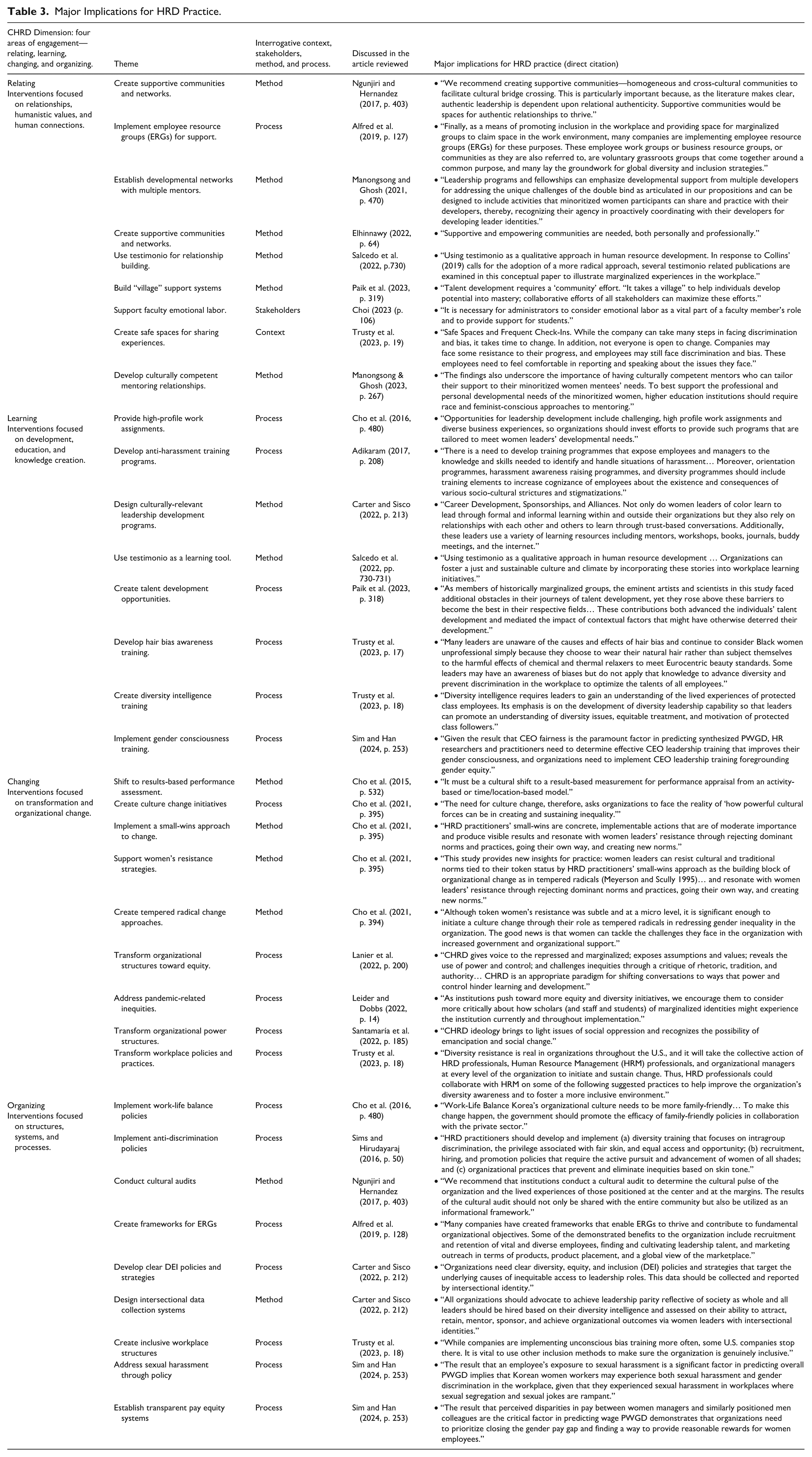
Finally, we observed that CHRD is interpreted differently across contexts, reflecting its fluid and evolving nature (Bierema & Callahan, 2014). To provide a structured overview of these applications, we developed two tables (Tables 3 and 4) that map HRD implications across the four engagement areas—relating, learning, changing, and organizing—intersecting with key analytic questions: context (where), stakeholders (whom), methods (how), and processes (what). The Claude tool assisted in organizing the dataset; however, all classifications were manually validated using direct quotations from the original sources to ensure accuracy and reliability. This classification was validated using direct quotes from the original articles to ensure accurate categorization, name of the author, year, and page.
Major Implications for HRD Practice.
Major Implications for HRD Research.
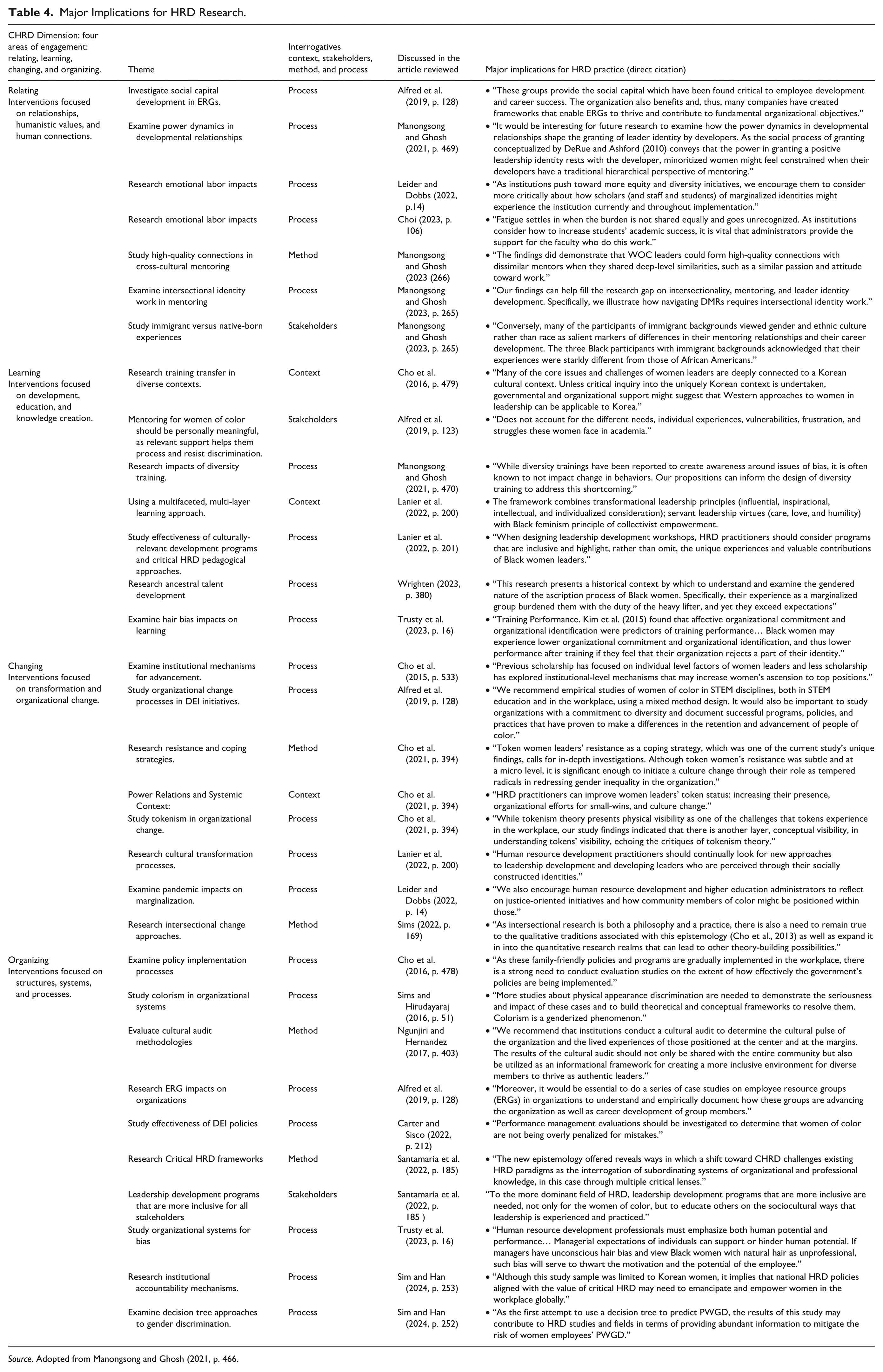
Source. Adopted from Manongsong and Ghosh (2021, p. 466.
Implications for HRD Practice
Our review shows the importance of establishing confidence in CHRD practices, particularly when applied to studies focusing on WOC. Future research should focus on conducting longitudinal studies assessing CHRD interventions’ impact over 6 months, 1 year, or longer, specifically examining how these interventions address the unique challenges and experiences of WOC in organizational settings, as well as publishing post-intervention evaluations to provide concrete evidence of CHRD’s effectiveness in this particular issue. Disseminating and developing metrics and tools to measure the success of CHRD practices in achieving organizational and societal goals would encourage more research.
Publishing Practical Handbooks for WOC-Centered Practitioners: Developing and disseminating potential interventions through practical handbooks can bridge the gap between research and practice with a specific focus on supporting and empowering WOC. These handbooks should include case studies, example activities, and frameworks for implementing CHRD interventions for WOC and guidelines for conducting post-program evaluations to assess the impact of CHRD initiatives and highlight evidence-based strategies to help practitioners design, implement, and refine CHRD practices. A great stride toward this is the newly published book on Critical Perspectives in HRD (Bierema et al., 2023), with particular attention to the experiences of marginalized groups.
Outcome Evaluations and Comparative Analyses Centering WOC Experiences: Publishing comparative analyses of CHRD and traditional HRD outcomes should prioritize the perspectives and experiences of WOC. It can help practitioners to understand the relative benefits of each approach. Research in this area can document the outcomes of CHRD interventions for WOC in various organizational contexts. They may highlight what went right and what went wrong in CHRD implementations that have improved workplace experiences for WOC, offering practical lessons for future initiatives. We also recommend establishing Practitioner-Researcher Forums where practitioners and researchers can collaborate and serve as liaisons for knowledge exchange. They can foster a more inclusive approach to understanding and implementing CHRD practices that directly address the needs of Women of Color.
Engaging Secondary Stakeholders in CHRD Implementation: CHRD practice must include a focus on secondary stakeholders, particularly HRD professionals and organizational leaders, beyond the primary stakeholders (WOC) to create sustainable change. Our analysis reveals that the reviewed literature applying the CHRD framework did not offer evidence-based HRD strategies for systematically engaging these secondary stakeholders in CHRD implementation. HRD professionals need to challenge the system that is inequitable instead of “fixing” the WOC to become more resilient to being neglected by the organization. The CHRD framework should explicitly guide future HRD interventions and initiatives to address how secondary stakeholders can actively dismantle organizational barriers rather than expecting women of color to adapt to inequitable environments. This requires developing concrete, evidence-based strategies that train HRD professionals and leaders to recognize their role in perpetuating or dismantling systemic inequities. The focus of research should be on developing effective frameworks that empower secondary stakeholders to become agents of organizational transformation, making sure that CHRD interventions address root causes of marginalization rather than symptoms.
Additionally, scholars should examine how technology can support CHRD practices for WOC, including leveraging digital tools for delivering CHRD training and interventions and data analytics to evaluate the effectiveness of CHRD initiatives. Further, it will help to explore how CHRD can contribute to achieving sustainability objectives and promoting green HRD practices. Additionally, it is worth analyzing how CHRD supports corporate social responsibility (CSR) and ethical decision-making within organizations.
Lastly, we propose developing context-specific CHRD models for specific industries and organizational contexts. This can include examining the unique challenges and opportunities for CHRD in sectors such as healthcare, technology, education, and others. Research on adapting CHRD practices to fit small and medium enterprises (SMEs) and multinational corporations (MNCs) is needed as well. By addressing these research directions with a deliberate focus on Women of Color (WOC), the HRD field can accelerate the adoption of CHRD practices, ensuring they are widely recognized and effectively implemented as transformative and inclusive of the unique challenges that WOC face in organizations.
Implications for HRD Research
Our literature review shows that the field of HRD is increasingly recognizing the potential of CHRD practices to address contemporary organizational and societal challenges facing WOC and efficiently utilize their talents for the benefit of organizational sustainability. Therefore, future research must create a robust evidence base, foster practitioner awareness, and promote global adaptability. We propose future research directions to integrate CHRD practices with traditional HRD approaches.
Building a Clear Understanding of CHRD: A new genre of research should aim to articulate the CHRD framework in comparison with traditional HRD regarding contexts, stakeholders, methodologies, interventions, and outcomes. These studies can build on and innovate theoretical models to define CHRD’s core principles and practices. In particular, researchers should explore the interdependence among the CHRD dimensions identified in this study. Our findings suggest that relating may function as a psychological prerequisite for other developmental processes for WOC. Learning often operates as a mechanism for broader cultural and organizational change. Further conceptual work could also examine the potential role of accountability or justice as an additional dimension that ensures equity policies translate into everyday managerial practice. In addition, future research can examine the alignment of CHRD with methodologies that center the voices and experiences of WOC and broader organizational goals such as equity, sustainability, and social justice. The integrated model of Critical HRD and National HRD as offered by Collins and colleagues is a good example of scholarship in this direction (Collins et al., 2017).
Awareness Creation through Conferences and Special Sessions: The organization of special sessions during professional gatherings such as the AHRD conference can introduce CHRD principles to a broader audience of practitioners and researchers and facilitate discussions on how CHRD aligns with emerging trends in HRD. Additionally, it can provide safe spaces for HRD professionals to share their research findings and strategies for amplifying WOC voices in HRD research and practice, and to compare studies that explore how WOC navigate professional challenges in different cultural and organizational environments.
Encourage Collaborative Research Across Cultures and among WOC: Future research should emphasize collaborative studies in WOC contexts. Comparative studies examining CHRD adoption in the Global North and Global South, or across sectors and institutional contexts, could illuminate how relational, learning, and structural interventions operate under different cultural norms and power dynamics. Research may focus on how CHRD practices can be tailored to specific cultural settings affecting WOC, examining cross-cultural similarities and differences in CHRD adoption and outcomes between the West and the East. Researchers can evaluate the impact of CHRD interventions across cultural contexts and build networks of CHRD practitioners and WOC scholars to share insights and best practices that address the unique intersectional experiences of Women of Color globally.
For instance, the collaborative autoethnography by Sim, Chaudhuri and Niu (2025) illustrates the transformative potential of CHRD practices such as relational mentoring in shifting deficit-based narratives about Women of Color (WOC) toward strength-based identities through collective inquiry. Similarly, Ghosh and Nyanjom (2025) illustrate how a multinational organization headquartered in Australia leverages reverse mentoring to foster mutually beneficial relationships between minoritized individuals, including WOC, and executives with dominant identities.
Conclusion
We concluded this literature review, believing that the field of HRD needs to recognize the potential of CHRD practices to address contemporary organizational and societal challenges. Bierema and Callahan (2014) mentioned that “the power of this approach is that it is affected by very fluid dynamics and is dependent on the players—local and global, and explicit and implicit—that inform the areas of HRD engagement” (p. 441). The literature consistently shows that Women of Color (WOC) have been historically marginalized based on their social identities. They often face invisibility and silence as leaders, are underrepresented in high-level executive roles, STEM fields, and higher education, and are frequently subjected to harmful stereotypes across organizational contexts. Designing effective interventions for WOC remains a complex challenge that demands a robust and multifaceted framework. Integrating complementary approaches such as Social Justice, Black Feminist Theory, and Intersectionality can strengthen the CHRD framework in addressing the unique needs of WOC. Future research should raise practitioner awareness, foster practitioner–researcher forums, develop practical handbooks, and explore how technology can support CHRD practices. These efforts are essential to bridge the gap between research and practice, and to establish CHRD as a transformative and widely recognized approach to advancing equity and inclusion in the workplace.
Footnotes

Funding
The authors received no financial support for the research, authorship, and/or publication of this article.
Declaration of Conflicting Interests
The authors declared no potential conflicts of interest with respect to the research, authorship, and/or publication of this article.