



Abstract
Background:
This study compares the usability of two levodopa dry powder inhalers. The Inbrija® inhaler involves several preparatory steps, including blister opening and capsule insertion. The Cyclops® inhaler is preloaded and disposable, designed for immediate use. Ease of use is critical, as cognitive and motor impairments may hinder the patients’ ability to operate an inhaler.
Methods:
Sixteen patients with Parkinson’s disease experiencing predictable and recognizable off episodes were enrolled. After receiving inhalation instructions, patients performed the inhalation maneuver during their off-episode to assess the correct execution. They completed a questionnaire evaluating the ease of use for both devices. Each patient used both the Cyclops® and Inbrija® inhalers in a randomized sequence and completed the questionnaire.
Results:
All 16 patients correctly performed the Cyclops® inhaler steps during an off episode, while only 10 patients successfully completed the steps with the Inbrija® inhaler. Twelve of the sixteen patients (75%) expressed a preference for the Cyclops®, rating it higher in terms of ease of use and hygiene. However, concerns were raised regarding the environmental sustainability of its single-use design. For the Inbrija®, patients reported difficulties with opening the peel-off blister packaging, assembling the mouthpiece, and puncturing the capsules.
Conclusion:
The Cyclops® inhaler was more user-friendly during off episodes due to its ease of use and simpler handling. Since the Cyclops® is preloaded, it requires fewer and simpler steps. The preparation steps of Inbrija® posed usability challenges, particularly with opening the peel-off blister packaging of the capsule and assembling the mouthpiece and handle.
Introduction
Parkinson’s disease (PD) is a progressive neurodegenerative disorder characterized by the loss of dopamine-producing neurons in the substantia nigra, leading to a deficiency of dopamine in the brain. This deficiency manifests in various motor symptoms, such as bradykinesia, rigidity, and resting tremor. 1 Treatment primarily involves dopaminergic medications, including levodopa, dopamine agonists, and Monoamine oxidase-B (MAO-B )inhibitors. 2 However, as the disease progresses, the response to levodopa diminishes due to a narrowed therapeutic window and delayed onset of effects caused by inconsistent gastrointestinal absorption.1,3,4 This leads to response fluctuations (on and off episodes), where symptoms emerge during the off episodes. 5
Current treatments for off episodes in PD include levodopa dispersible tablets (not specifically registered for this indication), subcutaneous apomorphine injections, and inhalable levodopa.6–8 Inhalable levodopa offers rapid and consistent systemic absorption via the pulmonary route, thereby bypassing gastrointestinal absorption variability.6,8 The Inbrija® dry powder inhaler (Acorda Therapeutics Ireland Limited), formerly known as CVT-301,9,10 has been Food and Drug Administration (FDA)-approved since December 2018 and is currently authorized by the European Medicines Agency (EMA) for the intermittent treatment of off episodes in PD patients too. The Cyclops® dry powder inhaler (PureIMS Besloten Vennootschap (B.V)., the Netherlands), pre-filled with levodopa and 2% L-leucine as an excipient, is currently under development.
Inhalable levodopa is often perceived as more challenging to use than tablets due to the multiple preparation and inhalation steps involved, whereas tablets require fewer steps. Luinstra et al. found that PD patients could successfully prepare the Cyclops® inhaler and perform a satisfactory inhalation maneuver during off episodes. 11 However, no comparison has yet been made regarding the ease of use between Cyclops® and Inbrija®. These inhalers differ in both the number and type of steps required for use. The Cyclops® is designed as a ready-to-use, single-use inhaler, currently requiring two inhalers per dose. The Inbrija® is a multi-use inhaler, requiring patients to inhale two levodopa capsules and follow specific cleaning steps between administrations. 12
This article presents the findings from a crossover, non-therapeutic observational usability study comparing levodopa Cyclops® and Inbrija® in PD patients during off episodes. The primary objective of the study was to assess whether PD patients were able to correctly perform the required handling steps of the Cyclops® and Inbrija® inhalers during an off episode. The secondary objective was to evaluate the ease of use and gather feedback on the usability and convenience of both inhalers during these off episodes.
Materials and Methods
Cyclops® and Inbrija®
The Cyclops® is a pre-filled, single-use dry powder inhaler constructed from polycarbonate (PC). Its dose compartment is made of low-density polyethylene and sealed with a polyethylene terephthalate/polyethylene foil. The inhaler is packaged in a sealed pouch composed of Polyethylene terephthalate (PET)/aluminum/polyethylene film. A full dose requires two inhalations. The Inbrija® is a dry powder inhaler that requires manual loading and inhalation of two capsules for a complete dose. This device is made of polybutylene terephthalate, PC and polypropylene with puncturing tines and springs made of stainless steel. The capsules are packaged in aluminum/Polyvinyl chloride (PVC)/aluminum peel-off blisters. Inbrija® was obtained from Myonex (Germany), and Cyclops® was obtained from PureIMS (the Netherlands).
In this study, medication-free inhalers were used. In the case of Inbrija®, capsules containing levodopa were employed to simulate blister packaging opening, while empty size 0 capsules were used for inhalation. Figures 1 and 2 illustrate the preparation steps for the Cyclops® and Inbrija®inhalers.
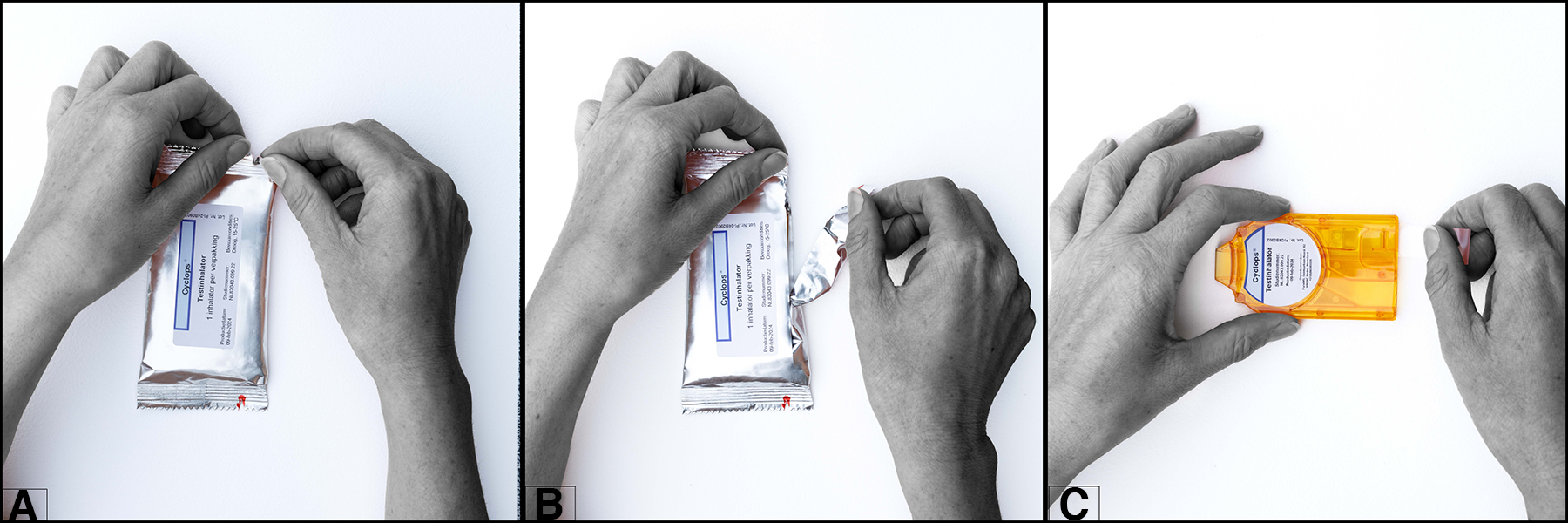
Preparation steps for the Cyclops®. 1A = Cyclops® in the pouch with tear notches on both sides, 1B = opening the pouch via tear notch (outer packaging), 1C = removing the foil.
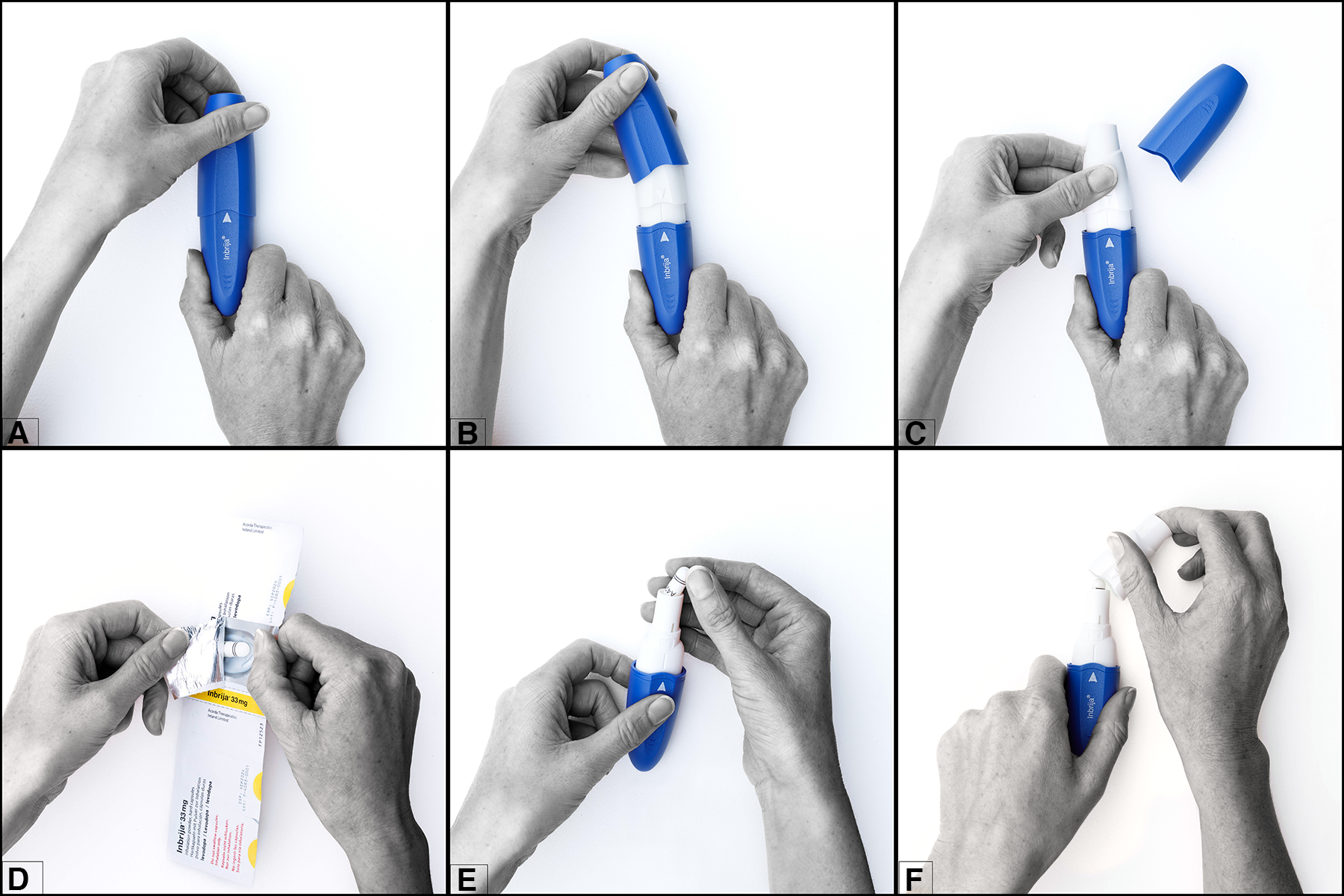
Preparation steps for the Inbrija® (cleaning steps after use are not shown). 2A = Inbrija® taken out of the original package, 2B = pull the blue cap off, 2C = twist and pull the white mouthpiece off, 2D = peel back the foil of the blister and remove a capsule, 2E = load one capsule into the opening of the capsule chamber, 2F = attach the mouthpiece by pushing the mouthpiece and handle together.
Informed consent and ethics
All patients were treated in accordance with the 1964 Helsinki Declaration and its later amendments. The study protocol was approved by the local ethics board ‘Regionale toetsingscommissie patiëntgebonden onderzoek’ (RTPO) in Leeuwarden, The Netherlands (approval number NL82043.099.23). The study was registered on ClinicalTrials.gov with identification number NCT05499572. All patients provided written informed consent.
Study population
Parkinson’s patients from the Martini Hospital in Groningen (The Netherlands) were recruited via the ‘Point for Parkinson Groningen’ facility. This specialized care facility focuses on the treatment of PD and Parkinsonism in the northern Netherlands. A neurologist with expertise in PD selected eligible patients based on predefined inclusion criteria. To qualify, patients had to have a confirmed diagnosis of PD, be at least 18 years old, and experience regular, predictable, and recognizable off episodes. Patients were excluded if they had prior experience with the Cyclops® or Inbrija® inhalers or exhibited cognitive dysfunction that could compromise their understanding of the study.
Study design and sample size
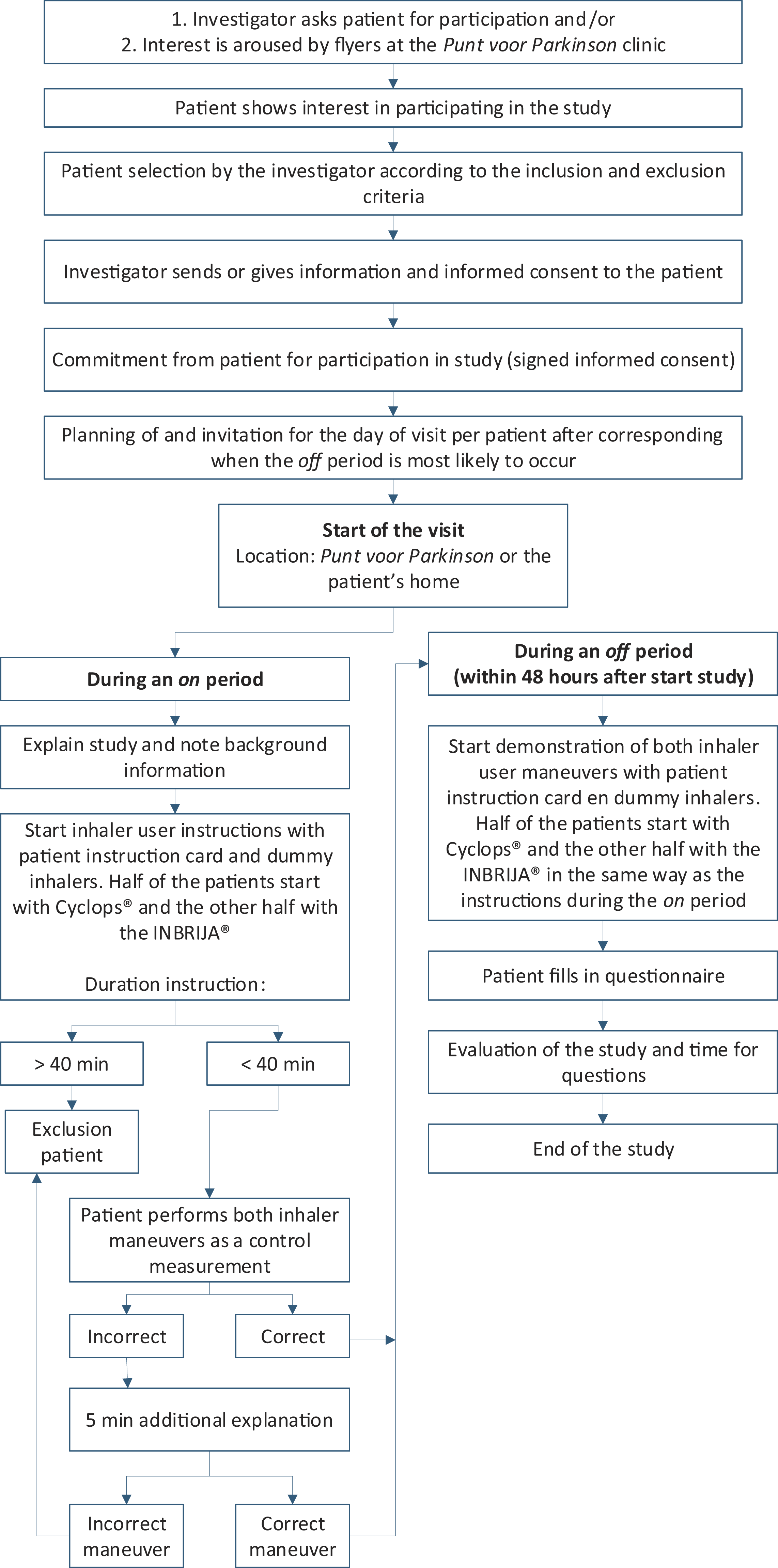
This study is a crossover non-therapeutic observational usability study designed to assess the ability of Parkinson’s patients to correctly handle and operate the Cyclops® and Inbrija® inhaler during off episodes. The flowchart of the study design is shown in Figure 3. As the primary objective was to gain insight into the correct use of these inhalers during off episodes and to gather patient feedback, no formal sample size calculation was conducted. A sample size of 16 patients was considered to be sufficient based on previous studies involving Parkinson’s patients and the qualitative design of this study.
Flowchart of the study design.
Procedures
A study visit was conducted at the patient’s home during an on-period, coordinated with a scheduled levodopa dose. The researcher explained the study’s purpose and collected baseline information, including sex, age, weight, height, time since Parkinson’s diagnosis, and daily oral levodopa dose. Patients received inhalation instructions following a standardized protocol based on the inhaler instruction cards and the five-step method from the Inhaler Research Workgroup. 13
Patients were then allowed to practice the inhalation maneuvers. Once the patients demonstrated correct performance of the steps and no longer required practice, a control measurement was performed to confirm their understanding of the instructions. In cases of an incorrect control measurement, patients received additional clarification (limited to a maximum of 5 minutes). After a correct control measurement, patients were asked to delay their next levodopa dose, and the researcher waited until the patient entered an off-episode.
During the off episode, the patient performed the inhalation maneuver, and the researcher evaluated the accuracy of each step using an assessment form. Each patient demonstrated the inhalation maneuver for both inhalers. Following this, patients completed a questionnaire evaluating the ease of use of the inhalers.
Randomization
Each patient demonstrated the inhalation maneuver for both inhalers in a predefined randomized order (either Cyclops® or Inbrija® first). Randomization was determined based on study numbers: patients with odd-numbered assignments received Inbrija® first, followed by Cyclops®, while those with even-numbered assignments received the Cyclops® first, followed by Inbrija®. Study numbers were assigned sequentially as patients were enrolled.
Assessment form and questionnaire
A systematic assessment form was utilized for each inhaler to document whether each step of the inhalation maneuver was performed correctly or incorrectly. This form was applied during both the control measurement in the on-period and the execution in the off episode. Additionally, a questionnaire was completed administered to assess the ease of use of both inhalers. Patients rated each inhaler on a five-point scale: (1) very easy or very good, (2) easy or good, (3) neutral, (4) difficult or bad, and (5) very difficult or very bad.14–17
Data analysis
A full inhalation dose of the Cyclops® requires two consecutive inhalations, while a full dose with the Inbrija® involves two consecutive inhalation with loading of the second capsule in between. Each step of the inhalation process was evaluated as correct if it was performed according to the instruction card during both inhalations. The results from the ease-of-use questionnaire were analyzed using the Wilcoxon signed-rank test. To adjust for multiple comparisons (eight tests), a Bonferroni correction was applied by dividing the original alpha (0.05) by the number of tests, resulting in a significance threshold of p value ≤ 0.006. Statistical analyses were conducted using SPSS Statistics version 25.0 (IBM, Chicago, USA).
Study objectives
The primary objective of this study was to evaluate whether Parkinson’s patients could correctly perform the inhalation maneuver with the Cyclops® and Inbrija® inhalers during an off episode following initial inhalation instructions. Secondary objectives included collecting patient feedback on the ease of use and convenience of both inhalers. These two objectives enabled a comparison between the usability of both devices.
Results
Patient characteristics
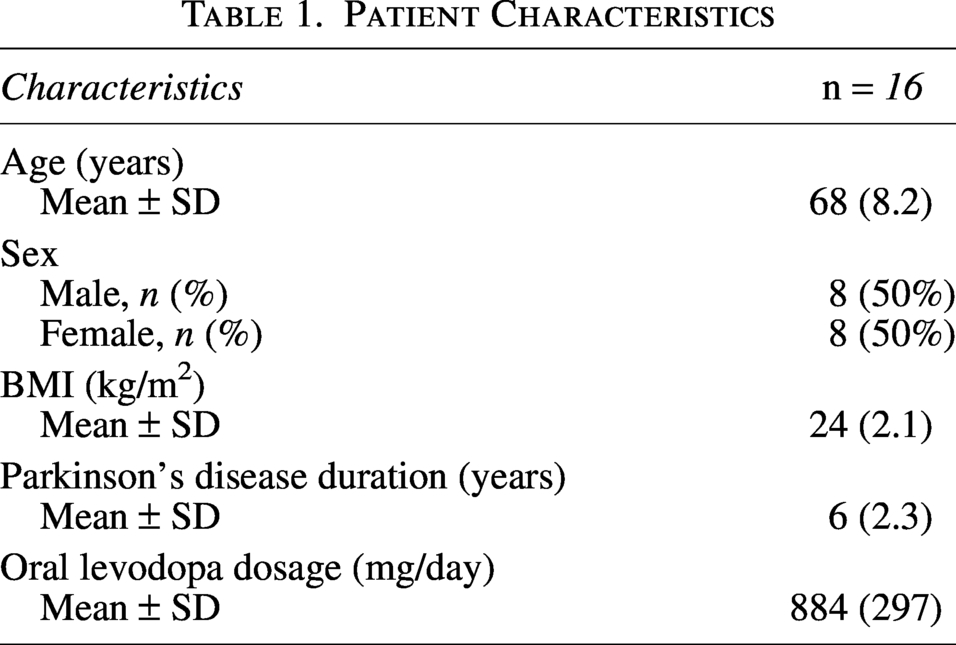
A total of 16 patients with PD were included in this study between February 2024 and June 2024. One patient was excluded due to the cognitive inability to follow the inhalation instructions. To maintain a total of 16 participants, this individual was replaced. The characteristics of the study population are shown in Table 1.
Patient Characteristics
(Table 1 Patient characteristics)
Inhalation maneuver during off episodes
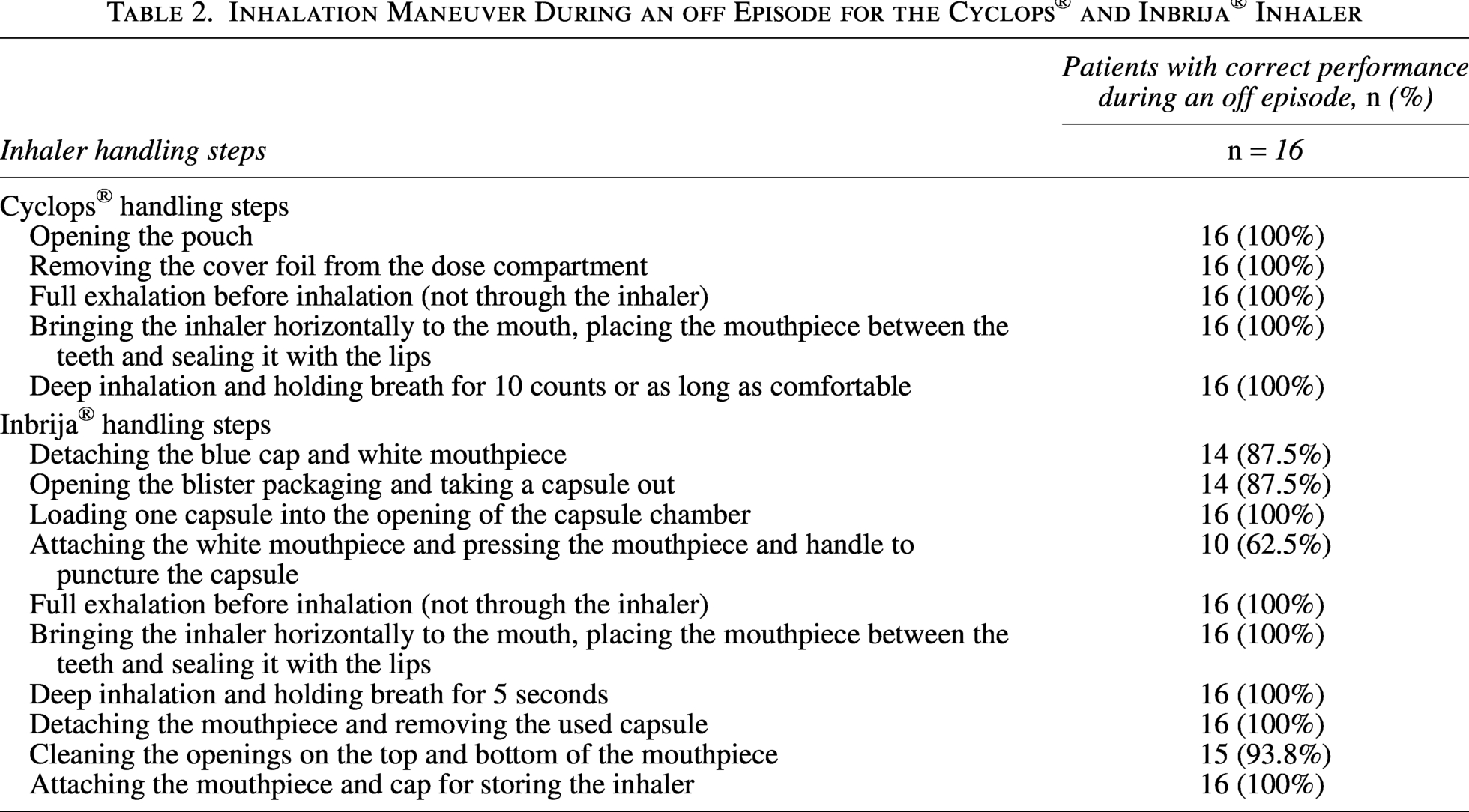
The procedural steps for each inhaler and the number of patients who executed them correctly during an off episode are summarized in Table 2. All 16 patients successfully performed the inhalation maneuver using the Cyclops®. In contrast, with the Inbrija®, two patients were unable to detach the mouthpiece as they repeatedly tried to pull it off instead of twisting it. Additionally, two patients failed to open the peel-off blister packaging of the capsules. They pressed the capsules out of the blister packaging rather than peeling back the foil, which led to capsule damage. Six patients were unable to reattach the mouthpiece after loading the capsule, and one patient incorrectly performed the cleaning steps by cleaning the capsule chamber instead of the mouthpiece.
Inhalation Maneuver During an off Episode for the Cyclops® and Inbrija® Inhaler
(Table 2 Inhalation maneuver during an off episode for the Cyclops® and Inbrija® inhaler)
Patient preference, experience, and opinion
Results from the questionnaire on the ease of use and convenience of both inhalers are presented in Table 3. Of the 16 patients, 12 (75%) expressed a preference for the Cyclops®, while 4 (25%) preferred the Inbrija®. Patients rated the Cyclops® significantly higher in terms of ease of preparation and hygiene. This preference was attributed to the Cyclops® requiring fewer and simpler handling steps and being more hygienic due to its single-use design. On the contrary, nine patients found the single-use design less sustainable. The Inbrija® mouthpiece was rated significantly higher for convenience, as its rounded design was perceived as more ergonomic compared to the flat mouthpiece of the Cyclops®. Nevertheless, patients reported that significant strength was required to open the peel-off blister packaging of the Inbrija® capsules and to press the mouthpiece and handle together to puncture the capsules.
Patient Scores on the Ease of Use of the Cyclops® and Inbrija® Inhaler * and a Comparison of the Scores for Both Devices
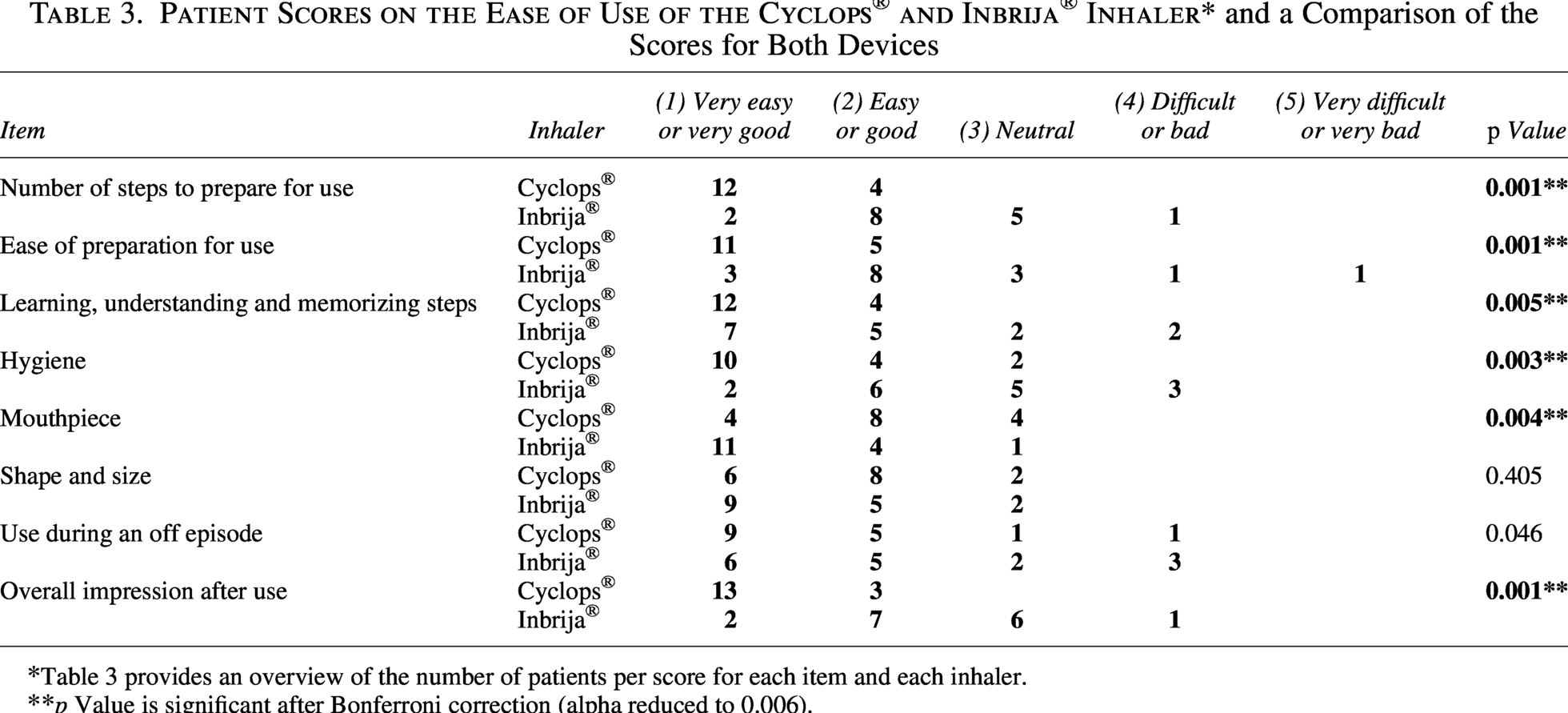
Table 3 provides an overview of the number of patients per score for each item and each inhaler.
p Value is significant after Bonferroni correction (alpha reduced to 0.006).
(Table 3 Patient scores on the ease of use of the Cyclops® and Inbrija® inhaler* and a comparison of the scores for both devices.)
Patient suggestions
For the Cyclops®, patients recommended enhancing the visibility of the foil by incorporating coloured foil or adding a visible symbol (for example, a red arrow) on the transparent foil. The single-use design of the Cyclops® was deemed less sustainable, and patients suggested improving its sustainability by developing multi-use or refillable versions. For the Inbrija®, patients proposed replacing the peel-off blister packaging with push-through blister packaging, as this format aligns with the packaging of other Parkinson’s medications, to which patients are accustomed. Additionally, patients suggested that ease of use could be improved by eliminating blister packaging altogether, as opening such packaging requires physical strength, which is often compromised during off episodes.
Discussion
Off episodes can limit the ability of PD patients to use inhalers effectively due to both motor and cognitive dysfunction. Next to the inhalation performance of the patient, successful inhalation therapy also requires correct device handling, including proper preparation before use. 18 Among patients with obstructive lung diseases, only 31% demonstrate correct inhalation technique. Common errors with dry powder inhalers (DPIs) include inadequate device preparation, failure to exhale fully before inhalation, and omission of a breath-hold after inhalation. 19 Furthermore, the type of inhaler device affects the performance of a correct inhalation technique. Rootmensen et al. demonstrated that the use of prefilled DPI was associated with improved inhalation technique. This was possibly due to the reduced complexity and fewer steps required when using prefilled dry powder inhalers. 20
In PD, the Cyclops® and Inbrija® inhalers are specifically used during off episodes. ∼40% of PD patients experience off episodes within 4–6 years after initiating oral levodopa therapy, increasing to 70% experience after 9 years. 21 These can negatively impact a patient’s ability to correctly prepare and use inhaled medications. 22 Ensuring inhaler usability during off-episodes is therefore critical, as difficulties may lead to use errors and reduced adherence.
Previous work by Luinstra et al. demonstrated that PD patients are capable of generating sufficient inspiratory flow and volume to use a DPI during off episodes. 22 Our findings are in line with previous research, showing that over 90% of PD patients were able to correctly prepare the Cyclops® during an off episode. 11 The pre-filled design of the Cyclops® appears to enhance usability compared to Inbrija® and its quicker preparation is associated with patients’ expectations of more rapid symptom relief during off episodes. Concerns have been raised regarding the usability of Inbrija®, as its preparation can be particularly challenging for PD patients during off episodes and is further complicated by the requirement to inhale two capsules per dose. 23 In the Inbrija®registration study, the efficacy, safety, and pulmonary function were evaluated; however, the ability of PD patients to complete the necessary inhalation steps during off episodes was not assessed. According to the Summary of Product Characteristics of Inbrija®, patients should be able to prepare the inhaler independently or have assistance from a caregiver. 12
Tasks requiring considerable hand strength may be problematic for PD patients. For example, after loading the capsule into the inhaler, users must firmly press the mouthpiece and handle together, a step that may be difficult during off episodes due to tremor or rigidity. Moreover, patients are advised not to press the mouthpiece and handle repeatedly, as this may damage the capsule and result in incomplete dose delivery. 12
The peel-off blister packaging of Inbrija® capsules presents an additional barrier, particularly for older adults, due to the strength required to open it. Mühlfeld et al. demonstrated that many older adults struggle with peel-off or push-through blister packaging. In addition to medical conditions, vision impairments and advanced age were associated with decreased usability. 24 To address this, patients have suggested improvements such as using colored foil or adding visible symbols (e.g., a red arrow) to enhance visibility. Along with the required opening force, the opening mechanism also affects usability in older adults. In the case of Inbrija®, the peel-off blister packaging may confuse patients accustomed to the push-through blisters used for their other PD medications.
Collectively, these challenges may contribute to suboptimal treatment of off episodes. This study also examined whether patient characteristics, such as gender, age, disease duration, or type of off symptoms, were associated with the incorrect execution of the Inbrija® inhalation maneuver. No correlations were found.
In terms of hygiene, the Cyclops® is more favorably perceived. Patients expressed concerns about powder accumulation in the mouthpiece of Inbrija®, particularly since the mouthpiece cannot be rinsed. 12 The single-use, disposable design of the Cyclops® has been deemed less sustainable. Patients suggested that its sustainability could be improved by developing multi-use or refillable versions. Furthermore, the environmental impact of the Cyclops® can be reduced by making the device recyclable and offering logistics for that. A similar concern applies to Inbrija®, which is discarded once all capsules have been used. Environmental impact, however, is a multifactorial issue that extends beyond disposability. 25 For instance, formulation and manufacturing methods differ between the two devices, milling for Cyclops® versus spray-drying for Inbrija®, which may influence their environmental footprint. Moreover, the Cyclops® is produced locally in the Netherlands, whereas Inbrija® is imported from the United States, introducing differences in transport-related emissions.
A limitation of this study is that patients self-reported their off-episode status, and there was no distinguishment in the severity of the off episode. It is therefore not possible to determine whether patients who executed the inhalation maneuver incorrectly were experiencing more severe off episodes.
Assessing device usability within the target patient population is crucial and should be integrated into the design and development of medical devices. Tasks that may appear simple can be challenging for PD patients or older adults in general, potentially leading to inadequate treatment.
Conclusions
This study demonstrated that Parkinson’s patients can successfully perform the entire Cyclops® inhalation maneuver during off episodes. Patients experienced usability challenges with the Inbrija® inhaler, particularly with opening the peel-off blister packaging and assembling the mouthpiece and handle after loading the capsule. Patients expressed a preference for the Cyclops® during off episodes due to its ease of use. However, its single-use design was viewed as less sustainable, which makes further optimization desirable. This issue may be addressed by making the device recyclable in the future or developing multi-use or refillable versions.
Authors’ Contributions
All authors agreed with the content and all gave explicit consent to submit. V.A.S.W. Data curation. Formal analysis. Methodology. Investigation. Project administration Resources Visualization. Writing—original draft L.J. Conceptualization, Methodology. Investigation, Validation. Visualization. Writing—original draft. A.A.E.M. Resources. Writing—review and editing. P. H. Conceptualization. Methodology. Writing—review and editing. M.L. Conceptualization. Visualization. Writing—review and editing. H.W.F. Conceptualization. Methodology. Resources. Supervision. Visualization. Writing—review and editing
Footnotes
Acknowledgments
The authors thank Irene den Toom for creating the photographs and Anuschka Niemeijer for her contribution to the statistical analysis.
Author Disclosure Statements
This study did not receive financial funding. Devices and supplies were provided by PureIMS bv. P. Hagedoorn holds the patent for A Breath Actuated Dry Powder Inhaler licensed to WO 2015/187025 A1. H.W. Frijlink holds the patent for A Breath Actuated Dry Powder Inhaler licensed to WO 2015/187025 A1. All other authors declare that they have no competing financial interests or personal relationships that could have influenced the work reported in this article.
Funding Information
No funding was received for this article.