



Abstract
Importance
Collaboration between occupational therapists (OTs) and occupational therapy assistants (OTAs) supports coordinated client-centered care. Although the Intraprofessional Collaborative Practice Survey (ICPS) has been used to document progress in occupational therapy, Rasch-based psychometric evidence is limited.
Objective
To evaluate the ICPS psychometric properties using Rasch analysis and examine differential item functioning (DIF) between master of occupational therapy (MOT) and doctor of occupational therapy (OTD) students.
Design
Cross-sectional psychometric validation study.
Setting
Accredited occupational therapy programs across the United States.
Participants
In total, 444 occupational therapy students (272 MOT [mean age = 24.55 years; 7.4% male] and 172 OTD [mean age = 24.84 years; 8.7% male]).
Outcomes and Measures
Intraprofessional Collaborative Practice Survey (ICPS)-Occupational Therapist version, a 20-item survey with Perceived Importance and Perceived Ability modules across four domains: Intraprofessional Teamwork, Roles and Responsibilities for Collaborative Practice, Communication for Intraprofessional Practice, and Values and Ethics for Intraprofessional Practice.
Results
Unidimensionality was confirmed for the four domains within both the Perceived Importance and Perceived Ability modules. Response categories advanced monotonically, supporting appropriate functioning of the 3-point rating scale. Item fit was acceptable. Ceiling effects were observed across both modules; no floor effects were found. Item separation indicated stable item ordering. Two Perceived Importance items demonstrated meaningful DIF between MOT and OTD students.
Conclusions and Relevance
The ICPS demonstrated satisfactory construct validity, and most items functioned comparably across MOT and OTD programs. Ceiling effects in the Perceived Importance items may limit sensitivity to change at higher endorsement levels. Two DIF items warrant further examination.
Plain Language Summary
The ICPS measures how strongly OT students value OT–OTA collaboration and how confident they feel performing collaborative behaviors. Rasch analysis supported the quality of the measure and showed that most items functioned similarly across MOT and OTD students. Overall, the findings suggest that the ICPS is a reliable and valid tool for OT education.
Keywords
Introduction
Collaboration is a professional priority of the American Occupational Therapy Association (AOTA). In Vision 2025, AOTA identified Collaborative as one of the core pillars guiding the profession's strategic direction, emphasizing that working effectively with others is not optional but foundational to achieving high-quality outcomes (AOTA, 2017). This emphasis is sustained and even more explicit in Vision 2030, which states that collaboration is a defining feature of the Inclusive and Equitable Professional Community pillar, enabling all professionals to enhance growth and development. Additionally, it is also embedded in the Occupational Justice and Advocacy pillar to advance access and participation in meaningful occupations (AOTA, 2025). In addition to these broad strategic priorities, AOTA emphasizes collaboration as integral to day-to-day service delivery, noting that occupational therapist–occupational therapy assistant (OT–OTA) intraprofessional collaboration is a key element in providing occupational therapy services (AOTA, 2018, 2020). This guidance underscores that the profession relies on internal collaboration to deliver high-quality care.
Sawada et al. (2023) conducted a conceptual analysis and scoping review. They described collaboration as involving shared goal-directed engagement, meaningful contributions from team members, effective communication and interaction, relationships grounded in mutual respect and trust, and complementary roles that strengthen the collective effort. Because OT and OTA roles involve both shared and distinct responsibilities, effective intraprofessional collaboration requires more than general teamwork. It relies on role delineation, bidirectional communication, and ethical partnership behaviors that support safe and efficient care (AOTA, 2018). Therefore, intraprofessional collaboration represents a distinct partnership competency set that warrant focused attention. These expectations are also reflected in occupational therapy education standards that emphasize practice-ready teamwork and collaboration skills across learning experiences (ACOTE, 2023).
To better prepare learners for OT–OTA partnership, occupational therapy programs have expanded structured intraprofessional learning opportunities, including paired learning, simulation, team-based coursework, and other collaborative learning designs (Avvampato et al., 2025; Brady et al., 2025; Carpenter et al., 2023; Dennehy, 2022; Fan et al., 2021; Fan & Case, 2025a, 2025b). As these educational approaches become more common, educators need outcome measures that can capture students’ intraprofessional collaboration competencies and document learning-related changes. However, instruments developed specifically for intraprofessional collaboration remain limited, and researchers have sometimes used interprofessional measures as proxies (Avvampato et al., 2025; Fan & Case, 2025b; Probst et al., 2024). Such substitution may overlook features distinctive to OT–OTA partnerships, including supervision structures and shared disciplinary knowledge, which can shape how collaboration is enacted.
To address this gap, the Intraprofessional Collaborative Practice Survey (ICPS) was developed for the occupational therapy context. The ICPS is available in two respondent-specific versions: an occupational therapist version (Fan et al., 2024a) and an occupational therapy assistant version (Fan et al., 2024b). Both versions include the same Perceived Importance and Perceived Ability modules and assess the same competency items, with wording adapted to use terminology specific to each respondent group. The ICPS includes four competency domains: Intraprofessional Teamwork, Roles and Responsibilities for Collaborative Practice, Communication for Intraprofessional Practice, and Values and Ethics for Intraprofessional Practice. The instrument has been used to evaluate intraprofessional learning outcomes in occupational therapy education (Fan et al., 2021; Fan & Case, 2025a). Prior work using confirmatory factor analysis (CFA) supported the ICPS four-domain structure for both modules (Fan et al., 2026).
Although CFA provides important evidence about dimensionality and structural validity, factor-analytic approaches alone are limited for scale development. In particular, CFA does not indicate whether the response options on a Likert scale are spaced evenly, even though researchers often sum or average these ratings and interpret the resulting scores as if they reflect equal intervals (Bailes & Nandakumar, 2020). The Rasch measurement model can complement CFA by evaluating whether ICPS domain items function together to support measurement on a common interval scale and providing item-level evidence that strengthens defensible score use (Tesio et al., 2024; Wright, 1994). When model assumptions are adequately met, Rasch analysis can map ordinal responses onto a linear logit metric and place persons and items on a shared continuum, enabling the evaluation of rating scale functioning, item and person fit, targeting, and measurement precision (Bailes & Nandakumar, 2020; Chiu et al., 2020). Additionally, item difficulty calibrations can also clarify a meaningful hierarchy of intraprofessional collaborative behaviors (Boone, 2016). Rasch methods also support differential item functioning (DIF) analyses to examine whether items operate similarly across relevant subgroups (Brodersen et al., 2007).
In the current study, we focused on entry-level OT students because intraprofessional collaboration is emphasized within OT education, and the ICPS has been used to assess learners’ perceptions of OT/OTA intraprofessional collaboration. Examining DIF between master of occupational therapy (MOT) and doctor of occupational therapy (OTD) students, therefore, helps determine whether ICPS items function equivalently across the two entry-level OT degree pathways, so that any observed score differences reflect true differences in the construct rather than measurement bias. Factor-analytic approaches, such as CFA, can support structural validity in measurement validation, while Rasch analysis can extend validation by strengthening evidence about scaling, precision, and item functioning needed for continued measurement refinement and use (Bailes & Nandakumar, 2020).
The current study aimed to (1) evaluate the ICPS's psychometric properties (unidimensionality, item fit, and rating scale functioning) for each of the four competency domains within both the Perceived Importance and Perceived Ability modules; (2) examine the ICPS item hierarchy; (3) examine the person and item separation indices to assess the scale's ability to distinguish among respondents and ICPS item difficulty levels; (4) examine ceiling and floor effects of ICPS score distribution characteristics; and (5) evaluate DIF between OTD and MOT students to determine whether items function equivalently across program types.
Methods
Study Procedures
This study used an anonymous, cross-sectional online survey. Participants were enrolled through convenience-based recruitment by posting the study announcement with a survey link on the AOTA CommunOT discussion forums (https://www.aota.org/community/communot). Responses were gathered over 14 months, from October 2024 through November 2025. The announcement also encouraged eligible respondents to share the link with classmates or colleagues who might meet study requirements.
Participants
Participants were included if they self-identified that they (1) were 18 years of age or older, (2) were currently students in an Accreditation Council for Occupational Therapy Education-accredited entry-level occupational therapy program in the United States, and (3) had any type of intraprofessional collaboration experience within the previous 3 years, such as paired learning, collaborative course assignments, team project, simulation experience, and so on. After opening the survey link, potential participants reviewed the informed consent information and completed brief screening items to confirm eligibility. Only respondents who met all inclusion criteria could continue to the full survey. The questionnaire was administered via Qualtrics and included a basic demographic form and the ICPS (Fan et al., 2024a). The survey used a required-response format; therefore, participants could not submit the survey with unanswered items; as a result, the dataset contained no missing values. A $10 Amazon gift card was provided as a token of appreciation after the survey completion. The study received approval from the AdventHealth Institutional Review Board (#2205595-1).
Measurement
Intraprofessional Collaborative Practice Survey
Participants completed the ICPS, occupational therapist version (Fan et al., 2024a). This instrument has two modules (i.e., Perceived Importance and Perceived Ability) that use the same 20 items. Each module includes four competency domains: Intraprofessional Teamwork (seven items), Roles and Responsibilities for Collaborative Practice (four items), Communication for Intraprofessional Practice (five items), and Values and Ethics for Intraprofessional Practice (four items). All items are self-rated on a 3-point Likert scale. For the Perceived Importance module, ratings range from 1 (less important) to 3 (very important), while for the Perceived Ability module, ratings range from 1 (less able) to 3 (very able). Previous work has supported the ICPS's face and content validity (Diamant et al., 2018), internal consistency within the four domains, convergent, discriminant, and concurrent validity with moderate to strong correlations with the adapted Interprofessional Collaborative Competency Attainment Survey, as well as measurement invariance across MOT and OTD students (Fan et al., 2026). In addition, studies have shown that it can be used to detect changes in collaborative competencies among OT and OTA learners (Fan et al., 2021; Fan & Case, 2025a).
Data Analysis
Rasch analyses were conducted using Winsteps (version 5.10.2.0) to evaluate ICPS’s psychometric properties and Facets (version 4.4.1) to examine DIF between program types (OTD vs. MOT). Demographic and descriptive statistics were computed using IBM SPSS (version 31.0). Participants’ demographics were summarized using means and standard deviations for continuous variables (i.e., age) and frequencies and percentages for categorical variables (i.e., gender, highest education, and academic level). Demographic differences between OTD and MOT students were evaluated using independent samples t tests for continuous variables and chi-square tests for categorical variables.
Unidimensionality assumes that all measurement items reflect a single underlying trait (Tesio et al., 2023). As the previous studies have confirmed the four competency domains (i.e., Intraprofessional Teamwork, Roles and Responsibilities for Collaborative Practice, Communication for Intraprofessional Practice, and Values and Ethics for Intraprofessional Practice) within each of the Perceived Importance and Perceived Ability modules (Fan et al., 2026), Rasch modeling in the current study was applied separately to each domain within each module to estimate person measures and the ICPS item difficulty calibrations. A total of eight analyses were conducted (two modules, each comprising four domains). A principal components analysis (PCA) of Rasch standardized residuals was conducted to examine unexplained variance. A first residual contrast eigenvalue of 2 or greater is commonly interpreted as suggesting a potential secondary dimension (Wind & Schumacker, 2021).
Additionally, using the Rasch partial credit model (Masters, 2016), we evaluated rating scale functioning by verifying that category average measures increased, and that step (threshold) calibrations were ordered across the three-category response scale. Category average measures are expected to increase monotonically with higher response categories (Linacre, 2002). Item fits were evaluated using Rasch fit statistics. Infit mean square (MnSq) values between 0.5 and 1.5 were considered acceptable; item misfit was defined as Infit MnSq > 1.5 associated with Zstd > 2 (Linacre, 2002).
Item hierarchy was examined by ordering item difficulty calibrations within each domain, with lower logit values indicating items that were more readily endorsed and higher logit values indicating items that were more difficult to endorse by the participants. Person and item separation/reliability indices and person–item maps were also examined to evaluate targeting and measurement precision for each ICPS domain across the two modules. Person separation assessed how well each domain distinguished among participants, whereas item separation assessed the stability of the item difficulty hierarchy (Boone, 2016). Targeting was evaluated by comparing the mean person measure with the item mean fixed at 0 logits and by visually inspecting the person–item maps.
Ceiling and floor effects were examined by evaluating the proportion of participants who achieved the highest or lowest possible scores in each ICPS domain. Ceiling or floor effects were considered present if more than 15% of participants attained the maximum or minimum possible scores, respectively (Gulledge et al., 2020).
DIF was evaluated by comparing item difficulty calibrations between OTD and MOT subgroups. Items were considered to show meaningful DIF when the absolute DIF contrast exceeded 0.64 logits (Zwick et al., 1999) and the Rasch–Welch test was statistically significant (p < .05). Negative DIF contrasts indicate that the item was easier to endorse for OTD students than for MOT students.
Results
Participants’ Characteristics
A total of 444 students completed the survey (OTD: n = 172; MOT: n = 272). Mean age did not differ significantly between programs (t = 0.70, p = .40). Gender distribution was similar across programs, with both programs having over 90% of female participants (χ2 = 0.27, p = .60). Highest educational attainment did not differ by program (χ2 = 2.26, p = .52), with most participants reporting a bachelor's degree. However, the academic level differed significantly between programs (χ2 = 161.49, p < .001), with MOT students predominantly in the first year (77.2%) and OTD students more evenly distributed across years. See Table 1 for more details.
Participants Demographics (N = 444).
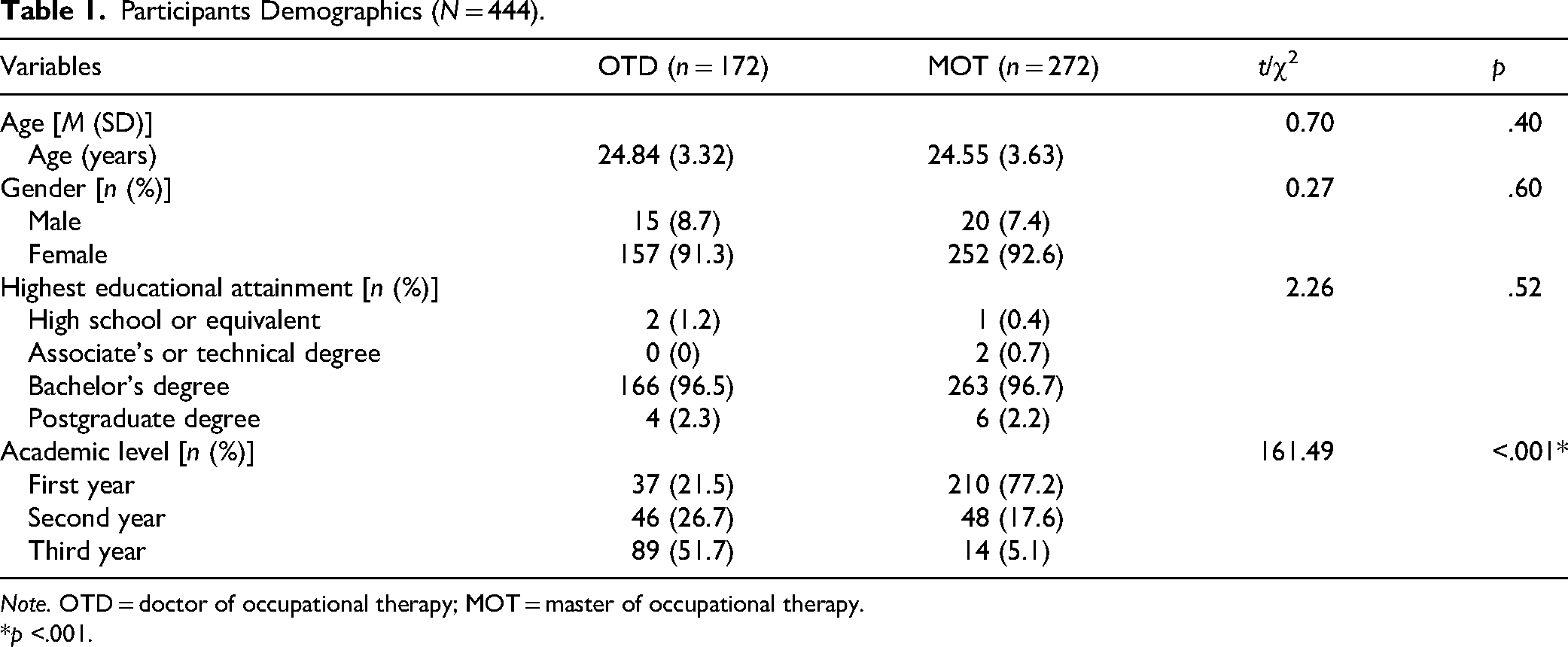
Note. OTD = doctor of occupational therapy; MOT = master of occupational therapy.*p <.001.
Unidimensionality, Item Fit, and Rating Scale Functioning
In this study, eigenvalues for the first residual contrast were below 2.0 across the four domains in the Perceived Importance module (range = 1.48–1.62), supporting unidimensionality based on the criterion. All items demonstrated acceptable model fit, with Infit MnSq values ranging from 0.69 to 1.33 and no items exceeding the misfit criterion. Rating scale functioning was appropriate for the three-category rating structure. For every item, the average rating measure values increased monotonically from categories 1 to 3, indicating rating category advancement consistent with Rasch expectations. Detailed item-level fit statistics and Rasch calibration estimates for the Perceived Importance module are reported in Table 2.
Rasch Analyses of the ICPS-Perceived Importance Module.
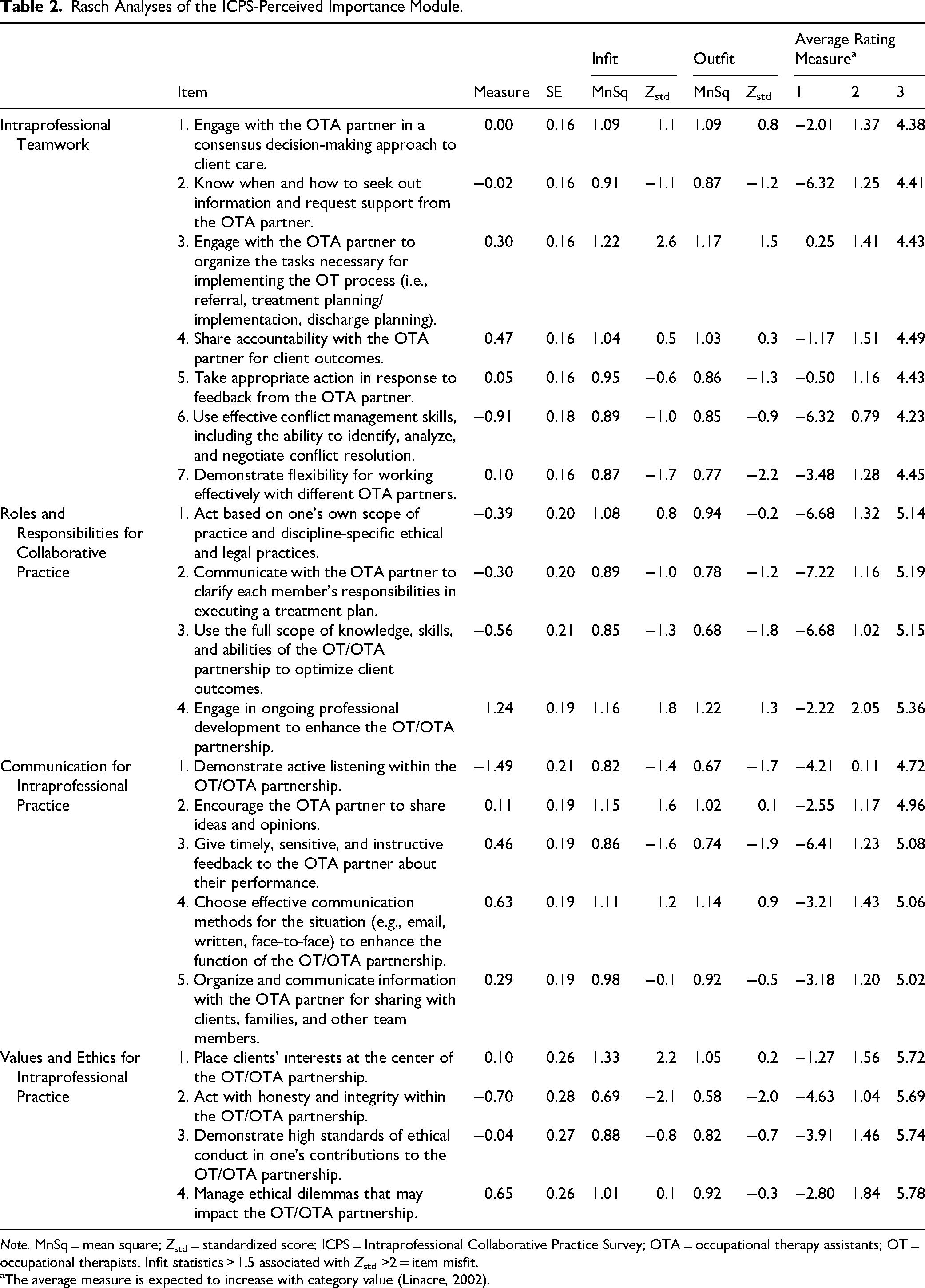
Note. MnSq = mean square; Zstd = standardized score; ICPS = Intraprofessional Collaborative Practice Survey; OTA = occupational therapy assistants; OT = occupational therapists. Infit statistics > 1.5 associated with Zstd >2 = item misfit.
The average measure is expected to increase with category value (Linacre, 2002).
Eigenvalues for the first residual contrast were below 2.0 across the four domains in the Perceived Ability module (range = 1.42–1.71), supporting unidimensionality. Fit statistics supported the adequacy of the model across items, with Infit MnSq values ranging from 0.79 to 1.16 and no items meeting the misfit criterion. The rating categories advanced monotonically; average rating measure values increased from categories 1 to 3 for all items, supporting the three-category rating scale. Detailed item-level fit statistics and Rasch calibration estimates for the Perceived Ability module are reported in Table 3.
Rasch Analyses of the ICPS-Perceived Ability Module.
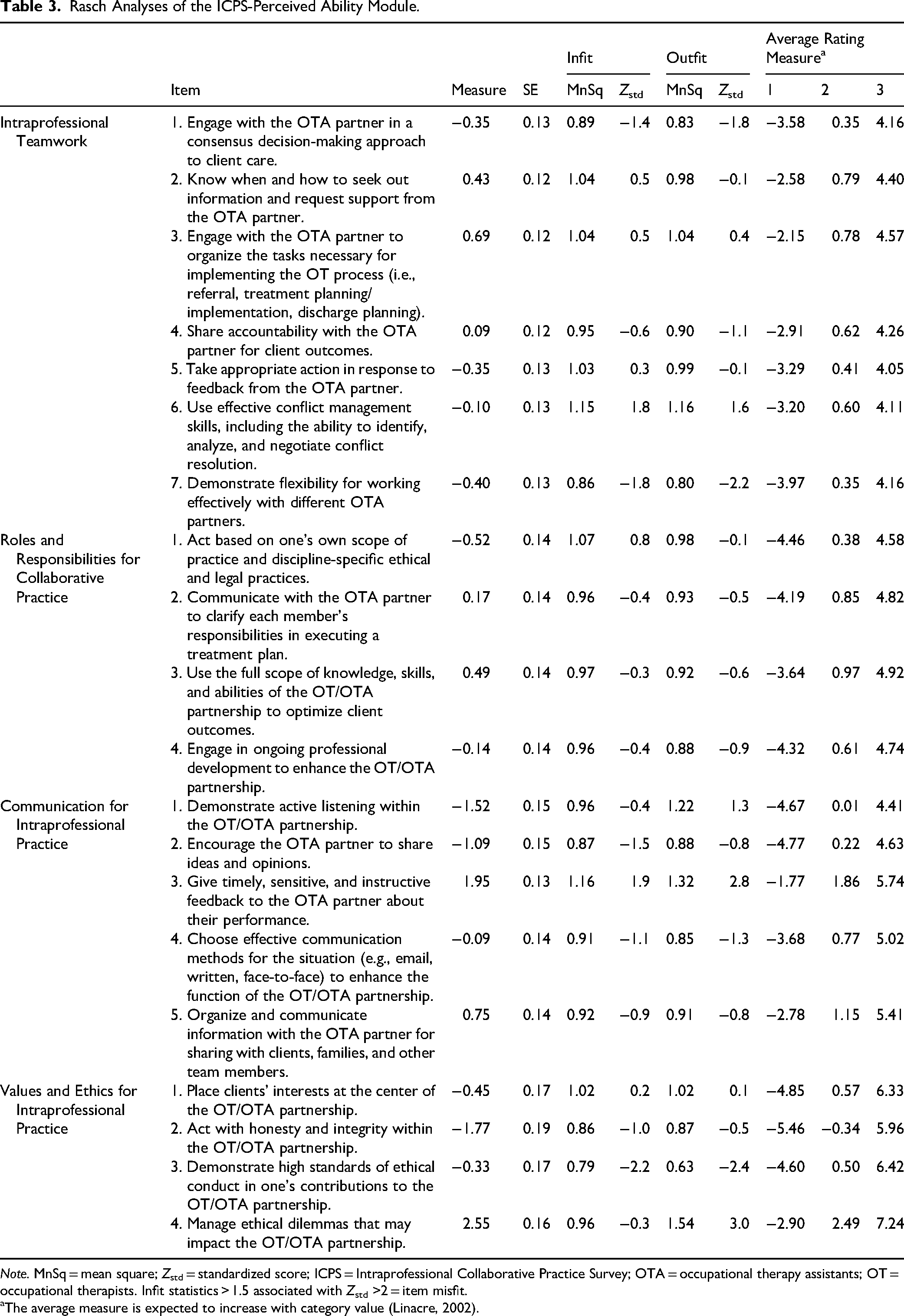
Note. MnSq = mean square; Zstd = standardized score; ICPS = Intraprofessional Collaborative Practice Survey; OTA = occupational therapy assistants; OT = occupational therapists. Infit statistics > 1.5 associated with Zstd >2 = item misfit.
The average measure is expected to increase with category value (Linacre, 2002).
Item Hierarchy
In the Perceived Importance module, the easiest items across the four domains were, “Use effective conflict management skills, including the ability to identify, analyze, and negotiate conflict resolution” (Intraprofessional Teamwork, −0.91 logits), “Use the full scope of knowledge, skills, and abilities of the OT/OTA partnership to optimize client outcomes” (Roles and Responsibilities for Collaborative Practice, −0.56 logits), “Demonstrate active listening within the OT/OTA partnership” (Communication for Intraprofessional Practice, −1.49 logits), and “Act with honesty and integrity within the OT/OTA partnership” (Values and Ethics for Intraprofessional Practice, −0.70 logits). In contrast, the most difficult items across the four domains were “Share accountability with the OTA partner for client outcomes” (Intraprofessional Teamwork, 0.47 logits), “Engage in ongoing professional development to enhance the OT/OTA partnership” (Roles and Responsibilities for Collaborative Practice, 1.24 logits), “Choose effective communication methods for the situation” (Communication for Intraprofessional Practice, 0.63 logits), and “Manage ethical dilemmas that may impact the OT/OTA partnership” (Values and Ethics for Intraprofessional Practice, 0.65 logits).
For the Perceived Ability module, the easiest items to endorse across the four domains were, “Demonstrate flexibility for working effectively with different OTA partners” (Intraprofessional Teamwork, −0.40 logits), “Act based on one's own scope of practice and discipline-specific ethical and legal practices” (Roles and Responsibilities for Collaborative Practice, −0.52 logits), “Demonstrate active listening within the OT/OTA partnership” (Communication for Intraprofessional Practice, −1.52 logits), and “Act with honesty and integrity within the OT/OTA partnership” (Values and Ethics for Intraprofessional Practice, −1.77 logits). In contrast, the most difficult items were, “Engage with the OTA partner to organize the tasks necessary for implementing the OT process” (Intraprofessional Teamwork, 0.69 logits), “Use the full scope of knowledge, skills, and abilities of the OT/OTA partnership to optimize client outcomes” (Roles and Responsibilities for Collaborative Practice, 0.49 logits), “Give timely, sensitive, and instructive feedback to the OTA partner about their performance” (Communication for Intraprofessional Practice, 1.95 logits), and “Manage ethical dilemmas that may impact the OT/OTA partnership” (Values and Ethics for Intraprofessional Practice, 2.55 logits).
Person–Item Targeting, Separation Indices
To further evaluate targeting and measurement precision, person–item maps and separation/reliability statistics were examined for each Perceived Importance domain. Person separation and person reliability were low across the four ICPS domains: Intraprofessional Teamwork (1.15/0.57), Roles and Responsibilities for Collaborative Practice (0.86/0.42), Communication for Intraprofessional Practice (0.99/0.50), and Values and Ethics for Intraprofessional Practice (0.73/0.35), indicating limited differentiation among respondents. Item separation and item reliability were high for Intraprofessional Teamwork (6.29/0.98), Roles and Responsibilities for Collaborative Practice (8.12/0.99), and Communication for Intraprofessional Practice (7.93/0.98), but low for Values and Ethics for Intraprofessional Practice (0.43/0.16). Regarding targeting, the mean person measures for the full sample were 3.71, 4.48, 4.11, and 5.18 logits for these four domains, respectively, relative to the item mean fixed at 0 logits (Figure 1).
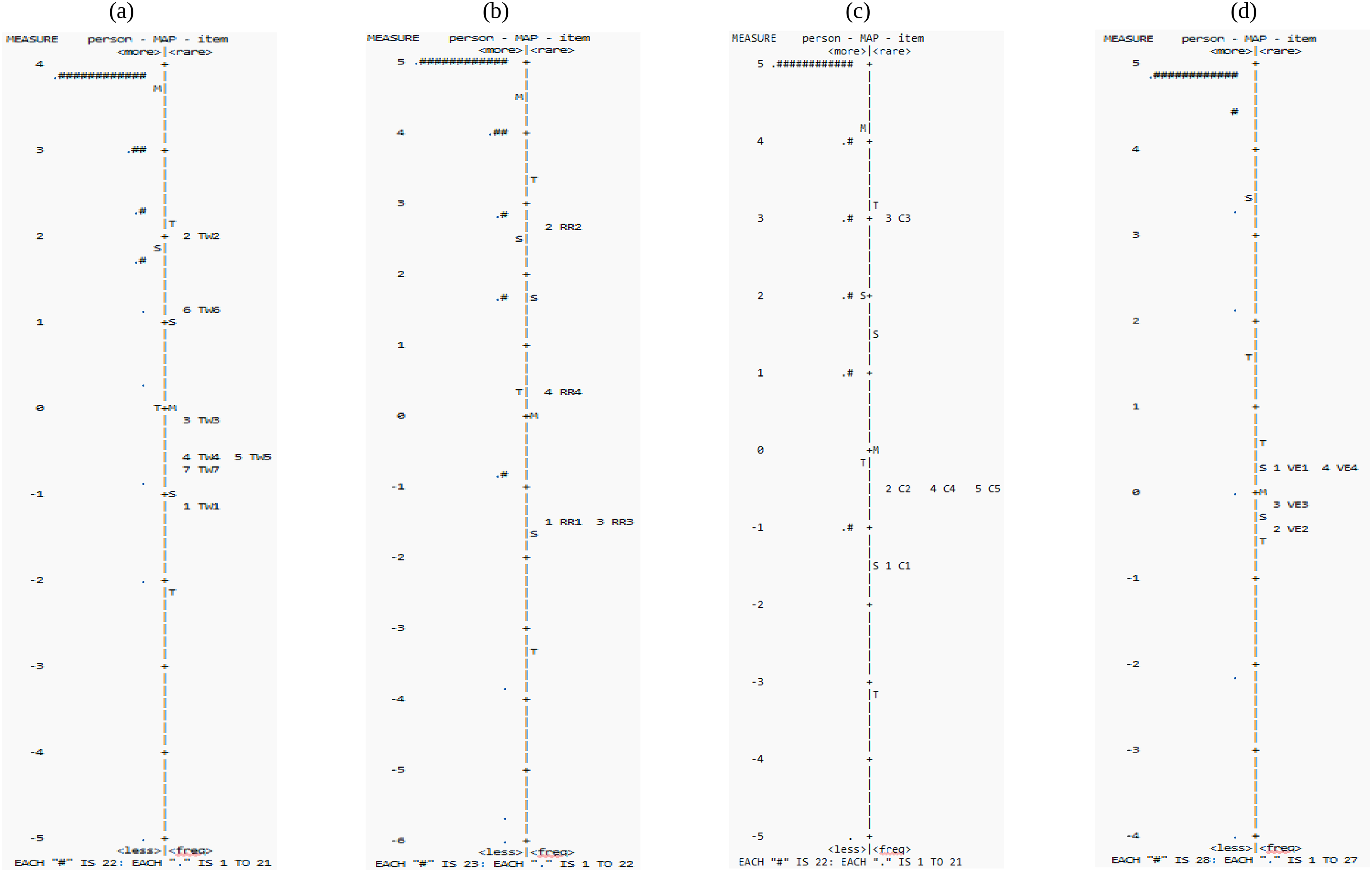
Person–item (Wright) maps for the ICPS Perceived Importance module. Note. (a) Intraprofessional Teamwork; (b) Roles and Responsibilities for Collaborative Practice; (c) Communication for Intraprofessional Practice; (d) Values and Ethics for Intraprofessional Practice. Higher person locations indicate greater endorsement of item importance. Item orders correspond to the items listed in Table 2. ICPS = Intraprofessional Collaborative Practice Survey.
In the Perceived Ability module, person separation and person reliability were higher, although still modest to acceptable, across Intraprofessional Teamwork (1.75/0.75), Roles and Responsibilities for Collaborative Practice (1.17/0.58), Communication for Intraprofessional Practice (1.47/0.68), and Values and Ethics for Intraprofessional Practice (1.25/0.61). Item separation and item reliability were adequate to high across all four domains: Intraprofessional Teamwork (3.40/0.92), Roles and Responsibilities for Collaborative Practice (2.92/0.90), Communication for Intraprofessional Practice (8.46/0.99), and Values and Ethics for Intraprofessional Practice (8.08/0.98), indicating stable item difficulty estimates. Regarding targeting, the mean person measures for the full sample were 1.73, 1.94, 2.72, and 3.94 logits for these four domains, respectively, relative to the item mean fixed at 0 logits (Figure 2).
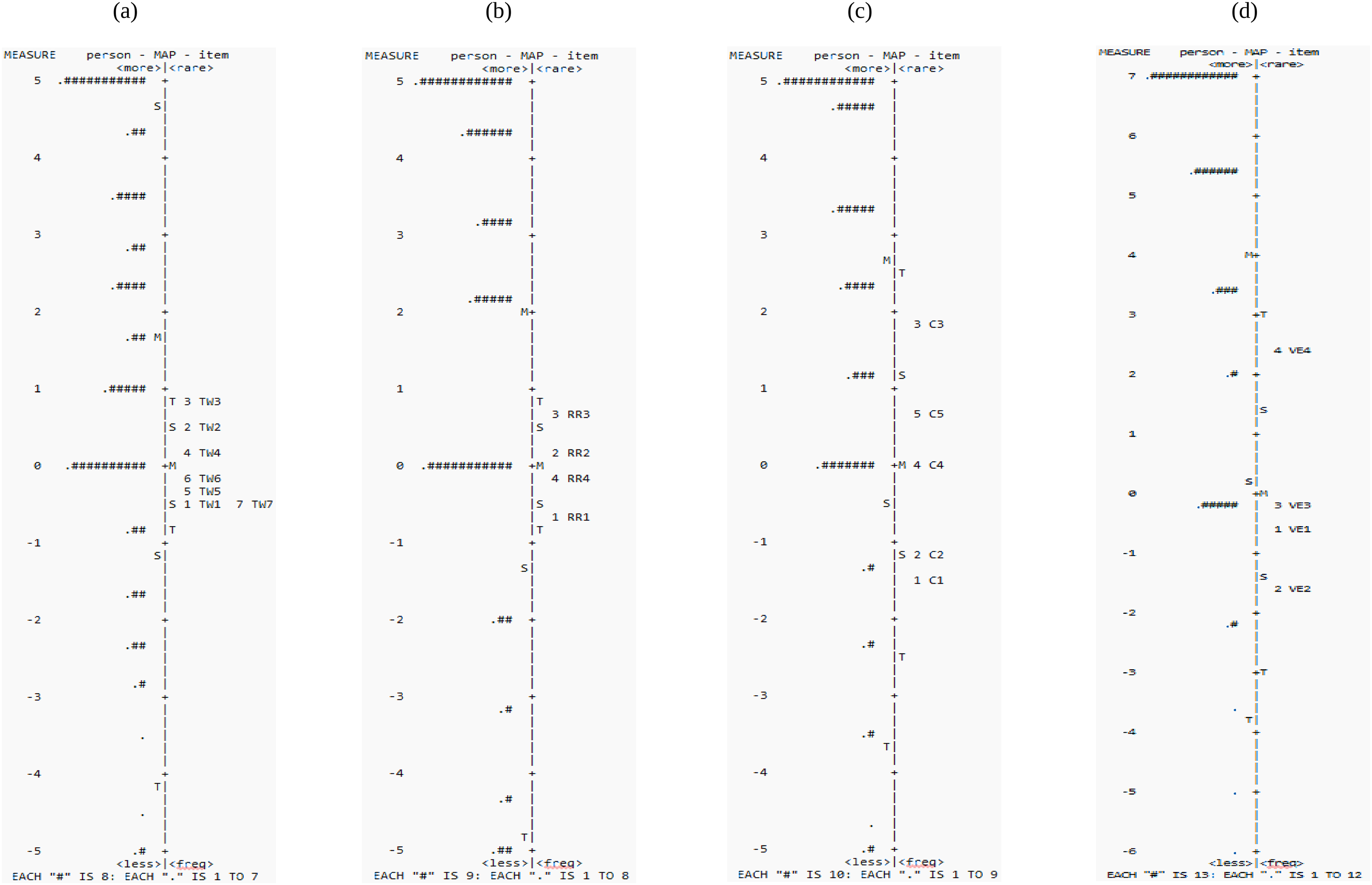
Person–item (Wright) maps for the ICPS Perceived Ability module. Note. (a) Intraprofessional Teamwork; (b) Roles and Responsibilities for Collaborative Practice; (c) Communication for Intraprofessional Practice; (d) Values and Ethics for Intraprofessional Practice. Higher person locations indicate greater endorsement of perceived ability. Item orders correspond to the items listed in Table 3. ICPS = Intraprofessional Collaborative Practice Survey.
Ceiling and Floor Effects
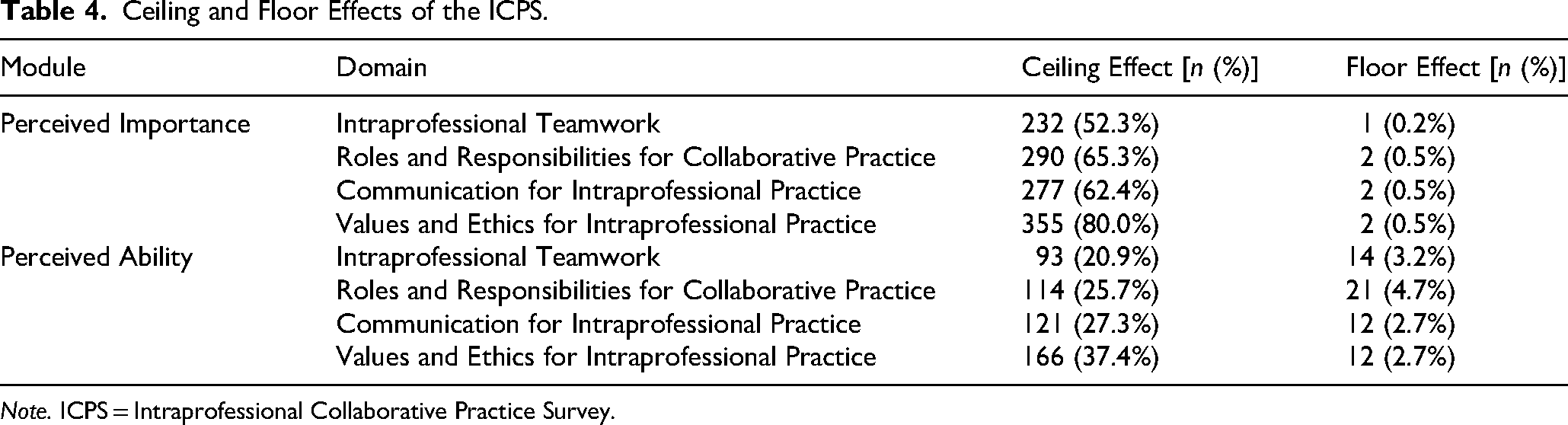
Table 4 illustrates the pronounced ceiling effects for the ICPS Perceived Importance module across all domains. Over half of the respondents achieved the maximum possible domain scores for Intraprofessional Teamwork (n = 232, 52.3%), Roles and Responsibilities for Collaborative Practice (n = 290, 65.3%), and Communication for Intraprofessional Practice (n = 277, 62.4%), with the highest ceiling observed for Values and Ethics for Intraprofessional Practice (n = 355, 80.0%). In contrast, floor effects in the Perceived Importance module were negligible, ranging from 0.2% to 0.5%.
Ceiling and Floor Effects of the ICPS.
Note. ICPS = Intraprofessional Collaborative Practice Survey.
For the ICPS Perceived Ability module, ceiling effects were lower but still evident, ranging from 20.9% (Intraprofessional Teamwork) to 37.4% (Values and Ethics for Intraprofessional Practice). Floor effects in the Perceived Ability module remained low overall (2.7%–4.7%).
DIF by Program (OTD vs. MOT)
For the Perceived Importance module, two items demonstrated meaningful DIF, defined as an absolute DIF contrast >0.64 logits and p < .05. Specifically, item 2 in the Communication for Intraprofessional Practice domain, “Encourage the OTA partner to share ideas and opinions” showed DIF favoring OTD students (DIF contrast −0.77; p = .04), indicating the item was easier for OTD students to endorse. Conversely, item 1 in the Values and Ethics for Intraprofessional Practice domain, “Place clients’ interests at the center of the OT/OTA partnership,” showed DIF favoring MOT students (DIF contrast 1.20; p = .03), indicating that the item was easier for MOT students to endorse. One additional item, item 4 in the Values and Ethics for Intraprofessional Practice domain, “Manage ethical dilemmas that may impact the OT/OTA partnership,” showed a DIF contrast exceeding the magnitude threshold (DIF contrast −0.88) but was not statistically significant (p = .10). More information can be found in Table 5.
Program Type DIF for the ICPS-Perceived Importance Module.
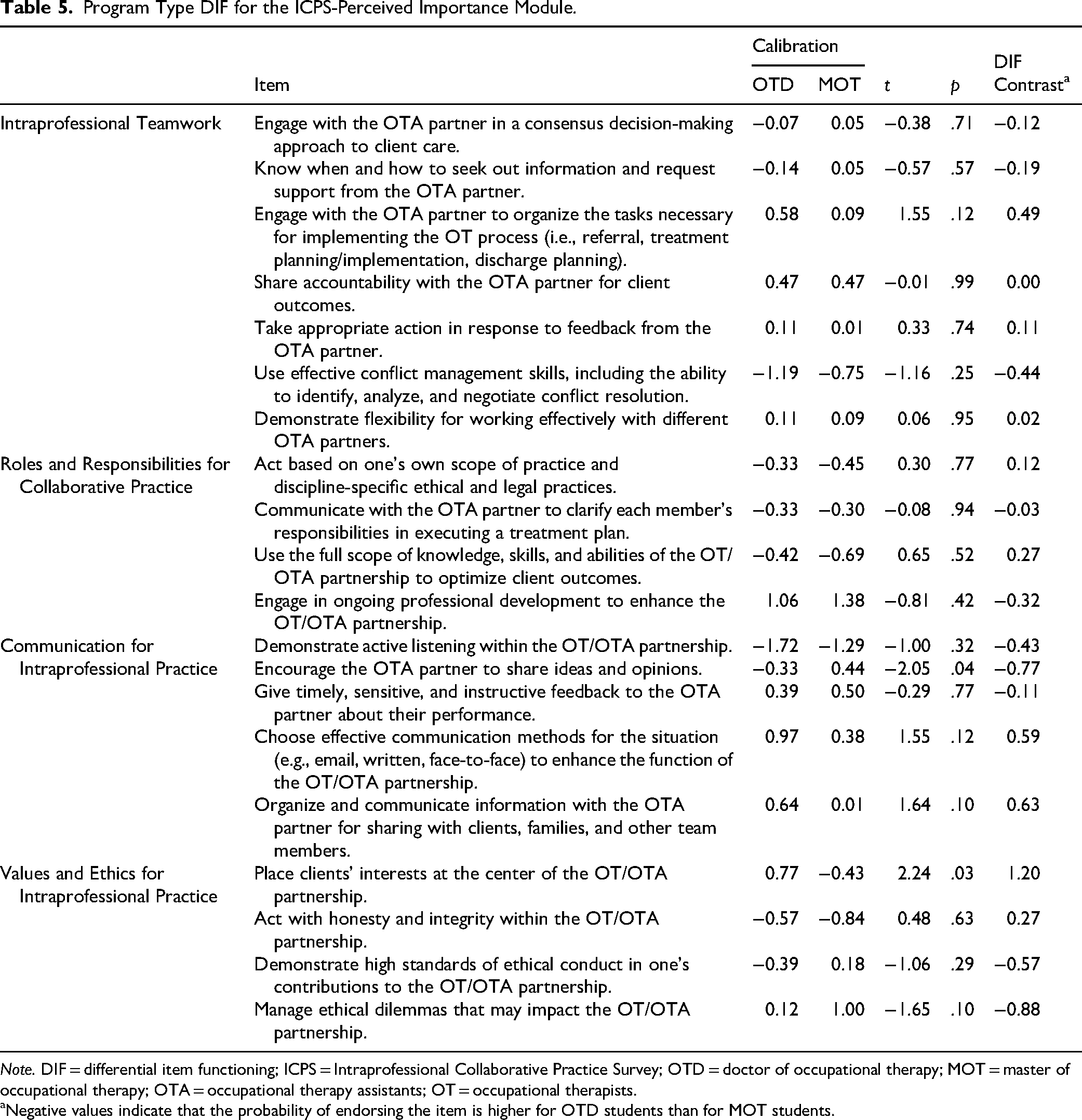
Note. DIF = differential item functioning; ICPS = Intraprofessional Collaborative Practice Survey; OTD = doctor of occupational therapy; MOT = master of occupational therapy; OTA = occupational therapy assistants; OT = occupational therapists.
Negative values indicate that the probability of endorsing the item is higher for OTD students than for MOT students.
For the Perceived Ability module, no items met the combined criterion for meaningful DIF (absolute DIF contrast >0.64 logits and p < .05). The results support overall comparability of item functioning across OTD and MOT students in the Perceived Ability module. More information can be found in Table 6.
Program Type DIF for the ICPS-Perceived Ability Module.
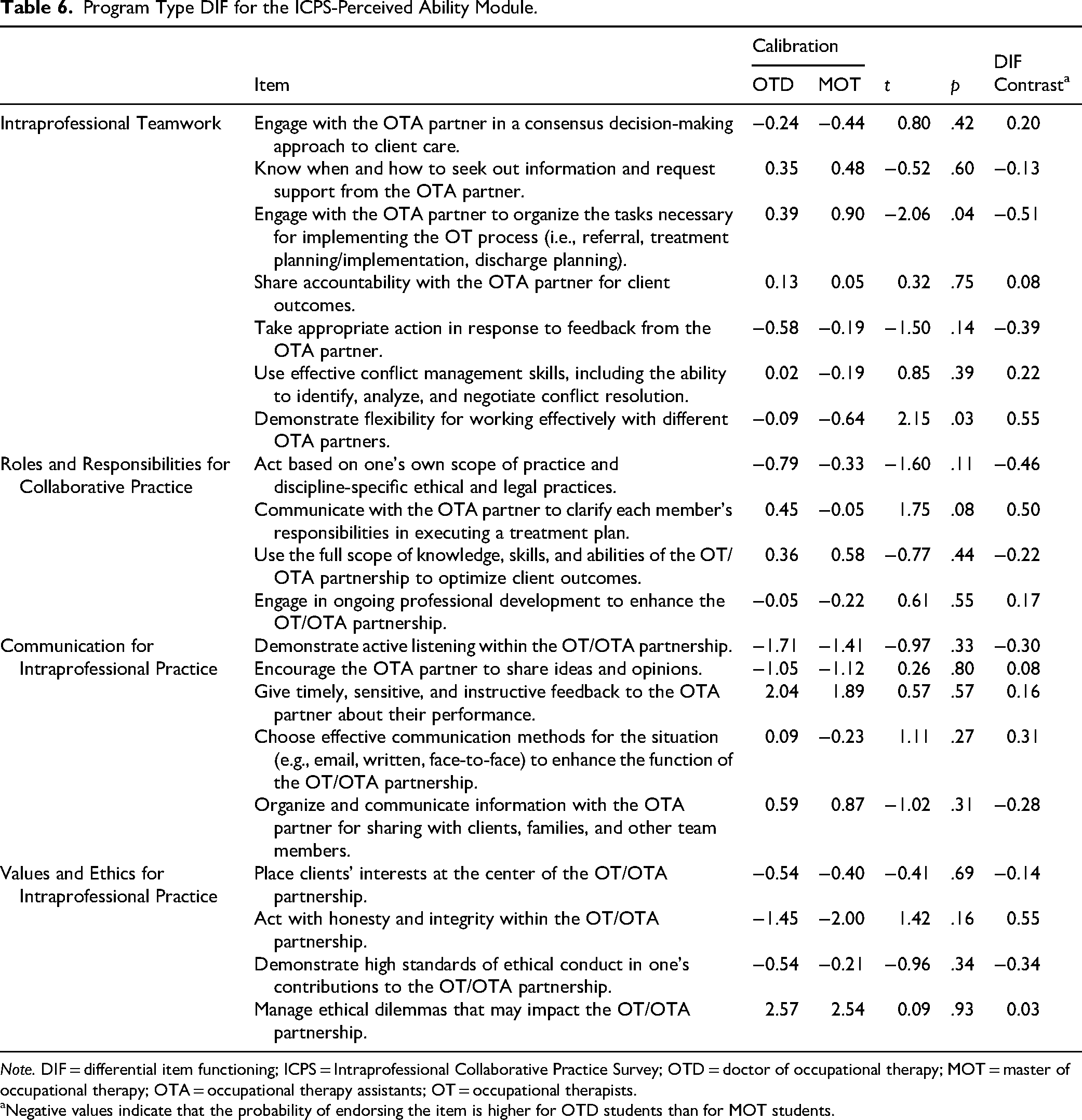
Note. DIF = differential item functioning; ICPS = Intraprofessional Collaborative Practice Survey; OTD = doctor of occupational therapy; MOT = master of occupational therapy; OTA = occupational therapy assistants; OT = occupational therapists.
Negative values indicate that the probability of endorsing the item is higher for OTD students than for MOT students.
Discussion
This study used the Rasch measurement model to examine the psychometric performance of the ICPS among entry-level occupational therapy graduate students enrolled in OTD and MOT programs. Overall, the results support the use of the ICPS as a conceptually coherent and psychometrically acceptable instrument for evaluating students’ perceptions of OT/OTA intraprofessional collaboration competencies.
ICPS Construct and Rating Scale Functioning
Rasch analyses indicated that item-level fit statistics fell within acceptable ranges, and PCA of standardized residuals showed first-contrast eigenvalues below 2.0 across all domains in both modules. These findings suggest that items within each domain (i.e., Intraprofessional Teamwork, Roles and Responsibilities for Collaborative Practice, Communication for Intraprofessional Practice, and Values and Ethics for Intraprofessional Practice) functioned as expected and support unidimensional measurement. These findings are consistent with prior CFA results (Fan et al., 2026), which support a four-construct structure for the ICPS. In addition, the ICPS uses three response categories in both modules, and rating-scale diagnostics indicated that the categories advanced in the expected direction, providing evidence of appropriate rating-scale functioning.
Item Hierarchy of the ICPS
Rasch item calibrations provide a meaningful hierarchy of intraprofessional collaboration competencies, indicating which items were easiest and which were hardest for students to endorse.
Because the Perceived Importance module showed substantial ceiling effects, item locations in that module were compressed, making it difficult to differentiate among students at the higher end of the scale; accordingly, we focus on the Perceived Ability hierarchy in this discussion. Across domains, students most readily endorsed foundational professional behaviors such as active listening, honesty, and integrity. This pattern suggests that students feel most capable in core professionalism and respectful interpersonal behaviors, which are often emphasized early in professional socialization (Brown et al., 2020; Cruess et al., 2015). These results align with prior work highlighting communication, mutual respect, and professionalism as central elements of effective intraprofessional partnerships (Dillon, 2002), as well as broader evidence that communication is consistently prioritized within teamwork and collaboration competency (Jelley et al., 2013; Rosen et al., 2018).
In contrast, competencies positioned higher on the continuum reflected more complex partnership demands, including coordinating tasks across the OT process, applying the full complementary scope of the OT/OTA partnership to optimize outcomes, providing timely and instructive feedback, and managing ethical dilemmas affecting the partnership. These items were endorsed as advanced competencies because they require integrating professional knowledge, interpersonal skills, and clinical reasoning in context-dependent situations. It is therefore expected that enrolled entry-level OT students would report lower perceived ability for these competencies than for foundational behaviors. With intentional intraprofessional learning opportunities (Fan & Case, 2025a) and increased fieldwork and work experiences (Pitonyak et al., 2020), these higher-order competencies can be strengthened through repeated practice.
Additionally, comparing item locations across the Perceived Importance and Perceived Ability modules reveals potential instructional priorities. Competencies that students rate as highly important but feel less confident performing can be priorities for structured training. For example, using the full scope of OT/OTA partnership expertise to optimize client outcomes was among the easiest competencies to endorse as important. Yet it was among the most difficult to endorse in the ability module. Curricular strategies that translate role expectations into observable behaviors may help close these important ability gaps, such as providing extra guided coplanning and delegation exercises, case-based activities that require explicit OT–OTA role reasoning, structured partnership simulations, and feedback-focused coaching with performance criteria and debriefing.
Person–Item Targeting, Separation, and Reliability Indices
This item hierarchy interpretation was further supported by the person–item maps and separation/reliability statistics. In the Perceived Importance module, person measures were consistently located above the item mean across all four domains, and person separation and person reliability were low, indicating limited ability to distinguish among enrolled students with high endorsement of intraprofessional collaboration values. Item separation and item reliability were high across the three domains: Intraprofessional Teamwork, Roles and Responsibilities for Collaborative Practice, and Communication for Intraprofessional Practice, supporting stable item calibration estimates in each. In contrast, the Values and Ethics for Intraprofessional Practice domain showed low item separation and item reliability, suggesting compression of item difficulty estimates and limited support for a stable item hierarchy in that domain.
On the other hand, the Perceived Ability module showed closer person–item targeting, somewhat higher person separation/reliability, and consistently high item separation/reliability, indicating better differentiation among enrolled students’ perceived ability and more stable item calibration estimates (Bailes & Nandakumar, 2020; Boone, 2016).
Ceiling and Floor Effects
Across both programs, students endorsed intraprofessional collaboration competencies as highly important; all Perceived Importance items across the four domains demonstrated ceiling effects. This pattern is consistent with prior work showing strong endorsement of ICPS Perceived Importance items among students (Fan et al., 2021; Fan & Case, 2025a). Similar ceiling effects have been reported in other interprofessional collaboration measures, including the Readiness for Interprofessional Learning Scale (Poll & Hoffman, 2025; Torsvik et al., 2021), the Interprofessional Attitudes Scale (Kim et al., 2019), and the Interprofessional Education Competency Scale (Goreczny et al., 2025). Furthermore, high endorsement of Perceived Importance items was also observed beyond prelicensure training. Diamant et al. (2018) reported that practicing OTs and OTAs rated intraprofessional competencies as “important” or “very important,” suggesting that these values are sustained in practice settings.
Although ceiling effects in Perceived Importance limit score variability, this finding is encouraging as attitudes can support subsequent behavior change (Noe, 1986). It suggests that enrolled students shared a professional value for intraprofessional collaboration, which provides a necessary foundation for later skill development and behavior change (Wigfield & Eccles, 2000). However, when a large proportion of respondents select the highest response category, the scale has reduced ability to discriminate among students at the upper end of the construct and may be less sensitive to detecting change. The 3-point response structure may also have contributed to this clustering by limiting response differentiation.
Although item reliability was high across most ICPS domains, person reliability was lower, particularly in the Perceived Importance module, suggesting that these domains were more effective at establishing stable item calibrations than at discriminating among this relatively high-scoring sample. This issue was most pronounced for the Values and Ethics for Intraprofessional Practice domain in the Perceived Importance module, where severe ceiling effects limited both person and item separation. Therefore, in its current form, the Perceived Importance module may function best as an indicator of value alignment, whereas the Perceived Ability module may be more informative for detecting educational differences.
DIF in ICPS
Overall, DIF results indicated that most ICPS items functioned similarly for OTD and MOT students. No DIF was identified in the Perceived Ability module, supporting comparisons of ICPS perceived ability scores across OTD and MOT groups. In the Perceived Importance module, most items demonstrated negligible DIF, suggesting that students in both program types generally endorsed the importance of intraprofessional collaboration competencies in comparable ways. Two items showed DIF in the opposite directions: “Encourage the OTA partner to share ideas and opinions” was easier for OTD students to endorse, whereas “Place clients’ interests at the center of the OT/OTA partnership” was easier for MOT students to endorse.
These findings warrant cautious interpretation because program type might be confounded with the academic level in the current sample. The OTD group included proportionally more second- and third-year students, whereas the MOT group was majority first-year students. As a result, observed DIF may reflect differences in clinical exposure and training stage rather than degree type. For example, more advanced students may have had greater opportunity to observe and practice collaborative communication behaviors, increasing the salience of encouraging an OTA partner to share ideas and opinions. Conversely, earlier-stage students may endorse broad professional ideals in a more global, less context-specific manner. From this perspective, DIF may reflect differences in how items are interpreted across stages of training rather than disagreement with the underlying values of client-centeredness or partnership.
In addition, DIF contrasts for the Perceived Importance module should be interpreted cautiously because the strong ceiling effects produced a highly skewed response distribution, which can yield misleading DIF patterns (Hagquist & Andrich, 2015). Because importance ratings were generally high across both programs, small differences in the likelihood of selecting the top category (very important) can yield comparatively larger DIF contrasts on the logit scale. Therefore, statistically significant DIF in this context may represent subtle differences in emphasis rather than practically meaningful differences in endorsement. Accordingly, the two Perceived Importance items with confirmed DIF were retained at this stage, but group comparisons on these items should be interpreted with caution. Future studies should further examine and confirm these DIF findings.
Implications for Occupational Therapy Practice
Taken together, the Rasch findings support retaining the current ICPS item set for entry-level OT education, as the items demonstrated acceptable fit, unidimensionality, and generally comparable functioning across program types. The ICPS was validated as a competency-aligned measure for evaluating intraprofessional partnership and supporting formative assessment. Overall, students generally endorsed intraprofessional collaboration as highly important. In contrast, the most difficult items to endorse in the Perceived Ability module involved managing ethical dilemmas and providing performance feedback. These findings support the addition of structured learning activities (e.g., simulated supervision conversations, ethical dilemma case-based reasoning, feedback frameworks) explicitly tied to OT/OTA partnership situations. Additionally, prior ICPS studies have demonstrated its feasibility for detecting changes in perceived ability following structured intraprofessional learning experiences (Fan et al., 2021; Fan & Case, 2025a). Given the ceiling tendency in students’ perceived importance, regular evaluations can be valuable for identifying growth in the Perceived Ability items even when the Perceived Importance items remain high and relatively stable.
Limitations and Future Research Suggestions
Several limitations should be considered when generalizing the results and making further interpretations. First, the ICPS evaluates perceived importance and perceived ability; these may not correspond directly to observed competence in clinical performance. Therefore, future research should link ICPS scores with other performance-based assessments, fieldwork evaluations, or supervisor feedback. Second, because the OTD and MOT groups in the current study differed substantially in academic level, this may confound the DIF results. Therefore, future studies should evaluate DIF using samples balanced by academic year or directly include intraprofessional training and fieldwork exposure as the focal grouping variable to determine whether the observed DIF persists when exposure differences are accounted for. Third, the high clustering of importance ratings may limit sensitivity in certain contexts. Researchers may consider testing an expanded response scale to increase discrimination for the Perceived Importance module. Fourth, because recruitment relied on convenience sampling through the AOTA CommunOT discussion forums and participant sharing, the response rate could not be determined, and sampling bias is possible. Last, the ICPS psychometric evidence to date has been based primarily on the student population; future studies should evaluate the instrument with practicing OT clinicians to confirm its functioning and score interpretability in clinical settings and to support broader use for workforce development and continuing education outcomes.
Conclusion
The current study supports the ICPS as a psychometrically acceptable measure of OT students’ perceptions of OT/OTA intraprofessional collaboration competencies, with strong evidence of stable rating-scale functioning, unidimensionality, meaningful hierarchy, and generally comparable item funtioning across OTD and MOT programs. Overall, Rasch findings support the use of the ICPS in entry-level OT education, while highlighting the need to address substantial ceiling effects in the Perceived Importance module and to examine further the two items that demonstrate meaningful DIF.
Footnotes
Funding
The author disclosed receipt of the following financial support for the research, authorship, and/or publication of this article: This work was supported by the AHU Faculty Seeds Grant (grant number OT9024).
Declaration of Conflicting Interests
The author declared no potential conflicts of interest with respect to the research, authorship, and/or publication of this article.
