




Abstract
Introduction:
The province of Misiones, located in north-eastern Argentina, harbors one of the best-preserved remnants of the Atlantic Forest, which is a global biodiversity hotspot. However, 95% of this forest has been deforested, posing a significant threat to numerous species, particularly to mammals. To conserve biodiversity, the Misiones’ Institute of Biodiversity, which is developing a biobank, and the Center for Rescue, Rehabilitation, and Recovery of Wildlife Güirá Oga (GO), dedicated to the care of injured and displaced fauna, were established. This article highlights the collaboration between these two institutions aimed at strengthening mammal conservation efforts in Misiones.
Materials and Methods:
A standardized protocol was established for the collection, preservation, and storage of biological samples, considering variables such as the taxonomic group, animal condition, and study type. Samples were collected under anesthesia and in accordance with animal welfare guidelines, and relevant data were recorded. Within the Biobank, samples were classified, documented, and stored at −80°C, 4°C, or room temperature, depending on their characteristics. Biobank operations comply with international regulations—including the Convention on Biological Diversity and the Nagoya Protocol—as well as provincial legislation. Access permits and Material Transfer Agreements (MTA) are applied for any external use.
Results:
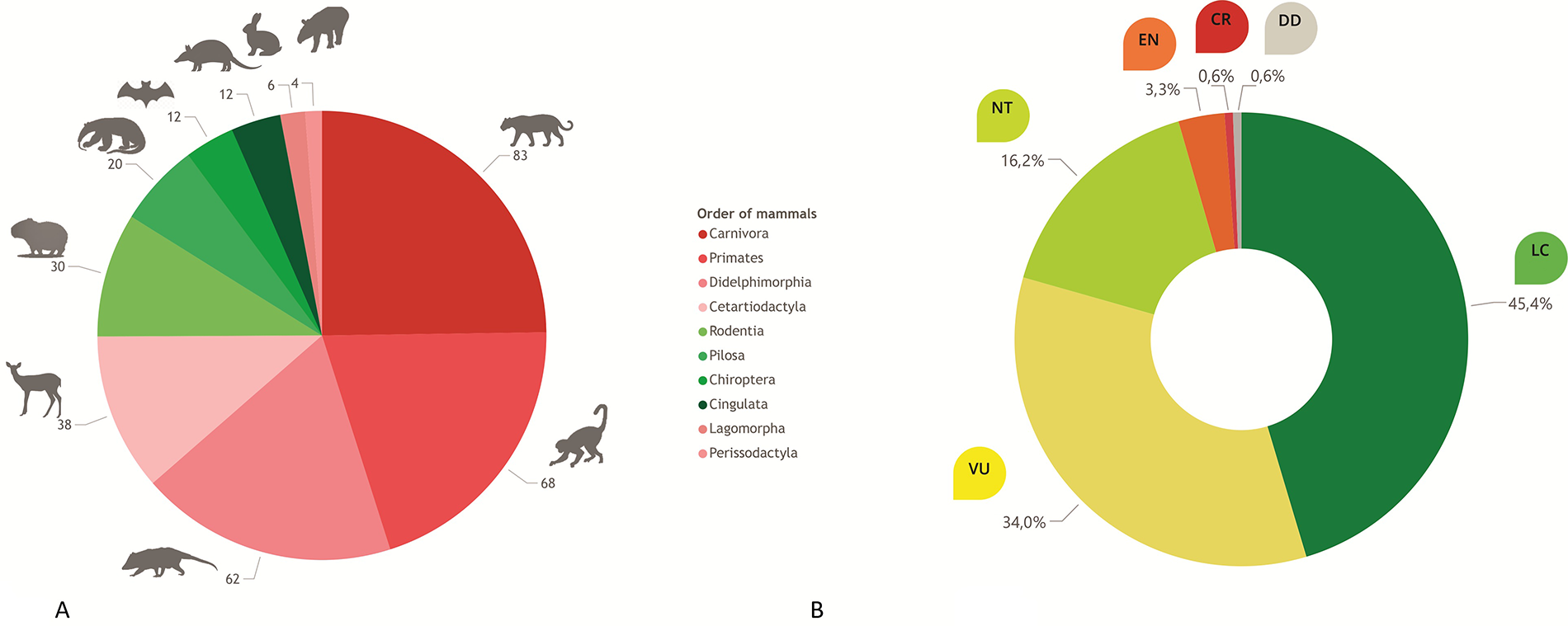
Between 2020 and 2024, biological samples were collected from 335 individual native mammals representing 38 species, of which 37.9% were classified as threatened (vulnerable, endangered, and critically endangered) according to their conservation status. Biobank stores 985 samples 53.5% blood and derivatives, 6.7% tissues, 11% DNA/RNA, 17% ectoparasites, and 8.2% endoparasites. They also include swabs, fibroblasts, hair, and leather. The most represented orders were Carnivora, Primates, and Didelphimorphia (63.6%).
Conclusions:
The collaboration between GO and the Biobank integrates rescue, research, and genetic conservation, optimizing resources and strengthening capacities to address biodiversity loss, carrying out epidemiological surveillance, and promoting future ecological restoration projects.
Introduction
The province of Misiones is located in north-eastern Argentina, bordering Paraguay and Brazil. It hosts one of the best-preserved remnants of the Atlantic Forest. This ecoregion, known as the Paranaense Forest, represents 52% of Argentina’s biodiversity and is one of 36 biodiversity hotspots worldwide. 1 Its ecological relevance led to the declaration of Misiones as the national capital for biodiversity under Law N° 27494. Regions with high biodiversity are susceptible to harmful anthropogenic activities, epizootic diseases, and climate change. 2 In the last 120 years, this ecoregion has been destroyed, losing 95% of its original cover, and from the remaining 5%, 97% is located within Misiones. 3 This extensive deforestation has severely affected local flora and fauna. Among the 1158 species and subspecies of amphibians, reptiles, birds, and mammals in this ecoregion, 20% are threatened or near-threatened at the national level. Mammals are among the most affected taxonomic groups, with 135 species documented in Misiones—of which 122 species are native, representing 30% of Argentina’s mammalian diversity. Of these, 30 are critically endangered (CR), 14 are vulnerable (VU), 7 are exotic, and 2 are hypothetical in occurrence.1–5 Biodiversity loss encompasses the degradation of ecosystems, populations, genetic variability, species, and the ecological and evolutionary processes that sustain them. This loss not only jeopardizes species survival but also reduces the genetic diversity critical for populations to adapt to environmental change. 6
Anthropogenic threats to biodiversity also pose significant risks to human and wildlife health, with infectious diseases being a major consequence of ecosystem disruption.7,8 The conservation challenges in this ecoregion extend beyond the protection of its fauna, flora, and fungi but also encompass human populations.
In this context, biobanks have emerged as critical tools to address these challenges by enabling the systematic preservation of biological materials (tissues, DNA, gametes, microorganisms, among others), which serve as the foundation for ecological studies, reintroduction programs, and responses to emerging diseases. 2 However, there is a striking geographical disparity: only seven of the global biodiversity hotspots host specialized wildlife biobanks, with South America being the least represented region with only two of them.
In the absence of an on-site biobank conserving wildlife biological materials, biospecimens were routinely transported outside the collection zone without any type of control or permission. This leakage of samples created three major issues: (1) limited access for local scientific communities, (2) loss of sovereignty over genetic resources, and (3) risks to sample integrity during transportation.
In response to these challenges, and in recognition of the ecological importance of this global biodiversity hotspot, the Instituto Misionero de Biodiversidad (IMiBio, Misiones Biodiversity Institute) was created in 2018 under Provincial Law XVI-No. 122. Strategically located within the Paranaense Forest, the IMiBio operates a biobank with the aim of valuing and preserving biodiversity. Established in 2020, this biobank serves as a repository for biological samples that promotes genetic conservation, epidemiological surveillance, research, and the study of regional biodiversity.
The “Centro de Rescate, Rehabilitación y Recría de Fauna Silvestre Güirá Oga” (GO) was founded in 1997 and has been managed by the Fundación de Historia Natural Félix de Azara since 2005. Since its founding, the main role of GO has been to be a wildlife rescue and rehabilitation center, receiving mainly fauna from the Atlantic Forest of Argentina (Decree 305/06 and Resolution 342/22). In addition, the institution carries out other priority actions such as education, ex situ conservation, and research.
Wild mammals in Misiones are commonly admitted to GO after experiencing trauma, such as road accidents, injuries from poachers, orphans, illegal trafficking, being kept illegally in home captivity, and other forms of trauma. GO performs necropsies on animals killed by vehicles on roads in Misiones Province.
This report aims to communicate the actions, synergies, challenges, regulations, and opportunities of these two Institutions working together (IMiBio-Güirá Oga) with the focus on strengthening sample access to the biobank in order to provide tools for mammal conservation.
Materials and Methods
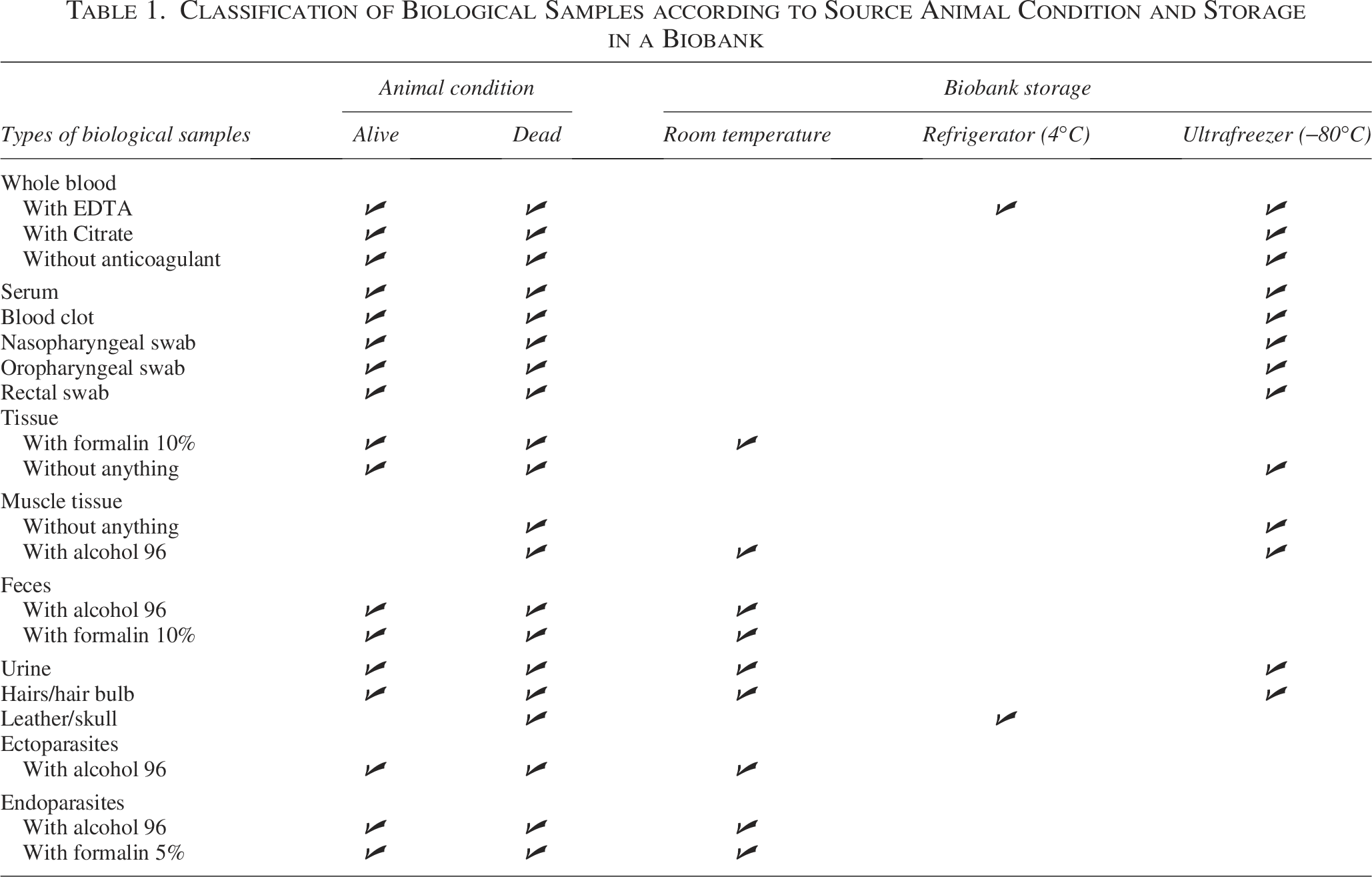
An ad hoc protocol for the collection, preservation, and storage of biological samples was established. The methodologies applied for sample collection (type of sample and quantity) depended on variables such as taxonomic group; live/dead animal; condition of the specimen (hours since death); clinical status of the patient; category and/or size of the specimen; and specific studies/research to be conducted (Table 1). All samples collected from live animals were taken under anesthesia during their clinical admission check-up and under strict animal welfare conditions. The collected samples were accompanied by a form containing information about the animal: admission date, sample collection date, type of sample, species to which the sample belongs, sex, approximate age/category, and specific observations for each sample, among others. Certain samples may also be processed and analyzed in the IMiBio’s laboratories as part of the One Health initiative (Tables 1 and 2).
Classification of Biological Samples according to Source Animal Condition and Storage in a Biobank
Clinical Diagnosis

Upon receiving the biological samples in the biobank, they were classified and organized according to the type of sample and the corresponding diagnostic study or research project. The samples were then recorded in the biobank management system, associating them with relevant metadata.
Data collection was performed using standardized digital forms, which included mandatory fields such as collector’s data, taxonomic information, specimen id, sample type, date, location, and preservation method. These forms were uploaded to a centralized database. Finally, they were stored in ultrafreezers (−80°C), refrigerators (4°C), or at room temperature and assigned to a specific location. The collections received are subject to current international regulations proposed by the Convention on Biological Diversity, a commitment materialized by the Nagoya Protocol on Access to Genetic Resources and Fair and Equitable Sharing of the Benefits Arising from their Utilization. In addition, Argentine law establishes that the nation’s natural resources (including genetic resources) are managed by its state parties, in this case, the province of Misiones. Following these legal frameworks, the samples are able to access the biobank with its corresponding research permits, granted by IMiBio, and they can leave the Biobank to link with external researchers through a material transfer agreement (MTA), which dictates commitments and responsibilities on the biological material or materials used (Fig. 1).

Workflow diagram. The pathway is detailed according to types of biological samples collected; condition of the source animal, the storage and method, and final destination of the biological material.
Results
Between January 2020 and December 2024, 335 native mammals were sampled, which belonged to 38 different species, distributed in 18 families and 10 taxonomic orders (Fig. 2A). The three most represented orders were Carnivora, Primates, and Didelphimorphia, which together accounted for 63.6% of all sampled individuals. According to the Sociedad Argentina para el Estudio de los Mamíferos, the national entity responsible for categorizing conservation statuses, 37.9% of the sampled specimens are considered at higher risk of extinction. Of these, 34.0% are classified as VU, 3.3% as endangered (EN), and 0.6% as CR. In contrast, 61.5% of the specimens are classified in minor categories of lower risk of extinction, of which 45.4% correspond to least concern (LC) and 16.1% to near threatened (NT). Finally, the remaining 0.6% are under the data deficient (DD) category (Fig. 2B).
As of now, the biobank holds a total of 985 stored biological samples. These samples are distributed as follows: 53.5% is blood and its derivatives, including whole blood (4.5%), clots (30.5%), and serum (18.6%). Tissue samples represent 6.7% of the total and include muscle tissue (1.5%), organs (4.6%), and cartilage (0.6%). In addition, 11.0% of the samples correspond to DNA/RNA extracts, while 17.0% are ectoparasites and 8.2% are endoparasites. Furthermore, samples of swabs (0.7%), fluids from other organs (0.2%), fibroblast (1,7%), hair with hair follicle (0.4%), and leather (0.3%) are stored (Fig. 3).
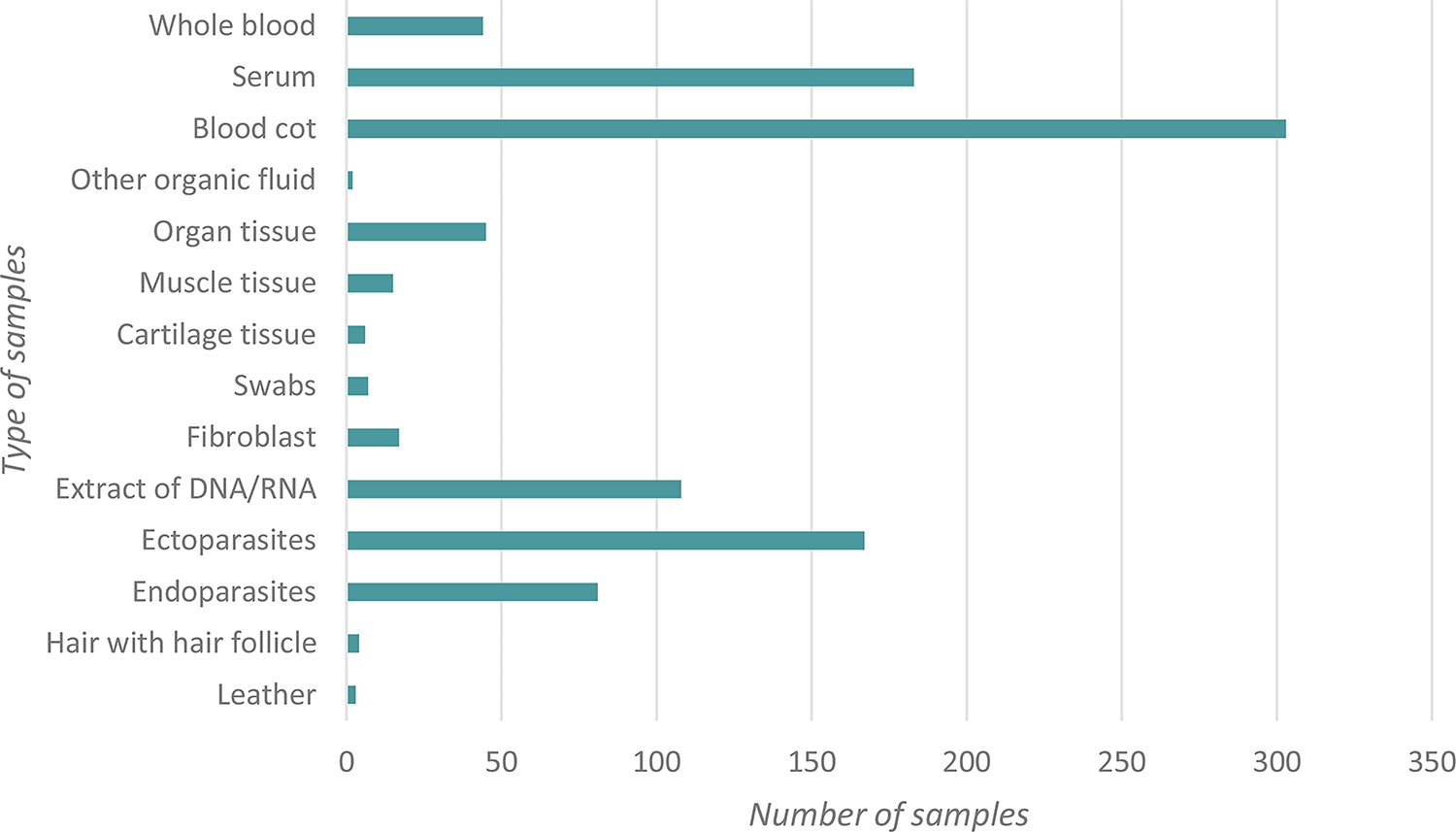
Types and number of biological samples of wild mammals from the Paranaense Forest stored in IMiBio’s biobank between 2020 and 2024.
Figure 4 shows the number of samples admitted to the biobank between 2020 and 2024. In 2020, 93 samples were recorded, while by 2024 this number reached 330 samples, representing an increase of 255% in a 5-year period.
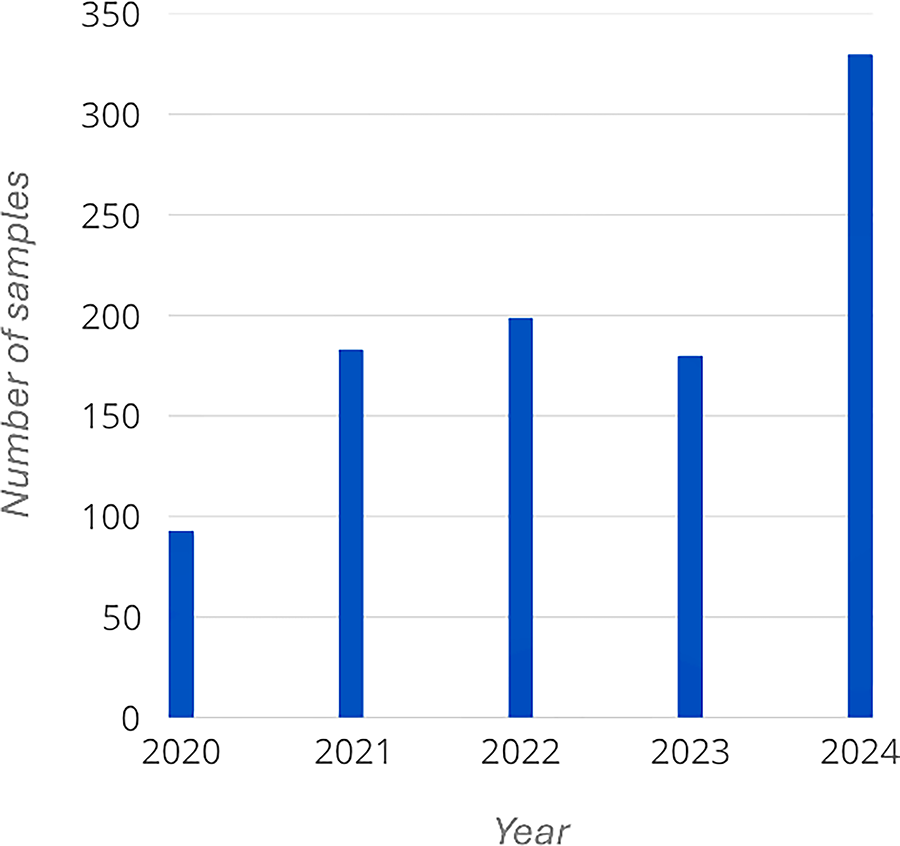
Number of biological samples registered annually in IMiBio’s biobank from 2020 to 2024.
Discussion
Of all the biodiversity hotspots worldwide, only seven have a wildlife biobank within their boundaries. Of these, only one is located in South America, the Brazilian Cerrado (Brazil). In Argentina, the Ecoparque Buenos Aires (EcoBA) is the only wildlife biobank, but it is not located in a biodiversity hotspot. In this regard, the IMiBio becomes the third wildlife biobank in South America, the second located within a biodiversity hotspot, and the first in Atlantic Forest. For Argentina, it is the second overall and the first one within a biodiversity hotspot. 9
The only existing wildlife biobanks in South America (EcoBA and Jardim Zoológico de Brasília) were established in zoos. Our initiative brings together animal management (GO) and biobanking (IMiBio) through interinstitutional collaboration. 9
Developing synergies between wildlife rescue centers and biobanks offers significant benefits for mammal species conservation. In most biobanks, sample collection is typically associated with specific research projects, individual species action plans, or institutional collections. However, collaboration with rescue centers provides an opportunity to expand conservation efforts to include both species at high risk of extinction and those currently considered low-risk, through ongoing monitoring and surveillance. This is reflected in the growth of the absolute number of samples safeguarded since the beginning of the collaborative work. Notably, this study highlights that 0.6% of the species stored correspond to those with DD, represented by two species: Monodelphis iheringi and Galictis vittata. 10 This is especially relevant, as their inclusion in the biobank was made possible through rapid and coordinated action, an essential factor for rare species lacking dedicated conservation programs, unlike flagship or umbrella species.
Within the framework of the “One Health” approach—which emphasizes that environmental degradation and biodiversity loss facilitate the emergence of zoonotic diseases and disrupt local ecological dynamics—the first collaborative effort was carried out. In this study, in which a total of 115 samples stored at −80°C were retrospectively analyzed, representing 26 wild mammal species. Serological analysis revealed the presence of antibodies against SARS-CoV-2 in wild mammals native to Argentina. 11 In alignment with the integration of conservation and public health surveillance efforts, 12 this partnership enables participation in national programs, such as the Servicio Nacional de Sanidad y Calidad Agroalimentaria (SENASA) Wildlife Epidemiological Surveillance Program and the National Health Surveillance System.
The collection and preservation of nonhuman biological samples, particularly those from mammals in some national conservation category, represent a significant challenge due to their restricted access and the impossibility of collecting them repeatedly. 13 The availability of these samples to the scientific community represents an invaluable opportunity to promote research studies in biodiversity, conservation and public health. Access to deceased or injured animals represents an invaluable opportunity to collect types of biological materials—such as specific tissues, organs, and parasites—that are difficult or impossible to collect from live-captured individuals, especially in elusive or hard-to-reach species.
In this context, the agreement established with the GO rescue center has enabled the continuous supply of biological material to the IMiBio biobank, ensuring long-term protection. Unlike large-scale initiatives such as the Frozen Ark Project, 13 which focuses on globally endangered species, the IMiBio biobank prioritizes the genetic conservation of all species present in the Paranaense Forest, regardless of their conservation status. This regional approach not only highlights the importance of preserving local biodiversity but also contributes to the generation of scientific knowledge applied to the conservation of specific ecosystems.
Designing, implementing, maintaining, and ensuring the long-term sustainability of a biobank presents major challenges—most notably, funding. Many biobanks are operated as private initiatives or state institutions supported by national governments. 2 In contrast, the IMiBio biobank is funded exclusively by the province of Misiones, reflecting a strong political commitment to biodiversity conservation. Operating as a public and nonprofit institution, IMiBio must optimize its use of resources, given the limitations of provincial-level financial support. In this context, working in synergy with GO becomes a key strategy to reduce operating costs and maximize activity impact.
The governance implemented in the biobank, and consequently the management of biological materials, is structured on clear access and use agreements, beginning with the collection of genetic material in the field. This involves securing collection permits, followed by data registration and subsequent deposit in the biobank. If materials are later requested by external researchers or institutions, a Material Transfer Agreement (MTA) is formalized, ensuring full traceability and proper sample management.
Conclusion
In essence, the collaboration between GO and the IMiBio biobank (first in Argentina localization in hotspots of biodiversity) highlights the importance of an integrated approach to conservation, combining wildlife rescue and rehabilitation efforts with biological sampling for diagnostics, scientific research, and genetic conservation. This joint initiative not only enhances the opportunities for species survey and monitoring, but it also reduces the costs associated with field collection campaigns. By strengthening the capacities of both institutions, the partnership contributes more effectively to addressing the challenges of biodiversity loss. Collectively, these efforts underscore the importance of preserving the genetic information of native species, providing a critical foundation for future reintroduction and ecological restoration initiatives in the region.
Authors’ Contributions
S.E.Y.: Conceptualization, data curation, formal análisis, funding acquisition, investigation, methodology, project administration, resources, supervisión, validation, visualization, writing original draft, writing review editing, and software. D.N.D.L.: Conceptualization, data curation, formal análisis, investigation, methodology, resources, visualization, and writing original draft. D.E.I.: Data curation, funding acquisition, investigation, and resources. V.d.T.S.: investigation and resources. R.E.: Funding acquisition, investigation, validation, and writing review editing. R.M.F.: Funding acquisition, investigation, and writing review editing. A.T.G.: Data curation, funding acquisition, investigation, resources, visualization, and writing review editing. G.E.: Conceptualization, data curation, funding acquisition, investigation, supervision, validation, visualization, writing original draft, and writing review editing.
Footnotes
Acknowledgments
The authors would like to thank the Félix de Azara Natural History Foundation, the Ministries of Ecology and Renewable Natural Resources and of Health of the Province of the Misiones, and the Government of the Province of Misiones for their support and funding, as well as the technical and scientific teams of both institutions involved for their invaluable commitment to biodiversity conservation.
Author Disclosure Statement
There are no financial conflicts of interest.
Funding Information
No funding was received for this article.