




Abstract
Purpose
This study aimed to comprehensively analyze the landscape of osteoarthritis (OA) biomarker research through the citation analysis of top-cited articles, identifying trends and gaps in this field.
Methods
The Web of Science Core Collection was utilized to retrieve the top 50 cited articles on OA biomarkers. Data extraction included publication characteristics, citation metrics, and biomarker categorization. Statistical analyses were conducted to discern correlations and assess significance.
Results
The top 50 cited articles spanned the years 1999 to 2020, and collectively cited 4849 articles, accumulating a total of 6177 citations, resulting in an average of 123.5 citations per document. Citations per article varied between 78 and 359, with a citation density ranging from 3.9 to 23.93. Analysis of the top 50 cited articles revealed comparable impact between recent and older publications. Predominant trends included cartilage-related and blood-based biomarkers, while inflammation-related, radiomics, and multi-omics emerged as potential future research directions. In BIPEDS classification, gaps were identified in biomarkers evaluating intervention efficacy and safety.
Conclusion
Despite significant advancements, there is no universally acknowledged biomarker for OA. Addressing gaps in biomarker exploration is crucial for enhancing OA management strategies. This study provides insights into prevailing trends and future research directions in OA biomarkers, guiding future investigations and therapeutic development.
Osteoarthritis (OA) stands as one of the most prevalent joint disorders globally, characterized by the progressive degeneration of articular cartilage, alterations in subchondral bone, and synovial inflammation.1,2 With the aging population and escalating rates of obesity, the burden of OA continues to rise, posing significant challenges to healthcare systems worldwide. It is estimated that OA affects over 500 million individuals globally, resulting in substantial disability, diminished quality of life, and economic burdens.3,4 Despite its widespread prevalence, effective disease-modifying treatments for OA remain elusive, emphasizing the urgent need for innovative approaches in disease management and intervention.5,6 In this context, biomarkers, measurable indicators of biological processes or responses to pathological conditions, have emerged as pivotal tools in OA research and clinical practice.7-9 By facilitating early detection, prognostication, and personalized treatment strategies, biomarkers hold promise in revolutionizing the management of OA.10-13
The history of OA biomarkers traces back several decades, evolving alongside advancements in biomedical research, diagnostic technologies, and understanding of OA pathophysiology.12-14 In 2006, Bauer et al. 15 from Osteoarthritis Biomarkers Network firstly proposed the “BIPED” biomarker classification for OA, which was updated in 2011 to “BIPEDS,” in which the acronym “BIPEDS” stands for Burden of disease, Investigative, Prognostic, Efficacy of intervention, Diagnostic and Safety. Subsequently, various groups and organizations, including the Osteoarthritis Research Society International (OARSI) and the European Society for Osteoporosis, Osteoarthritis, and Musculoskeletal Diseases Clinics and Economics (ESCEO), have continued to research and contribute significantly to the advancement of this field.16,17 Early studies focused on histological and biochemical changes in joint tissues associated with OA, while more recent investigations have explored genetic, genomic, proteomic, and metabolomic biomarkers associated with OA pathogenesis and progression.10,11,13,18,19
Despite significant advancements, challenges remain in the identification, validation, and clinical translation of OA biomarkers.8,20 Nevertheless, continued research efforts hold promise for the development of biomarker-based diagnostic, prognostic, and therapeutic strategies to improve the management of OA and enhance patient outcomes. Understanding the current state of OA biomarker research is crucial for informing future investigations, guiding clinical decision-making, and advancing therapeutic development. Although there have been reviews on OA biomarkers published at different intervals, with such excessively large scientific outputs, the traditional review cannot provide an overall view of a specific field.8,9,12,13 Highly cited articles to some extent represent the most scrutinized and impactful research directions within this domain.21-24 This underscores the significance of analyzing top-cited articles to elucidate prevailing trends and guide the trajectory of future research endeavors in OA biomarkers discovery and validation. Thus, the aim of this study was to explore the landscape of OA biomarker research by analyzing the characteristics and trends of the top 50 cited articles in this field. By synthesizing and evaluating existing literature, this study sought to identify key biomarker categories, publication characteristics, global research collaborations, trends and gaps in the field of OA biomarkers.
Methods
Search Strategy
The current study utilized the Web of Science Core Collection for literature retrieval. The Web of Science Core Collection is widely acknowledged as a high-quality academic database covering various research disciplines. It encompasses articles from over 21,000 peer-reviewed journals, spanning a broad spectrum of academic fields. Thus, the Web of Science Core Collection served as a comprehensive and reliable platform for literature collection in this study. The search terms were “TS = (osteoarthritis or degenerative arthritis *) AND TS = (biomarker * or biomarkers * or marker * or markers *) AND Document types = article.” There were no language restrictions. The search encompassed all literature indexed from the inception of the database up to the most recent search conducted on June 27, 2024. After that, 2 independent reviewers assessed titles and abstracts to ensure the relevance of the retrieved articles. The inclusion criteria were defined as follows: (1) Publications primarily focused on the identification of biomarkers for osteoarthritis at any joint in human; (2) Only the type of articles was considered for inclusion. Conversely, the exclusion criteria were specified as follows: (1) Publications not related to the identification of biomarkers for OA; (2) Publications that do not focus on OA. (3) Excluded publication types included reviews, meeting abstracts, corrections, book chapters, letters, and similar materials. The definition of biomarkers is based on the Biomarkers, Endpoints, and other Tools (BEST) Resource glossary, wherein biomarkers are delineated as distinctive attributes quantified to serve as indicators of physiological normalcy, pathological progression, or reactions to external stimuli, encompassing therapeutic interventions. 25 This definition encompasses various manifestations, such as molecular, histological, radiological, or physiological features, all classified as types of biomarkers.
After the retrieval process was finished, the top 50 articles were then selected based on the number of citations. The bibliometric data of the top 50 articles had been retrieved were downloaded as “full record and cited reference” from the Web of Science Core Collection database. Publication dates, titles, authors’ names, countries of origin, institutional affiliations, abstracts, keywords and journal titles were all part of the bibliometric information. Besides, the categories, sample types and BIPEDS classification of biomarkers in the top 50 articles were also retrieved. The categories of biomarkers were based on the biomarkers selected in the top 50 article and can be broadly classified into the following categories: cartilage or bone-related, inflammation-related, metabolism-related, radiomics and RNAs, etc. The BIPEDS classification, introduced by Bauer in 2006, delineates biomarkers into 5 categories comprising burden of disease, investigative, prognostic, efficacy of intervention, diagnostic, and safety.
Bibliometric Analysis
Two authors independently selected and extracted data (such as publication dates, authors, nations, regions, institutions, journals, keywords, citation frequency, etc.) from the final papers included. In addition, citation density, denoting the number of citations per year, was computed for each of the 50 articles to assess their impact. Following data collection, Microsoft Office Excel 2019 and VOSviewer 1.6.20 were used for the bibliometric and visual analysis. 26 The contributions of nations, authors, institutions, journals, and citations were just few of the descriptive bibliometric variables analyzed in Microsoft Office Excel 2019. While the co-occurrence, co-authorship, and co-citation of countries and keywords were analyzed using the VOSviewer.
Statistical analyses were performed using GraphPad Prism. Spearman correlation coefficients were utilized to discern correlations between selected variables, while 1-way analysis of variance and unpaired t tests facilitated comparisons of means and 2-group assessments, respectively. The significance threshold for each test was set at P < 0.05.
Results
In accordance with the specified search criteria, we retrieved the top 50 cited articles on biomarkers of OA. This collection collectively cited 4849 articles, accumulating a total of 6177 citations, resulting in an average of 123.5 citations per document (Suppl. Table S1). Citations per article varied between 78 and 359, with a citation density ranging from 3.9 to 23.93 (
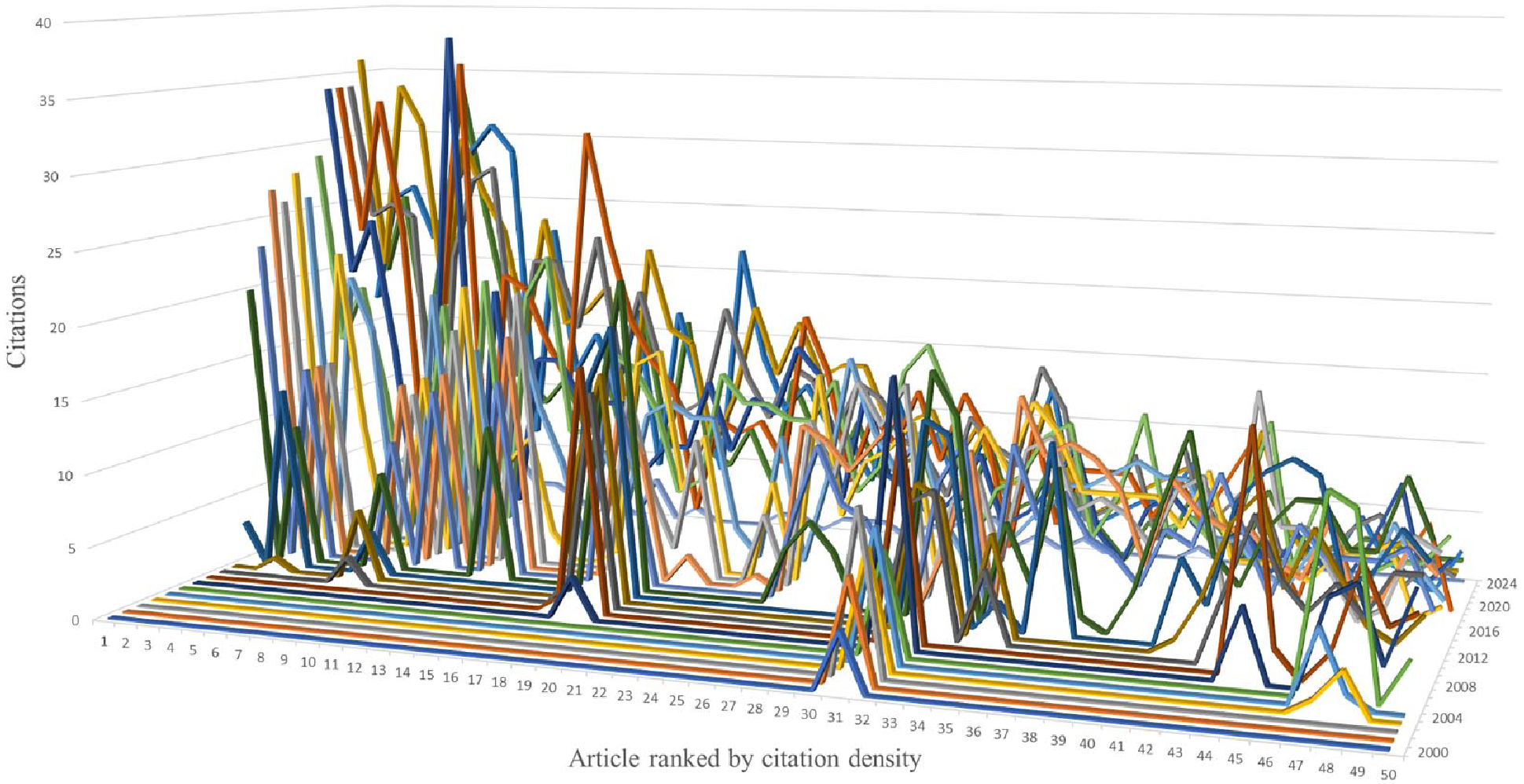
Distribution of annual citations for the top 50 articles ranked by citation density.
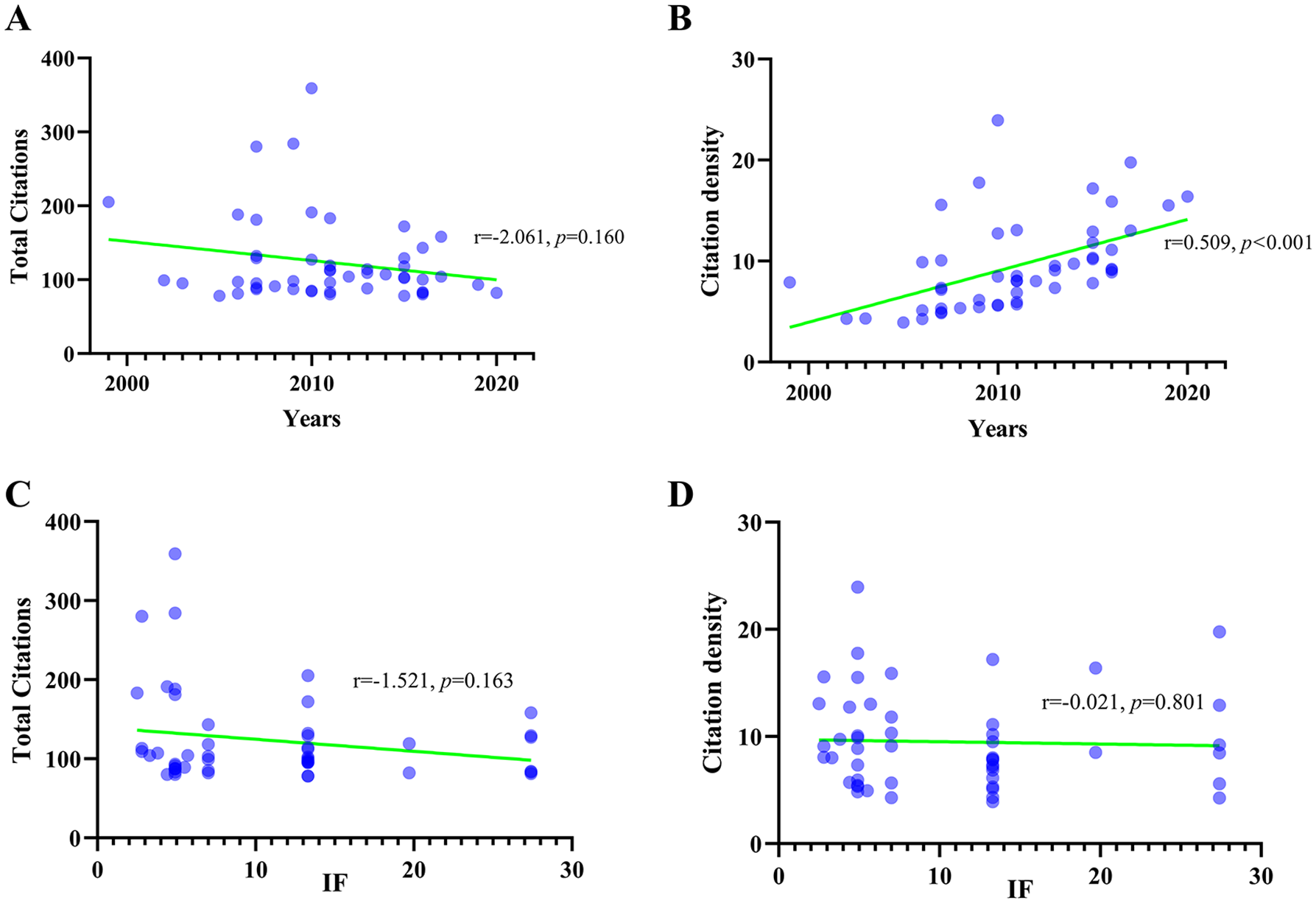
(
All the top 50 cited articles were published across 13 journals, showcasing impact factors ranging from 2.5 to 27.4 (
Table 1
). Notably, Arthritis & Rheumatology led with the highest publication count (16), followed by the Arthritis Research & Therapy (10), and Annals of the Rheumatic Diseases (6). These journals also occupied the top 3 positions in terms of total citations and total link strength. Typically, articles published in journals with high impact factors would have more citations than those published in journals with lower impact factors. Interestingly, no significant correlation emerged between the impact factor and the total number of citations (r = −1.521, P = 0.163) or citation density (r = −0.021, P = 0.801) (
List of Journals in Which the Top 50 Cited Articles Were Published.

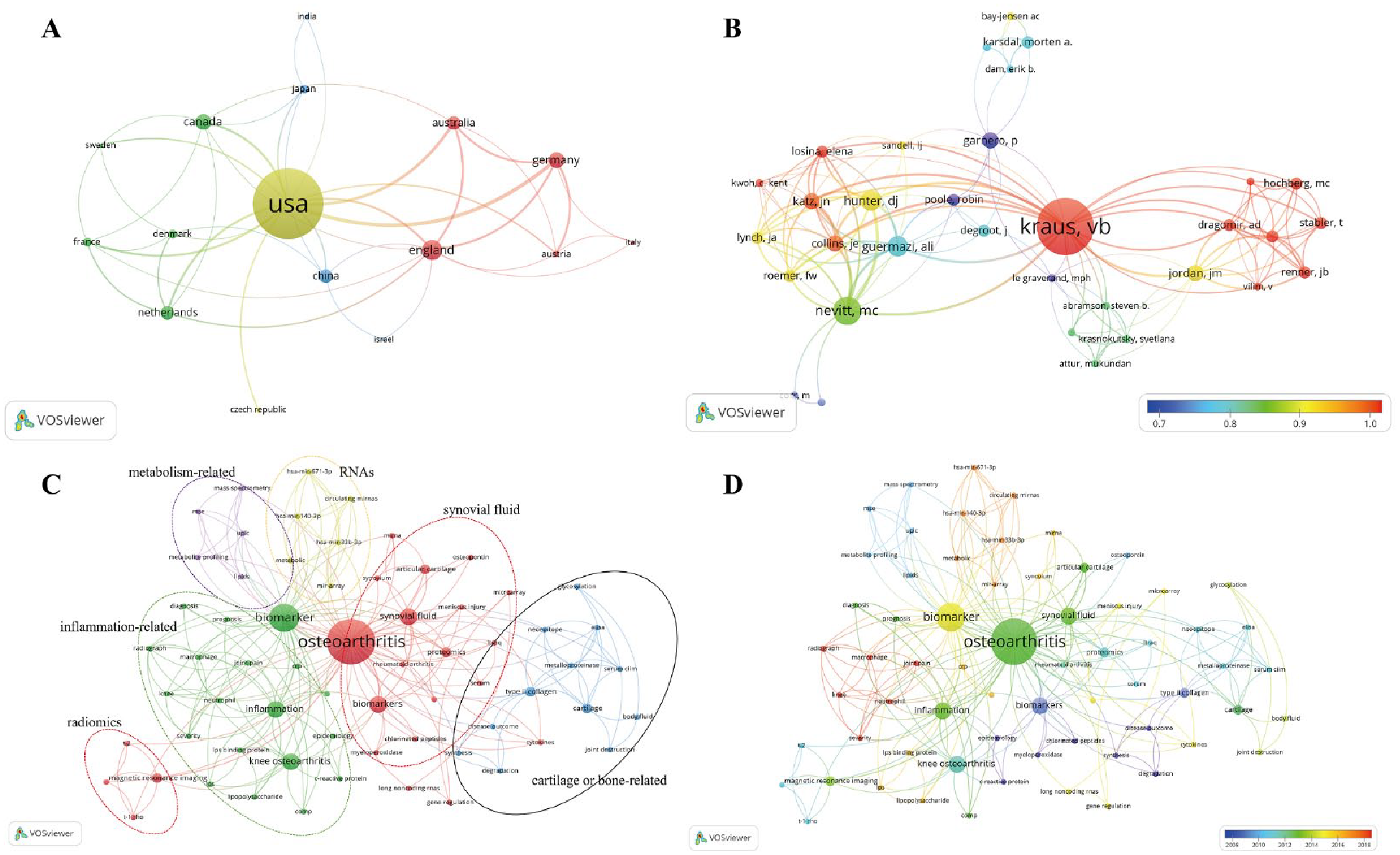
A total of 18 countries contributed to the top 50 cited articles on biomarkers of OA. Among them, the United States made the most substantial contribution to the highly cited articles (31), followed by England (9) and the Canada (7). Notably, the United States also held the highest number of citations and total link strength, underscoring its significant impact on the field (
Table 2
,
Top 10 Countries Contributed to the Top 50 Cited Articles in Osteoarthritis Biomarkers.

Top 10 Institutions Contributed to the Top 50 Cited Articles in Osteoarthritis Biomarkers.

Top 10 Authors Contributed to the Top 50 Cited Articles in Osteoarthritis Biomarkers.

Upon evaluating the articles with regard to the categories, sample types and BIPEDS classification of biomarkers adopted in these top-cited articles, it was observed that cartilage or bone-related, blood and Prognostic biomarkers predominated, respectively (
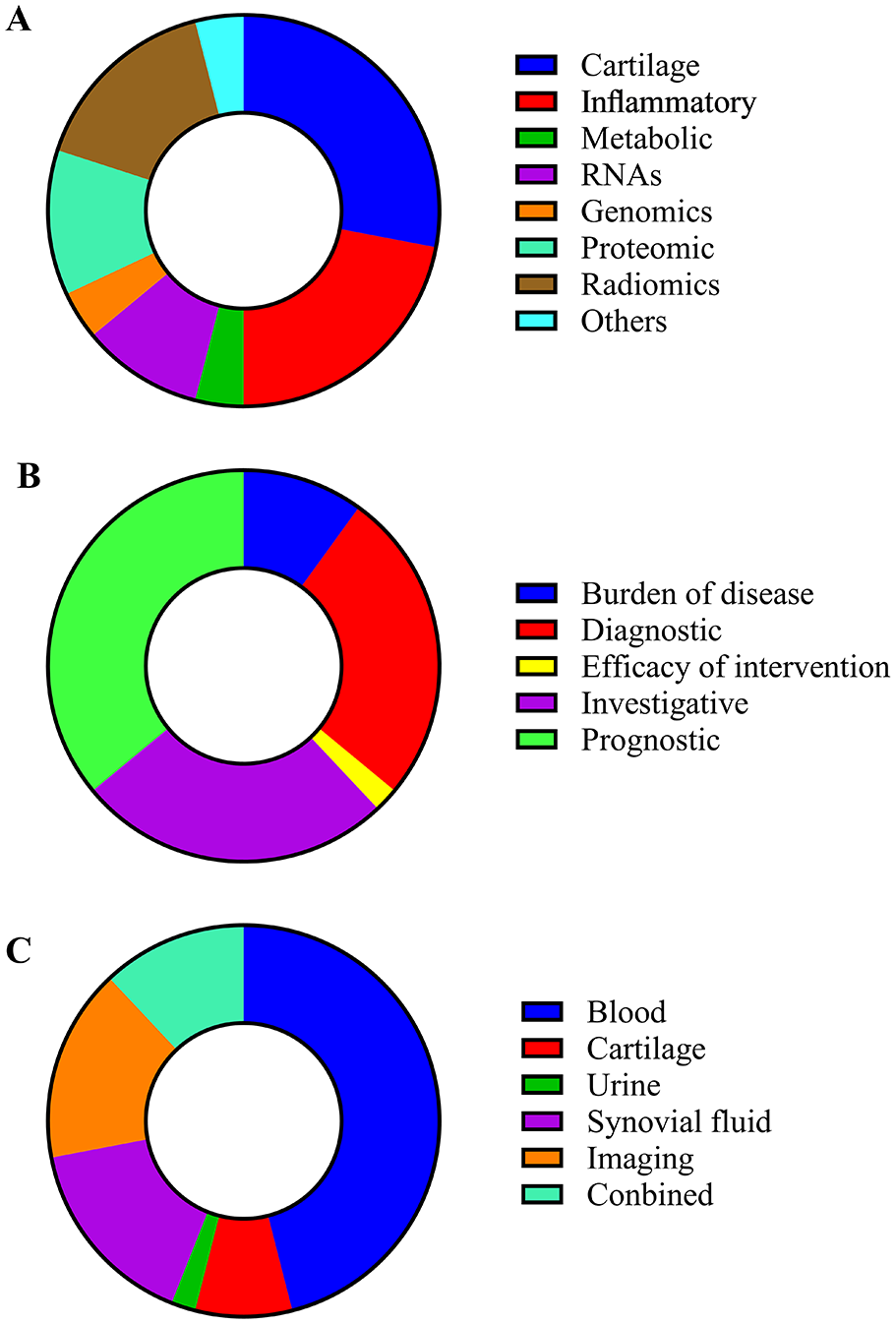
(
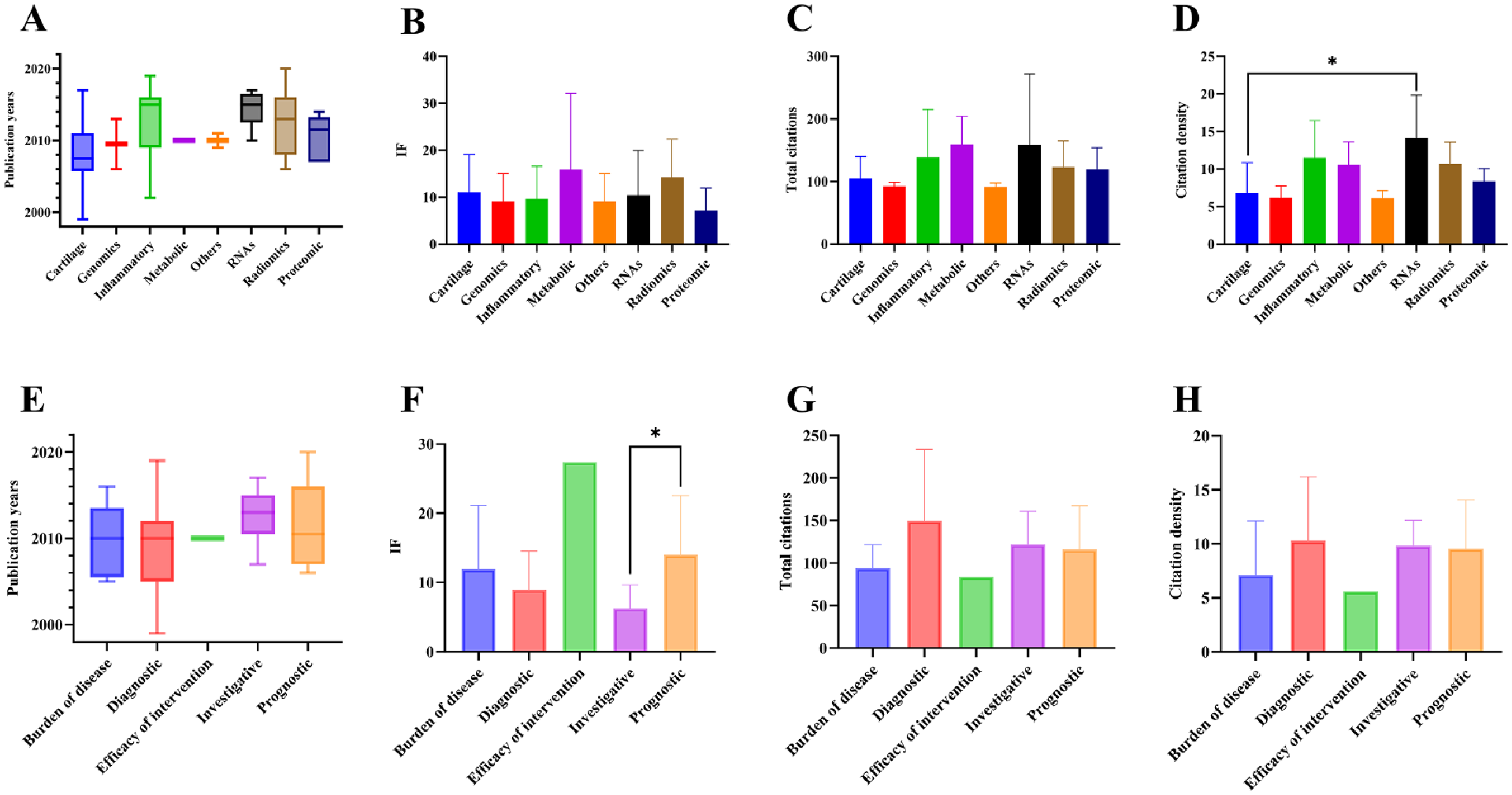
(
Keyword co-occurrence analysis serves as a valuable tool for elucidating the foundational content and structure within the academic domain of biochar. It offers insights into the research focus and potential future directions of this field. A total of 140 keywords were extracted from the top-cited articles. The keyword co-occurrence network was consisted of 65 author keywords. Indubitably, the keywords “osteoarthritis” and “biomarker” had the highest frequency of occurrence of 15 and 12 times, respectively. After excluding these 2 keywords, the top 3 keywords with the highest frequencies were “inflammation” (4), “synovild fluid” (4), and “type ii collagen” (2), representing the primary emphases in these highly cited articles. Utilizing Vosviewer’s keyword co-occurrence function, the keywords were broadly categorized into several clusters: radiomics, inflammation-related, metabolism-related, RNAs, synovial fluid, and cartilage or bone-related (
(
Discussion
It is undeniable that significant progress has been made in the field of OA biomarkers; however, there is currently no universally acknowledged biomarker for osteoarthritis. Notably, this study was the inaugural bibliometric analysis and visualization exploring osteoarthritis biomarkers specifically. Multiple methods were adopted to characterize the top 50 cited articles, thus providing a comprehensive overview of the current state of research in the field.
Typically, in citation analysis, there exists a discernible time effect where earlier publications tend to accumulate more citations over time.30-32 This pattern reflects the gradual recognition and dissemination of seminal research findings within the scientific community. However, contrary to this expected trend, our study did not reveal a significant correlation between publication date and total citations in the context of OA biomarker research. This intriguing finding suggested that the impact of an article on OA biomarkers may not be strictly contingent upon its publication date. Moreover, a positive correlation was identified between publication time and citation density, indicating that more recent publications tend to have higher citation densities relative to their publication dates. This suggested that newly published articles exhibit a comparable impact to the old articles. Possible explanations for this phenomenon include the accelerated pace of information dissemination facilitated by modern communication channels, increased collaboration among researchers, and heightened interest in emerging topics within the OA biomarker field.7,8,22,31 In addition, advancements in techniques and the improved accessibility of scientific literature may have contributed to the faster assimilation and citation of recent publications. However, it is important to recognize that these factors could lead to higher citation density in the short term, but such density does not necessarily reflect long-term academic impact. Taking together, these results suggested that research in OA biomarkers was still evolving.
To deepen the understanding of the prevailing landscape in OA biomarker research and its developmental trajectory, we undertook the extraction and analysis of biomarker data from the top 50 cited articles. This encompassed the categorization of biomarkers, sample types, and the BIPEDS classification. Based on the types and detection methods of biomarkers described in the article, we classified them into 7 categories, while the keyword network formed 6 categories, representing the composition of research on OA biomarkers. The predominance of cartilage or bone-related biomarkers reflected the longstanding interest in understanding the pathophysiology of OA and identifying diagnostic and prognostic indicators.18,19,33 However, the emergence of novel categories suggested evolving research paradigms and technological advancements driving biomarker discovery in OA. From the analysis of publication years, it was observed that in recent years there had been a relatively greater emphasis on investigating biomarkers in the fields of inflammation, RNAs, and radiomics, despite the lack of statistically significant differences. The keywords network also indicated that keywords such as macrophages, radiograph, and various microRNAs had been frequently appearing in recent years. Particularly noteworthy was the high citation density of RNA-related biomarkers, which was significantly higher than that of cartilage or bone-related biomarkers. Besides, several categories of biomarkers were used in a portion of these highly cited articles. As a heterogeneous disease, integrating multi-omics profiling, such as genomics, transcriptomics, proteomics, metabolomics and radiomics could be the future focus of research in OA biomarkers.8,11,13
The prominence of blood-based biomarkers underscored the accessibility and potential utility of peripheral biomarkers in clinical practice.34-36 However, it is essential not to overlook the role of synovial fluid in OA. Synovial fluid, while often overshadowed by blood-based biomarkers, plays a significant role in the pathogenesis and progression of the disease.10,37,38 Its substantial presence in the keyword network suggested its importance in OA research. However, radiomics presents a promising avenue for future investigation. 39 In recent years, longitudinal studies including the Osteoarthritis Initiative (OAI), FNIH Biomarker Consortium Project, and Multicenter Osteoarthritis Study (MOST) have highlighted the potential of radiomics as an OA biomarker.40-42 These studies have demonstrated the utility of radiomics in capturing intricate structural and molecular changes associated with OA progression. Moreover, radiomics provides a valuable complement to traditional biomarkers, offering insights into disease mechanisms that may not be captured by blood-based biomarkers alone. Its ability to capture nuanced changes in joint tissues over time makes radiomics particularly valuable for longitudinal studies investigating OA pathogenesis and treatment efficacy.43-45 As such, the incorporation of radiomics into multi-modal biomarker panels has the potential to improve the accuracy and precision of OA diagnosis and prognosis.
The BIPEDS classification system is designed to help researchers organize biomarker studies and validate the results in OA.14,15 These classifications typically follow a validation strategy that begins with investigational biomarkers and progressively transitions to diagnostic or prognostic biomarkers, and finally safety and efficacy biomarkers for interventions. Despite the comprehensive nature of this classification system, our analysis of the top 50 cited articles revealed a notable gap in the representation of certain biomarker categories. Specifically, only 1 article among the top 50 investigated biomarkers falling under the category of Efficacy of Intervention, and none explored markers associated with Safety. 19 This discrepancy underscored the current research emphasis on understanding disease pathogenesis and prognosis in OA, rather than evaluating the safety and effectiveness of interventions. Such findings highlighted potential areas for future research endeavors to address gaps in biomarker exploration and broaden our understanding of OA management strategies.
Based on our findings, the current landscape of OA biomarker research emphasized cartilage or bone-related biomarkers, particularly those linked to tissue degradation, such as CTX-II and COMP.18,28 Inflammation-related biomarkers, along with newer modalities like radiomics, were increasingly featured in recent studies.19,41,44 The validation methods employed in these studies predominantly involved longitudinal cohort designs, integrating clinical data, imaging techniques, and molecular assessments. However, there were clear gaps in the development and validation of biomarkers for clinical use, particularly in areas such as intervention efficacy and safety markers, which remained underexplored. Addressing these unmet needs require more comprehensive, multi-modal approaches that incorporate advancements in omics technologies and radiomics, combined with standardized validation frameworks to enhance the clinical applicability of OA biomarkers.
The present study also extended its analysis to encompass additional bibliometric characteristics of the top 50 cited articles on OA biomarkers. The diversity in the dissemination of these highly cited articles across various journals underscored the interdisciplinary nature inherent in OA biomarker research. Noteworthy attention was garnered by prestigious journals such as Arthritis & Rheumatology, Arthritis Research & Therapy, and Annals of the Rheumatic Diseases. The pronounced dominance of the United States in both article contributions and citations underscored the nation’s prominent stature in the realm of OA biomarker investigation. This dominance extended to the distribution of top-ranked authors and affiliations, with a significant majority originating from the United States, exemplified by prolific contributors such as Kraus VB and institutions like Duke University, which produced a substantial number of articles and garnered high citation counts. This prominence of the United States across various subspecialties within orthopedics was attributed to factors such as advanced technological resources, specialized expertise among researchers, and substantial funding allocations.23,31,46,47
Despite the comprehensive analysis conducted in this study, several limitations should be acknowledged. Firstly, the reliance on bibliometric data inherently introduces biases, such as the exclusion of articles from non-indexed journals and databases outside of the Web of Science Core Collection. This limitation may result in the omission of relevant studies, potentially skewing the representation of OA biomarker research. In addition, the selection of the top 50 cited articles as the primary focus may overlook seminal contributions that have not garnered high citation counts but remain influential within the field. Furthermore, the exclusion of certain publication types, such as reviews and meeting abstracts, may limit the breadth of literature considered in the analysis. Finally, we only analyzed the characteristics of the 50 most cited articles, which means that the main themes, some of the information, and the number of citations may be biased by certain researchers and institutions.
Conclusion
In conclusion, our study utilized a bibliometric approach to thoroughly examine the landscape of OA biomarker research. Through analysis of the top 50 cited articles, we identified trends and identified gaps in biomarker categories, uncovering significant insights. Contrary to initial assumptions, recent publications exhibited impact on par with older ones. Dominant trends encompassed cartilage-related and blood-based biomarkers, with emerging areas of interest such as inflammation-related markers, radiomics, and multi-omics indicating potential future research trajectories. Addressing deficiencies in biomarkers evaluating intervention safety and efficacy is paramount to advancing strategies for managing OA.
Supplemental Material
sj-xlsx-1-car-10.1177_19476035241288660 – Supplemental material for Exploring Trends and Gaps in Osteoarthritis Biomarker Research (1999-2024): A Citation Analysis of Top 50 Cited Articles
Supplemental material, sj-xlsx-1-car-10.1177_19476035241288660 for Exploring Trends and Gaps in Osteoarthritis Biomarker Research (1999-2024): A Citation Analysis of Top 50 Cited Articles by Wenjin Hu, Jiyong Yang, Li Liu, Dongchao Li, Yun Zhao and Aiguo Wang in CARTILAGE
Footnotes
Acknowledgments and Funding
The author(s) received no financial support for the research, authorship, and/or publication of this article.
Declaration of Conflicting Interests
The author(s) declared no potential conflicts of interest with respect to the research, authorship, and/or publication of this article.

References
Supplementary Material
Please find the following supplemental material available below.
For Open Access articles published under a Creative Commons License, all supplemental material carries the same license as the article it is associated with.
For non-Open Access articles published, all supplemental material carries a non-exclusive license, and permission requests for re-use of supplemental material or any part of supplemental material shall be sent directly to the copyright owner as specified in the copyright notice associated with the article.
