




Abstract
Inbar and Lammers asked members of APA Division 8 (personality and social psychology) about their political orientation, hostility experienced related to their political orientation, and their willingness to discriminate against others based on perceived political orientation. In this replication and extension, 618 faculty members from various academic disciplines across four California State University campuses completed an online questionnaire that added parallel questions about the liberal experience to the original questions about the conservative experience. Participants were overwhelmingly liberal in self-report across all academic areas except agriculture. The conservative minority reported experiencing more hostility than the liberal majority, but both groups expressed similar “in-group/out-group” attitudes. Results supported the ideological-conflict hypothesis for discrimination and a “birds of a feather flock together” interpretation of the lack of political diversity among the professoriate.
Compared to the general public, faculty members of institutions of higher education are more liberal in their political attitudes (Cardiff & Klein, 2005; Gallup, 2015). According to Inbar and Lammers (2012), this lack of political diversity should not be of concern “if one believes that conservatives are simply wrong” (p. 502). We wouldn’t expect a department of anthropology to hire a professor who believes that dinosaurs and humans were alive at the same time. In other instances, however, dismissing conservative beliefs could lead scholars, particularly in the social sciences, to overlook meaningful research questions or even misinterpret their results (Haidt, 2011). Researchers may then fall into “scientific hell,” where scientific standards are clouded by political passions (Tetlock, 1994). Research agendas might provide convenient evidence supporting a particular worldview, while simultaneously attacking research that does not conform to this worldview (Funder, 2015). Researchers might fail to converge upon truth in absentia of colleagues who raise questions and frame hypotheses in different ways (Duarte et al., 2015). Further, political uniformity in academia could lead the public and policy makers to question the credibility of research. Finally, political uniformity could lead to discrimination against the minority (i.e., conservatives or nonliberals), thereby uprooting the pluralistic tradition of universities (Redding, 2001).
Discrepancy in numbers of liberal and conservative faculty could occur for a number of reasons. Self-selection might account for the discrepancy if “liberals may be more interested in new ideas, more willing to work for peanuts, or just more intelligent, all of which may push them to pursue the academic life while deterring their conservative peers” (Gilbert, 2011, para. 3). Discrepancies might result from a “birds of a feather flock together” concept, which suggests that people are attracted to organizations made up of “people like me” (Schneider, Goldstein, & Smith, 1995). The effect of lack of role models on students in underrepresented groups has led to concerns about faculty diversity in gender, race, and ethnicity (e.g., Dasgupta & Stout, 2014; Dee, 2004; Murphy, Steele, & Gross, 2007). If you don’t see anyone like you entering a profession, you might conclude the profession is not open to you. A more disturbing hypothesis regarding this imbalance is the possibility of outright discrimination. Notably, the statistical disparity between liberals and conservatives on university faculties already meets prima facie evidence for the presence of discrimination (see Teamsters v. United States, 1977).
Findings reported by Inbar and Lammers (2012) have fueled discussion about political diversity in academia. While it is impractical to address all of the methodological issues raised by critics of their study, one problem seemed especially important. As succinctly put by Skitka (2012, p. 510) “Without knowing how people would respond to liberals and liberally motivated research…we have no way to know for sure what respondents’ responses really mean.” Conservatives might express more discriminatory attitudes than liberals (e.g., Amodio, Jost, Master, & Yee, 2007; Sibley & Duckitt, 2008). Or, as a numerical minority, conservatives might discriminate more if given the opportunity (e.g., Leonardelli & Brewer, 2001). Possibly, both conservatives and liberals may express similar levels of biased thinking and similar willingness to discriminate (e.g., Brandt, Reyna, Chambers, Crawford, & Wetherell, 2014). Therefore, the present study aims to provide a more comprehensive perspective by using the original Inbar and Lammers (2012) questions assessing the conservative experience, and “mirroring” them to also assess the liberal experience. In addition, the present study extends the sample beyond the original personality and social psychologists group to include a much wider sample of faculty from multiple disciplines within a large state university system. Although the sample from a 4-campus subset of the 23-campus California State University (CSU) system is not representative of the nation’s faculty, it does include participants from “traditionally conservative” fields such as agriculture (Lipset & Ladd, 1971).
Various hypotheses attempt to explain the discrepancy in the numbers of liberal and conservative faculty, but pinpointing an exact explanation might be elusive. Past research on political intolerance and prejudice has focused primarily on conservatives, labeling them as rigid or intolerant (e.g., Sibley & Duckitt, 2008), but like Inbar and Lammers (2012), these conclusions might be limited by a failure to provide a baseline of intolerance occurring among liberals. The proposed simultaneous investigation of the conservative and liberal experience takes a more comprehensive approach by exploring an alternative hypothesis. The ideological-conflict hypothesis (Brandt et al., 2014) argues that both liberals and conservatives are prejudiced against ideologically dissimilar targets—they are both intolerant of groups holding values and beliefs different from their own. This hypothesis claims that liberals and conservatives act in similar ways and may have some shared experiences of discrimination or some shared desires to discriminate. With the proposed modifications to the original Inbar and Lammers (2012) methodology, the ideological-conflict hypothesis might explain the experiences of individuals on both ends of the political spectrum in academia.
The current study attempted to replicate and extend the findings of Inbar and Lammers (2012) by using a larger, more diverse faculty sample and by asking mirrored questions about the liberal experience in addition to the conservative experience on campus. We hypothesized that the findings of Inbar and Lammers (2012) would be replicated in the broader sample and that the experience of self-reported liberals and conservatives might differ due to their suspected majority versus minority status.
Method
Participants
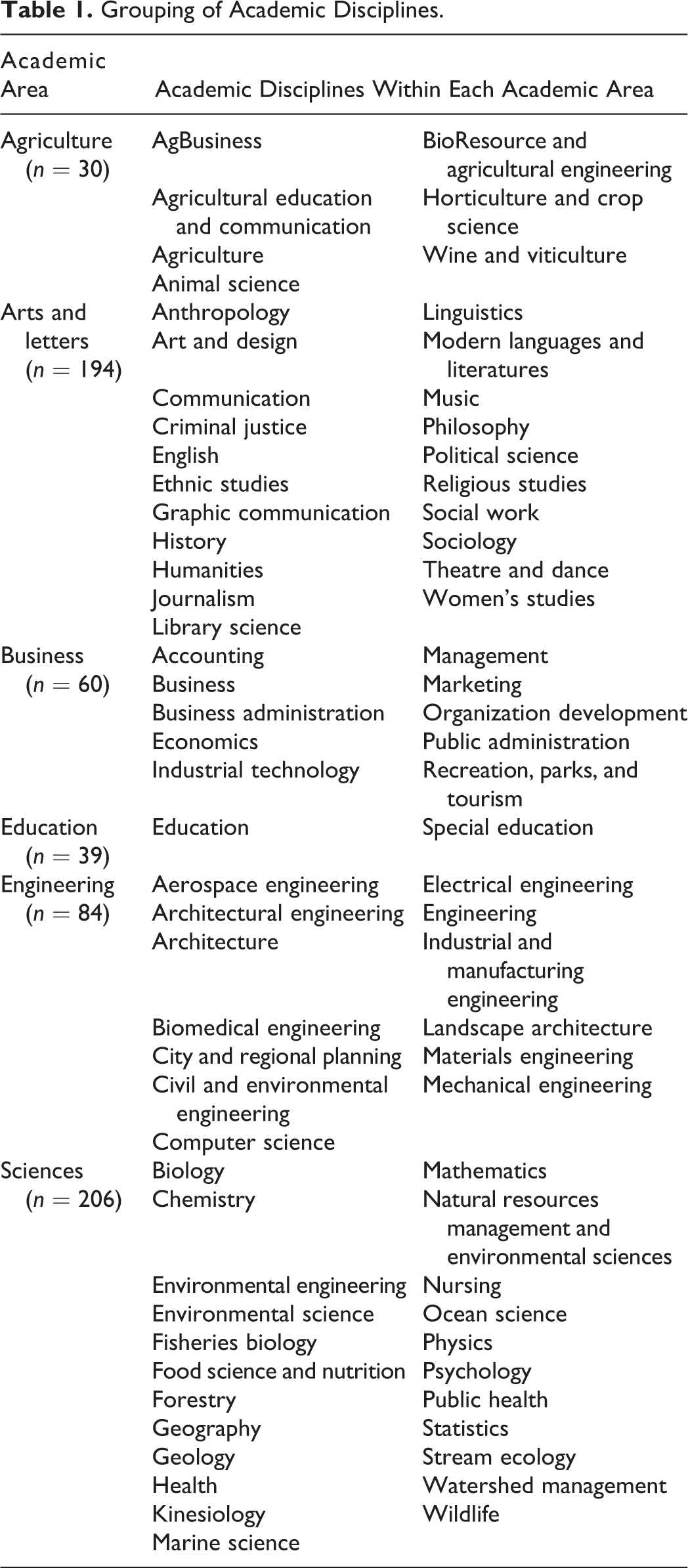
Invitations to participate were sent by individual email to a convenience sample of 2,339 faculty—a roster of all faculty—from the following CSU campuses: Humboldt, Monterey Bay, San Luis Obispo, and Stanislaus. The 618 faculty (355 males, 261 females, 2 no response) who participated represented a return rate of 26.4%. Participants represented 76 academic disciplines (Table 1).
Grouping of Academic Disciplines.
Measures
The original instrument used by Inbar and Lammers (2012) 1 was adapted to include items assessing the liberal experience by duplicating all relevant questions containing the word “conservative” using the word “liberal.”
Respondents indicated their standing on “social issues,” “economic issues,” “foreign policy issues,” and “overall” (1 = very liberal, 7 = very conservative). 2 Respondents used these same scales to rate their beliefs about the attitudes of colleagues in their discipline.
A set of three questions addressed the experience of a hostile environment due to political ideology. Respondents indicated their perceptions of a hostile climate toward their political beliefs in their discipline, their reluctance to express political beliefs to colleagues out of fear of negative consequences, and whether they believed their colleagues would actively discriminate against them on the basis of their political beliefs (1 = not at all, 7 = very much).
Inbar and Lammers (2012) asked participants to speculate about the amount of hostility a conservative colleague would experience from others in their field. We extended this inquiry to also include a set of questions asking participants to speculate about the amount of hostility a liberal colleague would experience from others in their field (1 = not at all, 7 = very much).
Inbar and Lammers (2012) included four questions designed to explore participants’ “stated willingness to discriminate against conservatives” (p. 501). These questions were included in the current instrument along with four mirrored questions for assessing willingness to discriminate against liberals. The questions asked about the impact of a “politically conservative/liberal perspective” on the review of a paper, the review of a grant, the likelihood of inviting a known conservative/liberal to participate in a symposium, and whether political ideology would be considered when selecting a job candidate between two otherwise equally qualified individuals. Responses were indicated on a 7-point Likert-type scales (1 = not at all, 7 = very much).
Procedures
All procedures received prior approval by the Cal Poly San Luis Obispo institutional Review Board (IRB) and by the corresponding IRBs or Research Officers at the participating CSU campuses. The instrument was hosted on a secure SurveyMonkey site.
Data Analysis
The original Inbar and Lammers (2012) data analysis approach was replicated.
Results
The response rate in the current study of 26.4% was similar to the 26.2% observed by Inbar and Lammers (2012). The proportion of males in the current study (57.4%) was higher than among the personality and social psychologists (46.4%) in Inbar and Lammers (2012), possibly due to the inclusion of faculty in disciplines with higher proportions of males. 3 Unlike Inbar and Lammers (2012), age and nationality data were not collected, as they found no effect of age in any domain, and nationality was not relevant (all participants in the present study are from California universities). Academic position data were collected, with 44.2% reporting having tenure, an additional 14.6% reporting being on tenure track, 39.5% identifying as “other faculty” (lecturers, part-time faculty), and 1.8% identifying as graduate teaching assistants.
Political Ideology
As shown in Table 2, respondents in the current study were overall overwhelmingly liberal in self-report, but less so than the personality and social psychologists. Parallel to the findings of Inbar and Lammers (2012), the current respondents were more likely to characterize themselves as social liberals than economic or foreign policy liberals. Further, significant correlations were found between self-rankings on social and economic issues, r(580) = .67, 95% confidence interval (CI) [0.62, 0.71], p < .001, social and foreign issues, r(580) = .73, 95% CI [0.69, 0.77], p < .001, and economic and foreign issues, r(580) = .76, 95% CI [0.72, 0.79], p < .001.
Self-reported Political Ideology.
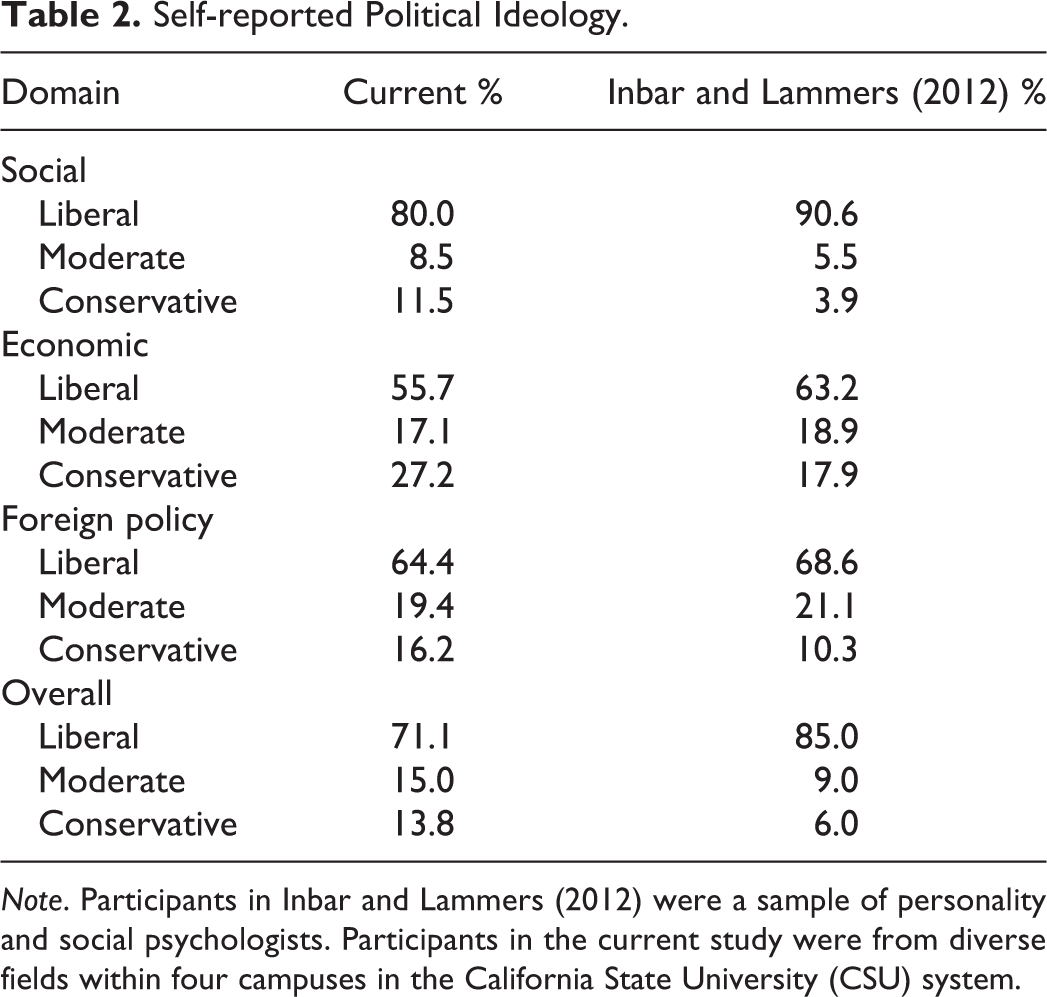
Note. Participants in Inbar and Lammers (2012) were a sample of personality and social psychologists. Participants in the current study were from diverse fields within four campuses in the California State University (CSU) system.
Others’ Ideology
Inbar and Lammers (2012) reported that personality and social psychologists believed their colleagues were more liberal than themselves on economic and foreign issues but believed that colleagues ranked about the same on social issues.
One-way analyses of variance (ANOVAs) showed that differences between self-ratings and perceptions of colleagues were significant for social issues, F(6, 557) = 7.64, p < .001, ηp 2 = .08, economic issues, F(6, 553) = 9.15, p < .001, ηp 2 = .09, foreign policy issues, F(6, 543) = 6.49, p < .001, ηp 2 = .07, and overall, F(6, 552) = 7.34, p < .001, ηp 2 = .07. 4 In the current study (1 = very liberal, 7 = very conservative), M self = 2.41 and M other = 2.76 for social issues (M diff = −.34), M self = 3.37 and M other = 3.27 for economic issues (M diff = .10), M self = 2.99 and M other = 3.11 for foreign policy issues (M diff = −.12), and M self = 2.78 and M other = 2.99 for overall (M diff = −.21). Participants believed their colleagues were more conservative on social issues, foreign policy issues, and overall and that colleagues were more liberal on economic issues. Results for economic issues duplicated those found by Inbar and Lammers (2012), but social and foreign policy issues differed.
Hostile Climate
Following Inbar and Lammers (2012), a composite variable was constructed from the three personal hostility questions (α = .85). This composite variable correlated significantly with overall political orientation, r(570) = .33, 95% CI [0.26, 0.40], p < .001. The more conservative respondents reported experiencing a more hostile environment.
Following Inbar and Lammers (2012), a categorical variable was constructed from the overall political ideology with respondents selecting 1–3 labeled as liberal, respondents selecting 4 labeled as “moderate,” and respondents selecting 5–7 labeled as conservative. Liberals reported a less hostile climate than conservatives (M diff = −1.43), t(485) = −9.35, 95% CI [−1.73, −1.13], p < .001, and moderates (M diff = −.36), t(487) = −2.54, 95% CI [−0.63, −0.08], p = .011. Moderates reported a less hostile climate than conservatives (M diff = −1.08), t(162) = −4.19, 95% CI [−1.58, −0.57], p < .001. These results follow the same patterns as reported by Inbar and Lammers (2012).
Perceived Hostile Climate for Conservatives and Liberals
A composite score was constructed for the conservative hostility questions (α = .88) and the liberal hostility questions (α = .92).
Scores on the composite hostile environment for conservatives measure correlated significantly with political ideology, r(544) = .29, 95% CI [0.21, 0.37], p < .001, and also for the mirrored composite hostile environment for liberals, r(538) = −.09, 95% CI [−0.17, −0.01], p = .034. Both conservative and liberal participants believed that colleagues in their field who shared their political orientation faced a hostile environment.
Stated Willingness to Discriminate
Political ideology was significantly and negatively correlated with all four measures of discrimination against conservatives: papers, r(534) = −.20, 95% CI [−0.28, −0.12], p < .001; grants, r(534) = −.23, 95% CI [−0.31, −0.15], p < .001; symposium participation, r(534) = −.13, 95% CI [−0.21, −0.05], p = .002, and hiring, r(534) = −.34, 95% CI [−0.41, −.26], p < .001. These results are similar to those reported by Inbar and Lammers (2012). The more liberal the respondents, the more willing they were to discriminate against a conservative in these four domains.
One of the novel aspects of the current research was to add a parallel analysis of the willingness to discriminate against liberals. All four measures showed significant correlations: papers, r(529) = .13, 95% CI [0.04, 0.22], p = .003; symposium participation, r(529) = .14, 95% CI [0.05, 0.24], p =.001; hiring, r(529) = .16, 95% CI [0.06, 0.26], p < .001; and grants r(529) = .09, 95% CI [0.002, 0.19], p = .036. The more conservative the respondent, the more likely they reported being willing to discriminate against a liberal in these four domains.
Inbar and Lammers (2012) also noted that sizable percentages of participants responded to the willingness to discriminate items by choosing 4 (somewhat) to 7 (very much). The most dramatic findings were the 33.3% of liberals who indicated they were somewhat to very willing to discriminate against a conservative job candidate, and the 32% of conservatives who indicated they were somewhat to very willing to discriminate against a liberal job candidate (Figure 1).
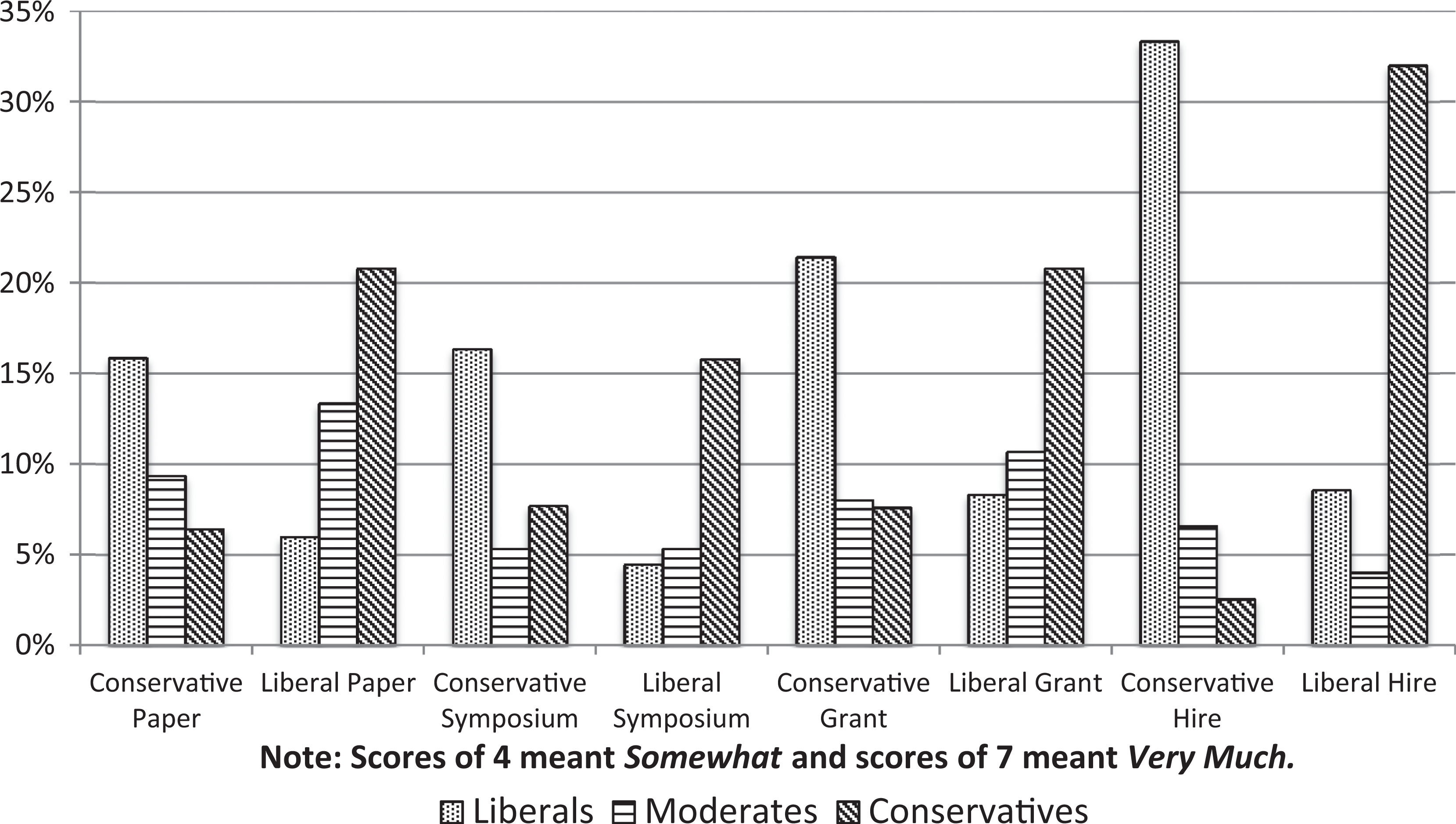
Percentage of participants answering 4–7 on “willingness to discriminate against” items.
To investigate this further, the willingness of conservatives and liberals to discriminate against each other was compared. A willingness to discriminate scale incorporated the items involving discrimination against individuals (i.e., inviting syposia speakers, hiring decisions) but did not incorporate the items involving discrimination against potentially ideologically biased research (i.e., approving grants, papers). The former is “patently discriminatory,” while the latter may be “professionally appropriate” (Skitka, 2012, p. 510). Reliability for willingness to discriminate against conservatives was .62 and for willingness to discriminate against liberals was .72.
A repeated measures ANOVA yielded no significant main effect of target for willingness to discriminate across participants. Participants’ willingness to discriminate against conservatives and willingness to discriminate against liberals were analogous, F(1, 523) = .02, p = .890, ηp 2 < .001; liberals’ willingness to discriminate against conservatives was not significantly greater or lesser than conservatives’ willingness to discriminate against liberals. However, there was a significant overall Political Ideology × Willingness to Discriminate interaction, F(2, 523) = 52.92, p < .001, ηp 2 = .17, such that willingness to discriminate significantly differed in liberals, moderates, and conservatives. Simple effects were then conducted to probe the interaction.
One-way ANOVAs were run separately on willingness to discriminate against conservatives and willingness to discriminate against liberals. These tests showed that differences between overall political ideology and willingness to discriminate were significant for willingness to discriminate against conservatives, F(2, 535) = 27.56, p < .001, ηp 2 = .09, and for willingness to discriminate against liberals, F(2, 527) = 14.81, p < .001, ηp 2 = .05. The more liberal the participant, the more willing they were to explicitly discriminate against conservatives; conversely, the more conservative a participant the more willing they were to explicitly discriminate against liberals. In the current study, M Lib = 2.28, M Mod = 1.44, and M Cons = 1.44 for willingness to discriminate against conservatives, and M Lib = 1.59, M Mod = 1.44, and M Cons = 2.18 for willingness to discriminate against liberals.
Differences Across Academic Areas
One of the novel features of the present study was the inclusion of disciplines outside of social and personality psychology. Participants represented 76 different academic disciplines, which were grouped into 6 academic areas: agriculture, arts and letters, business, education, engineering, and sciences (Table 1). As reflected in Figure 2, respondents were overwhelmingly liberal in self-report across all academic areas except agriculture, where conservatives were a plurality, but not a majority.
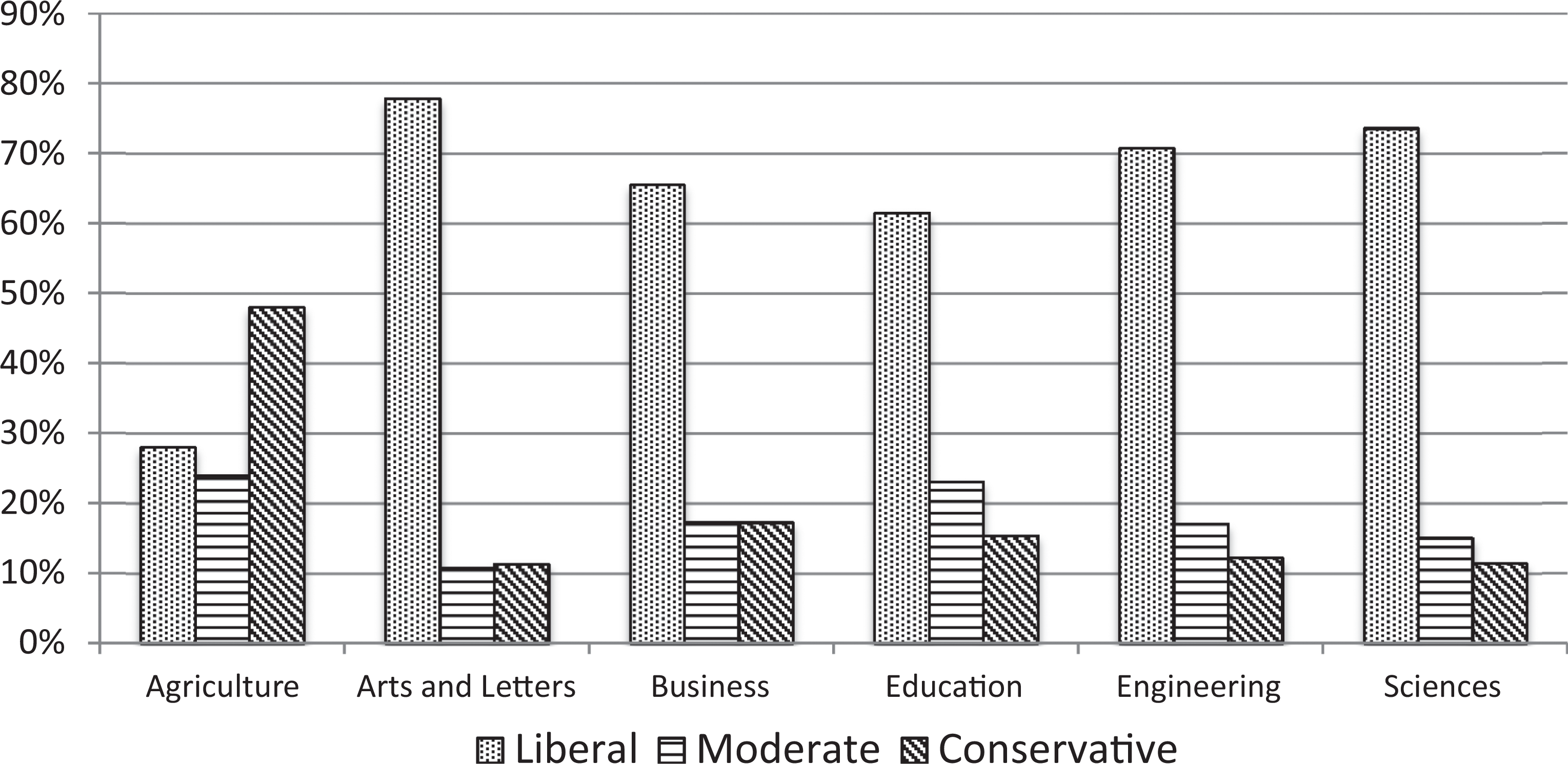
Self-report political ideology by academic area.
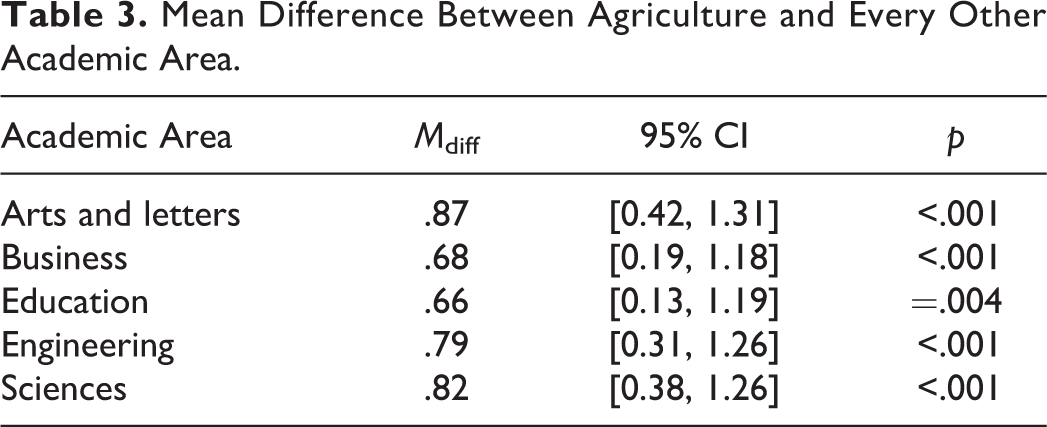
A one-way ANOVA showed that political ideology significantly differed between academic areas, F(5, 576) = 7.20, p < .001, ηp 2 = .06. Post hoc Bonferroni comparisons showed that agriculture was significantly different from every other academic area (Table 3). There were no significant differences in political ideology between any of the other academic areas (all ps > .01).
Mean Difference Between Agriculture and Every Other Academic Area.
Beyond differences in political ideology, sizable percentages of participants in each of the academic areas indicated an explicit willingness to discriminate by choosing 4 (somewhat) to 7 (very much). Focusing on the willingness to discriminate in hiring item, results broken down by academic area were noteworthy (Figure 3). In agriculture, 45.5% of conservatives indicated they were somewhat to very willing to discriminate against a liberal job candidate, while in education, 45.5% of liberals indicated they were somewhat to very willing to discriminate against a conservative job candidate. These percentages must be qualified, though, by population size (Figure 2). While large percentages of conservatives explicitly indicate a willingness to discriminate against a liberal hire in many academic areas, conservatives comprise only a very small percentage in most of the academic areas. For example, while 44.4% of conservatives in engineering indicated they were somewhat to very willing to discriminate against a liberal job candidate, conservatives comprised only 12.2% of the engineering population in our sample.

Percentage of participants “somewhat” to “very” willing to discriminate in hiring, by academic area.
Discussion
Inbar and Lammers (2012) presented thought-provoking data reflecting unequal numbers of liberals and conservatives among personality and social psychologists. Their data asserted that academic conservatives face not only a hostile working environment but also the real possibility of discrimination based on their political beliefs. The current results extend this research to suggest that similar patterns of in-group/out-group bias characterize both self-reported liberals and conservatives across a wider variety of academic disciplines. Given the asymmetry in the number of liberals and conservatives, the former are more likely to affect academia.
One of the contributions of this study has been to provide the “control” suggested by Skitka (2012). The inclusion of questions about hostility and discrimination against liberals provides a backdrop for assessing the extent and meaning of the hostile environment experienced by the conservative minority. Results indicating symmetrical willingness to discriminate when reviewing scholarly papers or grants is consistent with past research on confirmatory bias indicating that when evaluating research, college faculty are more critical of work that contradicts their personal views (e.g., Mahoney, 1977), but the other findings are novel. Importantly, among both conservatives and liberals, nearly one third of the respondents would prefer to hire one of their own. This latter finding points to the operation of a “birds of a feather” process. Instead of framing liberals as the “bad guys” for not wanting to hire from an out-group, it appears an equal proportion of conservatives would do the same thing if they had the numbers needed to prevail. It is important to note, though, that this might explain only a part of the reason why conservatives are underrepresented, and must be framed by the reality of a small, isolated, and often covert conservative minority. While nearly one third of conservatives may be seeking to alleviate their minority status through a preference for hiring their own, the liberal majority cannot use a similar rationalization. In a similar vein, the present study echoes the findings of Wetherell, Brandt, and Reyna (2013) who showed that liberals and conservatives are equally likely to discriminate against ideologically dissimilar groups due to unique perceptions of value violations by the out-group—a dynamic that acts independently of majority/minority status.
While it appears that the birds of a feather process may be at play, the intentions of conservatives and liberals from the present study appear to support the ideological-conflict hypothesis (Brandt et al., 2014). Consistent with the hypothesis, both liberals and conservatives expressed a similar explicit willingness to discriminate against each other. These results support the ideological symmetry claims for prejudice and political bias and are inconsistent with social psychological research arguing that conservatives are more prejudiced and intolerant of others than are liberals (e.g., Amodio et al., 2007; Sibley & Duckitt, 2008). Broadly, the present findings fit the mold of classic in-group/out-group dynamics (Hewstone, Rubin, & Willis, 2002) but are inconsistent with past research demonstrating that groups in a numerical minority are more biased and display greater intergroup discrimination than those in the majority (e.g., Leonardelli & Brewer, 2001). Additionally, the present findings further demonstrate that neither tolerance nor intolerance—specific in the present data to attitudes toward colleagues—are values exclusive to liberals or conservatives (Crawford & Pilanski, 2014).
Implications
While the present findings reveal that a sizable minority of the minority of conservatives explicitly expressed a willingness to discriminate, conservatives clearly lack the means and opportunity for execution. Given the overwhelming majority of liberals in the faculty and the explicit expressed willingness on the part of a sizable minority to make political ideology a “litmus test” for hiring, it is likely the number of political conservatives on campus will continue to shrink. As the U.S. public has grown more politically polarized, leading to growing antagonism and hostility between ideological out-groups (Twenge, Honeycutt, Prislin, & Sherman, 2016), academia has arguably acted in tandem. While an ideological imbalance and ideological intolerance may not have been an issue 40 years ago, it has become one today, and it will grow worse if not properly addressed.
Broadly, these findings reflect a significant threat to ideological and political diversity on university campuses. They also have negative implications for creativity and divergent thinking in problem-solving and decision-making that a robust minority could otherwise positively influence (Nemeth, 1986). As it has been argued, “more political diversity would help the system discover more truth” (Duarte et al., 2015, p. 20). These findings reflect the need for a return to the principles of Classical Liberalism—for respect toward those who have different ideas, beliefs, and perspectives to again be fostered among all faculty (Kristof, 2016), and correspondingly demonstrated to students (Christakis, 2016). Borrowing from the parallel domain of free speech law (e.g., Lukianoff & Shibley, 2015), arguably the best way faculty can respond to research with which they disagree is not by silencing the research or the colleagues performing it but rather by debating issues and conducting more research. If you ask more questions, you will ask questions better and ask better questions.
An ideologically unbalanced professoriate—or a professoriate that lacks respect for differing perspectives—contradicts the foundational principle of universities being a “marketplace of ideas” and therefore does a disservice to students. Faculty have a powerful effect on the learning environment (Umbach & Wawrzynski, 2005), especially through the obvious power imbalance between students and faculty (Inbar & Lammers, 2015). The effects of ideological imbalance and expressed willingness to discriminate against colleagues might significantly impact student aspirations, growth, development, and formation of beliefs regardless of whether students accurately identify their professor’s personal political ideology (Kelly-Woessner & Woessner, 2006). Beyond depriving students of knowledge related to both sides of issues, these hostile dynamics may contribute to belonging uncertainty for conservative (or nonliberal) students (Walton & Cohen, 2007) and cause them to hide “in the closet” or avoid academia entirely (e.g., Everett, 2015).
The current study, like Inbar and Lammers (2012), provided participants with opportunities to respond to an open-ended question about “anything else you would like us to know.” In many ways, these open-ended responses were even more illuminating than the quantitative responses. Many respondents noted that political ideology was irrelevant in their field, yet their answers to the quantitative questions showed that they cared very much indeed about the political ideology of the people with whom they work. One conservative participant reported that “conservatives are in the closet even after tenure because being openly conservative makes people suspicious of you and reluctant to work with you.” Liberals found it difficult to believe that conservatives faced a hostile environment, or at least one that was not of their own making. One liberal participant wrote Most conservatives I have met who are faculty have a persecution complex. They are in the minority and feel that they do not get their air time. No one I know would hold it against a conservative for well thought out opinions, yet the few conservatives I know in academia are incapable of justifying their positions.
Limitations and Future Research
Although the current study addressed the lack of a control condition identified by Skitka (2012), there is much additional work that needs to be done to fully understand these issues. Because one of the goals of the current study was to replicate Inbar and Lammers (2012) in a larger sample of faculty in more diverse fields of study, changes in the instrument were kept to a minimum.
A number of participants expressed frustration at the limitations of the political ideology scale, arguing that they weren’t comfortable with any of the choices they faced. Future research could incorporate standardized or broader instruments of political ideology rather than self-report via Likert-type scales. Additionally, it has been noted that the original Inbar and Lammers items assessing discrimination may have violated conversational norms (Skitka, 2012). Given the straightforward nature of the four willingness to discriminate questions, though, we presume that participants clearly distinguished between what each item independently was seeking to assess (Inbar & Lammers, 2012). Future research, though, may benefit from either focusing on a particular form of discrimination or more clearly teasing apart the different types of bias represented.
Given the present findings, it should be considered that while it is one thing to self-report a willingness to discriminate, it is another thing entirely to actually discriminate. This conclusion was most famously demonstrated by LaPiere (1934) in the context of accommodating Chinese guests and was seminal in demonstrating the gap between attitudes and behaviors. Although given today’s social norms discouraging bias (Ashby & Devine, 1998), the present study likely underestimated participants’ willingness to discriminate. To resolve these issues requires investigations reaching beyond attitudinal research into the domain of behavioral research.
An important remaining question is the distinction between simply holding a political ideology and incorporating that political ideology into the workplace, whether that means in the classroom, in interactions with colleagues, or in publications. Many respondents noted in the open-ended question that they neither knew nor cared about their colleagues’ political views and they definitely felt these should be private. To what extent do faculty express their political views in their work? It is likely the answer to this question is different for social scientists than it is for engineers, and it is worthy of further exploration.
Conclusion
Diversity and dissent are critical values to instill and uphold, and while many individuals agree in theory, most do not in practice (Nemeth, 2012). Academia cannot allow selective or convenient diversity, inclusivity, and tolerance and should instead have a vested interest in alleviating all forms of discrimination and protecting the pluralistic tradition within universities. Listening and being exposed to viewpoints that differ from our own frequently makes us more tolerant (Mutz, 2006), so a lack of ideological diversity in academia will only serve to reinforce intolerance and discrimination toward ideological out-groups. As scholars attempt to find truth through their research, and as faculty work to instill these truths in the minds of their students, it is imperative that “we start to recognize the courage of minority voices and the value of the open airing of competing views, and that we achieve some clear understanding of the role of trust that allows the passionate interchange to occur” (Nemeth, 2012, p. 24). A good starting place would be with the conservative (or nonliberal) minority in academia.
Footnotes
Acknowledgments
We thank Radmila Prislin for helpful feedback and comments on an earlier draft.
Declaration of Conflicting Interests
The author(s) declared no potential conflicts of interest with respect to the research, authorship, and/or publication of this article.
Funding
The author(s) received no financial support for the research, authorship, and/or publication of this article.