



Abstract
Low self-esteem is often related to interpersonal difficulties. In fact, low self-esteem people fear rejection and tend to adopt self-protection goals. In the present work, we tested the idea that when low self-esteem individuals decide to sacrifice personal preferences for their relationship, they come to regret those actions, with further consequences for their well-being. We conducted a study with 130 couples, using experience sampling, daily diary, and a 1-year follow-up assessment. Results showed that low self-esteem is related to greater regret of past sacrifices, which, in turn, affects negative mood, stress, and life satisfaction. Furthermore, mediation analyses revealed that low self-esteem individuals feel less supported by the partner after they sacrifice, which helps explaining why they come to regret their sacrifices.
In order for relationships to persist and thrive, partners need to be willing to sacrifice time, resources, personal goals, and preferences for each other. Given the costs that sacrifices entail, sometimes people may come to regret having invested a great deal in their relationship. This may especially occur when people feel insecure about each other’s feelings and regards. People may question whether their sacrifice was worthy, whether the partner even noticed and appreciated the generous act, and whether the partner is going to reciprocate the prosocial behavior at some point. Questioning and regretting one’s actions can be stressful and taxing and some people may be more vulnerable than others to this type of counterfactual thinking. In this work, we propose that individuals low in self-esteem, who display many relationship vulnerabilities and insecurities about their partner’s concern and support for them (e.g., Murray, Holmes, & Griffin, 2000; Murray, Holmes, & Collins, 2006), may be especially likely to regret their sacrifices in the relationship. Specifically, in a large study with couples that involves an experience sampling, a daily diary, and a follow-up assessment, we investigated whether low self-esteem increases regret of sacrifices, which, in turn, has negative consequence for one’s well-being. We also tested whether perception of partner support after a sacrifice is one of the mechanisms responsible for the link between self-esteem and regret of past sacrifices.
Regret of Sacrifice
Partners’ goals, priorities, and preferences do not always align, and sometimes what is preferred by one partner is not preferred by the other (for an overview of couples daily divergence of interests, see Righetti, Gere, Hofmann, Visserman, & Van Lange, 2016). In these circumstances, if partners want to stay together, one of them needs to forego one’s own preference to fulfill the other partner’s needs or desires (e.g., Impett, Gable, & Peplau, 2005). Such decisions are not trivial. On the one hand, people love their partner, want to avoid conflict, and preserve the relationship. On the other hand, people may also strongly value their personal goals and preferences and may be fearful of giving too much to their relationship without receiving appreciation from their partner (e.g., Righetti, Finkenauer, & Finkel, 2013). Thus, even when people decide to behave in a prosocial manner, the personal losses and risks involved in such decisions may introduce counterfactual thinking and regret.
Regret is defined as a counterfactual emotion of self-blame that generates from the comparison between the possible outcomes derived by one’s own choices and the realization that a better outcome could have been attained with a different choice (Zeelenberg & Pieters, 2007). People are especially likely to experience regret in the domain of social relationships (Morrison & Roese, 2011) because threats to the need to belong (Baumeister & Leary, 1995) are especially intense (Morrison, Epstude, & Roese, 2012). Furthermore, some people may be especially prone to experience regret in relationships. These may be individuals who are fearful of giving in too much for the relationship, but they do so nevertheless. We argue that individuals with chronic insecurities, such as low self-esteem individuals, may be especially prone to experience regret of having given up personal goals and preferences for the relationship.
Self-Esteem and Regret of Sacrifice
Low self-esteem individuals desire strong interpersonal connections (Leary & Baumeister, 2000) but tend to protect themselves against interpersonal threats to prevent further damage to an already impoverished sense of self (Baumeister, 1993). When low self-esteem individuals encounter divergence of interests with their partner, two opposing motivations may co-occur. On the one hand, according to the risk regulation model, low self-esteem individuals may activate self-protection goals and decide not to give up personal goals for the relationship and, therefore, not to sacrifice (Murray et al., 2006). On the other hand, according to the commitment-insurance model, low self-esteem individuals, who chronically feel inferior to their partner, may engage in behaviors to secure the partner’s commitment, such as enhancing their relational value by showing to be a good partner and, therefore, sacrifice (Murray & Holmes, 2008). Thus, because of these two opposing motivations, we do not expect self-esteem to affect the frequency of sacrifice per se.
However, when people do eventually take the decision to sacrifice one’s own self-interest for the other, they place themselves in a vulnerable position. The partner may not recognize and appreciate the sacrifice, leaving the costs that one has experienced go unnoticed. On the contrary, people and relationships benefit when partners display a warm and supportive response after receiving a pro-relationship act (e.g., Algoe, Gable, & Maisel, 2010; Canevello & Crocker, 2010; Murray & Holmes, 2009). Receiving support from one’s partner involves perceiving a caring and empathetic response to one’s sacrifices, which induces individuals to feel understood and appreciated (e.g., Taylor et al., 2004). When people experience lack of support after a sacrifice and do not perceive their partner to be understanding, appreciative, and caring of the costs that they have incurred with that action, they may be more likely to regret the sacrifice.
Low self-esteem individuals may be especially prone to perceive lack of support after a sacrifice because they underestimate their partner’s regards for them. For example, people with low self-esteem underestimate how positively they are viewed by their partner (Murray et al., 2000), they underestimate how much their partner loves them (Murray, Holmes, Griffin, Bellavia, & Roese, 2001), and how much the partner is committed and satisfied in the relationship (Downey & Feldman, 1996). Previous research has also shown that low self-esteem is associated with perceptions that social support is less available (Lakey & Cassady, 1990; Sarason, Sarason, & Pierce, 1990; Vinokur, Schul, & Caplan, 1987) and less responsive (Marigold, Cavallo, Holmes, & Wood, 2014). Thus, low self-esteem individuals may be especially likely to perceive their partner not being supportive of their sacrifices and to feel hurt by this lack of recognition. Therefore, we hypothesized that one of the reasons why low self-esteem individuals may be more likely to regret their sacrifices is because they perceive less support from their partner after having engaged in such a costly behavior.
Besides experiencing interpersonal difficulties in several different ways, low self-esteem individuals also experience lower levels of well-being across several indexes, such as negative mood, stress, and life satisfaction (e.g., Diener & Diener, 2009; Dumont & Provost, 1999; Heimpel, Wood, Marshall, & Brown, 2002; Pruessner, Hellhammer, & Kirschbaum, 1999; Wenglert & Rosén, 1995). Given that experiencing regret is associated with emotional distress (Patrick, Lancellotti, & Demello, 2009) and lower well-being (Jokisaari, 2003; Lecci, Okun, & Karoly, 1994; Roese et al., 2009), in our work, we sought to investigate whether regretting one’s sacrifices has important (and perhaps long-lasting) consequences on mood, stress, and life satisfaction. Thus, we tested whether one of the reasons why low self-esteem individuals experience low levels of well-being is because they tend to experience regret of past sacrifices in their relationship. 1
Research Overview
To test the role of self-esteem in the regret of sacrifices and its consequences on well-being, we conducted a large multimethod study involving romantic couples. First, participants completed an intake session in the laboratory. They then participated in an experience sampling study in which they reported on their events and feelings every 2 hr for 8 days. At the end of each day, they also reported their feelings in a diary report and, finally, 1 year later they were contacted for a follow-up report. In all the different parts of the study, we expected self-esteem to be unrelated to the frequency of sacrifice. However, we expected self-esteem to be related to regret of sacrifice and regret of sacrifice to mediate the relationship between self-esteem and our indexes of well-being (i.e., negative affect, stress, and life satisfaction). In the diary part of the study, we also tested whether lack of perceived partner support on days of sacrifice was one of the mechanisms responsible for the association between self-esteem and regret of past sacrifices. Finally, to ensure that self-esteem affected regret of sacrifices above and beyond other type of regrets that people can experience, we controlled for other assessment of regrets that we had available in our study (i.e., regret of partner’s sacrifice and regret of choices during situations of divergence of interests). Furthermore, to ensure that self-esteem affected regret of sacrifice above and beyond other related individual differences or relationship variables, we also controlled for attachment style, relationship satisfaction, commitment, and trust.
Method
Participants
Participants were 130 couples (N = 260) who were recruited via advertisements on social media (e.g., Facebook), various Internet forums, and personal approach. The sample size was specified prior to data collection, based on typical sample sizes in relationship studies. All participants lived in the Netherlands and were required to speak Dutch. Couples could participate in the study if they were together for longer than 4 months, if they had no children, and if they had a smartphone (for the experience sampling and diary parts). Partners were paid maximum 80 Euros each for their participation. As an additional incentive, participants could win a bonus of 200 Euros via a lottery ticket. All couples were heterosexual, except for one homosexual couple. Data from two couples and one individual are always excluded from the analysis of this data set because they did not properly follow the instructions at intake. Participants’ age ranged from 18 to 43 years (M = 23.33, SD = 3.65). Over half of the participants (63.6%) were students, 34% were working full time, and 2.4% were both working and studying. Couples’ romantic involvement ranged from 4 months to 17 years (M = 34.13, SD = 29.01 months) and 34.8% of the couples were living together, of which a minority (2.4%) was married. 2
Procedure
Couples came to the laboratory for an intake session. They were separated and asked to fill in some questionnaires. At the end of the intake session, they were given instructions about the experience sampling procedure. Each couple started the experience sampling on the Saturday following the intake session. For 8 days (2 Saturdays, 2 Sundays, 1 Monday, 1 Tuesday, 1 Thursday, and 1 Friday), participants received six signals per day, approximately one signal every 2 hr, as recommended by Hektner, Schmidt, and Csikszentmihalyi (2006). On average, each participant replied to 41.36 (SD = 7.17) of the 48 experience sampling signals. In the experience sampling, participants were first asked about their current mood. After that, if participants did not report to have done or received a sacrifice in the previous hour, they were asked if they regretted one of their previous sacrifices. On average, each participant replied to the question about regret of past sacrifices on 37.51 (SD = 6.38, 9,661 cases) out of 41.36 signals, they reported to have sacrificed on 2.75 (SD = 1.76, 495 cases) signals, and they reported their partner to have sacrificed on 2.36 (SD = 1.47, 406 cases) signals.
Furthermore, each day, after 9.00 p.m., participants performed a daily diary survey. On average, each participant replied to 7.27 (SD = 1.33) of the 8 diary signals. First, they were asked about their current life satisfaction and stress. After that, if they did not report to have done or received sacrifices that day, they were asked whether they regretted some of their past sacrifices. On average, each participant replied to the question about regret of past sacrifices on 4.79 (SD = 1.93, 1,164 cases) out of 7.27 signals, they reported to have sacrificed on 2.48 (SD = 1.52, 479 cases) signals, and they reported their partner to have sacrificed on 2.52 (SD = 1.54, 477 cases) signals. Finally, 1 year later, couples were contacted again for a follow-up in which they replied to few questions, including a measure of their current life satisfaction.
Measures
Intake
During the laboratory intake, participants completed several questionnaires including the 10-item Self-Esteem Scale (Rosenberg, 1965; e.g., “On the whole, I am satisfied with myself”; α = .89), attachment style (Adult Attachment Questionnaire [AAQ]; Simpson, 1990; 8 items for avoidant; e.g., “I’m not very comfortable having to depend on other people”; α = .74; 5 items for anxious; e.g., “I often worry that my partners don’t really love me”; α = .60), 3 relationship satisfaction (Rusbult, Martz, & Agnew, 1998; 4 items; “I feel satisfied with our relationship”; α = .82), commitment (Rusbult et al., 1998; 7 items; “I want our relationship to last for a very long time”; α = .81), trust (Dutch version of Rempel, Holmes, & Zanna, 1985; see also Muusses, Finkenauer, Kerkhof, & Righetti, 2015; 12 items; “I know that my partner will always be there for me and willing to offer me strength and support”; α = .83), and the Life Satisfaction Scale (Diener, Emmons, Larsen, & Griffin, 1985; 3 items; e.g., “I am satisfied with my life”; α = .86) on a 7-point scale (1 = strongly disagree, 7 = strongly agree). Participants were also asked about the frequency of past sacrifices (1 item: “In the past 3 months, how often have you sacrificed for your partner?”; 1 = never, 7 = extremely often). After completing all the measures, participants were given some instructions by the research assistant about the second part of the study (i.e., the experience sampling and diary). In these instructions, among other information, participants were provided with a definition of a sacrifice. Specifically, they were told that a sacrifice occurs when, in a situation of divergence of interests with their partner, they forego their first preference in favor of their partner’s preference.
Experience sampling
Participants first reported their current mood (2 items; “At the moment, I am in a negative mood,” “At the moment, I am in a positive mood,” reverse-scored item; α = .84) and their stress (1 item; “At the moment, I am stressed”). Then they reported if they sacrificed or if their partner sacrificed. If sacrifices did not occur, they reported regret of past sacrifice (1 item; “In the past hour, I felt regret for one of my previous sacrifices) and regret of their partner’s past sacrifice (1 item; “In the past hour, I felt regret for one of my partner’s previous sacrifices”). All the measures were on 7-point scales (0 = not at all, 6 = extremely).
Diary
At the end of the day, participants first reported their life satisfaction (1 item; “Right now, my life is close to my ideal”) and stress (1 item; “Right now, I feel stressed”). Then they reported their perception of partner support (1 item; “Right now, I feel that my partner supports me”). Finally, they reported if they sacrificed, if their partner sacrificed, and how many sacrifices occurred that day. If sacrifices did not occur, they replied to some questions about past sacrifices, among which regret of sacrifice (1 item; “Today, on past sacrifices that I have done…I felt regret for some of them”), regret of their partner’s sacrifices (1 item; “Today, on past sacrifices that my partner has done…I felt regret for some of them”), and regret of choices during diverge of interests (1 item; “Today, on past situations of divergence of interests…I felt regret for some of my choices in those circumstances). All the measures were assessed on 7-point scales (0 = not at all, 6 = extremely).
Follow-up
One year later, participants were contacted again and asked to fill in a short survey in Qualtrics. Participants reported their life satisfaction (α = .90) and the frequency of past sacrifices as measured at the intake session.
Results
Analysis Strategy
Because of the nonindependence of the data (multiple measurements within participants and the nesting of participants within couples), we performed multilevel analyses (Kenny, Kashy, & Cook, 2006). Intercepts terms were treated as random and slopes as fixed effects. Because gender did not reliably moderate the effects, dyads were treated as indistinguishable (Kenny et al., 2006). We used the Monte Carlo Method to assess Mediation, using unstandardized estimates. This simulation method shows 95% confidence intervals for the indirect effects using 20,000 simulations (Selig & Preacher, 2008). To estimate the amount of sacrifices performed in the experience sampling, we created the sum of all the reports of sacrifices made in the six daily signals. In the experience sampling, daily diary, and follow-up assessments, we performed time-lagged regression analyses to gather information on whether our predictors would influence changes in the outcomes over time. In the experience sampling, later outcomes were assessed at the next signal (2 hr later), in the diary they were assessed the next day and in the follow-up they were assessed 1 year later.
Self-Esteem and Frequency of Sacrifice
First, we tested whether self-esteem affected frequency of sacrifice. As expected, self-esteem was unrelated to frequency of sacrifice as reported at intake (b = −.13, SE = .08, p = .109), in the experience sampling (b = −.01, SE = .01, p = .425), in the diary (b = −.03, SE = .03, p = .183), and in the follow-up (b = −.09, SE = .08, p = .208).
Self-Esteem and the Regret of Sacrifice
Experience sampling
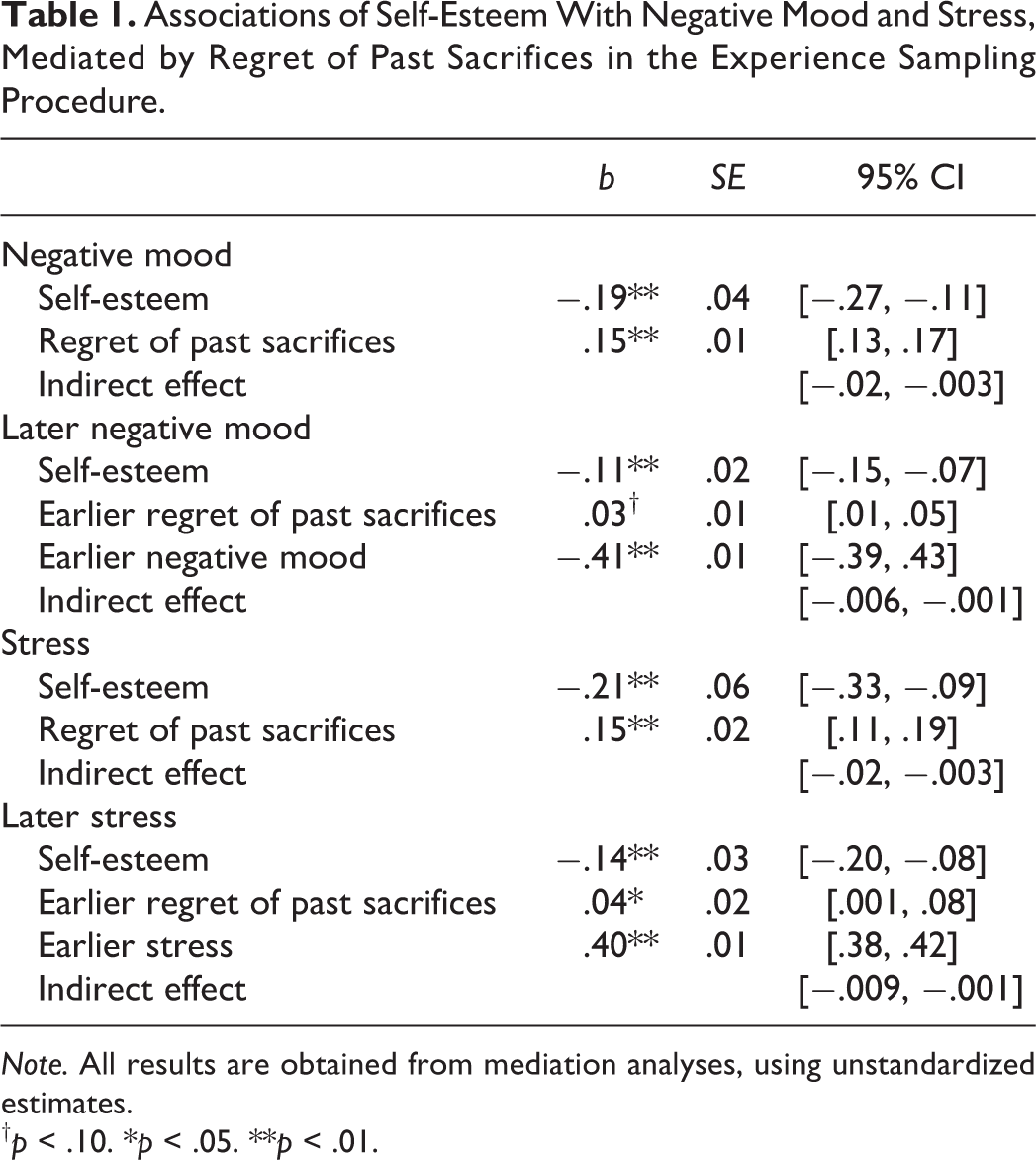
To investigate the relationship between self-esteem and regret of sacrifice, negative mood and stress, we first ran a series of multilevel models in the experience sampling part of the study. Results revealed that self-esteem was negatively related to regret of sacrifice (b = −.08, SE = .03, 95% CI [−.14, −.02], p = .023), to negative mood (b = −.20, SE = .04, 95% CI [−.28, −.12], p < .001), and to stress (b = −.23, SE = .06, 95% CI [−.34, −.10], p < .001). Regret of sacrifice partially mediated the association between self-esteem and negative mood and stress (see Table 1).
Associations of Self-Esteem With Negative Mood and Stress, Mediated by Regret of Past Sacrifices in the Experience Sampling Procedure.
Note. All results are obtained from mediation analyses, using unstandardized estimates.
†p < .10. *p < .05. **p < .01.
We further performed time-lagged regression analyses in which we regressed later outcomes onto earlier predictors. Results revealed that earlier regret of sacrifice predicted later negative mood when controlling for earlier negative mood (b = .04, SE = .02, 95% CI [−.14, −.02], p = .023). Later stress was also predicted by earlier regret of sacrifice when controlling for earlier stress (b = .05, SE = .02, 95% CI [.01, .09], p = .004). Furthermore, regret of sacrifice partially mediated the relationship between self-esteem and later mood and stress when controlling for earlier mood and earlier stress, respectively (see Table 1).
Diary
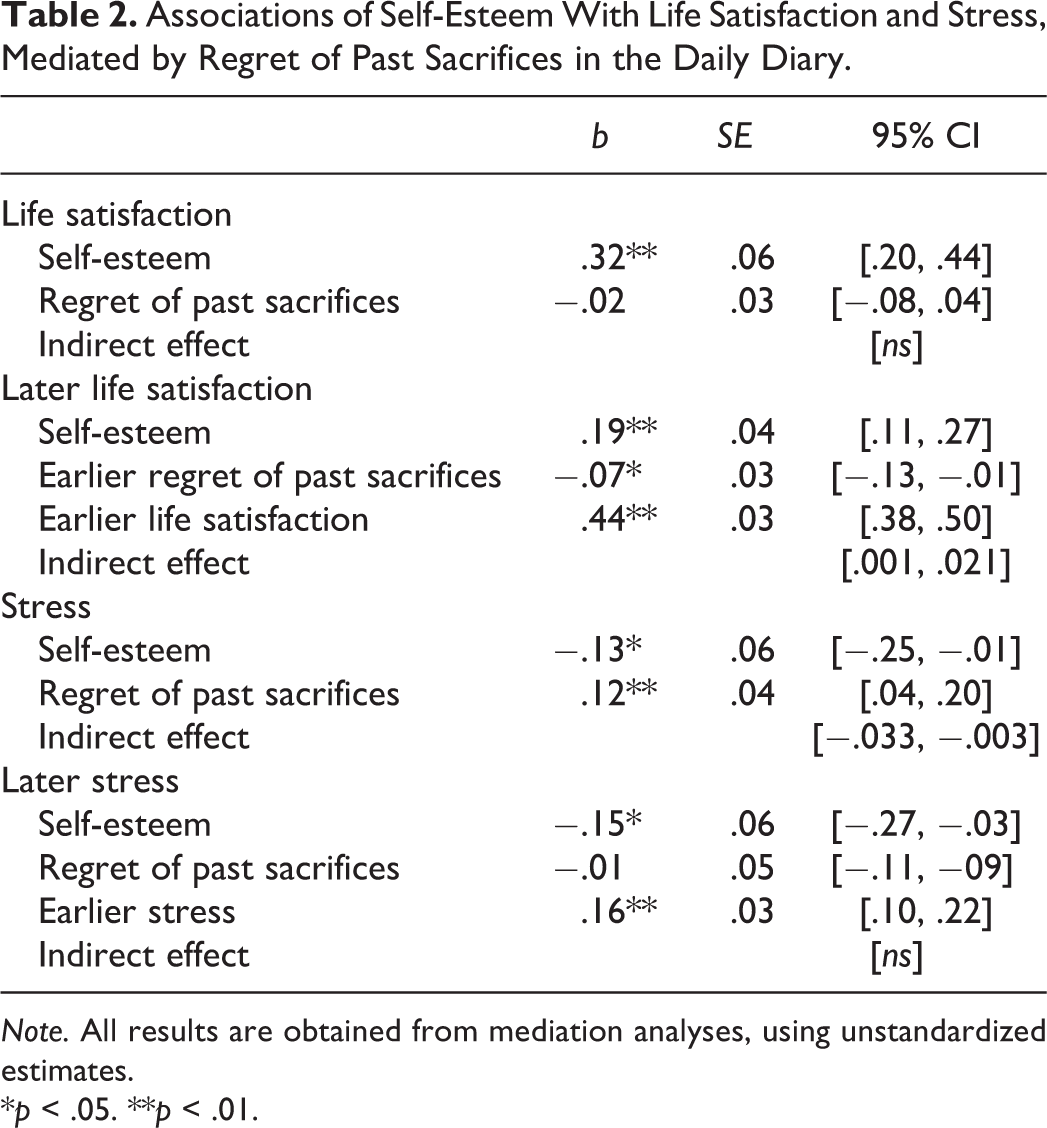
We further sought to investigate whether these effects would replicate in the diary part of the study, which represents a more global summary of the day. First, replicating the results of the experience sampling, self-esteem was negatively related to daily regret of sacrifice (b = −.13, SE = .05, 95% CI [.21, .45], p = .011), positively related to daily life satisfaction (b = .33, SE = .06, 95% CI [.21, .45], p < .001), and negatively related to daily stress (b = −.16, SE = .06, 95% CI [−.28, −.04], p = .009). Mediation analyses revealed that daily regret of sacrifice partially mediated the association between self-esteem and daily stress (see Table 2).
Associations of Self-Esteem With Life Satisfaction and Stress, Mediated by Regret of Past Sacrifices in the Daily Diary.
Note. All results are obtained from mediation analyses, using unstandardized estimates.
*p < .05. **p < .01.
Results of time-lagged regression analyses revealed that earlier daily regret of sacrifice marginally significantly predicted later daily life satisfaction when controlling for earlier life satisfaction (b = −.08, SE = .04, 95% CI [−.16, −.01], p = .067). These results were not significant for daily stress (b = −.01, SE = .05, p = .921). Furthermore, daily regret of sacrifice partially mediated the relationship between self-esteem and later life satisfaction when controlling for earlier life satisfaction (see Table 2). 4
Subsequently, we tested whether perception of partner support after a sacrifice was one of the mechanisms responsible for the association between self-esteem and regret of sacrifices. First, self-esteem was negatively related to perception of partner support on days when participants reported to have engaged in at least one sacrifice (b = .15, SE = .07, 95% CI [.01, .29], p = .048). Participants did not report on questions about past sacrifices (e.g., regret of past sacrifices) if they engaged in sacrifices that day. Therefore, we tested whether perceived partner support on days of sacrifice was related to regret of past sacrifices the following day. Results revealed a significant association (b = −.22, SE = .06, 95% CI [−.34, −.10], p < .001). Mediation analyses revealed that perceived support mediated the relationship between self-esteem and regret of past sacrifice assessed at the following day (see Figure 1). 5

Perceived support on days of sacrifice as a mediator of self-esteem and regret of past sacrifices the next day. All reported values are unstandardized estimates (b values), with their standard errors reported between brackets. *p < .05. **p < .01.
1-Year follow-up
Finally, we sought to investigate whether, for the participants who were still together with their partner (N = 189), the average regret experienced during the 8-day experience sampling study mediated the relationship between self-esteem and life satisfaction 1 year later. Time-lagged regression analyses were performed to answer this question. Self-esteem assessed at intake predicted changes in life satisfaction assessed 1 year later when controlling for life satisfaction assessed at intake (b = .15, SE = .07, 95% CI [.01, .29], p = .028). Furthermore, the weekly regret experienced in the experience sampling predicted changes in life satisfaction assessed 1 year later when controlling for life satisfaction assessed at intake (b = −.34, SE = .12, 95% CI [−.58, −.10], p = .005). Finally, the weekly regret of past sacrifices mediated the relationship between self-esteem and life satisfaction 1 year later while controlling for life satisfaction assessed at intake (indirect effect: 95% CI [.001, .051]; direct effect: b = .12, SE = .07, 95% CI [−.01, .25], p = .076; see Figure 2).
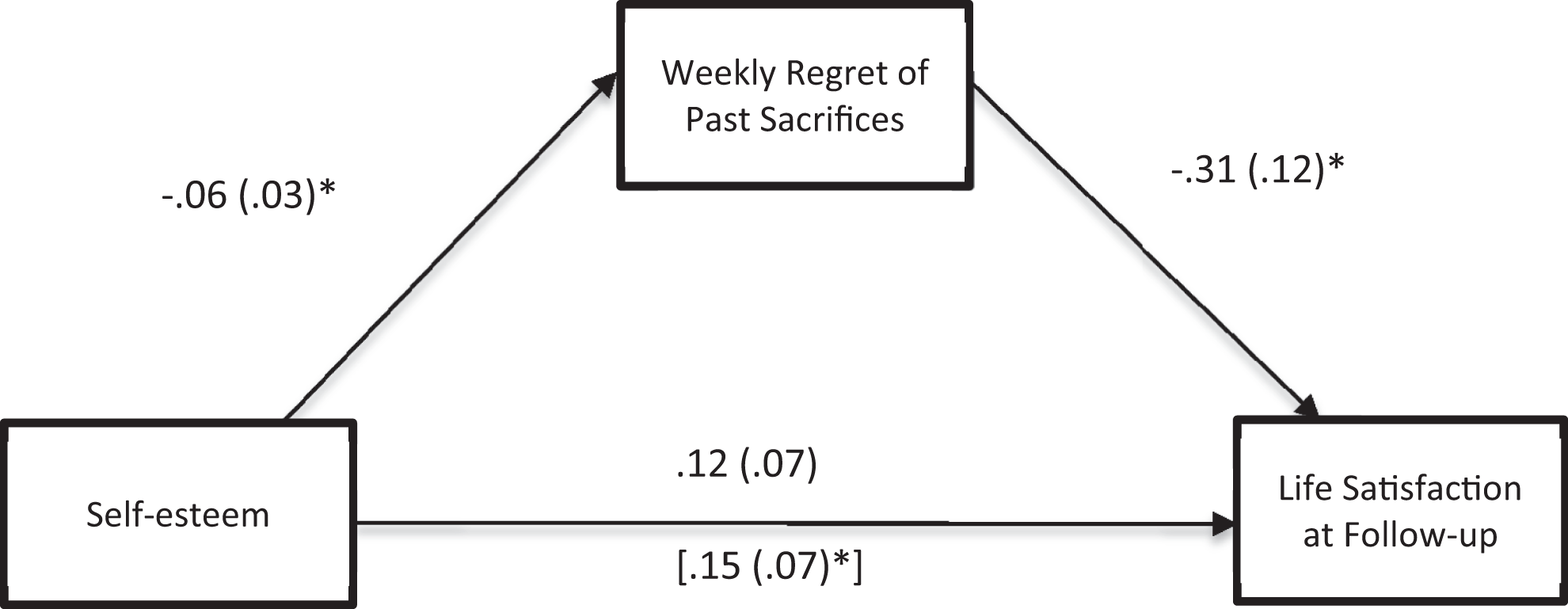
Weekly regret of past sacrifice as a mediator of self-esteem and life satisfaction at 1-year follow-up. All reported values are unstandardized estimates (b values), with their standard errors reported between brackets. This analysis controls for life satisfaction assessed at Intake. *p < .05. **p < .01.
Auxiliary analyses
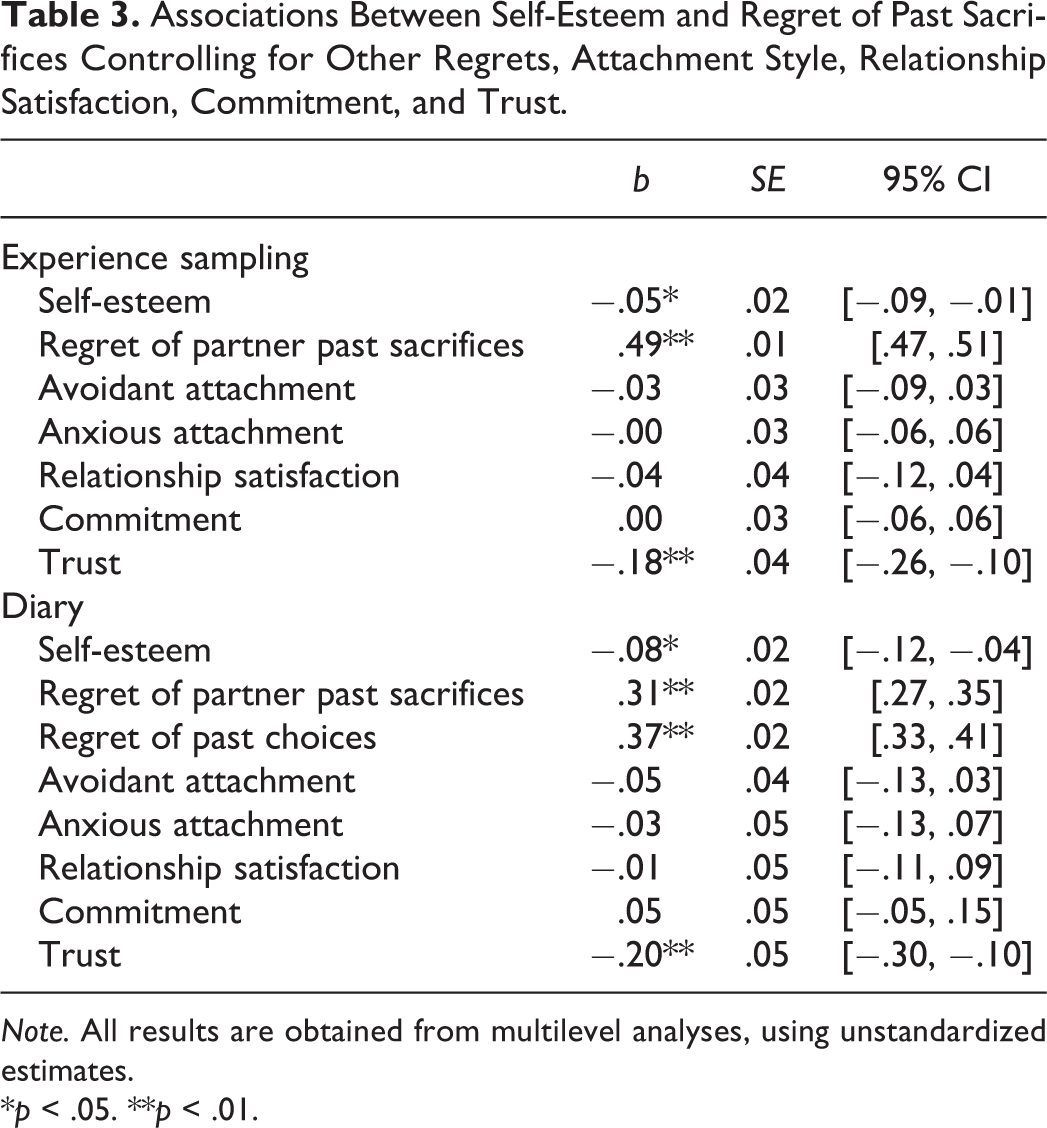
Is self-esteem specifically associated with regret of sacrifice above and beyond a general tendency to regret? Self-esteem remained significantly associated with regret of sacrifice in the experience sampling when controlling for regret of partner’s sacrifices and in the diary when controlling for regret of partner’s sacrifice and regret of choices in situations of divergence of interests. Further, is self-esteem related to regret of sacrifice above and beyond other related individual differences and relationship variables? Self-esteem remained significantly associated with regret of sacrifice in both the experience sampling and the diary when controlling for anxious and avoidant attachment styles, relationship satisfaction, commitment, and trust (see Table 3 for the full model with all the covariates). 6,7
Associations Between Self-Esteem and Regret of Past Sacrifices Controlling for Other Regrets, Attachment Style, Relationship Satisfaction, Commitment, and Trust.
Note. All results are obtained from multilevel analyses, using unstandardized estimates.
*p < .05. **p < .01.
Discussion
When people decide to sacrifice for their relationship, they put themselves in a vulnerable position. Their costly sacrifices could be ignored and unappreciated and the partner may not show any sign of support for this costly behavior. In a bihourly experience sampling, a daily diary and a 1-year follow-up study, our work showed that people who have low self-esteem, and who may be prone to perceive lack of support from their partner after having sacrificed, tend to regret to have sacrificed. Furthermore, regretting past sacrifices negatively affects mood, stress, and life satisfaction over time. Finally, we showed that self-esteem is not related to the outcome of the decision (whether to sacrifice or not), but it is only related to the counterfactual thinking and the emotional reaction of this decision. Thus, low self-esteem individuals sacrifice as much as high self-esteem individuals (albeit probably for different reasons), but low self-esteem individuals come to regret this behavior more often.
Our work contributes to the literature that shows the difficulties that low self-esteem individuals face in their relationship (e.g., Gaucher et al., 2012; Marigold et al., 2014; Murray et al., 2000; Murray, Rose, Bellavia, Holmes, & Kusche, 2002). Even when low self-esteem individuals decide to connect and give to the relationship, they feel that their actions have not been supported by their partner, thus they regret their actions and feel distressed. Previous research has also shown that low self-esteem individuals experience higher levels of almost all negative emotions and are more likely to have anxiety and depressive disorders (Leary & MacDonald, 2003). Our work showed that one of the reasons why low self-esteem affects well-being is that low self-esteem people tend to regret their sacrifices, probably because they are fearful of having given too much in the relationship while not perceiving support from their partner after this prosocial behavior.
Finally, we should acknowledge some strengths and limitations of this work. One limitation is that, although we conducted time-lagged regression analyses to see how regret of sacrifice predicted change over time in our indexes of well-being, causal claims should be taken cautiously as we did not use a controlled experimental procedure. Another limitation is that, although we have information on regret of sacrifice in most of the data points of the experience sampling and in many of the diaries, we did not gather this information in all the signals. It could be possible that low self-esteem individuals may experience feelings of regret not immediately after a sacrifice but after a certain time interval (which is what our data captured), when they had some time to perceive their partner’s lack of support in response to the sacrifice.
Several strengths of this work should also be acknowledged. First, the data were gathered in a labor intense study, which allowed us to replicate the findings using different measures and in the different parts of the study (bihourly experience sampling, daily diary, and follow-up assessment). Second, we performed time-lagged regression analyses to gain some information about whether our predictors influenced the outcomes over time. In this regard, it is remarkable that low self-esteem and the regret of sacrifice had an impact on life satisfaction 1 year afterward, showing the impact of this phenomenon for well-being.
Concluding Remarks
Having low self-esteem has many costs, not only for one’s sense of self but also for one’s close relationships. Low self-esteem individuals experience many difficulties in the interpersonal sphere as they are fearful and sensitive to rejection. When they decide to give up personal goals for the relationship, they are faced with doubts and regrets about their decision. The costs of a sacrifice may remain salient in contrast to the few interpersonal benefits that they perceive. Despite their regrets, low self-esteem individuals keep on making sacrifices, perhaps to avoid a conflict or out of fear of losing their partner. But their regrets make them slaves of the past and unhappy in the present.
Footnotes
Declaration of Conflicting Interests
The author(s) declared no potential conflicts of interest with respect to the research, authorship, and/or publication of this article.
Funding
The author(s) disclosed receipt of the following financial support for the research, authorship, and/or publication of this article: This research was supported by a grant from the Netherlands Organization for Scientific Research (No. 451-12-024) to Francesca Righetti.