




Abstract
The present research investigated how levels of anti-Black prejudice may influence differential perceived free-speech protections (FSPs) for hurtful acts targeting Black or White people. Because hate crime designation (HCD) requires evidence of a prejudice-motivated intention to harm individuals, we investigated how anti-Black prejudice and race of the target interact to influence HCD for the act and how greater perceived FSPs may predict less willingness to label the act a hate crime. Across two studies, anti-Black bias was associated with more perceived FSPs for Black-targeted acts, which predicted less HCD. Low anti-Black prejudice participants viewed Black- versus White-targeted acts as less protected by free-speech rights and more likely to be a hate crime. In Study 1 (but not Study 2), high anti-Black prejudice participants displayed the opposite pattern. This work holds implications for theories of motivated justification and psychological understanding of public discourse regarding free speech.
Because blatant racial discrimination has generally been socially unacceptable in the United States over the past 50 years, individuals often express racial bias against Blacks in subtle, rationalizable ways (Crandall & Eshleman, 2003; Dovidio, Gaertner, & Pearson, 2017). Justifying bias, in turn, can systematically provide social advantages to Whites while preventing legal penalties, social sanctions, or feelings of guilt that would be incurred if such behavior were recognized, by others or oneself, as racially motivated. Cultural values, such as freedom of speech, often serve as a way to justify bias because they are principles that are widely accepted and appear independent of race-related issues. The First Amendment of the U.S. Constitution states, “Congress shall make no law…abridging the freedom of speech,” and many people currently claim that expressions of racial bias should be protected under the First Amendment because freedom of speech is an essential element of democracy (Hongo, 2015; Lukianoff & Haidt, 2015). Although individuals may value free-speech rights for many reasons, the present research investigated the possibility that, under some conditions, the application of free-speech rights may be a motivated justification for bias. Consistent with this possibility, White and Crandall (2017) found that participants higher in anti-Black prejudice were more likely to perceive punishment of anti-Black derogatory comments as a violation of the right of free speech in order to preserve their own right to engage in similar behaviors in the future.
The present research extends previous work by investigating the responses of individuals high versus low in anti-Black prejudice toward hurtful acts directed at Black or White targets and considers implications for designating the act as a hate crime. A hate crime is a “criminal offense…motivated in whole or in part by an offender’s bias against a race, religion, disability, sexual orientation, ethnicity, gender, or gender identity” (Federal Bureau of Investigation, 2017) and carries an enhanced sentence with a conviction (Hate Crimes Act, 2009).
Whereas White and Crandall (2017) investigated responses to pejorative comments specifically about Blacks relative to remarks about other groups or individuals, the present research also studied how people respond to hurtful acts toward Whites. Examining responses to harm directed at both Black and White targets, both directly and in a relative way, helps illuminate the dynamics of racial bias more comprehensively than considering only discriminatory acts against Blacks. Also, investigating the potential for bias among people low in racial prejudice produces a fuller picture of social bias (Brandt, Reyna, Chambers, Crawford, & Wetherell, 2014).
Drawing on the justification-suppression model (Crandall & Eshleman, 2005; White & Crandall, 2017), in two studies, we hypothesized that because prejudice functions to support hierarchical race relations favoring White over Blacks (Dovidio, Hewstone, Glick, & Esses, 2010), higher prejudiced individuals would apply free-speech protections (FSPs) under the First Amendment systematically in response both to Black-targeted and to White-targeted acts, but in different ways. Consistent with previous findings (White & Crandall, 2017), we expected that for Black-targeted hurtful acts, individuals higher in anti-Black prejudice would be more likely to invoke freedom of speech under the First Amendment to protect such behaviors. When harmful acts were directed toward Whites, we hypothesized that individuals higher in anti-Black prejudice would be less likely to invoke FSPs.
Our design also enabled us to explore whether participants low in prejudice would apply FSPs equivalently to hurtful acts directed toward Blacks or toward Whites, a truly unbiased response, or would apply these protections less strongly when the act targeted Blacks than Whites. Low-prejudice participants might display this latter effect, for example, because of a motivation to compensate for past racial harms (Clayton & Opotow, 2003) or, as suggested by work on aversive racism (Dovidio et al., 2017), to affirm their nonprejudiced self-image by showing anti-White bias (Aberson & Ettlin, 2004).
We also investigated a potential consequence of this differential application of FSPs—designation of an act as a hate crime. Because a hate crime is defined as an action motivated by the “offender’s bias” (Federal Bureau of Investigation, 2017), to the extent that people legitimize the act as an expression of free speech they may be less likely to define the act as primarily racially motivated. Such a perception would reduce the likelihood that the act would be classified as a hate crime.
Study 1
In Study 1, participants read a short vignette describing an incident in which the perpetrator explicitly expressed negative group-based sentiments (often a determining factor in the legal classification of an act as a hate crime; Shively, 2005). We varied whether the act and the corresponding comment were about White or Black people. Because the severity of an incident is a legal factor in its designation as a hate crime (Hate Crimes Act, 2009), we also manipulated the severity of the act. We then measured the extent to which participants perceived the act as protected by the First Amendment, which states that Americans have freedom of speech, and the degree to which they classified the act as a hate crime.
We expected that participants in the United States would generally perceive high-severity compared to low-severity acts less as an expression of freedom of speech. Based on White and Crandall’s (2017) research, we further hypothesized that participants higher in anti-Black prejudice (Henry & Sears, 2002) would perceive harmful acts by a White person against Blacks as more protected by the First Amendment. Moreover, we predicted that, to the extent that the differential application of the principle of freedom of speech is motivated by higher prejudiced individuals’ support for race-based group hierarchy favoring Whites (Sidanius & Pratto, 1999), participants higher in anti-Black prejudice would also view acts harmful to Whites as less protected by free-speech rights.
We further explored the possibility that low anti-Black prejudice participants would, consistent with the assumption that low prejudice indicates a lack of bias, respond equivalently in their application of FSPs whether the act targeted Blacks or Whites. In addition, we hypothesized that to the extent that participants perceive a hurtful act as a legitimate expression of freedom of speech, they would less strongly designate the act as a hate crime. We also tested the alternative possibility that classifying the act as a hate crime would predict less perceived protection under the First Amendment.
Method
Participants
We modeled our power analysis on a moderate effect size based on the size of the interaction effects observed in Study 2 and Study 8 of White and Crandall (2017). Statistical power analysis using G*Power (Faul, Erdfelder, Buchner, & Lang, 2009) indicated that an n = 210 is required to test all main, interactive, and simple effects within a 2 × 2 × 2 factorial design with power of .95 and a medium effect size f = .25 (Cohen, 1988; Faul, Erdfelder, Lang, & Buchner, 2007). We recruited 200 Mechanical Turk (MTurk) workers with U.S. Internet Protocol (IP) addresses who were over the age of 18. However, 10 participants were removed for responses indicating that they did not attend to the materials, leaving a sample of 190. We note that Study 1 was thus underpowered not only because we fell short of the 210 participants identified by our power analysis but also because our design was actually a 2 × 2 with a continuous moderator, which requires more power because continuous moderators are normally distributed, leaving few observations in the tails of the distribution (McClelland & Judd, 1993). Demographic information and scores on key measures in Study 1 or Study 2 are presented in Table 1.
Studies 1 and 2 Participant Characteristics and Descriptive Statistics for Variables Used in Primary Analyses of Study 1 or Study 2.
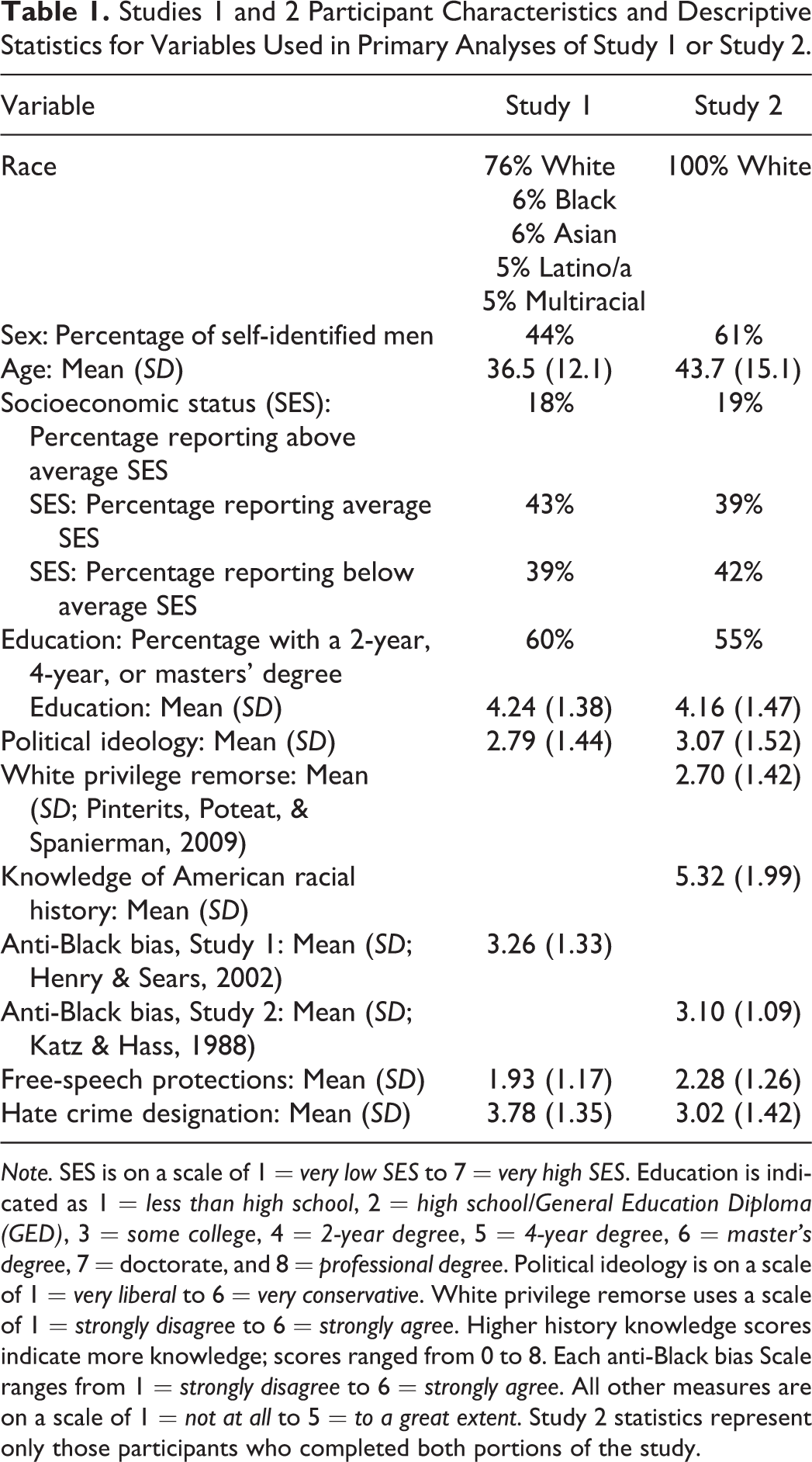
Note. SES is on a scale of 1 = very low SES to 7 = very high SES. Education is indicated as 1 = less than high school, 2 = high school/General Education Diploma (GED), 3 = some college, 4 = 2-year degree, 5 = 4-year degree, 6 = master’s degree, 7 = doctorate, and 8 = professional degree. Political ideology is on a scale of 1 = very liberal to 6 = very conservative. White privilege remorse uses a scale of 1 = strongly disagree to 6 = strongly agree. Higher history knowledge scores indicate more knowledge; scores ranged from 0 to 8. Each anti-Black bias Scale ranges from 1 = strongly disagree to 6 = strongly agree. All other measures are on a scale of 1 = not at all to 5 = to a great extent. Study 2 statistics represent only those participants who completed both portions of the study.
Procedure
After providing their informed consent, participants completed demographic items and reported their political ideology using a scale of 1 (very liberal) to 6 (very conservative). Four items (with response options from 1 = strongly disagree to 6 = strongly agree) from Henry and Sears’s (2002) measure assessed anti-Black bias, α = .90.
Participants then read one of the four vignettes, representing the factorial combinations of the manipulations of the severity of the incident (low vs. high) and the target of the action (Blacks vs. Whites). In the vignette, a 27-year-old man either hangs a papier-mâché effigy in a public park (low severity) or places a burning effigy on the front lawn of a family’s property (high severity). The race of the target of the act was varied by the name of the person performing the act and the note he left. When the incident was targeted at Black people, the person had a stereotypically White name (Wyatt) and left a note saying, “Get out of here, n**gers.” When the act was White-targeted, the person was described with a stereotypically Black name (Malik) and the note read, “Get out of here, White trash.” In each vignette, during questioning, the person admits to the act but says he should not be charged with a crime because “he was merely expressing his right to free speech.”
Next, to assess the extent to which people believed that the perpetrator’s actions should be protected by his free-speech rights (FSPs), participants indicated their agreement from 1 = not at all to 5 = to a great extent, to three questions: (a) “to what extent are [Name’s] actions protected by the First Amendment which states that Americans have freedom of speech?”; (b) “If [Name] faces a punishment for his actions (e.g., paying a fine, jail time), to what extent would that punishment be a violation of [Name]’s right to free speech?”; and (c) “to what extent do you agree with [Name] that he was just exercising his right to free speech?,” α = .90. Finally, participants read information about hate crime designations (HCDs) and answered, using a scale ranging from 1 = not at all to 5 = to a great extent, the question, “To what extent do you think [Name] should be charged with committing a hate crime?”
Results
All analyses reported were conducted using the full sample of 190 participants. In the Supplemental Material (SM) Section 5, we show these results hold when removing participants who identify as Black, or as any non-White racial group, from the sample. Preliminary analyses indicated no effects of the demographic variables—gender, age, socioeconomic status (SES), and education—on perceptions of FSPs or judgments of the act as a hate crime; they were excluded from subsequent analyses. Based on the work of Duarte et al. (2015), analyses included political ideology.
Our primary analyses in Study 1 included vignette type (0 = White target, 1 = Black target), act severity (0 = incident of low severity, 1 = incident of high severity), political ideology (centered with higher numbers indicating greater conservatism), and anti-Black bias (centered with higher numbers indicating greater anti-Black prejudice) as predictors in Step 1 of the regression model, all two-way interactions between predictors added at Step 2, three-way interactions included at Step 3, and the fully saturated model with the four-way interaction at Step 4 (Yzerbyt, Muller, & Judd, 2004). In this study (and in Study 2), if the hypothesized interaction between vignette type and anti-Black bias is not moderated by another predictor at subsequent steps in the model, we report the interaction at Step 2. If the interaction is moderated by another predictor, then we report the interaction at that step of the model.
Bivariate correlations appear in Table 2. Tables presenting the results at each step for both FSPs (Table S1 in SM) and HCD (Table S2 in SM) are in SM Section 1. All statistics associated with the reported analyses appear in Table 3. We note that for multiple linear regression, the standardized regression coefficient, β, is commonly used as a measure of effect size as an alternative to Cohen’s d (Kim, 2011; Nieminen, Lehtiniemi, Vähäkangas, Huusko, & Rautio, 2013; Statistical Solutions, 2013). A β of .10, .30, and .50 is considered a small, medium, and large effect size, respectively (Wuensch, 2015).
Study 1 Bivariate Correlations Between Anti-Black Bias, Political Ideology, Free-Speech Protections (FSPs), and Hate Crime Designation (HCD).

Study 1 Main Effects of Vignette Type and Act Severity and Interactive and Simple Effects of Vignette Type and Anti-Black Bias on Free-Speech Protections and Hate Crime Designation.

Note. Main effects and interactions (top half of table) are from Steps 1, 2, and 4 of the model containing vignette type, act severity, political ideology, anti-Black bias, and all two-way, three-way, and four-way interactions between variables. Simple effects (bottom half of table) are from Step 2 of the model containing vignette type, act severity, political ideology, anti-Black bias, vignette type × anti-Black bias, and vignette type × political ideology. T values and degrees of freedom for each step for each dependent variable are given in Table S3 in SM. Degrees of freedom for Step 3 of the simple effects model can be found in the title of Table S11 in SM. CI = confidence interval.
Free-Speech Protections
In the first step of the regression model, there was an effect of act severity, such that participants presented with the high- (vs. low-) severity vignette considered the act less protected by freedom of speech rights.
The predicted vignette type × anti-Black bias interaction was significant at Step 2 of the model and was not moderated by any other predictors in the remaining steps of the regression model (see Table 3 and Table S1 in SM).
We examined the vignette type × anti-Black bias interaction further, following the procedures recommended by Aiken, West, and Reno (1991). In these analyses, we controlled for the effects of act severity, a manipulated variable, as well as political ideology and its interaction with vignette type; see SM Section 2 for Steps 1 and 2 of this model. As expected (see Figure 1), when the vignette portrayed a Black-targeted incident, participants higher in anti-Black bias were significantly more likely to indicate that the perpetrator’s act was protected by his right to free speech. When the act was White-targeted, anti-Black bias did not predict FSPs. From an alternative perspective (see Table 3), high anti-Black bias participants (1 SD above the mean) perceived the events targeting Blacks as significantly more protected by freedom of speech rights compared to when the incident targeted Whites. By contrast, low anti-Black bias participants (1 SD below the mean) perceived the incident perpetrated by a White person toward Blacks as significantly less protected by freedom of speech than when it was a Black perpetrator targeting Whites.
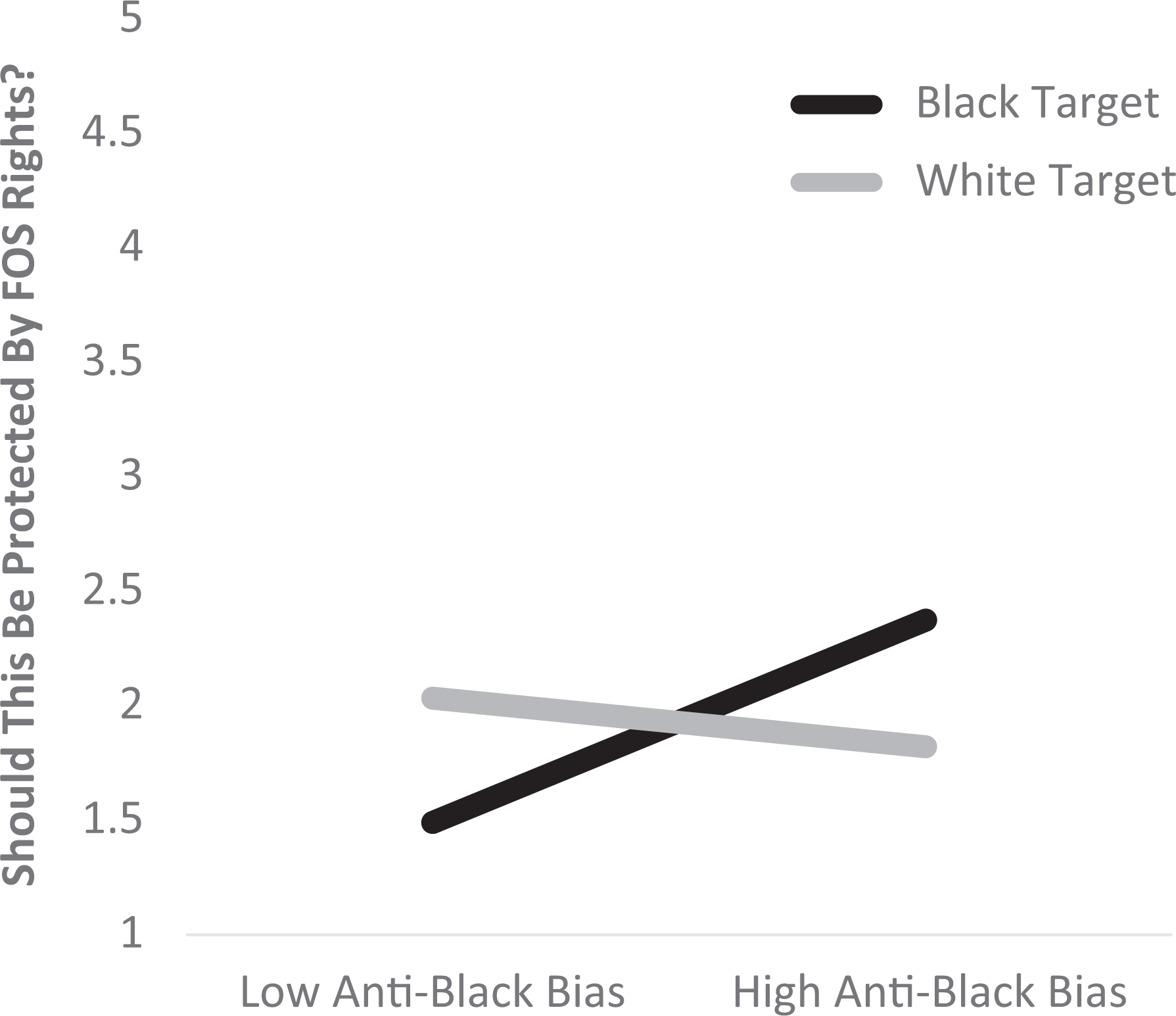
Study 1 vignette type × anti-Black bias interaction for free-speech protections.
Hate Crime Designation
As expected, the direct effect of act severity in Step 1 of the regression analysis was significant: Participants who read about the more severe crime were more willing to designate the act as a hate crime. Of primary relevance to the predictions, the vignette type × anti-Black bias interaction was significant at Step 2 and was moderated by political ideology in Step 3 (see SM Sections 1 and 9); the statistics reported in Table 3 are from this third step.
Paralleling the analysis for FSPs (Table 3), as predicted, participants higher in anti-Black bias labeled the Black-targeted act less strongly as a hate crime (see Figure 2). By contrast, for the White-targeted incident, those higher in anti-Black bias labeled the act more strongly as a hate crime. From a different view, participants high in anti-Black bias (+1 SD) rated the Black-targeted act as significantly less deserving of an HCD than a White-targeted incident. Those low in anti-Black bias (−1 SD) saw the Black-targeted (vs. White-targeted) incident as significantly more deserving of an HCD.
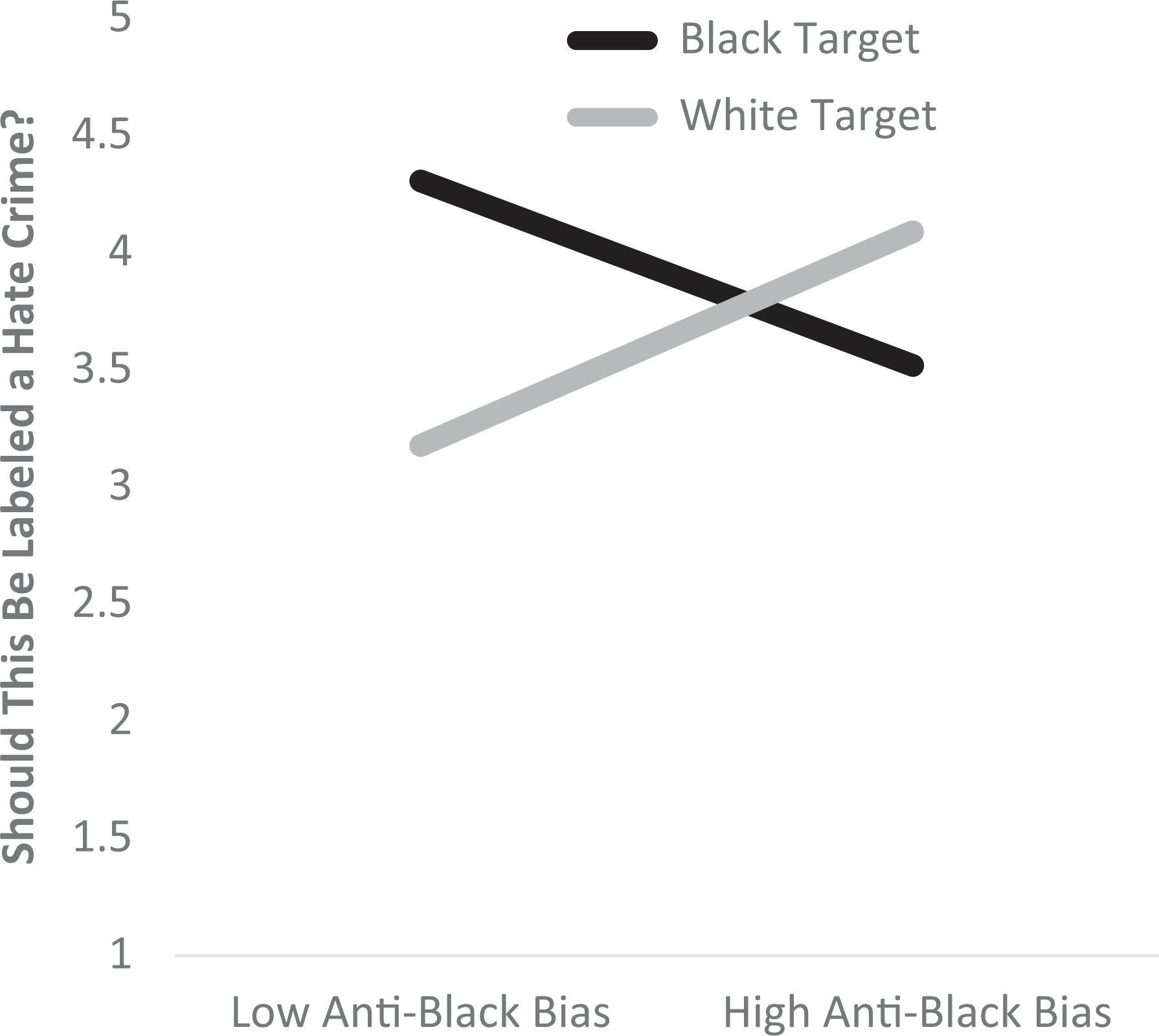
Study 1 vignette type × anti-Black bias interaction for hate crime designation.
Moderated Mediation
Overall, greater perception that an act was protected by freedom of speech predicted weaker designation of the act as a hate crime, b = −0.39, SE = .08, β = −.337, p < .001, 95% confidence interval (CI) [−0.54, −0.24]. Because we expected those low versus high in anti-Black bias to respond differently, we included anti-Black bias as a moderator. Based on work (White & Crandall, 2017) suggesting that people higher in anti-Black prejudice may apply FSPs more strongly for negative acts against Blacks, in our preferred model, we tested FSPs as a mediator and HCD as our dependent variable. Preacher and Hayes’ (2008) PROCESS macro (Model 8, 10,000 bootstraps, IV = vignette type, DV = HCD, mediator = FSPs, moderator = anti-Black bias, covariates = act severity, and political ideology) showed a significant mediating effect of perceived FSPs, b = −0.12, SE = .06, 95% CI[−0.26, −0.03]; see Figure 3. A model in which HCD mediates the effect on FSPs was also significant; b = 0.18, SE = .07, 95% CI[0.08, 0.34], see Figure S1 in SM.
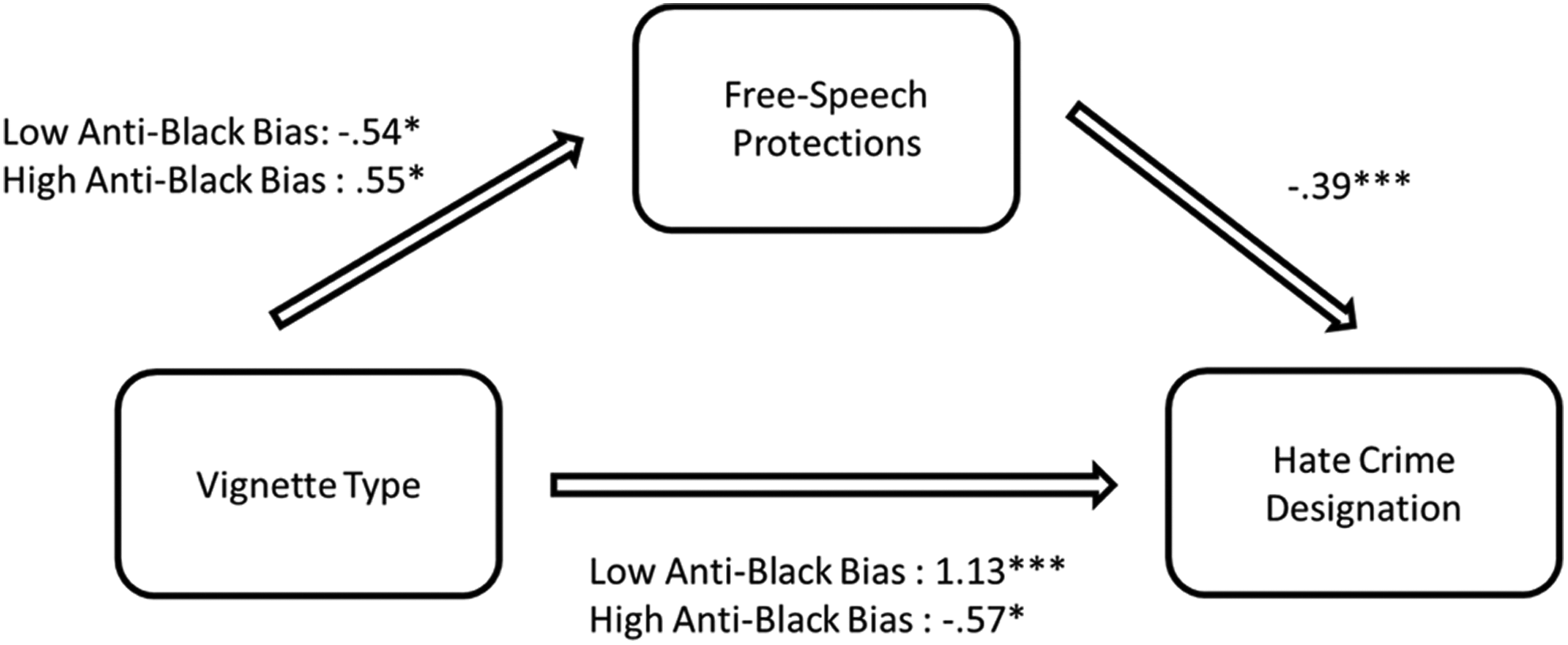
Study 1 moderated mediation model showing mediating role of free-speech protections on relationship between vignette type × anti-Black bias and hate crime designation.
Discussion
Consistent with White and Crandall (2017), participants higher in anti-Black prejudice perceived a hurtful act as more protected by free-speech rights under the First Amendment when the target was Black but, inconsistent with our expectations, anti-Black bias did not predict FSP when the target was White. We note, though, because Study 1 was somewhat underpowered, we may have lacked enough statistical power to uncover all significant relationships. As expected, high anti-Black prejudice participants perceived the incident as more protected by free-speech rights and less strongly as a hate crime when the hurtful act targeted Blacks than when it targeted Whites. Low anti-Black prejudice participants were not unbiased; they showed the opposite effect.
Thus, the motivated justification of acts may apply not only to those high in prejudice but also to the racial biases exhibited by individuals low in prejudice—in fact, as indicated in Table 3, low-prejudice participants displayed a stronger bias. The differences in the application of FSPs by high-prejudice participants (more so protecting Black-targeted acts) and by low-prejudice participants (more so protecting White-targeted acts) likely have different motivational bases. The effect for participants low in prejudice may have been stronger because they were responding to the immediate particularly negative consequence of the action for Black targets because of Blacks’ historical position in U.S. society, whereas the motivation for high-prejudice participants may be related to a more psychologically distant future protection of their ability to display bias (White & Crandall, 2017).
Extending previous work, in Study 1, perceptions of the act as protected by freedom of speech rights mediated judgments of the act as a hate crime. Although these findings are consistent with our hypotheses, we caution that because the mediation analyses used measured (i.e., not manipulated) variables, the direction of the relationship is not definitive (Spencer, Zanna, & Fong, 2005). Indeed, the reverse model in which HCD predicted FSPs was also significant.
Study 2
Study 2 was designed to conceptually replicate Study 1, modifying the stimulus materials, focusing specifically on White participants, and exploring further factors that could account for the Study 1 responses of low anti-Black bias participants. It is possible that participants low in anti-Black prejudice may have viewed the Black- versus White-targeted incidents within the context of the United States historical and contemporary discrimination against Blacks (Zdaniuk & Bobocel, 2011). This broader perspective and focus on macrojustice (Clayton & Opotow, 2003) may sensitize these individuals to the potential harmfulness of the act in light of the historical treatment of the group (Murrell, Dietz-Uhler, Dovidio, Gaertner, & Drout, 1994), leading them to view a hurtful incident against Blacks (vs. Whites) as less protected by freedom of speech rights and more representative of a hate crime. In Study 2, we thus considered the role of participants’ knowledge of American racial history and feelings of White privilege remorse (Pinterits, Poteat, & Spanierman, 2009) in understanding the responses of low anti-Black bias participants.
Study 2 consisted of two sessions. We measured participants’ anti-Black bias (using a different measure than that employed in Study 1) and explored a number of other individual differences in the first session (Time 1). In the second session over a week later (Time 2), participants read and responded to a modified version of the vignette used in Study 1. We manipulated whether or not the perpetrator mentioned his free-speech rights to test whether explicit mention of these rights was necessary to obtain the effects found in Study 1. FSPs and HCD were the main outcomes of interest.
Method
Participants
We initially recruited 404 MTurk workers over age 18, but only White individuals (n = 312) were selected to complete Time 1. As before, we estimated that a sample of 210 participants would be needed to test the effects within a 2 × 2 × 2 factorial design with 95% power and a medium effect size, f = .25. Because our design was actually a 2 × 2 with a continuous moderator, as we explained in Study 1, we aimed for a greater n than 210 to achieve 95% power. We recruited a larger sample in anticipation of attrition of 25% at Time 2. Six days later, we invited the 301 individuals who passed quality-control items to the second session. Of the 301, 263 (87.4% of the sample) completed the second session. The demographics of those who completed only Time 1 did not differ significantly from those who completed both sessions (whose characteristics are summarized in Table 1).
Procedure
At Time 1, participants completed demographic items and individual difference measures. We used a different measure of anti-Black bias (anti-Black attitudes; Katz & Hass, 1988) than that employed in Study 1 to examine the generalizability of our results. We measured White privilege remorse using a 6-item subset of Pinterits, Poteat, and Spanierman’s (2009) White Privilege Attitudes Scale (see Table S15 in SM) with responses ranging from 1 = strongly disagree to 6 = strongly agree). To assess participants’ understanding of America’s racial history, based on work by Nelson, Adams, and Salter (2013) and Theoharis (2016), we developed an 8-item quiz. Participants responded to a series of statements (see Table S16 in SM); the number of correct responses was summed to create participants’ history knowledge score. See SM Section 6 for additional, exploratory measures.
Six to 19 days later, participants were invited to complete Time 2. We controlled for perceived SES of the perpetrator by choosing two names (Figlio, 2005) that differed in perceived Blackness but not in perceived SES. To address differential offensiveness of racial slurs, we had the signs refer to “White people” or “Black people.” We also manipulated whether or not the perpetrator denied his guilt during questioning by invoking his First Amendment rights to isolate any effects of this information. In the comparison vignette, he says he is not guilty of a crime because he was on public property.
Next, participants responded (1 = not at all to 5 = to a great extent) to a slightly modified set of four items (see SM Section 6) measuring perceived FSPs of the act, α = .91. The same item from Study 1 measured HCD.
Results
Listwise deletion was used for variables with missing responses; less than 1% of all responses were missing. Preliminary analyses indicated an effect of education on one or more dependent variables, so it was included in all analyses. Otherwise, our analysis strategy was identical to the one used in Study 1. Bivariate correlations appear in Table 4; the results at each step for FSPs (Table S5 in SM) and HCD (Table S6 in SM) are presented in SM Section 1. All statistics associated with the reported analyses appear in Table 5.
Study 2 Bivariate Correlations Between Anti-Black Bias, Political Ideology, Education, White Privilege Remorse, History Knowledge, Free-Speech Protections (FSP), and Hate Crime Designation (HCD).
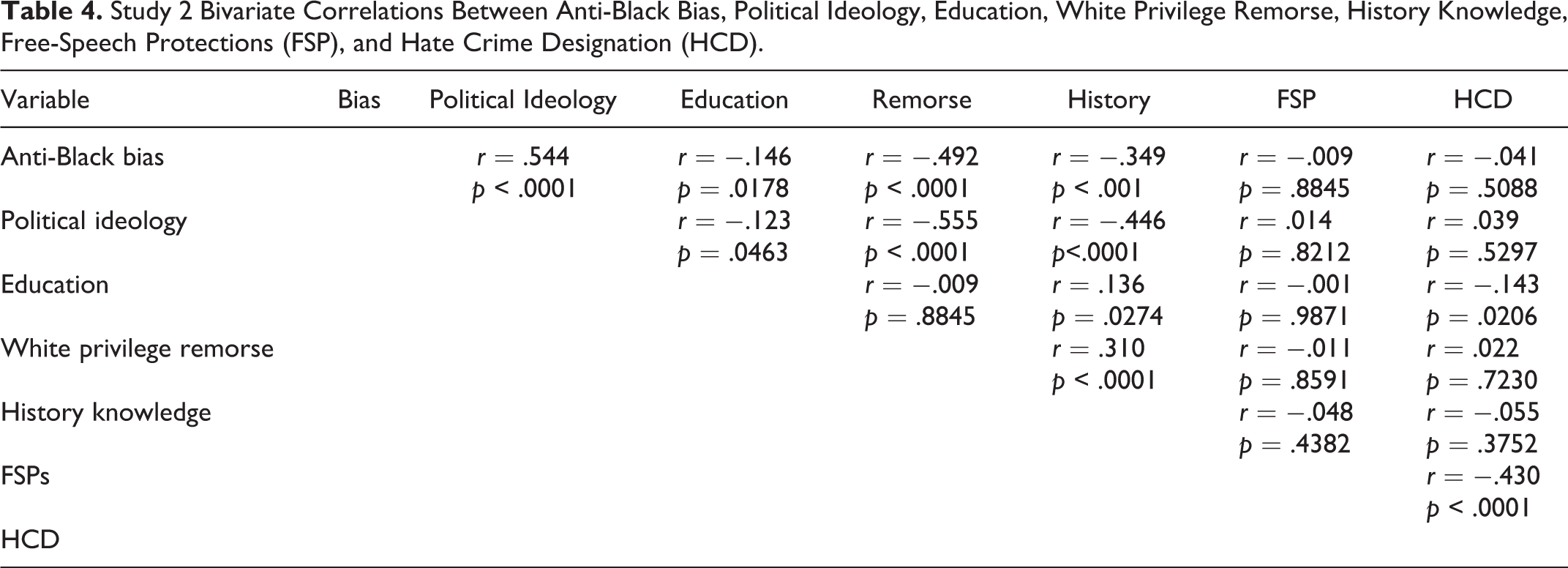
Study 2 Main Effects of Vignette Type, Education, and FOS Mention; Interactive and Simple Effects of Vignette Type and Anti-Black Bias on Free-Speech Protections and Hate Crime Designation.
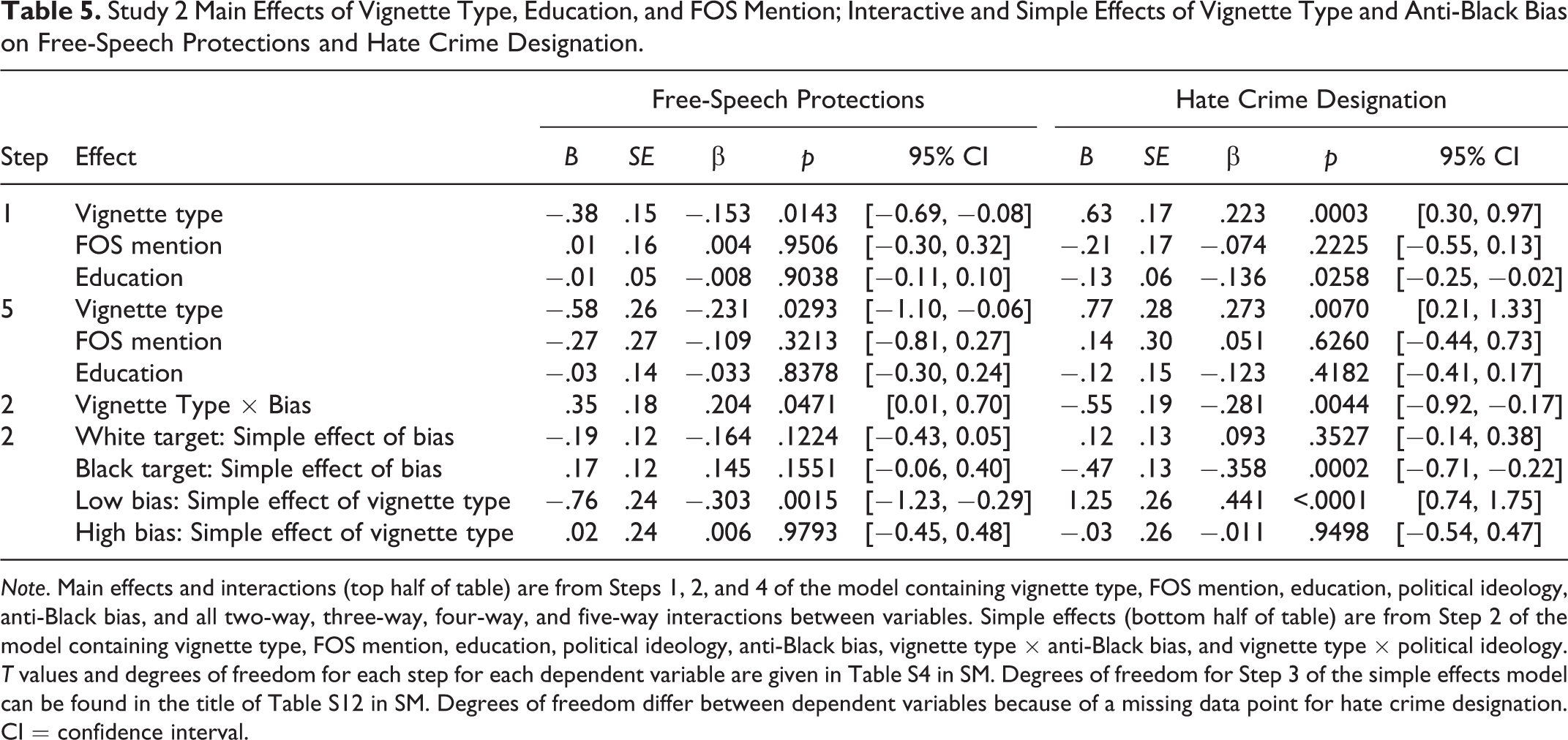
Note. Main effects and interactions (top half of table) are from Steps 1, 2, and 4 of the model containing vignette type, FOS mention, education, political ideology, anti-Black bias, and all two-way, three-way, four-way, and five-way interactions between variables. Simple effects (bottom half of table) are from Step 2 of the model containing vignette type, FOS mention, education, political ideology, anti-Black bias, vignette type × anti-Black bias, and vignette type × political ideology. T values and degrees of freedom for each step for each dependent variable are given in Table S4 in SM. Degrees of freedom for Step 3 of the simple effects model can be found in the title of Table S12 in SM. Degrees of freedom differ between dependent variables because of a missing data point for hate crime designation. CI = confidence interval.
Free-Speech Protections
The predicted vignette type × anti-Black bias interaction was significant at Step 2 of the regression model and was not moderated by other predictors at subsequent steps (see Tables 5 and Table S3 in SM).
In the analyses examining this interaction further (see Table 5 and Figure 4), we controlled for the effect of the manipulated variable, freedom of speech (FOS) mention, and the effects of education, political ideology and vignette type × political ideology. Anti-Black bias was somewhat, but not significantly, associated with viewing the Black-targeted act as more protected by free-speech rights. When the act targeted Whites, anti-Black bias did not predict protection by free-speech rights. Participants high in anti-Black bias (+1 SD) did not differentiate between the two vignettes; those low in anti-Black bias (−1 SD) saw Black-targeted acts as significantly less protected by freedom of speech than White-targeted acts. To test whether White privilege remorse and history knowledge accounted for this effect, we added these variables and their interactions with vignette type at Step 4 of the model. None of the variables or interactions were significant (ps > .7079) and the effect of vignette type for low anti-Black bias participants persisted, b = −0.75, SE = .25, β = −.300, p = .0028, 95% CI[−1.24, −0.26], see SM Section 7 for details.
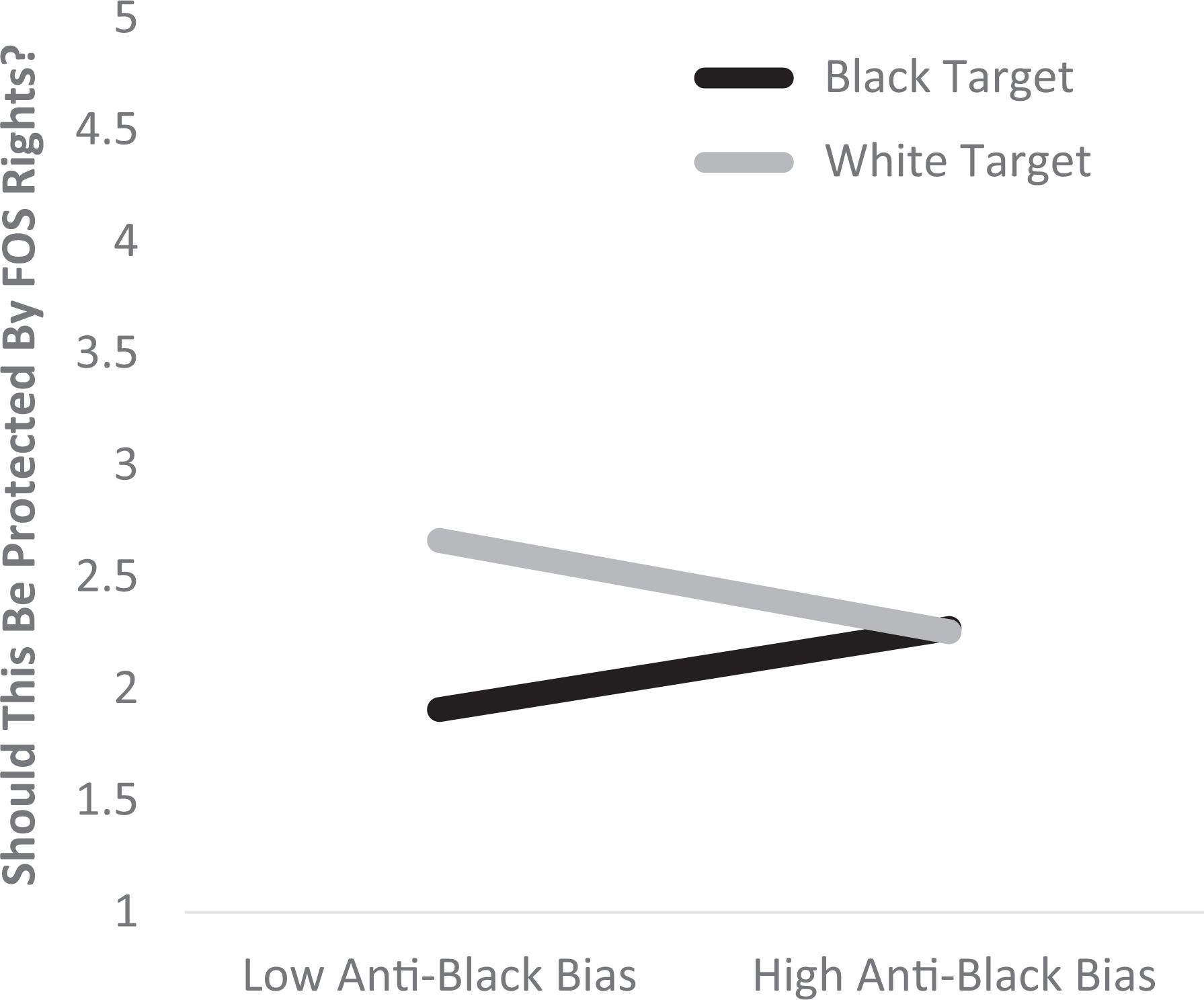
Study 2 vignette type × anti-Black bias interaction for free-speech protections.
Hate Crime Designation
There was an effect of education at Step 1, such that those with more education were less willing to label an act as a hate crime. Of primary relevance to the predictions, the vignette type × anti-Black bias interaction was significant at Step 2 and was not moderated by other predictors at subsequent steps (see Table 5).
Paralleling the analysis for FSPs, as predicted, anti-Black bias was associated with less willingness to designate the Black-targeted act as a hate crime; there was no effect of anti-Black bias for the White-targeted incident (see Figure 5). Participants high in anti-Black bias did not differentiate between the two vignettes; those low in anti-Black bias rated White-targeted acts versus Black-targeted acts as more deserving of an HCD. As before, White privilege remorse and history knowledge had no main or interactive effects (ps > .1582) and did not alter the effect of vignette type for low anti-Black bias participants, b = 1.16, SE = .26, β = .410, p < .0001, see SM Section 7 for details.
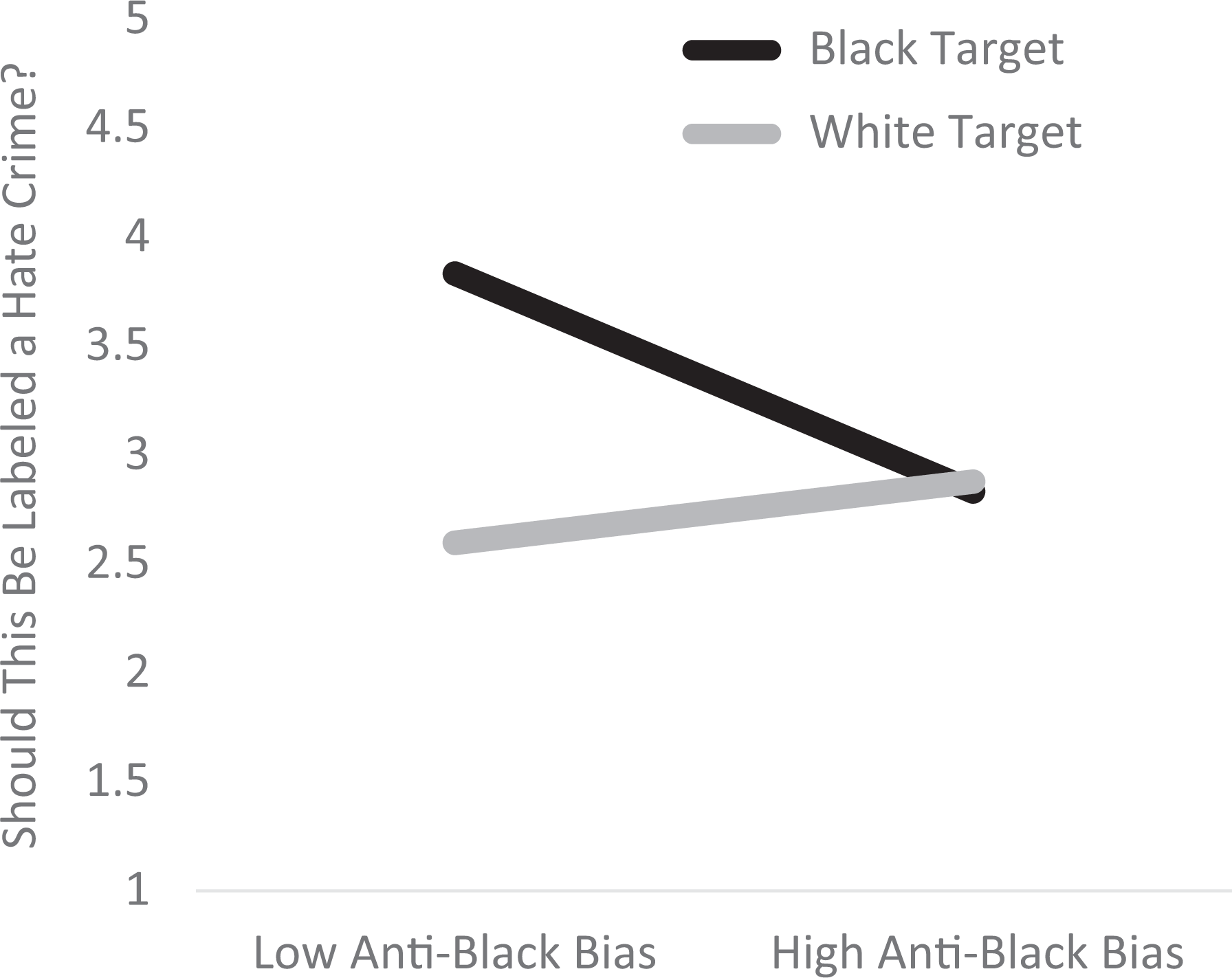
Study 2 Vgnette Type × Anti-Black Bias interaction for hate crime designation.
Moderated Mediation
Replicating Study 1, using the same Preacher and Hayes (2008) Model 8 with 10,000 bootstraps (covariates: FOS mention, education, and political ideology), the effect of vignette type × anti-Black bias on HCD was mediated by FSPs, b = −0.16, SE = .06, 95% CI[−0.30, −0.05], see Figure S2 in SM. A model in which HCD mediates the effect on FSPs was also significant, b = 0.24, SE = .07, 95% CI[0.13, 0.40], see Figure S3 in SM.
Discussion
As with Study 1, in Study 2, anti-Black bias significantly moderated the application of freedom of speech rights for White- versus Black-targeted incidents, which mediated their designation as hate crimes. Moreover, the vignette type × anti-Black bias interactions were driven more strongly by participants low in prejudice than by those high in prejudice. In fact, in Study 2, only participants low in anti-Black bias were significantly influenced by vignette type—perceiving the White-targeted action as more protected by free-speech rights and less as a hate crime than the Black-targeted act. These results cannot be explained by participants’ feelings of remorse regarding their White privilege or by participants’ knowledge of past harms inflicted upon Black people (Zdaniuk & Bobocel, 2011).
General Discussion
Although individuals may have many reasons for invoking free-speech rights to protect harmful acts, the current research focused on how racial prejudice and racial context may affect the degree to which individuals apply these rights. Across two studies, anti-Black prejudice was positively associated with the tendency to perceive hurtful acts directed toward Blacks as more protected by freedom of speech rights (consistent with White & Crandall, 2017) and less as a hate crime. Anti-Black bias did not predict perceptions of White-targeted hurtful acts.
Consistent with the proposition of White and Crandall (2017) that FSPs may be applied strategically by higher prejudiced individuals to permit subsequent bias, we found that perceiving the act as more protected by freedom of speech rights mediated participants viewing the act less as a hate crime. However, more definitive evidence would require, in future research, directly manipulating the mediator and testing its effect on HCD (Spencer et al., 2005).
The different effects observed for anti-Black prejudice in Studies 1 and 2 may be due, in part, to the different prejudice scales used. The Katz and Hass (1988) scale measures a more overt form of bias than does the Henry and Sears (2002) scale. Moreover, although MTurk samples are often more representative of the general U.S. population than are college student samples, like college student samples (Henry, 2008), they tend to be less conservative (Levay, Freese, & Druckman, 2016) and lower in anti-Black prejudice (Sears & Henry, 2003). Thus, MTurk participants scoring relatively high on the Katz and Hass (1988) scale in Study 2 may be only moderately biased compared to the general public. The skewed distribution in racial attitudes among MTurk samples, which limits the representation of people high in prejudice compared to the general public, may also help explain why the effects we obtained for participants who were relatively high in prejudice in the sample were generally weaker than those who were relatively low in prejudice. Future research might further pursue this issue by using a representative sample and measuring the more modern, subtle prejudice (Henry & Sears, 2002).
The inclusion of the White-targeted act in our design reveals additional dynamics beyond those observed by White and Crandall (2017). Specifically, low-prejudice participants rated the act as less protected by freedom of speech rights and more strongly as a hate crime when the target was Black versus White. As we suggested previously, perhaps because low-prejudice participants were more concerned about the immediate impact of the incident rather than its implications for the future, the effects of target race were stronger for low-prejudice than for high-prejudice participants.
White privilege remorse and knowledge of historical racism did not account for low-prejudice participants’ behavior in Study 2, but an interpretation emphasizing an alternative immediate impact may be possible. Specifically, the clear racial focus of the vignette may make the nonprejudiced motivations of self-identified low-prejudice participants highly salient, prompting them to affirm their egalitarian standards (Dovidio et al., 2017; Gaertner & Dovidio, 1986). In particular, they may systematically respond more positively to Blacks than to Whites (Mannes & Foster, 2016) and exhibit a bias favoring Blacks over Whites. To test this explanation, low-prejudice participants in future research could be given an opportunity to reaffirm their egalitarian values (Effron, Miller, & Monin, 2012), possibly leading them to show less pro-Black bias (Effron & Conway, 2015).
Overall, the present work holds both theoretical and practical implications, providing a psychological lens through which the distinct reactions to publicized White-targeted (Treisman, 2017) and Black-targeted (Beinart, 2017) incidents can be understood and informing current debates about the application of freedom of speech rights (McLaughlin, 2017).
Supplemental Material
Supplemental Material, SPPS748728_suppl_mat - Hate Speech Is in the Eye of the Beholder: The Influence of Racial Attitudes and Freedom of Speech Beliefs on Perceptions of Racially Motivated Threats of Violence
Supplemental Material, SPPS748728_suppl_mat for Hate Speech Is in the Eye of the Beholder: The Influence of Racial Attitudes and Freedom of Speech Beliefs on Perceptions of Racially Motivated Threats of Violence by Gina Roussos and John F. Dovidio in Social Psychological and Personality Science
Footnotes
Declaration of Conflicting Interests
The author(s) declared no potential conflicts of interest with respect to the research, authorship, and/or publication of this article.
Funding
The author(s) received no financial support for the research, authorship, and/or publication of this article.

Supplemental Material
The supplemental material is available in the online version of the article.
References
Supplementary Material
Please find the following supplemental material available below.
For Open Access articles published under a Creative Commons License, all supplemental material carries the same license as the article it is associated with.
For non-Open Access articles published, all supplemental material carries a non-exclusive license, and permission requests for re-use of supplemental material or any part of supplemental material shall be sent directly to the copyright owner as specified in the copyright notice associated with the article.
