



Abstract
Viral outrage—the piling up of online condemnation in response to offensive remarks—is a common expression of moral judgment in the digital age. We examined whether viral outrage is effective in convincing observers that an offender is blameworthy. Across seven studies, participants (N = 3,406) saw racist, sexist, or disrespectful posts with accompanying expressions of outrage and evaluated the offender. As more people expressed outrage, observers believed it was more normative to express condemnation but also felt that the outrage was more excessive, thus inspiring both more outrage and more sympathy toward the offender. Greater outrage increased condemnation toward the offender; greater sympathy decreased it. These two processes operated in opposition and suppressed one another. These findings held even when the offense was relatively benign and even when the offender was a high-status public figure. Overall, people’s ambivalent reactions of outrage and sympathy limit the influence of viral outrage in inspiring condemnation.
The public expression of moral outrage clarifies and shapes what a society deems acceptable or inappropriate (Batson & Shaw, 1991; Erikson, 1966; Haidt, 2003; Rozin, Lowery, Imada, & Haidt, 1999). Expressing moral outrage—a combination of anger and disgust at the violation of a moral standard (Salerno & Peter-Hagene, 2013)—communicates to others that the violator is reprehensible (Crockett, 2017). If one individual’s outrage can elicit condemnation in observers, the outrage of a group should be even more convincing. This may be one motivation behind viral outrage, where an individual’s offensive remark inspires online condemnation from thousands, sometimes millions (Ronson, 2015). Participants in such viral outrage likely hope to raise awareness about the targeted transgression, inspiring more outrage, and convincing observers that the offender is blameworthy and deserving of punishment. In contrast, the present article highlights the limitations of viral outrage as a tool to inspire condemnation of offenders because ironically the piling up of reproach also leads to sympathy for the target, counteracting outrage.
People in Internet-saturated societies are more likely to learn about immoral acts online than in person or through traditional media outlets (Crockett, 2017; Hoffman, Wisneski, Brandt, & Skitka, 2014). Social media has changed the face of moral outrage, enabling outrage at a single individual to be echoed indefinitely through cyberspace (Brady, Wills, Jost, Tucker, & Van Bavel, 2017). Moral outrage can, for example, take the form of hundreds of tweets condemning a racist joke (Clemons, 2016) or comments criticizing an unpatriotic Facebook photo (Ronson, 2015). This potential virality is a distinguishing feature of moral outrage in the digital age, but psychological research has yet to fully investigate its consequences. In prior research, we demonstrated that individuals who participate in viral (vs. nonviral) outrage are evaluated more negatively by third-party observers (Sawaoka & Monin, 2018). Whereas this earlier work focused on perceptions of those who participate in viral outrage, here we turn instead to perceptions of the offenders who are targets of viral outrage.
Does Observing Viral Outrage Inspire Outrage or Sympathy?
One benefit of viral outrage could be that it democratizes moral progress, letting anyone play a role in social justice. Viral outrage has targeted a wide range of alleged offenders such as students, celebrities, or politicians (Clemons, 2016; Kang, 2014; Rosenberg, 2017). Research on the power of conformity (Asch, 1956) and social proof (Cialdini, 1993) suggests that such public manifestations of outrage would sway people’s opinions in the same direction. As more people express outrage, others should perceive a norm of condemnation toward the offender and experience greater outrage themselves. This should lead observers to blame offenders more by inflating attributions of intentionality (Ditto, Pizarro, & Tannenbaum, 2009), elevating perceptions of moral agency (Gray & Wegner, 2009, 2011), and recommending more severe punishment (Carlsmith, Darley, & Robinson, 2002; Tetlock, Kristel, Elson, Green, & Lerner, 2000).
However, accounts of viral outrage often elicit a decidedly different emotion: sympathy. After a woman’s racially insensitive joke was met with viral outrage, a journalist argued that the woman “didn’t deserve to be treated like a monster” (Goldberg, 2013). Another wrote, “I unexpectedly find myself feeling sorry for her” (Wallenstein, 2013). Others echoed these sentiments, characterizing viral outrage as cruel and excessive punishment and its recipients as victims worthy of sympathy (Ronson, 2015). Thus, viral outrage may also have an effect directly opposite to its intended purpose, leading people to feel more sympathy for the offender—potentially reducing condemnation.
Overview
This article presents every study we conducted on this project, as documented in our registration record (https://osf.io/d 3 cmg/). Across seven studies, participants saw offensive social media posts inspired by real viral posts, and we manipulated the number of outraged reactions to operationalize viral (vs. nonviral) outrage. In the nonviral outrage condition, participants read 2 responses, whereas in the viral outrage condition they read 10. Although viral posts often receive thousands of responses, minimal manipulations of independent variables offer more conservative tests of hypothesized effects (Prentice & Miller, 1992).
Based on previous work (Sawaoka & Monin, 2018), we initially registered the simple hypothesis (Hypothesis 1) that viral outrage would increase sympathy for an offender and paradoxically reduce condemnation and tested this prediction in Study 1. When we found little support for a drop in condemnation despite observing the predicted increase in sympathy, we reformulated our hypothesis to include the counteracting force of social proof (Hypothesis 2; Figure 1) and measured this new process in Studies 2a–2c, allowing us to test for suppression (Hypothesis 3), meaning that the process of social proof emerges more strongly when statistically controlling for the process of disproportionate punishment or vice versa. We then tested whether we could alter these processes by making the offense relatively benign, to limit outrage (Study 3), or by making the offender high status, to limit sympathy (Study 4). Finally, we tested the gap between people’s own reaction to viral outrage and the reaction they expect from others (Study 5).
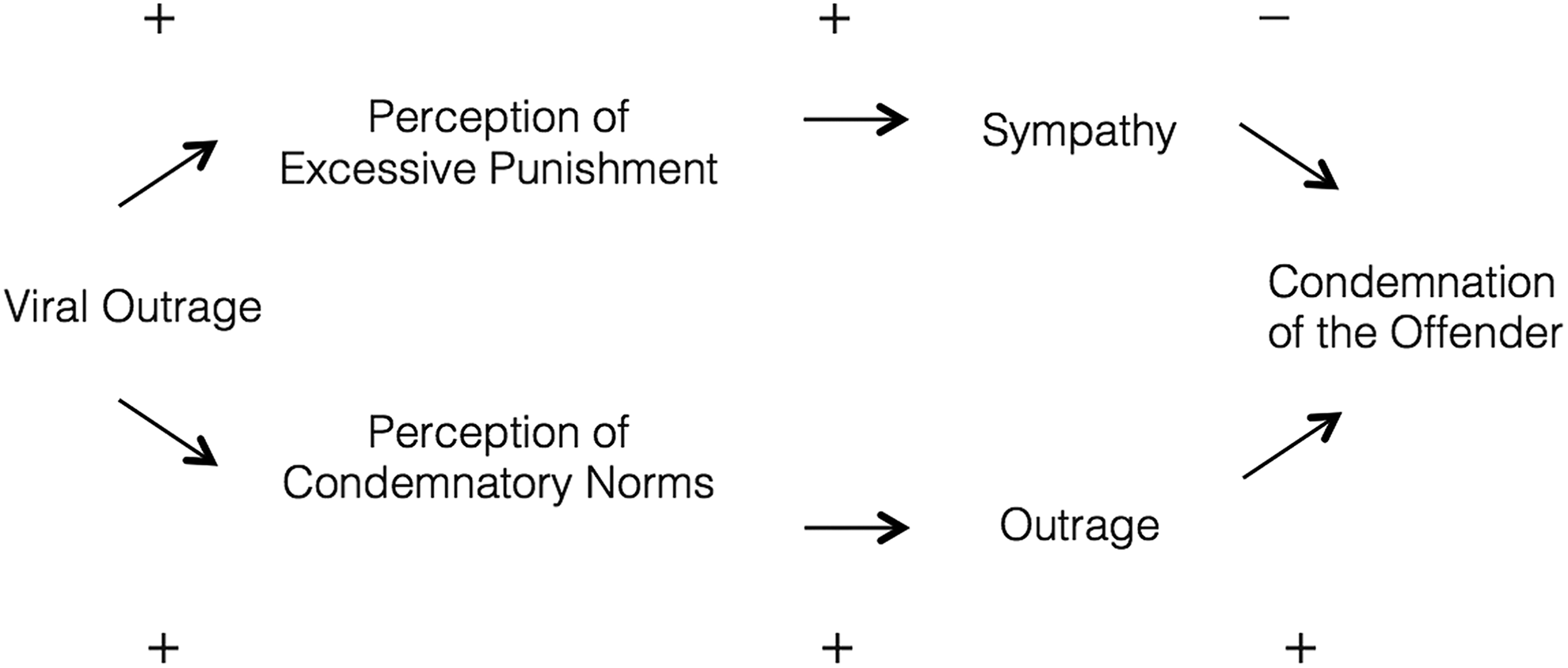
Proposed processes of disproportionate punishment (top, Hypothesis 1) and social proof (bottom, Hypothesis 2). Statistically, these two proposed processes would suppress one another (Hypothesis 3): The process of social proof should emerge when controlling for the process of disproportionate punishment or vice versa.
Method
Sample sizes, methods, predictions, and analytical strategies were preregistered for all studies in this article. Our preregistrations and data are available on the Open Science Framework. We report all measures, conditions, and data exclusions. Across studies, target sample sizes were determined a priori at n = 200 per cell (before participant exclusions), which quadruples the minimum target sample size recommended by Simmons, Nelson, and Simonsohn (2013), and provides a power above 80% if the effect size is d = .28 or higher. 1 We always excluded participants whose IP address appeared more than once. We note that although some methods described in these studies are similar to those employed in Sawaoka and Monin (2018), the studies in the present article are based on entirely new samples.
Study 1
We started this project hypothesizing only that viral outrage would reduce condemnation (process of disproportionate punishment; Hypothesis 1) based on earlier work finding that individual commenters are perceived more negatively as outrage goes viral (Sawaoka & Monin, 2018).
Method
Participants
Participants (n = 399; 182 women; mean age = 35.84, SD = 14.48) were recruited through Mechanical Turk. Duplicate IP addresses were excluded (n = 4), leaving 395 participants.
Procedure
Participants viewed a social media post (Figure 2) taken from a real story (Clemons, 2016) in which a White student pictured herself with black tape on her face and joked about fitting into her historically black college. We did not use the student’s real name and used the fictional name “Janet.” Participants indicated how offensive and funny (1 = not at all to 7 = very) they found this post; these 2 items were averaged (“funny” was reverse-coded) into an index of perceived offensiveness. Participants then read responses condemning this post (Figure 3), inspired by real, outraged comments at the time of the incident. We created 10 such comments. In the viral outrage condition, participants read all 10, whereas in the nonviral outrage condition, participants read 2 randomly sampled responses. In both conditions, we specified that these were all of the responses that the post received. Participants then completed a battery of measures.

The offensive stimulus used in Studies 1, 2a, and 2b.

Examples of outrage stimuli in Studies 1, 2a, and 2b. The specific comments were sampled randomly for each participant, with each comment always matched to the same name and profile picture.
Measures
We provide a full list of our mediators and dependent measures (Table 1). Note that measures for the process of social proof, which were included from Study 2a onward, were not measured in Study 1.
List of Mediators and Dependent Measures Collected Across Studies 1–4.
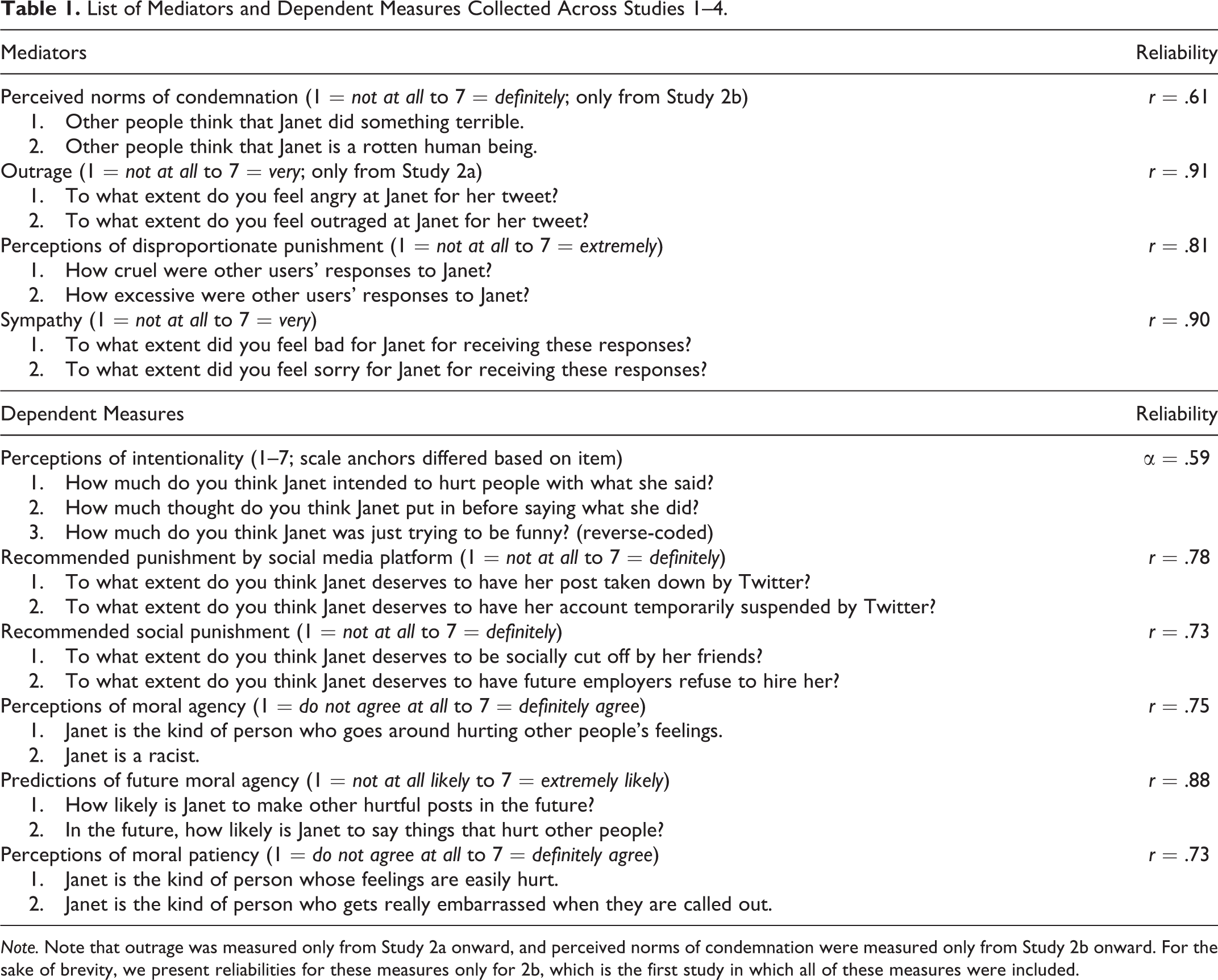
Note. Note that outrage was measured only from Study 2a onward, and perceived norms of condemnation were measured only from Study 2b onward. For the sake of brevity, we present reliabilities for these measures only for 2b, which is the first study in which all of these measures were included.
Results
Perceived Offensiveness
The original transgression was rated moderately offensive (M = 5.67, SD = 1.66), regardless of condition, p = .832.
Condemnation Composite
Our dependent measures were correlated with one another, rs > .38, with the exception of moral patiency. Moreover, across studies, our analyses were largely consistent across measures. This is in line with our preregistration, in which we made the same predictions for all of our dependent measures except moral patiency. To make our results more accessible for readers, in the main text we report our primary analyses using an 11-item composite of these dependent measures (α = .91), with the exception of moral patiency. We conceptualize this composite measure as condemnation toward the offender. However, we also report full analyses separately for each of our dependent measures (see Supplemental Materials) as preregistered. Both analyses are consistent.
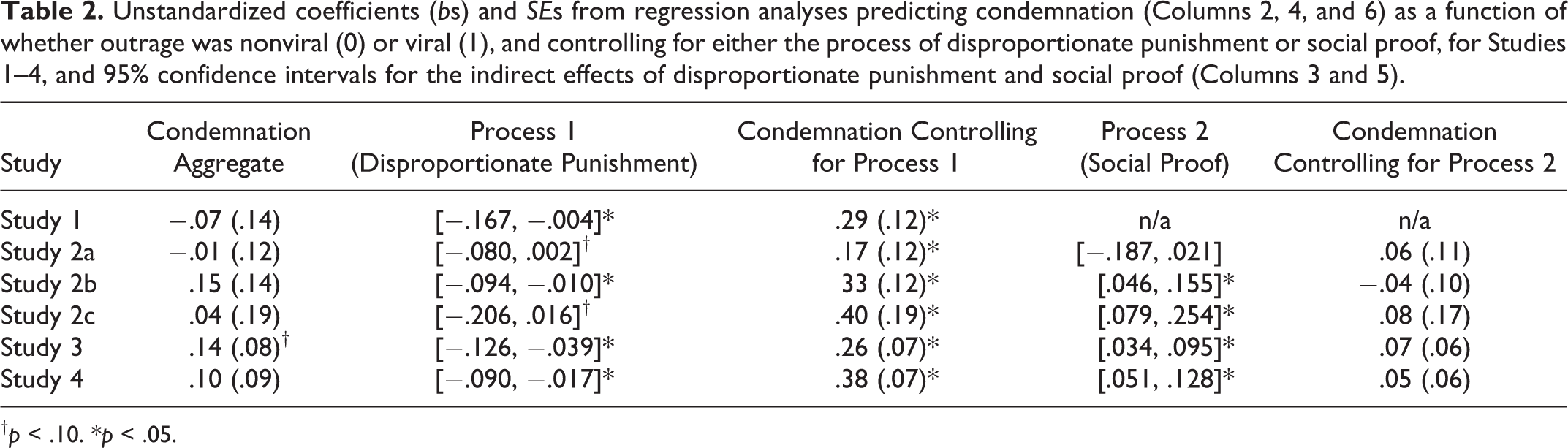
As outlined in the introduction, at the time we conducted Study 1, we only hypothesized a reduction of condemnation via perceptions of disproportionate punishment (Hypothesis 1, top path in Figure 1). Contrary to predictions, participants were no less condemnatory of the offender when outrage was viral (vs. nonviral), p = .612. We nonetheless tested for the indirect effect of disproportionate punishment, which would be evidenced by viral outrage leading to greater perceptions of excessive punishment, greater sympathy, and less condemnation as a result. Following the bootstrapping method outlined by Preacher and Hayes (2004), we found evidence for this indirect effect, 95% confidence interval [CI] = [−.167, −.004]. Thus, although there was no total effect of viral outrage on condemnation (contrary to predictions), we found evidence for the indirect effect of disproportionate punishment (consistent with predictions).
Discussion
In Study 1, contrary to our predictions, participants witnessing viral outrage did not condemn the perpetrator less than when outrage was not viral. And yet, as predicted, viral outrage did make the punishment seem excessive, resulting in sympathy, which itself reduced condemnation. The fact that this indirect link was present and significant (supporting Hypothesis 1) but that it did not result in an overall drop in condemnation for the target made us suspect that a counteracting process might be at work. Accordingly, we reformulated our hypothesis to include the process of social proof (Hypothesis 2) and surmised that the two processes might suppress each other (Hypothesis 3). We registered this revised hypothesis as well as three new studies (2a–2c) which now included measures of social proof, enabling us to test Hypotheses 2 and 3.
Studies 2a–2c
To test our revised hypotheses and the full model depicted in Figure 1, we added measures of the process of social proof.
Method
Participants
Participants (Study 2a: n = 392; 192 women; mean age = 36.12, SD = 17.41; Study 2b: n = 406; 194 women; mean age = 35.96, SD = 11.23; Study 2c: n = 193; 108 women; mean age = 36.27, SD = 10.64) were recruited through Mechanical Turk. 2 Duplicate IP addresses were excluded (n = 8; n = 8; n = 0), leaving 384, 398, and 193 participants, respectively.
Procedure
In Studies 2a and 2b, participants viewed and rated the offensive post used in Study 1 (1 = not at all offensive to 7 = very offensive). In Study 2c, participants viewed and rated a different offensive post (Figure 4). They then received our minimal manipulation of viral outrage comprised of 2 or 10 outraged responses (Figures 3 and 5) and responded to a battery of measures. As noted in Note 2, Study 2c included one commenter who was supportive of the original offender (see Figure 5). Note that in measuring the process of social proof, participants’ outrage at the offender was measured across Studies 2a–2c, but perceptions of condemnatory norms were measured only in Studies 2b and 2c.

The offensive stimulus used in Study 2c.
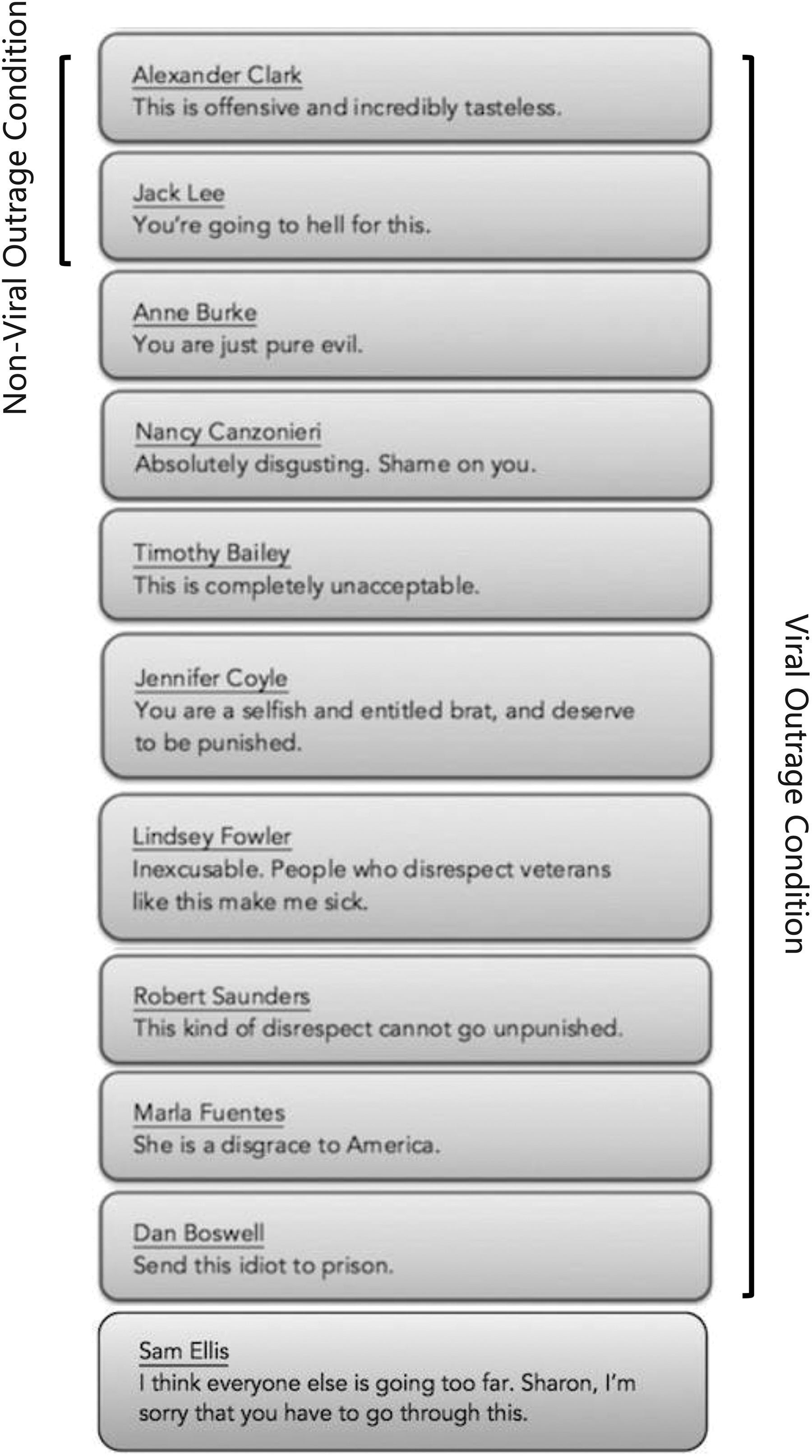
Examples of outrage stimuli used in Study 2c. The specific comments were sampled randomly for each participant, with each comment always matched to the same name and profile picture. As noted in Note 2, Study 2c included one commenter who was supportive of the original offender.
Results
Perceived Offensiveness
In Studies 2b and 2c, the original transgression was rated moderately offensive (Study 2b: M = 5.62, SD = 1.99; Study 2c: M = 5.98, SD = 1.30), regardless of condition, p = .119 (Study 2a), p = .737 (Study 2b); p = .390 (Study 2c). However, in Study 2a, the original transgression was rated somewhat less offensive in the viral outrage condition (M = 5.37, SD = 1.73) than in the nonviral outrage condition (M = 5.65, SD = 1.61), t(382) = 1.70, p = .091, d = .17. Because this rating was made before any experimental manipulation, this difference suggests a failure of randomization. Perceived offensiveness was significantly correlated with our dependent measure (r = .55), and therefore we controlled for perceived offensiveness in our analyses for Study 2a (see Sawaoka & Monin, 2018; note that because we did not foresee this conditional difference, this covariate was not preregistered).
Condemnation Composite
In our primary analyses, we tested our two proposed indirect effects (Figure 6). Evidence for disproportionate punishment (Hypothesis 1) would be obtained if viral outrage increased perceptions of disproportionate punishment, leading to greater sympathy and thus to reductions in condemnation. By contrast, evidence for social proof (Hypothesis 2) would be obtained if viral outrage increased perceptions of condemnatory norms toward the offender, leading to greater outrage and thereby increasing condemnation. As in Study 1, we used the SPSS macro written by Hayes (2012). We found evidence for both the process of disproportionate punishment (Study 2a: 95% CI [−.080, .002]; Study 2b: 95% CI [−.094, −.010]; Study 2c: 95% CI [−.206, .016]) and the process of social proof (Study 2b: 95% CI [.046, .155]; Study 2c: 95% CI [.079, .254]). 3 As indicated by the opposing signs, these two indirect effects pulled in opposite directions, raising the possibility of suppression (Hypothesis 3). The only result counter to predictions was that in Study 2a, we found no significant indirect effect for the process of social proof, 95% CI [−.187, .021]. However, note that because perceptions of condemnatory norms were not measured in Study 2a, this CI refers only to the indirect effect of viral outrage on participants’ own outrage and then on condemnation, making it difficult to directly compare this CI to the CIs for the process of social proof in other studies.
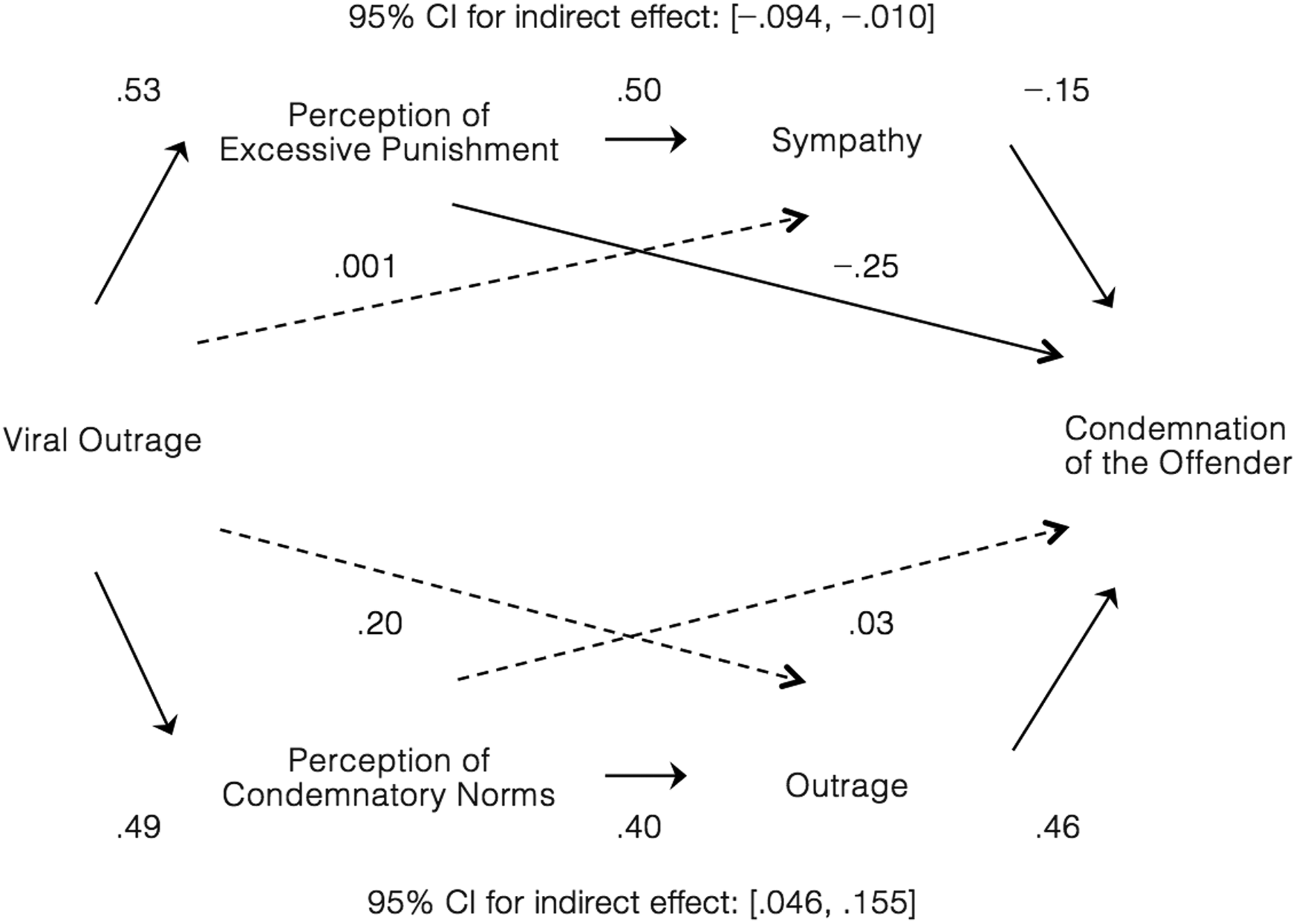
Indirect effects of process of disproportionate punishment (top pathway) and process of social proof (bottom pathway) on condemnation in Study 2b. Analogous results were found in Studies 2a and 2c, with the exception of the process of social proof in Study 2a. We see that both indirect paths are significant. Values are regression coefficients using the bootstrap method (Preacher & Hayes, 2008) separately for each process. Bold lines indicate significant paths (α = .05), and dotted lines indicate nonsignificant paths.
Suppression Effects
We tested whether the processes of social proof and disproportionate punishment suppressed one another (Figures 6 and 7). We first regressed condemnation on viral (vs. nonviral) outrage, finding that viral outrage alone did not affect condemnation (ps > .262 across Studies 2a–2c). However, when controlling for disproportionate punishment, viral outrage was now associated with more condemnation in Studies 2b and 2c (Study 2a: b = .17, SE = .12, p = .153; Study 2b: b = .33, SE = .12, p = .006; Study 2c: b = .40, SE = .19, p = .034). In other words, the social proof effects of viral outrage on condemnation in Studies 2b and 2c were suppressed by participants’ sympathy toward the offender. When controlling for social proof, however, viral outrage was not associated with condemnation (ps > .550 across Studies 2a–2c).
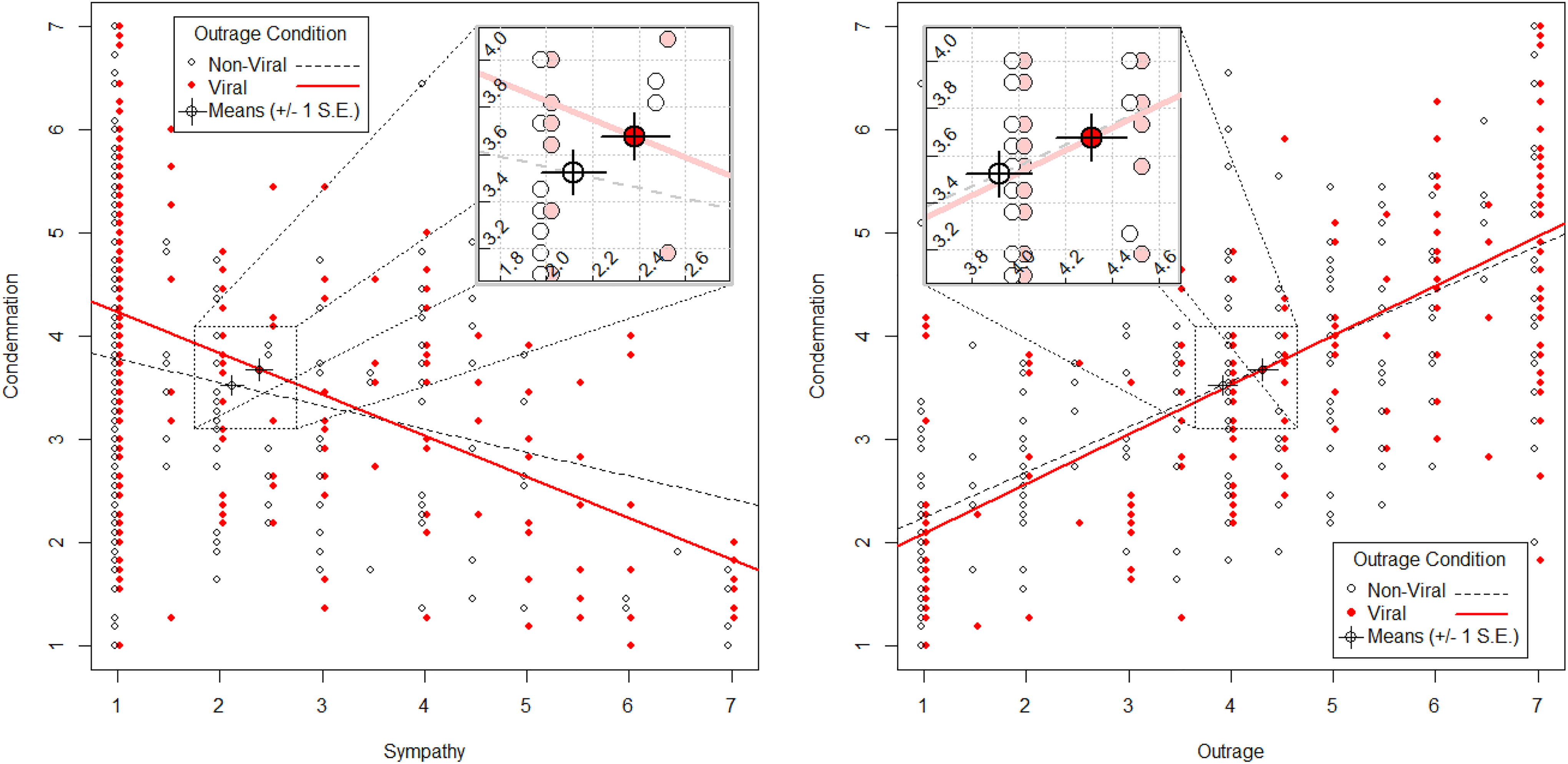
Condemnation as a function of self-reported sympathy (left panel) and outrage (right panel) in Study 2b, broken down by experimental condition (viral outrage vs. nonviral outrage), with a regression line for each condition. Pop-up inserts provide a zoomed-in image of the dotted-line squares around the centroids of each distribution. Centroids are located at the mean of the X- and Y-axes for each experimental condition, with whiskers representing ±1 standard error on each axis. The outrage scatterplot (Right Panel) clearly suggests mediation: As self-reported outrage increases between the viral and nonviral conditions, so does condemnation, following the direction of the regression lines. By contrast, the sympathy scatterplot (left panel) suggests suppression: As self-reported sympathy increases in the viral condition, it “pulls” condemnation down along the downward sloping regression lines, thus reducing the gap in condemnation between conditions. We see that if we visually align the means (i.e., control) for sympathy between the two conditions, and adjust condemnation accordingly by following the regression lines, the difference in condemnation between the two conditions would be substantially larger, the (rarely depicted) hallmark of statistical suppression.
Discussion
We found evidence for both predicted processes of disproportionate punishment and social proof. Viral outrage was judged more cruel and excessive, leading to greater sympathy and reducing condemnation (Hypothesis 1). But viral outrage also increased perceptions of condemnatory norms toward the offender, eliciting greater outrage and increasing condemnation (Hypothesis 2). As predicted, these processes pulled in opposite directions (i.e., suppression; Hypothesis 3). In Studies 3 and 4, we investigated the generalizability of these results by exploring potential boundary conditions.
Study 3
The purpose of Study 3 was to further test our model by attenuating social proof, which might lead the process of disproportionate punishment to have a stronger impact on condemnation. We did so by manipulating the severity of the offense. We predicted that for less severe offenses, people would be less willing to conform to others’ outrage—thereby attenuating social proof to reveal more clearly the impact of perceived disproportionate punishment. For instance, two women received international rebuke for opening a burrito cart because they were not Hispanic (Korfhage, 2017). They were accused of culturally appropriating Mexican cuisine, their detractors claiming that profiting off another culture’s cuisine amounted to theft. Other commentators defended the women, arguing that they did not deserve such vitriol (Emba, 2017). We used this episode to design stimuli in Study 3.
Method
Participants
Participants (n = 807; 427 women; mean age = 36.38, SD = 11.48) were recruited through Mechanical Turk for a 2 (outrage: viral vs. nonviral) × 2 (severity: low vs. moderate) design. Duplicate IP addresses were excluded (n = 92), leaving 715 participants.
Procedure
Participants viewed one of two social media posts (Figure 8). The post used in the low severity condition was inspired by real events, featuring a White woman announcing her new burrito cart. We used the fictional name “Cathy Williams.” In the moderate severity condition, the post featured a White woman announcing her new store selling Native American garb as costumes, which we designed to be more straightforwardly exploitative and thus offensive, echoing the previous studies in this article. We measured offensiveness (1 = not at all to 7 = very) as a manipulation check. Participants received our minimal manipulation of viral outrage comprised of 2 or 10 outraged responses (Figure 9) and completed a battery of measures.

The offensive stimulus used in Study 3. Participants saw an announcement about either a new burrito cart (low severity) or a new store selling Native American merchandise as accessories (moderate severity).
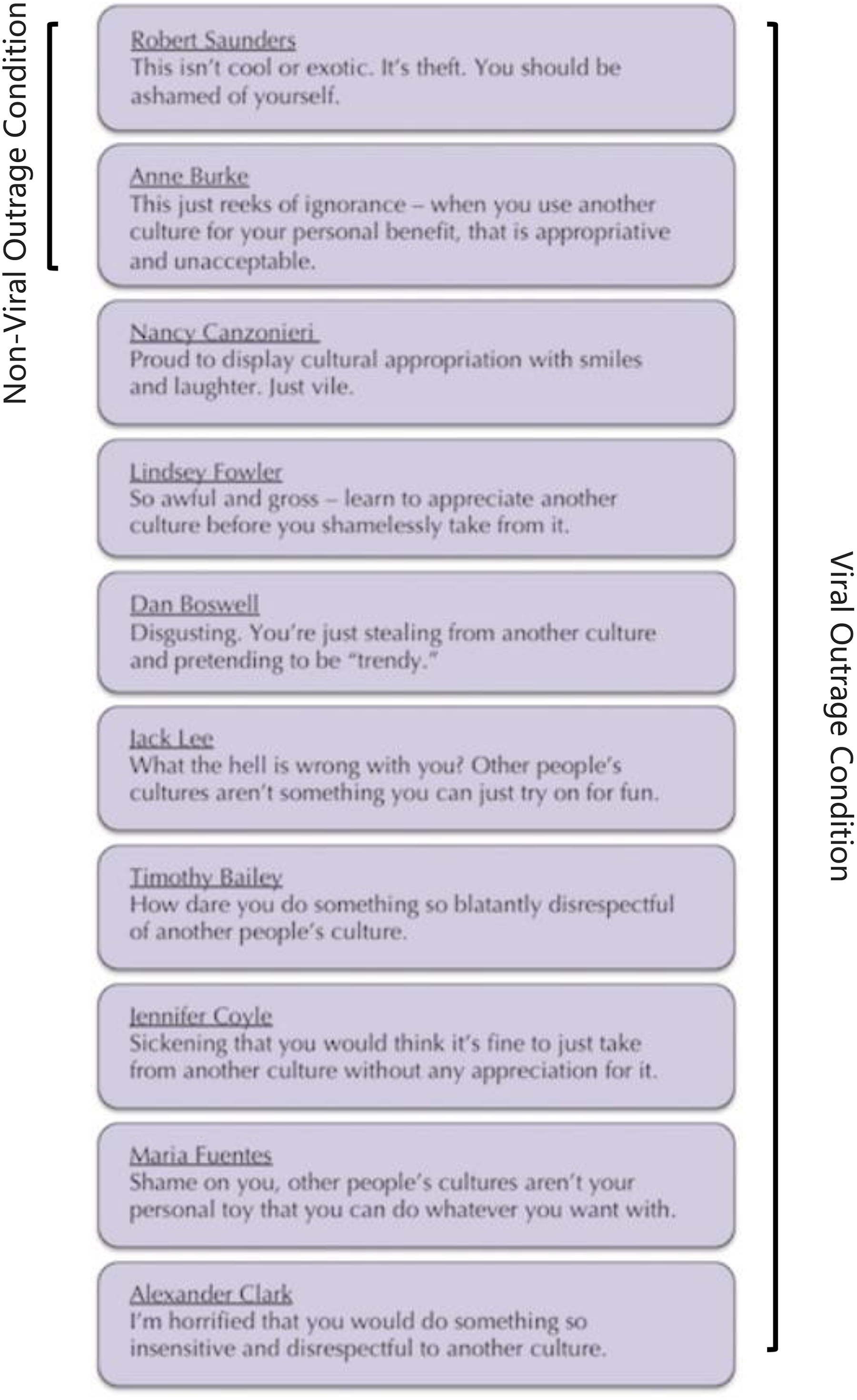
Examples of outrage stimuli in Study 3. The specific comments were sampled randomly for each participant, with each comment always matched to the same name.
Measures
We used the same measures as in Studies 2a and 2b. However, we removed “To what extent do you think Cathy was just trying to be funny?” because we thought this social media post would not be construed as humorous.
Results
Manipulation Check
The transgression was rated less offensive in the low severity condition (M = 3.22, SD = 1.93) than in the moderate severity condition (M = 3.97, SD = 2.13), t(713) = 4.96, p < .001, d = .37, confirming our manipulation was successful.
Dependent Measures
As in previous studies, we aggregated our dependent measures (except moral patiency) into a composite measure of condemnation toward the offender (α = .82) but also report analyses of our dependent measures separately (as preregistered; see Supplemental Materials).
Indirect Effects
We tested our two proposed indirect effects on the aggregate measure of condemnation. These indirect effects did not differ between the low (vs. moderate) severity conditions; although a linear regression testing the effects of our independent variables on condemnation revealed that participants condemned the offender less strongly overall when the offense was less severe, b = −.21, SE = .08, p = .006, severity did not moderate the effect of viral outrage on our mediators or dependent measure, ps ≥ .279. We therefore report our analyses collapsing across the two severity conditions (Figure 10). Indirect effect 95% CIs with 5,000 bootstrap samples (Hayes, 2012) did not contain zero for either social proof [.034, .095] or disproportionate punishment [−.126, −.039], and these two indirect effects pulled in opposing directions.
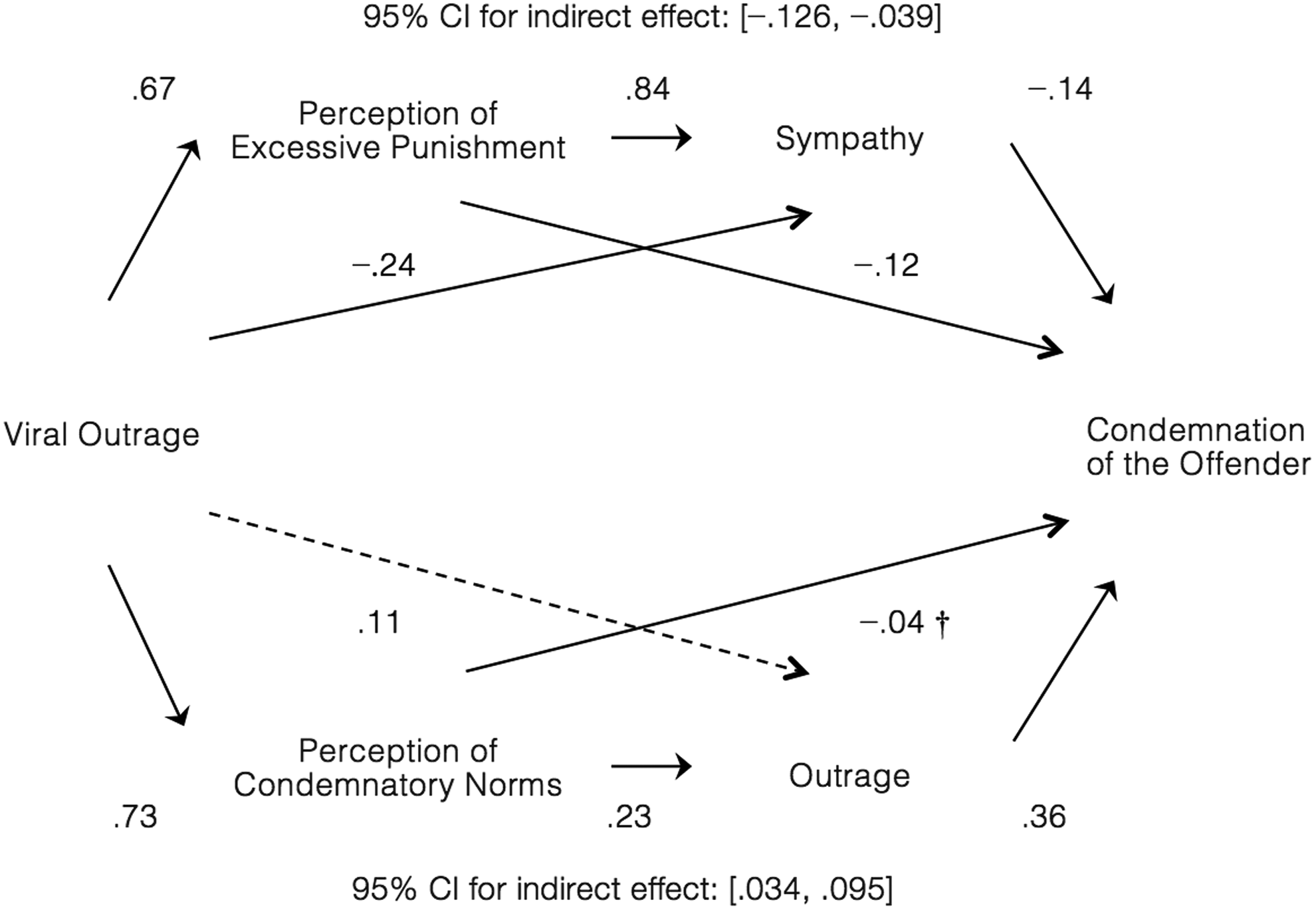
Indirect effects of process of disproportionate punishment (top pathway) and process of social proof (bottom pathway) on condemnation in Study 3. We see that both indirect paths are significant. Values are regression coefficients using the bootstrap method (Preacher & Hayes, 2008) separately for each process. Bold lines indicate significant paths (α = .05), and dotted lines indicate nonsignificant paths. An obelus (†) indicates marginally significant paths.
Suppression Effects
We first regressed condemnation on viral (vs. nonviral) outrage, finding that viral outrage at best marginally predicted condemnation, p = .073. However, when controlling for disproportionate punishment, viral outrage was now associated with condemnation, b = .26, SE = .07, p < .001, suggesting that the positive effects of viral outrage on condemnation were suppressed by participants’ sympathy toward the offender. As in Studies 2a–2c, when controlling for social proof, viral outrage was not associated with condemnation, p = .259.
Discussion
Both processes of disproportionate punishment (Hypothesis 1) and social proof (Hypothesis 2) emerged, regardless of the severity of the offense. These processes suppressed one another to weaken the effects of viral outrage on condemnation (Hypothesis 3). Although participants overall condemned the offender less strongly when the transgression was minor, they nonetheless reported greater outrage toward the offender in response to viral outrage. Because severity did not moderate our findings, this suggests that our results from previous studies are more broadly generalizable than we had anticipated.
Study 4
In Study 3, reducing the severity of the offense did not attenuate social proof. We next examined whether we could attenuate the process of disproportionate punishment instead. This study was inspired by our observation that viral outrage targets not only laypeople but also high-status public figures such as politicians or celebrities. Collective condemnation toward such individuals may be perceived as less cruel or excessive (Fragale, Rosen, Xu, & Merideth, 2009). In Study 4, we manipulated the status of the offender. We expected participants to feel less sympathetic for the high-status offender, and examined whether this would attenuate the process of disproportionate punishment, to potentially reveal more clearly the countervailing process of social proof.
Method
Participants
Participants (n = 810; 413 women; mean age = 35.80, SD = 11.71) were recruited through Mechanical Turk for a 2 (outrage: viral vs. nonviral) × 2 (status: high vs. control) design. Duplicate IP addresses were excluded (n = 64), leaving 746 participants.
Procedure
Participants viewed a social media post (Figure 11) inspired by a real event, in which a politician tweeted a sexist remark in response to the Women’s March in 2017 (Rosenberg, 2017). We used the fictional name “Jack Foster.” Participants indicated how offensive and funny (1 = not at all to 7 = very) they found this post; these 2 items were averaged (“funny” was reverse-coded) into an index of perceived offensiveness. They then read the offender was “a politician for a major political party who was elected into public office” (high-status condition) or “an average Twitter user” (control condition). Participants received our minimal manipulation of viral outrage in which they read 2 or 10 outraged responses (Figure 12) and completed a battery of measures.
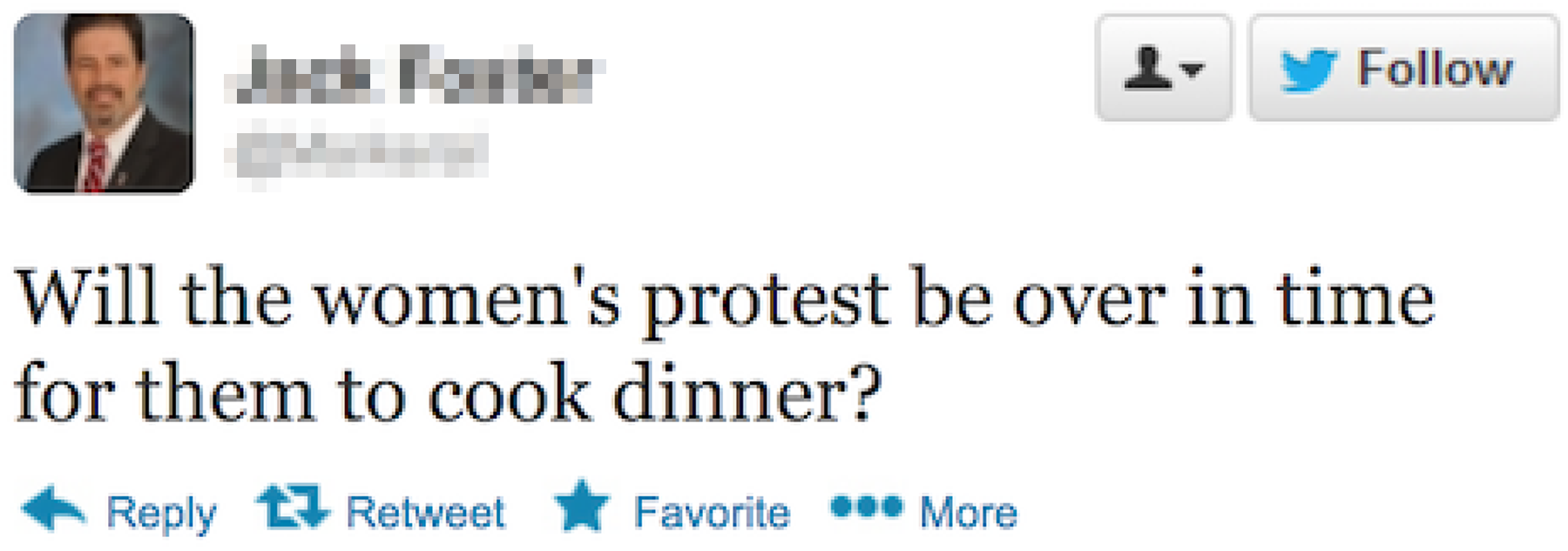
The offensive stimulus used in Study 4.
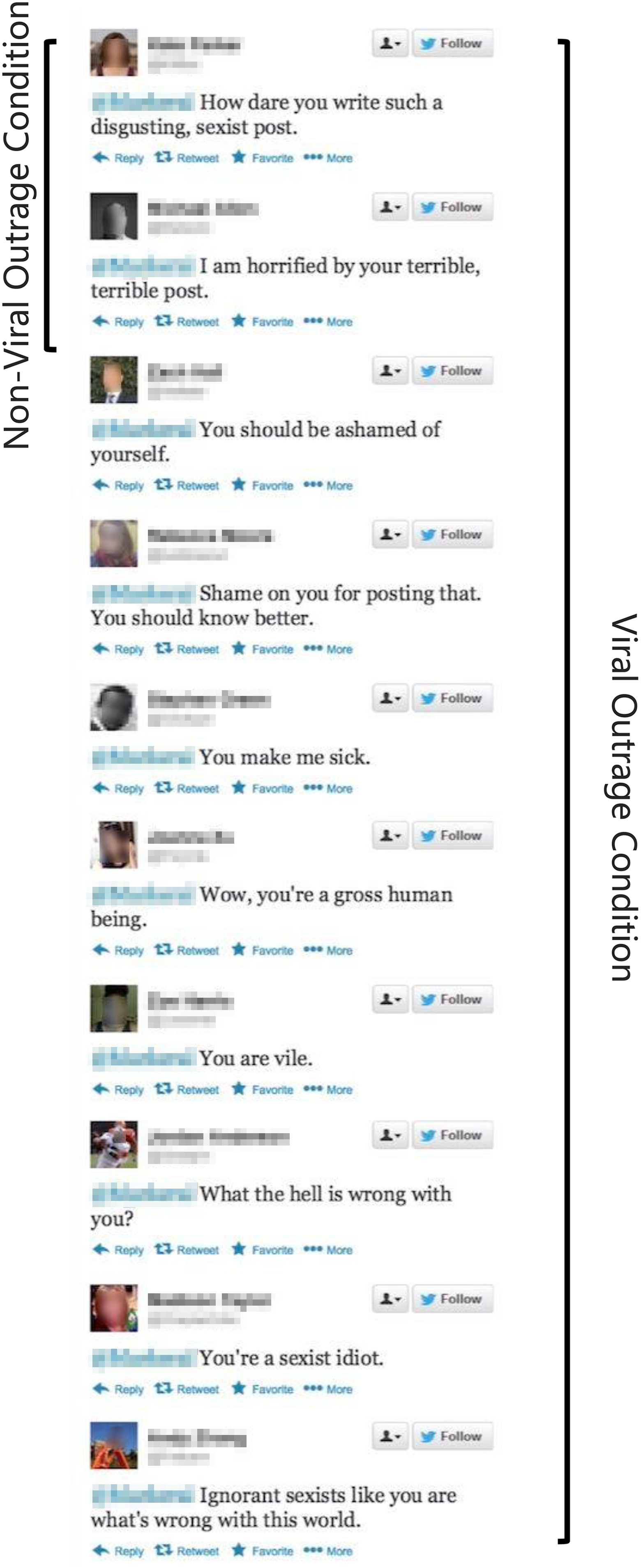
Examples of outrage stimuli in Study 4. The order of comments was randomized. The specific comments were sampled randomly for each participant, with each comment always matched to the same name and profile picture.
Measures
We used the same measures as in Studies 2a and 2b, except 1 item in our measure of perceived moral agency was modified to “Jack is a sexist” (instead of “is a racist”).
Results
The original transgression was rated moderately offensive (M = 5.05, SD = 1.85), regardless of condition, ps ≥ .134.
Dependent Measures
As in Studies 1–3, we aggregated our dependent measures (except moral patiency) into a composite measure of condemnation toward the offender (α = .90), but we also report analyses of our dependent measures separately (as preregistered; see Supplemental Materials).
Indirect Effects
We tested our two proposed indirect effects on the aggregate measure of condemnation. These indirect effects did not differ regardless of whether the offender was high status (vs. control); although a linear regression testing the effects of our independent variables on condemnation revealed that participants condemned the offender more strongly overall when he was high status (vs. control), b = .22, SE = .09, p = .011, status did not moderate the effect of viral (vs. nonviral) outrage on our mediators or dependent measure, ps ≥ .163. We therefore report our analyses collapsing across the two status conditions (Figure 13). Indirect effect 95% CIs with 5,000 bootstrap samples (Hayes, 2012) did not contain zero for either disproportionate punishment [−.090, −.017] or social proof [.051, .128].
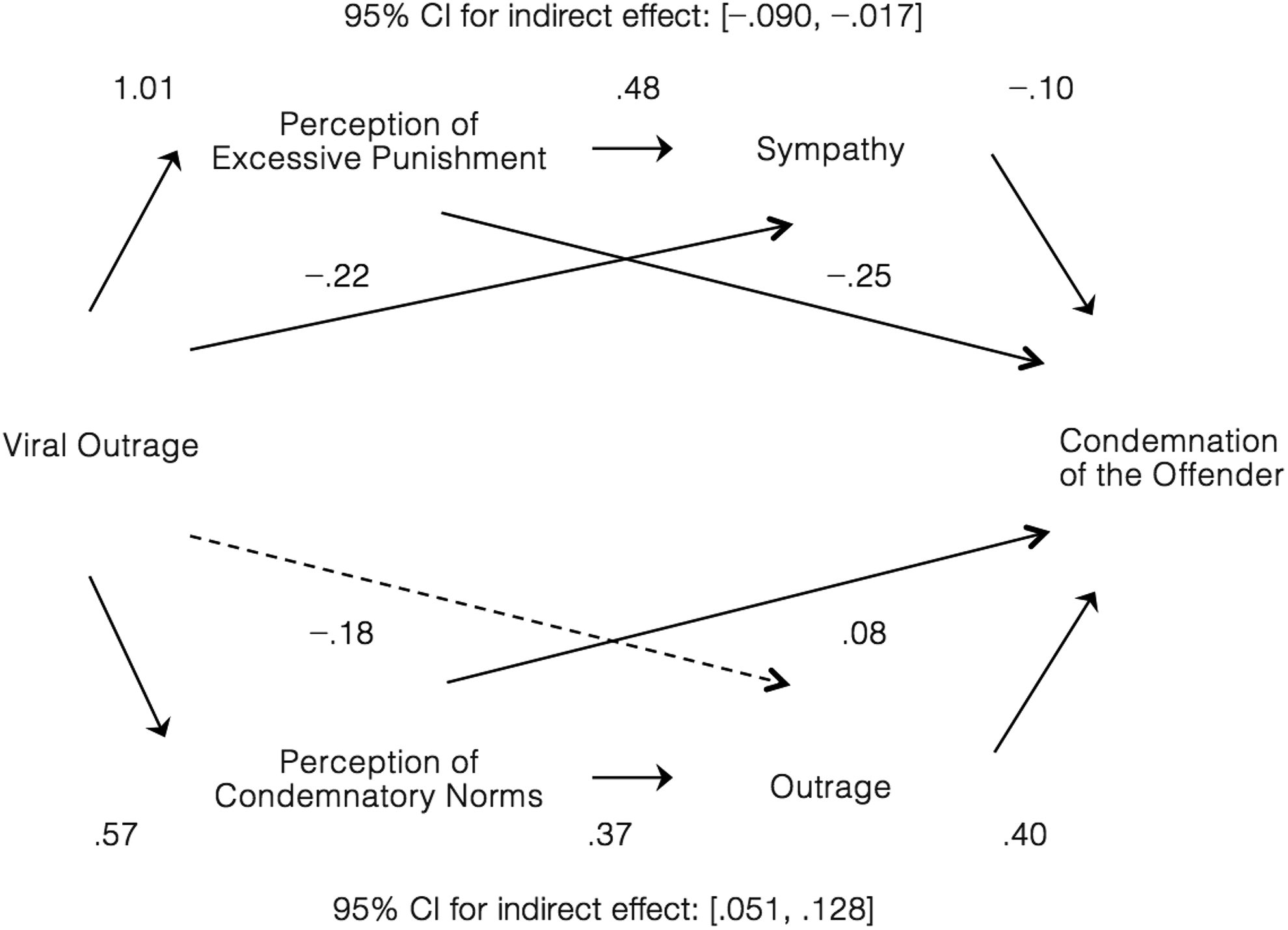
Indirect effects of process of disproportionate punishment (top pathway) and process of social proof (bottom pathway) on condemnation in Study 4. We see that both indirect paths are significant. Values are regression coefficients using the bootstrap method (Preacher & Hayes, 2008) separately for each process. Bold lines indicate significant paths (α = .05), and dotted lines indicate nonsignificant paths.
Suppression Effects
We first regressed condemnation on viral (vs. nonviral) outrage, finding that viral outrage did not predict condemnation, b = .10, SE = .09, p = .241. However, when controlling for disproportionate punishment, viral outrage was associated with condemnation, b = .38, SE = .08, p < .001, indicating that the positive effects of viral outrage on condemnation were suppressed by participants’ sympathy toward the offender. As in Studies 2 and 3, when controlling for social proof, viral outrage was not associated with condemnation, b = .05, SE = .06, p = .470.
Discussion
In Study 4, the process of disproportionate punishment emerged even when the offender was a high-status public figure. That is, even when an elected official made a sexist remark, participants felt that viral outrage was more excessive, eliciting more sympathy and reducing condemnation of the offender. Perhaps public figures accused of more egregious violations (e.g., a history of sexual assault; Kantor & Twohey, 2017) would not inspire sympathy in the face of viral outrage; however, our findings continue to highlight the limited influence of viral outrage in inspiring condemnation.
Study 5
In Studies 2–4, we documented observers’ mixed emotions toward targets of viral outrage. Although these findings were consistent, it struck us that they seemed intuitively at odds with how outrage is portrayed and perceived by the public. Writers have suggested that people are now “addicted to” or “infatuated with” outrage (Hamid, 2018; Von Drehle, 2017), and few seem to be aware that others may experience both outrage and sympathy in response to viral outrage.
We contend that this discrepancy arises because viral outrage leads people to misperceive others’ emotional reactions. Previous research suggests that norms of emotional expression can lead people to form inaccurate estimates of the prevalence of others’ negative emotions (Jordan et al., 2011). In Study 5, we predicted that as outrage goes viral, people are more likely to overestimate levels of outrage but underestimate levels of sympathy, creating a widening gap between the emotions people privately feel and those they perceive in others.
Method
Participants
Participants (n = 399; 191 women; mean age = 35.85, SD = 11.25) were recruited through Mechanical Turk. Duplicate IP addresses (n = 8) were excluded, leaving 391 participants.
Procedure
Participants viewed and rated (1 = not at all offensive to 7 = very offensive) a social media post (Figure 14) in which a young woman posted a photograph of herself smiling at the Auschwitz Concentration Camp (Moran, 2014). This post was criticized as insensitive. We used the fictional name “Ellie Mitchell.” Participants then received our minimal manipulation of viral outrage comprised of 2 or 10 outraged responses (Figure 15).

The offensive stimulus used in Study 5.
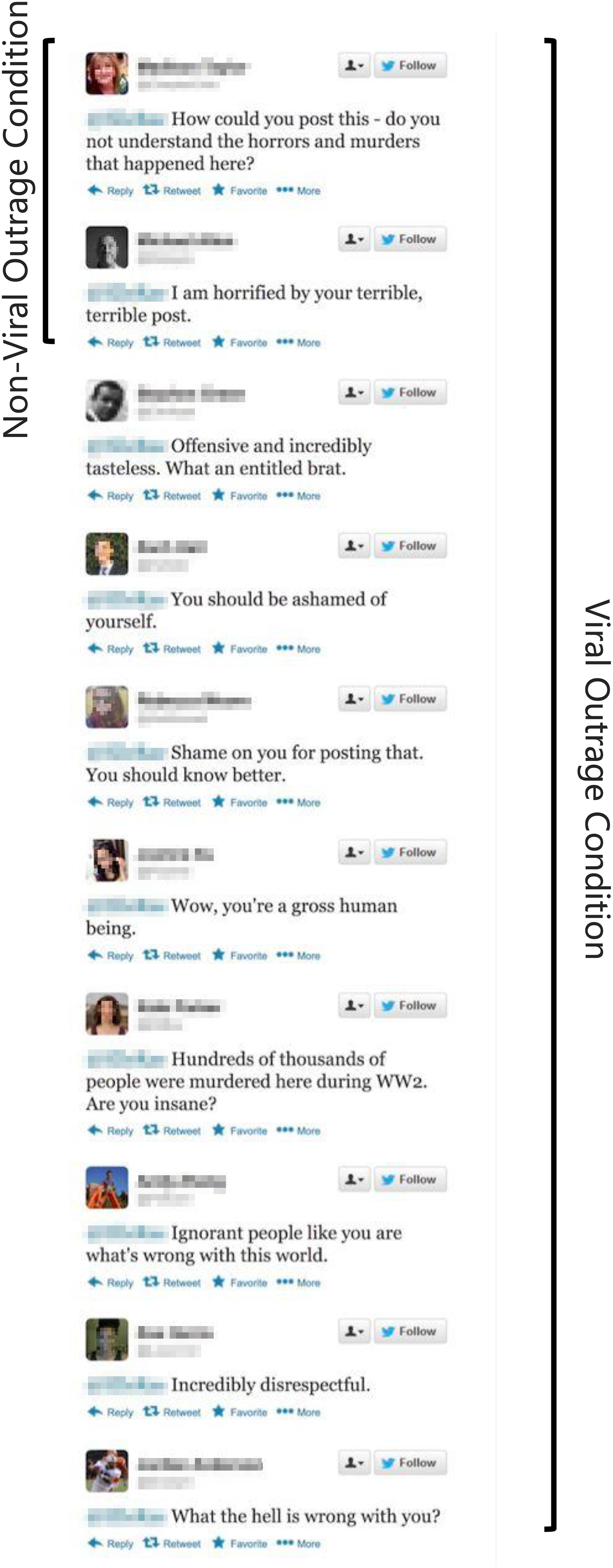
Examples of outrage stimuli in Study 5. The order of comments was randomized. The two stimuli used in the nonviral outrage condition were randomly selected for each participant.
Measures
We measured participants’ own outrage and sympathy as in Studies 2–4. In addition, we measured participants’ estimates of others’ emotions—the feelings that they believed other participants would experience while taking the same study.
Estimates of others’ outrage and sympathy
Participants were asked to “consider the reactions of other people responding to this survey.” Two items assessed their estimates of others’ outrage: “To what extent do you think others feel angry at Ellie for her post?” and “To what extent do you think others feel outraged at Ellie for her post?” (r = .87). Two items assessed their estimates of others’ sympathy, asking the extent to which participants think others feel “sorry” or “bad” for Ellie (1 = not at all to 7 = very; r = .90).
Results
The original transgression was rated moderately offensive (M = 4.19, SD = 2.05), regardless of condition, p = .781.
Self Versus Other Distinctions in Emotion Ratings
We examined whether participants’ own emotions differed from the emotions they perceived in others (Figure 16). We conducted 2 (outrage: viral vs. nonviral) × 2 (emotion: self vs. other) repeated-measures analysis of variances separately for both outrage and sympathy. On outrage, there was a main effect of self versus other, F(1, 389) = 475.81, p < .001,
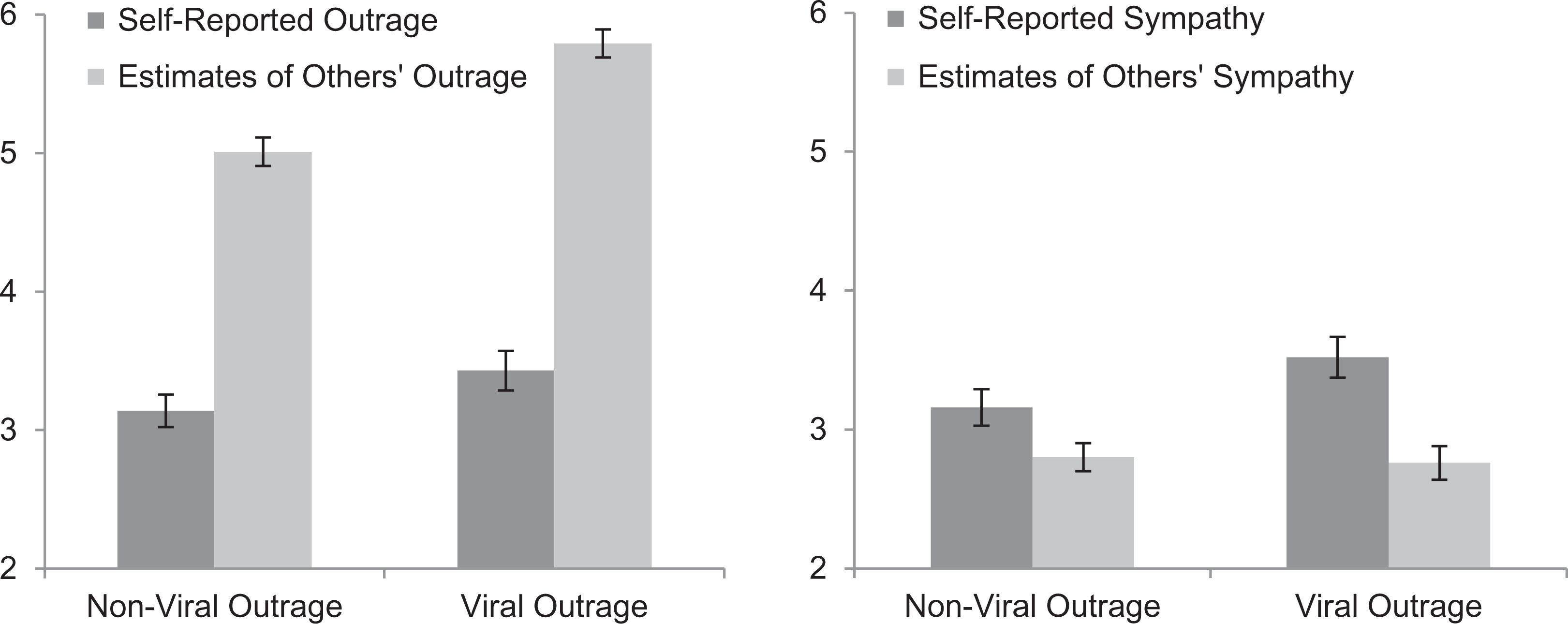
Self-reported outrage and estimates of others’ outrage (±SE; left panel), and self-reported sympathy and estimates of others’ sympathy (±SE; right panel), as a function of viral (vs. nonviral) outrage in Study 5. We see that participants overestimate others’ outrage and underestimate others’ sympathy and that these gaps grow larger as outrage goes viral.
On sympathy, there was a main effect of self versus other, F(1, 389) = 40.53, p < .001,
Discussion
A discrepancy emerged between participants’ own emotions and the emotions they estimated in others: Participants believed others would feel more outraged but less sympathetic than they did, and these gaps widened with viral outrage. Our findings help to explain why contemporary discussions of viral outrage (e.g., Hamid, 2018; Von Drehle, 2017) focus largely on people’s rising levels of outrage, overlooking the sympathy that we suggest people also feel. Social media may distort people’s perceptions of others’ emotions (Crockett, 2017), and our findings highlight that people’s private levels of outrage may be less exaggerated and more nuanced than people are led to believe.
General Discussion
Across seven studies, we found evidence to corroborate the claims of both supporters and critics of viral outrage (see Table 2). Viral outrage was perceived as disproportionate punishment for the offense, eliciting greater sympathy and weaker condemnation (process of disproportionate punishment; Hypothesis 1). However, viral outrage also led observers to perceive condemnatory norms toward the offender, inspiring greater outrage and stronger condemnation of the offender (process of social proof; Hypothesis 2). Studies 2–4 provided consistent support for both processes and for the resulting suppression (Hypothesis 3). These findings held even for relatively benign offenses (Study 3) and when the offender was of high status (Study 4). Furthermore, viral outrage led people to misperceive others’ emotions, predicting that others felt more outraged and less sympathetic than they did (Study 5).
Unstandardized coefficients (bs) and SEs from regression analyses predicting condemnation (Columns 2, 4, and 6) as a function of whether outrage was nonviral (0) or viral (1), and controlling for either the process of disproportionate punishment or social proof, for Studies 1–4, and 95% confidence intervals for the indirect effects of disproportionate punishment and social proof (Columns 3 and 5).
† p < .10. *p < .05.
Our work highlights the strange bedfellows of outrage and sympathy. These emotions are typically elicited by different sources—for example, outrage toward villains and sympathy for victims (Gray & Wegner, 2011)—but targets of viral outrage inspired both. It is unclear, then, whether these offenders are ultimately seen more as perpetrators or victims (Gray & Wegner, 2009). These findings raise the intriguing question of how perpetrators who receive excessive punishment can come to be seen as victims. Writers discussing viral outrage continue to grapple with the question of how to apportion blame between the original offender and those who later pile on their condemnation (Ronson, 2015).
Although participants expressed ambivalent emotions about targets of viral outrage, it is remarkable that they perceived others’ emotions as much less ambiguous. In Study 5, participants overestimated others’ outrage and underestimated their sympathy. This raises important connections with classic work on pluralistic ignorance (Prentice & Miller, 1993) and qualifies in interesting ways results suggesting that people underestimate other people’s negative emotions (Jordan et al., 2011). Perhaps people mistakenly perceive themselves as deviant from normative levels of outrage and feel alienated from these imagined norms even if their private attitudes are in reality aligned with those of most other people.
One limitation is that although we operationalized viral outrage by manipulating the number of outraged comments, we never presented participants with the thousands of comments that characterize viral outrage in the real world. Would increasing the number of comments affect the processes we examined? The effects of group size on social proof typically plateau after a certain threshold—individuals are no more likely to conform to 15 people than to 5 (Asch, 1956). By contrast, we would speculate that the process of disproportionate punishment only grows stronger as the number of commenters increases. This raises the interesting possibility that observing a larger number of outraged comments would eventually lead the process of disproportionate punishment to outweigh social proof, ultimately reducing condemnation.
Many have written that we now live in a culture of outrage (e.g., Oliver, 2017). In these times, it is particularly important to examine how moral outrage shapes perceptions of wrongdoing. Although viral outrage is a common and pervasive expression of moral judgment (Brady et al., 2017; Crockett, 2017), it appears to have limited efficacy in actually persuading people that an offender is blameworthy. Our work suggests that masses of angry voices inspire not unadulterated outrage, but ambivalence.
Supplemental Material
Supplementary_Materials_12.14.18 - Outraged but Sympathetic: Ambivalent Emotions Limit the Influence of Viral Outrage
Supplementary_Materials_12.14.18 for Outraged but Sympathetic: Ambivalent Emotions Limit the Influence of Viral Outrage by Takuya Sawaoka and Benoît Monin in Social Psychological and Personality Science
Footnotes
Declaration of Conflicting Interests
The author(s) declared no potential conflicts of interest with respect to the research, authorship, and/or publication of this article.
Funding
The author(s) received no financial support for the research, authorship, and/or publication of this article.
Supplemental Material
The supplemental material is available in the online version of the article.
Notes
References
Supplementary Material
Please find the following supplemental material available below.
For Open Access articles published under a Creative Commons License, all supplemental material carries the same license as the article it is associated with.
For non-Open Access articles published, all supplemental material carries a non-exclusive license, and permission requests for re-use of supplemental material or any part of supplemental material shall be sent directly to the copyright owner as specified in the copyright notice associated with the article.
