




Abstract
This article explores the current state of Arabic social psychology through a selective review of articles written by Arabs, on Arabs, in Arabic (144 articles, published between 2000 and 2015), a basic profiling of first authors, and a regional mapping of graduate social psychology programs. The Levant emerged as the most productive subregion. The most studied topics overall were “the self” and “social adjustment.” Most articles relied primarily on regional references. Furthermore, articles were mostly empirical, correlational, with adult samples, particularly university students. Most first authors were males and very few were specialized in social psychology. Finally, very few graduate social psychology programs were found. We discuss some ways forward for addressing the seemingly marginalized state of social psychology in the Arab region.
Questions have recently arisen in mainstream psychology surrounding the external validity of findings published in the international literature, where most samples originate from Western, Educated, Industrialized, Rich, and Democratic societies, who are outliers on several psychological dimensions (Arnett, 2008; Heinrich et al., 2010). These inequalities, embedded in inequitable power structures, result in the promotion of the epistemological position of powerful groups, raising legitimate ethical and scientific concerns (Adams et al., 2015), and prompting calls for more research from underrepresented populations. To shed light on the problems leading to underrepresentation, it would seem important to examine psychological research production in local languages. For example, in a recent international survey of social psychologists, most respondents in the Global South reported that social psychologists in their countries face difficulties publishing in international outlets due partly to linguistic barriers (Bou Zeineddine et al., 2020). In this article, we shed light on social psychological research published in Arabic, by Arabs, on Arabs living in the Arab region, through a selective review of articles from the 21st century. We refer to research produced on Arabs in any language as Arab social psychology, research produced on Arabs in Arabic as Arabic social psychology, and research produced in English as international research.
Arab(ic) (Social) Psychological Research and Training
The Arab region has a religiously and ethnically diverse population spread across 22 states (Harb, 2016), comprising 5% of the global population. It suffers from difficult social–political conditions, which social psychological research can potentially help address, including tense intergroup conflicts and wars, foreign control and military occupations, authoritarianism, corruption, and deep social inequalities. However, Arab populations remain underrepresented in the international psychological literature (e.g., Smith et al., 2001; Zebian et al., 2007). A 5-year review of international psychological research in the early 21st century (Sanchez-Sosa & Riveros, 2007) found 798 articles from 19 Arab countries, approximately what South Africa and Brazil produced each individually.
More importantly, Ahmad and Gielen (1998) previously argued that Arab social psychology is typically produced in Arabic. Reviews of this work, however, are relatively old. In the largest compilation of Arab(ic) social psychological research, Malika (1965, 1970, 1979, 1985, 1990, 1994) summarized only 230 articles produced between 1955 and 1994, although this review was reportedly selective. The most comprehensive review of Arabic psychology by Ahmed and Gielen (1998) drew on a database of only 2,500 articles from the 20th century, with the authors estimating that 70% of Arabic psychological research was produced by Egyptians. Notably, social psychology constituted the largest subfield (20%) of psychological research production, primarily examining attitudes, values, socialization, and locus of control. 1 Unfortunately, the authors gave no estimates of social psychological research output per Arab country, but they did note finding none in Algeria, Sudan, or the United Arab Emirates. Together, those two reviews reveal limited production of Arabic social psychology in the 20th century. Indications are that the field remains underdeveloped, given that to our knowledge, the Arab Psychological Network (2019), which is the largest network of Arab psychologists, currently features no social psychology journals in its journals list, practically no social psychological associations. That said, an updated review of Arabic social psychological research is needed.
It has been argued that an appropriate local psychology must involve healthy forms of self-reliance and methodological validity and be responsive to the needs of the societies it studies (Adams et al., 2015; Moghaddam & Taylor, 1986; Zebian et al., 2007). This includes adopting culturally sensitive practices (e.g., drawing on regional research), studying diverse samples using diverse methods, as well as critically applying theories, concepts, and methods imported from the west, allowing for both indigenization and innovation. In the first and only empirical assessment of research practices by Arab psychologists in the international literature, Zebian et al. (2007) examined psychological articles produced between 1950 and 2004, 40% of which in social/political psychology (Zebian et al., 2007). The authors found most studies were quantitative and correlational, without domination of university student samples but with overall low levels of cultural sensitivity, heavy reliance on western theories, concepts and measures, and frequent disregard for cultural validity/validation. Moreover, on average, papers cited very few references from the region. Similar findings emerged in other more focused reviews (Alamuddin & Zebian, 2010; Khaleefa, 1999). However, to our knowledge, no reviews have undertaken a quantitative content analysis of Arabic social psychology.
The development of social psychology in the Arab region cannot be discoupled from the development of graduate training in the field at large (Al-Soud, 2000). Ahmed and Gielen (1998) previously found that most psychology departments were located in Egypt, with master’s degrees offered in almost all Arab countries, but doctorates offered only in Egypt. They also noted a proliferation of general psychology programs over specialized ones, in addition to female-dominated undergraduate student bodies, versus male-dominated faculties and professional bodies (see also Abou Hatab, 1993). However, to our knowledge, no regional assessment of social psychological graduate training currently exists.
The Present Research
To shed light on research produced in local languages by underrepresented populations in the international social psychological literature, we examine the progress of Arabic social psychological research in the beginning of the 21st century through an exploratory selective review of social psychological articles produced in Arabic between 2000 and 2015, examining output per country and over time, topics studied, and research practices. To profile those producing social psychological research, we also analyze first authors’ gender and specialties. Finally, we examine the availability of social psychological training in the region through a mapping of graduate programs.
Method
Article Search
The search for articles was performed in October–November 2016 and was restricted to peer-reviewed articles published in Arabic between 2000 and 2015. 2 We used the electronic database e-Marefa (2014), considered one of the most comprehensive multidisciplinary Arab databases of full-text articles, incorporating over 400,000 articles from 19 Arab countries at the time of this search.
We performed three advanced searches in academic periodicals across all field categories. 3 Relevance was determined by focusing on the title, abstract, and full text if needed. First, we searched for the exact phrase “social psychology” occurring anywhere in the article. 4 Two coauthors examined one half of the hits each. Second, we searched for the exact phrase “political psychology” to capture more articles on intergroup relations. One coauthor checked every other article in the results list for relevance.
The third search consisted of 15 independent searches with the exact phrase “psychology” coupled with 1 of the 15 Arab countries (excluding Algeria, Jordan, and Iraq as our initial search captured enough hits from there). The final number of articles retained was 144. 5
Social Psychological Training Search
A list of universities offering bachelor’s, master’s, or PhD degrees in psychology was provided by the Arab Council for Social Sciences (ACSS, personal communication, December 23, 2018) obtained from the International Association of Universities (2017) and other sources such as Webometrics Ranking of World Universities (n.d.). 6 ACSS checked the degrees granted by each university through their official websites in 2018. Since the list provided no information on graduate psychology specializations, we performed a search for specializations by searching through each university website under all faculties/departments potentially housing psychology programs.
First-Author Specialization Search
We performed an electronic search to determine the specialties of all articles’ first authors. For professions (i.e., psychologist or nonpsychologist), we first searched through the websites of each author’s university of affiliation. Oftentimes no such pages were available, so we performed a Google Search to obtain authors’ LinkedIn profile, or a personal page/curriculum vitae (CV), or social media profiles on Facebook or Twitter.
Subspecializations were obtained based on two methods. The first relied on explicit descriptions of specializations and academic experience on professional pages. The second method was through inference, whereby authors' publications, prior professional positions (frequented stated on their CVs) and research interests on Google Scholar were checked.
Analytic Strategy
Content analysis objectives
We performed quantitative and qualitative content analyses. The former involved analyzing the total volume of research output per country and subregion, 7 production over time, and the topics. We also analyzed the cited references for recency (publication year of the most recently cited reference compared to the article’s own year of publication, coded as published 3 years/10 years/over 10 years before the article) as well as source (western vs. regional). The analysis additionally focused on research type (empirical/theoretical), method (quantitative/qualitative/mixed methods), design (experimental/correlational/ descriptive), samples’ age groups (children/adolescents/adults), and type of adult sample (university students/other).
The qualitative analysis was aimed at evaluating different features of the articles in an exploratory manner. No a priori categories of research practices were devised, and therefore, no quantification of such practices is provided. We analyzed a subset of articles and evaluated the literature, research methodology, analytic strategy, article structure, impact, and linguistic accessibility to foreign audiences.
Determining relevance
We used several criteria to determine the relevance of articles to social psychology. First, we checked that they study social behavior at the individual level. Research on topics commonly found in introductory social psychology textbooks were easily classified as relevant. However, for topics not typically found in such textbooks, we checked if similar topics appeared in international social psychological journals. We also checked if the article cited at least some (social) psychological theories/references. Finally, articles of questionable relevance/unclear topic were discussed by two coauthors, and a decision on relevance and topic classification (see below) was reached consensually.
Topic selection
We devised social psychological topic categories using both top-down and bottom-up approaches. In the top-down approach, we created broad topics based on the common categories found in introductory social psychology textbooks after analyzing the content lists of six recent western introductory textbooks on social psychology (Alcock & Sadava, 2014; Crisp, 2015; DeLamater et al., 2014; Franzoi, 2012; Hewstone et al., 2012; Hogg & Vaughan, 2014; Holmes & Singh, 2012; Saeger, 2014). We opted where possible to fit applied social psychological articles under more basic available topics. The final list consisted of 11 categories (in alphabetical order): aggression; attitudes, attitude change, values, and ideologies (hereafter referred to as attitudes); close relationships (including family relations); group dynamics and leadership (hereafter referred to as group dynamics); intergroup relations (including collective action); prosocial behavior; the self; social cognition and affect/emotion (hereafter referred to as social cognition); and social influence.
In the bottom-up approach, we created new topic categories for articles that did not fit neatly into the aforementioned topics. For articles addressing more than one topic, we picked the topic relevant to the outcome variable (the variable the authors aim to explain). Alternatively, in the rare case that variables could not be assigned particular roles (e.g., correlational study with no clear outcome variables), we picked a topic at random.
Results
Quantitative Analysis
We report the most notable trends. To analyze research production, we divided the Arab world into three subregions: North Africa, the Levant, and the Arabian Peninsula. Around half of the articles came from the Levant, which produced practically twice as many articles as either of the other subregions. Interregional collaborations were remarkably rare. Five countries produced around 80% of all articles, with Iraq leading, followed by Jordan, Saudi Arabia, Algeria, and Palestine (Table 1). Research output overall increased steadily over time, with most articles produced between 2011 and 2015 (Table 2). Most classical topics in social psychology were covered, albeit to varying degrees, but so were other less classical topics. Overall, “social adjustment” and “the self” received the most attention (Table 3). Almost half the articles used references that were 4 years old or more (Table 4). Almost all articles used at least some Arabic references; the majority used mostly or exclusively Arabic references (Table 5). Similar to western trends, most articles were empirical, quantitative, relying on correlational designs, with few even using purely descriptive designs. Furthermore, most empirical articles sampled adults, primarily university students (Table 6).
Research Articles per Country and per Subregion.
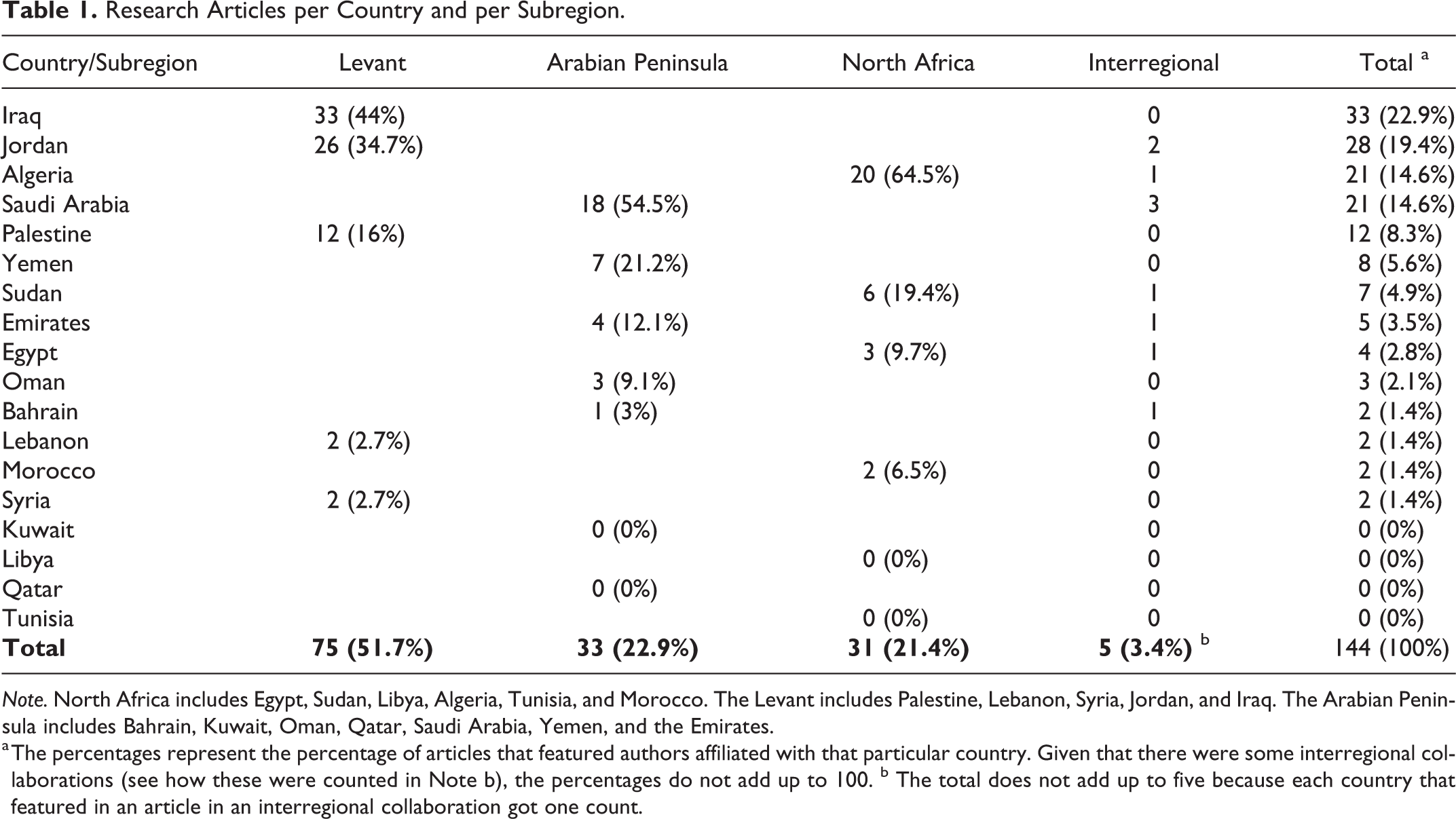
Note. North Africa includes Egypt, Sudan, Libya, Algeria, Tunisia, and Morocco. The Levant includes Palestine, Lebanon, Syria, Jordan, and Iraq. The Arabian Peninsula includes Bahrain, Kuwait, Oman, Qatar, Saudi Arabia, Yemen, and the Emirates.
a The percentages represent the percentage of articles that featured authors affiliated with that particular country. Given that there were some interregional collaborations (see how these were counted in Note b), the percentages do not add up to 100. b The total does not add up to five because each country that featured in an article in an interregional collaboration got one count.
Research Articles per Subregion Over Time.

Article Topics.
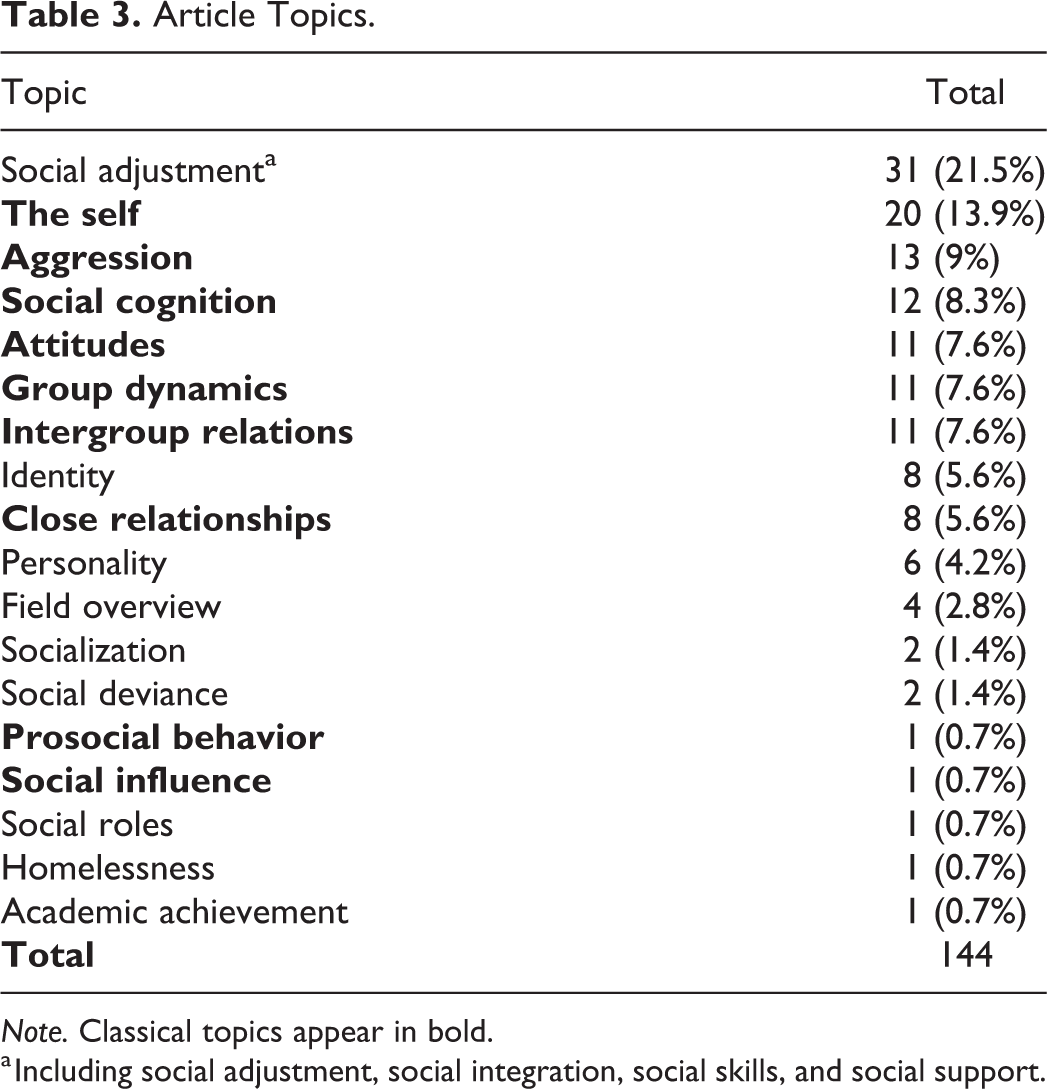
Note. Classical topics appear in bold.
a Including social adjustment, social integration, social skills, and social support.
Reference Recency.
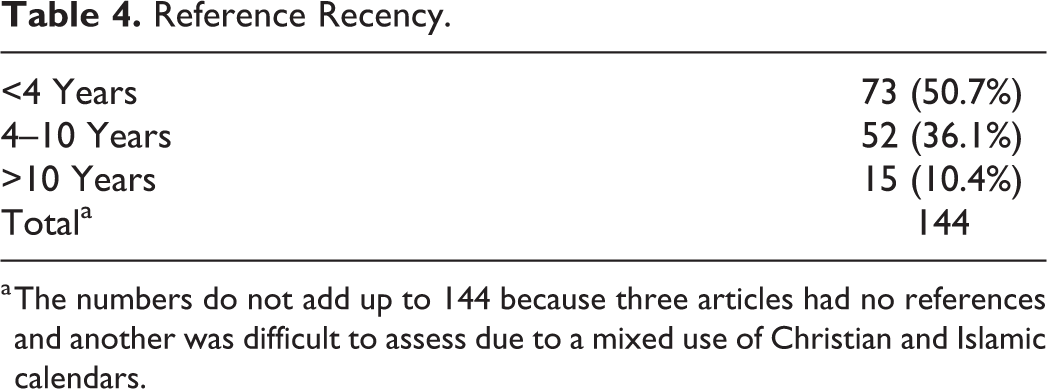
a The numbers do not add up to 144 because three articles had no references and another was difficult to assess due to a mixed use of Christian and Islamic calendars.
Reference Source.
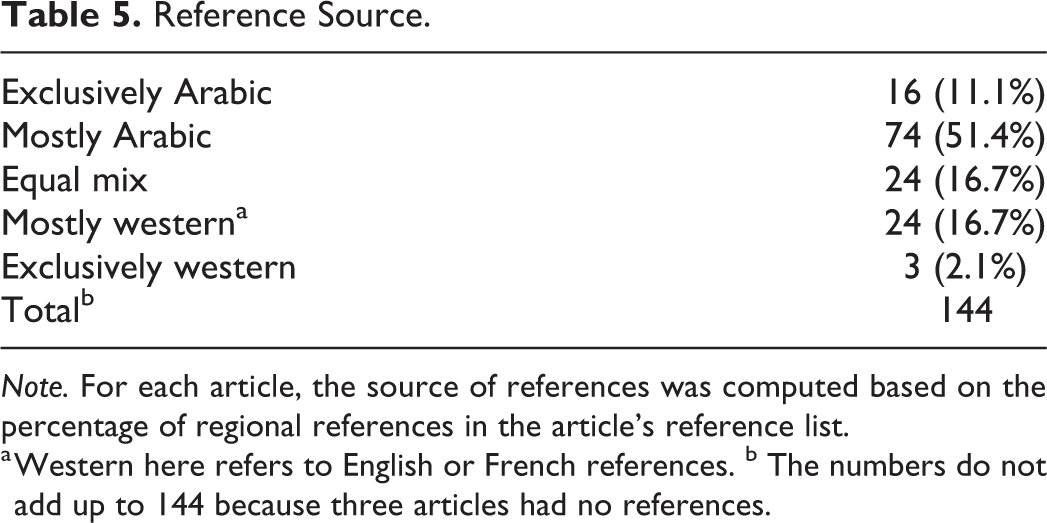
Note. For each article, the source of references was computed based on the percentage of regional references in the article’s reference list.
a Western here refers to English or French references. b The numbers do not add up to 144 because three articles had no references.
Research Methodology.
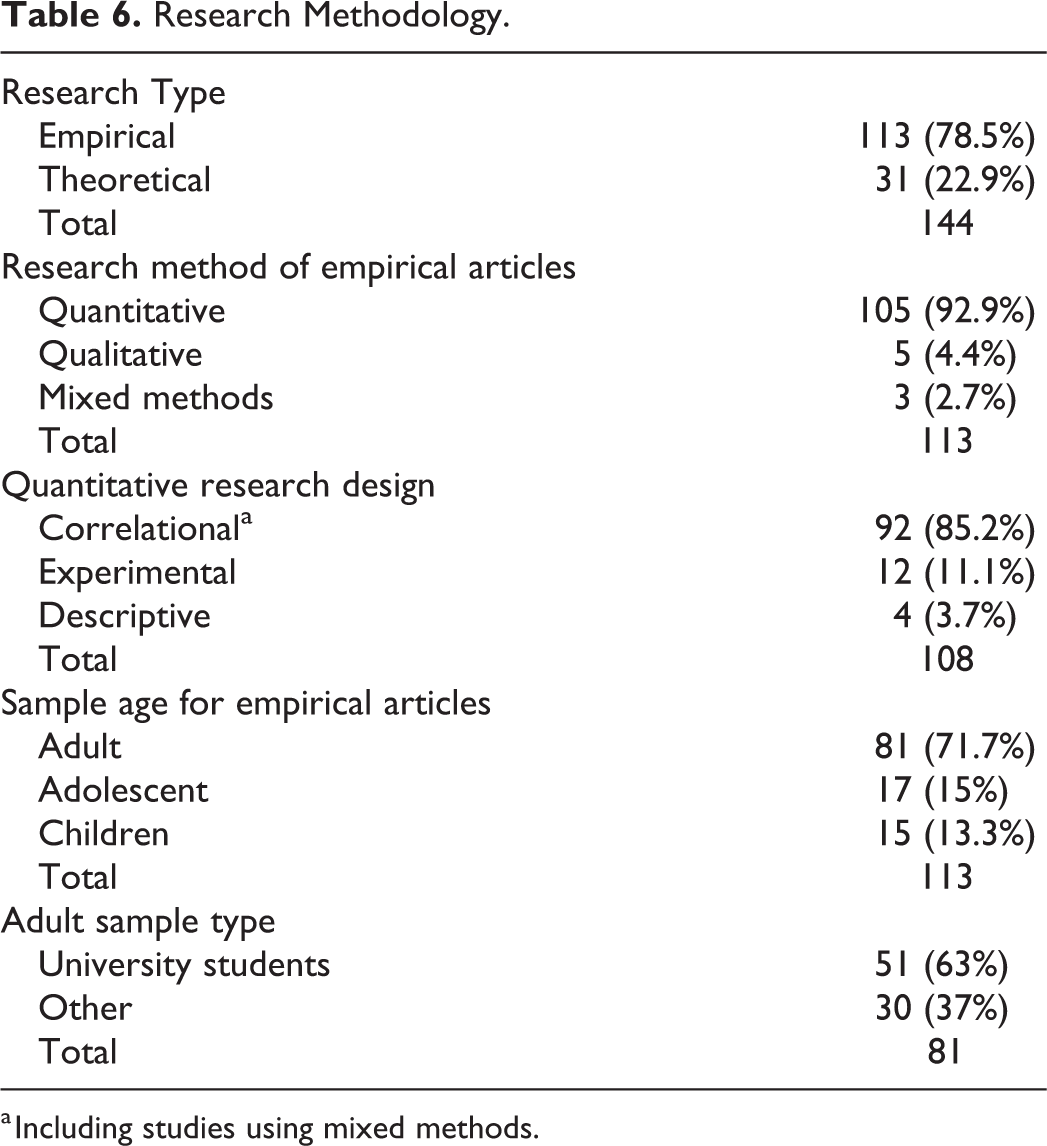
a Including studies using mixed methods.
Qualitative Analysis of Articles
Unless otherwise stated, the qualitative analysis was based only on the results of 67 articles. 8
Literature analysis
Among the theoretical articles, only few employed primarily (social) psychological theoretical frameworks. Various theoretical articles adopted a sociological or interdisciplinary framework, with some citing older psychological references. Among the empirical articles, most adopted a primarily psychological theoretical framework. However, various empirical studies did not draw on social psychological literature sufficiently. While some studies provided thorough overviews of relevant literature, others used few psychological references, relied on old ones, or drew on basic introductory textbooks, encyclopedias, or dictionaries instead.
Research methodology
All empirical articles consisted of single-study papers only.
Methodology in Quantitative Articles
Recruitment procedure
Important details regarding recruitment procedures were sometimes missing. 9 Twenty articles reportedly used random selection recruitment procedures, without specifying the exact procedure of random selection. Other studies used purposive or convenience sampling, while some did not specify their sampling procedure.
Materials used
Some articles provided insufficient information on materials used. While many articles provided scale items (e.g., of the 60 empirical articles from the Levant, 34 articles provided those), some provided little or no information on those. Some provided no information on the source(s) of the scales they used. Furthermore, some articles that relied on translated western scales did not provide the translated scale items in Arabic.
Importantly, many researchers developed new scales for their constructs or combined their own with existing western or Arabic scales. Others adapted Arabic or western scales to their context. Remarkably, most researchers engaged in some form of scale validation, albeit incomplete. The typical procedure incorporated content validity checks through consultation with other social scientists and reliability checks (test–retest reliability and Cronbach’s α). Importantly, validation based on internal structure (e.g., factor analysis) and relations to other variables (e.g., criterion validity) were never assessed.
Methodology in qualitative articles
Researchers generally provided insufficient information here. We reviewed five qualitative articles, including two mixed methods. Four used both observation and interviewing, and one used interviewing alone. The two mixed-methods articles provided almost no information on the qualitative methods (sample characteristics, questions). For the remaining articles, information on sample, method of recruitment, and interview schedule was incomplete.
Analytic strategy
A common statistical practice in quantitative articles was examining only bivariate correlations between predictors and the outcome variable, without controlling for other predictors. Relatedly, interactions were rarely tested. Some studies measured people’s views on the relations between two variables but claimed to be measuring the actual relation between the two variables. The choice of statistical tests was not always properly justified. Remarkably, no convention was followed in reporting statistical tests, with basic information sometimes missing from statistical reporting (e.g., degrees of freedom for t tests). There was also an overreliance on reporting p values, while effect sizes were frequently missing. As for qualitative or mixed-method articles, none mentioned the data analytic strategy used. Similarly, information surrounding observational methods (e.g., how and by whom) was sometimes lacking.
Structure
The structure of theoretical articles varied by topic, while the structure of empirical articles followed different conventions, and the content of subsections did not follow typical western conventions. Although structures and headings varied across articles, the most common structure was as such: abstract, introduction (preface), research question, research significance, hypotheses, concept definitions, operational definitions, research procedure, sample, materials, statistical analysis, discussion, conclusions, or recommendations. Notably, literature reviews were sometimes included under subheadings named “previous research” in the introduction and consisted of bullet points, each summarizing a previous study, with no overall integration of findings. Similarly, the discussion sometimes consisted of mere bullet points, each summarizing a result/recommendation without relating them to previous literature.
Impact
Article impact was difficult to assess because the citation index feature was not yet available, likely due to software difficulties in searching through Arabic pdf articles.
Linguistic accessibility
Most articles had abstracts available in both Arabic and another language (English or French). However, translations were oftentimes inaccurate and grammatically incorrect.
First-Author Characteristics
Most authors were sole authors. The following analyses relied on 138 first authors 10 (6 were duplicates). Most of those were male. Surprisingly, less than half were psychologists, while the rest were primarily other social scientists (Table 7). Most importantly, among psychologists, less than 10% were social psychologists (Table 8).
Professions of First Authors.

Note. We determined profession for 68 authors through explicit self-descriptions, for 58 through inference, but could not find information on the remaining 12 authors.
a Humanities (philosophy, n = 2; Islamic studies, n = 1), medicine/hard sciences (psychiatry, n = 1; analytical chemistry, n = 1), and business and economics (n = 3). bLittle or no information was found on these authors.
Psychologists’ Specialization.

a Including one political psychologist.
Graduate Programs in Psychology
A total of 150 universities were found to have graduate psychology programs (master’s, PhD, or both), with most located in North Africa, mainly in Algeria, followed by Egypt and Sudan. The Levant region comes next. All countries offer master’s programs but not necessarily doctoral programs, which are particularly lacking in the Gulf region (Table 9).
Number of Universities Offering Master’s and Doctoral Psychology Degrees by Country.
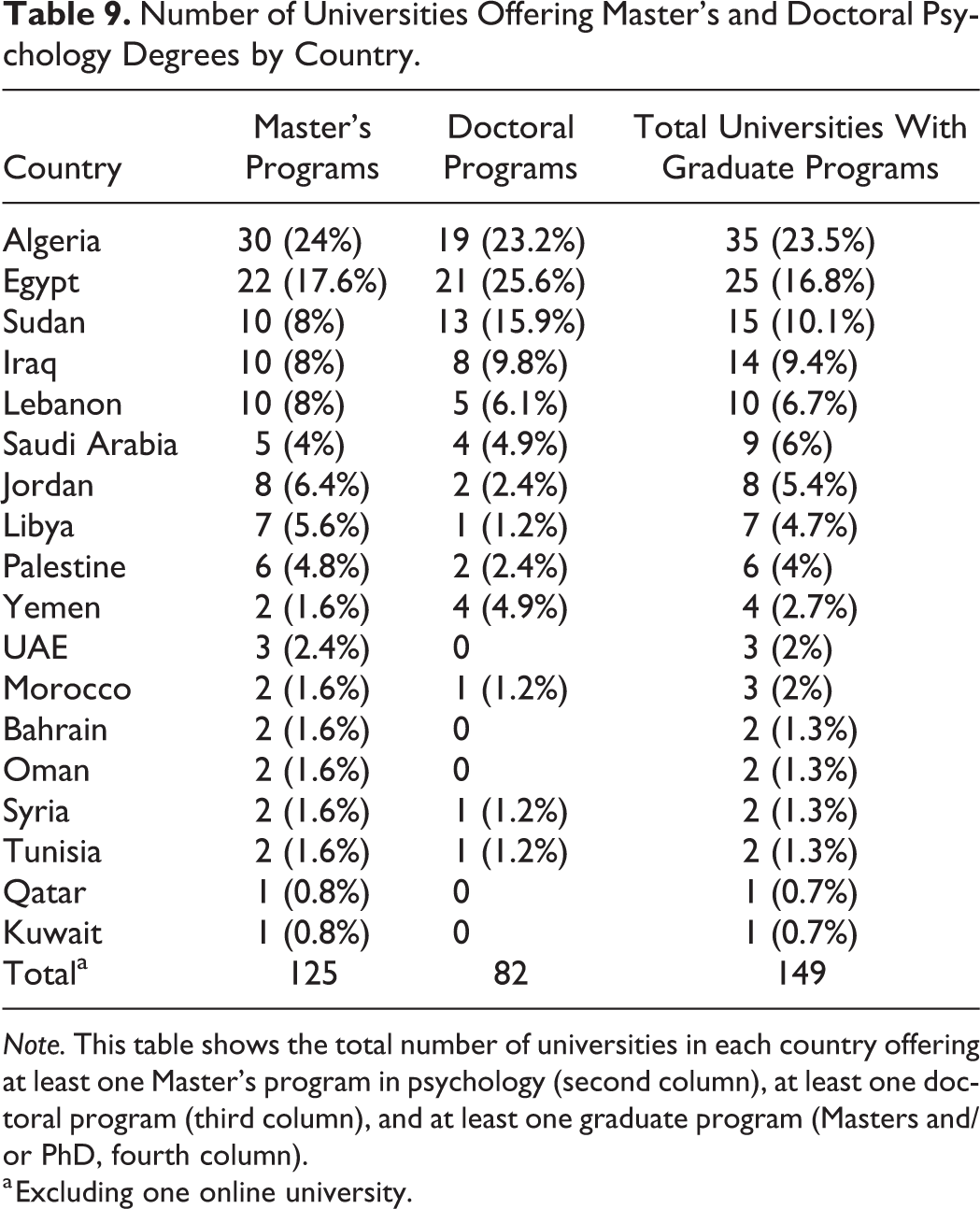
Note. This table shows the total number of universities in each country offering at least one Master’s program in psychology (second column), at least one doctoral program (third column), and at least one graduate program (Masters and/or PhD, fourth column).
a Excluding one online university.
We managed to gather information on specializations from 111 universities including 258 master’s programs (Table 10) and 148 doctoral programs (Table 11). The other university websites were inaccessible or uninformative. While most graduate programs were either clinical or educational, with a notable proportion of general/unspecified programs, less than 3% were in social psychology (Tables 10 and 11).
Distribution of Master’s Programs by Specialization.
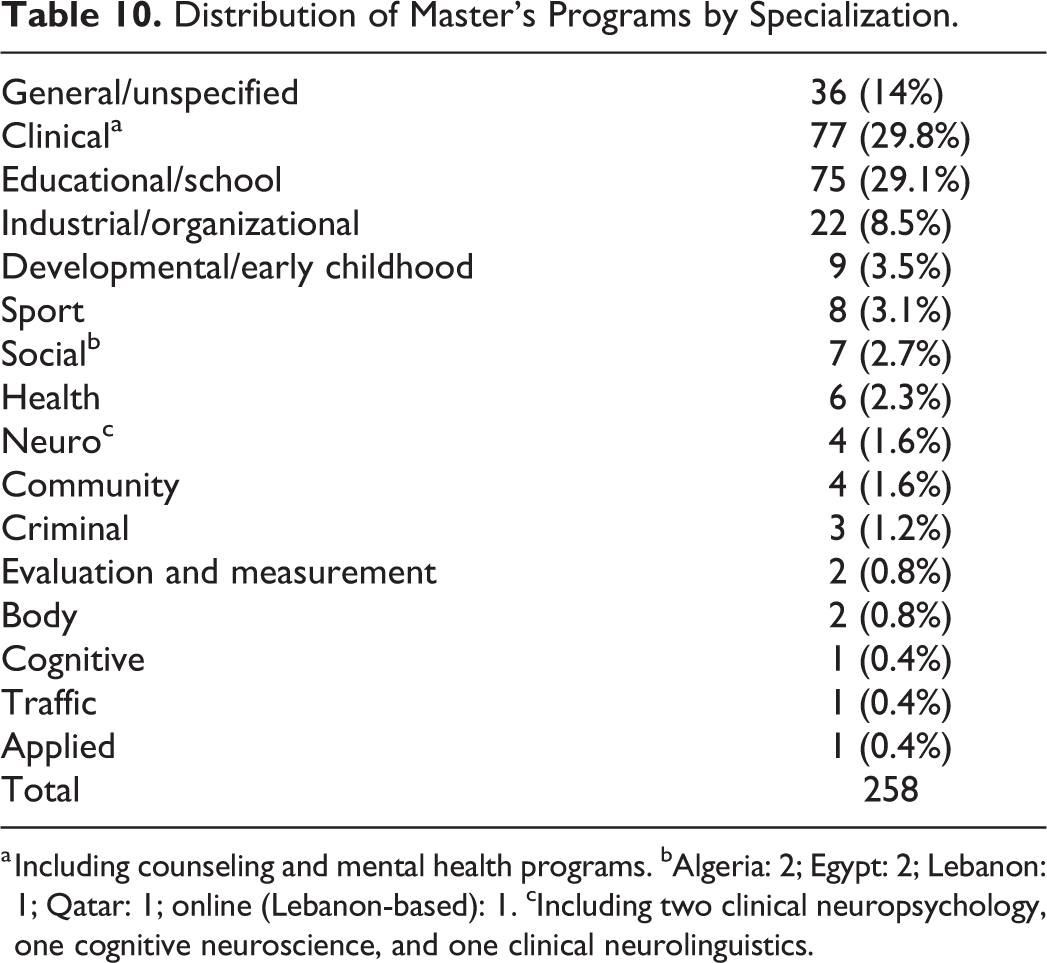
a Including counseling and mental health programs. bAlgeria: 2; Egypt: 2; Lebanon: 1; Qatar: 1; online (Lebanon-based): 1. cIncluding two clinical neuropsychology, one cognitive neuroscience, and one clinical neurolinguistics.
Distribution of Doctoral Programs by Specialization.
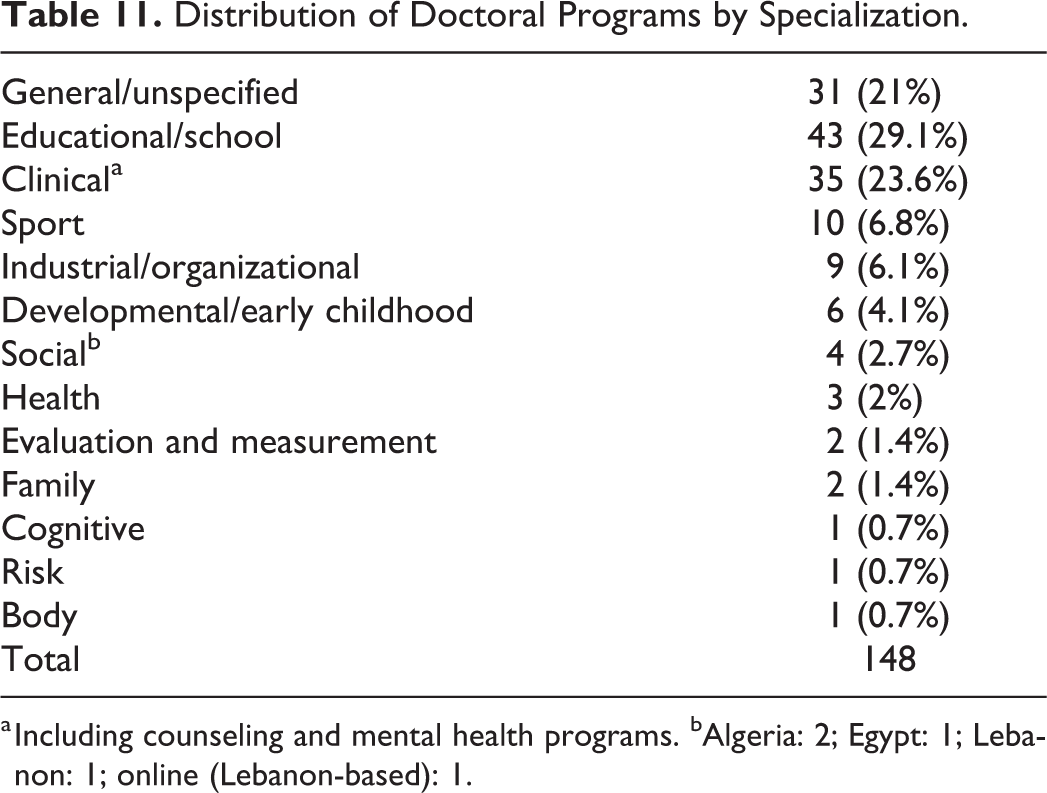
a Including counseling and mental health programs. bAlgeria: 2; Egypt: 1; Lebanon: 1; online (Lebanon-based): 1.
Discussion
This article sought to evaluate the current state of Arabic social psychology based on a selective review of articles, a basic profiling of first authors, and a mapping of graduate programs. Accordingly, we suggest possible ways forward for creating an Arab social psychology that is culturally rooted, methodologically valid (e.g., culturally sensitive practices, focused on diverse samples), and responsive to local societies’ needs (Adams et al., 2015; Moghaddam & Taylor, 1986; Zebian et al., 2007).
Output Volume and Origin
Our results indicate a glaring paucity of social psychological research in Arabic (see also Ahmed & Gielen, 1998), 11 albeit with increasing output over time. The Levant region seems most productive, with Iraq, Jordan, and Palestine among the highest producers, consistent with their contributions in the international psychological literature (Sanchez-Sosa & Riveros, 2007; Zebian et al., 2007). Saudi Arabia also ranked high, as did Algeria, contrary to findings by Ahmed and Gielen (1998), suggesting Algeria’s Arabic research output has recently increased. Also contrary to past research (e.g., Ahmed & Gielen, 1998), Egypt was not among the most productive countries, despite being one of few to host graduate social psychology programs.
Topics
We found research was mostly concerned with examining the self and social adjustment. Conversely, questions surrounding the social psychology of intergroup relations/political psychology, crucial for understanding the region’s most pressing problems, received little attention, thereby shedding doubt on how responsive Arabic social psychology has been to the needs of local populations. It may be that restrictions on academic freedom limit the production of critical research output (see Farag, 1987). Regardless, the result is an academic Arabic social psychology that leaves the social and political status quo largely unchallenged, a point we return to later.
Research Practices
Our findings help track how much Arabic social psychology engages in self-reliance through adopting culturally sensitive practices and building on local/regional research (Zebian et al., 2007). Many researchers developed new scales and/or adapted existing ones to measure their constructs and most of those engaged in some form of scale validation, evidencing a healthy concern with cultural sensitivity. However, scale validation procedures were often limited in scope, thus resulting in measures of questionable validity.
Furthermore, most articles drew primarily on regional references. While this reveals a healthy trajectory for a self-reliant psychology, it also highlights the limited direct dialogue between Arabic research and the international literature. Relatedly, we found that social psychological theories and frameworks were not always employed and that numerous articles did not rely on updated references. This may suggest our article selection incorporated articles that fit better in other psychology subfields or even outside psychology itself. If so, however, this indicates that disciplines tackling topics related to social psychology are not sufficiently in dialogue with it (see Gielen, 2006; Zebian et al., 2007), a problem that may not be limited to social sciences in the Arab region. Regardless, considering the massive body of social–psychological research in the international literature, Arab researchers cannot afford to ignore mainstream and critical western social psychological research and indigenous social psychologies in the Global South (Zebian et al., 2007) if they want to advance the field.
Arabic social psychology largely follows western methodological trends: it is mostly empirical, quantitative, with a prevalence of correlational designs, adult samples, and an overreliance on university students. Clearly, more experimental and longitudinal designs are needed to establish causal inferences. Additionally, increased appreciation of qualitative and mixed methods could help Arabic social psychology avoid the pitfalls of mainstream western psychology and help with indigenization and innovation (Zebian et al., 2007). Furthermore, generalizable research must rely on more diverse populations than university students (Heinrich et al., 2010), although the focus on youth is imperative considering the large share of youths in Arab populations (United Nations Development Program, 2016).
Crucially, we found that quantitative research typically focused on investigating simple models testing bivariate relations one at a time. This underscores the importance of improved methodological and statistical training among Arab researchers in order to generate more complex research questions and more appropriate statistical analyses.
Moreover, the structuring of social psychological articles followed no unified standard regarding the sections themselves or the type and amount of information to go into each section (e.g., the American Psychological Association, 2010 ). The development of a unified Arabic psychological publication style seems necessary in order to improve research quality.
Social Psychological Training in the Arab Region
One important factor behind the underdeveloped status of Arab social psychology is the severe shortage of graduate social psychology programs, although graduate psychology programs have seemingly increased in recent years (compared with findings from Ahmed & Gielen, 1998). The near absence of doctoral social psychology programs is particularly detrimental to research production since master’s students are less likely to publish their work. Relatedly and importantly, in line with recent findings (Bou Zeineddine et al., 2020), there is a seeming scarcity of social psychology scholars, with research on social psychological topics being produced mostly outside the field. The dominance of single-authored and single-study papers in Arabic social psychology in addition to the low number of interregional collaborations suggests that researchers work in isolation, which could impact both quantity and quality of research output.
Additionally, and consistent with past findings on Arab psychology in general (Ahmed & Gielen, 1998), social psychological research seems to be male-dominated, despite the female-dominated undergraduate psychology programs (Qatar University, e.g., currently offers psychology bachelors only to females). This gender imbalance cannot be discoupled from women’s status in the region and elsewhere and is likely to affect the type of research produced in the field, highlighting the need for more specialized and gender-balanced social psychological training and career development.
Importantly, the current status of Arab(ic) social psychology must be analyzed in the context of the social and political conditions in the region and the underdevelopment of social science in general. First, political instability (e.g., wars, foreign military control, and occupations) has a massive effect on researchers’ productivity (Harb, 2016). Second, colonialist and imperialist forces in the region, as well as authoritarian political elite and ideological groups such as religious authorities, have an interest in stifling the development of an Arab social science that aims to question authority and to challenge power inequalities locally, regionally, and internationally. This is done through the delegitimization or neglect of social sciences as a source for evidence-based policy, the repression of scientific inquiry into particular topics but also low public investment in social science research and training, particularly in public universities (AlAmine, 2009; Bishara, 2017; Hanafi & Arvanitis, 2016).
These structural obstacles can only be overcome with the power of collective resistance. Accordingly, it is crucial for social psychologists in the Arab region to collectively organize by forming specialized professional associations that can create communication and collaboration platforms, regional journals, and conferences (currently lacking). Attracting more researchers to the field requires that (social) psychologists also raise public awareness of the discipline, which is currently underappreciated (Bou Zeineddine, 2017; Gielen, 2006). Furthermore, given the brain drain of Arab psychologists (Ahmed & Gielen, 1998), transnational networks of Arab (social) psychologists for training and collaboration should be created and developed. More broadly, North–South collaborations for the development of social psychological training and research (e.g., scholarships, workshops, grants) which have no underlying hegemonic political agendas can certainly be helpful. Learning from efforts to develop social psychology and social sciences more broadly in the Global South can help inspire similar efforts in the region, highlighting the need for the formation of Global South professional associations. Additionally, it is crucial for Arab social psychologists to be engaged in organizing on a political level, alongside other types of collectives, as part of the local, regional, and international struggles for liberation, decolonization, and social justice (Bou Zeineddine et al., 2020).
Linguistic Considerations
Scholars have argued that one issue hindering the development of a regional collective psychology is the reliance on different languages in scientific practice and the influence of different western psychological traditions (e.g., Gielen, 2006). This fragmentation/compartmentalization is compounded by institutional practices whereby local, typically private universities require publication in western journals, to deal with globalization pressures: “publish globally and perish locally,” while public universities, usually more underresourced, often operate in Arabic: “publish locally and perish globally” (Hanafi, 2011). Accordingly, we need increased dialogue between Arab social psychologists/scientists, facilitated through the establishment of stronger networks and greater translation of publications and conferences talks. Relatedly, universities focusing exclusively on international publications should show greater recognition of regionally transmitted knowledge in funding and promotion practices, while those focusing exclusively on local or regional publications should help researchers increase international publications by starting to address the structural obstacles preventing such contributions.
The limited direct dialogue between the international literature and Arabic social psychological research is inevitably linked to the limited accessibility of the international literature, due partly to linguistic barriers and limited journal subscriptions (Hanafi & Arvanitis, 2014). Greater accessibility requires increased funding for higher education institutions in the Arab region, more open-access international social psychological journals, but also, importantly, the development of social science research translation services from and to Arabic. To this last point, Arab social psychologists’ efforts for abstract translation to English or French are commendable (although greater accuracy is required). It would be mutually beneficial meanwhile if international journals/databases invested in translating their abstracts to the most spoken languages in the world, which include Arabic (Bou Zeineddine, 2017). More broadly, advancing the social sciences may be well served internationally if we collectively develop capacities for social science translation on demand from English to multiple languages and vice versa. That said, Bishara (2017) argues that historically, renaissances have involved knowledge of one’s own and other languages. This underscores the need for developing bilingual capacities among Arab social scientists, particularly English since it is currently the international research language, yet not at the expense of Arabic, which is necessary for a decolonized psychological science (Adams et al., 2015; AlAmine, 2009; Bishara, 2017; Hanafi & Arvanitis, 2014).
Addressing the problem of underrepresentation of Arabs in social psychology may also be facilitated through greater use of Arabic material and stimuli in research produced in English, such as in the context of research projects initiated in the Global North involving data collection in multiple countries including the Global South. However, our experience with such projects is that local (Arab/Global South) researchers become mere data collectors. This type of research is also rarely translated to the language of the different countries involved. Such practices are more likely to contribute to what may be called social psychology “in the South” (imported from the Global North as universally applicable) rather than a social psychology “of the South” (developed in the Global South) or “for the South” (a counterhegemonic social psychology; see Burawoy, 2010, pp. 21–22, for a similar distinction in sociology). Hence, we call instead for North–South collaborations to involve collaboration in its fullest sense and to include plans for research dissemination in English but also in researchers’ local languages.
Technological Considerations
Our findings also shed light on the potential for technological developments to help develop Arabic social psychology. First, limitations in available software for reading full texts in Arabic hindered us from performing more extensive searches and assessing impact through citations. This limitation is currently being resolved (e-Marefa, personal communication, April 4, 2019). Second, social psychological training could benefit from less formal educational means such as open online courses by Arab social psychologists, or Arabic subtitles for courses offered internationally.
Limitations
Our review was selective, relied on a single database, 11 and ignored potential differences between countries. Future reviews of Arab(ic) social psychology should address these limitations and consider examining books but also gray literature (Hanafi & Arvanitis, 2016). While our conclusions may not apply to Arab research produced in French or English, past reviews of international Arab psychology (e.g., Sanchez-Sosa & Riveros, 2007; Smith et al., 2001; Zebian et al., 2007) suggest some similar trends, in addition to low Arab psychological research output. To estimate Arab social psychological research produced in English for the same time period (2000–2015), we performed a preliminary search on the database PsycINFO, which yielded 1,484 articles. 12 While this figure is approximately 10 times that which we found in Arabic, it includes research from the Global North on the Arab diaspora and on non-Arabs (e.g., attitudes toward Arabs), which is likely to be sizable. Furthermore, our (selective) review underestimates the volume of Arabic research. Accordingly, while it is difficult to ascertain whether Arab social psychology is predominantly produced in English, the PsycINFO estimate suggests that even research produced in English seems relatively limited. That said, reviews comparing Arab social psychological research produced in different languages are needed. An analysis of research practices, assessing their contribution to decolonization and liberation from authoritarianism (Adams et al., 2015; AlAmine, 2009; Hanafi, 2016), can help guide social psychology’s development in the region.
Conclusion
This, to our knowledge, is the first analytic review of Arabic social psychology. Our findings suggest that social psychology is a marginalized field in the Arab region. Its development is seemingly hindered by structural obstacles that require collective efforts to address. We hope this review helps develop a more representative, valid, and relevant social psychology regionally and internationally.
Supplemental Material
Supplementary_material_final - The Status of Arabic Social Psychology: A Review of 21st-Century Research Articles
Supplementary_material_final for The Status of Arabic Social Psychology: A Review of 21st-Century Research Articles by Rim Saab, Arin H. Ayanian and Diala R. Hawi in Social Psychological and Personality Science
Footnotes
Acknowledgments
The authors wish to thank the Arab Council for Social Sciences for partially funding this research. Special thanks to the following individuals for assistance in data collection and analysis: Mo’min Alnunu, Omar Ibrahim, and Issam Tafech but also Mortada AlAmine, Zeina Kamareddine, and Mohammad Naamani. The authors also wish to thank the editor and an anonymous reviewer for their constructive feedback.
Declaration of Conflicting Interests
The author(s) declared no potential conflicts of interest with respect to the research, authorship, and/or publication of this article.
Funding
The author(s) disclosed receipt of the following financial support for the research, authorship, and/or publication of this article: The authors wish to thank the Arab Council for Social Sciences for partially funding this research.

Supplemental Material
The supplemental material is available in the online version of the article.
Notes
References
Supplementary Material
Please find the following supplemental material available below.
For Open Access articles published under a Creative Commons License, all supplemental material carries the same license as the article it is associated with.
For non-Open Access articles published, all supplemental material carries a non-exclusive license, and permission requests for re-use of supplemental material or any part of supplemental material shall be sent directly to the copyright owner as specified in the copyright notice associated with the article.
