



Abstract
The current research investigates people’s attitudes toward an ambiguous situation of police violence against a woman suspect. We hypothesize that the suspect’s race and participants’ ambivalent sexism, particularly benevolent sexism, will jointly inform perceptions of the suspect’s femininity, and in turn, perceptions of the suspect’s pain, judgments of who is to blame, and perceptions the officer was justified in using force against the suspect. Across two studies, we found support for our hypotheses: participants who reported more benevolent sexism thought the suspect were more feminine, but this association was only present when the suspect was White, as opposed to Black. Perceived femininity, in turn, predicted perceptions the suspect felt more pain, was less blameworthy for the situation, and perceptions that the officer’s use of force was less justified (Study 2).
Keywords
In the United States, Black women are at greater risk of being killed by the police than White women (Edwards et al., 2019). Despite the disproportionate impact on the community of Black women, the public’s attitudes toward events of police violence are mixed—with some social movements condemning police violence as evidence of racial biases (#SayHerName; Crenshaw, 2011; Crenshaw et al., 2015), and others contending these actions are necessary for officer and community safety (#BlueLivesMatter; Riley, 2020). The current research investigates people’s attitudes toward an ambiguous situation of police violence against a Black or White woman suspect.
We anticipate that a woman’s race and perceivers’ endorsement of traditional gender roles may jointly shape perceptions of the woman suspect’s femininity. Because femininity is associated with vulnerability and weakness (e.g., Bem, 1993), the more feminine a woman is perceived to be, the more blame people may attribute to someone who harms her. Together, this reasoning suggests that a victim’s race and participants’ gendered attitudes may shape whether one sees femininity in a woman victim of police violence and, in turn, evaluations of who is to blame for that violence.
Race, Ambivalent Sexism, and Perceived Femininity
Stereotypes about Black women emerged from a historical confluence of slavery, patriarchy, and strict gendered roles. Stereotypes about the aggressive and animalistic nature of Black people were used to justify slavery (e.g., Boskin, 1986; Plous & Williams, 1995). These racial stereotypes, however, conflicted with prominent gender stereotypes. Women were perceived to be morally superior to men, yet physically weaker and in need of protection (for a review see Connor et al., 2017). Therefore, to justify enslaving Black women, stereotypes emerged which both masculinized them and made them seem less feminine (e.g., Davis & Cross, 1979; Jewell, 1993).
The impact of this history of gendered racial stereotypes persists today. Compared to White women, Black women are often stereotyped as more outspoken (e.g., Donovan & West, 2015), strong (e.g., Wyatt, 2008), and less feminine (e.g., Goff et al., 2008; McMahon & Kahn, 2016). Further, these gendered racial stereotypes impact top-down processing of faces. In particular, pictures of Black women are most frequently miscategorized as men as compared to miscategorization rates of pictures of Black men, White men, or White women (Goff et al., 2008). Together, these findings suggest a larger cultural context in which femininity is tied to Whiteness (see also Hull et al., 1982).
Perceptions of femininity are also inextricably linked with sexism. Ambivalent sexism theory contends that sexism is comprised of two complementary ideologies: hostile and benevolent sexism (e.g., Glick & Fiske, 1996; 1997). Hostile sexism reflects antipathy for women who deviate from traditional and submissive gender roles. Benevolent sexism praises women who embrace traditional and submissive gender roles. Although at times these two ideologies are complementary (e.g., Glick & Fiske, 1996), women who deviate from traditional gender roles tend to be perceived to be lacking femininity, particularly by those who are benevolently sexist (Glick & Raberg, 2018).
Critically, both race and ambivalent sexism may jointly contribute to perceptions of femininity. Previous research has found that ambivalently sexist stereotypes are differentially applied based on the race of the woman—people are less likely to apply benevolently sexist stereotypes (e.g., women are pure) to Black (vs. White) women (McMahon & Kahn, 2016). This suggests that Black (vs. White) women were perceived as violating standards of femininity to a stronger degree—at least among perceivers who most endorsed traditional gender roles.
Perceiving a woman as feminine is important because it highlights stereotypes that women are fragile and in need of protection (e.g., Hideg & Ferris, 2016; Shepherd et al., 2011). For example, those who endorse benevolent sexism tend to judge women who deviate from traditional gender roles as lacking femininity and, as a result, tend to withhold praise and protection of these “deviant” women (Glick & Raberg, 2018; for a review see Connor et al., 2017). Judging a woman as deviant, however, may depend on her actions and race, particularly among those who are benevolently sexist (McMahon & Kahn, 2016). This suggests that among benevolently sexist individuals, White, but not Black, women may benefit from being perceived as feminine because it triggers a protective motivation. As a result, benevolent sexism may be a particularly powerful ideology when considering situations of police violence against women.
Femininity, Pain, and Blame
It follows that the extent to which women victims of police violence are perceived to be feminine may similarly inform perceptions of the victim’s pain tolerance. People tend to assume women have a lower pain tolerance than men (e.g., Myers et al., 2001), and gender norms may further exacerbate these perceived differences. Men and women who seem more masculine are perceived to have a higher pain tolerance than men and women who seem more feminine (e.g., Wander et al., 2012; Wise et al., 2002). Therefore, women suspects who are perceived as lacking femininity may also be perceived as feeling less pain. This possibility is particularly troublesome because having a higher pain tolerance may be perceived as justifying violent actions the police take against women suspects who are perceived as lacking femininity.
Relatedly, perceptions of femininity (or lack thereof) may be used to assign blame during ambiguous altercations with the police. Traditional gender roles suggest that women are meant to be protected as long as the woman embodies the traditional feminine ideals of being gentle, submissive, and soft-spoken (e.g., Bem, 1993; Glick & Fiske, 1997). However, if women do not embody femininity, then actions taken to punish deviant women may seem justified (e.g., Glick et al., 1997). In fact, deviant women may be perceived as responsible for causing the violence they incurred—an act also known as victim blaming (Glick et al., 2002; Sakalli, 2001; Yamawaki, 2007). Further, previous research finds that both benevolent and hostile sexism predict more victim blame and less willingness to intervene in a situation in which a Black woman is at risk of sexual assault (Katz et al., 2017; Katz et al., 2018). Together, this suggests that to the extent a woman victim of police violence is perceived as lacking femininity, people may be more likely to see that violence as the woman’s fault.
Research Overview
The current research investigates people’s attitudes toward an ambiguous situation of police violence against a woman suspect. Because many instances of police violence are often ambiguous, biased attitudes, such as racial prejudice, may inform perceptions of these situations (Cooley et al., 2019). We hypothesize that the suspect’s race and participants’ ambivalent sexism, particularly benevolent sexism, will jointly inform perceptions of the suspect’s femininity. Because femininity (or lack thereof) is critical when determining whether women are perceived to be in need of protection (e.g., Glick & Fiske, 1997), we anticipate perceived femininity differences will, in turn, inform perceptions of the suspects’ pain, judgments of who is to blame, and perceptions of whether the officer was justified in using force against the woman suspect.
We investigate these hypotheses across two studies. An a priori power analysis determined we would need at least N = 351 participants to ensure adequate power (1-β = 0.80) to detect a small-to-medium effect size (f = 0.15; G*Power 3 software; Faul et al., 2007). To account for robot checks failures, manipulation check failures, attrition, and participants who did not consent to having their data used, we recruited N = 550 participants for each study. Representative samples were recruited from Lucid Theorem (https://luc.id/theorem/), an online recruitment platform that provides samples representative of the United States on age, gender, ethnicity, and region. We added a manipulation check of the suspect’s race. In both studies, we exclude participants who failed robot checks, did not consent to having their data used, and/or who failed a suspect race manipulation check (Study 1: N = 21, n Black suspect = 10, n White suspect = 11; Study 2: N = 34, n Black suspect = 9, n White suspect = 25). We report all measures and manipulations below. 1 For verbatim study materials, see Supplemental Materials. For participant demographics across both studies, see Table 1.
Participant Demographics.
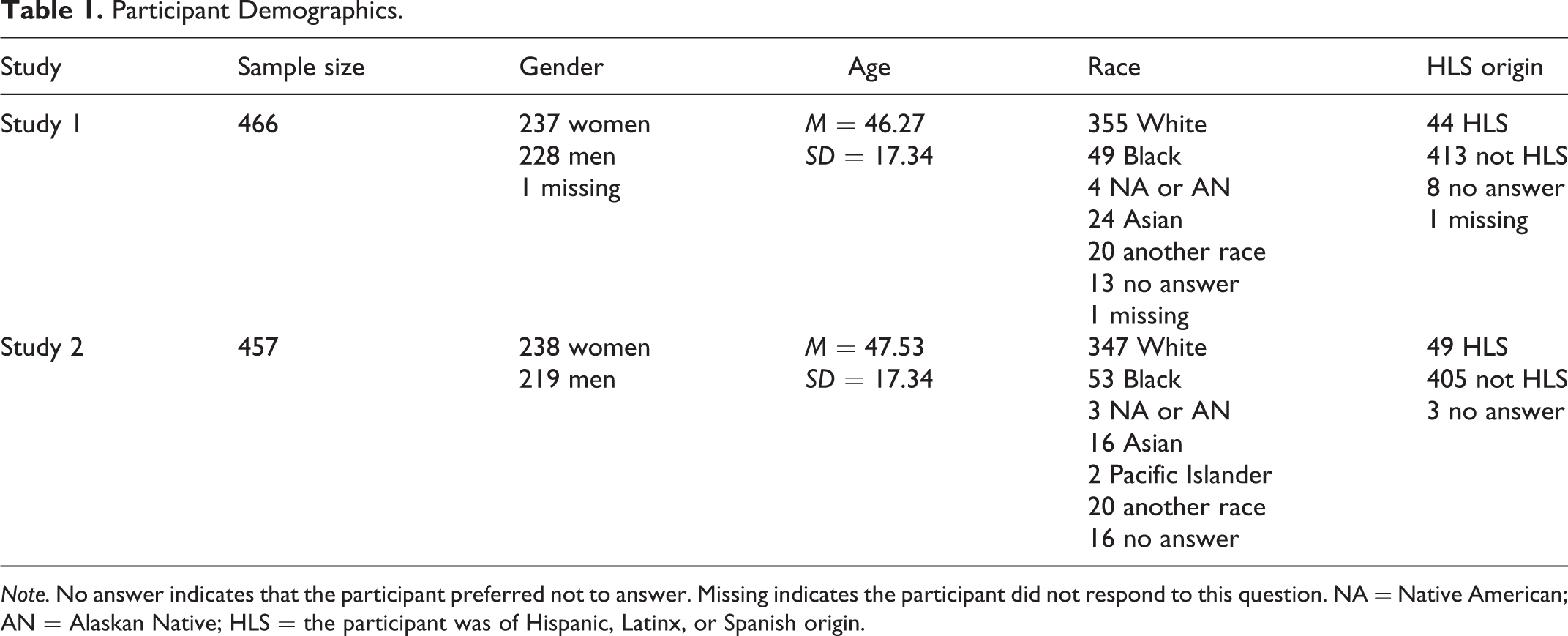
Note. No answer indicates that the participant preferred not to answer. Missing indicates the participant did not respond to this question. NA = Native American; AN = Alaskan Native; HLS = the participant was of Hispanic, Latinx, or Spanish origin.
Study 1 Method
Procedure
Participants were asked to read a police report of an ostensibly real officer–civilian encounter. In the encounter, the police officer was dispatched to investigate an armed robbery. In a between-subjects manipulation, the suspect was either described as a “twenty-something black [white] female” (see Figure 1). The officer then sees a woman matching the description of the suspect a few blocks from the crime scene. The officer chases the suspect down an alley, and then a struggle ensues in which the officer is knocked to the ground. The suspect then reaches for something in the waistband of her pants and the officer, thinking the suspect is getting a weapon, shoots the suspect. To enhance the ambiguity of the situation, participants are told that it was unclear whether or not the officer detained the correct suspect. And, while the suspect did not have a gun, she did have a knife attached to an ankle band on her right ankle. To ensure participants understood and engaged with the police report, we asked a few simple questions. Embedded in these questions was a race attention check.

Police report for the black female suspect condition, Study 1.
Next, all participants were asked to determine whether masculine and feminine traits were representative of the suspect (traits were a subset of items from the Bem Sex-Role Inventory; Bem, 1993). The masculine traits were forceful, aggressive, strong personality, powerful, and athletic (0 = not at all representative; 100 = extremely representative; α = .87). The feminine traits were gentle, sensitive, compassionate, and fragile (0 = not at all representative; 100 = extremely representative; α = .92). To avoid order effects, the order of the masculine and feminine items was random.
Then, participants were asked to estimate the intensity of pain the suspect would experience for a variety of situations. The situations were three items from Hoffman and colleagues (2016): (1) suspect bites her tongue, (2) suspect gets her fingers caught in the car door, and (3) suspect stubs her toe (0 = not at all painful; 100 = extremely painful; α = .80).
Next, participants completed items assessing the perceived responsibility and blame of the suspect and the officer. To avoid order effects, the order of the items about the suspect and the officer were randomly presented. The items were (1) the suspect (officer) is responsible for how the situation unfolded, (2) the suspect (officer) is to blame for how this situation unfolded, and (3) the suspect (officer) deserves to be punished for this event (0 = strongly disagree; 100 = strongly agree; αsuspect = .87; αofficer = .87).
Then participants completed the Ambivalent Sexism Inventory—Short Form (Rollero et al., 2014). This scale measures both benevolent (α = .81) and hostile (α = .90) aspects of sexism. Neither benevolent nor hostile sexism differed between condition; therefore, these scales can be used as moderators, t benevolent = 1.49, p = .137, 95% CI Mdif [−0.04, 0.32], d = 0.14; t hostile = 0.91, p = .361, 95% CI Mdif [−0.10, 0.27], d = 0.09.
Next, participants completed several exploratory individual difference measures. As these measures are not of primary interest to the current research, we present analyses using these measures in the Supplemental Materials. We measured gender prejudice using a feeling thermometer difference score (positivity toward men minus positivity toward women). We measured racial prejudice with the Symbolic Racism Scale (α = .87; Henry & Sears, 2002) and a feeling thermometer difference score (positivity toward White people minus positivity toward Black people). We further measured internal motivations to control prejudice (α = .91; Plant & Devine, 1998). Finally, participants completed demographic items: perceived socioeconomic status using the MacArthur ladder, political party affiliation, political ideology on social issues, and political ideology on economic issues. We also obtained some demographic information (e.g., gender, age, race/ethnicity) automatically via the recruitment platform.
Results
Preliminary Analyses
We investigated correlations among our variables of interest (see Table 2). These findings suggest that ambivalent sexism is significantly associated with perceived femininity. Perceived femininity is also associated with perceptions of pain, suspect blame, and officer blame. Interestingly, perceived masculinity is also associated with perceptions of pain and suspect blame.
Correlations Among Variables of Interest, Study 1.
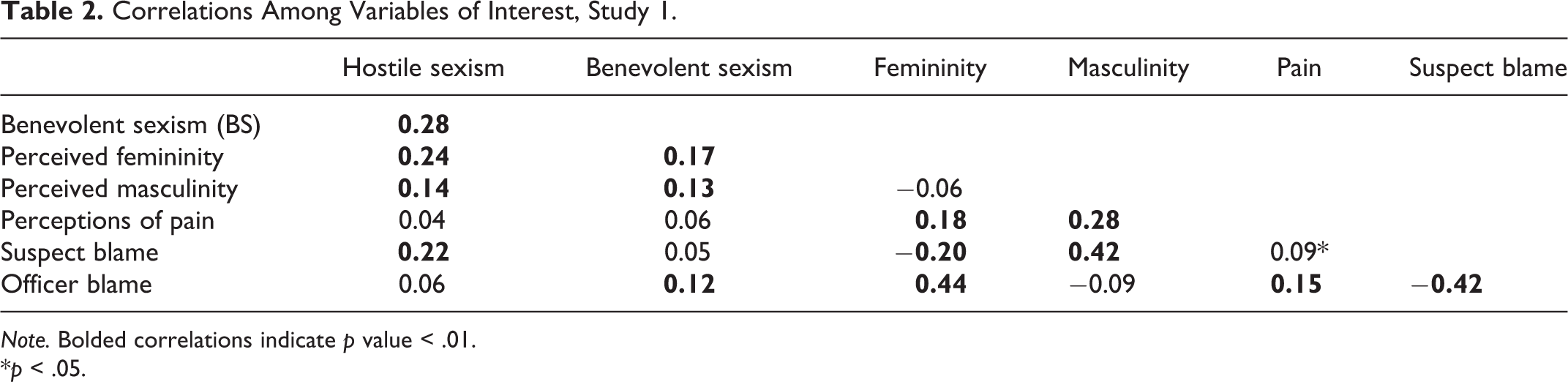
Note. Bolded correlations indicate p value < .01.
*p < .05.
Primary Analyses
First, we hypothesized that the suspect’s race and participants’ benevolent and hostile sexism would jointly inform perceptions of the suspect’s femininity. To investigate this question, we regressed suspect’s femininity onto suspect’s race, participants’ benevolent and hostile sexism, and the interaction between condition and benevolent sexism as well as the interaction between condition and hostile sexism. All continuous variables were standardized prior to analysis.
For complete results, see Table 3. The results revealed a nonsignificant interaction between suspect’s race and participants’ hostile sexism, b = −0.13, p = .166, 95% CI [−0.32, 0.05], but a significant interaction between suspect’s race and participants’ benevolent sexism, b = −0.20, p = .032, 95% CI [−0.39, −0.02]. Using PROCESS (Hayes, 2017), we probed the interaction between suspect’s race and participants’ benevolent sexism in two ways: (1) by estimating conditional effects of benevolent sexism when the suspect was White versus Black (see Figure 2) and (2) by estimating conditional effects of suspect’s race at low (−1 SD) and high (+1 SD) levels of benevolent sexism. In both analyses, we used 5,000 bootstrapped resamples and controlled for the main effect hostile sexism and its interaction with suspect’s race. For those in the White suspect condition, more benevolent sexism was associated with more perceived femininity, b = 0.21, p = .002, 95% CI [0.08, 0.34]. However, for those in the Black suspect condition, benevolent sexism was not significantly associated with perceived femininity, b = 0.01, p = .927, 95% CI [−0.13, 0.14]. Next, we examined the effect of suspect’s race separately for those low and high in benevolent sexism. Among those low in benevolent sexism (−1 SD), perceived femininity did not differ between the Black and White suspect (−1 SD), b = 0.17, p = .200, 95% CI [−0.09, 0.42]. Among those high in benevolent sexism (+1 SD), perceived femininity also did not differ between the Black and White suspect. However, the trends among those low versus high in benevolent sexism were in the opposite direction, with the latter effect indicating that the Black (vs. White) suspect tended to be perceived as less feminine, b = −0.24, p = .071, 95% CI [−0.50, 0.02]. 2
Regression Results Predicting Perceived Femininity, Study 1.

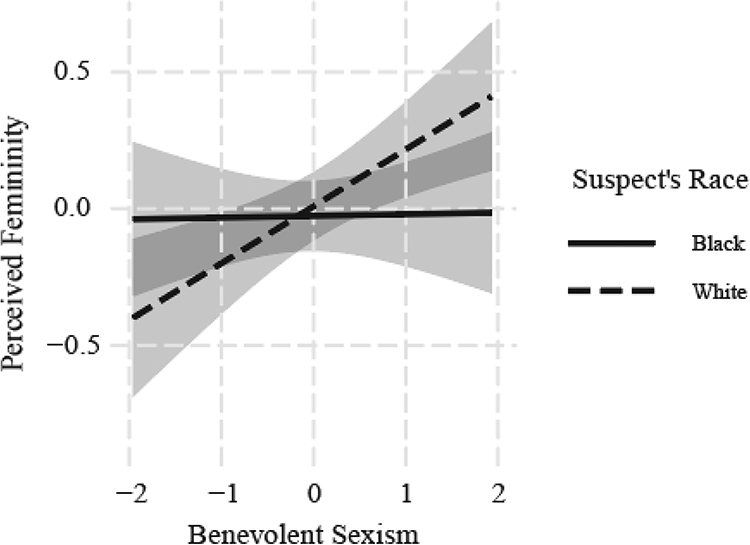
Graphing the interaction between suspect race condition benevolent sexism, Study 1. Note. All continuous variables are standardized. Bands reflect 95% CIs.
In addition, we investigated whether suspect’s race and participants’ hostile and benevolent sexism would inform perceptions of the suspect’s masculinity (see Table 3). Neither the interaction between suspect’s race and participants’ benevolent nor hostile sexism were statistically significant when predicting suspect’s masculinity.
Moderated Mediation Analyses
Because femininity is critical to determining whether women are perceived to be in need of protection (e.g., Glick & Fiske, 1997), we anticipated perceived femininity would mediate the moderated relationship between suspect’s race, participants’ benevolent sexism, and perceptions of the suspect’s pain, judgments the suspect is to blame, and judgments the officer is to blame. To investigate these questions, we utilized PROCESS (Model 7) with 5,000 bootstrapped resamples (Hayes, 2017; for conceptual model see Figure 3). 3 In all models, because perceived masculinity was associated with pain and blame (see Table 1), we controlled for perceived masculinity to demonstrate unique effects of perceived femininity on our outcomes, as opposed to general perceptions of humanness. In addition, we controlled for hostile sexism to investigate the unique effect of benevolent sexism. All continuous variables were standardized prior to analyses.
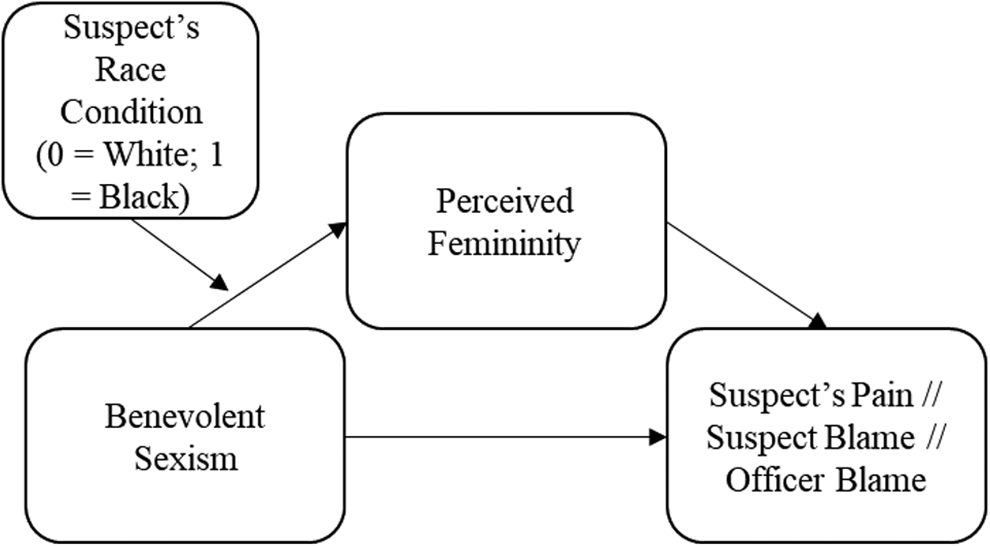
Conceptual models tested in moderated mediation analyses, Study 1.
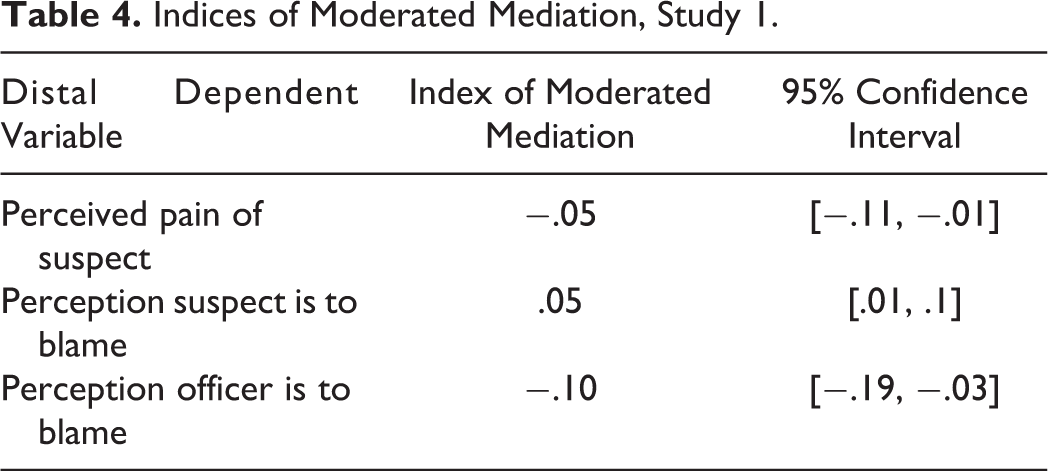
The indices of moderated mediation, which estimate whether the indirect effect is systematically different depending on the suspect’s race, were statistically significant for all three models (see Table 4; Hayes, 2015). The findings suggest that more benevolent sexism predicted more perceptions the suspect was feminine which, in turn, predicted perceptions that the suspect felt more pain, the suspect was less blameworthy, and the officer was more blameworthy. But these indirect effects via femininity were only statistically significant when the suspect was White (see Figure 4).
Indices of Moderated Mediation, Study 1.
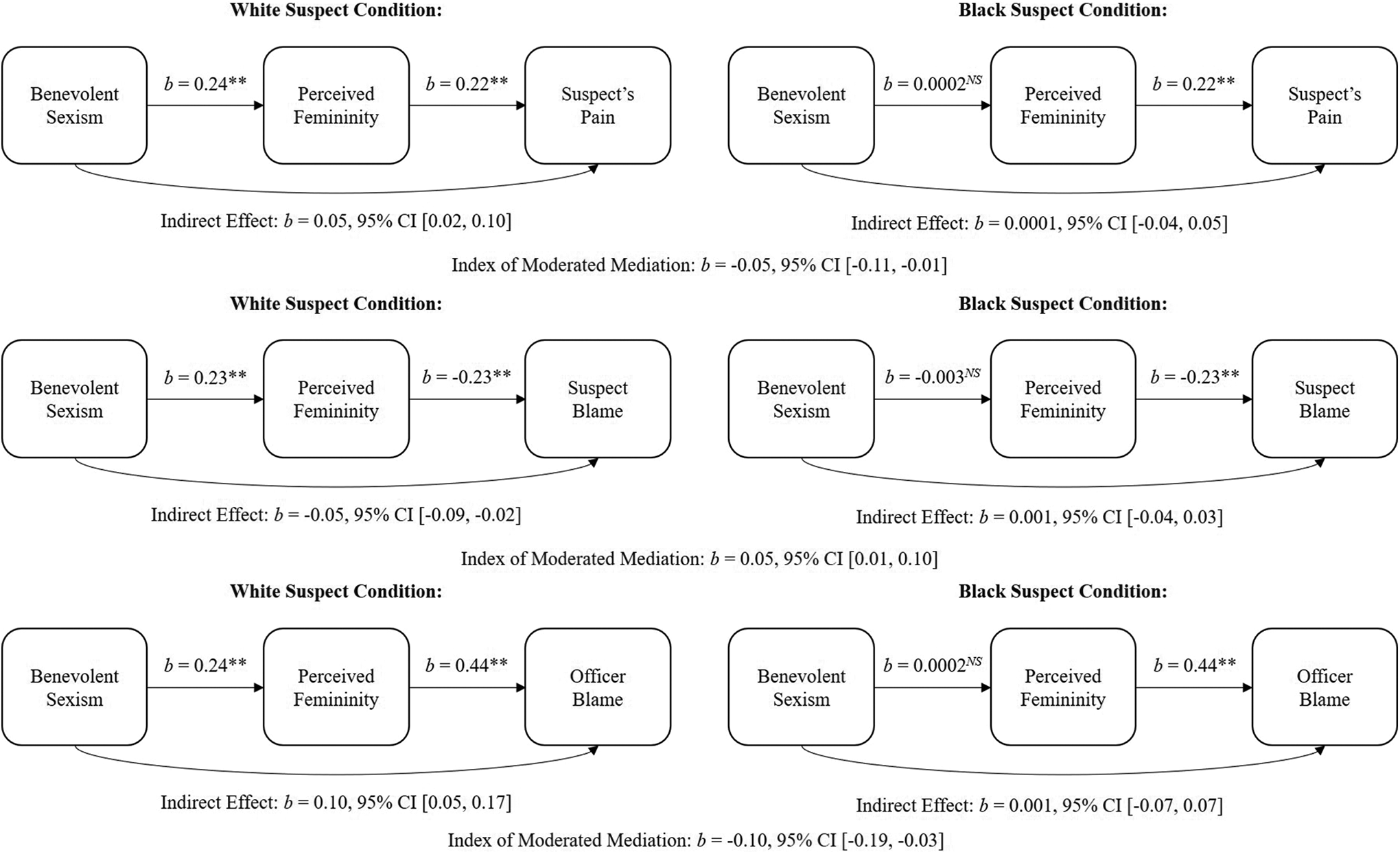
Moderated mediation predicting perceptions of suspect’s pain (top), perceptions the suspect is to blame (middle), and perceptions the officer is to blame (bottom), Study 1. Note. The total effects of suspects’ race by benevolent sexism on the dependent variables are: b Pain = −0.16, p = .082, 95% CI [−0.35, 0.02]; b suspect blame = −0.06, p = .505, 95% CI [−0.24, 0.12]; b officer blame = 0.05, p = .574, 95% CI [−0.13, 0.24] (see also Supplemental Analyses). ** p < .01. NS indicates p > .05.
Discussion
Together, these findings suggest a unique role of benevolent sexism when understanding attitudes toward Black and White women victims of police violence. Benevolent sexism predicted greater perceptions the suspect was feminine. However, this relationship was only present when the suspect was White (vs. Black). Perceived femininity, in turn, predicted perceptions the suspect felt more pain, the suspect was less blameworthy for the situation, and the officer was more blameworthy for the situation. In the next study, we sought to replicate and extend upon the current findings by investigating whether differences in perceived femininity would lead to believing that officers’ use of force was justified.
Study 2
Procedure
The procedure was identical to Study 1 except for three main changes. First, we added items investigating participants’ belief the officer’s use of force was justified: “given the suspect’s behavior…” (1) “the officer’s use of force was justified,” (2) “the officer’s actions were necessary for self-defense,” and (3) “the officer’s actions were necessary for the safety of others in the community.” (0 = strongly disagree; 100 = strongly agree; α = .90). Second, we removed the following exploratory measures from Study 1: gender and race feeling thermometers and the Symbolic Racism scale. Finally, we added four additional exploratory items investigating beliefs about police brutality: (1) “police brutality is a serious issue that needs to be addressed,” (2) “police brutality affects men disproportionately more than women,” (3) “instances of police brutality are handled in a just way by law enforcement and in courts,” and (4) “police brutality disproportionately affects people of color” (1 = strongly disagree; 6 = strongly agree). We present findings from these exploratory items in the Supplemental Materials. Again, neither benevolent nor hostile sexism differed between condition; therefore, these scales can be used as moderators, t benevolent = 1.30, p = .193, 95% CI Mdif [−0.06, 0.31], d = 0.12; t hostile = 0.66, p = .509, 95% CI Mdif [−0.12, 0.25], d = 0.06.
Results
Preliminary Analyses
We again investigated correlations among our variables of interest (see Table 5).
Correlations Among Variables of Interest, Study 2.
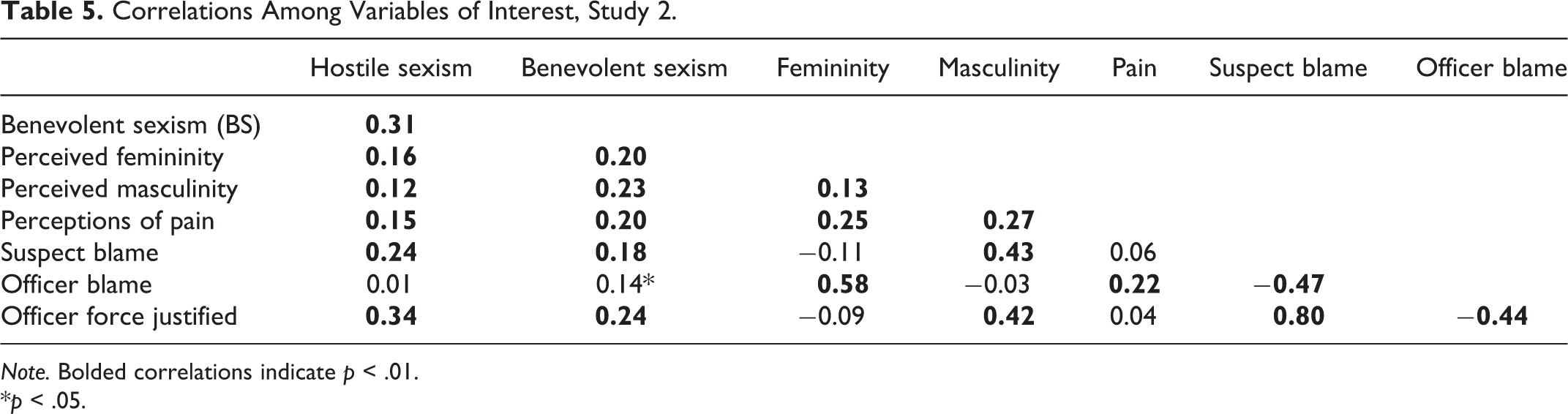
Note. Bolded correlations indicate p < .01.
*p < .05.
Primary Analyses
Based on the findings from Study 1, we hypothesized that the suspect’s race and participants’ benevolent sexism would interact to inform perceptions of the suspect’s femininity. 4 However, we also investigated whether suspect’s race and participants’ hostile sexism would predict perceptions of suspect femininity. We used the same analytic strategy to investigate this question as in Study 1.
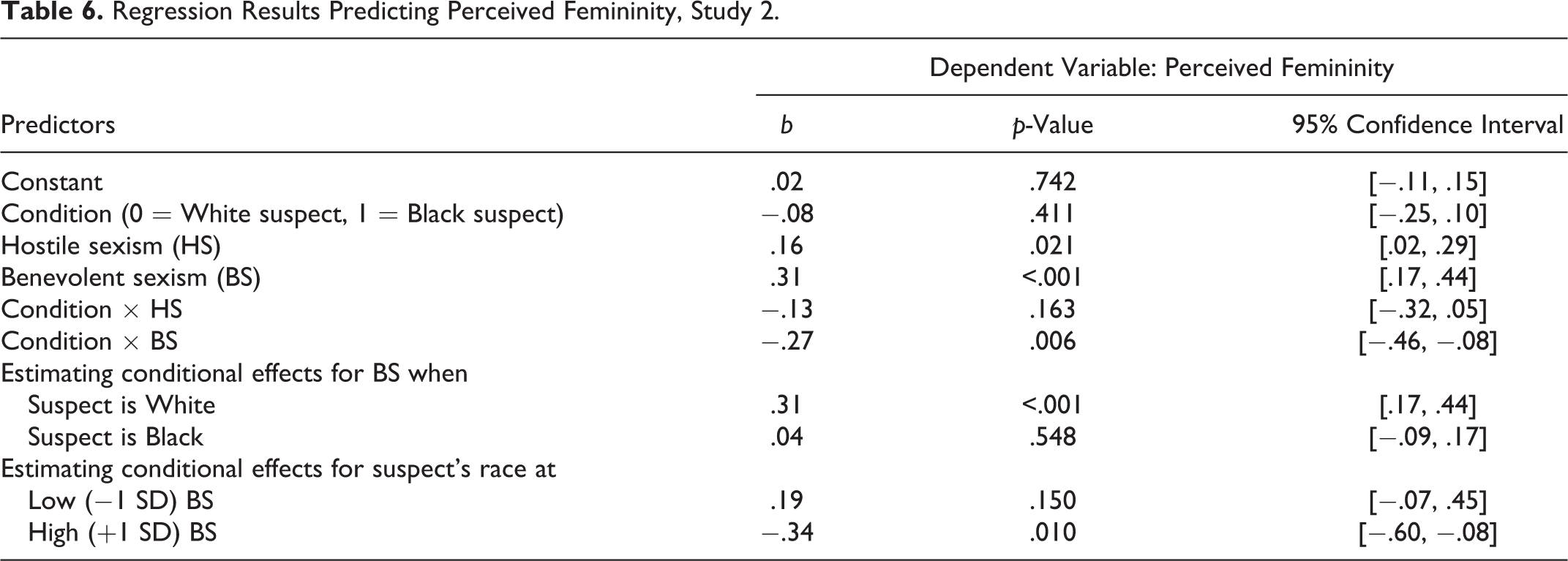
For complete regression results, see Table 6. Replicating Study 1, the results revealed a nonsignificant interaction between suspect’s race and participants’ hostile sexism, b = −0.13, p = .163, 95% CI [−0.32, 0.05], but a significant interaction between suspect’s race and participants’ benevolent sexism, b = −0.27, p = .006, 95% CI [−0.46, −0.08] (see Figure 5). Again, we probed this interaction in two ways: (1) by estimating conditional effects for benevolent sexism when the suspect was White and Black (see Figure 5) and (2) by estimating conditional effects for suspect’s race at low (−1 SD) and high (+1 SD) levels of benevolent sexism. For those in the White suspect condition, more benevolent sexism was associated with more perceived femininity, b = 0.31, p < .001, 95% CI [0.17, 0.44]. However, for those in the Black suspect condition, benevolent sexism was not significantly associated with perceived femininity, b = 0.04, p = .548, 95% CI [−0.09, 0.17]. Additionally, for those low in benevolent sexism (−1 SD), perceived femininity did not differ between the Black and White suspect, b = 0.19, p = .150, 95% CI [−0.07, 0.45]. However, for those high in benevolent sexism (+1 SD), perceived femininity was significantly lower for the Black (vs. White) suspect, b = −0.34, p = .010, 95% CI [−0.60, −0.08].
Regression Results Predicting Perceived Femininity, Study 2.

Graphing the interaction between suspect race condition and benevolent sexism, Study 2. Note. All continuous variables are standardized. Bands reflect 95% CIs.
Moderated Mediation Analyses
We anticipated the interaction between ambivalent sexism and suspect’s race would predict perceived femininity and, in turn, perceptions of suspect’s pain, judgments the suspect is to blame, judgments the officer is to blame, and belief that the officer’s use of force was justified. To investigate these questions, we utilized PROCESS (Model 7) with 5,000 bootstrapped resamples (Hayes, 2017). In all models, we controlled for perceived masculinity to demonstrate unique effects of perceived femininity on our outcomes, as opposed to general perceptions of humanness. In addition, we controlled for hostile sexism to investigate the unique effect of benevolent sexism. All continuous variables were standardized prior to analyses.
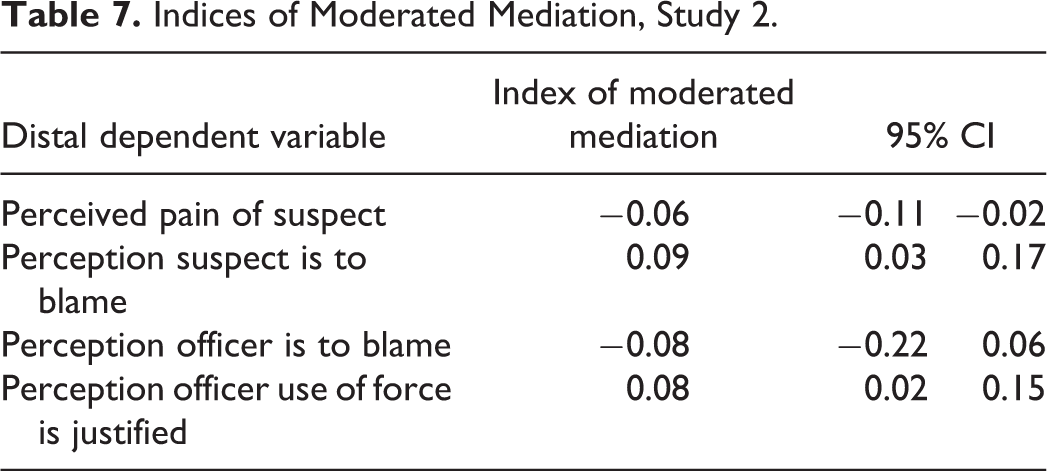
The indices of moderated mediation were statistically significant for three of four models (see Table 7). We interpret the findings for the significant models (see Supplement for the nonsignificant model). The findings suggest that more benevolent sexism predicted more perceptions the suspect was feminine which, in turn, predicted perceptions that the suspect felt more pain, the suspect was less blameworthy, and the officer was more justified in using force. But these indirect effects via femininity were only statistically significant when the suspect was White, replicating Study 1 (see Figure 6).
Indices of Moderated Mediation, Study 2.

Moderated mediation predicting perceptions of suspect’s pain (top), perceptions the suspect is to blame (middle), and perceptions the officer is to blame (bottom), Study 2. Note. The total effects of suspects’ race by benevolent sexism on the dependent variables are: b pain = 0.12, p = .209, 95% CI [−0.07, 0.30]; b suspect blame = 0.08, p = .492, 95% CI [−0.15, 0.30]; b officer force justified = 0.06, p = .611, 95% CI [−0.16, 0.28] (see also Supplemental Analyses). ** indicates p < .01. NS indicates p > .05.
Discussion
Overall, these results replicated and extended upon Study 1. Similar to Study 1, when the suspect was White, but not Black, benevolent sexism uniquely predicted greater perceptions that the suspect was feminine. And perceived femininity, in turn, predicted perceptions the suspect felt more pain, perceptions the suspect was less blameworthy for the situation, and perceptions the officer’s use of force was justified.
General Discussion
The current research investigated whether a woman’s race and perceivers’ endorsement of traditional gender roles may jointly shape perceptions of police brutality. Across two studies, participants who reported more benevolent sexism thought the suspect was more feminine, but this association was only statistically significant when the suspect was White (vs. Black). Perceived femininity, in turn, predicted perceptions the suspect felt more pain and was less blameworthy for the situation and (in Study 2) perceptions that the officer’s use of force was less justified.
This research represents an important extension beyond previous findings. Previous research reveals that people who report more benevolent sexism tend to have stronger stereotypes that women are feminine (Glick & Raberg, 2018). In addition to sexist attitudes, women’s race may shape perceptions of femininity; Black women tend to be stereotypically represented as more masculine and less feminine than their White peers (e.g., Donovan & West, 2015; Goff et al., 2008). Extending from these findings, we investigated the joint contribution of race and benevolent sexism in predicting perceived femininity. Consistent with previous research, we found that more benevolently sexist participants were also more likely to think the woman suspect was feminine. But, this perception was only present for White (vs. Black) women, suggesting that femininity is linked with Whiteness for those who report more sexist attitudes. And although hostile sexism revealed a similar pattern, investigating the interaction between suspect race condition and hostile sexism as well as the interaction between condition and benevolent sexism simultaneously revealed that benevolent sexism was more impactful on judgments of perceived femininity than hostile sexism.
Perceiving a woman as feminine resulted in serious consequences when considering police violence against women suspects. Among benevolently sexist individuals, White, but not Black, women benefitted from being perceived as feminine because it triggered a protective motivation. That is, among those who strongly endorsed benevolent sexism, the White (vs. Black) suspect was perceived as more feminine, and in turn, the suspect was assumed to feel more pain, was perceived as less blameworthy, and the officer was perceived as more blameworthy and less justified in using force. This suggests that for benevolently sexist individuals, race indicates that only certain women need protection, namely, White women. Further, the lack of desire to protect Black women among benevolent sexist individuals may justify police brutality against these women as a form of punishment for being deviant (Connor et al., 2017).
Limitations and Future Directions
In Study 1, we do not find that racist attitudes moderate the relationship between suspect’s race and our dependent variables of interest (see Supplemental Materials). Previous work investigating women’s willingness to intervene in a situation in which a Black or White woman was at risk of sexual assault also found that intervention intentions were not moderated by participants’ racist attitudes (as measured by symbolic racism; Katz et al., 2017). However, other work suggests that White women’s empathic response to racial injustice mitigated the relationship between benevolent sexism and nonintervention intentions for a situation in which a Black victim at risk of sexual assault (Katz et al., 2018). Therefore, the lack of moderation in the current research may be a result of the measures used to assess racism. Future research should investigate whether different measures of racist attitudes, namely participants’ empathy toward racial injustice, moderate the relationship between suspect’s race and, for example, perceptions the suspect is blameworthy.
In Study 2, we did not replicate the pattern of moderated mediation when predicting perceptions that the officer is to blame. This is puzzling because, in this study, we found a pattern of moderated mediation when predicting perceptions that the officer’s use of force was unjust. In particular, when the suspect was White, but not Black, participants’ ambivalent sexism predicted perceptions the suspect was feminine which, in turn, predicted reduced perceptions the officer’s use of force was justified. This lack of replication with perceptions the officer is to blame may be a result of sampling variability. But, it may also be a result of a moderating variable that was not accounted for. Thus, more research is needed.
This work does not use men as comparison groups. This decision was intentional as we anticipated ambivalent sexism would be important when considering women victims but would be unrelated to attitudes toward men victims. Likewise, there is an abundance of research examining Black men as a proxy for all Black people that lacks any comparison to, or mention of, Black women. Thus, if one notes the lack of Black men as a comparison group in the present work but does not similarly question the lack of Black women as a comparison group in similar research highlighting men, this may reflect a tendency for people to imagine Black people as Black men (Goff et al., 2008). That said, it would be interesting to investigate whether victim’s gender and race interact to predict perceived pain and victim blame. Previous research suggests that people perceive men to have higher pain tolerance than women (e.g., Myers et al., 2001) and Black men to feel less pain than White men (e.g., Hoffman et al., 2016). Thus, there may be an interaction pattern of attenuation between victims' gender and race when predicting perceived pain and blame. Future research should investigate this possibility.
Conclusion
At least, forty-three women were fatally shot by the police in 2019 (Washington Post, 2020). Despite this staggeringly high number, the public has polarized attitudes toward these events. Importantly, the public’s attitudes about women victims of police violence are not monolithic but likely depend on intersecting identities. The current work is part of some initial steps (see also the #SayHerName movement; Crenshaw et al., 2015) that are being taken to shine light on these intersectional experiences. We find that it is critically important to consider both people’s sexist attitudes and the race of the victim when trying to understand evaluations of police violence against women.
Supplemental Material
Supplemental Material, sj-docx-1-spp-10.1177_1948550620987659 - Race, Ambivalent Sexism, and Perceptions of Situations When Police Shoot Black Women
Supplemental Material, sj-docx-1-spp-10.1177_1948550620987659 for Race, Ambivalent Sexism, and Perceptions of Situations When Police Shoot Black Women by Jazmin L. Brown-Iannuzzi, Erin Cooley, William Cipolli and Sarita Mehta in Social Psychological and Personality Science
Footnotes
Declaration of Conflicting Interests
The author(s) declared no potential conflicts of interest with respect to the research, authorship, and/or publication of this article.
Funding
The author(s) received no financial support for the research, authorship, and/or publication of this article.
Supplemental Material
The supplemental material is available in the online version of the article.
Notes
Author Biography
 ) is an Assistant Professor at Colgate University. His research is focused on collaborative statistical research and Bayesian nonparametric inference via Polya trees.
Handling Editor: Robyn Mallett
References
Supplementary Material
Please find the following supplemental material available below.
For Open Access articles published under a Creative Commons License, all supplemental material carries the same license as the article it is associated with.
For non-Open Access articles published, all supplemental material carries a non-exclusive license, and permission requests for re-use of supplemental material or any part of supplemental material shall be sent directly to the copyright owner as specified in the copyright notice associated with the article.
