




Abstract
Present study encompasses the extraction and characterization of type-I collagen from the skin waste of Rohu fish. One Variable at a Time (OVAT) and Response Surface Methodology (RSM) employing Box-Behnken Design (BBD) were utilized to optimize the extraction conditions. The observed optimal conditions during experimentation were: 0.6 M of acetic acid, 2.20 M of NaCl, 4°C of temperature, and 50.30 h of processing time. The above conditions allowed the highest collagen yield of 744.50 ± 20.05 mg/g of the wet fish skin. All selected variables indicated significant interactions throughout the collagen extraction process, as was concluded from the contour plots and analysis of variance. The interaction was investigated by employing various models among which the quadratic model got the most significant F-value along with a p- value of <.0001. The collagen was further thoroughly characterized by electrophoresis, fourier transform infrared spectroscopy (FTIR), differential scanning calorimetry (DSC) and amino acid analysis. The denaturation temperature (Td) of 97.80°C observed was comparably higher than the earlier studies, so extracted collagen is expected to have better thermal stability. The significant presence of an imino acid proline (117 residues /1000 residues), contributed positively to its thermal stability so confirming its reliability as a collagen source. The extracted collagen contained glycine as the major amino acid (334 residues/1000 residues) as indicated by amino acid analysis.

Highlights
• Type-I acid soluble collagen extracted and characterized from leftover Rohu fish skin. • Optimization using OVAT and RSM with BBD: Optimal conditions - 0.6 M acetic acid, 2.20 M NaCl, 4°C, 50.30 h. • Maximum collagen output of 744.50 ± 20.05 mg/g of fish skin was attained. • ANOVA and contour plots were used to identify significant interactions. • Techniques for characterization: DSC, FTIR, electrophoresis, and amino acid analysis. • Denaturation temperature (Td) of 97.80°C indicates excellent thermal stability. • The primary amino acid is glycine (334/1000 residues); proline (117/1000 residues) improves thermal stability.
Introduction
Biomaterial are natural or synthetic materials that is designed to interact with biological systems to identify or treat diseases and disorders. Any biomaterial that wants to be utilized successfully in clinical settings has to possess the attributes of biological compatibility, inertness, mechanical integrity, and simplicity of manufacture. 1 Gelatin, hyaluronic acid, heparin, and alginate are a few examples of natural biomaterials that have been used for many years.2,3
Collagen, a fundamentally fibrous biological macromolecule, makes up the majority of the extracellular framework present in the various connective tissues of living beings.4,5 It is essential to preserve the biological integrity of the different tissues, including ligaments, tendons, cartilage, bones and skin as well as their physiological activities.5–7 Additionally, about 25% to 35% of the overall amount of animal protein is made up of this protein. One of the key hypotheses guiding collagen research in the context of biomaterials is that evolutionary bioengineering has produced a substance with properties ideal for biological applications. Collagen has important characteristics including high biodegradability, strong biocompatibility, and mild antigenicity; as a result, it has a broad variety of uses in several industries, including dietary supplements, beauty products, pharmaceuticals, biotechnology, and the healthcare industry.8–10 Till date, there are about 29 distinct forms of collagens that have been listed. 11 Collagen is a right-handed triple super helical structure composed of three almost equal-sized polypeptide chains. Proline and hydroxyproline are often found at the X and Y locations of every polypeptide chain, which repeats as Gly-X-Y.8,12
Generally, Type I collagen is the most abundant type of collagen with two alpha (chains 1 and 2) and one beta (chain) and is extensively applied in industry. 13 Previously, the collagen was isolated from many sources, such as fish scale, rat tail, cell matrix, pig and bovine skin. Fish-derived collagens have a number of advantages to collagen generated from land animals, such as fewer religious prohibitions and a lower chance of infections like foot and mouth disease (FMD), bovine spongiform encephalopathy (BSE), etc. 9 These advantages make fish collagens promising biomaterials for the future. Therefore, research regarding the extraction and characterization of fish collagens is crucial to the development of novel and safe collagen products that eventually replace those obtained from land-based animals.9,14–16 Type I collagens have been extracted from variety of fish species including the fresh carp fish (Cyprinus carpio) scales, 17 the black ruff (Centrolophus niger) skin, 9 sole fish skin, 18 channel catfish (Ictalurus punctatus) skin, 19 the Egyptian Nile tilapia scales 20 and so on.
Furthermore, aquatic collagens are novel substitutes for terrestrial animal collagens, with a wide range of uses in biomedicine, cosmeceuticals, and functional foods. In addition to promoting sustainability, using aquatic by-products has special physicochemical qualities. For instance, acid-soluble collagen (ASC-MC) and pepsin-soluble collagen (PSC-MC) were isolated from the scales of miiuy croaker (Miichthys miiuy), with type I collagen showing the ability to protect skin from UV rays and photoaging. 21 Similarly, acid-soluble collagen (ASC-SB) and pepsin-soluble collagen (PSC-SB) were isolated from the swim bladders of miiuy croakers and can be utilized in functional foods and cosmetics as substitutes for mammalian collagen. 22 ASC-SC and PSC-SC, two collagens produced from cartilage and extracted from Siberian sturgeon (Acipenser baerii), include both type I and type II collagen and can be used to treat certain illnesses. 23 Collagens that were soluble in acid and pepsin were extracted from the scales of redlip croaker and croceine, and the resulting freeze-dried forms provided loose, fibrous, and porous structures suitable for a variety of industrial uses. 24 Furthermore, scale gelatin and antioxidant peptides (APs) were obtained from the by-products of skipjack tuna (Katsuwonus pelamis), with TGP7 exhibiting high antioxidant activity, establishing it as a potentially useful functional component. 13 These studies emphasize the value of collagens obtained from aquatic sources as viable and efficient alternatives to mammalian sources, promoting the study of bio-based materials while combating environmental issues.
One of the most important and valuable species of freshwater carp, the Rohu fish (Labeo rohita) is widespread throughout India and is frequently spotted in Jammu and Kashmir. When Rohu fish are processed, 20–30% of their weight is made up of skin waste. According to this, for every ton (1000 kg) of Rohu fish processed, 200–300 kg of skin waste is generated. This significant proportion highlights the potential for skin waste to be an excellent source for collagen extraction. 25 Although several studies are available on marine collagen extraction, the optimization and investigation of the impact of the selected variables on the collagen extraction from Rohu fish (Labeo rohita) skin has not yet been recorded.
The primary objective of this study is to improve collagen extraction efficiency through optimization of different process factors, ultimately aiming to get the maximum yield of collagen per gram of skin of Rohu fish. The study meticulously optimized various factors including concentrations of acetic acid (M) and NaCl (M), time (h), and temperature (˚C) to obtain the maximum amount of collagen from Rohu fish skin. The BBD (Box-Behnken Design) technique was applied in RSM (Response Surface Methodology) to validate the results achieved. Subsequently, a quadratic model was applied to analyze the data, facilitating the establishment of correlations between the parameters. Contour plots were employed to study the interaction effects between factors. In this study, isolated Type I collagen was extensively characterized using various analytical techniques, including fourier transform infrared spectroscopy (FTIR), thermal gravimetric analysis (TGA), amino acid analysis, differential scanning calorimetry (DSC), and electrophoresis.
Materials and methods
Materials and chemicals
Acetic acid (99.7 %), sodium hydroxide (NaOH), isopropyl alcohol (99 %), sodium chloride (NaCl), and Triton X-100 were employed to carry out this work. The molecular ladder, type-I calf skin collagen, and dialysis tubing with MW cut-off 12 kDa were also required. In addition, chemicals including glycerol, Sodium dodecyl sulphate (SDS), bis-acrylamide, Tris-HCl, ammonium per sulphate, and Tetraacetylethylenediamine (TEMED), as well as β-mercaptoethanol, bromophenol blue, and Coomassie R-250 were utilized during experimental work. Analytical grade chemicals were used throughout the experiment.
Preparation, pretreatment and extraction of acid-soluble collagen (ASC)
Preparation
Rohu (Labeo rohita) was purchased from local market, Hazratbal, Srinagar. With cold tap water, fish was washed. After that, the skin was removed, descaled, and given two rinses in ice-cold tap water. To extract collagen, further skin was scraped manually with a blade to separate muscles and scales, washed in frigid demineralized water once more, and then chopped into tiny fragments about 1.0 × 1.0 cm2.
Skin pretreatment
Non-collagenous substances and pigments were extracted from fish skin employing the approach described by Refs. 9 and 26, with a few minor adjustments. In particular, 0.3 M NaOH and 16% isopropanol were used to eliminate non-collagenous proteins and fats/pigments, respectively. The skin fragments were initially immersed in a solution of 0.3 M NaOH at a proportion of 1:40 (w/v) for 6 h with gentle stirring, with NaOH solution replacement after 2 h. The deproteinized skin was defatted with 16% isopropanol (1:20 w/v) for 24 h after the alkaline treatment, with solution change after 12 h. The defatted skins were then exposed to further extraction after being washed with Triton X-100 (0.2%) and Milli Q water.
Extraction of acid soluble collagen (ASC) from pretreated skin
The technique reported by 26 was slightly modified to extract acid soluble collagen (ASC). At 4°C, each stage was carried out. After the pre-treatment, the deproteinized and fat free skin was submerged in different concentrations of acetic acid (1:60 w/v) for 48 h while being gently stirred to extract the ASC. The skin was squeezed after swelling and suspension was passed through double layer muslin fabric. Furthermore, a filtrate was centrifuged using an ultracentrifuge at 10,000 rpm (4°C). The collected supernatant was subsequently precipitated using various concentrations of NaCl solution (0.5, 1.0 M, 1.5, 2.0, 2.5, and 3.0 M). The collagen pellet was obtained by centrifuging for 30 min at 10,000 rpm (4°C), and it was then dissolved in 0.5 M acetic acid (1:5 w/v). The resulting suspension underwent dialysis (MW cut-off 12–14 kDa) for 48 h against 0.1 M acetic acid with solvent changes after 12 h, then against distilled water until a pH of 7 was achieved. A lyophilizer (M. K. Scientific Instruments, India) was used to lyophilize the dialyzed solution. The resulting collagen was labelled as a lyophilized ASC sample and kept at −20°C for future studies.
Experimental studies
One variable at a time (OVAT) approach
Using one-factor design, an early set of procedure parameters for the collagen extraction from skin waste of Rohu fish was established. In this approach, one distinct factor was changed at a time (OVAT), while leaving the other factors constant. The factors employed in the OVAT technique included acetic acid concentrations between 0.2 M and 1.0 M, NaCl concentrations between 0.5 M and 3.0 M, extraction times ranging from 24 h to 84 h, and temperatures ranging from 4°C to 39°C. In order to investigate the impact of the parameters chosen on the extraction of collagen, 20 single-factor studies were conducted in triplicates.
Response surface methodology

Coded values and individual factors employed for optimization.

Statistical analysis
In our study of statistical analysis, a comprehensive analysis of variance (ANOVA) was employed to evaluate the impact of individual factors at their coded levels. Design-Expert 13 software was used for both the experimental design and response surface methodology (RSM). This approach allowed for the identification of significant factors and interactions, with results expressed as mean ± standard deviation (SD).
Characterization studies of extracted acid soluble collagen (ASC)
Fourier transforms infrared spectroscopy (FTIR) of acid soluble collagen (ASC)
Following the procedures outlined by,9,28,29 the FTIR analysis of lyophilized acid soluble acid (ASC) and standard was performed employing an infrared spectrophotometer (Perkin-Elmer) in the 400–4000 cm−1 wavenumber range. The isolated collagen’s functional groups and bond linkages were analyzed employing an IR device.
Observation of acid soluble collagen (ASC) using field emission scanning electron microscopy (FESEM)
Using a FE-SEM machine (Gemini SEM, Zeiss, Germany), pictures of lyophilized acid soluble collagen (ASC) were developed (Gemini SEM, Zeiss, Germany), and the morphology and structure of extracted lyophilized collagen was analyzed. The collagen specimen was wrapped in a coating of gold film, and structural details regarding the composition and structure of collagen were observed.
Thermal gravimetric analysis (TGA)and differential scanning calorimetry (DSC)
TGA and DSC investigations have been conducted on lyophilized acid soluble collagen (ASC) of Rohu fish skin using a TGA/DSC 3+ (Stare System, Metller Toledo) and a differential scanning calorimeter (Perkin-Elmer DSC-6000) in N2 atmosphere from 20°C to 700°C (for TGA) and 0°C to 300°C (for DSC), respectively at 10°C min−1 and 20°C min−1 heating rates and the thermograms were recorded for both.
Sodium dodecyl sulfate - polyacrylamide gel electrophoresis (SDS-PAGE) analysis
Lyophilized acid soluble collagen (ASC) isolated from Rohu skins was subjected to SDS-PAGE (sodium dodecyl sulfate-polyacrylamide gel electrophoresis) in accordance with the Laemmle technique with a few adjustments. 30 In a solution of acetic acid (0.5 M), a freeze-dried ASC sample was dissolved. After that, the solubilized sample was combined in a ratio 1:1 with the sample buffer which is composed of 0.5 M Tris-HCl, 5% SDS with pH 6.8 and 20% glycerol in the presence of 10% βME. Sample was put onto a polyacrylamide comprised of 12% resolving gel and 5% stacking gel and electrophoresis analysis using an uninterrupted electric current of 20 mA was performed. The gel has been stained for 1 h after electrophoresis using 0.05% (w/v) Coomassie Brilliant Blue R-250 in 50% methanol and 7.5% acetic acid (v/v). The gel was then destaining for 24 h with a solution change every 12 h employing a destaining solution composed of 50% (v/v) methanol and 7.5% (v/v) acetic acid. The molecular weights of the isolated collagen proteins and peptides were determined by electrophoresis. Protein ladder and a sample collagen from calf skin were employed as a reference to determine molecular weight of protein components. Each well was loaded with 15 µl of protein.
Amino acid analysis
The procedure presented by, 31 with little modifications, was used to analyze the amino acid content of freeze-dried acid soluble collagen (ASC) removed from Rohu fish skin. 20 mg of a freeze-dried sample were hydrolyzed in 5 mL of 6 N hydrochloric acid for 24 h at 110°C. After the hydrolysate was cooled to room temperature, 5 mL of 6 N NaOH was added to neutralize it. After that, the sample solution was vortexed and syringe filtered through 0.22 µm pore size. The analysis of 17 amino acids was done employing the ACQUITY Ultra Performance Liquid Chromatography (UPLC) equipment (Waters, Milford, MA, USA). This system includes a fluorescence detector, high-pressure quaternary pump, autosampler, and thermostat. Chromatographic separation was accomplished using the 1.7 m, 2.1 × 100 mm; AccQ-Tag Ultra C-18 column. The standard amino acid (AA) solution combination was bought from Waters (St Louis, MO, USA), which included the same amounts of Asp, Glu, Thr, Ala, Pro, Lys, His, Ser, Arg, Gly, Tyr, Val, Ile, Leu, Phe, and Met at 2.5 mmol L−1 and Cys at 1.25 mmol L−1. The hydrobromic acid, formic acid, and DL-2-aminobutyric acid (internal standard IS) were likewise supplied by Waters (St Louis, MO, USA). AQC, acetonitrile, chemicals for pre-column derivatization of amino acids, and borate buffer were all included in the AccQ-Tag reagent kit that was purchased from Waters (Milford, MA, USA). Furthermore, Waters was paid for concentrated AccQ-Tag Ultra Eluent A and B, which are composed of (ammonium formate 84%, formic acid 6%, and acetonitrile 10%, by volume) and (acetonitrile with addition of 2%, by volume), respectively. To purify deionized water (DW), a Milli-Q equipment (Millipore, Bedford, MA, USA) was employed.
Results and discussion
Optimization of extraction conditions using OVAT approach
Using the one-variable-at-a-time (OVAT) approach, the influence of acetic acid, NaCl, time, and temperature on collagen extraction was investigated.
Influence of acetic acid on collagen extraction
The influence of the acetic acid (0.2–1.0 M) on extraction was evaluated, whereas the remaining three factors (NaCl-2.5 M, Time-48 h, Temperature-4°C) were kept constant. Increasing the concentration of acetic acid resulted to a progressive increase in collagen yield, reaching a maximum of 729.8 mg/g of fish skin at 0.6 M concentration. Beyond 0.6 M, the collagen yield gradually declines from 0.8 M to 1.0 M,18,32 as shown in the Figure 1(a). Moreover, the mean value with the standard deviation of the collagen yield was obtained to be approximately 499.82 ± 180.11 mg/g. When an acetic acid concentration exceeds 0.6 M, there is an evident indication of denaturation in the collagen structure, as shown by changes in collagen yield (Figure 1(a)). Acetic acid disrupts hydrogen bonds and other weak interactions that maintain collagen’s original triple-helix structure, resulting in denaturation. Effect of various factors like (a) acetic acid (molarity), (b) NaCl (molarity), (c) temperature (°C), (d) time (hours) on collagen yield.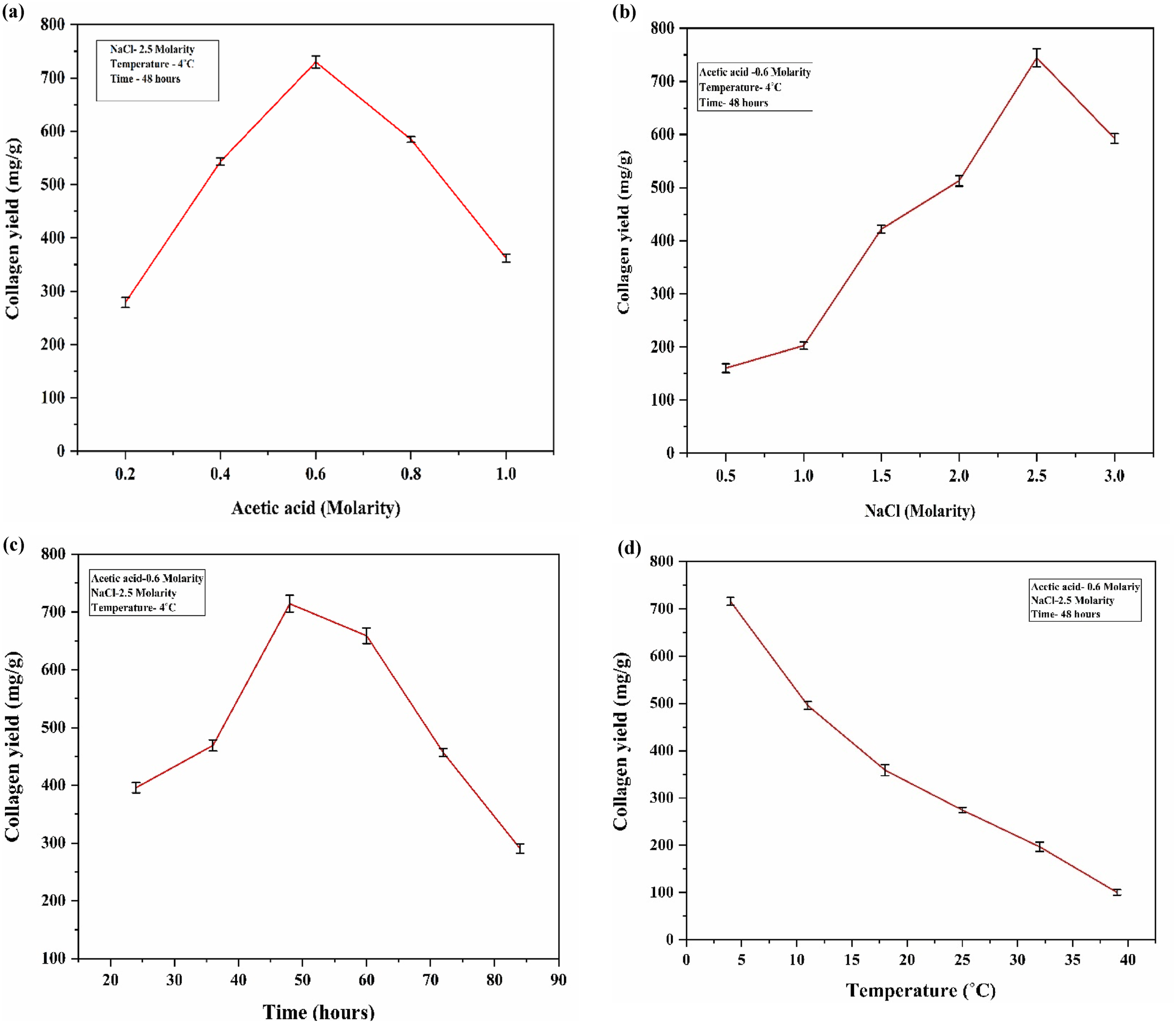
Influence of NaCl on collagen extraction
By implementing the salting out approach, a range of different concentrations of NaCl, from 0.5 M to 3.0 M were used for the extraction procedure. While optimizing the NaCl concentrations, other factors such as acetic acid (0.6 M), temperature (4°C), and time (48 h) were maintained constant. The optimal collagen yield of 744.5 mg/g of fish skin waste was achieved at a 2.5 M concentration of NaCl and above 2.5 M, the collagen yield declined as represented in the Figure 1(b). Furthermore, the mean value with the standard deviation of the collagen yield was found to be approximately 592.6 ± 226.36 mg/g. The decreased collagen yield might be explained by stronger hydrophobic-hydrophobic interactions among chains due to a greater ionic concentration. Therefore, the change in ionic concentration might have prevented collagen from dissolving from skin tissues, as demonstrated by Veeruraj et al. 33
Influence of temperature on collagen extraction
Collagen extraction from fish sources is generally carried out at the temperature range of 4°C to 25°C. 5 The effect of temperature on the extraction of collagen was optimized while maintaining other factors constant, such as acetic acid (0.6 M), NaCl (2.5 M), and Time (48 h). The maximum yield of collagen, 715.5 mg/g of fish skin was observed at 4°C, and decreased gradually as the temperature increased as depicted in the Figure 1(c). Additionally, the mean collagen yield value with standard deviation was found to be almost 497.2667 ± 160.62 mg/g. The decline in the collagen yield is caused by denaturation of the triple helical structure of collagen.
Influence of time on collagen extraction
The extraction process time was optimized by prolonging the contact time between the optimal solvent and the fish skin (solid sample) for 24 h – 84 h while maintaining the remaining factors constant.18,32 After 48 h, the extraction process yielded a peak collagen output of 714.3 mg/g from fish skin. However, when the extraction period was prolonged beyond 48 h, the collagen yields gradually decreased, attributed to the slow breakdown of collagen by the acetic acid solvent as depicted in the Figure 1(d)). Additionally, the mean value with the standard deviation of the collagen yield was observed to be approximately 356.85 ± 221.86 mg/g.
RSM model for collagen extraction
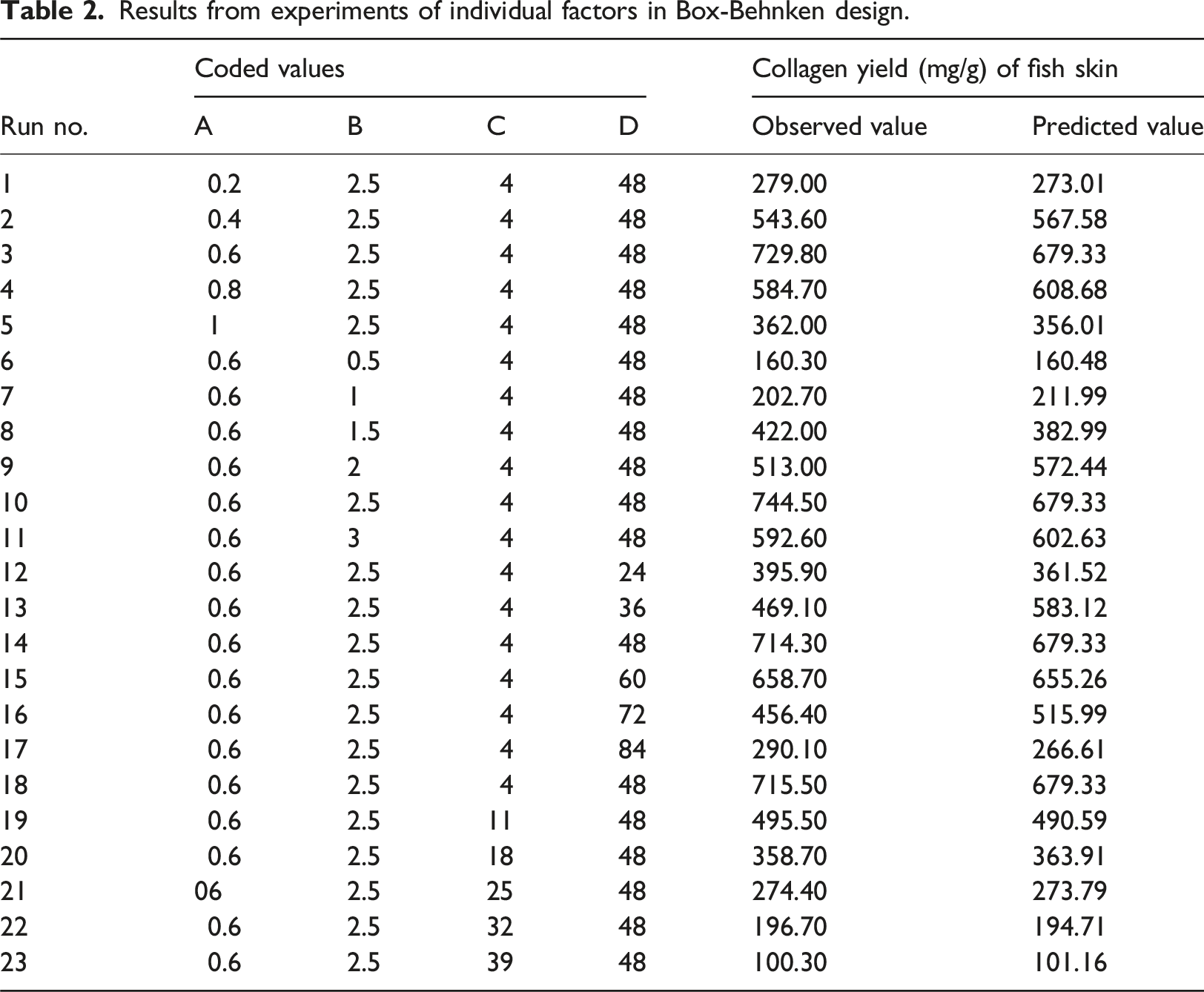
Results from experiments of individual factors in Box-Behnken design.
ANOVA for response surface quadratic model.

According to the F-value (Lack of Fit) of 23.80, there is a significant lack of fit. A Lack of Fit F-value has a 1.24% possibility of being related to noise. The equation represented in relation to coded components can be employed to predict the response at different levels of each aspect.
The equation as a function of real variables may be utilized to anticipate the response at various degrees of each variable. The levels for each variable are listed in their original units in the following equation:
Relationships between process variables
The investigation of the interplay among independent factors involved generating contour plots depicting the relationships between factors (A and B, A and C, A and D, B and C, B and D, and C and D), with the remaining factors held constant. In terms of quadratic terms, every factor included in this experiment had both positive and negative effects. Figure (2(a) depicts the collagen yield in terms of temperature and acetic acid with NaCl and time held constant. At temperature of 4°C and 0.6 M acetic acid, the collagen yields initially increase steadily to an optimum point of 679.33 mg/g. However, the yields decreased, as both variables increased. There was a comparable pattern seen in the response surface plots (2b, 2c, 2d, 2e, and 2f) created using the remaining factors. The contour plot showed that an optimal yield of 679.33 mg/g occurred under the following settings: (1) NaCl-2.5 M and acetic acid-0.6 M (Figure 2(b)); (2) time-48 h and acetic acid-0.6 M (Figure 2(c)); (3) Temperature-4°C and NaCl-2.5 M (Figure 2(d)); (4) Time-48 h and NaCl-2.5 M (Figure 2(e)); (5) Time-48 h and Temperature 4°C (Figure 2(f)). Plots of process variable contours. Effect of: (a) temperature and acetic acid, (b) acetic acid and NaCl, (c) time and acetic acid, (d) temperature and NaCl, (e) time and NaCl, (f) time and temperature on the yield of collagen.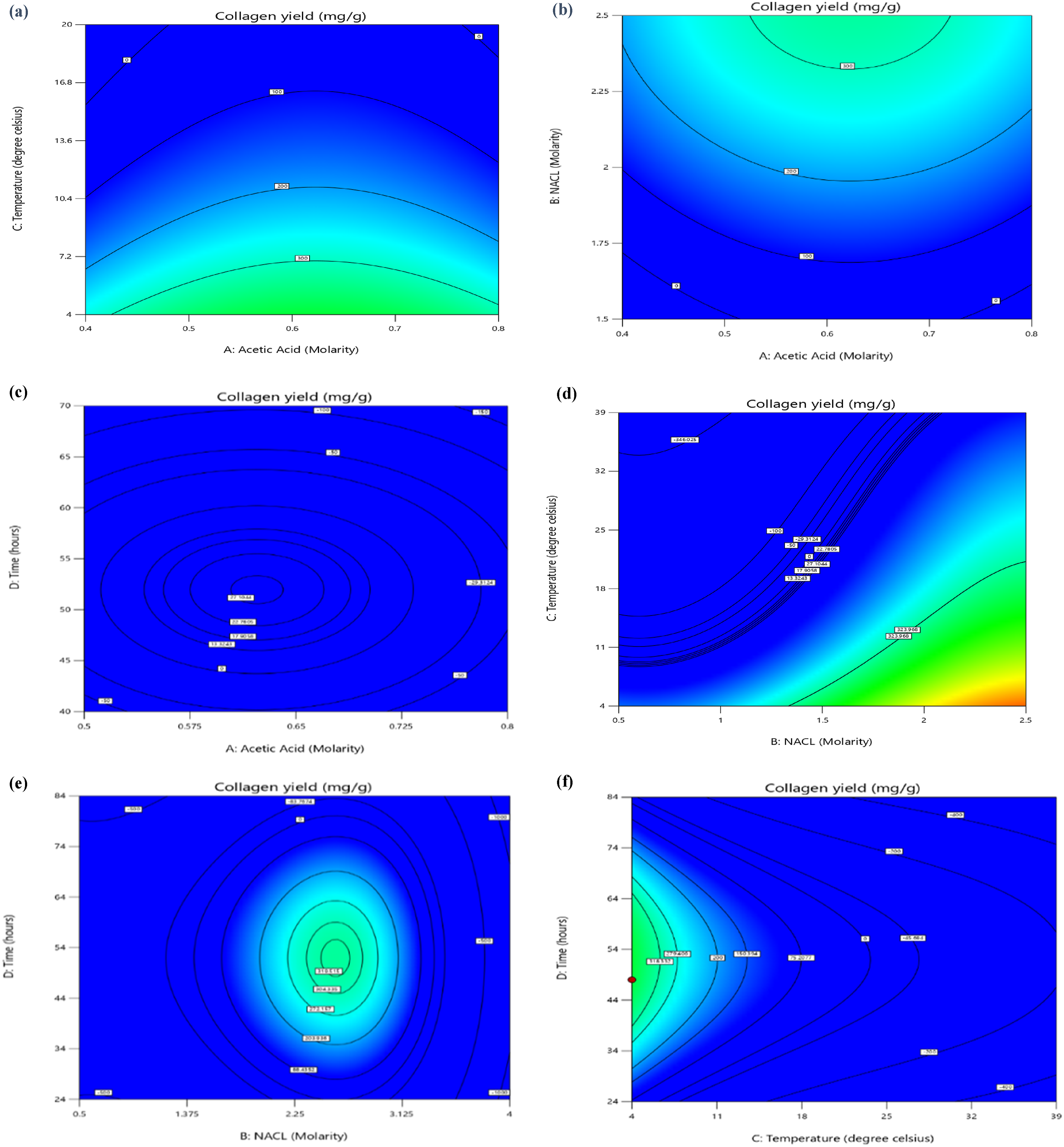
Confirmatory investigations for ideal conditions
Response surface methodology investigation was conducted using fewer real experiments to determine the ideal conditions of acetic acid, NaCl, temperature, and time for optimal collagen extraction from the skin of Rohu fish. The design expert’s confirmatory result served as the basis for the studies, which used the following parameters: 0.6 M acetic acid, 2.20 M NaCl, 4°C temperature, and 50.30 h of time. Using the optimum response value, a maximum yield of 744.50 ± 20.05 mg/g was obtained, which is somewhat higher than the predicted value of 679.33 mg/g.
Characterization of extracted collagen
FTIR analysis
The FT-IR spectrum of the acid soluble collagen (ASC) extracted from the skin of Rohu fish showed the presence of 5 main distinctive amide group absorption peaks, including amide I, II, III, and Amide A, B (Figure 3) (Table 4). The FT-IR spectra of the ASC from Rohu skins exhibited similarities with other collagens isolated from fish wastes from other fish varieties.
9
Amide A and B peak locations in this collagen sample were found to be 3309 cm−1 and 2921 cm−1, respectively. In terms of NH stretching and CH2 stretching (symmetrical and asymmetrical), the frequency ranges for the amide A and amide B areas are 3400–3440 cm−1 and 2900–2850 cm−1, respectively.9,34 But the location of amide A band was moved to a lesser frequency because of introduction of more H- bonds. In relation to the asymmetric stretching, the amide B was seen between 2900 and 2850 cm−1. These findings demonstrated that extra H-bonding had been added, which tightened the connection between the collagen’s triple helical structures.
26
FT-IR spectra of lyophilized acid soluble collagen (ASC) extracted from Rohu fish skin waste along with the standard calf skin collagen. FTIR spectrum peak locations and assignment of collagen extracted from skin waste of Rohu (Labeo rohita) fish.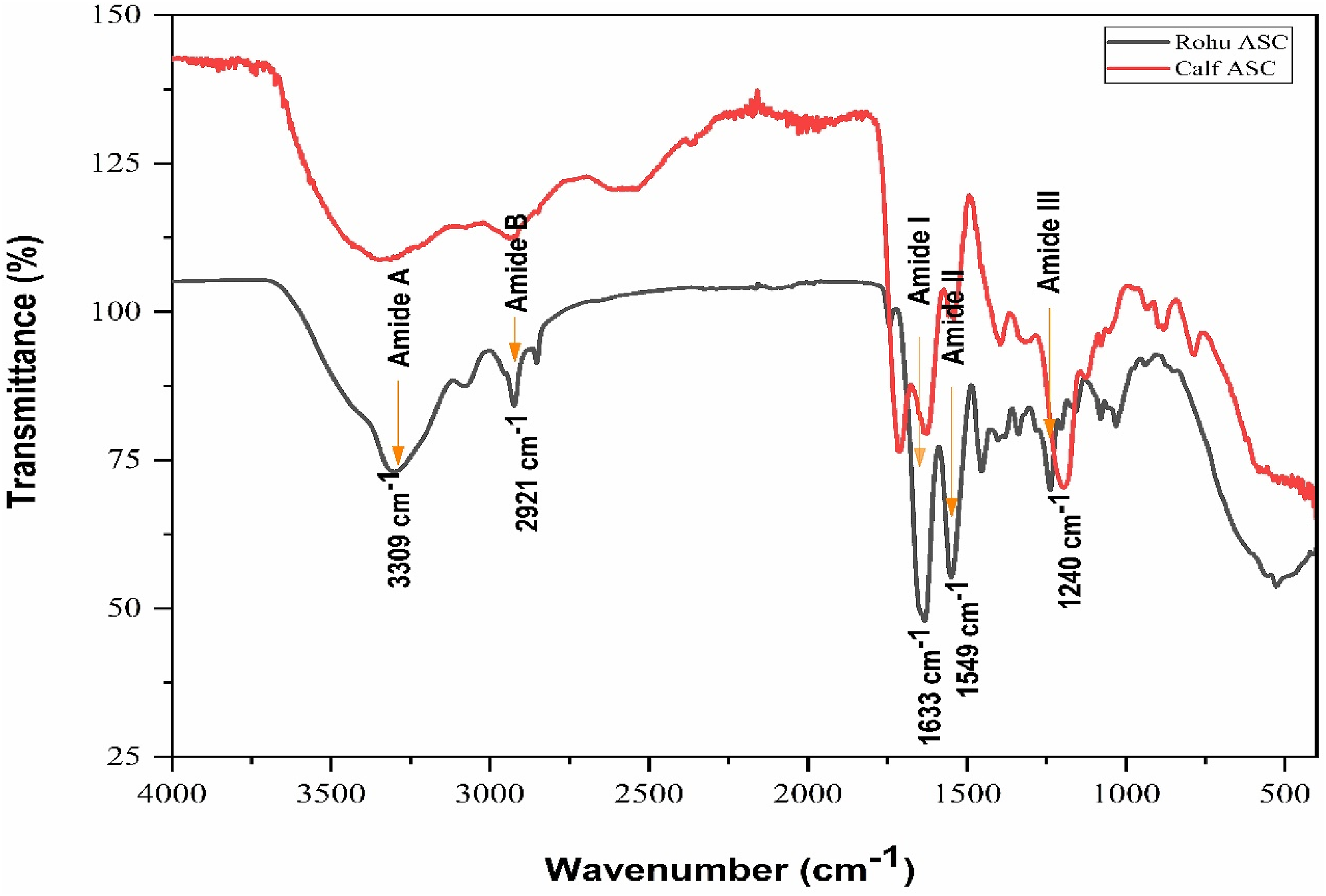
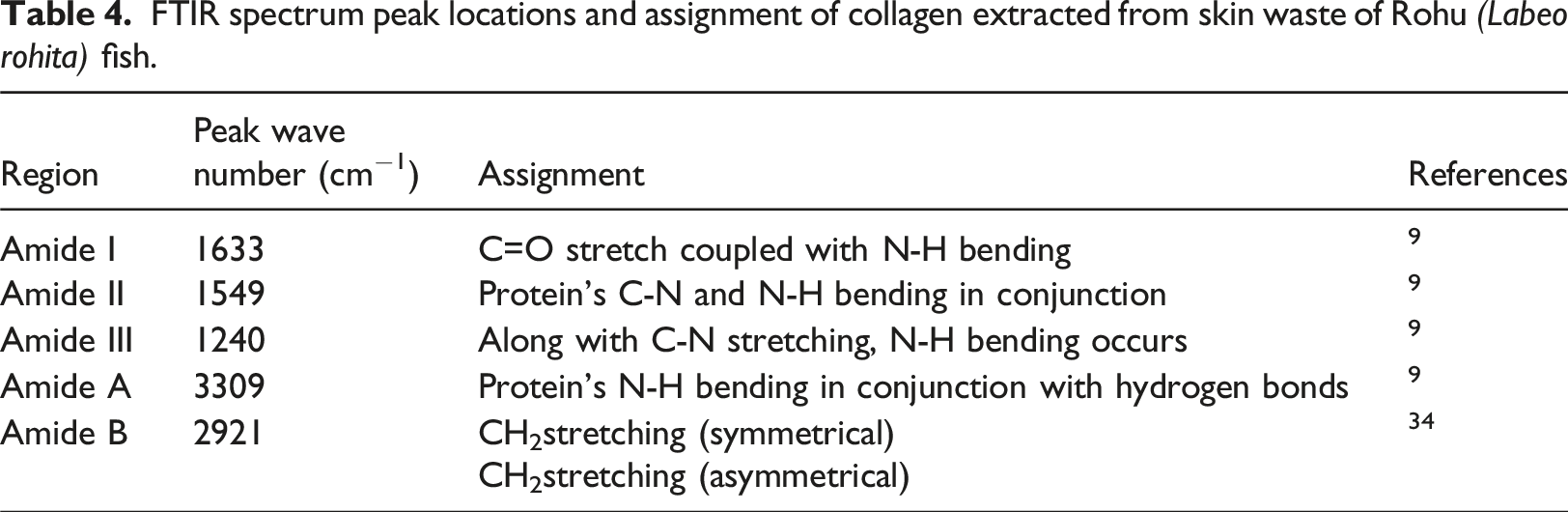
At wavenumbers of 1633 cm−1, 1549 cm−1, and 1240 cm−1, the amide I, II, and III band peaks in the ASC sample were seen, respectively. The stretching vibrations of carbonyl groups and the polypeptide backbone are associated with the amide I band, which typically runs from 1600 to 1700 cm−1. 35 Amide II is a vibration of the NH bending and C-N stretching that has a frequency range of 1550–1600 cm−1. The usual absorbance range of amide III lies from 1235 cm−1 to 1240 cm−1, and it is connected to NH deformation and CN stretching vibrations.36,37
Scanning electron microscopy (SEM) analysis
The synthesized lyophilized acid soluble collagen (ASC) was observed under naked eye and SEM to analyze its morphology. The ASC looked to the naked eye (Figure 4(a)) like a smooth, white sponge with pores all over it. The lyophilized acid soluble collagen (ASC) had a multilayered, erratic, porous, and dense sheet-like structure, as shown in the SEM picture (Figure 4(b)). Lyophilized acid soluble collagen (ASC) from Rohu fish skin (a) as seen with the normal eye and (b) as shown in a SEM micrograph.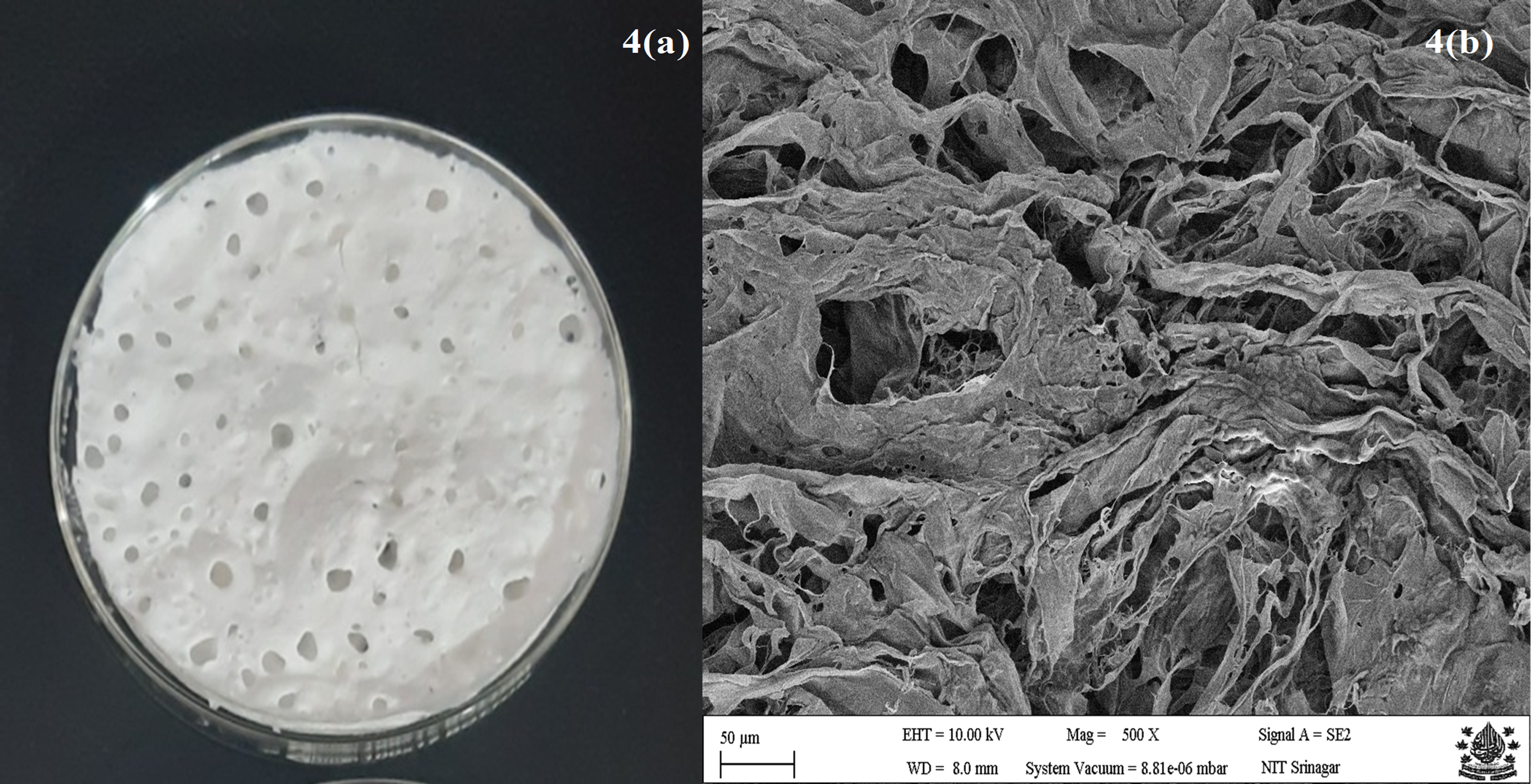
The porous character may have resulted from fluid evaporation during freeze drying. The area between the interposed sheets gives the collagen generated porosity, making it easier to include any value-added chemicals like medicines, vitamins, etc. Similar characteristics of isolated collagens from Sphyrna lewini and Evencheyls. macrura, respectively, have been described by Li et al. and Veeruraj et al.38,39
Furthermore, the acid soluble collagen (ASC) is an ideal option for encapsulation and controlled-release applications because to its regular distribution of pores, which increases its surface area and creates a scaffold-like matrix. For sustained delivery systems, the porous but dense character permits the dispersion of incorporated compounds while maintaining mechanical stability. 40
Acid soluble collagen (ASC)ss produced from natural sources is structurally complex and versatile, as seen by its multilayered and unpredictable character. The versatility of collagen generated from fish as a sustainable and effective substitute for mammalian sources is highlighted by these results, which are consistent with other studies.9,18,39
Thermal behaviour of extracted collagen
In the current study, the thermal stability of acid soluble collagen (ASC) was assessed by DSC. The sample was heated from 0°C to 300°C and the thermogram was recorded and visualized (Figure 5). At 97.80°C, (Td = Denaturation temperature) the first endothermic peak was observed in this case, which would be associated with water loss/evaporation and may be the transformation of collagen molecule’s triple helix structures into coiled structures.41,42 During this transition phase, intramolecular and intermolecular hydrogen bonds are broken, and water that was previously bound loosely is released. Although greater than the collagen recovered from the same carp and catla fish species reported by,
43
which was in the range of 30.69°C – 35.19°C, the findings of17,41,42 are all compatible with this outcome. The stability of collagen’s triple helix structure is due to these intra- and intermolecular hydrogen bonds, as well as hydrogen bound water. Another endothermic peak was seen at a temperature of around 220°C, which was the thermal degradation temperature (Ttd) of the fish collagen due to evaporation of the remaining and firmly bound water and the breakdown of polypeptide chains of protein. Therefore, if the denaturation temperature (Td) is higher, the collagen will have greater thermal stability.41,42 The primary factor influencing collagen’s thermal stability is its imino acid composition, which is also connected to the body temperatures of fish species and their habitat temperatures.6,44,45 DSC thermogram of purified lyophilized acid soluble collagen (ASC).
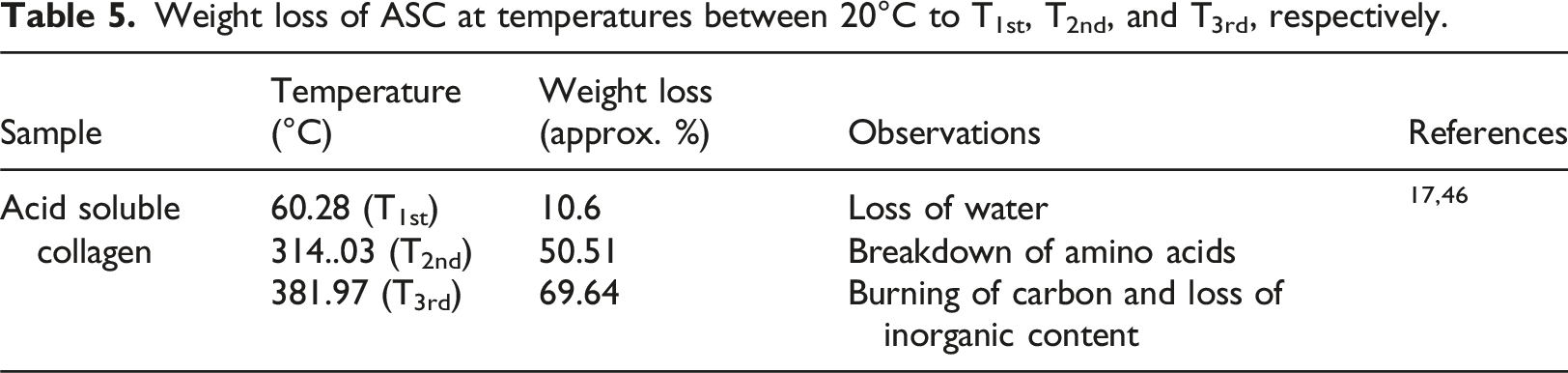
TGA and DTG studies were employed to ascertain the thermal characteristics of collagen. The DTG diagram (Figure 6) illustrates the three phases and three temperatures at which collagen degraded at its greatest rate of weight loss (Tmax) (Table 5). At Tmax1, 60.28°C, the first stage, which represented a 10.6% weight loss, was seen. This stage of degradation was assumed to be caused by evaporation and collagen traces. The subsequent breakdown of collagen, which took place at Tmax2, 314.03°C and resulted in a weight loss of 50.51%, was primarily caused by the breakdown of proteins found in collagen (arginine, tyrosine, methionine, serine, lysine, and threonine, e.g.), as well as low-mass molecules that contribute to collagen structure, like H2O, NH3, CO2, H2S, and SO2. The final step in the breakdown of collagen was identified at Tmax3, 381.97°C (mass variation of approximately 69.64%). This was likely caused by combustion of carbon or the loss of the mineral components that was still present in collagen.17,46 TGA-DTG curves of purified lyophilized acid soluble collagen (ASC). Weight loss of ASC at temperatures between 20°C to T1st, T2nd, and T3rd, respectively.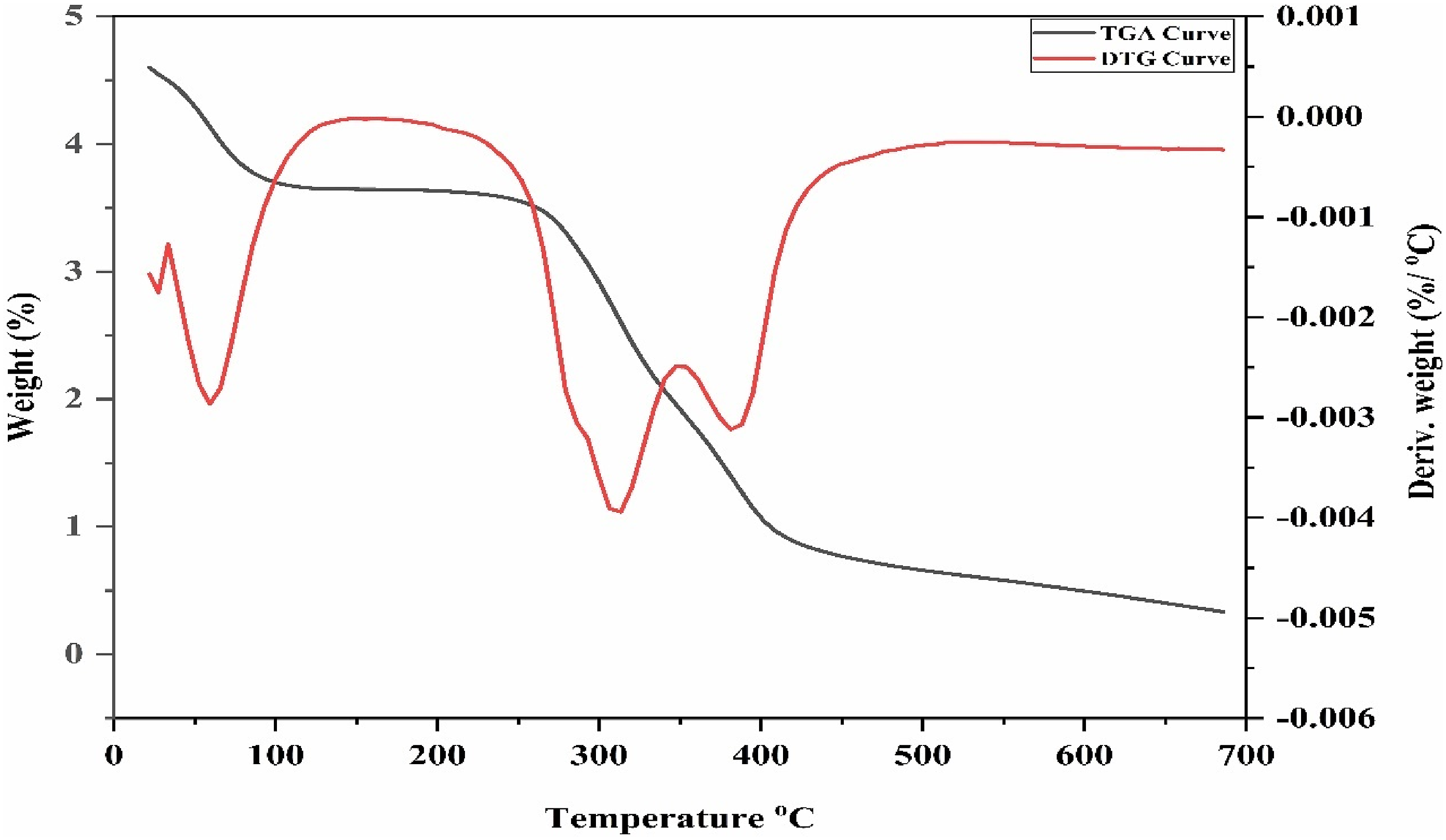
Electrophoretic pattern of acid soluble collagen (ASC)
SDS-PAGE with 12 % gel was used to analyze the acid soluble collagen (ASC) from Rohu fish skin waste (Figure 7). The retrieved collagen’s electrophoretic pattern and mobility showed that the ASC was collagen type I comprising of two different α chains (chains α1 and α2), with chain α1 having a greater density than chain α2. In the electrophoretic pattern, there was a significant concentration of the β chain as well. Collagen subunits were determined to have molecular weights of 116 kDa, 120 kDa, and 180 kDa for subunits α1, α2 and β, respectively. This outcome demonstrated that the collagen collected had undergone very little protein digestion and was thus pure. This shows that the extraction procedure maintained the collagen’s structural integrity, producing a highly pure and intact form appropriate for other applications. Electrophoretic patterns of lyophilized Rohu acid soluble collagen (RASC and RASC′) along with molecular ladder as well as calf skin acid soluble collagen (CASC).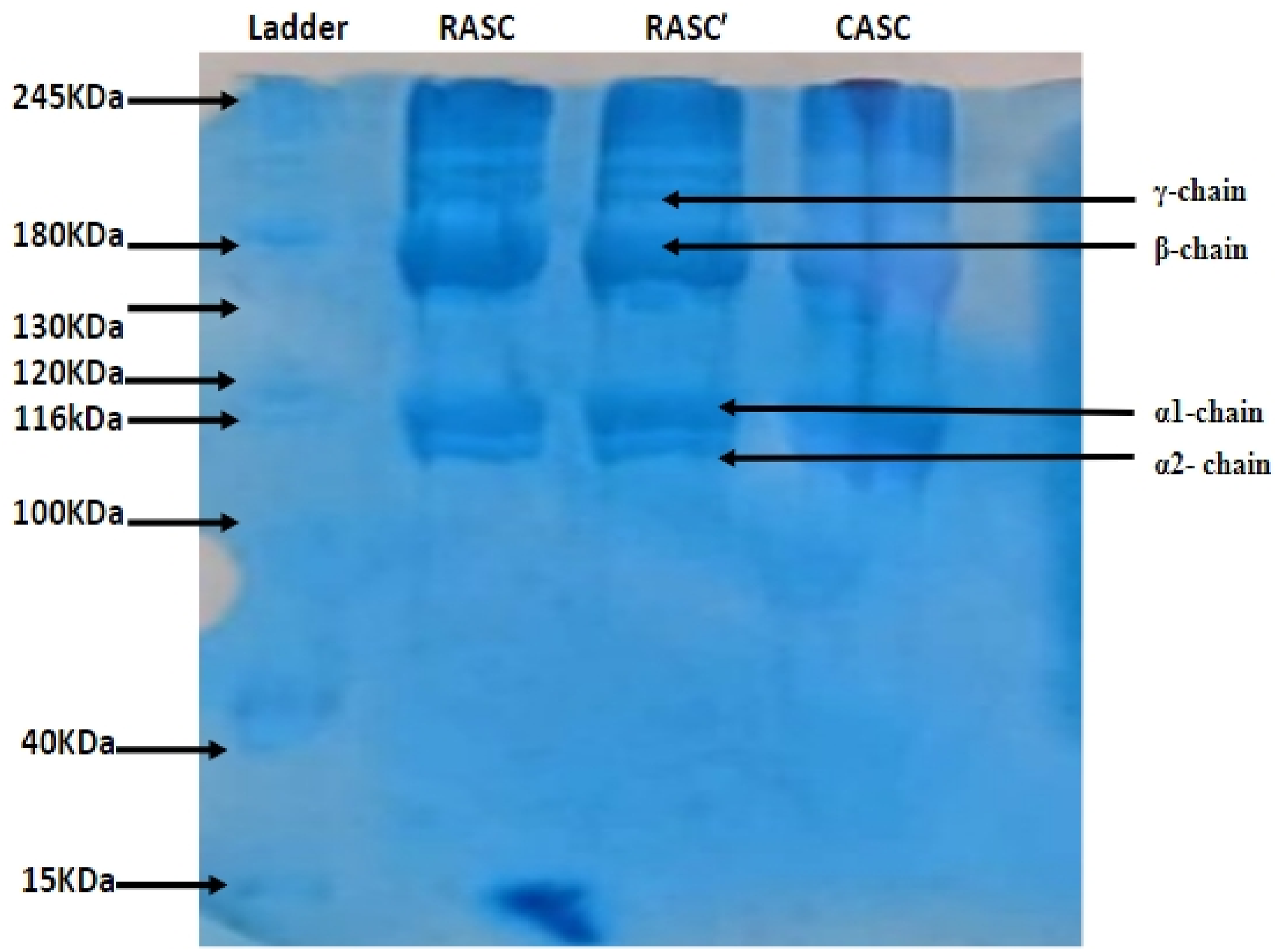
Additionally, the pattern demonstrated that the components (α1, α2 chain, and β chain) of carp collagen had marginally smaller molecular weights compared to type I calf skin collagen. This description was consistent to the research of Pal et al., 43 who used the same technique. The molecular weight of collagen and its thermal stability have been linked in several studies; collagen with a larger molecular weight may have better thermal stability.26,47 This finding highlights the potential use of fish collagen, especially from Rohu, in fields including food processing, biomedicine, and cosmetics that need thermal stability.
Amino acid composition of acid soluble collagen (ASC) sample
Amino acid content (residues/1000 residues) of lyophilized acid soluble collagen (ASC) from Rohu fish skin waste.
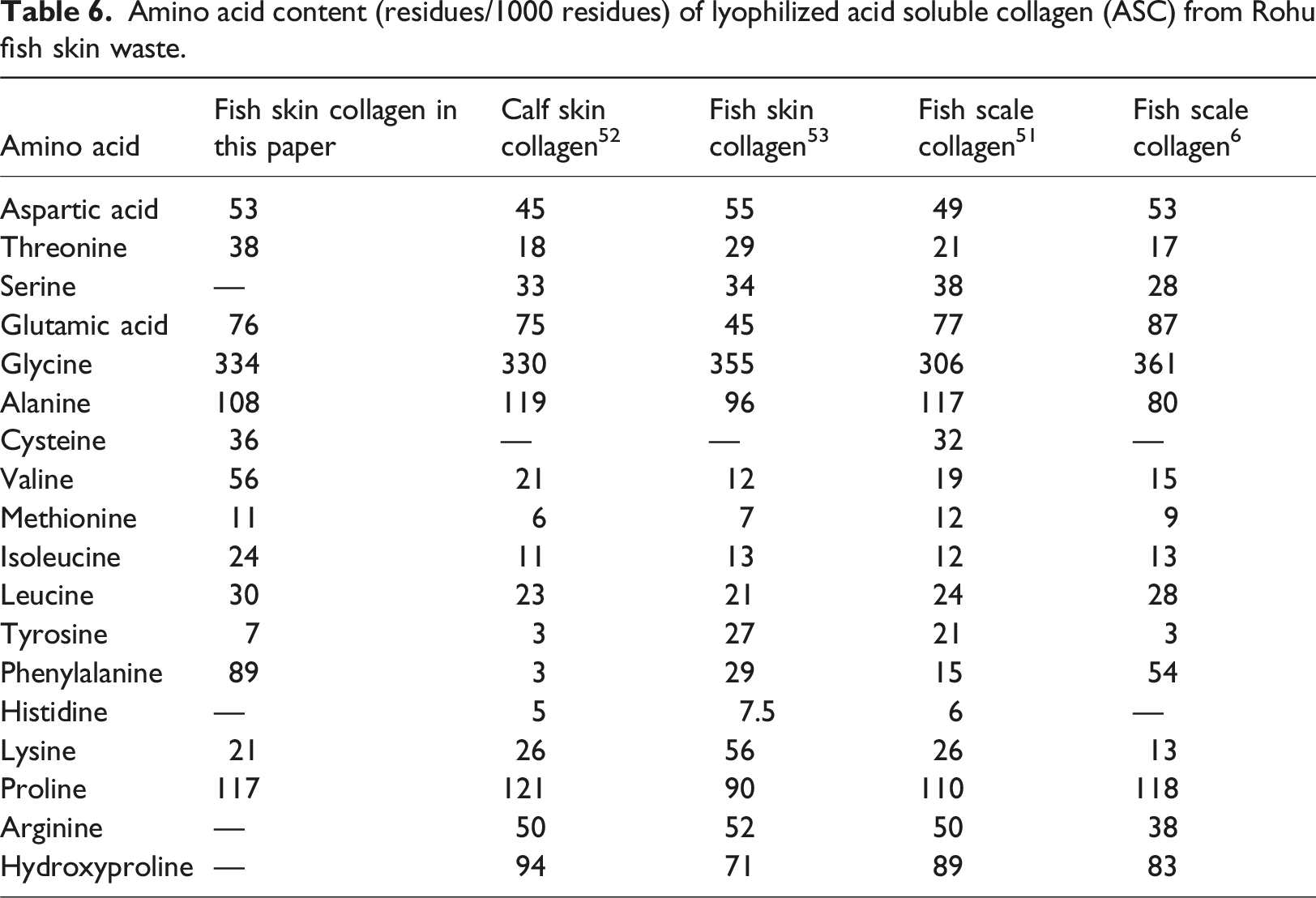
The high glutamic acid content and average glycine and alanine levels in rohu fish collagen were comparable to those found in native fish collagen (freshwater carp) as determined by Chinh et al. (2019). 17 Threonine, cysteine, lysine, leucine, isoleucine, valine, and methionine were among the most crucial amino acids for young animal’s nutrition. This finding may pave the way for collagen’s use in biomedicine.
Conclusion
Type-I collagen biomaterial was extracted from the waste fish skin generated during the processing of local Rohu fish in the Kashmir valley, India. Under optimal conditions, the highest collagen yield of 744.50 ± 20.05 mg/g of fish skin was attained. This study has demonstrated that an enhanced collagen yield was achieved at 0.6 M acetic acid concentration, 2.20 M NaCl concentration, 4°C temperature, and 50.30 h period of time. The ideal parameters (acetic acid, NaCl, temperature, and time) to produce the maximum yield of collagen (per gram of fish skin) were observed by applying the response surface approach with Box-Behnken design. The collagen extraction from the Rohu fish skin was shown to be significantly impacted by each of the four variables, and a positive correlation was noted among them all. The mathematical model generated showed an R2 value of 0.9593 and a p-value of less than <.0001, indicating a strong generalization of the model and revealing a significant correlation between the expected and observed values of the collagen yield from the Rohu fish skin. Isolated collagen was of type I possessing a triple helical structure. The DSC analysis showed a higher denaturation temperature of 97.80°C than other fish skins previously reported, indicating same to possess a better thermal stability. According to a study, collagen from Rohu fish skin is an acceptable substitute for collagen used in food, cosmetics, and tissue engineering.
Supplemental Material
Supplemental Material - Valorization of rohu fish (Labeo rohita) skin waste into high-quality type I collagen biomaterial: Extraction, optimization, and characterization
Supplemental Material for Valorization of rohu fish (Labeo rohita) skin waste into high-quality type I collagen biomaterial: Extraction, optimization, and characterization by Massarat Majeed and Mushtaq Ahmad Rather in Journal of Polymers from Renewable Resources.
Footnotes
Acknowledgements
The authors acknowledge the support of staff and researchers in the Energy Engineering Laboratory, Chemical Engineering Department of NIT Srinagar, India. The authors are highly thankful to Government of India, Ministry of Education for the financial support. The authors also acknowledge the Central Research Facility Centre (CRFC), NIT Srinagar for extending their research facilities to complete the present work.
Declaration of conflicting interests
The author(s) declared no potential conflicts of interest with respect to the research, authorship, and/or publication of this article.
Funding
The author(s) received no financial support for the research, authorship, and/or publication of this article.

Supplemental Material
Supplemental material for this article is available online.
References
Supplementary Material
Please find the following supplemental material available below.
For Open Access articles published under a Creative Commons License, all supplemental material carries the same license as the article it is associated with.
For non-Open Access articles published, all supplemental material carries a non-exclusive license, and permission requests for re-use of supplemental material or any part of supplemental material shall be sent directly to the copyright owner as specified in the copyright notice associated with the article.
