



Abstract
This study explores the potential of Cousinia Umbrosa Bunge, a plant native to southern Kazakhstan, as a renewable source for bioactive polymers with applications in sustainable materials and biomedicine. The plant’s extract was analyzed for its phytochemical composition, focusing on polymer-relevant compounds such as polysaccharides and other bioactive constituents. Key findings demonstrated promising antioxidant properties through DPPH and ABTS assays, with the ethanol extract achieving fifty percent inhibition in the DPPH assay compared to Trolox, though moderate activity was observed in the ABTS assay. Ethanol extract umbrosa Bunge, particularly those prepared with 96% ethanol, exhibited negligible activity against DPPH (2,2-diphenyl-1-picrylhydrazyl) free radicals (radical inhibition, quantified at 74.15 ± 0.21%), whereas 50% ethanol extract displayed a significant ability to scavenge DPPH radicals, demonstrating its enhanced antioxidant capacity. Cytotoxicity assessments on human dermal fibroblast (HDF) and human keratinocyte (HaCaT) cells indicated a low toxicity level, supporting the extract’s potential use in biocompatible, polymer-based antimicrobial agents. This study highlights Cousinia umbrosa Bunge as a promising source for developing bioactive, renewable polymers with applications in sustainable and biodegradable materials.
Introduction
Polysaccharides (PSA) derived from plants have garnered significant interest as renewable resources for developing sustainable, polymer-based materials. These natural polymers are primarily categorized into structural PSA, such as cellulose and hemicellulose, and storage PSA, like starch and inulin. 1 Structural PSA are often found in the cell walls of plants, providing mechanical strength, whereas storage PSA serve as energy reserves and are abundant in seeds, tubers, and roots. Additionally, bioactive PSA like pectins, gums, and mucilages usually offer unique properties suitable for biomedical and industrial applications.2,3 Within each category, plants from different regions exhibit varied compositions and molecular structures, offering potential for selective applications in material sciences.4,5 This diversity underscores the importance of regional plant species as promising sources for renewable materials, enabling the development of sustainable polymer-based systems tailored for specific uses. 6 The study of PSA-rich plants, particularly those native to underexplored regions, aligns with this effort to expand renewable materials for polymer-based innovations. The Asteraceae family contains the largest number of active species with pronounced cytotoxic activity.7,8 The investigation of Cousinia for its bioactive properties is particularly relevant in the context of Kazakhstan ethnobotany, where local flora have not been sufficiently explored.9,10 Historically, many plants used in traditional medicine have shown significant antimicrobial activity, supporting the notion that ethnopharmacological knowledge could lead to breakthroughs in natural antibacterial therapies. Despite the medicinal potential of plants being considerable in our country, knowledge and studies on Cousinia species are scarce.11,12
Further research is essential to elucidate the pharmacological properties, ecological interactions, and potential applications of these species, which could contribute significantly to both biodiversity conservation and the discovery of novel compounds for medical or agricultural use. The primary objective of this research work is to explore the phytochemical profiles and biological activities of Cousinia Umbrosa Bunge extracts obtained by cold maceration. Specifically, the study aims to identify chemical compounds, assess antioxidant potential (DPPH, ABTS scavenging), and explore biological activities, including the antimicrobial properties and the cytotoxic effect against two cancer cell types (HDF and HaCaT), in extracts from this species.
Traditionally used medicinal plants have recently attracted the attention of the pharmaceutical and scientific communities. This has involved the isolation and identification of secondary metabolites produced by plants and their use as active principles in medicinal preparations.13,14 Plants are rich source of phytochemicals such as, phenols, flavonoids, and essential oils etc. which act as antimicrobials. The most important advantage of using plant extracts is that, the crude extracts contain a mixture of phytochemicals for which it is difficult to develop resistance by bacteria unlike the synthetic antibiotics that contain a single compound. 15 It goes without saying that the urgent need for new antibacterial agents arises from the escalating issue of antibiotic resistance, posing a significant challenge to global health. 16 Traditional antibiotics are losing their effectiveness against various pathogens, necessitating a shift toward alternative sources, particularly those found in nature.17,18
As we have highlighted, numerous plant species have been extensively studied for their antimicrobial properties across different regions, including Iran, known for its rich biodiversity and traditional medicine practices. While more research is certainly needed on Cousinia Umbrosa Bunge and related species, their potential contributions to antimicrobial and antioxidant therapies could pave the way for novel treatments, particularly in an era increasingly characterized by resistance against conventional antibiotics. The unique morphology of Cousinia Umbrosa, means its specific leaf and flower structures, sets it apart from other Cousinia species. Often endemic to specific regions, it plays an important ecological role in its environment, contributing to local biodiversity and standing out both for its adaptability and unique genetic characteristics. Thus, exploring Cousinia Umbrosa as a natural alternative represents not only a scientific opportunity but also a cultural and environmental imperative. The genus Cousinia exhibits a global distribution, encompassing approximately 672 species. Within this diversity, around 235 species are specifically identified in the central, western, eastern, and southeastern regions of Iran. 19 In the territory of Kazakhstan the genus is widespread, it has 55 species. The species composition of Cousinia is very diverse and is represented by perennials. 20 Recent investigations have confirmed the presence of various Cousinia species in Kazakhstan; however, there is a notable scarcity of information regarding their biological effects.
The Asteraceae family (also known as Compositae) contains many members that are rich in cytotoxic molecules and are widely used in medicine to treat various types of cancer. A study of the antitumor activity of 538 extracts representing 34 different plant families demonstrated that the Asteraceae family contains the largest number of active species with pronounced cytotoxic activity.7,8 The investigation of Cousinia for its bioactive properties is particularly relevant in the context of Kazakhstan ethnobotany, where local flora has not been sufficiently explored. Historically, many plants used in traditional medicine have shown significant antimicrobial activity, supporting the notion that ethnopharmacological knowledge could lead to breakthroughs in natural antibacterial therapies. Despite the medicinal potential of plants being considerable in our country, knowledge and studies on Cousinia species are scarce.
In the light of above, further research into Cousinia Umbrosa Bunge seems useful, not only to elucidate its pharmacological properties but also to address the urgent demand for alternative antibacterial agents to combat antibiotic resistance. The bioactive potential of local flora in Kazakhstan remains underexplored, highlighting a unique opportunity to harness natural compounds for innovative applications in pharmaceuticals and sustainable material development. By investigating the phytochemical profiles of Cousinia Umbrosa Bunge and its pronounced antioxidant (DPPH, ABTS scavenging) and antimicrobial activities, this study aims to contribute to the growing body of knowledge around renewable sources of bioactive compounds, applying cytotoxicity against two cancer cell types (HDF and HaCaT). This could ultimately facilitate either biodiversity conservation or developing functional foods, nutraceuticals, and phytopharmaceuticals in a global shift towards more sustainable therapeutic solutions. Identifying and leveraging the synergistic effects of these bioactive compounds can pave the way for novel applications, addressing both economic and health challenges while enhancing the usage of local resources.
Materials and methods
In vitro antioxidant activity
1,1-Diphenyl-2-picrylhydrazyl (DPPH) radical scavenging activity
The capacity of the extracts to scavenge the stable DPPH free radicals was measured according to the method in the literature.
21
Different concentrations of the extracts (20 mL) were mixed with 180 mL of DPPH solution (40 lg/mL in ethanol), and the plate was kept for 30 min at room temperature in the dark. After this incubation, the absorbance was measured at 517 nm. Butyl hydroxytoluene (BHT) was used as a standard in this study. The percentage of DPPH radical scavenging activity of the extract was calculated using the formula (1):

2,2′-azino-bis (3-ethylbenzothiazoline-6-sulphonic acid) (ABTSþ) radical scavenging activity
The activity determination was performed via the ABTS cat- ion radical decolorization with minor modifications. 21 The ABTS cation radical was prepared by react- ing 15 mL of 7 mM aqueous solution of ABTS with 264lL of 140 mM potassium persulphate. The mixture was allowed to keep for 12 h at room temperature in the dark before using. Prior to assay, the ABTSþ working solution was diluted with methanol to give an absorbance of 0.70 ± 0.02 at 734 nm. The reaction of the mixtures in the 96-well plates consisted of 50 lL sample, and 100 lL ABTSþ working solution was completed. After 10 min the absorbance was measured at 734 nm. All determinations were performed in triplicates. The percentage scavenging effect was calculated the same as the DPPH assay.
Bacterial strains and growth conditions
Antibacterial activity was tested using Gram-positive strains: Staphylococcus aureus ATCC 6538, Staphylococcus aureus MRSA 18532, Staphylococcus epidermidis ATCC 14990, Bacillus subtilis ATCC 6633, group A β-hemolytic Strepetococcus, Enterococcus hirae (from the own collection of the Department of Pharmaceutical Microbiology. Gram-negative strains: Escherichia coli ATCC 8739, Pseudomonas aeruginosae ATCC 9027. Group A β-hemolytic Strepetococcus was cultured in BHI medium (Brain-heart infusion broth - Becton Dickinson) with 5% bovine serum (Bio Med. Lublin) or MH agar with 5% sheep blood, and incubated in a 5% CO2 atmosphere at 37°C. Another stains were grown in Mueller-Hinton broth and MH agar (Becton Dickinson) at 37°C.
Sample preparation
The sample (1.00 g) was mixed with 100 mL of boiling, distilled water and left to stand at room temperature under cover for 10 min. Then infusion was filtered through the Whatman filter paper no. 113 (Sigma-Aldrich, St Louis, MO, USA). The extract was divided into two parts, 50 mL was lyophilized, weighed and used for microbiological tests. The antimicrobial activity of plant infusion was investigated in accordance with the procedures and guidelines of EUCAST (European Committee on Antimicrobial Susceptibility Testing) and CLSI (Institute of Clinical and Laboratory Standards).
MIC and MBC assays
The MIC (Minimal Inhibitory Concentration) was determined by the broth microdilution technique. After filling each well with 50 μL of broth, dry test samples were dissolved in water to a final concentration of approx. 256 mg/mL. These solutions of tested extracts (50 μL) were added to the first well of each microtiter line. Dilution in geometric progression was conducted by transferring the dilution (50 μL) from the first to the twelfth well. An aliquot (50 μL) was discarded from the latter well. A microbial suspension (50 μL) was added to each well. The final concentration of the extracts used to the antimicrobial activity ranged from 0.125 to 64 mg/mL. Tests were incubated in the appropriate conditions described above at 37°C for 48 h. The MIC was determined as the lowest sample concentration that inhibited visible growth. Due to the plant extracts were colorful, determination of the MIC values were difficult. In addition, 10 μL of suspension from each well was inoculated on an agar plate to control bacterial viability. After incubation 48 h the presence or absence of bacteria growth was verified.
Cell viability by MTT assay
HDF (human dermal fibroblast) and HaCaT (human keratinocyte) cells were seeded on a 96 well plate in density 6000 cells/well in DMEM medium (high glucose, with L-glutamine, without sodium pyruvate) with 1% Penicillin/Streptomycin and 10% FBS (foetal bovine serum). Plates were incubated for 24 h in the incubator at 37°C with 5% CO2 and high humidity environment. Dilutions of C. umbrosa 50% ethanol extracts were made in DMEM medium. Tested concentrations were: 0 (control); 1; 5; 10; 50; 100; 500; 1000; 2000 µg/mL. After 24 h, growth medium was aspirated from cells and prepared dilutions of the extracts were added. Cells were incubated with extracts for 48 h. After 48 h cells were treated with MTT (3-(4,5-Dimethyl-2-thiazolyl)-2,5-diphenyl-2H-tetrazolium bromide) (Sigma-Aldrich, Saint-Louis, USA) solution in final concentration 0.5 mg/mL for 3 h at 37°C. Then the medium was aspirated, and formazan crystals in each well were dissolved in 100 µl DMSO. Absorbance at 570 nm was measured by Infinite M200 spectrofluorometer (Tecan, Männendorf, Switzerland).
Results
2,2-Diphenyl-1-picrylhydrazyl (DPPH) free radical inhibition assay
This rapid and simple assay is widely used for screening antioxidant activity of biologically active substances by various research laboratories. DPPH is widely used to determine the ability of various compounds to act as free radical scavengers or hydrogen donors. In the DPPH radical, the spare electron is delocalized within the molecule and produces a deep violet color detectable at 517 nm in absorption. When a DPP solution is in contact with the antioxidant (a proton donor compound), the molecule is converted to its reduced form (hydrazine), which is pale yellow. In this model system, a standard reference antioxidant, trolox, is used. By its chemical nature, it is a water-soluble analogue of vitamin E. Vitamin E is a well-known and widely used antioxidant. Its antioxidant activity has been proven and is well studied. Tocopherols have antioxidant activity, it should be noted that one vitamin E molecule is able to neutralize two radical products due to its own oxidative transformation, being modified into non-toxic tocopherolquinone. Figures 1 and 2 show the activity values of different extracts of Cousinia Umbrosa against DPPH radicals by 50% and 96% ethanol extracts, respectively. Inhibition of DPPH radical by 50% ethanol extracts of Cousinia Umbrosa Bunge. The extracts were evaluated for their ability to scavenge DPPH radicals, demonstrating significant antioxidant activity. This figure illustrates that 50% ethanol extract achieved a notable inhibition percentage, positioning Cousinia Umbrosa Bunge as a promising source of natural antioxidants, and emphasizing its potential applications in health-related fields and food preservation. Inhibition percent of DPPH radical by 96% ethanol extracts of Cousinia Umbrosa Bunge. The results indicate that the extract showed substantial antioxidant potential, which further supports the findings of enhanced scavenging activity of the 50% ethanol extract. This highlights the significance of Cousinia Umbrosa Bunge as a valuable source of bioactive compounds with notable antioxidant properties.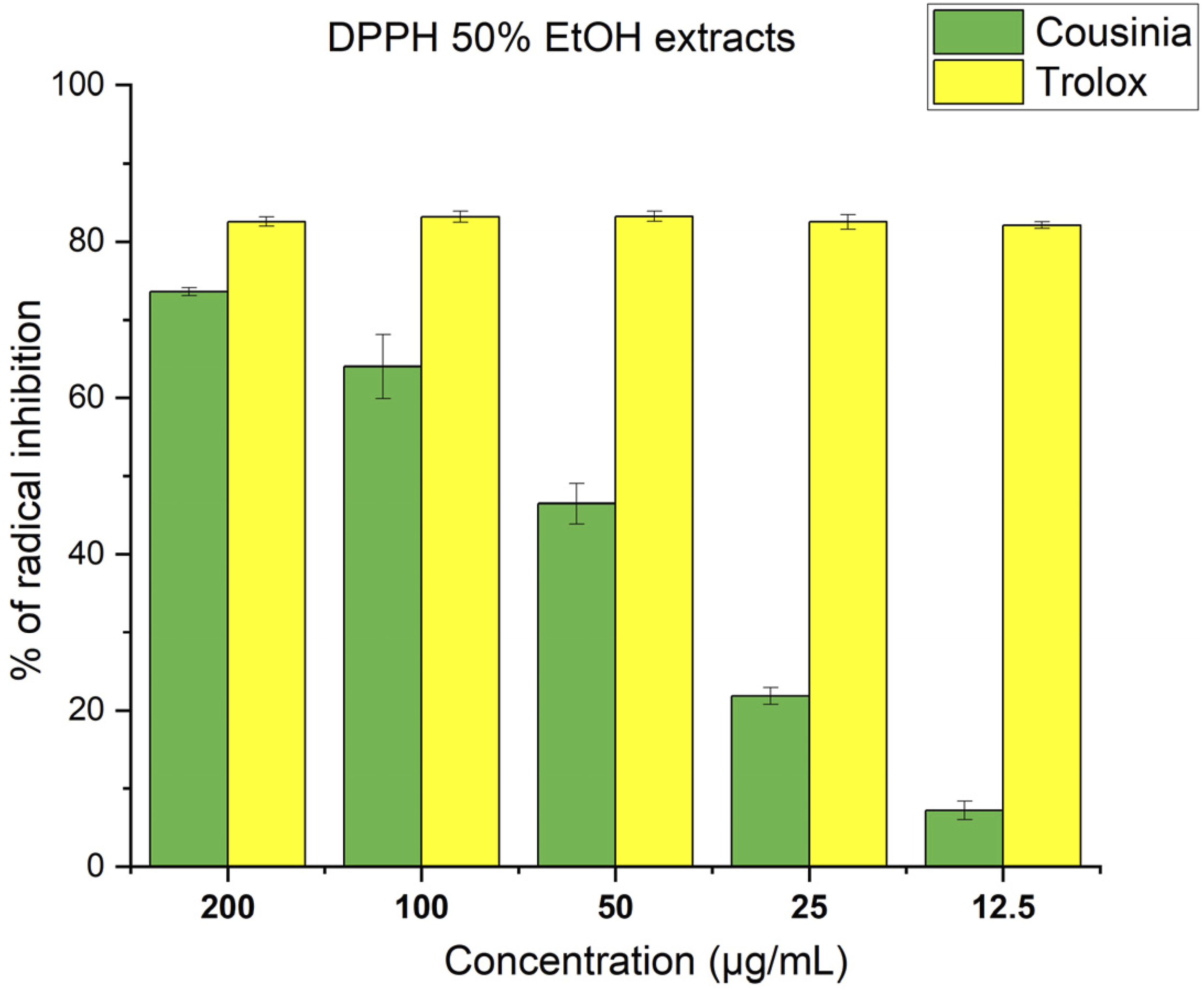
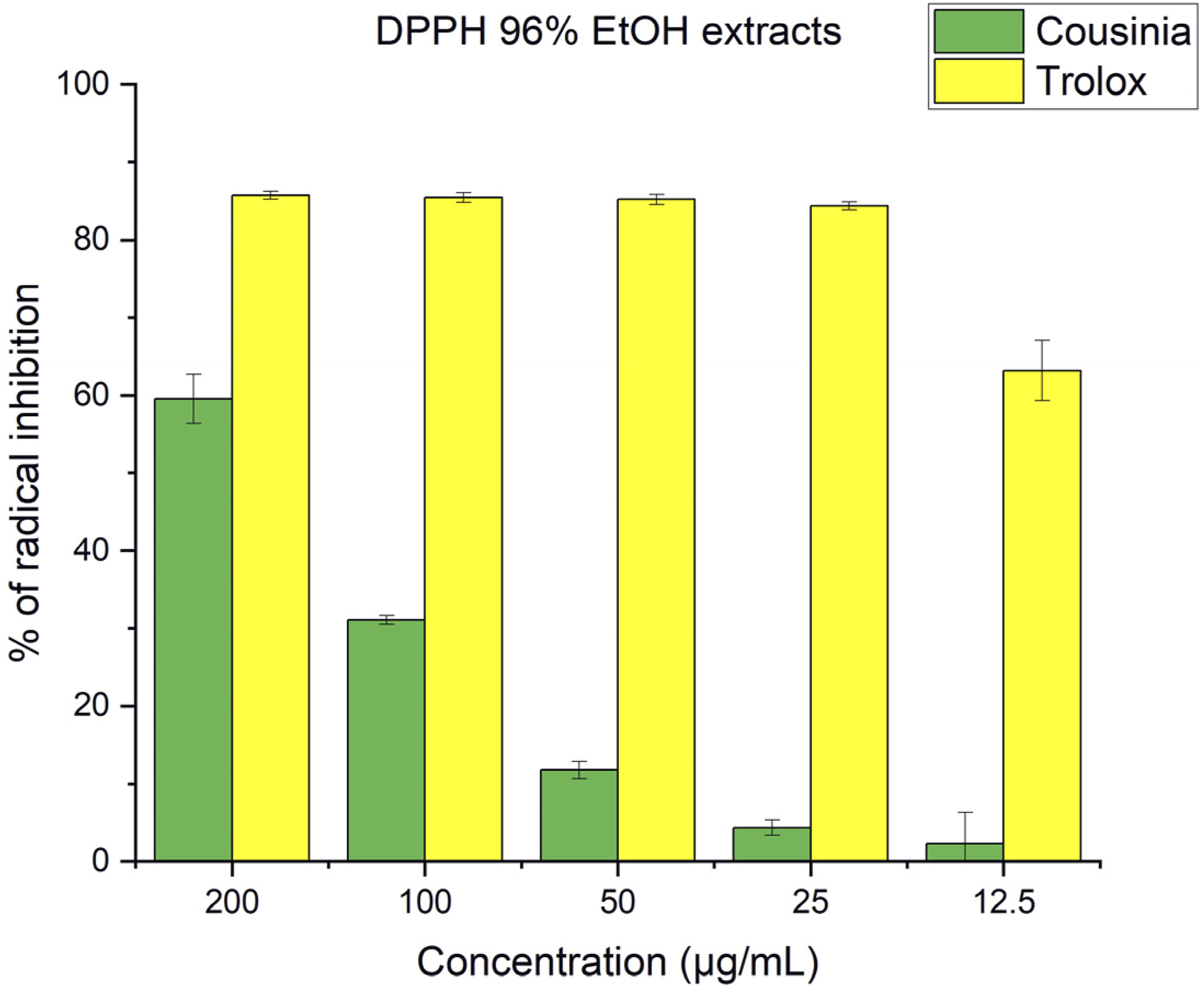
Based on conducted studies, it was found that the ethanol extracts Cousinia Umbrosa Bunge, particularly those prepared with 96%, exhibited negligible activity against DPPH (2,2-diphenyl-1-picrylhydrazyl) free radicals. As a result of their minimal antioxidant potential, these extracts were excluded from further experimental analyses. In contrast, the 50% ethanol extract displayed a significant ability to scavenge DPPH radicals, demonstrating its enhanced antioxidant capacity. This is further illustrated in Figure 2, where the ethanol extract achieved an impressive percentage of radical inhibition, quantified at 74.15 ± 0.21%. These findings highlight the potential of Cousinia Umbrosa Bunge as a valuable source of bioactive compounds with notable antioxidant properties. This emphasizes the importance of further investigation into its phytochemical composition, as well as its prospective applications in food preservation, medicine, and various health-related fields.
Antioxidant activity of extracts against the ABTS cation-radical
The assessment of antioxidant activity of various extracts was conducted using the ABTS (2,2′-Azino-bis-3-ethylbenzthiazoline-6-sulfonic acid) radical cation assay. This method employs ABTS as a stable and low-toxicity reducing agent, which is highly soluble in water. One of the primary advantages of utilizing ABTS is its ability to form a metastable cation-radical through peroxidase or pseudoperoxidase reactions. This cation-radical possesses a high molar extinction coefficient at wavelengths distinct from those characterizing the original ABTS compound, thus facilitating quantitative analysis.
The ABTS cation-radical shown in Figure 3 exhibits stability for several minutes at ambient temperature and demonstrates a significant reactivity profile, interacting quantitatively with a range of antioxidants including Trolox, ascorbic acid, uric acid, cysteine, glutathione, and bilirubin. As the ABTS radical cation reacts with antioxidants, it is reduced back to its colorless neutral form, providing a visible change that can be monitored spectrophotometrically. This assay is commonly referred to as the Trolox Equivalent Antioxidant Activity (TEAA) assay, which serves as a benchmark against which the reactivity of various antioxidants can be evaluated, with Trolox being a water-soluble derivative of vitamin E. Inhibition of ABTS radical by 50% ethanol extracts of Cousinia Umbrosa Bunge. The extract exhibited low antioxidant activity in the ABTS assay, with results demonstrating an inhibition level below 25 μg/mL compared to the reference antioxidant Trolox. These findings suggest limited potential of this extract in scavenging ABTS radicals, indicating a need for further exploration of different extraction methods and concentrations to fully evaluate the antioxidant properties of Cousinia Umbrosa Bunge and identify potentially bioactive compounds.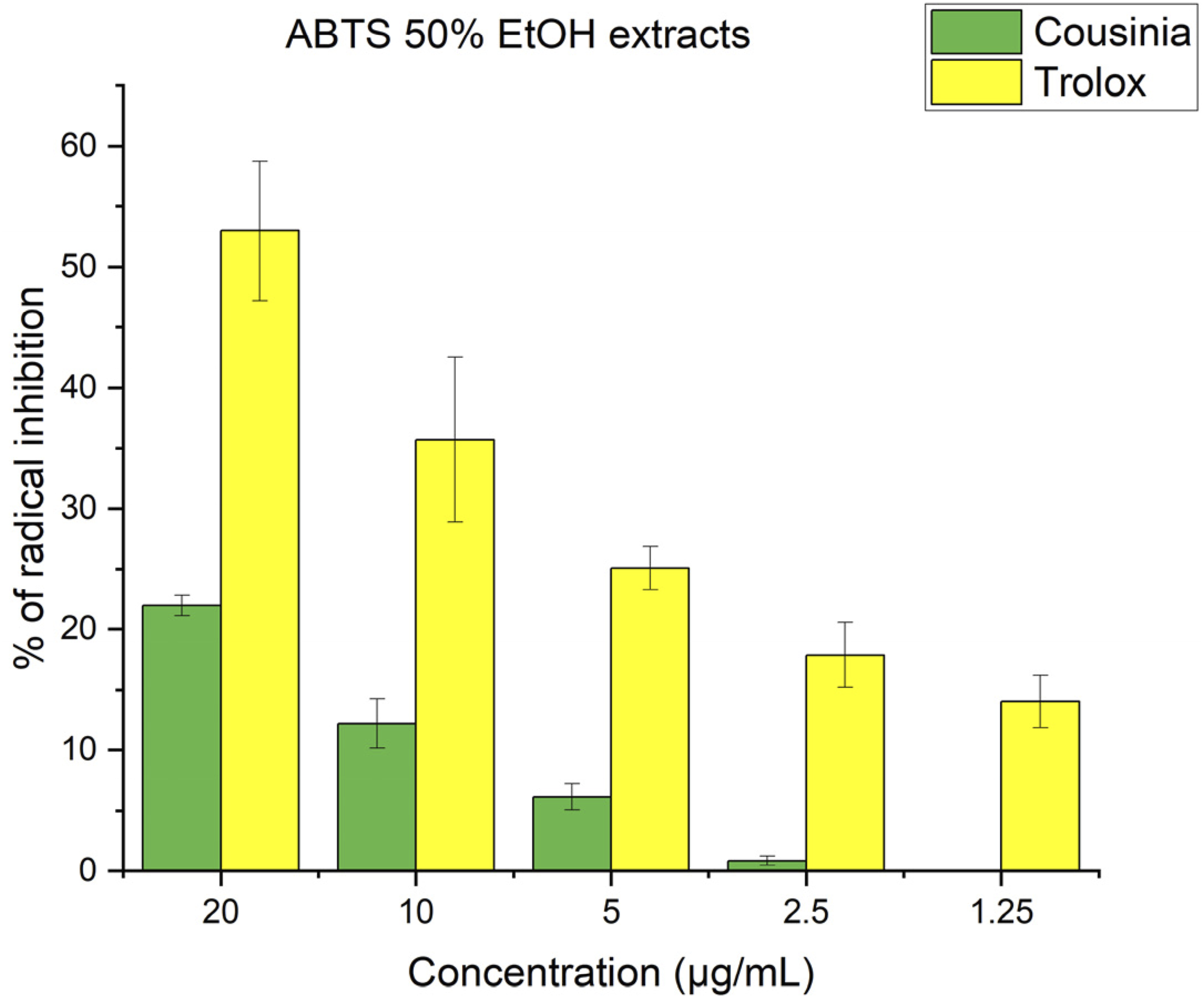
In the conducted studies, it was found that 50% and 96% ethanol extracts of Cousinia Umbrosa Bunge did not exhibit significant antioxidant activity using the ABTS (2,2′-azino-bis(3-ethylbenzothiazolium-6-sulfonic acid)) method. The results of the experiment showed that the activity of the extracts was lower than 25 μg/mL compared to the reference drug Trolox. Further research on other extracts and extraction methods is recommended to determine the risk of antioxidant properties of this species.
Antibacterial activity

K1 – Cousina umbrosa bunge – stalk, leavs.
In vitro cytotoxic activity
Today, it is known that synthetic drugs are undesirable in cancer treatment due to their side effects and interactions. However, herbal preparations are more important in antitumor research due to their therapeutic efficacy and sometimes low toxicity. Figures 4 and 5 illustrate the cytotoxic activity of Cousinia Umbrosa Bunge plant extracts against HDF and HaCaT cell lines, respectively. The data shown in the diagram illustrates the degree of inhibition of cellular activity depending on the concentration of the extracts. Cytotoxic effect of ethanol extract of Cousinia Umbrosa Bunge against HDF (human dermal fibroblast). The data illustrate varying degrees of cytotoxicity observed, indicating low cytotoxic activity in HDF cells, which supports the potential therapeutic application of this extract in cancer treatment with reduced side effects. Cytotoxic effect of ethanol extract of Cousinia Umbrosa Bunge against HaCaT (human keratinocyte). The ethanol extracts displayed moderate cytotoxic effects, as assessed by established criteria for cytotoxicity. These results indicate the need for further exploration of the extract’s bioactivity and its possible application as a therapeutic agent, particularly in relation to skin cell interactions.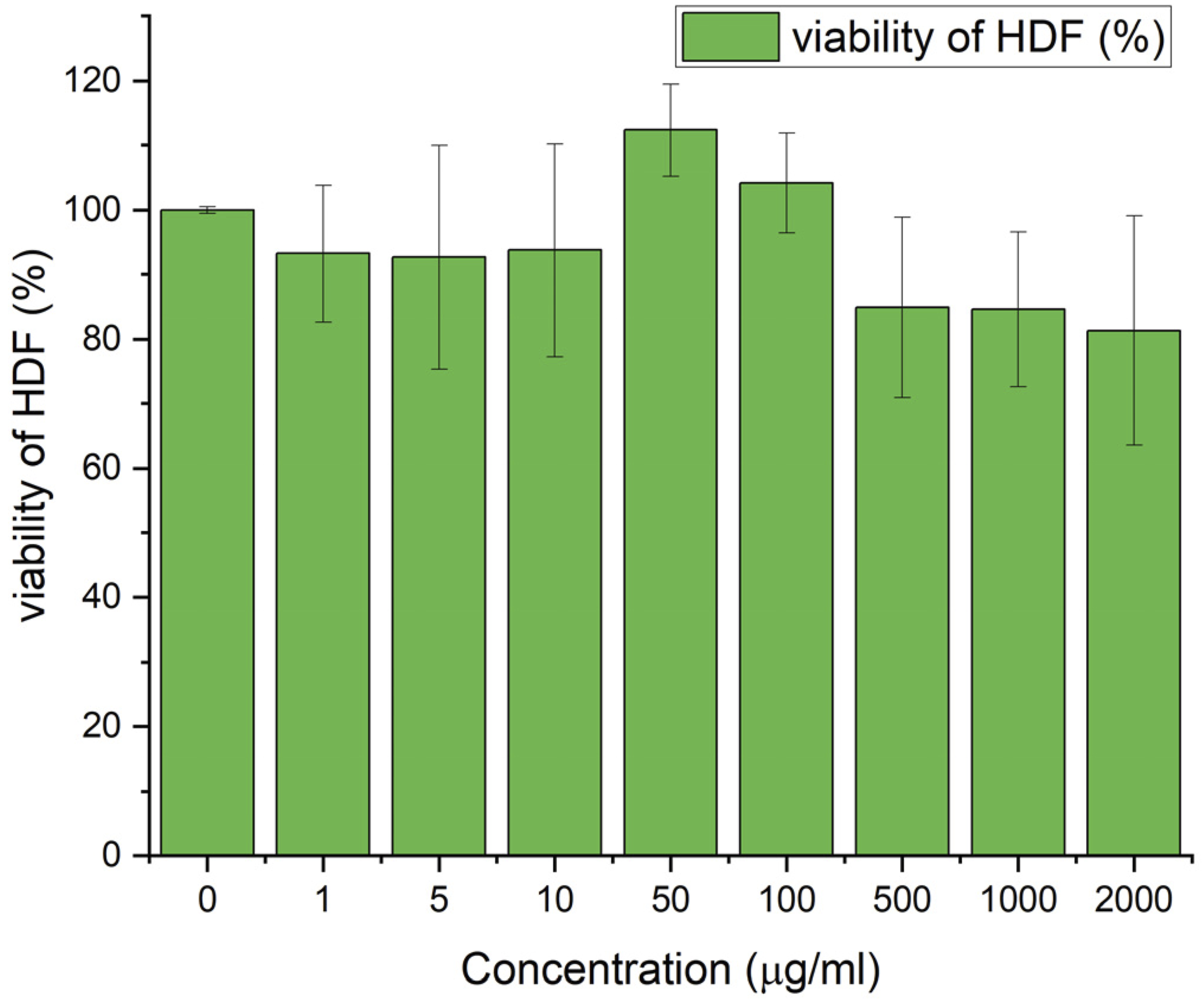
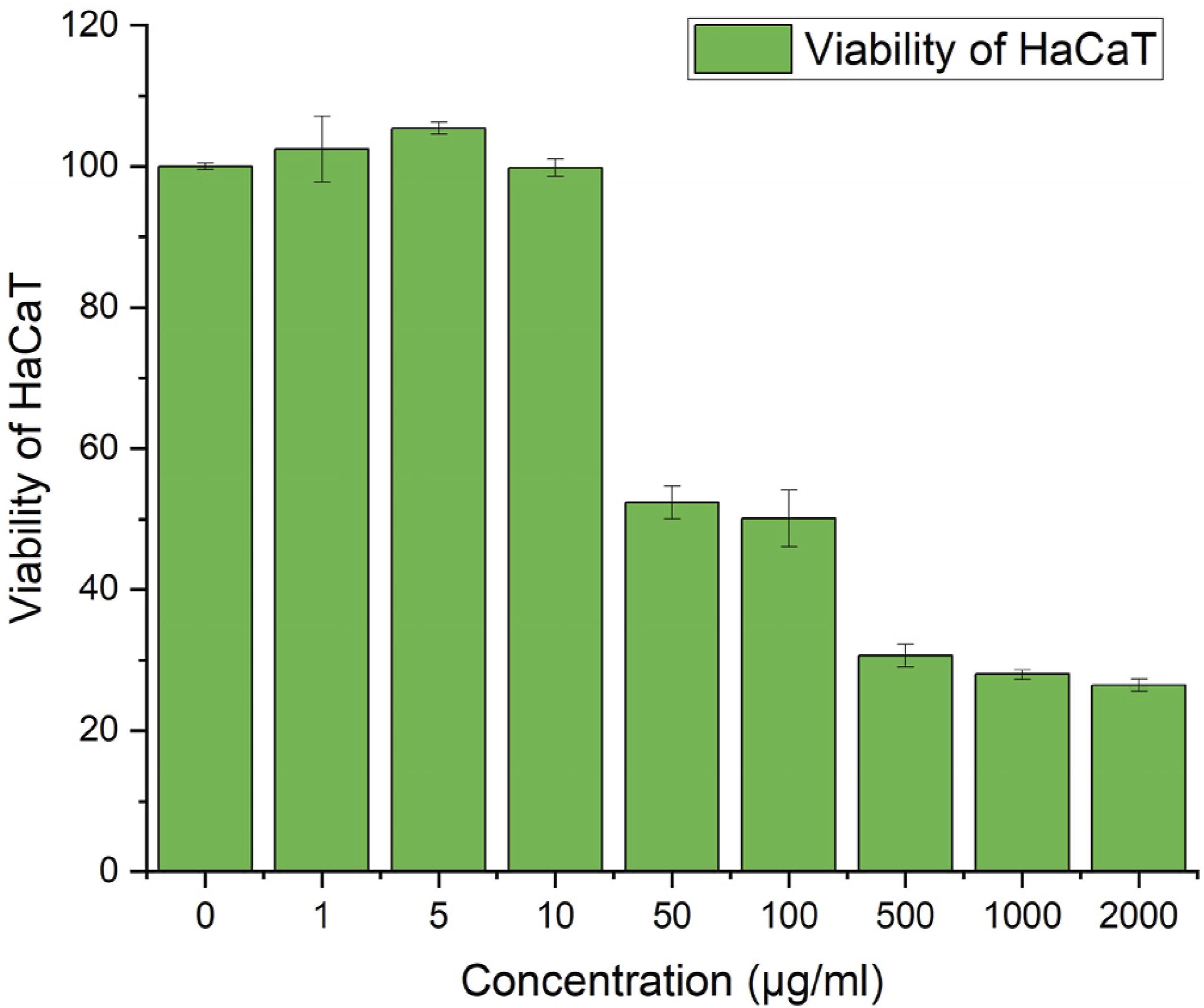
The ethanol extracts of Cousinia Umbrosa Bunge demonstrated low cytotoxic activity against human dermal fibroblasts (HDF). However, these extracts exhibited moderate cytotoxic effects against human keratinocytes (HaCaT), as assessed according to the criteria established by the National Cancer Institute (NCI) and the Geran protocols.
Discussion
Numerous research efforts have indicated that natural antioxidants play a crucial role in mitigating oxidative stress associated with various ailments, including cancer, rheumatoid arthritis, cardiovascular disorders, and neurodegenerative diseases. Consequently, there has been increased scholarly interest in evaluating the antioxidant properties of natural products due to their potential therapeutic benefits and low toxicity.22,23 In examining literature on the Cousinia genus, it has been identified as having a wealth of phytochemical compounds—such as triterpenes, sesquiterpenes, flavonoids, and steroids.24,25 Additionally, various Cousinia species have been found to exhibit a range of biological activities, including cytotoxic, antioxidant, antimicrobial, and antihypnotic effects.9,26 Notably, a comparative analysis demonstrates that Cousinia Umbrosa Bunge’s antioxidant capabilities, as assessed by DPPH and ABTS radical scavenging assays, are indeed significant. Comparatively, C. davisiana Hub.-Mor. has shown even greater antioxidant efficacy, particularly through its methanol and n-butanol extracts, thus establishing a strong foundation for the potential therapeutic applications of Cousinia species.
This is the first report on the bioactivity‐guided isolation of Cousinia Umbrosa Bunge. The results showed that these Cousinia Umbrosa Bunge have promising and antioxidant and antibacterial activity. Identification and quantification of the antioxidant constituents of these plants were evaluated in this study, and their protective effect with other minor compounds may be investigated. Moreover, because of the limited studies on Cousinia species and identified compounds, this qualitative and quantitative study combined with activity
The results of this study reinforce the notion that Cousinia Umbrosa Bunge possesses both promising antioxidant and antibacterial activities. The identification and quantification of the antioxidant constituents were meticulously evaluated, revealing a complex profile that includes not only primary compounds but also synergistic effects with minor constituents, meriting further investigation. Additionally, despite the existing limitations in the amount of research surrounding Cousinia species and specific identified compounds, our findings suggest that Cousinia Umbrosa Bunge could emerge as a significant source of natural antioxidants and antimicrobial agents. This is essential for potential development of functional foods, nutraceuticals, and phytopharmaceuticals. Comparative analysis with existing literature highlights the necessity for ongoing research to explore the full spectrum of bioactive compounds within Cousinia species, which may offer novel applications in health-related fields.
Conclusion and future perspective
The present study highlights the remarkable potential of Cousinia Umbrosa Bunge as a source of natural antioxidants and antimicrobial agents. Through a comprehensive analysis of its phytochemical profile, we identified several key compounds contributing to its biological activity. The quantitative assessments based on 50% ethanol extract exhibited a significant ability to scavenge DPPH radicals, achieving an impressive inhibition percentage of 74.15 ± 0.21%, while also demonstrating notable antibacterial properties against Gram-positive bacteria such as Staphylococcus aureus and Staphylococcus epidermidis, with minimum inhibitory concentrations ranging from 0.5 to 2 mg/mL. The findings of this work provide support for the therapeutic promise of Cousinia Umbrosa Bunge in promoting health and combating microbial threats, opening avenues for the development of functional foods and nutraceuticals.
To translate these findings into practical applications, future research should focus on the integration of these bioactive compounds into polymer systems, paving the way for sustainable materials that harness the properties of plants. Moreover, this work is particularly significant in view of the context of carbon emission reduction and global warming. By developing renewable, biobased polymers from Cousinia Umbrosa Bunge, it is possible to lessen reliance on fossil-fuel-based materials, thereby contributing to a more sustainable and eco-friendly future. As we continue to explore the rich contributions of this underappreciated plant, it becomes evident that traditional knowledge and modern scientific inquiry can combine to uncover hidden treasures of nature, offering pathways to innovation in healthcare and wellness while addressing pressing environmental challenges.
Footnotes
Declaration of conflicting interests
The author(s) declared no potential conflicts of interest with respect to the research, authorship, and/or publication of this article.
Funding
The author(s) disclosed receipt of the following financial support for the research, authorship, and/or publication of this article: this work was supported by the Asfendiyarov Kazakh National Medical University intra-university grant for conducting scientific research in the field of medicine and healthcare.
