



Abstract
Psychological processes (e.g., cognition, motivation, emotions) have emerged as key to understanding entrepreneurial actions and success. Currently, we do not know enough about specific entrepreneurial psychological processes and particularly lack knowledge about their cumulative or interactive effects. Self-regulation offers some promise in understanding these issues. However, self-regulation in entrepreneurship has not been fully explored, which limits our understanding. We address this by introducing an integrated model of episodic self-regulation (the A-CEM-A model) to map the reciprocal regulatory effects of action, cognition, emotion, and motivation in entrepreneurship research and isolate a series of propositions stemming from the model. We further explore the resource implications of the A-CEM-A model for entrepreneurs managing several self-regulatory processes simultaneously. The A-CEM-A model offers a novel and unique insight into entrepreneurial action and psychological processes, and presents a roadmap for future researchers interested in adopting an episodic process perspective in entrepreneurship research.
Entrepreneurial striving has become a celebrated aspect of human adaptation and is associated with societal, economic, and scientific advancement. While accepting that an array of contextual factors influence entrepreneurship, Baum, Frese, Baron, and Katz (2007, p. 1) assert that “it takes human [emphasis added] vision, intention, and work to conceive and convert business ideas to successful products and services.” Thus, the field of psychology is uniquely situated to assist in developing a deeper understanding of this important human process (Frese & Gielnik, 2014). However, to date, most entrepreneurship research has considered only a limited array of psychological processes, and rarely are they studied in an integrated fashion.
Initial psychological research on entrepreneurship delivered moderate associations between various individual characteristics and entrepreneurial success (see Frese & Gielnik, 2014, for a review). As the field of entrepreneurship research matured, dominant thinking has shifted from an emphasis on the actor and opportunity to a more dynamic understanding of the entrepreneurial process over time (Moroz & Hindle, 2012; Shane & Venkataraman, 2000), with at least three phases: the initial identification of an opportunity, creation and launch of a new venture, and the management of this venture postlaunch. An integrated, process and time sensitive perspective is required to capture the dynamic psychological processes of individual entrepreneurs (Chiles, Elias, & Li, 2017; Shane, 2012). We propose that self-regulation theory offers the potential to explain the discrete dynamic interactions of an entrepreneur’s cognitive, emotional, and motivational processes when engaging in entrepreneurial actions.
Self-regulation processes have emerged as some of the most important psychological processes explaining performance and success across the entire human lifespan (Forgas, Baumeister, & Tice, 2009). Self-regulation refers to the regulation of the self by the self, and involves bringing thinking, feelings, and behavior into accord with some consciously desired goal (Forgas et al., 2009). While many scholars have identified the potential of self-regulation to deliver a richer understanding of entrepreneurship (e.g., Baron, Mueller, & Wolfe, 2016; Frese, 2009), there has been little examination of iterative processes (e.g., McMullen & Dimov, 2013). Shepherd (2015, p. 489) recently noted a similar sentiment suggesting that the success of entrepreneurship research to date could be leading the field into a competency trap that “rewards in the short run playing it safe by using accepted theories and approaches to address increasingly narrow research questions.” Rooted in motivation science, self-regulation theories present useful integrative frameworks of psychological processes that can be used to better understand how entrepreneurs act to pursue opportunities. To achieve this, it is necessary to embrace the complexity of multiple self-regulatory processes operating concurrently when entrepreneurs make decisions, spot opportunities, and act to pursue potential.
Entrepreneurship provides a number of unique contextual characteristics (Frese & Gielnik, 2014) that result in a high requirement for self-regulation and more complex self-management requirements than those of employees. Entrepreneurs operate in a highly autonomous environment, and they frequently manage multiple potentially conflicting goals simultaneously (see Nambisan & Baron, 2013). Entrepreneurship takes several months or years to realize the potential of a venture, and therefore it is a long-term goal to achieve. In particular long-term goals require self-regulation (Bateman & Barry, 2012). Thus, although our model could be applied to any individual, these unique characteristics of the entrepreneurial environment present a natural laboratory to more deeply understand the integration of self-regulatory processes. Furthermore, research on self-regulation can provide a deeper understanding of the role of the person in entrepreneurship, including how they take effective action, make effective decisions, and manage their motivation and emotions, especially in the face of setbacks. This, in turn, will further our understanding of how they can maximize their own potential and turn vision into reality.
In this article, we address the call by Shepherd (2015, p. 489) to advance entrepreneurship research that is more “interactive, activity based [and] cognitively hot.” We develop a theoretical model of self-regulation in entrepreneurship (the A-CEM-A model) that embraces the ways in which self-regulation processes and actions interact across performance episodes. We consider the regulation of four key psychological constructs: cognition, emotion, motivation, and action. This episodic process perspective advances our understanding of the interaction and integration of these psychological concepts, considering how they work together and over time. This has the potential to open the “black box” of entrepreneurs’ self-regulatory processes to truly understand how they make sense of the world around them to create novel and innovative solutions.
Our model makes two key contributions to the fields of self-regulation and the psychology of entrepreneurship. Firstly, it highlights the need to conceptualize action, cognition, motivation, and emotion in a more holistic way in order to examine the interactions between these components of self-regulation. Secondly, our A-CEM-A model implies that we need to examine how these four components unfold over time (Roe, 2008), particularly in terms of understanding the resource implications of regulating multiple psychological processes. 1 Our article is founded on two key premises. Firstly, entrepreneurship research cannot examine cognition, motivation, emotion, and action in isolation but rather needs a more holistic focus on the dynamic interaction and regulation between these components. We propose the A-CEM-A model of self-regulation in entrepreneurs as a unifying and integrating framework of actional (A), cognitive (C), emotional (E), and motivational (M) self-regulation processes (see Figures 1 and 2). Secondly, our A-CEM-A model implies that one needs to examine how entrepreneurial action, cognition, motivation, and emotion unfold over time (e.g., Roe, 2008; see Figure 2). Our model advances self-regulation research, as it is the first time that an integrated approach considering the four components of cognition, emotion, motivation, and action during performance episodes has been examined and applied to an entrepreneurial context. This further contributes to our understanding of the resource implications of regulating multiple psychological states within a performance episode.
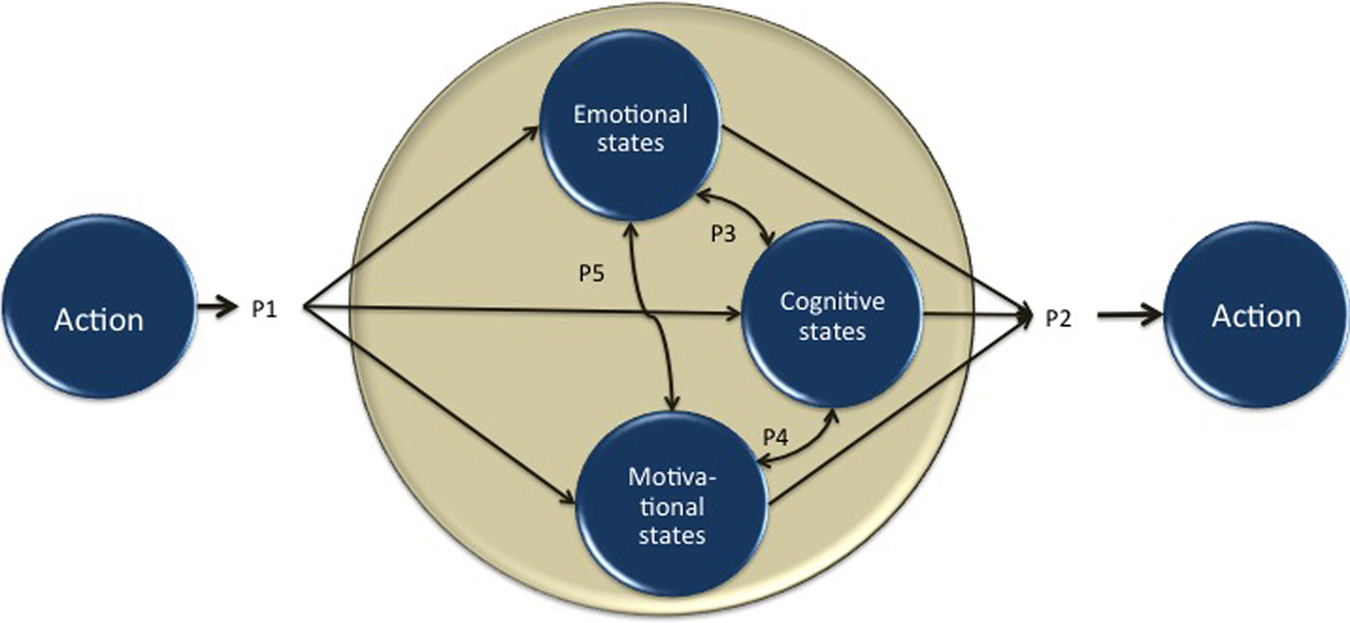
The integrated A-CEM-A model of self-regulation.
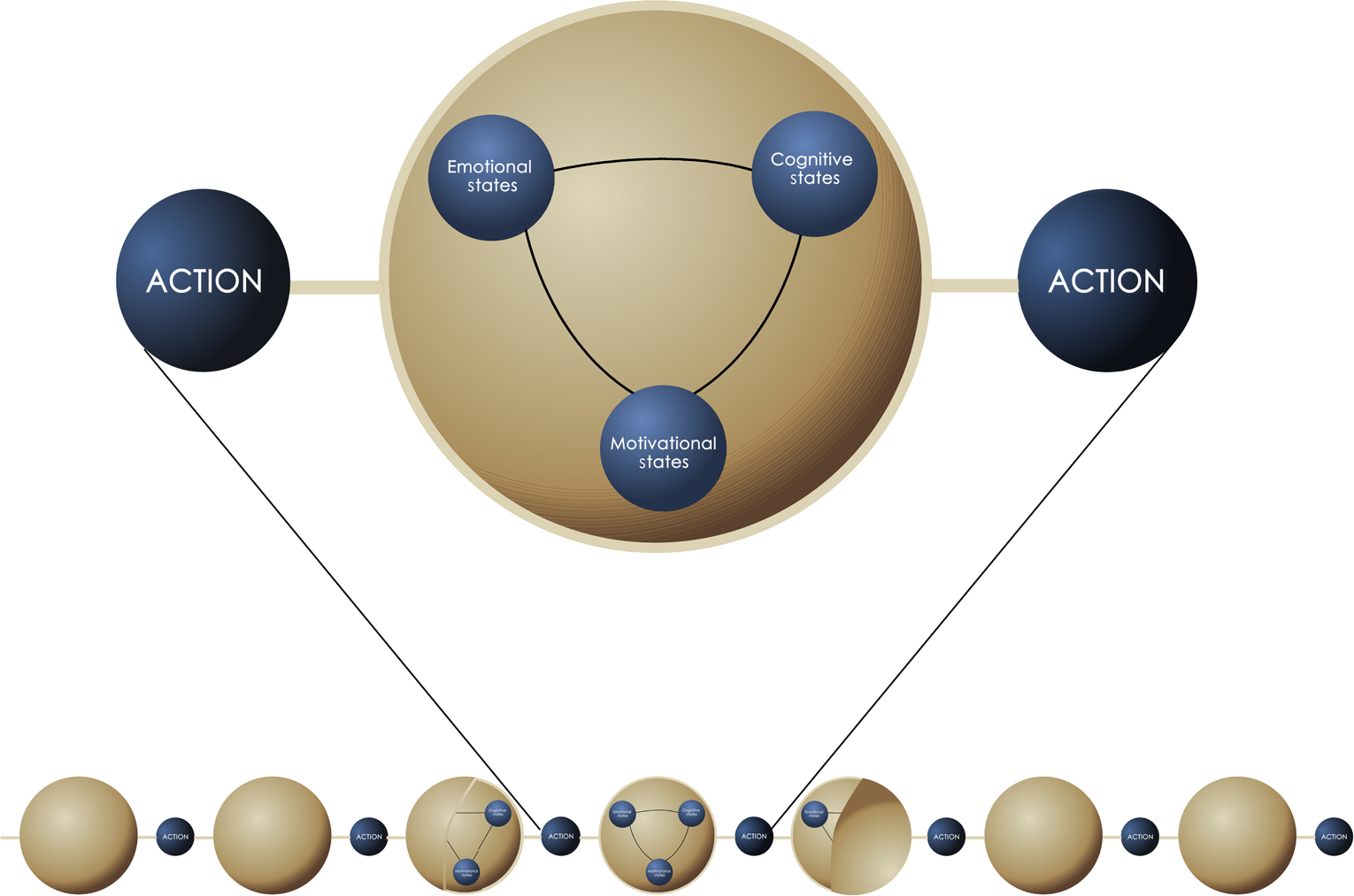
Dynamic representation of the integrated A-CEM-A model of self-regulation over time.
The remainder of the article is structured as follows. First, we present a short overview of self-regulation. Second, we provide an overview of what we mean by action, cognition, emotion, and motivation in the context of a performance episode. Third, we explain the A-CEM-A model and associated propositions. We then discuss the potential resource costs and benefits of self-regulation for entrepreneurs and discuss the contribution the model makes toward an integrated understanding of an entrepreneur’s intrapsychic processes. Finally, we signpost specific areas that require further research and attention to validate the model.
Self-regulation: A brief overview
Self-regulation theories seek to understand how motivational, cognitive, actional, and affective resources are deployed and interact when focused on goals and tasks. Theories have tended to differ in terms of whether they consider the processes of self-regulation (Carver & Scheier, 1981), or as more distal traits and states which influence these processes (Crowe & Higgins, 1997; Higgins, 1997), or both (Heckhausen & Gollwitzer, 1986, 1987). In this article, we adopt a process approach, as it has been instrumental in adding insights into human thoughts and actions in areas such as learning (Zimmerman, 2008), health management (Maes & Karoly, 2005), and work performance (Dalal, Bhave, & Fiset, 2014).
We acknowledge that to understand self-regulation, it is necessary to consider both processes and influencing traits, as well as their interaction (e.g., Rauch & Frese, 2000, 2007). However, the importance of considering distal individual and contextual influences in self-regulation (Kanfer, Ackerman, & Heggestad, 1996), motivation (Parker, Bindl, & Strauss, 2010), and entrepreneurship (Rauch & Frese, 2007) research has already been established, and so, we do not repeat these here. Rather, we focus on the ways in which various self-regulatory processes interact. This perspective aligns with recent dynamic approaches to performance, which present not just an episodic characterization of the self-regulatory process (e.g., pregoal, goal pursuit, and postaction evaluation) but an active depiction of how motivation, cognition, affect, and action influence each other in a reciprocal fashion (Beal, Trougakos, Weiss, & Dalal, 2013; Beal, Weiss, Barros, & MacDermid, 2005; Lord, Diefendorff, Schmidt, & Hall, 2010). Theories of self-regulation acknowledge these reciprocal relationships. For example, control theory (Carver & Scheier, 1981) considers the interaction between behavioral and emotion feedback loops, and action regulation theory (Frese, 2009; Frese & Zapf, 1994; Heckhausen & Gollwitzer, 1986, 1987) considers how cognitive processes such as decisions and planning influence action.
The episodic nature of the A-CEM-A model
Shane, Locke, and Collins (2003) describe entrepreneurial actions as episodic, and so adopting an episodic approach to the A-CEM-A model holds promise in advancing our understanding of action and its regulation in this context. Beal et al. (2005, p. 1055) proposed the concept of the performance episode, defined as a “within-person ‘temporal unit of performance’ that complements the time-bound, transient nature of affective states.” The concept of the performance episode fits well with self-regulatory accounts of actions. Performance episodes are naturally segmented, relatively short episodes thematically organized around work-relevant immediate goals or desired end states (Beal et al., 2005). In self-regulation, action represents all activities directed toward an intended goal (Achtziger & Gollwitzer, 2008), and is organized in specific ways by goals, information integration, plans, and feedback, that can be regulated consciously or via routines (Frese & Zapf, 1994). In the A-CEM-A model, we adopt the idea that self-regulation occurs as an episodic process that depends on the goal to be achieved, the actions already achieved, as well as the motivation for this goal and associated emotions. However, in contrast to Beal et al. (2005), we do not specify that the episodic self-regulatory process must necessarily occur across the course of a day. Although there are both temporal and episodic elements to self-regulatory processes, for entrepreneurial actions the time involved can vary quite substantially; some episodes may be momentary, such as goal conflict between competing goals (Fishbach, Friedman, & Kruglanski, 2003; Locke, Smith, Erez, Dong-Ok, & Schaffer, 1994), while others may be longer term, such as persistence in the face of obstacles over time (Bateman & Barry, 2012).
The integrated A-CEM-A model of self-regulation in entrepreneurs (see Figures 1 and 2) incorporates four elements of regulation: action (A), cognition (C), emotion (E), and motivation (M). The term A-CEM-A firstly captures that the four elements dynamically interact during a self-regulatory episode, and secondly, indicates that the sequence of regulation occurs through different performance episodes over time (Beal et al., 2005). For example, actions (A) from one performance episode influence subsequent psychological processes (CEM) in the next performance episode, which in turn influence subsequent actions (A), as depicted in Figure 2. For example, consider an entrepreneur, working in a team with three others, whose primary goal is to develop a profitable new technological product. However, due to its innovativeness, this product will not have a market for perhaps years. In order to develop his/her product, the entrepreneur and his/her team engage in a series of iterative actions, which involve presenting the product to potential customers, receiving feedback, processing this feedback, and making further improvements to their product. This is a typical cognition–action iterative regulation process (Paths P2 and P3 in Figure 1), whereby the proactive goal (to develop a profitable product) leads to action (seeking feedback from potential customers), and the results of one “performance episode” (e.g., receiving feedback from customers) lead to the goals, plans, and actions of the next performance episode.
The model also captures the manner in which each self-regulatory element can be regulated by reciprocal and interactive effects on each other. Figure 1 captures a snapshot of a self-regulatory performance episode, which feeds into subsequent performance episodes (depicted in Figure 2), as hypothesized by episodic performance models (Baddeley, 2000; Beal, Trougakos, Weiss, & Green, 2006; Beal et al., 2005; Dalal et al., 2014; Trougakos, Beal, Green, & Weiss, 2008). The dynamic representation in Figure 2 aims to capture the competing demands of regulating multiple processes in any given episode that may result in depleted resources (Baumeister, 2003; Hobfoll, 1989). Consider our entrepreneur in the previous example. What is also important to consider is (a) the episodic motivation of the entrepreneur; for example, it takes confidence in both his/her product and his/her ability to improve the product following feedback; and (b) the episodic emotion of the entrepreneur; for example, the entrepreneur may be frustrated or disappointed with customer feedback at times, and must manage this in order to make improvements. Thus, in order to achieve his/her goal of developing the product, the entrepreneur progresses through multiple performance episodes, and in each of these must manage his/her actions, cognitions, motivation, and emotions in order to develop his/her product successfully.
Furthermore, as entrepreneurs work on multiple goals at any given time (Nambisan & Baron, 2013), there may be multiple self-regulatory episodes occurring concurrently as well as sequentially, which interact (Mitchell, Harman, Lee, & Lee, 2008; Mitchell, Lee, Lee, & Harman, 2004). For simplicity, we have not presented these in our model, but mention them to highlight the true complexity of integrating self-regulatory processes. Returning to the example of our entrepreneur, s/he may have competing goals in addition to improving the product. For example, accessing appropriate funding to sustain the enterprise until the product reaches market may also be high on the agenda. Although this is not his/her primary goal, it is one that s/he must attend to in order for the venture to survive.
A challenge for self-regulation researchers is to capture the dynamic nature of the regulatory process using time sensitive approaches that reveal their unfolding interactive nature; in essence, to bring time, traditionally viewed as a boundary condition, to center stage (Whetten, 1989). Throughout our article, we emphasize the dynamic and temporal nature of the A-CEM-A model, in which “temporal processes are in the focus of interest” (Sonnentag, 2012, p. 362). The A-CEM-A model attempts to capture the dynamics of what happens in self-regulation rather than the more traditional question of what is self-regulation (Roe, 2008). The model maps how intrapsychic regulatory functions (CEM) interact and unfold, for instance, as an entrepreneur pursues a desired goal (A).
Episodic forms of action, cognition, motivation, and emotion
In an episodic approach to self-regulatory processes, it is important to consider appropriate manifestations of action, cognition, motivation, and emotion. We discuss this next.
Action
The specific actions of entrepreneurs and their regulation have been a topic of scrutiny in past research (Carter, Gartner, & Reynolds, 1996; Frese, 2009; Frese et al., 2007). Carter et al. (1996) examined the start-up activities of nascent entrepreneurs who subsequently went on to start a business, gave up, or were still trying, finding that in comparison to the started a business group, the gave up group persisted less and ceased their entrepreneurial activities more quickly. The still trying group put less effort into the start up process. In addition, the started a business group engaged in activities with a longer term focus (e.g., make the business appear tangible to others), in contrast to the still trying group who devoted their short-term efforts towards activities internal to the start-up process (e.g., saving money). Thus, the started a business group appeared to engage in more proactive behaviors and personal initiative (Fay & Frese, 2001). Indeed, past research on entrepreneurial activities has shown that proactive behaviors as well as adaptive behaviors are important for success (Glaub, Frese, Fischer, & Hoppe, 2014; Hahn, Frese, Binnewies, & Schmitt, 2012). Both proactive and adaptive behaviors are change-oriented behaviors and are considered emergent forms of behavior because their content is difficult to standardize or prespecify (Griffin, Parker, & Mason, 2010). Adaptive behaviors describe the extent to which an individual adapts to changes, while proactive behaviors describe the extent to which individuals take self-directed action to anticipate change or initiate change (Griffin, Neal, & Parker, 2007). Carter et al. (1996) demonstrated that entrepreneurs who gave up made an evaluation that their plan would not succeed; they engaged in an adaptive behavior. Persistence in the face of obstacles and setbacks (aspects of proactivity) is important for entrepreneurship (Frese, 2009; van Gelderen, 2012) and continued persistence and goal striving in spite of adversity permit entrepreneurs to adapt to changing environmental circumstances over time (van Gelderen, 2012).
Thus, both proactive and adaptive behaviors are important for entrepreneurs. This makes sense as proactive and adaptive behaviors are very important in contexts with high uncertainty, where individuals need to be able to dynamically respond to changing conditions and demands (Griffin et al., 2007). Thus, in describing our A-CEM-A model, we pay particular attention to adaptive and proactive behaviors, and their regulation.
Cognition
Proactive and adaptive cognitions have also been shown to be important for entrepreneurs (Frese et al., 2007; Haynie & Shepherd, 2009; Haynie, Shepherd, Mosakowski, & Earley, 2010). Cognition refers to any mental process, including but not restricted to thinking, perception, problem-solving, decision-making, planning, and schema formation. Haynie et al. (2010) suggest that adaptable cognitions, defined as the ability to be dynamic, flexible, and self-regulating in one’s thinking given dynamic and uncertain task environments, are important in achieving desirable outcomes from entrepreneurial activities. Attention is a key cognition identified in past models of episodic performance (Beal et al., 2005) which facilitates entrepreneurs to adapt to contextual cues that signal changes which may represent opportunities.
Bindl, Parker, Totterdell, and Hagger-Johnson (2012) identified the cognitions of envisioning, planning, and reflecting as core aspects of the proactive goal regulation process. These cognitions fit quite well with those investigated in past entrepreneurship research. For example, opportunity identification and evaluation (Foo, Uy, & Murnieks, 2015; Grichnik, Smeja, & Welpe, 2010; Welpe, Sporrle, Grichnik, Michl, & Audretsch, 2012) can be considered types of envisioning, while entrepreneurial goal-setting and planning (Frese et al., 2007; Frese, van Gelderen, & Ombach, 2000; Gielnik et al., 2014; Honig & Samuelsson, 2012; van Gelder, de Vries, Frese, & Goutbeek, 2007) clearly fit with the planning phase. Thus, we focus on proactive and adaptive cognitions in our A-CEM-A model.
Motivation
Motivation in its broadest sense, is a “psychological process that influences how personal effort and resources are allocated [emphasis added] to actions pertaining to work, including the direction, intensity and persistence of these actions” (Kanfer, Chen, & Pritchard, 2008, p. 5). Episodic forms of motivation are forms of proximal motivation (Kanfer, 1992). In our A-CEM-A model we focus on the allocation of personal effort and resources that are required to motivate entrepreneurs to engage in adaptive and proactive actions.
Parker et al. (2010) identified three motivational states in their model of proactive motivation, can do, reason to, and energized to motivational states. Can do motivation include self-efficacy perceptions, control appraisals, and the perceived costs of an action (Parker et al., 2010). Reason to motivation refers to the internal driving force to engage in a behavior or the why of an action, represented by autonomous motivation, finding activities enjoyable, and intrinsically interesting (Parker et al., 2010). Parker et al. (2010) suggest that reason to motivation might be more important for long-term-oriented proactive goals, than can do states. Energized to motivation refers to affect-related motivational states including activated positive affect (Parker et al., 2010). These motivational states will determine whether an entrepreneur allocates personal effort and resources to a particular action.
These three motivational states are very relevant to entrepreneurs. Self-efficacy (a form of can do motivation) is a motivational variable that has been researched quite widely in entrepreneurs (Baron, Franklin, & Hmieleski, 2016; Cardon & Kirk, 2015; Shepherd, Patzelt, & Baron, 2013). Frese et al. (2007) found that motivational resources, including self-efficacy, had an impact on entrepreneurial success. Hahn et al. (2012) found that vigor —an energetic resource (Quinn, Spreitzer, & Lam, 2012), and thus a form of energized to motivation—predicted task-oriented and relationship-oriented personal initiative in business owners. Autonomy is often linked with entrepreneurs and their reasons for setting up a business, and autonomous (or reason to) motivation from a self-determination perspective has been identified as relevant in analyzing this (van Gelderen, 2010).
In this paper, we thus focus on the three motivational states of can do, reason to, and energized to as motivational resources that are pertinent to adaptive and proactive actions, drawing on the model of Parker et al. (2010).
Emotion
Emotions are, by their nature, quick to change, and thus fit well into the concept of the performance episode. Indeed, emotions form a core aspect of Beal et al.’s (2005) episodic process model. These researchers suggested that affective states and particularly emotion episodes redirect attentional focus from the task to the circumstances surrounding the affective experience and so, are often detrimental to performance.
In contrast, Parker et al. (2010) suggested that activated positive affect is one component of the energized to motivational state for proactivity, which has also been shown to be important for innovative behavior (Madrid, Patterson, Birdi, Leiva, & Kausel, 2014), a form of proactivity (Parker & Collins, 2010). While, activated positive affect is important for proactive behavior (Fritz & Sonnentag, 2009), this effect may be curvilinear (Lam, Spreitzer, & Fritz, 2014). Negative affect, on the other hand, may be beneficial for adaptive behaviors. Negative emotions arise when an entrepreneur senses that their rate of progress towards a goal is not sufficient (Carver, 2006), and can motivate entrepreneurs to change their behavior (i.e., adapt). Carver and Scheier (1990, 2000) suggested that the result of the comparison between the rate of progress towards a goal versus the expected rate of progress could manifest in two ways, (a) as confidence or doubt or (b) as a sense of positiveness or negativeness. Van Gelderen, Kautonen, and Fink (2015) found that self-control counters the rise of action-related fear and doubt in the context of entrepreneurial intentions. Thus, activated positive and negative emotions appear important to consider in the A-CEM-A model.
Reciprocal relationships in the A-CEM-A model
In the following sections, we discuss the dynamic interplay of the four self-regulation elements (cognition, motivation, emotion, and action), and present propositions to formalize these interconnections. We first focus on the interrelationships between action and the three intrapsychic processes (cognition, emotion, and motivation) and then we move to consider the relationships between cognition, emotion, and motivation.
Reciprocal relationships between A and CEM
Drawing on past theory on self-regulation (Frese & Zapf, 1994; Gollwitzer, Heckhausen, & Ratajczak, 1990) and applying it to an episodic process (Beal et al., 2006), we propose that there are reciprocal relationships between action and the three intrapsychic processes (cognition, emotion, and motivation). We thus propose the following:
To structure our paper in this section, we focus primarily on the relationships between action and a single intrapsychic process (cognition, emotion, or motivation), but highlight how the other two may also impact these relationships.
Focusing on action and cognition
Firstly, in line with theories of action regulation (Frese, 2009; Frese & Zapf, 1994; Gollwitzer et al., 1990), we expect there to be reciprocal relationships between action and cognition. Action regulation theory (Frese, 2009; Frese & Zapf, 1994) focuses on the regulatory function of cognitions, and thus, in the first instance, explains the regulation of action by cognition. The action regulation sequence starts with a goal or intention, before moving to processing information about the environment, planning, monitoring of the execution (action), and feedback processing (Frese, 2009). Bindl et al. (2012) outline a similar sequence in their model of proactive goal regulation, namely: envisioning, planning, enacting (action), and reflecting. These sequences explicitly identify a reciprocal relationship between cognition and action. Thus, we propose that entrepreneurs reflect on the outcomes of their action from a previous episode, and this feedback allows them to regulate their thoughts (e.g., envisioning, planning) in future performance episodes. For example, envisioning a possible self as an entrepreneur (the first step in proactive goal regulation; Bindl et al., 2012; Strauss, Griffin, & Parker, 2012) has been show to impact entrepreneurial activity (discovery and exploitation), particularly during start-up phases (Farmer, Yao, & Kung-Mcintyre, 2011). Furthermore, van Gelder et al. (2007) demonstrated that operational business owners had more specific and difficult goals, and employed a more detailed and long-term planning strategy, compared to failed business owners who pursued a more reactive strategy, thus indicating the importance of cognition for effective entrepreneurial actions. Elaborate and proactive planning may also aid an entrepreneur in keeping their attention focused on on-task behaviors, and not getting distracted (Frese, 2009), which is a key aspect of episodic performance (Beal et al., 2005).
We see an example of how actions can regulate future cognition when considering persistence (a component of proactive behavior). Frese (2009) suggests that persistence in the face of obstacles implies two self-regulatory processes, the first is a protective one; to protect goals, plans (i.e., cognition), and feedback-seeking when competing goals and plans appears, or when these are taxed by difficult situations. The second process is to overcome external barriers so that difficulties are dealt with in an effective manner. However, Frese (2009) also notes that persistence can be overdone, and entail emotional costs, thereby highlighting the reciprocal regulatory relationships of action, cognition, and emotion over time.
The model of proactive goal regulation (Bindl et al., 2012) highlights the role of positive and negative affect in both the enactment of proactive behavior and proactive cognitions. Bindl et al. (2012) found that activated positive affect had a positive association with each of the four elements of the proactive goal regulation process (envisioning, planning, enacting, and reflecting). However, low-activated negative affect was only associated with proactive envisioning, which means that negative affect may inhibit the translation of proactive contemplation into more concrete planning or action. Foo, Uy, and Baron (2009) found that entrepreneurs negative affect directly predicted their effort toward tasks that were required immediately, while high activated positive affect facilitated effort above what was immediately required (i.e., proactive behavior). Thus, as proactive behavior is self-initiated and change-oriented, it is facilitated by high-activated positive emotions, but does not seem to be facilitated by negative affect (Bindl et al., 2012).
Research considering the role of planning in entrepreneurial action and success demonstrates how cognition regulates future action. Psychological plans refer to mental simulations of actions used to develop forethought and control future actions (Frese et al., 2007). Elaborate planning includes the development of contingency strategies (e.g., a Plan B), while proactive planning refers to the degree of detail and the extent to which mental simulations are oriented towards long-term future states (Frese et al., 2007). Elaborate and proactive planning contribute to entrepreneurial success (Frese et al., 2007; van Gelder et al., 2007) while opportunistic and reactive planning are less successful (Frese et al., 2000). The benefits of planning may vary over the life cycle of a new venture and seem to be particularly important in earlier venture stages (Gielnik et al., 2014). Thus, there is considerable evidence to support the proposition that cognition and action are reciprocal with regard to proactive behaviors.
Metacognition, defined as “any aspect of thinking about thinking” (Jost, Kruglanski, & Nelson, 1998, p. 138), may explain the ways in which cognitive (or metacognitive processes in this instance) may relate to adaptive behaviors in entrepreneurship. Haynie et al. (2010) proposed a situated model of metacognition in entrepreneurs, which progresses from the interaction of the environment and motivation, to the role of awareness, knowledge experience in developing a metacognitive strategy, and the monitoring and feedback of the cognitive response, which has commonalities with action regulation theory (Frese & Zapf, 1994). Haynie et al. (2010) suggest that metacognition gives us an understanding of how entrepreneurs adapt to their dynamic and changing environment. It facilitates entrepreneurs to consider alternative cognitive strategies and action in light of changing conditions in their environment (Haynie et al., 2010). Thus, in the A-CEM-A episode, metacognition aids entrepreneurs to think in different ways about the task at hand, and thus enables them to adapt to their current conditions.
Haynie et al.’s (2010) research also provides an insight into the way in which motivation may influence the link between metacognition and action. The first step in this model proposes that an entrepreneur’s motives influence how the environment is perceived and interpreted, and thus, serve to direct the entrepreneur’s attention to contextual cues that signal changes in the environment, which may represent opportunities. At the episodic level, an entrepreneur’s autonomous motivation for a goal or task will hone their attentional focus or attentional spotlight (Posner, 1980) to areas that are perceived to be of interest or value to the entrepreneur, resulting in them being more likely to take action in these areas than in others.
Focusing on action and emotion
As we highlighted before, there is evidence that activated positive emotions are beneficial for proactive actions (Bindl et al., 2012; Foo et al., 2009), while negative affect seems to promote thinking about more immediate actions (Foo et al., 2009), and may not be beneficial for the proactive goal regulation process (Bindl et al., 2012; Fritz & Sonnentag, 2009). Welpe et al. (2012) demonstrated that fear decreased the tendency to exploit opportunities, while joy and anger were associated with increased exploitation tendencies. Using control theory (Carver & Scheier, 2008, 2009) to explain their results, they posited that anger and joy are approach-oriented emotions, while fear is an avoidance-oriented emotion. Thus, there is clear evidence that emotions influence subsequent proactive actions, although specific negative emotions may have different effects.
In addition to current experienced emotions, anticipated emotions are likely to influence future actions also. Anticipated emotions are an important aspect of emotion-as-feedback theory (Baumeister, Vohs, DeWall, & Zhang, 2007), occurring when an individual imagines the emotions they will feel in the future once certain desirable or undesirable future events have occurred (Baumgartner, Pieters, & Bagozzi, 2008). Thus, the role of anticipated emotions lies in motivating goal-directed behavior (Baumgartner et al., 2008). From this perspective, it is not what an entrepreneur is feeling right now, but what they anticipate feeling as a result of a particular behavior (such as attaining a valued goal) that can be a powerful and effective guide to choosing well (Baumeister, Vohs, et al., 2007). Little entrepreneurship research has explicitly focused on the function of anticipated emotions. However, they are likely to serve an adaptive function and be beneficial in decision-making processes (Baumeister, DeWall, & Zhang, 2007).
The impact of anticipated emotions may be indirectly related to action (Baumeister, Vohs, et al., 2007). In emotion-as-feedback theory, Baumeister, Vohs, et al. (2007) suggest that current emotional states provide feedback and stimulate restrospective appraisal of actions which can promote learning and alter future behavior. In addition, actions can be chosen to either pursue or avoid anticipated emotional outcomes. For example, persisting with a failing firm does not make sense from a financial perspective, but may give an entrepreneur time to deal with the emotional side of failure, a term referred to as anticipatory grief (Shepherd, Wiklund, & Haynie, 2009). In this manner, actions (e.g., persistence) may be continued in order to manage anticipated emotions.
In addition to emotions themselves, the regulation of emotion is important for entrepreneurs, particularly when they face failure or setbacks and need to manage their emotional reactions to facilitate appropriate decision-making and action (Shepherd & Haynie, 2011; Shepherd et al., 2009). Entrepreneurs with high emotion regulation capabilities engage in more learning behavior and transformational leadership behaviors following failure than entrepreneurs with poorer emotion regulation skills (He, Sirén, Singh, & Solomon, 2013).
Focusing on action and motivation
As we highlighted in an earlier section, can do, reason to, and energized to motivational states have been linked with entrepreneurial actions and success (Frese et al., 2007; Hahn et al., 2012; van Gelderen, 2010). At the episodic level, the regulation of these motivational states may also be important to consider, as they help entrepreneurs to stay on task, which can be considered a form of adaptive behavior at the episodic level. On-task and off-task actions were considered by Beal et al. (2005) in their model of episodic performance, but they focused on the role of emotion regulation, rather than the regulation of motivational states in maintaining on-task behavior. The regulation of motivational states may be particularly important when an entrepreneur must engage in tasks or activities they find uninteresting or boring (Sansone, Weir, Harpster, & Morgan, 1992; van Tilburg & Igou, 2012), but which are important to the venture’s success. For example, inventive and creative entrepreneurs who experience high interest for developing new products or services, but lower interest in the day-to-day tasks of running their business have to manage their motivation to accomplish these less enjoyable tasks. When motivation is autonomous, individuals find it easier to stay on task, and there is little need to regulate motivation (Sansone & Thoman, 2005). For example, interest may result in flow experiences and thus contribute to persistence on a task (Nakamura & Csikszentmihalyi, 2009).
The impact of action on motivation has received less attention. Recent research outside entrepreneurship may provide insights into such relationships however. Strauss, Parker, and O’Shea (2017) found that proactive behavior impacted strain only when autonomous motivation was low and controlled motivation was high. They explained this by suggesting that proactive behavior drains resources when controlled motivation is high and autonomous motivation is lacking, because individuals expending effort for autonomous reasons experience higher levels of energy (Ryan & Deci, 2000). However, without autonomous motivation, no additional energy is released (Nix, Ryan, Manly, & Deci, 1999). Thus, within an A-CEM-A performance episode, proactive behaviors that are not autonomously motivated may have a negative impact on the energized to motivational state. In the long term, if these are repeated, it may result in impairments in entrepreneur’s well-being.
Research by van Gelderen et al. (2015) demonstrates the need to consider emotions in the motivation–action relationship also. Their study drew on the Rubicon model of action phases (Gollwitzer, 1990; Heckhausen & Gollwitzer, 1987) to study the actions that follow intention formation and how they are influenced by action avoidance emotions (e.g., doubt, fear, and aversion), and self-control as an indicator of volitional capacities that may aid a person to overcome such emotions. Their results demonstrated that self-control positively moderated the relationship between intention and action, and countered the rise of action-related fear, doubt, and aversion. This study demonstrates how the application of self-regulation theory can shed new light on previously researched concepts such as entrepreneurial intentions, particularly when moving beyond the cognition–action relationship to also consider emotions and motivation.
Reciprocal relationships between CEM
In this section, we consider the reciprocal effects of cognition, emotion, and motivation within a performance episode. We posit three propositions, firstly:
The role of emotion in regulating cognition is an expanding area of research in entrepreneurship. Research has shown that emotions influence entrepreneurial perceptions and decision-making, including attention, memory, creativity, and the propensity to continue investing (Brundin & Gustafsson, 2013; Hayton & Cholakova, 2012). Research has tended to rely on the affect infusion model (Forgas, 1995) and the affect-as-information model (Clore, Gaspar, & Garvin, 2001; Schwarz, 2001; Schwarz & Clore, 2003) to investigate these relationships. These theories suggest that emotions serve as cues regarding a judgment or decision, and in turn influence subsequent action tendencies (Schwarz, 2001; Welpe et al., 2012). Using these theories, Baron (2008) developed a model of how affect influences cognition in entrepreneurs. He suggested that affect enhances divergent thinking (creativity), which contributes to opportunity recognition, and affect moderates (positive affect enhances, negative affect reduces) the impact of factors shown to influence opportunity recognition such as alertness and an active search for information. Thus, positive affect should enhance proactive cognition, while negative affect should decrease it. In line with this, activated positive emotions should be associated with the cognitive elements of proactive goal regulation (envisioning, planning, and reflecting). Evidence from past entrepreneurship research supports this. For example, Foo (2011) demonstrated that risk perception was lower for anger- and happiness-induced participants than for fear- and hope-induced participants, demonstrating that emotional appraisals influence opportunity evaluations (similar to planning).
A different picture emerges for adaptive cognitions. Foo et al. (2015) provide insights on the role of emotions in the adaptive regulation of cognition. Using control theory (Carver & Scheier, 1982, 1998), they proposed an interaction between emotion valence and activation in influencing search efforts and knowledge integration, suggesting that high activation of emotions would debilitate cognitive processes by causing sensory overload. They additionally suggested that, in certain circumstances, negative emotions are beneficial by increasing active search efforts, but within a narrower range.
Similarly, the interplay of emotions and cognition appear to be important in helping entrepreneurs to adapt to business failure. Byrne and Shepherd (2015) examined the interplay of cognition and emotion in making sense of business failure, using a narrative approach. They found that high levels of negative emotions motivated entrepreneurs to make sense of a failure event, while emotion-focused coping helped them deal with these negative emotions. In the context of a performance episode, Richard and Diefendorff (2011) conducted a 2-week daily diary study to examine goal revision and effort allocation during a performance episode where individuals prepared for a course exam. They found that positive mood was positively related to goal revision and negative mood was negatively related. Thus, they suggested that in the absence of explicit feedback, emotions serve as a source of information to estimate progress and derive a sense of whether one is on target to reach a goal or not. Entrepreneurs rarely have explicit feedback on their actions or goal progress, so we expect a similar relationship between positive and negative emotions and goal revision in the A-CEM-A model. Goal revision may be considered an adaptive, rather than proactive cognition. Thus, we expect that negative emotions are more likely to be associated with adaptive goal revision than positive emotions.
The relationships between cognition and emotion are not straightforward and there is evidence to indicate that it is important to consider how entrepreneurs manage the balance of positive and negative emotions. Kato and Wiklund (2011) demonstrated that an entrepreneur’s ability to balance their negative and positive emotions (i.e., regulate their emotions) influenced the subsequent choices that they made, and how such decision preferences influenced action.
Less research has examined the influence of cognition on emotion in entrepreneurs. However, past research and theory on emotion regulation strategies including positive reappraisal (Giuliani, McRae, & Gross, 2008; Gross & John, 2003) would provide strong support for relationships in this direction also. In a sample of entrepreneurs, Collewaert, Anseel, Crommelinck, De Beuckelaer, and Vermeire (2016) demonstrated that intense positive emotions for founding faded over time, unless they adapted their ideas or sought frequent feedback. Thus, in this instance we see that cognition is an important influence on positive emotions.
Next, we examine the relationships between cognitive and motivational regulation in the A-CEM-A model, and propose the following:
Can do motivational states (e.g., self-efficacy) have been reasonably well researched in entrepreneurship (Baron, Franklin, et al., 2016; Cardon & Kirk, 2015; Shepherd et al., 2013). Shepherd et al. (2013) demonstrated that entrepreneur’s proenvironmental values (reason to motivation) and entrepreneurial self-efficacy (can do motivation) interacted in influencing moral decision-making. Conversely, Arora, Haynie, and Laurence (2013) demonstrated that counterfactual thinking (frequency, intensity, and unpleasantness of reflections on what might have been) had a negative impact on self-efficacy, and this relationship became less negative as dispositional affect became more positive. Taken together, this research demonstrates a reciprocal relationship between cognition, can do, and reason to motivation. Importantly, it also shows that affect can buffer the negative impact of counterfactual thinking.
Energized to and reason to motivational states are also likely to have reciprocal effects with cognition. For example, intrinsic motivation combined with goals have been posited to contribute to adaptive motivational functioning (Heyman & Dweck, 1992). Autonomous motivation appears particularly important in the processing of proactive cognitions also. For example, Strauss et al. (2017) theorized that under high controlled and low autonomous motivation at work, individuals are less likely to engage in effective proactive goal regulation. More specifically, when controlled motivation at work is high and autonomous motivation low, the proactive goal regulation process is less likely to include the complete articulation of these phases (Strauss et al., 2017). Controlled motivation is associated with work driven by external contingencies such as rewards and punishment and without the compensatory intrinsic interest in or identification with a task (Deci & Ryan, 2008), this is likely to result in an emphasis on being “seen” to be proactive, whereby individuals focus on engaging in the visible enactment phase of the proactive goal regulation process, with insufficient engagement in the phases of envisioning, planning, and reflecting (Strauss & Parker, 2014). By providing additional energy, autonomous motivation at work can facilitate a more proactive goal regulation process than controlled motivation alone, and individuals are less likely to experience failure and setbacks (Strauss et al., 2017). Research by Grant, Nurmohamed, Ashford, and Dekas (2011) provided support for the idea that proactivity is more effective when autonomously motivated.
Next, we turn to examine the relationships between emotion regulation and motivation regulation in the A-CEM-A model.
Reason to motivation (e.g., autonomous motivation) has been shown to be associated with higher positive emotions than other types of motivation, and positive affect promotes intrinsic motivation (Parker et al., 2010). Isen and Reeve (2005) demonstrated that positive affect fosters intrinsic motivation (reason to motivation), as well as enjoyment and performance of an enjoyable task, but not at the cost of completing an uninteresting task that needs to be done. Thus, positive affect may be particularly beneficial for increasing reason to motivation for entrepreneurs and their tasks. Conversely, autonomous motivation has also been shown to predict positive emotions (Gillet, Vallerand, Lafreniere, & Bureau, 2013) while controlled motivation predicts anxiety, particularly in contexts of high role ambiguity (Gillet, Fouquereau, Lafreniere, & Huyghebaert, 2016).
Can do motivation should also be associated with positive affect. At a physiological level, dopamine levels are high when task success is anticipated (i.e., high self-efficacy) and positive affect is experienced as a result (Lord et al., 2010). In the opposite direction, positive affect is also likely to be beneficial for energized to and can do motivation also. Baron, Hmieleski, and Henry (2012) theorized that dispositional positive affect would have a positive effect on entrepreneurs’ energy (energized to motivation) and confidence to take action (can do motivation). Thus, positive emotions at the level of the performance episode may also influence these two proactive motivational states. Baron et al. (2012) also theorized that entrepreneurs high in dispositional positive affect would be more willing to adapt to environmental changes. However, positive emotions may also have some negative effects by reducing effort on current tasks (action) and reducing monitoring of one’s own action (cognition; Baron et al., 2012). Thus, although high positive emotions may be beneficial for proactive motivational states, it will be important to simultaneously consider whether they have a negative effect on cognition and actions in the A-CEM-A model.
The costs and benefits of self-regulation from a resource perspective
We have shown that self-regulation has clear benefits to entrepreneurs, contributing to on-task behavior, and more adaptive and proactive functioning. However, this does not come without costs: the more psychological processes requiring regulation, the more resources that are used and eventually depleted (Baumeister, 2003; Vohs, Baumeister, & Ciarocco, 2005). This is particularly important to consider when examining the reciprocal influences in the A-CEM-A model. Self-regulation is a limited resource, whereby initial acts of controlling thoughts, feelings, or behavior impair subsequent attempts by individuals (Baumeister, Muraven, & Tice, 2000; Muraven, Tice, & Baumeister, 1998). On the one hand, if an entrepreneur needs to engage in off-task activities such as managing their emotions or enhancing motivation for a task, this depletes resources for on-task (cognitive and/or behavioral) activities, leaving less energy to complete the task (e.g., Beal et al., 2006). On the other hand, not dealing with such issues (e.g., suppressing emotions, or not increasing motivation for an undesired task) has negative consequences for well-being—in the case of emotion regulation (John & Gross, 2004)—or may result in procrastination, in the case of motivation regulation (Sirois, 2014). Hence, when entrepreneurs have to compensate for a lack of episodic motivation by regulating motivational or emotional states, they have fewer resources available for problem-solving, decision-making, and action. Thus, we expect that an entrepreneur’s episodic performance will be impaired when multiple psychological processes are being consciously regulated during the same A-CEM-A performance episode.
The intensity and strength of the psychological state requiring regulation are additional considerations in the extent to which regulatory resources will become depleted. For example, there is evidence that the intensity of emotions are important in determining depletion (Sheppes & Gross, 2011). Hence, depletion depends not only on how many processes are being simultaneously regulated, but also on how and when they are being regulated, as well as the function they serve. This is a burgeoning topic in self-regulation (Inzlicht & Schmeichel, 2012; Inzlicht, Schmeichel, & Macrae, 2014), which is currently unexplored in entrepreneurship.
One of the consequences of depletion is that entrepreneurs may be less focused on their long-term goals. When individuals are mentally fatigued (i.e., their regulatory resources are depleted), they are more likely to disengage from a task (Hopstaken, van der Linden, Bakker, & Kompier, 2014), and this could have consequences for the persistence and proactiveness of entrepreneurial actions. Inzlicht and Schmeichel (2012) proposed a model of ego depletion whereby when individuals exert self-control (i.e., consume resources), this induces shifts in motivation away from self-regulation and towards self-gratification and shifts in attention away from cues for the need for control and towards cues signaling reward. In other words, motivation and attention are shifted away from long-term goals towards more short-term rewards and impulsive decisions. Thus, regulating multiple self-regulatory resources causes depletion, and depletion in turn means that entrepreneurs are likely to make poorer subsequent decisions and take poorer actions because of the consequential attentional and motivational shifts.
There are ways to counteract these depletion effects however. Self-regulation is a skill which can be learned and developed, and the more skillful an entrepreneur becomes in self-regulation, the better they should be able to manage the multiple processes in the A-CEM-A model. Developing expertise in the use of self-regulatory strategies allows one to self-regulate more automatically, thus requiring less resources (Frese & Zapf, 1994). Self-regulatory skills contribute to optimal self-management, decision-making, and action. For example, those who are skilled at affect regulation (Koole & Kuhl, 2007) may hesitate or prevaricate less and thus pursue their goals more efficiently, which may be beneficial when engaging in complex contexts or dealing with multiple goals (Bateman & Barry, 2012; Frese & Zapf, 1994). Thus, we propose the following:
Developing skills in self-regulation has several advantages for an entrepreneur. For example, skills in self-regulation will aid an entrepreneur in using emotion regulation and motivation regulation appropriately to aid rather than hinder their goal progress. Similarly, although the regulation of emotions draws on cognitive resources, which can impair cognitive regulation (Scheibe & Blanchard-Fields, 2009), there are times when entrepreneurs must deal with their emotions in order to make effective decisions and take action. Thus, depending on the skill with which entrepreneurs manage their emotions, emotion regulation may be beneficial or costly for entrepreneurs (e.g., Bruyneel, Dewitte, Franses, & Dekimpe, 2009; Dalal et al., 2014; Koole, 2009a; Seo & Barrett, 2007; Tice, 2009). For example, entrepreneurs can learn to use more effective and less effortful emotion regulation strategies. Antecedent-focused emotion regulation strategies (e.g., cognitive reappraisal) are less effortful than response-focused strategies (e.g., suppression; Gross & John, 2003; Gross & Thompson, 2007); thus the latter require more regulatory resources. While yet to receive attention in the field of entrepreneurship, such distinctions may offer interesting insights when applied to processes such as opportunity recognition, goal identification, or risk-taking.
Entrepreneurs can also learn to develop skills in managing motivational states effectively during A-CEM-A performance episodes. Motivational states may buffer the self-regulation depletion effect. For example, when a task is intrinsically motivated, regulation may not be required (Sansone, Thoman, & Smith, 2010). Furthermore, motivational states can be viewed as a self-regulatory resource, and investigating the regulatory effect of motivation on emotions may provide insights into whether entrepreneurs experience stress in the first place. For example, Baron, Franklin, et al. (2016) demonstrated that entrepreneurs’ psychological capital (self-efficacy, hope, optimism, and resilience) was associated with lower levels of experienced stress, suggesting that motivational resources buffer the effects of stress. Entrepreneurs with high psychological capital may use less regulatory resources because they do not need to engage in effortful emotion regulation and coping, which should result in a lower self-regulatory resource requirement.
By facilitating adaptation, each A-CEM-A performance episode may allow entrepreneurs to conserve resources over time. For example, during goal pursuit, emotion regulation can be beneficial by increasing the utility of hedonically aversive states (Koole, 2009b), such as when one is pursuing an avoidance goal (Tamir, Chiu, & Gross, 2007) or balancing multiple goal pursuits (Koole & Kuhl, 2007), and this is an interesting avenue to investigate for entrepreneur’s management of competing goals. As we demonstrated before, negative emotions are also a component of monitoring, and may signal a lack of goal progress and spur an individual to increase their effort, or change their strategy (Carver & Scheier, 1982). Thus, skillfully managing self-regulation across A-CEM-A episodes can help entrepreneurs to conserve resources over time.
Discussion
In this article, we presented the A-CEM-A model of self-regulation in entrepreneurs. We presented a series of propositions to explain how the model is episodic in nature and occurs over time, how the four components (action, cognition, emotion, motivation) influence each other within and across episodes, and examined the resource implications of the model. The model advances thinking in both self-regulation and entrepreneurship. Firstly, the model highlights the need to conceptualize action, cognition, motivation, and emotion in a more holistic way in order to examine the interactions between these components of self-regulation. Secondly, it outlines how these four components unfold over time, contributing to our understanding of the resource implications of regulating multiple psychological processes. To our knowledge, it is the first time that an integrated approach considering the four components of cognition, emotion, motivation, and action during performance episodes has been examined and applied to an entrepreneurial context.
Additional relevant research issues
Our purpose in this article was to develop a better understanding of the reciprocal relationship between action, cognition, emotion, and motivation within a self-regulatory episode. There are however, additional issues that researchers may face when they attempt to investigate A-CEM-A episodes. We identify the most salient issues or challenges in what follows.
Although we focused exclusively on the A-CEM-A performance episode, episodes do not occur in a vacuum and will be influenced by more distal person and contextual influences. There are a number of very good explanations for how this occurs (Kanfer et al., 1996; Parker et al., 2010; Rauch & Frese, 2000), and we do not expect that these will differ in their influence on the A-CEM-A process. For example, Rauch and Frese (2000) presented a model of psychological approaches to entrepreneurial success which identified the relationships between personality and human capital (distal factors) with goals and strategies (proximal factors). Parker et al. (2010) identified person and contextual antecedents of proactive motivational states. These models identify the most important antecedents and potential moderators of the A-CEM-A processes.
Theories of self-regulation differ with regard to their focus on conscious versus nonconscious processes (Bargh & Chartrand, 1999; Bargh, Gollwitzer, Lee-Chai, Barndollar, & Trotschel, 2001). In the A-CEM-A model, we largely focus on conscious processes, which may over time and with practice become automatic, in line with action regulation theory (Frese & Zapf, 1994). However, it is quite plausible that there are nonconscious processes operating in the A-CEM-A self-regulation process, which we have not acknowledged. For example, Walker (2011) demonstrated that entrepreneurial cognitions can be subliminally influenced by positive and negative affect. To explore both conscious and nonconscious manifestations of our model would have overcomplicated the article and thus, was beyond the scope of our aims.
In the A-CEM-A model, we focused on one performance episode. However, it is unlikely that entrepreneurs only focus on one goal at any given time. Thus, it may be instructive to examine the self-regulatory flexibility of entrepreneurs in different goal contexts (e.g., single vs. multiple goals), where multiple strategies may be at play at once requiring metaregulation (Bonanno & Burton, 2013). We currently know little about if and when different combinations of A-CEM-A processes should be used together, and the concept of resource caravans in conservation of resources (COR) theory, representing patterns of resources that typically occur together (Halbesleben, Neveu, Paustian-Underdahl, & Westman, 2014) combined with regulatory flexibility (Bonanno & Burton, 2013) are promising areas for future research.
They may be differences in the temporal unfolding of the A-CEM-A process as a function of the phase of the entrepreneurial process. Past research has demonstrated some differences in the effectiveness of self-regulatory strategies across different phases of the entrepreneurial process, and different levels of entrepreneurial experience. For example, Pryor, Webb, Ireland, and Ketchen (2016) hypothesized that novice and experienced entrepreneurs would develop different behavioral scripts with regard to opportunity recognition, evaluation, and exploitation. Furthermore, the level of experience of an entrepreneur seems to influence the extent to which specific emotions influence their cognitions. Mixed emotions were found to be significant in the risk perception of experienced entrepreneurs, while for novice entrepreneurs, only the emotion of anger was significant (Podoynitsyna, van der Bij, & Song, 2012). Collewaert et al. (2016) demonstrated that intense positive emotions for founding faded over time, unless entrepreneurs adapted their ideas or sought frequent feedback. Thus, future research needs to examine the patterns of the A-CEM-A performance episodes in different phases of the entrepreneurial process. These relationships may also be moderated by the age and experience of the entrepreneur, in line with research highlighting differences in self-regulation capabilities with age (Scheibe, Spieler, & Kuba, 2016).
Directions for future research
Throughout our article, we have provided numerous examples of interactions and relationships between cognition, motivation, emotion, and action. Future research needs to consider the collective interplay of cognitive, emotional, motivational, and actional regulation. Only two past papers have considered this to our knowledge. Van Gelderen et al. (2015) investigated the role of emotions and motivation in moving from entrepreneurial intentions to actions. O’Shea (2011) tested a model of proximal and distal aspects of cognitive, motivational, and emotional self-regulation mapped along parallel processes. However, neither of these considered the episodic nature of these processes, and focused on action as an outcome only. Future research needs to consider dynamic perspectives, and fluctuations in self-regulatory resources and processes (Bledow, Schmitt, Frese, & Kuehnel, 2011; Gielnik et al., 2014). Future research would benefit also from considering the automaticity that entrepreneurs use in regulating each A-CEM-A variable, and the level of regulatory skill that entrepreneurs possess. This will impact on the resources being used and how effortful and depleting A-CEM-A performance episodes are for entrepreneurs.
In the A-CEM-A model, we advocate for an episodic approach to examining the psychological processes and actions of entrepreneurs. To our knowledge, no research to date has adopted such an approach in entrepreneurship. Gartner and Shane (1995) identified the choice of a particular time frame for longitudinal studies in entrepreneurship as a measurement issue requiring attention. Adopting an episodic approach removes the need to identify a time frame in real time (e.g., a day, a week, a year) to focus on the unfolding of a self-regulatory episode across time. Beal et al. (2005) posited that performance episodes occurred across the daily stream of work behaviors, and subsequently investigated this using ecological momentary assessments (Beal et al., 2006). However, subsequently, Richard and Diefendorff (2011) demonstrated that performance episodes could occur across weeks, investigating a 2-week performance episode for students preparing for an upcoming exam. Thus, an episodic approach to entrepreneurial action and its regulation holds much potential to contribute to our understanding of entrepreneurial endeavors over time.
Following from this, in designing future longitudinal entrepreneurship research, there needs to be a consideration of the hypothesized length of the A-CEM-A episode to be investigated, which could range from minutes, to hours, to days or weeks. Thus, it is important to consider the temporal frame in designing future research to investigate A-CEM-A episodes. Advances in longitudinal designs and analysis will be of much benefit to researchers in this regard. For example, Uy, Foo, and Aguinis (2010) advocate the use of experience sampling methodologies (ESM) for the study of within-individual relationships and processes unfolding over time in entrepreneurship. ESM would be beneficial for studying short-term or daily A-CEM-A processes. For episodes that occur over longer time frames, such as the pursuit of long-term goals (Bateman & Barry, 2012), ESM would not be appropriate, and more traditional longitudinal designs would more suitable.
It will be interesting for future research to consider nonlinear (e.g., curvilinear, quadratic) relationships between constructs in the A-CEM-A model. Baron et al. (2012) theorized that high levels of dispositional positive affect would have both benefits and costs for entrepreneurs psychological processes (e.g., cognition, perception, motivation), in other words, that the effect of high dispositional positive affect would be curvilinear.
The current zeitgeist for the adoption of a process perspective in entrepreneurship research (e.g., Moroz & Hindle, 2012; Shane, 2012) has stimulated calls for more inventive, nonmechanistic research methods that capture the reflexivity of the phenomenon. Self-regulation research mirrors this requirement, seeking to appreciate the entrepreneur’s experience of the episodic event history. This will greatly enhance our understanding of the personal journey of the contemporary entrepreneur.
Conclusion
While research has shown that self-regulation is important for entrepreneurs, there is a great deal of work to be done to fully understand multiple self-regulatory processes and their effects in entrepreneurial contexts. We addressed this by introducing the A-CEM-A model that has the potential to bridge current gaps and provide researchers with a framework through which to examine these processes going forward. Further, our model demonstrates the mechanisms through which self-regulation may both conserve and consume resources for entrepreneurs. The application of the A-CEM-A model to future research will encourage researchers to view the dynamics of entrepreneurial self-regulation, particularly the reciprocal interconnections between thoughts, feelings, motivations, and actions in entrepreneurial performance episodes across time.
Footnotes
Acknowledgements

Declaration of Conflicting Interests
The author(s) declared no potential conflicts of interest with respect to the research, authorship, and/or publication of this article.
Funding
The author(s) received no financial support for the research, authorship, and/or publication of this article.