



Abstract
Ballistic resistance enhancement of armours and structures has been a prominent area of research over the years. Monolithic metallic plates have been the preferred choice for armours against high-velocity projectiles. High-strength steel is a popular choice for such systems. However, the high areal density deters in accommodating such systems in practical applications which require lightweight products. On the contrary, multi-metallic systems produced by the combination of low-density materials with similar or superior ballistic resistance as their monolithic counterparts have become attractive candidates in defence applications. However, only a limited number of comprehensive studies on the ballistic performance of multi-metal multi-layered targets are available in the literature. Moreover, these studies have drawn contradictory conclusions on the optimum arrangement of different layers and materials within the systems. In addition, existing knowledge in this area is scattered in the literature and there is a need to collate them to enhance the development of multi-metal multi-layered ballistic-resistant plate systems in order to be optimised for ballistic-related armour. This article aims to provide a comprehensive review of the effect of different metals, thickness, fracture mechanisms, feasibility of the connection types and the order of the metallic plates within targets on the ballistic performance.
Keywords
Introduction
Ballistic penetration resistance against small arms, especially handguns, pistols, light machine guns and assault rifles is considered as a critical parameter when designing structural systems against high-velocity impacts (Alavi Nia and Hoseini, 2011; Awerbuch and Bodner, 1974b; Børvik et al., 2002a, 2002b, 2004; Demir et al., 2008; Dey et al., 2007; Mohotti et al., 2013; Sinmazçelik et al., 2011; Teng et al., 2008; Yunfei et al., 2014). These systems have ranged from vehicle and personal armour to critical civil infrastructure such as embassies, parliaments and military bases. A reduction in weight without compromising on the structural integrity is the most desirable feature in designing these structures, due to factors such as mobility and ductility (Flores-Johnson et al., 2011; Jena et al., 2009; Rahman et al., 2016). Hence, composite systems with lower areal densities compared to heavy monolithic systems (MS) have become the focus of many recent studies.
Based on their constituent materials, composite systems could be divided into non-metallic, metallic and a combination of both systems. Polymers, ceramics, fabrics and auxetics are some of the most commonly used non-metallic systems (Sadighi et al., 2012; Weerasinghe et al., 2019) in ballistic mitigation applications. Although these non-metallic systems have shown benefits such as high-performance bonds, enhanced energy absorption abilities and corrosion resistance, they have displayed vulnerability towards high temperatures and susceptibility towards brittle fractures (Cantwell and Morton, 1991; Gama et al., 2001), which are less likely to occur in metals. Difficulties in machining, low heat capacity, susceptibility to high temperatures and low structural rigidity can be considered as some of the drawbacks of polymers and auxetics (Patil et al., 2018; Sadighi et al., 2012). Moreover, ceramics undergo fragmentation, delamination and delocalization at the fracture zone upon impact, as they are weak in tension (Garshin et al., 2016).
Hence, in order to overcome these weaknesses in non-metallic composites, there have been efforts to combine them with metals to enhance the ballistic resistance. Polyurea-coated aluminium (Mohotti et al., 2014, 2015), Dyneema with aluminium (O’Masta et al., 2014), boron carbide with aluminium (Zhang et al., 2004), and alumina with steel (Sadanandan and Hetherington, 1997; Übeyli et al., 2007) are some examples of such systems. These systems have shown advantages such as low density, high specific strength, damage tolerance to fatigue crack growth and fire resistance (Gama et al., 2001; Sadighi et al., 2012). However, they also have disadvantages such as high cost of fabrication when producing high-performance systems, lower ductility and toughness. Hence, metallic composite systems have become a compelling option due to their high strength-to-density ratios, high stiffness-to-density ratios, enhanced ductility, better fatigue resistance, elevated temperature properties, lower coefficients of thermal expansions and wear resistance.
Over time, it was observed that not only the types of the material but also the nature of the impact affects the ballistic performance of systems. Thus, understanding the type of impact is also important for the enhancement of the ballistic performance of metallic systems. In this work, the mechanics of launching, flight, behaviour and effects of bullets (which will also be known as projectiles) have been referred to as ballistics. Ballistic limit velocity is the main performance evaluation criterion used that is defined as the minimum velocity required for a projectile to perforate a system, without any residual energy. Previous studies have used different types of projectiles as illustrated in Figure 1, such as blunt, spherical, conical, ogival (laboratory-standard bullets) and various types of commercially available armour-grade bullets such as 7.62 mm, 0.22-calibre and 5.56 mm FMJ to impact targets. Hereafter, the systems which will be impacted by the projectiles will be known as target or the plate system. The shooting velocity has been referred to as the projectile or initial impact velocity. Different levels of protection have been specified by different ballistic standards. National Institute of Justice (NIJ), USA type IV armour or plate inserts were tested against 0.30-calibre armour-piercing (AP) bullets (U.S. Military designation M2 AP) at 878 m/s (National Institute of Justice, 1987). Similarly, the Russian GOST (gosudarstvennyy standard) R 50744-95 standard, class BR6 armour was tested against AP rounds fired at 830 m/s (GOST R 50744-95:2003, 2003). Levels RF1 and RF2 as specified by the UK Home Office Scientific Development Branch Body Armour Standards for UK Police were tested at 830 and 850 m/s, respectively. However, the German VPAM (Vereinigung der Prüfstellen für angriffshemmende Materialien und Konstruktionen) 2006 standard’s levels PM11, PM13 and PM 14 were tested against projectiles fired at over 900 m/s (Constructions Aotlfbrma, 2006). Moreover, the NATO STANAG 4569 and AEP-55 (Allied Engineering Publication) standard’s levels 3–5 were also tested at over 900 m/s. Especially, the aforementioned level 5 armour is tested at 1258 m/s (TEIJIN, 2005). Even though the aforementioned performance standards are of the highest class/grade specified by each standard, lower impacting velocities are specified for lower levels of protection. As such, the existing studies had used a typical velocity range of 50–1200 m/s and these have been covered in this study. However, there is a significant amount of work done about the ballistic performance of metallic composites of the hypervelocity range (Deng et al., 2017; Dong et al., 2011; Zhang et al., 2016).
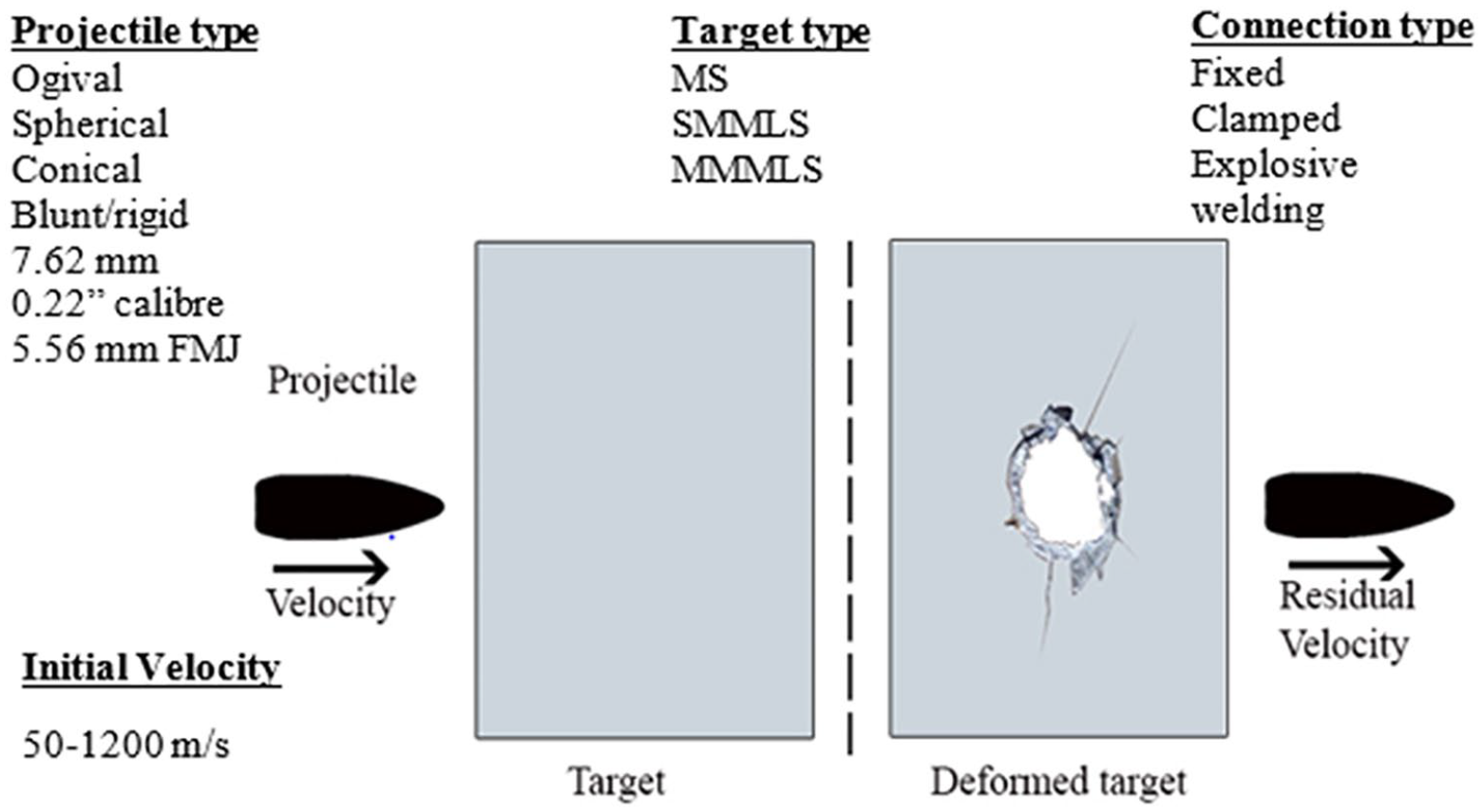
Schematic diagram of the penetration process.
As illustrated in Figure 2, three types of metallic systems are available in the literature, namely MS, single-metal multi-layered systems (SMMLS) and multi-metal multi-layered systems (MMMLS). MS are systems produced using a single material and single layer. In SMMLS, single metal is used in a layered fashion with plates in contact without a bond between them. In MMMLS, two or more metals are used in layered formation to create the system. MMMLS could be further divided into discontinuous and continuous systems based on the bond in between metal layers. The afore-mentioned systems could be produced with different types of metals such as steel, aluminium, copper-based alloys, titanium, nickel-based alloys, and so on. However, steel and aluminium have are the most commonly used metals for such systems.
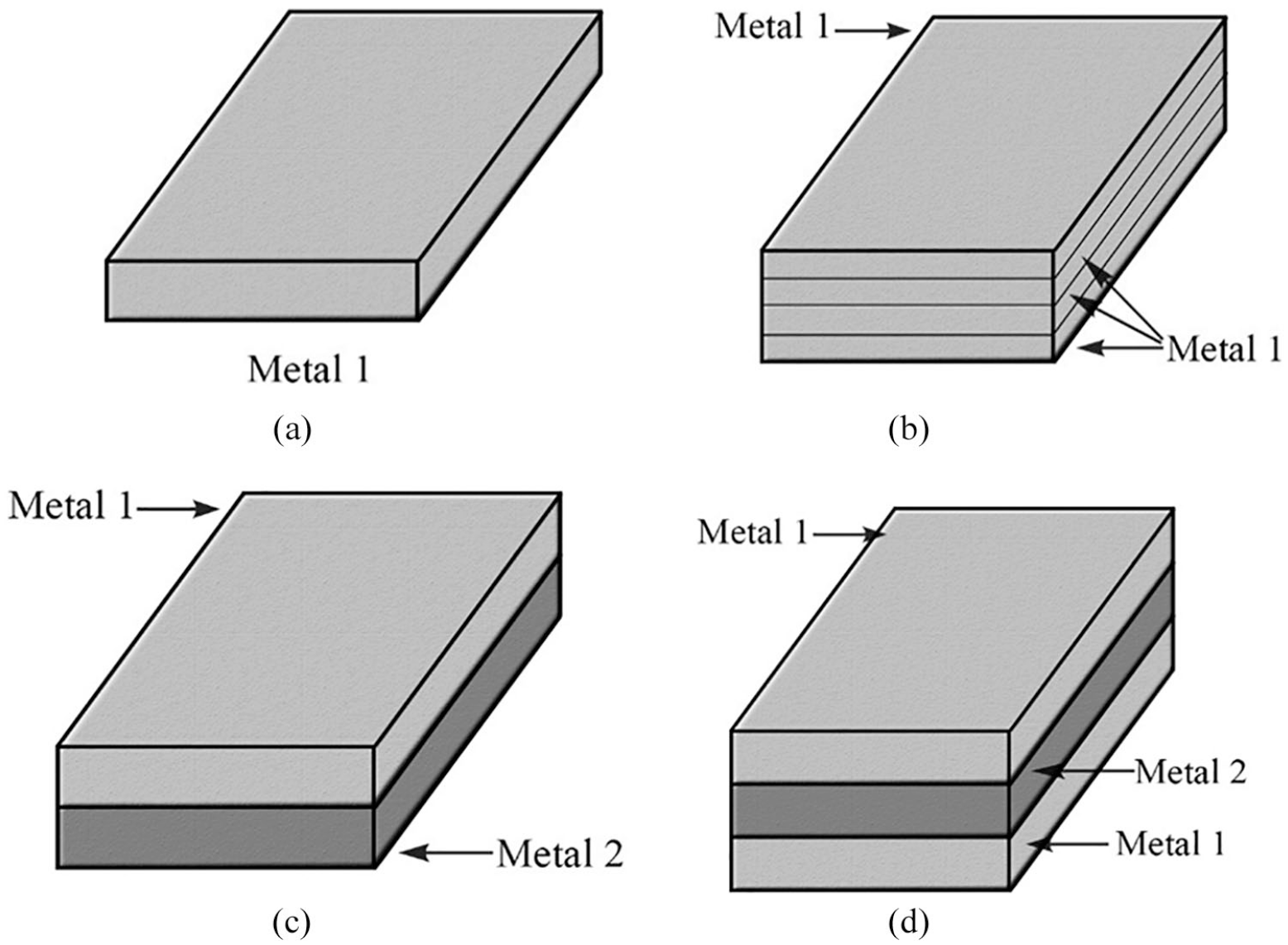
Metallic systems as (a) monolithic, (b) single-metal multi-layered composites, (c) multi-metal double-layered composites and (d) multi-metal triple-layered composites.
Of the four options presented in Figure 2, MS is the most popular and widely studied metallic system (Awerbuch and Bodner, 1974a; Børvik et al., 1999, 2009, 2010; Corran et al., 1983; Dikshit et al., 1995; Forrestal et al., 2010; Mohotti et al., 2013) as it is the basic form of protection with respect to ballistic performance. Most of the systems were produced using high-strength steel as it gives higher strength and stiffness. However, these systems are rather heavy and large, which result in manoeuvrability issues. As a new research perspective, researchers have started to investigate whether there is an effect on the ballistic performance due to layering, and hence SMMLS were introduced (Dey et al., 2007; Gupta and Madhu, 1997; Teng et al., 2007, 2008; Zukas and Scheffler, 2001). Numerous studies were conducted on SMMLS and two schools of thoughts have emerged from those investigations. Some of the studies suggest that SMMLS systems provide better ballistic performance than MS (Corran et al., 1983; Gupta and Madhu, 1997) because the thickness of each layer can be decided in such a way that the specific energy absorption is optimised. However, some other investigations suggest vice versa (Børvik et al., 2004; Radin and Goldsmith, 1988). The authors observed that when the number of layers was increased to maintain an equal thickness as MS, the resistance capability of SMMLS decreases. Furthermore, it was reported that the aforementioned systems showed inferior performance due to less bending stiffness of targets. Such differences were also observed in numerical investigations (Zukas and Scheffler, 2001). Furthermore, observations also changed according to the projectile type. For instance, Dey et al. (2007) recorded that for ogival projectiles, MS showed better performance than SMMLS and for blunt projectiles the opposite was observed. Hence, it is evident that several contradicting conclusions have been drawn in different investigations. However, the fact that the multi-layered systems have shown enhanced ballistic performance in majority of studies reported has been the motivation behind this study on MMMLS. These systems have become even more desirable due to the need for lightweight systems and the advancements in combining dissimilar metals. Thus, the aim of this article is to provide a summary of existing experimental and numerical ballistic investigations on MMMLS and thereby to identify potential future research directions.
Section ‘Multi-metal systems’ presents different configurations of MMMLS that have been previously researched and provides a comprehensive review about how each system differs from other, their fracture mechanism and feasibility. Section ‘Conclusions’ highlights research gaps and provides future directions of research. Figure 3 provides the overall structure of the study.
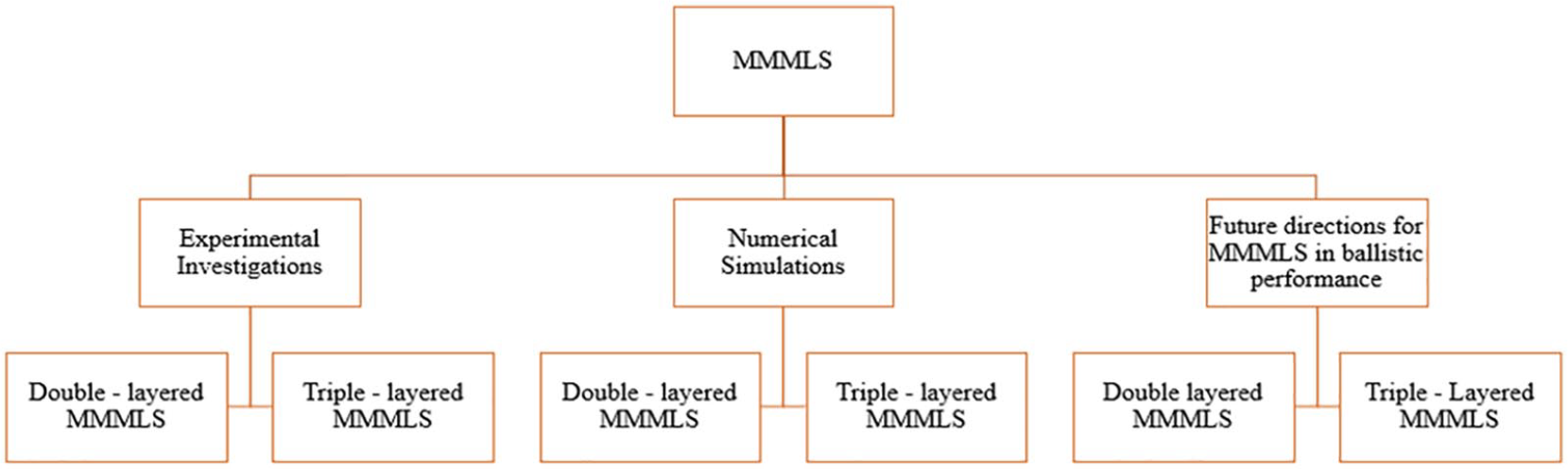
The overall structure of the study.
Multi-metal systems
This section summarises previously conducted experimental and numerical investigations of multi-metal systems. In all investigations, the target plates were manufactured using a combination of steel and aluminium alloys. The key motivation of commonly selecting these two materials was to achieve reduced areal density in comparison with monolithic steel plates. The metals were combined in different ways to produce double- and triple-layered targets. The effects of thickness, order of materials within the plate systems, feasibility of connections and the fracture mechanisms are highlighted as key factors related to multi-metal systems and will be discussed in detail in the subsequent sections.
Experimental investigations
Although the earliest recorded ballistic experiments of MMMLS date to the 1960s, there has been only a limited amount of work since. Furthermore, almost all the systems that have been experimented upon so far consist of two metals. Thus, it is clear that although there has been an interest regarding such systems, the limited amount of research could be attributed to the lack of expertise in connecting different metals and the high cost associated with the experiments. The experimental approaches can be classified as multi-metal double-layered and multi-metal triple-layered systems. For clarity, the metal layer which faces the impactor first will be called the anterior plate while the following metal layer at the back of target will be called the posterior plate, in this article. Two different types of metals that are cast as two separate layers are considered as multi-metal double-layered systems, and two different types of metals that are cast as three separate layers are considered as multi-metal triple-layered systems.
Multi-metal double-layered systems
These are the most commonly used multi-metal systems. All the experimental investigations discussed below consist of high-strength steel and aluminium alloys (Ali et al., 2017; Awerbuch, 1969; Babaei et al., 2011; Jena et al., 2009). All the experimental investigations mentioned below conclude that the best ballistic performance can be observed when steel and aluminium were used as the anterior and posterior plates, respectively. For most of the investigations, the two layers are either fixed or clamped from the edges (Babaei et al., 2016; Flores-Johnson et al., 2011; Jena et al., 2009). Even though the material combinations in the target were the same in all the aforementioned studies, other factors such as projectile type, striking velocity and plate thickness are different from one another. Hence, the fracture mechanisms have also changed accordingly.
As mentioned in the review of Ben-Dor et al. (2017), the first study about multi-metal double-layered systems was conducted by Awerbuch using 0.22 (5.6 mm)-calibre bullets with a striking velocity of approximately 390 m/s. Several trials were carried out for double-layered targets where mild steel (SS) and pure aluminium (AL) were used. Two configurations have been tested, namely plates in contact and with 20 mm air gap between them. Figure 4 illustrates the velocity drop in m/s for metal systems with 0.9- and 1.5–mm-thick steel plates. Since the velocity drop of in-contact steel–aluminium targets is higher than other targets, it is palpable that the system is more effective if the steel act as the anterior plate as it provides a better resistance and the reverse order of plates where aluminium act as the anterior plate gives the contrary effects. However, it is apprehensible that the air gap in between worsens the situation as it gives the lowest velocity drop.
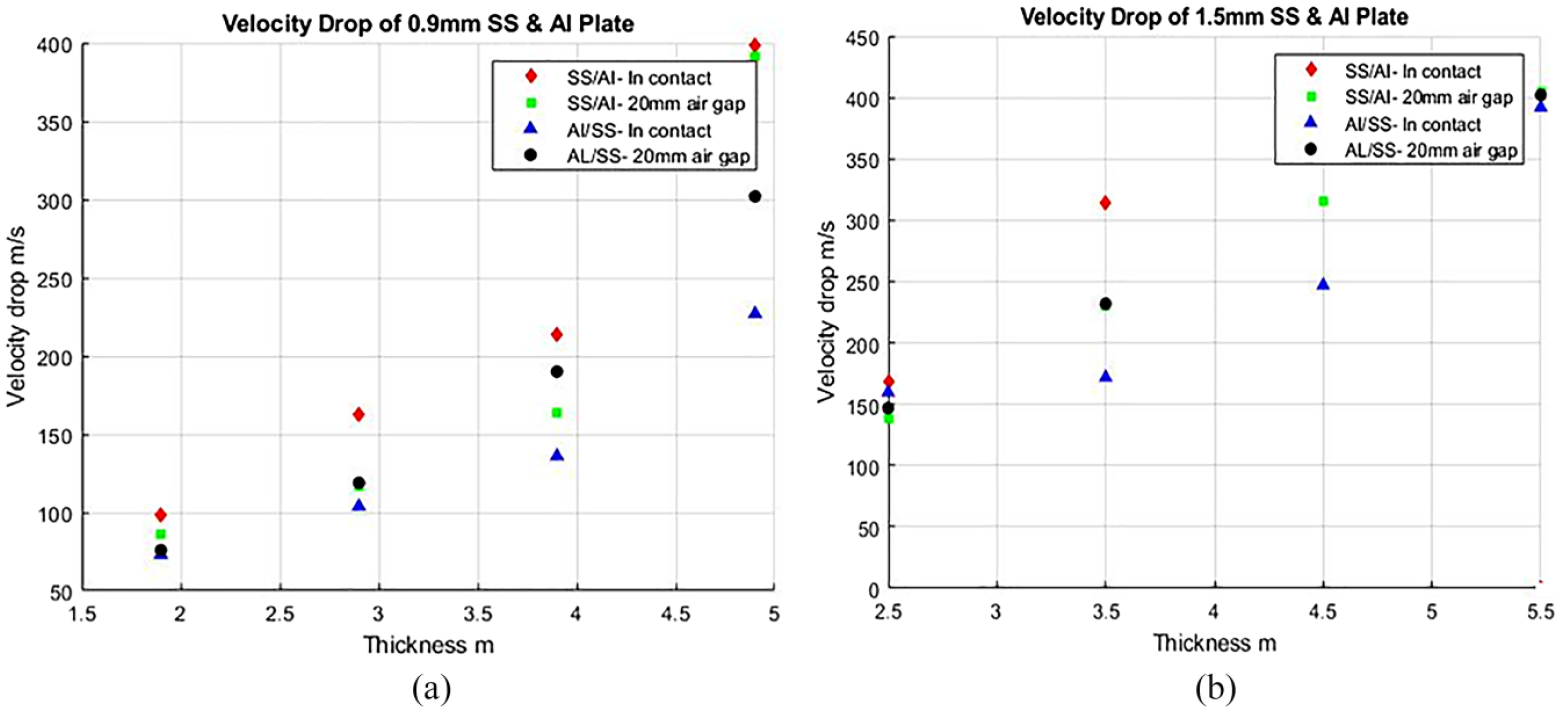
Velocity drop (m/s) for multi-metal systems of mild steel and pure aluminium (Ben-Dor et al., 2017).
The target system proposed by Jena et al. (2009) also considered heat treated armour steel as the anterior layer and aluminium (Al-7017) as the posterior layer. However, a different experimental setup was employed by using 7.62 mm AP projectiles with an initial velocity of 840 ± 15 m/s at an impact angle of 30°. Moreover, two target setups were considered: plates in contact and plates with a 20 mm air gap. For the experimental setup, targets of 150 mm × 100 mm were clamped at the corners rigidly. A steel plate of 6 mm and an Al-7017 plate of 8 mm thickness were used for trials. As illustrated in Figure 5, the projectile had created a ductile hole in the steel plate and lodged into the Al-7017 plate after piercing the steel plate. Jena et al. (2009) stated that the steel–aluminium system has more resistance mainly because the anterior steel plate provides the required strength that is needed to break the projectile while the posterior plate (Al-7017) abets by absorbing the energy off the fragments of the projectile. This is a common observation in ballistic tests performed with deformable projectiles where the strength of the projectiles was reduced with a high-strength and high-hardness front layer before exposing to low-strength materials.
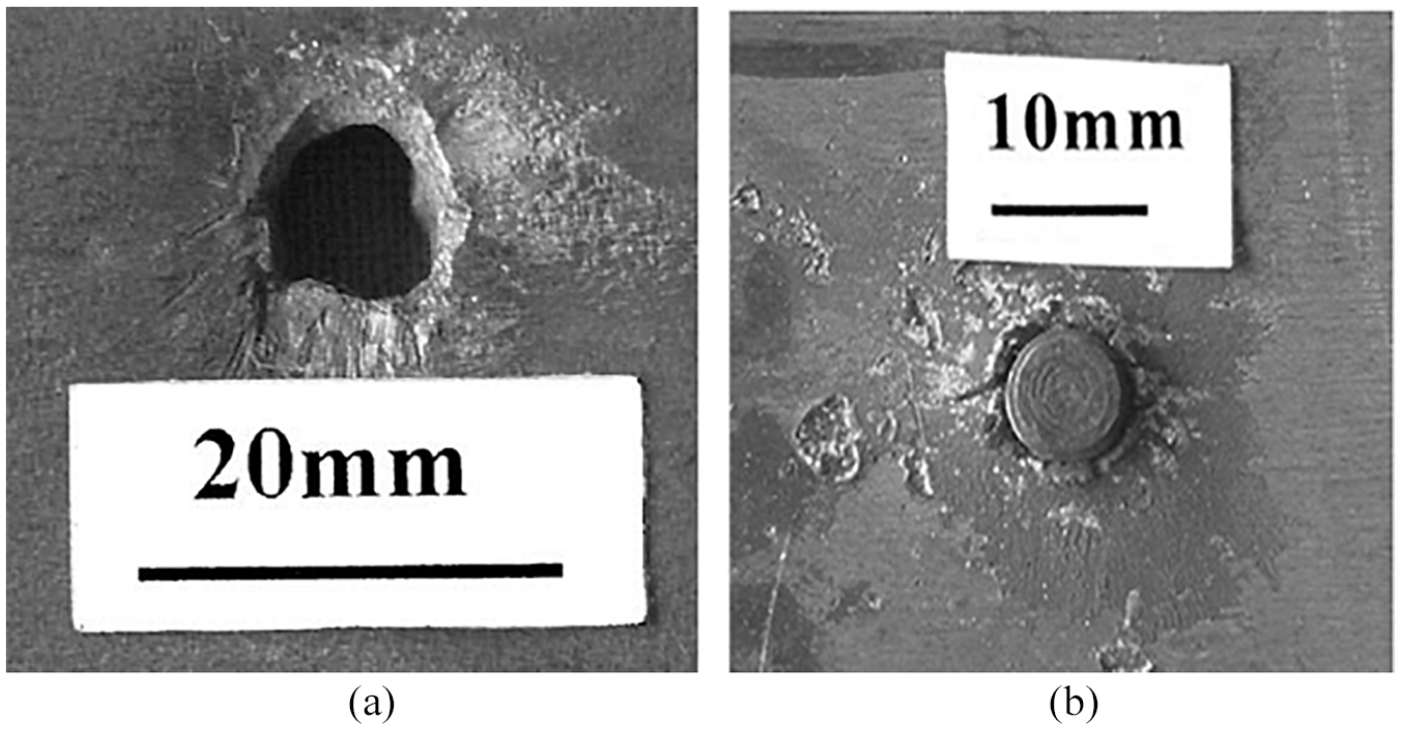
Penetration of projectile (a) from steel plate and (b) view from the back of the aluminium plate (Jena et al., 2009).
A similar experimental study was conducted by Babaei et al. (2011), where rigid projectiles were used with an impact velocity ranging from 50 to 400 m/s. They used ductile metal plates with varying thickness from thin to moderate as targets. The target plates of steel (yield strength = 845 MPa)/aluminium (yield strength = 103 MPa) (S–A) and aluminium/steel (A–S) of 2 mm thickness were used for the investigations. During the experiment, the plates were not in contact, and thus there was no interaction between the plates during the perforation process. The experimental results concluded that for blunt projectiles, perforation is caused due to plugging, which is a shear-dominated failure mechanism. Figure 6 depicts a schematic diagram of the failure mechanism change from dishing to plugging. It was observed that the projectile perforated the anterior layer when the impact velocity was above the ballistic limit velocity and it had created a plug impact on the following layer. When impacted by blunt projectiles, these targets first showed dishing followed by plugging failure. The authors presented that steel has a higher yield strength compared to aluminium and when the steel projectile impacted on the anterior steel plate, steel plug strikes the posterior aluminium plate where the aluminium plate yields due to the lower resistance. However, in A–S targets, when the steel projectile accompanied with aluminium plug hits the posterior steel plate, a certain amount of projectile’s kinetic energy is expended to deform the aluminium plug. The results exposed that the ballistic limit velocity of the S–A target is higher than that of A–S. Therefore, it was concluded that S–A targets possess better ballistic performance than A–S targets.
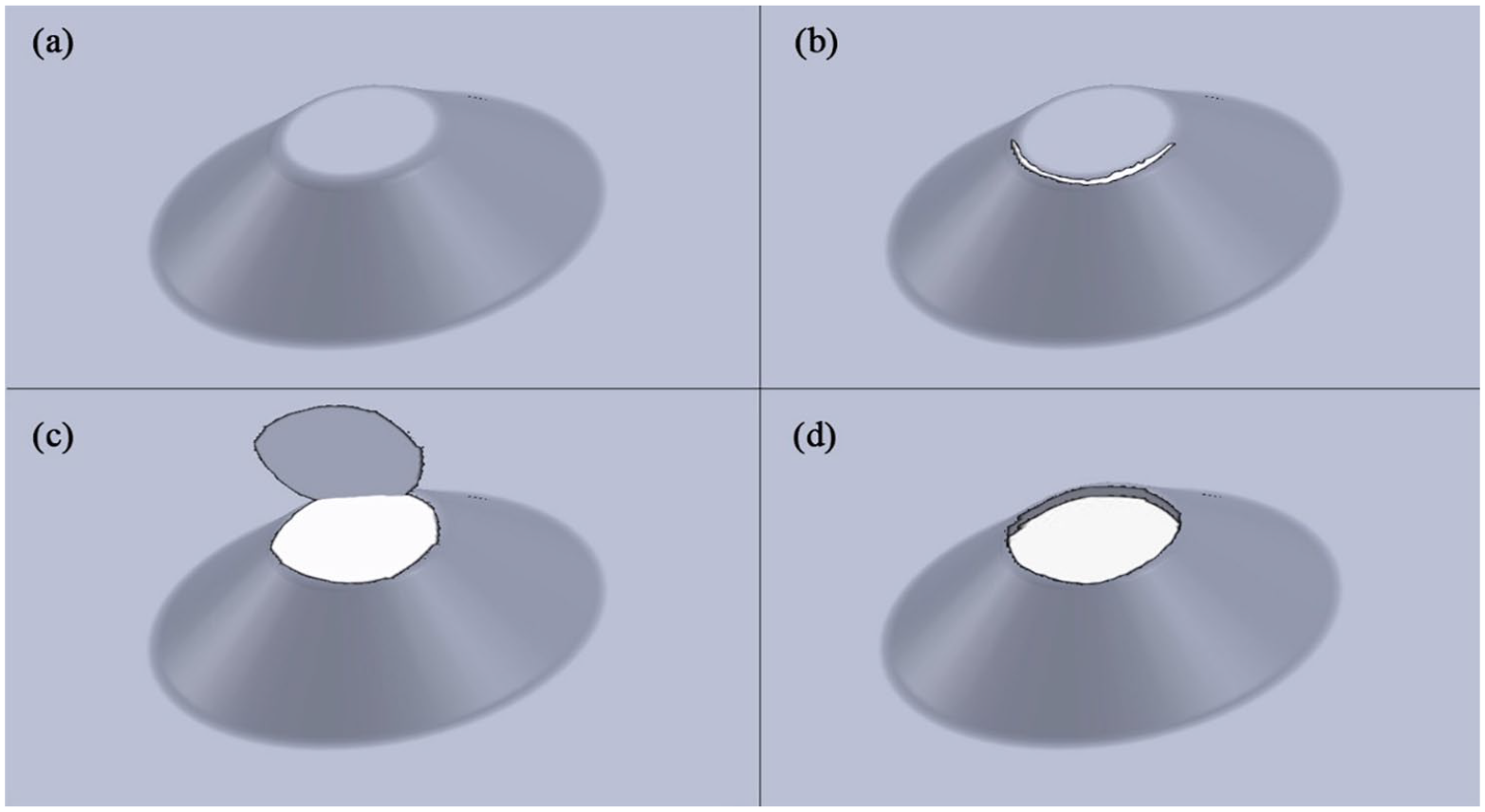
Schematic diagram of dishing and plugging failure mechanism: (a) dishing, (b) start of plugging, (c) plug is not separated and (d) plug is ejected.
A fracture mechanism which is distinctive from other studies was observed in an experimental study conducted by Ali et al. (2017), where 7.62 mm AP projectiles with a velocity range of 710–725 m/s were used. The tests were conducted to determine the resistance of a combination of perforated steel (SECURE 500) and aluminium (AA5083-H116) base armour plate. A perforated plate with dimensions 800 mm × 530 mm × 9 mm with a perforation pattern consisting of holes of 10 mm diameter was fixed in front of the base plate with a 110 mm gap in between. The two plates were bolted to each other and spacers were used for the separation. The experimental results showed that the perforated steel plate was unable to resist the penetration of the projectile and ductile hole growth was visible on the failure surface. It was observed during the penetration that the material was pushed aside and lips were formed on the impact and distal sides of the base armour plate. Figure 7 shows the observed lip formations in the targets during the experimental investigations. Ali et al. (2017) concluded that even though the 9-mm perforated plate alone could not stop the projectile, the combination of the perforated plate and the base armour plate was able to stop the projectile from penetrating. The experiment only investigated the use of steel as the sacrificial plate and does not consider the reverse order of the plates, which could have given an indication as to the effect of the order of plates in the target.
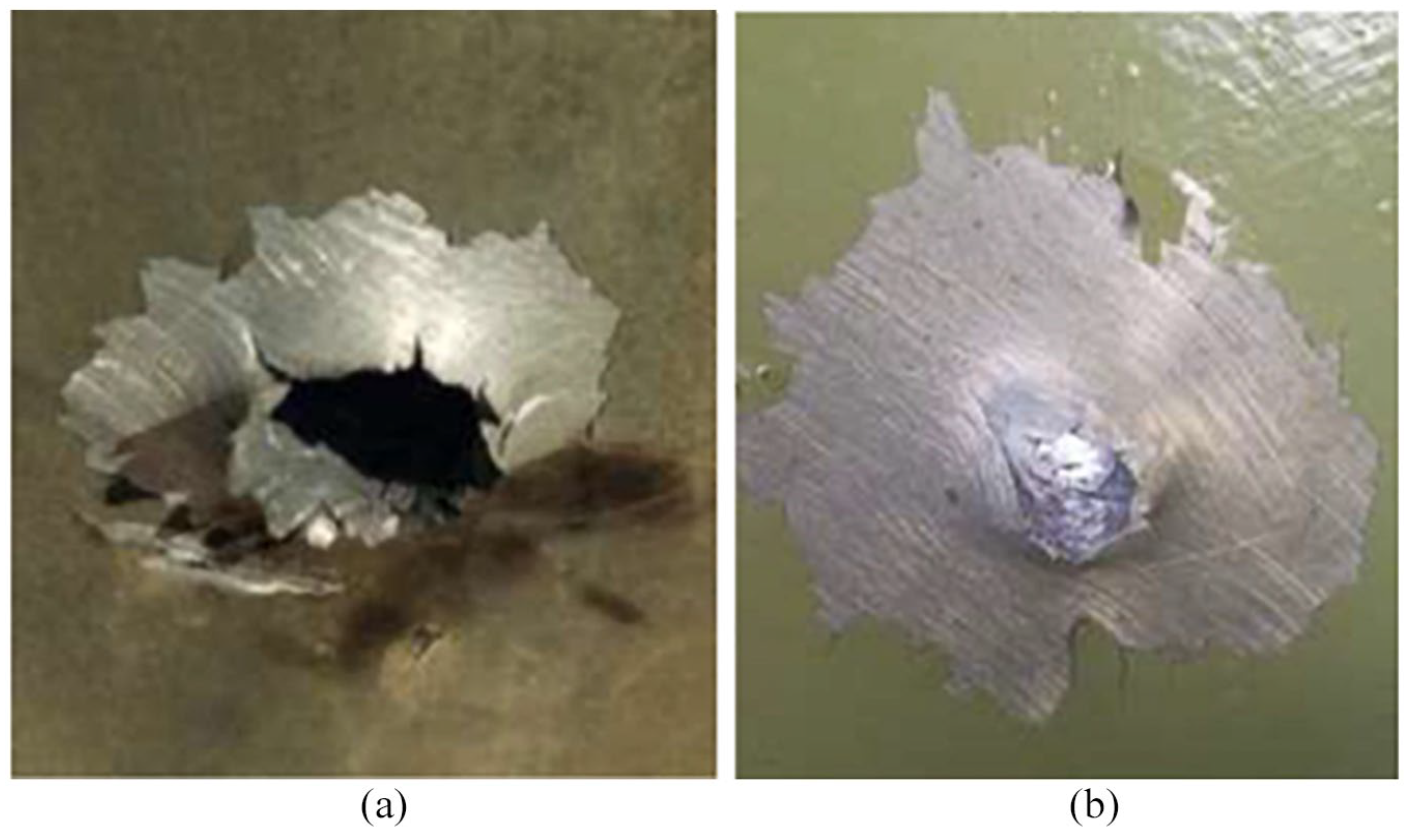
Fracture mechanism observed in the base armour plate after impact: lip formation in (a) anterior face and (b) posterior face (Ali et al., 2017).
Abdul Rahman et al. (2018) conducted an experimental investigation using high-velocity impacts to find the best performance order of a target made using steel (Ar500) and aluminium (Al7075 T6). An overall thickness of 25 mm was used for targets which were clamped at the boundaries and were impacted using 7.62-mm AP projectiles with a striking velocity in the range of 800–850 m/s. Two specimen types were used, namely steel–aluminium (S–A) and aluminium–steel (A–S), and the results showed that in both cases, the projectile penetrates the targets partially. The average depth of penetration in S–A is around 1.5 mm, and for A–S, the penetration depth is around 10.3 mm. The authors reported that both configurations caused the projectile to shatter completely and immense heat was generated due to the deformation of projectile nose during penetration, which caused the melting of material and loss of mechanical strength. Figure 8 shows the final condition of targets S–A and A–S after penetration. The fracture caused in the anterior plate of the target was due to the reflected tensile wave, which is known as spallation. In this study, the authors suggest that better ballistic performance could be achieved by S–A compared to A–S due to the high-energy absorption capability of the posterior plate and strength/hardens of the anterior plate.

(a) Anterior steel and (b) posterior aluminium plates after impaction in steel–aluminium (S–A) targets; (c) anterior aluminium and (d) posterior steel plates after impaction in aluminium–steel targets (A–S) (Abdul Rahman et al., 2018).
All the studies discussed above suggest that the systems with anterior steel plate and posterior aluminium plate provide better performance compared to reverse order of the plates. This is mainly because steel could provide adequate strength to stop the projectile and aluminium could support by absorbing energy and reduce the damage due to reflected tensile stress wave at the back face. Different fracture mechanisms were observed during the experimental investigations due to plugging, dishing, ductile failures, plastic deformation, and so on. However, the authors have drawn contradictory conclusions regarding the air gap between two metal plates. Awerbuch (1969) and Ben-Dor et al. (2017) suggested that the spacing between plates significantly weakens the ballistic resistance of the target, while Jena et al. (2009) observed the opposite effect in spaced targets. This may be due to the difference in impact velocities because Awerbuch (1969) and Ben-Dor et al. (2017) used a low impact velocity of 390 m/s while Jena et al. (2009) used a high impact velocity of 850 m/s. Furthermore, majority of the studies do not address the ballistic limit velocity and the depth of penetration of projectiles. In addition to the fracture mechanism, these are the main indicators to assess the ballistic performance in MMMLS. Hence, it is essential to carry out further experimental investigations to validate these systems and to present more comprehensive conclusions about the most resistive target types. This in turn presents a direction for future research to explore the optimum steel–aluminium target configurations that can yield superior ballistic impact resistance.
In all the aforementioned investigations, the metal layers were either fixed or clamped at the edges. Hence, due to the lack of restraint, upon impact, a robust composite behaviour may not be present throughout the target plate. Therefore, the targets could be considered to act as a discontinuous system as no bond is present between the two metal layers. However, if the metals could be bonded together as done through explosive welding by Zhou et al. (2013) and Wang and Zhou (2015), the influence of the composite behaviour on the ballistic behaviour could be studied. Thus, such systems could be considered as continuous systems.
Zhou et al. (2013) carried out ballistic experiments using target plates with a 5-mm resultant thickness. Spherical steel projectiles with a diameter of 6 mm with an initial velocity ranging from 260–900 m/s were used as the impactors. It was observed that the anterior steel plate failed in shear and plugging while the posterior aluminium plate suffered deformation. Furthermore, it was reported that at a constant thickness, a better resistance was achieved when the thickness ratio of steel to aluminium exceeds 2:3. Hence, the authors concluded that ballistic performance could be enhanced by improving the structural design of the targets. The authors indicated that when the incident angle of impact increases, the ballistic limit velocity increases accordingly. Wang and Zhou (2015) reported an identical set of results for the experiment conducted to find the ballistic performance of steel–aluminium explosively welded targets. A plate arrangement similar to Zhou et al. (2013) was used, and the plates were impacted using 8-mm-diameter spherical projectiles with an initial velocity of 700 m/s. It was reported that the anterior steel plate of the double-layered targets failed due to shearing and plugging while the posterior aluminium plate failed due to prolonged ductile deformation. The tied interface of the target failed due to either tension or plugging. The highest ballistic limit velocity was obtained for the target with 4-mm-thick steel and 1–mm-thick aluminium, while the lowest value was obtained for the target with 1-mm-thick steel and 4-mm-thick aluminium. Even though these experiments provide information about continuous systems, experiments have not been conducted to compare the performance between continuous and discontinuous systems. Hence, it could be a future research opportunity to conduct a comprehensive research on double-layered continuous versus discontinuous systems, while also expanding the scope of materials beyond just steel and aluminium alloys.
Table 1 provides a summary of different experimental investigations presented above. Although different thicknesses have been used for the experiments, the metal combination used remains the same. Some experiments have been carried out at low velocities in the range of 50–300 m/s. However, the use of metal systems at such low velocities could be arguable from an applicability point of view. Ballistic resistance for these low-velocity impacts could be achieved by using other composite metal and non-metal systems as well, which will give better flexibility and weight reduction compared to metals (Bienias et al., 2016; Jakubczak et al., 2017; Rahman et al., 2018; Wang et al., 2018). Nonetheless, experimental investigations about diverse configurations such as plates in contact and plates with a varying distance in between may improve the study as it helps to identify the most optimum arrangement. Since there is a clear gap, it is required to conduct more experiments to understand the ballistic performance of multi-metal plates impacted with high-velocity projectiles.
Summary of experimental investigations conducted on multi-metal double-layered systems.

Multi-metal triple-layered systems
The common arrangement found in these systems is an inner metal layer sandwiched between two outer metal layers to form the complete metallic system. The layers could be made of different metals and metallic alloys. However, steel and aluminium have been used in experiments conducted hitherto (Babaei et al., 2016; Wang and Zhou, 2015; Zhou et al., 2012). All the experimental investigations mentioned below conclude that a superior ballistic performance could be obtained when using a system of three layers where steel acts as the anterior and posterior plates while aluminium is used in the middle. As aforesaid, in this section as well, projectile type, thickness, striking velocity and the fracture mechanism vary from study to study. Discontinuous and continuous systems as discussed above had been used as targets for the experiments.
Along with experiments for discontinuous double-layered targets, Babaei et al. (2016) conducted investigations for triple-layered targets using rigid projectiles. For the experimental investigations, targets of dimensions 140 mm × 140 mm with thicknesses of 1, 2 and 3 mm were used, and they were fully clamped at the edges. Two target specimens, namely steel–aluminium–steel (S–A–S) and aluminium–steel–aluminium (A–S–A) were used for the experiments. Targets were impacted using 25.1 g hard steel projectiles with initial velocities ranging from 42 to 158 m/s. It was observed that S–A–S targets exhibited better performance in penetration resistance than A–S–A targets. The reason for this high performance of S–A–S targets is mainly due to the absorption of more energy by the targets when steel acts as the anterior plate than when aluminium acts as the anterior plate. Further results of the experimental study revealed that, for an impact velocity of 66 m/s, targets with the A–S–A arrangement can deform 1.22 times more than those with the S–A–S arrangement. Moreover, it is observed that the A–S–A arrangement had the smallest bending resistance while the S–A–S displayed the highest bending resistance. Figure 9 illustrates the deformations in the above-mentioned test samples of S–A–S and A–S–A target arrangement. The results obtained show that combined targets of aluminium and SS are an attractive choice for armour design due to their superior ballistic performance and comparative weight reduction.

Deformations in the test samples of (a) S–A–S and (b) A–S–A combined targets (Babaei et al., 2016).
Several other experiments on MMMLS have been conducted for continuous systems where the metal plates were metallurgically bonded to each other and hence act as a single system. Zhou et al. (2012), along with their experiments on double-layered targets, conducted a series of experiments using S–A–S and A–S–A targets which were impacted using spherical projectiles with initial velocities varying in the range of 250–650 m/s. It was observed that the anterior plate fails due to shearing and the middle plate fails due to plugging while the posterior plate shows petalling deformation. Notably, when aluminium act as the posterior plate, failure occurs due to ductile deformation. It was concluded that triple-layered systems show better ballistic resistance than double-layered counterparts with respect to the residual velocity and the ballistic limit velocity. The authors reported that the ballistic limit velocity of triple-layered targets increased by 20.5% averagely compared to double-layered targets. Wang and Zhou (2015) conducted a similar experiment on double-layered targets and triple-layered targets and observed similar fracture mechanism to Zhou et al. (2012). Furthermore, it was observed that ductile prolonging deformation in the posterior plate occurs when target penetrates completely. It was also pragmatic that the interface failure mainly happens in between the middle aluminium plate and the posterior steel plate due to ductile deformation. Especially, the steel fibres in the target fail due to bending and tensile deformation. The authors reported that the ballistic limit velocity of triple-layered targets is 15% greater than that of double-layered targets. Hence, triple-layered targets have a better ballistic resistance compared to double-layered targets.
A summary of the above-discussed studies is presented in Table 2. Even though majority of the studies reported that triple-layered targets perform better than double-layered targets, further experimental investigations are required to find the best performance arrangement. Similar to the previous case, low velocities between 40 and 200 m/s have been used to investigate the ballistic performance in metallic systems and the same question rises about the suitability of application here as well. However, further experimental trials with different metal combinations could enhance the quality of research. Moreover, a comparison between continuous and discontinuous triple-layered targets with different metal configuration could be an interesting research direction.
Summary of experimental investigations conducted on multi-metal triple-layered systems.
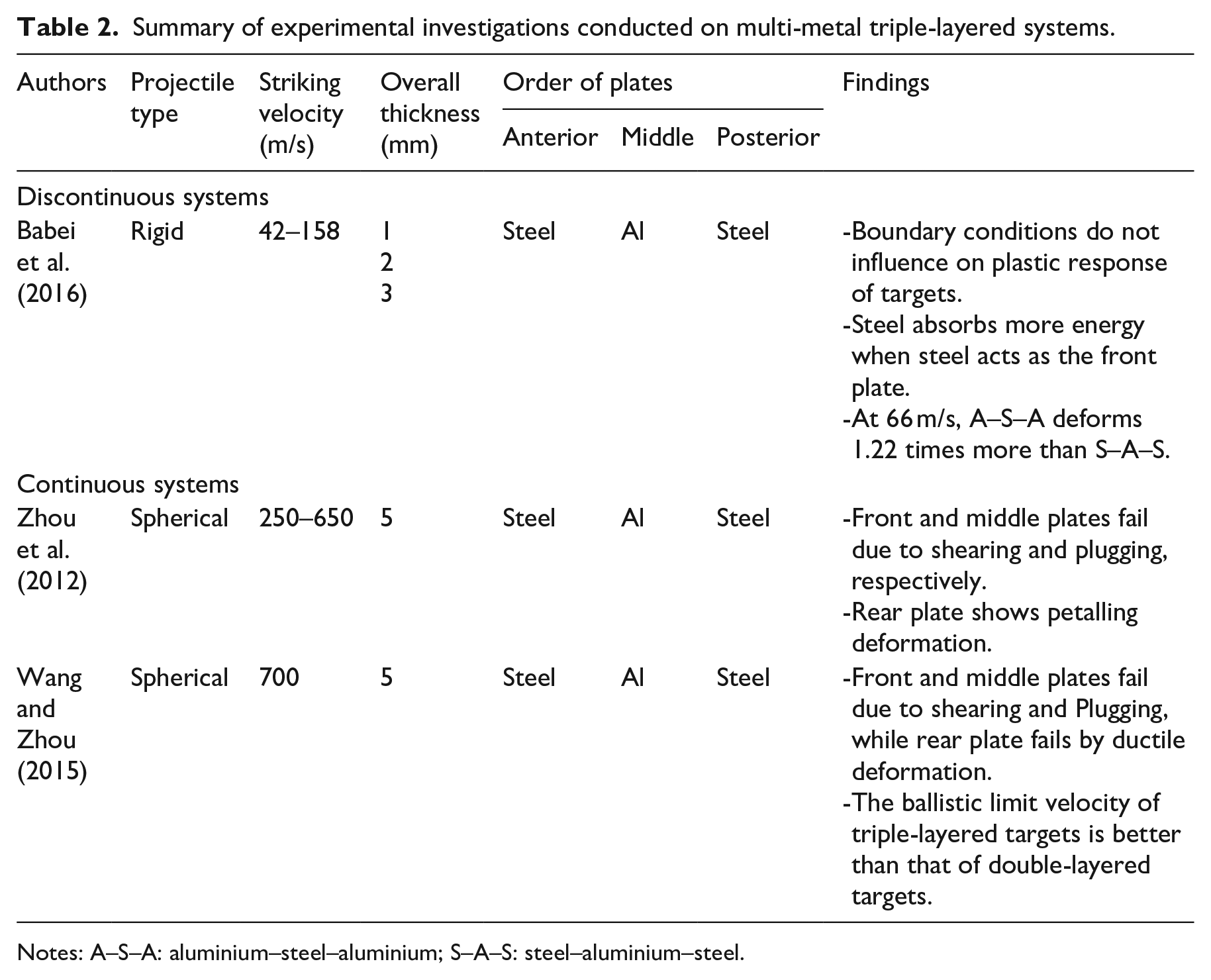
Notes: A–S–A: aluminium–steel–aluminium; S–A–S: steel–aluminium–steel.
Numerical modelling
As identified in previous sections, the lack of comprehensive experimental investigations necessitates numerical methods to compliment empirical research, in order to arrive at meaningful conclusions related to ballistic performance of MMMLS. Over time, finite-element-based numerical modelling has been developed to simulate scenarios related to ballistic events, capturing impact and penetration mechanisms relatively well. Numerical investigations have been proven to be useful due to their ability to be used repeatedly in comparative studies especially with various materials, different projectiles and projectile speeds. These simulations are capable of offering accurate results such as ballistic velocity limits and fracture mechanisms, which have proven to be time-consuming and costly when obtaining through experimental programmes. Hence, numerical modelling is essential in impact loading systems to achieve complete and informative results, because experimental investigations are hard to repeat, while analytical studies have many limitations. However, numerical investigations on MMMLS are limited in publicly available literature. Although it is limited, a detailed study on the existing standard of numerical modelling would provide a basis to identify potential improvements. As such, the subsequent sections provide a detailed discussion on numerical investigations about ballistic performance of multi-metal double-layered and triple-layered targets.
Multi-metal double-layered targets
Numerical investigations of targets where two metals are modelled as two separate layers, each with two layers will be discussed in this section. A numerical simulation for the optimization of a multi-metal plate system using size optimization was reported in 2005 by Park et al. (2005), where a Lagrangian explicit time-integration code called the Net2D was used for the impact analyses. A combined configuration of a circular plate system of SS and aluminium with fixed boundary conditions around the perimeter was used for these simulations. Aluminium was used as the anterior plate, and SS was used as the posterior plate. Several investigations were carried out using shell elements with different mesh sizes and aspect ratios to check the influence of the mesh on the solution. The dimension of the coarse mesh was 1.0 mm × 0.1 mm, while 0.5 mm × 0.05 mm and 0.25 mm × 0.025 mm were used as the fine and very fine mesh sizes, respectively. Equivalent plastic strain (EQPS), design of experiment (DOE), average temperature and response surface method (RSM) were used to accomplish the optimization process. DOE is a quality optimization process which determines the most influential variables in the process and improves them accordingly to affect the outputs in the experiments (Alikarami et al., 2016). The Johnson–Cook constitutive model was used as the material card for the analysis as it had been widely used to simulate impact under larger deformations. Park et al. (2005) observed that the posterior steel plate supports the anterior aluminium layer to avoid larger deformations and that the anterior layer is easily perforated. In this analysis, EQPS was the assigned criterion to measure the perforation. It was concluded that the anterior layer of the system, irrespective of its thickness variations, maintains energy consistently and the layer does not contribute to the sensitivity of the response. The study suggests an optimum plate configuration of a thick layer of aluminium and a thinner layer of steel. This is an interesting outcome as it has the potential to reduce the weight of the target by minimising the areal density. However, the effect on the ballistic performance when the order of the plates was reversed has not been considered in this study. Besides, the study does not provide any information about the separation of the two layers due to the tensile stress waves, which is critical in such systems.
Similar results regarding the order of plates were observed by Flores-Johnson et al. (2011), where the best ballistic performance was observed when aluminium acts as the anterior plate and steel acts as the posterior plate. They conducted a numerical investigation on the ballistic performance of monolithic, double- and triple-layered metallic targets of Weldox 700E (S) steel, aluminium (Al7075-T651 (A)) and combinations thereof. The plates were impacted using 7.62 mm APM2 projectiles at a striking velocity range of 775–950 m/s. The commercial nonlinear finite-element code LS-DYNA was used for the finite-element analysis. The analysis was considered to be symmetric, and hence, a half-model was used to reduce the computational cost. The target was modelled as a 100 mm diameter circular plate, and the impact region was modelled to be a 30 mm diameter cylindrical zone at the centre with eight-node solid elements. Three different mesh sizes were used in the impact region: 0.25 mm × 0.25 mm × 0.25 mm as fine mesh, 0.33 mm × 0.33 mm × 0.33 mm as intermediate mesh and 0.4 mm × 0.4 mm × 0.4 mm as coarse mesh. For the study, the plates were kept in contact without any gap in between. Contact between the parts was modelled using an eroding single-surface segment-based formulation. However, the authors did not mention about the friction effect between layers. The projectile was modelled as three different components: brass jacket, steel core and lead filler. Both projectile and the target were modelled using the modified Johnson–Cook (*MAT 107) constitutive material model in LS-DYNA. The Cockcroft–Latham fracture criterion – which considers plastic work per unit volume – implemented in *MAT 107 was used to define the failure. For combined configurations, a total thickness of 20 mm was considered. Trials were carried out with different configurations with steel as the anterior layer and aluminium as the posterior layer and vice versa for double- and triple-layered systems. When aluminium acts as the anterior layer of the combined system, a reduction of bending stiffness was observed with respect to changes in projectile velocity after impaction. Moreover, the systems showed less resistance to penetration in aluminium anterior systems due to its low strength. It was observed that double-layered 20-mm-thick steel/aluminium (DM20SA) targets showed brittle failure. However, such condition was not observed in double-layered 20-mm-thick aluminium/steel (DM20AS). This condition could be avoided in DM20AS because of the back support provided by the steel plate. Furthermore, in multi-metal configurations of 20 mm thickness, DM20AS had a higher ballistic limit velocity than DM20SA, and it is detected that the performance of the A–S system is better than that of the S–A system. Even though both Park et al. (2005) and Flores-Johnson et al. (2011) argue that targets with aluminium as the anterior plate and steel as the posterior plate perform well in ballistic resistance, majority of the studies prove that the reverse-order plate systems possesses better resistance. Studies conducted by Babaei et al. (2011), Rahman et al. (2016), Ali et al. (2017) and Abdul Rahman et al. (2018) reported that the best ballistic performance was achieved with steel–aluminium targets. Numerical models of Babaei et al. (2011) and Ali et al. (2017) were experimentally validated as well. Babaei et al. (2011) conducted a numerical investigation along with experimental investigations, as discussed in section ‘Multi-metal double-layered systems’. For the simulations, by considering symmetry, only a quarter of the model was modelled using Lagrangian formulation to optimise the computational time using LS-DYNA. The model consists of a rectangular target plate and a cylindrical blunt projectile created using Solid164 elements. *MAT 107 (modified Johnson–Cook model) was used to simulate the response of the projectile and the target. The failure criterion was modelled based on the fracture model proposed by Johnson and Cook (1983). The Lagrangian–Lagrangian contact algorithm based on slave grid/master concept was used for the interaction between the projectile and the target. In this study, the frictional effect between projectile and target was assumed to be negligible. As conferred in the above section, the numerical model gives a failure mechanism similar to the experimental results. It was found that the error level of the numerical simulation with respect to ballistic limit velocity is around 7%. Hence, the models were considered to be reasonably validated because it was able to provide a close prediction for both ballistic limit velocity and residual velocity of ballistic impact on MMMLS. It was observed that when the initial velocity increases, the residual velocity also shows an increasing rate. Furthermore, the authors concluded that when the striking velocity is higher than the ballistic limit velocity, target deformation was decreased. The numerical simulations depict that when the projectile and the plug of the anterior plate hit the posterior plate, the plug undergoes compressive stress in S–A targets, and such condition was not observed in A–S targets. Moreover, it was observed that the S–A targets had a better penetration resistance than the A–S targets because steel absorbs more energy when it acts as the anterior plate.
Further studies were conducted by Rahman et al. (2016) to investigate the ballistic limit of multi-metal systems of high-strength steel (Weldox 700E) and aluminium alloy (Al7075 T6). The target plated had a thickness of 25 mm, which was fully clamped at the edges and was impacted using 7.62-mm AP projectiles. ANSYS-AUTODYN, commercial finite-element code was used for the finite-element analysis. Initial velocities were selected according to the NATO standards for personal armour (STANAG 4569 ballistic protection level 3), which is 930 ± 20 m/s. For the analysis, the projectiles were impacted at an initial velocity of 900–950 m/s on to the combined metal targets. The projectile was modelled in three different parts as jacket, core and filler. A finely resolved mesh of size 0.5 mm was selected and 50 elements through thickness were used for simulations. A combination of quadrilateral and triangular elements was used to mesh the target and projectile. For the simulations, the plates were kept in contact and the trajectory contact algorithm, which is the default, and recommended contact option for explicit dynamics analyses was used for the contact between target and projectile. Node-to-node connectivity along with geometric erosion was used to eliminate the elements undergoing large distortions. The Johnson–Cook constitutive material model was used for both the target and the projectile. Rahman et al. (2016, 2018) reported that it is efficient to use steel (S) as the anterior plate as it erodes the projectile into fragments and acts as a disruptor. The posterior aluminium (A) plate absorbs the kinetic energy through plastic deformation and prevents the penetration of projectile fragments. Double-layered systems were fully penetrated by all 950 m/s projectiles, while the 900 m/s projectiles were successfully defeated. The authors stated that the systems of double-layer 17-mm-thick steel with 8-mm-thick aluminium (2S17A08) and double-layer 16-mm-thick steel with 9-mm-thick aluminium (2S16A09) had the highest ballistic limit velocity. Figure 10 presents the ballistic limit velocity for different configurations of 25-mm-thick double-layered targets. The outcomes substantiated that the double-layered systems showed lower ballistic resistance when the weight reduction of the plates was amplified from 20% to 30% and the best performance was obtained when the weight reduction is 23.3%. At this weight reduction, the target was able to stop a 950-m/s projectile successfully. A similar kind of numerical analysis was carried out by Abdul Rahman et al. (2018) in a recent study. The effect of layering configurations on the performance of laminated aluminium–steel panels subjected to high-velocity impacts were studied. As mentioned in section ‘Experimental investigations’, two target specimens, namely steel–aluminium (S–A) and aluminium–steel (A–S) were used for the simulations. The numerical results indicated that the projectile was completely shattered and deformed when striking the target at a velocity of 800 m/s. The percentage difference of results obtained from simulations and experimental investigations for depth of penetration and crater diameter ranges between 10.7% and 20% and between 9% and 20%, respectively. It was reported that a significant (600%) difference was observed between the experimental and numerical results for the depth of penetration. This might be due to the improper fracture model parameters used for the simulations as the authors had used their own material test results. However, the authors reported that in terms of energy absorption, the difference is marginal (6%). Even though the modelling technique used can be considered as validated, it is vital to fully understand about the target configurations and fracture mechanisms by conducting further studies.
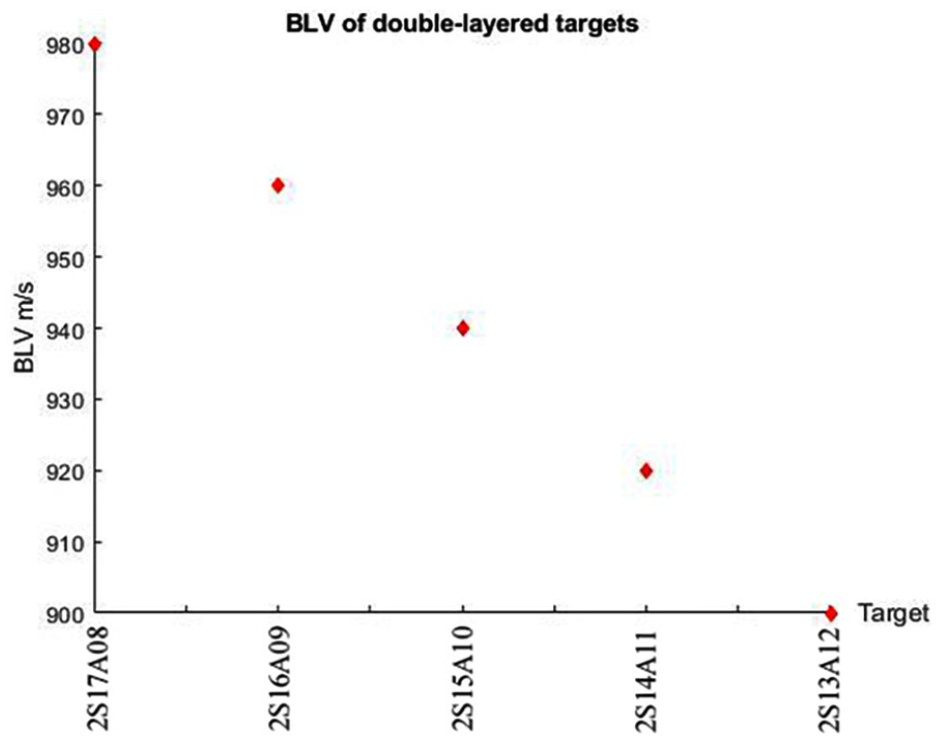
Ballistic limit velocity (BLV) for steel and aluminium double-layered targets of 25-mm thickness (Rahman et al., 2016).
Ali et al. (2017) conducted a numerical investigation along with the corresponding experimental investigations on the ballistic response of multi-metal multi-layered plates against 7.62 mm AP projectiles. Finite-element analysis was conducted using the explicit finite-element code ABAQUS. The targets were fully constrained at the edges, and an initial impact velocity of 718 m/s was used for the projectile. The target was meshed using eight-node continuum hexahedral elements with varying mesh configurations. The minimum mesh size of the base and the perforated plate is about 0.4 mm × 0.4 mm × 0.8 mm. In order to define the hydrodynamic behaviour at impact, the Mie–Grüneisan equation of state (EOS) was used. The Johnson–Cook material model was used as the material card, and the Johnson–Cook damage criterion was defined for the failure analysis. The numerical model was able to predict the penetration, residual velocity and ductile crater creation relatively well. The material model, fracture criterion, mesh and EOS were able to successfully envisage the ductile hole growth and brittle failure of the projectile. As such, the numerical model was able to predict the lip formation on the impact side and distal side of the plate similar to those of the experimental results. Figure 11 shows the lip formation observed in numerical simulations.

Lip formation at the (a) impact and (b) distal face of the base armour plate from the impact test gained from numerical investigation (Ali et al., 2017).
In all aforementioned investigations, the metal layers were connected by assigning constraining boundary conditions at the edge of the plates. Hence, the targets act as discontinuous systems with no bond in between the metal layers. Zhou et al. (2013) and Wang and Zhou (2015) conducted numerical simulations for explosively welded double-layered targets to validate the experimental results. LS-DYNA was used for simulations in both the studies. The TIE_BREAK_SURFACE_TO_SURFACE contact algorithm was defined to describe the interfacial bonding strength between material layers. Hence, the system acted as a continuous system without any duplicate nodes in between. The pressure for compressed materials was determined using Grüneisan EOS. The ERODING_SURFACE_TO_SURFACE algorithm was used to describe the interaction between projectile and the target. For both cases, advanced material card *MAT 107 (modified Johnson–Cook) was used and the fracture criterion implemented in the material card was used to analyse the damage. A fracture mechanism similar to experimental studies was obtained for the both cases.
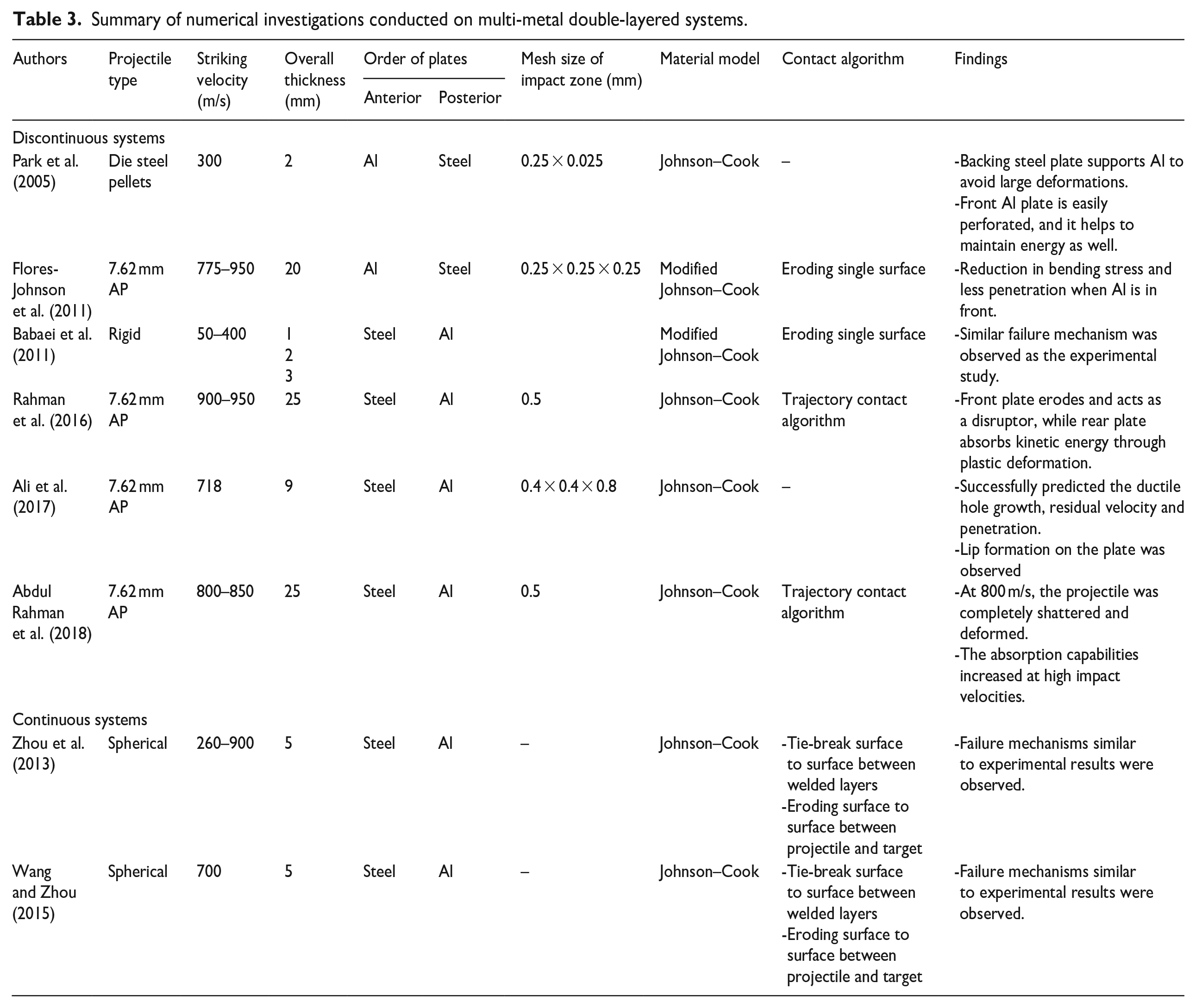
Table 3 depicts a summary of existing numerical investigations of multi-metal double-layered systems including type of projectile, striking velocities, overall thicknesses, mesh sizes, mesh type, material models used, failure mechanisms and contact algorithms.
Summary of numerical investigations conducted on multi-metal double-layered systems.
Multi-metal triple-layered targets
Numerical simulations of targets where two metals are modelled as three separate layers will be discussed in this section. High-strength steel (Weldox 700E and Ar500) and aluminium alloys (Al7075-T651) with different arrangements were used for the modelling of these combined systems (Flores-Johnson et al., 2011; Rahman et al., 2016; Zhou et al., 2012).
Flores-Johnson et al. (2011) conducted simulations to find the ballistic performance of triple-layered targets in addition to the work presented on double-layered targets. A ‘sandwich’ plate arrangement with two layers of steel or aluminium were used in the triple-layered system. It was observed that the aluminium–steel–steel (A–S–S) system performed better than the steel–steel–aluminium (S–S–A) system with regard to the residual velocity. The residual velocity of A–S–S was approximately 146 m/s, and it was 182 m/s for S–S–A. The authors reported that the ballistic limit velocity obtained for 20-mm-thick triple-layered targets was 794 m/s, whereas the double-layered aluminium–steel target obtained a ballistic limit velocity of 810 m/s. Hence, it was concluded that triple-layered configurations showed inferior performance to double-layered configurations. Flores-Johnson et al. (2011) proposed that the increasing number of layers could increase the permanent deformation in the system, which is in line with the conclusion drawn by Corran et al. (1983).
Further studies on triple-layered systems were conducted by Rahman et al. (2016) along with the simulations for double-layered targets. The study was conducted for steel–aluminium–steel (S–A–S) targets with a thickness of 25 mm and impacted using a 7.62 mm projectile with different velocities. Rahman et al. (2016, 2018) observed a contradicting observation to the conclusions drawn by Flores-Johnson et al. (2011) regarding the performance of triple-layered targets. The authors reported that the ballistic limit velocity of triple-layered targets is higher than that of double-layered targets. Hence, it was concluded that triple-layered targets are better than double-layered targets in ballistic performance. Besides, the triple-layered systems were able to successfully resist the penetration of both 900 and 950 m/s projectiles. The numerical results exposed that the systems 3S09A08S08 (triple-layered steel 9 mm–aluminium 8 mm–steel 8 mm) and 3S08A98S08 (triple-layered steel 8 mm–aluminium 9 mm–steel 8 mm) appeared to have the best ballistic limit velocities of 1050 and 1020 m/s, respectively. Figure 12 shows the ballistic limit velocities obtained for triple-layered targets. It is concluded that the armour designed using panels of two different metals could perform better than the existing MS and double-layered systems, and it will also reduce the weight, which will ultimately enhance the manoeuvrability. Yet, the overall thickness can be further reduced in order to provide better performance.

Ballistic limit velocity (BLV) for steel and aluminium triple-layered targets of 25-mm thickness (Rahman et al., 2016).
Zhou et al. (2012) and Wang and Zhou (2015) conducted numerical investigations on continuous explosively welded triple-layered targets using nonlinear finite-element code LS-DYNA. The TIED_BREAK_SURFACE_TO_SURFACE contact algorithm was used to define the contact between metal plates. Grüneisan EOS was used to define the pressure for compressed materials. It was observed that the anterior and middle plates failed due to shearing and plugging, respectively, while the posterior steel plate deform due to petalling and aluminium due to ductile deformation. Wang and Zhou (2015) reported that tensile failure was observed at the interface. Spherical projectiles with an initial velocity of 900–950 m/s were used in simulations by Zhou et al. (2012). It was observed that the results obtained from experimental and numerical investigations are in line not only in deformation but also in the tensile failure mode of MMMLS. It was reported that the triple-layered targets depict better performance than double-layered targets. The authors reported that the projectile velocity after impaction of steel–aluminium–steel (S–A–S) is less than that of aluminium–steel–aluminium (A–S–A). Hence, it was concluded that S–A–S targets are better in ballistic resistance than A–S–A. The average error found between experimental results and numerical simulations of V50 performance of targets S–A–S and A–S–A was approximately 1.4% and 1.1%, respectively. Thus, it was concluded that LS-DYNA can correctly predict the anti-penetration process of explosively welded continuous systems. The results obtained are in line with the work conducted by Wang and Zhou (2015). The triple-layered simulations of Wang and Zhou (2015) underwent a similar fracture mechanism similar to the experimental study.
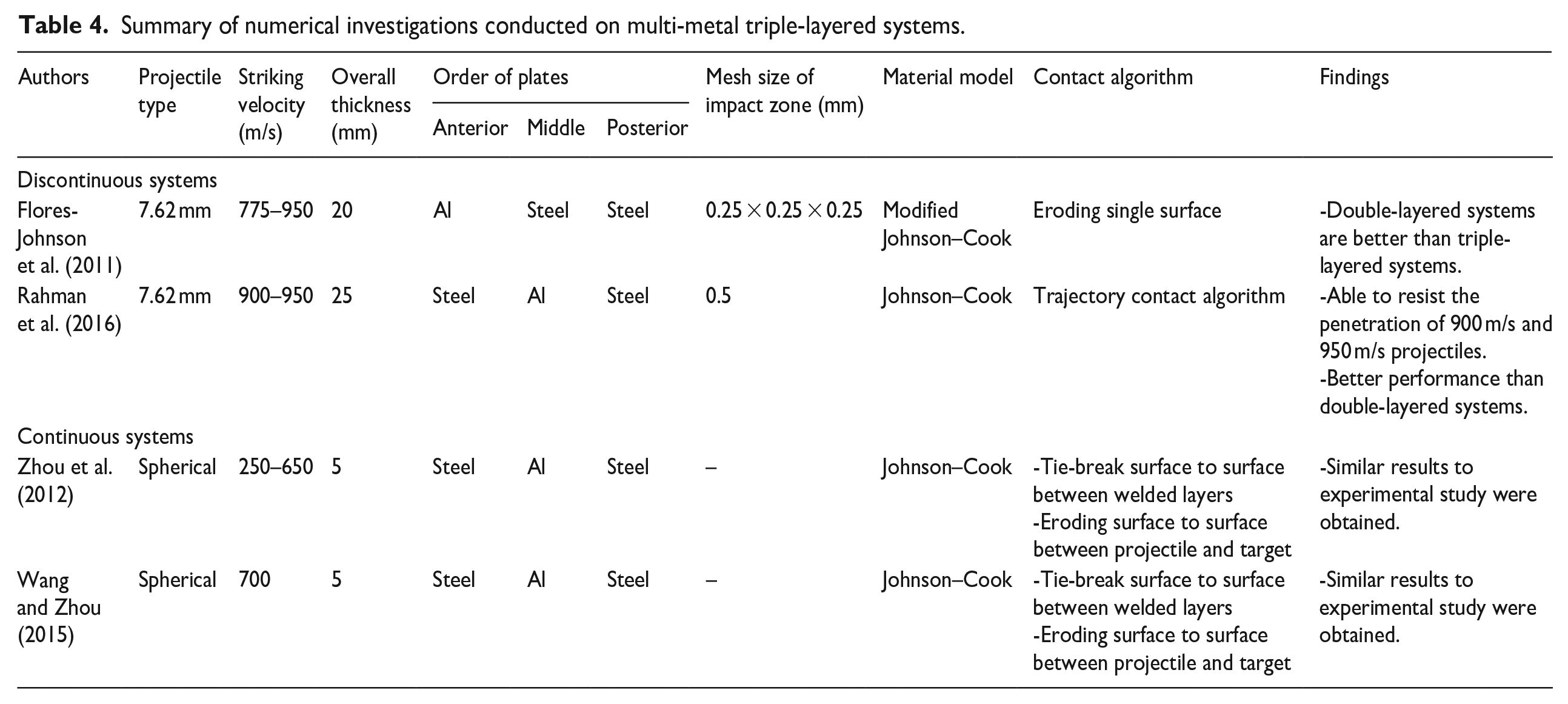
As summarised in Table 4, only a limited number of studies have been conducted on the triple-layered multi-metal systems. Even though the majority of studies reported that triple-layered targets perform better than double-layered targets in ballistic resistance, the limited amount of studies available is insufficient to confidently validate this claim. Hence, there is a clear knowledge gap in this area of study, and it is essential to conduct further research to first verify this and then to carry out modelling with different material combinations, thickness arrangements and different projectile velocities and shapes.
Summary of numerical investigations conducted on multi-metal triple-layered systems.
Furthermore, the results of numerical investigations should be validated by conducting necessary experimental investigations.
Section ‘Future direction for metal armour in ballistic mitigation’ discusses future directions for multi-metal armour designing along with few numerical simulations to find the best order of plates in a metal composite to gain superior ballistic resistance capabilities.
Future direction for metal armour in ballistic mitigation
As discussed previously in this article, the focus in the composition of protective structures against ballistic impact has shifted from single-metal (monolithic) systems to multi-metal systems. While an optimum configuration of multi-metal systems is yet to be experimentally identified, the study of the response of materials under extreme dynamic loads such as ballistic impacts can be considered as an interesting future research direction.
When a small projectile travelling at a high velocity impacts a comparatively large plate, the impact region can be considered to behave in a uniaxial state of strain. This is due to the extremely quick nature of the event. Under such conditions, solid materials tend to behave as fluids, where the material strength becomes negligible and the behaviour of the material is governed by the hydrodynamic pressure. Thus, it is possible to generate stresses, which are significantly greater than the strength of materials. An accurate analysis of materials under these conditions must consider the effect of stress wave propagation within them. The phenomenon of stress wave propagation has been considered a relevant event for ballistic events because the propagation speed of the stress waves is higher than the velocity of the projectile (Liss et al., 1983). Therefore, the initial response of the plates would be governed by the propagation of stress waves. These stress waves can take the form of elastic, plastic or shock waves. The readers are referred to the authors’ previous work (Fernando et al., 2019a, 2019b; Fernando and Mohotti, 2019) for a fuller account on stress wave propagation during impact events.
Since stress wave propagation is of major concern, the impedance, which is a function of the velocity at which stress waves propagate in materials, becomes a key factor. It has been experimentally proven that an impedance-graded multi-metallic system, where the impedance is gradually reduced along the direction in which the stress waves propagate, has the potential to prevent the development of excessive compressive and tensile stresses. Prevention of excessive compression can prevent most commonly observed failure patterns related to ballistic events, previously discussed in this article. On the other hand, minimising the magnitude of tensile stresses can prevent de-bonding between different material layers, as well as spalling or scabbing. Most of the previous experimental work have suggested that a bimetallic configuration with steel (impedance = 47 × 106 kg/m2s) as the anterior plate and aluminium (impedance = 14 × 106 kg/m2s) as the posterior plate performed better than any other combination of materials. Therefore, it is clear that this configuration is in fact impedance-graded. Thus, it is worth exploring the potential of an impedance-graded multi-metallic system in resisting ballistic impacts.
Hence, the authors conducted preliminary numerical simulations using the advanced finite-element code LS DYNA to find the ballistic performance of impedance-graded MMMLS. The armour grades of Armox 500 T were considered for steel, while Al7075 T6 was chosen for the aluminium. Double-layered systems of 4-mm-thick Armox 500 T and Al7075 T6 were assigned fixed conditions at the edges and were impacted with 5.56 × 45 mm NATO projectiles.
Double-layered systems of 4 mm thick Armox 500T and Al7075-T6 were assigned fixed conditions at the edges and were impacted with 5.56×45 mm NATO projectiles. An initial projectile velocity of 945 m/s was selected considering the highest body armor protection level imposed by National Institute of Justice (NIJ, 1987).
Four different configurations as shown in Table 5 with Armox 500 T as the anterior plate and Al7075 T6 as the posterior plate (SS–AL) and vice versa (AL–SS) were simulated. For the simulations, both double- and triple-layered combinations were considered. Based on the authors’ previous work, a finely resolved mesh size of 0.125 mm × 0.125 mm × 0.125 mm was selected for the impact zone in the target (in order to capture the propagation of stress waves) and a coarser mesh of 0.25 mm × 0.25 mm × 0.125 mm was used closer to the edges (Mohotti et al., 2015). Furthermore, a mesh size of approximately 0.2 mm × 0.2 mm × 0.2 mm was used for the projectile, which consisted of a penetrator, core and jacket (Mohotti et al., 2015). Figure 13 presents the geometry of the target and the projectile used for the study by the authors. The simplified Johnson–Cook material model along with the Johnson–Cook failure criterion was used as the material constitutive model for the targets, while the modified Johnson–Cook model along with the Cockroft–Latham failure criterion was introduced for the projectile. The Grüneisan EOS, which defines a relationship between the pressure and the particle velocity in solids, was used to account for the hydrodynamic pressure. Table 6 provides the constitutive model parameters for the material grades used (Brar et al., 2009; Iqbal et al., 2016; Mohotti et al., 2015) for these numerical simulations. The material parameters were taken from past studies conducted to determine the material parameters of JC models. The researchers had conducted material testings to determine the material parameters. LS DYNA hourglass control type 4 (Flanagan-Belytschko stiffness form), which is recommended for high-velocity projectile impact, was used for the simulations (Livemore Software Technology Corporation, 2016). The contact between the plates was defined using AUTOMATIC_SURFACE_TO_SURFACE and the contact between the projectile, and the target was defined using ERODING_SURFACE_TO_SURFACE, since the contact surface is updated while elements are deleted in ERODING-type contact forms.
Target combinations considered for numerical simulations.

Material parameters for the target and projectile.
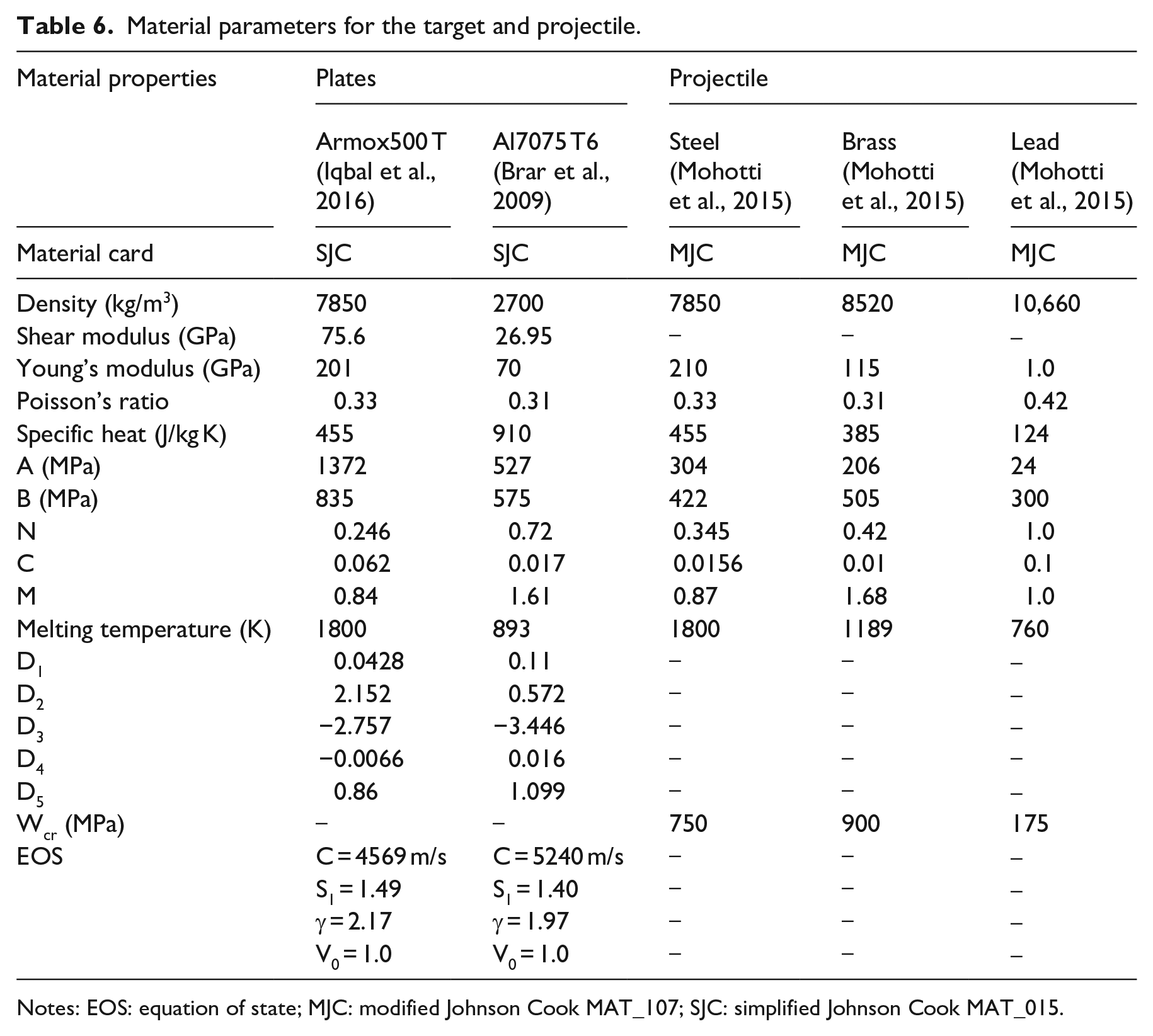
Notes: EOS: equation of state; MJC: modified Johnson Cook MAT_107; SJC: simplified Johnson Cook MAT_015.

Geometry of the target and the projectile.
Results obtained for the ballistic performance of double- and triple-layered targets are depicted in Figure 14. Figure 15 presents the projectile velocity versus time for targets, from which it is clear that the SS–Al target where Armox 500 T acts as the anterior plate has a less residual velocity compared to the Al–SS target. Furthermore, it is observed that triple-layered targets with anterior and posterior Armox 500 T layers provide the best ballistic performance with respect to residual velocity. Nonetheless, it is also detected that the attenuation of transient stress of SS–Al targets is considerably higher than that of the Al–SS target (Figure 16). Attenuation of stress through thickness can be considered as one of the critical aspects in body armour design as it is related with the behind armour blunt trauma (BABT). BABT causes injuries to body armour wearers even though the armour completely defeats the projectile. This could cause haemorrhaging of internal organs and can be lethal. Hence, even though triple-layered SS–AL–SS targets provide better resistance capabilities with respect to velocity, the stress attenuation in said targets were comparatively low compared to the targets with posterior aluminium layer. It can be concluded that impedance-graded systems where impedance is reduced through thickness are capable of providing better ballistic performance compared to the systems of reverse order. Moreover, it is essential to consider BABT when conducting future studies about body armours because stopping perforation is not the only criterion that needs to be considered.
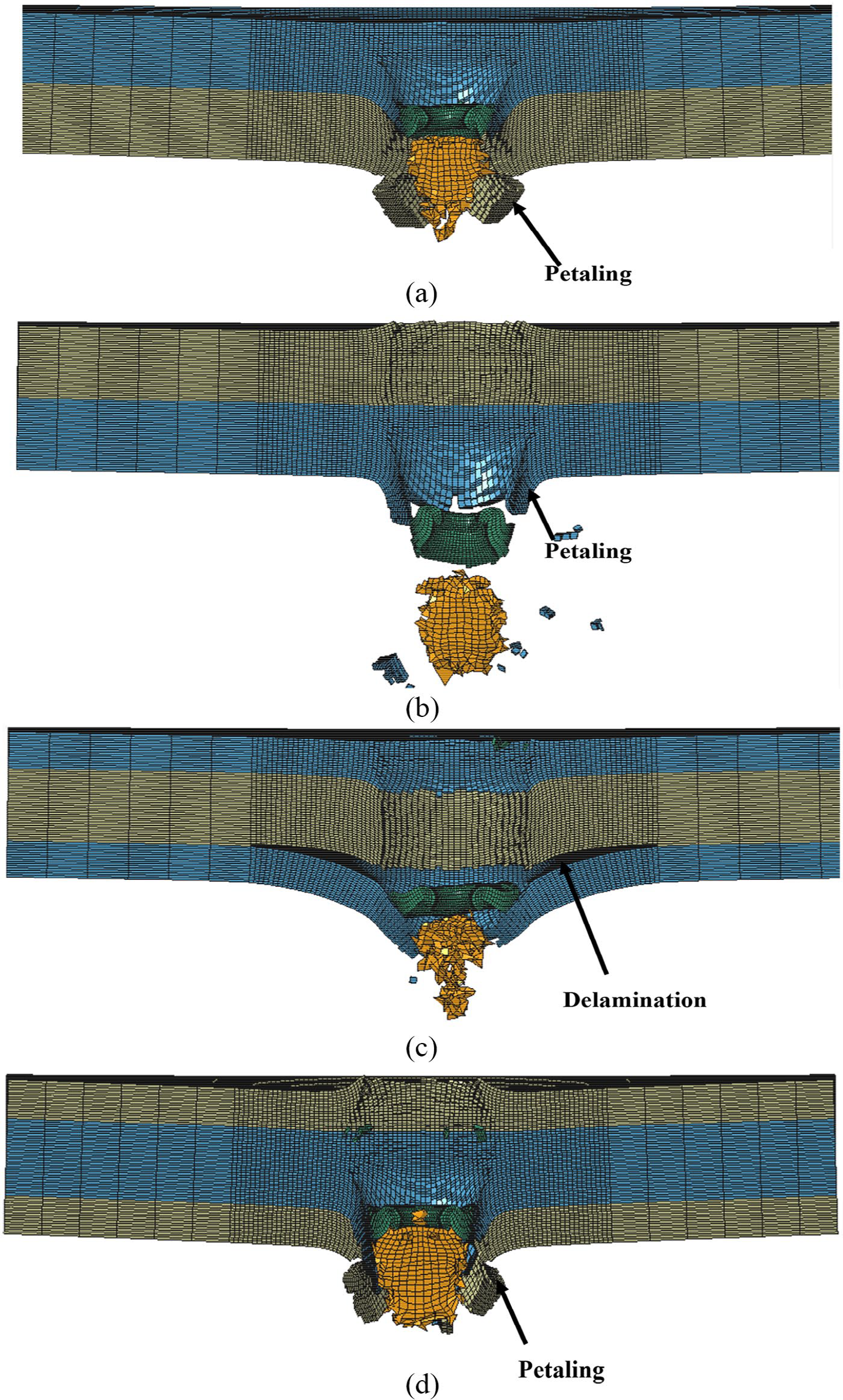
Ballistic performance of (a) double-layered SS–AL, (b) double-layered AL–SS, (c) triple-layered SS–AL–SS and (d) triple-layered AL–SS–AL.
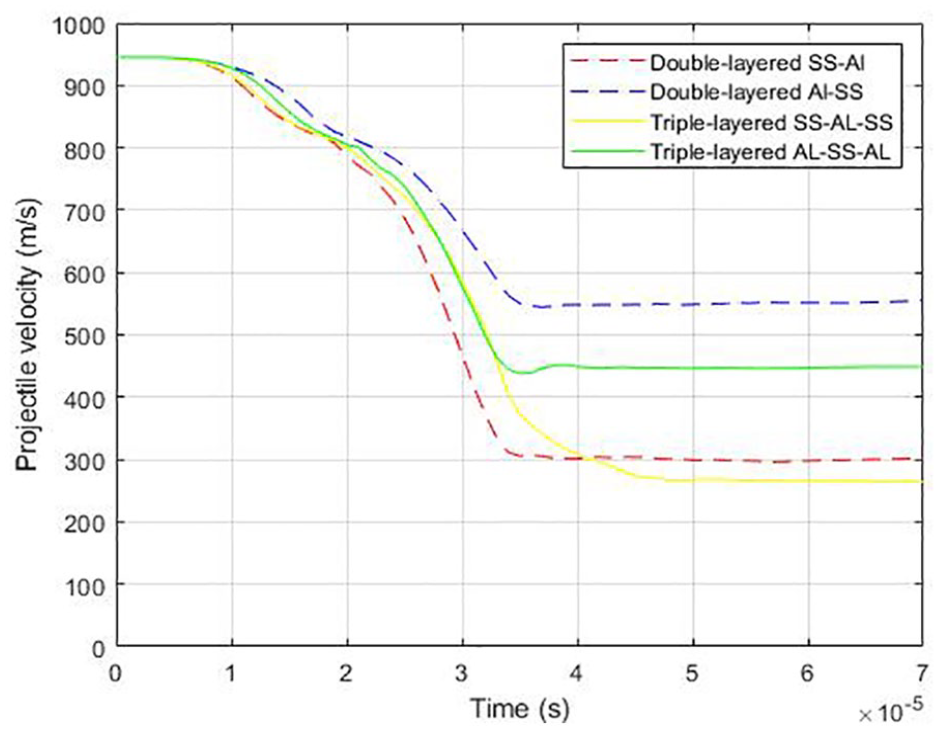
Velocity profile of the projectile impacted with 945 m/s.
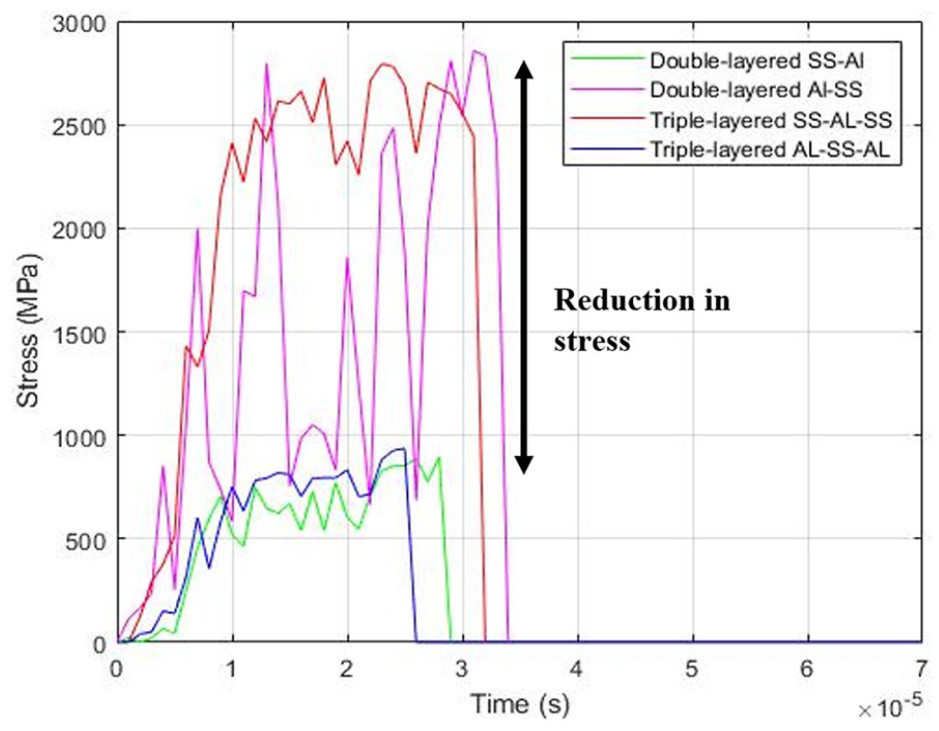
Stress profile at the middle of posterior plate of the target.
Conclusion
This article provides a comprehensive study about the experimental and numerical investigations conducted on the ballistic resistance of MMMLS. The study debated about the effect of different types of metals, overall thickness, arrangement of plates, fracture mechanism and feasibility of connection types within target. The performance of targets was quantified with respect to ballistic limit velocity, residual velocity, depth of penetration and failure mechanism. To date, for all the experimental and numerical studies, the materials considered were steel and aluminium. Different failure mechanism such as plugging, dishing, shear failures and brittle failures were observed in the anterior and posterior target plates in both experimental and numerical investigations. Two types of systems, discontinuous and continuous, based on the connection between the metal layers of the targets were discussed. Clamped and fixed targets were used for discontinuous systems, while explosive welding technique was used to produce existing continuous targets.
Interestingly, it has not been clearly distinguished as to what the best order of plates in a MMMLS is. Contradictory conclusions have been drawn for the best order of plates in the available experimental, numerical and theoretical investigations. However, the majority of studies suggest using steel and aluminium as the anterior and posterior plates, respectively. A novel concept of impedance-graded systems has also been proposed recently, where metals are arranged in a way that the impedance is reduced through thickness. The concept, however, needs to be validated through numerical as well as empirical studies. Therefore, this proposes a novel avenue of research altogether.
Furthermore, research could be directed in several directions to enhance the ballistic performance in MMMLS. Studies could be conducted by mixing other metals such as titanium, nickel, copper, and so on and their alloys with existing steel. Currently, aluminium and steel are the only two metals that are being used. The combination of lightweight metals with steel will enhance the manoeuvrability of targets due to the low areal densities. To date, double- and triple-layered systems have been studied, and as a future research direction, the number of layers in MMMLS could also be increased. Further research could be directed towards using the concept of impedance mismatch through thickness to investigate the optimum configuration yielding superior ballistic performance without compromising on areal density. Studies could be conducted by changing the connection types in between the metal layers as well. Since continuous MMMLS are also a compelling research option, it is worth pursuing different continuous MMMLS manufacturing techniques such as explosive welding, thermal spraying and 3D printing. The current approach is to simply clamp the plates at the edges. More research could be directed to investigate the ballistic performance of the above-mentioned targets, and comparisons could be carried out for continuous versus discontinuous targets to establish the most resistive target.
Footnotes
Declaration of conflicting interests
The author(s) declared no potential conflicts of interest with respect to the research, authorship, and/or publication of this article.
Funding
The author(s) received no financial support for the research, authorship, and/or publication of this article.
