




Abstract
This study presents a probabilistic assessment of the seismic performance of a mid-rise soft-first-story building retrofitted using a hybrid strengthening strategy, addressing the limited integration of hybrid energy dissipation systems within a reliability-based framework for vertically irregular structures. The structure consists of a confined masonry system with a reinforced concrete irregular first story, where buckling-restrained braces (BRBs) are implemented at the ground level and shear-link energy dissipation devices are incorporated at the upper stories. The retrofit aims to mitigate deformation concentration at the soft story while promoting a more uniform distribution of seismic demands along the building height. The proposed methodology is based on bidirectional nonlinear time-history analyses conducted in ETABS v21, using ground motion records associated with return periods of 72, 475, and 975 years. Inter-story drift ratios are treated as random variables to account for record-to-record variability, and probabilistic models are employed to estimate exceedance probabilities and reliability-based performance metrics. The original structure exhibited low reliability levels, with β values ranging from 1.30 to 2.05 across performance levels, indicating a high probability of unacceptable performance and a pronounced soft-story mechanism. After retrofitting, the structural reliability increased significantly, reaching mean values of 7.76 and 7.65 at the immediate occupancy level, 7.43 and 7.73 at life safety, and 7.42 and 7.32 at collapse prevention for the EW and NS directions, respectively. These values greatly exceed the commonly accepted target of β = 3.5 and are associated with probabilities of unacceptable performance on the order of 10-14 to 10-15. Overall, the hybrid retrofit strategy effectively eliminates the soft-story mechanism, ensures a stable redistribution of seismic demands, and significantly enhances the reliability and seismic resilience of buildings with vertical irregularities.
Keywords
Introduction
Soft-story buildings have been widely constructed, particularly in densely populated urban areas, driven by the need to maximize the use of available space. This architectural configuration typically arises during early design stages, where the ground floor is allocated to commercial uses or parking facilities that require open spatial layouts and a reduced number of structural elements. Although this functional optimization is advantageous from both architectural and economic perspectives, it introduces significant structural vulnerabilities when subjected to lateral seismic loads. In particular, the abrupt change in stiffness and strength between the ground story and upper levels leads to a concentration of lateral deformations at the first floor, generating a vertical irregularity that has been consistently associated with severe damage mechanisms and even collapse in reinforced concrete and masonry-infilled frame structures (Demirtaş et al., 2025; Franke et al., 2019; Tena-Colunga and Hernández-García, 2020; Ulutaş, 2024). This phenomenon is further exacerbated by geometric and structural discontinuities, such as increased first-story height, interruptions in loas paths, column discontinuities, partial or complete removal of walls, and the presence of masonry systems with non-uniform distribution, all of which contribute to the development of the soft-story mechanism under seismic excitation.
In this context, seismic rehabilitation of soft-story buildings has been extensively studied, particularly based on evidence from recent earthquakes, where these structural configurations have exhibited excessive lateral deformations, concentration of plastic demands at the ground floor, and premature failure of critical structural components. To address these deficiencies, various retrofit strategies have been proposed, classified into local and global interventions. Local interventions focus on repairing or strengthening specific damaged components, whereas global strategies aim to modify the overall structural response by increasing lateral stiffness, strength, or energy dissipation capacity. Among the most common global solutions are the incorporation of shear walls, seismic isolation systems, masonry strengthening, reinforced concrete or steel frames, as well as energy dissipation devices such as hysteretic, viscous, or friction-based dampers (Agarwal and Shrikhande, 2007; Matiyas et al., 2023; Teddy et al., 2018).
From a broader perspective, seismic energy dissipation technologies have evolved significantly in recent decades and can be classified according to their dominant physical mechanisms into displacement-dependent and velocity-dependent systems. Velocity-dependent devices, such as viscous dampers, dissipate energy through fluid or viscoelastic resistance forces proportional to relative velocity, whereas displacement-dependent systems, such as friction devices and hysteretic mechanisms, dissipate energy through inelastic deformation. These categories can be further complemented by sub-classifications based on material, structural configuration, and yielding mechanism, reflecting the diversity of strategies developed to enhance hysteretic stability, fatigue resistance, and energy dissipation efficiency (Christopoulos et al., 2008; Li et al., 2023; Soong and Spencer, 2002).
In recent decades, metallic energy dissipation devices have received considerable attention due to their stable hysteretic behavior and relatively simple construction. However, despite their widespread theoretical adoption, their practical implementation still faces significant challenges related to cyclic degradation, fatigue fracture, weld deterioration, and instability under large deformation demands. Among these systems, shear-yielding devices have demonstrated higher initial stiffness and energy dissipation capacity compared to axial or flexural yielding mechanisms, although their performance may be limited by out-of-plane buckling and fracture at boundary regions (Yao et al., 2021).
More recently, advanced configurations such as multi-stiffened aluminum shear panels have been proposed to improve buckling resistance and cyclic stability, although their application in reinforced concrete structures remains limited due to the lack of simplified design methodologies (Ferraioli et al., 2023a). Similarly, structural systems based on continuous dissipative columns and rocking wall configurations have been developed to improve deformation control and reduce damage concentration in existing buildings (Ferraioli et al., 2023b; Wada et al., 2011). These studies highlight an important limitation: many retrofit strategies focus on increasing global stiffness or energy dissipation capacity without explicitly considering deformation compatibility between structural levels or between systems of different nature.
Shape memory alloys (SMAs) represent another important class of smart materials for seismic protection due to their self-centering capability and flag-shaped hysteretic response. Among them, NiTi-based alloys have been widely investigated due to their fatigue resistance, corrosion resistance, and ability to recover large inelastic deformations, although their large-scale structural application remains limited due to cost, modeling complexity, and uncertainties in system-level behavior (DesRoches et al., 2004; Zhu and Zhang, 2007).
Self-centering systems can generally be classified into braced frame systems, rocking systems, and post-tensioned systems (Christopoulos et al., 2008; Ricles et al., 2001; Walter Yang et al., 2010; Zhu and Zhang, 2007). However, most studies on isolated component behavior, without fully addressing system-level interactions in realistic structural configurations, which is particularly relevant in irregular buildings.
In this framework, retrofit strategies for soft-story buildings can be interpreted as the evolution of different system families. Recent studies have proposed hybrid configurations combining buckling-restrained braces (BRBs), viscous dampers, and shear links, showing improved performance compared to individual systems by simultaneously enhancing stiffness and energy dissipation (Jara et al., 2020; Ruiz et al., 2021). The literature also reports systems based on Tube-in-Tube dampers combined with column strengthening at the ground floor (Benavent-Climent and Mota-Páez, 2017), configurations using chevron and X-bracing combined with hysteretic or viscous devices (Jara-Guerrero et al., 2020), as well as more recent developments incorporating rotational metallic systems, infill walls, and advanced hybrid configurations aimed at drift control and seismic resilience (Izadpanah et al., 2025; Jiang et al., 2024; Lie et al., 2025; Mota-Páez et al., 2021). These devices belong to seismic energy dissipation systems, which can be broadly classified into displacement-dependent and velocity-dependent mechanisms, with the former being predominant in this type of retrofit practice. Despite these advances, a critical limitation of existing approaches is that, in practice, retrofit strategies are predominantly concentrated on the ground floor, while upper levels are typically treated using conventional strengthening techniques such as welded wire mesh reinforcement in confined masonry, jacketing, or similar interventions. Although the implementation of BRBs at the ground floor is effective in reducing drift concentration at the level, extending their use along the full height of the structure is often constrained by geometric and structural limitations associated with upper-story systems, particularly in buildings with confined masonry walls. As a result, this may lead to an unintended redistribution of seismic demands toward upper stories if the interaction between different systems is not properly controlled. This behavior is not solely related to device location, but rather to the insufficiently integrated design of structural and dissipative systems of different nature.
In this context, the present study proposes a hybrid seismic retrofit strategy for reinforced concrete soft-story buildings with confined masonry systems, combining BRBs at the ground floor with shear links in the upper stories. Unlike previous approaches, the proposed configuration explicitly considers both the practical constraints of implementation and the interaction between different energy dissipation mechanisms, aiming to control drift concentration at the critical level while preventing undesired redistribution of demands. The objective is not only to increase global energy dissipation, but also to regulate the vertical distribution of stiffness and ductility to achieve a more balanced structural response.
Finally, the paper integrates nonlinear dynamic analysis with a probabilistic structural reliability framework, allowing performance to be quantified in terms of exceedance probabilities and reliability indices. Accordingly, the novelty lies in the development of a BRB–shear link hybrid retrofit strategy specifically tailored to soft-story buildings, the explicit consideration of interaction between dissipative systems, and the incorporation of a reliability-based approach focused on the critical story response, representing a conceptual advancement over previous studies that treat these aspects separately and highlighting the existing gap between integrated structural modeling, probabilistic performance assessment, and multi-system retrofit compatibility within a unified performance-based design framework.
Seismic rehabilitation strategy for a soft-story building
The section presents a concise overview of the original structural conditions that contributed to the development of a soft-story response under seismic excitation, included solely as background for the proposed intervention. The seismic rehabilitation strategy is then introduced, emphasizing the adopted approaches aimed at improving the global structural performance of the building. The proposed measures are intended to reduce excessive inter-story drifts, enhance lateral stiffness, and achieve a more balanced distribution of seismic demands along the height of the structure.
Original structural configuration
The structure considered in this study corresponds to a five-story building with a regular plan configuration and a pronounced vertical irregularity associated with a soft-story condition at the ground level. The original structural system combines reinforced-concrete moment-resisting frames at the ground floor with confined masonry walls in the upper stories, a layout commonly adopted to provide open spaces for parking while accommodating residential use above. This abrupt change in stiffness and strength along the height of the building leads to a concentration of seismic demands at the first story, making the structure particularly vulnerable under earthquake excitation. The overall structural configuration of the original building is illustrated in Figure 1. Structural configuration of the original five-story building with soft-story condition (Dimensions in meters, m).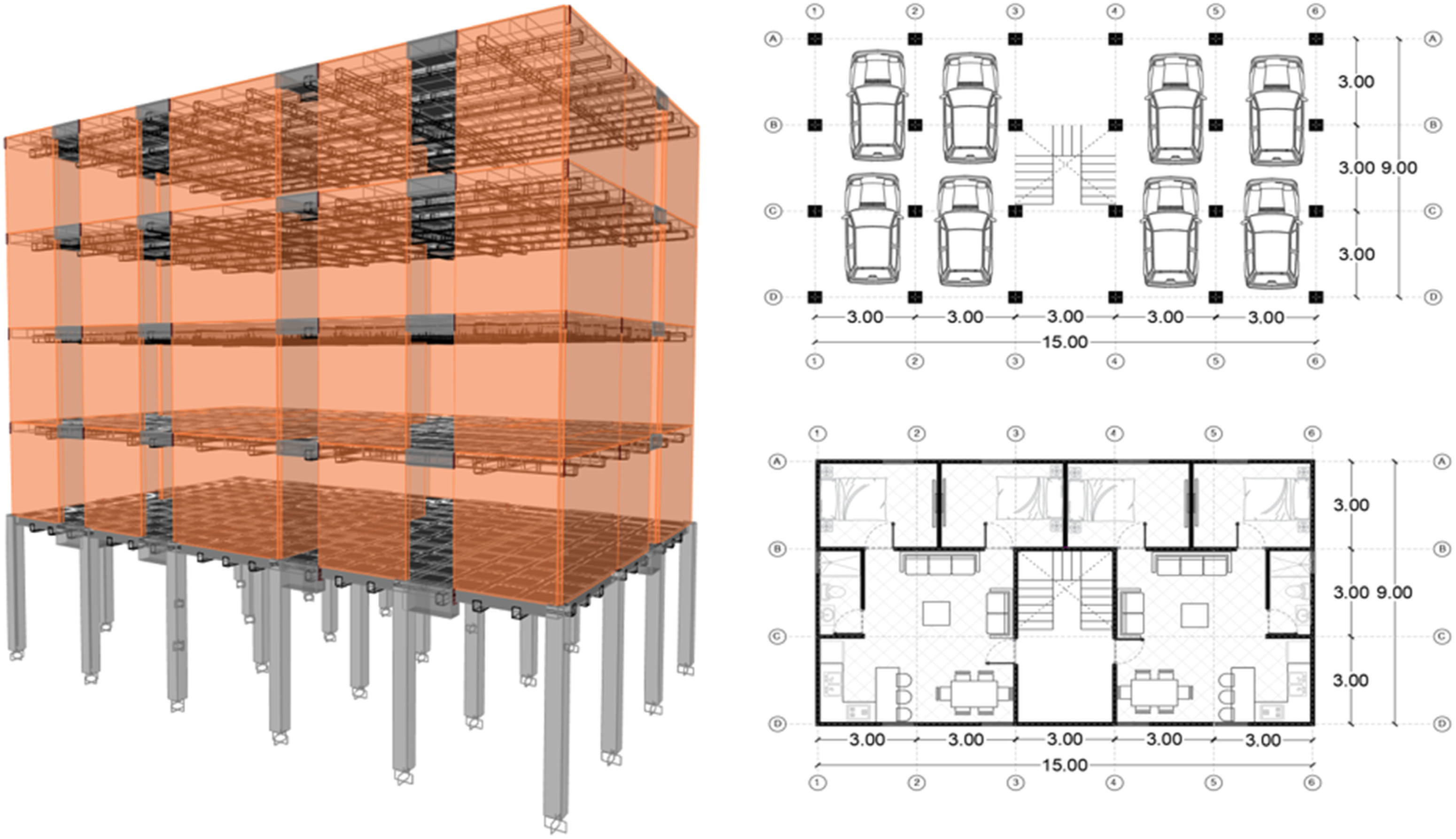
This structural typology is representative of a large number of mid-rise buildings located in seismic-prone regions, especially in developing urban areas where functional and architectural requirements have historically governed the design of ground floors. The original configuration was designed according to the seismic provisions in force at the time of construction, incorporating a reduced seismic behavior factor to account for the presence of vertical irregularity. Although these design considerations increase the seismic design forces, they do not fully mitigate the adverse effects associated with the soft-story response, as evidenced by the concentration of inter-story drifts at the ground level.
The seismic response and reliability of the original structure were previously investigated by the authors in Gutierrez-Lopez et al. (2025), where a detailed description of the geometry, material properties, numerical modeling assumptions, and seismic input characterization was presented. In the present paper, the original configuration is recalled only to establish the baseline conditions required to introduce and assess the proposed seismic rehabilitation strategy, which aims to address the deficiencies inherent to soft-story behavior.
Buckling-restrained braces at the first story
To mitigate the excessive lateral deformations concentrated at the ground level of the building, a seismic rehabilitation strategy based on the strategic incorporation of buckling-restrained braces (BRBs) was implemented. This solution was selected considering that the first story is used as a parking area; therefore, preserving the functionality of the space, minimizing architectural interference, and controlling the increase in structural weight associated with the intervention were key design requirements.
In addition, BRBs were adopted due to their well-established structural advantages, including stable hysteretic behavior under cyclic loading and high local ductility capacity, which make them particularly effective for improving the seismic performance of structures exhibiting vertical irregularities (Fahnestock et al., 2007; Guerrero et al., 2016). In this study, BRBs were employed exclusively in a single-diagonal configuration and were limited to the first story, where the highest inter-story drift demands are concentrated.
The sizing and design of the BRBs were carried out following criteria aimed at ensuring adequate performance of the rehabilitation system. To estimate the equivalent axial stiffness of the brace, the expression proposed by Segovia (2015) was adopted. This formulation accounts for the non-prismatic nature of BRBs and allows their mechanical behavior to be represented through an equivalent axial stiffness, given by equation (1):

According to Segovia (2015), the equivalent lateral stiffness of a BRB installed in a single-diagonal configuration can be expressed by equation (2), which relates the axial stiffness of the device to the geometry of the frame in which it is installed:

The shear force associated with yielding of the BRB core,

Similarly, the yield displacement of the bracing system was estimated as a function of the frame geometry and the mechanical properties of the dissipative material using the expression presented by Segovia (2015), shown in equation (4):

The determination of the BRB core area was performed following the methodology proposed by Segovia and Ruiz (2017), which allows the final design to be obtained through explicit expressions in terms of target stiffness or target strength, significantly reducing the number of required iterations. Equation (5) presents the stiffness-based formulation, while equation (6) corresponds to the strength-based criterion; both expressions are applicable to single-diagonal configurations:


To apply equations (5) and (6), a nonlinear static analysis was performed on the original structural model, from which the building’s capacity curve was obtained, as shown in Figure 2(a). As part of the rehabilitation strategy at the first story, the cross-sectional dimensions of the reinforced concrete frame elements were also increased in order to define a required capacity curve that does not exceed an inter-story drift limit of 0.010. This target capacity curve is presented in Figure 2(b). Capacity curves of the original building and the required target configuration.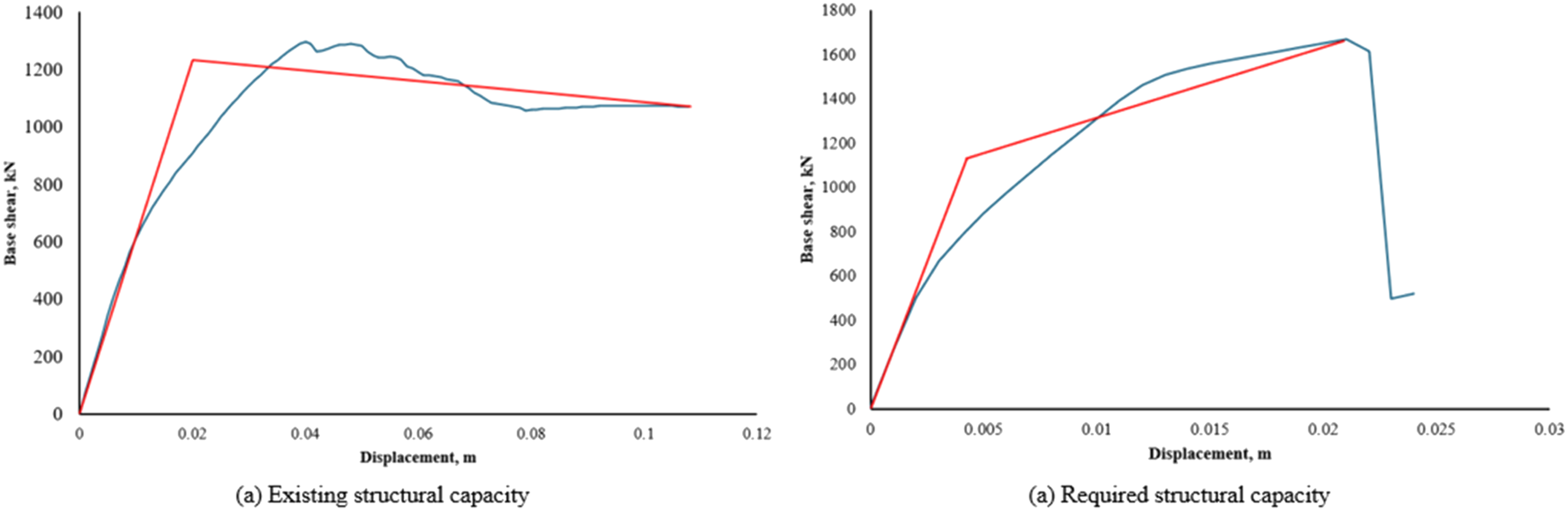
Target stiffness and target strength.

The final design of the BRB core areas was governed by the stiffness-based criterion, as the adopted methodology specifies that the design should conservatively be controlled by the larger value obtained from equations (5) and (6). In this case, equation (5) controlled the design. The stiffness modification factor
The total required BRB core area was 58.55 cm2. Along the X direction of the building, three BRBs were installed: two with a core area of 19 cm2 and one with a core area of 39 cm2. In the perpendicular direction, four BRBs were installed, each with a core area of 19 cm2. The final selection of these areas was carried out conservatively and in accordance with the design tables provided by the manufacturer. The plan distribution of the BRBs at the first story is shown in Figure 3. Plan layout of buckling-restrained braces at the soft-story level.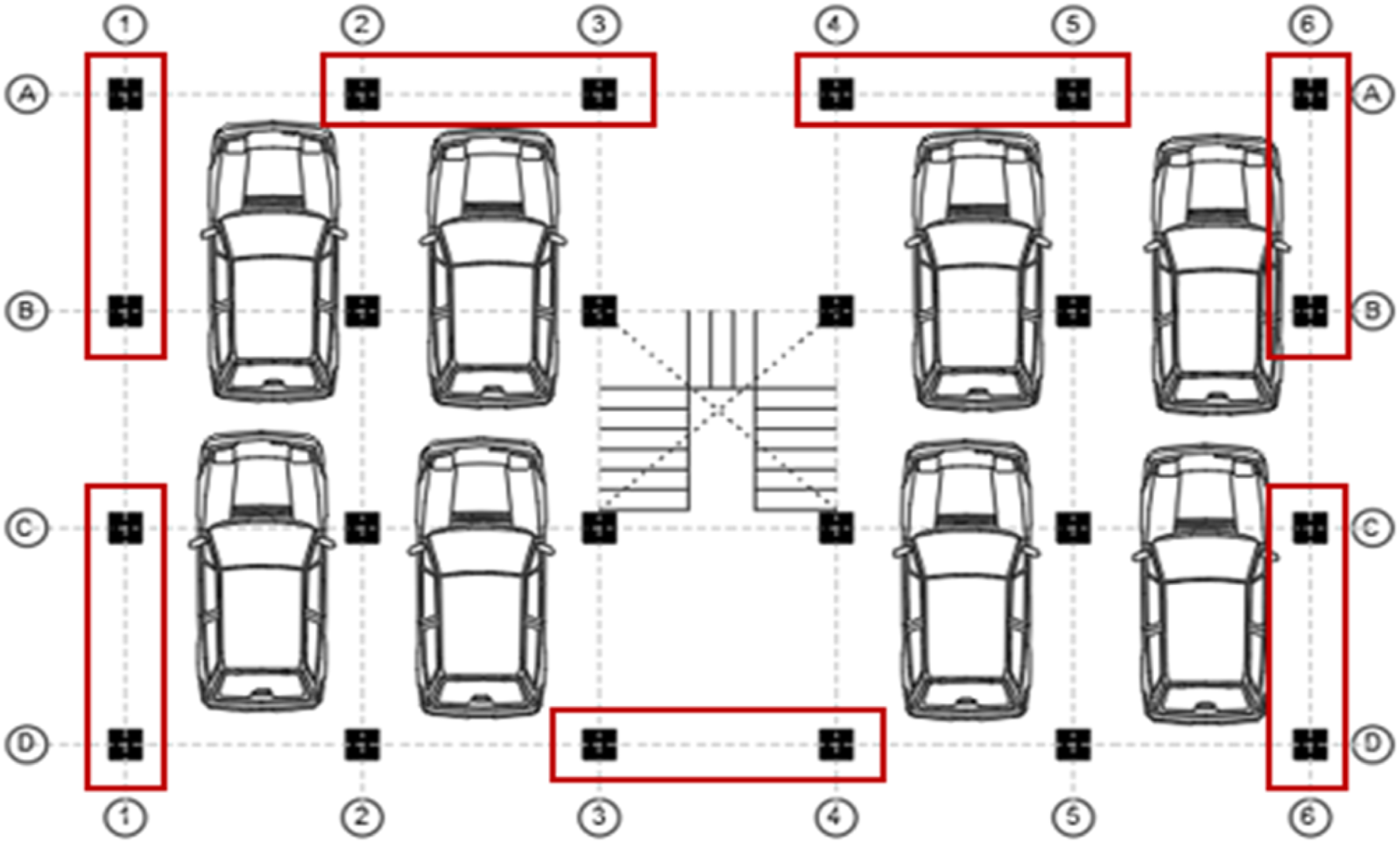
Shear link system at upper stories
The incorporation of BRBs at the first story produced a global redistribution of deformation demands along the height of the structure. Although the intervention significantly improved the response at the ground level, it resulted in increased inter-story drifts in the upper stories, where the structural system is primarily composed of confined masonry walls. To control these amplified demands and to maintain a stable global response, additional energy dissipation mechanisms were required at those levels.
For this purpose, Shear Link Bozzo (SLB) devices were implemented in the upper stories. The dissipators were installed within steel chevron bracing systems anchored to the confined masonry panels of intermediate height. The location of the devices was defined with the objective of preserving the original architectural layout of the building while following the installation recommendations reported by Muñoz (2022). The adopted configuration allows the SLBs to act as structural fuses, concentrating inelastic action within replaceable metallic components and preventing undesirable damage to the primary structural elements.
The design of the SLBs was performed using a direct iterative procedure, in which the mechanical properties of the devices are successively adjusted according to the shear forces developed in each dissipator. The workflow of the adopted methodology is illustrated in Figure 4. As an initial step, a modal response spectrum analysis was conducted using envelope load combinations. The shear forces obtained in the link elements representing the dissipators were taken as the initial demand for the preliminary selection of the devices. These demands exhibit a gradual variation along the height, with higher values in lower stories, while remaining relatively uniform due to the global response of the retrofitted system. Flowchart of the direct iteration procedure for SLB selection (adapted from Muñoz (Muñoz, 2022)).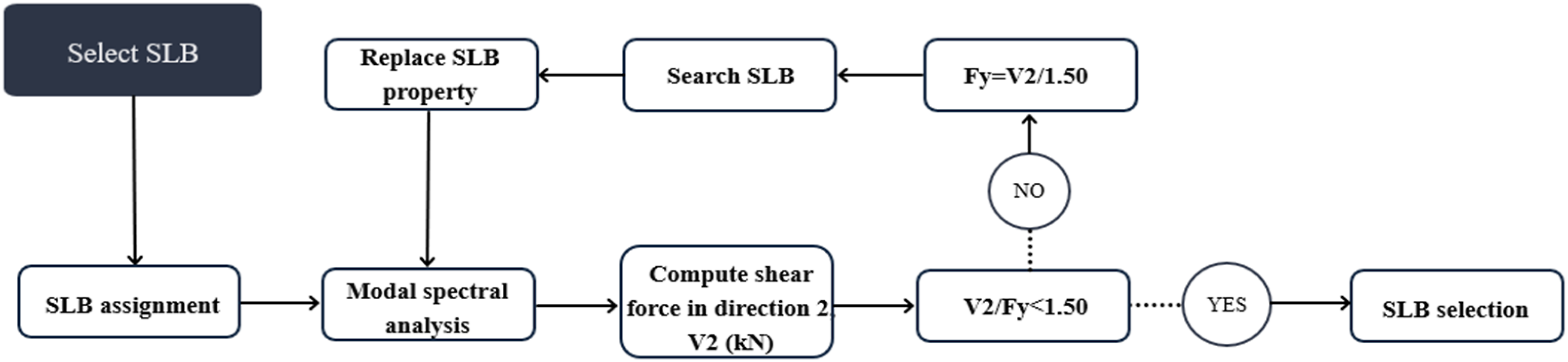
The iterative process was implemented through the computational plugin DISSIPA-SLB v21, which operates with full integration into ETABS v21 (ETABS, 2023). This tool enabled automation of the direct iteration method and significantly streamlined the selection procedure. In each cycle, the maximum shear force obtained from the envelope was divided by a factor of 1.35 in order to identify a device with a yielding force close to that value. The structural analysis was then repeated until the demand-to-capacity ratio (D/C) of every dissipator satisfied the acceptance criterion of being lower than 1.5 (Bozzo et al., 2019).
Final iteration results for the selection of SLB devices.
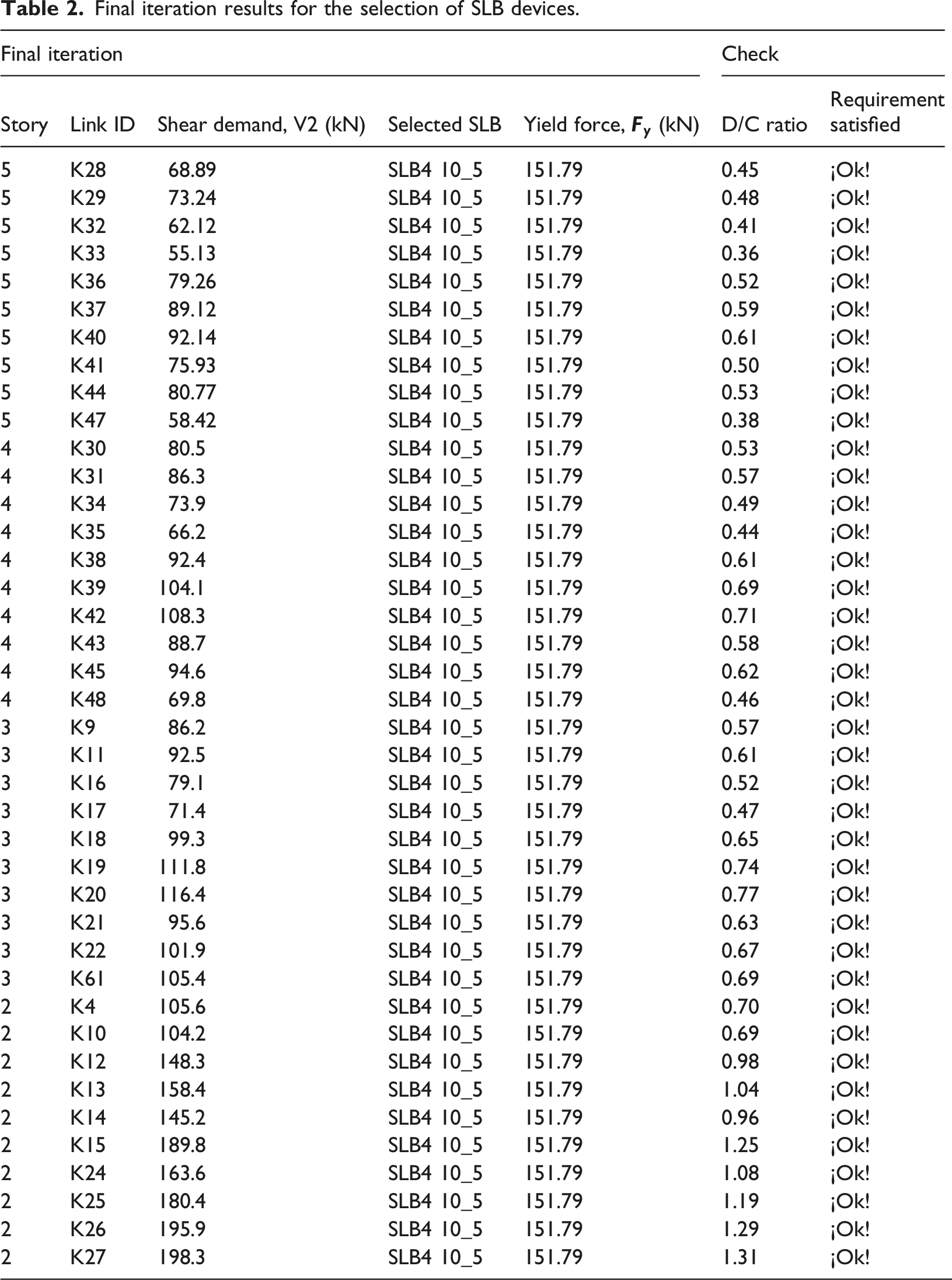
The optimal solution for the structural typology under study corresponded to fourth-generation SLB devices. According to experimental evidence reported by Muñoz (2022), these elements provide an extended deformation capacity, reaching ultimate displacements on the order of 0.06 m, which makes them suitable for accommodating the drift demands expected in the rehabilitated structure.
The combined strengthening system, consisting of BRBs at the first story and SLBs at the upper levels, is illustrated through the three-dimensional numerical model shown in Figure 5. 3D numerical model of the building retrofitted with BRBs and SLBs.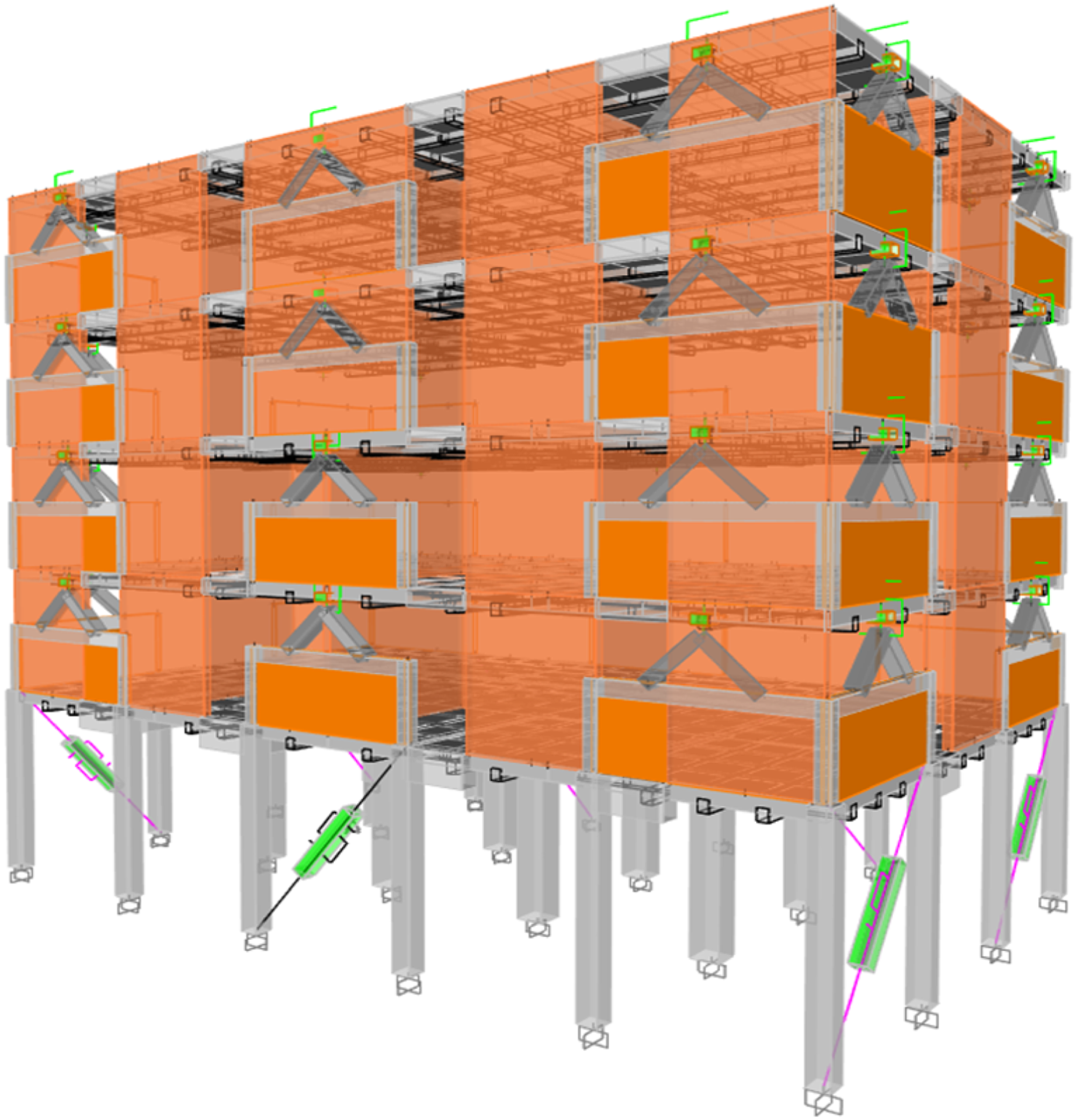
Ground motion selection methodology
The nonlinear dynamic assessment of the retrofitted structure required a suite of spectrum-compatible ground motions representative of different seismic hazard levels at the site. Three intensity levels were considered, associated with return periods of 72, 475, and 975 years. Within performance-based earthquake engineering frameworks, these hazard levels are commonly related to the objectives of immediate occupancy, life safety, and collapse prevention, respectively (SEAOC, 1995). For each return period, 22 pairs of horizontal ground motions were selected, resulting in a total of 66 bidirectional records employed in the nonlinear response-history analyses.
The target spectra used for record selection were defined as uniform hazard spectra (UHS) obtained for the building location though the probabilistic seismic hazard platform developed by the Mexican Federal Electricity Commission. These spectra represent the seismic demand expected at the site for each hazard level and therefore constitute the reference intensity measure for the analyses. It is important to emphasize that the UHS are independent from the code-based design spectrum associated with the original proportioning of the building, which is reported only to document the as-built condition and does not participate in the record-selection procedure.
Candidate accelerograms were obtained from a database containing approximately 20,000 historical records compiled mainly by the Institute of Engineering of the National Autonomous University of Mexico and by CICESE. For each event, the two orthogonal horizontal components were processed to compute their corresponding elastic response spectra. A single representative spectrum was then derived by combining both components through the square root of the sum of squares, following the procedure established in the Mexican seismic provisions (NTCS, 2023). This approach ensures compatibility with the three-dimensional representation of the seismic input adopted in the structural model. The combined spectrum is defined as equation (7):
To achieve compatibility between the candidate motions and the target UHS, the selection and scaling followed the
Within this framework, the average spectral acceleration and the scale factor used to match the target spectrum are computed as follows:

The adoption of this strategy provides a more stable and representative measure of seismic intensity than matching the spectrum at a single fundamental period. Previous studies have demonstrated that this improves the correlation with engineering demand parameters and reduces record-to-record variability in nonlinear analyses (Baker, 2011; Baker and Allin Cornell, 2006).
The effective duration of each ground motion was established using as energy-based criterion derived from Arias intensity, considering the time interval between 5% and 95% of the cumulative energy. This approach focuses the analysis on the portion of the record with the greatest influence on structural damage potential and is supported by empirical relationships widely validated in the literature (Travasarou et al., 2003).
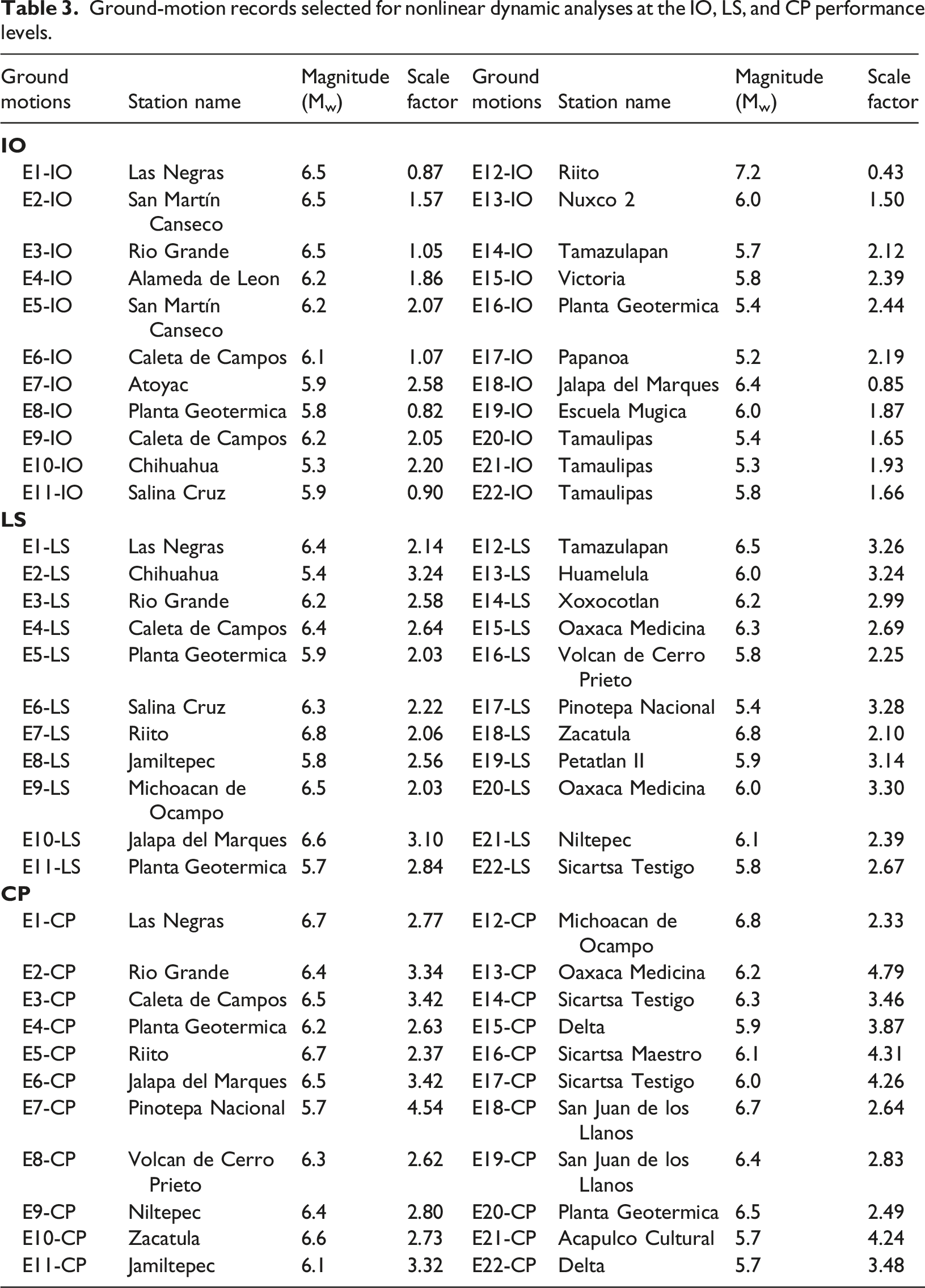
The compatibility of the selected and scaled ground motions is verified through comparisons between their response spectra and the corresponding UHS targets. Figure 6 presents these contrasts for the three return periods considered, confirming that the adopted record set adequately reproduces the hazard-consistent spectral demand associated with each performance objective. In addition, Table 3 summarizes the main characteristics of the selected ground motions, including the scaling factors applied to each record as part of the spectrum-matching procedure. Response spectra of the select ground-motion records and target UHS for the IO, LS, and CP performance levels. Ground-motion records selected for nonlinear dynamic analyses at the IO, LS, and CP performance levels.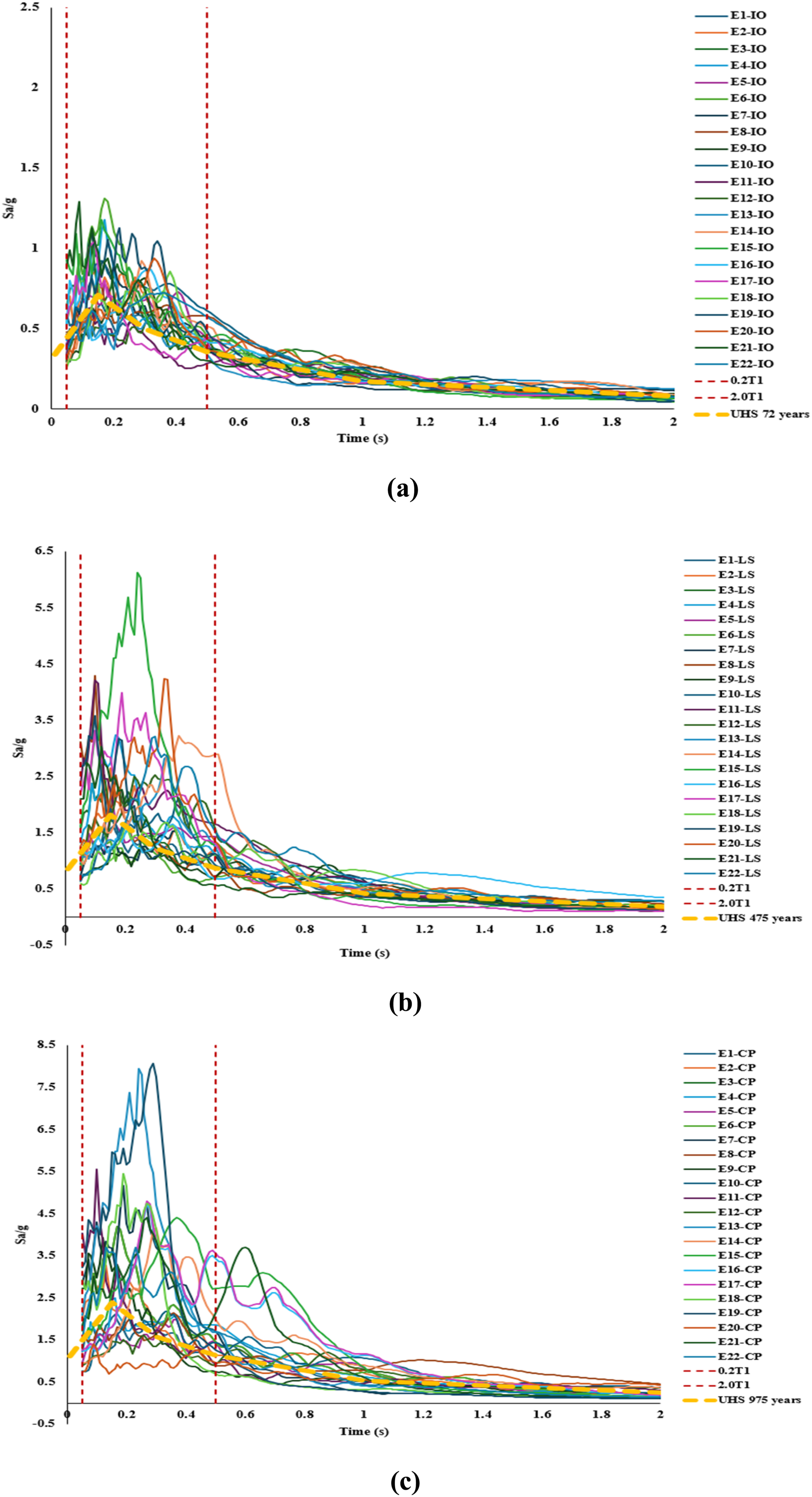
Nonlinear numerical modeling of the retrofitted structure
The nonlinear response-history analyses were performed in ETABS v21 (ETABS, 2023) using a three-dimensional numerical representation of the retrofitted structure. For each return period, 22 pairs of ground motions were applied, which required the explicit incorporation of both material and geometric nonlinearities in the primary structural components. Reinforced-concrete columns at the ground story were modeled as frame elements with P−M2−M3 plastic hinges defined through fiber sections, enabling the interaction between axial load and biaxial bending to be captured beyond the elastic range (ASCE 41-17, 2017). Concrete behavior followed the Mander constitutive model combined with a concrete-type hysteretic rule, whereas reinforcing steel was represented through a simplified stress-strain relationship with kinematic hysteresis. Ground-story beams were assigned M3 flexural hinges, consistent with a response governed mainly by bending, adopting the same constitutive assumptions used for the columns (ASCE 41-17, 2017).
Scaling factors for the calibration of masonry-wall deformation capacity.
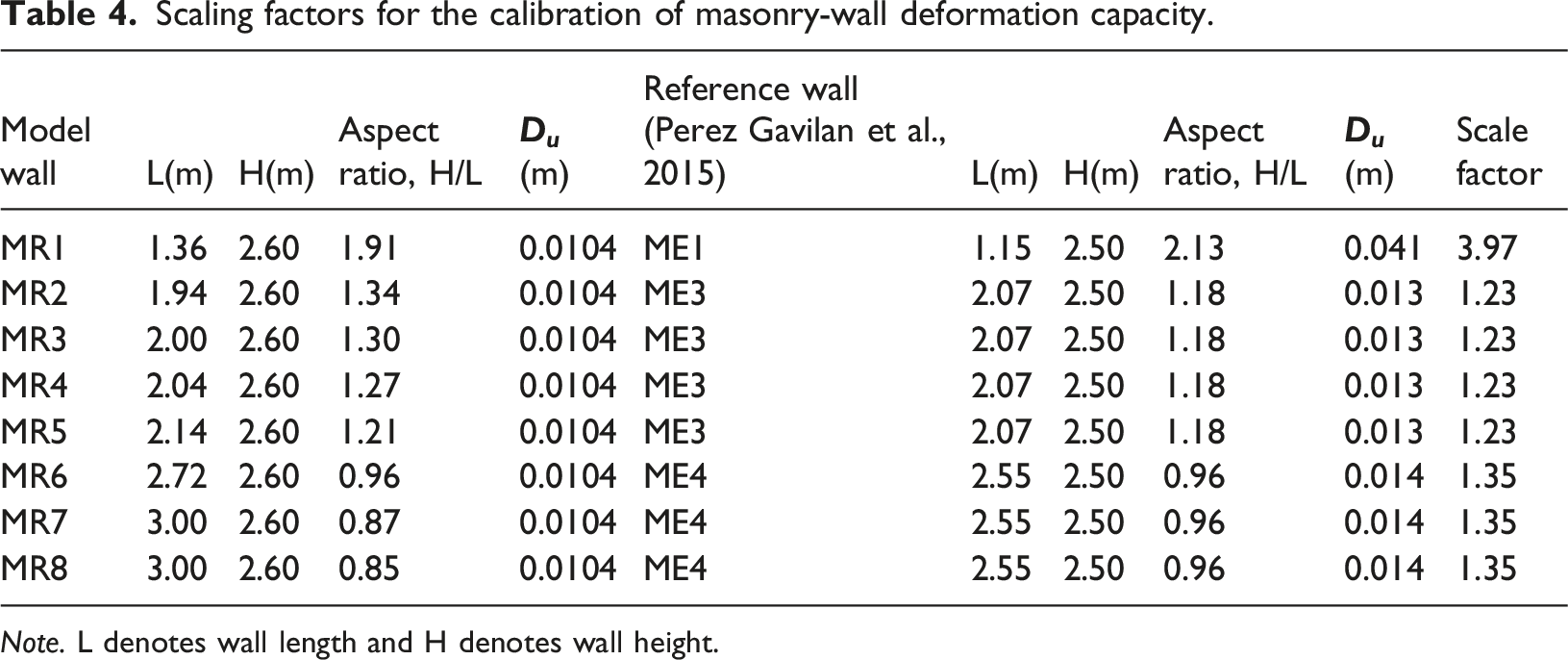
Note. L denotes wall length and H denotes wall height.
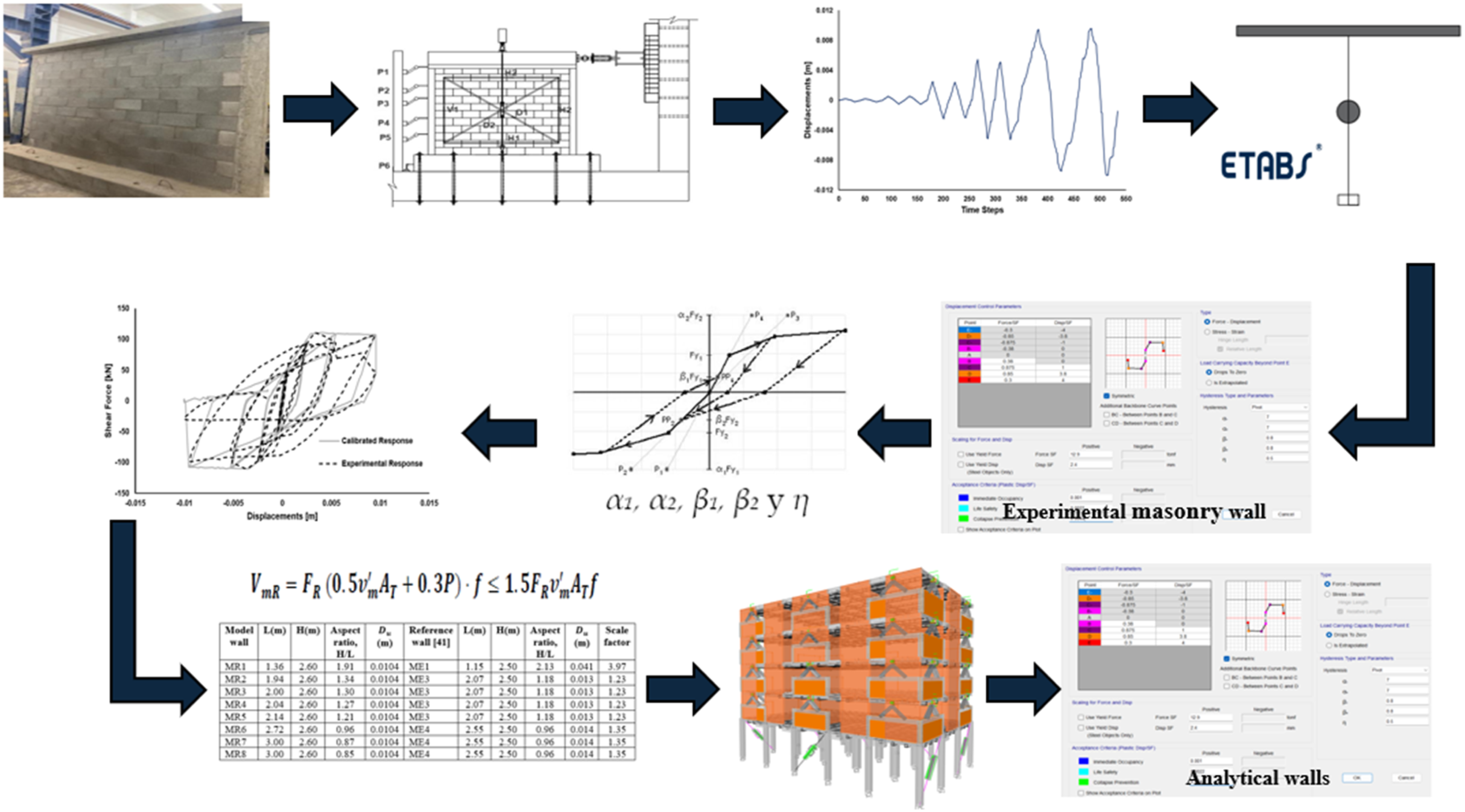
Modeling strategy for confined masonry walls.
The BRBs installed at the ground story were modeled as nonlinear axial link elements governed by a Bouc-Wen hysteretic formulation (Wen, 1976), enabling the representation of the global axial force-deformation response of the dissipators, including elastic stiffness, yielding, post-yield hardening, stable cyclic response, and hysteretic energy dissipation under tension and compression. This modeling strategy is consistent with previous studies on BRB nonlinear characterization and performance-based seismic analysis (Black et al., 2004; Catalán et al., 2025; Kersting et al., 2016). The adopted parameters, including the initial stiffness K1, yielding force Fy, post-yield stiffness K2, stiffness ratio r = K2/K1, and hysteretic transition exponent n, were selected from manufacturer technical information, qualification-testing references, and specialized literature associated with the adopted BRB configuration. Since the objective of the study is to evaluate the global nonlinear seismic response of the rehabilitated structure, the BRBs were represented through an equivalent phenomenological model rather than a detailed finite-element simulation of the internal device components.
Similarly, the SLB devices incorporated within the upper-story confined masonry portion of the structure were modeled using nonlinear link elements with Plastic Wen hysteretic behavior (Wen, 1976), following the recommendations reported by Bozzo et al. (Bozzo et al., 2019) and the CSI Analysis Refence Manual (ETABS, 2023). The constructive model incorporates the parameters K1, Fy, K2, r, and n, which govern the elastic stiffness, yielding force, post-yield stiffness, hysteretic transition, and cyclic response of the dissipator. The adopted properties correspond to the selected SLB devices and were defined according to the technical characteristics and design procedures associated with the SLB system. The simplified phenomenological representation was considered appropriate for global nonlinear response-history analyses, since the study focuses on the overall structural response rather than on the detailed local mechanics of the dissipators.
In the regions associated with the Bozzo retrofit system, the confined masonry walls were modeled using nonlinear layered shell elements, whereas the surrounding reinforced-concrete confinement members were represented through nonlinear frame elements. The shell-layer formulation allowed the masonry panels to behave as equivalent continuous media with distributed in-plane stiffness and force-transfer capacity while maintaining compatibility with the surrounding frame elements. Load transfer between the masonry panels, confinement members, and retrofit devices was ensured through kinematic compatibility along the shared boundary nodes between shell and frame elements. Explicit contact, friction, separation, or cohesive interface elements were not incorporated; instead, the masonry-frame interaction was represented through displacement compatibility, which was considered appropriate for the global nonlinear response-history analyses performed in this study. Since the Bozzo dissipative devices activate at very small deformation demands, a significant portion of the hysteretic energy dissipation and nonlinear response is expected to concentrate within the devices themselves, thereby reducing the expected nonlinear demand at the masonry-frame interface. Additional nonlinear shell and fiber-based frame formulations were nevertheless incorporated as a control measure to allow potential degradation in the surrounding structural components if higher demand levels develop.
PBSD-based structural performance assessment
Seismic hazard levels and associated performance objectives (SEAOC, 1995).

As part of the procedure, the retrofitted structure is subjected to nonlinear dynamic analyses in order to estimate its global response to seismic excitation in terms of deformation demands. From these simulations, the maximum inter-story drift ratios are obtained, allowing a direct verification of the previously established objectives in terms of safety, stability, and life protection. This scheme provides a more realistic representation of the expected behavior under severe earthquakes when compared with force-based methodologies (Krawinkler and Miranda, 2004). Furthermore, the PBSD approach explicitly incorporates the inherent variability of both the seismic input and the structural response, thus becoming a robust tool for estimating global performance and the proximity to damage limit states. Within this framework, it is possible to verify whether the retrofitted system satisfies the required performance levels by comparing computed demands with the predefined acceptance criteria (Guerrero et al., 2016; Zameeruddin and Sangle, 2021). Figure 8 schematically illustrates the general evaluation procedure applied to the post-retrofit condition. PBSD-based seismic performance evaluation of the retrofitted building.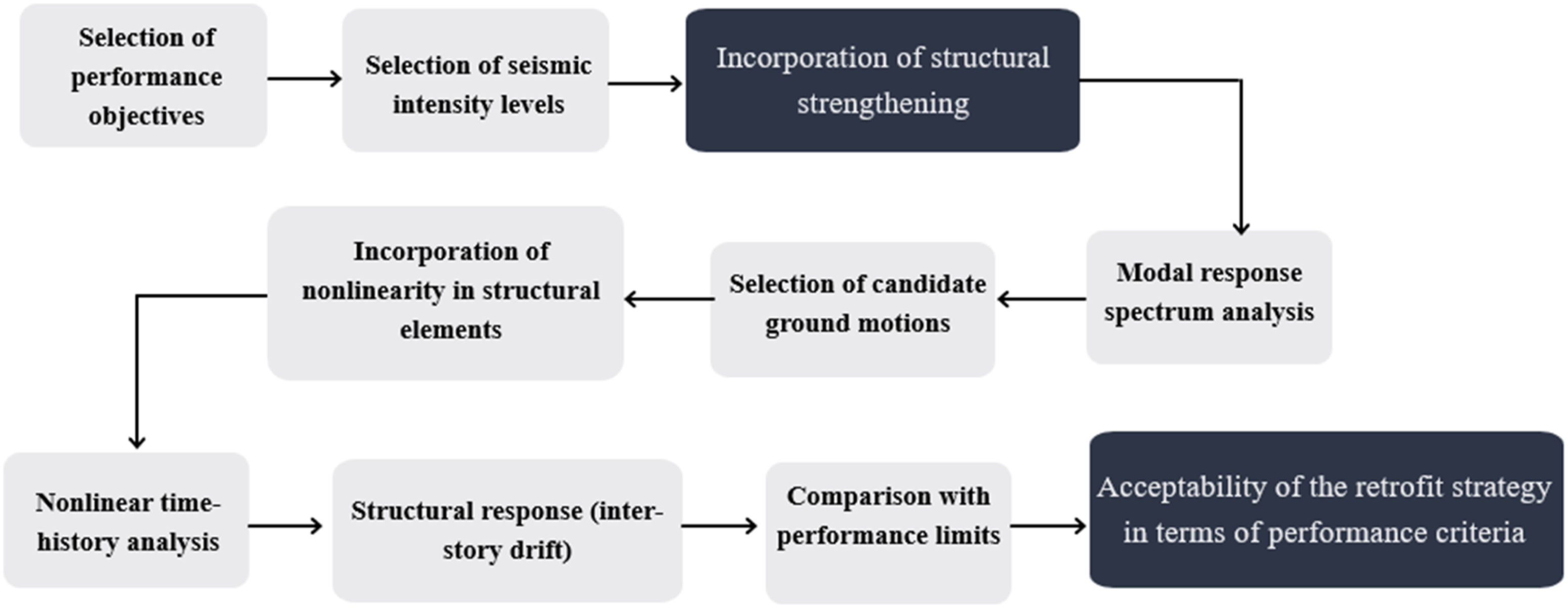
Performance objectives and associated inter-story drift limits (Gaxiola-Camacho et al., 2025; SEAOC, 1995).
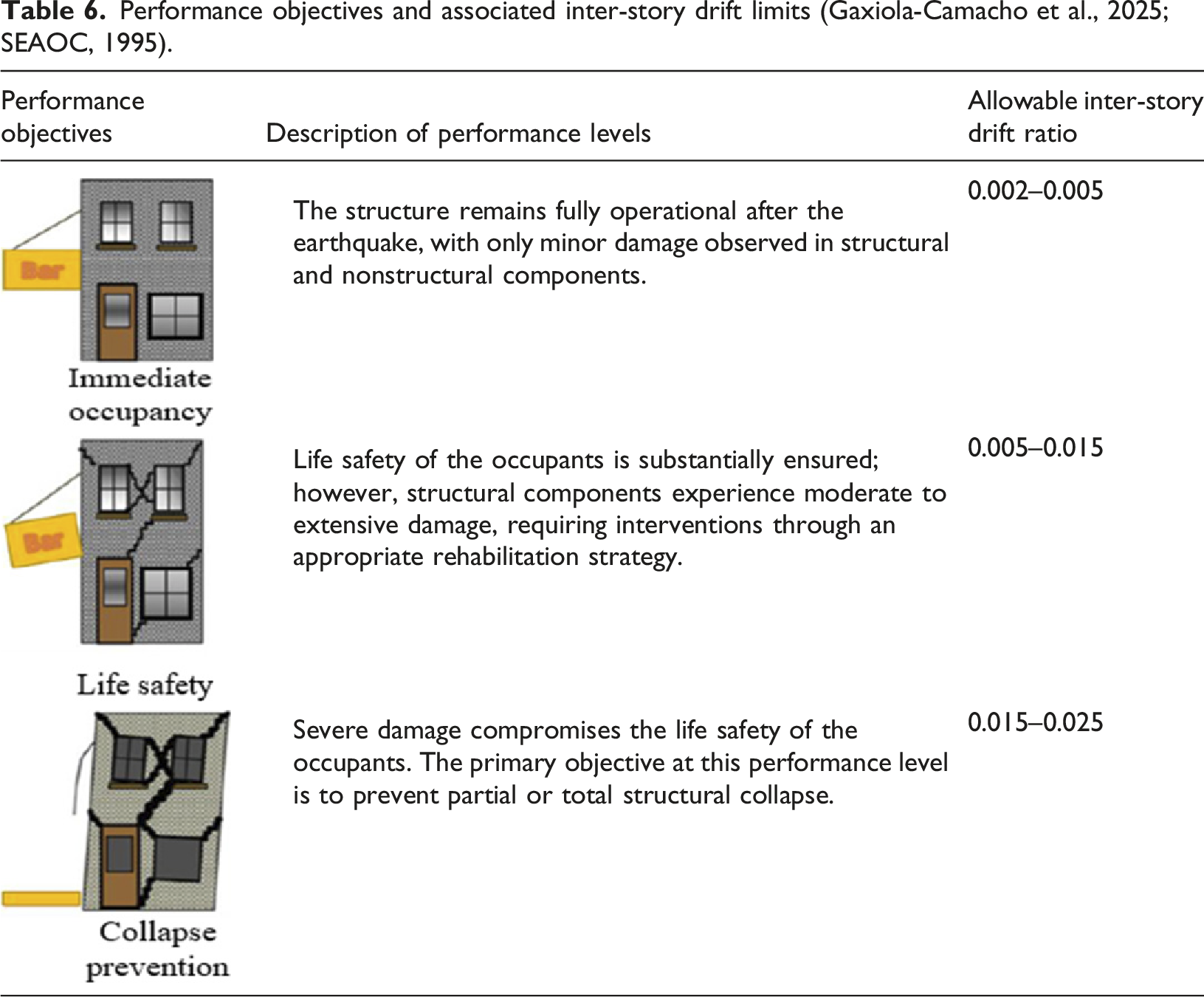
Based on this methodological framework, the seismic response of the structure is evaluated in terms of inter-story drift demands. For clarity and consistency, the results are presented directly in Figure 9, which illustrates the global structural response under the IO, LS, and CP performance levels. The structural behavior for each performance level is described in the following sections (5.1 to 5.3). In addition, representative illustrations of a BRB and an SLB are provided to visualize their behavior under the analyzed seismic intensities. Median inter-story drift profiles for as-built and retrofitted structures under IO, LS, and CP performance levels.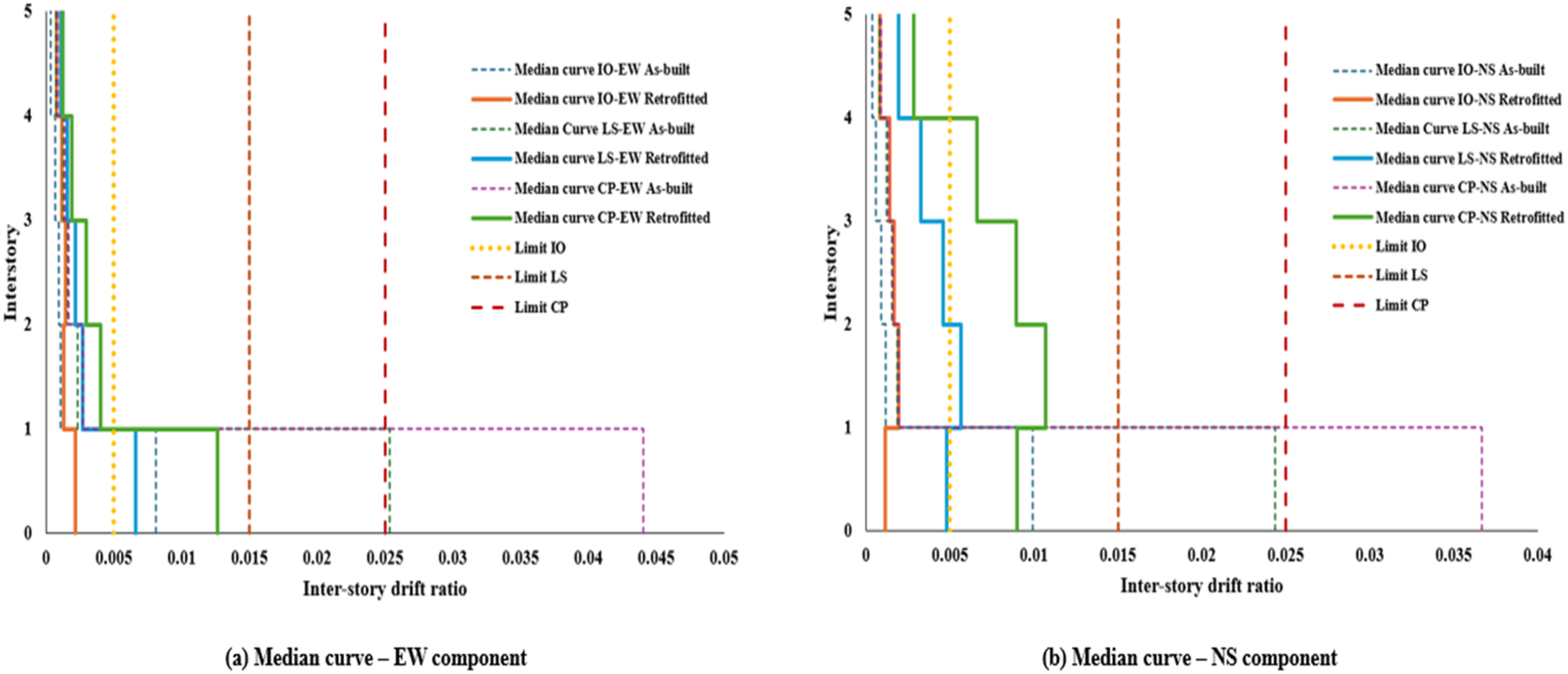
Immediate occupancy performance
The seismic response of the retrofitted structure at the IO performance level was evaluated through nonlinear time-history analyses using ground motions associated with a 72-year return period. The results are expressed in terms of inter-story drift ratios and summarized using the median response of the 22 records. As shown in Figure 9, the retrofit leads to a clear and consistent reduction in drift demand compared to the as-built configuration in both principal directions. The most significant improvement is observed at the ground story, where the original structure exhibited a pronounced concentration of deformation associated with a soft-story mechanism. Following the intervention, drift demands remain below the IO acceptance limits along the entire height, indicating a more uniform redistribution of lateral forces and a more balanced participation of the structural elements. From a directional standpoint, the NS component exhibits a smoother and more uniform drift profile, whereas the EW direction retains a slightly higher concentration at the first story; however, in both cases, the demand remains well within acceptable limits, with no evidence of localized amplification or unstable response patterns.
The local behavior of the retrofit system is illustrated in Figure 10 through representative hysteretic responses. The BRB located at the ground story exhibits stable and nearly symmetric hysteretic loops with moderate inelastic excursions and no noticeable strength of stiffness degradation, confirming early activation and effective energy dissipation even under relatively low seismic demand. In contrast, the SLB installed in the upper stories shows a predominantly elastic response, characterized by narrow hysteretic loops and limited energy dissipation, indicating that its contribution at this performance level is primarily associated with stiffness enhancement and deformation control. This response pattern confirms the intended hierarchy of the hybrid retrofit system, in which inelastic demand is intentionally concentrated in the designated dissipative elements while the remaining components contribute to stabilizing the global response. Overall, the results demonstrate that the retrofit strategy effectively mitigates the soft-story vulnerability and establishes a controlled structural response consistent with the performance objectives of the IO level. Representative hysteretic response at the IO performance level: (a) BRB at ground story; (b) SLB at upper level.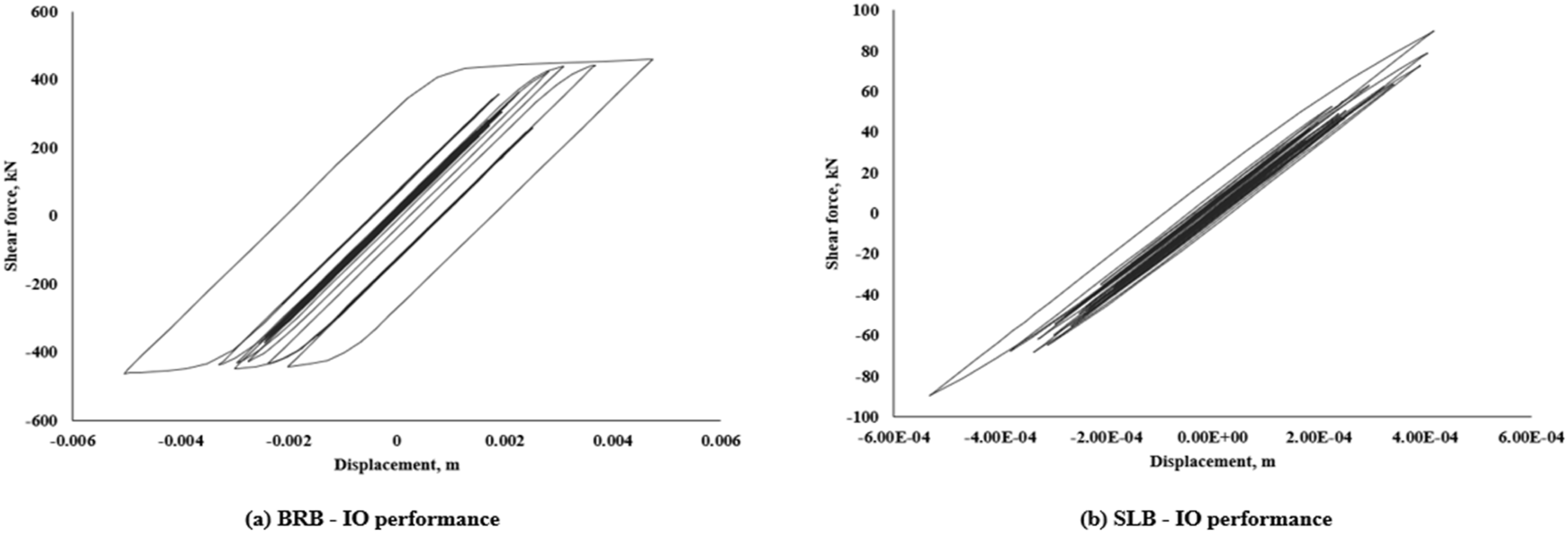
Life safety performance
Under a more demanding seismic hazard level associated with a 475-year return period, the retrofitted structure maintains a stable and well-controlled global response. As observed in Figure 9, the response trends identified at the IO level are preserved as seismic intensity increases. Inter-story drift demands remain below the LS acceptance limits throughout the height, indicating that the retrofit strategy sustains a favorable demand-to-capacity relationship under elevated excitation. Compared to the IO level, a moderate increase in deformation is observed, particularly at the ground story; however, no critical concentration or instability mechanism develops. The NS direction continues to exhibit a relatively uniform drift distribution, whereas the EW component shows a slightly higher concentration at the first story, consistent with the directional characteristics of the system yet still within safe margins.
The evolution of local behavior is illustrated in Figure 11 through representative hysteretic responses. At this performance level, the BRB develops wider and more pronounced hysteretic loops compared to IO, reflecting increased inelastic demand while maintaining stable cyclic behavior without noticeable degradation. This confirms its capacity to dissipate energy effectively under more severe loading. The SLB also exhibits increased participation relative to IO, with more evident inelastic excursions; however, its response remains less pronounced than that of the BRB, indicating that the primary energy dissipation mechanism continues to be concentrated in the ground-story devices. Overall, this response pattern confirms that the intended hierarchy of the hybrid retrofit system is preserved under higher seismic intensity, ensuring a controlled nonlinear response and preventing the development of undesirable damage mechanisms. Representative hysteretic response at the LS performance level: (a) BRB at ground story; (b) SLB at upper level.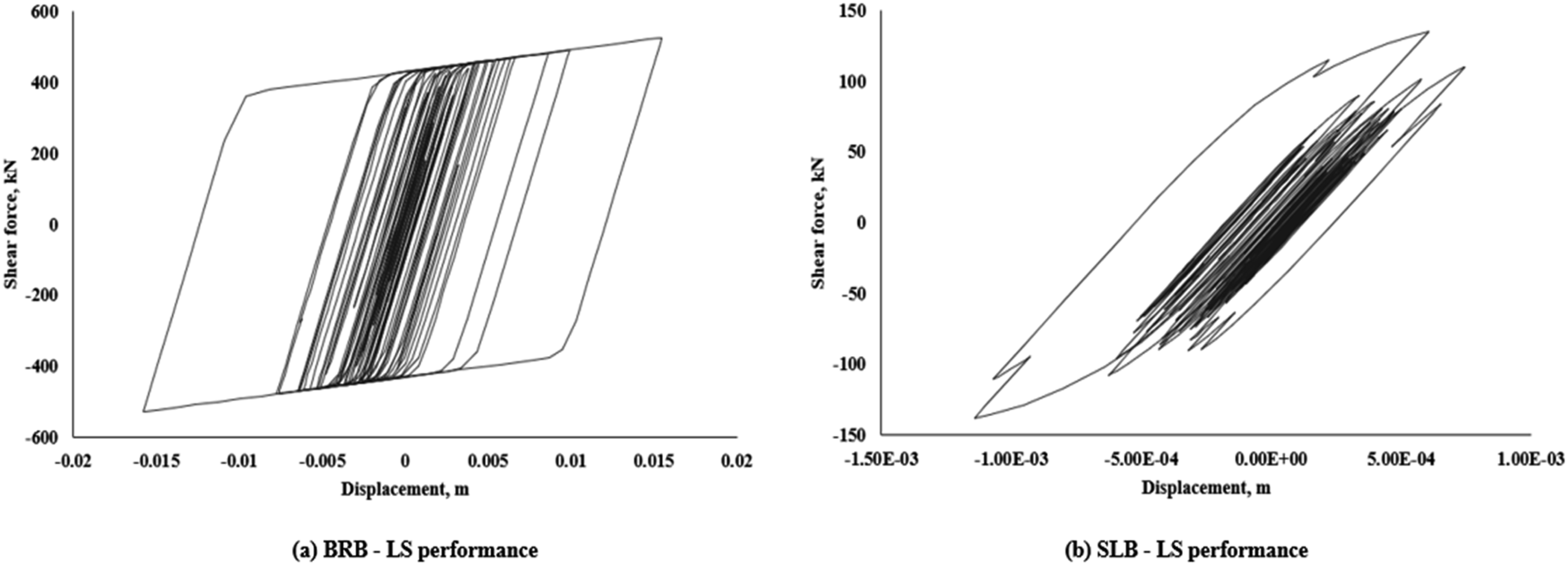
Collapse prevention performance
At the CP performance level, the structural response is governed by the system’s ability to sustain large inelastic deformations while preserving global stability. Rather than a simple amplification of the trends observed at lower performance levels, the results shown in Figure 9 indicate a transition toward a response regime controlled by the deformation capacity of the retrofitted system. Despite the severity of the seismic demand, the absence of abrupt drift localization or unstable deformation patterns suggests that the retrofit effectively suppresses the activation of a soft-story collapse mechanism. This behavior reflects a stable demand-capacity interaction in which the structure is able to redistribute inelastic deformations without triggering global instability.
The hysteretic response depicted in Figure 12 provides further insight into the governing mechanisms at this limit state. The BRB response is characterized by fully developed inelastic cycles, indicating that these elements act as the primary fuses of the system, accommodating extreme deformation demands while maintaining cyclic stability. In contrast, although the SLBs exhibit increased inelastic participation, their response remains secondary, confirming that energy dissipation is intentionally concentrated at the ground story. This differentiation is critical, as it prevents the spread of damage to the upper levels and preserves the integrity of the overall system. From a performance standpoint, the results demonstrate that the hybrid retrofit strategy does not merely reduce deformation demands, but more importantly, enforces a controlled failure mechanism, ensuring that the structure retains residual load-carrying capacity and avoids collapse under near-limit seismic conditions. Representative hysteretic response at the CP performance level: (a) BRB at ground story; (b) SLB at upper level.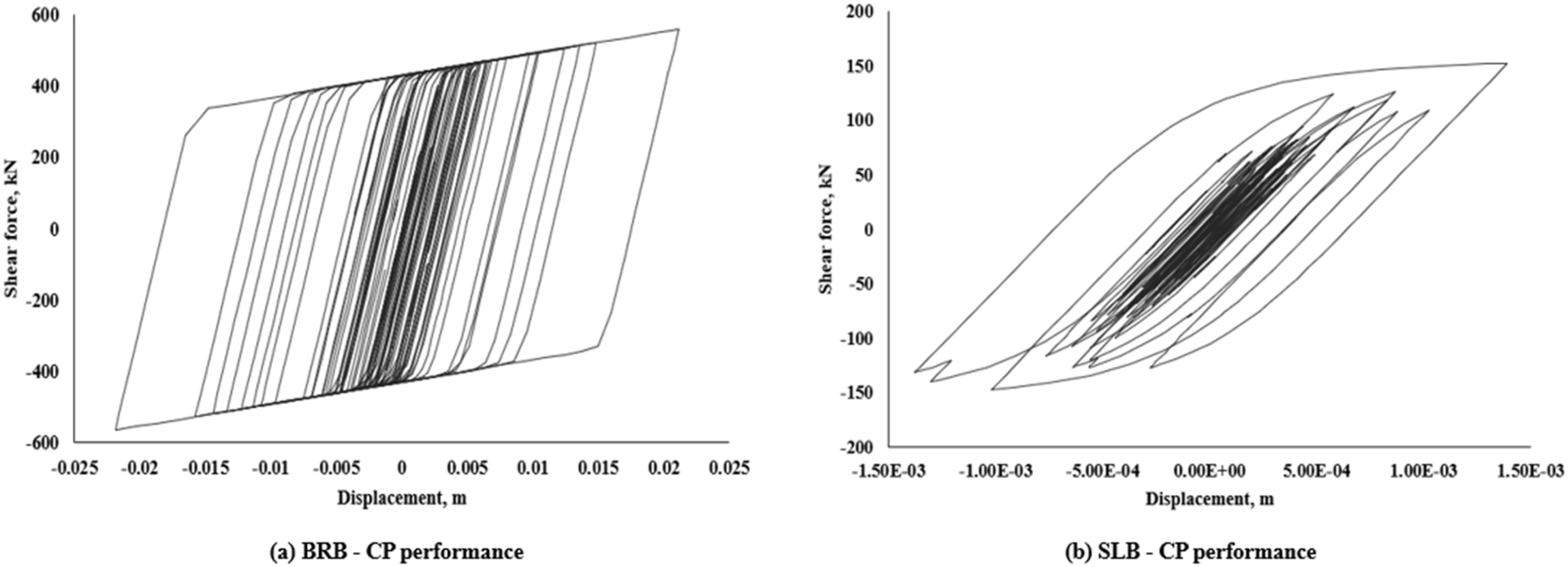
Probabilistic seismic performance assessment
For the quantification of the seismic behavior of the retrofitted building, a probabilistic framework embedded within the PBSD methodology was adopted. Unlike conventional deterministic PBSD evaluations based solely on prescribed drift limits, the proposed framework explicitly links nonlinear dynamic structural response to performance objectives through a probabilistic formulation, enabling a consistent estimation of the likelihood of exceeding predefined seismic performance targets. The methodological procedure began with the definition of the structural performance levels considered in this study, which are directly associated with different seismic hazard levels characterized by representative return periods. These performance levels establish the inter-story drift ratio threshold that delimit the evaluated performance states and constitute the foundation of the probabilistic risk assessment framework. Subsequently, based on nonlinear dynamic time-history analyses performed in ETABS v21 (ETABS, 2023), inter-story drift ratio values were extracted throughout the duration of each selected ground motion record. These responses were treated as statistically independent realizations of a continuous random variable representing seismic demand effects imposed on the structural system under specific hazard conditions. The resulting dataset was organized into histograms to statistically characterize the inherent variability of the inter-story drift response.
The histograms were then fitted to continuous theorical probability density functions in order to obtain a rigorous probabilistic representation of the structural response. Twelve candidate distributions were evaluated: Normal, Lognormal, Log-logistic, Gamma, Weibull, t Location-Scale, Stable, Birnbaum-Saunders, Extreme Value, Generalized Extreme Value, Logistic, and Kernel. The consideration of multiple distribution models mitigates the bias associated with adopting a single probabilistic assumption and enhances the robustness and objectivity of the statical characterization of structural demand (Monjardin-Quevedo et al., 2022).
Once the probability density function that best represents the structural response was identified, the probability of unacceptable performance, 

The risk associated with exceeding the seismic performance objectives was subsequently quantified through the structural reliability index, 

The probabilistic assessment focused on the first-story inter-story drift ratio, given that the primary objective of this study is to evaluate the structural safety level provided by the implemented seismic retrofitting system in a building characterized by a prior soft-story condition and excessive ground-floor deformation. The proposed methodology provides a dimensionless and widely recognized measure in probabilistic structural engineering for evaluating whether the adopted rehabilitation strategy achieves an acceptable safety margin under different seismic hazard levels. By explicitly incorporating the stochastic nature of seismic demand and nonlinear structural response, the framework advances beyond conventional deterministic performance checks and enables a quantitative risk-informed assessment consistent with PBSD principles.
In this study, a minimum reference value of β = 3.5 was adopted as an acceptable threshold, consistent with target reliability levels commonly associated with life-safety performance objectives and reliability calibration principles in structural design codes, as reported by (Jara et al., 2022). This value serves as a quantitative benchmark to determine whether the structure presents a non-negligible risk of exceeding the established seismic performance objectives. In this context, the inter-story drift ratio is adopted as the primary response parameter, as it is widely recognized as a key engineering demand parameter in displacement-based seismic design and performance-based frameworks, directly associated with structural and non-structural damage. Although the probability of exceedance provides a direct measure of seismic demand relative to performance limits, structural safety is more commonly expressed in practice through reliability indices. In general, target reliability levels associated with structural collapse or life-safety performance depend on design code provisions, the consequences of failure in terms of human life, and the nature of damage propagation, whether sudden or progressive. In this context, the use of the reliability index β allows for a consistent interpretation of seismic performance in probabilistic terms, independent of the specific response parameter considered.
It should be noted that the probabilistic framework adopted herein primarily accounts for record-to-record variability through the use of multiple ground motion pairs and the statistical characterization of structural response. However, uncertainties associated with material properties and modeling assumptions are not explicitly propagated. While this approach allows for a consistent and computationally efficient evaluation of retrofit effectiveness, it represents a limitation of the study. Future work should incorporate these additional sources of uncertainty to achieve a more comprehensive reliability-based assessment.
It should also be recognized that the probabilistic treatment adopted herein assumes appropriate statistical independence among the extracted inter-story drift ratio samples obtained from the nonlinear time-history analyses. Although these response values may exhibit some degree of temporal autocorrelation, they were treated within a practical probabilistic approximation intended to characterize the variability of structural response under seismic excitation. This assumption represents an additional methodological limitation of the current framework. Future developments should incorporate alternative sampling strategies based on maximum response quantities extracted from independent seismic records in order to reduce potential temporal correlation effects and improve the statistical robustness of the reliability assessment.
It is important to note that the probabilistic assessment in this study does not rely on conventional fragility curve formulations. Instead, exceedance probabilities are directly estimated from the statistical characterization of nonlinear dynamic response obtained from multiple ground motion records. The use of multiple candidate probability distributions, together with goodness-of-fit tests such as the chi-square criterion and p-value verification, allows for a robust and objective selection of the most representative probabilistic model. This approach avoids additional assumptions inherent to predefined fragility functions and provides a data-driven representation of seismic demand variability, while maintaining consistency with reliability-based performance assessment frameworks.
Probabilistic immediate occupancy assessment
The structural reliability of the retrofitted building at the IO performance level was evaluated using seismic records associated with a 72-year return period. The probabilistic assessment was conducted by fitting statistical distributions to the inter-story drift demand and computing the corresponding reliability index (β) with respect to the IO drift threshold.
As shown in Figure 13, the retrofit leads to a substantial improvement in structural reliability compared to the original condition. The mean reliability index increased from = 1.46 to β = 7.76 in the East-West (EW) direction and form β = 1.30 to β = 7.65 in the North-South (NS) direction, representing a transition from a non-negligible probability of exceedance to an extremely low-risk condition, well above the commonly accepted threshold of β = 3.5. Effect of seismic retrofit on structural reliability across performance levels.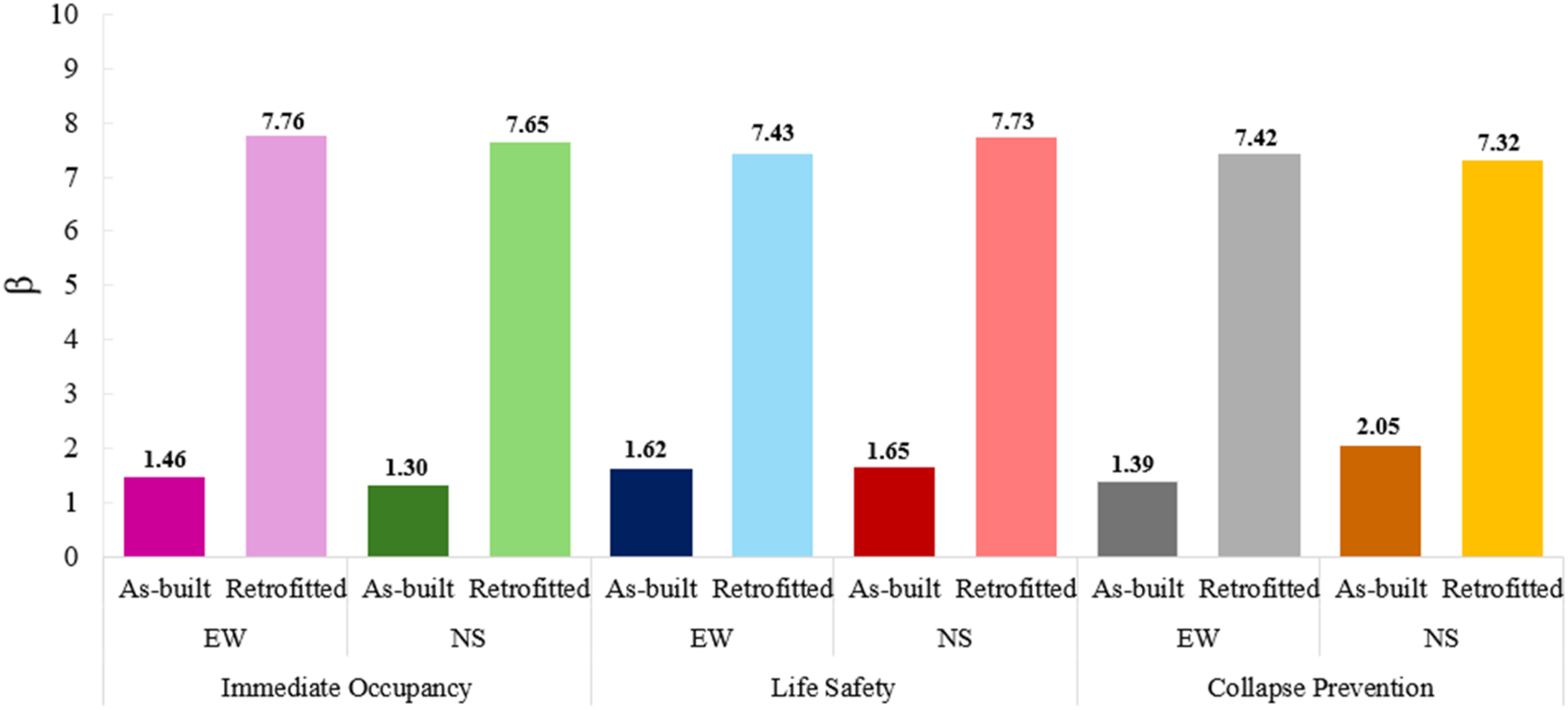
Reliability indices in the range of β ≈ 7.5–8.0 correspond to probabilities of exceedance on the order of 10-14 to 10-15, indicating that the retrofitted structure is highly unlike to exceed the IO drift limit under frequent to moderate seismic demand. Consequently, the building is expected to maintain operational functionality without requiring significant structural intervention. From a statistical standpoint, the Kernel distribution provided the most consistent representation of the inter-story drift demand across the analyzed records, supporting the robustness of the probabilistic estimation of the reliability indices.
These results confirm the effectiveness of the retrofit in maintaining the soft-story vulnerability and improving the reliability performance at the critical first-story level in both principal directions, which governs the seismic response of this type of structural configuration.
Probabilistic life safety assessment
The probabilistic reliability of the retrofitted structure at the LS performance level was evaluated using seismic records associated with a 475-year return period, representing a significantly higher seismic hazard intensity. At this performance level, the objective is to prevent structural instability and life-threatening damage under severe earthquake conditions.
As shown in Figure 13, the retrofit results in a substantial improvement in structural reliability compared to the original condition. The mean reliability index increased from β = 1.62 to β = 7.43 in the EW direction and from β = 1.65 to β = 7.73 in the NS direction, indicating a transition from a condition with non-negligible probability of exceedance to a highly reliable performance well above the commonly accepted threshold of β = 3.5.
Despite the higher seismic demand associated with the 475-year return period, the computed reliability indices remain within the range of β ≈ 7.4–7.7. This behavior is attributed to the higher deformation capacity associated with the LS performance level, which maintains a favorable probabilistic relationship between seismic demand and allowable limits. The results indicate that the retrofit intervention not only enhances structural capacity at the critical level but also stabilizes the demand-to-capacity balance under increased seismic intensity. The statistical characterization of the inter-story drift demand further supports the consistency of the probabilistic estimates, showing that, in agreement with the IO performance level, the Kernel distribution provides a stable and adequate representation of the response across the analyzed records.
Overall, the consistently high reliability indices confirm that the implemented retrofitting strategy effectively mitigates the soft-story vulnerability at the ground floor, ensuring that the structure satisfies the LS performance objective with a substantial safety margin under severe seismic excitation.
Probabilistic collapse prevention assessment
The probabilistic reliability of the retrofitted structure at the CP performance level was evaluated using seismic records associated with a 975-year return period, representing an extreme seismic hazard scenario. At this level, the primary objective is to prevent global instability and preserve residual load-carrying capacity under rare but high-intensity earthquake events. As shown in Figure 13, the retrofit results in a substantial increase in structural reliability compared to the original condition. The mean reliability index increased from β = 1.39 to β = 7.42 in the EW direction and from β = 2.05 to β = 7.32 in the NS direction, indicating a transition from a condition associated with significant collapse risk to a highly reliable structural response, well above the reference threshold of β = 3.5.
In contrast to the IO and LS levels, the CP scenario is governed by extreme demands, where structural response is more directly linked to global stability. In this context, the results indicate that the retrofit effectively limits the development of instability mechanisms, maintaining a clear separation between seismic demand and ultimate system capacity. This behavior reflects a controlled nonlinear response even under near-collapse conditions.
From a probabilistic standpoint, the statistical characterization of the inter-story drift demand confirms the consistency of the adopted framework. As observed in the IO and LS performance levels, the Kernel distribution provides the most representative fit to the response data, reinforcing the reliability of the estimated exceedance probabilities and corresponding reliability indices. Overall, these results demonstrate that the proposed hybrid retrofit strategy effectively reduces collapse risk and ensures a stable structural response under extreme seismic demands, satisfying the CP performance objective with a substantial safety margin.
Figure 13 summarizes the comparison of the mean reliability indices (β) before and after retrofit across all performance levels and both principal directions, clearly highlighting the effectiveness of the proposed retrofit strategy.
Conclusions
Based on the comprehensive analytical results presented in this study, the following main conclusions are drawn:
The nonlinear dynamic analyses indicate that the combined implementation of BRBs at the ground story and SLB dampers at the upper levels effectively controls lateral deformation demand along the building height. The strengthening strategy mitigates drift concentration at the critical ground level and promotes a more uniform deformation distribution throughout the structure.
The inter-story drift profiles reveal a substantial reduction in deformation demand at the ground story, while maintaining stable and controlled drift patterns in the upper levels. The inclusion of SLB devices contributes to managing deformation redistribution and prevents unintended drift amplification in the masonry-confined stories, resulting in a balanced global response.
The reliability-based assessment yields consistently elevated
The hysteretic responses corresponding to the IO, LS, and CP levels exhibit a clear and intentional hierarchy of energy dissipation. The BRBs act as the primary inelastic energy-dissipating mechanism, maintaining stable cyclic behavior without abrupt strength deterioration, whereas the SLBs provide complementary stiffness and controlled inelastic participation as seismic demand intensifies. This interaction confines inelastic action to the designated dissipative elements and preserves overall structural stability.
The Kernel distribution adequately represents the probabilistic behavior of inter-story drift, enabling consistent estimation of structural reliability indices across different seismic performance levels. The proposed probabilistic approach therefore constitutes a suitable framework for assessing the effectiveness of seismic rehabilitation strategies within a performance-based context.
Finally, the probabilistic evaluation performed in this study was primarily concentrated on the ground story, as this level governed the retrofit intervention and the soft-story response mechanism. Although the proposed hybrid retrofit strategy effectively reduced inter-story drift demands, the incorporation of BRBs and SLBs may also influence the redistribution of seismic forces within the structural system, potentially increasing local demands in certain original structural elements. Future research is therefore envisaged to extend the reliability-based assessment to the entire structure in order to capture possible force amplification effects, local nonlinear demands, and demand redistribution throughout the building height. Furthermore, the comparative implementation of alternative retrofit strategies within a probabilistic framework would provide valuable insight into the relative efficiency and structural implications of different seismic strengthening solutions.
Footnotes
Acknowledgments
The authors gratefully acknowledge the Autonomous University of Sinaloa for providing the facilities and institutional support necessary for the development of this research. The first author gratefully acknowledges the financial support received for postgraduate studies from the SECIHTI (previously known as CONAHCYT). The grant number is 934344, corresponding to the financial support received by the first author as a scholarship.

Funding
The authors disclosed receipt of the following financial support for the research, authorship, and/or publication of this article: Consejo Nacional de Humanidades, Ciencias y Tecnologías; 934344.
Declaration of conflicting interests
The authors declared no potential conflicts of interest with respect to the research, authorship, and/or publication of this article.