




Abstract

© Press Association
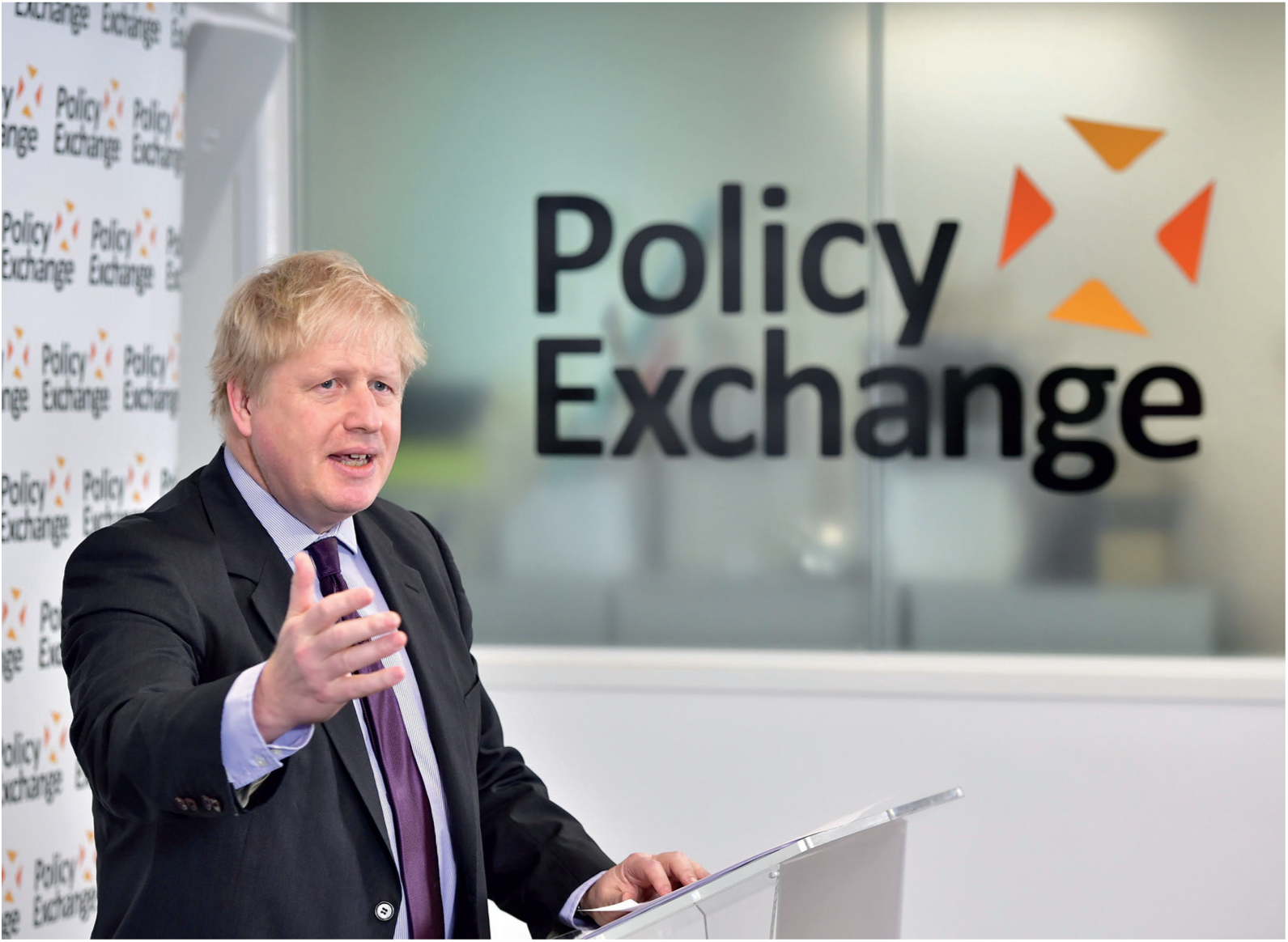
The UK’s vote to leave the EU was as much a product of divisions within the Conservative party as wider concerns about Britain’s relationship with Europe.
Foreign and domestic policy rarely exist in isolation. When Boris Johnson told a parliamentary evidence session that Nazanin Zaghari-Ratcliffe, a British citizen detained in Iran accused of spying, was ‘teaching journalism’ in Tehran the Foreign Secretary probably assumed he was speaking solely to a UK audience, and a rather small one at that. But Johnson’s remarks were seized on by the Iranian government, and a running diplomatic problem suddenly became significantly more acute, leading to an escalating war of words between London and Tehran. The interaction between domestic politics and foreign policy-making is not confined to the status of British citizens abroad. The UK’s most pressing policy concern – Brexit – throws into sharp relief how domestic concerns can so often shape foreign policy agendas. Indeed, to fully understand the UK’s vote to leave the European Union in 2016, we need to go back into history and explore how this major foreign policy shift has arisen from within the machinations of internal British politics and consequently impacted on the global political environment. And to do this we need to start with international relations theory.
Post-Cold War international relations
The ‘realist’ theory of international relations advocates that a regime’s internal and domestic dynamics are not relevant in determining its actions within the international arena. Instead, most realists argue that a state’s foreign policy is primarily shaped by either ‘Hobbesian’ national self- interest, or instead in the neo-realist tradition by the international structure. However, ‘liberal’ IR theorists alternatively emphasise the significance of internal political factors and structures in shaping a state’s behaviour in foreign policy matters. They argue that liberal-democratic states with regular internal election cycles and public accountability generate enhanced mutual cooperation in foreign affairs. By acknowledging the public mood at domestic level, liberals identify a different type of behavioural ‘predictability’ among states, with cooperation creating international ‘norms’ and procedures for wider collective benefit, in the form of institutions such as the United Nations and European Union.
Within this context, since the end of the Cold War (circa 1990-91), there have been significant shifts in the dynamics between domestic and foreign affairs. From a specifically British context, its own foreign policy direction has reacted to various global events, namely the vacuum created by the Soviet Union’s sudden demise, the ascent of American unipolarity, and the rise of other notable powers such as the EU and China. However, of equal importance have been various internalised factors within UK domestic and party politics, often reacting to issues arising from EU integration and associated policies, leading to social tensions and public reaction that has fuelled a steady growth of Euroscepticism.
John Major’s administration
As the UK’s first post-Cold War British Prime Minister, John Major faced various complex foreign policy issues between 1990-97, notably ongoing EU integration, the first Gulf War of 1990 following Iraq’s invasion of Kuwait, cross-European tensions arising from the Yugoslav civil war (1992-95), and often testing relations with the USA. Major also instigated the early stages of the Northern Irish peace process, which had significant foreign policy implications with both the Americans and the Republic of Ireland, in particular. However, in domestic terms, Major was weakened by inheriting office from another leader amidst a parliamentary cycle, and even after winning power in his own right was restricted by a small parliamentary majority. This vulnerable domestic position limited his capacity for effective international diplomacy.
The issue of European relations was arguably the dominant one of the Major premiership, and some have described it as a ‘fault-line’ that pervaded and destabilised it. In many ways therefore, the troubled European policy developments symbolised the clear connection between this administration’s particular domestic circumstances and its subsequent foreign policy, and the first steps to Brexit can be traced back to this period in particular. The Maastricht Treaty, signed in early 1992, saw the European Economic Community officially become the European Union, and its more federalist and integrationist image from this date heightened existing concerns among Eurosceptics on the Conservative backbenches. Major was re-elected in April 1992, but only with a reduced parliamentary majority of 21, which weakened his status both at home and within the international community, and which created problems in formally implementing the Maastricht Treaty into law. A bigger majority would certainly have strengthened his capacity for stronger leadership on European policy matters, and after the UK’s shambolic exit from the Exchange Rate Mechanism (ERM) in September 1992, the mood towards Europe among some Conservative MPs hardened further. A series of prolonged parliamentary debates on Maastricht followed throughout 1992-93, and Major’s authority was further damaged by various rebellions on this issue. In late 1994, he withdrew the ‘whip’ from eight Conservative rebel MPs due to their continued opposition to EU policy, which adversely affected his domestic political credibility alongside his ability to negotiate and manage relations with the European Union.
These ongoing Europe-related difficulties exacerbated pre-existing Conservative internal political divisions and were highlighted as one of the most significant factors in the party’s catastrophic 1997 General Election performance. This strongly suggests that domestic political factors, arising from Major’s weak status in Parliament, were a pivotal reason for his European policy struggles, and which consequently further undermined his position among increasingly restless MPs, the British public, and the wider international community. This scenario created the ideal conditions for burgeoning British Euroscepticism, with the United Kingdom Independence Party (Ukip) forming in 1993. A Prime Minister with a stronger parliamentary majority could have performed better in foreign affairs, not just EU matters, as evident in Tony Blair’s bolder approach after 1997. In short, a weak domestic position adversely affected Major’s ability to conduct effective foreign policy to maximise the country’s interests. This created tensions (both internal and external) which would have significant implications for Britain’s role within the international community and its future membership of the European Union in particular.
The New Labour era
Major’s beleaguered government, crippled by EU policy matters, was crushed by Tony Blair’s Labour landslide of 1997. This development significantly changed the UK’s political landscape, with Blair’s administration explicitly pledging domestic ‘modernisation’ and improved relations with Europe, while espousing an ‘ethical foreign policy’. The unprecedented parliamentary majority of 179 provided Blair with a position of political strength that could deliver effective statecraft like few governments before or since, and he operated with greater authority in both domestic and foreign policy spheres. In the foreign domain this was particularly evident in areas where Major had struggled to make significant political progress – most notably cultivating more constructive relations with both the EU and the USA. Regarding the delicate issue of Europe, Blair embraced a more positive approach and signed key treaties at Amsterdam (1997) and Nice (2000), which reflected a relatively constructive phase of UK-EU relations; with Blair’s improved focus aligned to his stronger domestic position and Europhile perspective. However, initial proposals to join the European single currency (Euro) and then an EU Constitution were abandoned due to negative public opinion. Blair consolidated Major’s initial diplomacy in relation to Northern Ireland, and improved relations with the EU assisted this particular policy area, culminating in the landmark 1998 Good Friday Agreement.

Unlike Major, Blair’s stronger domestic position shaped more consistently positive relations with US President Bill Clinton, and this was also influenced by their ‘modernising’ tendencies, with both seeking to abandon ‘leftist’ ideology and embrace the ‘radical centre’. Until Clinton’s departure from the presidency in early 2001, Blair’s administration witnessed a relative flourishing of Anglo- American relations, although tensions existed over the Balkans region, with Blair more enthusiastic for military intervention in the late 1990s to stabilise the aftermath of the Yugoslav civil war. Blair expressly sought to consolidate Britain’s historic ‘special relationship’ with the American superpower, and he maintained a close proximity to the foreign policy agenda of President George W. Bush (from early 2001). This was despite Bush’s Republican affiliation and ‘neo-conservative’ view of foreign affairs. Nevertheless, Blair consistently supported the post-9/11 ‘war on terror’ narrative and specifically the military endeavour in Iraq. Consequently, even with a divided public opinion and discontent among his own party, in early 2003 Blair won Parliament’s approval for the use of British military force in Iraq. This was despite a rebellion of 139 Labour MPs and resignations of government ministers, yet his dominant domestic parliamentary position saw him prevail. This episode further illustrated that a Prime Minister’s specific domestic circumstances can determine their pursuit of a specific and often controversial course of foreign policy.
Yet the failure to find Iraqi ‘weapons of mass destruction’ (WMDs) and the chaotic post-war aftermath triggered a significant breakdown of trust between the British government and the wider public, with public opinion subsequently reflecting a sense of unease about the justification for war, and a distrustful mood towards the governing ‘elite’ took hold. Blair’s ‘liberal interventionist’ support for the Iraq War ultimately saw him prioritise the transatlantic alliance with the USA over Europe, and this consequently further fractured relations between Britain and most of the EU, with the prominent Franco-German axis opposed to the conflict. Such dynamics further impacted on broader British public opinion and its increasingly challenging attitude regarding relations towards the EU on a range of policy issues. Iraq eroded Blair’s reputation to such an extent that it hastened his departure from office in summer 2007, with his successor Gordon Brown’s major foreign policy priorities being to minimise the Iraq conflict’s damaging legacy and to constructively manage relations with the ever-challenging EU. Europe was an issue that increasingly antagonised UK public opinion and facilitated the steady rise of parties such as Ukip. EU-related policy controversy again surfaced with the Lisbon Treaty of 2007, which Brown cautiously supported, although by this stage he was operating with a relatively small parliamentary majority and reduced authority having not been elected Prime Minister in his own right, while facing a revitalised opposition under David Cameron which was demanding a referendum on the Lisbon issue. Brown’s existing domestic vulnerability was exacerbated by the globalised economic crisis of 2008-9, culminating in his general election defeat in 2010. With an evidently growing mood of public distrust towards ‘government’ in general, the longer-term connections to the eventual Brexit vote were clearly now set in motion.
Conservatives and Brexit
David Cameron headed the first Conservative administration for 13 years, yet was politically restricted by heading a coalition government that was reliant on formal support from the minority partners, the Liberal Democrats. With the divisive issue of Europe having an increasingly high-profile, Cameron led an increasingly Eurosceptic party that due to specific electoral circumstances was aligned in political partnership with enthusiastic Europhiles. This was a recipe for political instability, and perhaps explains his early decision to abandon the previous high- profile pledge to hold a referendum on the Lisbon Treaty, causing much anger both within his own party and elements of public opinion, and further facilitating the steady growth of Ukip and broader public Euroscepticism. While this could be viewed as a pragmatic reaction to managing pro-European Liberal Democrats within his Cabinet, an internalised party backlash appeared in late 2011, when 81 Conservative MPs voted to hold a referendum on EU membership, although an actual national public vote appeared highly unlikely under the coalition arrangement. This instigated the beginning of a ‘slow-burning’ fuse, whereby an issue with major implications for both domestic and foreign policy would progressively undermine Cameron’s leadership.
Ukip’s anti-EU agenda generated sufficient public appeal to finish second in the 2009 European Elections before topping this national poll in 2014, an unprecedented achievement for such a recently established party. The party’s capacity to erode Conservative support remained a significant and recurring domestic problem for Cameron’s leadership between 2010-15, and its growth formed a key part of his broader electoral strategy. By the time of the 2015 General Election, opinion polls indicated that Ukip was a potent electoral threat to many Conservative MPs, with the potential of either taking Conservative seats directly, or more likely, attracting enough traditional Conservative voters to enhance Labour’s chances in marginal constituencies. On this premise, Cameron pledged to hold a referendum on EU membership if he was re-elected in May 2015, and in making this manifesto commitment (while Labour did not), he boosted Conservative prospects amidst a close-fought election campaign. Cameron consequently achieved a narrow parliamentary majority of 12, securing the first Conservative parliamentary majority in 23 years despite Ukip’s vote reaching 12.6 per cent. Yet the Prime Minister had committed himself to holding a referendum on Britain’s continued EU membership, a foreign policy issue with potentially huge domestic repercussions. Although in a slightly stronger position than 2010, in domestic terms Cameron remained relatively weak after 2015, with a small parliamentary majority and increasingly vulnerable to his own Eurosceptic MPs who viewed the EU with escalating hostility.
Theresa May’s emergence as UK Prime Minister in July 2016 was a further reflection of these explicit links between foreign and domestic politics, as David Cameron’s political demise was explicitly caused by the EU referendum result of 23rd June 2016. The narrow ‘Leave’ verdict was largely not anticipated by most of the political and media classes, and it sealed Cameron’s political fate. Subsequently, this volatile foreign policy issue, which had impacted on British politics for a generation, now appeared to have a decisive outcome, and Cameron resigned with his reputation irrevocably damaged. Similar to Blair and Iraq, Cameron’s initial modernising tendencies became distorted by external ‘foreign’ pressures, although in his case emanating from Europe; an ironic development given that it was a policy area he’d once claimed was a divisive waste of the party’s time. Within these dramatic circumstances, Theresa May’s priority was to implement Brexit, which has escalated into an overwhelming political priority to eclipse all other policy matters in its wake.
Consequently, May’s premiership has found this dominant Brexit policy narrative an extremely difficult one to deal with. She has subsequently faced significant challenges in formulating and devising Britain’s future global role with a range of international bodies and institutions, while the counterbalance of the Anglo-American relationship has been instilled with unexpected friction due to the unpredictable actions of President Trump. As an unelected Prime Minister, May desired to strengthen her position regarding such critical foreign policy areas, (specifically relating to Brexit negotiations), and this resulted in what proved to be a catastrophic domestic gamble. In calling an early and unnecessary general election for June 2017, May unexpectedly lost her parliamentary majority. This domestic catalyst emanated from a volatile and unpredictable public mood and a party split by Brexit. This consequently weakened her position vis-a-vis British public opinion, while also undermining her authority over her party and Cabinet, and likewise her image in the wider international community. These negative side-effects were the polar opposites of what she hoped to achieve in calling the election. Her administration is subsequently far less secure or stable regarding ongoing EU diplomatic negotiations, and this has generated a vague and unpredictable vision of Brexit as the departure date of March 2019 looms closer on the horizon. These recent and dramatic political events are further testimony to the fact that the connections between domestic and foreign politics have been clearly evident throughout this prolonged process of European integration over many years dating from the end of the Cold War, and such dynamic interactions between these different spheres has undoubtedly driven matters towards the inexorable endgame of the UK’s departure from the European Union.
Footnotes
Ben Williams is a lecturer at the University of Salford.