




Abstract
Modern technologies and World Wide Web open new opportunities for smooth learning process making education more accessible and flexible. Digitalization of modern society has resulted in the transformation of all levels of education leading to the transition from mass education to high quality individual training. In modern context the quality of education is viewed as the most important indicator of the institutions’ competitiveness on the market of educational services. The quality of education is the priority of states’ policy agenda around the world. The paper considers “shadow education” and private tutoring, as one of its forms. The term “private tutoring” is defined in the article based on the analysis of legislative and regulatory sources that allow to provide tutoring services using e-learning tools and technologies in compliance with the legal framework of the Russian Federation. The legitimacy of the notion of “private tutoring” in the legislation of Russia is justified in the research. An overview of sites offering tutoring services is given with the comparison of price range, depending on the academic subject and regions of Russia. Besides, the advantages and disadvantages of private tutoring are outlined. The results of the study showed that private tutoring services are in high demand due to two main factors: the insufficient level of public/private education received and the inconsistency in knowledge obtained and the requirements of national and international labor markets. The paper also contains the review of popular educational platforms and online learning tools used by private tutors as well as pros and cons of their application. The results of the questionnaire offered to the academic staff of the V.I. Vernadsky Crimean Federal University, the Sevastopol State University, and the Crimean Fevzi Yakubov Engineering and Pedagogical University show that most of educators practice online tutoring and consider it to be their additional professional activity.
Introduction
The state policy of the Russian Federation is based on the recognition of the principle of priority of education (Federal Law on Education in the Russian Federation, 2012). One of the main tasks is to improve the quality of education, which is impossible without reducing the gap between the learning needs of students (and parents respectively) and the ability of educational institutions to respond to these demands.
In education, quality is regarded nowadays as the standard which the “product” must be up to, the degree of the learning objectives and outcomes correlation. In the context of globalization and reformation of the world educational systems, the quality of learning process is the most important indicator of the competitiveness of educational institutions of various levels on the educational services market.
Firstly, according to Article 43 of the Constitution of the Russian Federation, “everyone has the right to education”. Besides, any Russian citizen is entitled to have access to free preschool, primary and secondary education, secondary vocational education, as well as higher education (on a competitive basis) in state institutions (The Constitution of the Russian Federation, 1993 with Amendments Adopted at National Voting on 01 July 2020).
Secondly, the absolutization of quantitative indicators, a formal approach to the implementation of the democratic principles of education accessibility, a reduction in the dropout rate of students as well as the strive for proper academic performance have turned reasonable measures into their antipode, leading to the irresponsible attitude of the educational process participants to their duties with the absence of state control over the quality of education. As a result, “shadow education system” has emerged (Zharko, 2016).
In the context of education digitalization which has been considerably enhanced by the development of technologies and boosted by COVID-19 pandemic, “shadow education” has shown a gradual increase too. Teaching in a new learning environment is the most important discussion issue nowadays. Researchers study psychological, pedagogical, and organizational aspects of the new educational formats. The primary focus is on the role of a teacher and a learner in online learning; the differences between face-to-face classes and teaching online procedure; the role of an e-tutor in online education and how the demands of online learning affect the way both teachers and learners perceive the teaching and learning process (Samoylenko et al., 2021a, 2021b). Transition of education to its remote mode at the organizational level has led to taking serious decisions, which have not been substantiated and still require research and discussion. Like many higher educational institutions, Crimean universities have been hit by the outbreak of global pandemic. The lockdown in the the Sevastopol State University and other institutions has emptied campuses, changing the mode the students access the courses and the work of academicians across all disciplines. As a result, all participants of the educational process feel unsatisfied with the quality of education comparing it to the traditional (face-to-face) style. Professors and students seek for other ways to attain their educational and professional goals.
Literature review
Shadow education as activities aimed to improve students’ academic performance at a formal school has different definitions and conceptualizations (Győri, 2020). The term relates to “private tutoring” (used in English speaking societies) and varies in different countries: the Japanese use “Juku” for tuition centers, in the United Kingdom such centers are called “Crammers”; in Greece they are called “Frontistiria”, and “dersane” in Turkey (Subedi, 2018). The three common aspects in private tutoring include tutoring in academic school subjects, additional provision besides mainstream schooling, and the intention of financial gain (Bray, 2013). The supplementary tutoring may be received individually or in groups (sometimes in large classes) after school hours, and/or at weekends and public holidays, and/or during school vacations while the content may be linked to the school syllabus or may have additional material (Zhang and Bray, 2020).
Zhang and Bray (2020) state that before 1999 there had been some scattered national and subnational literature on the shadow education, while the starting point of the global study of the phenomenon was Mark Bray’s research published in 1999 by UNESCO’s International Institute for Educational Planning (IIEP), and reviewed later.
Mark Bray stresses the appropriateness of the term (shadow education) reasoning that, “first, private supplementary tutoring only exists because the mainstream education system exists; second, as the size and shape of the mainstream system change, so do the size and shape of supplementary tutoring; third, in almost all societies much more attention focuses on the mainstream than on its shadow; and fourth, the features of the shadow system are much less distinct than those of the mainstream system” (Bray, 2013).
Mark Bray describes the current state of the shadow education system as intensification of supplementary private tutoring (Zhang and Bray, 2020). Evident at all levels of education systems all over the world it blurs geographical boundaries. Shadow education is present in most parts of Europe, emerged in the Nordic states where it had previously been absent, has seen recently significant shifts in Asia, North America and Australasia.
But what makes shadow education a phenomenon is not the presence of some specific elements like extramural private for fee education (Győri, 2020). This type of education is regarded as part of the whole dynamic ecosystem of education and society. Only with the emergence and spread of formal, public and national universal education systems, shadow education has become in massive demand.
Some identified commonalities consider shadow education as a global phenomenon with changing nature. As societies and states become more competitive, partly due to globalization, school systems also become more sophisticated and flexible that in turn expands the demand for tutoring (Bray, 2013).
Wei Zhang and Mark Bray mention that over the last two decades the research brought more depth and stronger public awareness of cultural differences (Zhang and Bray, 2020). From initial mapping and identification of factors shaping demand appeared works on ecosystems with comprehensive social and economic analyses along with focus on research methods. The agenda ahead will need to keep up with changing paradigms, develop stronger interdisciplinarity to explore additional issues, and pay attention to elaborating definitions and introducing modern methods.
The prospective patterns to track will also include increasing externalization of schooling and parenting, blurring boundaries between the learning spaces of schooling and the design of new learning environment, enhancing shadow education and distance learning.
Another important question is the relationships between shadow and school curricula as some tutoring programmes are built on school curricula, while others are authentic. Also, shadow education can reinforce the values and stresses of the school curriculum or can focus on what is neglected or missing in school curriculum.
Many researchers stressed the need for meaningful interaction and professional discourse concerning shadow education at national and international levels (Zhang and Bray, 2020). However, shadow education remained under-recognized across the globe in comparison with its scale and significance for educational, economic, and social development.
Some conclusions on the shadow education effects mention improvement of learning through private tutoring whose pedagogical practices were not significantly different from the mainstream schooling; lack of students’ attention during classroom hours; extra financial burden for parents (Subedi, 2018).
Shadow education is nurtured by the systems of education, where passing of entrance examinations is a key condition for admission to the academic track, which is seen even at the level of secondary education. This puts additional pressure on students and family budgets and may partly underlie the achievement gaps between the students (Štastný, 2021). The policy-oriented researchers raised the issues of equity and exclusion as rich families can afford greater quantities and better quality of shadow education (Zhang and Bray, 2020).
Research conducted in different parts of the world provides information on the new features of modern shadow education. The United States National Education Longitudinal Study of private SAT-preparation services revealed the existence of a lucrative multi-million-dollar industry conferring advantages on already privileged students and making the gap in social inequalities to college entrance deeper (Buchmann et al., 2010).
The work on the increase in the use of shadow education in Germany over the last two decades describes it as a gender specific phenomenon contrasting generally accepted beliefs that it promotes social inequity. It is largely independent of social origin but is mainly used by boys from non-academic high-income families while girls remain “unaffected by social origin entirely” (Entrich and Lauterbach, 2020). The authors’ later research states that despite dissimilarities of shadow education in different parts of the world and systems of education, it “always feeds into the broader institutionalization of education”, and moreover it “might occupy a key role in maintaining vertical and horizontal inequalities in educational attainment in schooled societies” (Entrich and Lauterbach, 2021).
Japanese compulsory education system which is generally considered to be egalitarian also has a shadow (Matsuoka, 2018). Striving to meet parents’ educational and neighborhood-level expectations, out-of-school private educational activities make the hot house effect that, on the one hand, does not seem to be a serious danger for the selection of students to highly competitive Japanese universities. On the other hand, the expansion of shadow education might ruin the meritocratic interpretation of the exam results, as additional test preparation opportunities purchased from the private market help students gain admission to the desired universities. The reason for the shadow education development all over the world Japanese scholars see in the focus of formal education on learning and achievement (Mori and Baker, 2010).
Korean researchers admitting the impact of shadow education on university entrance studied the effect of time and money invested in private tutoring during middle school and concluded that they are rather modest compared to high school (Kang and Rudolf, 2021). Among the causes for the shadow education expansion, they mention competitive entrance examinations to high-ranking universities which guarantee employment and earning potential in future, but stress that student interests and self-rated skills should be considered in formal education.
In some countries measures have been taken to control shadow education (Alam and Zhu, 2022). Thus, in Bangladesh, where tutoring has always been part of the educational tradition, government is trying to bring private tutoring under a framework. Still, continuous privatization and marketization of education makes these efforts largely ineffective.
Other economies rely on private tutoring even greater than trusting formal education procedures (Zhang and Yamato, 2018). In Malaysia informal STEM education plays a complementary role to the formal STEM education (Anuar and Chankseliani, 2021). The Malaysian ministry of education seeks for the partnership with non-state providers along the lines of public-private partnership to raise students’ interest in the sphere which is viewed in terms of posterity and national development to make the country globally competitive.
A fairly large international experience of shadow education regulation by state authorities has been revealed in the countries of Europe and Asia. The analysis of practices taken in some countries has shown, that state control varies from tough supervision to governmental support and subsidizing (Naumova A., 2018).
Mostly shadow education is associated with private tutoring. In our research, the term “private tutoring” is defined as conducting classes on a commercial basis to enhance students’ knowledge and fill the gaps within the frame of the curriculum, consulting on homework issues, preparing learners for taking state exams, entering universities or other types of examinations.
The study of “tutoring” phenomenon has shown that the need for extra classes is explained by two main factors: a low level of formal education received and/or a discrepancy between the acquired knowledge and examination requirements.
The literature review analysis and authors’ personal teaching experience allow determining that private tutoring services are found in educational systems of many countries (Bray, 2013). Basically, private tutoring exists in various types: private tutorials, group learning, the numbers of students in a group may reach one million persons while delivering online classes. These forms of private tutoring services refer to shadow education that has not been regulated by state authorities for a long period of time. Recently, shadow education has been in high demand.
We may state that private tutoring is a widely spread phenomenon that affects the quality of education in general. Private tutoring as additional training has become an essential part of a modern learning process. Supplementary classes meet learners’ needs and requirements.
Both access to and quality of shadow education depend on the modern realia which in the form of new technology seriously change the way we teach and learn. One of the successful conditions for organizing effective e-learning is the formed media and information literacy of the teacher in the development of digital technologies; the ability to apply modern distance learning technologies and e-learning in the educational process (Samoylenko et al., 2020).
Researchers and educators point out that although teaching and learning online in recent years has seen its rise it remains challenging in many ways. The problems mentioned by the educators include keeping control; motivation/engagement; lack of tools (for students, too); losing focus from studying; students’ study skills; cheating; the quality of materials; trust; work overload (Erzsébet, 2020).
Research context and aims
Researchers have not treated shadow education in much detail. The lack of scientific papers and debates prove as well that shadow education is in its infancy stage in Russia. Therefore, the research of the dimensions of private tutoring in mainstream schooling is of primary importance. Besides, new tools implemented in the design of global online learning environment reshaped the vision of educational services.
The aim of this paper is to explore the socio-economic and technical issues of private tutoring as part of shadow education from the perspective of the university academic staff. The research question for this study was: How do university academic staff perceive private tutoring in the new socio-economic and educational environment?
The objectives of the study:
1. the analysis of private tutoring legal aspects in Russia; 2. the review of the available private tutoring facilities on the market of educational services; 3. the study of the prices rates for private lessons in different disciplines according to geographical regions of Russia; 4. outlining pros and cons of various tools used in online tutoring;
Methodology
The paper contains the results of literature review and the analysis of the study that was conducted at the Crimean Universities: the Sevastopol State University, the V.I. Vernadsky Crimean Federal University, and the Crimean Fevzi Yakubov Engineering and Pedagogical University. Considering the issues of shadow education as part of educators’ professional activities we have developed a questionnaire with the results presented in the given research. Conducting the research, we interviewed High school professors in order to outline various aspects of extracurricular professional activities. The questionnaire comprised 11 questions to be answered by the academic staff of the universities’ philology departments that have the experience of private tutoring. The main goal of the survey was to analyze the professors’ level of engagement in private tutoring and to get information on how the educators cope with it in the new learning environment. The three groups of “tutors” according to their teaching experience (less than 1 year, 5–10 years’ experience, more than 10 years) participated in the study. Thus, the groups of the respondents between 22–35-year-olds, 36 and 55-year-olds, and over 55 years old were interviewed to examine the feasibility of private tutoring as a source of additional earnings. Besides, some questions were designed to investigate the effects of private tutoring on learning styles’ performance, and to explore the possible impacts of private tutoring on students’ learning skills and knowledge improvement. The present study aimed to see which aspects benefited more from tutoring in the context of private tutoring classes in general and in particular to analyze students’ performance and tutors’ teaching efficiency.
The data obtained show the degree of academicians’ motivation to practice online tutoring and also reveal the formats and practices of e-learning implementation in teaching foreign languages. The analysis of the respondents’ answers and their opinion reflect the growing demand for tutoring services on the background of low quality of mass education.
Results
With the development of modern technology and growing demand for educational services private tutoring plays an important role in shaping the results of the formal education these days.
To reveal the shapes of the socio-economical phenomenon we have tried to find answers to such questions as: What is the legal status of private tutors? What is the place of private tutoring on the market of educational services (technical platforms accumulating information and providing such services)? What is the market demand for tutoring services in different subjects? In what way are the prices distributed geographically? How does the development of modern technology accelerate private tutoring?
Federal Law of the Russian Federation “On Education in the Russian Federation” (2012) does not define exactly the concept of “tutoring”. In the Unified qualifying directory of managers, specialists and other employees, in the section “Qualification characteristics of education employees”, approved by Order of the Ministry of Social Development of the Russian Federation No. 761n of 26.08.2010, the official position of a teacher called “tutor” is also not stated.
Taking into account the high demand for private tutoring and rapid development of the tutoring services market, the need for state regulation of this educational sector is required. Private tutoring still refers to shadow education due to the lack of state control over money flow. Various state control mechanisms have been introduced by authorities to regulate private tutoring practices. Regulatory policies on private tutoring include legal issues, income statement and taxation. But there has been no clear legal compliance or regulatory management of private tutoring elaborated. For instance, the legal status of a private tutor has not been approved yet, as it has been already mentioned; there are no definite requirements or official standards in this sphere as well.
In accordance with the articles 32, 46, 47 of Federal Law “On Education in the Russian Federation” (2012), a tutor can be defined as an individual entrepreneur who has a vocational or higher education and offers paid educational services. Paid educational services are described in Article 101 of Federal Law “On Education in the Russian Federation” (2012) as the implementation of educational activities on assignments and paid by individuals and/or legal entities under contracts for the provision of tutorial fees. Paid educational services cannot substitute educational activities, expenses of which are covered by allocations of the federal budget, budgets of the subjects of the Russian Federation, and local budgets.
Thus, private tutoring is a priced informal assistance in education. The tuition fee depends on many factors: the tutor’s qualifications (education - university status, diploma), achievements (competitions, Olympiads, internships, participation in international conferences), academic degree, title, teaching experience and tutoring activities, customers’ feedback, demand for subjects, region, class format, frequency of classes, class length, urgency, learning goals, etc.
Review of sites offering tutoring services.

Distribution of prices for academic subjects.
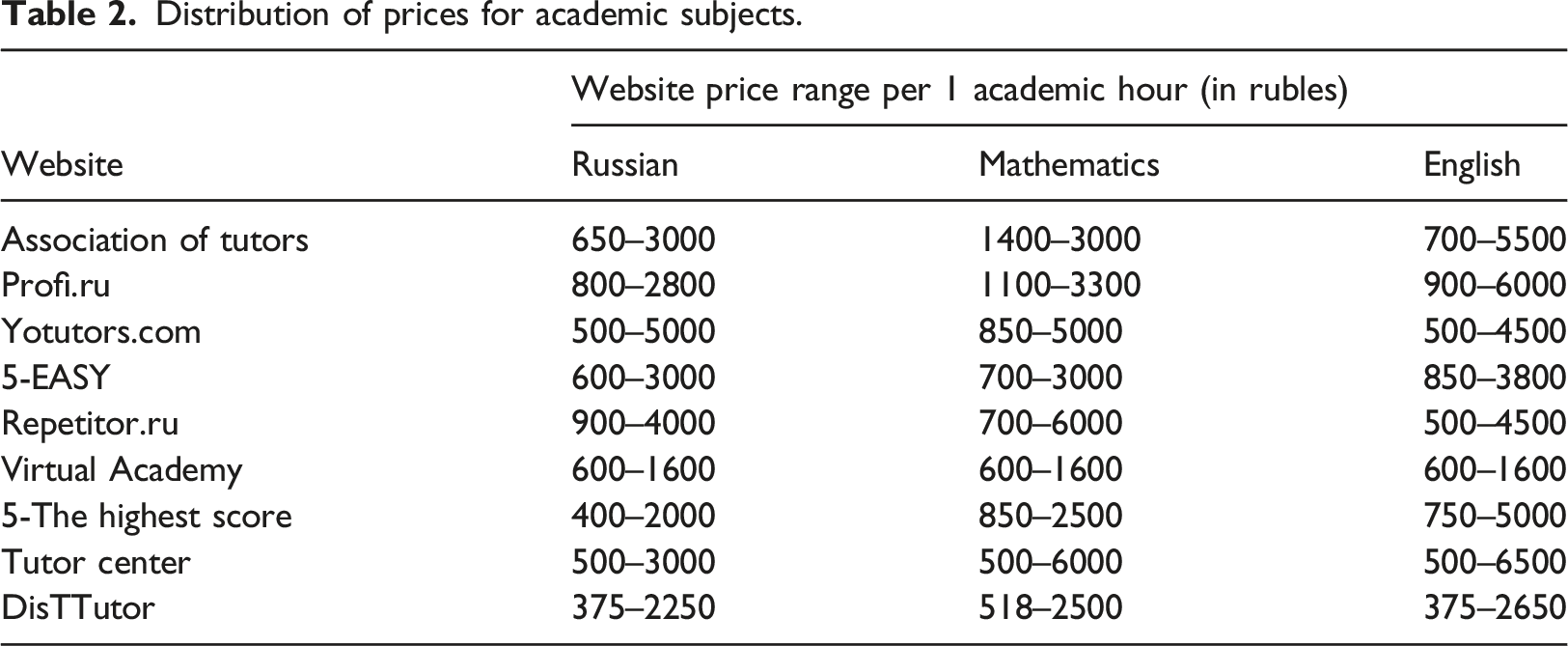
Obviously, the costs of services provided by sites differ, and range from 600 to 2500 rubles per hour. However, the cost of the lesson depends on the class format as well. During the COVID-19 pandemic, the services of remote tutors are in high demand, the price of online class is 20% less than the one for a face-to-face lesson.
The price of tutoring services depends on the sites’ status (the sites can be characterized as expensive and cheap ones). Large sites that contain a considerable database of tutors offer services for higher prices. In addition, these sites try to raise their ratings through quality management monitoring of tutoring services: customers’ reviews, document verification, interview, status, contests.
Geographical distribution of prices per 1-h English class (according to Profi.ru).
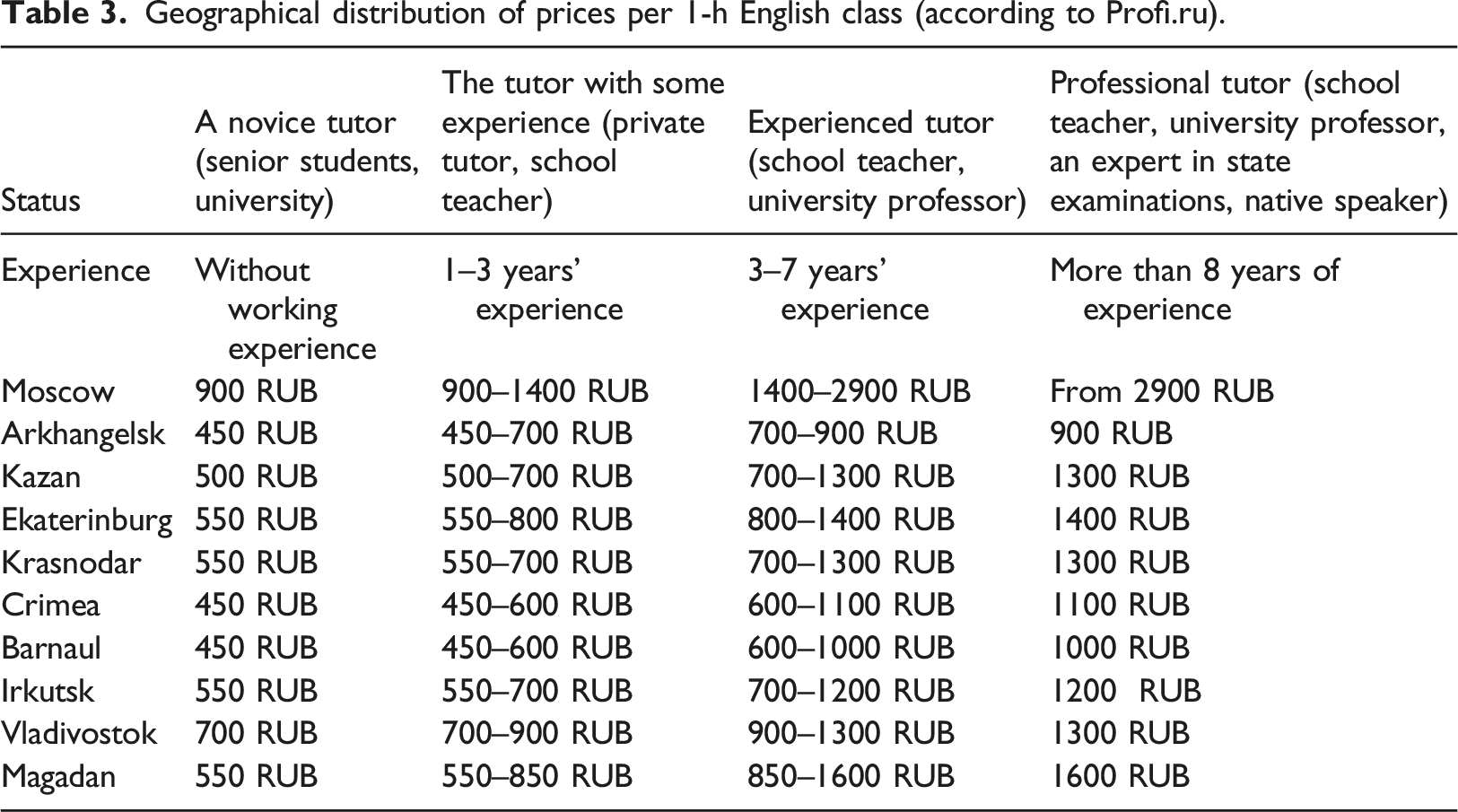
The website (Profi.ru) analysis allows us to conclude that besides the status and experience of a tutor, the price is determined greatly by the region as well. The tutors from the capital and big cities of Russia earn much more than educators with the same educational background, status, and experience from other regions.
Basically, tutoring is perceived as a source of income. The study, which analyzed the cost of tutoring services on popular websites, showed that the average income of a tutor should be higher than the income of a teacher or a professor. Even considering the commission that is taken for getting a student on tutor sites, tutoring is regarded as a source of income. For this reason, many teachers are engaged in tutoring to get additional pay to the basic salary. However, due to various circumstances, the enrollment of students may be irregular, leading to the instability of additional earnings, which is one of the reasons why tutors avoid state registration and payment of taxes.
As a result of the shortfall in revenue to the treasury from the shadow business income, including tutoring, the state began to look for other solutions for its legalization. Thus, a “self-employed” status and a new taxation scheme for this category of workers have been introduced.
A teacher (a tutor) has the right to register as a self-employed person and pay the income tax. Self-employment is a form of employment of an individual who receives income (no more than 2.4 million rubles/year) from activities for offering services or goods without hiring employees. In Federal Law “On conducting an experiment on establishing a special tax regime “Tax on professional income” of 27 November 2018 No. 422-FZ (2018), there are no restrictions on the activities of teachers and tutors in the status of self-employed. The income tax rate for citizens in this case is 4% when working with individuals and 6% when working with legal entities. This regime will be in effect until 2028 without changing the original tax conditions. So, state regulation offers private tutors an opportunity to work on legal basis by paying reasonable taxes.
Speaking about the phenomenon of private tutoring, we have identified its current pros and cons. The positive aspects include stimulating students’ and tutors’ personal development; quality improvement of human resources; new opportunities to achieve a specific result; developing individual approach to students; eliminating knowledge gaps; testing new techniques, associated with various difficulties and/or restrictions in state educational institutions; enhancing learners’ motivation.
The negatives aspects are: it does not guarantee the achievement of the desired goal; it is a private academic support; it leads to the stratification of society (the rich and economically-deprived), reduces the effectiveness of the formal public/private educational system, promotes corruption.
The status of “self-employment” does not affect the market status of a private tutor as it is neither connected with professional rating nor with licensing. Only proficiency, methodology of teaching, as well as skillful use of modern technologies with regard to psychological and educational characteristics can make a teacher an effective and demanded online tutor. In this context a professional private tutor must be able: (1) to meet the changing demands of the market; (2) to evaluate advantages and disadvantages of distant and face-to-face teacher-student interaction; (3) to choose a suitable platform; (4) to deal with video conferencing software; (5) to compensate the lack of emotional contact with students in online mode using online learning tools (Samoylenko et al., 2020).
Online tutoring platforms.
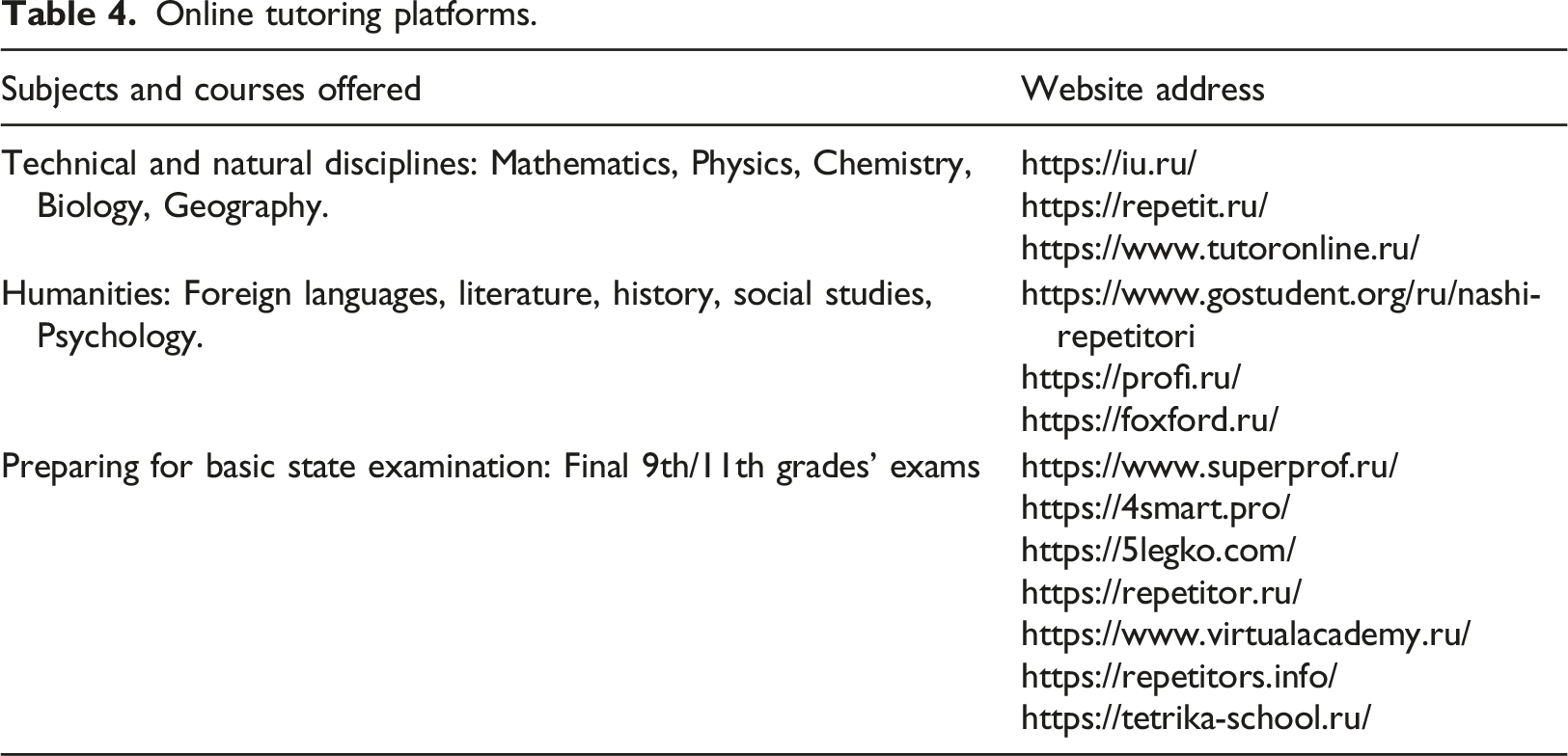
Furthermore, learning foreign languages online is a popular worldwide trend. That is why, there have been developed many online schools that offer their services for learners of different categories. As part of the research, we have analyzed online schools to learn foreign languages and the range of services offered: 1. International companies: Academy Online English, Skooli, VIPKid, DaDa, QKids, iTutorGroup, Gogokid, Whales English, English Hunt, EF English Live. 2. Russian companies: Englex, EnglishDom, Skysmart, Big-Ben, English Prime, Skyeng, toki, Wrabbit, JustSchool.
The choice of a suitable online platform or programme starts with its features’ analysis well in advance. The actions of a tutor may rely on the guidelines of Graham Stanley (e.g., exploring the ways to upload materials; interactivity; incorporating polls; chatbox options; the compatibility of device with the platform; transmitting and sharing video, etc. (Stanley, 2019). That is why, to teach students online private tutors prefer to use such software options as BigblueButton, Zoom, Yandex.Telemost, Skype, Appear.in, Buzzumi, Confetee, Chatbox, Cisco Webex, Google Hangouts, GoToMeeting, Gruveo, MeetingBurner, Microsoft Teams, Open-Tok, Proficonf, Tinychat as well as popular messengers such as Discord, Telegram, ICQ, Viber, WhatsApp and others. These programmes provide video communication facilities and are widely spread to organize virtual meetings, video conferences and webinars.
Basically, web conferencing software solutions are easy to use, intuitive and suitable for productive collaboration and teamwork. Some products can be integrated into various systems, for example, LMS Moodle, Drupal, ILIAS, Joomla!, WordPress. The programmes are compatible with such browsers as Google Chrome, Mozilla Firefox, Opera, Safari.
The main advantages of video conferencing software in education are: - flexible tools to organize groupwork and get immediate feedback (the availability of a chat section, built-in virtual whiteboard, the option of making notes together; poll); - the possibility to download and share files; - screen sharing to demonstrate materials.
These features ensure the interactivity of the educational process and promote simple collaboration in learning activities. During a meeting or a tutorial, a teacher and students may use microphones for communication, and video camera for broadcasting video to take part in group discussion, brainstorming or giving answers to the tasks. Interactive tools of web conferencing programmes are efficient in engaging students into active learning procedure and collaboration.
Due to the functionality of video conferencing software a tutor may plan and present various types of oral and written learning activities such as practicing vocabulary and grammar (writing a dictation, making various types of questions), reading and tests (true/false, multiple choice), presenting projects or speaking.
Some software may support video content from external resources (YouTube, Vimeo, Instructure Media, Twitch and Daily Motion) that may be used to develop listening skills.
Besides, there are a lot of examples of online interactive whiteboards software that may be used to organize an online class, e.g., Canva, Linoit, Twiddla, Miro, etc. The learners may make and edit notes, draw and design materials to prepare individual or team projects.
Some tutors who prefer online classes may even develop individual e-courses via LMS Moodle, that is an open-source software suitable for distance learning purposes. This system has various tools to design interactive content and conduct comprehensive assessment procedures.
The range of available online tools and their upgraded features are constantly growing, and today we find instruments that enhance the learning process in Higher education as well. For example, teaching English a tutor can use The Global Scale of English (GSE) Teacher Toolkit. When working with undergraduate students from different majors with different levels of English, tutors choose the aspects of English interested in and then may use the GSE/CEFR slider to select the right level. The toolkit’s functionality makes it smooth and easy to search for the most level-appropriate content to support lessons or use it to adapt curriculum or materials to meet the needs of students. The Teacher Toolkit may be applied: - to reconsider and redesign a curriculum, adopting the Global Scale of English as a framework to meet the specific needs of learners; - to set standards; - to plan and organize lessons in mixed ability classes; - to personalize learning paths; - to assess skills; - to give feedback.
Thus, in addition to an excellent knowledge of the subject, an online tutor must perfectly master the distance teaching/learning technologies and take into account the psychological features of distant interaction with students.
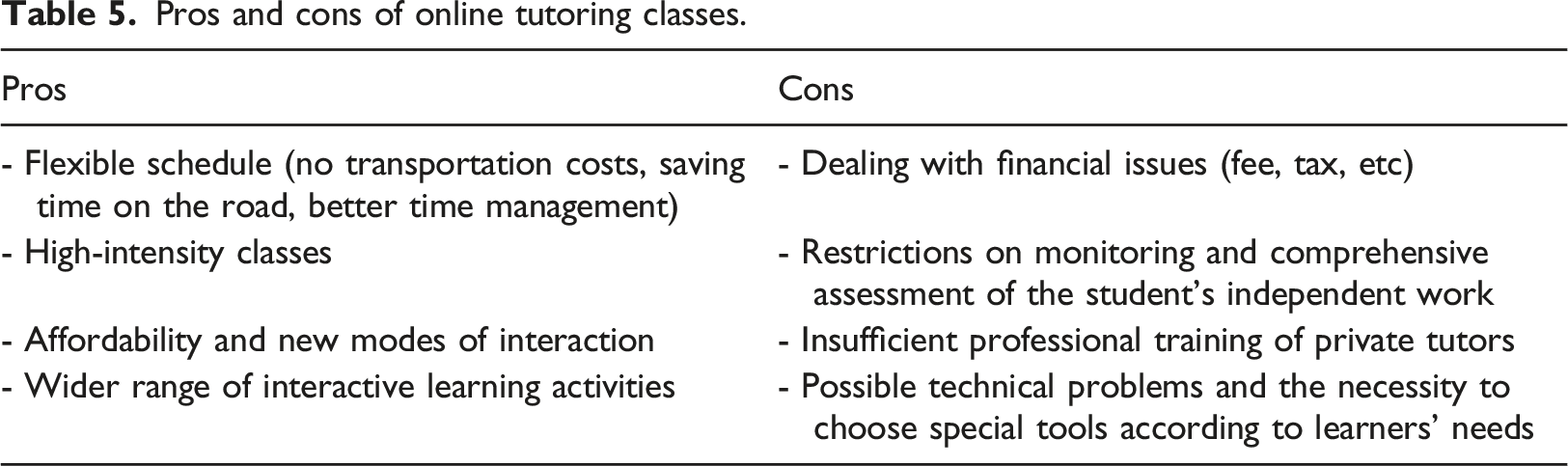
Pros and cons of online tutoring classes.
Studying the issue of shadow education in our research in order to outline some aspects of extracurricular professional activities, we interviewed professors-philologists of the Sevastopol State University, the V.I. Vernadsky Crimean Federal University, and the Crimean Fevzi Yakubov Engineering and Pedagogical University. The questions and the answers of the survey participants are in Appendix 1.
The age of 60% of the respondents was between 36 and 55, 20% were 20–35-year-olds, and 20% were over 55 years old (Figure 1). The age of the respondents.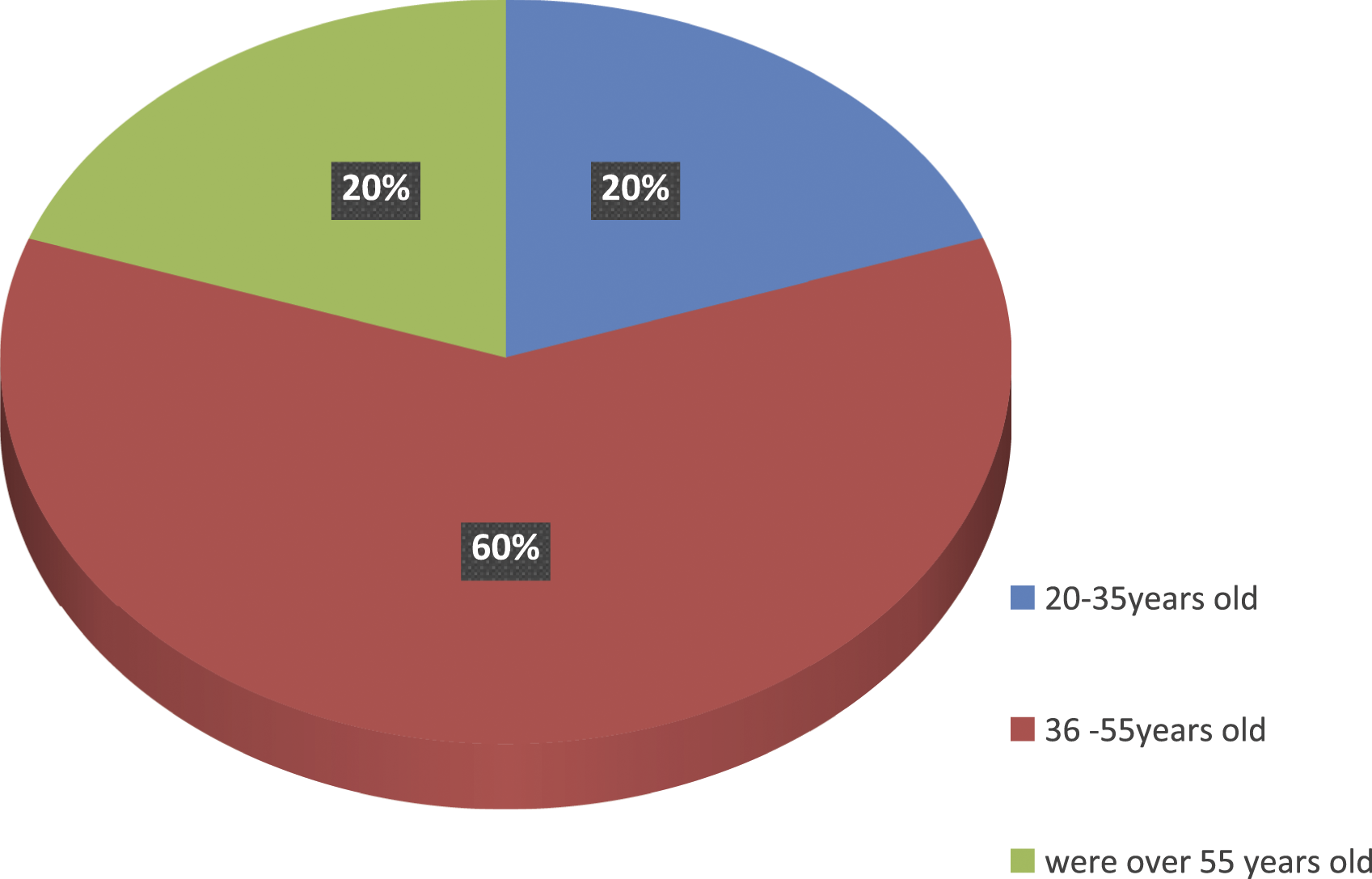
According to the survey, the majority of the respondents (70%) are engaged in tutoring services, while 30% do not tutor on the regular basis, and only 17% of them expressed their intention to start tutoring in the future.
The Figure 2 shows various reasons to become a private tutor mentioned by the participants of the survey. Reasons to become a private tutor.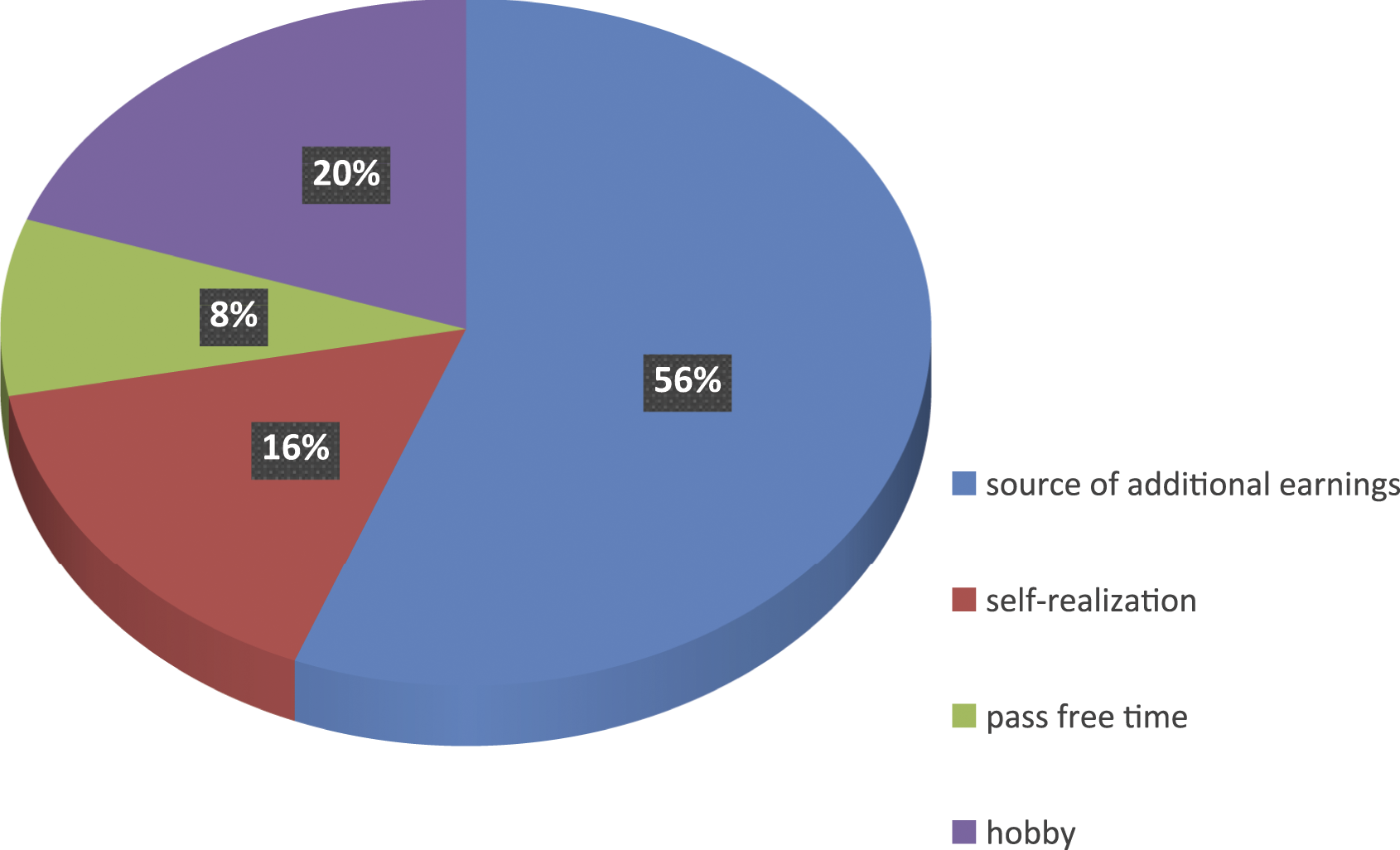
Tutoring is as a source of additional earnings for 56% of the respondents. Self-realization is important for 16% of the surveyed, 8% tend to tutor to pass their free time, and 20% regard tutoring as a hobby.
According to the answers of the participants 50% of respondents prepare students for exams, 50% improve the level of students’ knowledge (Figure 3). Tutoring services thar are in demand.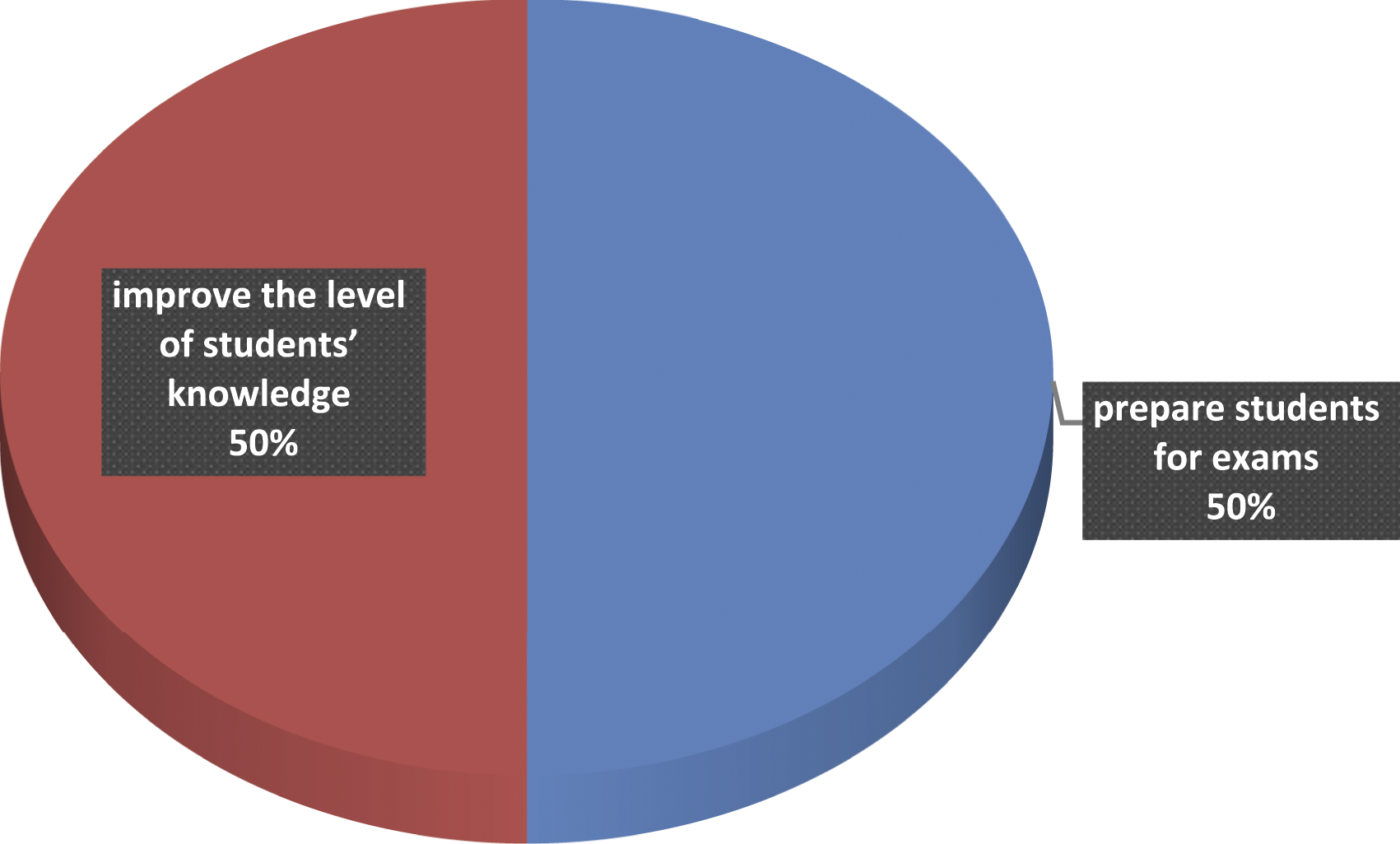
Face-to-face classes are delivered by 40% of the survey participants (62.5% prefer to have classes at their students’ places, 37.5 % conduct classes at home); 60% of the respondents address to the distance learning format. 81.25 % of respondents offer individual classes, 12.5% of tutors work in mini groups (up to 5 people), 6.25 % study groups of more than 5 learners.
The number of students per tutor was 60 % (1–5 people), 20% (5–10 persons), 13% (1 person), 7 % (more than 10 people).
The frequency of classes per week is ranged as following: 57% (about 3–5 days a week), 36% (less than 3 days a week), 7% (more than 5 days a week).
79% of respondents priced the tutoring service from 300 to 700 rubles per 60 min class, 21% - over 700 rubles per 1 h.
The participants were divided into three groups according to the tutor’s experience: less than 1 year (7%), 5–10 years’ experience (86%), more than 10 years (7%).
Since tutoring depends on the formal education system, any changes in the generally accepted system will lead immediately to a change in the directions of tutors' work.
Discussion
In this section the results obtained in the previous part are discussed concerning our four research questions.
The first research question aimed to investigate private tutoring legal aspects in Russia. The increase in demand for tutoring services indicates the lack of effectiveness of mass education. The research of private tutoring as part of the whole ecosystem of education in terms of its social and economic importance on the national and international markets relies on the data received through analysis of individual attempts to uncover its vague sides. The analysis of the works dedicated to the issue as well as personal professional experience allow the authors to assume that private tutors provide serious support for the formal systems of education, filling in the gaps in the students’ knowledge, and still staying in the shadow. Therefore, it can be concluded that in the era of technology unveiling the specifics of their work and the nature of the phenomenon has become possible due to its representation in online environment.
The second research question aimed to examine the possible effects of the available private tutoring facilities on the market of educational services. The analysis of the current situation on the educational market of the Russian Federation has given an opportunity to visualize the shapes of the shadow education where teachers act as an interested party, whose income depends on the revenue from private tutoring no matter how unreliable it is. The most amount of positive effect was observed on private tutors who work both to improve the level of students’ knowledge and to prepare them for exams.
The third research question which took into account the study of the prices rates for private lessons in different disciplines according to geographical regions of Russia. To be more specific, it intended to explore which status could benefit more for tutoring services. This question aimed to take a deeper look at the costs of services provided by sites during the COVID-19 pandemic, the price of tutoring services on the sites. The results showed that the cost of tutoring services depends on the status, employment history and region of a tutor.
The results indicated that due to the development of technology private classes in most cases are conducted online, and they tend to be individual rather than group sessions. Considering the drawbacks of online tutoring when compared to face-to-face teaching pedagogues are ready to take the challenge and work in the new environment.
To sum up, the results showed that the various tools used in online tutoring had a significant positive effect on the private tutoring. It was also found out that there were pros and cons of various tools used in online tutoring. The results indicated that the most significant difference was found between instruments that enhance the learning process in Higher education. The disadvantages of online teaching and online tutoring classes are dealing with financial issues; restrictions on monitoring and comprehensive assessment of the student’s autonomous work; insufficient professional training of private tutors; possible technical problems and the necessity to choose special tools according to learners’ needs.
Conclusion
Shadow education plays a significant role in education at the global scale. Despite the national specifics, it is generally viewed as an important provider of educational services, whose progress is inspired by the inability of formal educational institutions to meet the demands for better education and\or its formal results (international certificates). The development of technology leads to the expansion of online tutoring as a new socio-economic phenomenon of national and international labor markets, which has its advantages and disadvantages in terms of getting educational services and their provision. The progress is mainly determined by the appearance of professional online platforms for tutors, aggregating information on students and teachers; availability of video conferencing tools; the development of the international systems of knowledge evaluation and teaching methodology.
Footnotes
Declaration of conflicting interests
The author(s) declared no potential conflicts of interest with respect to the research, authorship, and/or publication of this article.
Funding
The author(s) received no financial support for the research, authorship, and/or publication of this article.

Appendix 1. The results of the professors’ interviewing based on the survey.
№
Questions
Answers received
1
Are you engaged in private tutoring?
Yes – 70 %
No – 30%
2
Mark the reasons to become a private tutor
A source of additional earnings – 56 %
Self-realization – 16 %
hobby– 20 %
free time activities – 8%
3
Private tutoring services offered
To prepare students for exams– 50 %
To improve the knowledge of students – 50%
4
The price per 1-h class
Less than 300 RUB – 0%
300 RUB – 700 RUB – 79 %
more than 700 RUB – 21%
5
The format of private tutoring classes
Face-to-face – 40% (at the student’s place– 62,5%: At home – 37,5%
Distance learning – 60 %
Blended (in-person plus ICT tools) – 0%
6
The number of students per tutor
1–13%
1–5 – 60%
5–10 – 20 %
over 10–7%
7
The type of classes you prefer
Individual – 81,25 %
Mini-group (up to 5 persons) – 12,5 %
group (over 5 persons) – 6,25%
8
The frequency of classes per week
Less than 3 times– 36%
3-5 meetings – 57 %
over 5 meetings – 7%
9
Your tutoring experience
Less than 1 year–7%
1–3 years–0%
3–5 years–0%
5–10 years–86 %
over 10 years–7%
10
Your age category
20–35 years old – 20%
36–55 years old – 60 %
over 55 years old – 20%