




Abstract
This study examines the factors that influence the intention and actual use of e-learning in entrepreneurship education by undergraduate students. The paper relies on a predictive study design and the partial least squares structural equation modelling to analyse data from a cluster sample of 599 students from the University of Cape Coast, Ghana. The results demonstrate that all the independent variables, assessed within a framework of an extended unified theory of acceptance and use of technology, determine students’ intention to use e-learning in entrepreneurship education. Of particular importance are the preponderant effects of hedonic motivation, facilitating conditions and social influence on students’ intention as well as the effect of intention and facilitating conditions on actual use of e-learning. A key implication of the findings is that students’ continuous acceptance and use of e-learning in undergraduate entrepreneurship course delivery is contingent upon adequate presence of all the examined predictors of technology usage.
Keywords
Introduction
Consistent with the Sustainable Development Goal (SDG) 4 of ensuring inclusive and quality education for all and promoting life-long learning (United Nations, 2022), electronic learning, also known as e-learning, online learning or virtual education, has been an instrumental medium of instruction in bringing education to the door-steps of multitudes. Global enrolment in virtual education has been increasing at an annual growth rate of 3.9%, since 2010 (Tibaná-Herrera et al., 2018). Nevertheless, much of the progress in e-learning occurs in advanced countries, especially the United States of America (USA) where the 2018 International Computer and Information Literacy Study shows that 48% of students uses digital media in class daily, compared with the international average of 18% (Küsel et al., 2020).
Advancements in information communications technology (ICT) have been key in promoting e-learning in higher education through varied models such as asynchronous, synchronous and hybrid online education (Fianu et al., 2020; Welsh and Dragusin, 2013). The outbreak of the 2019 Coronavirus pandemic (COVID-19) and attendant school closures in 2020, affecting over 220 million tertiary students, have also accentuated the relevance and adoption of e-learning across the globe (Liguori and Winkler, 2020; United Nations Educational, Scientific and Cultural Organisation [UNESCO], 2021; Weldon et al., 2021). According to the UNESCO (2021), the major impact of the pandemic on teaching and learning in higher education is the increase in online education, particularly the hybrid mode.
In spite of the reported rise in e-learning in higher education, its adoption in some parts of the world has been slow due to digital divide as is the case of most sub-Saharan African countries, with Ghana as no exception, where access to Internet, computers and electricity is a challenge (Adarkwah, 2020; Karar, 2019). Following the outbreak of COVID-19, the government of Ghana and educational institutions invested in some ICT infrastructure to ensure continuity in education through remote teaching and learning for first and second cycle schools, for instance via television and radio (Tuffour et al., 2021). In Ghana’s higher education sector, several tertiary institutions including the University of Cape Coast (UCC) also took measures to activate their online learning management systems (LMS) and have since July 2020 been encouraging e-learning. Stakeholder consultations also resulted in, MTN and Vodafone, Ghana’s telecommunication giants’ offer of zero-rated data to users of the LMS (Amponsah, 2021).
As the Ghanaian society gradually transition into a state of accepting the pandemic as a “new normal” (Agyemang et al., 2021), there is a high tendency for educational institutions to recede to complete face-to-face (FTF) mode of instruction thereby eroding the progress and investment made in e-learning. It is, therefore, important that policy makers and practitioners recognise and act upon the critical success factors for sustainable e-learning in higher education (Asamoah, 2020; Bervell and Akorful, 2020). In that regard, studies have been conducted on the adoption of e-learning in Ghana’s tertiary education on pre-service teachers (Buabeng-Andoh and Baah, 2020), post-graduate students (Asamoah, 2020), students in general (Adarkwah, 2020), faculty (Bervell and Umar, 2017) and medical students (Yeboah et al., 2014).
There are virtually no studies on the intention, that is the willingness to use, and actual use of e-learning, specifically the use of online LMS and other online instructional media such as zoom and Microsoft teams in undergraduate entrepreneurship education in Ghana. Considering the myriad of factors that could influence the adoption of e-learning in the study of entrepreneurship, this research relies on an extended version of the unified theory of acceptance and use of technology (UTAUT) to analyse the antecedents of e-learning in a university-wide undergraduate entrepreneurship course at the University of Cape Coast (UCC), Ghana. The course had been running via FTF mode since its inception in 2014 until the onset of COVID-19 that led to a first emergency e-learning experience in 2020.
The next section of the paper comprises review of the concept of e-learning, UTAUT and related empirical studies. The remaining sections include the methodology, results, discussions and conclusions and recommendations.
Literature
Review of related literature in four main domains informed the design of the research. These are e-learning, e-learning in entrepreneurship education, the UTAUT and the determinants of e-learning.
E-learning
Electronic learning, popularly known as e-learning, is a technology-based learning in which teaching and learning as well as the delivery of instructional information and materials occur via an intranet or the Internet with the help of the computer and other mobile devices such as laptops and mobile phones (Basak et al., 2019; Welsh et al., 2003). It encompasses web-based online learning resources, social networking and multimedia on student laptops and other mobile devices (Trelease, 2016). E-learning can be synchronous or asynchronous as well as hybrid or flipped. In synchronous e-learning, instructors and learners are present online at the same time for live sessions whereas asynchronous e-learning relies on ‘pre-recorded’ educational content that is available to learners anywhere and at any time of the day, potentially from any location (Selim, 2007; Welsh et al., 2003).
Educational institutions may partly pursue e-learning for example through blended learning and flipped classroom. Blended learning, also known as hybrid learning, is a pedagogical solution that combines both traditional face-to-face teaching and e-learning (Jones et al., 2007; Pisoni, 2019). On the other hand, a flipped or an inverted classroom is an instructional approach in which activities traditionally conducted in the classroom, such as content presentation, become home activities, and activities normally constituting homework become classroom activities (Akçayır and Akçayır, 2018; Yilmaz, 2019). Yilmaz (2019) reiterate that to effectively apply flipped classroom model, students should complete the online requirements of the course and they should come to the class prepared.
E-learning is associated with and driven by inherent benefits such as flexibility, enhanced learner experience, effectiveness, affordability and promoting life-long learning (Basak et al., 2019; Weldon et al., 2021). Research shows that where an e-learning environment emphasises learner-centred activity and system interactivity, remote learners can outperform traditional classroom students (Bervell and Umar, 2017; Udeozor et al., 2021). Nevertheless e-learning can be costly and ineffective if the right critical success factors are not addressed in its design and implementation (Selim, 2007).
E-learning in entrepreneurship education
Researchers trace the advent of e-learning to the 1960s (Naim and Alahmari, 2020; Terry, 2010). Since then, e-learning has grown in usage in various fields such as business, the military and education. Nevertheless, Liguori and Winkler (2020) and Lin and Sekiguchi (2020) note with concern the limited use of e-learning in entrepreneurship education where the FTF instructional mode takes about 60–80% of time and focus. For instance, a study by Lin and Sekiguchi (2020) report that a greater percentage of entrepreneurship course instructors in the United Kingdom (57%) and a relatively lesser percentage in the USA (44.1%) use FTF instruction. Researchers partly ascribe the situation to contemporary approaches to entrepreneurship education that erroneously elevate FTF instructional methods above online methods on the assumption that the latter is more conducive for experiential and practice-oriented teaching and learning (Dhliwayo, 2008; Liguori and Winkler, 2020; Mensah et al., 2022).
The emerging literature in entrepreneurship education confirms the universal benefits of e-learning such as flexibility, enhanced learner experience, effectiveness, affordability and promoting life-long learning to the discipline (Jaziri and Hassen, 2015; Kefis and Xanthopoulou, 2015; Weldon et al., 2021). Jaziri and Hassen (2015) and Kefis and Xanthopoulou (2015) also add their voice to the fact that e-learning in entrepreneurship education provides students with the flexibility of space and encourages collaboration that undoubtedly promotes active as well as constructive processes through which learners handle available cognitive resources for the creation of new knowledge.
In order to advance the use of e-learning in entrepreneurship education for higher impact, researchers are asking for studies that will offer insights into the critical success factors for online teaching and learning in entrepreneurship education (Liguori and Winkler, 2021; Mensah et al., 2022). Hitherto, Selim (2007) and Ansong et al. (2017) identified e-learning critical success factors to comprise four key areas of instructor, student, information technology and university support. This paper employs the UTAUT to examine student-related determinants of e-learning in entrepreneurship education.
Unified theory of acceptance and use of technology
The UTAUT, propounded by Venkatesh et al. (2003), postulates that performance expectancy, effort expectancy and social influence directly influence behavioural intention to use a technology while behavioural intention together with facilitating conditions directly influence technology use. It further demonstrates the moderating effect of variables such as age and gender on the relationship between the determinants and intention and or behaviour (Venkatesh and Zhang, 2010). The UTAUT is an amalgamation of eight technology acceptance and use theories and models such as the technology acceptance model (TAM) by Davis (1985) and the theory of planned behaviour (TPB) by Ajzen (1991).
Comparatively, the TAM, the TPB and the UTAUT illustrate the importance of factors such as perceived ease of use/perceived behavioural control, subjective norm and facilitating conditions to the adoption and actual use of technology (Liébana-Cabanillas et al., 2014). However, whereas the UTAUT treats attitude as an indirect predictor of technology adoption and use, the TPB and the TAM recognise attitude towards behaviour as a major predictor of intention and actual behaviour. Venkatesh et al. (2012) introduced UTAUT2 with hedonic motivation, price value and habit as additional predictors of technology usage intention which resulted in higher predictive power of 56–74% for behavioural intention and 40–52% predictive power for technology use. Farooq et al. (2017) and Gunasinghe et al. (2020) also examined personal innovativeness in the use of information technology (PIIT) in an extended UTAUT model.
This study employs an extended version of the UTAUT to analyse the preparedness of undergraduate students in the use of e-learning in a university-wide entrepreneurship course at the university of Cape Coast in Ghana. So far, studies have been conducted on the adoption of e-learning in Ghana’s tertiary education on faculty (Bervell and Umar, 2017), medical students (Yeboah et al., 2014), pre-service teachers (Buabeng-Andoh and Baah, 2020), students in general (Adarkwah, 2020) and post-graduate students (Asamoah, 2020). The studies by Adarkwah (2020) and Asamoah (2020) were qualitative in nature while the rest adopted the original version of the UTAUT. Moreover, there are hardly studies on the intention and actual use of e-learning, specifically the use of online LMS, by undergraduate students taking part in the entrepreneurship course in higher education in Ghana.
Closing the research gap is important because entrepreneurship as a course should largely depend on experiential learning pedagogies which require self-directed and student-centred learning as opposed to teacher-centred approaches that usually dominate the traditional classroom teaching method (McFarland, 2017; Secundo et al., 2020). In the next section of the review, we use UTAUT2 to examine the critical success factors for the acceptance and use of e-learning by students/learners and relate the salient issues to entrepreneurship education, from which we develop hypotheses for the study.
Conceptual framework and hypotheses development
According to UTAUT2, performance expectancy, effort expectancy, social influence, hedonic motivation, price value and habit directly predict technology usage intention while intention together with facilitating conditions determine actual usage (Venkatesh et al., 2016). Although several researchers have used UTAUT2 and its various extensions, the design of this research followed the stead of Farooq et al. (2017) and Gunasinghe et al. (2020) to include PIIT as a possible predictor of e-learning acceptance and use by undergraduate entrepreneurship students (Figure 1). This is because in an environment where persons are being introduced to a new technology, their tendency to independently experiment and adopt new advancements in information technology (IT) could enhance their usage intention and eventual use of the technology (Farooq et al., 2017). Habit was, however, not included in this study since the respondents of the study had barely 3 months experience of blended learning in the entrepreneurship course, thus, providing no strong basis for the test of habit in this research. Conceptual framework of the antecedents of E-learning in undergraduate entrepreneurship education.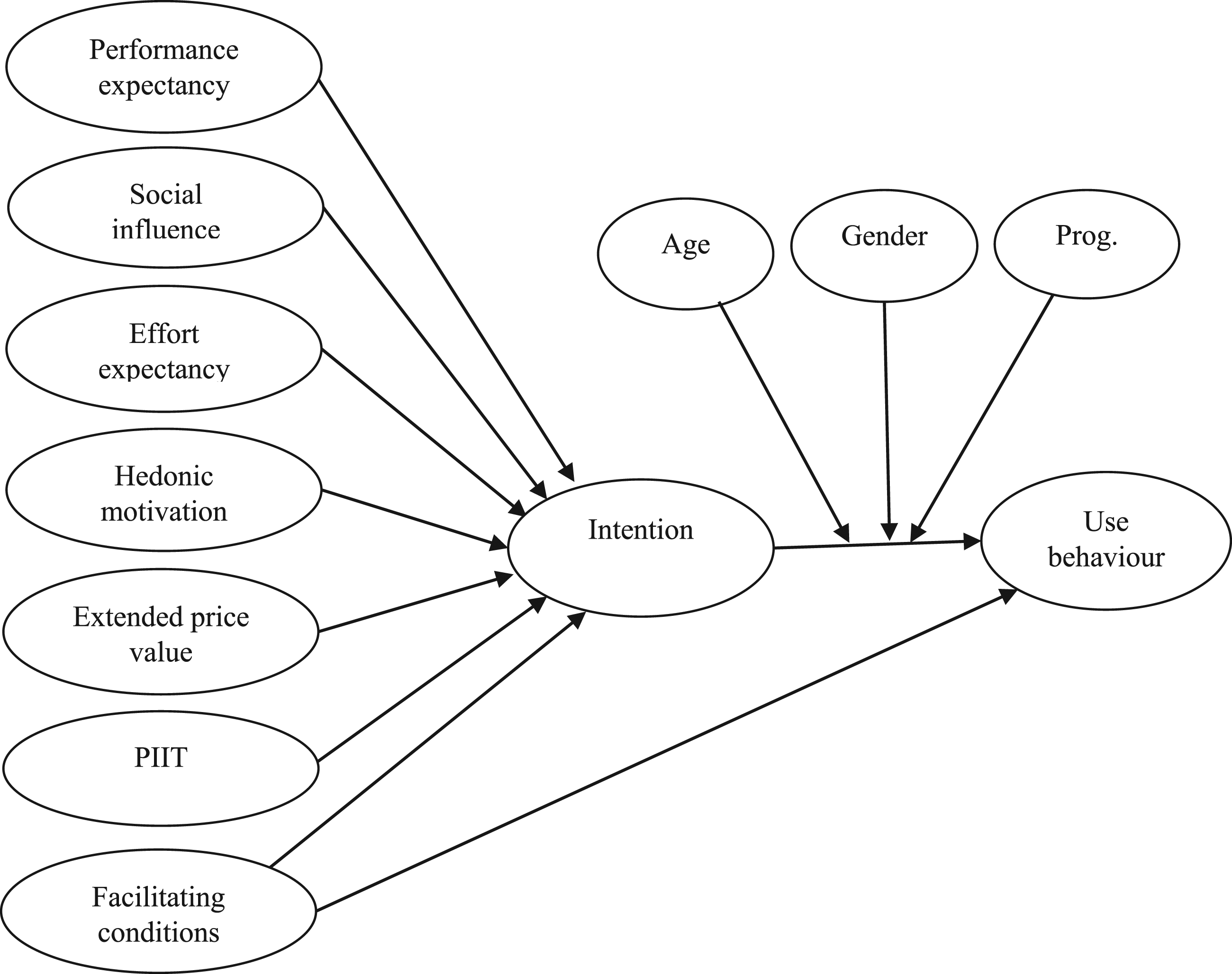
Behavioural intention to use e-learning in entrepreneurship education and actual use of e-learning are the two dependent variables of the study (Figure 1). In the UTAUT, behavioural intention refers to the readiness or the willingness to accept, use or adopt a technology (Bervell and Umar, 2017). Conversely, actual behaviour connotes the use of the technology in the execution of a primary activity such as consumer purchases and e-learning. Alshahrani and Walker (2017) reiterate the importance of understanding students’ usage intention as the first step in implementing e-learning since the success or failure of the system depends on how well students like it, how easy it is to use it and how useful it is towards achieving their educational goals. Understanding the predictors of e-learning is also key because therein lies the critical information that managers need to lay a sound foundation for effective and efficient implementation of e-learning systems (Asamoah, 2020; Bervell and Akorful, 2020).
Performance expectancy is defined, in the UTAUT, as the degree to which an individual believes that using a system will help him or her attain job performance (Venkatesh et al., 2003). Within the context of e-learning, performance expectancy is defined in this paper in relation to students’ conviction about the ability of an e-learning system to facilitate effective teaching and learning. Venkatesh et al. (2003) note that performance expectancy is a leading predictor of intention to use a technology. This has been confirmed in several studies such as those by Yeboah et al. (2014) and Bellaaj et al. (2015). However, Alshahrani and Walker (2017) and Moorthy et al. (2019) did not establish performance expectancy as the main predictor of students’ intention to use e-learning
Performance expectancy will significantly influence students’ intention to use e-learning in entrepreneurship education. Social influence refers to the degree to which an individual perceives that important others believe that s/he should use a new system (Venkatesh et al., 2003). There have been mixed results on the effect of social influence on intention. For instance Ain et al. (2016) and Bervell and Umar (2017) established the importance of significant others such as university management and peers to the adoption of e-learning by students whereas contrary findings emerged in studies by Yeboah et al. (2014), Yakubu and Dasuki (2018) and Abbad (2021). In entrepreneurship education, the role of social learning in group-based activities is key to developing students’ competencies in areas such as entrepreneurial team building and entrepreneurial initiative/project (McFarland, 2017; Secundo et al., 2020). Therefore, it is anticipated in this study that because team work is key to entrepreneurship education, significant others such as peers and instructors will be a source of motivation for students to accept and use e-learning (Figure 1). Therefore, it is hypothesised that:
Social influence will significantly affect students’ intention to use e-learning in entrepreneurship education. Effort expectancy is one of the UTAUT construct variables that is well-supported in literature as a key predictor of an individual’s acceptance and use of e-learning in higher education (Alshahrani and Walker, 2017; Bellaaj et al., 2015; Gunasinghe et al., 2020). However, Ain et al.’s (2016) study on the use of an online LMS by students did not establish effort expectancy as a predictor of behavioural intention. Effort expectancy is the degree of ease associated with the use of a technology (Venkatesh et al., 2016). Venkatesh et al. (2003) in the original version of the UTAUT observed that the effect of effort expectancy on behavioural intention is stronger for women, older workers and persons with limited experience in using the technology. Therefore, as shown in Figure 1, it is expected that the ability of students to easily navigate through a new learning management system for an entrepreneurship course is important to their intention to use the system. Consequently, it is hypothesised that:
Effort expectancy will significantly influence students’ intention to use e-learning in entrepreneurship education. Facilitating conditions refer to the extent to which an individual believes that organisational and technical infrastructure, such as computers and data, exist to support the use of a technology (El-Masri and Tarhini, 2017). In the original version of the UTAUT, Venkatesh et al. (2003) noted that facilitating conditions did not directly predict behavioural intention due to the presence of effort expectancy in the model, but the conditions together with behavioural intention predicted actual system use. This has been confirmed in other studies (Bervell and Umar, 2017; Moghavvemi et al., 2017). Nevertheless, in a comparative study by El-Masri and Tarhini (2017), facilitating conditions did not increase e-learning adoption in developing countries while it did in developed countries. Moreover, Surachim et al. (2018), in a related study on using social media to promote student entrepreneurship, established that facilitating conditions and effort expectancy had the strongest influence on behavioural intention. This suggests that facilitating conditions could play the dual role of predicting behavioural intention and together with intention, predict actual behaviour in the intention of students to use online LMS in entrepreneurship education (Figure 1). It is, therefore, hypothesised that:
Facilitating conditions will have a significant effect on students’ intention to use e-learning in entrepreneurship education.
Facilitating conditions together with behavioural intention will significantly influence students’ use of e-learning in entrepreneurship education. Hedonic motivation is a UTAUT2 construct variable that describes the fun or pleasure derived from using a technology (Venkatesh et al., 2012). It is a key predictor of behavioural intention to use a technology and has been confirmed in related studies for instance by Moghavvemi (2017), El-Masri and Tarhini (2017), Moorthy et al. (2019) and Gunasinghe et al. (2020) although Ain et al. (2016) obtained contrary findings. Research by Zhang et al. (2006), Zaneldin et al. (2019), Udeozor et al. (2021) and Wraee et al. (2021) showed that teaching and learning methods such as interactive and reflective videos and games generate fun and better learning outcomes among students. Consequently, it is hypothesised that:
Hedonic motivation will have a significant influence on students’ intention to use e-learning in entrepreneurship education. Price value, according to Venkatesh et al. (2012), connotes the cognitive trade-off between perceived benefits of using a system and the cost of using the system. As a UTAUT2 construct variable, price value is said to predict behavioural intention to use a technology (Venkatesh et al., 2012). However, El-Masri and Tarhini (2017) found an insignificant effect of price value on behavioural intention of university students to adopt e-learning. Ain et al. (2016) noted that students do not bear any costs in using online LMS and, as a result, price value is usually omitted in research on LMS use. Although online LMS in Ghanaian public universities are said to be zero rated and students can access the system in university computer laboratories, students incur the cost of acquiring personal computers or mobile devices for on and off-campus personal use. Consequently:
Extended price value will significantly affect students’ intention to use e-learning in entrepreneurship education. Farooq et al. (2017) proposed and confirmed PIIT in an extended version of UTAUT2. They defined PIIT as an individual’s perceived predisposition towards IT which reflects the tendency to independently experiment and adopt new advancements in IT. PIIT is close in meaning to computer self-efficacy which Fianu et al. (2020) explained as the subjective assessment of a person’s skill level to use a computer to perform a specific task. However, in Gunasinghe et al.’s (2020) study of academics, PIIT did not predict intention and actual use of e-learning in their professional work. This notwithstanding, the use of computers and mobile phones are fundamental to e-learning. In this computer age, although students may be efficacious at these tools, that may not be the case of the online LMS which they have to operate on their computers and other devices. Without this capability, students would not be able to initiate e-learning in any course, including entrepreneurship. Therefore, it is hypothesised that:
Personal innovativeness in the use of information technology significantly predicts students’ intention to use e-learning in entrepreneurship education. Ultimately, behavioural intention is expected to predict actual usage, as illustrated in Figure 1. The ability of intention to influence actual use of technology is well-established in literature. All the preceding studies found intention to have a significant effect on technology use. It is, therefore, hypothesised that:
Students’ intention to use e-learning in entrepreneurship education will significantly predict their actual use of e-learning in the education. The UTAUT takes cognisance of possible moderating effects of age, gender and experience on intention and actual behaviour (Venkatesh et al., 2012). Nevertheless, such assessment is usually omitted in several studies such as those by Farooq et al. (2013), Bervell and Umar (2017), Fianu et al. (2020) and Gunasinghe et al. (2020). That notwithstanding, this study draws upon the UTAUT’s proposition to hypothesise that:
Students’ gender moderates the relationship between intention and actual use of e-learning in entrepreneurship education.
Students’ age moderates the relationship between intention and actual use of e-learning in entrepreneurship education.
Students’ programme of study, as a proxy for experience, moderates the relationship between intention and actual use of e-learning in entrepreneurship education.
Methodology
Context
The research was conducted at UCC, Ghana. The accessible population comprised 1532 third-year students, pursuing degree programmes in 37 science disciplines, who registered for the undergraduate university-wide entrepreneurship course in the second semester of the 2019/2020 academic year. Per the time-table for the academic year, only students from the sciences were required to register for the course in the second semester. The semester marked the first major online teaching and learning experience within UCC after a 3-week national lockdown in March and April 2020 and closure of the University from March to June 2020.
Teaching and learning followed the hybrid/blended learning approach with options of 50-50 or 70–30% online delivery and FTF delivery, respectively. The course was taught over 6 weeks from August 2020 to September 2020 to make up for topics that were not treated before the COVID closure while revision occurred in the last 2 weeks of the semester via FTF. The main online pedagogical tools were lectures, videos and discussions. The University’s online LMS served as a repertoire of course materials and other relevant information such as subject-related videos, reading materials, pre-lecture slides and post online lecture slides. Users of the LMS enjoyed zero-rated data. Nonetheless, online lectures took place via platforms such as zoom and Microsoft teams where users had to purchase data in order to join.
Research design
The post-positivist research paradigm, specifically the quantitative research approach, underpinned the study due to the deterministic philosophy of seeking to establish the antecedents of e-learning in undergraduate entrepreneurship education. According to this paradigm, objective reality exists and it can be measured scientifically through careful observation and facts finding while admitting that all observations have errors and theories are revisable because researchers cannot be absolutely positive about knowledge when studying human behaviour and actions (Creswell and Creswell, 2018; Kivunja and Kuyini, 2017). The study followed a predictive cross-sectional design by relying on the UTAUT to predict the antecedents of e-learning in undergraduate entrepreneurship education using data collected at one point in time.
A single stage cluster sampling technique was adopted for the study. There were 14 clusters of entrepreneurship classes handled by various lecturers. Out of this number, six were purposively sampled based on programme specialisation. The selected clusters comprised 14 disciplines; examples are biochemistry, molecular biology, mathematics and nursing. The total number of students in the selected clusters was 676 which is above (Gill et al.’ 2010 as cited in Taherdoost, 2017) recommended sample size of 248 at 95% confidence interval for a population of 700.
Data collection instrument was a structured questionnaire with adapted UTAUT scales from several authors including Venkatesh et al. (2012), Alshahrani and Walker (2017) and Farooq et al. (2017). The UTAUT variables were measured on a scale of 1 (weak agreement) to 7 (strong agreement). Number of items used to measure performance expectancy were five; effort expectancy: four; extended price value: three; social influence: five; facilitating conditions: five; PIIT: four; hedonic motivation: three; behavioural intention: five; and use behaviour: five.
Examples of measurement items for performance expectancy were “I will find e-learning useful in studying entrepreneurship”; and “using e-learning will enhance my performance in the course”. “I plan to use e-learning regularly from next semester” is an example of intention measures; and hedonic motivation was measured with items such as “using e-learning system to study entrepreneurship will be enjoyable” and “using e-learning system to study entrepreneurship will be very entertaining”. Data collection took place at the end of the semester in August 2020 with a response rate of 88.6%, totalling 599 retrieved questionnaires.
Descriptive and inferential statistics, that is mean, standard deviation and PLS-SEM, were used to analyse the data. The study used PLS-SEM because it is a causal-predictive approach to SEM which Hair et al. (2019) note as a plus in overcoming the dichotomy between explanation which is key to academic research and prediction which is the main pre-occupation of managerial implications of research findings. PLS-SEM is also known to be a reliable means of dealing with measurement errors and observable variables than first-generation analytical models (Schoemann et al., 2017).
Analysis and results
This section comprises the demographic profile of the respondents of the study, assessment of the measurement model, examination of the structural model and hypotheses testing.
Respondents’ demographic profile
Academic programme, age and gender of the respondents were analysed. Out of the 599 students who participated in the study, 99.5% were from the sciences as expected, whereas 0.5% were from the Arts and Social Sciences who trailed in the previous semester or were taking the course because of deferment. Most of the respondents were studying nursing (21.2%) followed by medical laboratory science (12.2%). The least responses (0.8%) from the sciences came from students studying fisheries and aquatic science. Males (54.1%) were more than females (45.9%). The mean age was 22.8 at a standard deviation of 2.4. The minimum age was 19 years and the maximum was 38 years.
Descriptive analysis
Descriptive statistics.
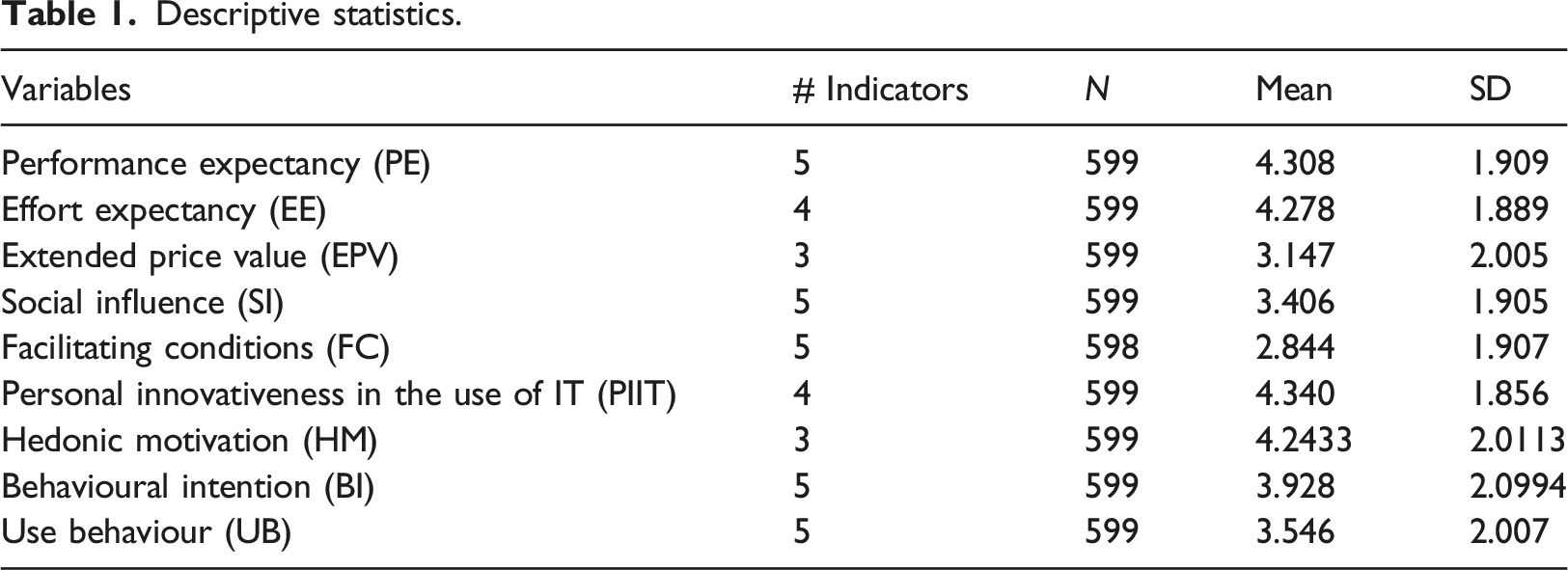
Respondents also considered expectations of important others (SI: M = 3.406) to be low in terms of the existence of a psychological contract that would propel them to use e-learning in entrepreneurship education (Table 1). In addition, they perceived facilitating conditions such as the necessary e-learning resources, technical assistance and training time to be inadequate. These findings buttress the quite low intention (M = 3.928) of the respondents to use e-learning. This coupled with the fact that respondents had barely 3 months official use of e-learning in entrepreneurship education underscore the low use behaviour (M = 3.546).
The standard deviations of all the variables were above 1, demonstrating some degree of varied opinions about the items measured. Nevertheless, the skewness and kurtosis of all the variables were below ±2, in conformity with acceptable limits of ±2 skewness and ±7 kurtosis (Curran et al., 1996; Kim, 2013). Thus, the departure of the data distribution from normal was not substantial.
Assessment of the measurement model
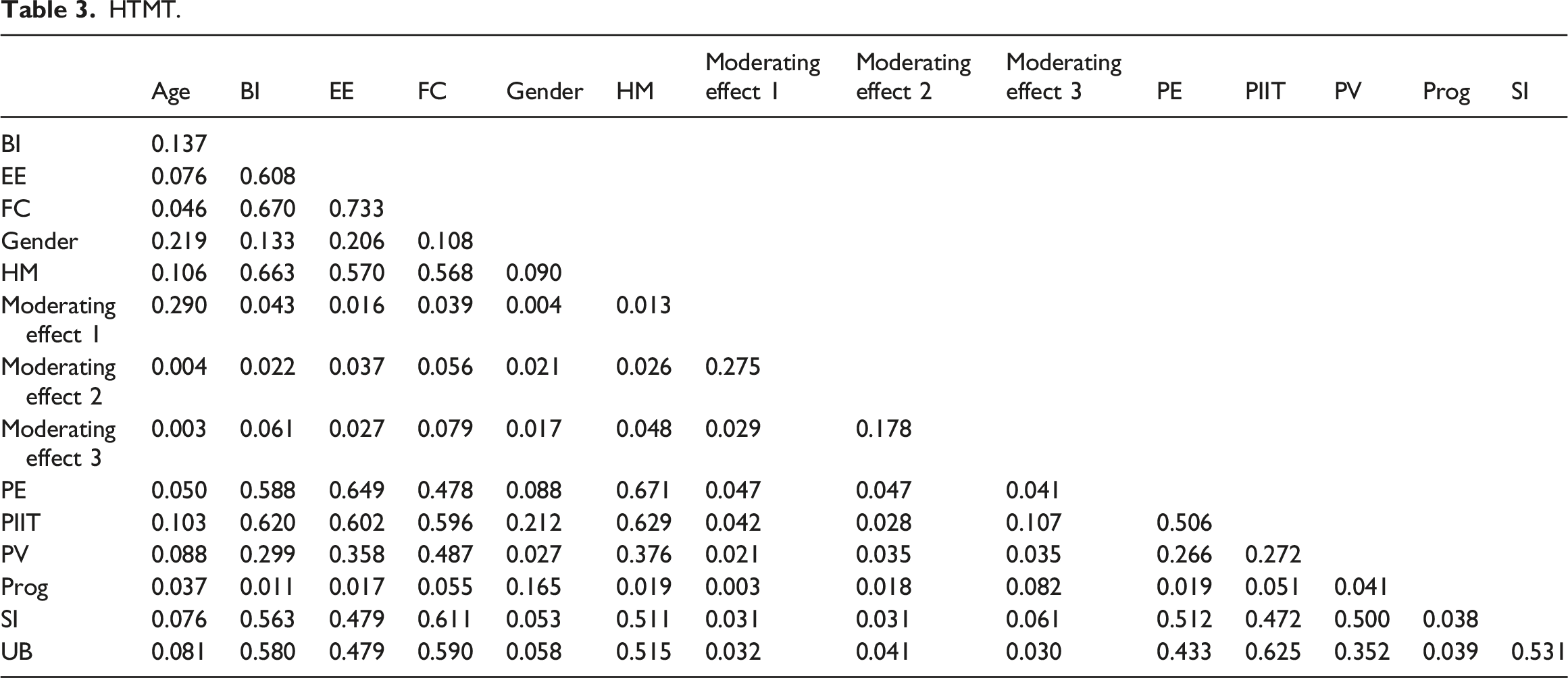
The measurement model of the PLS-SEM was reflective. Hair et al. (2019) stress on the importance of following a four-step procedure in the assessment of a reflective measurement model to ensure that the model meets all the required criteria for the structural model analysis and hypotheses testing. The steps are evaluation of the indicator loadings, analysis of the internal consistency reliability, evaluation of the convergent validity of the various constructs and examination of the discriminant validity among the constructs.
Researchers recommend indicator loadings above 0.60 although lower loadings can be accommodated depending on the rationale (Afthanorhana et al., 2020). According to Hair et al. (2019), indicator loadings above 0.708 are recommended as they mean that a construct explains more than 50% of the construct’s variance, thus providing acceptable item reliability. The indicator loadings of this study were between 0.722 and 0.974 with the exception of three indicators, one each from PIIT, facilitating conditions and social influence which recorded loadings of 0.400, 0.514 and 0.674, respectively. All the indicators were maintained since they were all significant (p = .000) at 95% (p ≤ .05) confidence interval.
Construct reliability and convergent validity.
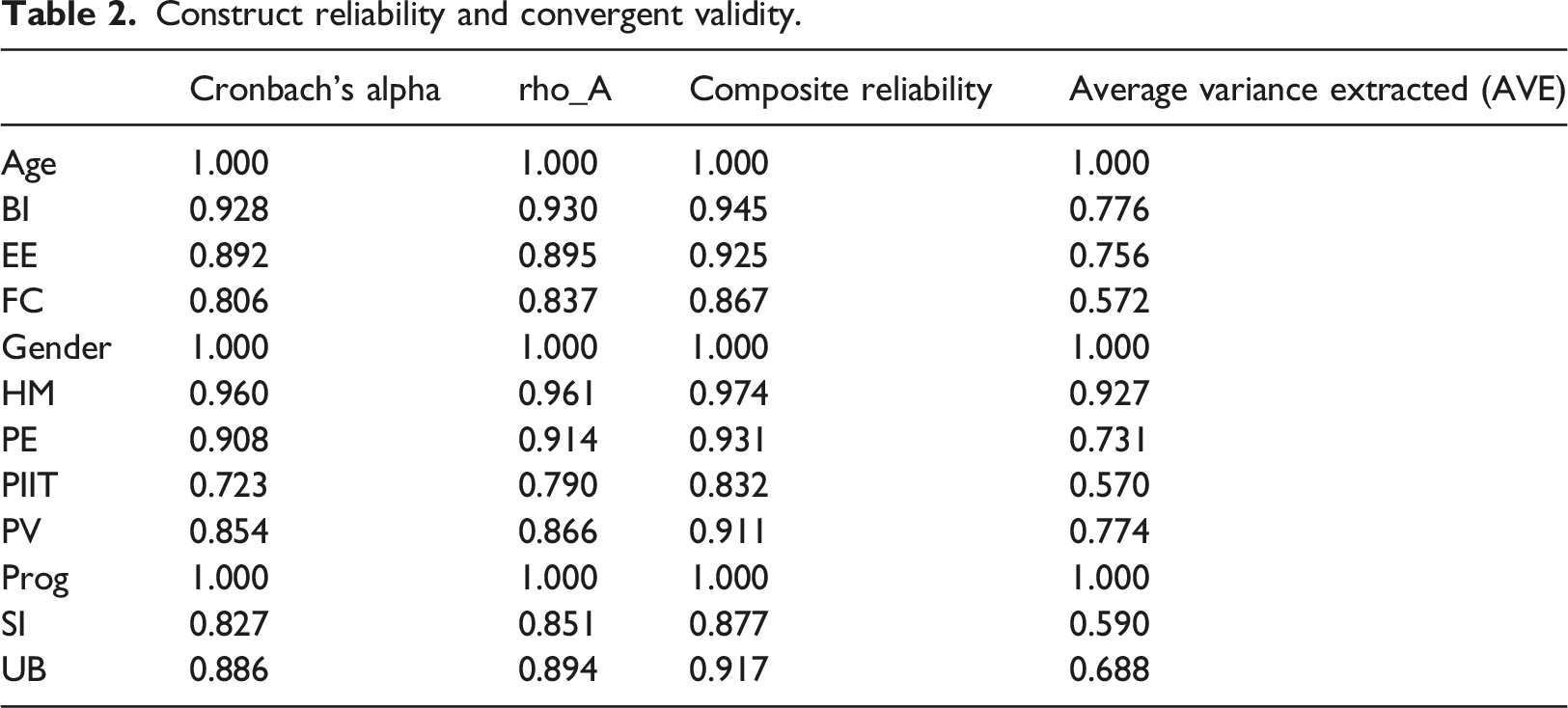
Convergent validity measures the average variance shared between a construct and its indicators and it should be 0.5 or higher (Ali et al., 2018; Hair et al., 2020). It shows the extent to which a construct converges to explain the variance in its items (Hair et al., 2019). The metric for assessing convergent validity is the average variance extracted (AVE). All AVEs were between 0.570–0.927 which is an indication of very good convergences of the constructs towards the variances in their respective items (Table 2).
HTMT.
Structural model and hypotheses testing
Before assessing the structural relationship, collinearity was examined to ensure that it did not bias the regression results. Collinearity is the extent to which indicator items are correlated and the metric for assessing it is the variance inflation factor (VIF) (Ali et al., 2020; Hair et al., 2020). Hair et al. (2020) stipulate that VIF values above five are indicative of probable collinearity issues among the predictor constructs. All the indicators had outer VIFs below 5, specifically 1.037 to 2.212, meaning multicollinearity was not a problem.
Path coefficients and decisions on hypotheses.
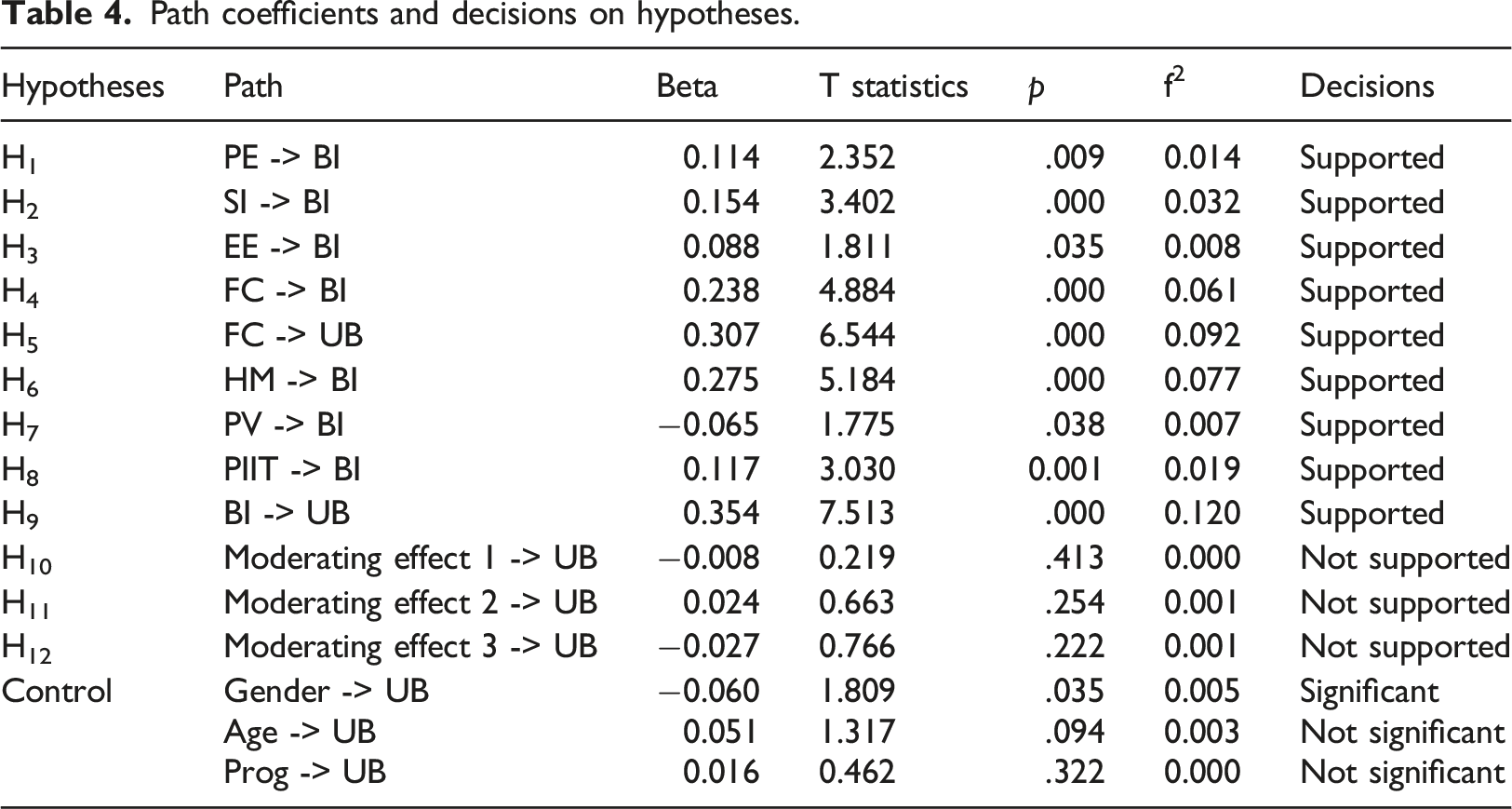
Examination of the path coefficients in Table 4 demonstrates that all the hypotheses of the study were supported (p ≤ .05) with the exception of the moderating effects of gender, age and programme of study on the use of e-learning in entrepreneurship education. However, controlled results produced a significant effect of gender (p = .035) on the use of e-learning in entrepreneurship education, thus signalling significant differences between males and females in the effect of their intention to use e-learning and perceptions of facilitating conditions on their actual use of e-learning in entrepreneurship education.
Thus, the results of this study show that performance expectancy, social influence, effort expectancy, facilitating conditions, hedonic motivation, extended price value and personal innovativeness towards e-learning, significantly influence students’ intention to use e-learning in entrepreneurship education. Consistent with UTAUT2, both intention and facilitating conditions predict students’ actual use of e-learning in entrepreneurship education. However, age, gender and programme of study did not moderate the relationship between the intention to use e-learning and actual use of e-learning in the entrepreneurship course.
Examination of the path coefficients, which are the beta values (Table 4; see also Figure 2), reveals that hedonic motivation was the highest predictor of behavioural intention, explaining 27.5% (beta = 0.275) of the variance in intention to use e-learning in entrepreneurship education, followed by facilitating conditions (beta = 0.307) and social influence (beta = 0.154). On the contrary, extended price value was the least predictor and explained 6.5% of the variance in behavioural intention. Whereas extended price value had a significant negative effect (p = .038; beta = −0.065) on intention, all the other predictors of intention were positive. This means that, an increase in extended price value would reduce students’ intention to use e-learning and vice versa while an increase in all the other predictors would cause an increase in intention and use of e-learning in entrepreneurship education. Model of the antecedents of E-learning in undergraduate entrepreneurship education.
The coefficient of determination (R2) was analysed in order to establish the predictive ability of the model. R2 is a measure of in-sample prediction of all endogenous constructs. The minimum value is 0 and the highest is 1 (Hair et al., 2019; Zhang, 2017). R2 of behavioural intention to use e-learning in entrepreneurship education was 0.544 whereas that of actual use of e-learning was 0.345 (Figure 1). That is, the model was able to predict 54% of students’ intention to use e-learning and 35% of actual use of e-learning, in entrepreneurship education, but with small effect size ( f 2 = 0.007–0.120). The results demonstrate the presence of other underlying factors that could influence students’ intention and actual use of e-learning in entrepreneurship education.
Discussions
The results demonstrate that all the independent variables, examined within the UTAUT, directly predict students’ intention to use e-learning in entrepreneurship education while intention and facilitating conditions also directly predict students’ actual use of e-learning in entrepreneurship education. Although age, gender and programme of study did not moderate the relationship between students’ intention to use e-learning and actual use of e-learning in the entrepreneurship course, controlled results yielded a significant positive effect of gender on the relationship between intention and actual use of e-learning in the entrepreneurship course.
Findings from this study confirm the significant positive effect of performance expectancy on behavioural intention as hypothesised in the original UTAUT and subsequent versions, for instance by Alshahrani and Walker (2017) and Moorthy et al. (2019). However, this study found hedonic motivation as the strongest predictor of behavioural intention contrary to research by Venkatesh et al. (2003), Yeboah et al. (2014) and Bellaaj (2015) who established performance expectancy as the strongest predictor of behavioural intention. Similarly, although this study shows that effort expectancy had a significant positive influence on behavioural intention, it was not the greatest predictor of intention as posited by Surachim et al. (2018).
Consistent with Moghavvemi (2017), El-Masri and Tarhini (2017) and Gunasinghe et al. (2020), results from this research show that hedonic motivation was the highest predictor of behavioural intention. This may be due to the use of interactive online pedagogies such as videos and discussion fora in the course; thus, creating a positive experience that could motivate participants to pursue entrepreneurial opportunities in the future. Previous research shows that interactive and reflective teaching and learning methods generate fun and enhance entrepreneurial learning among students (Udeozor et al., 2021; Wraee et al., 2021; Zaneldin et al., 2019).
In agreement with the UTAUT and prior research, for instance by Ain et al. (2016) and Bervell and Umar (2017), social influence had a significant positive effect on behavioural intention. This supports the argument of this paper that entrepreneurship education thrives on social learning, for example in team projects and competitions, and as a result, social influence is key to student’s e-learning acceptance and usage (McFarland, 2017; Secundo et al., 2020). Results from this study also support propositions by Farooq et al. (2017) about the important role of PIIT in predicting students’ intention to adopt e-learning. This contradicts Gunasinghe et al.’s (2020) findings in a study of academics; thus, highlighting that e-learning antecedents could vary for different stakeholder groups even in higher education.
Although facilitating conditions recorded the lowest mean score, the inferential analysis illustrate them as the second highest predictor of intention contrary to findings from previous studies by Venkatesh et al. (2003), Bervell and Umar (2017) and Moghavvemi (2017) that did not report facilitating conditions among the top predictors. However, the finding on low students’ intention to embrace e-learning in entrepreneurship education suggests a negative net effect between facilitating conditions on one hand and PIIT, performance expectancy, effort expectancy and hedonic motivation which had relatively high mean scores. Thus, adequate presence of the right facilitating conditions would boost students’ intention and use behaviour.
Significant negative effect of extended price value confirms UTAUT2’s postulate of the importance of price value to technology usage intention (Ventakesh et al., 2012) among students in a developing country context. In contrast, El-Masri and Tarhini (2017) discovered an insignificant effect of price value on students’ intention to adopt e-learning in Qatar and the USA. It could be argued that although the UCC online LMS was zero-rated, cost incurred by students in acquiring personal computers and mobile phones, for use at their convenience, as well as data for lectures via zoom and related platforms, was a deterrence to students’ intention to adopt and use e-learning in the entrepreneurship course.
This research also validates arguments by Venkatesh et al. (2003) on the ability of the UTAUT to predict higher variances in comparison to those from other technology acceptance models which normally fall between 17% and 53%. The extended UTAUT model of this study predicted 54% of the variance in undergraduate students’ behavioural intention. This percentage is relatively high and mirrors percentages obtained in other studies, for instance 55% by Alshahrani and Walker (2017) and 47.7% by Abbad (2021). Nonetheless, for actual e-learning usage, the extended UTAUT model of this study explained a relatively lower variance of 35% in comparison to 59.9% obtained by Abbad (2021).
The relatively lower variance in actual use of e-learning in this study points to the presence of other underlying factors that could influence students’ intention and use of e-learning in entrepreneurship education. For example, Mensah et al. (2022) in a study on experiential learning in online entrepreneurship education, found that engagement with real-life experiences provide opportunities for students to grasp some entrepreneurial competencies better than online experiences. Topics like feasibility studies, business planning and innovation, which develop competencies in opportunity recognition, evaluation and exploitation, might require some offline exposure. This implies that the hybrid model to e-learning (Pisoni, 2019; UNESCO, 2021) may be a better alternative to entrepreneurship education, post-COVID.
Although the UTAUT posits moderating effects of gender, age and experience (proxied by programme of study) on the relationship between intention and actual use of technology (Venkatesh et al., 2003), all the three variables were found to have no significant moderating effect on the relationship between intention and actual use of e-learning in the entrepreneurship course. Controlled results however indicated a significant positive effect of gender on the relationship between intention and the use of e-learning in the course, signalling the need to pay attention to gender differences in the promotion of e-learning in entrepreneurship education.
Conclusions and recommendations
This study sought to analyse the antecedents of e-learning in undergraduate entrepreneurship education. The rationale for the study stems from disruptions in academic activity in higher education institutions due to the COVID-19 pandemic and the need to adopt e-learning and interactive online pedagogical approaches in entrepreneurship education. This study validates the UTAUT model in the context of entrepreneurship education.
Findings from the study lead to the conclusion that efforts at increasing students’ intention to use e-learning in entrepreneurship education would require consideration of all the variables in the extended UTAUT model employed in this study. However, the study establishes a slightly different dynamic where hedonic motivation takes centre stage, as opposed to performance expectancy and effort expectancy which usually emerge in literature as the strongest predictors of e-learning. An implication of this insight is that the use of e-learning in entrepreneurship education would require time in preparing the system to be interactive. The study also concludes that ensuring the continuous use of e-learning in entrepreneurship education would require more investments into organisational and technical infrastructure. Such investments would be useful in facilitating the conversion of students’ intention into action. Important others such as peers and course instructors are also crucial to students’ intention to use e-learning in entrepreneurship education as well as gender differences.
It is recommended that e-learning in entrepreneurship education should have systems that leverage fun and interactive pedagogical approaches to encourage adoption. This would require technical support in transforming course contents into interactive activities on e-learning systems. Since peers played a key role in students’ adoption of e-learning in entrepreneurship education, project-based learning could be encouraged to foster interactions. Managers of e-learning systems are also entreated to ensure the presence of the right facilitating conditions, not forgetting the need to pay attention to gender differences, since the conditions play an integral role in students’ intention and actual use of e-learning in entrepreneurship education. Subsidised laptops and data packages would also go a long way to enhance students’ intention and use of e-learning. Students should also seek training in the effective use of interactive e-learning resources to boost their effort expectancy and make online entrepreneurship education an effortless learning experience.
A limitation of this study is that the research participants were from the sciences and related fields. Another shortfall of the study is the absence of statistical comparison between different sub-samples by gender and study programme. Future studies could focus on non-science students and students from other levels of education and in other educational institutions. Furthermore, researchers can explore comparative analysis of the antecedents of e-learning in entrepreneurship education by gender and programme of study. Researchers can also investigate the effects of e-learning in entrepreneurship education on students’ learning outcomes.
Footnotes
Acknowledgements
The authors are grateful to all who reviewed and edited the manuscript in the course of its development.
Declaration of conflicting interests
The author(s) declared no potential conflicts of interest with respect to the research, authorship, and/or publication of this article.
Funding
The author(s) received no financial support for the research, authorship, and/or publication of this article.
