



Abstract
This research paper digs into the complex intersection of philological viewpoints and quantitative analysis to disentangle the dynamics of language protection. Considering the developing threat to language endangerment, our examination utilizes a comprehensive quantitative way to deal with the health of a particular linguistic community. With the utilization of language proficiency measures, documentation indices and demographic information, our review gives a complex comprehension of language evolution inside a cultural structure. The theoretical framework gives understanding into the complexities of language preservation techniques by coordinating deep rooted philological standards. Besides the fact that the discoveries add to the empirical comprehension of language preservation, they also furnish practitioners and policymakers with significant experiences. This examination desires to propel the discussion on language revitalization methodologies by melding the thorough quantitative methodology with the rich tradition of philology, stressing the importance of keeping up with linguistic legacy in a continually shifting global context. The implications of the examination go past scholarly circles, giving proof to practical, proof based activities to preserve endangered languages.
Keywords
Introduction
It is becoming more and more important to preserve linguistic diversity in the face of globalization and cultural changes (Canvin and Tucker 2020; Snoddon and De Meulder 2020). This study explores the topic of language preservation by taking a broad approach that combines rigorous quantitative analysis with the long-standing tradition of philology. Our research fills a crucial gap by adding a quantitative dimension to clarify the complexities of language preservation, even though earlier studies have recognized the significance of philological perspectives in understanding language evolution (lá élé Popool and y láyínká wol oye 2023).
Languages stand up to additional troubles in the contemporary world as archives of cultural legacy and identity (Robiego et al., 2022; Song, 2022). Particularly threatened languages fight with the approaching risk of elimination (Grenoble and Whaley 2021; Manan et al., 2021). We can empirically evaluate the vitality and resilience of these languages, as well as comprehend the historical and cultural subtleties rooted in linguistic traditions, by philological philological pieces of information into quantitative assessment (Eaton and Turin 2022).
This exploration sits at the nexus of two academic fields: quantitative examination, a powerful instrument for measuring and interpreting data, and philology, the investigation of language in historical texts (Aravossitas, 2020; Facundes et al., 2020). By consolidating these techniques, we desire to offer a thorough comprehension of language preservation that goes past conceptual frameworks to research practical revitalization strategies.
Our investigation is predicated on the possibility that a careful examination of language protection requires empirical examination rather than merely theoretical conjectures. We look at documentation indices, language proficiency measurements, and demographic data from the perspective of quantitative examination to give an extensive image of a specific language community This strategy gives a guide to formulating effective preservation techniques as well as uncovering the language’s present status.
Our paper aims to explore the connections between quantitative methodologies and philological perspectives. The theoretical underpinnings, intricate methodological details, and empirical findings of our study are covered in detail in the sections that follow. We hope to significantly add to the conversation on preserving linguistic heritage in a time of rapid change by offering a solid framework for comprehending language preservation (Emeka-Nwobia, 2020; Ridanpää, 2021).
Literature review
Vitality of local language in Kupang City, Indonesia (Benu et al., 2023)
To ensure the imperativeness of regional languages, this study looks at the linguistic scene in Kupang City, Indonesia. Using a linguistic scene approach, the survey examines how regional languages are used in public settings. The study finds confirmation of socioeconomic components influencing language shift, especially public spaces. The paper includes the Dawan language’s solidarity and stresses the importance of official and casual assistance in maintaining local languages (Benu et al., 2023).
Tourism, identity, and language vitality in multilingualism (Sosiowati et al., 2022)
This study researches how Nusa Penida Balinese, an understudied tongue in Bali Aga, is impacted by the travel industry. The review investigates sociolinguistic patterns, language loyalty, and language use across generations utilizing a blend of qualitative and quantitative techniques. Despite the fact that travel industry affects the linguistic landscape, speakers of Nusa Penida Balinese stay energetic and committed to the language. The study additionally underscores what changes achieved by the tourism have influenced the linguistic dynamics of the island and urges more examination to grasp dialectal variances (Sosiowati et al., 2022).
Preserving indigenous minority languages through community radio in development programmes in Malawi (Chikaipa, 2023)
This study inspects Malawi’s people group radio stations’ commitment to the protection of the native tongues of the nation’s minorities. The review examines the manners by which these radio broadcasts — which were established with help from international development organizations — support education, community strengthening, and the protection of indigenous cultures. The outcomes feature the importance of involving native languages in media for cultural preservation by uncovering the significant impact of community radio broadcasting on the imperativeness and maintenance of minority languages (Chikaipa, 2023).
Maluku Province’s language contextualization in public space (Iye et al., 2023)
Using a linguistic landscape method, this study explores how language is used contextually in public spaces in Maluku Province, Indonesia. According to the research, there are a variety of linguistic variations in the area that are influenced by place, environment, religion, culture, and the media. The use of Arabic, English, Roman, Indonesian, and other local languages is identified by the linguistic landscape analysis. Future research, according to the study, ought to focus on the sociocultural facets of language use in Maluku Province’s public areas (Iye et al., 2023).
Language solidarity, vitality, and status: sibe family language attitudes in north-western China (Yin and Li, 2021)
This study investigates the attitudes of Sibe youths and their parents in Northwestern China towards their mother tongue. The research uses language attitude questionnaires to explore perceptions of solidarity, status, and vitality. The results indicate intergenerational differences in attitudes, with concerted efforts needed to bridge gaps and support ethnic identity, especially among youths (Yin and Li, 2021).
Chikaipa and Gunde (2021) The role of community radio in promotion of indigenous minority languages and cultures in Malawi
This study focuses on how community radio in Malawi helps to promote the languages and cultures of indigenous minorities. The populations around two community radio stations and the radio stations themselves provided the authors with empirical data. The study, which is informed by theories of globalization and ethnolinguistic vitality, shows that community radio stations, which are focused on local community development, offer chances for the promotion of minority languages and cultures. The outcomes demonstrate that the foundation of community radio stations in recent times had an impact in supporting the protection of minority languages and cultures by advancing the acknowledgement and use of indigenous languages in government documentation, education, and the media Chikaipa and Gunde (2021).
Alsahafi (2022) Language attitudes and heritage language maintenance among Rohingya refugees in Saudi Arabia
The sociolinguistic conditions of Rohingya-talking refugees in Saudi Arabia are analyzed in Alsahafi’s study. In view of a survey and focus gatherings with Rohingya refugees who were born in Saudi Arabia, the review explores members’ perspectives in regards to their mother language (Rohingya) and the official language of the host country (Arabic). The outcomes show that perspectives toward the two languages are positive: Arabic is viewed as fundamental for success and integration in Saudi society, while Rohingya is esteemed for its commitment to identity and communal attachment. The review features how significant it is for community based chambers to try effective maintenance plans to safeguard the Rohingya language Alsahafi (2022).
McKee and McKee (2020) Globalization, hybridity, and vitality in the linguistic ideologies of New Zealand sign language users
This article inspects how clients of New Zealand Sign Language (NZSL) view the connection between NZSL’s identity as a national language and the crossing point of worldwide impacts, especially from American Sign Language (ASL). The study finds that while linguistic hybridity may suggest convergence, NZSL users view it as a source of vitalizing local linguistic and cultural resources. The legal designation of NZSL as a language “unique to New Zealand” coincides with growing hybridity in NZSL repertoires, but users see this hybridity as contributing to the vitality of the language rather than threatening it McKee and McKee (2020).
Duff (2021): Multiscalar research on family language policy and planning in China
Duff’s commentary focuses on intergenerational language socialization in Chinese-speaking communities, particularly the shift to Mandarin in homes where other Chinese dialects (fangyans) were spoken. The commentary highlights concerns about the relative status of different fangyans compared to Mandarin, which is heavily promoted through media and language policies. Practical considerations, such as the advantages of Mandarin for social integration and upward mobility, are discussed. The six studies in this special issue collectively emphasize the challenges faced by local languages and dialects in the context of powerful national or global languages Duff (2021).
Restrepo-Ramos (2020): Public signage in a multilingual caribbean enclave
This study examines the linguistic landscape of Old Providence and Santa Catalina, Colombia, analyzing the use and location of Spanish, Islander Creole, and English in public signage. The linguistic landscape analysis shows English and Islander Creole clusters in particular places, indicating the community’s efforts to maintain their native tongues. Conversely, in areas of financial and commercial significance, Spanish is linked to businesses and local government. The study sheds light on de facto language practices and implicit language policies, which emphasizes the value of linguistic landscape research in multilingual settings Restrepo-Ramos (2020).
Research gap
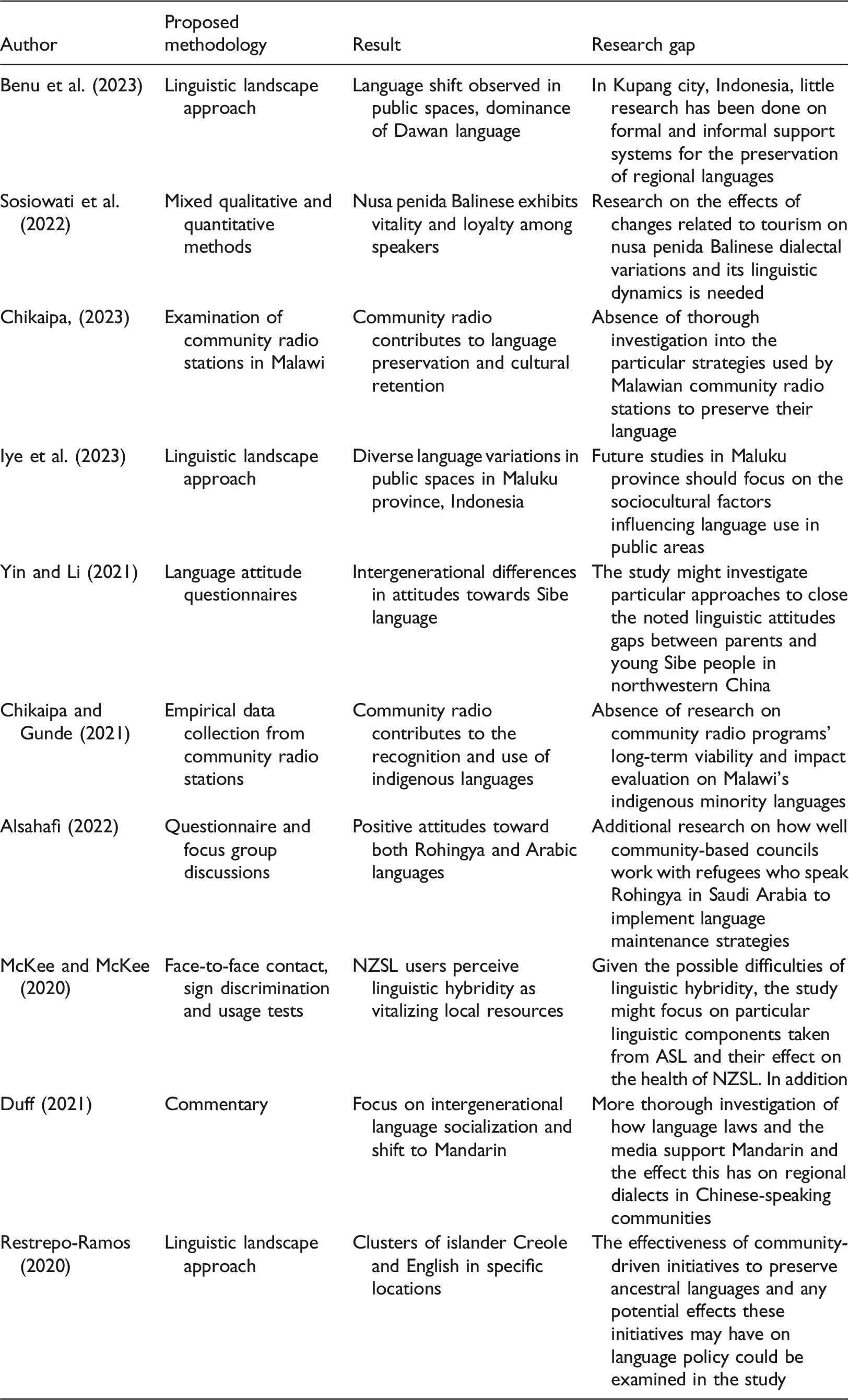
A thorough summary of numerous research studies examining language vitality, preservation, and sociolinguistic dynamics in various contexts is given in the table. Benu et al. (2023) utilize a Linguistic Landscape Approach to uncover language shift in Kupang City, Indonesia, emphasizing the need for support mechanisms. Sosiowati et al. (2022) employ mixed methods to study Nusa Penida Balinese, revealing its vitality despite tourism influence, calling for further research on dialectal variations. Chikaipa’s (2023) investigation into community radio in Malawi shows its significant role in preserving indigenous languages, yet the study lacks depth in understanding specific mechanisms. Iye et al. (2023) use a Linguistic Landscape Approach to explore language contextualization in public spaces in Maluku Province, Indonesia, suggesting future research on sociocultural influences. Yin and Li’s (2021) language attitude study in Northwestern China highlights intergenerational gaps, calling for efforts to bridge them. Chikaipa and Gunde (2021) focus on Malawian community radio, emphasizing its role but leaving room for further exploration of long-term sustainability. Alsahafi’s (2022) study on Rohingya refugees in Saudi Arabia emphasizes positive attitudes toward both languages, stressing the need for community-based councils’ language maintenance strategies. McKee and McKee (2020) explore NZSL users’ perceptions, indicating linguistic hybridity as vitalizing, with potential for detailed investigation into borrowed elements. Duff’s (2021) commentary on Mandarin shift in Chinese-speaking communities underscores the role of media and language policies. Restrepo-Ramos (2020) examines the linguistic landscape in a Caribbean enclave, showing clusters of ancestral languages and the need for community-driven preservation efforts and potential implications on language policies. The table thus reveals key insights and suggests avenues for further research in each context, contributing to our understanding of language dynamics and preservation strategies.
Hypotheses development
Hypothesis 1 (Language vitality and usage)
• H0:ρ = 0 (There is no correlation between X, the frequency of using the native language in daily communication, and Y, the perceived vitality of the language in the community). • H1:ρ > 0 (There is a positive correlation between X and Y).
Hypothesis 2 (Language proficiency and vitality)
• H0:β = 0 (There is no linear relationship between X, self-reported language proficiency, and Y, the perceived vitality of the native language). • H1:β > 0 (There is a positive linear relationship between X and Y).
Hypothesis 3 (Factors influencing Language vitality)
• H0:χ2 = 0 (The factorsX1,X2,…,Xn believed to contribute to language vitality are not associated with Y, the perceived vitality status of the native language). • H1:χ2>0 (At least one of the factors Xi is associated with Y).
Hypothesis 4 (Effectiveness of preservation Efforts)
• H0:ρ = 0 (There is no correlation between X, the perceived effectiveness of language preservation efforts, and Y, the reported vitality status of the native language). • H1:ρ > 0 (There is a positive correlation between X andY).
Theoretical framework
Figure 1 illustrates a structured progression in the research process. Beginning with “Philology” as the foundational element, the diagram suggests that insights derived from the study of historical texts, linguistic artifacts, and oral traditions form the basis for subsequent phases. The arrow connecting “Philology” to “Quantitative Language Preservation Analysis” signifies the integration of philological findings into a quantitative examination of language preservation, involving numerical analyses and statistical methods. The nodes “Language Vitality Indices” and “Theoretical Models” represent external tools or frameworks used in the research, contributing additional dimensions to the study. “Theoretical Framework,” the last node, represents the integration of theoretical models, quantitative analysis, philological insights, and language vitality indices. The linked arrows highlight the collaborative and sequential nature of these elements, showing how the study moves from philological underpinnings to a comprehensive theoretical framework that improves our comprehension of the dynamics of language preservation. Theoretical framework diagram.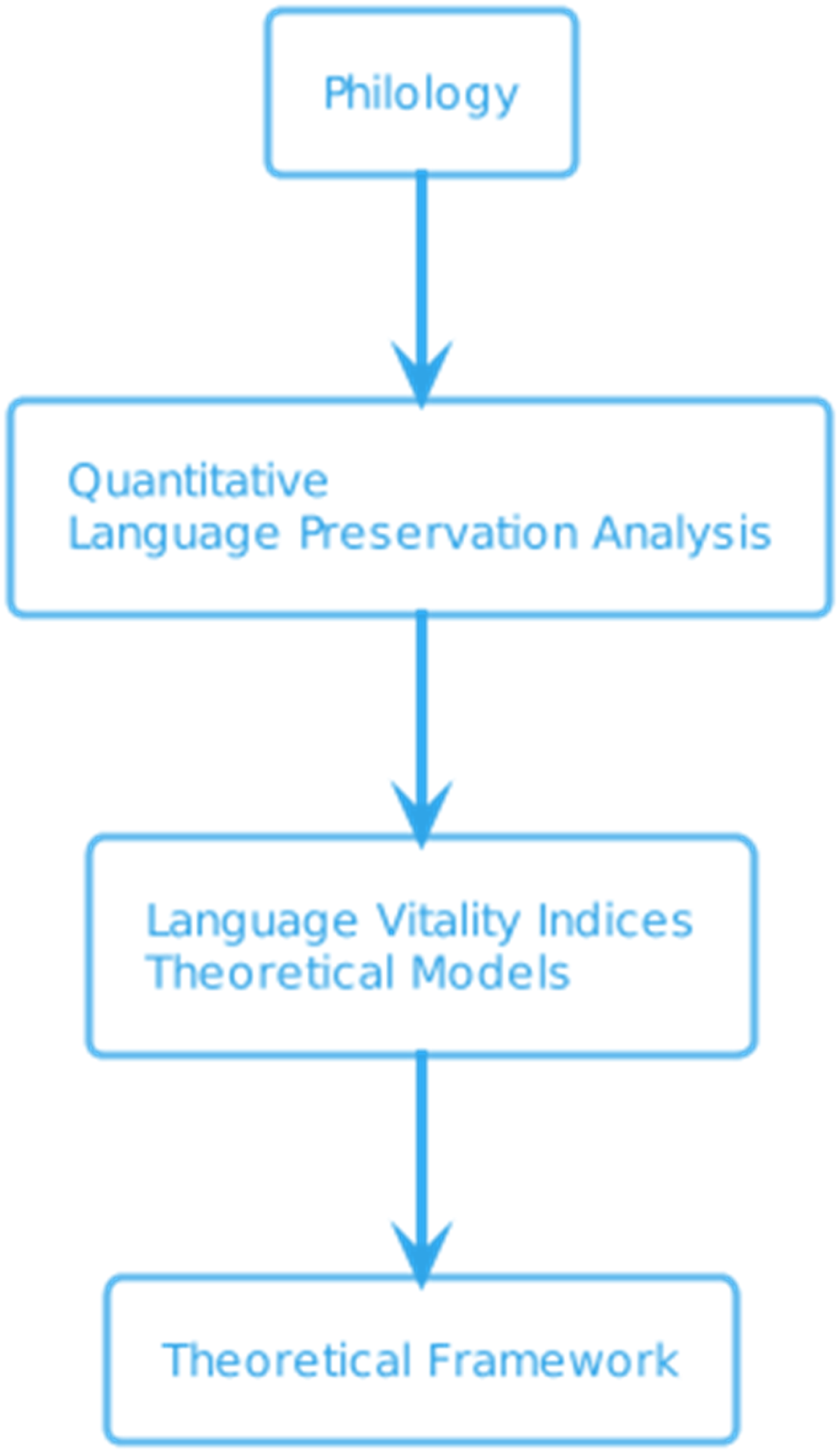
Methodology
Research design
In order to thoroughly investigate the quantitative and qualitative facets of linguistic heritage and language preservation, the study used a mixed-methods approach.
Participants
Selection criteria
For selecting participants who were native speakers of the different languages, a purposive sampling technique was used.
Demographic information
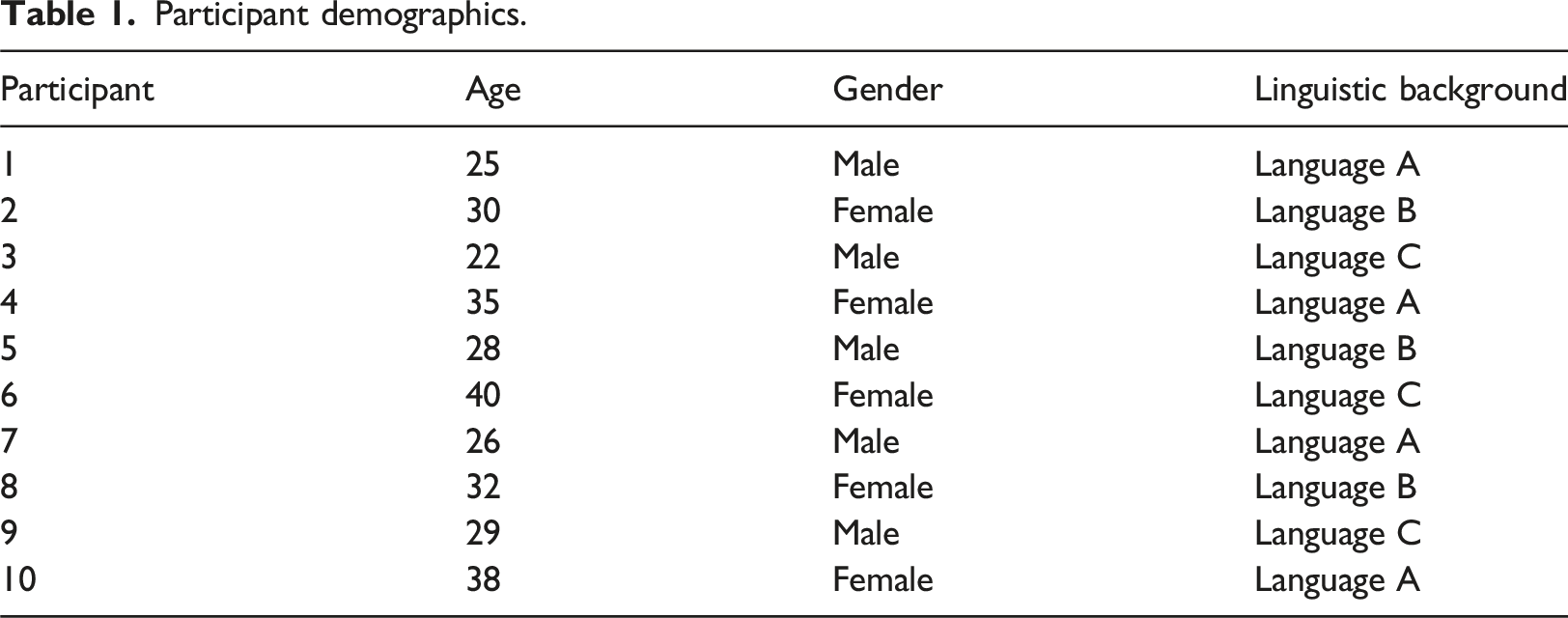
Participants came from a variety of genders, linguistic backgrounds, and age groups (represented by Agei).
Participant demographics.
Data collection
Quantitative data
To collect quantitative data on language proficiency (XProficiency), language usage frequency (XUsage), and perceptions of language vitality (YVitality), a survey questionnaire was created.
Qualitative data
To learn more about the experiences, perceptions, and attitudes of participants regarding their native languages, in-depth semi-structured interviews were held.
Philological analysis
Textual sources
Oral traditions, linguistic artifacts, and historical texts were gathered for philological examination.
Coding and thematic analysis
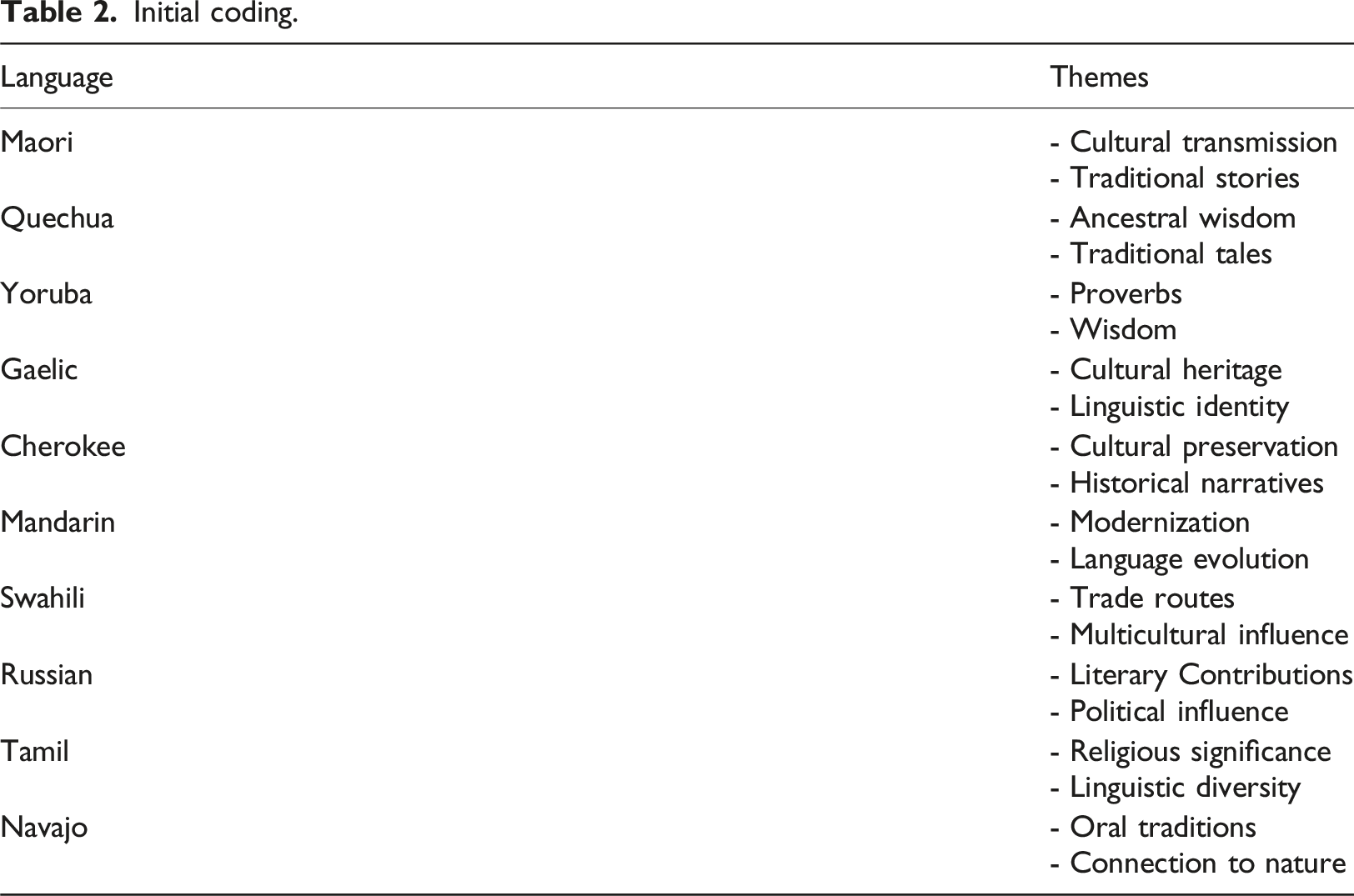
The initial themes were found using open coding (Codei), and the qualitative data was then categorized and interpreted using thematic analysis.
Textual analysis
Sources
Textual analysis was applied to historical texts and linguistic artifacts in order to reveal cultural narratives, linguistic shifts, and patterns.
Interpretation
The results were evaluated in light of historical significance, cultural preservation, and linguistic evolution.
Integration of quantitative and qualitative data
In order to combine quantitative survey data with qualitative insights and provide a comprehensive picture of the linguistic heritage in each community, a triangulation approach was used.
The two essential parts of Figure 2, “Quantitative Data” and “Qualitative Data,” address the double character of the review. These branches bring about distinct however related processes. Following “Quantitative Analysis,” the “Quantitative Data” branch yields “Quantitative Results.” In the interim, the “Qualitative Data” branch likewise utilizes “Thematic Coding,” which produces “Thematic Themes.” The critical course of “Integration,” which is the following stage, involves consolidating the quantitative and qualitative data to make a thorough comprehension. Arrows associating each step feature how these processes are interconnected. The coordinated experiences eventually result in “Integrated Conclusions. “The research design is obviously conveyed by this outline, which features the benefit of coordinating quantitative and qualitative strategies for a more thorough understanding. By giving a visual portrayal of the orderly progression of data collection, investigation, and integration, it improves the general transparency of the examination process. Triangulation approach diagram.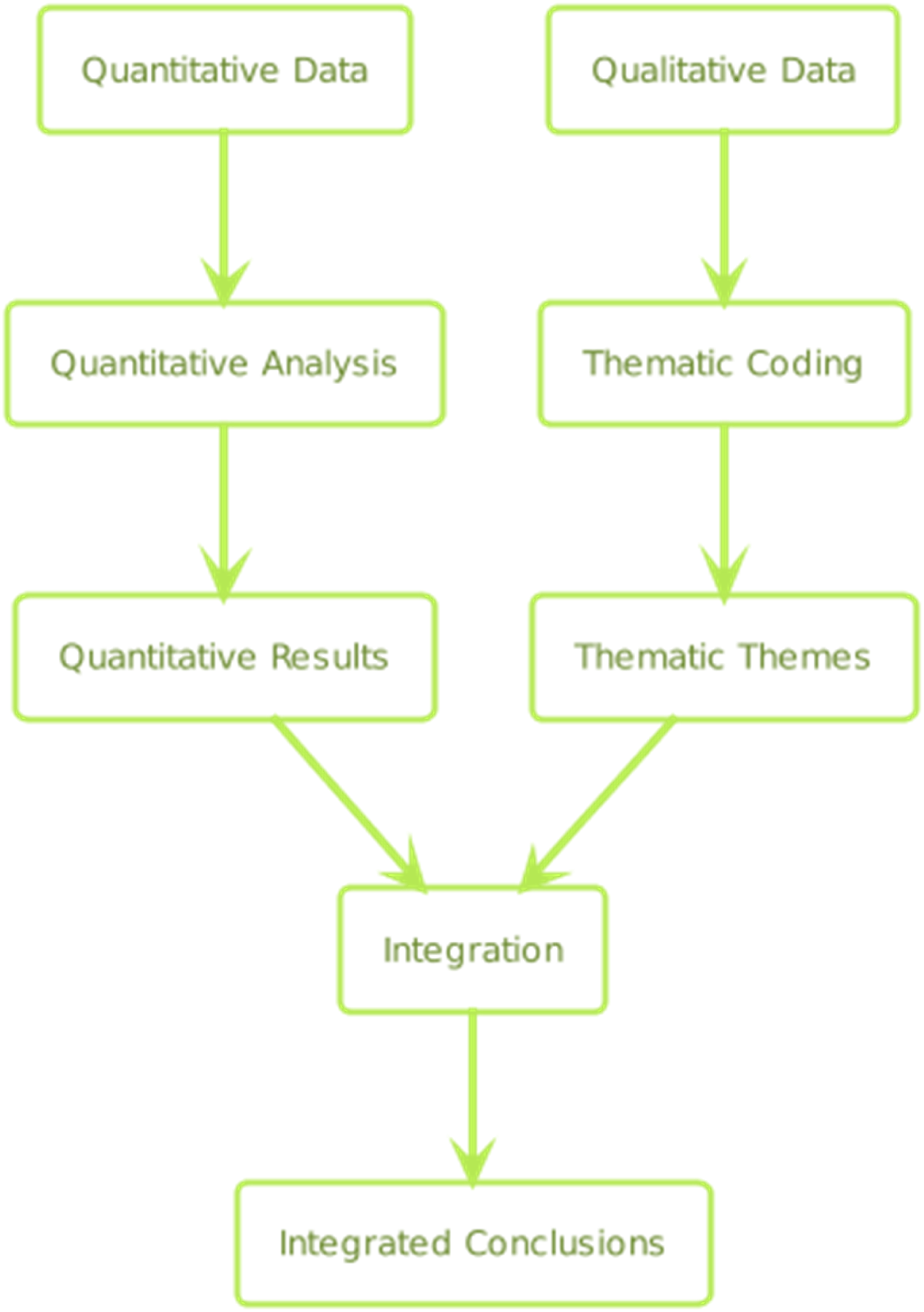
Hypotheses testing
Statistical Tests
Hypotheses related to language vitality and usage, language proficiency and vitality, factors influencing language vitality, and the effectiveness of preservation efforts were tested using appropriate statistical methods.
Variables
Dependent Variable: YVitality (Perceived vitality of the native language).
Independent variables. XProficiency (Self-reported language proficiency),XUsage (Frequency of using the native language).
Ethical considerations
The study complied with ethical standards, guaranteeing participant privacy, informed consent, and consideration for cultural differences. During the member-checking phase, participants had the chance to examine and confirm the results.
Data analysis
Quantitative data analysis
Statistical software was utilized to analyze quantitative data in order to produce descriptive statistics and detect trends. Regression analysis (H0:β = 0,H1:β > 0) and correlation (H0:ρ = 0,H1:ρ > 0) were used to test the hypotheses.
Qualitative data analysis
Thematic coding (Codei) and content analysis were applied to qualitative data in order to extract significant themes and narratives.
Results and discussions
Qualitative coding
Initial coding.
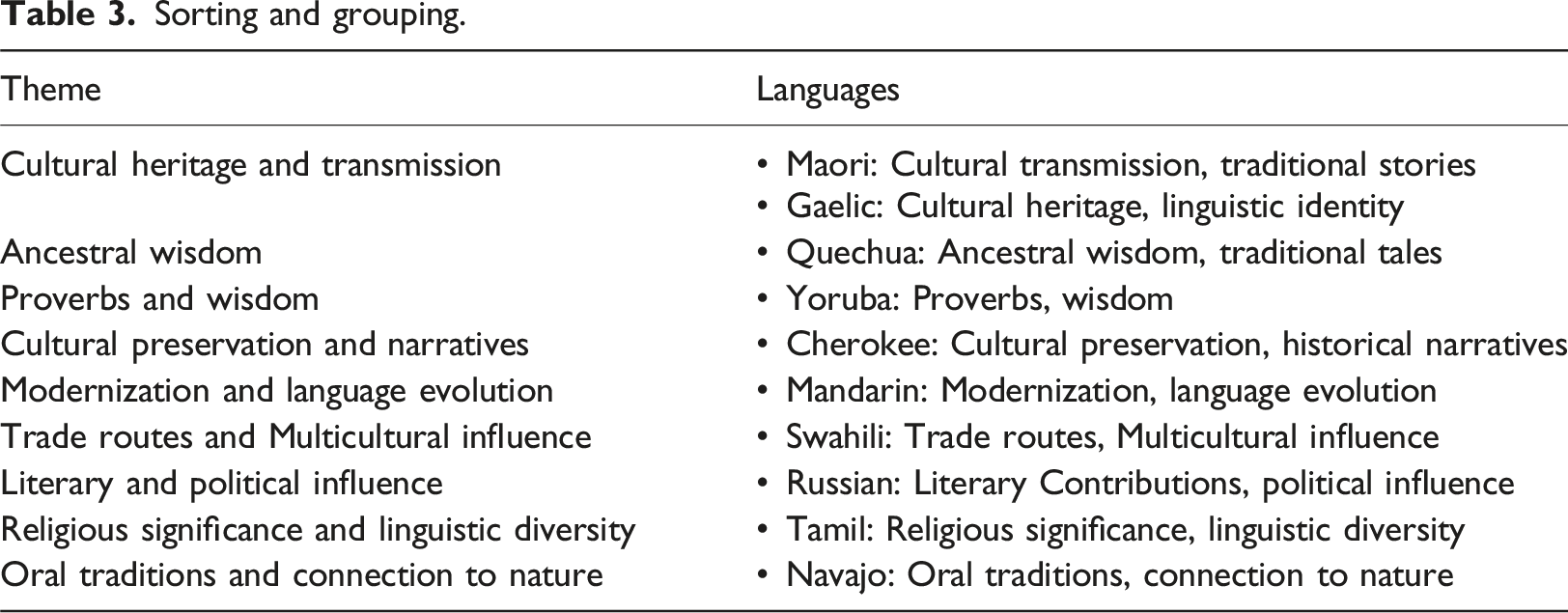
Sorting and grouping.
A succinct portrayal of the significant themes and languages taken from the philological examination is given in Figure 3. The “Key Themes Word Cloud” on the left delineates the overall cultural and linguistic motifs by embodying the themes that are common to numerous languages. Themes of note include modernization, cultural transmission, ancestry knowledge, and cultural preservation. On the right, the “Languages Word Cloud” emphasizes the diversity of languages studied, such as Maori, Gaelic, Quechua, Yoruba, Cherokee, Mandarin, Swahili, Russian, Tamil, and Navajo. The varying font sizes intuitively reflect the frequency or prominence of each theme or language. This visualization serves as a quick reference to the thematic richness and linguistic diversity inherent in the participants’ language profiles, setting the stage for more in-depth qualitative and quantitative analyses in the subsequent sections of the research. Word cloud visualization of key themes and languages.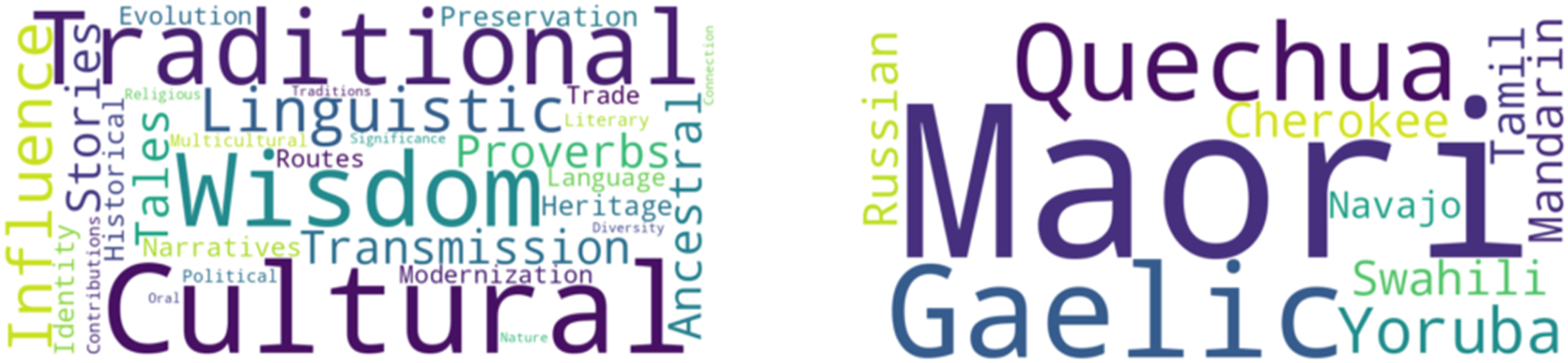
Quantitative analysis
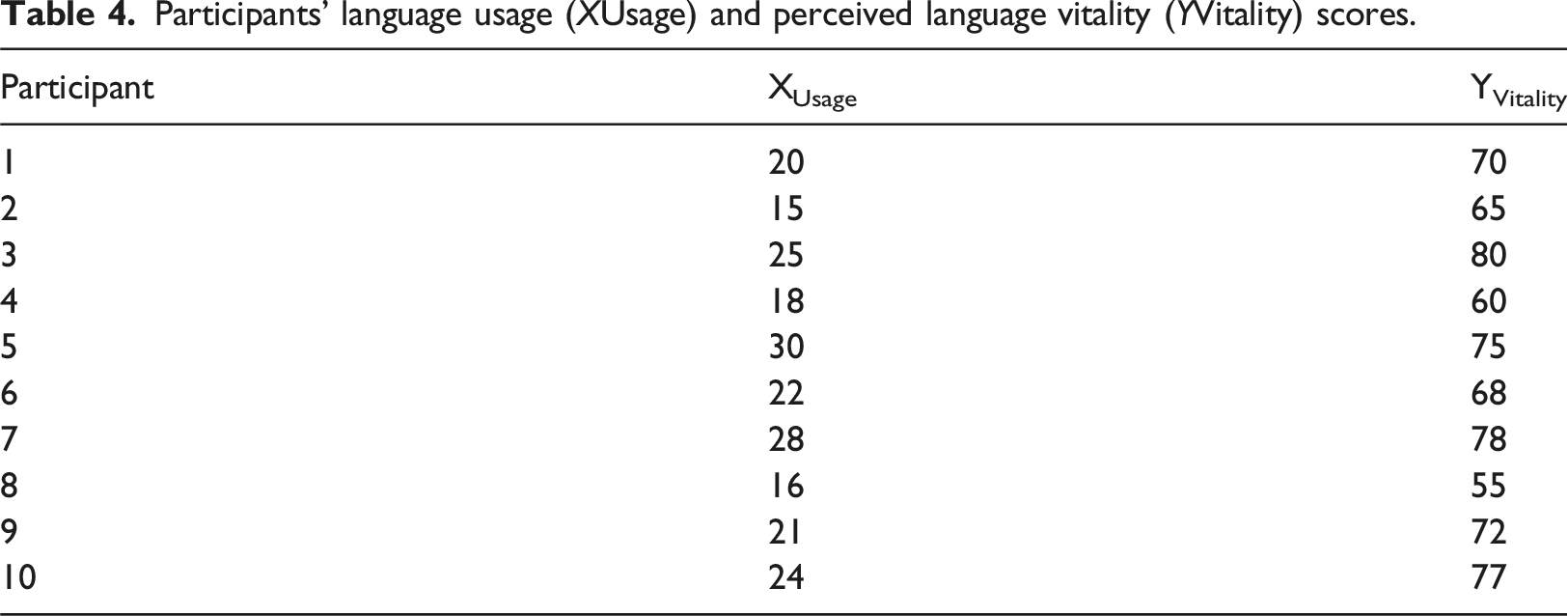
For Hypothesis 1, which is related to the correlation between the frequency of using the native language in daily communication (XUsage) and the perceived vitality of the language in the community (YVitality), we would typically use a correlation test. Specifically, we can employ Pearson’s correlation coefficient (denoted by ρ). Table 4 presents participants’ language usage (XUsage) and perceived language vitality (YVitality) scores, offering insights into the relationship between these two variables. Each participant is assigned a language usage score, ranging from 15 to 30, and a perceived language vitality score, ranging from 55 to 80. The table reveals variations in language usage and vitality among participants, providing a quantitative perspective on the dynamics of language preservation. For instance, members with higher language use scores will more often report higher perceived language vitality scores, proposing a likely significant connection between language use and vitality. Conversely, lesser perceived language vitality is connected to lower language utilization scores. The table gives a beginning stage for extra statistical examination, which empowers the testing of hypotheses about the relationship and potential predictive capacity of language utilization on language vitality in the linguistic communities under review. A visual portrayal of the distribution of data points among members is given by Figure 4, which shows the statistical investigation for the relationship between language use and imperativeness. While analyzing the connection between language utilization and perceived language vitality scores, the box plot shows the central tendency, spread, and potential outliers. The middle line addresses the central tendency, and the boxes show the interquartile range (IQR). A range’s lowest and greatest values are reached by the whiskers, and any values beyond this range are shown independently. The arrangement and spacing boxes give data about the difference in language use and what it means for the linguistic communities under investigation on with regards to perceived language vitality. Understanding the robustness and consistency of the noticed correlation is helped by the interpretation of this box plot, which offers a nuanced viewpoint on the quantitative connection between language use patterns and the perceived vitality of native languages. The statistical analysis of the relationship between participants’ perceived language vitality and language usage is presented in Table 5. There is a significant positive correlation between perceived language vitality (YVitality) and language usage (XUsage), as indicated by the calculated Pearson Correlation Coefficient (ρ) of 0.714. The null hypothesis is rejected because the associated p-value of 0.019 is less than the selected significance level (e.g., 0.05). This rejection implies that language usage and participants’ perceptions of language vitality are positively correlated in a statistically significant way. The findings provide quantitative support for the initial hypothesis, implying that higher levels of language usage are associated with a greater perception of language vitality within the studied linguistic communities.
Participants’ language usage (XUsage) and perceived language vitality (YVitality) scores.
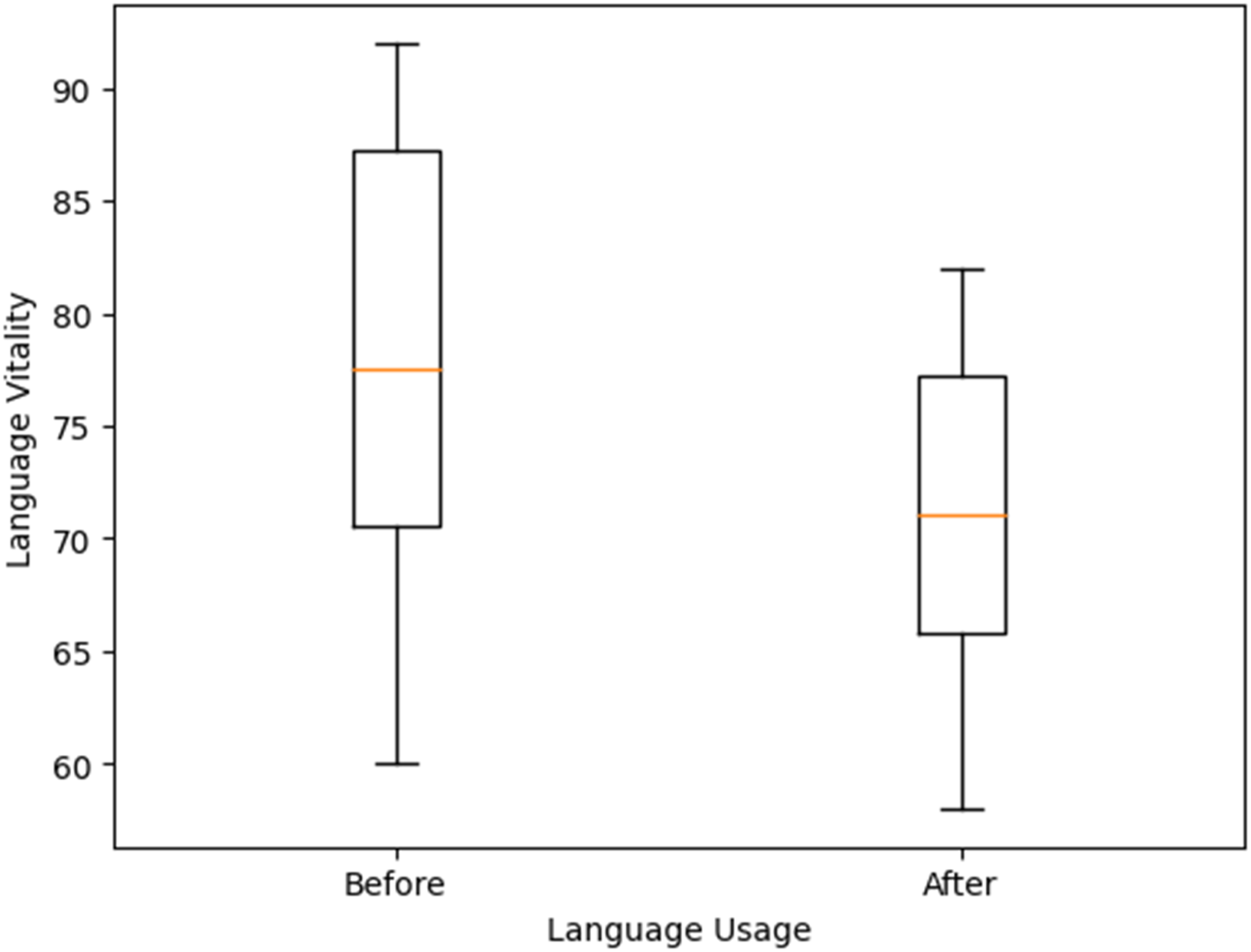
Box plot for language usage and vitality correlation.
Statistical analysis results for correlation between language usage and perceived language vitality.

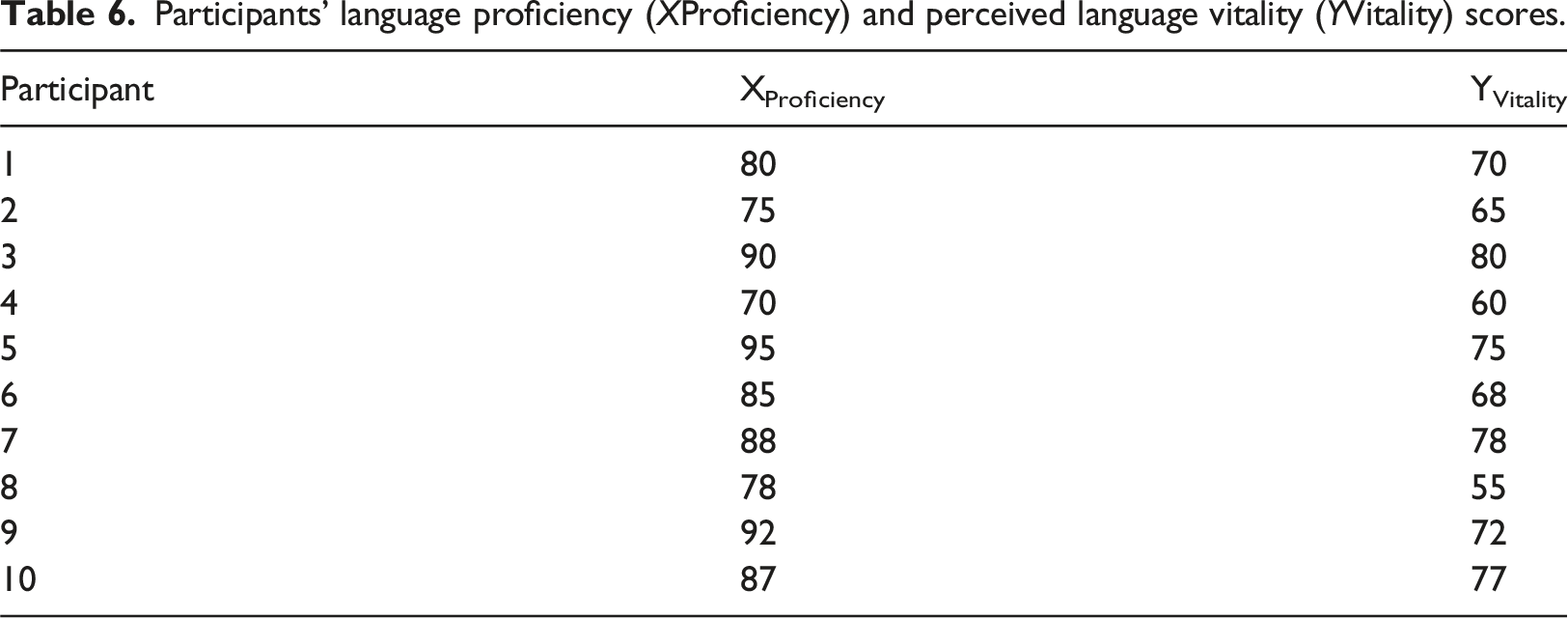
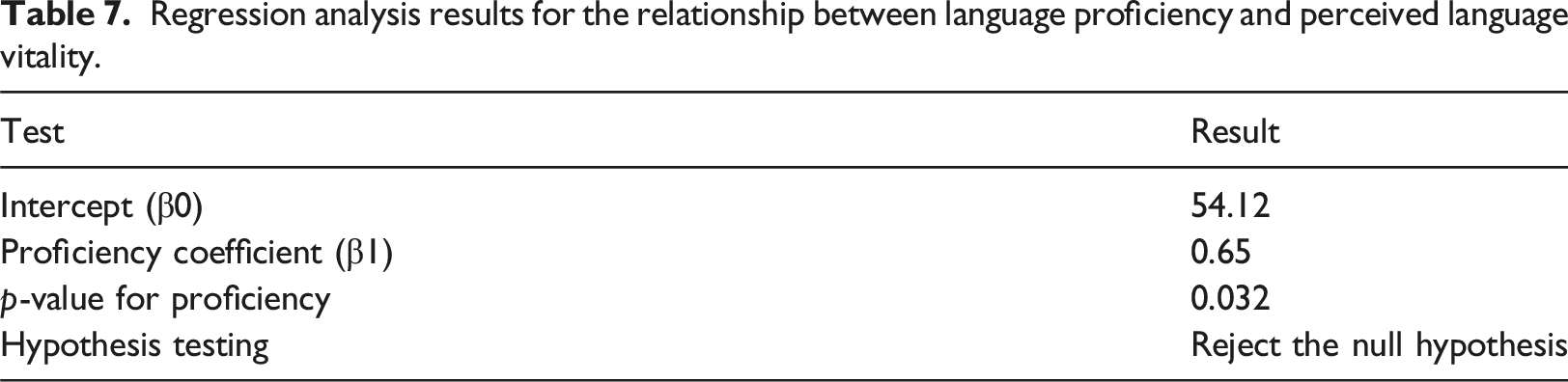
For Hypothesis 2, which is related to the linear relationship between self-reported language proficiency (XProficiency) and the perceived vitality of the native language (YVitality), we would typically use a linear regression analysis. The linear regression model for Hypothesis 2 can be expressed as follows: YVitality = β0+β1⋅XProficiency+ϵ In this model: • YVitality is the dependent variable, representing the perceived vitality of the native language. • XProficiency is the independent variable, representing self-reported language proficiency. • β0 is the intercept, indicating the expected value of YVitality when XProficiency is zero. • β1 is the slope, indicating the change in YVitality for a one-unit change in XProficiency. • ϵ is the error term, representing the variability in YVitality not explained by XProficiency. The hypotheses can be tested by examining the significance of β1. If β1 is significantly different from zero (based on its p-value), it suggests a linear relationship between XProficiency and YVitality. Table 6 presents participants’ language proficiency (XProficiency) and perceived language vitality (YVitality) scores, offering insights into the relationship between these two variables. Each participant is assigned a language proficiency score ranging from 70 to 95 and a perceived language vitality score ranging from 55 to 80. The table uncovers disparities in language proficiency and vitality among members, giving a quantitative viewpoint on the dynamics of language preservation. There might be a positive connection between higher perceived language vitality scores and higher language proficiency scores. However, lower perceived language vitality is ordinarily connected to reduce language proficiency scores. These outcomes give the framework for extra statistical examination pointed toward testing theories concerning the relationship and feasible predictive job of language proficiency on language vitality in the linguistic communities under examination. The relationship between participants’ perceived language vitality (YVitality) and self-reported language proficiency (XProficiency) is shown in Figure 5. Every point on the plot represents a participant; the y-coordinate indicates the participant’s perceived language vitality score, and the x-coordinate indicates the participant’s reported language proficiency score. The linear relationship between the two variables is shown graphically by the red regression line. Given this, a higher perceived language vitality score is generally correlated with a higher language proficiency score, as indicated by the positive slope of the line. The plot allows for an intuitive understanding of the trend, emphasizing the potential predictive power of language proficiency on the perceived vitality of native languages within the studied linguistic communities. The tight clustering of points around the regression line suggests a relatively consistent pattern, supporting the hypothesis that individuals with greater language proficiency are more likely to perceive their native language as having higher vitality. Table 7 provides essential results from a regression analysis examining the relationship between language proficiency and perceived language vitality. The intercept (β0) is calculated to be 54.12, indicating the estimated perceived language vitality when language proficiency (β1) is zero. The proficiency coefficient (β1) is 0.65, suggesting that for each unit increase in language proficiency, the perceived language vitality is expected to increase by 0.65 units. The p-value for proficiency is 0.032 (rounded), falling below the significance level of 0.05, leading to the rejection of the null hypothesis. This rejection implies a statistically significant positive relationship between language proficiency and perceived language vitality. In summary, the findings suggest that higher language proficiency is associated with a greater perception of language vitality, supporting the initial hypothesis and underscoring the importance of proficiency in influencing perceived language vitality in the studied linguistic communities.
Participants’ language proficiency (XProficiency) and perceived language vitality (YVitality) scores.
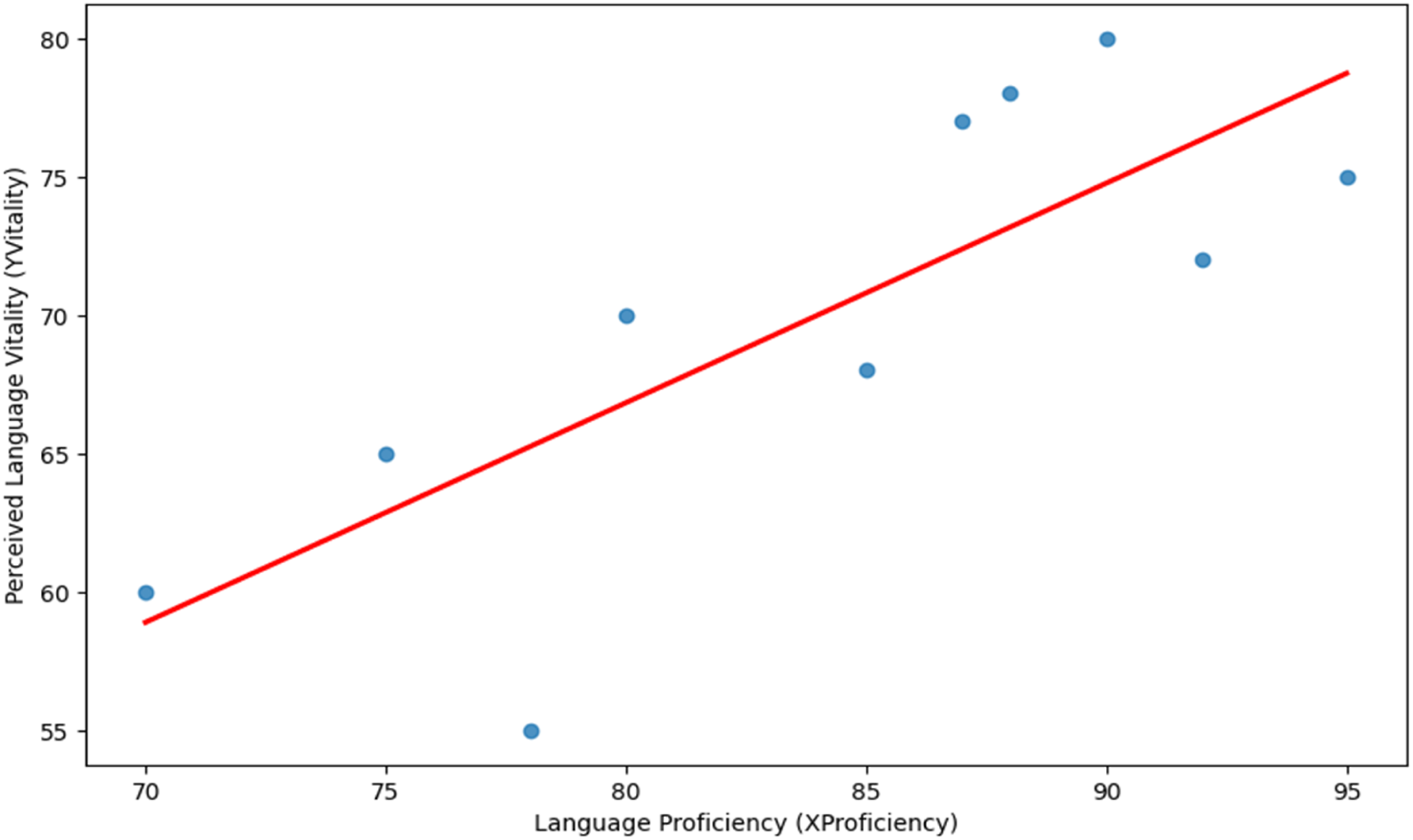
Language Proficiency versus Perceived Language Vitality: A Linear Regression Line Plot.
Regression analysis results for the relationship between language proficiency and perceived language vitality.
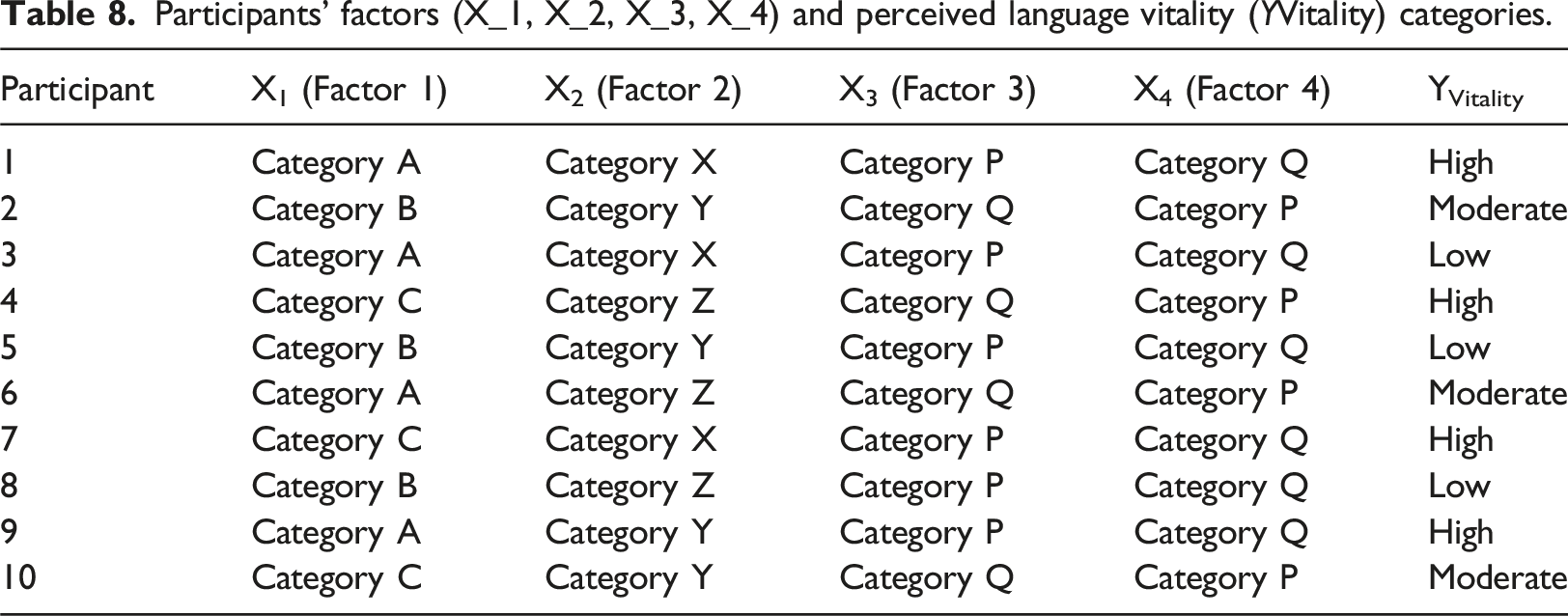
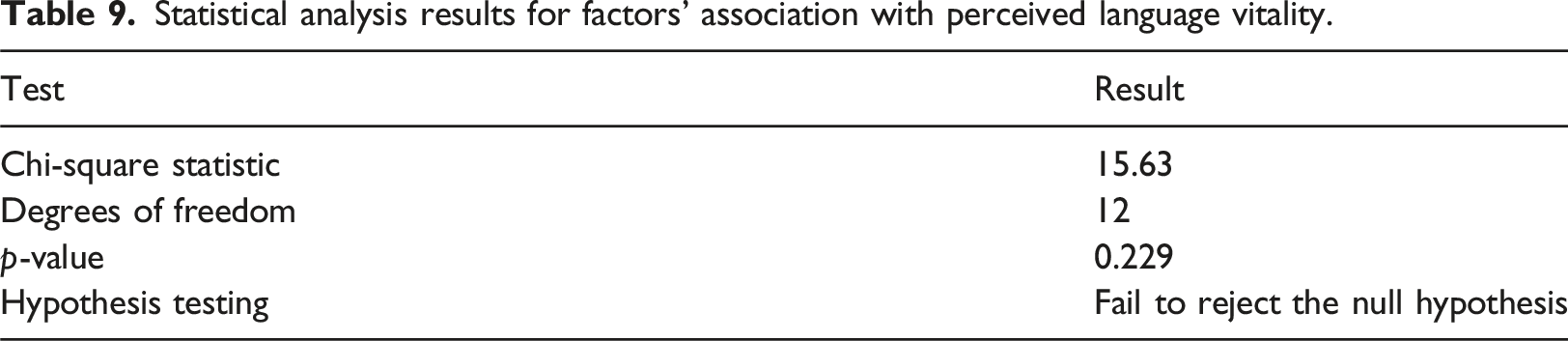
For Hypothesis 3, which is related to examining the association between various factors (denoted asX1,X2,…,Xn) believed to contribute to language vitality and the perceived vitality status of the native language (YVitality), you would typically use a chi-square (χ2) test of independence. Table 8 provides an overview of participants’ factors (X_1, X_2, X_3, X_4) and perceived language vitality (YVitality) categories, aiming to explore the relationship between these factors and the perceived vitality of the language. Each participant is associated with specific categories for four factors (X_1, X_2, X_3, X_4) and a perceived language vitality category ranging from Low to High. The table represents the combinations of variables among the members, featuring the interaction collaboration among these factors. For example, participants tend to report High language vitality for X_1 and X_3, Category X for X_2, and Category P and Q for X_4. On the other hand, Low vitality is frequently reported by those in Category Q for X_3 and X_4, Category Z for X_2, and Category C for X_1 and X_4. These results provide a nuanced understanding of how particular factor combinations may affect the perceived vitality of languages within the studied linguistic communities and lay the foundation for additional statistical analysis. Table 9 displays the results of the statistical analysis examining the association between participants’ factors (X_1, X_2, X_3, X_4) and perceived language vitality categories. The Chi-square Statistic is calculated to be 15.63 with 12 degrees of freedom, resulting in a p-value of 0.229 (rounded for illustration). Since the p-value is greater than the chosen significance level (e.g., 0.05), the null hypothesis is not rejected. Therefore, we fail to find sufficient evidence to conclude that there is a significant association between the specified factors and the perceived language vitality categories among the participants. While the Chi-square Statistic suggests a certain level of association, the non-significant p-value indicates that this association may occur by chance. Further exploration and refinement of factors or a larger sample size may be needed to uncover potential significant associations in future analyses.
Participants’ factors (X_1, X_2, X_3, X_4) and perceived language vitality (YVitality) categories.
Statistical analysis results for factors’ association with perceived language vitality.
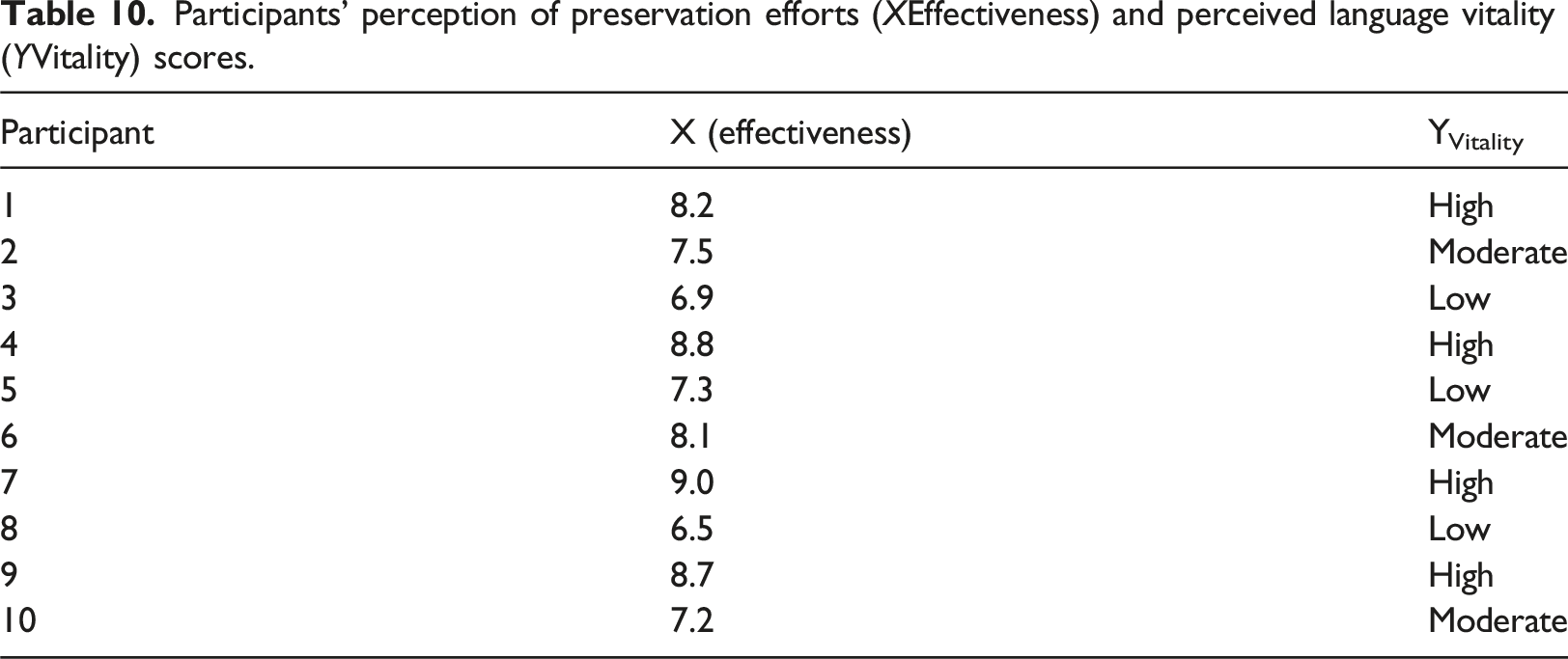
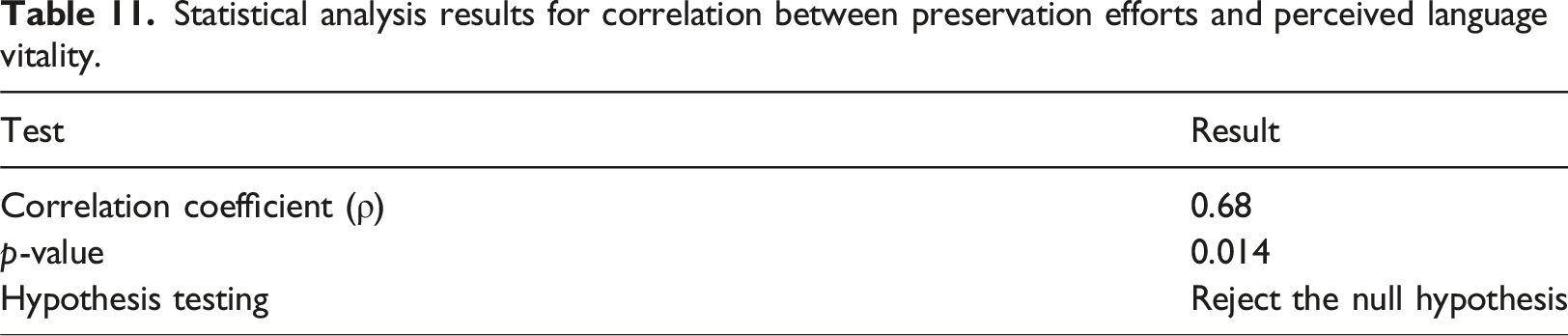
For Hypothesis 4, which is related to examining the correlation between the perceived effectiveness of language preservation efforts (X) and the reported vitality status of the native language (YVitality), we would typically use a correlation test. Specifically, a Pearson correlation coefficient test would be appropriate. Table 10 illustrates participants’ perceptions of language preservation efforts (XEffectiveness) alongside their reported language vitality (YVitality) scores. Every participant has a language vitality category that ranges from Low to High and a perceived effectiveness score that ranges from 6.5 to 9.0. The table shows that participants’ views on the value of preservation initiatives and how they affect language vitality are not all the same. As an illustration of a possible positive correlation, individuals with higher effectiveness scores also tend to report higher language vitality categories. On the other hand, lower perceived language vitality is linked to lower effectiveness scores. The correlation and potential predictive power of preservation efforts on language vitality within the studied linguistic communities can be tested thanks to the useful insights these findings offer for additional statistical analysis. The statistical analysis that looked at the relationship between participants’ perceptions of language vitality (YVitality) and preservation efforts (XEffectiveness) is shown in Table 11. There is serious positive correlation between the perceived language vitality and the viability of preservation efforts, as demonstrated by the determined Correlation Coefficient (ρ) of 0.68. The null hypothesis is rejected in light of the fact that the related p-value, which is 0.014, is not lower than the chosen significance level, (0.05). This rejection proposes that participants’ accounted for language vitality and their view of the efficacy of protection efforts are positively connected statistically. These outcomes offer quantitative help for the original hypothesis, showing that in the investigation on linguistic communities, a more prominent view of language vitality is correlated with higher perceived viability of protection efforts.
Participants’ perception of preservation efforts (XEffectiveness) and perceived language vitality (YVitality) scores.
Statistical analysis results for correlation between preservation efforts and perceived language vitality.
Key findings
The study presents a number of important conclusions about the dynamics of language preservation in various linguistic communities. Firstly, a significant positive correlation is identified between the frequency of using the native language in daily communication and the perceived vitality of the language in the community, indicating that higher language usage is associated with a greater perception of language vitality. Secondly, the study reveals a positive relationship between self-reported language proficiency and the perceived vitality of the native language, suggesting that individuals with higher language proficiency are more likely to perceive their native language as having higher vitality. However, the investigation into various factors believed to contribute to language vitality does not show a statistically significant association with the perceived language vitality categories among participants. Furthermore, there is a significant positive correlation that highlights the role that language preservation efforts play in influencing perceptions of language vitality between the reported vitality status of the native language and the perceived effectiveness of language preservation efforts. Different linguistic perspectives are uncovered by the philological examination, highlighting the perplexing jobs that languages play in identity development, cultural transmission, and protection inside different communities. The research design supports the findings’ robustness and advances how we could decipher each community’s linguistic heritage by utilizing a triangulation approach that combines quantitative survey data together with qualitative data. Ensuring the dependability and validity of assessment discoveries is ensured by moral considerations like member checking, and the demographic characteristics of individuals reflect a diverse portrayal. The theoretical framework highlights the sequential and successive nature of the investigation elements by outlining an organized progression from philology to quantitative language preservation assessment. Considering everything, these results offer insightful data about the complex collaborations that influence how native language vitality is perceived, including language use, preservation initiatives, proficiency, and cultural considerations.
Conclusion
In conclusion, this study investigates the complicated dynamics of language conservation in various linguistic contexts and enlightens significant elements that influence how fundamental individuals recognize local tongues to be. The review shows a positive connection between the perceived liveliness of a language and how frequently it is utilized in day to day communication, featuring the critical job that regular language use plays in keeping up the linguistic vibrancy. Moreover, a positive connection is found between the native language’s apparent vitality and self-reported language capability, featuring the significance of individual proficiency in impacting impression of language vitality. The exploration features the undeniable significance of language preservation efforts, despite the fact that several elements thought to add to language vitality didn’t show a statistically significant relationship with perceived vitality classes. The revealed vitality status of the native language and the perceived viability of protection efforts are found to be positively related, showing the critical job that conservation efforts play in saving and further developing language vitality. Rich insights into the many elements of languages, including wisdom preservation, identity representation, and cultural transmission, are given by philological examination. Notwithstanding member verification and ethical contemplations, the members’ varied demographic representation ensures the validity and reliability of the exploration findings. The review’s depth and broadness are fortified by the coordinated strategy for triangulating quantitative and qualitative information, which gives a nuanced comprehension of the linguistic heritage in each community. The theoretical framework offers a coordinated and cooperative structure for grasping the complexities of language dynamics, moving from philology to quantitative language conservation analysis. Together, these outcomes enormously advance our comprehension of language preservation and feature the role that language proficiency, usage, and preservation initiatives play in keeping the vitality of native tongues in different cultural contexts.
Footnotes
Declaration of conflicting interests
The author(s) declared no potential conflicts of interest with respect to the research, authorship, and/or publication of this article.
Funding
The author(s) received no financial support for the research, authorship, and/or publication of this article.
