




Abstract
Amidst the unprecedented challenges brought on by the COVID-19 pandemic, the landscape of education has undergone profound transformations. One of the most notable shifts has been the rapid transition to online teaching methodologies. This transition has highlighted the critical role of teachers in self-regulating their instructional approaches while actively engaging in the realm of online learning. In this study, we delve into this dynamic environment, closely examining the practices of different age groups of educators: 177 teachers aged 20-30, 217 teachers aged 31-40, 68 teachers aged 41-50, and 15 teachers aged 51 and above. Our research takes a comprehensive approach, organizing the investigation into three distinct phases, each comprising six essential elements. Through this structured analysis, intriguing patterns emerge, particularly within the Performance and Appraisal Phase, where notable disparities among age groups within the Self-regulated Teaching Model become evident. In response to the multifaceted challenges posed by online teaching, our study proposes a compelling solution. We advocate for a strategic alignment of instructors from diverse age groups to collaboratively guide online courses. By harnessing the collective strengths and perspectives of educators across generations, this collaborative pedagogical approach has the potential to significantly enhance the efficacy of online teaching endeavors.
Educators play a pivotal role in shaping students’ learning experiences, encompassing tasks such as lesson preparation, curriculum design, and the implementation of effective teaching strategies. This multifaceted process culminates in self-reflection, where teachers assess their actions and decisions in alignment with pedagogical objectives (Michalsky and Schechter, 2013; Palmer et al., 2005). The framework of Self-Regulated Learning (SRL) involves orchestrating self-directed thoughts, emotions, and behaviors to achieve individualized goals (Pintrich, 2000a; Zimmerman, 1998). Teachers embracing self-regulation principles often demonstrate heightened efficiency, competitiveness, and professionalism, fostering an environment conducive to improved academic performance (Michalsky, 2014).
While SRL has been extensively studied as an educational concept with excellent theoretical conceptualization (Panadero, 2017), its empirical impact on academic performance, well-being, and the development of generic competencies has been well-documented (Artelt et al., 2001; Cleary et al., 2020; Davis and Hadwin, 2021; Dignath and Büttner, 2008; Park et al., 2012; Weinstein and Hume, 1998; Wolters, 2011; Zimmerman and Bandura, 1994; Zimmerman and Martinez-Pons, 1990). However, within the realm of educators, this line of inquiry remains relatively underexplored.
Self-regulation is crucial for understanding the teaching process, yet studies have yet to delve into teachers’ self-regulatory processes. Recent research indicates that teachers’ self-regulation influences students’ self-regulation and impacts their learning motivation (Sáez-Delgado, 2022). Furthermore, evidence on factors affecting academic success highlights self-regulated learning theory as critical in comprehending diverse performance trajectories throughout school years (Dent and Koenka, 2015; Kitsantas and Cleary, 2016). Research suggests that self-regulation skills predict academic success even after controlling for intelligence (Rademacher, 2022).
However, in the post-pandemic era, teaching faces challenges. We assume that placing its meaning on teachers can help them explore the implications of using technology and can also assume that students’ learning outcomes can grow as a result (Dent and Koenka, 2015; Kitsantas and Cleary, 2016; Rademacher, 2022; Sáez-Delgado, 2022).
Our study seeks to address this gap by exploring teachers’ Self-Regulated Teaching (SRT) specifically in the context of online instruction during quarantine. While the literature has extensively delved into the impact of SRL on students, there is a scarcity of research focusing on educators and their self-regulated teaching practices. This emphasis on educators distinguishes our study and adds a unique dimension to the existing body of knowledge.
The Things-People dimension introduces a discernible aspect in the realm of teaching - the influence of age on teaching methodologies. Age differentials contribute to distinct teaching approaches, with younger educators leveraging digital nativity for online instruction advantages (Berk, 2012, 2013). Conversely, more seasoned educators exhibit enhanced teaching skills and a greater inclination towards self-regulation (Ghonsooly and Ghanizadeh, 2013; Pazhoman and Sarkhosh, 2019). Integral to this paradigm is the concept of the self-regulation approach, characterizing individuals driven to attain objectives through environmental and mood preparedness, task-oriented strategies, time management, continuous adaptation of learning progress, and a willingness to seek assistance (Hong et al., 2021; Vosniadou et al., 2020).
As established earlier, younger teachers demonstrate higher familiarity with technological tools but may exhibit less reflective practice. Conversely, more experienced counterparts derive success through reflective practices and self-regulated teaching, potentially being less conversant with digital technology (Pazhoman and Sarkhosh, 2019).
In light of these dynamics, our study poses pivotal questions: Do veteran educators display a greater proclivity towards self-regulated teaching (SRT) compared to their younger counterparts? Does this hold true within the context of online courses during quarantine? These inquiries represent a relatively underexplored area in the domains of education and psychology literature, emphasizing the need for a nuanced exploration of age-related influences on SRT practices during the COVID-19 quarantine period.
Despite the extant literature on SRL, the scarcity of research on educators’ self-regulated teaching practices within the context of online instruction during quarantine highlights the distinctive contribution of our study. This unique focus on educators adds a critical layer to the understanding of self-regulation in the educational landscape, addressing a notable gap in current scholarship. Additionally, as SRL research has primarily concentrated on students, our study extends this inquiry to educators, thereby enriching the overall comprehension of self-regulated practices within the educational milieu.
An ongoing major issue in the field is the question of student learning trajectories. Our study, by investigating educators’ self-regulated teaching practices, indirectly contributes to this discussion by shedding light on the potential impact of teachers’ self-regulation on students’ learning trajectories. Thus, our research not only adds depth to the understanding of SRT but also aligns with broader discussions on learning outcomes and trajectories within the educational landscape.
Self-regulation teaching (SRT)
This study revolves around the central theme of Self-Regulation within the educational context. In light of the temporary shift to online teaching, this research underscores the pivotal role of teachers’ self-regulation in the realm of online instruction, particularly during the challenging circumstances posed by the COVID-19 pandemic. This unprecedented situation led to a unique and demanding scenario, making it a distinct focus for the study of Self-Regulation Teaching (SRT).
To delve deeper into the construct of SRT, the researchers synthesized various self-regulation models from pertinent literature (e.g., Irvine et al., 2020; Pintrich, 2000b; Zimmerman, 2000). Pintrich’s (2000a) model delineates a cyclical process comprising four phases: Forethought, Planning and Activation, Monitoring, Control and Reaction, and Reflection. Similarly, Zimmerman (2000) categorizes self-regulation into three phases: Forethought, Performance, and Self-Reflection. A recent study by Li et al. (2020) distilled self-regulation into three key phases: Forethought, Adaptive, and Monitoring of self-regulated behavior.
In essence, these studies collectively conceptualize self-regulated behavior as a cyclical progression encompassing three distinct phases. Drawing from these insights, our research adopts this cyclical model as the foundational framework for exploring age differences in teachers’ SRT. Specifically, we integrate Hong et al.'s (2021) three phases and the six key elements of the Self-regulation structure to dissect teachers’ experiences of online teaching during the COVID-19 quarantine period. The three phases encompass (a) Preparatory, (b) Performance, and (c) Appraisal, while the six elements entail Mood Adjustment, Environmental Structure, Task Strategy, Time Management, Self-Evaluation, and Help-Seeking (Hong et al., 2021; Zimmerman, 2000).
Preparatory phase
The Preparatory Phase takes on a foundational role in managing successful teaching practices during the COVID-19 quarantine (Sotomayor-Castillo et al., 2021). Within this phase, two integral components stand out: Mood Adjustment and Environmental Structure. In this context, the Preparatory Phase refers to teachers’ self-regulated behaviors as they prepare their emotional state and instructional environment for the challenges of online teaching.
Performance phase
The Performance Phase emerges as a critical juncture, serving as an active and constructive endeavor to optimize instructional outcomes (Pintrich, 2000b). The Performance Phase encompasses two key dimensions: Task Strategy and Time Management. Here, this phase encapsulates teachers’ self-regulated behaviors as they navigate time constraints and employ tailored strategies to effectively execute online teaching tasks during the school shutdown period.
Appraisal phase
Following task completion, individuals engage in self-monitoring and reflective processes to assess progress and learning effectiveness (Zimmerman, 1990). Subsequently, they formulate strategies to seek assistance for improvement (Zimmerman, 2000). The Appraisal Phase consists of two integral elements: Self-Evaluation and Help-Seeking. This phase is uniquely defined in this study as teachers’ self-regulated behaviors after each online teaching session during the quarantine period.
Research hypothesis
Numerous studies within the online learning context have delved into the interconnected components of Self-Regulated Learning (Li et al., 2020; Maison and Syamsurizal, 2019). In a similar vein to students, educators too find themselves navigating the intricacies of swiftly adapting to online learning platforms. Within the realm of Teacher Literacy, the ability to respond adeptly to both students and the evolving educational landscape is paramount during emergencies. When confronted with changes in teaching or learning environments, the demand for self-regulated skills extends beyond students to encompass teachers as well.
Building upon the insights derived from the literature, this study aims to establish a robust theoretical foundation for exploring the interplay between age differences and Self-Regulated Online Teaching (SRT) during the COVID-19 quarantine school shutdown. Inspired by the research conducted by Hong et al. (2021) on the correlation between procrastination and Self-Regulated Learning (SRL), where they identified a negative relationship between procrastination and the six dimensions of SRL, we seek to extend this understanding to the context of educators engaging in online teaching.
Our study seeks to address the concern raised in the review comments by anchoring our hypotheses in a solid theoretical framework. The following refined hypotheses guide our investigation: Drawing from existing literature on age-related variations in mood regulation and environmental adaptation (Hong et al., 2021), we posit that age disparities will manifest in Mood Adjustment and Environmental Structure within the Preparatory Phase of SRT among educators during online teaching in the context of the COVID-19 quarantine school shutdown. In alignment with literature highlighting age-related differences in task-oriented strategies and time management (Vosniadou et al., 2020), our hypothesis suggests that age differences will be evident in Task Strategy and Time Management within the Performance Phase of SRT among educators navigating online teaching during the COVID-19 quarantine. Building on existing knowledge about age-related variations in self-evaluation and help-seeking behaviors (Hong et al., 2021), we propose that distinct age groups will exhibit variations in Self-Evaluation and Help-Seeking within the Appraisal Phase of SRT during online teaching in the context of the COVID-19 quarantine school shutdown.
By aligning our hypotheses with established findings in the literature, we aim to strengthen the theoretical foundation of our research model, addressing the concern raised in the review comments. This approach enhances the robustness of our study, providing a more solid basis for understanding age-related variations in self-regulated online teaching practices among educators.
Procedure
Following the closure of schools during the COVID-19 period for several months, we conducted an online survey aimed at gathering data from teachers residing in Mainland China. Leveraging the domestic messaging application, WeChat, we disseminated the survey to educators who had engaged in online teaching for an entire semester. To ensure a robust dataset, we requested the teachers on WeChat to share the survey with fellow educators who met the specified criteria and were suitable participants for our study. The online survey was executed with meticulous attention to ethical considerations, commencing with an online consent form that explicitly outlined our research’s anonymous nature and its underlying objectives. Before proceeding with the survey, participating teachers were required to confirm their acknowledgment of this statement.
To comprehensively assess teachers’ perceptions across distinct dimensions of Self-Regulated Teaching (SRT), each participating educator was tasked with completing a total of 57 questions on various facets of SRT. These questions were designed to encapsulate critical aspects of the Self-Regulated Teaching construct, namely: Task Strategy, Mood Adjustment, Self-Evaluation, Environmental Structure, Time Management, and Help-Seeking. Additionally, teachers’ demographic information, particularly their ages, was solicited to facilitate the subsequent analysis of the relationship between age and SRT dimensions.
Incorporating a rigorous methodology, this research sought to delve into the intricate dynamics of teachers’ self-regulated teaching practices during the challenging context of the COVID-19 quarantine.
Participants
The participant pool for this study encompassed educators spanning various educational tiers, comprising elementary schools, middle schools, high schools, colleges, and universities. In order to enhance the transparency of our methodology, we utilized a purposive sampling method to ensure the inclusion of participants with diverse experiences and perspectives relevant to the study’s focus on self-regulated teaching practices during the COVID-19 pandemic.
In total, the research garnered the involvement of 477 teachers, constituting a balanced representation across different educational levels. The breakdown of participants was as follows: 51 elementary school teachers, 127 junior high school teachers, 148 high school teachers, 142 university teachers, and 9 teachers affiliated with research colleges. About gender distribution, the study comprised 232 male teachers and 245 female teachers. In terms of age distribution, the participants were categorized as follows: 177 teachers aged 20-30, 217 teachers aged 31-40, 68 teachers aged 41-50, and 15 teachers aged 51 and above.
The purposive sampling method was employed to ensure that the selected participants had experience with online teaching during the COVID-19 pandemic, allowing for a more targeted and contextually relevant examination of age-related nuances in self-regulated teaching practices. This approach enhances the reliability and validity of the results by aligning participant selection with the specific focus of the study.
This diverse and comprehensive cohort of participants facilitated a holistic examination of the age-related nuances in self-regulated teaching practices within the context of the COVID-19 pandemic. The purposive sampling method ensures that the participants possess relevant experiences, contributing to the overall robustness of the study and allowing for a more nuanced exploration of age-related variations in self-regulated teaching.
Self-regulated online learning (SROL) survey
To capture the intricate dimensions of Self-Regulated Teaching (SRT) within the online learning context, we customized the Self-Regulated Online Learning (SROL) survey developed by Hong et al. (2021). Notably, this survey had already demonstrated sound reliability and validity, as evidenced by acceptable Cronbach’s α values ranging from 0.73 to 0.94, along with commendable Composite Reliability (CR) values spanning .85 to .95 across various constructs. To align the items with the teaching context, we adeptly modified the statements from a learning perspective to a teaching perspective.
Employing a rigorous methodological approach, we subjected the adapted items to a meticulous validation process, employing the Forward-Backward Method iteratively thrice. This approach was instrumental in confirming the accuracy and alignment of the item statements with the SRT framework, thereby bolstering the face validity of the survey items.
All the items featured in the survey were quantified through a Five-point Likert Scale, where respondents indicated their level of agreement using the following scale: 1 = Completely Disagree, 2 = Disagree, 3 = Neutral, 4 = Agree, and 5 = Completely Agree.
Furthermore, in line with best practices in scale validation, we conducted a comprehensive first-order Confirmatory Factor Analysis (CFA) to rigorously assess the survey’s construct validity (Kline, 2015). This entailed scrutinizing the underlying factor structure of the survey items and evaluating the extent to which they accurately measured the intended constructs. Subsequently, we assessed the reliability of the constructs through internal consistency analysis. The Cronbach’s α values exhibited strong internal reliability, ranging from 0.83 to 0.845 across the various constructs. The Composite Reliability (CR) value, a critical indicator of construct reliability, was robust, ranging from 0.88 to 0.89.
In essence, the instrument employed in this study underwent a rigorous adaptation, validation, and reliability testing process, ensuring its suitability for comprehensively assessing the facets of Self-Regulated Teaching within the online teaching environment.
Results
The study encompassed the assessment of a total of 477 teachers, representing a diverse range of educational backgrounds and experiences. Within this participant pool, 177 teachers fell within the age bracket of 20-30 years, 217 teachers were aged between 31 and 40, 68 teachers were within the 41-50 age range, and 15 teachers were aged 51 and above.
Aligned with the research hypotheses, the study employed a comprehensive analytical framework comprising three distinct phases and six essential constructs (as Figure 1), encompassing a total of 57 questions. This meticulous structure was designed to rigorously explore and dissect the age-related variations in Self-Regulated Teaching (SRT) practices among educators within the context of online instruction. Three phases and six elements of SRT structure.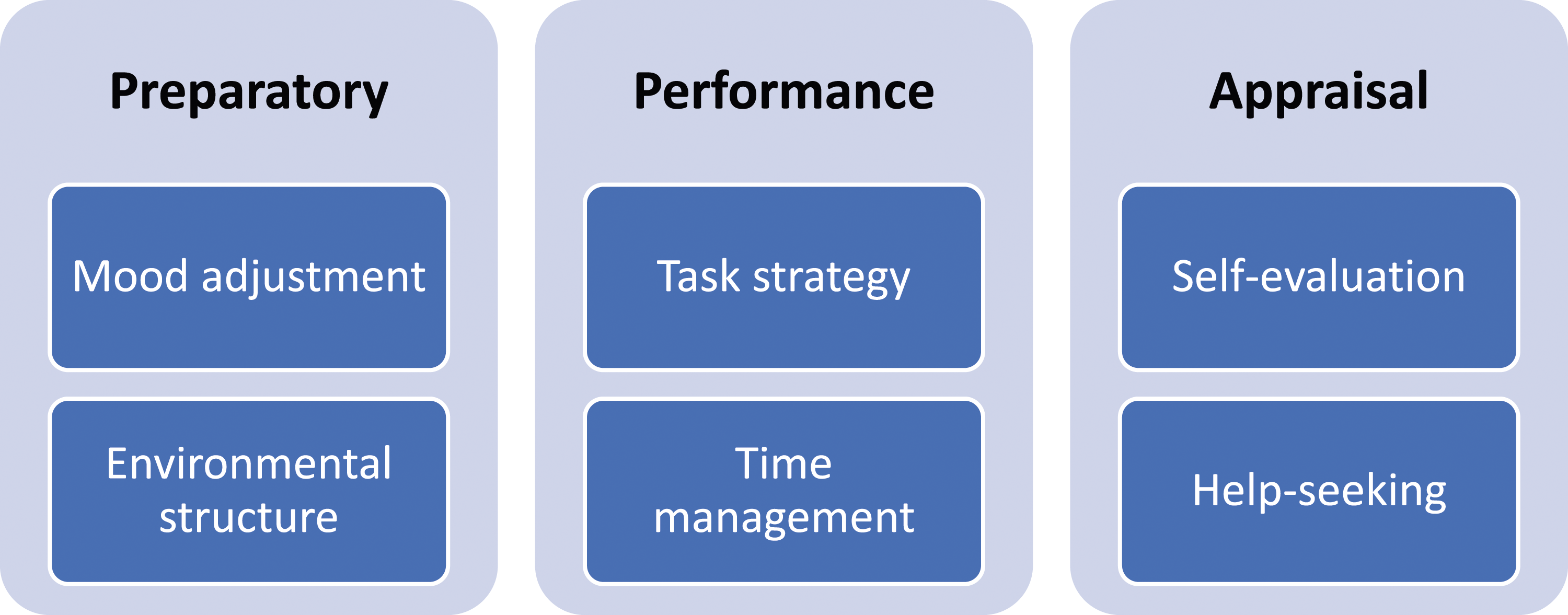
The three phases are similar to Oxford’s task phases (Oxford, 2016). Our first phase is Preparatory, which includes Mood-Adjustment (MA) and Environmental-Structure (ES) strategies. The second phase is Performance, which includes the Task Strategy (TS) and Time-Management (TM). The third phase is Appraisal, which includes Self-Evaluation (SE) and Help-Seeking (HS) strategies. Our questionnaire design was based on the six SRL elements to understand teachers’ SRT levels.
By integrating these facets, the research sought to provide valuable insights into the multifaceted dynamics of self-regulated teaching behaviors across different age groups, thereby contributing to a deeper understanding of effective pedagogical approaches in the context of the COVID-19 pandemic.
The three hypotheses of this study are as follows:
Hypothesis 1 (H1): Age disparities will manifest in mood adjustment and environmental structure within the preparatory phase of SRT
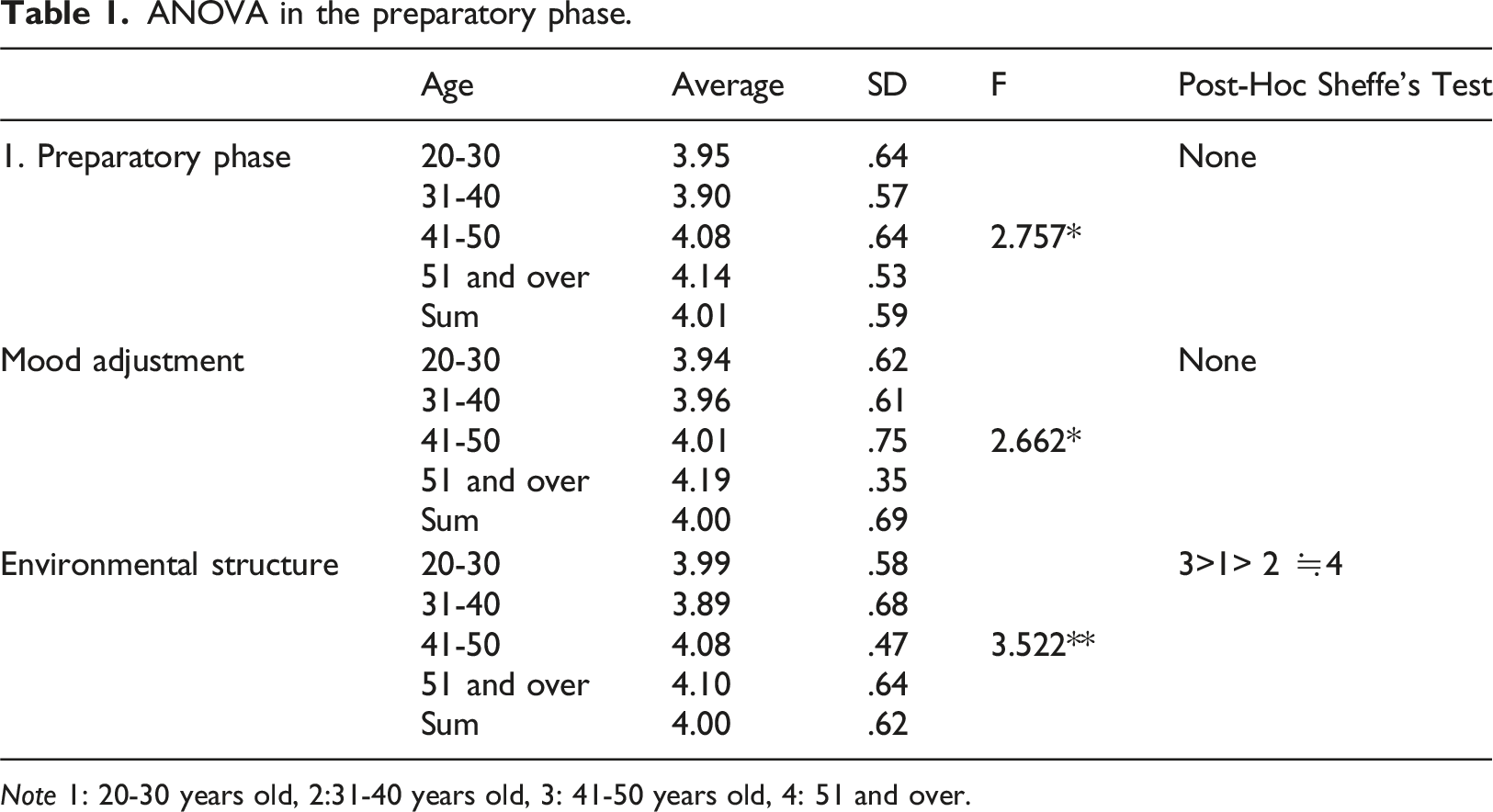
ANOVA in the preparatory phase.
Note 1: 20-30 years old, 2:31-40 years old, 3: 41-50 years old, 4: 51 and over.
Table 1 presents the ANOVA results, revealing notable findings regarding the Preparatory Phase, particularly with the construction of the Environmental Structure. Further scrutiny through a post-hoc analysis utilizing Sheffé's Test for multiple comparisons underscored significant variations among age groups. Specifically, the data indicated that in the realm of Self-Regulated Teaching, the Environmental Structure construct displayed a marked disparity, with teachers in the 41-50-year-old age group exhibiting higher scores compared to the 20-30-year-old age group. This observed difference in Environmental Structure was deemed highly significant (p < .01). Additionally, the analysis revealed a significant elevation in scores for teachers aged 41-50 compared to their 20-30-year-old counterparts.
Drawing from the insights gleaned from the outcomes presented in Table 1, the study findings align with Hypothesis 1 (H1). The subsequent post-hoc multiple comparisons affirmed that, specifically within the dimension of Environmental Structure, the data indicated a higher score for teachers aged 41-50 compared to those aged 20-30. Consequently, the established hypothesis H1 holds merit and validity based on the empirical results.
Hypothesis 2 (H2): Age differences will be evident in task strategy and time management within the performance phase of SRT
ANOVA in the performance phase.

Note 1: 20-30 years old, 2:31-40 years old, 3: 41-50 years old, 4: 51 and over.
Table 2 presents the results of the ANOVA analysis. Interestingly, while no significant differences were observed in the Performance Phase column, a notable distinction emerged in the realm of Time Management. Post-hoc analyses conducted utilizing Sheffé's Test for multiple comparisons, failed to reveal any statistically significant discrepancies between the two elements - Task Strategy and Time Management.
Based on the insights garnered from Table 2, Hypothesis 2 (H2) of this study fails to find substantial support. Post-hoc multiple comparisons did not unveil any significant differences between the two elements, thereby rendering the proposed H2 invalid within the context of the empirical findings.
Hypothesis 3 (H3): Distinct age groups will exhibit variations in self-evaluation and help-seeking within the appraisal phase of SRT.Method
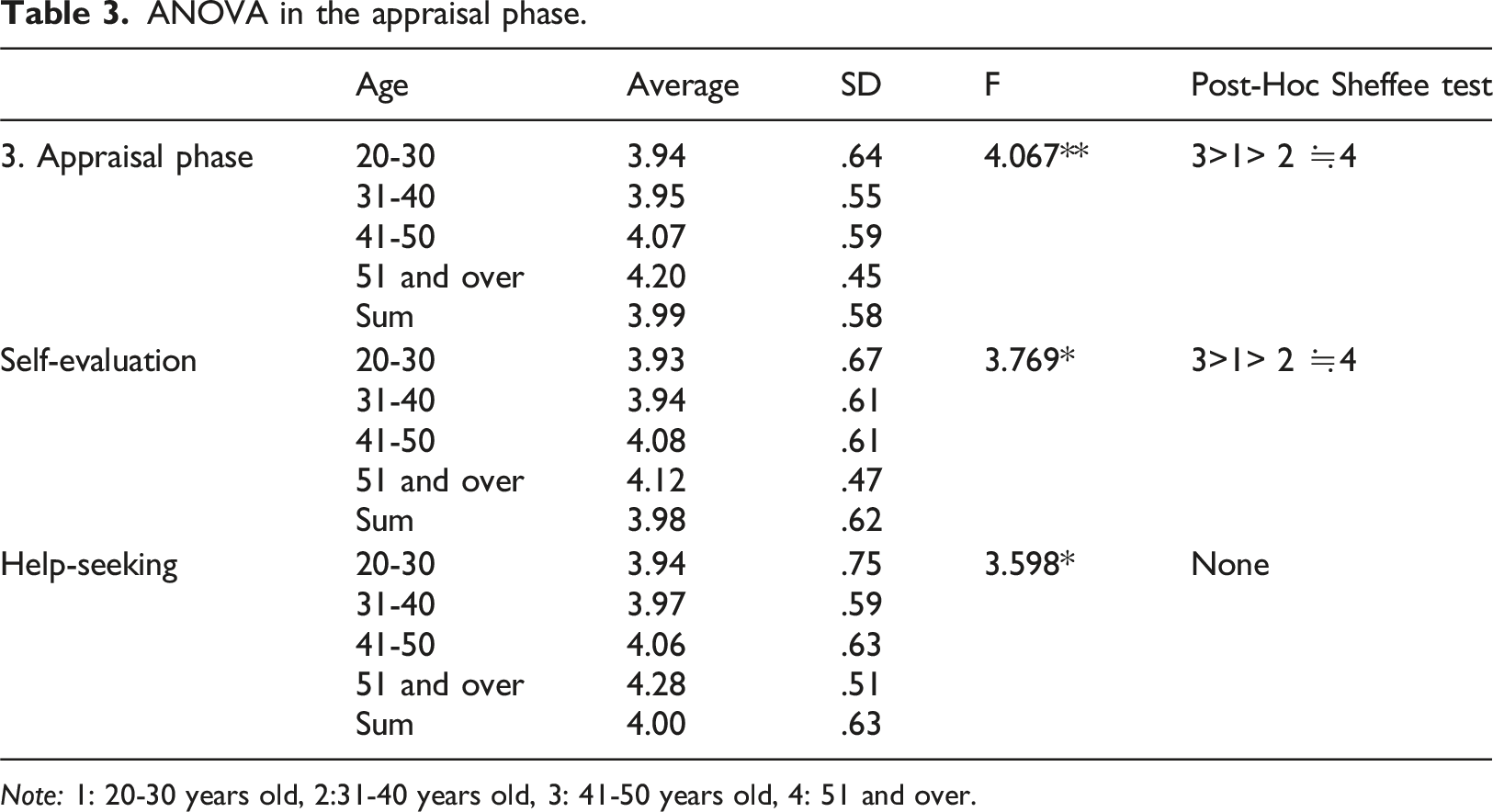
ANOVA in the appraisal phase.
Note: 1: 20-30 years old, 2:31-40 years old, 3: 41-50 years old, 4: 51 and over.
The outcomes of this analysis are presented in Table 3. Significantly, the results revealed a highly noteworthy variance within the Appraisal Phase (p < .01). Employing the Sheffé Test for multiple comparisons, further exploration indicated that data from the 41-50 age group surpassed that of the 20-30 age group. Notably, in the domain of Self-Evaluation, statistics gleaned from the 41-50 age group surpassed those from the 20-30 age group. Consequently, the Appraisal Phase exhibited pronounced and highly significant differences, with the 41-50 age group data surpassing that of the 20-30 age group.
Driven by the insights derived from Table 3, Hypothesis 3 (H3) of the study discovered substantial and significant variations. Subsequent post-hoc multiple comparisons illuminated the differences: The data of teachers aged 41-50 surpassed that of their 20-30 counterparts; specifically, within the Self-Evaluation domain, the data from the 20-30 age group was lower than that of the 41-50 age group. The cumulative analysis validates the proposition that there exist notable age-related distinctions in Self-Evaluation and Help-Seeking within the Appraisal Phase, thus substantiating the validity of the proposed H3.
Discussion
The discussion delves into the significant differences observed in the Performance and Appraisal phases across different age groups, offering a nuanced interpretation of the findings in comparison to the existing literature. The Sheffé Test’s post-hoc analysis revealed distinct patterns that contribute to a deeper understanding of the interplay between age and Self-Regulated Teaching (SRT) elements and phases.
Within the Preparatory phase, the data indicated a noteworthy finding: teachers aged 41-50 exhibited a higher capability in Environmental Structure compared to their counterparts aged 20-30. This aligns with the literature, suggesting that older teachers may possess heightened environmental understanding and preparedness (Ghonsooly and Ghanizadeh, 2013; Pazhoman and Sarkhosh, 2019). Moreover, in the Appraisal phase, the data highlighted that teachers aged 41-50 possessed a higher level of Self-Evaluation compared to the 20-30 age group. The nuanced analysis of Self-Evaluation further revealed that the 20-30 age group had lower scores than the 41-50 age group, emphasizing the influence of age on introspection and emotional control during teaching, consistent with prior research (Hong et al., 2021).
Examining the averages of Mood Adjustment and Environmental Structure in the Preparatory phase, the results underscore teachers’ perception of their adeptness in preparing the teaching environment and modulating their mood before engaging in online instruction during quarantine. This is supported by Berk’s (2012, 2013) emphasis on effective preparation as crucial for successful online teaching.
In the Performance phase, considering the averages of Task Strategy and Time Management, the findings indicated that teachers held a positive perception of their capability to effectively manage their time and employ suitable strategies for online teaching amid the COVID-19 context. While no significant age-related differences emerged in this phase, this finding resonates with previous research suggesting that age-related disparities in teaching strategies and self-regulation might not be as pronounced in the Performance phase (Berk, 2012, 2013; Ghonsooly and Ghanizadeh, 2013; Pazhoman and Sarkhosh, 2019).
Transitioning to the Appraisal phase, the averages of Self-Evaluation and Help-Seeking suggested that teachers felt competent in assessing their teaching effectiveness and seeking assistance when offline after conducting online teaching. These findings align with H3 and emphasize the importance of self-evaluation and help-seeking behaviors in the reflective phase of teaching.
The study’s outcomes have practical implications for schools facing challenges posed by COVID-19. The collaborative teaching approach, involving teachers of different ages, emerges as a strategic response. Leveraging the strengths of both younger digital natives and experienced educators, collaborative teaching can foster mentorship opportunities. Older teachers can contribute their expertise in self-regulation, while younger teachers can assist with digital tools. By cultivating a diverse team of educators, schools can effectively navigate the teaching crisis brought about by the pandemic, aligning with the study’s practical implications and supported by relevant literature.
Implication
This study investigated the impact of teachers’ age on SRT (presumably some form of measurement or evaluation). It involved 477 teachers from various fields, including kindergarten, primary school, middle school, and university. However, the study did not find significant differences among teachers in different fields. Therefore, the study focused on exploring the impact of age. In summary, the findings suggest that while the age of teachers in different fields does have a significant influence, age can be used as a criterion to group teachers.
The study found that tailoring professional development programs based on teachers’ age groups can enhance their effectiveness, as they can address the specific needs or challenges associated with different career stages. Implementing mentoring programs where experienced teachers mentor younger colleagues can facilitate knowledge and skill transfer, benefiting both parties. Allocating resources such as technology or teaching aids based on age groups can ensure that teachers receive the support they need according to their preferences or requirements. Using age as a factor in succession planning can help schools ensure a smooth transition of leadership roles, taking into account the career stage of teachers and their readiness for leadership positions.
This line of thinking aligns with the findings of this study and is consistent with Pazhoman and Sarkhosh’s (2019) findings. Regardless of the educational environment or field, allowing teachers of different ages to discuss with each other can not only contribute to the teachers’ SRT but also enhance students’ learning outcomes (Sáez-Delgado, 2022).
Conclusion
During the COVID-19 pandemic, the widespread adoption of online learning has significantly impacted educational institutions across various levels. While most studies have primarily focused on students’ perspectives in the context of online learning, this study aimed to delve into the realm of teachers’ experiences within the global surge of online education. Contrary to the common perception that younger teachers, as digital natives, possess inherent advantages in online teaching, our findings reveal a more nuanced narrative. Older teachers exhibited enhanced self-regulation skills that transcended technological novelties, suggesting their adeptness in adapting and regulating their teaching approaches, irrespective of the digital landscape.
In light of these outcomes, it is recommended that future educational strategies consider the collaborative integration of both younger and older teachers in online courses. The technological prowess of younger educators can complement the seasoned self-regulation skills of their older counterparts, leading to improved course delivery and efficiency. This synergistic collaboration between teachers of different generations could pave the way for enriched online learning experiences for students.
Furthermore, this study underscores the critical link between teachers’ self-regulation and students’ learning effectiveness, consistent with existing research (Anjomshoa et al., 2017; Heydarnejad et al., 2017; Negari and Heydari, 2014; Pazhoman and Sarkhosh, 2019; Suprani, 2020). Particularly in the context of the COVID-19-induced teaching transition, teachers’ introspection through self-regulation not only facilitates improved teaching practices but also provides researchers with valuable insights into teachers’ adaptability to pedagogical shifts. The high level of self-regulation exhibited by teachers could contribute to creating a high-quality learning environment, even in the face of a pandemic.
Limitation and future study
While this study provides valuable insights into how teachers navigated the teaching transition during the COVID-19 pandemic, it is important to acknowledge its limitations. Future research could benefit from a broader examination of teachers’ observation abilities, insight, behavior, and attitudes within the context of crisis management (Weber and Johnsen, 2012). Such a holistic exploration could yield a comprehensive understanding of teachers’ roles and their contributions to effective education, both during and beyond times of crisis.
In conclusion, as the education landscape continues to evolve, incorporating self-regulation as a pivotal aspect of teachers’ professional development could redefine the teaching profession’s outlook and impact, enabling educators to navigate challenges with resilience and adaptability.
Footnotes
Acknowledgements
The author wishes to thank teachers who participated the survey.
Author contributions
JTT is the main author of the articles, and his contributions are editing articles and consolidating articles. JCH provides data applications, collects questionnaires, and organizes articles. All authors read and approved the final manuscript.
Declaration of conflicting interests
The author(s) declared no potential conflicts of interest with respect to the research, authorship, and/or publication of this article.
Funding
The author(s) received no financial support for the research, authorship, and/or publication of this article.
Ethical statement

Data availability statement
The data that support the findings of this study are available from the corresponding author upon reasonable request.