



Abstract
Educational institutions, which are crucial to a nation’s development, are also adopting e-governance principles and best practices. It is vital to find out the opinions of main personnel of higher educational institutions regarding the challenges they face in implementing e-governance for efficient university operations. Data was collected from 32 participants (teachers, registrars, librarians) from eight universities in Pakistan. Researchers used semi-structured interview protocols to collect data. We carried out thematic analysis for conclusions through interviews. It is explored that e-governance is being implemented in various universities’ operations. Students are provided facilities of e-governance in admissions, academic matters, examinations, and library. Teachers are provided facilities of e-governance in salary disbursements, attendance, communication, online classes, examinations and grading. Moreover, to implement e-governance the departments of universities face internet-based infrastructural, financial, technological, human, and developmental challenges. Findings of this study may well be used by universities’ stakeholders and administrators to understand well about the current status of e-governance in the universities. Moreover, they may well be able to better understand what advanced digital tools can be used to enhance the efficiency of e-governance systems. This study highlighted the status and challenges of e-governance in Higher Education on the stakeholders of Pakistani universities.
Introduction
Organizational governance involves monitoring and supervising the systems to ensure that all operations are carried out smoothly and according to schedule (Karunasena and Deng, 2012; Tangi et al., 2020). ICT has changed governance from manual to electronic. Moreover, according to Alhanatleh et al. (2022); MacLean and Titah (2022); Twizeyimana and Andersson (2019), e-governance is deployed when an organization uses ICT (internet, mobile computing, etc.) to provide good services, communicate with stakeholders efficiently and accurately, deliver information quickly, multiply efficiency, save time, have good governance, and integrate its systems. EG engages, enables, and empowers citizens, according to the authors.
ICT and the need for effective and fast services for everyone put pressure on governmental offices to meet society’s needs (Hariguna et al., 2022; MacLean and Titah, 2022; Zhang and Kimathi, 2022). Therefore, governments worldwide have initiated E-governance to improve service delivery, and governance has become electronic governance. Educational institutions, especially higher ones, switched from governance to e-governance in their hubs (registrar office, HRM department, library, examination offices, and accounts offices) to help students get services, information, and education at home (MacLean and Titah, 2022; Twizeyimana and Andersson, 2019).
According to reports, education is crucial to societal growth (Nasir and Hameed, 2021). Every nation works to strengthen its education system to provide future generations the greater possibilities. Education is the greatest predictor of a strong personalities. Therefore, E-governance is one of the most significant technologies for education service delivery worldwide. It revolutionized service delivery and increased productivity and efficiency. E-governance and e-education were rarer in the past (Toseebet et al., 2020). Developed nations have adopted such methods, while emerging nations like Pakistan are still acquiring electronic skills, notably in education.
E-governance is a key instrument in education service delivery worldwide. It revolutionized service delivery and increased productivity and efficiency. E-governance and e-education were rarer in the past. Electronic governance (EG) has been created worldwide and in many spheres of life, however, not all countries have adopted it. Developed nations have adopted such methods, while emerging nations like Pakistan are still in the phase and process of acquiring electronic skills, notably in education.
Review of related literature
E-governance integrates information and communication technology (ICT) with government services to improve operational efficiency, and public satisfaction (Agarwal et al., 2022). To improve service quality for residents and other interest groups, technology has become popular in many nations. The governance model presented helps people, groups, organizations, enterprises, and other governmental institutions store, exchange, and retrieve information (Karippacheril et al., 2016). Precision in service delivery is vital to E-Governance. ICT is vital to the creation and implementation of e-governance and its components. Technology greatly aids the government’s decision-making.
Change of terminology to electronic governance (EG) in all countries and spheres of life has been developed, although not all countries have effectively adopted EG. Chima and Enoch (2022) examined EG adoption, and implementation, to examine the University of Abuja’s performance. They found that E-governance is the result of current technology dominating all industries. Complete EG implementation occurs when an office is completely equipped with current technologies, performs services using them, and all stakeholders are aware of and use them. Zhang and Kimathi (2022) examined the stages of e-government deployment from a public value viewpoint and concluded that effective EG implementation occurs when all key regular functions are executed online. E-governance is a catalyst for accountability of students, staff, faculty, and community to participate in administrative processes. Moreover, through this process, academic leaders are held accountable for their decisions (Rani, 2024).
Oktem et al. (2014) and Ray and Mukherjee (2007) defined Electronic Governance’ (EG) implementation in education as using technology and involving all educational stakeholders. Oktem et al. (2014) also stressed the necessity of ICT in the 3 Ls (lecture theatre, laboratory, and library) for practical EG in educational institutions. In contrast, Ray and Mukherjee (2007) identified the treasurer for money, registrar for routine tasks, controller of examination for exams, and chief librarian for library administration as the most crucial areas for the university’ e-governance. Research from Afghanistan found that electronic services in higher education are being used in areas such as student information, scientific programs, and financial management on campuses. The purpose of introducing electronic services and ICTs in universities is to meet global trends (Rahimi et al., 2024).
According to Prabhu (2013), successful EG implementation involves smooth, genuine, secure information access and fair office services. The author also divides EG implementation into system, legal, human, institutional, and technical preparations. Dar (2022) and Jibia and Ahmed (2021) defined the pre and post-requisites for EG implementation in educational institutions as ICT, seamless internet, a website with ongoing updates, e-publications of all-important circulars, help desk, staff’ continuing education, free internet access, email services, LAN, e-learning center, and computerized examination system. Butt and John (2023) found that the adoption of e-governance in Pakistani universities is beneficial for organizational performance but the organizational environment, infrastructure, and leadership support impacted the implementation of digital systems. Another study from Pakistan highlighted that an e-governance system has been adopted in higher education institutions but many factors hinder this system to function properly and efficiently (Butt et al., 2024).
Ray and Mukherjee (2007) examined EG implementation in the health sector, Fatle (2012) examined it in the Nigerian public administration sector, and Morze (2021) examined it in the Ukrainian education sector. Dar (2022) wrote about EG in higher education in Jammu and Kashmir, Pakistan, although it was published in a certain period. Research on EG implementation in Pakistani higher education is urgently needed.
Butt (2022) studied the challenges of EG in the education sector and found that sudden changes in any system are difficult, and the sudden addition of ICT disrupted the education system. Students, parents, and governments were unprepared for such a swift transformation. Due to their experience and well-established economies, developed countries that were already doing the same handled the situation successfully. However, the lack of facilities, modern equipment, technology, and resources causes several problems in underdeveloped countries. Shahzad and Sandhu (2007) further noted that the educational budget’ paucity made it difficult to develop an e-governance education system in Pakistan to reap and capitalize on its benefits.
Weerakkody et al. (2012) observed that the Pakistani educational sector is already struggling with electronic governance. E-governance in education and disparities (poor vs affluent and rural vs urban) are important challenges. Rich pupils have all the current technology, whereas impoverished students lack basic ICT. Due to ICT inaccessibility, e-governance deployment is difficult.
Öktem et al. (2014) studied electronic governance and education. The researcher picked 328 students from Hacettepe University, Turkey as responders between 2011 and 2012. E-governance in education was the study’s main focus. According to the survey, students faced a major internet issue related to e-governance. Researchers used internet security, level, aptitude, and inclinations as factors. India’s government is very vigilant in adopting e-governance all over the country. Limited infrastructure and finance have restricted advancements in applying ICTs in all departments of the country (Roy et al., 2023).
Grigalashvili (2022) identified three EG challenges: unskilled personnel, not-up-to-the-mark services, and stakeholder disinterest. Butt (2022) also claims that Pakistan’s education system lags behind neighboring states. This education level is driven by traditional learning methods. Due to cost constraints and stakeholder mindsets, this learning model is conventional. Thus, fiscal constraints and conventional mindsets were the biggest obstacles to EG’s implementation in Pakistan’s education system.
There are several studies on the problems of EG in other sectors (Grigalashvili, 2022; Weerakkody, 2011) and fewer in education (Butt, 2022; Oktem et al., 2014), but insufficient research has been carried out in the education sector regarding the e-governance in Pakistan. Thus, this study analyzed e-governance activities in HEC-recognized Pakistani universities to fill this literature vacuum.
The current study was conducted to report the opinions of major administrative personnel on e-governance in Higher education institutions in Pakistan. The main focus of the research was to find out the challenges of e-governance in Higher education institutions in Pakistan.
Methodology
Instrumentations
To collect the data a semi-structured interview protocol was developed for university employees. Open-ended items were developed through an intensive literature review. Literature was searched on different themes such as ICT, digital usage, e-governance, information management, e-learning, and e-governance in education. Most of the research emerged from business, industries, and the academic world. To ensure the validity of the interview protocol five experts were taken from the fields of management, administration, and leadership. After minor changes interview protocol was finalized to collect the data.
Sampling
Universities located within the capital cities of four provinces of Pakistan were the population of this study. A purposive sampling technique was used to take the views of the sample on e-governance. The sample consisted of a total of 8 universities in Pakistan. From each province, two universities (one public and one private) were taken purposively. From each university, four personnel in leading administrative positions were interviewed that is Registrar, Controller of Examination, Treasurer, and Chief Librarian. Overall 32 participants shared their opinions from eight universities. The researcher personally conducted all interviews with respondents.
Analysis
Data were analyzed using thematic analysis, as suggested by Braun and Clarke (2006). The researchers first got familiarized with the collected data. They then generated initial codes, looked into major themes, reviewed and revised the themes named them according to the research variables, and finally produced the interpretations and discussions.
Results and discussions
As a result of interviews with various personnel, the status of e-governance in universities of Pakistan could be discussed in the following themes.
Status of e-governance
According to interview transcripts, all universities embraced ERP in some form or the other. However, some institutions have inadequate e-governance facilities. Only two public sector universities — Punjab and Baluchistan provided high internet bandwidth in their departments/campuses/institutes, which were all equipped with LAN and Wifi. Only two private universities — Punjab and Sindh used smart cards for teacher attendance. One Punjab private institution claimed to collect student attendance using biometrics. All universities claimed to have LMSs for students and UISs for administration and management. Only two private sector institutions were saving the data on the Cloud, while the remainder recorded data manually on computer files and disks. See Figure 1 for details. Codes and themes on the status of e-governance in higher education.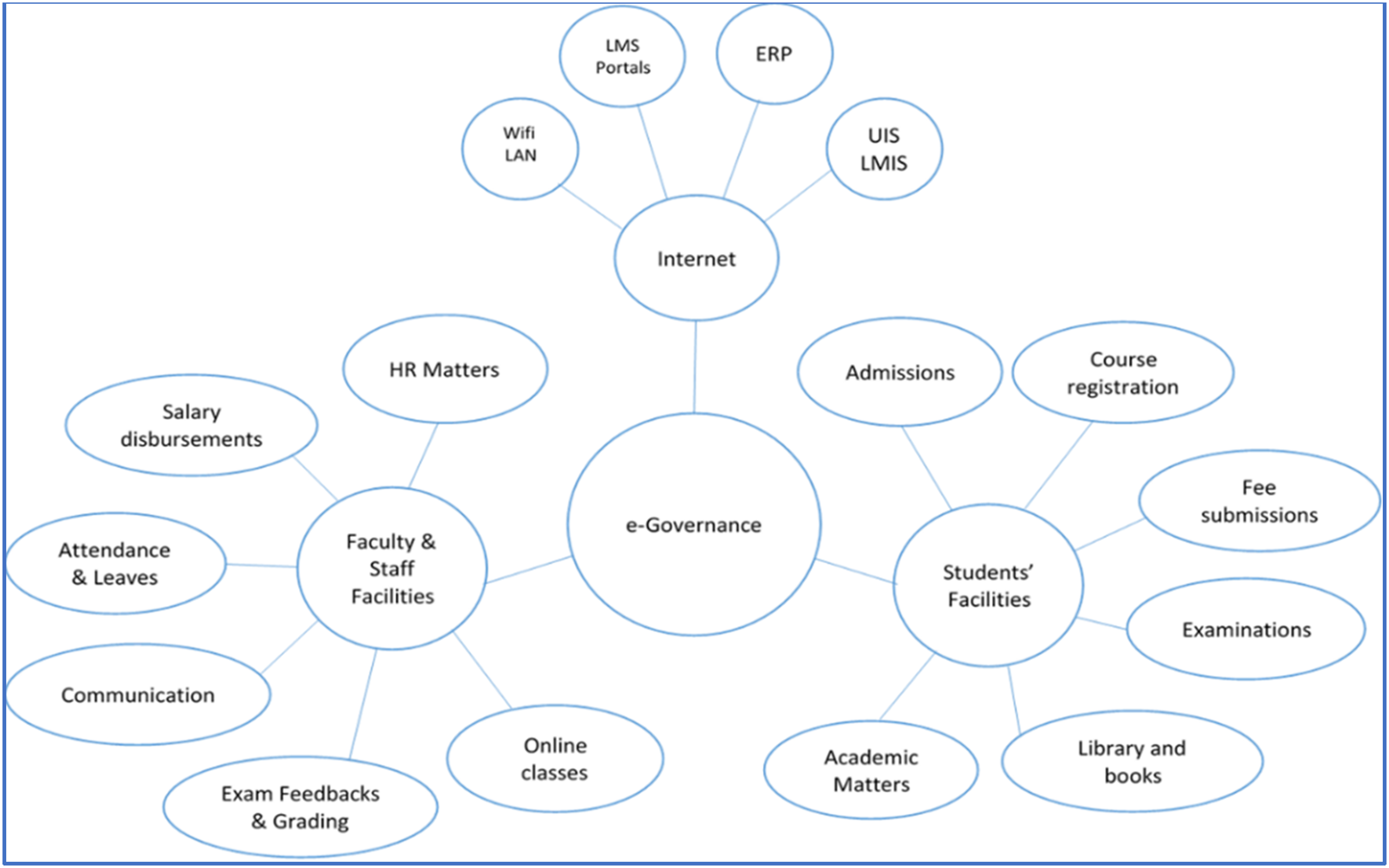
E-governance and students’ facilities
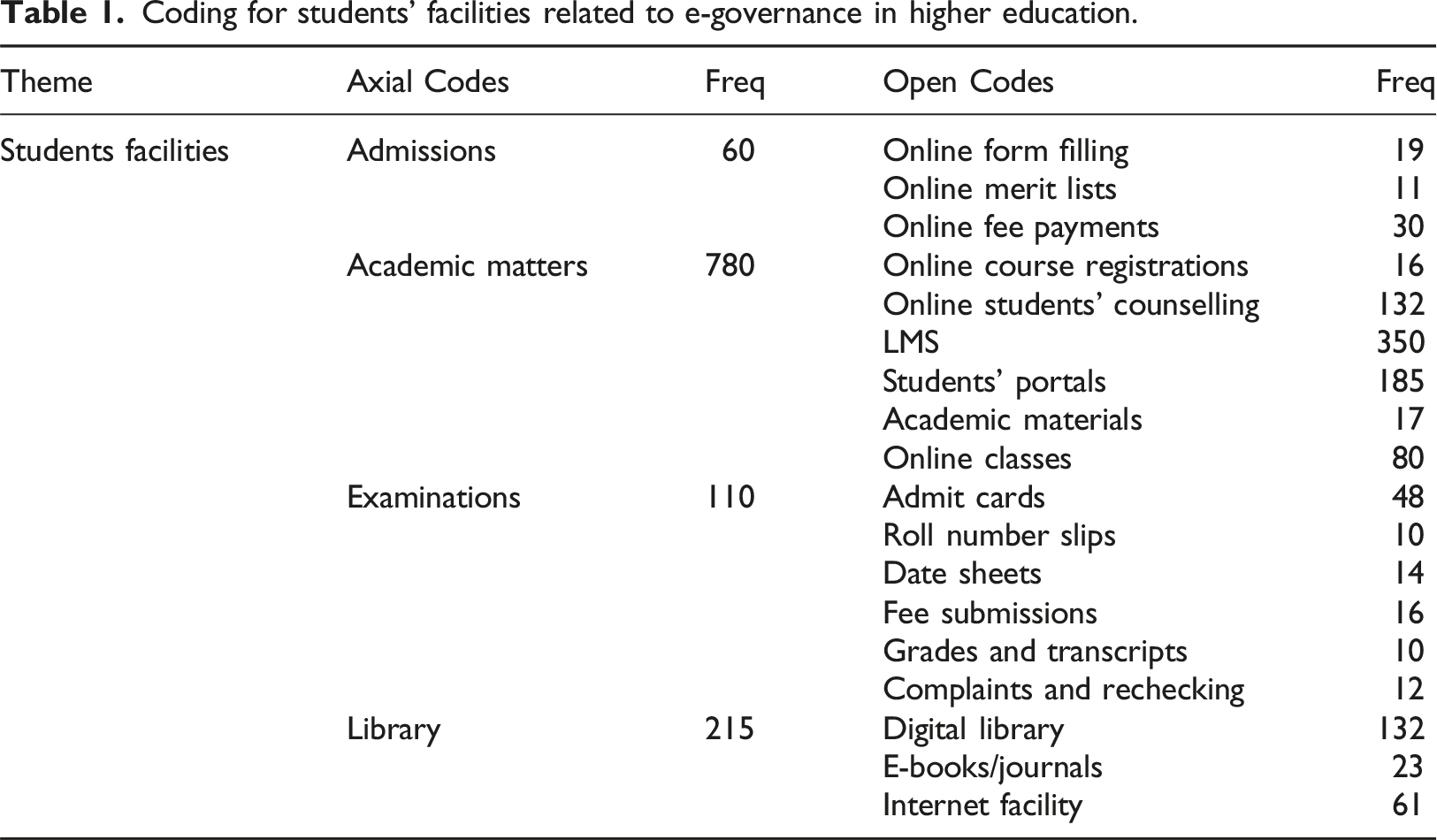
Coding for students’ facilities related to e-governance in higher education.
A Registrar stated,
“We undertake online admissions by enrolling on the university website, filling out the form, and attaching necessary papers...merit lists and election results are posted on the same portal and separately on the website…”
Online university portals or Learning Management Systems let students choose and register for courses. Access summative and formative assessment results are online. Online portals/LMS allow course material, instructor, and university facility requests, complaints, and feedback. Mail, SMS, and WhatsApp groups keep communication going. Course materials, assignments, and exams are accessed via virtual classrooms/LMS.
As another Registrar claimed, “As a private institution, we prioritize student-centered techniques like LMS and effective student portals….students can register for courses on their portals……LMS allows students to upload and download course materials and assignments….”
Online portals explain fees, submissions, scholarships, and financial help. Timetables, test slips, and fee vouchers are available from LMS/portals.
A Treasurer of Public sector university stated,
“We offer a well-managed online payment system for student fees……students can access bank information and fee coupons via online portals.”
Online payment options for fees, dues, penalties, etc. encourage cashless transactions. Online portals allow students to download fee vouchers and bank information for payment. Some institutions require students to apply for exams online using portals or LMS; generate fee vouchers and provide evidence for fee payment, and get electronic admit cards and roll number slips.
A private university official stated,
“Yes, we favor student electronic admission cards. Students may easily download and print their admission cards from the internet site……this method assures prompt access and reduces logistical issues.”
Universities use HEC’s digital library and build e-book repositories. Online materials including e-books and e-journals are available through the library site. Journal and book bank e-subscriptions are subsidized.
The administrator of a private-sector university said,
“We offer a platform for students to find the perfect books for learning……we also utilize HEC’s digital library……our digital library is accessible from home or the library’s computer lab.”
Electronic governance is crucial for managing the outcomes, evaluations, and feedback. Online portals provide semester-by-semester transcripts of students’ academic tracking and achievements. Advanced exam management technologies assure quick and accurate results. Online rechecking and evaluation are offered. Online portals collect grading feedback for continuing development. Learning Management Systems (LMS) integration streamlines academic record access and collaboration.
This was discussed by one of the Controller of Examination,
“We allow students to request answer paper reviews online……students can make review/re-checking requests, track their applications, and get comments online using our portal……this improves openness and speeds up the evaluation process.”
E-governance and employees’ facilities
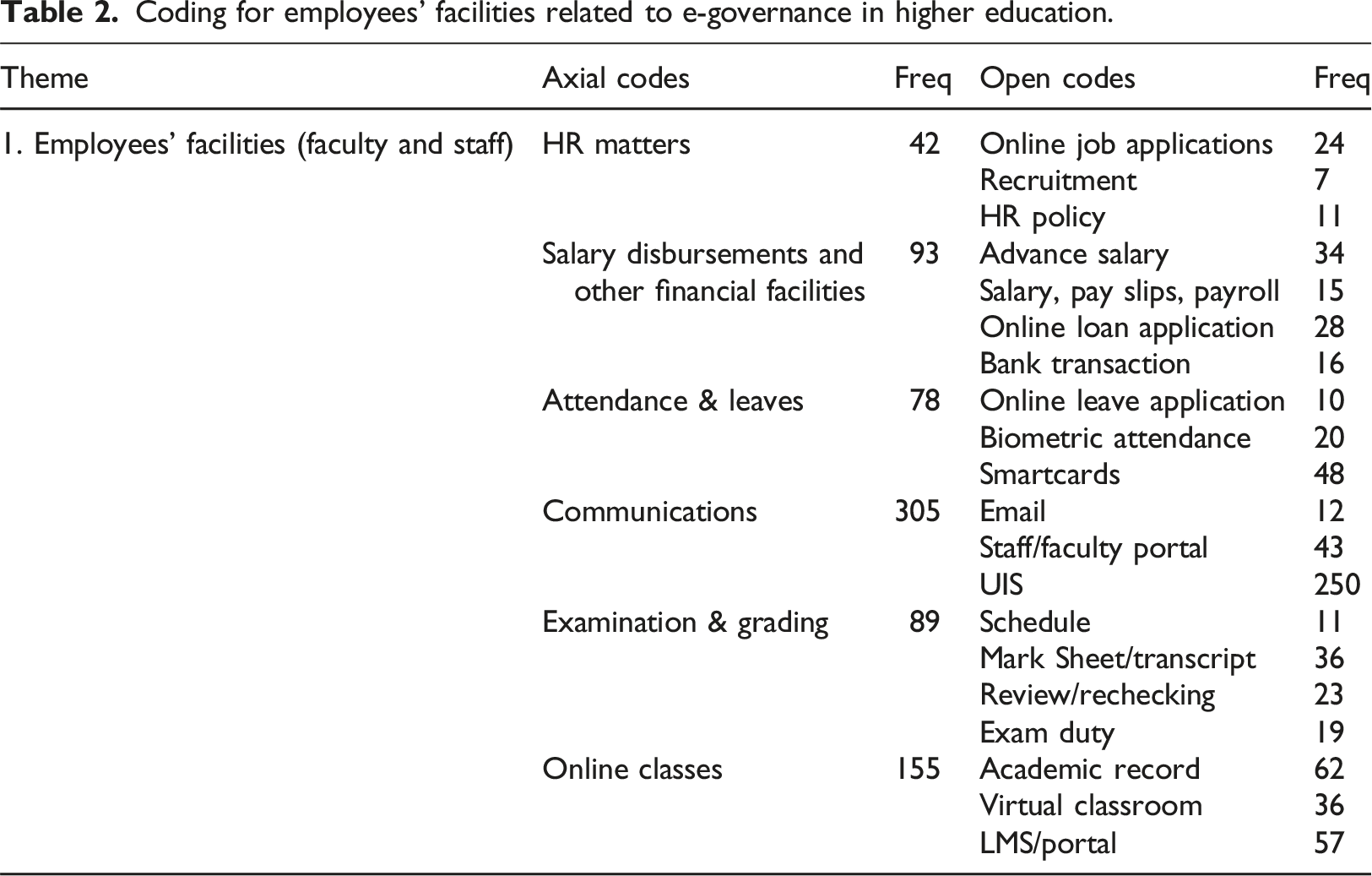
Coding for employees’ facilities related to e-governance in higher education.
A Treasurer informed,
“Everything is carried out online, including salary, money, and loan transactions……they can apply for advance wages via their portals.”
Universities use emails, printed announcements, and notice boards for internal communication. University news, events, and highlights are posted on website notice boards. Email and notice boards deliver important information to workers, instructors, and students.
A Registrar stated,
“Email is a primary form of communication, although it nowadays can be regarded as conventional compared to physical letters, memos, and notifications……no unique e-governance plan for communication and no knowledge of latest technology.”
Faculty and staff have login IDs, passwords, and unique employee IDs for e-governance projects. These credentials create institutional emails and staff/faculty portals on university websites or information systems. To handle course materials, assignments, virtual classrooms, schedules, and assessment outcomes, portals are connected to students’ portals or LMS. Faculty can use digital libraries and Turnitin portals to check student work similarity.
A Registrar narrated,
“Our site is named University Information System (UIS)...faculty and staff can request leaves, verify courses, classrooms, schedules, and service records. HR policies are accessible on this portal……faculty/staff can apply for physical necessities such as stationary, workstations, computers, books, journals, and more through their portals……their employee IDs register them on UIS and allow them to make complaints and state grievances.”
Faculty and staff can use specialized portals to apply for leave, loans/advance salary, and university rules. Portals enable facility requests and complaint filing. University information systems can track service records for a complete professional career. Many institutions use the University Information System (UIS) for faculty and staff e-governance. Staff and Professors can verify courses, classrooms, schedules, and service records at UIS. UIS staff/faculty can apply for stationary, workstations, computer systems, books, journals, etc. through their portals, which also include HR regulations. UIS complaints and grievances are filed using employee IDs.
Strong procedures are needed for exam-related duties to maintain academic integrity and efficiency. Advanced exam management systems calculate and grade marks, and decrease result computation mistakes. Automated mark sheet creation speeds up academic record transmission and increases transparency. The grading system is carefully structured to prevent grade inflation and provide fair, consistent evaluation based on academic merit. Exam management is focused on using technology, to demonstrate academic achievement.
A Controller explained,
“Our institution uses a safe and efficient examination administration system to manage examination-related operations such as mark computation and mark sheet production……this technique automates grading for accuracy and dependability. Electronically created final mark sheets reduce mistakes……”
Controllers of Examinations stressed the need for e-governance in streamlining results, review/re-checking, and feedback. Students’ and Professors' web portals display semester-by-semester transcripts, fostering transparency and modernity. Advanced examination administration systems, accessible to students online, provide timely and accurate result declarations. Re-checking and review systems allow students to contest their results due to human mistakes. Online grading feedback encourages continual development and helps colleges/schools enhance assessment systems.
Challenges of implementation of e-governance in HEIs
Infrastructure challenges
Figure 2 Codes and themes on challenges of e-governance in higher education. Coding for infrastructural challenges related to e-governance in higher education.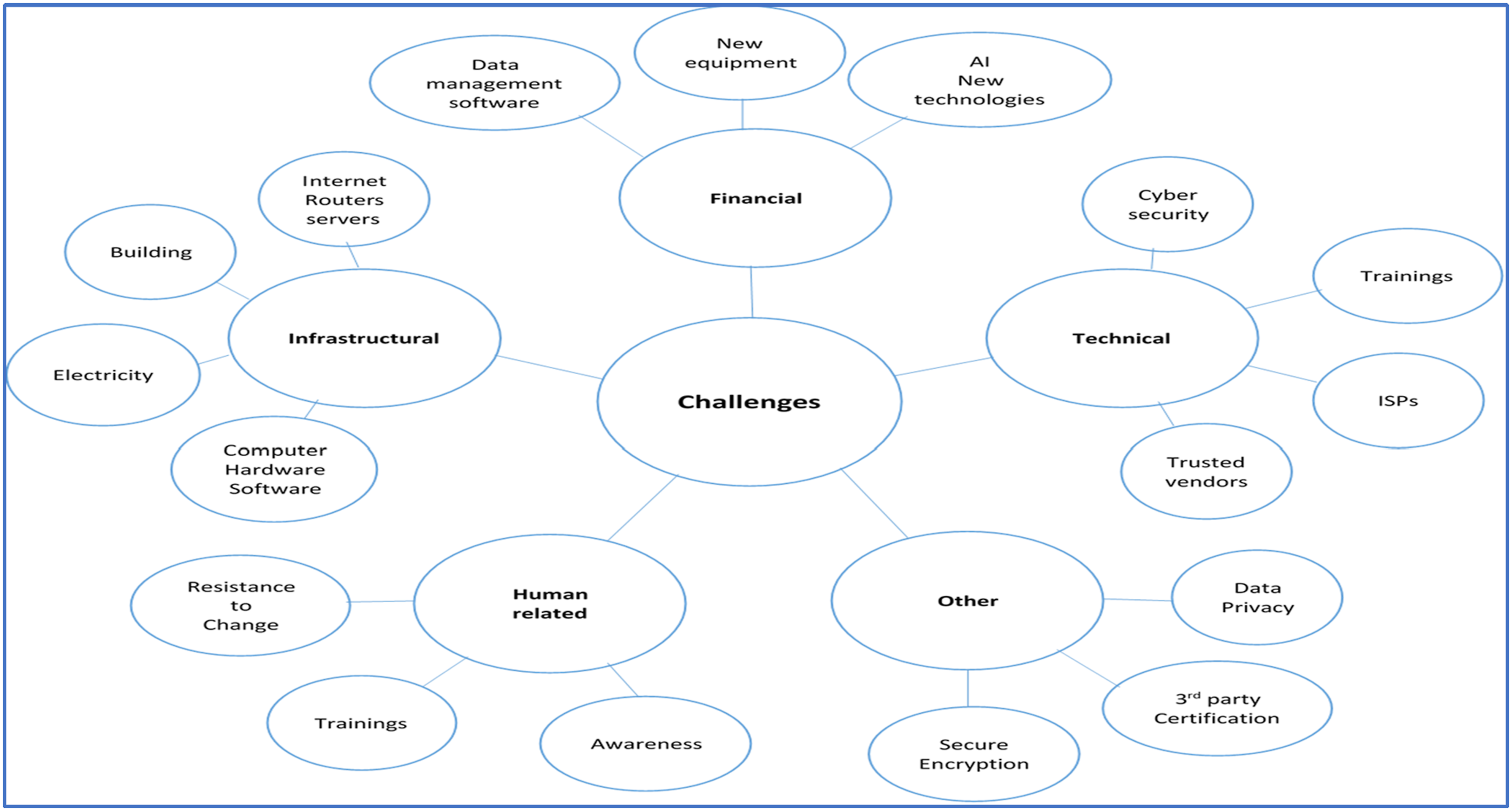

An Administrator stated,
“Even though our university campuses are home to enormous buildings and infrastructures, I believe that these are not up to date and do not meet the requirements for the implementation of contemporary software for electronic governance…”
Every student in university needs some space and digital-equipped classrooms due to the e-learning system. Although they have their laptops the availability of Wifi most of the time is not possible for students. Students complain and demand digitally equipped rooms for study.
Financial challenges
Coding for financial challenges related to e-governance in higher education.

A Treasurer informed me,
“……There was a period when we were able to secure financial assistance and grants from international organizations to establish some kind of center of excellence…However, as of now, the government is not providing us with any funds for the implementation of any new initiatives…”
Another respondent stated,
“…….The world is on the verge of being dominated by artificial intelligence and robotics...in our educational institutions, we are unable to install computers of the most recent generation……”
Technical challenges
Coding for technical challenges related to e-governance in higher education.

Human resource management challenges
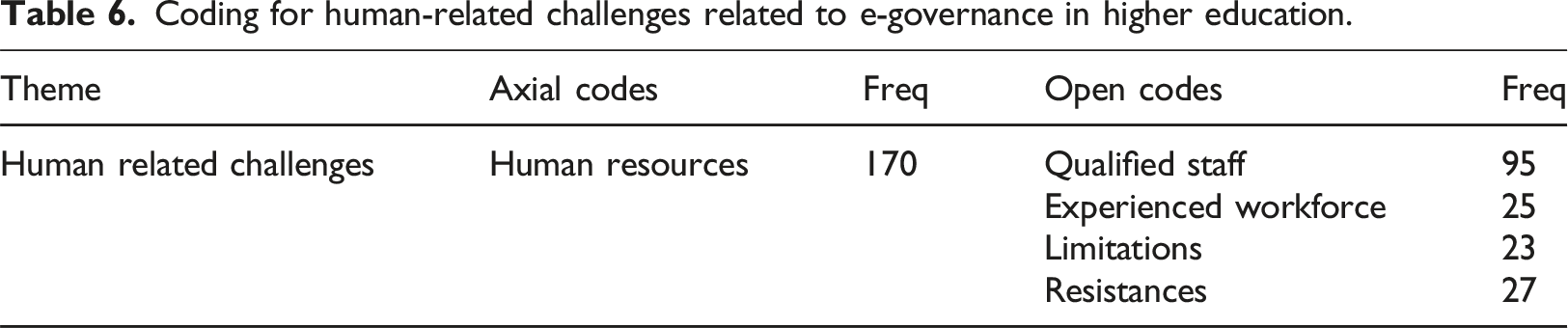
Coding for human-related challenges related to e-governance in higher education.
A Registrar discussed,
“We have senior personnel that has been working here for a significant amount of time, perhaps for more than 15 years, and on senior levels…they would be unable to operate the most recent computers in any way…the question is, how would they be able to comprehend the limitations presented by software?……in point of fact, they are resistant to technological advancements....either they enjoy working by hand or they are looking for an assistant who is knowledgeable about all of these things…”
Other challenges
Coding for other e-challenges related to e-governance in higher education.

A Librarian narrated,
“If universities are required to implement the most recent electronic governance systems, they will be required to confront a multitude of additional legal obstacles as well……these challenges include the contracts and agreements with e-service providers, as well as the difficulties associated with maintaining data privacy, third-party certifications, encryptions, and so on……”
In summary, e-governance initiatives in Pakistani universities encompass financial systems, examination-related tasks, and result-related processes, reflecting a commitment to leveraging technology for efficiency, transparency, and academic excellence. On the other hand, the challenges in implementing e-governance in Pakistani higher education institutes encompass issues related to infrastructure, finance, technology, human resources, and legal considerations. Overcoming these challenges requires a comprehensive approach, including increased budgetary allocations, staff training programs, and a concerted effort to address technological and organizational barriers. Overall, these e-initiatives enhance transparency, accessibility, and efficiency in various aspects of university operations for the benefit of students.
Research implications
Effective e-governance in Pakistan’s higher education affects policymakers, administrators, and stakeholders. Policymakers shape the e-governance agenda by promoting digitalization and creating a suitable atmosphere. They must prioritize ICT infrastructure improvements, finance technology adoption, and create data privacy and security regulations (UNESCO, 2018). For instance, the new higher education policies of Pakistan emphasized strongly the necessity for implementing all-encompassing e-governance solutions in educational institutions of higher learning (Bashir and Rehman, 2023).
E-governance is something that administrators at higher education institutions need to embrace to improve service delivery, streamline procedures, and increase administrative efficiency. To properly utilize technology for governance duties and deliveries such as student admissions, examinations, course registration, and financial administration, they should cultivate a culture of innovation and digital literacy among the staff members (Jawad and Akbar 2023). In addition, administrators are required to make investments in professional development programs to provide Professors and staff with the information and abilities they need to adjust to the ever-evolving digital context (Talpur et al., 2018).
Within the realm of higher education, the effective implementation of e-governance is dependent upon the participation of several stakeholders, including students and faculty members. To guarantee that e-governance projects are developed following the requirements of the academic community, faculty members must be included in the decision-making process (Aman, 2022). To facilitate information access, application submission, and interaction with the educational establishment, students should be supplied with digital platforms that are simple to use. To gain the trust of stakeholders and encourage their active engagement, it is essential to resolve any concerns regarding the accessibility and privacy of data (Khan et al., 2020).
To adopt e-governance in higher education in Pakistan and be successful, policymakers, administrators, and stakeholders must work together. Policymakers are tasked with the responsibility of establishing an atmosphere that is conducive to policymaking, administrators are tasked with driving the digital transformation, and stakeholders should be actively involved in the process.
Policy recommendations
Several policy recommendations may be taken into consideration to guarantee the effective incorporation of e-governance into the higher education sector in Pakistan. In the first place, there is a need that an emphasis to be placed on the development of infrastructure, which should include the availability of suitable hardware and software resources as well as high-speed internet access (Kashif and Saeed 2019).
Secondly, it is recommended that programs for capacity building and training be undertaken to improve the level of technical understanding and digital literacy among students, faculty members, and administrators (Aftab, 2019).
Thirdly, there should be an emphasis placed on standardization and interoperability to facilitate the smooth integration of e-governance technologies across various organizations (Butt, 2022).
Fourthly, stringent data security procedures must be implemented to protect sensitive information (Butt et al., 2020).
Fifthly, it is recommended that specialized committees be established to foster stakeholder participation. These committees should include members from government entities, educational institutions, industry, and student bodies (Sadiq et al., 2020)
Finally, the deployment of monitoring and evaluation procedures is essential to evaluate the efficacy of e-governance efforts and to provide input for policy adjustments (Noor 2023). Through the implementation of these policy proposals, Pakistan will be able to improve administrative efficiency, academic procedures, and student services in higher education through the implementation of e-governance projects.
Future directions/avenues
Future directions for e-governance in higher education in Pakistan are numerous and contain tremendous promise for revolutionizing administrative procedures and boosting overall efficiency. These perspectives are presented in the following sentences, one of the most important aspects is the implementation of emerging technologies like blockchain artificial intelligence (AI), and quantum computing, which have the potential to simplify a variety of administrative processes, improve data security and integrity, and make it possible to integrate seamlessly across a variety of educational institutions (Khan et al., 2020). Furthermore, the deployment of powerful data analytics and visualization tools may assist evidence-based decision-making, which enables administrators to monitor the progress of students, identify areas in which they can improve, and plan interventions that are specifically targeted (Butt, 2022). There is a need for the creation of user-friendly interfaces and mobile apps that appeal to varied stakeholders, such as students, teachers, and administrative staff, while also addressing the digital divide. This is necessary to guarantee that access is both inclusive and equitable (Jawad and Akbar, 2023). Collaboration between various government agencies, educational institutions, and technology suppliers would be necessary to ensure the effective implementation and long-term viability of e-governance projects in the higher education sector of Pakistan (Ullah et al., 2021).
Conclusion
There have been major perceptions among educational institutions of higher learning that e-governance is an opportunity for them to enhance the administrative processes that they are responsible for. When services are given through e-governance, it is possible to achieve efficiency, openness, accountability, engagement, equity, security, frugality, and a reduction in the amount of paper that is utilized throughout the process.
The majority of the institutions have implemented electronic governance to some degree. Other institutions have followed suit. E-governance faces several obstacles that need to be conquered before it can be employed to the extent that it holds the potential to be exploited. The challenges that are being encountered include a lack of adequate infrastructure, a lack of financial resources, the attitude of people, a lack of robust technology, a dearth of competent staff, and a communication gap between the authorities of educational institutions and the vendors/service providers. All of these are the contributing factors.
Other organizations may also be greatly affected by Pakistan’s digital revolution of higher education through e-governance. E-Governance may promote transparency, administrative efficiency, educational resource accessibility, and stakeholder participation. These improvements can be made by tackling bureaucratic inefficiencies, manual processes, and limited information and resources. E-governance case studies and best practices from Pakistani institutions and colleges show considerable success. These changes have enhanced administrative efficiency, student services, and institutional performance. Data security, privacy, and infrastructure issues have also been addressed, emphasizing the need for significant cyber security, data protection, and technological infrastructure. This study paper offers policymakers, administrators, and other stakeholders insights and recommendations on using e-governance to reform Pakistan’s higher education sector. Our mission is to create a digital environment that empowers schools and helps students succeed.
Footnotes
Acknowledgements
The authors would like to express their gratitude to all respondents who participated in the compilation of this study.
Declaration of conflicting interests
The author(s) declared no potential conflicts of interest with respect to the research, authorship, and/or publication of this article.
Funding
The author(s) received no financial support for the research, authorship, and/or publication of this article.
Ethical statement

Data availability statement
Required data is already mentioned in the article.