



Abstract
The unprecedented global lockdown during the COVID-19 pandemic has highlighted an interesting ethical dilemma. While lockdowns are central to saving lives, economic malaise from business and social discontinuities is the opportunity cost. To maintain this fragile balance during a crisis, there is an obvious need for digitally transforming socio-economic operations to maintain continuity. This digital transformation case study highlights how, unlike traditional digital transformation initiatives that rely on relatively closed organizational operations with established lines of control and communication, digital transformation for crisis continuity planning relies on a variety of global actors, from independent entrepreneurs and institutions to businesses and ad hoc collaborative agencies. The crisis continuity planning case helps students understand that digital transformation is a multi-stakeholder, multi-actor effort that ties together technology, business process reengineering, and public policy for a sustainable solution to a crisis. This teaching case study end with a proposed crisis continuity planning digital transformation framework that outlines five distinct digital transformation characteristics that can improve crisis continuity planning—from pandemics to disasters.
COVID-19 and crisis continuity planning
The outbreak of the 2019 novel coronavirus (technically called SARS-CoV-2 and its infection called COVID-19) has shocked and disrupted the global community. As of 1 December 2020, COVID-19 had infected more than 65 million people worldwide and killed 1.5 million people across 218 countries (Johns Hopkins University, 2020). In short, COVID-19 is a pandemic health crisis.
A crisis is a phenomenon involving unexpected threats and uncertainty related to existing economic and operational structures, including industry, health, labor, government, and society (Seeger et al., 1998). Faced with this unprecedented global health crisis, the world embarked on various forms of lockdowns in a bid to limit the spread of the disease. While lockdowns save lives, the opportunity costs of economic malaise from business and social discontinuities necessitated crisis continuity planning (CCP) as the only recourse to balance health safety and socio-economic continuity. In short, CCP allows organizations and societies to prevent, plan for, and operate resiliently during exigencies and crises.
CCP practice aimed at preserving and promptly recovering an entity’s strategic business functions when impacted by severe events. Indeed, CCP is one of the core elements of the United Nation Organizational Resilience Management System (ORMS), aimed at ensuring that disruptions to UN functionality and operations are flexible enough to sustain core priorities by ensuring health, safety, security, and continuity of critical processes and programs (World Health Organization, 2018). The ability to emerge from these crises depends on how well-affected parties are able to maintain operational control and continuity during a crisis. Amid the pandemic, digital transformation (DT) has emerged as one of the mechanisms of managing the fragile balance between lockdowns and socio-economic continuity. Although DT has been a growing industry and research catchphrase, the characteristics central to a successful DT effort in the face of a global pandemic is still unclear. This teaching case hopes to circumscribe the key DT attributes that foster pandemic CCP?
The DT puzzle
DT is a technology-driven process aimed at strategically disrupting and fundamentally improving existing business models and operations to achieve continuity and competitive advantage (Datta, 2020; Datta et al., 2020).
Organizational DT is in general hard to accomplish, and DT across a global network of actors and stakeholders even more so. DT is also costly and slow to do (Nwankpa and Merhout, 2020). Conversely, outcomes of DT are highly uncertain. It was estimated that of the $1.3 trillion enterprises spent on DT initiatives in 2018, about $900 billion went to waste (Tabrizi et al., 2019). Such uncertainties and challenges heighten the need to examine mechanisms through which digital transformation can deliver the desired value.
During crises, such as the COVID-19 pandemic, societies are forced to rely on a multitude of actors and stakeholders spanning across the world. So, DT for CCP requires a well-devised, systematic solution to prevent and mitigate crises.
COVID-19 exemplifies the need for DT for CCP, where traditional physical operations were digitally transformed for continuity. Company and government meetings went virtual using an array of technologies such as Microsoft Teams, Zoom, and so on. Education and training moved from classrooms and training centers to online. Virtual work and productivity became a necessity. Rather than physical monitoring, Germany, South Korea, and China used contact-tracing to identify contagion. Instead of public meetings, governments in countries such as Nigeria, the United Kingdom, and Australia, used WhatsApp for public announcements. Countries around the world exchanged money via digital payment platforms. Telehealth and telemedicine replaced medical visits. China and Singapore used drones and robotics to monitor lockdowns and closed-circuit television (CCTV)-embedded artificial intelligence (AI) to surveil symptomatic people. The HelloDoctor mobile health platform was made freely available in South Africa to reduce hospital congestion and maintain continuity planning. In short, DT in a period of pandemic enables connectivity, streamlines fragmented operations, and minimizes the risk of disruption (Fitzpatrick et al., 2020).
DT for CCP
The COVID-19 crisis ushered in a world in which DT has become the primary engagement conduit for both organizations and individuals. As a result, many institutions and organizations with established DT of their operational core have found ways, albeit limited in scale, to sustain service deliveries (Fitzpatrick et al., 2020), while organizations such as healthcare service providers and government agencies without adequate DT footprints were grappling with CCP of their operations in the face of this unprecedented global pandemic that has triggered variations of economic lockdown. Even for industries such as financial services that have aggressively embarked on DT within the last couple of years and created a digital banking ecosystem, concerns remain as they struggle to provide many digitally enabled financial services.
These shortcomings were evident when the disbursement of the recent US government support funds encountered many delays as desperate citizens waited for weeks to receive their support funds in their bank accounts. Notwithstanding the COVID-19 accelerated DT within the healthcare industries, challenges such as poor integration with multiple levels of care, inadequate sharing of health data, and limited interoperability of clinical applications continue to impede the digitization efforts (Hollander and Carr, 2020).
The COVID-19 pandemic highlighted an open, global world, world system, crisscrossing borders, communities, and pandemics, with effectuations of and reactions to the pandemic are distributed across networks of complex, sovereign countries and economies. In such circumstances, a global network of independent countries and regions, responses to COVID-19 are driven by sovereign priorities and goal-orientations. For example, South Africa practiced severe lockdowns while Sweden practiced a more controlled approach; Each country and region various levels of digital technologies and DT used in various countries, for example, contact tracing, health apps, and infrared (IR) temperature surveillance in China and Singapore, while paper-based permits used in Italy.
The issue of sovereign autonomy with open borders highlights the acute need for resilient DT strategies for CCP. Even with the COVID-19 vaccine rollout, while some countries (e.g. Indonesia, Brazil) have opted for vaccines with very little clinical test data (e.g. China’s Sinovac and Russia’s Sputnik V) with widely different effectiveness results, other countries (e.g. United Kingdom, United States, Canada, European Union (EU), India, South Africa)have opted for vaccines with published clinical trials (e.g. Pfizer-Biontech, Moderna’s Oxford University’s AstraZenaca) with relatively higher effectiveness.
This creates a difficult dilemma. While vaccinations are meant to mitigate the virus, increase continuity, and resume socio-economic normality, different vaccine efficacies across open borders can lead to unintended viral spikes and spread before achieving some form of herd immunity.
Tenets for DT for crisis continuity planning
In order to prevent and mitigate such dilemmas and uncertainties, DT during CCP needs to pay attention toward building a robust and resilient framework based on (1) digital collaboration, (2) security and privacy, (3) transparency, and (4) modularity. Figure 1 depicts the CCP framework.

Digital transformation framework for crisis continuity planning.
Digital collaboration
Digital collaboration is the integration of people, information systems, processes, and infrastructure across organizational boundaries with the aim of achieving a mutual goal. In an increasingly globalized economy, digital collaboration has emerged as a key aspect of innovation, creating innovations by consolidating expertise and knowledge base that would typically be constrained by industry and organizational boundaries (Romano Jr et al., 2007).
During a crisis, the ability to collaborate with multiple agencies, partners and stakeholders may be crucial to containing and effectively managing the crisis. With multiple sources of data, modular innovation and technologies at the periphery, there is a need for an established mechanism to digitally and synchronously access and collaborate across a globally distributed, decentralized, and modular architecture of information and knowledge sharing and management.
During a crisis, multiple actors, and stakeholders, from technology firms and government agencies to general businesses and individual entrepreneurs, embark on operations aimed at providing public health technology solutions for CCP. For instance, during the 2003 Severe Acute Respiratory Syndrome (SARS) epidemic in China, Sunday Communications, a Hong Kong mobile phone operator, used cellular tower location-information and SMS to alert subscribers if they were near areas with prevalent infections. Similarly, the World Health Organization (WHO) created a collaborative Global Public Health Intelligence Network (GPHIN) for research collaboration across 11 laboratories in 9 countries. The GPHIN network “took advantage of e-mail and a secure WHO Web site to share outcomes of investigations of clinical samples, electron-microscope pictures of viruses, sequences of genetic material for virus identification and characterization, and postmortem tissues from SARS cases in real-time” (Eysenbach, 2003: e14). Also, Singapore public hospitals used radio-frequency identification (RFID) tags and hidden sensors to electronically monitor the movements and interactions of every person in the building. All interaction data were stored in a database for 20 days (twice that of the 2003 SARS incubation period) for any contact-tracing all individual encounters with infected patients and personnel for rapid quarantining. During the same period, Alibaba launched a B2 C marketplace for online shopping of much-needed items for the millions under self-quarantine.
While independent enterprises, at the grassroots, drive CCP, successful CCP requires a coordinated and coherent digital collaboration approach across various actors within globally distributed networks of research, industry, and innovation. Digital collaboration is not just limited to virtual enterprise collaboration but a concerted push toward coalescing these globally distributed private and public partnerships to build a unified, integrated innovation footprint. For example, the Singapore government’s BlueTrace contact tracing app protocol was implemented using OpenTrace, made available as open-source code that could be customized by countries in line with each country’s laws, culture, and capabilities.
DT for successful CCP is not a unilateral solution or effort, as such. Successful CCP depends on concerted digital collaboration across emergent and established entities across multiple public and private sectors from around the world. Yet, the fruition of this global digital collaboration will vary based on each country’s unique and often idiosyncratic policies, culture, and capabilities.
Security and privacy
Security is exceedingly important to maintain information integrity and deter any epidemiology of fear, from cybersecurity threats (e.g. Zoom bombing) and fake news to runs on hand-sanitizers, toilet paper, and essential personal protective equipment (PPE) and groceries.
DT efforts inevitably bring new connectivity of systems, data, and things with the goal of improving the user experience or creating new digital-enabled operational experience (Nwankpa and Roumani, 2017). However, these levels of integration and connectivity can create an attractive attack vector for threat actors while providing multiple system linkages and corresponding new vulnerabilities (Roumani et al., 2015). Given the limited time to execute and implement these DT initiatives during a crisis, firms and government agencies alike are faced with the daunting task of identifying and addressing all potential vulnerabilities and associated risks within a short timeline (Roumani and Nwankpa, 2020).
The challenge for most agents embarking on DT initiatives remains how to balance the need for new security requirements and control mechanisms with new digitally enabled business processes without undermining the gains of digital innovation. Directly to this point, Gartner Report predicted that 60% of digital businesses would suffer significant service disruption and failure due to the inability to manage digital security risk. In a crisis, a data breach, a system disruption, or a service failure of a constituent part of the integrated digital ecosystem can undermine the overall operational capability of the crisis continuity effort. Thus, DT in a period of a pandemic is expected to enable connectivity with external linkages, streamline fragmented operations, and minimize the risk of disruption and system failure. As a result, there is a need to have the necessary security capability to mitigate cybersecurity threats, maintain information integrity, and avoid system disruption.
In China, residents are required to scan a mandatory QR “health code” on smartphones prior to using the subway or entering shopping centers to prove they are at low risk of having Covid-19. The QR health code combined with personal health data creates a reading that is either green (likely Covid-19 free), yellow (at risk of Covid-19), or red (likely Covid-19 positive). In Taiwan, the government “geo-fences” people under quarantine at home and in hospitals by continuously tracking their cellphone “location-data” signals and police enforcement.
While infection-identification is an important step in combating the COVID-19 crisis, there are inherent security and privacy issues. For example, a correlation attack can use location data to identify and trace all movements of COVID-19 contacts for spoofing, phishing, spamming or commercial purposes. In terms of privacy, the data can lead to a loss of privacy, with overarching state-monitoring, service-denials, and discrimination (e.g. geo-fencing). Privacy issues are accentuated for more the vulnerable population suffering from a lack-of-income, old-age, homelessness, and pre-existing conditions such as asthma, diabetes, and AIDS.
Process transparency
Crises create social idiosyncrasies, none more so than that of society’s willingness to temporarily forego privacy for the sake of prevention and continuity. The proliferation of AI software embedded in location-services and contact-tracing apps along with CCTV (closed circuit televisions), thermal camera hardware can erode privacy. While society is willing to relinquish its privacy for safety, the opportunity costs are high unless managed transparently. Pandemic CCP has to ensure resilience by balancing transparency and privacy. Transparency refers to the observed entity’s ability to monitor and surveil (Levy, 2015), trace processes (Buell et al., 2017), and disclose data otherwise held as proprietary (Prat, 2005). As Bernstein (2017) specifies, transparency and privacy play an increasingly joint role in societies and organizations.
Process Transparency is shown to reduce uncertainty and increase institutional trust (Datta and Chatterjee, 2008). South Korea (formally, Republic of Korea) is the most connected country in the world (McCurry, 2020) and has used technology to balance transparency and privacy. With an area of 38,750 square miles home to 51.7 million inhabitants, South Korea has a relatively high population density of 1313 inhabitants every square mile—compounding contagion dangers.
In addition, South Korea and China are dominant trading partners with more than $268 billion in mutual trade. With China as South Korea’s largest trading partner, South Korea closely monitored the spread of the Wuhan virus. South Korea reported its first case in January 2020. Yet, South Korea has been able to manage the pandemic much better than its industrialized peers.
South Korea received international praise for its handling of the pandemic based on process transparency. Without a major lockdown, South Korea was able to limit the number of infections and death (see Figure 2). South Korea used mobile technology against the outbreak in the form of contact tracing. People who tested positive were asked to describe their recent movements, aided by global positioning system (GPS) phone tracking, surveillance camera records, and credit card transactions. The government created two mobile phone applications to follow and monitor potential patients. Those details enabled the Korea Centers for Disease Control and Prevention to issue alerts, in real-time, about where infected people had been before their positive status was confirmed. Alerts contained only the gender and age category of each infected person and the names and addresses of the places they had visited. Furthermore, there was a real-time collaboration among regions and city governments, ensuring that when one region ran out of resources, another region immediately filled the void. According to McCurry (2020), “Jerome Kim, the director-general of the International Vaccine Institute in Seoul, said South Korea had contained the virus through “decisive and transparent leadership based on data, not emotion.”
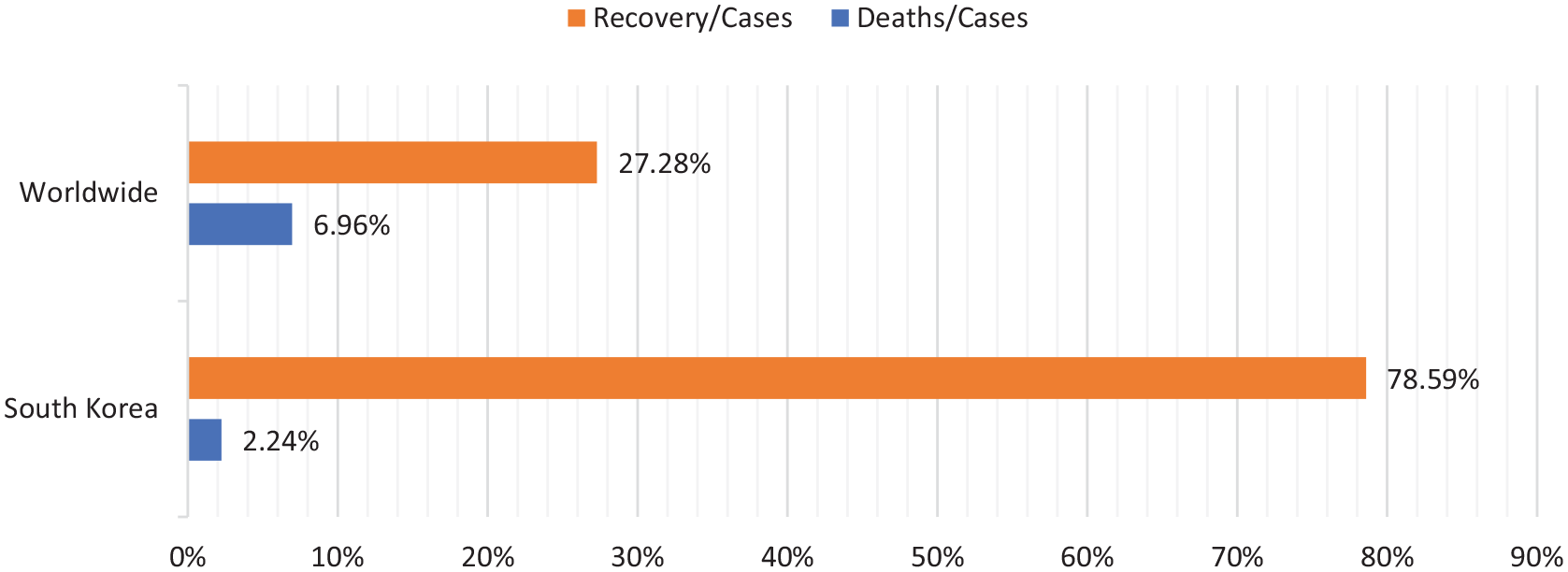
Comparison of deaths and recovery rates in South Korea and the World.
South Korea’s process transparency was so well documented and openly communicated across the country that South Korea was the only country to hold an election in the middle of the COVID-19 crisis. Figure 3 depicts the South Korean government’s process workflow for electoral voting under COVID-19.
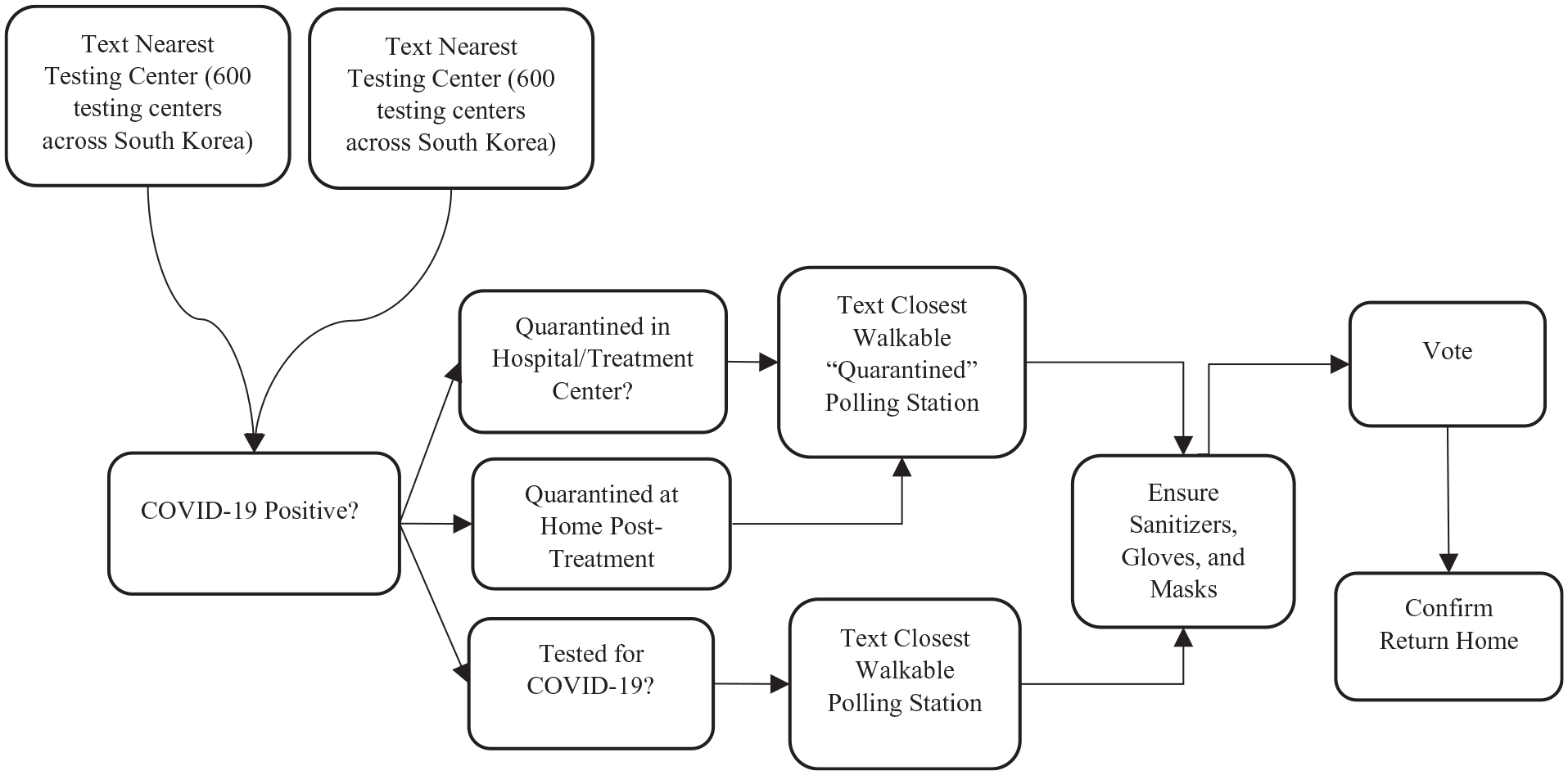
South Korea’s Electoral Voting process workflow.
Maintaining process transparency and establishing a culture of open communication about transparency is central to DT for successful CCP. Process transparency creates a culture of openness and trust, rather than suspicion and rancor. For example, the US government’s initial perspective of COVID-19 as a partisan play against the incumbent president created a rift that summarily deepened partisanship and distrust, leading to unneeded, disruptive protests and an abounding of conspiracy theories. On the other hand, countries such as South Korea, New Zealand, Italy, the UK, and South Africa established a single, open line of communication that reiterated the need for testing and self-disciplined isolation, leading to lower partisanship, even amid economic hardships and recessionary pressures.
Modularity
Modularity is a business philosophy borrowed from biology and engineering, where a product or process is divided into small, manageable pieces that can be joined together to create various finished products and services. DT during a crisis often results in a portfolio of solutions that are independently workable yet need to be integrated, matched, and melded for scalability.
Modularity relies on integrating independent solutions by allowing decentralization at the periphery and centralization at the core. During crises, innovations and solutions occur independently, from pharmaceutical drug discoveries and ventilators to AI, machine learning, and e-commerce solutions. Each solution is modular, developed independently. In order for societies to harness these distributed modular solutions, countries and international agencies must be able to dynamically scale their capabilities and integrate various modular solutions to digitally transform a society for pandemic CCP.
The COVID-19 pandemic highlights the decentralized and independent nature of solutions development and delivery all across the world. Various companies are fabricating their own versions of ventilators; global research centers and pharmaceutical firms are attempting their own SARS-COV-2 antigen testing and vaccines; organizations, agencies, and companies are offering independent “virtual” telemedicine and teleconsulting services; companies are using proprietary AI and machine learning algorithms for contact tracing, fever, and facial recognition; companies are creating their own digital content and platforms for digital delivery of education and entertainment. Yet, without modularity, each independent solution, however marvelous in its own right, is difficult to integrate to offer a single concerted approach.
During World War II, independent technological innovations such as radar and code-breaking became truly impactful when they were integrated. This led to the Allied decryption of Luftwaffe sorties into the British Isles along with radar information to track and deter air attacks. Driven by the need to swiftly and competitively arrive at solutions during a crisis, governments and organizations need to use, reuse, invest, divest, consolidate, outsource and integrate various independently crafted solutions.
However, modularity requires an inclusive, grassroots cultural transformation. In order to integrate multiple lines of thinking and innovation from the ground up, a fragmented culture can thwart the integrative benefits of technologies and processes.
Singapore’s COVID-19 responses offer a case-in-point. Singapore, a small island of 5.7 million people and 280 sq. miles, needed to take drastic measures. As the world’s third largest financial center, the second largest gambling center, and one of the largest logistics hubs, Singapore’s economy relies on continuous traffic flow. More than 20% of Singapore’s population of 5.7 million people are foreign workers, with a vast majority been low-wage laborers with work permits.
Singapore recorded its first COVID-19 case on 23 January 2020. Immediately, the country embarked on extensive tracing of contacts of each person infected and released detailed information about clusters of cases. Government websites shared the age, sex occupation as wells as travel details and when the patient sought medical assistance. As a result, the country was able to limit the spread of the virus while maintaining a sense of normalcy on its streets. It was touted as an early success story and blueprint in containing the spread of COVID-19. Even the director-general of WHO Tedro Adhanom Ghebreyesus recognized Singapore’s effective COVID-19 response when he notes that Singapore is “leaving no stone unturned.” Yet, in a crisis of this nature where collaboration and integration across every segment of the society are vital to controlling the pandemic, it appears that Singapore’s superior digitally-enabled trace and track operations ignored certain segments of its community.
In early April 2020, Singapore witnessed a surge in infections with the total confirmed cases jumping to more than 17,000. The surge in infections has been driven by hundreds of new cases from migrant workers living in dormitories. Experts say that local officials underestimated and downplayed the pity of the city’s migrant workers, who lived in overcrowded dormitories with up to 20 people to a room. By the end of April, these dormitories make up over 85% of Singapore’s 17,101 cases. It turns out that these typically overcrowded dormitories on the outskirts of the city became a blind shot in the government previously lauded COVID-19 response. While the government put in place extensive tracing and testing centers for its citizens, migrant workers were largely ignored. The conditions in these facilities were often so cramped that it was virtually impossible to observe any form of social distancing. Furthermore, the foreign migrants were excluded from the country’s social safety net and healthcare coverage. In response to the surge, the Singapore government has declared many dormitories as isolation areas, expanded healthcare facilities for foreign workers, created onsite medical facilities, and deployed mobile medical teams. However, the reversal of fortune in Singapore’s efforts to manage the COVID-19 crisis remains a cautionary tale on the need for integration across fragmented cultural, societal, and economic boundaries and divides.
Digital business intensity (DBI)
Academic, practitioners, and international development reports increasingly testify to the linkage between technology and crisis management, with prior studies suggesting that businesses immersed in technology are better positioned to manage disaster and adversity (Sinha et al., 2019).
Digital business intensity (DBI) creates the supporting infrastructure that can enhance and speed DT efforts for CCP. DBI refers to the measure of society’s ability to integrate emerging and innovative digital technologies as analytics, big data, cloud, social media, and mobile platforms to drive CCP (Nwankpa and Datta, 2017).
In an increasingly digital business environment, inadequate DBI can obscure an institution’s ability to develop and design appropriate digital strategy and innovation needed to operationally continue to plan and manage a pandemic. As a result, societies with high DBI are better positioned to leverage DT characteristics to improve crisis continuity operation and planning.
DBI serves as the supporting backbone for CCP, allowing societies and organizations to build required capabilities (e.g. infrastructure, capabilities, workflows) that can be effectively leveraged to address changes ushered in by DT.
The level of DBI can determine how a country can scale and effectively apply digital solutions into crisis operations such as patient location monitoring and infection cluster detection. Unsurprisingly, countries such as Singapore, China, South Korea as well as EU countries that were able to effectively deploy and implement extensive COVID-19 patient contact-tracing operations using mobile devices, credit card information, and digital surveillance exemplifies the underlying high level of societal digital connectivity.
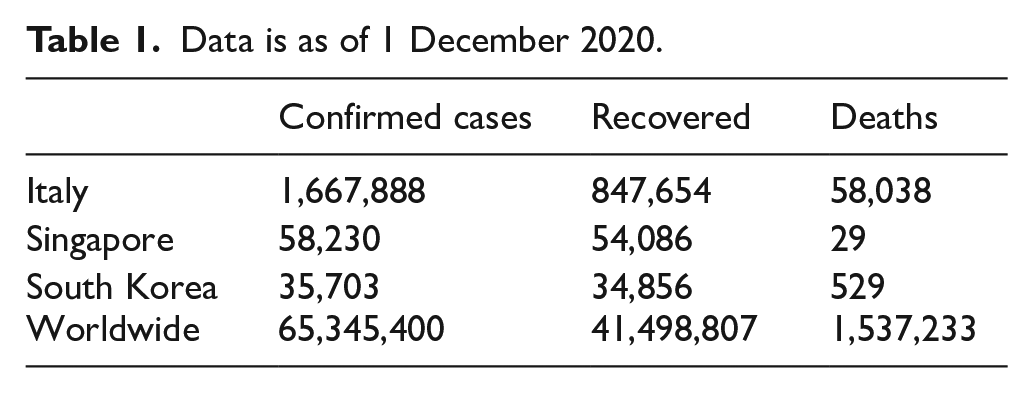
Italy highlights society’s need for digital business intensity as an infrastructure underpinning. With a population of 60 million and an area of 113,568 square miles, Italy is one of the top five European nations by population. Italy is an interesting case because Italy has one of the world’s oldest population distribution with more than 23% aged 65+ and COVID-19 is particularly debilitating for older people, and Italy has fallen prey to this very phenomenon (see Table 1).
Data is as of 1 December 2020.
However, unlike countries in Asia that have leapfrogged technological developments with digital business intensity, Italy struggled to leverage digital solutions to monitor and limit the spread of COVID-19. This is partly because Italy lacked the digital infrastructure, digital business intensity, and connectivity depth needed to harness and effectively manage the crisis. Unsurprisingly, digital payments such as card and mobile payment have struggled to get a foothold in Italy. Italy is among the 35 most cash-intensive economics in the world, according to The European House Ambrosetti, an Italian-based consulting firm (Furber, 2020). Similarly, a European Central Bank (ECB) 2017 report found that cash transactions at the point of sales make up 68% of Italy’s transaction by value. Awareness of digital payment continues to be low in Italy, with a recent survey by European House Ambrosetti revealing that less than half of the respondents knew about digital wallets (Furber, 2020). By the end of April 2020, Italy initiated a project to develop an app that would trace people who have come in contact with a confirmed case. Yet, without a strong institutional culture of DT, privacy concerns, data security and control continue to generate roadblocks, and the country continues to struggle to deploy effective contact tracing.
Preparing the DT operational environment
The emergence of COVID-19 pandemic requires us to rethink how industries and economies need to prepare themselves for DT. Central to this preparation is laying the groundwork for the operational environment.
DT for CCP is not a closed-loop but an open, decentralized, global initiative. The open governance model is aimed at enabling connectivity with external linkages, connecting fragmented institutions and ad hoc collaborative agencies and minimizing the risk of disruptions due to crisis such as COVID-19. Information systems (IS) research and practice need to delineate the choice of platform, architecture, and governance (e.g. the WHO’s COVAX and ACT (Access to COVID-19 Tools)) that can support such an open, federated inter-institutional, rather than a closed-form inter-organizational system (IOS) structure.
DT must be analyzed as a strategic tool for crisis operational continuity and planning in a global ecosystem that is increasingly digitally connected and interrelated. For example, the use of digitally enabled contact tracing applications and the deployment of AI, robotics, drones, GIS, big data, and analytics to identify infection clusters provided important head starts to many countries as they grappled with stopping the spread of the COVID-19. IS research might find it particularly useful to socio-technical aspects of deploying emerging technologies, including issues of (a) privacy, (b) cyber-security, (c) surveillance, and (d) agency-cost economics of emerging technologies.
CCP preparation needs to recognize the growing socio-economic implications of a digitally transformed society and identifies mechanisms through which DT can foster operational continuity during a catastrophic crisis such as COVID-19 pandemic. As the COVID-19 ravaged the world, it is not surprising that governments across the world digitally transformed their operational core by designing new apps and digitally transforming services to ensure operational continuity. Essential supply-chains were optimized through digital government services, unemployment and social benefits were filled and processed using online platforms and education dramatically switched to e-learning with teaching undertaken remotely using digital solutions. Future IS research could shed further light on the implications of digital transformation on operational continuity as a harbinger to (a) the future of work, (b) flexibility and resilience of information and physical supply chains, and (c) the usefulness of emerging technologies such as blockchains and IoTs on CCP.
Finally, DT for successful CCP relies on effective cultural transformation. A culture of ignorance, complacency, divisiveness, and fragmentation can thwart best technological and reengineering efforts. Often, a lack of education and misinformation can create dangerous echo-chambers and partisanship—leading to an epidemiology of fear, stigma (LaPorte et al., 2002) and proliferation of fake news. Mexico and Iran have reported residents threatening to burn down hospitals accepting COVID-19 patients from fears of contamination. In Ivory Coast, a sub-Saharan African country, residents destroyed a testing center from stigma fed by misinformation (BBC, 2020). Such issues offer a substantial need for IS research to understand (a) mechanisms to control the epidemiology of misinformation and fear and (b) the design and delivery of tele-education, tele-health, and telemedicine in emerging economies reeling from one crisis to another.
What lies ahead?
In this work, we offer a diligent attempt to clarify the relationship between DT and CCP. As nations and societies turn to digital solutions to help in the fight against the COVID-19 pandemic, questions remain on how various stakeholders and global actors can collectively leverage DT to sustain crisis continuity planning. The study ventures beyond the traditional investigation of DT and rather begins by viewing DT in a period of COVID-19 crisis as a process aimed at enabling connectivity with external parties, streamlining fragmented operations, limiting the spread of infections, and working toward developing a vaccine.
First, modularity is a key attribute of DT for crisis continuity planning. A modular approach to DT enables flexibility and integration of independent solutions. As the COVID-19 crisis continues to devastate the world, the search for vaccine and cure and the deployment of AI enabled applications are being aggressively pursued independently across multiple countries and global agencies to help manage the crisis. However, without modularity, each independent solution may not offer a comprehensive solution. Modularity enables decentralization at the edge while centralizing at the core. As a result, societies with modular capabilities are better positioned to dynamically scale their capabilities and integrate various modular solutions to digitally transform their society for pandemic CCP.
Second, DT should enable the ability to collaborate across multiple agencies, healthcare partners, and countries across the globe. The ability to keep track and share real-time information will be critical to managing the crisis. Data need to be aggregated, analyzed across multiple fronts and countries to promote the development of COVID-19 vaccines and drugs.
Third, for DT to be embraced by various parties to deliver crisis continuity planning, assurance of security and privacy of the information generated is required. Adequate levels of security can mitigate concerns of cybersecurity threats, information integrity and system disruptions.
Fourth, this study identifies transparency as the panacea to less data privacy and digital surveillance. Successful efforts in several Asian countries have demonstrated that in the absence of a vaccine or effective treatment, the best way to fight COVID-19 is to aggressively trace and track infected individuals. Similarly, in the United States, Apple and Google announced a joint effort in April that will enable the Bluetooth chips in their respective smartphone to be used for contact tracing. However, DT for CCP must embed transparency in its processes to support society’s willingness to sustain participation.
Fifth, to maximize the gains of DT for CCP, societies need to achieve certain levels of digital business intensity. DBI allows a society to achieve the necessary societal digital connectivity required to leverage and reap the benefits of these DT characteristics to improve crisis continuity operation and planning.
Finally, DBI is key to preparedness. In essence, DBI highlights the need for strategic agility. Strategic agility, defined as an organization’s ability to sense and respond to changing environments (Tallon and Pinsonneault, 2011), lies at the core of digital intensity effectively and swiftly. Societies with high DBI are more prepared to continuously scan the environment, orchestrate resources, and collectively respond to disruptions in routines. Altogether, this case research shows that DT for successful CCP is more than just a technology initiative. Instead, DT for successful CCP hinges on reengineering the way society plans and practices modularity, digital collaboration, security, transparency as core socio-technological attributes that foster operational continuity and planning.
Footnotes
Declaration of conflicting interests
The author(s) declared no potential conflicts of interest with respect to the research, authorship, and/or publication of this article.
Funding
The author(s) received no financial support for the research, authorship, and/or publication of this article.
