



Abstract
The service industry is polarizing e-commerce in Bangladesh across multiple sectors. Sheba.xyz is a marketplace for household services linking customers with verified on-demand professional service providers. By integrating technology and service experts, the platform has transformed the service industry, paving the way for other service provider markets to also adopt virtual strategies. This is probably because online platforms, like Sheba.xyz, have a sustainable future—commercially speaking—in this domain. Furthermore, the notion of an industry’s lifecycle has become outdated as innovations can be frequently made in a virtual form. This case provides an overview of Sheba.xyz, along with its current challenges and its future opportunities.
Introduction
Bangladesh, a progressive developing country with nearly 8% GDP growth, was ranked 34th in the World Economic Forum (WEF)’s Inclusive Index (World Economic Forum, 2018). According to experts’ projections, the country will be the 24th largest economic in the world by 2030. The main factor behind this exponential growth has been the smart utilization of Information and Communication Technology (ICT) by all sectors to leverage growth.
Realizing the significance of digitalization in the development of a country, Digital Bangladesh, an electoral pledge of the current administration, meant to get the country middle-income status by 2021 and to transform from a labor-based economy to a knowledge-based one by 2041. As part of the dream of a Digital Bangladesh, the government has been overseeing the Access to Information (a2i) Programme, for which the ICT division was established (Bhuiyan, 2020a). Their major developments include the launch of 600 e-services for citizens; a nationwide expansion of fiber optic connectivity and internet access; a staggering increase in the number of internet users and IT professionals, at 100 million and over 1 million, respectively; the creation of an e-Government application; the establishment of a startup company; and a commitment of over US$ 40 million to support startup initiatives (The Independent, 2020).
E-household services
E-services refer to customer-centric and Internet-based customer services that are interactive and centered around content. They are designed to enhance the relationship between customers and service providers by integrating the relevant organizational support processes and technologies (de Ruyter et al., 2001). The growth of online home services over the Internet has gained extensive popularity in recent years (Agrawal et al., 2020). However, the concept of e-household services is fairly new in the context of the Bangladeshi market (Bhuiyan, 2020). The basic principle of the e-household service business model is to provide various forms of household services through the Internet. Service-oriented businesses provide convenience to their customers and, by doing so, enjoy a profit. The key drivers for the rise in the e-household businesses were the COVID-19 pandemic and the availability of smartphones in Bangladesh (Bhuiyan, 2020; Mamun and Islam, 2021). E-household services are popular thanks to the application (or app, for short) interfaces used the e-household service businesses (Bhuiyan, 2020). The app interfaces are simple to use, which adds value for consumers, as they can easily use the app to avail any service they want. The process of availing a service is easy, as well. First, the consumer opens the e-household app and selects the desired service. Then, they check the price and confirm. The second step involves confirming the consumer’s schedule and address. The last step is to review all their information for the service and then wait for the service to occur. The simple interface of e-household applications makes it easier for consumers to request their desired service with little technical knowledge (Mamun and Islam, 2021). The most common service availed by consumers are air-conditioning maintenance, home cleaning, and personal beauty care. Furthermore, consumers often order services, such as on-demand drivers, home shifting, car maintenance, plumbing, gas stove repair, and refrigerator repair service. Some of these services, such as the home shifting service and on-demand driver, are hard to find on the market. E-household services mitigate this problem by offering these services which, in turn, generates profit for the business. E-household services gained popularity during COVID-19 pandemic, when online activity increased because of lockdown restrictions and working from home becoming the new way for organizations to operate (Rahman et al., 2021). During the recovery period of the COVID-19 pandemic, people began to rely heavily on e-businesses. Thus, e-household services took advantage of this situation by offering household services through an online platform (Khan et al., 2021). E-household businesses are useful and, therefore, thriving in the modern world because an increase in economic growth and disposable income has consumers looking to purchase things that provide comfort and convenience (Mondal et al., 2021). Thus, services like e-household services have become popular among high- and medium-income consumer groups. Online businesses that cater to the needs of the Bangladeshi people are booming, and Sheba.xyz, an online household service provider, has come up with a unique business model. Sheba.xyz is the easiest way for people to hire verified and professional service providers for all service needs. It is a new on-demand service platform that connects households and businesses with the best service providers. In the context of Bangladesh, the service industry severely lacks professionalism (Mondal et al., 2021), particularly when it comes to everyday household services—a problem that no one had been attempting to solve.
Case: Sheba.xyz
Sheba.xyz has blended technology and expert provisions of common services to revolutionize the service industry. Their goal is to provide on-demand services to consumers within 60 min.
Background
When asked about the story behind the brilliant idea of Sheba.xyz, Adnan Imtiaz Halim, the company’s CEO, shared that it all started from his personal frustrations. After a tiring week at work, we all want a relaxing Friday (weekly holiday) to get the stress out of our system. But in his case, Friday was reserved for going out and hunting for someone to properly fix a leaking pipe or getting a broken window repaired without paying an arm and a leg. He soon realized that most of his colleagues also faced similar fates. In the context of Bangladesh, the service industry severely lacks professionalism, particularly when it comes to everyday household services—a problem that no one has bothered to investigate. Thus, Adnan I. Halim and his co-founders were able to capitalize on the niche market and remove the hassle of looking for quality service providers once and for all.
Sheba.xyz started as the brainchild of the courageous entrepreneurs in 2015 but was launched commercially July 2016. Initially, Sheba.xyz started off with a website, call center, and a few customer service representatives. In January 2017, the company launched their partner dashboard V2.0 to consumers. Continually improving their service for the benefit of the customers, the company introduced their 24/7 call center solution in April 2017. From that year onwards, it has never looked back. Currently, Sheba.xyz is the country’s largest service online marketplace (Sheba.xyz, n.d.).
Growth of Sheba.xyz
As a developing country, Bangladesh is still lagging in terms of its service sectors, such as appliance and gadget repairs, laundry, cleaning, pest control, and home/office shifting. While there are physical stores and freelancers available for individual services, there is no way for consumers to determine the quality and efficiency of service providers. As most of these services are being performed within households, there is also a matter of security that arises when individuals enter customer homes to provide their services.
Sheba.xyz offers more than 150 services, empowering 50 thousand entrepreneurs of micro, small, and medium-sized enterprises (MSMEs) and creating employment opportunities for 20 thousand service providers. As an online service provider, Sheba.xyz is one of the most innovative and fastest growing startups in Bangladesh. From cleaning to repairing, it offers almost every kind of household services one would need. The most requested services from Sheba.xyz are house cleaning, repairs, home shifting, plumbing, beauty services, laundry, car rentals, and food delivery. They accept payment once the service is provided.
Business model
There are many people who come to the city in hopes of a better livelihood. These groups of people learn to repair appliances and perform manual labor to contribute to society. Some open a shop and start a business, some work in a shop, and others go from street to street looking for odd jobs. However, most of these tradespeople are unable to find enough customers because they lack proper guidance. Sheba.xyz first saw that potential and created a bridge between these two groups of people, those in need of service and those providing the service. Customers could request a service through the website or by calling to the call center. Then, the request was placed to a service provider that was located near to area of the service request. The entire process was completed through either the telephone or short messaging services (SMS), both of which are manual and costly processes when considering profit margins. Over time, the company has made modifications to their business model and finally has come up with their current system, launching their mobile application in December 2016.
The company’s unique business model is based on three pillars. The front pillar is the service marketplace, Sheba.xyz (which is also known as “your service assistant”), followed by SManager, or “your business assistant,” and, third, the service providers (SPs) of MSMEs. Basically, they use a holistic approach where the service providers are regulated and monitored by the Sheba Managers through the SManager app. So, when a customer places an order, a notification goes to SManager, who then allocates the work to available SPs, who, in turn, provide the service directly to the customer. The main motto of Sheba is to empower MSMEs and bridge the gap between customers and SPs. Additionally, any user can use the SManager app free of charge to maintain and manage his/her own business. To do business in the Sheba.xyz marketplace, however, one must subscribe to a particular package.
Hence, Sheba.xyz is a 360-degree platform, on which one can simultaneously do business through the SManager and also be a SP and provide services to customers through the Sheba.xyz app. Figure 1 shows the three pillar eco-system of Sheba.xyz. E-household eco-system.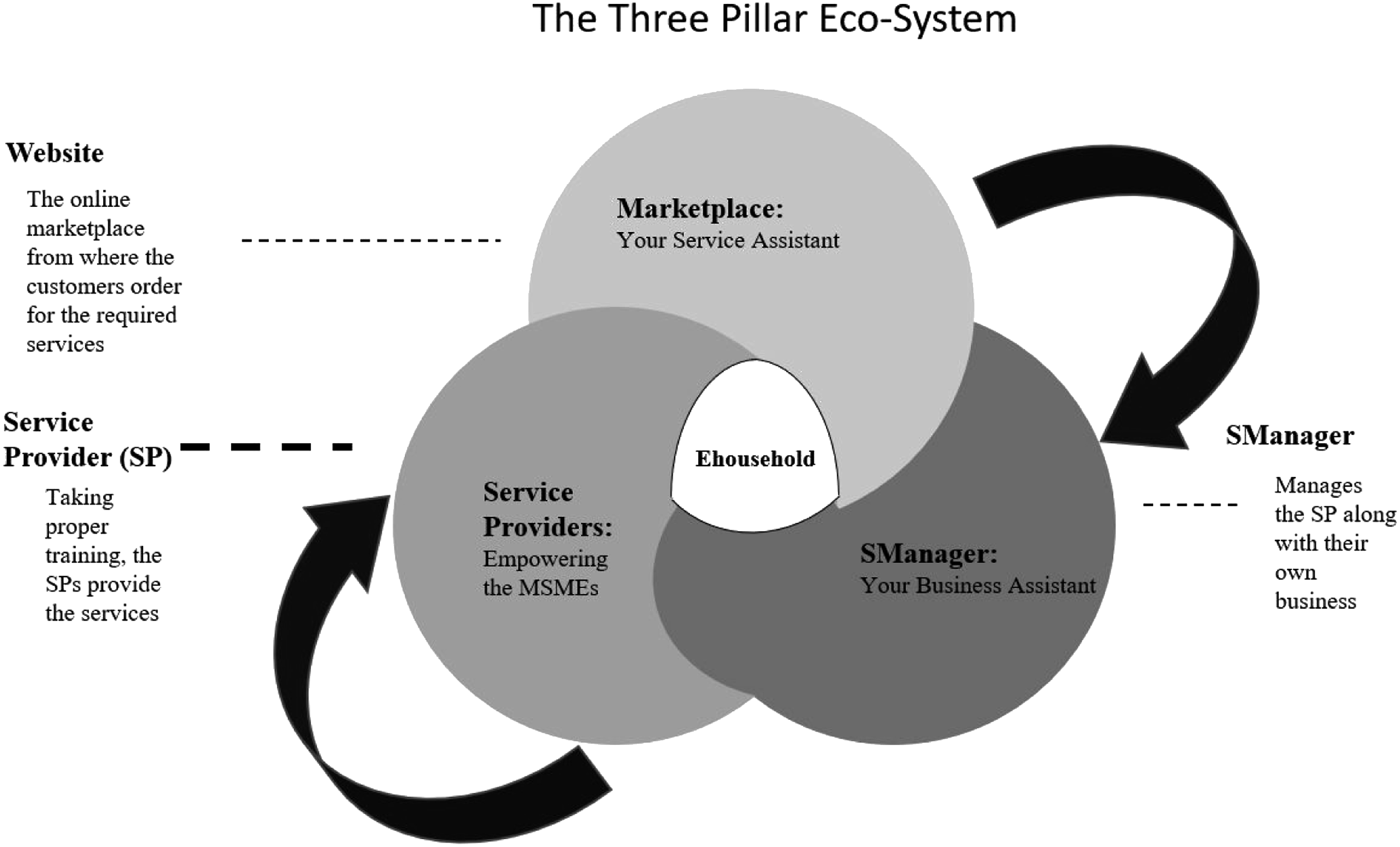
A one-stop solution for service assistants
With more than 150 household services, Sheba.xyz’s customer service assistant, is by far the most diversified service marketplace imaginable. In a nutshell, Sheba.xyz offers a comprehensive range of products and services to cater to the everyday demands of their customers at home or in the office—from beauty care to appliance repair, car rental to home shifting, to even government or medical services. The list goes on and on. Not only that but the company maintains separate teams for every service category to ensure a smooth customer experience by creating value at every step. The most distinctive aspect of this is that the customers can enjoy these services from the comfort of their own home and at their convenience. The motto of Sheba.xyz is to make people’s lives easier. Moreover, the Sheba.xyz platform integrates new services daily. Soon, the number of services offered will surpass three hundred. Basically, Sheba.xyz is the Amazon for everyday services.
Inclusion in service
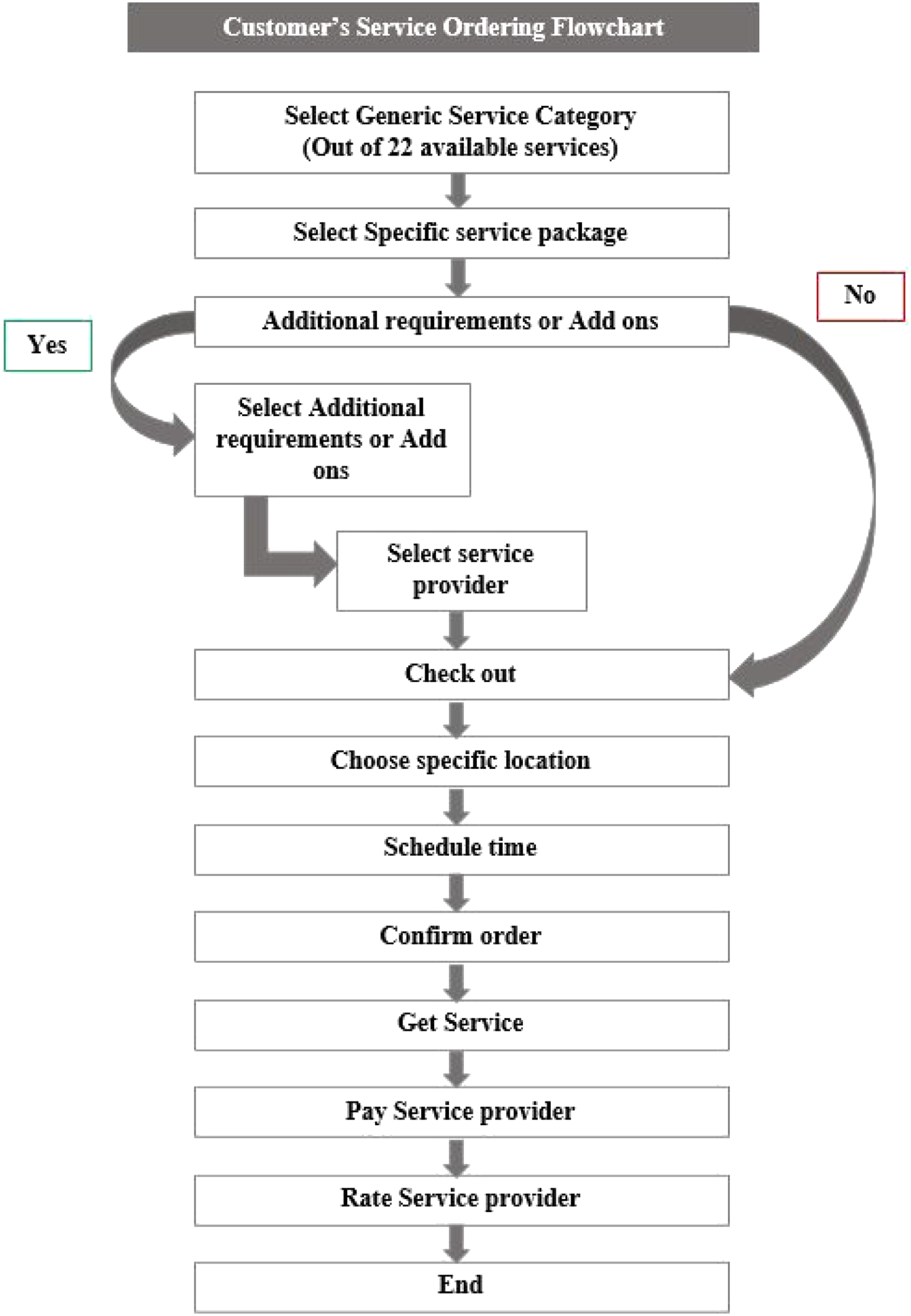
For ease and a smooth customer experience, the company has divided their services into 22 broad categories, under which there are multiple sub-categories. From the narrowed-down sub-categories, customers can choose customized services according to their wants and needs. For example, under the umbrella of Appliance Repair, there are 14 different categories, including TV and refrigerator repair; and within those sub-categories, there are more specific services like refrigerator servicing or gas refills for refrigerators. Hence, customers can select their customized service from a wide array of services and receive the service when it is convenient for them (Figure 3). Prices for the selected service are shown, and the customer, or ultimate end user, can place his/her order after analyzing the price. Now, anyone can use this application by simply downloading it onto their electronic gadget, such as their mobile phone, tablet, or laptop, and signing up for the app with a valid phone number. After registering, the customer will receive a one-time password (OTP) at their given number, which they will need to use to verify their identity and log into the app. To complete the registration process, the user will need to select their location and accept the privacy policy by ticking the small box within the app. Figure 2 shows the five steps for registering a new user in the Sheba.xyz app. Registration flow chart. The Customer’s service ordering flowchart.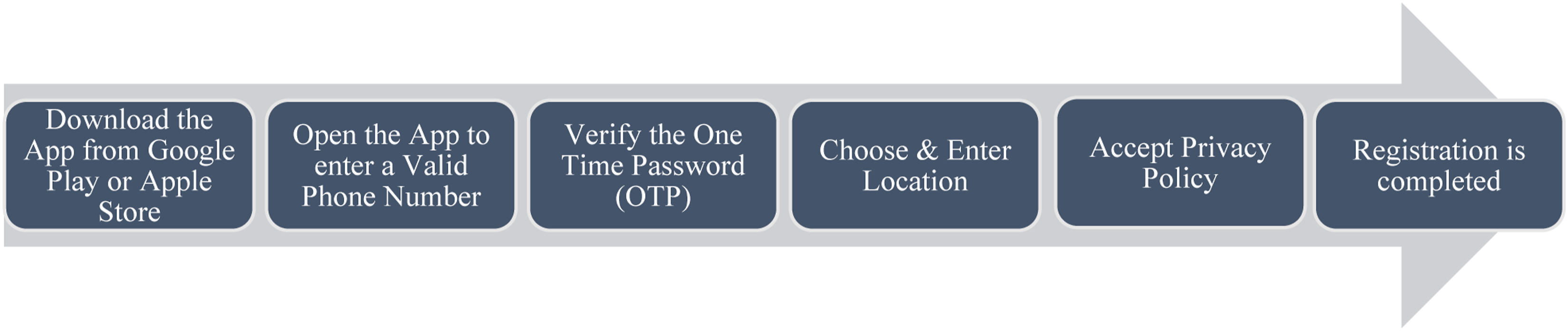
An app: “Jack of all trades”
SManager, which stands for Sheba Manager, is a business assistant app integrated in the basic business solution to meet entrepreneurs’ daily needs. It is also known as “Your Business Assistant” because it manages one’s business by providing business hardware solutions, including accepting card payments, creating receipts of payment and barcode readiness, and providing easy access to loan facilities and online sales channels. To avail the easy loan service, entrepreneurs need neither a guarantor nor the hassle of going to a bank or financial institution because the entire loan processing process is done online through the e-platform. For amateurs dreaming of becoming entrepreneurs, the online sales channel built into the app provides the opportunity to connect you with over 15,000 businesses or service providers—a rare and unique opportunity to grow and thrive in an organized market. Furthermore, the application provides logistical support along with over 10 additional services.
Registration is free of cost, and, more importantly, personal e-shops can be opened in three easy steps. Here, Figure 4 shows the three-step registration process for SManager. Steps of SManager registration.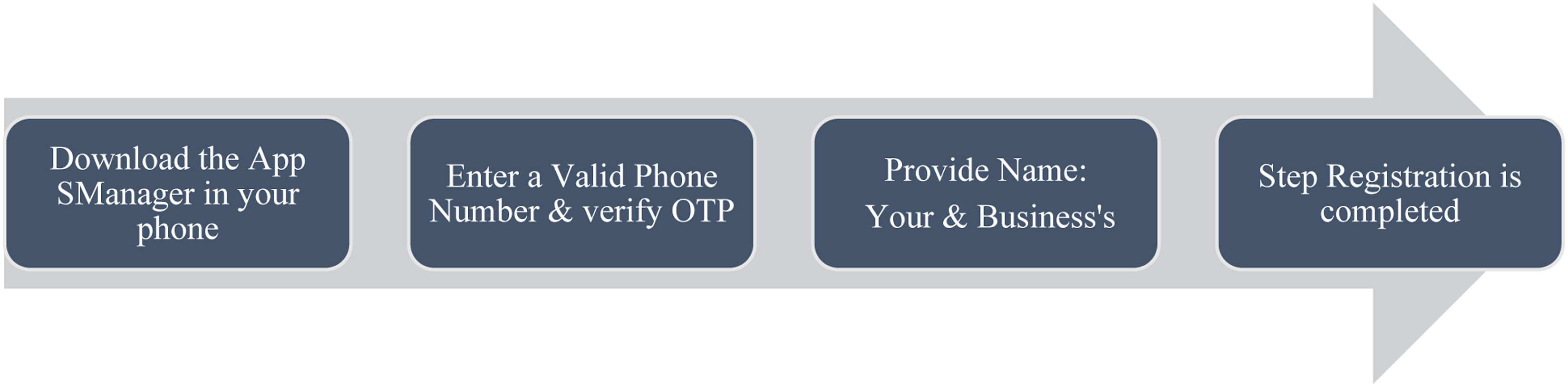
The anatomy of service providers
Basically, three platforms are needed for customers to make a request and for the service provider to fulfill said request. These are the admin portal, the manager portal and the expert portal, and all work co-dependently via three different apps. Sheba.xyz formally conducts an intensive background check before hiring any service providers or entrepreneurs and provides them with proper training for their field in addition to capital (if needed) and the common etiquette for approaching and behaving towards customers on service calls. This training mitigates customer concerns regarding efficiency and security. Not only that but the company also offers a 7-day service warranty, which ensures quality service and customer satisfaction and eventually leads to a loyal customer base.
This e-commerce business model that allows consumers to select their desired services, prices, and local service provider depending on customer rating is new to the context of Bangladesh. Sheba.xyz works as a facilitator between customers and service providers. To become a business partner, a service provider must register with Sheba.xyz after satisfying all the required terms and conditions. Registration can be done through their website, the mobile app, or via a phone call. After registering, Sheba.xyz will verify the necessary documentation. Upon successful completion of verification, the applicant is able to become a partner. When Sheba.xyz receives an order from a customer, it will assign it to the appropriate partner. Partners will serve and collect money from the customer and will pay a certain percentage of their earnings to Sheba.xyz as a commission. The percentage may vary depending on the service package the partner chooses. Partners can choose among the three service packages offered by Sheba.xyz during the registration process: basic, silver, and gold. Details of the packages are provided in Figure 5. Subscription package.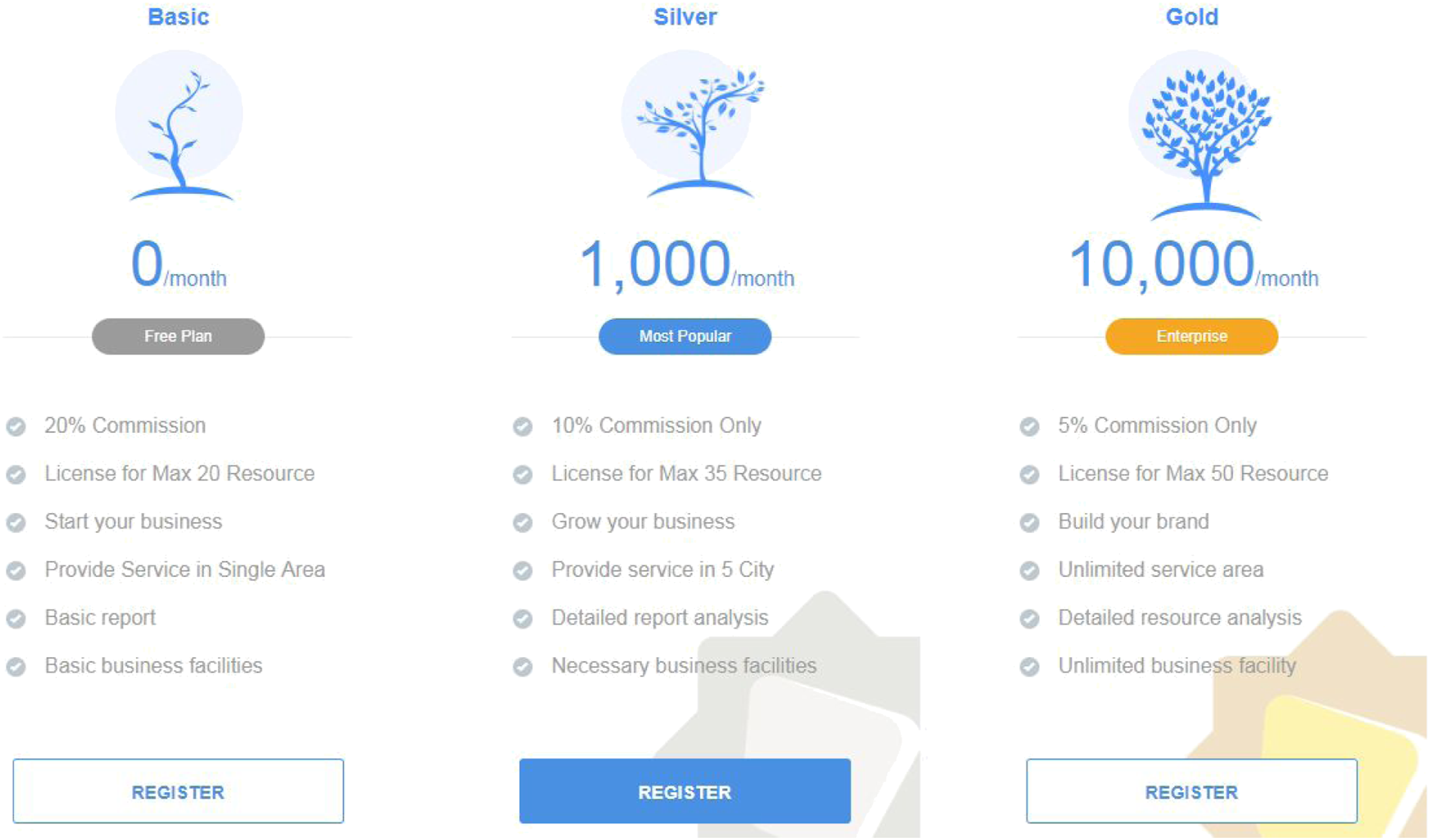
Revenue model
Based on the packages that Sheba.xyz offers, it can be said that they use a combination of a transaction-based model and a subscription-based model. The different business models in the online service marketplace can be classified based on how they charge users on the platform. There are basically three business models: transaction-based, lead-based, and subscription-based.
In a transaction-based model, the marketplace takes a cut of each transaction generated through the platform. A transaction fee model also scales well: the more sales your platform generates, the more revenue you bring in. In the case of transaction-based models, both customers and service providers only pay a fee when they sell or buy a service. Whereas, in a lead-based model, professionals or service providers pay to send quotes to customers. The platform makes introductions between customers and professionals based on the specific needs of a project. Professionals who confirm interest and availability submit bids for customers to choose from. The actual cost of this pay-per-quote model depends on the type of service the customer is looking for.
On the other hand, subscription-based models bill customers on a recurring basis and provide services at the same time every month or per their convenience. The basic package that Sheba.xyz offers falls under the transaction-based business model, whereas silver and gold packages fall under subscription-based business models. Verified service marketplace. Easy and reliable customer journey.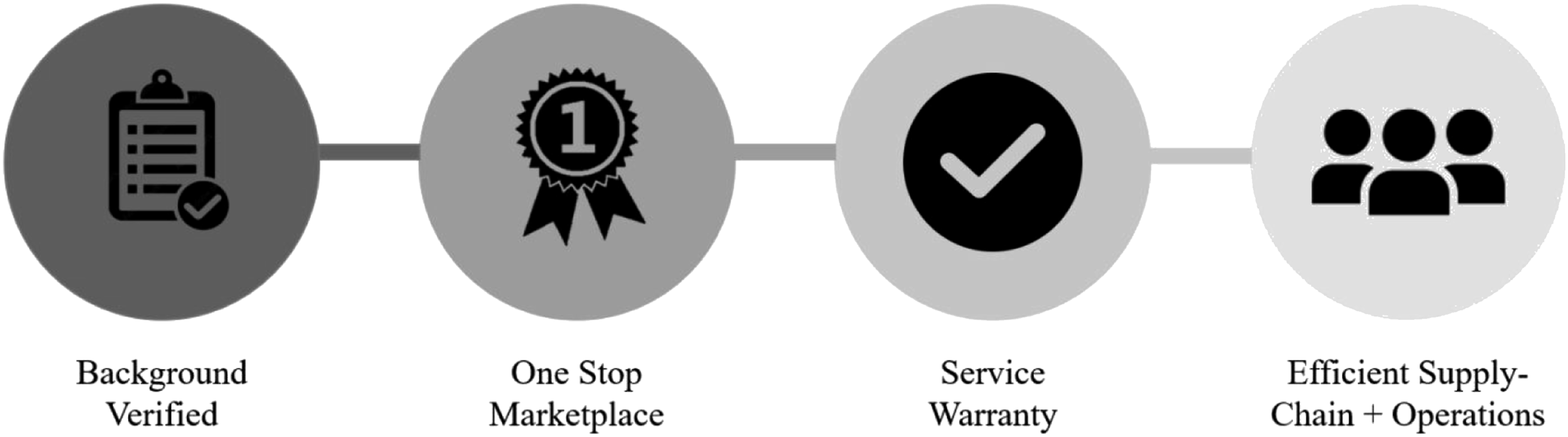
Competitive advantages
Sheba.xyz is the firsts of its kind and the only service marketplace, so its clients have nowhere else to go for their day-to-day needs. At present, Sheba.xyz is the only verified service marketplace in the country that facilitates online transactions (Figure 6). Unlike the rest of the developed world, its local customers have yet to adapt to and rely on technology and its numerous advantages. By providing top-notch services that promise skilled technicians and innovative products, the company aims to change the perception of its clients and invite them to embrace the fast, secure, and thriving technological market.
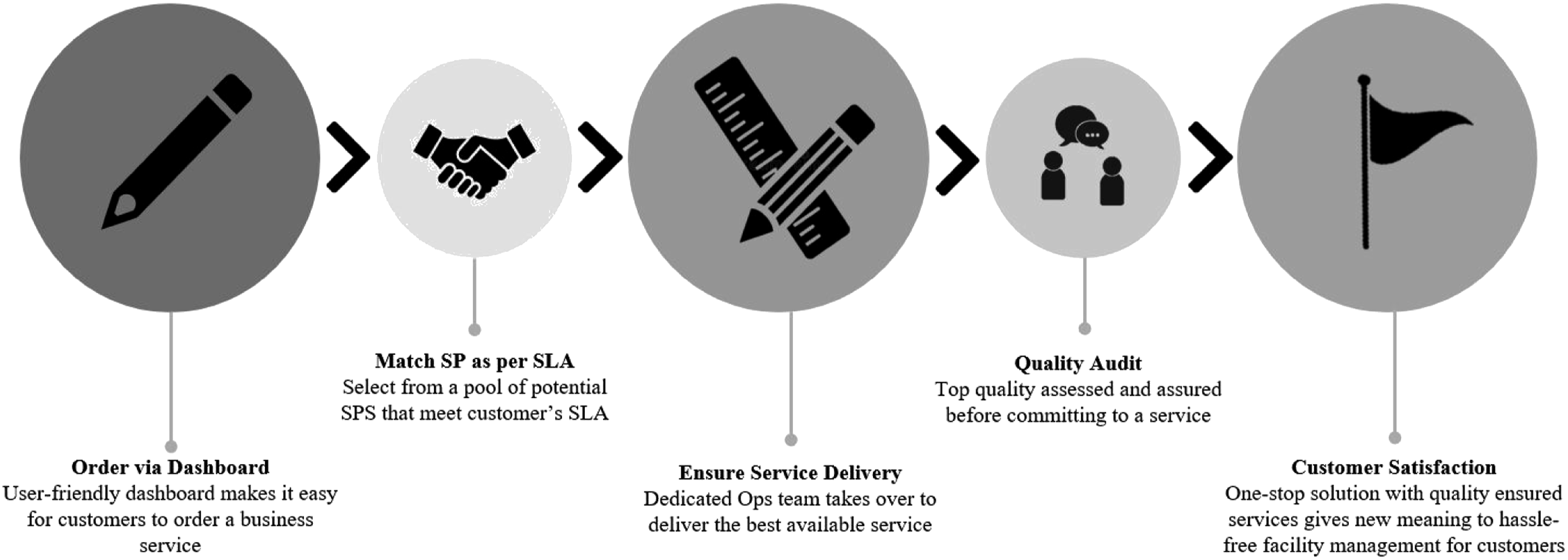
The customer journey is smooth and easy because of the user friendly dashboard, skilled service providers, and top-notched service (Figure 7). Also, a team of 50–200 employees work relentlessly at the Customer Care Center to provide customer service to users. Also, the customer care personnel randomly call customers to rate and share information about their service experience as a means for continuous improvement.
After all, in order to achieve success in e-services, it is essential to cultivate ongoing interactions with current customers through exceptional customer experiences (Hoffman and Novak, 2018).
Setbacks and challenges
In e-household service digital platforms represent a more complex form of ICT that facilitates interactions between different partners (Constantinides et al., 2018). Information regarding the impact of digital platforms on firm performance remains constrained, and a significant number of companies struggle to successfully implement similar platforms (Cenamor et al., 2019).
One of the major problems for the e-household service companies is maintaining service quality. If service quality is not ensured, customers can easily switch between alternatives, which can hamper business. Another problem in terms of e-household services is the need for a user-friendly app interface. Consumers may not be technically literate, thus using e-household services is difficult for them and the company will lose crucial business. There lies a substantial number of issues in terms of the operational system and its outlined policies laid out in the business model. Yet the main concern is client security. To illustrate, some clients hesitate to try out a new service if security is a concern. However, this is typically a problem with innovative business models. That is, except for the early adopters, people have a hard time accepting and believing in a new system. An additional problem inherent to this model relates to the Partner commitments, as partners may not keep their commitment or are not always prompt or punctual. Besides that, a lack of skilled technicians and concentrations is another concern in a developing country where tech savvy groups still lack very rudimentary skills. Technicians rarely receive any formal training to get their jobs. The Bangladeshi population as a whole lacks technology adaptability. They are a far cry from being able to use new platforms and adapt to new technology with ease. The local market is also taking a long time to incorporate online payment methods into the business field, with little progress so far.
Moving ahead
For e-household services to survive in the current Bangladeshi market, they should expand the range of services offered. E-household services should also strive for sustainable business models with competitive pricing, eco-friendly equipment, and improved customer service. There is huge potential for the e-household service industry in Bangladesh, and it can grow over time if the industry receives proper investments and viable business plans. Like other innovative businesses, anything too contemporary or new to a culture, like in Bangladesh, usually requires more of a collective effort to ensure an operation to be successful. “If we continue working with the same level of dedication and resilience, I see Sheba.xyz being the first name that comes to mind whenever we need any form of service. And by 'we', I am not just referring to the citizens of Bangladesh …... into a global company with operations in at least four countries” - Adnan Imtiaz Halim, CEO, Sheba.xyz
Taking an international step is a huge prolonged vision. After all, going global is a necessary steppingstone for a business to flourish. It has already attained an enormous amount of market share. With US$ 1 billion available for urban household expenses and over US$ 218 million from the middle class and above, Sheba.xyz grabbed over US$ 32 million of this market. Sheba.xyz has already raised to US$ 10 million; it raised this money to expand faster in Bangladesh.
Suggested discussion questions
1. How has Sheba.xyz differentiated itself from other e-household service providers in Bangladesh, and what strategies has the company used to address the problem of a lack of professionalism in the service industry? 2. What is the potential market size for e-household services in Bangladesh, and how can Sheba.xyz leverage the country’s rapid economic growth and digitalization initiatives to expand its business and increase profitability? 3. What strategies can e-household services adopt to ensure service quality, customer satisfaction, and overcome technological adaptability challenges in a developing country like Bangladesh? 4. How has Sheba.xyz navigated the challenges of transitioning from a manual system to a mobile app-based platform, and what measures have been taken to maintain the quality of services provided by their providers? 5. What strategies can e-household services adopt to overcome the operational and security concerns faced by clients in the Bangladeshi market to improve partner commitments and technician skill levels?
Footnotes
Declaration of conflicting interests
The author(s) declared no potential conflicts of interest with respect to the research, authorship, and/or publication of this article
Funding
The author(s) disclosed receipt of the following financial support for the research, authorship, and/or publication of this article: This work was supported by the InterResearch, Dhaka, Bangladesh (2021-2022).
