Abstract
Enterprises that thrive in uncertain and dynamic markets are distinguished by their strong commitment to innovation and strategic agility. They proactively adapt to changing market conditions, leverage new technologies, and continuously evolve their business models to seize emerging opportunities and mitigate risks. Designing digital business start-ups is inherently challenging, particularly for entrepreneurs lacking dual expertise in business management and digital systems design and development. This paper explores the importance of design science (DS) in digital start-up development, highlighting how DS approach guides the formation of both organizational and technological artifacts. The application of the designed approach is illustrated through designing several digital business start-ups at Lancaster University Management School, where postgraduate students engaged in digital start-up projects from 2021 to 2024. Their successful transition from theory to practice underscores the DS approach’s effectiveness in digital business strategy implementation. The application of the “Design Science Approach for Digital Start-Up Design” outlines a model that guides through designing business motivation to implementing and testing the start-up design and its underlying digital system. This model integrates business and digital design cycles, focusing on continuous alignment and analysis for effective digital start-up development, emphasizing iterative and intertwining refinement. Furthermore, this paper maps business planning practices to digital systems design within the DS approach. The presented research aims to create a unified design approach for entrepreneurial and digital business start-up planning and design, offering a modular approach suitable for entrepreneurs and business school curricula worldwide, merging entrepreneurial and technology innovation practices together.
Keywords
Introduction
The emergence and evolution of digital start-ups (DSUs) have been pivotal in reshaping the global business landscape. Most DSUs start small, and grow due to their agility and innovative ideas, built mainly on emerging technologies. They thereby attempt to disrupt the market and carve out a profitable market share, to contribute to their sustainable growth. This paper delves into the intricacies of DSU creation, emphasizing the significance of design science (DS) in this entrepreneurial journey. DSU is not just an entity involved in the commercialization of technology-driven products or services; it is an embodiment of innovation, agility, and strategic foresight, operating in a highly uncertain environment. This paper aims to explain the multifaceted nature of DSUs, and show how the DS approach can guide the design both of organizational and technological artifacts, drawing upon recent academic insights and practical applications in the field.
DS has emerged as a successful approach to tackle the design of digital-driven solutions. Insights from previous studies (Dimov et al., 2023; Hevner and Gregor 2022; Romme 2023; Romme and Holmstrom 2023) and the methodology proposed by Seckler et al. (2023) provide a comprehensive understanding of DS’s role in entrepreneurship, especially in crafting technology-driven solutions. DS in entrepreneurship and business design is a relatively novel approach in entrepreneurial research. The recent conceptualization by Seckler et al. (2023) in their “Infinity Methodology” combines scientific knowledge of entrepreneurial processes with DS activities, forming a unique approach for exploring and de-risking entrepreneurial ventures. Romme (2023) emphasizes the use of DS in creating and testing innovative solutions, particularly in technological innovation in entrepreneurship. The iterative nature of the DS approach, involving formulation, creation, and two stages of testing (alpha-testing and beta-testing) of solutions, offers a comprehensive framework for entrepreneurial ventures (Romme 2023). Romme and Holmstrom (2023) called for research on technological innovation informed by design science, advocating for a more practical approach to serve practitioners and scholars. Design science methodologies bridge problem-solving design and explanatory science to create impactful tools for innovation practice. Practical guidance is provided on preparing manuscripts for top journals, emphasizing the importance of tools developed through design science work.
Existing literature has focused on the solution design by exploring and exploiting activities, and current practices in designing entrepreneurial digital business ventures rely on management and strategic planning practices for business strategy, and systems engineering practices for digital solutions. There is a gap in terms of bridging the business and technological dimensions (i.e., designing a viable business on the one hand, and desirable and sustainable digital solutions on the other). The intertwining between those two dimensions of start-up design is a key for the success of DSUs. Hence, there is a need to address the pedagogical question of what approach digital business entrepreneurs can follow to design their DSUs while insuring alignment and coherence.
We argue that DS can be used for designing cohesive DSUs, addressing both their business and technology aspects. The notion presented in this paper emerged from years of work with postgraduate students working on designing their DSUs. The approach showcases the practical application of using DS to design organization and technology artifacts in an academic setting. Between 2021 and 2024, we implemented this approach in DSU planning and design projects at Lancaster University Management School. The success of our students, who transitioned their academic theories and practices into real-world DSUs, stands as a testament to the approach’s effectiveness. This outcome highlights the importance of hands-on design experience in understanding and implementing digital business strategies.
This paper further showcases the “Design Science Approach for Digital Start-Up Design” that was followed in the course, utilizing the methodology presented by Peffers et al. (2007). The approach is structured around key questions guiding the start-up design process, which include establishing the motivation behind creating the start-up, defining the product or service being designed, and evaluating the design’s viability. The suggested model emphasizes the iterative nature of start-up design and the importance of constant assessment and refinement.
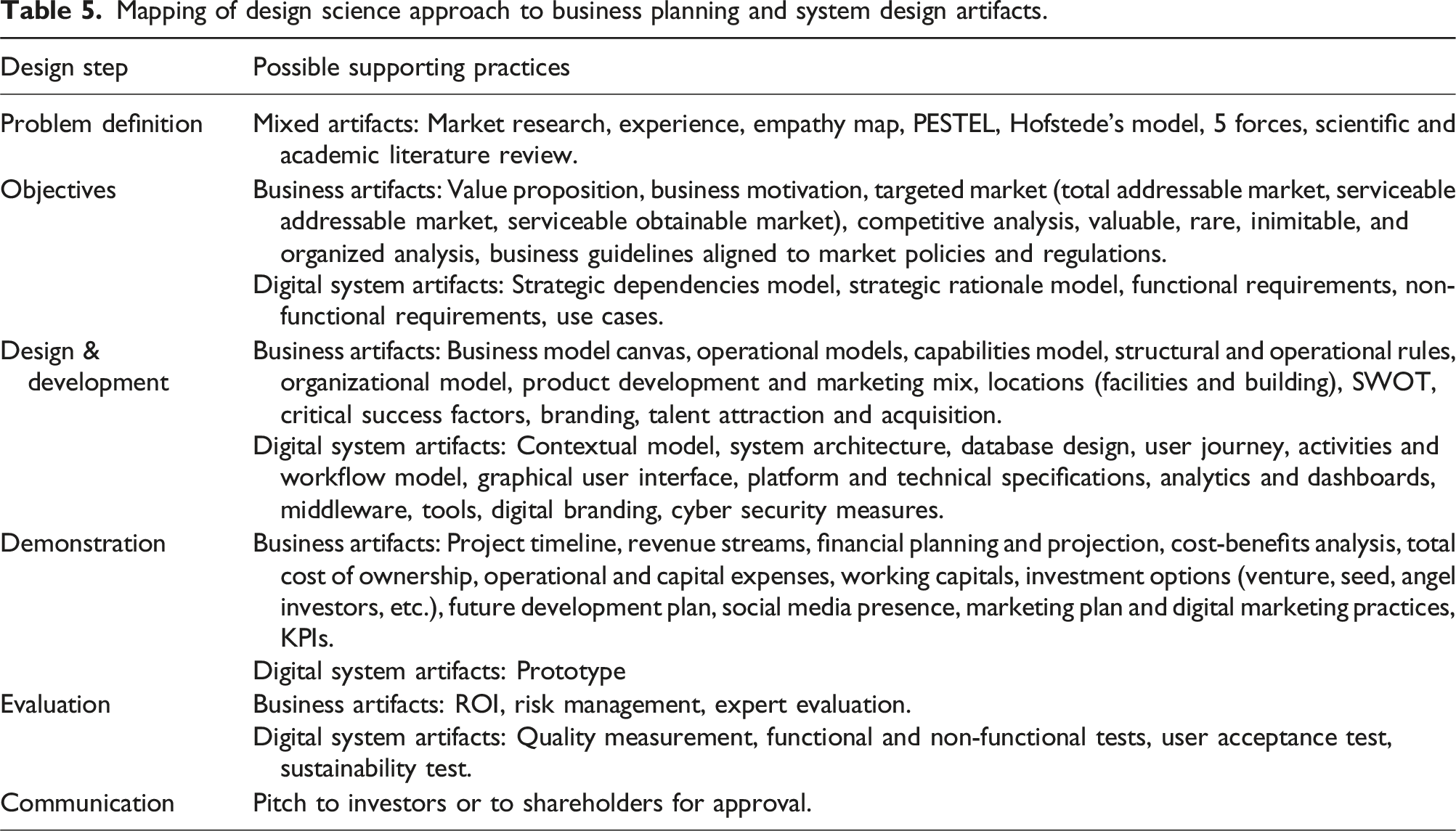
The paper features practices ensuring the harmony of the designed artifacts and the testability of a start-up. The approach promotes relevance, feasibility, intertwining of design processes, direction correction, and rigor. The paper also presents a mapping between typical business planning practices and digital systems design and development practices with DS methodology stages, as presented by Peffers et al. (2007). We aim to establish a unified design approach for entrepreneurial and DSU planning to offer a modular approach (i.e., one which is abstract, yet which is mapped to detailed practices) for those who wish to embark on their DSU journey. This research thus contributes to pedagogy for business schools to bridge entrepreneurial and technology innovation practices.
The following section explains the research background, discussing both DSUs and DS methodologies for entrepreneurship and digital innovation, followed by presentation of the method used, and then the results of the proposed approach and discussion of its outcomes and implications.
Background
Digital start-ups
The inception of the DSU phenomenon can be traced back to the “dot-com boom” of the 1990s. A business start-up can be defined as “a transitory company designed to search for a reproducible and sustainable business model” (Sreenivasan and Suresh 2023) This definition emphasizes the nature of a start-up as an enterprise in a temporary phase, actively seeking a business model that is both repeatable and sustainable. It pertains to a newly established enterprise with a keen focus on product innovation, revenue generation, and customer acquisition. Entrepreneurs establish start-ups to fill specific market needs with novel products or services, potentially revolutionizing entire industries.
The salient characteristics that define a start-up include its tentative presence (i.e., its novelty and uncertain potential for survival), the goal of finding a workable business model, and the potential for scalability and industrialization. The “digital” realm adds a layer of technological innovation to this definition. Silva et al. (2020) describe DSUs as technology-centric ventures that revolutionize traditional business models and industries. They are often centered around the creation of innovative, technology-based products or services, often in environments characterized by significant uncertainty (Silva et al., 2020, 2021). The primary aim of these companies is to identify, assess, and capitalize on emerging opportunities, utilizing them to shape distinctive value propositions for their customers.
Embarking on an entrepreneurial journey, with the aim to conceive, establish, and steer a successful venture, is a complex task within a complex system. Entrepreneurs typically assume various responsibilities and navigate stressful conditions while attempting to prove and finance their ideas. However, the success of a start-up hinges on more than just groundbreaking ideas or unique product angles; research indicates that several other elements play a pivotal role in their success, particularly when looking into entrepreneurship as a complex system relative to internal and external resources and markets (McKelvey, 2016). In the intricate tapestry of start-up development, several key threads intertwine to create a successful venture. One of the foremost among these is team dynamics, where the competencies, creativity, and mindset of each team member play a crucial role in nurturing the business concept. Equally important is the agility in capabilities, which involves the adept repurposing and reuse of both internal and external resources. This agility enables the start-up to skillfully navigate the myriad challenges that arise from both tactical and strategic shifts (Johnson et al., 2008; McKelvey, 2016).
To navigate such challenges, a well-crafted execution strategy is central to the start-up’s journey. Irrespective of the brilliance of the signature concept of a start-up (i.e., its defining raison d'être), a robust business plan and model are indispensable for the effective realization of the business objectives. Such planning provides a roadmap guiding the venture through the tumultuous landscape of business growth. The execution and scope of such plans are greatly facilitated by available financial resources (e.g., cheap access to capital), but while pivotal for kick-starting and maintaining operations, financial resources in themselves do not singularly determine success. Entrepreneurs often encounter gaps in their expertise and areas of oversight, making the guidance and support from a network of seasoned advisors and mentors invaluable for sustained growth and development (Johnson et al., 2008; McKelvey, 2016).
Lastly, the aspect of market timing cannot be overstated. The decision of when to launch can be a make-or-break moment for a start-up. Astute entrepreneurs and investors often regard this as a critical factor, understanding the perils of entering the market either prematurely, in the absence of demand, or too late, when competitors may have already established dominance. This delicate balancing act of timing is thus a crucial determinant in the trajectory of a start-up’s success development (Johnson et al., 2008; McKelvey, 2016).
Comparison of different start-up types.

Investment sources’ suitability for different start-ups.

Revenue streams suitable for start-ups.

Design science for entrepreneurship and digital innovation
The role of DS in entrepreneurship and digital innovation has been a topic of increasing interest in recent years. Existing literature underscores the importance of DS research in advancing entrepreneurship and DSU initiatives, offering practical frameworks and methodologies to support innovation, business model development, and market validation in the digital age. Satalkina and Steiner (2020) conducted a systematic literature review on digital entrepreneurship and its impact on innovation systems, highlighting the transformative nature of digital technologies on business structures and networking mechanisms. Hillman and Baydoun (2020) discussed innovation, creativity, and entrepreneurship in academia, emphasizing the importance of intellectual property regulation and exploitation in academic settings. Balocco et al. (2019) proposed a lean framework to support digital new ventures in the business model canvas process, drawing on lean thinking theories and multiple case studies. However, the urgent need for further research in this area was recently emphasized by Vaz et al. (2023), who highlighted the need to involve end users in studying the operation models of digital business incubators to foster entrepreneurship, business growth, and academia-industry connections.
Vaz et al. (2023) introduced a new virtual business incubator model developed through a DS research methodology, highlighting its practical applicability and potential impact on future digital incubation programs. In the current landscape, the integration of design, business, and technology is becoming increasingly important. Programs such as the “Master of Science in Integrated Design, Business, and Technology” aim to teach students how to think critically and creatively in this intersection (USC, 2024). Hevner and Gregor (2022) explored the intersection of entrepreneurship, digital innovation, and DS research, proposing a matrix approach to digital innovation based on entrepreneurship and innovation theories. This approach offers strategic guidance for diverse stakeholders involved in digital innovation, defining four strategies and associated practices to navigate the complex landscape of entrepreneurship and innovation.
Brecht et al. (2021) validated digital platform business models through the “Smart Platform Experiment Cycle,” developed using the “Design Science Research Methodology.” The Cycle combines business experimentation cycles, the “Lean Start-up” approach, and knowledge of digital platforms to guide start-ups in designing, analyzing, and validating their platform business models. The study demonstrated the efficacy of the Cycle in early market validation, highlighting its potential to reduce risks and provide insights into the success of digital platform business models. Septiani et al. (2022) discussed the integration of entrepreneurship and business issues into a software engineering program to enable students to become entrepreneurs using lean methods for idea generation and product development. They noted that course design and implementation serve as a model for incorporating entrepreneurship into educational programs, emphasizing practical learning experiences and the application of lean start-up methodologies.
Seckler et al. (2023) introduced a novel methodology for exploration projects in entrepreneurship research, based on scientific knowledge of the entrepreneurial process and DS activities. Their methodology is guided by two interrelated entrepreneurial cycles and emphasizes formative evaluation, allowing for the de-risking of the design process. It also provides guidance on drawing on the best available scientific knowledge and allows for pivoting in the research project. The authors compared their suggested “Infinity Methodology” with established DS methodologies, and discussed its potential impacts on shaping the future of entrepreneurship research. Overall, they reported that their methodology offers a beneficial framework for conducting DS in entrepreneurship through an infinite loop of exploration and exploitation, with potential applications beyond the field of entrepreneurship. Research presents a tool connecting deep-tech ventures’ value propositions to Sustainable Development Goals (SDGs), aiding in investor communication. Contributions include tool development, integration of existing tools, signal enhancement for investors, and addressing a gap in supporting deep-tech entrepreneurs with sustainability-focused value propositions (Schutselaars et al., 2023)
Furthermore, Dimov et al. (2023) discussed the crafting and assessment of DS research for entrepreneurship, outlining the different routes for initiating DS studies. They emphasized the importance of structured guidance for reviewing entrepreneurship manuscripts informed by DS, and highlighted the use of systematic literature reviews in the theorizing stage, and the need for transparent inductive, deductive, and abductive steps. They also emphasized the importance of justifying the initial theory and enhancing its rigor through empirical testing, leading to the development of more generalizable formal theories. Furthermore, they discussed the need for DS studies to build on established entrepreneurship mechanisms and connect to the evaluation of evidence, and underscored the significance of solving research problems well using sound reasoning and the importance of focusing on field problems and generic solution designs relevant to a large scholarly audience.
Romme (2023) used DS to create and test innovative solutions in the context of innovation and entrepreneurship, discussing the key principles of DS, its application in various disciplines, and its contribution to addressing real-world challenges. The author suggested using DS as an experimental methodology, based on a “scientific mindset” that seeks to deeply understand the causal mechanisms of “how things are,” as well as a “creative design mindset” that allows for exploring “how things could be.” The author also highlighted the iterative nature of the DS approach, which involves formulating an initial design proposition, creating a solution, alpha-testing it, and then beta-testing it to improve its legitimacy. The approach involves using a diverse set of (semi)experimental and related methods for collecting and analyzing qualitative and/or quantitative data.
Romme and Holmstrom (2023) called for a shift from theory-driven approaches to a more instrumental approach concerning technological innovation, noting the need for impactful tools for practitioners and scholars. They highlighted the emergence of DS methodologies and their role in creating and testing solutions as artifacts, particularly tools for practitioners. The authors provided practical guidance for preparing research about designing and testing tools, emphasizing the importance of evaluating available tools, formulating research questions, implementing research methods, and maintaining extensive logbooks in tool development and testing. The paper also discussed the challenges in the technological innovation domain that call for tools and the potential of designing tools to accelerate theory development. The authors stressed the need for research on technological innovation informed by DS to complement the existing body of knowledge, and make it more accessible and instrumental for practitioners.
Overall, these studies contribute to the understanding of DS in entrepreneurship and digital innovation, emphasizing the importance of collaboration, strategic planning, lean frameworks, early testing mechanisms and innovative methodologies in fostering entrepreneurial thinking and digital innovation. However, existing literature did not explore how DS can be used to design DSU artifacts, and how it can possibly contribute to the iterative function of modern methodologies used today to enable business and digital agility. Thus, the current study addresses the identified literature gap and need for ongoing research in this area, using the methods explained below.
The challenge
Digital entrepreneurs find it difficult to plan for their digital start-ups in a systematic manner that can bring business viability and system validity together in one holistic approach. There is a need to facilitate this process, especially for those studying for their postgraduate degree in Management Schools.
Research method
The research employs a design science methodology to systematically address the complexities inherent in digital start-up development, integrating theoretical rigor with practical application. Figure 1 illustrates the Design Science Research (DSR) grid, as conceptualized by Vom Brocke and Maedche (2019). This framework delineates six core dimensions essential for effectively planning and communicating DSR projects. Design science research project grid.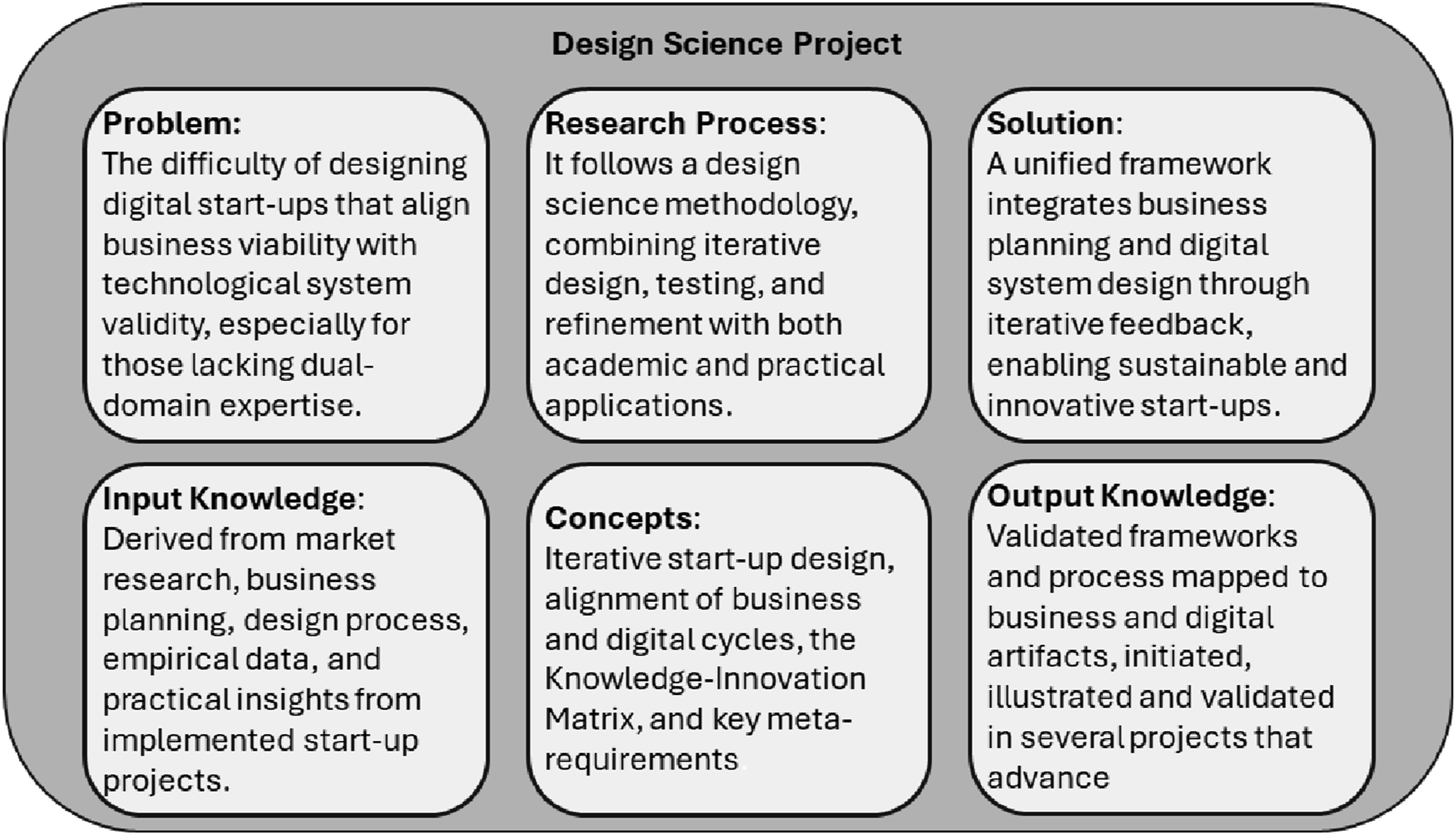
Research settings
Lancaster University DSU design project
Between 2021 and 2024, our team employed the approach crafted in the following sections across six distinct DSU planning and design projects, which were part of the curriculum for students pursuing a “Master of Science in Digital Business, Innovation, and Management” at “Lancaster University Management School.” Every year, a handful of candidates in this program opt in to design a DSU, the author of this study played an active role as a supervisor for the projects. The development of the approach involved a collaborative and iterative process, ongoing dialogue and engagement between the students and the supervisor. With over 12 years of experience in DS, the supervisor’s role mainly focuses on advising the students on how to best design DSU using the DS approach to cover essential business planning and technology design facets, along with the underlying artifacts. Students took different stances on how they wished to utilize the DS approach, some of which focused on platform business (aka digitally enabled) DSU and some on new technological products (aka high-tech). The evaluations of students’ feedback reveal a high level of satisfaction with the knowledge and skills gained through their involvement in these projects. They expressed strong approval of the methods used, noting how beneficial the hands-on experience was for their learning and understanding of digital business strategies. Furthermore, it is noteworthy to mention that several of these candidates have successfully transitioned from academic theory and practice to real-world application.
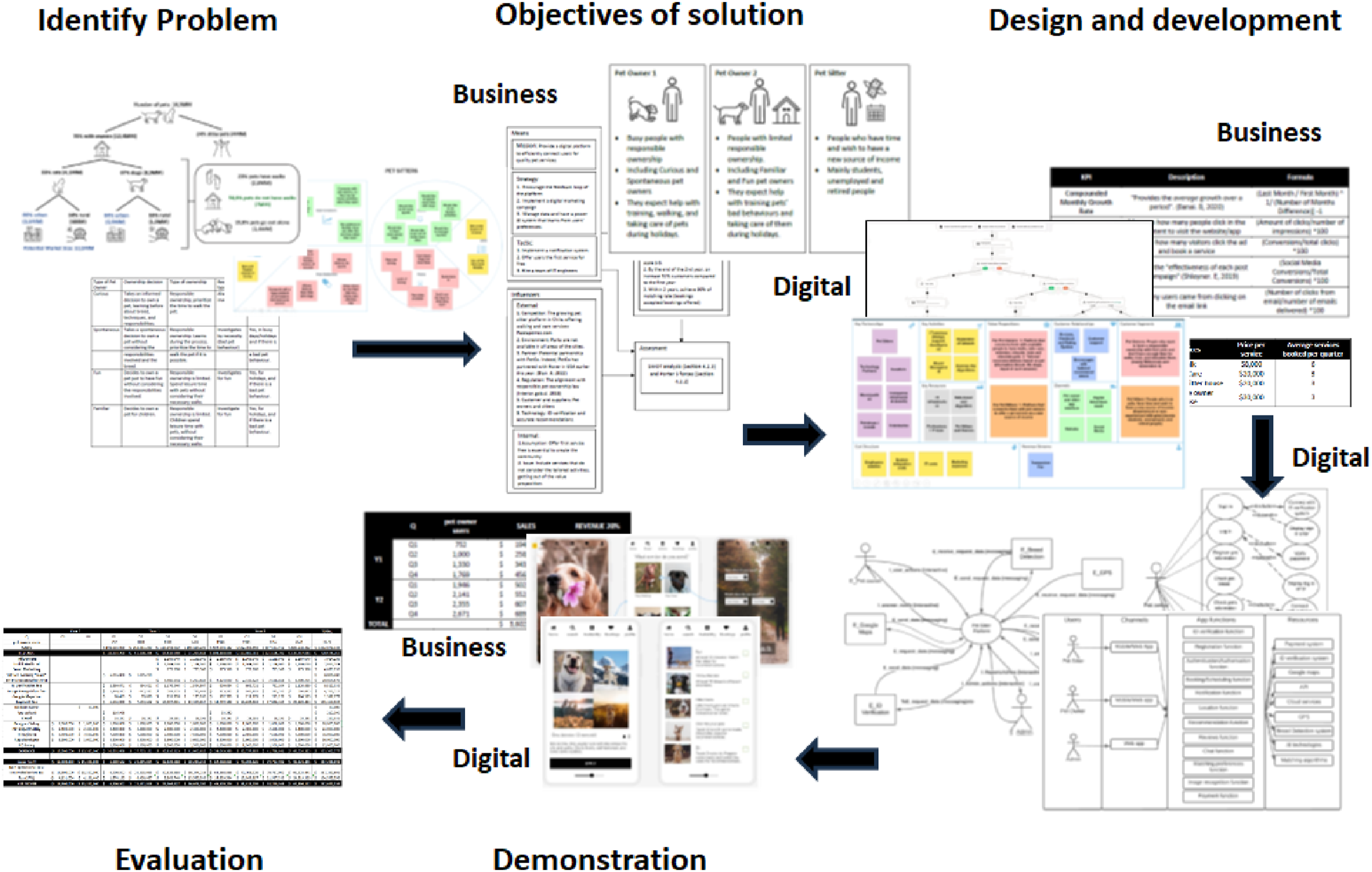
While some of the candidates have not only conceptualized and designed but also launched and are currently managing their own DSU ventures, it is important to note that this paper is not intended to measure the success of the approach by the success of the start-up business in the real world per se. Rather, the main purpose of this study is to demystify the DSU design for both students and new digital entrepreneurs in a systematic and coherent way. This outcome serves as a testimony to the efficacy of the approach we implemented in the program, illustrating its practical relevance and the direct impact it has had in equipping future digital business leaders with the necessary tools and insights to succeed in the dynamic world of digital entrepreneurship. The appendix shows a fragment of the artifacts developed in one of the projects.
Solution objectives
The Knowledge-Innovation Matrix typology (Hevner and Gregor 2022) consists of two dimensions: “knowledge maturity,” and “application domain maturity.” These dimensions form four quadrants (“Invention, Exaptation, Advancement, and Exploitation”), each of which is associated with specific entrepreneurial strategies for digital innovation. The matrix guides the selection of strategies based on the problem space maturity and potential solution options, providing a structured framework for driving successful digital innovation outcomes. Considering this matrix, unlike using DS for abstract theoretical research, a DS approach for start-up design does not need to lead to contributions to theory; the developed solution of the start-up can be in any of the four quadrants if it creates value for potential market segment and enables the start-up to generate sustainable revenue.
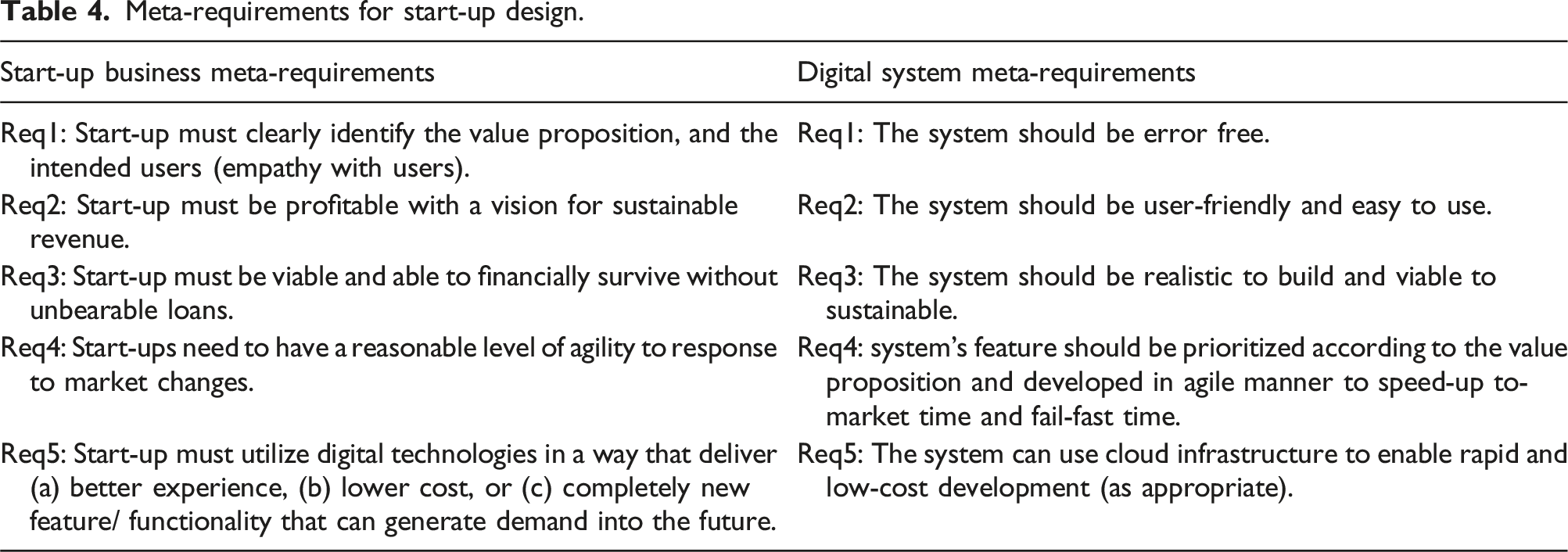
Meta-requirements for start-up design.
Solution: Design science approach for digital start-up design
To initiate the solution design, we start with what we call “essential questions to position the start-up” these are considered the first reflection entrepreneurs need to make. Figure 2 depicts the high-level questions to justify the rationale of designing a start-up. Questions to justify the rationale of designing a digital business start-up.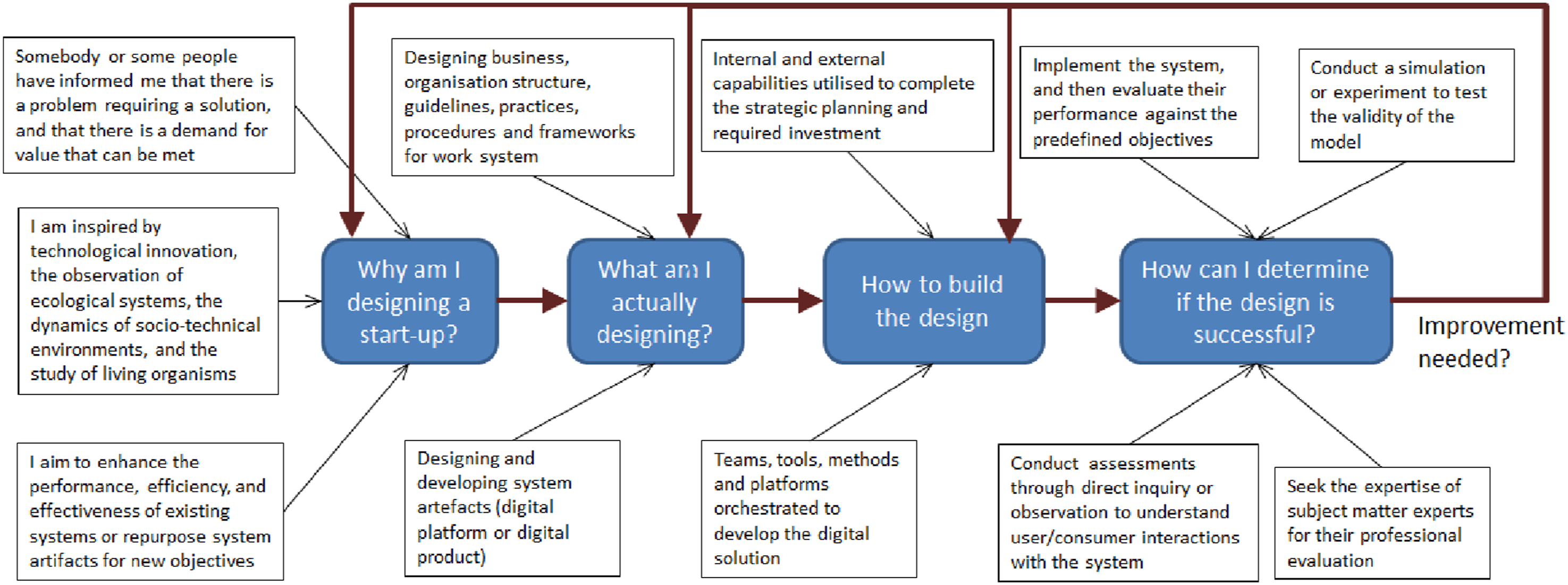
Design process
The process presented describes a generic process of reasoning and validation in the context of designing a start-up. It provides a foolproof way to structure the start-up design around three central questions that guide the start-up design process with initial ideas validation.
Step 1: Why am i designing a start-up?
This question seeks to establish the motivation behind creating the start-up. It is also to understand the level of commitment of the entrepreneurs, making sure that they have the mental resilience to overcome the challenges in an agile manner. The inputs to this question include the following: • Recognition of a need or problem as indicated by others. • Personal inspiration derived from technological innovation, ecological concerns, or enhancing quality of life. • A desire to improve the performance, efficiency, or effectiveness of existing systems or products. • The mental and resources resilience to tackle and overcome the challenges.
Step 2: What am i actually designing?
This question focuses on defining the product or service being designed. Putting the value creation under the spot, and it may involve: • Designing business processes, organizational structures, guidelines, practices, and frameworks to guide people’s actions, interactions, and work system. • Creating and developing digital system artifacts, which could be digital platforms or products, that embody the solution to the identified problem or need.
Step 3: How to build the design?
Here, the focus shifts to the practical aspects of creation. • Building internal and external capabilities are tapped for strategic planning and investment. • Utilization and building of teams, tools, methods, and platforms are leveraged to construct the envisioned digital solution.
Step 4: How would i know the design is successful?
This question centers around evaluating the viability and success of the start-up design and the underlying digital system. The methods of validation may include the following: • Developing the systems and putting them into use, followed by an evaluation against predefined objectives. • Running simulation models or experiments to test the validity of the design. • Gathering feedback through observation of how people use the design in practice. • Seeking expert opinions, to get a professional assessment of the design’s success.
Feedback loop
The process suggests a feedback loop, whereby the outcome of the evaluation stage informs any necessary refinements and improvement needed, which could lead back to any of the previous stages for further development or adjustment. This model highlights the iterative nature of start-up design, emphasizing the need for ongoing assessment and adaptation. The notion presented in Figure 2 underlines the iterative nature of start-up design, where the designer needs to continuously assess and refine their understanding of the problem, the solution they are creating, and the criteria for success. It implies a feedback loop where learnings from the evaluation stage can influence the initial motivations and the design itself, promoting continuous improvement.
Conceptual framework
Overview
Once the initial idea receives a positive evaluation, this process can be unpacked with further details using the well-known DS methodology proposed by Peffers et al. (2007). The conceptual framework illustrated in Figure 3 encapsulates the integration of business and digital systems design within the context of DSU design. This framework highlights the importance of continuous alignment, analysis and intertwining of both business and digital design cycles. Conceptual model of design science approach for the development cycles of digital start-ups.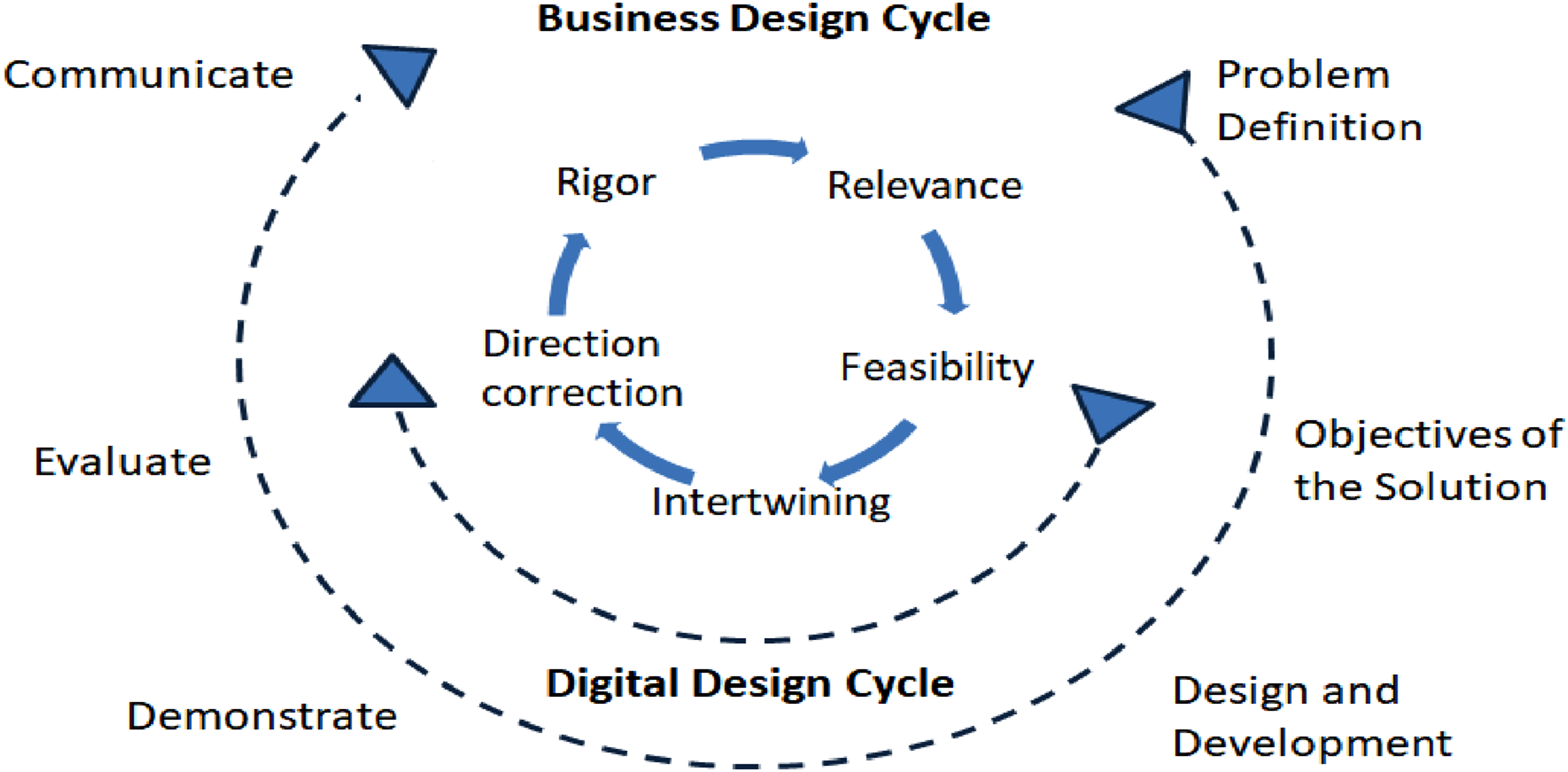
This framework outlines processes that integrate elements of both business and digital systems design, emphasizing the iterative nature of developing a technology-based business. It represents a dynamic and flexible approach to start-up design that recognizes the importance of iterative development, constant evaluation, and the ability to pivot or correct course as needed. This approach is particularly relevant in the fast-paced and often unpredictable world of digital business, where technologies and market demands can change rapidly. The concepts of the conceptual framework are described below.
Business design cycle
The business context within which the digital solutions are developed surrounds the digital design cycle itself. It includes the following: • Problem Definition: Clearly identifying the specific problem that the start-up and its digital solution aims to address. • Objectives of the Start-up: Defining what the start-up should achieve from a business perspective and positioned within the targeted market. • Design and Development: The actual creation of the business model and further detailed elements of the market positioning, strategy, and tactics, in response to the insights gained from the problem definition and declared objectives. • Demonstrate: Showing the return on investment and value creation taking perspectives of operational viability, financial survivability, and consumers’ perceived value. • Evaluate: Assessing the effectiveness and impact of the business against the defined objectives, business growth prediction, various types of risks evaluated and controlled. • Communicate: Articulating the value proposition and function of the business and digital solution to stakeholders, potential customers, and investors.
Digital design cycle
The continuous process that DSUs must engage in to ensure their technology solutions are robust and meet market needs usually emerges once the business objectives are established, and merge again with the business cycle in the communication stage, consisting of: • Objectives of the Solution: Defining what the digital solution should achieve from business and technical perspectives (e.g., platform, digital product, digitally augmented product, etc.). Early requirements are defined to illustrate the initial stages of the digital solution design. • Design and Development: The actual creation of the digital solution, using the insights gained from the previous stage. This step entails designing the solution conceptually, logically, and technically, with appropriate tools and commensurate with technological trends. • Evaluate: Assessing the functionality, quality and performance of the digital solution and evaluate its effectiveness and impact against the defined objectives (user evaluation). • Demonstrate: Showing the practical application and benefits of the solution in a real-world business context, through prototyping and initial pilot launching.
Practices
Among both business and digital design cycles, there are practices that ensure harmony, alignment, and success of the start-up, as listed below. • Relevance: Making sure the solution is pertinent to real-world problems and user needs (i.e., market demand). • Feasibility: Assessing whether the proposed solution is practical and achievable with current technology and resources. • Intertwining: Highlighting the iterative nature of the process, whereby each aspect of both business and digital solution is continuously refined and developed in conjunction with others. • Direction correction: Bridging the digital and business design cycles, which suggests an ongoing reassessment and realignment process. As new insights are gained through evaluation and demonstration, there may be a need to adjust the direction of both the digital design and the business strategy. • Rigor: Ensuring that the design is methodologically sound and grounded in existing knowledge.
The start-up artifacts
Mapping of design science approach to business planning and system design artifacts.
Demonstration
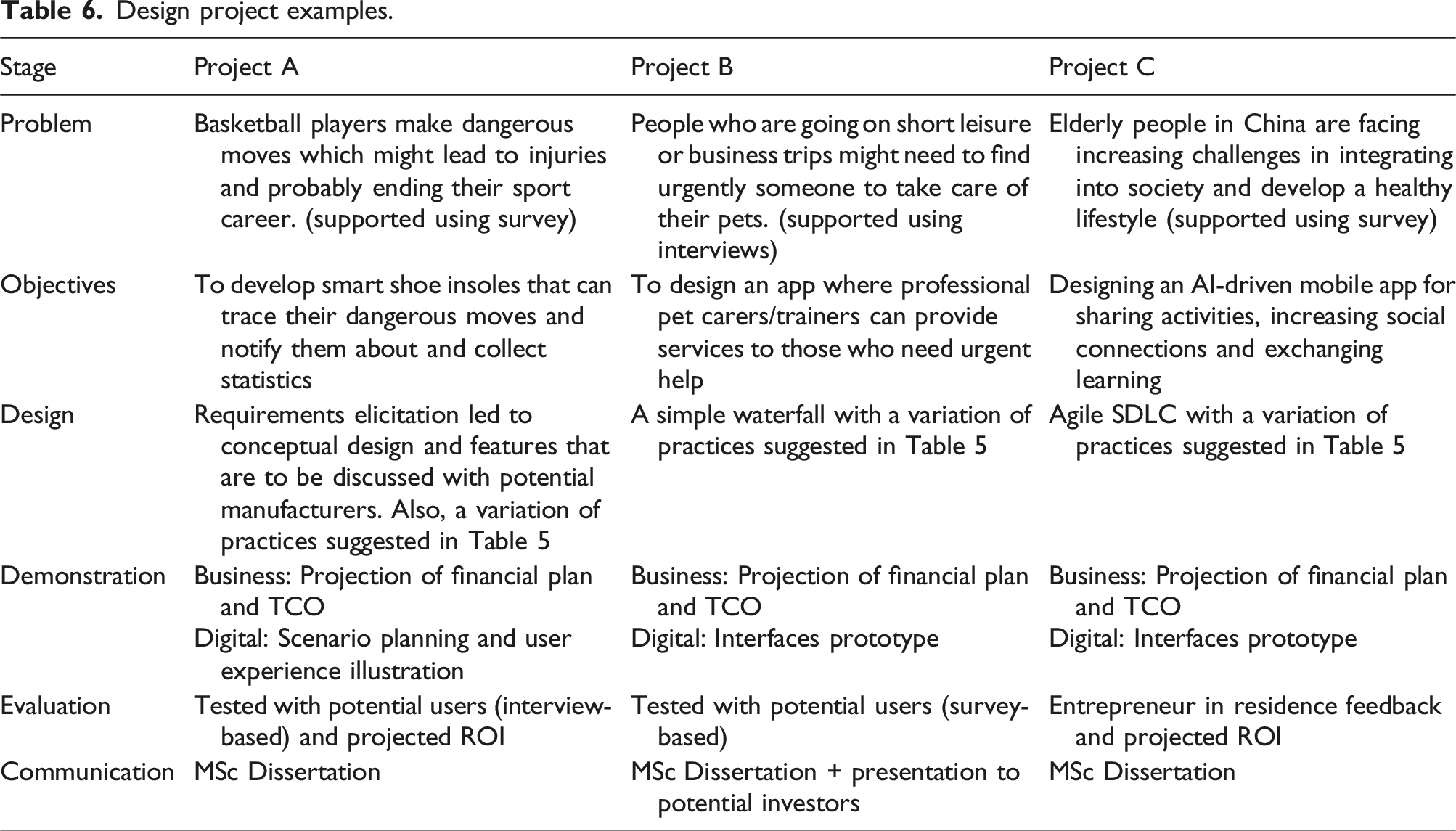
Design project examples.
Evaluation
Design science approach reveals its contribution to bridging the gap between theory and practice in digital entrepreneurship education. The methodology aligns with established methodological frameworks, such as Peffers et al.’s (2007) DS research model, ensuring rigorous inquiry and systematic problem-solving. Feedback from students who transitioned from academia to launching real-world ventures illustrates the pedagogical value of embedding DS principles in business school curricula. This evaluation highlights the framework’s ability to guide students in designing sustainable and innovative start-ups while fostering critical thinking and analytical skills essential for navigating the digital economy.
From a practical viewpoint, the evaluation underscores the framework’s adaptability and relevance to contemporary entrepreneurial challenges. Key performance indicators, such as prototype functionality, market validation, and financial projections, were used to assess project success. For instance, user interviews and expert feedback were employed to refine solutions and validate assumptions. The iterative cycles of design, testing, and evaluation proved essential for addressing unforeseen challenges and enhancing solution robustness. Demonstrated outcomes, such as the launch of a pet-care app and AI-driven tools for elderly engagement, attest to the framework’s effectiveness in fostering agile and market-ready solutions.
The theoretical insights derived from this evaluation highlight the framework’s ability to intertwine business and technology design processes systematically. The approach leverages the Knowledge-Innovation Matrix, addressing diverse problem spaces by aligning solution strategies with market needs. Iterative feedback loops between business planning and digital system design provide a robust mechanism for aligning start-up viability with technological feasibility. Theoretical constructs, such as meta-requirements for system design, ensure solutions are scalable, user-centric, and resilient to market changes. Moreover, the emphasis on continuous evaluation and refinement contributes to theory building in digital entrepreneurship and innovation, bridging existing literature gaps.
Suggested Questions
To encourage meaningful engagement and critical reflection in the class, the following discussion questions may be used during teaching sessions. They are intended to support dialogue, stimulate curiosity, and promote deeper understanding among students. 1. Design Science Application: How does the Design Science approach differ from traditional business planning methods when conceptualizing digital start-ups? 2. Strategic Alignment: What strategies can digital entrepreneurs employ to ensure continuous alignment between business viability and technological feasibility? 3. Evaluation Metrics: Identify key performance indicators (KPIs) you would prioritize for assessing the initial viability and long-term sustainability of a digital start-up. Justify your selection. 4. Iterative Refinement: Explain the importance of iterative refinement in the context of designing digital start-ups. Provide an example of how feedback loops could positively or negatively impact a start-up’s success. 5. Grand Challenges: Explore any extended potential impact of the digital solution and start-up on sustainability, security, global economy, health and wellbeing (e.g. possible mapping to SDGs). 6. Ethical Considerations: Discuss potential ethical and regulatory issues digital entrepreneurs must consider, especially related to data privacy and user protection (e.g., GDPR compliance).
Conclusion
This paper provides a view on DSU development, enriching applications of DS methodologies in entrepreneurship. It attempts to offer insights into the inception and design of strategic and operational aspects of DSU. It offers a systemic framework that can guide aspiring entrepreneurs and scholars in navigating the complex interplay between technological innovation and viable business strategies. The model and framework presented herein serve as a blueprint for cultivating commercially viable, technologically advanced, and customer-focused DSUs. Ongoing work seeks to refine the framework further, and test it in both academic and commercial settings.
Footnotes
Declaration of conflicting interests
The author(s) declared no potential conflicts of interest with respect to the research, authorship, and/or publication of this article.
Funding
The author(s) received no financial support for the research, authorship, and/or publication of this article.

Appendix
Fragment of the artifacts across different stages of the design science approach from one of the projects.