



Abstract
A qualitative content analysis of corporate social responsibility (CSR) webpages of top-ranked corporations was conducted to determine the ethical nature of online communications surrounding nonprofit partnerships. Are corporations giving nonprofits their fair share of online publicity? All CSR-related webpages from the top 30 Fortune’s 500 Most Admired Corporations for 2017 were examined. Ethical principles from public relations communications regarding open, honest, and transparent information sharing guided textual analysis. Evidence shows that CSR website communications often engage in self-promotion rather than genuine and mutually beneficial support for nonprofit partners. Through corporate branding of CSR activities, advertising through philanthropy stories, and exploiting employee volunteerism and donations, the balance of CSR relationships tilts heavily in the corporation’s favor. Yet, public relations practitioners have a special calling to be the “ethical conscience” of their organizations. Understanding how corporations can provide ethical communications about their nonprofit partners helps guide ethical voice of the practice. This study is unique for looking specifically at the ethics of corporate CSR communications themselves and for addressing the nonprofit perspective of CSR, which is often overlooked. While nonprofits may benefit from CSR relationships, this article shows that opportunities for mutually beneficial communications about these relationships may be lacking.
From FedEx Cares to Disney Friends for Change to Goldman Sachs’ Community TeamWorks events, corporations today are participating in a myriad of social responsibility activities with nonprofit partners. Corporate social responsibility (CSR) is an important facet of business strategy because it can increase corporate reputation (Lee and Rim, 2016; Rim et al., 2016) and motivate consumer purchase intentions (Park and Dodd, 2016). Despite the large volume of work about CSR’s impacts on corporate outcomes, little research has examined the implications of CSR strategy for the corporation’s nonprofit partners (Cook and Burchell, 2018; Waters and Ott, 2016). The lack of this perspective is unfortunate because corporate relationships may lead to infringements upon nonprofit authority and autonomy (Berger et al., 2004; Kelly, 1998; van Dyk and Fourie, 2015), exploitation of the nonprofit’s positive brand (Einstein, 2012; Stole, 2011), nonprofit mission creep, and loss of public support for the nonprofit (Polonsky and Wood, 2001; Varadarajan and Menon, 1988; Waters and Ott, 2016).
Given these concerns from the nonprofit perspective, this study examines how CSR messaging online may illuminate these problems when a company partners with a nonprofit. Using a qualitative content analysis, this study looked at CSR-dedicated webpages of 30 top-ranked corporations. Corporate websites are an ideal place to study communications about CSR activities because of the importance of online communication to reach stakeholders and build corporate brands (Rolland and O’Keefe Bazzoni, 2009; Smith, 2017). Instead of focusing on how corporations or nonprofits use online platforms to build relationships with stakeholders, this study looks more closely at the text of online CSR messages to evaluate the ethics of what is being communicated to stakeholders. While examining the text, images, and messaging a corporation used to communicate its CSR activities, several important themes emerged which highlighted the need for more ethical consideration for nonprofit partners in online CSR communication. These findings can help nonprofits better understand how corporations communicate and publicize their relationships—and help them manage expectations about the actual benefits they receive.
Literature review
Considering CSR from a nonprofit perspective
The idea of CSR developed in recognition of the impact corporations have on the greater society beyond their limited missions. The term “social responsibilities of businessmen. . .refers to the obligations of businessmen to pursue those policies, to make those decisions, or to follow those lines of actions which are desirable in terms of the objectives or values of society” (Bowen, 1953: 6). Through the 1960s, this concept developed further to include activities beyond what is legally or economically required of a company, entering ethical debates (Carroll, 1999). One part of CSR, corporate philanthropy, took off in the 1980s as a result of large corporate profits stemming from the trickle-down-economics of the Raegan era (Einstein, 2012). Philanthropy is one of the core principles of CSR, emerging from society’s expectation that corporations give back to communities (Carroll, 1991).
Today, in public relations literature, CSR is defined as both a “means and an end” (Coombs and Holladay, 2012: 6) for corporations. It includes all “voluntary actions” of a corporation “as it pursues its mission and fulfills its perceived obligations to stakeholders” (Coombs and Holladay, 2012: 8)—thus, CSR need not include nonprofit partners. While CSR may include philanthropy, it also includes other initiatives like sustainability and human rights, which both can be housed within a company’s internal supply chain. When corporations do partner with nonprofits through CSR and corporate philanthropy, these arrangements create fundamentally similar relationships between donor (corporation) and recipient (nonprofit) (L’Etang, 1994). The dynamics of donors and their nonprofit beneficiaries is a critical area of public relations research that has yet to be fully developed (Kelly, 1998), and rather than moving away from this topic, studies of CSR can make a significant contribution to understanding the dynamics of corporate-nonprofit relationships. This paper focuses on corporate-nonprofit relationships whereby corporations provide benefits—financial or otherwise—to a nonprofit organization. Additionally, corporate websites continue to use terms such as corporate giving, philanthropy, and volunteer involvement to describe their CSR efforts (Smith, 2017); thus, nonprofit partnerships continue to be vital parts of CSR strategy.
Corporate social responsibility and ethics
CSR enables corporations to make a profit as well as fulfill ethical and social obligations to stakeholders and the greater society simultaneously, often serving “triple bottom line” of “people, planet, and profit” (Carroll, 1991; Einstein, 2012: 40). Therefore, corporations are not wholly altruistic in their partnerships with nonprofits, who are similarly looking for strategic benefits from engaging in corporate relationships (Berger et al., 2004; Rumsey and White, 2009). However, ethical dilemmas may arise if corporations appear to be exploiting nonprofits for a reputational boost or only to gain positive evaluations from stakeholders (Lee, 2017; Rolland and O’Keefe Bazzoni, 2009). In fact, consumers are wary of CSR messaging from a corporation that appears to be insincere (Yoon et al., 2006) or self-interested (Bae and Cameron, 2006).
Therefore, ethics is a key component of CSR practices and communication, stemming from the obligation of businesses to consider its impact beyond its bottom line (Bowen, 1953; Carroll, 1991, 1999). Excellence theory of public relations, which asserts that two-way symmetrical communication between organizations and stakeholders builds long-lasting and positive relationships, provides an ethical ideal for the practice, one that involves mutual benefits and ongoing dialogue (Fitzpatrick and Gauthier, 2001). Therefore, corporations should consider the needs and concerns of their stakeholders when creating CSR initiatives and communications—including their nonprofit partners (Coombs and Holladay, 2012; Donaldson and Preston, 1995). However, scholarship has documented potential “issues of concern” for nonprofits engaged in corporate relationships (Polonsky and Wood, 2001: 13). Critical scholarship has been particularly focused on the power imbalances present in cause-marketing relationships, arguing that cause-marketing is really a cover for advancing business priorities (Einstein, 2012; Stole, 2011). “Cause-marketing schemes the philanthropic process, pegging nonprofit funding to consumers’ whims” (Stole, 2011: 141). Corporate-nonprofit relationships can have power imbalances due to the challenges faced by nonprofits, including overworked staff or dependence on corporate resources (van Dyk and Fourie, 2015). In some cases, corporations fear relinquishing too much power to nonprofits because they are afraid that objectives will not be met adequately. As early as 1987, fundraisers and nonprofit staff were encouraged to consider the pitfalls of CSR arrangements—particularly cause-marketing deals—to ensure the relationship is also a strategic benefit for the nonprofit (Ciconte and Jacob, 2001). These realities of the corporate-nonprofit CSR relationships may create less-than-ideal situations for the nonprofit partners and thus warrant attention from public relations and ethical scholars.
Ethical evaluations assert that a commitment to CSR would imply doing good for the sake of doing good rather than corporate gain (Fitzpatrick and Gauthier, 2001). For example, cause-marketing initiatives that exaggerate the donation amount made by the corporation mislead the public into thinking the impact of the corporation’s efforts is greater than it really is (Carlson and Le, 2017). CSR should be genuine such that the outcomes of the CSR are truly impactful and positive for the communities in which they exist (Woods and Stokes, 2019). The ethical imperative of these communications mean that CSR is an ethical concern for public relations practitioners (Bortree, 2014). Therefore, corporations that promote their initiatives as CSR without a genuine commitment to bettering society are acting immorally (Fitzpatrick and Gauthier, 2001; L’Etang, 1994). Therefore, if corporations are extolling the virtues of their CSR efforts without concern for their nonprofit partner’s success, is their CSR communication ethical?
CSR communication about nonprofit partners online
The ways nonprofits are featured on websites brings up ethical considerations for the partnering corporations’ CSR programs. By publicizing CSR partnerships with nonprofits, ethical dilemmas may arise if corporations appear to be exploiting nonprofits for a reputational boost or only to gain positive evaluations by stakeholders (Lee, 2017; Rolland and O’Keefe Bazzoni, 2009). In this case, “the commitment of the company may be contingent on other factors other than the primary relationship between donor and recipient” (L’Etang, 1994: 115). A commitment to CSR would imply doing good for the sake of doing good rather than corporate gain (Fitzpatrick and Gauthier, 2001). For example, cause-marketing initiatives have been found to exaggerate the donation amount made by the corporation, which misleads the public into thinking the impact of the corporation’s efforts is greater than it really was (Carlson and Le, 2017). Therefore, corporations which promote their initiatives as CSR without a genuine commitment to bettering society are acting immorally (Fitzpatrick and Gauthier, 2001; L’Etang, 1994). Public relations practitioners, who create CSR communications for corporations, should act as a moral conscience to ensure corporations are ethically promoting their CSR initiatives in ways that truly benefit communities (Bowen, 2008; Lee, 2017), also known as the professional responsibility theory of public relations (Fitzpatrick and Gauthier, 2001).
Evaluating CSR communications about nonprofit partnerships found on corporate websites is a valuable way to understand the dynamics of corporate-nonprofit relationships. Corporate webpages are frequently utilized by stakeholders to learn about a company and form opinions about its identity as an organization (Isenmann, 2006; Rolland and O’Keefe Bazzoni, 2009; Smith, 2017). These pages also provide opportunities for nonprofits to receive publicity and legitimacy for their cause and reach new audiences (Polonsky and Wood, 2001; Varadarajan and Menon, 1988). While CSR messaging is about both serving corporate interests and nonprofit needs, this study demonstrates that corporations should be more cognizant of the power they have to benefit and help their nonprofit partners in online CSR communication. The point of this study is not to reprimand corporations for promoting their own work but to reveal how they are missing opportunities to engage in truly mutually beneficial, ethical communication about their nonprofit partnerships. Evidence suggests that sincere, honest communication that embraces this duality boosts corporate reputation and consumer attitudes (Bae and Cameron, 2006; Kim, 2014; Yoon et al., 2006) and leads to positive relationship outcomes (Formentin and Bortree, 2019), so corporations need not fear giving nonprofits a place at the table. Instead, this study may provide evidence to help online CSR communication maximize benefits for both corporations and nonprofits.
An ethical standard for CSR communication about nonprofits
Several ethical principles of communication reveal what true concern and good will toward nonprofit partners and communities may look like on corporate websites. Ethical decision-making models for public relations practitioners emphasize the need for honesty (Meyers, 2016), truth, and trust (Farmer, 2018). Honesty “demands that persons maintain a commitment not to knowingly and intentionally communicate in a way that results in others believing information one knows to be false” (Meyers, 2016: 208), while trust is built between organizations and their stakeholders by communicating the truth (Farmer, 2018). When an organization is known to provide the truth in its communications, it can build a positive reputation for itself as a trustworthy organization (Farmer, 2018). While it may not be fair to interpret the decision-making process of public relations practitioners by looking at corporate websites, these principles can be used to analyze the ethics of the communication itself (Berg and Feldner, 2017). Honest, truthful, and trustworthy communication is free of deception, allowing the receiver to make unencumbered judgments about the information presented. While this does not mean that corporations need to communicate every piece of information (Farmer, 2018), it does mean corporations should not mislead the public or “interfere with the target’s decision-making process” (Fitzpatrick and Gauthier, 2001: 209).
This imperative for open, honest disclosure stems from Habermas’s concept of deliberative democracy and Kant’s categorical imperative (Berg and Feldner, 2017). Both perspectives support the idea that democracy thrives when information is honestly presented so that the public can make well-informed decisions about what’s best for society. In public relations, these concepts illustrate the need for transparency and truth-telling in communications so that stakeholders can freely engage with the ideas presented and ultimately make sound decisions for themselves and their communities. CSR communications must be “accessible, clear, and understandable” (Berg and Feldner, 2017: 157) rooted in a “respect for the stakeholder and duty to fully disclose information to allow for dialogue” (158). Therefore, the information presented on corporate websites should follow this ethical standard of transparency, honesty, and openness about the nature of CSR partnerships and their nonprofit partners so that all stakeholders can receive a clear picture of these activities and how they impact society.
Using this ethical framework, this study seeks to understand how corporations are discussing their nonprofit partners on their websites. Ethical communication would demonstrate open and honest disclosure about relationships as well as genuine support for a corporation’s nonprofit beneficiaries (Berg and Feldner, 2017; L’Etang, 1994). If corporations are using nonprofits as promotional tools rather than providing benefits to them, the ethics of the CSR initiative may be questioned (L’Etang, 1994). Because this study is exploratory in connecting CSR and ethical public relations, the following research questions are general so the findings can generate the conversation. The following research questions frame the exploration of online CSR communication and potential ethical dilemmas:
Methodology
To assess the nature of nonprofit-related communication present on a corporation’s CSR website, a qualitative content analysis was conducted of CSR webpages. This method was chosen because examining the discourse and visuals used to discuss CSR relationships on corporate websites is critical to answering the research questions. This approach has been used previously to examine online public relations (Sanderson et al., 2016) and nonprofit fundraising campaigns (Carlson and Le, 2017; Champion et al., 2016). Specifically, this study mirrors Sanderson et al. (2016) and Champion et al. (2016) by using the constant comparative approach (Braun and Clarke, 2006), which categorizes known cases based on an evolving, ongoing interpretation process between artifact and previous theory. Also, because the relationships between nonprofits and corporations has not been thoroughly investigated, content analysis will help illuminate themes present in communication about nonprofit partnerships.
Procedure
The top 30 corporations according to Fortune’s 500 Most Admired Corporations for 2017 were chosen as the sampling frame for the study (see Table 1). Corporations make this list based on their reputations as perceived by industry partners, including social responsibility activities (Fortune, 2021). Therefore, they should be leaders in CSR or at least have some kind of visible CSR strategy. All pages contained within a corporation’s CSR section of its website were included in the sample. This also included webpages labeled as sustainability or other synonyms for CSR. All links from the CSR home page or the corporation’s website were included. Only CSR activities conducted on behalf of the corporation were included; personal philanthropic work by a CEO was not considered corporate CSR activity. In total, hundreds of webpages—including PDFs, infographics, and brochures—were explored from these 30 leading corporations.
List of corporate websites analyzed in study.
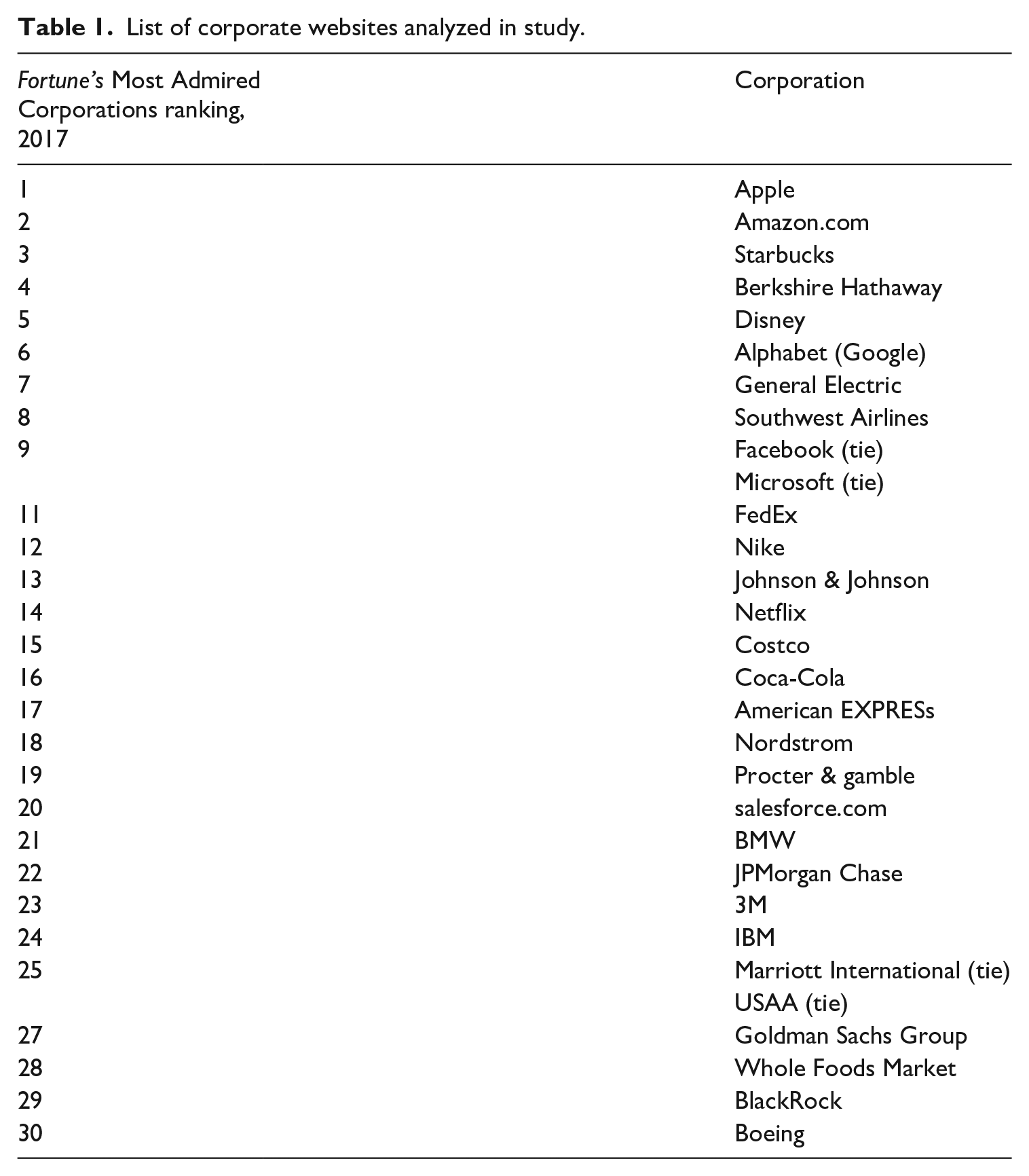
The sample was capped at 30 because this list provided data saturation, or the principle of qualitative methods when “new data no longer add much significance or substance to the concepts that have been developed” (Lindlof and Taylor, 2019: 151; Tracy, 2010). Thus, no new information would be gained from expanding the sample. Additionally, starting at the top of the list would provide the highest-ranked CSR companies, thus they represent “typical” cases of respected corporate practices in CSR from a variety of subsectors. Typical-case sampling is a common technique in qualitative methods (Lindlof and Taylor, 2019). Additionally, it follows the case study approach of Carlson and Le (2017) by applying theory to specific cases of CSR, but takes this interpretation one step further by systematically following qualitative analysis methods used in work by Sanderson et al. (2016) and Champion et al. (2016).
Qualitative analysis methods from Lindlof and Taylor (2019) were followed to extract meaning from the data. Specifically, steps for determining codes and categories followed abductive reasoning approach, whereby previous theory on CSR partnerships with nonprofits were used to develop the original codebook framework, yet data would also “revise theory by applying it to a case in a novel manner that transforms them both” (p. 346). Unlike Sanderson et al. (2016) who based their interpretations in the data first, this study used previous theory to guide the analysis and revise this theory based on the data, following abductive theory building methods from Lindlof and Taylor (2019). Thus, original theory was integrated in the following way: A codebook was created to guide analysis and revised briefly based on the first five webpages coded. The company’s name, industry, and URL were recorded. General notes were taken about the company’s overall CSR strategy as described on the main pages of the websites. The CSR activities’ industry (e.g. environment, education), names of nonprofit partners, and names and URLs for corporate foundations were recorded. Then, focus was given to four activities which nonprofits seek from corporate CSR partnerships (Ciconte and Jacob, 2001; Polonsky and Wood, 2001; Smith, 2017): philanthropy, cause-marketing, volunteerism, and sponsorship. Under each category, the names of specific programs, their beneficiaries, and visual display techniques such as use of images, links, and page placement were recorded. Notes were also taken on the ways that the programs’ impacts were discussed, including the use of quotes, infographics, or press releases, and details on spokespeople (e.g. employees, beneficiaries, etc.). Other activities such as sustainability or human rights efforts were also recorded if nonprofit partners were mentioned.
Theory-driven qualitative analysis has been used in public relations research (Sanderson et al., 2016) and is recommended to develop a framework for thematic analysis (Braun and Clarke, 2006). Next, the process of data interpretation (Lindlof and Taylor, 2019) began in the following manner: After thoroughly examining text, images, infographics, and visual layout on all webpages in the sample and recording notes in the codebook, commonalities between corporations were recorded as notes in a separate column. These common themes were then grouped into larger, overarching observations called axial codes (Lindlof and Taylor, 2019). Three main themes stood out to answer the research questions and are described in Findings.
Coding was conducted by one researcher. To ensure the researcher was not introducing any personal biases into the data collection or looking for any preconceived ideas, notes were taken verbatim from websites with specific names, terms, and phrases recorded without commentary. Unlike quantitative analysis, categories found in qualitative studies are unique to the specific data found in the study; they need not be replicable (Lindlof and Taylor, 2019; Tracy, 2010). This is not a weakness of qualitative study; instead, it reflects a different goal of the research. Qualitative methods aim to understand the specific data in question, not to generalize or predict any future cases (Lindlof and Taylor, 2019; Tracy, 2010). Once all data was collected, the facts were then interpreted and described by grouping them into overarching themes as recommended by Lindlof and Taylor (2019).
Ensuring excellence in qualitative methods
While this study reflects the observations of one researcher, the process described above helps ensure the findings are replicable while allowing the nonprofit perspective to be added to the CSR conversation. Unlike quantitative methods, validity does not readily apply to qualitative methods. Based on this study’s research questions, the goal of the study is to investigate and examine a specific dataset and “prioritize the distinctiveness of local, situated performances” of communication, rather than generalizations to other cases (Lindlof and Taylor, 2019: 355). This study aims to illuminate how the top-respected companies communicate nonprofit partnerships online; it cannot and does not claim to predict outcomes or causes of these findings. Instead of using mixed methods approaches, this study aimed to focus on richness of interpretation of the data rather than comparing counts of data (e.g. Champion et al., 2016). Thus, the epistemology of qualitative methods invites scholars to understand how communication manifests itself in a certain situation, inspiring future inquiry, rather than predicting all potential situations.
This does not mean that qualitative methods are less rigorous or valuable than quantitative methods. This study follows Tracy’s (2010) eight criteria for evaluating qualitative research: worthy topic, rigor, sincerity, credibility, resonance, significant contribution, ethical, and meaningful coherence. The literature review and discussion outlines how this topic is worthy and significant to the field of public relations communications. The step-by-step methods should demonstrate the rigor of the study, specifically by following the procedure developed by top qualitative scholars (e.g. Lindlof and Taylor, 2019). The study should establish its resonance, credibility, and sincerity in using great detail to explain the findings below, visuals to demonstrate concepts, and transparency about the process of interpretation. Findings were shared with another scholar who provided feedback and nuance to interpretations on earlier versions of the manuscript, who helped provide further credibility. Lastly, this study followed ethical procedures by keeping in mind the realities of corporate-nonprofit arrangements. Thus, while validity is not a concern of this study, its adherence to these eight guiding criteria should provide readers with evidence of a “successful interpretation” (Lindlof and Taylor, 2019: 356).
Findings
Nonprofit partnerships as extensions of corporate branding
The first theme to emerge from the analysis is the use of CSR communication as corporate branding. Because CSR activities influence company reputation and image, it follows that these activities can be seen as part of a corporate brand (Park and Dodd, 2016). For instance, positive images resulting from CSR activities can attract new employees and consumers (Polonsky and Wood, 2001). However, the branding of CSR activities on some corporate websites do so at the expense of revealing the nonprofit partners involved in the relationships that comprise the brand. In this situation, the nonprofit is losing out on the positive publicity and cause awareness it could be receiving from the linkage with the corporation.
For example, the GE Foundation website home page (www.gefoundation.com) is a map of the locations worldwide where the foundation has made an impact. Pin icons on the map indicate where visitors can “explore GE’s impact in a region that interests you” (GE Foundation, 2017a). When a visitor clicks on one of the pins, no specific nonprofit partners are listed. When one clicks on the four pins located in Pennsylvania, for example, only the Erie School District and two health centers are listed—without external links or descriptions of the services provided. Instead, visitors can “read more” about GE’s Developing Health program on another page, which provides high-level details about the foundation’s “capacity building initiatives in 42 cities across the United States” (GE Foundation, 2017b). Instead of listing nonprofit partners specifically, the map provides an overview listing the monetary contributions from the foundation and company, employee volunteer hours, and projects (see Figure 1). Similarly, Coca-Cola’s (2017a) map for its 5by20 initiative supporting women entrepreneurs is also vague about its nonprofit partners. Links to “learn more” about work in Angola or Austria, for example, redirect to the 5by20 home page (see Figure 2). The lack of detailed information does not follow recommendations for open, honest dialogue about these CSR activities.
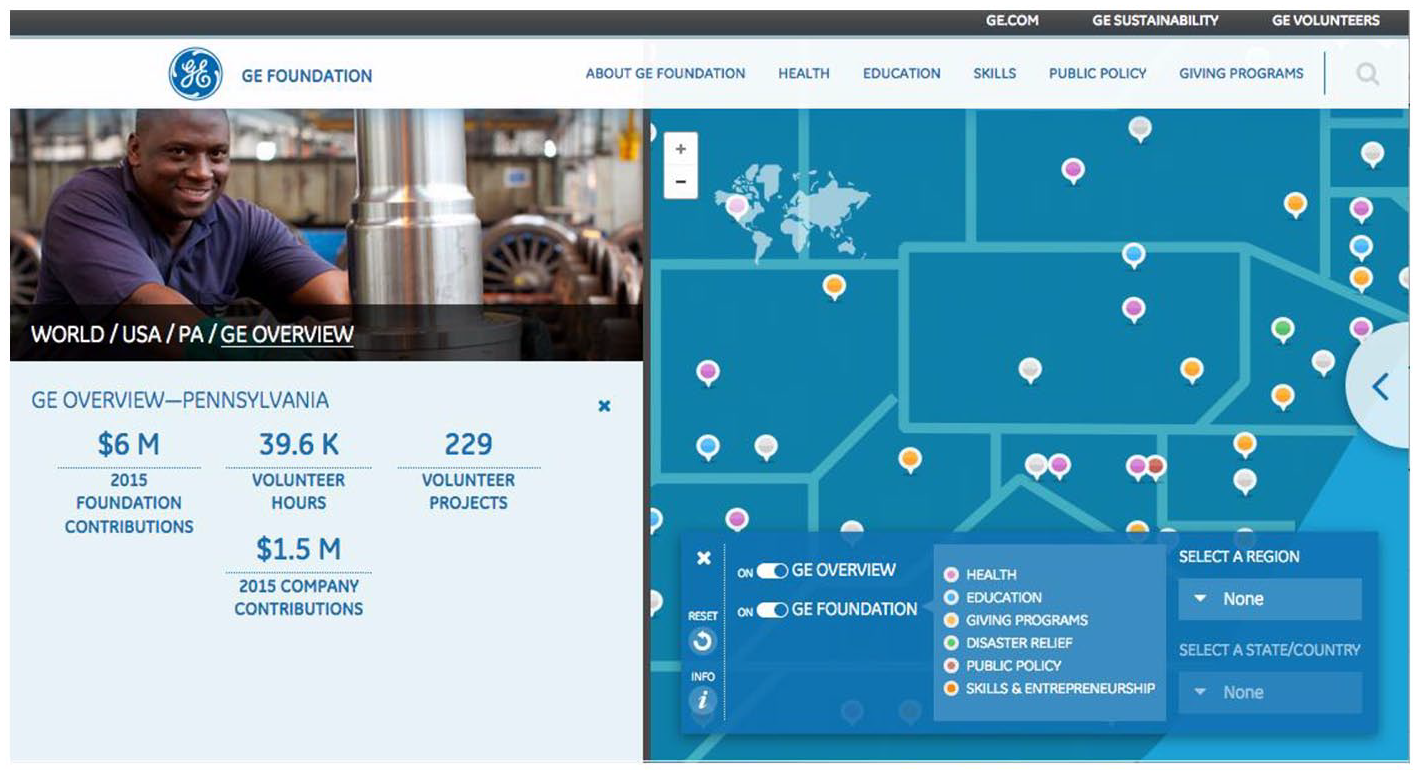
GE Foundation map with Pennsylvania statistics displayed.
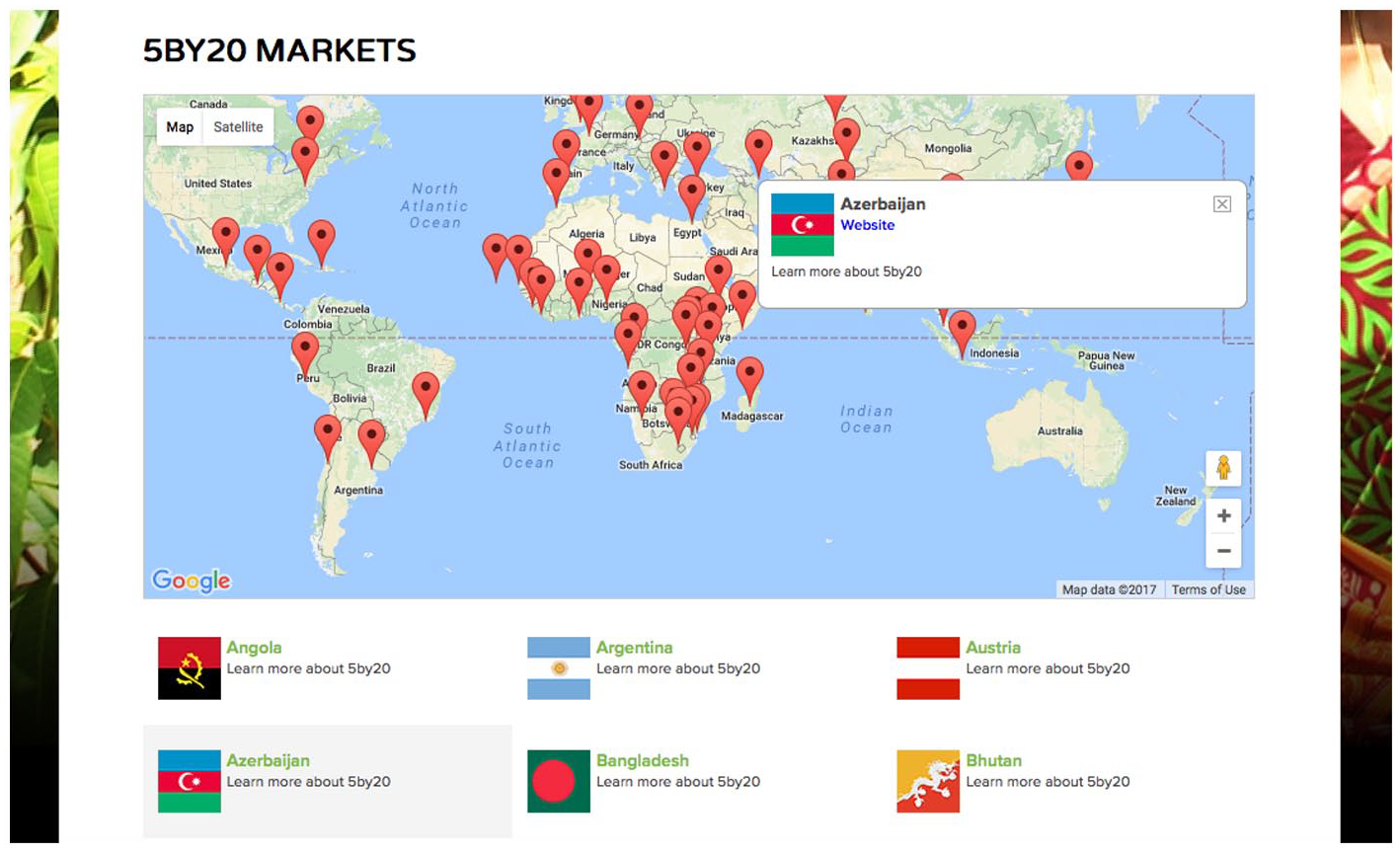
Coca-Cola’s world map of its partnerships in the 5by20 initiative.
Clearly, the main point of these pages is to highlight the enormous investments the GE Foundation and Coca-Cola are making in communities around the world, but it presents a missed opportunity for their nonprofit partners to receive positive association with their corporate benefactors. Because competition for corporate funding is great among nonprofits (Ciconte and Jacob, 2001), earning a grant from or participating in a partnership with a corporation can boost a nonprofit’s reputation or legitimacy, setting the organization up for future support (Polonsky and Wood, 2001). The lack of acknowledgment on GE Foundation’s and Coca-Cola’s websites is a potential benefit left unfulfilled for these nonprofit partners. However, GE Foundation and Coca-Cola are benefiting from these relationships by publicizing the dollars given, hours donated, and partnerships supported. These relationships do not seem to be mutually beneficial, and this imbalance may reveal corporate self-promotion rather than genuine support for the nonprofits.
One could argue that the GE Foundation and Coca-Cola have too many nonprofit beneficiaries to list on its webpages and doing so would be nearly impossible. Many corporations’ practices seem to reinforce this belief as they instead publish long PDF lists of every nonprofit or organization that received a charitable donation from the company during the past year. For example, Disney has a PDF posted listing “past grant recipients” of the Disney Conservation Fund grants under “Grant Seeker Resources” (The Walt Disney Company, 2017a). The list is a simple chart discussing the grantee and the project funded. While the acknowledgment of grants and description of projects provides important exposure for nonprofits and their work, the information is buried as an attachment and labeled in an area clearly marked for a certain kind of website visitor—grant seekers. Nonprofits may be missing out on visibility with other visitors who do not consider themselves grant seekers, and this type of labeling may be misleading and thus unethical.
Similarly, the press release announcing the annual grant recipients only describes a selection of recipients (The Walt Disney Company, 2017c). The link to see the full list of recipients simply redirects to the main conservation page, leaving visitors to navigate to the grant-seekers section for the full list. Therefore, companies like Disney can choose the nonprofits they wish to highlight in their communications, maximizing the benefits of partnering with reputable or well-known nonprofits. In turn, these well-known nonprofits receive the recognition of receiving a grant, while lesser-known nonprofits remain unnoticed. Ethically, this CSR communication appears to be self-serving by choosing certain nonprofits with which to associate its corporate brand and by omitting publicity for others.
Philanthropy as “Black Ops” Advertising
Many corporations take time to highlight the work of their nonprofit partners, particularly in press releases, short stories on their websites, and company CSR reports online. While representing important visibility for a nonprofit’s work and mission, these stories also serve a strategic purpose for the corporation. Some of these stories read like testimonials for a corporation’s products or services with the nonprofit as the endorser. These forms of CSR communication can be related to Einstein’s (2016) concerns over content marketing and native advertising tactics detailed in her book Black Ops Advertising. These contemporary forms of advertising attempt to hide the persuasive intent of the content. For example, Red Bull sponsors extreme events like jumping from space without overtly mentioning its sponsorship of the event, or an advertiser produces content for a newspaper that looks like a journalistic news story (Einstein, 2016). Einstein argues that these tactics are meant to fool readers into thinking they are not consuming advertising content when they really are. Lamenting the blurred lines between traditional advertising and unbiased content, she writes that “we are lost in a corporate Neverland. . .and increasingly, we don’t even know it” (Einstein, 2016: 23). Ethically, by presenting CSR information in a way that misleads consumers and stakeholders, this practice violates the mandate that CSR communication be open and honest.
The same can be said for CSR communication found in this study. As website visitors read “stories” and “case studies” on CSR activities of corporations, the presence of advertisements or sales pitches for a corporate product or service may signal insincerity of the motives behind the corporation’s CSR communication (Yoon et al., 2006). Similarly, vague language about the nature of partnerships with other organizations, whether they are for a prosocial outcome or not, may mask the true intentions of these partnerships for the corporation. In other words, business relationships may be passed off as CSR activities because the end goal can be considered prosocial, when the corporation might actually be profiting from it. Ethically, this would not be reflective of CSR practiced for the societal good. While consumers may expect corporations to have mixed motives behind their CSR programs, consumers respond negatively to CSR messaging that appears to be self-interested (Bae and Cameron, 2006) or insincere (Yoon et al., 2006), especially if the organization has a good prior reputation (Dean, 2003), as do the corporations in this study. Additionally, CSR messages that acknowledge only society-serving motives and not a mix of both self- and society-serving motives also may lead to negative perceptions (Kim, 2014). Therefore, while people may assume there are both promotional and altruistic motives in CSR messaging, they want corporations to be upfront and honest about it.
The FedEx “Deliver It Forward” series of stories is one such example of advertising through CSR messaging (see Figure 3). Told from the point of view of a nonprofit professional (as signified by quotation marks around all text and attribution to this professional at the start of the story), FedEx’s donation of aid to the International Medical Corps is also a sales pitch for its delivery services (FedEx, 2017). Needing logistics to deploy a mobile hospital more easily, “FedEx was the natural place to turn,” the story reads. “Their speed and expertise is a backbone of the disaster response community time and time again.” Here, FedEx is not just a competent partner, but a truly altruistic company serving society: “FedEx will deploy all or part of the hospital for us in its aircraft and be on the ground as soon as humanly possible, saving lives.” It ends by reinforcing the brand and connection to the nonprofit: “At a time when logistics expertise is absolutely critical, FedEx is helping International Medical Corps be there for even more people when they need it most.” While International Medical Corps gets coveted visibility for their work, it comes with an unqualified endorsement of their corporate partner.

FedEx and International Medical Corps partnership story.
Similarly, Microsoft Philanthropies provides “case studies” of their product donations to nonprofit partners. These case studies are written by Microsoft but employ quotes from nonprofit beneficiaries to help tell the story. Many of these stories read like sales pitches. For example, a humanitarian nonprofit called Concern received Microsoft’s Office 365 product, which—according to the case study—”cleared the way” for the organization to “concentrate on its mission” (Microsoft, 2017a). The second paragraph of the story details how the “nonprofit can now work smoothly for thousands less, react to crises within minutes,. . .and scale up IT solutions without a hitch.” The operations manager for the nonprofit “credits the robustness and reliability” of the product with the nonprofit’s improved performance. Just like an ad, this case study on Microsoft’s philanthropic donation helps promote a product the website visitor can own by going to “Product Catalog” at the bottom of the story. This page details the product the visitor just read about—and provides pricing details for other nonprofits to buy it (Microsoft, 2017b).
In these examples, the partnership between the nonprofit and corporation is clearly stated, even if the telling of the story is hiding the advertising intent of the message. But what about stories that simply discuss corporate-nonprofit “partnerships”? In many cases, a lack of specifics in the corporate-nonprofit relationship may exaggerate or at least muddle the nature of the relationship. Boeing is one such corporation that talks a lot about its “partnerships” with other organizations and nonprofits. In its Citizenship Report, Boeing discusses how it is “collaborating with. . .partners to create a sustainable income through the development of sustainable aviation biofuel” (Boeing, 2014: 13). It continues by naming “the partnership, called Project Solaris” and listing key “partners” in the project (p. 13). However, readers do not know what kind of partnership this is. Is Boeing a philanthropic partner or a business partner expecting a profit?
Other corporations discuss CSR work in these vague terms as well. Nike is “in partnership with the Children’s Sports Foundation” in Russia (Nike, 2017a), while Johnson & Johnson (2015) is involved in the “Stop TB Partnership. . .to facilitate access” to tuberculosis medicine outside the United States (p. 23). Because all of this language is included on CSR webpages or PDF documents on CSR webpages, readers can assume these corporations are engaging in prosocial partnerships. However, without knowing the details about the exchange between the corporation and the nonprofit partners (or who the nonprofit partners are), readers truly cannot assess the nature of the arrangement—violating the ethical ideals of transparency and honesty. As a result, consumers may not be receiving quality information on the CSR activities of their corporations, misleading the public and damaging legitimate nonprofit partners in the process.
Exploiting employee volunteerism and giving
Many corporations showcased the volunteer and donation efforts of their employees on their websites as part of the CSR culture of the organization. In fact, nearly every corporation in the sample listed their employees’ volunteer hours contributed to nonprofits on their CSR webpages. Some named their employee volunteers—like the Nike Community Ambassadors (Nike, 2017b) or the Disney VoluntEARS (The Walt Disney Company, 2017b)—while other corporations had branded volunteer days, such as Marriott’s Global Volunteer Effort (Marriott International, 2016) or Goldman Sachs’ Community TeamWorks event (Goldman Sachs, 2017). Others partner with well-known nonprofits to provide access to volunteerism opportunities, like Procter and Gamble’s work with Habitat for Humanity (P & G, 2021). Some corporations even provide their employees with a special portal where they can connect with other employee volunteers, including the IBM (2017a) On Demand Community. Other portals also allow nonprofits to specifically request volunteers from the corporation, like USAA’s (2017) Benevity site. Starbucks has an entirely separate site for employees to log in and “find a project” to volunteer for (Starbucks, 2017). Other corporations promote CSR initiatives that utilize the expertise of its employees to serve nonprofits and individuals. For example, employees train veterans on tech-related job stills through IBM’s Veterans Employment Initiative (IBM, 2017b) or provide pro bono services to nonprofits, as the JPMorgan Chase (2017a) employees do for the LeBron James Family Foundation.
Many of these employee volunteer programs are led by individuals. JPMorgan Chase (2017b) “encourages” its employees to “share their skills with communities in need. . .that best suit their interests and schedules, including traditional volunteerism with nonprofits in their region.” Southwest Airlines provides one free airline ticket to a nonprofit where an employee donates 40 hours of his/her time (Southwest, 2017). Starbucks tells website visitors to “connect with the barista at your local Starbucks” to join in the corporate community service—driven by the employees of the local shops (Starbucks, 2017). Other corporations include hours that employees spend volunteering on nonprofit boards (3M, 2017). Some corporations even acknowledge that employees drive the CSR work: American Express is “tapping into the passion and commitment” of its employees to “give back” as a “key element of our philanthropic approach” (American Express, 2015: 49).
Many corporations in the sample also promoted their employee giving culture, often discussing how the corporation matches, very generously, employee gifts to qualifying nonprofits. Coca-Cola matches employee donations two to one to “qualified organizations” (Coca-Cola, 2017b). Boeing’s Employees Community Fund allows employees to “pool their tax-deductible donations to nonprofits in their community” (Boeing, 2017). Decisions on who receives the employee-funded grants are made by “employee advisory boards” (Boeing, 2017). Many corporations also mentioned the generous employee contributions toward workplace United Way campaigns. These campaigns are the result of a pledge made by a company to the United Way, which then is funded by employee gifts or payroll deductions (Ciconte and Jacob, 2001). In 2017, the United Way of the National Capital Area promoted its campaigns as ways for companies to “achieve their corporate social responsibility goals.”
All of these examples describe personal efforts of corporate employees conducted outside of work hours. In corporations that provide special company-wide days or paid vacation for volunteerism (Parker, 2017), volunteer hours represent employee duties beyond official job requirements necessary for holding a job at the corporation. The CSR-conscious employee, then, must be able to juggle traditional job responsibilities along with fulfilling volunteer duties encouraged by their corporate employer. In companies that give paid days off for approved volunteer activities, a 7.5-hour workday represents only 5%–6% of the time a person dedicates to volunteerism on average per year (MacPhail and Bowles, 2009). Thus, employee volunteering is often conducted on personal time. Similarly, employee giving programs rely on individual efforts to donate money out of an employee’s personal paycheck. Corporations would not make the donations if the employee does not make the gift in the first place—and then complete the proper paperwork to have the donation matched. Corporations, then, are taking credit for the individual charitable work of their employees, particularly when corporations are relying on the employees to drive their philanthropic strategy. Promoting volunteer and giving programs is an effective way to boost a corporation’s organization-wide CSR reputation in the eyes of consumers and the benefitting community (Bauman and Skitka, 2012; Wood, 2007) and to recruit potential employees by demonstrating an employee-giving culture (Gatignon-Turnau and Mignonac, 2015). Corporate culture may also make these opportunities seem compulsory, stripping employees of their choice to volunteer (Overgaard, 2019). These efforts, therefore, constitute uncompensated value-generating corporate assets, which can constitute unpaid labor or invisible work (Duffy, 2015).
However, employee volunteer hours and donations are just that—volunteerism and charity conducted on the employee’s own time or dime. Therefore, the questionable ethics of this communication is not just about promoting individual work to boost the company’s reputation, but the potential to mislead audiences about the nature of these volunteer and donation programs, violating ethical principles of honesty, transparency, and trust. First, none of the corporations specified what service was counted in their volunteer hours or what kinds of gifts were matched and what were excluded. This lack of transparency may allow corporations to support only certain kinds of charities or only match gifts up to a certain dollar amount—without letting the public know, an issue already flagged as problematic in cause-marketing (Carlson and Le, 2017). Additionally, only a small percentage of employees actually engage in employer-sponsored programs (Cook and Burchell, 2018). Lack of time is cited as one of the main reasons why employees do not volunteer at all or volunteer as much as they would like (Wood, 2007), and the burden disproportionately affects female employees (MacPhail and Bowles, 2009). Employee volunteer programs also often do not address real nonprofit needs, burden nonprofit infrastructure and resources to support such efforts, or are simply one-time volunteer days that do not result in any sustainable contribution (Cook and Burchell, 2018). From the nonprofit perspective, beneficiaries of employee volunteerism and donations are building relationships with the individuals, not the corporations. These nonprofits therefore miss out on the benefits of increased publicity from a corporate partnership and also cannot directly build a corporate-nonprofit relationship. Ethical questions arise, then, about the actual benefits provided to the nonprofit organizations on the receiving end of employee volunteer programs. If the nonprofit organization does not actually benefit from the employees’ volunteerism, this communication may simply be exploiting the nonprofit partnership to boost corporate reputation.
Examples of ethical CSR communication
Among the 30 corporate websites examined in this sample were examples of positive CSR communication which seemed to foreground the work of the nonprofit partners. While many corporations listed only select nonprofits, relegated nonprofits to a grant list attachment, or did not list nonprofit partners at all, Google seemingly listed every nonprofit beneficiary on their website (see Figure 4). In addition to short profiles about the nonprofits Google supports with grants, the website provides a short profile of each beneficiary at the bottom of the page. This list highlights approximately 35 additional nonprofits under Google’s “Economic Opportunity”-themed grants alone (Google.org, 2017). This list is readily accessible by any website visitor rather than buried in a PDF attachment or under another heading. The listing also provides a brief descriptor of the nonprofit’s mission, which puts the focus on the nonprofit’s work, not Google’s specific CSR collaboration. Certainly, other websites provided lists of community partners with blurbs about their work, but Google’s website specifically details the nature of these nonprofit relationships and puts the nonprofit’s mission clearly for website visitors to see. This placement implies that the corporation genuinely cares about promoting the nonprofit and its work rather than the corporate brand—in line with ethical CSR communications.
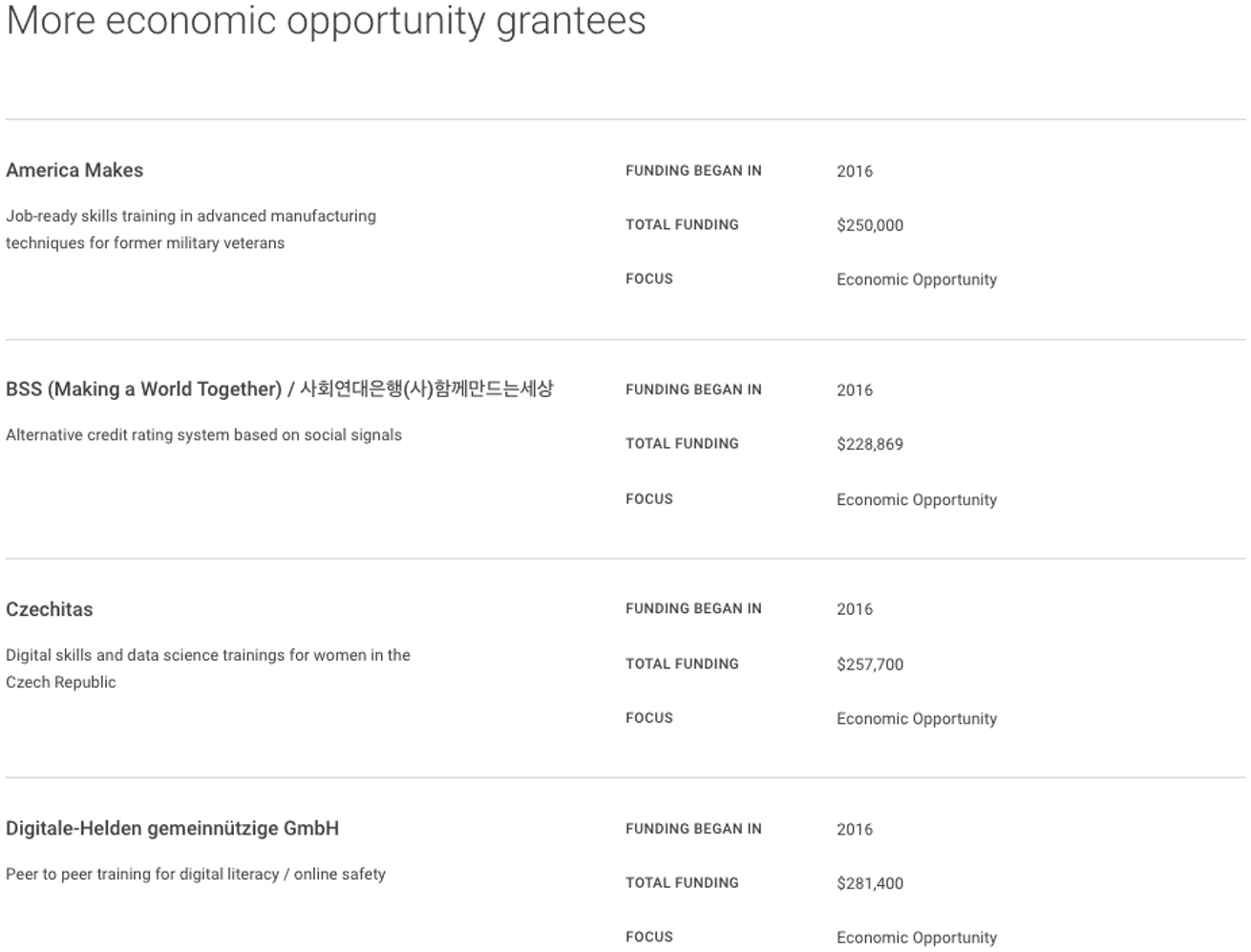
Google.org’s nonprofit grantee list.
While Whole Foods’ CSR efforts include sustainability, responsibility sourced products, and employee volunteerism, it also has set up three independent nonprofits to facilitate work related to its company mission of providing wholesome, natural food products. The Whole Kids Foundation (providing health education to children), Whole Planet Foundation (providing microfinance loans to entrepreneurs globally), and the Whole Cities Foundation (addressing food deserts in U.S. urban areas) are 501(c)(3) organizations whose operating costs are paid for by Whole Foods Market so that all private donations are used for programming in support of their missions (Whole Kids Foundation, 2017). This means they must fundraise to support their work, and they produce annual financial reports just like any other nonprofit. This way, the nonprofits have fewer constraints from their parent corporation to contribute to the bottom line of the for-profit entity. They are also different from many other corporate foundations (like the USAA Foundation or BMW’s two corporate foundations) which are largely grant-making entities. According to CEO Mackey (2013), Whole Foods’ work is actually an example of conscious capitalism, not CSR. In his view, doing good for the community is “inherent in the business model,” not “added on to an existing business model” like CSR usually is Mackey (2013). This arrangement is clearly explained on these websites, providing an example of transparent disclosure about the relationship between the nonprofits and Whole Foods, in line with ethical recommendations.
Discussion
Online CSR communication provides a critical way for corporations to reach stakeholders and promote their brands, but this practice carries with it ethical concerns. Little research to this point has looked at CSR communication from the perspective of nonprofit partners (Cook and Burchell, 2018; Waters and Ott, 2016), and this study began filling this gap with an exploratory analysis of communication on corporate websites. By looking specifically at text, images, and other contents of corporations’ CSR websites, this study found that CSR communications online rarely meet the ethical ideal of transparent, open, and honest information sharing that promotes CSR work for the good of the community and not self-serving interests (Berg and Feldner, 2017; Fitzpatrick and Gauthier, 2001; L’Etang, 1994). Instead of demonstrating genuine concern for bettering society, CSR communications tended to promote the corporations and minimize the work of the nonprofits. While the evidence in the current study does not point explicitly to deception, it does suggest that corporations may be exploiting their nonprofit partnerships for marketing purposes. This finding is not completely surprising as recent work has shown that practitioners face decisions between pleasing clients—and justifying the client’s economic investment—and following ethical standards (Jackson and Moloney, 2019). Rather than intentionally misleading audiences, corporations may be using nonprofit brands to boost sales without providing similar benefits to the nonprofits in return. This concern has been raised in previous work (e.g. Einstein, 2012), and this study suggests it may still be occurring online.
Three themes found in the discourse of corporate CSR webpages answer the first research question: how corporate CSR websites discuss their nonprofit partners. First, CSR communication provides corporations with opportunities to extend their corporate brand without providing the same benefit to their nonprofit partners, especially if the nonprofit is a local or lesser-known organization. Second, communications about corporate philanthropy to nonprofits sometimes masquerades as advertising for corporate products or services. Third, corporations seemingly exploit employee charitable contributions of personal volunteer hours and private donations by telling only part of the story of these arrangements. Because these communications contribute to the corporation’s bottom line through reputation and image benefits (Park and Dodd, 2016), employee charity has an inherent value to a corporation, and thus can be viewed as self-promotional.
As explored by the second research question, the text, images, infographics, layout, and page hierarchy of CSR websites imply that many corporations are not necessarily following ethical recommendations for CSR communication. The current findings indicate that corporations are sacrificing benefits to nonprofits—such as publicity, visibility, and legitimacy—to promote the corporate brand and to advertise their products and services. The reliance on employee volunteerism and employee giving further separates the nonprofit stakeholder from engaging with the corporation, contrary to the ethical ideal modeled by stakeholder theory (Donaldson and Preston, 1995). Ethically, these three findings illustrate CSR communication on websites as predominantly concerned with corporate promotion and not benefiting the greater society. This is not to say corporations are not engaging in any mutually beneficial relationships, as Google and Whole Foods demonstrate, but the analysis shows that these are exceptions rather than the norm. Unfortunately, these realities make it more difficult for nonprofits to take advantage of benefits they may receive from corporate partnerships.
Not only do these findings have implications for how consumers should be viewing CSR communications on corporate websites, but they also provide nonprofits with important knowledge about the nature of their CSR relationships. While nonprofits may be gaining valuable funding or resources from corporations, they should not anticipate getting a share of publicity or recognition for their partnerships, especially not in a mutually beneficial manner. Ideally, this information will better equip nonprofits to consider the benefits of entering into a CSR relationship with a corporation. Practitioners can use this information to help them advocate for mutual benefits in web visibility when negotiating corporate partnerships.
The findings also provide a commentary on the state of the professional responsibility theory of public relations in practice today. Public relations practitioners play an important role in “balancing their clients’ and employers’ interests with the interests of those directly associated with their clients’ decisions and actions” (Fitzpatrick and Gauthier, 2001: 206). As a result, public relations practitioners should guide institutional decisions about how to communicate and engage in CSR activities (Coombs and Holladay, 2012; Fitzpatrick and Gauthier, 2001). In the 30 corporations analyzed for this study, few provided their nonprofit partners with meaningful and beneficial publicity on their websites by inserting the corporate brand, advertising, and exploiting employee contributions as the messages—rather than promoting the good work of the nonprofits. Because corporations seem to be selecting certain information to present on their websites, their communications lack transparency and open disclosure, key components of ethical CSR communication (Berg and Feldner, 2017). These seemingly self-serving goals of the CSR communication calls into question the ethical decisions made by these companies and whether these efforts really are CSR or self-promotion (L’Etang, 1994). The issue is not that corporations are engaging in marketing on their own websites, which is to be expected, but that they call these efforts CSR, which connotes selfless community service (L’Etang, 1994). As the ethical conscience of corporate communications, public relations practitioners may need to reevaluate the ways they discuss their nonprofit partnerships online and be stronger ethical leaders in CSR communication.
Limitations and future research
As a qualitative content analysis, this study was focused on discourse and themes found on corporate CSR websites. Thus, these findings are meant to illuminate the realities present in a collection of artifacts; thus, they cannot be generalized to other cases or predict cause-effect relationships (Lindlof and Taylor, 2019). Therefore, future studies may build upon the findings by using quantitative methods or using a different sample. For example, empirically testing how corporate CSR messages found in this study impact perceptions of the nonprofits themselves would be a natural follow-up. The current study used Fortune’s list of most admired companies, but other kinds of corporate websites—local or national corporations or other kinds of businesses—may yield different findings. Practitioner interviews with both corporate and nonprofit partners may also illuminate strategies behind discourse used on corporate CSR websites and the expectations of nonprofit partners. Because the nonprofit perspective of CSR is an unexplored area, this study was meant as a launching point for further inquiry and deeper understanding of the dynamics of nonprofit-corporate partnerships.
Footnotes
Acknowledgements
The author would like to thank Dr. Patrick Plaisance and Dr. Matthew McAllister, both from Penn State University, for their feedback on earlier versions of this manuscript.
Funding
The author received no financial support for the research, authorship, and/or publication of this article.
